Imagine walking up to your front door with arms full of groceries and simply saying, “Alexa, unlock the door”—no fumbling for keys, no awkward balancing acts, just seamless entry powered by your voice. This isn’t a scene from a sci-fi movie; it’s the reality of today’s Alexa-compatible smart locks, which are fundamentally reshaping how we interact with our homes. These intelligent devices represent more than just convenience—they’re the gateway to a fully integrated smart home ecosystem where security, accessibility, and automation converge.
As voice assistants become the central nervous system of modern households, choosing the right Alexa-activated lock requires understanding far more than just compatibility. You’re investing in a security cornerstone that must balance cutting-edge technology with rock-solid reliability, all while playing nice with your existing smart home setup. Whether you’re a tech enthusiast looking to automate every aspect of your living space or a security-conscious homeowner seeking keyless convenience, this comprehensive guide will walk you through everything you need to know before making this transformative addition to your smart home.
Top 10 Alexa-Compatible Voice-Activated Locks
Detailed Product Reviews
1. Philips Wi-Fi Door Lock, WiFi Smart Lock Keyless Entry Deadbolt for Front Door, Compatible with Alexa & Google Assistant, Remote Control, Built-in WiFi, APP Fingerprint Passcode Unlock, Auto Locking

Overview: The Philips Wi-Fi Door Lock delivers comprehensive keyless entry for modern households seeking convenience without sacrificing security. This deadbolt replacement offers five flexible unlocking methods—app, passcode, fingerprint, physical key, and voice control via Alexa or Google Assistant—making it ideal for families with diverse needs. The built-in Wi-Fi eliminates the need for an additional hub, simplifying installation and reducing overall cost while enabling remote management from anywhere.
What Makes It Stand Out: Philips brings its reputation for reliable electronics to the smart lock market, offering a balanced feature set that prioritizes user flexibility. The ability to store multiple fingerprints and create up to 100 custom passcodes with scheduling options sets it apart from basic models. Voice control integration works seamlessly when your hands are occupied, while remote management via smartphone ensures you never second-guess whether the door is locked.
Value for Money: At $129.99, this lock sits comfortably in the mid-range category, offering premium features without the premium price tag. The hub-free design saves approximately $30-50 compared to systems requiring additional hardware. While batteries aren’t included, the expected battery life makes ongoing costs manageable. It competes favorably with similar locks priced $150+ from lesser-known brands.
Strengths and Weaknesses: Strengths:
- Multiple unlocking methods for family flexibility
- Trusted Philips brand reliability
- No hub required, reducing clutter and cost
- Easy guest access management with scheduled codes
- Voice control ready for hands-free operation
Weaknesses:
- Batteries not included in the box
- 2.4GHz Wi-Fi only, no 5GHz support
- Auto-lock timer range not specified in details
- Requires stable network for reliable voice control
Bottom Line: This Philips smart lock is an excellent choice for families wanting brand reliability and flexible access options. It hits the sweet spot of features and price, making it a solid investment for most homes.
2. WiFi Smart Lock for Front Door – Firstriver Keyless Entry Electronic Deadbolt with Biometric Fingerprint & Digital Keypad Built-in Wi-Fi App Control Auto Lock Compatible with Alexa & Google Assistant
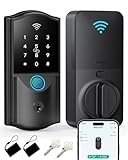
Overview: Firstriver’s smart deadbolt positions itself as a feature-packed alternative to mainstream brands, offering six distinct unlocking methods including a rare IC card option. Designed for tech-savvy homeowners who value maximum flexibility, this lock combines biometric security with comprehensive app control. The built-in Wi-Fi connects directly to 2.4GHz networks, enabling remote management without additional hardware for seamless integration into modern smart homes.
What Makes It Stand Out: The standout feature is the blazing-fast fingerprint recognition—detecting prints in 0.3 seconds and unlocking in 1.5 seconds—among the fastest in this price range. The IC card access provides a convenient alternative for children or elderly family members who may struggle with fingerprints or codes. The auto-lock customization spans 5-900 seconds, offering far greater flexibility than competitors that typically cap at 180 seconds, allowing precise security tailoring.
Value for Money: Priced at $139.99, this lock costs $10 more than the base Philips model but adds meaningful features. The six unlock methods, superior fingerprint speed, and extensive auto-lock range justify the modest premium. It undercuts premium brands by $30-50 while delivering comparable specifications, making it attractive for value-conscious buyers wanting maximum functionality without brand-name markup.
Strengths and Weaknesses: Strengths:
- Six unlock methods including IC card access
- Ultra-fast 0.3-second fingerprint recognition
- Widest auto-lock range (5-900 seconds)
- Detailed access logs and user management
- No hub required for remote access
Weaknesses:
- Lesser-known brand with unproven longevity
- Slightly higher price than similar models
- May lack premium build materials
- Customer support quality unknown
Bottom Line: If you prioritize speed and access variety over brand name, this Firstriver lock delivers exceptional functionality. It’s perfect for households wanting every conceivable entry method without breaking the bank.
3. Arpha Keyless Entry Door Lock, WiFi Smart Keypad Front Door Deadbolt, Supports Amazon Alexa Voice Control, Google Assistant, Online App Control, Anti-Peeping Password, One-Time Code, Auto Lock

Overview: The Arpha smart deadbolt disrupts the market with an aggressive $49.99 price point while promising premium features like ANSI Grade 3 certification and military-grade alloy construction. This 2025 upgraded model targets budget-conscious buyers unwilling to compromise on core security standards. It offers essential smart functions including app control, voice assistant integration, and anti-peeping password technology for residential and commercial applications.
What Makes It Stand Out: No other smart lock at this price offers ANSI/BHMA certification and IP54 weather resistance rated for -4°F to 140°F operation. The patented 15-minute installation template with tool-free mounting eliminates professional installation costs. Eight AA batteries promise nine months of operation—exceptional longevity that reduces maintenance. The anti-peeping password feature allows entering random digits before/after your code to prevent shoulder-surfing attacks.
Value for Money: This lock redefines budget smart home security. Comparable certified locks cost $120-180. While brand recognition is minimal, the feature set rivals products triple its price. The money saved could buy batteries for years. For rental properties or first-time smart home users, the risk-to-reward ratio is compelling, offering legitimate security certification at entry-level pricing.
Strengths and Weaknesses: Strengths:
- Unbeatable price with ANSI Grade 3 certification
- Military-grade alloy construction with IP54 rating
- Revolutionary 15-minute tool-free installation
- Excellent 9-month battery life estimate
- Anti-peeping password security feature
Weaknesses:
- Unknown brand track record and reliability
- No fingerprint biometric option
- Potentially unreliable app performance
- Limited long-term durability data
- Unclear customer support quality
Bottom Line: This is the budget smart lock to beat. If you’re willing to gamble on a newcomer for incredible savings, Arpha delivers certified security and surprising quality. Perfect for rentals or testing the smart lock waters.
4. Philips Built-in WiFi Smart Lock, Keyless Entry Door Lock with App, Touchscreen, Indicator Light, Fingerprint Door Lock — Compatible with Alexa & Google, Splash-Proof Design, Includes 8 Batteries
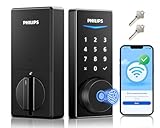
Overview: Philips’ premium smart lock offering elevates the user experience with a sleek touchscreen interface and industry-leading biometric performance. This model caters to homeowners seeking the fastest, most convenient keyless entry without compromises. The splash-proof design and included batteries demonstrate attention to detail that justifies its higher price point while maintaining the brand’s reputation for reliability.
What Makes It Stand Out: The 360° precise fingerprint recognition unlocks in just 0.3 seconds—matching the fastest locks available—while accepting fingerprints from any angle. The touchscreen keypad with indicator lights provides visual feedback that physical button models lack. Including eight batteries ($15-20 value) and splash-proofing shows Philips understands real-world usage. The ability to store multiple fingerprints with high accuracy makes it ideal for busy households with frequent comings and goings.
Value for Money: At $168.99, this is the most expensive lock reviewed, but premium features justify the cost for discerning buyers. The touchscreen interface, fastest-in-class fingerprint sensor, and included accessories add $40-50 in value compared to base models. For those prioritizing speed, convenience, and brand reliability, the premium is easily justified over cheaper alternatives that may frustrate with slower performance or require separate battery purchases.
Strengths and Weaknesses: Strengths:
- Fastest 0.3-second fingerprint unlock
- Modern touchscreen with indicator lights
- Eight batteries included in package
- Splash-proof design for weather resistance
- 360° fingerprint recognition technology
Weaknesses:
- Highest price point in comparison
- Touchscreen vulnerable to extreme cold
- May be over-featured for basic security needs
- Limited auto-lock range (30-180 seconds)
Bottom Line: This is the premium choice for users who demand the best. If budget allows, the speed, touchscreen, and included extras create a superior ownership experience. Worth the investment for primary residences.
5. Philips Smart Lock, Smart Door Lock Built-in WiFi, App Remote Control, Keyless Entry Door Lock for Front Door, Deadbolt Lock Auto Lock, Support Alexa & Google, IP54 Waterproof, Black

Overview: This Philips smart lock differentiates itself with physical buttons rather than a touchscreen, appealing to users who prefer tactile feedback and enhanced cold-weather reliability. Offering four unlock methods and robust app control, it balances essential features with the trusted Philips brand name. The IP54 waterproof rating ensures consistent performance across climates, making it practical for various geographic regions.
What Makes It Stand Out: The physical button design proves more reliable than touchscreens in extreme temperatures and for users wearing gloves. While offering fewer unlock methods than siblings, it maintains core functionality families actually use daily. The battery life estimate of six months with low-battery alerts via app and audible warnings prevents unexpected lockouts. Multiple password modes (permanent, one-time, timed) provide flexible access management for different user types.
Value for Money: At $129.99, it matches Product 1’s price but trades fingerprint access for physical buttons and waterproofing. For users in cold climates or those skeptical of touchscreen durability, this design choice adds tangible value. The IP54 rating and Philips reliability make it competitive with $140-160 locks from other brands, despite the reduced unlock method count, focusing on reliability over gadgetry.
Strengths and Weaknesses: Strengths:
- Physical button reliability in all weather
- IP54 waterproof rating included
- Philips brand trust and quality
- Effective battery management with alerts
- Cold-weather and glove-friendly operation
Weaknesses:
- Only four unlock methods (no fingerprint)
- Batteries not included despite claims
- Less flexible than other Philips models
- Basic feature set for the price
Bottom Line: Choose this lock if you prioritize reliability over gadgetry. The physical buttons and weatherproofing make it ideal for harsh climates. A solid, no-nonsense smart lock from a trusted brand.
6. Bluetooth Fingerprint Smart Lock with Handle & Keypad – Fits Most US Doors, DIY Install, Keyless Entry: Code, FOB, Auto-Lock. Ideal for Home, Airbnb, Rental, Kids, Seniors. Alexa & Google Compatible

Overview: This Bluetooth-enabled smart lock delivers comprehensive keyless entry at an accessible price point. Designed for standard US doors, it offers six unlocking methods including fingerprint, keypad, FOB, app control, and traditional keys. The DIY installation requires only a screwdriver, making it ideal for renters and homeowners alike. With specific features tailored for Airbnb hosts and families with children or elderly members, this lock balances convenience with security.
What Makes It Stand Out: The versatility for rental properties sets this apart. You can generate permanent, one-time, or time-limited codes for guests, cleaners, or property managers directly from the app. The auto-lock and one-touch lock features provide peace of mind, automatically securing your door without second-guessing. Compatibility with both Alexa and Google Assistant (via gateway) enables voice control, while the inclusion of multiple entry methods ensures you’re never locked out.
Value for Money: At $79.99, this lock significantly undercuts many competitors while delivering premium features. Similar smart locks often retail for $120-180, making this an excellent budget-friendly option. The DIY installation saves additional professional fees, and the rental-focused features provide tangible value for Airbnb hosts who regularly manage guest access. The six unlock methods eliminate the need for separate products.
Strengths and Weaknesses: Strengths include easy installation, multiple entry options, rental-friendly code management, and affordable pricing. The auto-lock feature enhances security effortlessly. Weaknesses include the need for a separate gateway for voice control (not included), limited fingerprint capacity compared to some rivals, and potential Bluetooth range limitations. Battery life details aren’t prominently specified.
Bottom Line: This smart lock offers exceptional value for budget-conscious buyers, rental property owners, and families seeking keyless convenience. While it lacks some premium refinements, its core functionality and rental management features make it a compelling choice under $80.
7. Keyless Fingerprint Door Lock Set: HEANTLE WiFi Front Door Lock with Handles - Alexa Smart Electronic Digital Keypad Deadbolt Sets App Remote Control Auto Satin Nickel

Overview: The HEANTLE WiFi Smart Lock delivers comprehensive keyless entry with its included gateway, eliminating the need for separate purchases. Supporting six access methods including fingerprint recognition in under one second, this satin nickel lock offers remote management from anywhere via 2.4GHz WiFi. With capacity for 50 fingerprints and 100 user codes, it’s designed for homes, offices, and rental properties requiring flexible access control.
What Makes It Stand Out: The integrated WiFi gateway is the headline feature—most competitors require separate purchases adding $30-50. The robust access management allows creation of one-time, scheduled, or permanent codes for house sitters, guests, and service providers. Real-time notifications and activity monitoring provide security oversight, while the one-year battery life with low-power alerts and USB emergency charging ensures you’re never locked out due to dead batteries.
Value for Money: At $99.98 including the gateway, this represents strong value. Comparable WiFi-enabled locks typically cost $130-160. The gateway inclusion, extended battery life, and comprehensive app features justify the premium over budget Bluetooth-only models. For remote management capabilities out of the box, it’s competitively priced.
Strengths and Weaknesses: Strengths include included WiFi gateway, multiple unlock methods, robust code management, long battery life, and emergency power options. The app provides detailed access history and real-time monitoring. Weaknesses include 2.4GHz-only WiFi limitation, fingerprint capacity lower than some rivals, and satin nickel finish may not suit all decors. Some users report occasional app connectivity issues.
Bottom Line: HEANTLE’s WiFi Smart Lock is an excellent mid-range choice offering gateway-inclusive convenience and reliable remote management. Ideal for users wanting full smart features without hidden costs, though fingerprint capacity may limit larger households.
8. Hornbill WiFi Smart Lock Deadbolt, Keyless Entry Front Door Lock, Fingerprint Electronic Deadbolt Compatible with Alexa, Touchscreen Keypad Code Unlock for Home Office Hotel

Overview: The Hornbill WiFi Smart Lock positions itself as a premium option with nine access methods and blazing-fast fingerprint recognition. The included G3 gateway enables seamless 2.4GHz WiFi connectivity for true remote access. With capacity for 100 fingerprints and 100 passcodes, it caters to larger households and small commercial settings. The touchscreen keypad and multiple protocol support make it a versatile security upgrade.
What Makes It Stand Out: The 0.3-second fingerprint unlocking is remarkably fast, outpacing many competitors’ 1-second claims. Nine entry methods—including WiFi, Bluetooth, voice control, and IC fob—provide unmatched flexibility. The gateway inclusion ensures immediate voice assistant integration with Alexa and Google. Temporary access codes can be created and revoked instantly, ideal for managing service providers and guests without permanent access rights.
Value for Money: At $109.99, it’s priced at the higher end of the consumer range but justifies the cost with premium features. The gateway inclusion ($30-40 value) and superior fingerprint sensor speed differentiate it from $80-90 alternatives. For users prioritizing speed and versatility, the premium is worthwhile, though budget buyers may find similar core functionality for less.
Strengths and Weaknesses: Strengths include ultra-fast fingerprint recognition, high user capacity, included gateway, comprehensive access methods, and robust temporary code management. The Smart Life App integration is widely compatible. Weaknesses include higher price point, 2.4GHz WiFi limitation, and gateway placement requirements (within 16ft, less with obstacles). Some users find the installation instructions confusing.
Bottom Line: Hornbill’s feature-rich smart lock excels for tech enthusiasts and larger households wanting maximum flexibility and speed. The premium price delivers premium performance, making it worth the investment for those who value cutting-edge convenience.
9. GeekTale Fingerprint Deadbolt Lock with G3 Gateway,Smart Lock with App, Twist to Lock & Unlock, Keyless Entry for Front Door, Remotely Control, Compatible with Alexa, Google Home

Overview: The GeekTale Smart Lock distinguishes itself with a unique twist-to-lock mechanism and included G3 gateway at a budget-friendly price. Supporting fingerprint, app, and key access, it covers essential keyless entry needs for most households. The rechargeable battery provides six months of use per charge, eliminating frequent battery replacements. Its minimalist design aims to complement modern home aesthetics while delivering core smart functionality.
What Makes It Stand Out: The twist-to-lock/unlock mechanism offers a tactile, intuitive alternative to traditional thumb turns or automatic locking, potentially improving durability by reducing motor strain. The included G3 gateway enables remote and voice control without additional purchases—a rare find under $70. The rechargeable battery with low-power notifications addresses environmental concerns and ongoing battery costs. Its sleek, minimalist aesthetic appeals to design-conscious buyers.
Value for Money: At $69.99 with gateway included, this is among the most affordable WiFi-enabled smart locks available. Competitors with similar gateway-inclusive packages typically start at $90-100. While it lacks some advanced features like IC fob support or extensive user capacity, the price-to-performance ratio is exceptional for essential smart lock functionality.
Strengths and Weaknesses: Strengths include unbeatable price with gateway, rechargeable battery, unique twist mechanism, easy installation, and clean design. Remote app control and voice integration work reliably. Weaknesses include limited access methods (no keypad mentioned), lower fingerprint capacity (unspecified but likely modest), and 6-month battery life is shorter than some alkaline-battery models. The twist mechanism may not appeal to all users.
Bottom Line: GeekTale delivers remarkable value for first-time smart lock buyers or budget-conscious users. The twist mechanism and rechargeable battery offer unique advantages, though feature minimalism may not suit tech enthusiasts wanting maximum options.
10. Smart Keyless Entry Door Lock - Fingerprint Electronic Deadbolt Touchscreen Keypad SMONET Biometric Digital Bluetooth Door Lock Smart Deadbolt Compatible with Alexa for Homes and Hotel

Overview: SMONET’s smart lock emphasizes access management with both app and web portal control, supporting eight entry methods including a unique eKey sharing system. The capacity for 250+ user codes far exceeds most competitors, making it ideal for hotels or large property management. The touchscreen keypad features anti-peeping and anti-hacking protection, while privacy mode adds an extra security layer. Note that the gateway for remote/voice control is sold separately.
What Makes It Stand Out: The web portal access distinguishes it from app-only competitors, enabling comprehensive management from any browser—perfect for property managers without constant smartphone access. The massive 250+ code capacity supports commercial applications. eKey sharing allows temporary digital key distribution without code memorization. Privacy mode prevents unauthorized entry even with valid codes, enhancing security during occupied periods.
Value for Money: At $109.99 without gateway, it’s priced similarly to gateway-inclusive models, which affects value. The web portal and exceptional code capacity justify the cost for property managers and commercial users, but residential buyers may find better value elsewhere. Factor in an additional $30-40 for gateway to enable full functionality, bringing total cost to $140-150.
Strengths and Weaknesses: Strengths include web portal management, huge code capacity, eKey sharing, robust security features (anti-peeping, privacy mode), and comprehensive access logs. The 8-in-1 methods provide flexibility. Weaknesses include gateway not included, limited fingerprint capacity (50) compared to code capacity, higher total cost for full features, and Bluetooth-only local control without gateway.
Bottom Line: SMONET excels for property managers and commercial applications requiring web-based management and massive user capacity. Residential users should consider gateway-inclusive alternatives unless the web portal is essential, as total investment exceeds competitors.
Understanding Alexa Compatibility in Smart Locks
Alexa compatibility isn’t just a sticker on the box—it’s a complex integration that determines how smoothly your smart lock will function within Amazon’s ecosystem. True Alexa integration means the lock can receive and execute voice commands, report its status in real-time, and participate in Alexa Routines. Some locks offer basic compatibility, allowing only lock commands, while advanced models provide two-way communication, status updates, and integration with Alexa’s Guard security features.
The Core Benefits of Voice-Activated Home Security
Hands-Free Convenience Redefined
Voice control eliminates the physical interaction traditionally required for entry. When you’re carrying groceries, managing children, or dealing with inclement weather, the ability to lock or unlock your door without setting anything down transforms daily routines. This convenience extends to checking lock status from bed or securing your entire home with a single bedtime command.
Enhanced Accessibility for All Household Members
For family members with mobility challenges, arthritis, or visual impairments, voice-activated locks provide unprecedented independence. Elderly parents can verify their door is locked without getting up; children can safely lock up when home alone without manipulating small keys. This democratization of home security is one of the most impactful yet underappreciated benefits.
Centralized Smart Home Orchestration
When your lock integrates with Alexa, it becomes a trigger point for entire home automation sequences. Unlocking your door can simultaneously disarm security systems, adjust thermostat settings, turn on lights, and even start your favorite playlist. This contextual awareness transforms a simple lock into a powerful home automation catalyst.
Critical Security Features to Prioritize
Encryption Standards and Data Protection
Look for locks employing AES 256-bit encryption—the same standard used by banks and government agencies. Your lock’s communication with Alexa should be end-to-end encrypted, preventing interception of commands or status updates. Additionally, investigate whether the manufacturer employs secure cloud storage practices and regular security audits.
Tamper Alerts and Forced Entry Detection
Premium Alexa-compatible locks distinguish between normal operation and potential break-in attempts. They can detect lock picking, brute force attacks, or door jamb tampering, sending immediate notifications to your phone and announcing alerts through your Echo devices. This real-time awareness provides crucial response time during security incidents.
Auto-Lock and Lockout Prevention Mechanisms
Intelligent auto-lock features should be customizable by time delay and situational awareness. More importantly, understand how the lock prevents accidental lockouts. Does it offer emergency access through the Alexa app? Can you generate temporary codes remotely? These fail-safes separate reliable locks from frustrating ones.
Connectivity Protocols: Wi-Fi vs. Zigbee vs. Z-Wave
Wi-Fi Direct Integration Pros and Cons
Wi-Fi-enabled locks connect directly to your home network, offering the simplest setup and strongest Alexa integration. They respond to commands instantly without requiring additional hubs. However, they typically consume more battery power and may strain your network with numerous IoT devices. Range can also be an issue for doors far from your router.
The Role of Smart Hubs in Lock Performance
Zigbee and Z-Wave locks require a compatible hub (like an Echo Plus or standalone bridge) but offer mesh networking capabilities that extend range and improve reliability. These protocols are more energy-efficient, often doubling battery life compared to Wi-Fi alternatives. The trade-off is additional hardware cost and slightly more complex initial configuration.
Bluetooth Backup Capabilities
Even Alexa-centric locks should include Bluetooth as a backup connection method. When Wi-Fi fails or during initial setup, Bluetooth ensures you can always control your lock from your smartphone when in proximity. This redundancy is crucial for maintaining access during internet outages or Alexa service disruptions.
Voice Command Capabilities and Limitations
Natural Language Processing Nuances
Not all Alexa lock integrations understand commands equally. Advanced locks recognize varied phrasing like “Is my front door locked?” “Lock the deadbolt,” or “Secure the main entrance.” Others require exact syntax, leading to frustrating user experiences. Test how the lock handles synonyms and natural speech patterns before committing.
PIN Code Voice Verification for Security
For security reasons, Alexa won’t unlock doors with a simple voice command. Most quality locks implement voice PINs—four-digit codes you speak after the initial command. Evaluate how easily you can change these PINs, whether each family member can have unique codes, and if the system locks out after multiple failed attempts.
Status Queries and Historical Logging
Beyond locking and unlocking, robust Alexa integration lets you query lock history: “Alexa, when was the door last unlocked?” or “Who unlocked the door today?” This forensic capability is invaluable for monitoring service providers, teenagers’ curfews, or verifying package deliveries when you’re away.
Installation Considerations for Every Door Type
Standard Deadbolt Replacement vs. Retrofit
Most Alexa-compatible locks replace your existing deadbolt entirely, providing the most secure installation. Retrofit options that fit over existing hardware are easier to install but may compromise security or aesthetics. Consider your door’s material—solid wood, metal, or fiberglass—and whether it can accommodate the lock’s required bore depth and diameter.
Door Thickness and Backset Measurements
Measure your door’s thickness (typically 1-3/8" to 2") and backset (distance from door edge to center of bore hole: 2-3/8" or 2-3/4") before purchasing. High-quality lock manufacturers provide adjustable components, but compatibility isn’t universal. French doors, gates, and unusually thick entry doors often require specialized adapters or professional installation.
Weather Resistance and Temperature Extremes
Exterior components must withstand temperature fluctuations from -40°F to 150°F, moisture, UV exposure, and physical abuse. Look for IP65 or higher ratings ensuring dust and water resistance. In coastal areas, corrosion-resistant finishes become critical for longevity. Cold climate users should verify battery performance in freezing temperatures, as power drain accelerates dramatically.
Power Management and Battery Life Optimization
Battery Types and Longevity Expectations
Most Alexa locks run on four AA batteries, lasting 6-12 months depending on usage and connectivity type. Lithium batteries outperform alkaline in extreme temperatures and provide more consistent voltage as they deplete. Some premium models feature rechargeable lithium-ion packs with micro-USB backup charging—eliminating battery replacement costs but requiring periodic charging discipline.
Low-Power Notifications and Fail-Safes
Quality locks send multiple alerts through Alexa and smartphone apps as batteries deplete: typically at 20%, 10%, and critical levels. Understand what happens when batteries die completely. Is there a 9V battery emergency power contact on the exterior? Can you temporarily power it with a portable charger? Mechanical key override is the ultimate fail-safe but reduces the “keyless” convenience.
Energy Consumption Factors You Control
Every Alexa voice command, status query, and routine execution consumes power. Disable unnecessary status announcements, reduce auto-lock frequency, and adjust activity logging to extend battery life. Geofencing features that constantly check your location can drain batteries quickly—consider disabling this or using more efficient proximity sensors instead.
Design and Aesthetic Integration
Finishes That Complement Your Home
Alexa-compatible locks come in traditional finishes like satin nickel, oil-rubbed bronze, and polished brass, but also modern matte black and silver. Consider your door hardware, hinges, and even house numbers. Some manufacturers offer interchangeable faceplates, allowing style updates without replacing the entire lock—important for evolving home aesthetics.
Keypad vs. Touchscreen vs. Minimalist Design
Keypads provide tactile feedback and work with gloves but wear over time, potentially revealing frequently used digits. Touchscreens offer sleek aesthetics and scramble number positions to prevent pattern recognition but can be finicky in rain or with wet fingers. Minimalist designs hide keypads entirely until touched, maximizing curb appeal but reducing convenience.
Size and Profile on Your Door
Smart locks are bulkier than traditional deadbolts—typically 2-3 inches deep on the interior side. This can interfere with storm doors, tight screen door handles, or narrow door frames. Check clearance measurements carefully, especially if your door sits close to a perpendicular wall when fully open.
Privacy and Data Security Concerns
Voice Recording Storage and Amazon’s Data Policy
Every Alexa command is processed in the cloud, raising privacy questions. Understand that Amazon stores voice recordings and transcripts, though you can delete them manually or set auto-deletion. Some lock manufacturers process commands locally on Echo devices with local voice control, reducing cloud exposure—a feature privacy-conscious buyers should prioritize.
Guest Access and Data Sharing Implications
When you grant temporary access to guests, cleaners, or Airbnb visitors, you’re sharing data with both Amazon and the lock manufacturer. Investigate how long this data is retained, whether it’s anonymized, and if you can purge guest histories. GDPR-compliant manufacturers provide more transparent data handling and easier data deletion options.
Preventing Voice Spoofing and Unauthorized Commands
Sophisticated locks implement voice profile recognition, requiring commands from recognized household members only. Others use proximity detection to ensure commands only work when your phone is nearby. Understand these anti-spoofing measures, especially in multi-unit buildings where neighbors might attempt voice commands through walls.
Integration with Broader Smart Home Ecosystems
Creating Alexa Routines with Your Smart Lock
The true power emerges when your lock triggers conditional actions. Configure “Goodnight” routines that lock all doors, arm security, dim lights, and lower thermostats. “Welcome Home” routines can unlock the door, turn on entry lights, and disable security when you arrive. Advanced routines incorporate time delays, multiple conditions, and device-specific actions.
Compatibility with Security Systems and Cameras
Your lock should integrate seamlessly with Ring Alarm, ADT, SimpliSafe, or other security systems through Alexa. When the lock is tampered with, it should trigger camera recordings, activate alarms, and flash smart lights. This coordinated response creates a security fabric far stronger than isolated devices.
Matter Standard Support and Future Interoperability
Matter is the new industry standard promising universal smart home compatibility. Locks supporting Matter (through Thread or Wi-Fi) ensure they’ll work with future Alexa updates and potentially other ecosystems like Google Home or Apple HomeKit. This future-proofing protects your investment as the smart home landscape evolves.
Price Ranges and Value Assessment
Budget-Friendly Options Under $150
Entry-level Alexa locks typically offer basic voice locking, simple keypads, and Wi-Fi connectivity. They may lack advanced encryption, tamper detection, or premium materials. While functional, they often have shorter warranties and limited smart home integration. These are suitable for secondary entrances or tech-cautious first-time buyers.
Mid-Range Solutions Between $150-$250
This sweet spot delivers robust Alexa integration, strong security features, quality construction, and reliable customer support. You’ll find advanced encryption, activity logging, guest management, and solid warranty coverage. Most homeowners find the best value here, balancing features with affordability.
Premium Models Above $250
High-end locks justify their price through superior build quality, advanced biometric features (fingerprint readers), integrated doorbell cameras, or solar charging capabilities. They often include lifetime warranties, dedicated customer support, and cutting-edge security certifications. Consider these for primary entrances or luxury smart home builds.
Professional vs. DIY Installation
Assessing Your Technical Comfort Level
DIY installation requires basic tools, comfort with smartphone apps, and patience for calibration. Most quality locks include detailed video tutorials and excellent customer support. However, if your door requires drilling new holes, has misaligned strike plates, or you simply value your time, professional installation ensures optimal performance and maintains warranty coverage.
When Professional Installation Is Worth the Investment
Consider hiring a locksmith if you have non-standard doors, integrated multi-point locking systems, or rental property restrictions. Professionals can also integrate the lock with existing security wiring, ensure proper weather sealing, and provide on-site troubleshooting. The $100-200 installation cost often pays for itself in avoided frustration and guaranteed functionality.
Calibration and Fine-Tuning Post-Installation
Even perfectly installed locks require calibration—teaching the motor your door’s specific resistance and travel distance. This process varies by manufacturer but typically involves multiple lock/unlock cycles while the lock “learns.” Rushing this step results in premature battery drain, failed operations, or unnecessary strain on the mechanism.
Troubleshooting Common Issues
Wi-Fi Connectivity Dropouts and Solutions
Locks located far from routers often experience intermittent connectivity. Solutions include adding Wi-Fi extenders, upgrading to mesh networks, or switching to Zigbee/Z-Wave locks with hub-based connectivity. Some locks allow antenna positioning adjustments—experimenting with orientation can dramatically improve signal strength through metal doors.
Alexa Skill Discovery and Command Failures
When Alexa can’t discover your lock or commands fail, the issue often lies in skill authorization. Ensure you’ve enabled the manufacturer’s skill, linked accounts, and discovered devices. Sometimes disabling and re-enabling the skill resolves sync issues. Check that your lock’s firmware and Alexa app are updated, as compatibility issues often resolve with software patches.
Mechanical Binding and Motor Strain
Doors that are slightly misaligned or have sticky deadbolt plungers cause smart lock motors to work harder, draining batteries and potentially burning out. Lubricate the deadbolt mechanism, adjust strike plate alignment, and ensure the door doesn’t sag. Most lock apps report motor strain warnings—don’t ignore these early indicators.
Future-Proofing Your Smart Lock Investment
Firmware Update Policies and Longevity
Investigate the manufacturer’s track record for supporting older models with firmware updates. Companies committed to security provide updates for 5+ years, adding features and patching vulnerabilities. Avoid brands with abandoned products that stop receiving updates after 2-3 years, leaving you with obsolete security.
Modular Design and Upgrade Paths
Some forward-thinking manufacturers design locks with replaceable communication modules. If Wi-Fi 6E becomes standard or Matter over Thread becomes dominant, you can swap a module rather than replacing the entire lock. This modular approach protects your investment and reduces electronic waste.
Battery Technology Evolution Considerations
As battery technology advances, consider locks that support multiple power options. Models with USB-C emergency charging and solar panel compatibility position you to leverage future power innovations without lock replacement. This flexibility becomes increasingly valuable as environmental concerns drive battery technology changes.
Warranty and Customer Support Evaluation
Standard Warranty Coverage Expectations
Quality Alexa-compatible locks should include at least a 1-year warranty, with premium models offering 2-3 years or limited lifetime coverage on mechanical components. Read the fine print—some warranties require professional installation, while others are voided if you don’t use manufacturer-approved batteries.
Technical Support Quality and Availability
Test customer support before purchasing by calling with pre-sale questions. Quality manufacturers offer US-based support, extended hours, and knowledgeable technicians who understand Alexa integration intricacies. Check online forums and Reddit for real-world support experiences—companies that abandon customers post-purchase should be avoided.
Community and Developer Ecosystem
Active user communities and developer support indicate a healthy product ecosystem. Look for locks with IFTTT integration, open APIs, or active GitHub repositories. This community support often provides creative solutions, custom Alexa skills, and workarounds for edge cases that official support doesn’t cover.
Frequently Asked Questions
Can Alexa really unlock my door with just my voice?
No, and that’s actually a security feature. Alexa requires a spoken PIN code after your unlock command for verification. You’ll say something like “Alexa, unlock the front door,” and she’ll respond asking for your four-digit voice code. This prevents neighbors, delivery people, or passersby from gaining entry simply by shouting commands.
What happens to my smart lock when the Wi-Fi goes down?
Most Alexa-compatible locks include Bluetooth backup, allowing you to control them from your smartphone when you’re within range. However, voice commands through Alexa won’t work without internet. Some premium models with Zigbee or Z-Wave can still execute certain automated routines if you have a compatible smart hub with local processing capabilities.
How secure are voice commands compared to traditional keys?
Voice commands with PIN verification are generally more secure than physical keys, which can be copied, lost, or stolen. The encryption between your lock and Alexa is typically military-grade, and there’s no physical lock to pick. However, voice commands can be overheard, so choose unique PINs and consider locks that require proximity detection for added security.
Will installing a smart lock void my door’s warranty?
Standard deadbolt replacement typically doesn’t affect your door’s warranty, but check with your door manufacturer if it’s still under coverage. Some smart lock warranties actually require professional installation to remain valid, so read both warranties carefully before DIY installation.
Can I still use a physical key if I install an Alexa-compatible lock?
Most models retain a traditional key cylinder as an emergency backup, though some keyless designs eliminate it entirely for enhanced security. We recommend keeping at least one physical key in a secure location (like a lockbox) even with keyless models, as batteries can die or electronics can fail.
How often will I really need to replace batteries?
Real-world battery life varies dramatically based on usage, door alignment, temperature, and connectivity type. Wi-Fi locks typically need new batteries every 6-9 months, while Zigbee/Z-Wave models often last 12-18 months. Heavy usage, extreme cold, or poor installation can reduce life to 3-4 months.
Do Alexa-compatible locks work with all door types?
No, compatibility depends on door thickness, backset measurement, and existing deadbolt cutout. Most work with standard 1-3/8" to 2" thick doors, but sliding doors, gates, and antique doors often require specialized models or professional modification. Always measure twice and check specifications before purchasing.
Can my landlord prevent me from installing a smart lock?
In most rental agreements, you cannot modify permanent fixtures without permission. However, many landlords approve smart locks because they enhance security and can be rekeyed or replaced upon move-out. Some retrofit models install without permanent modifications, making them more rental-friendly.
What if someone records my voice and plays it back to unlock my door?
Quality Alexa-compatible locks implement multiple safeguards against voice spoofing. They require voice profiles registered in the Alexa app, proximity detection via your phone’s Bluetooth, and spoken PIN codes. Recorded voices typically fail these checks because they lack the unique acoustic signature and can’t respond to dynamic PIN requests.
How do I choose between Wi-Fi and hub-based locks for Alexa?
Choose Wi-Fi if you want simple setup, have a strong signal at your door, and don’t mind changing batteries more frequently. Opt for Zigbee/Z-Wave with a hub if you have an existing smart home ecosystem, want better battery life, or your door is far from your router. Consider your current setup, technical comfort level, and long-term expansion plans when deciding.