Your home’s electrical panel hasn’t changed much in half a century—until now. As we approach 2026, the humble breaker box is undergoing its most radical transformation yet, evolving from a passive safety device into an intelligent energy command center. These next-generation smart panels don’t just protect your circuits; they learn your habits, optimize your power consumption, and orchestrate every electron flowing through your home with precision that would have seemed like science fiction just a few years ago.
The convergence of artificial intelligence, bidirectional EV charging, residential battery storage, and dynamic utility pricing has created the perfect storm for circuit-level energy management to become essential rather than optional. Whether you’re building a net-zero home, preparing for grid instability, or simply tired of surprise electric bills, understanding what makes these systems tick will determine whether your investment delivers genuine transformation or just another smart home gimmick.
Top 10 Energy Management Smart Panels for Circuit Control
Detailed Product Reviews
1. Emporia Vue 3 Home Energy Monitor - Smart Home Automation Module and Real Time Electricity Usage Monitor, Power Consumption Meter, Solar and Net Metering for UL Certified Safe Energy Monitoring

Overview: The Emporia Vue 3 is a comprehensive home energy monitoring system that provides real-time visibility into your electricity consumption. This UL-certified device installs directly in your circuit panel using clamp-on sensors, supporting most residential electrical systems including single-phase and split-phase configurations. With its 24/7 monitoring capabilities and mobile app integration, it helps homeowners track usage patterns, identify energy hogs, and optimize consumption for cost savings.
What Makes It Stand Out: The UL certification sets this apart from many competitors, ensuring rigorous safety testing for fire and electrical hazards. Its solar and net metering support makes it ideal for renewable energy households. The Emporia Energy App offers sophisticated automation features for time-of-use pricing, peak demand management, and excess solar distribution. The system provides 1-second data updates when actively viewing, with minute and hour data stored in the cloud for historical analysis. The ±2% accuracy rating ensures reliable data for making informed energy decisions.
Value for Money: At $99.99, the Vue 3 sits in the mid-range of home energy monitors. It undercuts premium competitors like Sense while offering comparable features and superior safety certification. The potential energy savings can recoup the investment within months, and the 1-year warranty provides peace of mind. For homeowners seeking professional-grade monitoring without professional-grade pricing, this represents solid value.
Strengths and Weaknesses: Strengths include UL safety certification, comprehensive app features, solar compatibility, and real-time data granularity. The system integrates well with most panels and offers cloud data export. Weaknesses are the 2.4 GHz WiFi limitation (no 5 GHz support), requiring technical installation that may need an electrician, limited 1-second data retention (3 hours), and the need for additional sensors for some 3-phase systems.
Bottom Line: The Emporia Vue 3 is an excellent choice for safety-conscious homeowners wanting detailed energy insights. Its UL certification and robust feature set justify the price, though installation complexity may require professional help. For solar-equipped homes or those on time-of-use rates, it’s particularly valuable.
2. Emporia Vue 3 Home Energy Monitor - Smart Home Automation Module and Real Time Electricity Usage Monitor, Power Consumption Meter, Solar and Net Metering for UL Certified Safe Energy Monitoring

Overview: The Emporia Vue 3 Home Energy Monitor delivers professional-grade electricity tracking for residential applications. This UL-listed device installs in your circuit panel using non-invasive clamp sensors, supporting single-phase and split-phase systems. It provides continuous monitoring through the Emporia Energy App, enabling homeowners to track real-time consumption, manage solar production, and identify opportunities for energy reduction across their entire electrical system.
What Makes It Stand Out: This monitor distinguishes itself with UL certification, ensuring compliance with stringent North American safety standards. The system’s solar and net metering capabilities make it particularly valuable for renewable energy installations. Its sophisticated automation engine can respond to time-of-use rates, peak demand charges, and excess solar generation automatically. The platform retains hourly data indefinitely, providing long-term trend analysis, while offering 1-second granularity for immediate diagnostics when actively monitoring.
Value for Money: At $149.99, this version raises pricing questions. The features appear identical to the $99.99 model, making the $50 premium difficult to justify without clear differentiation. While the product itself offers excellent functionality and safety certification, savvy shoppers should verify what’s included in the box. The energy savings potential remains significant, but the higher price point reduces its competitive edge against alternatives like Sense or the budget-friendly Emporia Vue Utility Connect.
Strengths and Weaknesses: Key strengths include the UL safety rating, comprehensive automation features, solar integration, and accurate ±2% measurements. The cloud platform provides actionable insights and data export capabilities. Notable weaknesses are the 2.4 GHz WiFi-only connectivity, installation complexity requiring electrical panel access, limited 1-second data retention (3 hours), and potentially confusing pricing structure across product variants.
Bottom Line: The Vue 3 remains a technically excellent energy monitor, but this $149.99 pricing tier needs clarification. Before purchasing, confirm exactly which sensors and accessories are included. If this version offers expanded capabilities over the base model, it may be worthwhile; otherwise, the standard version delivers better value.
3. Smart Home Energy Monitor 2×80A, Dual-Channel Real-Time Electricity Usage Monitoring for Household Power, WiFi Energy Meter with App Control, Compatible with Tuya/Smart Life
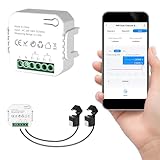
Overview: This dual-channel energy monitor offers an affordable entry point into home electricity tracking. The device features two independent 80A sensors that clamp onto circuits without wire modification, providing real-time data through the Tuya or Smart Life app ecosystem. Designed for monitoring major appliances or sub-panels, it delivers key electrical metrics including power, voltage, current, and power factor, with historical data viewable by hour, day, month, or year.
What Makes It Stand Out: The sub-$30 price point makes this exceptionally accessible for budget-conscious consumers. Dual-channel monitoring allows simultaneous tracking of two high-draw circuits like HVAC and water heating. Its bi-directional measurement capability supports solar panel and backup power systems, a rare feature in this price class. The Tuya/Smart Life integration means it works within a massive smart home ecosystem with broad device compatibility and automation possibilities.
Value for Money: At $27.99, this monitor delivers remarkable value, costing 70-80% less than premium alternatives while covering essential monitoring needs. For homeowners wanting to track specific appliances rather than whole-home consumption, it’s highly cost-effective. The Tuya platform is free to use, and the clamp-on design eliminates installation costs. While it lacks UL certification, the price makes it a low-risk experiment in energy monitoring.
Strengths and Weaknesses: Strengths include unbeatable pricing, dual-channel flexibility, solar compatibility, easy installation, and Tuya ecosystem integration. The device provides comprehensive electrical data and decent historical tracking. Weaknesses are the 80A per-channel limit (unsuitable for main panels), lack of UL safety certification, reliance on 2.4 GHz WiFi, and no mention of warranty. Accuracy specifications are also less detailed than premium competitors.
Bottom Line: This monitor excels as a targeted solution for tracking major appliances or solar production on a budget. It’s not a whole-home solution, but for specific circuit monitoring under $30, it’s outstanding. DIY enthusiasts and Tuya ecosystem users will find it particularly appealing.
4. Jadeshay WiFi Smart Circuit Breaker 1P 63A with Energy Meter, Voice Control and Leakage Protection and Real-Time Monitoring (White, 1P-JL-63)

Overview: The Jadeshay smart circuit breaker combines traditional overcurrent protection with integrated energy monitoring and voice control. This 1-pole, 63A breaker installs on a standard DIN rail and provides real-time consumption data through a mobile app. It supports Amazon Alexa and Google Assistant for hands-free operation while delivering sub-0.3% measurement accuracy. The unit includes comprehensive safety features like overvoltage, undervoltage, and leakage protection in a flame-retardant housing.
What Makes It Stand Out: This device’s primary distinction is its circuit breaker form factor with built-in energy metering, eliminating separate components. Voice control integration at this price point is impressive, enabling convenient load management. The <0.3% accuracy exceeds many dedicated energy monitors. Multiple safety protections beyond standard breaker functions provide enhanced device protection. Its universal DIN 35mm mounting ensures compatibility with most electrical panels globally.
Value for Money: At $17.89, this represents exceptional value, functioning as both a smart breaker and energy monitor for less than most standalone monitors. For controlling and monitoring a single circuit, it’s highly cost-effective. The dual functionality reduces component costs and panel space requirements. However, the rock-bottom price raises questions about long-term reliability and manufacturer support compared to established electrical brands.
Strengths and Weaknesses: Strengths include integrated breaker/monitor design, voice control, high accuracy, comprehensive safety protections, and easy DIN rail installation. The price is outstanding for the feature set. Weaknesses are the 63A single-pole limitation (not for main panels), installation requiring electrical work, unknown brand reputation, potential quality control issues, and lack of UL certification mention. It’s unsuitable for whole-home monitoring.
Bottom Line: This smart breaker is ideal for controlling and monitoring individual high-value circuits like EV chargers or workshops. Its voice control and accuracy are impressive, but professional installation is essential. For whole-home energy management, look elsewhere. As a supplementary smart switch with benefits, it’s a compelling value.
5. Emporia Vue 3 Commercial 3-Phase Smart Energy Monitor - Business and Home Automation Device with Real Time Electricity Usage Monitor, Power Consumption Meter, Solar and Net Metering

Overview: The Emporia Vue 3 Commercial edition extends the Vue platform to small businesses and advanced residential applications requiring 3-phase monitoring. This robust system supports electrical services up to 600A using three included 200A clamp sensors, with eight additional 50A branch sensors for detailed load monitoring. Designed for commercial panels, it provides the same real-time data and automation features as the residential version while handling more complex electrical systems.
What Makes It Stand Out: This monitor excels in commercial-grade capacity and expandability. The included eight branch sensors allow granular monitoring of critical equipment like HVAC, refrigeration, and manufacturing tools without additional purchases. New screw terminals enable clean wire trimming, reducing panel clutter—a significant improvement over residential models. The system’s ability to handle 3-phase Wye configurations up to 600A makes it suitable for small industrial settings, retail spaces, and large homes with commercial service.
Value for Money: With price unavailable, value assessment is speculative. Commercial energy monitors typically range $300-$800, so expect premium pricing. For small businesses, the detailed monitoring can identify demand charges and equipment inefficiencies that cost thousands annually, providing rapid ROI. The included eight sensors add value compared to a la carte pricing. However, for residential use, it’s likely overkill unless you have genuine 3-phase service.
Strengths and Weaknesses: Strengths include high current capacity (600A), eight included branch monitors, expandable design, UL safety certification, and sophisticated app automation. The improved terminal design enhances installation cleanliness. Weaknesses are unknown pricing, potential overkill for residential applications, professional installation requirements, 2.4 GHz WiFi limitation, and the same data retention constraints as the residential model.
Bottom Line: This commercial-grade monitor is best suited for small businesses serious about energy cost reduction. For large homes with 3-phase service, it’s excellent but likely expensive. Most residential users should choose the standard Vue 3. Contact Emporia for pricing and verify your panel compatibility before purchasing.
6. Aeotec Home Energy Meter 8 - Smart Electricity Monitor - Real-Time Usage and Production Tracking - Z-Wave Long Range - 2x200A Clamp-On Sensor - Supports 2-Phase Power - SmartThings - HomeAssistant

Overview: The Aeotec Home Energy Meter 8 represents the cutting edge of Z-Wave energy monitoring technology. Built on the 800 series platform, this whole-home electricity monitor provides real-time consumption and production tracking with professional-grade accuracy. Designed for seamless integration into Z-Wave ecosystems, it connects directly to your mains power using two 200A clamp-on sensors, making it suitable for comprehensive residential energy management.
What Makes It Stand Out: This device leverages revolutionary Z-Wave Long Range technology, extending wireless reach up to 1.7 kilometers while maintaining robust S2 security with AES-128 encryption. Unlike WiFi alternatives, it achieves 99% measurement accuracy and supports two-phase power systems natively. The meter intelligently tracks surplus energy from solar installations, ensuring no watt goes unaccounted for. Its UL-standard compliance and secure data handling through your Z-Wave gateway prioritize privacy without sacrificing functionality.
Value for Money: At $95.99, the Aeotec commands a premium price justified by its superior technology. The Z-Wave Long Range capability eliminates range anxiety common in larger properties, while the 99% accuracy surpasses most consumer-grade monitors. For SmartThings or HomeAssistant users already invested in Z-Wave, this avoids WiFi congestion and provides enterprise-level security that cheaper alternatives cannot match.
Strengths and Weaknesses: Strengths include exceptional wireless range, professional accuracy, robust encryption, broad hub compatibility, and reliable two-phase support. Weaknesses center on requiring a compatible Z-Wave hub, higher cost of entry, and recommended professional installation for safety. The Z-Wave dependency may deter users seeking standalone WiFi solutions.
Bottom Line: The Aeotec Home Energy Meter 8 is the premium choice for Z-Wave ecosystem users demanding accurate, secure, and long-range whole-home energy monitoring. Its commercial-grade features justify the investment for serious energy managers.
7. WiFi Energy Monitor with 2 * 120A Clamps, Real-Time Electricity Tracking, Smart Home Power Management,WiFi Meter Solar/Net Metering, Home Energy Automation and Control

Overview: This WiFi-enabled energy monitor delivers real-time electricity tracking without requiring a proprietary hub. Equipped with dual 120A clamp sensors, it monitors individual appliances or whole-home consumption through the Tuya Smart Life ecosystem. The system supports bidirectional measurement, making it suitable for solar net metering applications in residential settings.
What Makes It Stand Out: Direct WiFi connectivity eliminates hub dependency, while Tuya integration enables seamless automation with thousands of compatible devices. The bidirectional measurement capability automatically displays negative values when current flows opposite to sensor orientation—ideal for tracking solar production versus grid consumption. Professional-grade CT clamps ensure reliable installation in most panel configurations.
Value for Money: Priced at $89.99, this monitor sits in the mid-range category. The dual-sensor package offers good value for appliance-level monitoring, though the ±2% accuracy trails premium Z-Wave alternatives. For Tuya-centric smart homes, the native integration avoids additional hardware costs, making it more economical than building a multi-hub system.
Strengths and Weaknesses: Strengths include hub-free WiFi operation, robust Tuya ecosystem integration, solar/net metering support, and dual-sensor flexibility. Weaknesses involve lower accuracy (±2%), 2.4GHz-only limitation, mandatory professional installation warnings, and 120A-per-sensor capacity that may constrain large homes. WiFi dependency could introduce network congestion.
Bottom Line: An excellent choice for Tuya ecosystem users seeking affordable, hub-free energy monitoring with solar tracking capabilities. The dual sensors provide versatility, though accuracy-conscious buyers may prefer premium alternatives.
8. Emporia Vue 3 Commercial 3-Phase Smart Energy Monitor - Business and Home Automation Device with Real Time Electricity Usage Monitor, Power Consumption Meter, Solar and Net Metering

Overview: The Emporia Vue 3 Commercial edition targets small businesses and advanced residential installations requiring three-phase power monitoring. This panel-mounted solution provides real-time electricity usage data for complex electrical systems beyond typical single-phase residential capabilities. Its commercial-grade design supports various wiring configurations common in business environments, delivering professional energy management tools.
What Makes It Stand Out: True three-phase monitoring distinguishes this from residential-focused monitors. The system accommodates single-phase, split-phase, and three-phase four-wire wye configurations (with earthed neutral), offering flexibility for commercial applications. The clamp-on sensor design simplifies installation in existing panels without major electrical modifications, while maintaining accuracy suitable for business operations tracking.
Value for Money: Price is listed as N/A, suggesting a premium commercial product. For small businesses requiring three-phase monitoring, the specialized capability justifies likely higher costs compared to residential units. The ability to monitor commercial equipment and identify inefficiencies provides ROI through operational savings, though typical homeowners will find better value in single-phase alternatives.
Strengths and Weaknesses: Strengths include genuine three-phase support, commercial-grade construction, flexible system compatibility, and professional installation design. Weaknesses are the unlisted price (potential budget barrier), overkill for standard homes, and requirement for additional sensors in some configurations. The “no-delta” limitation excludes certain industrial setups.
Bottom Line: Ideal for small business owners needing comprehensive three-phase energy monitoring. Residential users should consider single-phase alternatives unless specifically managing complex multi-phase systems. Commercial-grade reliability meets business demands.
9. eMylo 1-Channel WiFi Power Meter 80A Smart Energy Monitor, Clamp-on Ammeter, 2.4GHz WiFi, Real-time Monitoring, Smart Life/TUYA APP, Home Power Monitor, Compatible with Alexa and Google Assistant

Overview: The eMylo 1-Channel WiFi Power Meter offers entry-level energy monitoring at an accessible price point. This compact device tracks a single circuit using an 80A clamp sensor, delivering real-time data through the Smart Life/Tuya ecosystem. Designed for straightforward installation, it provides basic consumption metrics without panel modifications, targeting budget-conscious homeowners seeking simple monitoring solutions.
What Makes It Stand Out: Remarkable affordability at $22.99 makes this the most accessible monitor in its class. Voice assistant compatibility with Alexa and Google Home enables hands-free status checks, a rare feature at this price. The plug-and-play terminal connection eliminates complex wiring, while comprehensive metric tracking includes power factor, active power, and frequency—surprising depth for a budget device.
Value for Money: Exceptional value for single-circuit monitoring needs. The sub-$25 price point includes WiFi connectivity and voice integration that competitors charge significantly more for. However, the 80A limit and single-channel design constrain whole-home applications. For monitoring a specific appliance or sub-panel, it outperforms expectations; for comprehensive home tracking, multiple units would be needed.
Strengths and Weaknesses: Strengths include unbeatable price, voice assistant support, easy installation, and detailed metrics. Weaknesses involve the 80A capacity limiting high-load circuits, single-channel-only monitoring, unspecified accuracy, and basic Tuya app functionality. The 2.4GHz WiFi limitation may affect connectivity in congested networks.
Bottom Line: Perfect for beginners or those needing targeted single-circuit monitoring. The eMylo delivers surprising features at a bargain price, though power users will require more robust multi-channel solutions.
10. WiFi Smart Energy Monitor Switch Meter, Compatible with Alexa Google Home, Remote Control with Smart Life/Tuya App, Din Rail Tester Current Voltage Amperage Power Meter AC 110-230V 60A Multimeter

Overview: This DIN rail-mounted smart switch meter combines energy monitoring with remote control capabilities in a single device. Measuring voltage, current, power, and energy while providing switching functionality, it installs directly into electrical panels for streamlined circuit management. The 60A capacity suits moderate-load applications, integrating with Smart Life/Tuya for comprehensive automation.
What Makes It Stand Out: The integrated switching function sets this apart from pure monitors, allowing remote circuit control alongside consumption tracking. Timer scheduling enables automated load management, while family sharing features facilitate multi-user access. DIN rail mounting provides professional installation aesthetics and space efficiency in panel configurations.
Value for Money: At $33.99, the switching capability adds significant value beyond basic monitoring. Comparable smart switches alone cost $20-30, making the included energy metering essentially free. However, the 60A rating limits high-power applications like HVAC systems. For lighting circuits or moderate appliances, it delivers dual functionality at a competitive price point.
Strengths and Weaknesses: Strengths include combined monitoring and control, voice assistant compatibility, timer automation, family sharing, and clean DIN rail installation. Weaknesses involve the 60A current limit, single-channel design, 2.4GHz WiFi restriction, and lack of bidirectional measurement for solar applications. The switching feature may require careful load consideration.
Bottom Line: An excellent dual-purpose device for automating and monitoring moderate-load circuits. The switching capability provides unique value, making it ideal for smart home enthusiasts wanting integrated control and energy data without separate devices.
The Evolution from Traditional Breakers to Intelligent Energy Hubs
The 2026 Paradigm Shift
Traditional electrical panels function as silent gatekeepers—nothing more than mechanical switches that trip when overloaded. In 2026, smart panels have become active participants in your home’s energy ecosystem. They operate as distributed energy resource management systems, capable of making millisecond-level decisions that balance utility power, solar generation, battery reserves, and flexible loads like EV chargers and heat pumps. This shift represents more than added convenience; it’s a fundamental reimagining of how residential power infrastructure interacts with increasingly complex grid dynamics.
Why Your Home Needs a Brain for Its Electrical System
With time-of-use rates becoming the default across most utilities and residential electricity demand climbing 40% over the past five years due to electrification, manual energy management is no longer viable. A modern smart panel serves as your home’s energy brain, automatically shifting dishwasher cycles to off-peak hours, throttling EV charging when rates spike, and ensuring your battery storage discharges at the mathematically optimal moment. Without this intelligence, you’re essentially flying blind in an energy landscape that punishes inefficiency with increasingly punitive rate structures.
Core Capabilities That Define Next-Generation Smart Panels
Real-Time Circuit-Level Monitoring
The cornerstone capability that separates genuine smart panels from basic energy monitors is true circuit-level monitoring with individual CT (current transformer) sensors on every breaker. This granularity reveals which specific appliances are consuming power, not just your home’s aggregate usage. In 2026, look for systems sampling at 1-second intervals or faster—anything slower misses the signature of modern variable-speed compressors and EV chargers. The data should be accessible through APIs for integration with home automation platforms, not locked behind proprietary apps.
AI-Powered Load Balancing and Optimization
Static load shedding—where non-essential circuits simply shut off during peak demand—is yesterday’s technology. Modern systems employ machine learning algorithms that understand the difference between critical and flexible loads while respecting your comfort preferences. They might delay your water heater’s heating cycle by 20 minutes to avoid a demand charge, or pre-cool your home an extra degree before rates spike at 4 PM. The best systems learn from your behavior patterns, seasonal changes, and even weather forecasts to optimize without noticeable lifestyle impact.
Predictive Maintenance and Fault Detection
Advanced smart panels in 2026 can detect subtle electrical anomalies that precede catastrophic failures: loose neutral connections creating voltage imbalances, aging appliances drawing increasingly irregular current, or arc faults developing in hidden junction boxes. This predictive capability transforms your panel from a reactive safety device into a proactive maintenance tool, potentially preventing fires while extending appliance lifespans through early intervention. Look for systems that distinguish between harmless electrical noise and genuine pre-failure signatures.
Dynamic Solar and Battery Integration
With bidirectional EV chargers and vehicle-to-home capabilities becoming mainstream, your panel must manage power flows in multiple directions simultaneously. Next-generation systems handle this complexity natively, treating your EV, battery, and solar inverter as collaborative resources rather than separate systems. They should support autonomous modes that optimize for self-consumption, backup duration, or bill minimization based on your daily priorities.
Essential Features to Prioritize in 2026
Granular Data Analytics and Reporting
Raw data becomes valuable only through intelligent presentation. Demand systems offering carbon intensity tracking, phantom load identification, and comparative benchmarking against similar homes. The best platforms provide actionable insights: “Your garage refrigerator costs $87 annually—consider upgrading to an Energy Star model” rather than simply displaying charts. Export capabilities in open formats like CSV or via MQTT protocol ensure you’re not locked into a single vendor’s ecosystem.
Remote Access and Mobile Control
While mobile app control seems standard, implementation quality varies dramatically. Evaluate whether apps offer true remote breaker control (with appropriate safety confirmations) or merely monitoring. In 2026, cellular backup connectivity is non-negotiable—Wi-Fi alone leaves you blind during power outages when monitoring matters most. The user interface should allow custom circuit naming, room grouping, and permission levels for household members or property managers.
Automated Demand Response
Utility-sponsored demand response programs can generate $200-500 in annual credits, but participation requires your panel to receive and act on utility signals automatically. Confirm compatibility with OpenADR 2.0b or higher protocols, which have become the industry standard. The system should let you set participation thresholds—perhaps opting out on hot days when AC is critical—while still capturing most available incentives.
EV Charging Management
With Level 2 chargers pulling 40-80 amps, unmanaged EV charging can trigger demand charges that add hundreds to your bill. Smart panels should integrate directly with EV chargers via standards like OCPP (Open Charge Point Protocol) or through native APIs, enabling scheduled charging, solar-only charging modes, and automatic load sharing when multiple EVs are present. The system must understand your specific utility’s EV rate structures, which often include separate demand charges just for charging.
Generator Transfer Switch Integration
For backup power applications, smart panels must coordinate seamlessly with automatic transfer switches and generators. Advanced systems perform “smart shedding” that respects generator capacity limits, prioritizing essential circuits while managing startup surges from motors and compressors. They should also support generator exercise scheduling and maintenance reminders while providing clear runtime estimates based on current load.
Understanding Communication Protocols and Connectivity
Matter, Thread, and the Smart Home Ecosystem
The Matter standard’s maturity in 2026 means your smart panel should function as a Thread border router and expose key functions to major smart home platforms. This integration allows voice commands like “Alexa, shut off the outdoor lights circuit” or automations that link circuits to security system states. However, be wary of panels that rely solely on cloud-based Matter integration—local control preserves functionality during internet outages.
Cellular Backup vs. Wi-Fi Reliability
Dual-path connectivity isn’t a luxury; it’s essential infrastructure. Cellular backup ensures monitoring and control during grid failures, but data plans and signal strength matter. Look for panels with external antenna options for metal buildings and transparent data usage policies. Some manufacturers include 5-10 years of cellular service in the purchase price, while others require subscriptions that can cost $10-15 monthly.
Cloud vs. Local Processing
Cloud dependency creates latency issues and privacy concerns. Premium smart panels perform critical functions—load shedding, arc fault detection, generator coordination—locally using edge computing, syncing historical data to the cloud asynchronously. This architecture ensures core functionality survives internet outages while still providing rich analytics through cloud processing. Verify which features remain available during connectivity loss before purchasing.
Installation Considerations for Modern Smart Panels
Retrofit vs. New Construction
Retrofitting a smart panel into an existing home presents unique challenges. Many systems require neutral wires in every circuit—common in post-1980s construction but absent in older homes. Budget $500-1,500 for rewiring if needed. Physical dimensions also matter; some smart panels are 20-30% larger than traditional panels, potentially requiring drywall modifications. For new construction, specify smart panel rough-in early to ensure adequate wall space and conduit routing.
Professional Installation Requirements
Smart panel installation isn’t a DIY project. It requires licensed electricians familiar with both line-voltage wiring and low-voltage networking. In 2026, many jurisdictions require manufacturer certification for installers to maintain warranty coverage. Factor $1,500-3,000 for professional installation, and verify your electrician has completed the manufacturer’s training program. Some utilities mandate certified installation for interconnection agreements, especially when integrating battery storage.
Service Panel vs. Subpanel Configurations
For many homeowners, installing a smart subpanel alongside the existing main panel offers the best value proposition. This approach costs 40-60% less than a full replacement while providing smart capabilities for flexible loads (EV chargers, HVAC, water heating) while leaving legacy circuits on the traditional panel. The configuration also simplifies installation and reduces downtime. Evaluate which circuits would benefit most from intelligence before deciding on full replacement.
Safety Standards and Certifications in 2026
UL 916 and Beyond
Ensure any smart panel carries UL 916 certification for energy management equipment, not just UL 508 for industrial control panels. The distinction matters for residential insurance and code compliance. Additionally, look for UL 1998 certification for software safety, particularly important for systems making autonomous load control decisions. Some cutting-edge panels also pursue UL 3000 certification for grid-interactive capabilities, future-proofing them for emerging utility programs.
Arc Fault and Ground Fault Intelligence
Traditional AFCI/GFCI breakers protect individual circuits, but smart panels enhance this with cross-circuit analysis. They can detect series arc faults that standard AFCIs miss and identify ground fault current leakage across multiple circuits—impossible with conventional breakers. The system should log all trip events with waveform capture, helping electricians diagnose nuisance tripping causes remotely.
Cybersecurity Protections
Your electrical panel is critical infrastructure and requires enterprise-grade security. Demand AES-256 encryption for all communications, two-factor authentication for app access, and regular third-party security audits. The manufacturer should have a published vulnerability disclosure policy and demonstrate SOC 2 Type II compliance. Be particularly wary of systems using default passwords or lacking automatic security update capabilities.
Integration with Home Energy Ecosystems
Solar PV System Compatibility
Smart panels must communicate directly with solar inverters via Modbus, SunSpec, or proprietary protocols to coordinate production with consumption. This integration enables “zero-export” configurations that prevent sending power back to a constrained grid while maximizing self-consumption. For new solar installations, specify panel and inverter compatibility upfront—some pairings work seamlessly while others require expensive middleware gateways.
Battery Storage Synergy
The relationship between smart panels and battery systems defines backup power quality. Advanced panels implement “battery-aware” load management that extends backup duration by 30-50% through intelligent prioritization. They should support multiple battery chemistries and voltages while providing state-of-charge awareness to all managed circuits. During outages, the system must prevent non-critical loads from even attempting to draw power, eliminating accidental battery depletion.
Smart Appliance Coordination
True energy management requires more than monitoring—it demands control. Look for panels that integrate with smart appliances via protocols like CTA-2045 or manufacturer APIs. This enables coordinated responses: when your heat pump water heater enters a high-demand cycle, the panel can temporarily reduce EV charging speed to stay within utility demand thresholds. The system should expose these integrations through standardized webhooks for custom automation.
The Role of AI and Machine Learning
Pattern Recognition for Energy Waste
Machine learning algorithms in 2026 excel at identifying invisible energy waste. They detect when your pool pump is running longer than necessary, recognize that your second refrigerator spikes in consumption every summer (indicating failing seals), or notice your air conditioner’s compressor drawing progressively more current (suggesting refrigerant loss). The best systems quantify the cost of these inefficiencies and recommend specific interventions.
Occupancy-Based Automation
By correlating circuit-level usage with smartphone location data, motion sensors, and even EV presence, AI can distinguish between occupied and unoccupied states with 95%+ accuracy. This enables aggressive energy-saving modes that shut down vampire loads in empty rooms while maintaining comfort in occupied spaces. The system learns your family’s schedule variations—late nights on Fridays, weekend guests—automatically adjusting without manual programming.
Utility Rate Optimization
With dynamic pricing becoming universal, AI optimization can reduce bills by 25-40% without lifestyle changes. The system learns rate structures, including complex demand charges, time-of-use windows, and even real-time pricing fluctuations. It then schedules flexible loads—EV charging, dishwashers, laundry, pool pumps—to operate during lowest-cost periods while respecting your constraints. Advanced systems even factor in weather forecasts to pre-cool homes before price spikes.
Cost Analysis and ROI Expectations
Upfront Investment Breakdown
In 2026, comprehensive smart panel systems range from $2,500 for subpanel solutions to $8,000+ for full-service panels with 40+ circuit monitoring. This includes the panel hardware, CT sensors, communication modules, and basic installation. Add $500-1,500 for complex retrofits requiring neutral wire additions or structural modifications. Cellular connectivity may involve a one-time fee or ongoing subscription—clarify this before purchasing.
Long-Term Savings Potential
Realistic ROI timelines range from 4-7 years in areas with demand charges or solar storage systems, to 8-12 years in regions with flat-rate pricing. The value proposition extends beyond direct savings: prevented food spoilage during outages (worth $200-500 per event), extended appliance lifespans through soft-start capabilities, and increased home value—studies show smart electrical infrastructure adds 2-3% to resale value in tech-savvy markets.
Utility Incentives and Rebates
Many utilities now offer $500-2,000 rebates for smart panel installation, particularly when enabling demand response programs. Some forward-thinking utilities even provide financing through on-bill repayment programs. Check DSIREUSA.org for current incentives, and contact your utility directly—some maintain unpublicized pilot programs. The federal Inflation Reduction Act’s 30% tax credit for energy efficiency improvements may apply to smart panels when bundled with solar or battery installations.
Future-Proofing Your Electrical Infrastructure
Scalability for Emerging Technologies
Your smart panel should accommodate technologies that don’t yet exist. This means modular CT sensor designs allowing addition of circuits without panel replacement, firmware architectures supporting new protocols, and power busses rated for 225+ amps even if your current service is 200 amps. Consider panels with spare communication ports (USB-C, Ethernet) for future expansion modules.
Firmware Update Policies
A smart panel is only as good as its software. Investigate manufacturer update policies: frequency of security patches, feature additions, and protocol updates. The best manufacturers provide 10+ year support commitments and publish roadmaps. Avoid companies with histories of abandoning products after 3-4 years. Open-source firmware options offer ultimate longevity but require technical expertise to maintain.
Modular Component Design
Field-replaceable communication modules, processors, and sensor boards extend system lifespan significantly. If 6G replaces 5G in 2028, you should be able to swap a $150 communication module rather than replacing a $3,000 panel. Similarly, processor upgrades should be possible as AI algorithms become more sophisticated. This modularity protects your investment against technological obsolescence.
Common Pitfalls to Avoid When Upgrading
Underestimating Power Capacity Needs
Electrification trends mean your 200-amp service may be inadequate within 5 years. When installing a smart panel, consider upsizing to 225 or 400 amps if your utility allows it. The incremental cost during smart panel installation is minimal compared to a future upgrade. Factor planned additions: second EV, heat pump conversion, induction range, or ADU (accessory dwelling unit). Smart panels can’t create power capacity—they only optimize what’s available.
Ignoring Network Infrastructure
Your smart panel is useless without reliable connectivity. Many homeowners install $5,000 smart panels while neglecting $200 network upgrades. Ensure robust Wi-Fi coverage at the panel location, or better yet, run Ethernet. For cellular backup, verify signal strength—consider external antennas or signal boosters. A UPS (uninterruptible power supply) for your modem and router maintains connectivity during outages when monitoring is most critical.
Overlooking Professional Credentials
The lowest bid often comes from electricians unfamiliar with smart panel complexities. Improper CT sensor installation, incorrect neutral wiring, or botched networking configuration can create dangerous conditions or limit functionality. Verify installer certifications directly with manufacturers, and don’t hesitate to pay premium rates for experienced professionals. The installation quality determines whether your smart panel performs as advertised or becomes an expensive disappointment.
Making the Final Decision: A Buyer’s Framework
Assessing Your Current Energy Profile
Before shopping, conduct a 30-day energy audit using plug-level monitors on major appliances. Identify your top 10 energy consumers, measure their duty cycles, and calculate potential savings from scheduling. This baseline reveals whether your usage patterns justify smart panel investment. Homes with high HVAC, water heating, and EV charging loads see fastest paybacks, while all-electric homes with flat usage profiles may benefit less.
Defining Your Automation Goals
Are you primarily motivated by bill savings, backup power optimization, carbon reduction, or convenience? Your priority shapes feature requirements. Bill optimizers need robust utility rate engines; backup-focused buyers should prioritize generator integration and battery awareness; carbon-conscious users require renewable energy maximization features. Vague goals lead to overpaying for capabilities you’ll never use.
Evaluating Manufacturer Support
Call manufacturer technical support before purchasing. Ask about typical response times, availability of replacement parts, and warranty claim processes. Check online forums and Reddit communities for real-world support experiences. A 10-year warranty means little if the company takes weeks to respond to critical issues. Look for manufacturers offering 24/7 support and established dealer networks in your region.
Frequently Asked Questions
How do smart panels differ from whole-home energy monitors like Sense or Emporia Vue?
Whole-home monitors provide visibility but no control—they’re diagnostic tools. Smart panels actively manage circuits, can remotely switch breakers, coordinate with batteries and solar, and implement automated responses. Think of monitors as dashboard cameras versus smart panels as autonomous driving systems. The price difference reflects this fundamental capability gap.
Will a smart panel work with my utility’s demand response program?
Most 2026 smart panels support OpenADR 2.0b or higher, the universal standard for utility demand response. However, participation depends on your specific utility’s program design. Contact your utility’s demand response coordinator with the panel model number before purchasing. Some utilities maintain whitelists of approved equipment and may require pre-qualification testing.
Can I install a smart panel myself if I’m comfortable with electrical work?
No. Smart panel installation requires not only line-voltage expertise but also low-voltage networking, CT sensor calibration, and software configuration. Most manufacturers void warranties for non-certified installations. Additionally, many utilities require licensed electrician certification for interconnection, especially with solar or battery systems. The risks—fire, electrocution, equipment damage—far outweigh potential savings.
How reliable are smart panels during power outages?
Quality smart panels operate in “island mode” during outages, maintaining local control and monitoring via battery backup. Cellular connectivity keeps you informed of system status. However, cloud-dependent features like remote access and historical reporting pause until internet returns. Premium systems with edge computing preserve full functionality offline. Always verify which features remain active during outages before purchasing.
Do smart panels increase home value?
Recent studies show smart electrical infrastructure increases home value by 2-3% in markets with high energy costs or tech-savvy buyers. The premium is highest when bundled with solar and battery systems, where the smart panel enables capabilities buyers understand and value. Document energy savings and outage resilience to maximize appraisal impact. In some areas, smart panels qualify for green home certifications that unlock additional value.
What happens if the manufacturer goes out of business?
This is a legitimate concern in a consolidating market. Choose manufacturers with 5+ year track records and strong financial backing. Open-source firmware options provide exit strategies if companies fail. Some vendors place design files and firmware in escrow, releasing them if the company dissolves. Avoid subscription-dependent features that could vanish overnight. Physical equipment will continue functioning, but cloud features may disappear without manufacturer support.
Can smart panels prevent electrical fires?
Advanced smart panels detect conditions preceding fires—loose connections, deteriorating insulation, abnormal heating—that traditional breakers miss. They provide early warnings hours or days before failure. However, they cannot prevent fires from external sources like damaged cords or overloaded outlets. Think of them as an early warning system complementing, not replacing, traditional AFCI/GFCI protection and regular electrical inspections.
How much bandwidth do smart panels consume?
Typical smart panels use 50-200 MB monthly for cloud synchronization and remote access—negligible for most home internet plans. However, firmware updates can require 500 MB-1 GB downloads. If you have satellite internet with data caps, schedule updates during off-peak hours. Video monitoring of waveforms for diagnostic purposes can increase usage significantly; disable this feature unless troubleshooting specific issues.
Will my smart panel become obsolete in three years?
Choose systems with modular designs and strong firmware support commitments. Panels with replaceable communication modules and open APIs adapt to new protocols. Manufacturers providing quarterly updates and publishing 5-year roadmaps offer better longevity. Avoid proprietary, closed systems. The core power distribution hardware lasts decades; it’s the intelligence layer that evolves. Modular designs let you upgrade brains without replacing brawn.
How do I choose between a full smart panel replacement and a smart subpanel?
If your main panel is under 15 years old and has adequate capacity, a smart subpanel for flexible loads (HVAC, EV charging, water heating) offers 80% of the benefits at 40-60% of the cost. This approach also reduces installation complexity and downtime. Choose full replacement for older panels nearing end-of-life, homes requiring service upgrades, or when comprehensive monitoring of every circuit is essential for diagnostic purposes. Most homeowners find subpanel solutions provide the best ROI.