Watching your teenager slide behind the wheel for the first time triggers a complex mix of pride and parental anxiety. That tiny metal box on wheels suddenly represents both freedom and vulnerability—a milestone that keeps modern parents awake at night. Geofencing technology has evolved from corporate fleet management into a sophisticated family safety tool, offering peace of mind without hovering in the passenger seat. These virtual boundaries, when combined with smart automation, create a safety net that respects your teen’s independence while keeping you connected to what matters most.
Unlike traditional tracking apps that simply show location dots on a map, geofencing automation transforms passive monitoring into active, intelligent responses. When your teen’s vehicle enters or exits a designated zone, it can trigger a cascade of customized actions—from sending you a discrete notification to adjusting the car’s built-in safety features. The real power lies not in surveillance, but in creating teachable moments and safety protocols that help young drivers develop responsible habits before they become permanent behaviors.
Top 10 Geofencing Devices for Teen Drivers
Detailed Product Reviews
1. Real-Time OBD2 GPS Car Tracker – $12/Month with 14 Day Free Trial – Plug & Play Device for Families, Teens & Businesses with Trip History, Driving Alerts & GeoFence – Accurate, Easy Setup

Overview: This OBD2 GPS tracker offers real-time vehicle monitoring for $42.99 with a $12 monthly subscription and 14-day free trial. Designed for families, teen drivers, and small businesses, it plugs directly into your car’s OBD-II port (1996+ vehicles) for instant installation without tools or wiring. The ShadowGPS app provides live location tracking, trip history, speed monitoring, and idle time analysis through a clean, shareable dashboard.
What Makes It Stand Out: The device distinguishes itself through comprehensive vehicle diagnostics integration. Beyond location tracking, it reads OBD-II data to display battery voltage, fuel levels, engine load, and diagnostic trouble codes—essentially functioning as a continuous health monitor for your vehicle. The alert system is exceptionally robust, offering crash detection, harsh driving warnings, towing alerts, curfew violations, and geofence breaches via app or SMS notifications.
Value for Money: At $42.99 plus $12 monthly, this tracker sits in the mid-range for OBD-based devices. The included vehicle diagnostics provide significant added value, potentially saving hundreds in premature repair costs. Compared to basic GPS trackers without OBD integration, the health monitoring features justify the subscription cost, especially for families managing multiple vehicles or small fleets.
Strengths and Weaknesses: Strengths include effortless plug-and-play installation, comprehensive diagnostic data, extensive alert customization, multi-user sharing capabilities, and no long-term contract requirement. The compact design remains discreetly hidden. Weaknesses involve the ongoing monthly fee (which adds up over time), dependence on OBD port location (some ports are easily accessible/visible), and potential compatibility issues with certain hybrid or diesel vehicles.
Bottom Line: This tracker excels for users wanting both location tracking and vehicle health monitoring in one integrated solution. The 14-day trial allows risk-free testing, making it ideal for parents monitoring teen drivers or businesses managing small fleets who need diagnostic insights alongside location data.
2. Spytec Atlas Mini GPS Tracker for Kids, Vehicles, Cars, Seniors | Smallest Portable Real Time GPS Tracking Device | Geofencing | Up to 34 Day Battery Life | Starter Kit with 1st Month Included

Overview: The Spytec Atlas Mini is a ultra-compact portable GPS tracker priced at $39.95 with the first month of service included. Subsequent plans start at $14.95 monthly with prepaid discounts available. This versatile device works for tracking children, seniors, vehicles, or assets, featuring up to 34 days of battery life in extreme power-saving mode. The Hapn app provides real-time tracking, location history, and route replays.
What Makes It Stand Out: Its diminutive size and exceptional battery longevity are the primary differentiators. Unlike OBD port trackers, this portable unit can be hidden anywhere—glove compartments, backpacks, or pockets. The adjustable update speed allows users to balance tracking frequency against battery preservation. The “Time Machine” feature enables detailed historical route review, while geofencing and speed alerts help monitor teen drivers or vulnerable family members.
Value for Money: The $39.95 entry point is reasonable for a premium portable tracker. While the $14.95 monthly fee is slightly higher than some competitors, the included first month and flexible prepaid options improve long-term value. The 34-day battery life reduces maintenance hassle, potentially justifying the cost over cheaper trackers requiring weekly charging.
Strengths and Weaknesses: Strengths include remarkable portability, industry-leading battery life, worldwide coverage, no installation required, and versatile multi-purpose use. The adjustable reporting frequency and emergency button enhance functionality. Weaknesses involve the higher monthly subscription cost, lack of vehicle diagnostics, need to remember recharging, and potential for loss or theft due to small size.
Bottom Line: Perfect for users needing flexible, portable tracking rather than permanent vehicle installation. The extended battery life and tiny footprint make it ideal for monitoring children, seniors, or assets where discretion and longevity matter more than vehicle health data.
3. Spy Tec Atlas Mini GPS Tracker for Vehicles, Car, Kids, Seniors | Smallest Portable Real Time GPS Tracking Device | Geofencing | Emergency Button | Up to 34 Day Battery Life | Needs Subscription

Overview: This Spytec Atlas Mini variant offers the same core functionality as Product 2 but at a lower device price of $19.95, requiring a separate subscription starting at $14.95 monthly. At just 2.25 inches and 4 grams, it’s one of the smallest GPS trackers available, suitable for vehicles, children, seniors, boats, or RVs. The device provides real-time tracking, geofencing alerts, and historical route review through its companion app.
What Makes It Stand Out: The staggeringly low device cost combined with extreme miniaturization makes this highly accessible. The emergency button adds a critical safety layer for vulnerable users. Worldwide coverage ensures tracking capability across North America and internationally, making it suitable for travelers. The same impressive 34-day battery life in power-saving mode remains a key feature.
Value for Money: The $19.95 device price is exceptionally competitive, making it the most affordable entry point among quality GPS trackers. However, the $14.95 monthly subscription is identical to Product 2, so long-term costs converge. For budget-conscious buyers wanting premium features without high upfront investment, this represents excellent value, especially given the hardware quality.
Strengths and Weaknesses: Strengths include the lowest device cost, ultra-compact design, emergency button functionality, global coverage, and exceptional battery performance. The no-contract subscription model offers flexibility. Weaknesses mirror Product 2: recurring monthly fees, absence of vehicle diagnostics, requirement for manual charging, and risk of misplacing such a tiny device.
Bottom Line: An outstanding choice for cost-sensitive shoppers prioritizing portability and global coverage over vehicle-specific features. The emergency button makes it particularly valuable for seniors or children, while the low entry barrier allows testing the service without significant financial commitment.
4. VYNCS Premium: No Monthly Fees GPS Tracker OBD 4G LTE Tracking Device for Cars Vehicle Trips Teen Driver Safety Roadside Assistance VPOBDGPS1

Overview: VYNCS Premium breaks the subscription model with a one-time $89.99 device cost and no monthly fees, though a $39.99 activation fee applies (refundable within 30 days) and annual renewal costs $85.99 after the first year. This OBD2 4G LTE tracker provides GPS location while driving, hourly updates when parked, trip mapping, geofencing, and a driving score system. One year of roadside assistance is included.
What Makes It Stand Out: The elimination of monthly subscription fees is revolutionary in this market, potentially saving hundreds over two to three years. The inclusion of roadside assistance adds tangible value beyond tracking. The driving score feature helps improve teen driver behavior through data-driven feedback. Hourly location updates while parked provide security without excessive battery drain.
Value for Money: While $89.99 upfront plus $39.99 activation exceeds some competitors, the fee-free structure delivers substantial savings within 8-10 months compared to $12-15 monthly alternatives. The $85.99 annual renewal remains cost-effective versus monthly plans. For long-term users, this represents the best financial value, especially with included roadside assistance worth $60+ annually.
Strengths and Weaknesses: Strengths include zero monthly fees, included roadside assistance, driving score analytics, comprehensive vehicle monitoring, and web/iOS/Android access. The OBD installation is simple and provides vehicle health data. Weaknesses involve higher initial cost, the activation fee (though refundable), less frequent updates when engine is off, and the annual renewal expense that some may overlook.
Bottom Line: Ideal for committed long-term users who want premium tracking without perpetual subscription costs. The driving score and roadside assistance make it perfect for families with teen drivers or individuals seeking maximum two-year value, though the upfront investment requires careful consideration.
5. Real-Time OBD2 GPS Car Tracker – $12/Month with 6 Prepaid Months – Plug & Play Device for Families, Teens & Businesses with Trip History, Driving Alerts & GeoFence – Accurate, Easy Setup

Overview: This is essentially Product 1 with a different payment structure: $109.90 covers the device plus six prepaid months of service, effectively reducing the monthly cost to $18.32. After the prepaid period, users can continue at $12 monthly or choose other plans. The identical OBD2 plug-and-play device offers real-time tracking, comprehensive safety alerts, vehicle diagnostics, and multi-user app access for families and businesses.
What Makes It Stand Out: The prepaid bundle provides a middle ground between monthly commitments and annual contracts. Users receive the same robust feature set—including crash detection, harsh driving alerts, towing notifications, and OBD-II diagnostics—while securing a discounted rate for the first six months. The ShadowGPS app maintains its clean interface and sharing capabilities.
Value for Money: At $109.90, the effective $18.32 monthly rate for six months is higher than the standard $12 month-to-month plan, making this bundle less attractive for short-term users. However, it eliminates monthly billing hassle and ensures uninterrupted service. For those certain they’ll use the service half a year, it offers convenience rather than cost savings compared to Product 1’s flexible model.
Strengths and Weaknesses: Strengths match Product 1: effortless installation, comprehensive vehicle diagnostics, extensive alert options, and reliable 4G tracking. The prepaid model simplifies budgeting. Weaknesses include paying more upfront without long-term savings, the same OBD port visibility issues, and potential overpayment if service needs change within six months.
Bottom Line: Suitable for users wanting to prepay for convenience rather than savings. Choose this only if you’re certain of six months’ use and prefer avoiding monthly transactions. Most buyers will find Product 1’s 14-day trial and lower month-to-month rate more financially prudent and flexible.
6. (10 Pack) Spytec Atlas GPS Tracker for Vehicles, Cars, Trucks, Kids & Seniors | Hidden Mini GPS Tracker Device for Fleet Vehicles | Geofencing | Real-time Tracking and Updates | Subscription Required
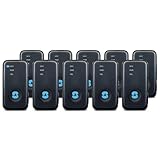
Overview: The Spytec Atlas 10-Pack delivers professional-grade GPS tracking for fleet managers and multi-vehicle families. These compact 3.07-inch devices provide real-time location updates as frequently as every 5 seconds, with up to 14 days of battery life per charge. The versatile design works independently of vehicle systems, making them suitable for cars, trucks, boats, RVs, or personal use monitoring children and seniors.
What Makes It Stand Out: Bulk packaging provides exceptional value for monitoring multiple assets simultaneously. The Time Machine feature offers detailed historical route playback, allowing analysis of movement patterns over time. Geofencing with customizable boundaries and speed alerts makes it particularly valuable for fleet oversight and teen driver monitoring. Unlike OBD-based trackers, these function anywhere, enabling asset tracking beyond just vehicles.
Value for Money: At $199.99 for ten units ($20 each), the per-device cost significantly undercuts individual tracker pricing. The $14.95 monthly subscription is competitive, though costs multiply across active devices. For businesses tracking a fleet or families with several vehicles, the upfront investment pays dividends compared to separate purchases. The 10-pack quantity provides spares and flexibility for growing needs.
Strengths and Weaknesses: Strengths include impressive 14-day battery life, rapid 5-second updates, versatile non-OBD design, and powerful historical data features. The mini size enables covert anti-theft installation. Weaknesses involve mandatory subscription fees that accumulate with multiple devices, requiring regular battery recharging. The initial cost barrier may deter casual users, and the small form factor increases loss risk if not securely placed.
Bottom Line: Perfect for fleet operators and multi-vehicle families wanting professional tracking without hardwiring. The bulk pricing and robust features outweigh subscription costs for serious users, but it’s overkill for single-vehicle owners.
7. Family1st OBD GPS Tracker for Vehicles, Car Location Tracker Device with Smart Alerts and Instant Car and Driver Safety Monitoring Reports, Trip History, Driving Alert, Geo Fence, Engine Diagnostics

Overview: The Family1st OBD GPS Tracker plugs directly into your vehicle’s OBD-II port, eliminating battery concerns while delivering comprehensive driving intelligence. At $51.95, this device prioritizes driver behavior analysis and vehicle health monitoring, making it ideal for parents of teen drivers or fleet managers focused on safety and efficiency. Installation is instant—simply connect and begin tracking when the ignition starts.
What Makes It Stand Out: The OBD connection provides continuous power and access to engine diagnostics unavailable in battery-powered alternatives. It detects aggressive driving patterns like harsh braking and rapid acceleration while monitoring idle time for fuel efficiency. Instant ignition alerts and unlimited reporting with a one-year warranty demonstrate reliability. The system integrates vehicle diagnostics with location tracking in one package.
Value for Money: The sub-$52 price is attractive for a feature-rich OBD tracker. While subscription costs aren’t specified, the included engine diagnostic capabilities add value typically requiring separate OBD scanners. Unlike battery models, you’ll never lose tracking due to dead batteries. The unlimited reporting and warranty provide peace of mind that justifies the investment for safety-conscious buyers.
Strengths and Weaknesses: Strengths include effortless installation, perpetual power, detailed driver behavior reports, geofencing, and vehicle diagnostics. The system captures trip history and provides smart alerts for various driving events. Weaknesses limit it to OBD-II equipped vehicles (1996+), making it unsuitable for tracking kids, seniors, or non-vehicle assets. Subscription pricing lacks transparency, and it sacrifices the portability of battery-powered alternatives.
Bottom Line: An excellent choice for monitoring driving habits and vehicle health in modern cars. Best suited for safety-conscious parents and fleet operators who value behavioral insights over versatile asset tracking.
8. (2 Pack) Spytec Atlas GPS Tracker for Vehicles, Cars, Trucks, Kids & Seniors | Hidden Mini GPS Tracker Device for Fleet Vehicles | Geofencing | Real-time Tracking and Updates | Subscription Required

Overview: The Spytec Atlas 2-Pack delivers robust tracking capabilities in a consumer-friendly quantity for smaller-scale needs. These 3.07-inch mini trackers offer 14-day battery life and real-time updates every 5 seconds, suitable for two vehicles, a car and child’s backpack, or monitoring elderly parents. The compact design allows flexible deployment across various assets without installation constraints.
What Makes It Stand Out: The 2-pack configuration hits the sweet spot for average families without overwhelming them with excess devices. Spanish language support broadens accessibility, while the Time Machine feature provides detailed historical playback. The battery-powered design enables tracking beyond vehicles—attach to valuables, slip into luggage, or conceal in a teen’s car for anti-theft purposes. The versatility exceeds OBD-based alternatives.
Value for Money: At $49.95 for two units ($25 each), the per-device cost is slightly higher than bulk options but far more practical for most consumers. The $22.95 monthly subscription (with prepaid discount) is reasonable, though higher than the 10-pack rate. This package balances affordability with utility for users needing limited coverage without fleet-scale commitment. The two-unit set perfectly serves small families with dual tracking requirements.
Strengths and Weaknesses: Strengths include versatile battery operation, rapid update frequency, multi-language support, and powerful geofencing capabilities. The compact size enables discreet placement while maintaining 14-day battery life. Weaknesses involve mandatory subscription requirements, regular charging maintenance, and higher per-unit cost compared to bulk purchasing. The mini size, while advantageous for concealment, requires careful placement to avoid loss.
Bottom Line: Ideal for families needing dual tracking without fleet-scale commitment. Offers professional features in a consumer-friendly package, though subscription costs should be factored into long-term budgeting.
What is Geofencing and How Does It Work for Teen Drivers?
Geofencing creates virtual perimeters around real-world locations using GPS, cellular, and Wi-Fi triangulation. For families with teen drivers, this means drawing invisible circles, polygons, or radius-based zones around schools, neighborhoods, or entire city sections. When your teenager’s vehicle crosses these digital boundaries, the system triggers pre-programmed automations.
Modern vehicle-integrated systems connect directly to the car’s telematics, while smartphone-based solutions leverage the device’s native location services. The most reliable platforms use a combination of both, ensuring accuracy even when GPS signals weaken in parking garages or dense urban areas. These systems typically update location every 30-60 seconds, creating a breadcrumb trail that’s far more useful than static check-ins.
Why Families Are Turning to Geofencing Automation
The transition from simple location sharing to automated geofencing represents a fundamental shift in how parents approach teen driving safety. Traditional methods rely on trust and self-reporting—both easily compromised by teenage optimism about their own abilities. Automation removes the emotional charge from check-ins and creates objective data points for family conversations.
Parents report three primary benefits: reduced anxiety during the first six months of independent driving, concrete evidence for insurance premium negotiations, and the ability to distinguish between normal teen behavior and genuine emergencies. For teens, well-implemented systems provide a safety net that feels less like surveillance and more like a co-pilot, especially when automations include helpful reminders rather than just parental alerts.
Essential Features to Evaluate Before You Start
Real-Time Location Accuracy
Look for systems offering location precision within 50-100 feet under normal conditions. More important than pinpoint accuracy is the system’s ability to minimize false positives—those frustrating alerts triggered when your teen drives past a zone boundary on a parallel street. Advanced platforms use geofence buffering and road-snapping algorithms to reduce these errors by up to 80%. Consider whether the system continues tracking during cellular dead zones; the best solutions store location data locally and sync it once connectivity resumes.
Customizable Zone Shapes and Sizes
Circular radius zones work for general areas, but complex boundaries require polygonal mapping. Can you draw a zone that follows an irregular school campus boundary or exclude a highway running through a neighborhood? The ability to create nested zones—like a broad “city limits” zone containing a smaller “downtown” zone with different rules—adds layers of sophistication. Check if the platform allows temporary zone modifications for special events or changing schedules without requiring a complete reprogramming.
Multi-User Access and Permissions
Family dynamics rarely revolve around a single authority figure. Effective systems let both parents, stepparents, or guardians receive notifications with customizable urgency levels. More critically, they offer tiered permissions: teens might view their own history and current zones but cannot modify boundaries or disable tracking. Some platforms include a “driving coach” role for older siblings or mentors who receive summary reports without full administrative access.
Automation Rule Complexity
The difference between basic and advanced systems lies in their if-this-then-that capabilities. Can you create multi-step automations like “When leaving school zone between 3-4 PM on weekdays, send parent notification AND enable distraction-blocking mode AND start a 30-minute timer for expected home arrival”? Look for platforms that integrate with other smart services, allowing geofence triggers to control home lighting, thermostat adjustments, or even lock/unlock doors based on who’s arriving.
Data Privacy and Security Standards
Your teen’s location data reveals patterns about school, friends, work, and social life. Verify the system uses end-to-end encryption and offers data deletion policies compliant with privacy regulations. Some platforms anonymize data after 30 days; others let you set custom retention periods. Consider whether the company sells aggregated data to third parties—many “free” apps subsidize their service through data monetization.
10 Powerful Geofencing Automation Ideas for Your Family
Create a geofence around the high school parking lot and campus perimeter that activates a “focus mode” on your teen’s phone. This automation can silence non-essential notifications, block social media apps, and send an auto-reply to incoming texts stating “Currently driving—will respond when parked.” The real innovation comes from pairing this with the vehicle’s own systems: some setups can prevent the car from shifting out of park until the phone is placed in a designated charging dock, ensuring it’s not in hand.
Configure the automation to deactivate only after the vehicle has been stationary for five minutes outside the zone, preventing workarounds like pulling into a campus parking spot to disable restrictions. Parents receive a simple daily summary: “Arrived at school 7:45 AM, departed 3:15 PM—focus mode active entire duration.” This transforms the geofence from a surveillance tool into a productivity assistant that supports academic success.
Rather than a single “home by 11 PM” rule, create a series of concentric zones with escalating reminders. Zone 1 (10 miles from home) sends a gentle notification: “Curfew in 45 minutes—current travel time home is 22 minutes.” Zone 2 (5 miles away) triggers a more urgent alert and automatically texts parents: “Teen is en route, ETA 12 minutes.” If the vehicle crosses the final home zone after curfew, the system logs the event without immediately alerting parents, giving teens a 5-minute grace period to park and get inside.
This graduated approach reduces panic and gives teens agency to manage their own time. The automation can factor in real-time traffic data, adjusting ETAs dynamically. For teens who consistently meet the inner zone deadlines, consider programming a reward: automatic extension of curfew by 15 minutes on weekends, creating positive reinforcement through technology.
Every family has different no-go areas—perhaps a stretch of highway with high accident rates, a neighborhood with known drug activity, or a beach parking lot where late-night gatherings occur. Create polygonal zones around these areas with immediate, high-priority notifications to parents. The key is pairing this with two-way communication: the alert includes a single-tap option for your teen to send a pre-written explanation like “Taking recommended detour due to roadwork” or “Dropping off friend who lives nearby.”
Advanced implementations use historical data to distinguish between genuine breaches and innocent mistakes. If your teen enters a restricted zone for less than two minutes while following GPS directions, the system might classify it as a pass-through and send a low-priority summary rather than an alarm. This prevents notification fatigue while maintaining safety vigilance.
Parents of new drivers obsessively watch the clock after their teen leaves. Automate this anxiety away by creating destination zones that send confirmation messages upon arrival. When your teen reaches their part-time job, the library, or a friend’s house, you receive a brief notification: “Arrived at ‘Work Zone’ at 4:02 PM.” The automation can be bidirectional—departing the zone triggers an “on the way home” message after a 10-minute delay, giving teens time to actually leave without sending premature updates.
For maximum effectiveness, link this to calendar integration. If your teen has “soccer practice 5-7 PM” in their phone calendar, the system expects an arrival at the field zone by 5 PM and departure by 7:15 PM. Deviations from the schedule trigger contextual notifications rather than generic alerts, making them more actionable.
Transform geofences into teaching tools by creating zones that monitor specific driving metrics. A zone around a known dangerous intersection can trigger heightened sensitivity to hard braking and rapid acceleration, logging incidents with location stamps for later review. When your teen exits a highway on-ramp zone, the system generates a brief report: “Highway merge completed—maintained safe following distance, no sudden lane changes.”
This works best with systems that track vehicle telemetry beyond simple GPS. Accelerometer data, OBD-II port connections, or built-in telematics provide the granular details needed for meaningful feedback. The automation should compile weekly summaries that highlight improvement areas and celebrate safe patterns, making the data a conversation starter rather than a lecture prompt.
Many teen driving accidents involve peer passengers who distract the driver. Create a zone around your home that, when departed, sends a discrete notification to your teen: “Passenger check-in required.” They tap once to confirm “Driving alone” or select from pre-approved passenger lists. If the vehicle later detects multiple phones connected via Bluetooth or detects weight on passenger seats (in newer cars), the system cross-references this with the check-in.
Entering any zone while carrying unreported passengers logs the event and sends a summary after the trip. This isn’t about immediate punishment—it’s about creating accountability. The automation can be configured to allow your teen to send a mid-trip update: “Picked up Sarah and Mike—both wearing seatbelts,” which prevents the post-trip surprise disclosure.
Create a geofence around your trusted auto shop or dealership service center. When your teen’s vehicle enters this zone, the system checks maintenance logs. If an oil change is due within 500 miles, it displays a reminder on the car’s infotainment screen: “Oil life at 15%—schedule service?” This automation becomes more sophisticated when combined with mileage tracking: entering the service zone with overdue maintenance triggers a higher-priority notification to both teen and parent.
For families managing multiple vehicles, this geofence can also track which car your teen took. If they borrow the family SUV instead of their sedan, maintenance reminders and driving behavior profiles automatically switch to match that vehicle’s settings, ensuring consistent safety standards across the fleet.
Designate a “high-risk zone” around areas with limited cell service, extreme weather patterns, or high wildlife-crossing incidents. When entering these zones, the system automatically sends a location-tagged status update to a designated emergency contact with a 30-minute timer. If the vehicle doesn’t exit the zone within that timeframe, the contact receives an escalation alert with coordinates and recent travel direction.
This automation includes a manual “I’m okay” button that teens can press to reset the timer if they’re stopping for legitimate reasons. The system also recognizes when the vehicle is stationary but the engine is running (like during a scenic photo stop) and adjusts alerts accordingly. For parents, this provides peace of mind during long-distance trips to remote areas without requiring constant check-ins.
Create a geofence around gas stations within a 10-mile radius of home. Each time your teen’s vehicle enters one, the automation logs the fuel level (from OBD-II data) and calculates cost based on local prices. When the monthly fuel budget threshold approaches, the system sends a helpful notification: “Fuel budget at 85%—consider combining trips to stay within limit.”
This teaches financial responsibility through real-time feedback. The automation can be gamified: staying under budget unlocks a “fuel surplus” that rolls over to next month or converts to extra driving privileges. Entering a gas station outside the normal zone (like during a road trip) triggers a different automation that logs the expense separately, keeping routine and travel budgets distinct.
Start with a restrictive setup: small zones, frequent notifications, tight curfews. As your teen demonstrates responsible driving—no hard braking incidents, consistent seatbelt use, adherence to zone rules—the automation gradually expands their boundaries. After 30 days of perfect records, the system might automatically widen the “home zone” radius or reduce notification frequency.
This dynamic approach uses geofencing as a developmental tool rather than a static prison. The automation includes milestone celebrations: “Congratulations! You’ve maintained a safe driving score for 60 days—your curfew extends by 30 minutes on weekends.” Parents receive a monthly “freedom report” showing which restrictions were lifted and why, making the progression transparent and merit-based.
Setting Up Your First Geofence: A Step-by-Step Approach
Begin with a single, simple zone before building complexity. Choose a high-value, low-controversy area like the school parking lot. Use a mapping interface to draw the boundary, then test it yourself during a low-stakes drive. Most platforms require 24-48 hours for zone calibration, so don’t expect instant perfection.
Configure notification preferences thoughtfully. Start with summaries rather than real-time alerts to avoid overwhelming yourself. Set up a dedicated email folder or text thread for geofencing updates so they don’t get lost in daily noise. Most importantly, involve your teen in the setup process—letting them help draw zones and set rules transforms the technology from parental spyware into a family safety project.
Balancing Safety and Independence: A Parent’s Guide
The most sophisticated geofencing system fails if your teen perceives it as digital shackles. Frame the technology as a temporary scaffold, not permanent surveillance. Establish clear off-ramps: “Once you complete 1,000 incident-free miles, we’ll reduce zone notifications by 50%.” This creates a partnership where technology supports trust-building rather than replacing it.
Regular family reviews of geofencing data are crucial. Schedule a 15-minute weekly session to review driving summaries together. Celebrate safe patterns: “I noticed you slowed down early for that yellow light on Tuesday—great anticipation.” Address concerns as coaching opportunities: “The system logged a hard brake near the mall Friday. What happened?” This approach uses data to facilitate dialogue, not accusations.
Common Technical Challenges and Solutions
Battery Drain: Continuous location tracking can reduce phone battery life by 15-25%. Mitigate this by adjusting update frequency—most systems offer a “driving mode” that increases polling rate only when motion is detected above 10 mph. Hardwired OBD-II devices eliminate this issue entirely.
False Alerts: GPS drift causes phantom boundary crossings, especially near zone edges. Implement a “dwell time” requirement—alerts only trigger after the vehicle remains in/out of a zone for 2-3 consecutive updates. This filters out momentary signal blips.
Multi-Vehicle Confusion: When teens drive different family cars, ensure the system recognizes the driver, not just the vehicle. Bluetooth beacon tags or phone-based driver profiles automatically switch settings when your teen enters any family vehicle, applying their specific zones and rules.
Frequently Asked Questions
How accurate are geofencing systems for tracking teen drivers?
Most modern platforms achieve 50-150 foot accuracy under normal conditions, using hybrid GPS, Wi-Fi, and cellular triangulation. Accuracy improves in urban areas with dense Wi-Fi networks but may decrease in rural locations. The key is configuring zone sizes appropriately—make school zones at least 500 feet wide to account for parking lot variations, while highway boundaries should extend 1,000+ feet to prevent false alerts from adjacent roads.
Will geofencing drain my teen’s smartphone battery?
Expect a 15-25% battery life reduction with continuous background location services. However, most systems use motion-detection algorithms that increase polling frequency only when driving is detected. Hardwired vehicle devices eliminate phone battery concerns entirely. To minimize impact, ensure your teen closes unnecessary background apps and keeps location permissions set to “While Using” rather than “Always” for non-essential apps.
Can my teenager disable geofencing without me knowing?
Technically savvy teens can disable phone-based tracking by turning off location services or enabling airplane mode. However, most parental platforms send immediate alerts when tracking is interrupted. Vehicle-integrated systems are much harder to circumvent—they’re tied to the car’s power system and often require physical OBD-II port access. The best approach combines both methods for redundancy and includes a family agreement about tampering consequences.
How do I prevent notification overload from too many alerts?
Start with summary notifications delivered in batches—perhaps a daily digest at 7 PM rather than real-time pings. Use tiered alert priorities: only immediate notifications for curfew violations or emergency zone entries. Most platforms let you set “quiet hours” where routine alerts are suppressed. Test your setup for one week, then audit which alerts you actually acted upon; disable the rest.
What’s the difference between geofencing and GPS tracking?
GPS tracking passively records location history—where the vehicle was and when. Geofencing adds intelligent boundaries that trigger actions when those locations are crossed. Think of tracking as a map and geofencing as a programmable alarm system that responds to specific map locations. For teen drivers, geofencing automates safety responses rather than just creating data to review later.
Can geofencing help lower my teen’s car insurance premiums?
Many insurers offer 10-30% discounts for teens using approved telematics programs that include geofencing. The key is selecting platforms that generate insurer-compatible reports showing safe driving patterns, zone adherence, and incident-free periods. Contact your insurance provider before implementation to ensure the system meets their verification standards. Some carriers have proprietary apps; others accept third-party data exports.
How do I talk to my teen about geofencing without damaging trust?
Frame it as a collaborative safety tool, not surveillance. Involve them in zone setup and rule creation from day one. Establish clear, written agreements about what triggers alerts and what consequences follow. Most importantly, set a sunset clause: “We’ll review and reduce monitoring every 90 days based on your driving record.” This shows the technology is a temporary teaching aid, not permanent control.
Are there legal restrictions on tracking teen drivers?
If you own the vehicle and your teen is a minor, you generally have legal authority to install tracking systems. However, laws vary by state regarding audio recording and data retention. Some jurisdictions require consent for any tracking device, even in family-owned vehicles. Review your state’s specific regulations, and consider having your teen sign a consent form as a trust-building gesture, even if not legally required.
What happens if my teen’s phone dies during a trip?
Phone-based systems typically stop reporting when the device powers off, sending a “connection lost” alert after 10-15 minutes of silence. Vehicle-integrated systems continue functioning independently, sending location updates through the car’s cellular connection. For critical safety, use a hybrid approach: the car’s system provides primary tracking, while the phone offers secondary verification and driver-specific rules.
How much does a family geofencing system typically cost?
Expect $15-40 monthly for comprehensive platforms with automation features. Basic location-only services may cost $5-10 monthly. Vehicle-integrated hardware typically requires a $50-150 one-time device purchase plus subscription fees. Some insurance telematics programs are free but offer limited customization. Factor in potential insurance discounts of $500-1,500 annually, which often offset the entire cost while providing safety benefits.