The after-school hours between 3 PM and 6 PM represent one of the most anxiety-inducing periods for working parents. You’re stuck in a meeting while your second-grader is fumbling with a house key at the front door, or your teenager has forgotten their key again and is camped out on the porch scrolling through their phone. Traditional keys simply weren’t designed for the complexities of modern family life—they get lost, copied without your knowledge, and offer zero insight into who’s entering your home and when.
Keypad and PIN access locks are revolutionizing how families manage these critical transition hours, transforming them from stress-filled uncertainty into seamless, secure routines. These smart security solutions don’t just eliminate the physical key problem; they create teachable moments about responsibility, provide parents with real-time peace of mind, and establish a digital safety net that grows with your children. This comprehensive guide will walk you through everything you need to know about selecting, implementing, and optimizing a keypad lock system that works specifically for your family’s unique after-school dynamics.
Top 10 Keypad Locks for Kids
Detailed Product Reviews
1. Fingerprint Smart Door Lock with Handle & Keypad – No More Lost Keys, Keyless Entry & Remote Access for Home, Kids, Airbnb & Rental Property, DIY Install, Alexa & Google Compatible

Overview: The Fingerprint Smart Door Lock delivers comprehensive keyless entry for $79.99, targeting families and rental hosts. This versatile device supports five access methods: fingerprint recognition, keypad codes, smartphone app, FOB tags, and mechanical keys. Installation requires no specialized skills or extra drilling, fitting most standard doors with a reversible handle design that accommodates both left and right openings. The system addresses common pain points like lost keys while providing modern convenience.
What Makes It Stand Out: Its rental property management capabilities distinguish it from basic smart locks. Hosts can instantly generate time-limited access codes via the app or web portal and review detailed entry logs remotely. The optional Sifely WiFi Gateway extends functionality to voice commands through Alexa and Google Assistant, while Bluetooth enables local control without internet dependency.
Value for Money: Competitors with similar features typically cost $150-250, making this lock exceptional value. The modular gateway approach lets users start with basic Bluetooth functions and upgrade later, spreading costs. For Airbnb operators, the time saved managing guest access quickly recoups the investment.
Strengths and Weaknesses: Pros include multiple entry options, tool-free installation, robust guest management tools, and flexible smart home integration. Cons comprise the separate gateway purchase for full remote access, limited Bluetooth range, and reliance on app stability.
Bottom Line: Perfect for families tired of key hassles and rental hosts needing streamlined access control. This lock offers professional-grade features at a consumer-friendly price point.
2. Fingerprint Smart Door Lock with Handle & Keypad – Bluetooth Keyless Entry for Front Door, Home, Kids, Guests, Airbnb & Rental, App + Code Access, Compatible with Alexa & Google, Easy DIY Install

Overview: This Fingerprint Smart Door Lock emphasizes security and speed for $79.99. The biometric sensor unlocks in 0.3 seconds, while the heavy-duty deadbolt knob provides robust physical protection. Bluetooth connectivity enables direct smartphone control without WiFi, making it ideal for primary residences and rental properties. Five access methods include fingerprint, passcode, app, FOB, and mechanical key.
What Makes It Stand Out: The lightning-fast fingerprint recognition and reinforced deadbolt design prioritize both convenience and security. Unlike flimsier alternatives, this lock’s substantial build withstands daily use and attempted breaches. Auto-lock and low-battery alerts add practical safety layers, while voice assistant compatibility enables hands-free operation.
Value for Money: At $79.99, it matches competitors’ pricing while offering superior biometric speed and hardware durability. The heavy-duty construction rivals premium locks costing twice as much. For security-conscious buyers, the robust deadbolt justifies every penny without recurring subscription fees.
Strengths and Weaknesses: Pros include rapid 0.3-second unlocking, durable deadbolt mechanism, multiple access methods, and proactive safety alerts. Cons are the required gateway for remote access, Bluetooth-only local connectivity, and potential complexity for less tech-savvy users.
Bottom Line: A top-tier choice for homeowners prioritizing security without sacrificing convenience. The fast biometric response and solid build make it a reliable guardian for any front door.
3. Bluetooth Fingerprint Smart Lock with Handle & Keypad – Fits Most US Doors, DIY Install, Keyless Entry: Code, FOB, Auto-Lock. Ideal for Home, Airbnb, Rental, Kids, Seniors. Alexa & Google Compatible

Overview: The Bluetooth Fingerprint Smart Lock offers maximum versatility for $79.99 with six unlock methods and universal US door compatibility. Designed for doors 1-3/8" to 2-1/4" thick, it installs in minutes using just a screwdriver. This lock serves families, seniors, and rental hosts through fingerprint, keypad, FOB, app, code, and key access. Auto-lock and one-touch locking provide instant security.
What Makes It Stand Out: Its six access options surpass most competitors offering only 3-5 methods. The broad door thickness compatibility covers nearly all US residential doors without modification. Rental-focused features allow creating permanent, temporary, or scheduled codes for guests, cleaners, and property managers, making it ideal for multi-unit properties.
Value for Money: With more unlock methods and broader compatibility than similarly priced alternatives, this lock delivers exceptional value. The comprehensive feature set eliminates need for separate devices, while the DIY installation saves $100-200 in professional fees. For rental operators, the code management alone justifies the cost.
Strengths and Weaknesses: Pros include widest access method variety, universal US door fit, excellent rental management tools, and thoughtful safety auto-lock. Cons involve separate gateway for voice control, potential app learning curve, and battery dependence.
Bottom Line: The ultimate flexible solution for users wanting every access option. Perfect for rental properties and households needing adaptable, secure entry for diverse users.
4. Anweller Fingerprint Gym Locker Lock with Code Keypad, Waterproof Gate Locks for Outdoor Fence, Keyless Entry Smart Combination Padlock, Pad Lock for Locker Storage Unit Shed Pool School

Overview: The Anweller P7 Smart Padlock revolutionizes portable security at $49.99. This world’s first fingerprint and passcode padlock targets gym lockers, outdoor gates, storage units, and fences. Four unlock methods include fingerprint, passcode, mobile app, and Apple Watch integration. The alloy steel body with hardened steel shackle resists cutting, while the IP65 rating ensures weather resistance.
What Makes It Stand Out: As the first padlock combining biometric and keypad access, it eliminates key vulnerabilities for portable applications. Apple Watch support offers unprecedented convenience for fitness enthusiasts. The IP65 waterproofing and six-month battery life make it reliable for outdoor gates and pool areas where traditional locks fail.
Value for Money: At $49.99, it costs less than door smart locks while solving niche security challenges. Traditional padlocks cost $10-30 but lack smart features; this fills a unique gap. The rechargeable battery eliminates ongoing costs, and the 6-month standby reduces maintenance.
Strengths and Weaknesses: Pros include innovative fingerprint padlock design, Apple Watch compatibility, IP65 weatherproofing, and long battery life. Cons are limited to non-door applications, smaller shackle clearance than traditional locks, and potential signal interference in metal lockers.
Bottom Line: Ideal for anyone securing lockers, gates, or storage units. The keyless convenience and weather resistance make it a smart upgrade for specific portable security needs.
5. eLinkSmart Heavy Duty Smart Padlock with Key, Pad Lock with Code Keypad, Weatherproof Bluetooth RFID Keyless Electronic Digital Combination Lock for Gate Outdoor Fence Storage Unit Locker Shed Pool
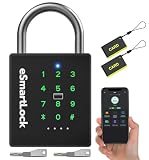
Overview: The eLinkSmart P12 Heavy Duty Smart Padlock delivers robust portable security for $69.99. Engineered for extreme conditions, it withstands 3200N pull resistance and operates from -4°F to 122°F. Five access methods include RFID cards, passcode, mobile app, Apple Watch, and mechanical key. The IP67 rating exceeds most competitors, while the 24-month standby battery life sets industry benchmarks.
What Makes It Stand Out: Its military-grade durability and two-year battery life distinguish it from consumer-grade alternatives. The hardened stainless steel shackle and zinc alloy body resist cutting and cracking in harsh outdoor environments. RFID card access provides reliable entry when wet conditions might affect fingerprint readers, making it perfect for industrial gates and marine applications.
Value for Money: While $20 more than basic smart padlocks, the P12’s extreme durability and 4x battery life justify the premium for demanding applications. Comparable industrial smart locks cost $100+, making this a cost-effective solution for challenging environments. The ultra-long battery reduces maintenance visits.
Strengths and Weaknesses: Pros include exceptional IP67 waterproofing, two-year battery life, heavy-duty construction, multiple reliable access methods, and wide temperature range. Cons are higher price, overkill for light indoor use, and larger size limiting some applications.
Bottom Line: The ultimate smart padlock for harsh environments. Choose this for outdoor gates, storage units, and industrial applications where reliability and durability are non-negotiable.
6. Fingerprint Smart Door Lock with Handle & Keypad – Bluetooth Keyless Entry for Front Door, Home, Kids, Guests, Airbnb & Rental, App + Code Access, Compatible with Alexa & Google, Easy DIY Install

Overview: This smart lock delivers comprehensive keyless entry through Bluetooth connectivity, eliminating the need for WiFi while providing robust security for homes and rental properties. The integrated handle design streamlines installation and creates a unified aesthetic for front doors. Engineered for families and property managers, it supports fingerprint recognition, keypad codes, mobile app control, FOBs, and traditional keys.
What Makes It Stand Out: The 0.3-second fingerprint recognition sets a new speed standard for biometric entry at this price point. Bluetooth direct control offers reliable local management without WiFi vulnerabilities, making it ideal for rental properties where network access varies. The heavy-duty deadbolt construction provides commercial-grade physical security, while Alexa/Google integration enables voice commands for smart home ecosystems. Multiple unlock methods ensure access during power outages or phone failures.
Value for Money: At $79.99, this lock punches well above its weight class. Comparable fingerprint-enabled deadbolts typically retail for $120-150, while basic keypad-only models start around $60. The inclusion of a handle assembly, Bluetooth connectivity, and smart home compatibility makes this an exceptional mid-range value for tech-savvy homeowners and Airbnb hosts seeking professional-grade features without premium pricing.
Strengths and Weaknesses: Strengths: Lightning-fast fingerprint sensor; five versatile entry methods; straightforward DIY installation; robust deadbolt security; no mandatory WiFi subscription; comprehensive app management.
Weaknesses: Bluetooth range limits remote access to proximity; full Alexa/Google functionality may require additional hub; battery life varies with usage frequency; fingerprint sensor performance may degrade in extreme weather.
Bottom Line: An outstanding choice for rental properties and families wanting reliable biometric security without complexity. The Bluetooth-first approach balances convenience with security, though those needing true remote access should verify gateway compatibility.
7. Veise Keyless Entry Door Lock with 2 Lever Handles - Electronic Keypad Deadbolt, Easy Installation Digital Smart Front Door Lock Set, Satin Nickel

Overview: Veise delivers a budget-conscious keyless entry solution emphasizing durability and simplicity. This lever-handle set replaces traditional knob setups with ergonomic design while providing electronic keypad access for up to 20 permanent users. The satin nickel finish and clean lines suit diverse architectural styles, from classic to contemporary.
What Makes It Stand Out: ANSI Grade 3 certification and BHMA compliance provide verified durability rarely seen under $50. The anti-peeping password feature allows entering random digits before/after your actual code, defeating shoulder-surfing attacks. Automatic lockdown after 10 failed attempts adds brute-force protection. Dual lever handles offer superior ergonomics compared to knob-based systems, particularly beneficial for elderly users or those with mobility limitations.
Value for Money: At $48.97, this represents the entry-level sweet spot for reliable electronic locks. While lacking biometric features, it costs 30-40% less than fingerprint-equipped alternatives. The IP54 weather resistance and 200,000+ cycle testing ensure longevity that cheap imports can’t match. For budget-focused homeowners prioritizing durability over smart features, this offers maximum security per dollar spent.
Strengths and Weaknesses: Strengths: Exceptional price point; certified durability standards; intelligent anti-peep technology; ergonomic dual handles; robust intrusion protection; no subscription fees.
Weaknesses: No fingerprint or smartphone app control; limited to 20 codes; no smart home integration; requires manual programming at the keypad; no remote management capability.
Bottom Line: Perfect for those wanting dependable keyless entry without frills. The Veise lock excels in durability and core security features, making it ideal for primary residences where simplicity trumps smart connectivity.
8. Fingerprint Smart Deadbolt with Keypad – Keyless Entry Lock for Home, Apartment, Office, Airbnb, Rental, Kids & Seniors, App & Code Access, Auto-Lock, Easy DIY Install, Compatible with Alexa & Google

Overview: This premium smart deadbolt caters to high-traffic environments with capacity for 100+ fingerprints and access codes. Designed for multi-user scenarios like offices, large families, and active Airbnb rentals, it combines biometric convenience with comprehensive access management through a dedicated app and web portal. The reversible design accommodates both left and right-handed doors.
What Makes It Stand Out: Massive user capacity distinguishes it from competitors typically limited to 50 fingerprints. Privacy and passage modes offer flexibility for different scenarios—privacy mode disables all external entry, while passage mode keeps the door unlocked during gatherings. The one-touch lock function provides instant security without fumbling for phones or keys. Remote management capability via optional Sifely Gateway enables true property management from anywhere.
Value for Money: Priced at $89.99, this lock targets the premium tier of consumer smart locks. While $10-20 more than basic biometric models, the expanded capacity and advanced modes justify the cost for property managers. The gateway requirement for remote access adds expense, but the base system provides exceptional value for those managing numerous users or frequent guest turnover.
Strengths and Weaknesses: Strengths: Industry-leading fingerprint/code capacity; versatile privacy/passage modes; comprehensive app controls; reversible installation; robust anti-peep protection; scalable remote management.
Weaknesses: Gateway sold separately for full functionality; highest price in this comparison; may be overkill for single-family homes with few users; complex initial setup for non-tech-savvy owners.
Bottom Line: The ultimate solution for high-turnover rentals and large households. If you manage multiple users weekly, the capacity and remote-ready architecture make this worth the premium over simpler models.
9. Fingerprint Smart Deadbolt with Keypad – Keyless Entry Lock for Home, Apartment, Office, Airbnb, Rental, Kids & Seniors, App & Code Access, Auto-Lock, Easy DIY Install, Compatible with Alexa & Google

Overview: Identical in specifications to Product #8, this smart deadbolt offers the same robust feature set including 100+ fingerprint capacity, multiple unlock methods, and comprehensive app control. Engineered for versatility across residential and commercial applications, it installs on virtually any standard door with minimal tools. The system scales from single-family homes to multi-unit rental properties.
What Makes It Stand Out: This variant delivers the exact same premium capabilities as its $89.99 counterpart—privacy/passage modes, anti-peep technology, one-touch locking, and optional remote management via Sifely Gateway. The expansive user database and flexible scheduling make it equally suitable for office buildings, extended families, and short-term rental hosts requiring granular access control.
Value for Money: At $79.99, this represents a $10 savings over Product #8 for identical functionality. This pricing anomaly makes it the undisputed value leader in the high-capacity biometric lock category. You receive the same 100+ user capacity, app ecosystem, and smart home compatibility without the premium markup. For budget-conscious property managers, this effectively provides a 12% discount on enterprise-grade features.
Strengths and Weaknesses: Strengths: Same high capacity as premium models; significant cost savings; comprehensive access management; scalable remote capability; multiple security modes; easy DIY installation.
Weaknesses: Gateway required for full remote/Alexa features; potentially confusing duplicate product line; over-specified for small households; app learning curve for elderly users.
Bottom Line: Choose this over Product #8 without hesitation—the identical feature set at a lower price makes it the smarter purchase. Ideal for Airbnb hosts and property managers needing maximum user flexibility.
10. Bluetooth Fingerprint Smart Lock with Handle & Keypad – Fits Most US Doors, DIY Install, Keyless Entry: Code, FOB, Auto-Lock. Ideal for Home, Airbnb, Rental, Kids, Seniors. Alexa & Google Compatible

Overview: This comprehensive smart lock integrates a door handle with six entry methods, targeting the US residential market with standard door compatibility. The system emphasizes rental property utility through time-limited code generation and detailed access logs. Bluetooth connectivity enables local smartphone control without mandatory WiFi, while preserving expandability for voice assistant integration.
What Makes It Stand Out: Six unlock methods provide unmatched redundancy—fingerprint, keypad, FOB, app, code, and mechanical key ensure access in any scenario. Time-limited codes offer superior rental management compared to simple one-time passwords, allowing hosts to set check-in/check-out windows automatically. The tool-free installation design accommodates doors from 1-3/8" to 2-1/4" thick, covering 95% of US residential entryways.
Value for Money: At $79.99, this lock competes directly with Product #6 while adding time-limited codes and broader door compatibility. The inclusion of a handle assembly and six entry methods makes it slightly more versatile than similarly priced competitors. While requiring a gateway for full remote features, the base Bluetooth functionality provides excellent value for local management needs.
Strengths and Weaknesses: Strengths: Six versatile unlock methods; time-limited code flexibility; broad US door compatibility; straightforward installation; comprehensive access logging; rental-focused features.
Weaknesses: Remote features require separate gateway purchase; Bluetooth range limitations; battery dependence; fingerprint sensor may struggle with wet fingers; app occasionally experiences connectivity hiccups.
Bottom Line: A top contender for Airbnb hosts seeking flexible access scheduling. The time-limited codes and broad door compatibility make it more versatile than basic biometric locks, though full potential requires additional investment.
Why Keypad Locks Are a Game-Changer for Working Parents
The modern family schedule resembles a complex logistics operation more than a simple routine. Between fluctuating work demands, extracurricular activities, and the unpredictable nature of childhood, rigid systems fail spectacularly. Keypad locks introduce the flexibility that traditional security simply cannot match. You gain the ability to grant access instantly, monitor arrivals in real-time, and eliminate the daily worry of whether your child successfully made it inside.
The Psychology of Independence for School-Aged Children
Children crave autonomy, and the ability to let themselves into their own home represents a significant developmental milestone. Research in child psychology shows that age-appropriate independence builds self-esteem and decision-making skills. A keypad lock becomes more than a security device—it’s a trust-building tool. When your child enters their unique PIN, they’re not just opening a door; they’re demonstrating responsibility and earning your confidence. This small act of daily independence can reduce separation anxiety and foster a sense of capability that extends into other areas of their lives.
Safety Concerns That Traditional Keys Can’t Address
A lost key isn’t just an inconvenience; it’s a security vulnerability. Once a key is missing, you face an expensive choice: rekey your entire home or risk that it’s fallen into the wrong hands. Children are particularly prone to losing keys at school, on buses, or during play. Worse yet, keys can be duplicated without your knowledge at any hardware store. Keypad locks eliminate this vulnerability entirely. If a PIN is compromised, you can delete it instantly from your phone and create a new one in seconds—no locksmith required.
Understanding Keypad & PIN Access Technology
Before diving into features, it’s crucial to understand the underlying technology that makes these locks reliable (or problematic) in real-world family use. Not all keypad locks are created equal, and the differences can significantly impact your daily experience.
Mechanical vs. Electronic Keypads: What’s the Difference?
Mechanical keypad locks operate without batteries or electricity, using a series of push-button tumblers to release the deadbolt. They’re exceptionally reliable and work in extreme weather, but they lack smart features like remote access or activity logs. Electronic keypads, powered by batteries or hardwired connections, offer the connectivity modern families expect. They can send notifications, integrate with home automation, and support multiple user codes. For after-school routines, electronic models provide the monitoring capabilities that give parents true peace of mind.
Battery Life and Power Backup Considerations
Most quality electronic keypad locks run on four AA batteries lasting 6-12 months. Look for models with low-battery warnings that appear weeks before depletion—not the night before. Critical for families is the backup power solution: a 9V battery terminal on the exterior allows emergency power if batteries die completely. Some premium models include micro-USB ports or even tiny solar panels. Consider your climate; extreme cold can reduce battery life by 40%, so cold-weather families should prioritize locks with hardwire options or exceptional power management.
Connectivity Features: WiFi, Bluetooth, and Z-Wave Explained
Your lock’s connectivity determines how you interact with it remotely. Bluetooth-only locks work within 30-40 feet, perfect for letting yourself in hands-free but useless for checking on your kids from the office. WiFi-enabled locks offer true remote access but consume more battery. Z-Wave and Zigbee locks connect through smart home hubs, offering reliability and extended battery life but requiring additional hardware. For after-school monitoring, WiFi or hub-connected locks are essential for receiving real-time arrival notifications.
Essential Features for Family-Friendly Keypad Locks
The difference between a basic keypad and one that truly transforms your routine lies in specific family-oriented features. These capabilities turn a simple lock into a comprehensive security management system.
Multiple User Code Management
Every family member should have their own unique PIN. This isn’t just about security—it’s about accountability. When your 12-year-old arrives home at 3:47 PM, you receive a notification identifying them specifically. Quality locks support 20-30 individual codes, allowing you to assign codes to babysitters, relatives, and trusted neighbors. The best systems let you set schedules: your housekeeper’s code works only on Tuesdays between 10 AM and 2 PM, while your teenager’s code is valid daily until 10 PM.
Temporary PIN Generation for Situations
Life is unpredictable. Your child forgets their gymnastics bag and needs to send a friend to grab it. A pipe bursts and you need to grant a plumber immediate access. Premium keypad systems allow you to generate single-use or time-limited PINs from your phone. These codes expire automatically, eliminating the security risk of sharing your child’s permanent code. Some systems even create QR codes that can be scanned at the lock, perfect for one-time access without memorizing numbers.
Auto-Lock and Customizable Timers
Kids are forgetful. A door left unlocked for three hours defeats the purpose of a security system. Auto-lock features automatically secure the door 30 seconds after entry—configurable from 10 seconds to 10 minutes. Advanced models offer different timers based on user: your responsible teen might have a 5-minute window, while your distractible second-grader gets 30 seconds. This feature alone prevents countless security lapses.
Tamper Alerts and Lockout Notifications
When someone enters an incorrect code five times, is your lock silently ignoring them or actively protecting you? Quality locks trigger tamper alerts to your phone and can initiate a temporary lockout period. Some models even capture photos or videos of the person attempting entry. For families, this feature catches curious neighborhood kids or potential security threats while preventing your child from being locked out after fumbling their code.
Age-Appropriate Access Solutions
A kindergartener and a high school senior have vastly different capabilities and security needs. Your lock system should adapt to these developmental stages.
For Elementary Schoolers (Ages 5-10)
Young children need simplicity and supervision. Opt for locks with large, backlit buttons and the ability to set 4-digit codes (versus 6-8 digits). Consider locks with audio feedback—a chime confirming correct entry helps anxious children know they’ve succeeded. Many parents create a simple pattern rather than a random number (1-3-5-7 is easier to remember than 8-2-9-4). Pair the lock with a doorbell camera so you can visually confirm your child arrived safely and entered successfully.
For Tweens (Ages 11-13)
This age group needs accountability without feeling micromanaged. They benefit from locks with activity logs they can access themselves, building trust through transparency. Consider codes that work only during expected arrival windows—if your 12-year-old is supposed to be home by 4 PM, their code disables at 4:30 PM, prompting a conversation about responsibility. Some locks allow tweens to generate their own temporary codes for friends (with parental approval), teaching digital stewardship.
For Teenagers (Ages 14+)
Teens require sophisticated features that respect their growing independence while maintaining household security. Look for locks that integrate with their smartphone, allowing them to unlock via app or even voice command. Geofencing capabilities can automatically unlock the door as they approach (and lock it as they leave). Most importantly, ensure the lock logs all entries and exits—teens should know you can see when they came home at 2 AM on a school night, creating natural accountability.
Installation and Integration Considerations
The best lock in the world becomes a nightmare if it doesn’t fit your door, drain your wallet with installation costs, or refuse to communicate with your other smart devices.
DIY vs. Professional Installation
Most keypad locks are designed for DIY installation requiring only a screwdriver and 30 minutes. However, factors complicate this: non-standard door thickness, integrated deadbolt-lock combos, or older doors with misaligned strike plates. If you’re not comfortable chiseling out a deeper recess for the strike plate or your door has a mortise lock, professional installation ($100-$200) is worth the investment. For renters, look for locks that install over existing hardware without permanent modifications.
Smart Home Ecosystem Compatibility
Your lock shouldn’t exist in isolation. If you have Amazon Alexa, Google Home, or Apple HomeKit, ensure your lock integrates seamlessly. This allows voice commands like “Alexa, lock the front door” and enables routines: when your child’s code is entered, the system can turn on lights, adjust the thermostat, and send you a notification. Check if the lock requires a separate bridge or hub—some “WiFi” locks actually need a $50 adapter plugged into your router.
Weatherproofing for All Climates
That sleek touchscreen looks fantastic in the store but may fail in freezing rain. For cold climates, prioritize locks with physical buttons (they work with gloves) and operating ranges down to -40°F. Coastal families need marine-grade finishes that resist salt corrosion. Hot, sunny regions require UV-resistant keypads that won’t crack or fade. Look for IP65 or higher ratings ensuring protection against dust and water jets. Test the lock’s performance with wet fingers—kids often arrive home in the rain.
Security Features That Matter Most
While convenience is important, security remains paramount. Understanding what truly protects your family versus marketing fluff is critical.
Encryption Standards and Data Protection
Your lock is a computer on your door, and computers can be hacked. Ensure any smart lock uses AES 128-bit or higher encryption for data transmission. Research the manufacturer’s security track record—have they issued patches for vulnerabilities? Do they offer two-factor authentication for the associated app? Avoid locks that store user codes locally without encryption. For maximum security, choose locks that process PINs on the device itself rather than in the cloud, preventing interception.
Anti-Tamper Technology
Beyond lockout features, premium locks include reinforced strike plates with 3-inch screws that anchor deep into the door frame, preventing kick-ins. Some models detect forced entry attempts and trigger alarms while automatically notifying emergency contacts. Look for locks with decoy codes—entering a specific wrong PIN can silently alert authorities while appearing to work normally to an intruder. For families, this provides a duress code for children: if forced to open the door, they enter their code backward, alerting you without tipping off the threat.
Emergency Override Options
Technology fails. Batteries die, circuits malfunction, and software glitches. Every electronic lock must have a physical key override—test its quality. The keyway should be pick-resistant and bump-proof. Some locks include hidden mechanical buttons that open the lock when pressed in a specific sequence, providing backup access without carrying a key. Ensure your children know these override procedures and practice them quarterly.
Creating a Seamless After-School Routine
A lock is just a tool; its effectiveness depends on how you integrate it into your family’s workflow. Thoughtful implementation transforms security from a barrier into a supportive system.
Setting Up Your Entry Schedule
Map your family’s weekly schedule before programming codes. Does your child have early dismissal Wednesdays? Do they go to a neighbor’s house on Fridays? Program your lock’s schedule accordingly. Create buffer time—if school ends at 3:15 PM, make codes valid from 3:00 PM to account for early buses. Set up different schedules for holidays and summer break. The best systems allow you to clone schedules between users, saving setup time for families with multiple children.
Integrating with Security Cameras
A lock without visual verification tells only half the story. Pair your keypad lock with a video doorbell or porch camera. When your child’s code is entered, the system can automatically record video and save it with the entry log. This creates a complete security picture: you see not just that Jessica arrived at 3:52 PM, but that she was alone and appeared unharmed. Some systems can even recognize faces, alerting you if someone other than your child uses their code.
Coordinating with Caregivers and Neighbors
Your lock system should extend beyond immediate family. Create neighbor codes for emergencies—perhaps they work only when initiated by a phone call from you. Set up caregiver codes with time restrictions and automatic expiration (e.g., the summer babysitter’s code deactivates automatically on August 31st). Use temporary PINs for one-off situations rather than sharing your child’s code. Document who has what code in a secure password manager, never in an unsecured note on your phone.
Common Mistakes Parents Make
Even the best lock becomes ineffective when implemented poorly. Learn from others’ errors to avoid compromising your family’s security.
Overly Complex PIN Codes
In an effort to maximize security, parents often create 8-digit random codes that children forget within days. This leads to kids writing codes down (a major security risk) or getting locked out. For children under 10, 4-digit pattern-based codes work best. For older kids, use 6-digit codes derived from memorable dates (but not birthdays or addresses). Change codes when they become compromised, not on an arbitrary schedule that confuses everyone.
Neglecting Regular Code Updates
While you shouldn’t change codes monthly, you must update them when circumstances change. When your child has a falling out with a friend who knew their code, change it immediately. When a babysitter quits, delete their code before they leave your home. When your tween gets their first phone and starts sharing everything, it’s time for a new PIN. Schedule quarterly family code reviews—it’s a great time to discuss security habits.
Ignoring Activity Log Monitoring
Most parents set up notifications then never review the logs. This misses valuable insights. Are entries getting later each week? Is your child entering at unusual times? Logs can reveal bullying (your child arrives an hour late but won’t say why), unauthorized guests (entries when your child is supposed to be elsewhere), or simple forgetfulness (multiple failed attempts before success). Review logs weekly not to spy, but to identify patterns that need conversation.
Budgeting for Your Family’s Security
Keypad locks range from $50 to $500, with vastly different capabilities. Understanding what you’re paying for ensures you don’t overspend on unnecessary features or underspend on critical security.
Understanding Price Tiers and Features
Budget tier ($50-$100) offers basic keypad entry with 10-20 codes but no smart features. Mid-range ($100-$200) adds WiFi connectivity, notifications, and scheduling. Premium ($200-$350) includes advanced encryption, video integration, and sophisticated automation. Ultra-premium ($350+) offers commercial-grade construction and enterprise-level security. For most families, mid-range locks provide the best balance of features and value. The ability to generate temporary codes and receive notifications is worth the extra $50 over basic models.
Hidden Costs to Factor In
That $120 lock might require a $50 WiFi bridge. Professional installation adds $100-$200. Monthly cloud storage for video logs ranges from $3-$10. Battery costs add up—rechargeable batteries pay for themselves within a year. Some locks require proprietary battery packs costing $30 each. Extended warranties and support plans seem unnecessary until your lock fails at 5 PM on a Friday in January. Budget 20% above the lock’s price for these ancillary costs.
Warranty and Support Considerations
Look for locks with at least a 2-year warranty covering electronic and mechanical components. Lifetime warranties on the finish are standard but less important. More critical is support availability: does the company offer 24/7 phone support, or only email tickets? Read reviews about warranty claims—some manufacturers require you to ship the lock back at your expense, leaving your door unsecured for weeks. Companies with advanced replacement policies send a new lock immediately with a return label for the defective unit.
Teaching Kids Digital Security Habits
A keypad lock introduces children to digital security concepts that will serve them throughout their lives. Use it as an educational tool.
The Importance of PIN Confidentiality
Children naturally want to share secrets with friends. Establish a clear family rule: PINs are never shared, just like passwords. Role-play scenarios where a friend asks for their code. Teach them to say, “My parents change it all the time, so I don’t even know it,” rather than admitting they’re not allowed to share. For younger kids, frame it as a “family secret” rather than a security measure. When they get their first bank card, they’ll already understand PIN protection.
Creating Memorable Yet Secure Codes
Involve your child in creating their PIN. Use patterns on the keypad (a diamond shape: 1-3-5-7-9), math sequences (2-4-8-16, using the last digits), or codes from favorite books (page numbers). Avoid obvious choices like 1234, 0000, or repeating numbers. Teach them to shield the keypad when entering their code, just like at an ATM. Practice entering codes quickly and discreetly until it becomes muscle memory.
What to Do If They Forget
Every child will forget their code at least once. Establish a protocol: they call you first (never a neighbor), you verify their identity, then provide a temporary code that works for one hour. Keep a secure backup list of codes in a password manager like Bitwarden or 1Password—never in your phone’s contacts or a physical notebook. Some families create a “family code” that’s easy to remember and use it as a backup, changing it monthly. The goal is balancing security with compassion; being locked out is scary for a child.
Maintenance and Troubleshooting
Like any technology, keypad locks require regular maintenance to function reliably when your child is standing at the door in the rain.
Battery Replacement Schedules
Don’t wait for low-battery warnings. Replace batteries every 6 months during daylight saving time changes—a memorable schedule. Use lithium batteries in extreme climates; they perform better in temperature swings and last 40% longer. Keep a battery tester handy and check voltage quarterly. When batteries drop below 30%, replace them proactively. Teach older children how to change batteries, and keep spares in an accessible but secure location (not in the garage they can’t access).
Weather-Related Performance Issues
Touchscreen locks can become unresponsive in temperatures below 20°F or above 100°F. Physical button locks perform more reliably in extremes. Moisture causes short-circuits in poorly sealed units. If you live in a wet climate, apply dielectric grease to battery contacts annually. In snowy regions, install a small awning over the lock to prevent ice buildup. Clean the keypad monthly with a damp cloth—salt and dirt from fingers can cause buttons to stick or fail to register.
When to Call a Professional
If your lock starts draining batteries every month instead of every six, there’s likely a wiring short or motor issue. Grinding noises indicate a failing actuator that will eventually jam. Failed circuit boards after the warranty period often cost more to repair than replace. However, if the lock is less than a year old and malfunctioning, insist on warranty service. Don’t attempt to repair electronic components yourself—modern locks contain encrypted chips that require specialized equipment to service.
Frequently Asked Questions
How old should my child be before they get their own keypad code?
Most children are ready around age 6-7, when they can reliably memorize a 4-digit number and understand the concept of keeping it secret. However, readiness depends more on maturity than age. If your child still struggles to remember phone numbers or frequently loses items, wait another year. Start with a simple pattern-based code and supervised practice before trusting them with independent access.
What happens if the power goes out while my child is at school?
Quality keypad locks run on batteries, not household power, so outages don’t affect them. However, if batteries are dead and power is out, backup options kick in. Most locks have a 9V battery terminal on the exterior—holding a 9V battery to it provides temporary power. Keep one in your child’s backpack. Mechanical override keys work regardless of power, but ensure your child knows where the key is hidden (a lockbox is ideal) and how to use it.
Can my child’s friends guess their code by watching them enter it?
Teach your child to shield the keypad with their body while entering their code, just like at an ATM. Advanced locks have “scramble” features that let you enter random digits before and after the real code as long as the correct sequence appears somewhere. For example, if the code is 2580, entering 425807 prevents pattern recognition. Some premium models randomize button positions on the screen, making shoulder-surfing impossible.
How do I handle custody arrangements with a keypad lock?
Create separate codes for each parent and child. During custody transitions, you can remotely enable or disable codes if needed. More importantly, activity logs provide court-admissible proof of pickup and drop-off times. Some locks allow you to set “parent A” and “parent B” schedules where codes work only during designated custody periods. Never use the lock to deny court-ordered access—this could create legal liability.
Will a keypad lock work on my apartment door if I’m a renter?
Several manufacturers make renter-friendly locks that install over existing deadbolts without permanent modifications. These typically replace the interior thumb turn while leaving the exterior keyway unchanged, meaning your landlord’s key still works. Always check your lease and get written permission. Document the original condition with photos before installation, and keep the original hardware to reinstall when moving out.
How secure are keypad locks compared to traditional deadbolts?
A Grade 1 commercial-rated keypad lock is more secure than a standard residential deadbolt. The electronic components don’t weaken the physical locking mechanism—in fact, they often include reinforced strike plates and anti-drill plates. The vulnerability isn’t physical but digital. Choose locks with AES encryption, two-factor authentication, and a history of security updates. Avoid budget smart locks from unknown brands, as they may have unpatched vulnerabilities.
Can I set up my lock so my child can’t let themselves out without permission?
Most keypad locks are designed for entry only; exiting uses a traditional thumb turn that works regardless of lock status. However, some commercial-grade models offer “classroom mode” where the interior handle remains locked until a code is entered, preventing children from leaving unsupervised. This is generally unsafe for residential use due to fire code violations. A better solution is door sensors that alert you when the door opens from inside, allowing conversation rather than restriction.
What if my child enters the wrong code too many times and gets locked out?
Configure the lockout threshold appropriately—five attempts is standard, but you might increase it to ten for younger children. Set lockout duration to 5-10 minutes rather than 30. Most locks send you a notification after the third failed attempt, allowing you to intervene. Create a family protocol: after two failed attempts, they should call you rather than keep guessing. You can remotely unlock the door or provide a temporary code.
How do I prevent my child from sharing their code with friends?
Make code-sharing a serious family rule with clear consequences, but also address the underlying reasons. If your child is sharing their code because friends are pressuring them, role-play refusal techniques. Consider giving them the ability to generate temporary friend codes (with your approval) so they don’t feel powerless. Some locks support “guest” codes that work only when paired with the child’s code, requiring two-person authentication for entry.
Should I change my child’s code if they lose their phone?
Only if the phone had the lock’s app installed with admin privileges. If your child simply uses a basic user code, the phone being lost doesn’t compromise the lock. However, if they used the app to unlock the door via Bluetooth, immediately log into the admin panel and deactivate their phone as an authorized device. Use this as a teaching moment about device security and why admin privileges should remain with parents only.