Transforming your outdoor space from dark and uninviting to a meticulously illuminated showcase doesn’t require an electrician’s license or sky-high utility bills. Low-voltage outdoor spotlights with smart timers represent the sweet spot where safety, energy efficiency, and cutting-edge technology converge, giving homeowners professional-grade landscape lighting control from their smartphone. Whether you’re highlighting architectural details, creating dramatic uplighting effects on mature trees, or establishing a sophisticated security perimeter, these systems have revolutionized what’s possible for DIY enthusiasts and landscape professionals alike.
Gone are the days of manually flipping switches or dealing with finicky mechanical timers that lose accuracy with every power outage. Today’s smart timer technology integrates seamlessly with your home’s Wi-Fi network, responds to voice commands, and even adjusts automatically to seasonal changes in daylight. But with countless options flooding the market, understanding the nuanced differences between connectivity protocols, weather resistance ratings, and transformer specifications becomes critical to making an investment that will perform flawlessly for years. This comprehensive guide walks you through everything you need to know before selecting and installing your low-voltage outdoor spotlight system.
Top 10 Low-Voltage Outdoor Spotlights with Smart Timers
Detailed Product Reviews
1. ANGELHALO Smart Landscape Spotlights, Low Voltage IP65 Waterproof Outdoor Spotlights Compatible with APP/Voice/Alexa Control, Color Changing Lights for Yard Garden Pathway Lawn, 6 Pack
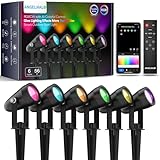
Overview: The ANGELHALO Smart Landscape Spotlights deliver vibrant RGB color-changing capabilities in a six-pack configuration designed for modern outdoor spaces. These IP65-rated fixtures offer app and voice control through 2.4G WiFi, allowing homeowners to create dynamic lighting displays for gardens, pathways, and special occasions without complex wiring.
What Makes It Stand Out: These spotlights excel with 16 million color options and music sync functionality that transforms outdoor gatherings into immersive experiences. The quartet of control methods—mobile app, remote, control box, and voice commands—provides unmatched flexibility. The die-cast aluminum construction and IP65 waterproofing ensure reliable performance across extreme temperatures, from scorching summers to freezing winters.
Value for Money: At $13.16 per spotlight, this six-pack offers competitive pricing for smart RGB landscape lighting. Comparable individual smart spotlights often retail for $20-25 each. The inclusion of multiple control options and robust weather resistance justifies the investment, though the 120VAC operation may limit integration with existing low-voltage systems.
Strengths and Weaknesses: Strengths:
- Extensive 16 million color palette with music synchronization
- Four versatile control methods including voice activation
- Durable aluminum alloy construction with IP65 weatherproof rating
- Simple ground-stake installation Weaknesses:
- Operates on 120VAC, incompatible with standard landscape transformers
- Requires 2.4G WiFi network (no 5GHz support)
- Adapter needs separate waterproof cover for outdoor use
Bottom Line: Ideal for homeowners seeking plug-and-play smart color lighting without existing low-voltage infrastructure. The ANGELHALO spotlights deliver impressive features and durability, though the 120VAC limitation requires careful planning for permanent installations.
2. EDISHINE 50FT Christmas Smart Low Voltage Landscape Spotlights, 300LM RGBW Color Changing Landscpae Lighting, APP Control Alexa & Google Home, IP67 Waterproof Outdoor Spot Lights for Yard Garden
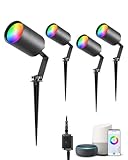
Overview: The EDISHINE Smart Spotlights offer an ultra-affordable entry into color-changing landscape lighting with a generous 50-foot cable length. These low-voltage fixtures provide RGBWW capabilities, delivering both vibrant colors and 3000K warm white illumination at 300 lumens, making them suitable for accent lighting and holiday decorations.
What Makes It Stand Out: The IP67 waterproof rating stands out in this price class, offering superior protection against heavy rain and snow compared to typical IP65 fixtures. The RGBWW design provides dedicated warm white mode alongside 16 million colors, while 12 preset scenes and music sync functionality create dynamic outdoor ambiance. Flexible spacing between lights allows customized layouts.
Value for Money: At just $5.00 per spotlight, this represents exceptional value—among the lowest prices for smart RGBW landscape lighting. However, the low cost reflects the 300-lumen brightness, which is modest for primary illumination. A separate low-voltage transformer is required but not included, adding to the total system cost.
Strengths and Weaknesses: Strengths:
- Unbeatable price point with IP67 waterproofing
- RGBWW capability with dedicated warm white mode
- 50FT cable with adjustable light spacing
- 12 scene modes and music synchronization Weaknesses:
- Low 300-lumen output limits lighting impact
- No transformer included; requires additional purchase
- Dewenwils app may be less refined than major platforms
- Limited to 2.4GHz WiFi networks
Bottom Line: Perfect for budget-conscious buyers wanting smart color accents. The EDISHINE lights deliver surprising features for the price, though the low brightness and missing transformer make them best suited for supplemental decorative lighting rather than primary illumination.
3. SURAIELEC 300W Wi-Fi Low Voltage Landscape Transformer with 2 Zones, 2.4GHz Smart Outdoor Low Voltage Transformer, Astronomial Timer, 120V to 12V/15V AC, Stainless Steel, ETL Listed

Overview: The SURAIELEC 300W Smart Transformer revolutionizes landscape lighting control with Wi-Fi connectivity and dual-zone management. This ETL-listed unit converts 120V AC to 12V/15V AC while providing independent scheduling for two separate lighting zones, making it ideal for sophisticated outdoor lighting systems.
What Makes It Stand Out: Dual independent zones allow customized scheduling for different areas—pathway lights can operate separately from accent lighting. The astronomical timer automatically adjusts on/off times based on sunrise and sunset, ensuring energy-efficient operation year-round. Built-in circuit protection and toroidal core design prioritize safety, while stainless steel construction withstands harsh weather.
Value for Money: At $109.99, this smart transformer commands a 40-50% premium over non-smart 300W units. The investment pays dividends through energy savings, automated scheduling, and zone control that would cost significantly more in separate components. The 240W practical load limit (80% rule) should be noted when planning system capacity.
Strengths and Weaknesses: Strengths:
- Dual-zone independent control maximizes flexibility
- Astronomical timer with sunrise/sunset automation
- Robust stainless steel, weatherproof construction
- ETL listed with auto circuit breaker protection
- Voice control via Alexa and Google Assistant Weaknesses:
- Practical load limited to 240W (not full 300W)
- 2.4GHz WiFi only; no 5GHz compatibility
- Requires technical knowledge for optimal setup
- App connectivity can be finicky during initial pairing
Bottom Line: An essential upgrade for serious landscape lighting enthusiasts. The SURAIELEC transformer justifies its premium price through intelligent automation and dual-zone control, though users must respect the 240W load limit and undergo a learning curve for setup.
4. APPECK Low Voltage Landscape Lights, Smart RGBW Color Changing Landscape Lighting with APP Control, IP65 Waterproof Outdoor Spotlights for Garden Yard Outside Decoration, 8 Pack

Overview: The APPECK Smart Landscape Lights offer premium customization with eight RGBW spotlights designed for tech-savvy homeowners. These low-voltage fixtures provide individual light control through the Smart Life app, enabling complex lighting scenes for gardens, patios, and holiday displays with robust weather resistance.
What Makes It Stand Out: Individual addressability sets these apart—each of the eight lights can display different colors simultaneously, creating stunning gradient effects. The 111+ built-in scenes and extensive programming options (saving, favoriting, cycling, timing) surpass most competitors. Multiple control methods include app, remote, control box, and voice integration for maximum versatility.
Value for Money: Priced at $12.50 per spotlight, these sit in the mid-range while offering advanced features typically found in premium systems costing $20+ per fixture. The eight-pack configuration provides excellent coverage for medium-to-large properties. The requirement for a separate transformer is the main additional cost consideration.
Strengths and Weaknesses: Strengths:
- Individual light control with 111+ scene modes
- RGBW with 16 million colors and 3000K warm white
- IP65 waterproof rating (-4°F to 140°F operating range)
- Multiple control options including voice commands
- Eight-light pack offers comprehensive coverage Weaknesses:
- Timer function requires app setup; no automatic activation
- 2.4GHz WiFi limitation
- Transformer not included
- Complex features may overwhelm casual users
Bottom Line: Best suited for enthusiasts wanting maximum creative control. The APPECK lights deliver exceptional customization and robust construction, making them ideal for elaborate holiday displays and year-round ambiance, though the learning curve and separate transformer requirement demand commitment.
5. All-in-One Low Voltage Landscape Lighting, Dusk to Dawn Transformer Timer, Waterproof Spotlights, Dimmable LED Outdoor Landscaping Lights Kit for Yard Backyard Tree House 24V Warm White 4 Pack
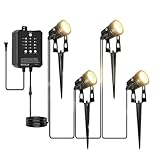
Overview: This all-in-one kit eliminates guesswork by bundling four dimmable warm white spotlights with a 24V transformer featuring a photocell sensor. Designed for plug-and-play simplicity, the system provides professional-grade accent lighting for gardens, trees, and architectural features without requiring separate component purchases or technical expertise.
What Makes It Stand Out: The integrated 24W transformer with photocell enables true dusk-to-dawn automation out of the box—no app or WiFi needed. The 270° adjustable heads and five brightness levels allow precise highlighting, while the compact “hidden pro design” lets fixtures disappear into landscaping. The 24V system exceeds the safety of standard 12V systems while delivering 30W halogen-equivalent output from just 3W LED chips.
Value for Money: At $45.99 for four lights plus a transformer, this kit offers extraordinary value—purchasing equivalent components separately would cost $70-90. The 80% energy savings versus halogen and 50,000-hour lifespan ensure long-term cost efficiency. The two-year replacement guarantee demonstrates manufacturer confidence.
Strengths and Weaknesses: Strengths:
- Complete all-in-one kit with transformer included
- True plug-and-play installation
- 24V low-voltage system with ETL-certified wires
- Five dimmable brightness levels with 270° adjustment
- Professional hidden design and robust IP65 weatherproofing
- Two-year replacement guarantee Weaknesses:
- Warm white only; no color-changing capability
- 24W transformer limits expansion beyond four lights
- No smart app or voice control
- Memory function may not suit complex scheduling needs
Bottom Line: The perfect starter kit for homeowners wanting reliable, energy-efficient accent lighting without complexity. This all-in-one solution delivers professional results at an unbeatable price, though users seeking color-changing or smart features should look elsewhere.
6. DEWENWILS 200W Smart Low Voltage Landscape Transformer, Waterproof, Schedule and Timer, Compatible with Alexa and Google Home, 120V AC to 12V AC for LED Landscape Lights, Outdoor Lighting, ETL Listed

Overview: The DEWENWILS 200W Smart Transformer brings intelligent control to outdoor lighting systems, converting standard 120V AC household current to safe 12V AC for landscape illumination. This ETL-listed unit integrates with popular voice assistants and offers comprehensive scheduling options for automated operation. With a robust metal housing and overload protection, it’s engineered for year-round outdoor installation.
What Makes It Stand Out: Voice control integration through Alexa and Google Home sets this transformer apart, allowing hands-free operation without a hub. Its five timer modes—including schedule, circulate, random, countdown, and manual—provide exceptional flexibility, particularly the vacation mode for security-conscious homeowners. The overload protection automatically disconnects when current thresholds are exceeded, safeguarding connected LED and halogen fixtures from electrical damage.
Value for Money: At $95.99, this transformer sits in the mid-range for smart landscape power supplies. The premium over non-smart alternatives is justified by remote access, voice commands, and advanced scheduling that traditional timers cannot match. While higher-wattage options exist, 200W adequately powers most residential landscape setups, making it a cost-effective entry into smart outdoor lighting.
Strengths and Weaknesses: Strengths include robust voice assistant compatibility, versatile timer functions, durable weatherproof construction, and comprehensive safety features. The 2.4GHz Wi-Fi limitation may concern some users, and the requirement for Dewenwils app authorization adds an extra setup step. AC output restricts compatibility with DC-only fixtures, and synchronous control means all lights operate on the same schedule.
Bottom Line: This transformer is ideal for homeowners seeking convenient smart control over medium-sized landscape lighting systems. The combination of voice integration, flexible scheduling, and reliable protection makes it a solid investment for upgrading outdoor illumination.
7. SURAIELEC 300W Smart Landscape Lighting Transformer, 2.4 Ghz Wi-Fi Low Voltage Outdoor Light Timer for Spotlight, Pathway Light, Alexa & Google Assistant Compatible, Astronomical Timer, ETL Listed

Overview: The SURAIELEC 300W transformer delivers robust power and intelligent automation for extensive landscape lighting installations. Converting 120V to 12V/15V AC, this stainless steel unit handles larger loads while offering sophisticated control through the Smart Life app and voice assistants. Its astronomical timer automatically adjusts to local sunrise and sunset times for effortless operation.
What Makes It Stand Out: Multi-tap outputs (12V and 15V) distinguish this unit, allowing voltage selection to compensate for line loss over long wire runs. The astronomical timer eliminates manual seasonal adjustments, while the memory function preserves settings through power outages. Its 300W capacity supports substantial lighting arrays, and the lockable NEMA 3R stainless steel enclosure provides superior weather resistance and security.
Value for Money: Priced at $103.99, this transformer offers excellent value for high-capacity smart applications. The modest premium over 200W models buys 50% more power capacity and voltage flexibility crucial for professional-grade installations. Compared to purchasing multiple smaller transformers, this single-unit solution reduces complexity and installation costs.
Strengths and Weaknesses: Strengths include higher wattage capacity, dual voltage outputs, durable stainless construction, astronomical timing, and reliable memory retention. However, all outputs operate synchronously—no independent zone control. The 2.4GHz Wi-Fi restriction and lack of 5GHz support may limit placement options. Setup requires the Smart Life app, which some users find less intuitive than proprietary alternatives.
Bottom Line: Perfect for larger properties requiring extensive lighting coverage, this transformer combines professional-grade capacity with smart convenience. The voltage selection feature and astronomical timer make it a top choice for discerning homeowners planning comprehensive landscape illumination.
8. DEWENWILS 60W WiFi Low Voltage Transformer, 120V AC to 12V DC, Smart Outdoor Low Voltage Landscape Transformer with Timer, Work with Alexa & Google Home, Weatherproof for Landscape Lights, ETL Listed

Overview: The DEWENWILS 60W Transformer provides an affordable entry point into smart landscape lighting control, converting 120V AC to 12V DC for low-voltage fixtures. This compact unit integrates with Alexa and Google Assistant through the Smart Life app, offering automated scheduling for smaller outdoor lighting applications. Its lightweight PC housing and straightforward installation make it accessible for DIY enthusiasts.
What Makes It Stand Out: DC output capability at this price point is notable, specifically catering to LED fixtures requiring direct current. The inclusion of astronomical timer mode alongside four other scheduling options provides premium features typically found in higher-priced units. Auto-resetting circuit protection enhances safety by automatically restoring operation after overload resolution without manual intervention.
Value for Money: At $45.99, this represents exceptional value for smart transformer technology. The price point makes intelligent lighting control accessible for modest budgets, though the 60W capacity limits application scope. For small-scale installations like deck lighting or accent features, it delivers core smart functionality without unnecessary expense.
Strengths and Weaknesses: Strengths include affordability, DC output compatibility, astronomical timer, automatic overload protection, and easy installation. Critical limitations include low power capacity restricting fixture quantity, DC-only output excluding AC halogen lights, and 2.4GHz-only Wi-Fi connectivity. The plastic housing, while weatherproof, lacks the premium feel of metal enclosures. No independent zone control means all lights follow the same schedule.
Bottom Line: An excellent budget option for small DC-powered landscape lighting projects. This transformer proves ideal for homeowners wanting smart control over limited accent lighting without investing in professional-grade equipment. Verify your fixtures’ DC compatibility before purchasing.
9. WILAWELS 120W Low Voltage Landscape Transformer, Weatherproof Outdoor Low Voltage Transformer, 120V AC to 12V DC, Landscape Lighting Transformer with Timer and Photocell Sensor, ETL Listed A03LT06
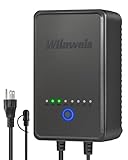
Overview: The WILAWELS 120W Transformer offers reliable automation through traditional photocell technology rather than Wi-Fi connectivity. Converting 120V AC to 12V DC, this unit provides dusk-to-dawn operation and countdown timing for landscape lighting systems. Its straightforward design prioritizes simplicity and reliability over smart home integration, making it ideal for users seeking hassle-free automation.
What Makes It Stand Out: The detachable photocell sensor delivers true set-and-forget operation, automatically responding to ambient light conditions without network dependency or app configuration. Four operational modes—including a visual test mode with indicator light—simplify setup and troubleshooting. The 6-foot sensor cable allows flexible placement for optimal light detection, while the memory function retains settings after power interruptions.
Value for Money: At $43.99, this transformer offers tremendous value for reliable automated lighting. It costs less than smart alternatives while providing essential timing functions without ongoing network requirements or potential connectivity issues. For users without smart home ecosystems, it delivers comparable automation benefits at a budget price.
Strengths and Weaknesses: Strengths include simple photocell operation, no Wi-Fi dependency, visual test mode for easy installation, automatic memory retention, and robust circuit protection. The DC output efficiently powers LED fixtures. However, lack of remote access or voice control limits flexibility compared to smart models. Photocell placement sensitivity may cause unwanted triggering from artificial light sources. The transformer supports only synchronous operation across all connected fixtures.
Bottom Line: This transformer suits homeowners wanting reliable automated landscape lighting without smart home complexity. Its photocell-based operation provides dependable dusk-to-dawn performance with minimal maintenance, making it perfect for traditional installations prioritizing simplicity over advanced features.
10. APPECK Landscape Lighting, RGBW Color Changing Low Voltage Landscape Lights with APP Control, IP65 Waterproof Outdoor Spotlights for Garden Yard Outside Decoration, 6 Pack
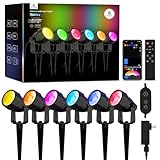
Overview: The APPECK 6-pack RGBW landscape lights transform outdoor spaces with dynamic color-changing capabilities. Each IP65-rated spotlight connects to low-voltage transformers (not included) and offers 16 million colors plus tunable warm white (3000K). Controlled via Smart Life app, remote, or voice assistants, these fixtures enable personalized outdoor ambiance for gardens, patios, and holiday decorations.
What Makes It Stand Out: Individual light control allows unique colors per fixture, creating sophisticated lighting scenes impossible with single-color systems. The built-in 111 scene modes provide instant atmospheric presets, while the app’s scene programming, saving, and cycling features enable complex automation. Combined remote, app, and voice control options offer unmatched operational flexibility for creative outdoor lighting designs.
Value for Money: At $69.99 for six smart RGBW lights, this package delivers excellent value compared to purchasing individual color-changing fixtures. The inclusion of multiple control methods and extensive scene libraries justifies the investment for decorative applications. However, remember to budget for a separate low-voltage transformer, as this lighting kit requires external power supply.
Strengths and Weaknesses: Strengths include per-fixture color control, extensive scene library, IP65 weatherproof rating, multiple control interfaces, and durable construction. The wide color spectrum and warm white option suit both festive and everyday use. Weaknesses include transformer requirement increasing total system cost, 2.4GHz Wi-Fi limitation, and timer functions restricted to app configuration. The lights operate synchronously in groups of eight, limiting independent scheduling complexity.
Bottom Line: These lights excel for homeowners seeking vibrant, customizable outdoor ambiance. Perfect for holiday displays, landscape accenting, and entertainment spaces, the APPECK system offers professional-level color control at consumer pricing. Pair with an adequate transformer for a complete smart lighting solution.
Understanding Low-Voltage Outdoor Lighting Systems
What Makes Low-Voltage Lighting Safer and More Efficient?
Low-voltage landscape lighting operates at 12-15 volts rather than the standard 120 volts running through your home’s outlets. This fundamental difference eliminates the risk of serious electric shock, making DIY installation not only possible but genuinely safe for homeowners. The reduced voltage also translates to significantly lower energy consumption—typically 80-90% less than traditional line-voltage systems—while still delivering impressive lumen output thanks to modern LED technology.
The efficiency story doesn’t end at the bulb. Low-voltage systems generate less heat, reducing fire risk and extending fixture lifespan. When paired with smart timers that optimize run times based on actual darkness rather than fixed schedules, you’ll see measurable reductions in your monthly electricity costs. Most homeowners recoup their initial investment within 18-24 months through energy savings alone.
The Role of Transformers in Your Setup
The transformer is the unsung hero of any low-voltage lighting system, stepping down your home’s 120-volt current to the safe 12-volt level your spotlights require. Smart transformers take this a step further by integrating timer functionality directly into the unit, eliminating the need for separate timer boxes that can become failure points. When evaluating transformers, pay close attention to the total wattage capacity—industry best practice recommends loading your transformer to only 80% of its rated capacity to prevent overheating and ensure longevity.
Multi-tap transformers offer even greater flexibility, providing multiple voltage terminals (12V, 13V, 14V, 15V) that compensate for voltage drop over long cable runs. This feature becomes crucial when your spotlight layout extends beyond 100 feet from the transformer, ensuring each fixture receives adequate power for consistent brightness across your entire installation.
Why Smart Timers Are Game-Changers for Outdoor Lighting
Energy Savings Through Intelligent Scheduling
Smart timers transcend simple on/off functionality by incorporating astronomical clocks that sync with your exact location’s sunrise and sunset times. This means your lights turn on precisely when needed—no earlier, no later—eliminating wasteful operation during daylight hours. Advanced systems can even adjust for seasonal variations automatically, something mechanical timers simply cannot match.
Geofencing capabilities represent another layer of intelligence, triggering your spotlights when your smartphone approaches home and shutting them down after you leave. This location-based automation ensures lights operate only when occupancy suggests they’re needed, cutting unnecessary runtime by an additional 15-25% compared to fixed astronomical schedules.
Security Benefits of Automated Lighting
A well-lit property remains one of the most effective deterrents against unauthorized access, and smart timers elevate this protection through randomized scheduling. When you’re away on vacation, the system can vary on/off times by 15-30 minutes each day, creating the illusion of occupancy that fools even observant potential intruders. Integration with security cameras and motion sensors allows for responsive lighting—spotlights can surge to full brightness when cameras detect movement, then return to ambient levels.
Customization and Scene Creation
Modern smart timer apps enable scene creation that transforms your outdoor space with a single tap. Program a “Welcome Home” scene that illuminates the driveway and entryway path, or a “Entertainment” scene that bathes the patio in warm accent lighting while highlighting key landscape features. These scenes can be scheduled, voice-activated, or triggered by other smart home devices, offering unprecedented control over your property’s nighttime aesthetic.
Key Features to Evaluate in Smart Timer Spotlights
Connectivity Protocols: Wi-Fi vs. Bluetooth vs. Proprietary
Your choice of connectivity protocol fundamentally shapes your system’s reliability and integration capabilities. Wi-Fi-enabled spotlights offer direct connection to your home network, enabling remote control from anywhere with internet access. However, outdoor Wi-Fi range limitations mean you may need mesh extenders for larger properties, and these devices consume more power in standby mode.
Bluetooth systems provide simpler setup and lower power consumption but sacrifice remote access—you’ll need to be within 30-50 feet to control them. Proprietary mesh networks like Zigbee or Z-Wave create self-healing networks where each fixture acts as a signal repeater, offering excellent range and reliability but requiring a compatible hub. For most homeowners, Wi-Fi systems with strong signal strength provide the best balance of convenience and capability.
Weather Resistance Ratings Explained (IP Codes)
That “IP65” or “IP67” rating on spotlight packaging isn’t marketing jargon—it’s a critical indicator of durability. The first digit represents dust protection (6 means completely dust-tight), while the second indicates water resistance. For outdoor spotlights, IP65 is the minimum acceptable rating, protecting against water jets from any direction. IP67 offers temporary immersion protection, beneficial in flood-prone areas.
Look for fixtures with IP68 ratings for submerged applications like pond lighting, though these command premium pricing. Pay equal attention to connector weatherproofing—many system failures originate not at the fixture but at poorly sealed cable connections. Silicone-filled wire nuts or heat-shrink connectors provide superior long-term moisture protection compared to standard twist-on connectors.
Lumen Output and Beam Angle Considerations
Landscape lighting requires subtlety, not stadium illumination. For highlighting small shrubs or garden art, 150-200 lumens with a 25-35 degree beam angle creates focused drama without harsh glare. Medium-sized trees and architectural columns need 300-400 lumens with 35-45 degree spread, while large facades or mature trees demand 500+ lumens and 45-60 degree beams for even coverage.
Variable beam angle fixtures offer maximum flexibility, allowing you to adjust from narrow spot to wide flood as your landscape matures. Remember that smart timers with dimming capabilities can reduce effective lumen output by 50-80%, so purchasing slightly brighter fixtures than initially needed provides headroom for future design changes.
Color Temperature and CRI for Natural-Looking Illumination
Color temperature dramatically affects your landscape’s nighttime appearance. Warmer temperatures (2700K-3000K) mimic traditional halogen lighting, creating inviting, cozy atmospheres perfect for residential settings. Cooler temperatures (4000K-5000K) render foliage more vividly but can feel institutional if overused. Most experts recommend 2700K for architectural lighting and 3000K for plant material.
Color Rendering Index (CRI) measures how accurately light reveals colors compared to natural sunlight. For landscape applications, insist on CRI of 80 or higher—anything lower makes your carefully chosen plantings appear washed out and unnatural. Premium fixtures offer CRI 90+, which is particularly important when lighting flowering plants or colorful hardscaping.
Dimming Capabilities and Dynamic Range
Not all dimming is created equal. Basic smart timers offer 5-10 preset brightness levels, while premium systems provide smooth 1-100% dimming with no perceptible stepping. This granularity matters when creating subtle ambient lighting versus dramatic accent effects. Look for fixtures with dedicated dimming drivers rather than simple voltage reduction, which can cause flickering and reduce LED lifespan.
Dynamic range becomes particularly important for security applications. The ability to program fixtures to operate at 20% brightness for ambient illumination, then surge to 100% when motion is detected, provides both energy savings and effective deterrence. Ensure your chosen system’s app allows for these complex, conditional brightness rules.
Installation Essentials for DIY Enthusiasts
Planning Your Layout: The 3-Foot Rule and Layering Technique
Successful landscape lighting follows the 3-foot rule: space spotlights 3 feet from the feature you’re illuminating and 3 feet apart from each other for even coverage. This prevents hot spots and ensures consistent light distribution. Before purchasing, walk your property at night with a powerful flashlight to preview effects—this low-tech approach reveals how shadows fall and which features truly deserve highlighting.
Layer your lighting in three tiers: ambient (overall illumination), task (pathways and entrances), and accent (focal points). Smart timers excel at managing these layers independently, allowing different zones to operate on separate schedules. Your transformer should have multiple common taps to support this zoning, enabling you to group spotlights by function rather than just proximity.
Cable Gauge and Voltage Drop Prevention
Voltage drop remains the most common cause of dim, uneven lighting in low-voltage systems. For runs under 50 feet, 16-gauge cable suffices. Extend to 100 feet and you need 14-gauge; beyond that, 12-gauge becomes necessary. Calculate voltage drop using the formula: (Length × Wattage × 2) / Cable Constant. If drop exceeds 1.5 volts, upgrade your cable gauge or move the transformer closer.
Smart timers with voltage monitoring can alert you to drop issues before they become visible. Some advanced systems even auto-compensate by slightly increasing output voltage to maintain consistent brightness across all fixtures—a feature worth the premium for large properties.
Connector Types and Waterproofing Best Practices
Avoid cheap pinch-clip connectors that pierce cable insulation—these fail within 1-2 years as moisture infiltrates the connection. Instead, use silicone-filled wire nuts or heat-shrink butt connectors for permanent, watertight splices. For fixture connections, look for brass or copper compression fittings with O-ring seals.
When burying cable, maintain a consistent 6-8 inch depth below grade and run it through PVC conduit under driveways or high-traffic areas. This protects against aerators, edgers, and curious rodents. Smart timer controllers should be housed in weatherproof enclosures rated NEMA 3R or higher, even if the device itself carries an IP rating.
Transformer Sizing: Calculating Total Wattage
Add the wattage of all planned spotlights, then multiply by 1.25 to account for inrush current and future expansion. A system with twelve 8-watt spotlights needs at least 120 watts of transformer capacity (96 × 1.25). Smart transformers with built-in timers should be sized even more conservatively—electronics generate heat, and overcrowding reduces reliability.
Consider a modular approach: two smaller transformers often outperform one large unit, providing redundancy and simplifying cable runs. This becomes especially valuable with smart timers, as you can control each transformer independently for true zone management.
Smart Timer Technology Deep Dive
Astronomical Timers vs. Fixed Schedules
Astronomical timers use your location’s coordinates to calculate precise sunrise and sunset times daily, adjusting automatically throughout the year. This eliminates the quarterly timer adjustment ritual and ensures optimal energy efficiency. Fixed schedules, by contrast, operate on set times that must be manually updated as daylight hours shift.
The best smart timers combine both approaches: astronomical scheduling with offset adjustments (e.g., turn on 30 minutes after sunset) and temporary fixed schedules for special events. Look for systems that store location data locally so they continue accurate astronomical calculations even if Wi-Fi connectivity is temporarily lost.
Integration with Smart Home Ecosystems
Your outdoor lighting shouldn’t exist in isolation. Smart timers that integrate with platforms like SmartThings, Hubitat, or Apple HomeKit allow for sophisticated automation: lights can respond to doorbell cameras, sync with indoor lighting scenes, or activate when smart locks are engaged. IFTTT (If This Then That) support opens virtually unlimited possibilities—program your spotlights to flash blue when it begins raining or turn red when air quality drops.
Before purchasing, verify compatibility with your existing ecosystem. Some manufacturers claim “works with Alexa/Google” but offer only basic voice on/off control, not full scene integration or status feedback. True integration allows you to include spotlights in complex routines and receive confirmation that commands executed successfully.
Voice Control and App Functionality
Voice control should extend beyond simple on/off commands. Premium smart timer systems enable brightness adjustments, scene activation, and zone control through natural language: “Alexa, set the backyard spotlights to 40%” or “Hey Google, activate entertainment mode.” This hands-free operation proves invaluable when your hands are full or during inclement weather.
App quality varies dramatically between manufacturers. Evaluate user reviews focusing on connectivity reliability, ease of scheduling, and speed of execution. The best apps offer offline local control via Bluetooth when Wi-Fi is down, customizable widgets for quick access, and guest access capabilities for property managers or house sitters. Avoid apps that haven’t been updated in over six months—this signals poor long-term support.
Firmware Updates and Long-Term Support
Your smart timer’s functionality will evolve—or deteriorate—based on firmware support. Reputable manufacturers release quarterly updates addressing security vulnerabilities, adding features, and improving compatibility. Check how long the company has been in the smart lighting space and their track record for supporting legacy products.
Cloud-dependent timers pose a risk: if the manufacturer discontinues service, your system becomes a “dumb” timer overnight. Prefer systems offering local control options and open APIs that community developers can maintain if corporate support wanes. This future-proofs your investment against the rapid obsolescence common in the smart home market.
Design Considerations for Maximum Curb Appeal
Uplighting vs. Downlighting Techniques
Uplighting—positioning spotlights at ground level to illuminate objects from below—creates dramatic, larger-than-life effects perfect for specimen trees and textured walls. This technique emphasizes shape and form, casting intriguing shadows that add depth. However, overdone uplighting can create a horror-movie aesthetic if fixtures are placed too close or use overly bright lamps.
Downlighting, achieved by mounting spotlights in trees or on structures to cast light downward, mimics natural moonlight and provides gentle, even illumination. This technique excels for pathways, patios, and broad plantings. Smart timers with dimming capabilities are essential for downlighting, as the effect should be subtle—think soft glow, not helicopter searchlight.
Highlighting Architectural Features
Your home’s best features deserve strategic illumination. Use narrow-beam spotlights (25 degrees) to graze brick or stone walls, emphasizing texture through shadow play. Columns benefit from two opposing lights to prevent flat, one-dimensional appearance. Window frames and entryways call for warmer color temperatures (2700K) to create welcoming focal points.
Smart timers allow you to vary these effects throughout the evening. Program architectural lighting to dim slightly after 11 PM, reducing light pollution while maintaining security. Some advanced systems can even create “moving” effects by subtly varying brightness between fixtures, preventing the static appearance that betrays artificial lighting.
Landscape Layering: Creating Depth and Drama
Professional landscape lighting designs employ three layers: foreground (path lights and small plants), midground (shrubs and small trees), and background (large trees and architectural elements). Each layer should be illuminated differently—foreground with wider beams and lower brightness, background with narrow, powerful spots.
Smart timers with zone control let you sequence these layers, perhaps illuminating background elements first at sunset, then foreground lighting an hour later as full darkness sets in. This creates a dynamic, evolving nighttime landscape rather than a static snapshot. Use cooler temperatures (3000K) for background layers to push them visually deeper, while keeping foreground lighting warmer (2700K) for intimacy.
Troubleshooting Common Issues
Connectivity Dropouts and Signal Interference
Outdoor smart devices frequently struggle with Wi-Fi connectivity. If your spotlights respond intermittently, first check for physical obstructions—metal siding, dense foliage, and even stucco can attenuate signals. Wi-Fi mesh extenders designed for outdoor use, placed strategically between your router and the furthest fixture, often solve range issues.
2.4GHz networks provide better range than 5GHz for outdoor applications, though at slower speeds. Ensure your spotlight system connects to the 2.4GHz band, and consider creating a dedicated IoT network to reduce congestion from streaming devices and smartphones. Some smart timers include signal strength indicators in their apps—use these to identify weak points in your coverage.
Voltage Drop Symptoms and Solutions
Dimming lights at the far end of your cable run indicate voltage drop. Confirm this with a multimeter: voltage should read between 10.5-12 volts at each fixture. Readings below 10 volts cause noticeable dimming and reduced LED lifespan. Solutions include upgrading cable gauge, shortening runs, or using a multi-tap transformer to increase voltage at the source.
Smart timers with individual fixture monitoring can pinpoint drop issues before they become visible, alerting you when a light’s power consumption deviates from baseline. This predictive maintenance prevents the cascade failures common in traditional systems where one failing fixture overloads the entire circuit.
Timer Malfunctions and Reset Procedures
When smart timers fail to execute schedules, the issue often lies in firmware glitches or lost internet connectivity rather than hardware failure. Most systems include a physical reset button—hold for 10-15 seconds to restore factory settings, then reconfigure. Before resetting, check the manufacturer’s status page for known outages.
For systems that lose time during power failures, verify the backup battery is functional. Many smart timers include small coin-cell batteries that preserve settings but not time. If your system can’t maintain accurate time offline, consider adding a UPS (uninterruptible power supply) to the transformer, ensuring both power and internet connectivity remain stable during outages.
Maintenance and Seasonal Care
Cleaning Lenses and Fixture Inspection
Mineral deposits from irrigation and atmospheric pollutants can reduce light output by 30-40% over a season. Clean lenses quarterly with a soft cloth and mild soap solution—never use abrasive cleaners that scratch optics. While cleaning, inspect fixture housings for cracks, compromised seals, or corrosion at connection points.
Smart timers can remind you of maintenance schedules, pushing notifications to your phone when it’s time for seasonal cleaning. Some advanced systems even monitor light output and alert you when brightness drops below a threshold, indicating dirty lenses or failing LEDs before the difference becomes obvious.
Winterization Strategies
In regions experiencing freezing temperatures, water infiltration into fixtures or connectors can cause catastrophic damage when it expands as ice. Ensure all connections are watertight before the first freeze, and consider elevating fixtures slightly in low-lying areas prone to standing water. LED performance actually improves in cold weather, but transformer electronics suffer—insulate transformer enclosures with foam board in extreme climates.
Smart timers with temperature monitoring can automatically reduce brightness during extreme cold, protecting LED drivers from thermal shock when they first activate. Program a “winter mode” that operates lights at 80% maximum brightness, extending component lifespan during the harshest months.
Bulb Replacement in Integrated LED Systems
Integrated LED spotlights eliminate bulb replacement but require different maintenance. When an integrated fixture fails after 25,000-50,000 hours, you replace the entire unit. Keep a few spare fixtures on hand for quick swaps, and document your installation with photos showing cable routing—finding buried cables years later proves challenging.
For systems with replaceable bulbs, smart timers can track operating hours per fixture, predicting failure before it occurs. This data proves invaluable for large installations, allowing you to group-replace bulbs reaching end-of-life rather than dealing with individual failures that disrupt your lighting design.
Cost Analysis and ROI
Initial Investment vs. Long-Term Savings
A quality low-voltage smart spotlight system costs $50-150 per fixture including cable and transformer, significantly less than line-voltage alternatives that require conduit and professional installation. Smart timers add $20-40 per fixture compared to manual systems, but this premium pays for itself within two years through energy savings and eliminated replacement costs of failed mechanical timers.
Consider the total cost of ownership: cheap fixtures with 1-year warranties may save money initially but require replacement every 2-3 years. Premium fixtures with 10-year warranties and smart timers with proven firmware support cost more upfront but amortize to less than $10 annually over their lifespan. Factor in your time value—reliable systems eliminate frustration and maintenance hours.
Energy Consumption Calculations
A typical 8-watt LED spotlight running 6 hours nightly consumes 17.5 kWh annually. At $0.13 per kWh, that’s $2.28 per fixture per year. Smart timers reduce runtime by an average of 30% through astronomical scheduling and occupancy optimization, cutting annual cost to $1.60 per fixture. A 12-fixture system saves approximately $8 annually—modest, but when combined with eliminated timer replacement costs and reduced maintenance, the economic argument strengthens.
More significantly, smart timers protect your LED investment by preventing premature failure from overvoltage or excessive heat. LEDs last 50,000+ hours when properly managed but can fail in under 10,000 hours with poor power quality. At $30-50 per fixture, protecting this asset becomes the real financial win.
Warranty Considerations
Warranty terms reveal manufacturer confidence. Lifetime warranties on fixtures often exclude electronics, so examine the separate warranty for smart timer components—3 years is standard, 5 years indicates premium quality. Read the fine print: some warranties require professional installation or exclude damage from voltage drop, effectively nullifying coverage for DIY installations.
Transferable warranties add value if you plan to sell your home, as they can be marketed as a premium feature. Document your installation with photos and keep all receipts; many warranty claims require proof of purchase and evidence of proper installation. Smart timers that log operating data can actually support warranty claims by proving you didn’t exceed rated duty cycles.
Safety and Code Compliance
NEC Guidelines for Low-Voltage Installations
While low-voltage systems don’t require permits in most jurisdictions, they must still comply with National Electrical Code Article 411. Key requirements include: transformers must be listed for landscape lighting, cable must be burial-rated (type UF or equivalent), and fixtures cannot be installed within 10 feet of pools or spas without additional protection. Smart timer controllers must be plugged into GFCI-protected outlets when cord-connected.
The NEC also mandates that cable splices be accessible, meaning you cannot bury direct connections without a junction box. Use above-grade valve boxes for splices, making future troubleshooting possible. While inspectors rarely examine low-voltage installations, following code ensures your homeowner’s insurance remains valid in case of incidents.
GFCI Protection Requirements
Even low-voltage transformers plugged into outdoor outlets require GFCI protection. The transformer primary (120V side) must connect to a GFCI outlet or breaker, while the secondary (12V side) remains unprotected. Test GFCI outlets monthly—moisture and temperature fluctuations cause more frequent failures in outdoor locations. A failed GFCI will cut power to your entire lighting system, often mimicking transformer failure.
Smart timers with power monitoring can alert you to GFCI trips by detecting total power loss, differentiating between local fixture issues and system-wide outages. This proves particularly valuable for vacation homes, where lighting failures can go unnoticed for weeks.
Burial Depth and Cable Protection
NEC requires low-voltage cable burial at least 6 inches deep, but 12 inches provides better protection from aeration and edging equipment. In areas subject to vehicle traffic, protect cable with PVC conduit buried 18 inches deep. Always call 811 before digging to locate underground utilities—low-voltage cable won’t cause service interruptions if cut, but digging without calling can result in hefty fines.
Mark your cable route with burial tape 6 inches above the cable, warning future excavators of the installation. Smart timer apps often include mapping features where you can photograph and geotag fixture locations, creating a digital as-built record that proves invaluable during landscaping projects or repairs.
Frequently Asked Questions
Can I add smart timers to my existing low-voltage landscape lighting system?
Yes, you can retrofit smart timer functionality by replacing your standard transformer with a smart transformer or adding a smart timer controller between your existing transformer and the cable run. However, ensure your current fixtures are LED-compatible—older halogen fixtures may draw too much power for smart controllers. The retrofit process typically takes under an hour and doesn’t require rewiring fixtures.
How reliable are smart timers during power outages and Wi-Fi disruptions?
Quality smart timers include battery backup that preserves schedules for 7-10 days without power. During Wi-Fi outages, most systems revert to the last programmed schedule and continue operating autonomously. Premium models store astronomical data locally, maintaining accurate sunrise/sunset timing even when offline. However, remote control and voice commands won’t function until connectivity restores.
What’s the realistic wireless range for Wi-Fi-enabled outdoor spotlights?
In open conditions, expect 100-150 feet from your router or access point. Each exterior wall between the router and fixture reduces range by 30-40 feet. Dense foliage, particularly evergreens, can attenuate signals significantly. For reliable operation beyond 150 feet, install a weatherproof Wi-Fi extender designed for outdoor use, positioning it halfway between your router and the furthest fixture.
Do smart timer spotlights work with 5G home internet or mesh networks?
Smart timers require 2.4GHz Wi-Fi, which all 5G home internet gateways and mesh systems provide. However, some mesh networks automatically steer devices to 5GHz bands, causing connectivity issues. Disable band steering for your lighting system or create a separate 2.4GHz-only network. Most mesh systems allow you to assign devices to specific access points—lock your transformer controller to the nearest node for optimal performance.
Can I control different zones independently with one smart timer?
This depends on your transformer’s design. Multi-channel smart transformers offer independent control of 2-4 zones, each with separate schedules and brightness levels. Single-channel transformers control all connected fixtures as one zone. For true zone control without replacing your transformer, install smart controllers at the beginning of each cable run, though this approach costs more than a multi-channel transformer upgrade.
How do I prevent my smart outdoor lights from being hacked?
Secure your network first: use WPA3 encryption, create a separate IoT network, and enable your router’s firewall. Choose smart timers that support two-factor authentication for app access. Regularly update firmware—manufacturers patch security vulnerabilities through updates. Avoid port forwarding to your lighting controller; instead, use cloud-based control that doesn’t require exposing your network. Disable any unused features like remote access when you’re home.
Will smart timers work in extreme temperatures from -20°F to 110°F?
Commercial-grade smart timers operate reliably from -40°F to 140°F, while consumer-grade units typically function from -4°F to 122°F. In extreme climates, install transformers in insulated enclosures or shaded locations to protect electronics. LED fixtures actually perform better in cold weather, producing more light as temperature drops. The weak point becomes connectors—thermal cycling causes expansion and contraction that can loosen connections, so use compression fittings and check them seasonally.
How many spotlights can I run on a single smart timer transformer?
Divide the transformer’s wattage rating by each fixture’s wattage, then multiply by 0.8 for the 80% safety factor. A 150-watt transformer can safely power fifteen 8-watt spotlights (150 ÷ 8 = 18.75 × 0.8 = 15). However, consider cable length—if fixtures extend beyond 100 feet, voltage drop effectively reduces capacity. For large installations, distribute loads across multiple smaller transformers rather than maxing out a single unit.
Do I need special cables for smart timer systems, or will my existing low-voltage wire work?
Standard 12-16 gauge low-voltage landscape cable works perfectly with smart timer systems. The intelligence resides in the transformer and fixtures, not the cable. However, if your existing cable shows corrosion, cracking insulation, or has been buried for over 10 years, replacement is wise. Smart timers are more sensitive to voltage drop than mechanical timers, so upgrading from 16-gauge to 14-gauge cable often improves performance even if the original installation worked acceptably.
What’s the expected lifespan of smart timer components compared to traditional mechanical timers?
Quality mechanical timers last 5-7 years before motor failure or contact wear. Smart timer electronics should function 10-15 years, but this assumes ongoing firmware support and app compatibility. The Achilles’ heel is the electrolytic capacitors in the power supply, which degrade faster in heat. Mount transformers in shaded, ventilated locations to maximize lifespan. LED fixtures paired with smart timers often outlast the timer itself, reaching 50,000+ hours (12+ years at 10 hours nightly).