Imagine walking into a room where the lights automatically adjust to your preferred brightness, the thermostat responds to your presence, and your security system intelligently distinguishes between family members and potential intruders—all without a single proprietary hub locking you into one ecosystem. This isn’t a futuristic fantasy; it’s the promise of Matter-compatible motion sensors in today’s increasingly connected world. As the smart home industry finally converges on a unified standard, homeowners and renters alike face a new landscape of possibilities where devices from different manufacturers actually talk to each other seamlessly.
The transition to Matter represents more than just another technical specification—it’s a fundamental shift toward true interoperability that puts control back in your hands. However, navigating this new terrain requires understanding not just what Matter is, but how to evaluate motion sensors that claim compatibility while ensuring they deliver on the promise of genuine multi-platform integration. Whether you’re building your first smart home or upgrading an existing system trapped in ecosystem silos, knowing what features matter (pun intended) will save you frustration, money, and countless hours of troubleshooting.
Top 10 Matter-Compatible Motion Sensors
Detailed Product Reviews
1. meross Matter Human Presence Sensor, 3-in-1 PIR & Light & mmWave Radar Motion Sensor, AI Motion Detector for Matter Smart Home Automation, Supports HomeKit, Alexa, Google, Home Assistant, 2.4GHz Wi-Fi

Overview: The meross 3-in-1 sensor combines PIR, millimeter wave radar, and ambient light detection for comprehensive room monitoring. This wall-mounted device detects both motion and static presence, making it ideal for smart lighting automations that need to know if someone is still in a room, even when sitting still. It supports major platforms through Matter and works with 2.4GHz Wi-Fi.
What Makes It Stand Out: The hybrid radar+PIR approach solves the classic smart home problem of lights turning off on stationary occupants. The mmWave technology detects subtle movements like breathing, while the PIR handles traditional motion detection. The included pet-proof shield and 360° rotatable base offer installation flexibility. Matter integration ensures local control with lower latency and better privacy than cloud-dependent alternatives.
Value for Money: At $33.99, this sensor delivers premium presence detection technology typically found in more expensive devices. The 3-in-1 functionality eliminates need for separate light sensors, and Matter compatibility future-proofs your investment. Compared to single-technology sensors in the $25-40 range, the advanced detection capabilities justify the modest premium.
Strengths and Weaknesses: Strengths include accurate presence detection, multi-ecosystem Matter support, adjustable mounting, pet-proof design, and integrated light sensor. Weaknesses: requires continuous power (no battery option), needs a hub for Matter functionality, and may be overkill for simple motion-only needs. Setup complexity is higher than basic PIR sensors.
Bottom Line: Perfect for advanced smart home enthusiasts wanting reliable presence detection. The meross sensor excels in home offices and living rooms where occupants remain still. Just ensure you have a Matter hub and nearby outlet.
2. TP-Link Tapo Motion Sensor, Requires Tapo Hub, Long Battery Life w/Sub-1G Low-Power Wireless Protocol, Wide Range Detection, Adjustable Sensitivity, Real-Time Notification, Smart Action, Tapo T100

Overview: The Tapo T100 is a battery-powered motion sensor designed exclusively for the Tapo ecosystem. Using Sub-1G wireless protocol instead of Wi-Fi, it communicates with the required Tapo Hub H100 (sold separately) to trigger automations and send notifications. With adjustable sensitivity and a compact design, it’s built for long-term, maintenance-free operation.
What Makes It Stand Out: The Sub-1G protocol delivers exceptional 2-year battery life on a single CR2450 cell, far exceeding typical Wi-Fi sensors. The hub supports up to 64 devices and includes a 90dB siren with 19 tones, adding security value. Smart Actions continue working even during internet outages, providing reliability. Adjustable detection ranges (3m, 5m, 7m) prevent false triggers.
Value for Money: Without a listed price, value assessment is challenging, but the longevity is compelling. The hub requirement adds cost but enables whole-home coverage. For existing Tapo users, it’s a natural extension. Compared to standalone sensors, the ecosystem lock-in is a trade-off for extended battery life and hub reliability.
Strengths and Weaknesses: Strengths: two-year battery life, excellent wireless range, adjustable sensitivity, offline Smart Actions, and hub siren integration. Weaknesses: requires separate Tapo Hub, ecosystem lock-in, no light sensor, and limited cross-platform compatibility. The Sub-1G protocol, while efficient, isn’t compatible with Matter or Thread standards.
Bottom Line: Ideal for committed Tapo ecosystem users prioritizing battery life and reliability. Skip if you want multi-platform flexibility or Matter support. The hub requirement makes it best for larger Tapo deployments rather than single-sensor setups.
3. Eve Motion (Matter) 3-Pack – Smart Motion and Light Sensor, IPX3, Automatic Activation of Devices, Future-Proof, Works with Apple Home, Alexa, Google Home, SmartThings, requires Thread Border Router

Overview: Eve’s Motion 3-Pack provides battery-powered, Matter-enabled motion detection with Thread networking for robust smart home automation. Each sensor offers a 120° field of view, 9-meter range, and IPX3 water resistance for indoor/outdoor use. The system integrates with all major platforms while maintaining complete privacy through local communication.
What Makes It Stand Out: Thread technology creates a self-healing mesh network with lower latency and better reliability than Wi-Fi or Bluetooth. The 100% privacy approach—no cloud, registration, or tracking—sets Eve apart in a data-hungry market. IPX3 rating allows bathroom and covered patio installations. The Eve app enables brightness-based automation refinements unavailable on many competitors.
Value for Money: At $119.87 ($39.96 per unit), the 3-Pack offers savings over individual purchases while delivering premium features. The Thread infrastructure investment pays dividends in reliability and responsiveness. For multi-room setups, this bulk option provides professional-grade sensors at a reasonable consumer price point.
Strengths and Weaknesses: Strengths: Thread reliability, true privacy, weather resistance, cross-platform Matter support, and excellent build quality. Weaknesses: requires Thread border router, battery replacements needed, higher upfront cost, and limited Android app functionality compared to iOS. Detection range is shorter than some Wi-Fi alternatives.
Bottom Line: Excellent choice for privacy-conscious users building a Matter/Thread smart home. The 3-Pack is perfect for whole-home coverage. Ensure you have a compatible Thread router before purchasing. iOS users get the full feature set, but Android support is sufficient for basic automations.
4. Eve Motion (Matter) - Smart Motion Sensor with Light Sensor, IPX3 Water Resistance, Automatic Activation of Lights and Devices, Thread

Overview: The single Eve Motion sensor delivers the same Matter-enabled, Thread-powered performance as the 3-pack but for targeted deployments. This battery-powered device detects motion across a 120° field of view up to 9 meters and includes an ambient light sensor for intelligent automation. IPX3 rating permits use in moisture-prone areas like bathrooms.
What Makes It Stand Out: Thread networking provides a responsive, reliable mesh that doesn’t congest Wi-Fi. Eve’s privacy-first design ensures no data leaves your home, with all processing done locally. The light sensor enables sophisticated rules like “only turn on lights when dark and motion detected.” Its compact, wireless design allows placement anywhere within the Thread network range.
Value for Money: At $54.95, it’s priced at a premium per-unit compared to the 3-pack’s $39.96 rate. However, it allows gradual smart home expansion without large upfront investment. For single-room automation or testing Thread technology, the cost is justifiable. Competitors with similar features often cost $40-50, making Eve’s build quality and privacy worth the slight premium.
Strengths and Weaknesses: Strengths: Thread reliability, privacy focus, IPX3 rating, light sensor integration, and cross-platform Matter support. Weaknesses: requires Thread border router, battery-powered (needs periodic replacement), limited detection range vs. some sensors, and iOS app superiority over Android. No power adapter option.
Bottom Line: Perfect for dipping your toes into Matter/Thread ecosystems or adding motion detection to a specific room. The premium is worth it for privacy advocates and Apple Home users. Buy the 3-pack if planning whole-home coverage to save money.
5. Lafaer Wireless Human Presence Sensor LWR01, mmWave Radar, Occupancy & Motion Sensor, Battery-Powered, IPX3 Water Resistant, Matter Over Thread, Requires Thread-Compatible Smart Home Hub/Router
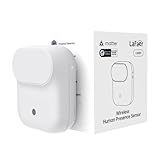
Overview: The Lafaer LWR01 uses advanced mmWave radar to detect both motion and static presence, addressing the limitation of traditional PIR sensors. This Matter-over-Thread sensor works with major platforms and offers flexible power via battery or USB-C. IPX3 water resistance and a built-in light sensor make it versatile for various indoor environments.
What Makes It Stand Out: mmWave technology detects subtle movements and stillness up to 3.5m, preventing lights from turning off on stationary occupants. The dual-power option provides over one year of battery life or continuous operation via USB-C. Its IPX3 rating suits bathrooms and kitchens. The light sensor enables daylight-aware automations to reduce energy waste.
Value for Money: At $43.90, it undercuts the Eve Motion while offering superior presence detection. The mmWave capability typically commands $50+ pricing, making this competitively positioned. Flexible power options add value, and Matter/Thread compatibility ensures future-proofing. For presence detection specifically, it offers better technology than PIR-based sensors at similar prices.
Strengths and Weaknesses: Strengths: mmWave presence detection, dual power options, IPX3 rating, Matter/Thread support, light sensor, and competitive pricing. Weaknesses: requires Thread hub, newer brand with unproven long-term support, battery life claims may vary with usage, and shorter detection range than some competitors. Standstill detection limited to 3.5m.
Bottom Line: A compelling alternative to PIR sensors for those needing true presence detection. Ideal for home offices and media rooms where occupants remain still. The flexible power and competitive price make it worth considering over established brands, though Eve offers better privacy guarantees.
6. Aqara Motion and Light Sensor P2, Motion Detector with Light Sensor, Matter Over Thread, Requires 2-in-1 Matter Controller & Thread Border Router, Supports Apple Home, Alexa

Overview: The Aqara Motion and Light Sensor P2 represents the next generation of smart home sensors, embracing Matter over Thread for broad interoperability. This 2-in-1 device combines PIR motion detection with an independent light sensor, enabling sophisticated automations based on both movement and ambient brightness. With a detection range of up to 7 meters across a 170° horizontal field of view, it provides comprehensive room coverage for modern smart homes.
What Makes It Stand Out: Native Matter support ensures future-proof compatibility with Apple Home, Alexa, and other major platforms, while the Thread protocol delivers reliable, low-power mesh networking. The independent light sensor is a key differentiator, allowing brightness-based automations even without motion triggers. The versatile 360° stand and adjustable sensitivity levels provide installation flexibility, and local automation execution ensures privacy and offline functionality. Amazon’s Frustration-Free Setup streamlines the initial connection process.
Value for Money: At $33.99, the P2 sits in the mid-range for Matter-compatible sensors. However, the requirement for a separate 2-in-1 Matter Controller & Thread Border Router (not included) significantly increases the total investment. Compared to Wi-Fi alternatives, the Thread connectivity reduces network congestion and improves reliability, justifying the premium for users invested in the Matter ecosystem who prioritize long-term compatibility.
Strengths and Weaknesses: Strengths include future-proof Matter/Thread support, independent light sensor functionality, wide detection angle, 2-year battery life, local automation processing, and Amazon Frustration-Free Setup. Weaknesses are the mandatory hub purchase, Alexa’s lack of light sensor support, the 6-meter hub distance limitation, and medium default sensitivity that may require seasonal adjustments for optimal performance.
Bottom Line: The Aqara P2 is an excellent choice for Apple Home users seeking reliable, privacy-focused automations. While the hub requirement and Alexa limitations temper its universal appeal, its Matter foundation makes it a smart long-term investment for evolving smart homes that value interoperability.
7. THIRDREALITY Zigbee Motion Sensor, Pet Friendly, Compatible with Home Assistant, SmartThings, Aeotec, Homey, Hubitat or Echo Devices with Built-in Zigbee Hub

Overview: The THIRDREALITY Zigbee Motion Sensor delivers reliable motion detection at a budget-friendly price point. Designed for seamless integration with major smart home platforms, this pet-friendly sensor works with Alexa, SmartThings, Home Assistant, and other Zigbee-compatible hubs. Its compact design and straightforward setup make it an accessible entry point into home automation for users wanting to avoid cloud-dependent devices.
What Makes It Stand Out: Exceptional hub compatibility sets this sensor apart, working natively with Echo devices featuring built-in Zigbee hubs and numerous third-party platforms. The pet-friendly design reduces false triggers from small animals, while the hassle-free Alexa discovery process (“Alexa, discover devices”) eliminates complex pairing procedures. The 20-foot detection range covers most rooms effectively, and the 2-year battery life on standard AAA batteries minimizes maintenance.
Value for Money: At $19.99, this is one of the most affordable reliable motion sensors available. The 2-year battery life using inexpensive AAA batteries keeps operating costs low. While it lacks advanced features like light sensing or adjustable timeout, the price point makes it ideal for scaling motion detection across multiple rooms without breaking the bank, especially for Alexa-centric households.
Strengths and Weaknesses: Strengths include broad Zigbee hub compatibility, affordable pricing, easy installation, pet-friendly operation, 2-year battery life, and native Alexa routine support. Weaknesses are the lack of Matter/Thread support, basic motion-only functionality, no light sensor, and dependency on a compatible Zigbee hub. The Zigbee protocol, while reliable, represents older technology compared to Thread and may limit future-proofing.
Bottom Line: For Alexa and SmartThings users seeking cost-effective motion detection, THIRDREALITY offers unbeatable value. It’s perfect for basic lighting automations and security triggers, though those wanting advanced features or future-proof connectivity should consider Matter alternatives for long-term smart home expansion.
8. Aqara Zigbee Motion Sensor P1 3 Pack, Smart Motion Detector for Alarm System and Home Automations, 5-Year Battery Life, Pet Friendly, Compatible with HomeKit, Alexa, HomeKit, IFTTT, Requires Aqara Hub

Overview: The Aqara Zigbee Motion Sensor P1 3 Pack provides comprehensive coverage for whole-home automation at an attractive price point. These sensors require an Aqara Zigbee 3.0 hub but reward users with exceptional 5-year battery life and extensive customization options. Compatible with HomeKit, Alexa, IFTTT, and Home Assistant, they offer platform flexibility within the Aqara ecosystem, making them ideal for multi-room deployments.
What Makes It Stand Out: The industry-leading 5-year battery life dramatically reduces maintenance, while the configurable detection timeout (1-200 seconds) allows precise energy management and rapid re-triggering. The 3-pack value proposition enables cost-effective whole-home coverage, and adjustable sensitivity levels accommodate seasonal changes and specific room requirements. The 360° stand provides installation versatility, and pet-friendly design minimizes false alarms from animals.
Value for Money: At $62.99 for three sensors (approximately $21 each), this pack offers excellent value considering the exceptional battery life and advanced features. While locked to Aqara’s hub ecosystem, the hub requirement is offset by long-term savings from minimal battery replacements and the convenience of a unified platform. For existing Aqara users, this represents the most economical way to expand motion coverage.
Strengths and Weaknesses: Strengths include 5-year battery life, configurable timeout, adjustable sensitivity, 3-pack affordability, wide platform compatibility, and pet-friendly design. Weaknesses are the mandatory Aqara hub (incompatible with other Zigbee hubs), no integrated light sensor, limited detection range compared to the P2, and lack of Matter/Thread support. Zigbee2MQTT support is unofficial and may limit functionality for advanced users.
Bottom Line: This 3-pack is ideal for Aqara ecosystem users wanting reliable, low-maintenance motion detection throughout their home. The exceptional battery life and customization justify the hub lock-in, making it perfect for comprehensive automation projects where minimizing maintenance is prioritized.
9. Tapo Door Sensor Starter KIT, Matter Compatible, 3X Smart Door Window Contact Sensor and 1x Smart Hub with Built-in Chime, Smart Automation, Real-Time Notification, T31 KIT

Overview: The Tapo Door Sensor Starter KIT provides a complete entry-point solution for home security, bundling three contact sensors with a dedicated Smart Hub featuring a built-in chime. Using Sub-G protocol for extended range and battery life, this system monitors doors, windows, cabinets, and mailboxes. The hub supports up to 64 devices and integrates with Tapo cameras for comprehensive security coverage and automated recording.
What Makes It Stand Out: The all-in-one kit eliminates guesswork for beginners, providing everything needed for basic home monitoring. The Sub-G protocol offers 10x battery life improvement over Wi-Fi devices and superior range. The 90dB customizable alarm provides immediate local deterrent, while camera sync enables automated footage capture when entry points are breached. Real-time notifications keep users informed remotely through the Tapo app.
Value for Money: At $54.77 for a hub and three sensors, this kit presents solid entry-level value. The Sub-G efficiency reduces long-term battery costs, and the scalable hub supports future expansion. However, the proprietary protocol locks users into the Tapo ecosystem, limiting interoperability with other smart home platforms and potentially requiring hub replacement for Matter/Thread adoption, which may impact long-term value.
Strengths and Weaknesses: Strengths include complete starter kit convenience, Sub-G range and battery benefits, loud alarm, camera integration, and scalability to 64 devices. Weaknesses are ecosystem lock-in, lack of Matter/Thread support, 2.4 GHz Wi-Fi only requirement, and limited compatibility outside Tapo products. The hub adds clutter compared to hubless alternatives and represents a single point of failure.
Bottom Line: Perfect for Tapo ecosystem users or security-focused beginners, this kit offers reliable monitoring with excellent range. Those prioritizing interoperability should consider Matter-compatible alternatives, but for straightforward door/window security with camera integration, it delivers strong value and immediate functionality.
10. HEIMAN Motion Sensor, Matter Over Thread,Smart Motion Detector with Light Sensor, Requires Thread Border Router,Compatible with Apple HomeKit, Google Home, Alexa and SmartThings
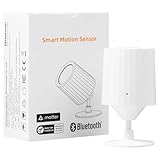
Overview: The HEIMAN Motion Sensor brings Matter over Thread connectivity to budget-conscious smart home enthusiasts. This 2-in-1 device combines motion detection with a light sensor, requiring a Thread Border Router for operation. Compatible with Apple HomeKit, Google Home, Alexa, and SmartThings, it offers broad platform support at an accessible price point, making future-proof technology available to more users.
What Makes It Stand Out: As one of the most affordable Matter-compatible sensors available, it democratizes next-generation smart home technology. The included light sensor enables brightness-based automations, while local Thread networking ensures reliable operation without cloud dependency. The 360° adjustable stand and simple 3M adhesive installation make deployment effortless across various indoor locations, and the CR2 battery provides extended life compared to Wi-Fi alternatives.
Value for Money: At $23.99, this sensor undercuts most Matter/Thread competitors significantly. The battery efficiency reduces maintenance costs and network congestion compared to Wi-Fi devices. While detection angle is narrower than premium options and the CR2 battery is less common, the price-to-performance ratio is exceptional for those already invested in a Thread Border Router ecosystem, delivering core functionality at minimal cost.
Strengths and Weaknesses: Strengths include affordable Matter/Thread support, integrated light sensor, broad platform compatibility, easy installation, and local network reliability. Weaknesses are the narrower 110° detection angle, basic feature set compared to premium sensors, mandatory Thread Border Router requirement, and CR2 battery format which is less convenient than AAA or coin cells for some users.
Bottom Line: The HEIMAN Motion Sensor is the best value entry into Matter/Thread ecosystem. Ideal for users with existing Thread infrastructure wanting affordable, reliable motion and light detection. While it lacks advanced customization, its price and future-proof connectivity make it a smart choice for budget-minded smart home builders prioritizing interoperability.
Understanding the Matter Standard and Its Impact on Motion Sensors
Matter isn’t just another protocol to add to the alphabet soup of Zigbee, Z-Wave, and Wi-Fi standards. Developed by the Connectivity Standards Alliance (CSA) with backing from Apple, Google, Amazon, Samsung, and hundreds of other companies, Matter represents the industry’s answer to interoperability frustrations that have plagued smart home enthusiasts for years. For motion sensors specifically, this standardization means your device can simultaneously communicate with Apple HomeKit, Google Home, Amazon Alexa, and Samsung SmartThings without needing separate firmware or bridge devices.
The protocol operates on top of existing IP-based networks, primarily Thread and Wi-Fi, which fundamentally changes how motion sensors integrate into your home network. Unlike traditional sensors that might require a proprietary hub to translate signals for your chosen platform, Matter-compatible devices speak a common language from the moment you unbox them. This native compatibility extends beyond basic on/off triggers to include advanced features like occupancy detection, sensitivity adjustments, and battery status reporting across all supported platforms.
Why Matter Compatibility Matters for Your Smart Home
The true value of Matter compatibility emerges when you consider the long-term flexibility of your smart home investment. A Matter-certified motion sensor purchased today will continue to work even if you switch from iPhone to Android, or decide to migrate from Alexa to Google Assistant. This future-proofing aspect protects your financial investment and eliminates the dreaded ecosystem lock-in that forces premature device replacement.
Moreover, Matter’s local control architecture means your motion sensors continue functioning during internet outages, a critical consideration for security applications. The standard’s emphasis on local processing reduces latency to mere milliseconds, enabling near-instantaneous automation responses that cloud-dependent systems simply cannot match. When evaluating sensors, look for the official Matter logo and certification number—this ensures the device has undergone rigorous testing for interoperability, security, and performance consistency across all major platforms.
The Technical Foundation of Matter Protocol
Delving into the technical weeds reveals why Matter represents such a significant leap forward. The protocol utilizes a data model based on “clusters” that define specific device capabilities. For motion sensors, this includes the Occupancy Sensing cluster, which standardizes how presence detection is reported across platforms. This means your automation routines in Apple HomeKit will receive exactly the same data structure as those in SmartThings, eliminating the translation errors and feature limitations that plagued previous cross-platform attempts.
Thread networking, which many Matter motion sensors employ, creates a self-healing mesh network that extends coverage throughout your home while consuming a fraction of Wi-Fi’s power. Understanding this technical foundation helps you make informed decisions about network infrastructure—particularly whether you need a Thread border router (like Apple TV 4K, Nest Hub Max, or Echo 4th Gen) to enable these low-power devices. The protocol’s security model is equally robust, employing blockchain-inspired certificate-based authentication that makes unauthorized access exponentially more difficult than with traditional Wi-Fi devices.
Key Features to Evaluate in Matter-Compatible Motion Sensors
When comparing specifications, it’s easy to get lost in marketing jargon. Focus on these core attributes that genuinely impact performance and integration quality. Detection range, measured in both distance and angle, determines how much area a single sensor can cover. Premium models offer adjustable detection zones, allowing you to mask areas like busy streets or pet areas to reduce false triggers. The refresh rate—or how quickly the sensor can detect motion again after initial triggering—ranges from 5 seconds to over a minute in different models, significantly affecting automation smoothness.
Battery life specifications deserve particular scrutiny. Manufacturers often quote “up to 2 years” based on ideal conditions, but real-world performance varies dramatically based on detection frequency, temperature, and network traffic. Look for devices that specify battery life at different usage tiers (light, moderate, heavy) rather than a single optimistic figure. The type of battery matters too—standard AAAs are convenient but may need replacement more frequently than specialized lithium cells that handle temperature extremes better.
Detection Technology: PIR vs. Ultrasonic vs. Dual-Tech
Passive Infrared (PIR) sensors remain the most common technology, detecting heat signatures from moving bodies. While cost-effective and power-efficient, PIR sensors struggle with detecting motion through glass and can be fooled by HVAC temperature changes. Understanding these limitations helps you avoid placement mistakes that lead to unreliable performance. Premium PIR sensors now feature multi-element detectors that create more precise detection patterns, reducing the cone-shaped blind spots of cheaper single-element designs.
Ultrasonic sensors emit high-frequency sound waves and detect motion through Doppler shift, offering superior sensitivity to small movements and the ability to “see” around obstacles. However, their higher power consumption and sensitivity to air currents make them less common in battery-powered Matter devices. The sweet spot for most applications is dual-technology sensors that require both PIR and ultrasonic triggers, dramatically reducing false alarms while maintaining reliability. When evaluating these hybrid models, ensure both detection methods are fully supported by the Matter implementation—not all platforms expose dual-tech capabilities equally.
Range and Field of View Considerations
Manufacturers typically advertise detection range in ideal conditions—often a 30-40 foot range with a 90-120 degree field of view. Real-world performance depends on mounting height, ambient temperature, and the size of the moving object. For comprehensive coverage, calculate your needs based on the sensor’s effective range at typical mounting heights of 7-9 feet, not the maximum range achieved in laboratory conditions. Some advanced models offer configurable detection patterns, allowing you to switch between wide-angle room coverage and narrow hallway modes through the device’s settings.
Consider the vertical detection angle as well, especially for rooms with high ceilings or multi-level spaces. A sensor with insufficient vertical coverage might miss movement directly below it, creating dead zones in seemingly well-covered areas. For pet immunity, look for sensors that allow you to set mass thresholds—typically 40-80 pounds—rather than simple sensitivity sliders. This more sophisticated approach prevents small pets from triggering alarms while maintaining human detection reliability.
Multi-Platform Integration Capabilities
The promise of Matter is seamless multi-platform operation, but implementation details vary significantly between manufacturers. Some sensors pair natively with all platforms simultaneously, while others require initial pairing with one ecosystem before becoming visible to others. This distinction matters when planning your setup workflow and determining which platform will serve as your primary automation controller. Devices that support “multi-admin” functionality allow direct pairing with multiple platforms from the start, providing true redundancy and flexibility.
Investigate how each platform exposes the sensor’s advanced features. While basic motion detection works universally, occupancy sensing, sensitivity adjustment, and LED control might be accessible only through certain platforms’ apps. The Matter specification defines these capabilities, but platforms choose which clusters to implement in their user interfaces. A truly seamless experience means you can adjust advanced settings from any connected platform, not just the one used for initial setup.
Cross-Platform Compatibility Requirements
Before purchasing, audit your existing smart home infrastructure for Matter readiness. Do you have a Thread border router? Is your Wi-Fi network using 2.4GHz (required for most Matter devices) or only 5GHz? Many users discover compatibility issues not with the sensor itself, but with their network configuration. Matter-over-Wi-Fi sensors require WPA2 or WPA3 security and may struggle with mesh networks that don’t properly handle multicast traffic.
Consider the commissioning process—how you’ll add the device to your network. Matter supports both QR code and manual code entry, but some platforms handle this more gracefully than others. Apple HomeKit excels at QR code scanning, while Amazon Alexa often prefers voice-driven setup. Understanding these workflow differences helps you choose which platform to use for initial pairing, even if you plan to control the sensor primarily through another ecosystem.
Ecosystem-Specific Optimization
Each major platform brings unique strengths to Matter sensor integration. Apple HomeKit offers the most robust privacy controls and local processing but may limit automation complexity compared to SmartThings. Google Home provides excellent presence detection algorithms and learning capabilities but sometimes delays exposing new Matter features. Amazon Alexa boasts the widest compatibility with third-party devices but may route more data through cloud services.
The key is identifying which platform’s strengths align with your primary use case. Security-focused users might prioritize HomeKit’s local architecture, while automation enthusiasts may prefer SmartThings’ advanced rule engine. Some sensors include ecosystem-specific features—like faster update rates when paired with certain platforms—that aren’t advertised in the general Matter specifications. Reading community forums and developer documentation often reveals these hidden optimizations that can significantly impact daily performance.
Power Source Options and Battery Life Expectations
Battery technology in motion sensors has evolved beyond simple alkaline cells. Modern Matter-compatible devices leverage lithium thionyl chloride batteries for 5+ year lifespans, though these aren’t user-replaceable in many designs. This trade-off between longevity and maintainability deserves careful consideration—sealed units offer better weatherproofing and reliability but become e-waste when depleted. User-replaceable batteries provide flexibility but require periodic maintenance and may compromise ingress protection ratings.
Solar-assisted power represents an emerging category, using tiny photovoltaic cells to trickle-charge internal batteries. While not suitable for dimly lit indoor spaces, these sensors excel in bright hallways or covered outdoor areas with ambient light. Evaluate the solar cell’s efficiency rating and the battery capacity to understand how many consecutive dark days the sensor can survive. Some models include USB-C ports for emergency charging, a thoughtful feature that acknowledges real-world power anxiety.
Battery-Powered vs. Wired Solutions
The choice between battery and mains power involves more than just convenience. Wired sensors offer unlimited power for advanced features like continuous occupancy monitoring and integrated cameras, but installation requires electrical work and limits placement flexibility. Battery devices provide true wireless freedom but must balance feature richness against power consumption. This is why many Matter motion sensors disable power-hungry features like LED status lights by default.
Consider hybrid models that support both power sources, switching to battery backup during outages. These often include power management features that automatically reduce reporting frequency when running on battery to extend runtime. For new construction or major renovations, low-voltage wired sensors connected to a central power supply eliminate battery concerns entirely while maintaining Matter compatibility through PoE (Power over Ethernet) adapters.
Energy Harvesting Technologies
Cutting-edge sensors now incorporate energy harvesting from motion, light, or temperature differentials. Piezoelectric elements generate tiny amounts of power from vibrations, while thermoelectric generators exploit temperature differences between the sensor body and ambient air. These technologies currently supplement rather than replace primary power sources, but they can extend battery life by 20-40% in high-traffic areas.
When evaluating these claims, look for independent testing data rather than manufacturer projections. Energy harvesting performance varies dramatically based on installation environment—a hallway with constant foot traffic generates more harvestable energy than a rarely used guest room. Some sensors include power generation metrics in their diagnostics, allowing you to optimize placement for maximum energy capture.
Installation and Placement Strategies
Proper placement determines success more than any specification. Mount sensors 7-8 feet high for optimal human detection while avoiding pet triggers. Position them to catch movement across the detection zone rather than directly toward the sensor—PIR technology detects lateral movement more reliably than approach/departure motion. Corners provide the widest coverage but may create blind spots directly beneath the sensor.
Avoid mounting near HVAC vents, windows with direct sunlight, or heat sources like radiators. Temperature differentials cause false triggers and reduce battery life as the sensor works harder to calibrate. In kitchens, position sensors away from ovens and refrigerators to avoid thermal interference. For stairways, mount at mid-landing height to catch both upward and downward movement while avoiding detection of passing traffic on other floors.
Optimal Mounting Locations for Maximum Coverage
Create a coverage map before installation, noting furniture, doorways, and traffic patterns. A single well-placed sensor covering a main thoroughfare often outperforms multiple poorly positioned units. In open-plan spaces, consider the sensor’s effective range at your planned mounting height—detection patterns form a three-dimensional cone, not a flat circle. Use painter’s tape to mark detection boundaries during initial testing, walking the space to identify dead zones.
For security applications, layer sensors with overlapping coverage. A hallway sensor triggering before a bedroom sensor provides sequential verification that distinguishes legitimate movement from false alarms. This redundancy also ensures coverage if one sensor’s battery dies or loses connectivity. In multi-story homes, place sensors at stairwell tops and bottoms to track inter-floor movement, enabling automation that knows you’ve truly left the basement rather than just visiting the laundry room.
Environmental Factors Affecting Performance
Humidity, temperature extremes, and air movement all impact sensor accuracy. Most PIR sensors operate reliably between 32-95°F (0-35°C), but performance degrades outside this range. Cold environments slow heat signature detection, while high humidity can cause condensation on sensor lenses, creating blind spots. For outdoor or unheated space installations, look for sensors with automotive-grade components rated for -40 to 140°F.
Air currents from vents, fans, or open windows can trigger ultrasonic sensors and even affect PIR units by rapidly changing the ambient temperature reading. In drafty areas, enable “pulse count” settings if available—this requires multiple detection events before triggering, filtering out single-occurrence disturbances. For outdoor installations, position sensors under eaves to protect from direct rain and wind while maintaining coverage of approach paths.
Advanced Configuration and Automation Potential
Matter’s standardized data model unlocks automation possibilities previously requiring complex workarounds. Occupancy sensing, which distinguishes between momentary motion and sustained presence, enables sophisticated scenes that trigger when you enter a room and maintain conditions while you’re present. This goes beyond simple motion triggers to create truly responsive environments that adapt to your behavior patterns.
Time-of-day sensitivity adjustments allow sensors to become more responsive at night (for security) while reducing sensitivity during busy daytime hours (to avoid excessive automation). Some sensors support “cooldown” customization, letting you define how long after detection the sensor waits before reporting motion again. This prevents rapid-fire triggers from someone fidgeting at a desk while ensuring the room remains “occupied” for automation purposes.
Creating Complex Multi-Device Scenes
The real power emerges when combining motion sensors with other Matter devices. A single occupancy event can trigger coordinated actions across light bulbs, thermostats, and blinds from different manufacturers. The key is understanding how platforms handle conditional logic—SmartThings offers the most granular rule builder, while HomeKit focuses on simplicity and privacy. Create scenes that consider multiple sensor inputs: motion in the living room and after sunset and presence detected on your phone triggers movie lighting, while the same motion during the day activates task lighting.
Use sensor grouping to create virtual “rooms” that know overall occupancy status. Three sensors in a large basement can report to a single occupancy cluster, simplifying automation logic. Matter’s binding feature allows direct sensor-to-device communication without platform intervention—your motion sensor can directly tell a Matter light bulb to turn on with sub-100ms latency, even if your internet is down and your hub is rebooting.
Geofencing and Occupancy Sensing Integration
Combine motion detection with smartphone-based geofencing for presence detection that works at home and away. Matter’s Device Attestation feature ensures your phone and sensors cryptographically verify each other, preventing spoofing that plagued earlier geofencing solutions. This integration allows automation that knows the difference between “house empty” and “everyone asleep”—a distinction impossible with motion sensors alone.
Advanced sensors incorporate machine learning to recognize movement patterns, distinguishing between human activity and robotic vacuum cleaners. This “contextual occupancy” reduces false triggers and enables automation that adapts to your schedule. When evaluating sensors, check if these learning features are processed locally (preserving privacy) or in the cloud (requiring data sharing). Matter’s architecture supports both, but local processing aligns better with the standard’s privacy-first philosophy.
Security, Privacy, and Data Protection
Matter’s security model is its most compelling feature for privacy-conscious users. Each device receives a unique certificate during manufacturing, creating a hardware root of trust that prevents counterfeit devices from joining your network. Motion sensors, which track intimate details about your daily movements, benefit enormously from this cryptographic verification. However, not all manufacturers implement Matter’s security features equally—some still phone home with telemetry data despite local control capabilities.
Understand what data leaves your network. Basic motion triggers can be processed entirely locally, but features like pattern learning or firmware updates require some cloud communication. Reputable manufacturers provide clear privacy policies detailing what data is collected, how long it’s retained, and whether it’s sold to third parties. The Matter standard includes a “Privacy Infrastructure” that anonymizes certain metadata, but implementation varies.
Local vs. Cloud Processing
True local processing means your motion sensor triggers automation even when your internet connection fails. Test this by disconnecting your modem—if automations stop working, your “Matter” sensor is still dependent on cloud services. The best implementations use Thread’s mesh networking to route commands directly to other Thread devices, with platforms serving only as configuration interfaces.
Cloud processing isn’t inherently bad—it enables advanced features like cross-location automation and remote diagnostics. The key is transparency and user control. Look for sensors with physical switches or configuration options to disable cloud features entirely. Some manufacturers offer “local-only” firmware versions that sacrifice convenience features for absolute privacy, a worthwhile trade-off for security applications.
Encryption Standards and Security Certifications
Matter requires AES-128 encryption for all communications, but implementation details matter. Check for additional certifications like UL 2900-2-2 (software cybersecurity for network-connectable products) or ETSI EN 303 645 (consumer IoT security). These voluntary certifications indicate manufacturers going beyond minimum requirements.
Physical tamper detection represents an often-overlooked security feature. Quality sensors include accelerometers that trigger alerts if the device is moved or opened, preventing attackers from disabling sensors during a break-in. This feature should integrate with Matter’s Security Cluster, sending tamper alerts to all connected platforms simultaneously. When evaluating sensors, verify that tamper detection appears as a separate sensor in your platform’s app, not just as a one-time notification.
Troubleshooting Common Integration Issues
Even Matter-certified devices encounter problems. The most frequent issue is sensors appearing offline in one platform while remaining responsive in another. This typically stems from platform-specific heartbeat intervals—some ecosystems poll devices every 30 seconds, others every 5 minutes. A sensor that misses several polls gets marked offline despite functioning normally. Understanding these timing differences prevents unnecessary troubleshooting.
Network congestion causes another common problem. Thread networks support hundreds of devices, but performance degrades if too many sensors report simultaneously. Stagger reporting intervals across sensors to prevent traffic spikes. Most quality sensors include “jitter”—random variation in report timing—to prevent synchronized network storms, but you can manually configure intervals for optimal performance.
Network Connectivity Problems
Thread devices sometimes struggle with multi-hub environments. If you have both an Apple TV and a Nest Hub acting as border routers, sensors may connect to the weaker signal, causing intermittent connectivity. Most Matter devices don’t allow manual border router selection, but you can influence connections by temporarily powering down the less-preferred hub during initial pairing. The device will then preferentially reconnect to that hub if signal strength is adequate.
Wi-Fi-based Matter sensors face different challenges, particularly with mesh networks that don’t properly handle multicast DNS (mDNS). Some routers aggressively prune multicast traffic to improve performance, inadvertently breaking Matter device discovery. Check your router’s settings for “IGMP snooping” or “multicast optimization” options and disable them for the IoT VLAN. For advanced users, creating a separate 2.4GHz network with Matter-specific QoS rules ensures reliable connectivity.
False Positive Reduction Techniques
Environmental factors cause most false triggers, but configuration can minimize them. Enable “temperature compensation” in sensors placed near windows or HVAC vents—this feature adjusts sensitivity based on ambient temperature changes. For pet owners, use the “pet immunity” setting in conjunction with strategic mounting: aim sensors slightly upward to detect human-sized heat signatures at torso level while ignoring ground-level pets.
Create software filters in your automation platform. Require motion to persist for 3-5 seconds before triggering, or demand concurrent triggers from two sensors in adjacent rooms. These logical filters cost nothing but dramatically improve reliability. Some platforms support “sensor fusion,” combining motion data with door sensors, light levels, or even smart watch presence to create highly reliable occupancy determination.
Future-Proofing Your Motion Sensor Investment
The Matter specification evolves rapidly, with new features added in point releases. Choose sensors with over-the-air (OTA) update capability and a manufacturer’s track record of supporting devices for 3+ years. Check if the device has sufficient flash memory for future firmware—some early Matter devices skimped on storage, limiting their ability to receive major updates.
Consider modular designs where the sensor module can be replaced while keeping the mounting hardware and radio. This approach reduces e-waste and allows upgrading detection technology without full replacement. Also evaluate manufacturer commitment to Matter—the CSA member list reveals which companies actively contribute to the standard versus those merely certifying existing products. Active contributors better understand the specification’s nuances and typically deliver more robust implementations.
Frequently Asked Questions
What makes a motion sensor “Matter-compatible” versus just working with multiple platforms?
A Matter-compatible sensor has undergone official certification testing by the Connectivity Standards Alliance, ensuring it implements the standard’s clusters, security model, and interoperability requirements consistently. Devices that merely work with multiple platforms through separate integrations may lack unified configuration and often rely on cloud translation services rather than native communication.
Do I need a special hub or bridge for Matter motion sensors?
It depends on the sensor’s network. Thread-based sensors require a Thread border router (built into Apple TV 4K, HomePod mini, Nest Hub Max, Echo 4th Gen, and some Samsung SmartThings hubs). Wi-Fi-based sensors connect directly to your existing network but may need a Matter controller app for initial setup. No proprietary manufacturer hub is required—that’s the point of Matter.
How does battery life compare between Matter sensors and older Zigbee/Z-Wave models?
Matter’s overhead is slightly higher than Zigbee, but modern low-power chips offset this difference. Expect comparable battery life—typically 1-2 years for AAA-powered units, 3-5 years for lithium-cell models. Matter’s advantage is standardized battery level reporting, so you get accurate low-battery warnings across all platforms simultaneously, not just in the manufacturer’s app.
Can Matter motion sensors work without internet connectivity?
Yes, for local automation. Once commissioned, sensors communicate directly with other Matter devices on your Thread or Wi-Fi network. However, initial setup, firmware updates, and remote access require internet. True local control is a core Matter promise, but verify your chosen automation platform supports offline operation—some cloud-centric platforms still require connectivity for routine operations.
Will Matter sensors integrate with my existing non-Matter smart home devices?
Through platform bridges, yes. If your smart home platform (SmartThings, Hubitat, etc.) supports both Matter and your existing protocols, it can create cross-protocol automations. However, direct sensor-to-device binding only works between Matter devices. For best results, gradually migrate toward all-Matter setups to eliminate bridge complexity and latency.
How do I handle firmware updates for sensors paired with multiple platforms?
Matter’s OTA update system is platform-agnostic—the update comes from the manufacturer, not the platform. When an update is available, any paired platform can initiate it, and the change applies universally. This prevents version conflicts. Most manufacturers push updates gradually to avoid widespread issues, so availability may vary by region or device batch.
What’s the realistic range of Thread-based motion sensors in a typical home?
In open spaces, expect 30-50 feet between Thread devices. Each wall reduces range by 10-15 feet depending on construction. Modern homes with drywall and wood framing support 3-4 hops between sensors and the border router. Brick, concrete, and metal studs severely impact performance. Plan your Thread network with devices acting as routers (mains-powered) every 30 feet to maintain reliable mesh connectivity.
Can I adjust sensitivity and create detection zones with Matter sensors?
Yes, if the manufacturer implements the Occupancy Sensing cluster’s advanced features. However, platform support varies—Apple HomeKit currently offers limited zone configuration, while SmartThings exposes more granular controls. Check community forums for your specific platform to understand real-world configuration options before purchasing. Some manufacturers provide standalone apps for advanced configuration that persists across platforms.
How does pet immunity work in Matter motion sensors?
Pet immunity uses mass detection algorithms and strategic lens design to ignore heat signatures under a certain weight threshold (typically 40-80 lbs). Unlike simple sensitivity reduction, this maintains human detection reliability. For multi-pet households, consider mounting sensors higher (8-9 feet) and aiming them slightly downward to create a detection plane above pet height. Verify the pet immunity setting is accessible through your primary platform, not just the manufacturer’s app.
Are Matter motion sensors more expensive than non-Matter alternatives?
Currently, there’s a 20-30% premium for Matter-certified sensors, but prices are dropping rapidly as adoption scales. The premium buys genuine interoperability, better security, and future-proofing. Factor in the cost savings from not needing proprietary hubs and the extended lifespan from OTA updates. For new installations, the total cost of ownership often favors Matter devices despite higher upfront costs.