You’ve just unboxed your first smart speaker, automated a few lights, and maybe even installed a video doorbell. Your home is getting smarter—but there’s a silent budget-drainer lurking in your walls: energy waste. Nearly 30% of the electricity consumed in U.S. homes powers devices in standby mode or runs through inefficient appliances, bleeding money from your wallet every single month. For smart home beginners, an energy monitoring system isn’t just another gadget; it’s the foundation of a truly intelligent, cost-efficient home. This guide will walk you through everything you need to know before investing in a system that transforms raw electrical data into actionable insights, without overwhelming you with technical jargon or product hype.
Top 10 Energy Monitoring Systems for Smart Home Beginners
Detailed Product Reviews
1. Smart Home Energy Monitor Supports Home Assistant, Real-Time Accurate Energy Consumption Tracking, Electricity Usage Monitor with 16x60A Circuit Sensor, 36-Month History, Solar Metering, ETL Certified

Overview: The Refoss Smart Home Energy Monitor delivers comprehensive circuit-level tracking with 16 branch sensors and two main sensors, supporting single-phase and three-phase systems. Designed for solar-equipped homes, it integrates seamlessly with Home Assistant and provides real-time consumption data through a polished mobile app. The system stores up to three years of detailed history, helping homeowners identify waste and optimize usage patterns. Installation uses clamp-on current transformers that attach directly to panel circuits, making it accessible for DIY enthusiasts comfortable working in electrical panels.
What Makes It Stand Out: This monitor’s standout feature is its recent firmware update (25.07.30) enabling channel merging, hourly data export, and direct CT reading inversion without physical flipping. The zero feed-in automation for solar owners is particularly compelling, automatically diverting excess midday solar production to high-consumption appliances like EV chargers or water heaters. With 98% accuracy and ETL certification, it balances precision with safety. The three-year data retention far exceeds most competitors, enabling deep long-term analysis.
Value for Money: At $169.99, this monitor sits in the mid-range but outperforms pricier options with superior data retention and solar automation. The two-year warranty and continuous feature updates add significant value. Compared to premium brands costing $200+, the Refoss offers comparable accuracy and better historical analysis, making it ideal for data-driven homeowners.
Strengths and Weaknesses: Strengths include extensive Home Assistant integration, 36-month history, solar surplus automation, recent feature enhancements, and ETL safety certification. The clamp-on design simplifies installation. Weaknesses involve brand recognition lagging behind Emporia or Siemens, and the installation still requires panel access that may intimidate some users. Data export requires app dependency.
Bottom Line: The Refoss monitor excels for tech-savvy solar homeowners wanting deep Home Assistant integration and long-term analytics. Its recent feature updates and robust automation capabilities make it a compelling alternative to established brands, offering premium functionality at a mid-tier price.
2. Emporia Vue 3 Home Energy Monitor - Smart Home Automation Module and Real Time Electricity Usage Monitor, Power Consumption Meter, Solar and Net Metering for UL Certified Safe Energy Monitoring

Overview: The Emporia Vue 3 positions itself as a safety-first energy monitor with UL certification and real-time automation capabilities. Supporting single-phase through three-phase systems with clamp-on sensors, it provides comprehensive monitoring through a well-designed mobile app. The system tracks power consumption at both mains and branch circuits, offering solar/net metering functionality for renewable energy users. With ±2% accuracy and cloud-based data storage, it delivers reliable insights for energy-conscious homeowners seeking professional-grade safety standards.
What Makes It Stand Out: UL Listing is the primary differentiator, ensuring rigorous testing against overheating, short-circuiting, and fire hazards. The automated energy management features are sophisticated, enabling time-of-use optimization, peak demand shaving, and excess solar routing. The platform supports utility reward programs and provides actionable notifications for abnormal consumption patterns. Real-time spending gauges help users make immediate behavioral changes to reduce bills.
Value for Money: At $199.99, this commands a premium justified by UL certification and robust automation. While more expensive than unbranded alternatives, the safety assurance and proven reliability offer peace of mind. The one-year warranty is shorter than some competitors, but the brand’s established reputation and continuous app development support the investment for safety-conscious buyers.
Strengths and Weaknesses: Strengths include unmatched UL safety certification, intuitive automation, real-time alerts, and broad system compatibility. The app provides excellent visualization and utility integration. Weaknesses are limited data retention (1-second data only 3 hours, minute data 7 days) and higher cost. Some advanced features require additional sensors. The 2.4GHz WiFi requirement may limit placement options.
Bottom Line: For homeowners prioritizing certified safety and automated energy management over long-term data storage, the Emporia Vue 3 delivers exceptional value. Its premium price is justified by professional-grade protection and sophisticated control features that actively reduce utility costs.
3. Emporia Vue 3 Home Energy Monitor - Smart Home Automation Module and Real Time Electricity Usage Monitor, Power Consumption Meter, Solar and Net Metering for UL Certified Safe Energy Monitoring

Overview: Identical in specifications to its higher-priced counterpart, this Emporia Vue 3 offers the same UL-certified safety and comprehensive energy monitoring at a more accessible $149.99 price point. The system monitors main and branch circuits through clamp-on sensors, supports solar/net metering, and provides real-time data via the Emporia Energy App. With ±2% accuracy and automated energy management features, it delivers professional-grade monitoring for homeowners seeking certified reliability without premium cost.
What Makes It Stand Out: The compelling price reduction makes UL-certified monitoring attainable for budget-conscious buyers. You retain all key features: time-of-use automation, peak demand management, excess solar routing, and utility reward program integration. The safety certification remains unchanged, offering the same fire and electrical hazard protection. Real-time spending alerts and consumption notifications provide immediate feedback for behavioral changes.
Value for Money: At $149.99, this represents exceptional value—$50 less than alternative listings while maintaining identical features. The price approaches budget monitors but includes premium UL certification and sophisticated automation. This makes professional-grade energy management accessible to a broader audience. The one-year warranty and cloud infrastructure remain consistent with the higher-priced version.
Strengths and Weaknesses: Strengths include UL safety certification, robust automation, brand reliability, and now outstanding affordability. The same intuitive app and real-time alerts are included. Weaknesses mirror the premium version: limited data retention (3 hours for 1-second data, 7 days for minute data) and 2.4GHz WiFi dependency. The price discrepancy may indicate limited stock or promotional pricing.
Bottom Line: This pricing makes the Emporia Vue 3 a no-brainer for safety-conscious homeowners. If legitimate, it offers the best price-to-certification ratio available, delivering premium features and certified protection at a mid-range price point.
4. Smart Home Energy Monitor with 16 50A Circuit Level Sensors, Measure Power Usage in Real-Time, History with App (16 50A Circuit Level Sensors) - Compatible with Home Assistant

Overview: This SEM-Meter branded monitor targets the budget-conscious smart home enthusiast with Home Assistant compatibility and 16 circuit-level sensors. Supporting single-phase and three-phase systems up to 415V, it provides real-time consumption tracking through mobile apps. The clamp-on installation and 1% accuracy make it technically competitive, while the $129.99 price point undercuts most established brands. It includes solar/net metering capabilities and offers data export functionality for users wanting deeper analysis.
What Makes It Stand Out: Home Assistant integration at this price is rare, making it ideal for DIY automation enthusiasts. The 1% accuracy exceeds many pricier competitors, and the flexible phase-matching simplifies installation in complex panels. Data export allows 90 days of hourly data and permanent day/month/year records, providing reasonable historical analysis. The system automatically identifies appliance signatures for easier circuit labeling.
Value for Money: At $129.99, this is the most affordable comprehensive monitor reviewed. It delivers core functionality—real-time tracking, circuit-level detail, and Home Assistant integration—at nearly half the cost of premium brands. While lacking UL certification, the feature set matches monitors costing $50-100 more. The one-year warranty provides basic protection for this investment level.
Strengths and Weaknesses: Strengths include exceptional price, 1% accuracy, Home Assistant compatibility, flexible installation, and adequate data export. The solar monitoring and light commercial support add versatility. Weaknesses involve unknown brand reliability, no UL/ETL safety certification mentioned, limited hourly data retention (90 days), and potentially less polished software than premium alternatives. Customer support quality is uncertain.
Bottom Line: For Home Assistant users prioritizing affordability over brand recognition, this monitor delivers remarkable value. It’s perfect for technically capable homeowners comfortable with community support and self-installation, offering premium integration at a budget price.
5. SIEMENS Inhab Smart Home Energy Monitor with 16-50Amp Circuit Level Sensors and 2-200Amp Main Sensors for Real Time Electricity Monitoring and Metering
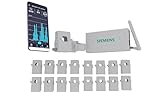
Overview: The SIEMENS Inhab monitor brings industrial-grade engineering to residential energy management with UL certification and advanced load control features. Monitoring both mains (200A) and 16 branch circuits (50A), it provides 24/7 real-time tracking through a dedicated mobile app. Designed for sophisticated users, it enables time-of-use management, peak demand shaving, and automated load shedding for compatible EV chargers. The system supports net metering and excess solar management, making it ideal for smart homes with renewable energy.
What Makes It Stand Out: SIEMENS brand reputation distinguishes this monitor, ensuring rigorous design and testing standards. The personalized notification system alerts users to abnormal behavior like appliances left on, preventing hazards and waste. Advanced load shedding capabilities automatically reduce consumption during peak pricing, directly lowering bills. The CE marking and UL Listing provide dual safety assurance for North American and European standards.
Value for Money: At $267.75, this is the premium option, but SIEMENS engineering justifies the cost for users wanting maximum reliability. The advanced features—particularly load shedding and intelligent notifications—exceed typical monitor capabilities. While nearly double the budget options, the brand support, safety certifications, and sophisticated automation deliver long-term value for premium smart homes.
Strengths and Weaknesses: Strengths include premium brand reliability, UL/CE certifications, advanced load management, personalized alerts, and robust automation. The system directly controls compatible devices for active cost reduction. Weaknesses are the highest price point, US/Canada-only app support, and potentially complex setup requiring professional installation. The feature set may overwhelm casual users.
Bottom Line: For homeowners seeking the most reliable, feature-rich energy monitor from an established industrial brand, the SIEMENS Inhab is unmatched. Its premium price delivers professional-grade automation and safety, ideal for advanced smart homes where reliability justifies the investment.
6. Emporia Vue 3 Home Energy Monitor - Smart Home Automation Module and Real Time Electricity Usage Monitor, Power Consumption Meter, Solar and Net Metering for UL Certified Safe Energy Monitoring

Overview: The Emporia Vue 3 is a sophisticated circuit panel energy monitor that delivers UL-certified safety alongside comprehensive real-time electricity tracking. Designed for homeowners seeking granular control over energy consumption, this device installs directly into your electrical panel using clamp-on sensors, providing 24/7 monitoring of your entire home’s power usage through an intuitive mobile app.
What Makes It Stand Out: The UL certification sets this monitor apart, ensuring rigorous safety testing for peace of mind when installed in your main electrical panel. Its ability to monitor solar and net metering makes it ideal for renewable energy households. The Emporia Energy App enables sophisticated automation based on time-of-use rates, peak demand, and excess solar production, transforming raw data into actionable cost-saving strategies with instant reporting and notifications.
Value for Money: At $99.99, the Vue 3 offers exceptional value compared to professional energy audits or electrician-installed systems. The potential savings from automated energy management and identifying power-hungry appliances can recoup the investment within months. The 1-year warranty and robust feature set make it financially sound for energy-conscious homeowners wanting whole-home visibility.
Strengths and Weaknesses: Strengths include UL safety certification, comprehensive monitoring, solar/net metering support, powerful app-based automation, and cloud data retention. Weaknesses are the 2.4GHz WiFi requirement (no 5GHz), the need for electrical panel access that may require professional installation, and limited 1-second data retention (3 hours) with indefinite storage only for hourly data.
Bottom Line: The Emporia Vue 3 is an excellent investment for homeowners wanting safe, detailed energy monitoring with smart automation capabilities, particularly those with solar installations seeking to maximize self-consumption and reduce grid dependence.
7. Emporia Energy Monitoring Smart Plug, WiFi Smart Outlet Plug Works with Alexa and Google Home - 15a WiFi Outlet with Timer, Mobile App, Home Energy Monitor, Scheduling - 2.4ghz WiFi Only (4 Pack)

Overview: This four-pack of Emporia smart plugs combines remote appliance control with detailed energy monitoring at the individual device level. Compatible with Alexa and Google Home, these outlets manage lights, fans, and electronics while tracking exact power consumption through the Emporia app, eliminating guesswork from your energy bills and identifying wasteful standby power.
What Makes It Stand Out: The integrated energy monitoring distinguishes these from standard smart plugs, letting you pinpoint which devices waste phantom power. The scheduling capability enables sophisticated automation—imagine coffee brewing at 7 AM or lights turning off after bedtime. At $8.75 per plug, it’s among the most affordable ways to add both control and consumption visibility to your smart home ecosystem.
Value for Money: The $34.99 price for four energy-monitoring smart plugs represents outstanding value. Individual energy-monitoring plugs often cost $15-20 each, making this pack highly economical. The ability to eliminate phantom loads and automate devices can yield measurable electricity savings, potentially paying for itself within a year through reduced consumption and extended appliance life.
Strengths and Weaknesses: Strengths include affordable per-unit pricing, detailed energy monitoring, voice assistant compatibility, robust scheduling, and remote access. Weaknesses are the 10A continuous load limit (15A peak for only 1 hour daily), which restricts high-power appliances like space heaters, and the 2.4GHz WiFi limitation. The dependency on the Emporia app may fragment smart home control for users with multiple platforms.
Bottom Line: Perfect for monitoring and controlling smaller appliances, this 4-pack offers unbeatable value for anyone wanting to track device-level energy usage while adding convenient automation to their home without complex installation.
8. Smart Home Energy Monitor 2×80A, Dual-Channel Real-Time Electricity Usage Monitoring for Household Power, WiFi Energy Meter with App Control, Compatible with Tuya/Smart Life
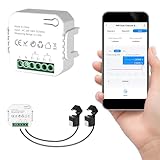
Overview: This dual-channel energy monitor provides circuit-level electricity tracking for two independent 80A circuits at an accessible price point. Compatible with the widely-used Tuya and Smart Life ecosystems, it offers real-time visibility into power consumption for major appliances like HVAC systems, water heaters, and washers without requiring invasive electrical work or wire modifications.
What Makes It Stand Out: The bi-directional energy tracking capability makes this monitor particularly valuable for homes with solar panels or backup batteries, clearly showing both consumption and energy flow direction. The simplified clamp-on installation requires no wire cutting, making it approachable for DIY enthusiasts. At under $30, it democratizes circuit-level monitoring previously reserved for expensive professional systems.
Value for Money: At $28.99, this monitor is remarkably affordable, costing less than a single premium smart plug. For homeowners wanting to track their two highest energy-consuming circuits, it delivers professional-grade data without professional installation costs. The Tuya ecosystem integration means no additional hub is required, maximizing cost efficiency for existing smart home users.
Strengths and Weaknesses: Strengths include low price, dual-channel flexibility, bi-directional monitoring for solar setups, straightforward clamp installation, and broad compatibility. Weaknesses are the limitation to only two circuits, dependency on the Tuya platform, lack of mentioned UL certification, and 80A capacity that may be insufficient for main service conductors in larger homes or 3-phase systems.
Bottom Line: An excellent entry-level circuit monitor for budget-conscious homeowners, particularly those with solar installations wanting to track specific high-draw appliances without a major financial investment or complicated wiring.
9. Sungrass Home Energy Monitor-Real Time Electricity Usage Monitor,Power Consumption Meter, Historical Energy Tracking, Automation Module,Solar Self-Consumption Statistics,Demand Measure
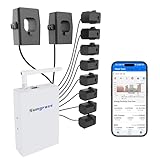
Overview: The Sungrass monitor is a premium 10-circuit energy management system designed for sophisticated homeowners and tech enthusiasts. It tracks real-time power consumption across multiple circuits simultaneously while providing detailed analytics, solar self-consumption statistics, and integration capabilities with home automation platforms through ModBus TCP access for advanced customization.
What Makes It Stand Out: This monitor supports 10 independent circuits with bidirectional metering, making it ideal for complex setups involving solar PV, vehicle-to-grid (V2G), and battery energy storage systems (BESS). The dual WiFi and Ethernet connectivity ensures reliable data transmission, while ModBus TCP support allows integration with third-party management systems without cloud dependency, appealing to privacy-conscious advanced users seeking local control.
Value for Money: Priced at $119.99, this is a premium option targeting users who need granular, whole-home monitoring. While more expensive than basic monitors, the 10-circuit capacity, professional-grade connectivity options, and advanced analytics justify the cost for those managing complex energy ecosystems. The 36-month historical data retention adds significant long-term value for trend analysis.
Strengths and Weaknesses: Strengths include 10-circuit monitoring, bidirectional metering, dual connectivity, ModBus TCP support, detailed analytics, and extended data retention. Weaknesses are the highest price point, potential overkill for average users with simple setups, and likely steeper learning curve. The product description lacks explicit UL certification mention, which may concern safety-focused buyers installing in main panels.
Bottom Line: Ideal for advanced users with solar, battery storage, or smart home integration needs, this monitor delivers professional-level monitoring and control that simpler devices cannot match, making it worth the premium for energy management enthusiasts.
10. eMylo 2 Channel WiFi Power Meter 80A+80A Smart Power Monitor,Clamp Ammeter Power Monitor,2.4GHz WiFi,Real Time Monitoring,Smart Life/TUYA APP, Compatible with Alexa and Google Assistant

Overview: The eMylo power meter offers dual-channel energy monitoring with comprehensive electrical parameter tracking at an ultra-competitive price. This device clamps onto two circuits to deliver real-time data on voltage, current, power factor, and active power through the Smart Life or Tuya app, making it a versatile tool for targeted energy management and efficiency optimization.
What Makes It Stand Out: Beyond basic wattage tracking, this monitor provides advanced metrics like power factor and frequency, giving users deeper insights into electrical efficiency. The automation scene creation feature allows the meter to trigger other Tuya devices based on power thresholds, enabling intelligent responses like receiving alerts when a device switches off or coordinating multiple smart home actions based on energy usage patterns.
Value for Money: At just $26.99, this is the most affordable dual-channel monitor in its class, undercutting competitors while maintaining a robust feature set. For users already invested in the Tuya ecosystem, it integrates seamlessly without additional hardware costs. The comprehensive parameter monitoring typically found in more expensive units makes it an exceptional budget choice for DIY energy management.
Strengths and Weaknesses: Strengths include ultra-low pricing, detailed electrical metrics, smart home automation integration, easy clamp installation, and voice assistant compatibility. Weaknesses are the limitation to two circuits, Tuya platform dependency, lack of UL certification mention, 2.4GHz WiFi only, and 80A rating that may not suit all main panel configurations or high-capacity circuits.
Bottom Line: The best budget option for DIY enthusiasts wanting detailed circuit-level monitoring with smart home integration, delivering remarkable capabilities for its minimal price point and requiring no electrical modifications for installation.
Why Energy Monitoring Matters for Smart Home Newcomers
The leap from basic smart devices to whole-home energy intelligence represents a fundamental shift in how you interact with your living space. While smart plugs can tell you what one device consumes, a comprehensive monitoring system reveals the bigger picture: the surge when your HVAC kicks in, the phantom load from your entertainment center, or the inefficiency of an aging water heater. For beginners, this visibility is transformative. It moves your smart home from convenience-focused to cost-conscious, often delivering 10-20% savings on electricity bills within the first year—real money that funds your expanding smart home ecosystem.
Understanding the Core Technology: How These Systems Work
Before diving into features, grasp the underlying technology. Energy monitoring systems use sensors—either clamp-on current transformers or direct electrical connections—to measure voltage and current flowing through your home’s circuits. This data streams to a hub, which processes it into readable formats sent to your smartphone. The sophistication lies in the sampling rate: budget systems might sample every few seconds, while advanced units capture data thousands of times per second, detecting subtle patterns that identify specific appliances.
Circuit-Level vs. Whole-Home Monitoring
Circuit-level systems attach sensors to individual breakers in your electrical panel, offering precise data for major appliances like your dryer, oven, or air conditioner. This granularity pinpoints exactly where your kilowatt-hours disappear. Whole-home systems typically use a single pair of sensors on your main power lines, measuring total consumption but relying on algorithmic disaggregation to guess which appliance is running. Beginners must decide between surgical precision and broader pattern recognition based on their goals and budget.
Real-Time Data Collection Explained
The term “real-time” gets thrown around loosely. In practice, true real-time means sub-second data transmission, showing you immediate feedback when you flip a switch. Most consumer systems operate on a 1-5 second delay, which is perfectly adequate for identifying energy hogs but won’t catch millisecond-level electrical anomalies. For beginners, the key question isn’t speed—it’s whether the system stores historical data locally or in the cloud, as this impacts both privacy and long-term trend analysis.
Key Features That Define Top-Tier Systems
Not all monitoring solutions are created equal. The difference between a frustrating paperweight and an indispensable tool lies in specific capabilities that align with beginner needs.
Granularity: From Total Usage to Individual Appliance Detection
Look for systems offering tiered granularity. The best platforms show whole-home consumption on a dashboard, then let you drill down to circuit-level data, and finally use machine learning to identify individual devices through energy signatures. This “appliance fingerprinting” improves over time, but accuracy varies widely. Some systems achieve 95% accuracy after a month of learning, while others struggle to distinguish your refrigerator from your garage freezer. For beginners, the sweet spot is a system that automatically detects major appliances within two weeks without requiring manual device naming.
Integration Capabilities with Smart Home Ecosystems
Your energy monitor shouldn’t exist in isolation. Seamless integration with platforms like SmartThings, Hubitat, Home Assistant, or Apple HomeKit transforms raw data into automated actions. Imagine your EV charger automatically pausing when total home consumption approaches your utility’s demand threshold, or your smart thermostat adjusting based on real-time solar generation data. Check for IFTTT support, robust APIs, and native compatibility with your existing hub. Beginners often overlook this, only to realize their new monitor can’t trigger the automations they envisioned.
Mobile App Experience and Data Visualization
A powerful sensor with a clunky app is worthless. The interface should present complex data through intuitive visualizations: colorful graphs showing hourly, daily, and monthly trends; bill forecasting based on current usage patterns; and simple toggles to set alerts. Look for apps with customizable dashboards—beginners need simplicity, but you’ll quickly want deeper analytics. Offline access is crucial; you shouldn’t lose visibility during internet outages. Test the app via demo accounts or YouTube walkthroughs before committing.
Installation Complexity: What Beginners Should Know
The installation process can be intimidating, but understanding your options removes the fear factor.
DIY-Friendly Options vs. Professional Installation
Many modern systems market themselves as DIY, requiring only basic comfort with opening your electrical panel and snapping on non-invasive clamps. However, this still means working near live bus bars—not for the faint of heart. Professional installation typically costs $150-$400 but ensures safety and proper sensor placement. For renters, plug-in whole-home monitors that attach to your utility meter offer a zero-installation alternative, though with reduced accuracy. Beginners should honestly assess their electrical comfort level; a $250 installation fee is cheaper than a hospital bill.
Electrical Panel Compatibility and Safety Considerations
Your panel’s configuration dictates viable options. Older panels with limited space or unique breaker types may require specialized sensors. Check the system’s specifications for bus bar clearance—some need 3/4 inch of space that crowded panels lack. Safety certifications matter: UL or ETL listing ensures the device won’t create fire hazards. For homes with split-phase 240V service (standard in North America), verify the system supports both legs of your electrical supply. Three-phase systems common in large homes or condos need specialized hardware.
Data Privacy and Security in Connected Energy Systems
You’re installing a device that knows when you’re home, when you cook, when you watch TV, and when you sleep. This intimate data stream deserves ironclad protection. Investigate whether data is encrypted in transit and at rest. Does the company sell anonymized data to third parties? European systems often comply with GDPR, offering stronger privacy guarantees. Local data storage options—where information stays on your home network—provide maximum privacy but may sacrifice cloud-based AI improvements. For beginners, the trade-off between convenience and privacy is personal, but never accept a system without a transparent privacy policy.
Cost Analysis: Beyond the Initial Purchase Price
Sticker shock is common, but the true cost extends far beyond the hardware.
Subscription Models vs. One-Time Purchases
Many systems lure you with low hardware prices, then lock advanced features behind monthly subscriptions. A $6/month fee seems trivial until you realize it’s $72 annually, exceeding the device cost over time. Premium subscriptions might offer AI insights, exportable data, or extended warranties. Calculate the three-year total cost of ownership: Hardware + (Monthly Fee × 36). For beginners, a higher upfront cost with zero subscription often provides better long-term value and predictable budgeting.
Long-Term ROI and Payback Period Calculations
A $300 system saving you $30 monthly pays for itself in 10 months. But savings aren’t guaranteed—they depend on your engagement. Systems that merely display data without guiding behavioral change rarely deliver ROI. Look for platforms that gamify savings, set achievable goals, and provide actionable recommendations. Factor in potential utility rebates; many providers offer $50-$150 incentives for installing energy monitors. Some systems qualify for federal tax credits when bundled with solar installations. The payback period should realistically fall between 8-18 months for an engaged user.
Compatibility Check: Matching Systems to Your Home Setup
One size never fits all in energy monitoring. Your home’s specific characteristics determine the ideal solution.
Single-Family vs. Multi-Unit Dwelling Considerations
In apartments or condos, you typically can’t access the main electrical panel, eliminating most hardwired options. Instead, consider meter-based monitors that use optical sensors to read your utility meter’s blinking LED or clamp-on solutions for your subpanel if you have dedicated access. For single-family homes, the world is your oyster—unless you have multiple panels, which requires a system supporting multiple hubs or expandable sensor arrays. Beginners in shared buildings should prioritize landlord approval and non-invasive installation methods.
Solar Panel and Battery Storage Integration
If you have solar, your monitoring system must measure bidirectional power flow—tracking both consumption and production. Basic systems subtract solar generation from usage, showing net consumption, but this hides valuable insights. Advanced setups display solar production, home consumption, grid export, and battery status on a single screen, helping you optimize self-consumption. For beginners considering future solar, choose a monitor with native solar support now. Retrofitting is often impossible or requires replacing the entire system.
Smart Features That Actually Save You Money
Bells and whistles are fun, but only features that drive behavioral change deliver ROI.
AI-Powered Insights and Anomaly Detection
The best systems don’t just show data—they interpret it. Machine learning algorithms identify abnormal patterns: your water heater running excessively long, HVAC short-cycling, or a refrigerator compressor failing. These insights arrive as push notifications: “Your dryer used 40% more energy than usual today.” For beginners, this automated guidance bypasses the learning curve of manual analysis. However, AI accuracy varies, and false positives can train you to ignore alerts. Look for systems that improve accuracy through user feedback, letting you confirm or correct appliance identification.
Automated Alerts, Goal Setting, and Gamification
Real power lies in proactive notifications. Set monthly budget alerts at 75% and 90% of your typical bill. Configure demand alerts when instantaneous usage exceeds 5kW, preventing peak demand charges. The most engaging systems turn conservation into a game: earn badges for beating your baseline, compete with similar households, or unlock achievements for off-peak usage. For beginners, simple daily or weekly email summaries are surprisingly effective, keeping energy top-of-mind without app fatigue.
Common Pitfalls Beginners Should Avoid
First-time buyers repeatedly stumble over the same issues. Forewarned is forearmed.
Don’t buy based on feature lists alone. A system promising 50-device detection is useless if it can’t accurately identify your major appliances. Avoid proprietary ecosystems that lock you into a single brand. Don’t underestimate the importance of historical data export—you may want to switch systems later, and trapped data is lost insights. Perhaps most critically, don’t ignore your utility’s metering technology. Smart meters using RF mesh networks can interfere with certain monitors, while older mechanical meters require completely different sensor types. Always check compatibility with your specific meter model.
Future-Proofing Your Energy Monitoring Investment
Technology evolves rapidly, and today’s cutting-edge system can become tomorrow’s paperweight. Prioritize systems with over-the-air firmware updates and active developer communities. Open-source platforms like Home Assistant integration future-proof your setup, ensuring compatibility long after the manufacturer loses interest. Consider Matter standard support—the new smart home protocol that promises interoperability. For hardware, choose systems with expandable sensor ports. You might start with whole-home monitoring but later want to add solar or battery sensors. A modular design grows with your needs.
Understanding Energy Disaggregation Technology
Disaggregation—the magic that identifies individual appliances from a single measurement point—relies on identifying unique electrical signatures. Motors, heating elements, and electronics draw power differently. Early systems used simple on/off detection, but modern platforms employ deep learning, analyzing harmonics, voltage fluctuations, and transient responses. For beginners, the takeaway is this: disaggregation accuracy improves over time but never reaches 100%. Use it as a guide, not gospel. Verify suspicious readings with a $20 kill-a-watt meter for plug-in devices. Think of disaggregation as a helpful assistant that occasionally needs fact-checking.
The Role of Community and Comparative Data
Some platforms anonymize and aggregate user data, letting you compare your usage to similar homes. This context is powerful: knowing you use 30% more energy than neighbors with comparable square footage motivates change in ways raw numbers don’t. However, this requires sharing data, a privacy trade-off. Community features also include user-generated device libraries, helping systems identify obscure appliances faster. For beginners, moderate participation in these communities accelerates learning. Start with private benchmarking, then opt into broader comparisons if you find value.
Creating Your Action Plan: From Data to Behavioral Change
A monitor without a plan is just another screen to ignore. Start by establishing your baseline: track one typical week without changing habits. Next, identify the “big three”—usually HVAC, water heating, and laundry—and target them first. Set a modest 10% reduction goal for month one. Use the monitor’s scheduling features to find optimal times for dishwasher or EV charging. Create a simple weekly routine: Sunday coffee while reviewing the past week’s trends. For beginners, the goal isn’t perfection—it’s building awareness that gradually reshapes habits without lifestyle sacrifice.
Making Your Final Decision: A Beginner’s Framework
Synthesize everything into a decision matrix. List your non-negotiables: maybe it’s solar compatibility, no subscription fees, or Home Assistant integration. Assign weights to each feature based on your goals. Score 2-3 finalist systems against these criteria, but don’t ignore intangibles. Read recent Reddit threads and forum posts about customer support responsiveness. Check the app’s update frequency in the App Store—abandoned apps signal abandoned products. Finally, verify the return policy. A 30-day money-back guarantee lets you test installation and app usability risk-free. The perfect system isn’t the most expensive or feature-rich—it’s the one you’ll actually use.
Frequently Asked Questions
How difficult is it to install an energy monitor if I’ve never opened my electrical panel?
Most DIY-friendly systems include detailed video tutorials and require only snapping clamp-on sensors around main wires. However, you’ll work near live components. If you’re uncomfortable or your panel is outdated, professional installation ($150-$400) is money well spent. Many electricians can install these in under an hour.
Will an energy monitor reduce my electricity bill automatically?
No—the monitor provides visibility, not magic. It’s a tool that reveals waste, but you must act on the insights. Users who check their app weekly and adjust habits typically see 10-20% savings within six months. Passive users often see little change. Think of it as a fitness tracker: it measures, you move.
Can I use these systems in an apartment where I can’t access the main panel?
Yes. Meter-based monitors that read your utility meter’s optical pulse work without panel access. Some systems clamp onto your apartment’s subpanel if you have one. Always get landlord approval first, and prioritize non-invasive options that don’t modify permanent fixtures.
What’s the difference between a $100 and a $500 energy monitor?
Price differences reflect sensor count, data granularity, AI sophistication, and integration depth. Budget monitors show total home usage with basic app features. Premium systems offer circuit-level monitoring, advanced disaggregation, local data storage, and robust smart home integrations. For most beginners, a mid-range $200-$300 system hits the sweet spot.
Do I need a subscription to get useful data?
Not necessarily. Many excellent systems offer full functionality without monthly fees. Subscriptions typically unlock AI insights, extended history, or premium support. If you’re data-savvy, you can often replicate subscription features using the system’s API and free tools like Grafana. Always factor three years of subscription costs into your total price comparison.
How accurate are these systems compared to my utility meter?
High-quality monitors achieve 98-99% accuracy relative to utility meters when properly installed. Calibration during setup is crucial. Some utilities allow you to cross-reference daily usage data through their online portal. Discrepancies over 5% usually indicate installation issues or sensor placement problems.
Will energy monitoring interfere with my solar panel production or net metering?
Properly designed solar-compatible monitors won’t affect production or net metering. They simply measure flow. The key is choosing a system with bidirectional sensors that can distinguish between consumption and export. Incorrect installation could theoretically cause issues, which is why solar owners should prioritize professional setup or systems with solar-specific installation guides.
How long does it take for the system to learn my appliances?
Most systems need 2-4 weeks to identify major appliances like refrigerators, HVAC, and water heaters. Full disaggregation accuracy continues improving over 3-6 months as the AI sees more usage cycles. You can accelerate learning by manually confirming or correcting device guesses in the app during the first month.
Can energy monitors detect electrical problems or fire hazards?
Advanced systems with high sampling rates can identify dangerous patterns like arc faults, voltage sags, or excessive heat buildup in connections. Some send alerts for these anomalies. While not a replacement for AFCI/GFCI breakers or professional electrical inspections, they add a layer of monitoring that could catch issues early.
What happens if the company goes out of business?
This is a real risk in the IoT space. Systems with local data storage and open APIs continue functioning even if the cloud service shuts down. Cloud-dependent monitors become expensive bricks. Research the company’s funding stability, and favor platforms with active user communities that could develop alternative firmware. It’s the smart home equivalent of not putting all your eggs in one corporate basket.