When you’re building a robust surveillance system, the backbone of your entire operation isn’t the cameras themselves—it’s the infrastructure that powers and connects them. Modern security cameras have evolved far beyond simple motion detectors; today’s 4K IP cameras with AI analytics, PTZ functionality, and integrated heaters can demand up to 90 watts per device. This power hunger has transformed PoE++ switches from optional conveniences into absolute necessities for professional-grade security deployments.
Understanding what separates a mediocre switch from a mission-critical powerhouse can mean the difference between a reliable, future-proofed surveillance network and a system that fails when you need it most. Whether you’re securing a small retail space or designing a multi-building campus surveillance network, the right PoE++ switch affects everything from video quality and camera uptime to your long-term maintenance costs and scalability options. This comprehensive guide walks you through the essential features, technical considerations, and deployment strategies that will help you make an informed decision—without getting lost in marketing jargon or unnecessary technical complexity.
Top 10 Ethernet Switches with PoE++ for Security Cameras
Detailed Product Reviews
1. UGREEN Ethernet Switch, 10-Port PoE Switch, 8 PoE+@60W + 2 Gigabit Uplink, Plug & Play, Standard/VLAN/Extend Mode, PoE Auto Recovery, Desktop/Wall Mount Metal Network Splitter for Security Camera

Overview: The UGREEN Ethernet Switch delivers exceptional value for small-to-medium surveillance setups with its 8 PoE+ ports and 2 Gigabit uplinks. This 10-port metal switch provides 30W per port with a 60W total budget, making it ideal for powering multiple IP cameras while maintaining robust data throughput. The plug-and-play design ensures immediate deployment without technical expertise.
What Makes It Stand Out: Its triple-mode functionality sets it apart. Standard mode handles typical operations, VLAN mode isolates ports 1-8 for enhanced security and broadcast storm prevention, and Extend mode pushes PoE transmission to an impressive 820 feet—perfect for sprawling properties. The intelligent power management system automatically cuts lower-priority ports (8-1) when exceeding 60W, preventing system-wide failures. The PoE Auto Recovery feature actively monitors connected devices in Extend mode, automatically rebooting unresponsive cameras or access points without manual intervention.
Value for Money: At $39.98, this switch significantly undercuts competitors while offering premium features like VLAN isolation and auto-recovery. Similar devices from major brands typically cost $15-25 more, making this an outstanding budget choice for security-conscious homeowners and small businesses.
Strengths and Weaknesses: Pros: Excellent port density for the price; intelligent power prioritization; robust metal construction; three operational modes; automatic device recovery; true Gigabit uplinks. Cons: 60W total budget limits simultaneous high-power devices; PoE ports are 10/100Mbps only; no surge protection mentioned.
Bottom Line: For budget-minded users needing reliable PoE expansion with advanced management features, the UGREEN switch delivers remarkable capabilities. It’s perfect for home security systems requiring extended cable runs and automatic maintenance, though power users may need a higher-wattage alternative.
2. Reolink High Speed and Stability 4+1-Port PoE Switch for Home & Business, Compatible with REOLINK PoE Security Camera/NVR, Metal Housing, Wall/Desktop Mount, RLA-PS1E
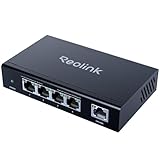
Overview: Reolink’s compact 4+1 port PoE switch targets home and business users seeking seamless integration with Reolink cameras and NVRs. Despite its small footprint, it delivers full Gigabit speeds across all ports, 65W total power budget, and intelligent device management. The fanless metal design ensures silent, reliable operation in any environment.
What Makes It Stand Out: The 4KV surge protection on both ports and power input provides exceptional defense against electrical anomalies—critical for outdoor installations. Independent circuit design means one port failure won’t cascade to others, ensuring system resilience. The Recovery Mode automatically detects and reboots frozen PoE devices, while Extend Mode pushes transmission to 820 feet on ports 1-2. Smart power management intelligently powers down ports in reverse order when budgets are exceeded, protecting priority connections.
Value for Money: At $49.99, it commands a premium over basic 5-port switches but justifies this with enterprise-grade surge protection and independent circuitry. For users in lightning-prone areas or those running critical surveillance, this protection alone warrants the extra cost.
Strengths and Weaknesses: Pros: Comprehensive surge protection; independent port circuits; silent fanless operation; full Gigabit speeds; automatic device recovery; sturdy metal housing. Cons: Only 4 PoE ports limits expansion; 65W budget may constrain multiple high-power devices; no VLAN mode; premium pricing for port count.
Bottom Line: This switch excels for specialized applications requiring maximum protection and reliability. It’s ideal for Reolink ecosystem users and installations in electrically unstable environments, though those needing more ports should look elsewhere.
3. TP-Link LS108GP | 8 Port PoE Gigabit Ethernet Switch | 8 PoE+ Port @ 62W | Plug & Play | Extend Mode | PoE Auto Recovery | Desktop/Wall Mount | Silent Operation

Overview: TP-Link’s LS108GP offers a streamlined 8-port Gigabit PoE+ solution for growing networks. With all ports supporting both power and data at Gigabit speeds, 62W total budget, and 16 Gbps switching capacity, it handles modern IP cameras, phones, and access points efficiently. The fanless design makes it office-friendly.
What Makes It Stand Out: True Gigabit PoE on all eight ports eliminates bandwidth bottlenecks common in budget switches that reduce PoE ports to 10/100Mbps. The 16 Gbps switching capacity ensures non-blocking performance even under heavy load. TP-Link’s reliability reputation shines through with robust Plug-and-Play implementation requiring zero configuration. The Extend Mode reaches 820 feet while maintaining adequate performance for surveillance applications.
Value for Money: Priced at $59.99, it sits in the sweet spot for quality 8-port PoE switches. While not the cheapest, the full Gigabit architecture and TP-Link’s proven reliability justify the moderate premium over entry-level models. It’s $10-15 less than comparable Netgear or Cisco alternatives.
Strengths and Weaknesses: Pros: Full Gigabit on all PoE ports; high switching capacity; silent fanless design; trusted brand reliability; simple plug-and-play; effective auto-recovery. Cons: 62W budget limits concurrent high-power devices; no VLAN isolation; no surge protection specified; metal housing but less rugged than industrial models.
Bottom Line: The LS108GP is a solid workhorse for small businesses and serious home users needing reliable Gigabit PoE expansion. It balances performance, quality, and price admirably, though power-hungry deployments should verify wattage requirements.
4. REOLINK PoE Switch with 8 PoE and 2 Gigabit Uplink Ports, Ideal for REOLINK RLN36 NVR and Power Over Ethernet IP Cameras, IEEE802.3af/at, Metal Casing, Desktop/Wall Mount, RLA-PS1

Overview: Reolink’s 8+2 port PoE switch addresses larger surveillance deployments with a generous 120W total power budget—double most competitors. Eight 10/100Mbps PoE ports handle camera connections while dual Gigabit uplinks ensure NVR and router connections never bottleneck. Designed specifically for Reolink’s ecosystem, it integrates seamlessly with RLN36 NVRs and IP cameras.
What Makes It Stand Out: The massive 120W power budget supports up to eight high-power cameras simultaneously, eliminating careful wattage calculations required by lower-budget switches. Intelligent power management with port prioritization ensures critical cameras stay online during overloads. Flexible deployment options allow direct NVR connection for isolated security networks or LAN integration for advanced camera features. The auto-detection system safely identifies PoE versus non-PoE devices, preventing equipment damage.
Value for Money: At $69.99, this switch offers exceptional power capacity per dollar. While pricier than 60W models, the ability to run eight 15W cameras simultaneously justifies the cost for serious surveillance systems. It’s competitively priced against generic 120W switches while offering Reolink-specific optimization.
Strengths and Weaknesses: Pros: Massive 120W power budget; dual Gigabit uplinks; intelligent prioritization; Reolink ecosystem optimization; flexible deployment modes; robust metal casing. Cons: PoE ports limited to 100Mbps; no extend mode for long runs; no built-in surge protection; larger power budget increases heat generation.
Bottom Line: Perfect for medium-to-large Reolink surveillance systems, this switch removes power limitations as a design constraint. It’s an excellent investment for users planning eight-camera deployments, though those needing extended cable runs should consider alternatives.
5. TP-Link TL-SF1005P | 5 Port Fast Ethernet PoE Switch | 4 PoE+ 10/100 Mbps Ports @67W | Desktop | Plug & Play | Sturdy Metal w/ Shielded Ports | Fanless | Extend & Priority Mode

Overview: TP-Link’s TL-SF1005P provides entry-level PoE capability at an aggressive price point. This compact 5-port switch offers four 10/100Mbps PoE+ ports with a surprisingly generous 67W total budget and one dedicated non-PoE uplink port. The fanless metal design with shielded ports ensures reliable, silent operation for basic surveillance and networking needs.
What Makes It Stand Out: Despite its budget positioning, it includes premium features like PoE Auto Recovery and Priority Mode—typically absent in sub-$40 switches. Priority Mode guarantees bandwidth for ports 1-2, ensuring critical cameras or phones maintain quality service. The Extend Mode pushes PoE transmission to 250 meters (820 feet), though at reduced 10Mbps speeds. The 67W budget exceeds many larger switches, supporting multiple 15W cameras comfortably.
Value for Money: At $33.97, it’s one of the most feature-rich budget PoE switches available. Competing products often lack auto-recovery or priority features at this price. For small installations of 2-3 cameras, it delivers capabilities found in switches costing twice as much.
Strengths and Weaknesses: Pros: Exceptional price; generous 67W budget; priority mode for critical devices; auto-recovery; silent fanless operation; shielded ports enhance durability. Cons: Only four PoE ports; 10/100Mbps limits future bandwidth; extend mode severely reduces speed; no VLAN; no surge protection.
Bottom Line: An unbeatable value for basic PoE needs, the TL-SF1005P punches above its weight class. It’s ideal for homeowners starting with 2-3 camera systems or adding PoE phones, though growing networks will quickly outgrow its port count and speed limitations.
6. TP-Link TL-SG1218MP 16 Port Gigabit PoE Switch 16 PoE+ Ports @250W, w/ 2 Uplink Gigabit Ports + 2 Combo SFP Slots Plug & Play Sturdy Metal Rack-mountable

Overview: The TP-Link TL-SG1218MP is an 18-port Gigabit PoE+ switch engineered for medium-scale network deployments. Sixteen PoE+ ports deliver up to 30W each with a 250W total budget, powering IP cameras, access points, and VoIP devices. Two dedicated Gigabit uplink ports and two combo SFP slots provide flexible backbone connectivity, while the sturdy metal chassis and rack-mount design suit professional installations.
What Makes It Stand Out: This switch excels with exceptional port density and power distribution at its price point. Sixteen PoE+ ports combined with SFP slots offer future-proofing rare in sub-$150 switches. Plug-and-play simplicity pairs with advanced 802.1p/DSCP QoS and IGMP Snooping for optimized video and voice traffic. The professional-grade metal construction and three-year warranty demonstrate serious reliability commitments.
Value for Money: At $149.98, this switch delivers remarkable value for surveillance systems and office networks. Comparable enterprise-brand switches cost 50-100% more for similar specifications. SFP slots and advanced traffic management features typically found in managed switches make this economical for growing businesses seeking performance without premium pricing.
Strengths and Weaknesses: Strengths:
- High PoE+ density: 16 ports with 250W total budget
- Combo SFP slots for fiber uplink flexibility
- Rack-mountable metal chassis with excellent heat dissipation
- Advanced QoS and IGMP Snooping capabilities
- 3-year warranty with free technical support
Weaknesses:
- No cloud or remote management
- 250W budget limits simultaneous full-power usage
- No PoE++ support for high-power devices
Bottom Line: An excellent choice for SMBs and installers needing reliable, high-density PoE+ connectivity. Its port count, power budget, and build quality make it a standout value for rack-mounted deployments.
7. TP-Link TL-SG1005P, 5 Port Gigabit PoE Switch, 4 PoE+ Ports @65W, Desktop, Plug & Play, Sturdy Metal w/ Shielded Ports, Fanless, QoS & IGMP Snooping

Overview: The TP-Link TL-SG1005P is a compact 5-port Gigabit PoE+ switch perfect for small office and home deployments. Four PoE+ ports deliver up to 30W each with a 65W total budget, ideal for powering a few IP cameras or wireless access points. The fanless design ensures silent operation, while the sturdy metal case with shielded ports provides durability and interference protection.
What Makes It Stand Out: This switch’s fanless, silent operation combined with a robust metal chassis sets it apart from plastic competitors. Shielded ports provide superior EMI protection, crucial for stable PoE device operation. Despite its compact size, it includes advanced features like 802.1p/DSCP QoS and IGMP Snooping, typically absent in budget desktop switches. The plug-and-play simplicity makes installation effortless.
Value for Money: At $49.99, this switch offers exceptional value for small-scale PoE deployments. Four PoE+ ports with advanced traffic management at this price point is impressive. Fanless designs from premium brands often cost significantly more. The metal construction and shielded ports provide durability that plastic competitors lack, making it a wise long-term investment for home and small business users.
Strengths and Weaknesses: Strengths:
- Silent fanless operation
- Durable metal case with shielded ports
- Advanced QoS and IGMP Snooping
- Compact desktop design
- Excellent price-to-performance ratio
Weaknesses:
- Limited 65W total power budget
- Only four PoE+ ports
- No SFP slots for fiber
- No management interface
Bottom Line: Perfect for home users and small offices needing silent, reliable PoE power for a few devices. Its build quality and features exceed expectations for the price.
8. ZOSI Cat5e Ethernet Cable 100ft,High-Speed RJ45 Network Cable for PoE Security Cameras,PoE IP Cameras,NVR,PoE Switch,Router,PC,Modem,Server,Computer,Internet,Waterproof,Indoor Outdoor(30m)

Overview: The ZOSI Cat5e Ethernet Cable is a 100-foot (30m) ruggedized network cable designed specifically for PoE security camera installations. Supporting gigabit speeds up to 1000 Mbps, it delivers both power and data to PoE devices, eliminating separate power cables. Its waterproof construction and durable shielding make it suitable for indoor and outdoor use, from attic runs to exterior camera mounting.
What Makes It Stand Out: This cable is purpose-built for PoE surveillance systems, with premium shielding that ensures stable power delivery and data transmission over long runs. The waterproof jacket withstands harsh outdoor conditions, while the 100-foot length provides flexibility for challenging installations. Universal RJ45 compatibility means it works seamlessly with IP cameras, NVRs, PoE switches, and standard networking equipment.
Value for Money: At $21.99 for 100 feet, this cable is competitively priced against bulk and pre-made alternatives from major brands. Pre-terminated, weatherproof Cat5e cables often retail for $30-40, making this an economical choice for DIY installers and professionals alike. The durability and PoE optimization provide excellent long-term value, reducing troubleshooting and replacement costs.
Strengths and Weaknesses: Strengths:
- Weatherproof for indoor/outdoor use
- Optimized for PoE power delivery
- 100-foot length covers most installations
- Durable shielding reduces interference
- Universal RJ45 compatibility
Weaknesses:
- Cat5e limits future 10Gb upgrades
- Fixed length may be excessive for some needs
- ZOSI brand less recognized than premium cable manufacturers
Bottom Line: A reliable, cost-effective solution for PoE camera installations requiring weatherproof cabling. Its construction and length make it ideal for most security system deployments.
9. TP-Link TL-SG1428PE 24 Port Gigabit PoE+ Switch - Easy Smart Managed, 24 PoE+ Ports @250W, 2 SFP Slots, Auto Recovery, QoS, VLAN, IGMP, LAG

Overview: The TP-Link TL-SG1428PE is a 28-port Easy Smart Managed PoE+ switch designed for larger network deployments requiring granular control. Twenty-four PoE+ ports provide up to 30W each with a 250W total budget, while two SFP slots enable fiber uplinks. The web-based management interface offers VLAN segmentation, QoS prioritization, and unique PoE Auto Recovery, making it ideal for complex surveillance and business networks.
What Makes It Stand Out: The Easy Smart Management provides enterprise-grade features without complexity. PoE Auto Recovery automatically detects and reboots unresponsive powered devices, reducing maintenance visits. Abundant VLAN capabilities allow secure traffic segmentation, while LAG support enables link aggregation for increased bandwidth. This combination of management features and high port density is rare at this price tier.
Value for Money: At $179.99 for 24 managed PoE+ ports, this switch delivers exceptional value. Fully managed switches with similar features typically cost $250-350. The 250W power budget, while shared across more ports, remains adequate for most deployments. For growing businesses needing management capabilities without enterprise pricing, this represents significant cost savings while providing essential network control.
Strengths and Weaknesses: Strengths:
- 24 PoE+ ports with smart management
- PoE Auto Recovery reduces downtime
- VLAN, QoS, IGMP, and LAG support
- Two SFP slots for fiber connectivity
- Competitive pricing for managed switch
Weaknesses:
- 250W budget shared across 24 ports limits high-power devices
- No PoE++ support
- Web interface only, no CLI or cloud management
- Learning curve for non-technical users
Bottom Line: An outstanding value for businesses needing managed PoE+ capabilities. Its feature set and port density make it perfect for expanding surveillance systems or office networks requiring traffic segmentation.
10. NETGEAR 8 Port PoE Gigabit Ethernet Easy Smart Managed Essentials Switch (GS308EP) - with 8 x PoE+ @ 62W, Desktop or Wall Mount
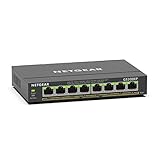
Overview: The NETGEAR GS308EP is an 8-port Easy Smart Managed PoE+ switch combining trusted brand reliability with essential management features. All eight ports deliver PoE+ up to 30W per port with a 62W total budget, suitable for small business IP cameras and access points. The intuitive web interface enables basic network configuration, security, and monitoring, while desktop or wall-mount options provide installation flexibility.
What Makes It Stand Out: NETGEAR’s reputation for reliability distinguishes this switch in the crowded SMB market. The Easy Smart Managed Essentials software offers straightforward management without overwhelming complexity, perfect for small businesses without dedicated IT staff. The 8-port full PoE+ configuration provides maximum flexibility, allowing any port to power devices, unlike some competitors that limit PoE to specific ports.
Value for Money: At $69.99, this switch positions itself as a premium but accessible option. While more expensive than unmanaged alternatives, the NETGEAR brand, 3-year warranty, and management capabilities justify the cost. Comparable smart-managed switches from other major brands typically cost $80-100. For businesses prioritizing brand trust and support, this represents solid value.
Strengths and Weaknesses: Strengths:
- Trusted NETGEAR brand and reliability
- All 8 ports support PoE+
- Easy Smart management interface
- Flexible desktop or wall-mount design
- 3-year limited hardware warranty
Weaknesses:
- Limited 62W total power budget
- No SFP slots for fiber uplinks
- Fewer advanced features than TP-Link competitors
- Higher price per port than some alternatives
Bottom Line: A dependable choice for small businesses wanting basic management from a trusted brand. Its reliability and support make it worth the modest premium over lesser-known competitors.
Understanding PoE++ Technology
Power over Ethernet has revolutionized security installations by delivering both data and power over a single cable, but not all PoE is created equal. The evolution from 802.3af (15.4W) to 802.3at (30W) and now to 802.3bt—commonly known as PoE++—represents a fundamental shift in what’s possible for surveillance networks.
What Makes PoE++ Different from Standard PoE?
PoE++ operates under the IEEE 802.3bt standard, delivering up to 90 watts of power per port through all four pairs of Ethernet wires. This quadruples the capacity of earlier standards and does so with intelligent power negotiation that prevents damage to non-PoE devices. For security professionals, this means supporting power-hungry cameras with built-in illuminators, wipers, and heating elements that keep lenses clear in arctic conditions. The standard also introduces finer-grained power classification, allowing switches to allocate power more efficiently across connected devices.
Power Budgets: The Heart of PoE++ Performance
A switch’s total power budget determines how many cameras you can realistically connect before hitting a wall. A 24-port PoE++ switch might advertise 90W per port, but if its total budget is only 400W, you can’t run four cameras at full power simultaneously. Always calculate your maximum potential load: multiply your highest-wattage camera by the number of ports, then add a 20% buffer for startup surges and future expansion. This buffer prevents brownouts that can corrupt video streams or cause cameras to reboot during critical moments.
Why PoE++ Switches Are Critical for Modern Security Systems
The surveillance industry has quietly undergone a power revolution. Cameras that once sipped 7 watts now demand 60+ watts to run their sophisticated processing engines and environmental controls. This shift makes PoE++ not just preferable but mandatory for new installations.
Powering High-Resolution Cameras
4K and 8K cameras require more than just bandwidth—they need substantial power for their advanced image sensors and onboard analytics processors. Thermal cameras used in perimeter security can easily draw 50-70 watts. Without PoE++, you’d need separate power injectors or local power supplies at each camera location, eliminating the simplicity that made IP cameras attractive in the first place. PoE++ ensures your switch can handle today’s 4K cameras and tomorrow’s AI-enhanced models without infrastructure changes.
Simplifying Installation and Reducing Costs
Running separate electrical lines to each camera location can double installation costs and introduce complexity. PoE++ switches consolidate power distribution to a central, managed location. This centralization means you can protect your entire camera power system with a single UPS, monitor power consumption per camera, and remotely cycle power to unresponsive devices without rolling a truck. The labor savings on a 32-camera installation often exceed the price premium of a PoE++ switch entirely.
Key Features to Look for in PoE++ Switches
Not every PoE++ switch deserves a place in your security network. The difference between consumer-grade and enterprise-ready models lies in a handful of critical features that directly impact surveillance performance.
Total Power Budget Considerations
Beyond simple math, examine how power is allocated. Some switches use a shared power pool with dynamic allocation, while others reserve power per port. Dynamic allocation is superior for surveillance because cameras rarely draw maximum power continuously. Look for switches that display real-time power consumption per port in their management interface—this visibility is invaluable when troubleshooting voltage drop issues over long cable runs.
Port Count and Future-Proofing
Buy 30% more ports than you currently need. A 16-port switch might handle your 12-camera deployment today, but what about the additional camera for the loading dock next year? The cost difference between a 16-port and 24-port model is minimal compared to installing a second switch later. Consider switches with a mix of PoE++ and standard PoE ports—this lets you connect lower-power devices like access points without wasting expensive PoE++ capacity.
Gigabit vs. Multi-Gigabit Uplinks
Your cameras might only need 100Mbps, but when 30 of them simultaneously stream to an NVR, those streams bottleneck at the uplink. A single 1Gbps uplink can saturate quickly with 4K footage. Modern PoE++ switches offer 2.5Gbps, 5Gbps, or even 10Gbps uplink ports. For deployments over 16 cameras, insist on at least one 10Gbps SFP+ uplink. This prevents your switch from becoming the performance ceiling in an otherwise capable system.
Managed vs. Unmanaged: Which Is Right for You?
Unmanaged switches are black boxes that simply forward packets. For security networks, managed switches are non-negotiable. They provide VLAN support, QoS controls, port mirroring for troubleshooting, and the ability to disable ports remotely if a camera is compromised. Web-managed switches offer a middle ground with essential features at lower cost, but full CLI/SNMP management gives you the granular control needed for enterprise surveillance.
Network Performance Factors
Video surveillance is uniquely demanding on network infrastructure. Unlike office traffic that ebbs and flows, camera streams are constant, high-bandwidth flows that can expose weakness in switch design.
Backplane Bandwidth and Switching Capacity
A switch’s backplane is its internal highway. A 24-port gigabit switch with a 48Gbps backplane can handle full-duplex traffic on all ports simultaneously. Cheaper models might advertise 24 gigabit ports but only provide 12Gbps of switching capacity, creating contention when multiple cameras stream concurrently. Always verify the backplane bandwidth equals or exceeds the sum of all port speeds (port count × speed × 2 for full-duplex).
Jumbo Frame Support for Video Streaming
Standard Ethernet frames are 1500 bytes, but enabling jumbo frames (9000 bytes) can reduce CPU overhead on your NVR by decreasing the number of packets it must process per second. Not all cameras support jumbo frames, but most professional-grade models do. The switch must support end-to-end jumbo frame configuration—if any hop in the path doesn’t support them, they’ll fragment and cause performance issues worse than if you’d left them disabled.
Durability and Environmental Considerations
Security equipment often operates in harsh conditions. The switch in your climate-controlled server room has different requirements than the one powering cameras in a dusty warehouse.
Commercial vs. Industrial Grade
Commercial switches operate in 0-40°C environments. Industrial models function from -40°C to 75°C and withstand humidity, dust, and vibration. For outdoor camera clusters in unheated utility closets, industrial switches with conformal coating on circuit boards prevent premature failure. The price premium is justified when you consider the cost of a service call to replace a failed switch at 2 AM during a security incident.
Fanless Design for Silent Operation
Fans are the most common point of failure in networking equipment. Fanless switches use heat sinks and thermal design to dissipate heat silently. This matters when installing switches in quiet environments like libraries, medical facilities, or small offices where fan noise would be disruptive. The trade-off is lower power density—fanless models typically max out at 8-12 ports to avoid overheating.
Security Features That Matter
Your PoE++ switch is a critical security device itself. If compromised, it can take down your entire surveillance network or provide a backdoor into your corporate network.
802.1X Authentication
This port-based authentication requires devices to present credentials before the switch allows network access. When a camera is replaced, 802.1X prevents an attacker from connecting a rogue device to that port. It also stops unauthorized devices from snooping on camera traffic. Implementation requires a RADIUS server but provides enterprise-grade network access control that’s essential for regulated industries.
Storm Control and DoS Protection
A malfunctioning camera can start broadcasting storm traffic that cripples your entire network. Storm control monitors broadcast, multicast, and unknown unicast traffic rates, automatically disabling ports that exceed thresholds. This prevents a single device failure from becoming a network-wide outage—critical when your security system itself is under attack or experiencing hardware failures.
Smart Features for Surveillance Networks
Advanced PoE++ switches include features specifically designed for IoT and surveillance deployments that go beyond basic connectivity.
QoS (Quality of Service) Prioritization
Not all camera traffic is equally important. Your entrance camera recording a break-in is more critical than the parking lot camera showing empty spaces. QoS lets you prioritize traffic based on port, VLAN, or DSCP tags. During network congestion, this ensures your most important camera feeds get through without dropped frames. Configure QoS to give video traffic strict priority over other network data.
PoE Scheduling and Power Management
Schedule cameras to power down during business hours when they’re redundant, then power up after closing. This extends camera lifespan and reduces power consumption. More importantly, you can schedule reboots of problematic cameras daily at 3 AM to clear memory leaks before they cause issues. Look for switches that allow per-port scheduling rather than global schedules.
Installation and Deployment Best Practices
Even the best switch will underperform if installed incorrectly. Proper deployment ensures you get the performance and reliability you paid for.
Cable Length Limitations and PoE++
Ethernet cables have a 100-meter length limit, but PoE++ performance degrades significantly beyond 80 meters due to voltage drop. For runs over 60 meters, use 23 AWG cable instead of 24 AWG to reduce resistance. If you must exceed 100 meters, use a PoE++ extender that regenerates both data and power—never splice cables. Remember that PoE++ uses all four pairs, so a fault in any single wire can cause intermittent power issues.
Proper Ventilation and Mounting
PoE++ switches generate substantial heat—up to 15 watts per port plus switching overhead. Mount switches vertically in racks to promote chimney-effect airflow. Leave 1U of empty space above and below the switch. In enclosed cabinets, add active ventilation or choose switches with front-to-back airflow that matches your cabinet’s design. Never stack switches directly on top of each other; the heat from the lower unit will cook the upper one.
Budget Considerations and Total Cost of Ownership
Sticker price rarely reflects true cost in networking equipment. A cheap switch that fails after 18 months costs more than an expensive one that lasts a decade.
Understanding Price vs. Performance
Entry-level PoE++ switches cost $200-400 but lack management features, have lower power budgets, and use cheaper components. Mid-range models ($600-1200) offer the sweet spot for most security deployments with robust management and adequate power. Enterprise switches ($2000+) provide features you’ll only need in specialized scenarios. Calculate cost per watt of power budget and cost per port to compare models fairly—sometimes a “more expensive” switch is actually cheaper when you factor in capabilities.
Warranty and Support Importance
A three-year warranty is standard; five years is excellent. More important is the support level—does the vendor provide next-business-day replacement? Do they have surveillance-specific technical support, or will you talk to a generic help desk? Some manufacturers offer lifetime warranties but with caveats that exclude high-duty-cycle surveillance use. Read the fine print and factor in the cost of a spare switch if your vendor’s replacement program is slow.
Compatibility and Standards Compliance
The best switch in the world is useless if it won’t work with your cameras. Standards compliance ensures interoperability.
ONVIF Profile S and T Support
ONVIF (Open Network Video Interface Forum) defines how IP cameras and switches communicate. Profile T supports advanced streaming and metadata, while Profile S covers basic video. Your switch should be ONVIF-compliant to ensure it can automatically detect cameras, receive event triggers, and integrate with VMS platforms. Non-compliant switches might work but will require manual configuration and lack advanced features like camera-based motion detection triggering recording.
IEEE 802.3bt Compliance
Some vendors claim “PoE++ support” but only implement the 60W mode (Type 3) rather than full 90W (Type 4). Verify the switch is certified for 802.3bt across all ports. Also check that it supports both Class 5, 6, 7, and 8 power devices—some budget switches only support lower classes. Full compliance ensures compatibility with tomorrow’s higher-power cameras without requiring forklift upgrades.
Troubleshooting Common PoE++ Switch Issues
Even well-designed networks encounter problems. Knowing how to diagnose issues quickly minimizes downtime in security applications.
Power Overload Scenarios
When you connect a new camera and it won’t power on, you’ve likely exceeded the switch’s power budget. Check the switch’s management interface for power consumption per port. Remember that cameras draw more power during startup (inrush current) than during operation. A switch might show 85W available but fail to start a 60W camera because the brief inrush requires 90W. Solution: power down less critical cameras, start the new camera, then restart the others sequentially.
Intermittent Connection Problems
PoE++ uses higher voltages (50-57V) than earlier standards. Poor terminations or damaged cables can cause voltage fluctuations that cameras tolerate poorly but don’t affect data. If a camera randomly reboots, test the cable with a certification tool, not just a basic continuity checker. Look for excessive resistance on pairs. Also check that your switch isn’t overheating—thermal shutdown of PoE circuitry causes mysterious intermittent failures that resolve when the switch cools.
Integration with Existing Network Infrastructure
Rarely do you get to build a surveillance network from scratch. Most projects require integrating with existing switches, routers, and network-attached storage.
Working with Non-PoE Switches
You don’t need to replace your entire network infrastructure. Use PoE++ switches as edge devices for camera clusters, then uplink to your core non-PoE switch. This hybrid approach is cost-effective and isolates camera traffic. Ensure the uplink ports on the PoE++ switch support the same VLANs and trunking protocols (802.1Q) as your core switch. Some older switches don’t support the extended Ethernet frames that PoE++ devices use for power negotiation, causing compatibility issues.
Router and NVR Compatibility
Your NVR needs sufficient network interfaces to handle incoming camera streams. A 64-channel NVR with a single gigabit port will bottleneck with 4K cameras. Look for NVRs with dual NICs that support link aggregation (LACP) to the PoE++ switch. For router integration, ensure your PoE++ switch supports DHCP snooping and Option 82 to properly relay camera MAC addresses—this prevents IP conflicts and helps the router apply correct firewall rules to camera traffic.
Future Trends in PoE++ Technology
The IEEE is already working on standards that will deliver even more power, while switch manufacturers are adding intelligence that transforms these devices into network management platforms.
Emerging Standards and Higher Power Delivery
The next evolution, sometimes called PoE++, will deliver 100-120W per port using higher voltages and improved efficiency. This will power cameras with built-in storage arrays, edge computing modules, and even small heaters for extreme environments. More importantly, new standards will include device health monitoring, allowing switches to report camera temperature, voltage stability, and predicted failure dates based on power consumption patterns.
Real-World Deployment Scenarios
Theory meets reality when you deploy in actual environments. Understanding typical use cases helps you apply these concepts effectively.
Small Business Security Systems
A 12-camera retail store needs an 8-16 port PoE++ switch with a 400-500W power budget. Prioritize ease of management over advanced features—look for web-based interfaces with surveillance-optimized wizards. Fanless design is ideal for installations in office environments. Budget $600-900 for the switch, and choose a model with a single 10Gbps uplink to future-proof for additional cameras.
Enterprise-Scale Surveillance Networks
A campus deployment with 200+ cameras requires a tiered approach: PoE++ edge switches in IDFs (Intermediate Distribution Frames) connected via fiber to a core switch. Each edge switch should support 24-48 cameras with a 1000W+ power budget. Core switches need 40Gbps uplinks and full Layer 3 routing to segment camera VLANs. Implement redundant power supplies and out-of-band management ports. Budget $2000-4000 per edge switch and $8000+ for the core, focusing on brands with dedicated surveillance support teams.
Frequently Asked Questions
What happens if I connect a non-PoE device to a PoE++ port?
Modern PoE++ switches perform a detection handshake before delivering power. If the connected device doesn’t present the correct resistance signature, the switch treats it as a standard data device and won’t apply power. However, older or non-compliant equipment could be damaged, so always verify auto-detection is enabled in the switch settings.
Can I use a PoE++ switch with older PoE cameras?
Yes, PoE++ switches are backward compatible with 802.3af and 802.3at devices. The switch automatically negotiates the correct power level. The reverse isn’t true—never connect a PoE++ camera requiring 60W+ to an older PoE+ switch, as it won’t receive sufficient power and may behave erratically.
How do I calculate the total power budget I need?
Add the maximum power draw of all cameras, then multiply by 1.2 to account for startup inrush current and cable losses. For example, 16 cameras at 30W each = 480W × 1.2 = 576W minimum switch power budget. Always round up to the next standard switch capacity (600W in this case).
What’s the maximum cable length for PoE++?
The Ethernet standard specifies 100 meters (328 feet) maximum, but for PoE++, limit runs to 80 meters for reliable operation. Beyond 60 meters, use 23 AWG cable instead of 24 AWG to reduce voltage drop. For longer distances, use PoE++ extenders that regenerate power and data.
Do I need a managed switch for my security cameras?
For any deployment over 8 cameras, yes. Managed switches provide VLAN isolation, QoS prioritization, remote troubleshooting, and security features that unmanaged switches lack. The ability to remotely power-cycle a hung camera or isolate a compromised device justifies the small price premium many times over.
What’s the difference between PoE++ Type 3 and Type 4?
Type 3 (60W) uses two pairs for power delivery, while Type 4 (90W) uses all four pairs. Most high-end cameras require Type 4 for full functionality. Always verify your switch supports Type 4 on all ports, not just a few, and that your cameras are configured to request the appropriate class.
Can PoE++ switches cause interference with video quality?
No. PoE++ uses DC voltage that doesn’t interfere with the data signals. However, poor-quality cables with inadequate shielding can cause crosstalk. Always use pure copper Cat5e or Cat6 cable (not copper-clad aluminum) and ensure proper termination. Power and data are delivered on different frequencies and don’t interfere when cabling is correct.
How hot do PoE++ switches get?
Expect 15-20 watts of heat per active PoE++ port, plus 30-50 watts for the switch itself. A 24-port switch can generate 400+ watts of heat—equivalent to a small space heater. Ensure adequate ventilation, vertical mounting, and ambient temperatures below 35°C for reliable operation. Thermal shutdown typically occurs around 45-50°C internal temperature.
Should I put my cameras on a separate VLAN?
Absolutely. Isolating cameras on their own VLAN prevents compromised cameras from accessing your business network and limits broadcast traffic. It also simplifies QoS configuration and makes firewall rules more effective. Use a dedicated VLAN for each camera location or building segment for maximum security.
What’s the typical lifespan of a PoE++ switch in surveillance use?
Quality PoE++ switches last 7-10 years in surveillance applications. The limiting factor is typically capacitor aging in the power supply modules. Choose switches with high-temperature-rated capacitors (105°C rating) and keep them cool to maximize lifespan. Budget for replacement every 5-7 years to stay ahead of failures and take advantage of improved efficiency in newer models.