Step into any modern gaming sanctuary and you’ll notice something immediately—the glow. It’s not just about illuminating your space anymore; it’s about creating an immersive ecosystem where light dances with your gameplay, reacts to your victories, and transforms your entire room into an extension of the digital worlds you inhabit. LED light strips have evolved from simple accent lighting into sophisticated peripherals that can impact your performance, reduce eye strain, and broadcast your gaming identity.
But here’s the challenge: the market is flooded with options that look identical on paper yet deliver wildly different experiences. Understanding the nuanced differences between addressable zones, refresh rates, and software ecosystems can mean the difference between a setup that feels magically responsive and one that’s just… colorful. This guide cuts through the marketing fluff to arm you with the technical knowledge needed to build a lighting system that truly enhances your gaming experience.
Top 10 LED Light Strips for Gaming Setups
Detailed Product Reviews
1. Govee RGBIC LED Strip Lights, Smart LED Lights for Bedroom, Bluetooth LED Lights APP Control, DIY Multiple Colors on One Line, Color Changing LED Strip Lighting Music Sync, Home Decor, 16.4ft

Overview: The Govee RGBIC LED Strip Lights deliver a 16.4-foot smart lighting solution specifically designed for bedroom ambiance. At $13.49, these Bluetooth-controlled strips leverage advanced RGBIC technology to display multiple colors simultaneously on a single line, creating dynamic visual effects that traditional RGB strips cannot match.
What Makes It Stand Out: RGBIC technology is the defining feature, enabling vibrant multi-color segmentation rather than single-color limitations. The Govee Home App offers extensive customization with 16 million colors, 64+ preset scenes, and regularly updated AI-generated themes. The upgraded music sync mode includes 11 distinct options with a high-sensitivity microphone that reacts to audio in real-time, creating immersive home concert experiences.
Value for Money: At $0.82 per foot, this kit occupies the mid-range price bracket. The RGBIC capability justifies the modest premium over basic RGB strips, offering visual complexity that cheaper alternatives cannot replicate. While Alexa/Google Assistant support is absent, the robust app control and feature-rich ecosystem provide excellent value for users prioritizing dynamic effects over voice integration.
Strengths and Weaknesses: Strengths include impressive RGBIC multi-color effects, comprehensive app control, diverse music modes, and regularly updated AI themes. The high-sensitivity microphone syncs flawlessly with ambient audio. Weaknesses include lack of voice assistant support, limiting smart home integration, and Bluetooth-only connectivity which may present range limitations compared to Wi-Fi alternatives.
Bottom Line: Ideal for users seeking vibrant, music-reactive lighting with advanced color segmentation. The Govee RGBIC strips deliver exceptional visual performance and app functionality at a competitive price, though voice control enthusiasts should consider alternative options.
2. KSIPZE 100ft Led Strip Lights RGB Music Sync Color Changing Led Lights with Smart App Control Remote Led Lights for Bedroom Room Lighting Flexible Home Décor

Overview: The KSIPZE 100ft LED Strip Lights provide an extensive lighting solution at an aggressive $9.99 price point. This ultra-long kit targets whole-room decoration, offering both app and IR remote control for flexible operation across bedroom, kitchen, or living spaces without requiring multiple purchases.
What Makes It Stand Out: The exceptional 100-foot length at under ten dollars is the primary differentiator, enabling coverage of large areas with a single kit. The timing function allows automated on/off scheduling, a practical feature often missing in budget options. Dual control methods (app and IR remote) ensure accessibility regardless of smartphone availability, making it versatile for various users.
Value for Money: At roughly $0.10 per foot, this represents outstanding value—potentially the best cost-per-foot ratio available. While it lacks advanced RGBIC technology, the essential features (16 million colors, music sync, scheduling) deliver functionality that rivals products costing 3-4 times more. Perfect for budget-conscious decorators prioritizing coverage over premium effects.
Strengths and Weaknesses: Strengths include unbeatable length-to-price ratio, reliable dual control options, useful timing automation, and straightforward adhesive installation. The built-in microphone enables basic music synchronization. Weaknesses include standard RGB limitations (no multi-color segmentation), potentially weaker adhesive on ultra-long runs, and a less refined app experience compared to premium brands.
Bottom Line: An unbeatable choice for large-scale installations on tight budgets. The KSIPZE 100ft kit sacrifices advanced features for maximum coverage and essential functionality, making it perfect for dorm rooms, apartments, or party setups where quantity trumps sophistication.
3. MATICOD RGB LED TV Strip USB Lights for Backlight and Behind, App Remote Control, Music Sync, Multicolor, 9.84FT for 32"-43" TV
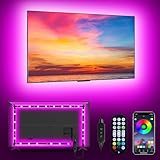
Overview: The MATICOD RGB LED TV Strip offers targeted backlighting for 32"-43" televisions at $7.99. This USB-powered kit emphasizes ease-of-use with three control methods and music synchronization, specifically engineered to reduce eye strain during viewing sessions while providing customizable ambient lighting.
What Makes It Stand Out: Triple-control flexibility (Bluetooth app, 21-key remote, 3-key controller) ensures users always have a convenient adjustment method. Its TV-specific design with optimized 9.84-foot length eliminates guesswork for smaller screens. The high-sensitivity microphone provides responsive music sync that enhances both entertainment and gaming experiences without complicated setup.
Value for Money: At approximately $0.81 per foot, this sits competitively in the TV backlighting niche. While lacking RGBIC technology, the specialized design, multiple control options, and dedicated app with 21+ dynamic modes justify the price. Cheaper generic strips exist, but the TV-optimized features and responsive customer support add meaningful value.
Strengths and Weaknesses: Strengths include versatile control options, TV-specific sizing, sensitive music sync, simple installation, and 5050 LED brightness. The dedicated “duoCo Strip” app offers robust customization. Weaknesses include limited to smaller TVs (32"-43"), no voice assistant integration, and potential Bluetooth connectivity issues with some TV USB ports providing inconsistent power.
Bottom Line: Excellent budget-focused TV backlighting for smaller screens. The MATICOD strip delivers where it matters—easy installation, multiple control methods, and effective bias lighting. For 32"-43" TV owners wanting simple, effective ambiance without complexity, this is a smart, affordable choice.
4. Under Monitor RGB Light Bar, LED Light for Desk Gaming Setup, USB Powered Keyboard Light, 12 Inch 5V, 353 Color Change Modes, Wireless Remote, LED Ambient Lights for Room Decor, Desk Setup, PC
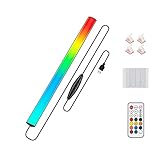
Overview: This Under Monitor RGB Light Bar delivers focused desk illumination in a compact 12-inch form factor for $14.99. Designed specifically for gaming setups and workstations, it provides targeted lighting to reduce eye strain and enhance ambient aesthetics without screen glare, using a sleek aluminum housing.
What Makes It Stand Out: The staggering 353 dynamic modes plus 12 static colors offer unprecedented preset variety, far exceeding typical light bars. The wireless remote provides instant mode switching without software installation. Memory function retains last settings across power cycles, crucial for users with specific preferences. The aluminum construction ensures durability and effective heat dissipation during extended use.
Value for Money: At $14.99 for 12 inches, this commands a premium over strip alternatives but justifies it through specialization. The extensive mode library, quality build, and plug-and-play simplicity rival products twice the price. For desk-specific use, the focused beam pattern and remote convenience outweigh per-foot cost considerations.
Strengths and Weaknesses: Strengths include incredible mode diversity, dual control (remote and switch), memory function, sturdy aluminum construction, and easy USB power. Installation is tool-free with adhesive pads. Weaknesses include limited length (12 inches) restricting coverage, no app/smart home integration, and potential remote interference in crowded wireless environments.
Bottom Line: Perfect for gamers and professionals seeking premium desk lighting without complexity. The light bar’s extensive modes, solid build, and remote convenience make it worth the modest premium. If you need focused, high-quality under-monitor illumination with maximum preset variety, this delivers exceptional performance.
5. KSIPZE LED Lights for TV, 16.5ft TV led Backlight for 45-75 Inch TVs RGB TV Backlight Behind Music Sync Smart APP & Button Control TV LED Strip Lights USB Powered for Bedroom/Gaming

Overview: The KSIPZE TV LED Backlight provides a 16.5-foot solution designed for 45-75 inch televisions at $8.99. This USB-powered strip emphasizes plug-and-play simplicity with Bluetooth app and button control, targeting larger screens than typical budget options while reducing glare and power consumption.
What Makes It Stand Out: The universal sizing for 45-75" TVs fills a market gap between small-TV kits and room-length strips. The 3-button Bluetooth controller offers physical control without fumbling for remotes. Instant setup requires zero tools or technical knowledge, appealing to non-technical users. The energy-saving 5V design reduces power draw while providing flicker-free backlighting for extended viewing.
Value for Money: At approximately $0.54 per foot, this offers excellent value for larger TV backlighting. Competitors often charge $15-20 for similar length TV-specific kits. While lacking RGBIC or voice control, the combination of proper sizing, dual control methods, and eye-protection focus makes it a cost-effective alternative to premium brands.
Strengths and Weaknesses: Strengths include ideal length for medium-to-large TVs, simple installation, dual control flexibility, low voltage safety, and glare-reduction design. The Bluetooth controller is more reliable than pure app control. Weaknesses include basic RGB color blending (no segmentation), limited dynamic modes compared to Govee, and potential adhesive failure on curved screens if not properly cleaned.
Bottom Line: A practical, well-priced backlight for 45-75" TV owners wanting simple, effective bias lighting. The KSIPZE kit balances affordability with essential features, making it ideal for gaming setups and home theaters where straightforward functionality trumps advanced effects. Highly recommended for its target size range.
6. TK99SW TV LED Lights, 13.2ft Music Sync RGB Strip Lights with Remote & App Control, USB Powered for 32-65 Inch TVs, PC, Bedroom, Gaming Setup, Home Cinema

Overview: The TK99SW TV LED Lights deliver comprehensive bias lighting features at an entry-level price point. This 13.2-foot strip supports 32-65 inch screens with 16 million colors, music synchronization, and dual control via remote and app. The USB-powered design enables universal compatibility with TVs, computers, power banks, and standard adapters, creating a plug-and-play solution for ambient lighting newcomers.
What Makes It Stand Out: Remarkable versatility defines this budget offering. The integrated timer function allows automated scheduling, while the high-sensitivity microphone enables responsive music sync that rivals pricier competitors. The 5V low-heat operation ensures safe continuous use, and the peel-and-stick installation requires zero technical expertise. Despite the minimal cost, it includes both app and physical remote controls—a rarity in this segment.
Value for Money: At $4.99, this strip redefines affordability. Comparable products from established brands typically cost $25-40 while offering similar core functionality. While LED density and build quality won’t match premium alternatives, the feature set per dollar is exceptional. This represents an ideal trial purchase for consumers uncertain about committing to expensive bias lighting systems.
Strengths and Weaknesses: Strengths include unbeatable pricing, universal USB power compatibility, comprehensive control options, easy installation, and integrated timing features. Weaknesses involve potential adhesive degradation over time, moderate brightness output limited by USB power, and possible app connectivity inconsistencies common to ultra-budget electronics. The lack of waterproofing restricts placement options.
Bottom Line: Perfect for first-time users seeking maximum features with minimal investment. The TK99SW delivers essential bias lighting capabilities effectively, making it a smart purchase for budget-conscious consumers wanting to enhance their viewing experience without financial risk.
7. Govee RGBIC Gaming Lights, 10ft Neon Rope Lights Soft Lighting for Gaming Desks, LED Strip Lights Syncing with Razer Chroma, Support Cutting, Smart App Control, Music Sync, Adapter (Only 2.4G Wi-Fi)

Overview: The Govee RGBIC Gaming Lights target serious gamers with premium neon rope technology designed for immersive battlestation illumination. This 10-foot strip features advanced RGBIC capabilities with 42 independently controllable segments and an exceptional 84 LED beads per meter density. Engineered specifically for desk environments, it integrates seamlessly with major gaming ecosystems while prioritizing eye comfort through innovative diffusion.
What Makes It Stand Out: The glare-free diffusion technology eliminates harsh hotspots, creating smooth, professional-grade illumination that protects vision during extended gaming sessions. True RGBIC functionality enables multiple colors simultaneously across segments, producing sophisticated gradients impossible with standard RGB strips. Cuttable design with 12 precise cutting points (7.03-10ft usable length) ensures perfect desk fitment. Razer Chroma compatibility and AI Dreamview support (requires separate sync box) create ecosystem-wide lighting synchronization.
Value for Money: Priced at $74.99, this commands a premium justified by superior LED density, build quality, and specialized gaming features. Compared to basic RGB strips at $20-30, the investment delivers RGBIC intelligence, eye protection, and robust third-party integration. For dedicated gamers, the performance delta warrants the cost.
Strengths and Weaknesses: Strengths include exceptional color accuracy, segment-level control, comfortable diffusion, durable Shore Hardness 45-degree silicone construction, and seamless gaming integration. Weaknesses involve the high price point, requirement of a separate AI Gaming Box for full functionality, and 2.4G Wi-Fi limitation that may cause connectivity issues in modern network environments. The non-spliceable design restricts rejoining after cutting.
Bottom Line: An outstanding investment for dedicated gamers and streamers prioritizing performance, customization, and eye comfort. The Govee RGBIC lights deliver professional-grade results that justify the premium cost for those seeking the ultimate immersive experience.
8. Maylit ICRGB TV LED Backlight, App Control LED Lights for 20-36in TV/Monitor, Music Sync Color Changing TV LED Strip Lights for Home Decor, USB Powered Gaming Accessories Lights for Bedroom Room Decor

Overview: The Maylit ICRGB TV Backlight occupies the mid-range segment with innovative ICRGB technology for 20-36 inch displays. This strip differentiates itself by displaying multiple colors simultaneously within a single line, creating dynamic effects superior to conventional RGB. Designed for monitors and smaller TVs, it balances advanced features with accessible pricing while emphasizing user convenience through memory functions and versatile control schemes.
What Makes It Stand Out: The built-in memory function preserves brightness and color settings between power cycles—uncommon in this price class. The 24-key remote offers remarkable depth: 10 brightness levels, 10 base colors, 4 music modes, night mode, and 1/2-hour timer, complementing the app’s 16 million colors and 213 dynamic modes. USB power synchronization enables automatic on/off with the TV, while the high-sensitivity mic delivers responsive audio synchronization.
Value for Money: At $15.99, this strikes an excellent balance between advanced ICRGB effects and affordability. Premium RGBIC strips cost $50+, making this compelling for smaller screen owners wanting sophisticated lighting without major investment. The feature density exceeds typical $15-20 competitors.
Strengths and Weaknesses: Strengths include genuine ICRGB multi-color display, robust remote functionality, memory retention, eye strain reduction claims, and versatile power options including portable power banks. The primary weakness is the explicit “NO PURE WHITE” limitation, disappointing users wanting clean bias lighting. The 20-36 inch sizing excludes larger TVs, and LED density lags behind premium gaming strips.
Bottom Line: An excellent choice for monitor and small TV owners seeking advanced lighting effects without premium pricing. The Maylit delivers impressive features and performance for its class, making it a smart mid-range selection.
9. Ledagic Led Lights for TV, 13.2ft TV Led Backlight 32-65 Inch, USB Led Light Strip with Remote, App Control, RGB Led Strip Lights Music Sync Color Changing Led Lights for Bedroom, Gaming Accessories

Overview: The Ledagic LED Lights for TV position themselves as a flexible, budget-conscious bias lighting solution for 32-65 inch screens. This 13.2-foot strip emphasizes installation versatility and brightness, utilizing 5050 LED beads at 15 per meter density. The standout feature is extraordinary power compatibility, accepting input from power banks, chargers, TVs, monitors, laptops, and even batteries for unique portable applications.
What Makes It Stand Out: Unmatched power versatility enables unconventional setups like outdoor movie nights using battery power—a rare capability. The Mohuan app and 24-key remote provide standard smart controls, while the upgraded music sensor offers 21 dynamic modes from energetic rhythms to calm ambient settings. The 5050 LED specification suggests enhanced brightness compared to basic 3528 strips common at this price.
Value for Money: Priced at $5.99, this competes directly with other ultra-budget strips while offering slightly different trade-offs. The emphasis on 5050 LEDs and battery compatibility provides unique value. For users needing unconventional power solutions, the premium over the cheapest alternatives is justified.
Strengths and Weaknesses: Strengths include multiple power options (including batteries), decent 5050 LED density, straightforward adhesive installation, and responsive music synchronization. Weaknesses involve battery drain concerns limiting practical runtime, lack of waterproofing, and potential app reliability issues typical in this segment. The installation warning about pressing LEDs indicates delicate construction requiring careful handling.
Bottom Line: A solid alternative to other budget strips, particularly valuable for users needing portable or unconventional power solutions. The Ledagic delivers reliable bias lighting with unique versatility at an accessible price point.
10. 32.8Ft Neon Rope Lights,Flexible Led Rope Lights Control with App/Remote,Multiple Modes RopeLights,IP65 Outdoor RGB Led Neon Lights NonWater Resistant,Music Sync Gaming Led NeonLight Strip

Overview: The 32.8Ft Neon Rope Lights prioritize length and creative flexibility for large-scale installations over screen-specific design. This extensive neon-style strip provides enough material for wrapping entire rooms, creating DIY signage, or ambitious decor projects. The IP65 rating suggests outdoor durability, though the contradictory “NonWater Resistant” description requires clarification. Designed for creative applications, it excels in versatility rather than density.
What Makes It Stand Out: The extraordinary 32.8-foot length enables whole-room coverage from a single controller. True flexibility allows bending into custom shapes and cutting to exact specifications without compromising functionality. The “Lotus Lantern” app provides timer functions that sync with morning alarms, while music synchronization adds dynamic responsiveness. Low-voltage design emphasizes energy efficiency and environmental friendliness.
Value for Money: At $23.69, the per-foot cost is remarkably economical—approximately $0.72 per foot. Purchasing multiple shorter strips would cost significantly more for equivalent coverage. For large spaces or creative projects, the value proposition is undeniable.
Strengths and Weaknesses: Strengths include exceptional length, shape flexibility, potential outdoor usability, energy efficiency, and outstanding price-per-foot value. Weaknesses involve the confusing water resistance specification (IP65 vs. “NonWater Resistant”), lower LED density than gaming-specific strips, and the need for extension cords in large installations. The single continuous length may prove excessive for single-TV bias lighting.
Bottom Line: Perfect for creative decorators, party planners, or anyone needing substantial neon-style lighting. This strip excels in versatility and value for large-scale applications, making it ideal for DIY enthusiasts rather than simple TV backlighting.
The Evolution of Gaming Ambiance: Why LED Strips Matter
Gaming setups have transcended mere functionality. Today’s battlestations are performance environments where every element influences your experience. LED strips do far more than look cool—they create bias lighting that reduces eye fatigue during marathon sessions, provide visual cues that complement in-game audio, and establish a psychological zone that primes your brain for focus. The right system can dynamically shift color temperature based on time of day, sync explosions across your peripheral vision, or pulse with your character’s heartbeat in survival horror titles. This isn’t decoration; it’s environmental design for digital athletes.
Key Features That Define Premium Gaming LED Strips
Color Accuracy and RGB vs. RGBIC Technology
Standard RGB strips display one color across the entire strip simultaneously. RGBIC (Independent Control) technology integrates built-in IC chips that allow individual LED control, enabling multiple colors to coexist on a single strip. For gaming, this matters immensely—imagine a racing game where the left side of your monitor glows red from sunset while the right side shows blue skies, or a MOBA where your health bar color crawls across your wall in real-time. Look for strips with 16+ million color depth and 24-bit color processing to avoid that “washed out” look during subtle gradient transitions.
Brightness Metrics: Understanding Lumens and Nits
Manufacturers love to quote impressive lumen numbers, but for gaming setups, nits (candela per square meter) tell the real story. A strip delivering 200-300 nits provides excellent ambient lighting without screen glare. For reference, 250 nits roughly equals the brightness of a quality monitor’s backlight. Anything above 400 nits risks creating distracting reflections on glossy panels. The sweet spot for immersive bias lighting sits between 180-280 nits, bright enough to reduce pupil strain but dim enough to maintain contrast perception.
Addressable vs. Non-Addressable LEDs
Addressable LEDs (sometimes called “digital” or “pixel” LEDs) contain microcontrollers within each unit or cluster. This allows for chase effects, wave patterns, and precise zone mapping. Non-addressable strips change color uniformly. For gaming, addressable strips with zones of 10cm or smaller provide the granularity needed for accurate screen mirroring effects. The refresh rate of these addressable chips—measured in FPS for the LED controller—should match or exceed your monitor’s refresh rate to avoid perceptible lag between screen action and light response.
Connectivity Standards: From Bluetooth to Wi-Fi 6
Protocol Compatibility: Matter, Zigbee, and Thread
The smart home revolution has infiltrated gaming setups. Matter-compatible strips integrate seamlessly with your broader smart home ecosystem, allowing voice commands like “Alexa, set raid mode” to trigger preset lighting profiles. Zigbee and Thread protocols offer mesh networking that doesn’t congest your main Wi-Fi band—crucial for competitive gamers where every millisecond of network latency matters. Bluetooth 5.2 provides direct, low-latency connections for single-room setups but struggles with multi-strip synchronization.
Latency Considerations for Competitive Gaming
Lighting latency can destroy immersion. A 100ms delay between a muzzle flash and your wall lighting feels broken. Premium controllers achieve sub-20ms latency through direct USB connections or 2.4GHz wireless with dedicated dongles. Wi-Fi-based systems should support Quality of Service (QoS) prioritization on your router. Look for specifications mentioning “real-time sync” or “sub-frame response” rather than generic “low latency” claims. Test reviews that measure actual delay with high-speed cameras provide more reliable data than manufacturer specs.
Software Ecosystem Integration
Native Gaming Platform Support
The difference between good and great gaming LED strips often lives in software. Native integration with platforms like Razer Chroma, Corsair iCUE, or SteelSeries Engine allows games to directly control your lighting through official SDKs. This means your lights can flash red when taking damage in Cyberpunk 2077 or pulse with the zone music in Destiny 2 without third-party workarounds. Check for official partnership badges—these indicate the developer has implemented direct lighting hooks rather than relying on screen sampling.
Third-Party Sync Technologies
Open-source solutions like OpenRGB, SignalRGB, and Artemis offer universal compatibility across brands. These tools intercept game data or sample your screen to generate lighting effects. While versatile, they introduce 30-50ms additional latency and can conflict with anti-cheat systems in competitive titles like Valorant or Rainbow Six Siege. For single-player experiences, they’re fantastic; for ranked play, native integration remains king.
Power Delivery and Safety Certifications
Voltage Options: 5V, 12V, and 24V Systems
USB-powered 5V strips cap around 10 meters total length before voltage drop causes dimming at the far end. 12V systems support longer runs (15-20m) and offer brighter output but require dedicated power bricks. 24V configurations serve large-scale installations—entire room perimeters or ceiling grids—with minimal voltage loss. For desk setups, 5V USB-C with Power Delivery 3.0 provides clean installation without wall warts. Always calculate power draw: a typical 60 LED/meter strip consumes ~18W per meter at full white brightness.
UL Certification and Fire Safety
Gaming sessions can stretch 8+ hours, pushing cheap strips into thermal runaway. UL Listed or ETL Certified products undergo testing for continuous operation, overheating protection, and flame retardancy. The power supply matters as much as the strip—look for Level VI energy efficiency and overcurrent protection. Avoid no-name Amazon brands lacking certification; the $20 savings isn’t worth the fire risk. Quality strips include temperature sensors that automatically dim if junction temps exceed 85°C.
Installation Complexity: What to Expect
Adhesive Quality and Surface Preparation
Even the best LED strips fail with poor adhesion. 3M VHB (Very High Bond) tape is the gold standard, but it requires meticulous surface prep. Clean with isopropyl alcohol, not just a damp cloth—oils from your fingers prevent bonding. For textured surfaces like IKEA desk laminates, apply 3M Primer 94 first. Premium kits include mounting clips for permanent installation; use them on vertical surfaces where gravity works against you. Pro tip: install once with painter’s tape to test placement before committing.
Cut Points and Corner Navigation
Strips cut at designated points (typically every 2.5-10cm) but lose waterproofing and sometimes the end LED’s functionality. For clean corners, avoid 90-degree bends which stress solder joints. Instead, use L-shaped connectors or create gentle curves. IP65-rated silicone-coated strips are stiffer and harder to bend but survive accidental spills. IP20 non-waterproof strips offer maximum flexibility for intricate patterns around monitor bezels or inside PC cases.
Length, Density, and Coverage Calculations
LED Count Per Meter: 30 vs. 60 vs. 144 LEDs
LED density directly impacts effect smoothness. 30 LEDs/meter creates obvious “dotting” effects unsuitable for bias lighting. 60 LEDs/meter works for ambient room lighting where the strip sits 1+ meters from walls. For monitor backlighting or desk edge lighting where proximity reveals individual diodes, 144 LEDs/meter provides seamless gradients. The “must-have” for gaming setups combines 144 LEDs/meter density with addressable control for per-LED precision.
Optimal Placement for Immersive Effects
The “halo effect” requires precise positioning. For monitor backlighting, mount strips 2-4 inches from the screen edge on the rear panel—too close creates hotspots, too far dilutes intensity. Desk edge placement should face downward to avoid direct eye contact with LEDs. For room immersion, place strips behind furniture where they wash walls with indirect light. Ceiling crown molding installations should aim upward to create a floating canopy effect. Always maintain line-of-sight between controller and strips for reliable wireless control.
Advanced Control Features Worth Considering
Music Sync and Audio Reactive Modes
Basic music sync uses a microphone, introducing environmental noise interference. Advanced systems tap digital audio streams via software, providing beat-perfect synchronization. Look for FFT (Fast Fourier Transform) processing that separates frequencies—bass for red pulses, treble for blue sparkles. Gaming-specific audio modes differentiate between game SFX, voice chat, and background music, applying different lighting logic to each. This prevents Discord conversations from triggering unwanted light shows.
Macro Programming and Game-Specific Profiles
True gaming strips allow IF-THEN-THEN logic: IF health < 20% THEN pulse red rapidly AND IF ability cooldown ready THEN flash white. This macro programming transforms lighting into a secondary HUD. Save profiles per-game and auto-switch when executables launch. Some systems integrate with streaming software (OBS, XSplit) to trigger “BRB” scenes or celebration effects when you get a kill. The configuration interface should export/import profiles for community sharing—nothing beats downloading a professionally tuned profile for Elden Ring boss fights.
The Science of Color Temperature and Gaming Performance
Blue Light Considerations and Eye Strain
Your monitor already emits significant blue light. Adding cool-toned LED strips (6500K+) can push total exposure past circadian disruption thresholds. Smart setups use warm bias lighting (2700-4000K) during evening sessions, counteracting monitor blue light and reducing pupil strain. Some premium systems include time-of-day scheduling that gradually shifts from cool white afternoon focus lighting to warm amber evening wind-down modes. This isn’t just comfortable—it measurably reduces melatonin suppression and improves post-gaming sleep quality.
Color Psychology for Different Game Genres
Different genres benefit from different ambient colors. FPS games thrive with cool blues and teals that enhance focus and reaction times. RPGs and exploration games feel more epic with warm ambers and purples. Horror games? Deep reds that don’t ruin dark-scene visibility. Racing games benefit from high-contrast dynamic lighting that mimics track environments. The best systems offer genre-based presets developed with input from game designers and color psychologists, not just random rainbow cycles.
Budget Tiers: What Your Money Actually Buys
Entry-Level Essentials ($20-40)
At this tier, expect non-addressable RGB strips with basic app control, 30-60 LEDs/meter density, and Bluetooth connectivity. They’ll offer static colors and simple patterns but lack screen sync capabilities. Power comes from USB-A ports, limiting brightness. These work for basic bias lighting but won’t deliver immersive effects. Lifespan typically runs 15,000-20,000 hours—about 2-3 years of heavy use. The adhesive is often generic foam tape that fails within months.
Mid-Range Sweet Spot ($50-90)
This is where gaming-specific features appear. Addressable LEDs with 60-144 LEDs/meter, Wi-Fi connectivity with Matter support, and native SDK integration for major platforms. Expect sub-30ms latency, macro programming, and durable 3M adhesive. Power bricks are UL certified, and controllers include temperature monitoring. Lifespan jumps to 30,000+ hours. These strips represent the best value for serious gamers, offering 80% of premium performance at half the cost.
Premium Flagship Features ($100-200+)
Premium tiers justify cost through HDMI pass-through for zero-latency screen sampling, aluminum channels for heat dissipation, and modular connectivity supporting 50+ meter installations. Controllers feature dual-band Wi-Fi 6, Thread border routers, and ARM processors for complex effect rendering. They include ambient light sensors that auto-adjust brightness and color balance based on room conditions. Lifespan exceeds 50,000 hours with warranties covering 5+ years. These are investments for content creators and competitive streamers where lighting is part of the brand.
Future-Proofing Your Lighting Investment
HDMI 2.1 and DP 2.0 Pass-Through Capabilities
Screen sampling introduces 1-2 frames of delay and struggles with HDR content. HDMI/DisplayPort pass-through boxes intercept the signal before your monitor, analyzing metadata with zero latency. This technology supports 4K@120Hz, VRR, and full HDR10+ metadata passthrough. While currently premium-only, it’s becoming essential for next-gen console gaming (PS5, Xbox Series X) where VRR is standard. Ensure any pass-through device supports your target resolution and refresh rate—some early models only handle 4K@60Hz.
Matter Standard Adoption
Matter (formerly Project CHIP) promises universal smart home interoperability. Early adoption ensures your strips work with future hubs and voice assistants. Look for devices with the Matter logo and OTA (Over-The-Air) update capability. The standard’s 1.0 release supports lighting well, but Matter 1.2+ will introduce gaming-specific device types with lower latency requirements. Buying Matter-compatible now prevents obsolescence when the standard becomes ubiquitous in 2024-2025.
Common Installation Mistakes That Ruin Setups
The number one error is inadequate power supply. Daisy-chaining 5V strips beyond their rated length causes voltage drop, making far LEDs appear dim and pinkish. Calculate total wattage and add 20% headroom. Mistake two: installing strips where they’re directly visible. The intense point-source light creates glare and ruins the ambient effect. Always hide strips behind edges. Third: ignoring controller placement. Metal PC cases block wireless signals; mount controllers on wood or plastic surfaces. Finally, failing to plan cable routes creates spaghetti behind your desk. Map power and data paths before sticking anything permanently.
Maintenance and Longevity: Maximizing Lifespan
LED strips don’t burn out like incandescent bulbs—they degrade. Lumen maintenance L70 (time until brightness drops to 70% of original) is the key metric. Quality strips achieve 50,000+ hours L70. Maximize this by running strips at 80% maximum brightness—this nearly doubles lifespan. Clean strips quarterly with compressed air; dust acts as insulation, raising operating temperatures. If adhesive fails, replace with 3M VHB rather than cheap double-sided tape. For permanent installations, aluminum channels with diffusers protect strips and provide passive cooling, keeping junction temperatures 10-15°C lower.
Environmental Factors: Humidity and Heat
Gaming marathons heat rooms significantly. LED strips lose brightness as temperature rises—about 1% per degree Celsius above 25°C. In warm climates or poorly ventilated spaces, choose strips rated for 85°C ambient operation and consider active cooling. Humidity poses a different threat. While IP65 waterproofing protects against spills, condensation from air conditioning or humidifiers can corrode contacts over months. In humid environments (60%+ RH), apply dielectric grease to connections and choose strips with conformal-coated PCBs. Desert dwellers face static electricity risks; ground metal mounting channels to prevent ESD damage during dry winters.
Frequently Asked Questions
1. Will LED strips cause input lag or affect my gaming performance?
Properly implemented lighting adds zero input lag to your gaming. The concern arises from screen sampling software running on your PC, which can consume 2-5% CPU cycles. Hardware-based solutions like HDMI pass-through or native game integration offload processing and maintain sub-20ms synchronization without impacting system performance.
2. Can I cut LED strips to fit my specific monitor or desk size?
Yes, but only at designated cut points marked on the strip, typically every 2.5-10cm. Cutting elsewhere destroys the circuit. After cutting, you must seal exposed ends with silicone or heat-shrink to prevent oxidation. Some premium kits include end caps; otherwise, a dab of clear nail polish on copper pads works as a DIY sealant.
3. Do I need different strips for console gaming vs PC gaming?
Not necessarily, but connectivity differs. PC gaming benefits from USB-powered strips with direct software integration. Console setups often rely on HDMI pass-through boxes or camera-based screen sampling since native SDK support is limited. For PlayStation 5 and Xbox Series X, ensure any HDMI device supports 4K@120Hz and VRR to avoid downgrading your video signal.
4. How do I prevent LED strips from reflecting on my glossy monitor?
The key is distance and angle. Mount strips 3-4 inches behind your monitor, facing away from the screen toward the wall. Use aluminum channels with 45-degree angled lenses that direct light outward. Matte screen protectors also help, but proper placement eliminates 90% of reflections. Never place strips where they’re visible in your peripheral vision.
5. What’s the difference between music sync and game sync modes?
Music sync uses audio—either via microphone or digital stream—to trigger effects, making lights pulse to beats. Game sync uses screen content or game data APIs to mirror in-game events. Music sync is generic and works with any audio source; game sync is specific and can display health, ammo, or location-based colors. The best systems run both simultaneously with layered priorities.
6. Are magnetic LED strips better than adhesive ones for PC cases?
Magnetic strips offer easy repositioning but add bulk and may interfere with sensitive components. Modern PC cases use aluminum panels magnets won’t stick to. Adhesive strips with 3M VHB tape provide cleaner installation and better thermal contact for heat dissipation. For case interiors, non-magnetic is generally superior unless you frequently reconfigure your build.
7. Can LED strips help reduce eye strain during long gaming sessions?
Absolutely. Proper bias lighting reduces the dynamic range your eyes must adjust to between bright screens and dark surroundings. This decreases pupil fatigue and can reduce headaches. Use warm color temperatures (2700-4000K) at 10-15% brightness behind your monitor. Avoid cool blue tones in evening sessions as they compound monitor blue light and disrupt sleep cycles.
8. How many strips do I need for a full room immersion setup?
Calculate based on perimeter: measure each wall segment where you’ll mount strips, then add 10% for corners and mistakes. A typical 12x12 foot room needs 15-18 meters total. Use multiple controllers if exceeding 10 meters of 5V strips or 20 meters of 12V strips to prevent voltage drop. For ceiling effects, double the estimate due to indirect lighting losses.
9. Will smart LED strips slow down my Wi-Fi network?
Poorly designed Wi-Fi strips can congest 2.4GHz bands, especially with multiple devices. Modern strips using Wi-Fi 6, Thread, or Zigbee have negligible impact—typically under 0.5% network utilization. Disable cloud connectivity and run them on local networks only for maximum performance. For competitive gaming, use USB-connected strips or dedicate a separate IoT network on your router.
10. How long do gaming LED strips actually last before needing replacement?
Quality strips last 30,000-50,000 hours to L70 brightness. At 8 hours daily use, that’s 10-17 years. However, adhesive fails sooner (2-5 years), and controller technology becomes obsolete faster. Realistic expectation: replace adhesive every 3-4 years, controllers every 5-7 years, and LED strips themselves every 10+ years. Budget-tier strips may degrade noticeably after just 2-3 years of heavy use.