Living on a sprawling country property offers unmatched privacy and tranquility, but that seclusion comes with unique security challenges. Unlike suburban homes where neighbors might notice suspicious activity, rural properties often sit on acres of land with long, winding driveways that create vulnerable access points. A long-range driveway motion alarm isn’t just a convenience—it’s your first line of defense, acting as an electronic sentry that alerts you the moment someone enters your property, whether it’s expected guests or unwanted visitors.
The technology behind these systems has evolved dramatically in recent years, moving beyond simple chimes to sophisticated networks that can distinguish between a delivery truck, a deer, and an intruder. For country homeowners, choosing the right system means understanding how range, power sources, and environmental factors interact across varied terrain. This guide breaks down everything you need to know to make an informed decision without getting lost in technical jargon or marketing hype.
Top 10 Long-Range Driveway Motion Alarms for Country Homes
Detailed Product Reviews
1. 1/2 Mile Long Range Wireless Driveway Alarm Outdoor Weather Resistant Motion Sensor&Detector-Home&Office DIY Security Alert System-Monitor&Protect Outdoor/Indoor Property - 1 Receiver and 4 Sensors

Overview: This comprehensive driveway alarm system includes four weather-resistant motion sensors and a plug-in receiver, offering extensive property coverage right out of the box. With a half-mile wireless transmission range and 50-foot detection capability, it’s designed for large properties requiring multiple monitoring points across driveways, gates, pools, and outbuildings.
What Makes It Stand Out: The four-sensor package immediately distinguishes this system from competitors that typically include only one or two sensors. The impressive expandability to 32 sensors and unlimited receivers allows for truly comprehensive security coverage. Advanced FSK+FHSS transmission technology minimizes interference, while 35 optional melodies and four volume levels enable customized alerts for different zones, letting you identify which area triggered the alarm without visual confirmation.
Value for Money: At $85.49, this system delivers exceptional value compared to purchasing sensors individually. The inclusion of four sensors makes it ideal for monitoring multiple entry points simultaneously, effectively reducing the cost per detection zone to under $22. For properties needing broad coverage, this upfront investment eliminates the need for immediate expansion purchases, saving both money and installation time.
Strengths and Weaknesses: Strengths include outstanding expandability, robust weather resistance (-30°F to 150°F), adjustable sensitivity settings, and straightforward plug-and-play installation. The 50-foot detection range exceeds many alternatives. Weaknesses are the lack of included batteries, potential signal degradation in heavily wooded terrain, and that actual range may fall short of advertised half-mile in real-world conditions. Detection sensitivity, while improved, may still trigger occasional false alarms during severe weather events.
Bottom Line: This system excels for property owners needing immediate multi-point monitoring without complex wiring. The four-sensor configuration and massive expansion capability make it the best choice for comprehensive perimeter security on medium to large properties where coverage breadth is prioritized.
2. eMACROS Solar Wireless Driveway Alarm — 1/2 Mile Long Range Motion Sensor for Long Driveways, Homes & Large Properties, Outdoor Weatherproof Security Alert System, Plug‑in Receiver

Overview: The eMACROS Solar Wireless Driveway Alarm offers an eco-friendly security solution with integrated solar panel technology. Designed for long driveways and expansive properties, this system provides a half-mile transmission range with a single sensor that continuously charges itself, eliminating battery replacement hassles and reducing environmental waste.
What Makes It Stand Out: The solar-powered sensor is the star feature, providing maintenance-free operation after initial installation. Tested in extreme weather conditions including storms and heavy rain, it delivers reliable performance when competitors might fail. The system supports up to 64 sensors—among the highest expansion capacity available—making it future-proof for growing security needs and allowing different chime alerts for each area.
Value for Money: At $49.99, this system presents excellent value for environmentally conscious consumers. The solar charging eliminates ongoing battery costs, which can exceed $10-15 annually per sensor for battery-powered alternatives. While only including one sensor, the low entry price makes it accessible, with affordable add-on sensors available for expansion without breaking the bank.
Strengths and Weaknesses: Strengths include true solar power (not just rechargeable), impressive weatherproofing, simple wireless installation, and exceptional expandability. The quick-start guide enables setup in minutes. Weaknesses include a shorter 20-30 foot detection range versus competitors’ 50-foot capability, limited sensitivity adjustment, and that the single-sensor package may prove insufficient for many properties out of the box. The solar panel requires adequate sunlight exposure, potentially limiting placement options in heavily shaded areas.
Bottom Line: Perfect for homeowners prioritizing low-maintenance operation and environmental sustainability. The solar power and extreme weather reliability make it ideal for rural properties with long driveways and ample sunlight exposure where battery changes would be inconvenient.
3. Driveway Alarm- 1/2 Mile Long Range Wireless Driveway Alarm Outdoor Weather Resistant Motion Sensor&Detector-DIY Security Alert-Monitor&Protect Outdoor/Indoor Property - 1 Receiver and 2 Sensors

Overview: This balanced driveway alarm system provides two motion sensors with half-mile transmission capability, offering middle-ground coverage for property owners needing more than a single sensor but not requiring a four-sensor package. It delivers reliable detection for homes, businesses, and offices with straightforward installation and minimal technical expertise required.
What Makes It Stand Out: The two-sensor configuration hits the sweet spot for typical residential properties, monitoring front and back approaches simultaneously. It shares the same advanced transmission technology and 50-foot detection range as premium systems but at a more accessible price point. The ability to differentiate sensors with 35 distinct melodies provides intelligent zone identification without visual monitoring or smartphone apps.
Value for Money: At $42.99, this represents the best value-per-sensor ratio in the category. The two-sensor setup covers most standard properties effectively, eliminating the immediate need for expansion purchases. For users uncertain about their coverage needs, this mid-tier option provides professional-grade features without premium pricing, making it a smart entry point into serious property monitoring without overcommitting financially.
Strengths and Weaknesses: Strengths include impressive detection range, robust weather resistance, easy plug-and-play setup, and substantial expandability to 32 sensors. The adjustable sensitivity effectively reduces false alarms from environmental factors like leaves and small animals. Weaknesses include no included batteries, terrain-dependent transmission range, and limited volume adjustment steps. The system lacks solar power options, requiring ongoing battery maintenance. Two sensors may still prove insufficient for larger or irregularly shaped properties with multiple entry vectors.
Bottom Line: An excellent choice for budget-conscious homeowners seeking reliable multi-point monitoring. The two-sensor package offers optimal value for standard properties, combining professional features with sensible pricing and making it the smartest starting point for most residential security applications.
4. Solar Driveway Alarm Wireless Outside 1800ft Range, Outdoor Motion Sensor & Detector Driveway Alert System with Rechargeable Battery/Weatherproof/Mute Mode(1&2-Brown)

Overview: The Wuloo Solar Driveway Alarm distinguishes itself with a versatile receiver that doubles as a clock and alarm, combining security with everyday utility. With an 1800-foot range and solar-powered sensor, it provides reliable monitoring for moderately sized properties while reducing battery maintenance to near zero and adding functional value beyond simple alerts.
What Makes It Stand Out: The multi-functional receiver sets this system apart, serving as both security hub and bedside clock with customizable chimes. The solar sensor’s remarkable 24-month battery life on a full charge minimizes maintenance to an unprecedented degree. Wuloo’s 20+ years specializing in wireless technology lends credibility to its signal reliability claims and interference avoidance capabilities.
Value for Money: Priced at $52.99, this system offers fair value for its unique features. The clock functionality adds practical value beyond security, while the extended battery life reduces long-term costs. However, the shorter 1800-foot range and 30-foot detection limit mean it competes in a different class than half-mile systems, making it best suited for smaller properties where its features shine rather than maximum coverage needs.
Strengths and Weaknesses: Strengths include exceptional battery longevity, dual-purpose receiver, weatherproof design, and simple installation expanding to eight sensors. The solar charging is genuinely effective and reliable. Weaknesses include limited transmission range compared to competitors, restricted expansion capacity, and shorter detection distance. The receiver’s clock display may not suit all décor preferences, and the system’s maximum eight sensors pales beside alternatives offering 32-64 sensor capacity for larger estates.
Bottom Line: Ideal for users wanting security integrated with daily convenience features. The long battery life and clock receiver make it perfect for smaller properties where maintenance-free operation and multi-functionality outweigh maximum range requirements, though serious security users may find its limitations restrictive.
5. Dakota Alert Long Range Driveway Alarm Motion Detector - DCMA-4k Plus One Mile Wireless Range Alarm System - DCMT-4000 Transmitter & RE-4k Plus Receiver-Use Outdoors, Driveways, Entrances & Backyards
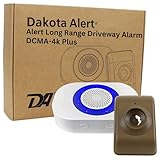
Overview: The Dakota Alert DCMA-4k Plus delivers unmatched one-mile wireless range, making it the premium choice for large properties with significant obstructions. This professional-grade system prioritizes signal strength and battery efficiency over flashy features, providing dependable long-distance monitoring for demanding environments where shorter-range systems consistently fail.
What Makes It Stand Out: The exceptional one-mile transmission range far exceeds standard half-mile systems, ensuring reliable alerts across vast distances or through dense foliage and structures. The 9V battery operation provides an entire year of service life, eliminating frequent maintenance trips to remote sensor locations. Code-learning technology simplifies pairing multiple units without complex programming or technical expertise.
Value for Money: At $74.99, this system commands a premium justified by its superior range and professional build quality. For properties where other systems fail due to distance or interference, the extra cost is negligible compared to unreliable alternatives. The single-sensor package keeps initial investment reasonable while allowing scalable expansion as needs grow, making it cost-effective for targeted applications.
Strengths and Weaknesses: Strengths include unparalleled wireless range, outstanding battery longevity, reliable signal penetration, and straightforward installation. The four volume levels provide adequate customization for different environments. Weaknesses include limited expandability to 16 sensors (versus 32-64 competitors), lack of solar power option, and basic feature set without melody customization. The higher cost per sensor during expansion and absence of detailed weather resistance specifications may concern some buyers in extreme climates.
Bottom Line: The definitive choice for large, obstacle-rich properties where range is paramount. If you’ve struggled with shorter-range systems due to hills, trees, or distance, this Dakota Alert unit solves those challenges reliably, making it worth every penny for appropriate applications despite its premium price.
6. Solar Driveway Alarm Wireless Outside 1800ft Range, Outdoor Motion Sensor & Detector Driveway Alert System with Rechargeable Battery/Weatherproof/Mute Mode(1&4-Brown)
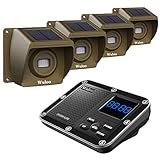
Overview: This premium solar-powered driveway alarm from Wuloo delivers a 1/3-mile range for reliable property monitoring. Designed for outdoor durability, the weatherproof sensor detects people, vehicles, and large animals within a 30-foot zone, making it ideal for homeowners seeking comprehensive perimeter security without complex wiring.
What Makes It Stand Out: The integrated solar panel powers a rechargeable battery that lasts up to 24 months on a full charge, virtually eliminating maintenance. The multi-functional receiver doubles as a clock and alarm with customizable chimes, volumes, and mute mode. Wuloo’s 20+ years of wireless technology expertise ensures reliable signal transmission through obstacles like trees and buildings. The system expands to eight sensors, allowing comprehensive coverage of large properties.
Value for Money: At $104.97, this sits at the premium end, but justifies its price through solar convenience, exceptional battery life, and the versatile receiver. Comparable systems requiring frequent battery changes cost more long-term. The included Quick Start Guide and detailed manual simplify setup, saving installation costs.
Strengths and Weaknesses: Strengths include outstanding 24-month battery life, true weatherproof performance, expandable design, and the feature-rich receiver. The 1/3-mile range is reliable in real-world conditions. Weaknesses include the higher upfront cost and only one sensor included. Sensitivity adjustment requires careful calibration to avoid false triggers from small animals.
Bottom Line: Perfect for homeowners prioritizing low-maintenance reliability and premium features. The solar convenience and multi-functional receiver make it worth the investment for long-term property monitoring.
7. eMACROS Solar Wireless Driveway Alarm — 1/2 Mile Long Range Motion Sensor for Long Driveways, Homes & Large Properties, Outdoor Weatherproof Security Alert System(1 Base Station with 2 Sensors)

Overview: The eMACROS solar driveway alarm system offers an impressive half-mile range with two included sensors, making it ideal for monitoring long driveways and expansive properties. This weatherproof system detects people, vehicles, and large animals, providing early warnings before visitors reach your home.
What Makes It Stand Out: This system delivers exceptional value by including two sensors while supporting expansion up to 64 sensors and unlimited receivers—far exceeding most competitors. The built-in solar panel continuously charges the internal battery, eliminating maintenance headaches. Tested in extreme weather conditions including storms and heavy rain, it performs reliably in forests and challenging terrain. Adjustable sensitivity offers 20-foot or 30-foot detection zones to minimize false alarms.
Value for Money: At $69.99 with two sensors, this represents outstanding value—costing less than many single-sensor systems. The solar power eliminates ongoing battery expenses, while the massive expandability future-proofs your investment. Professional installation isn’t required, saving hundreds in setup costs.
Strengths and Weaknesses: Strengths include the half-mile range, two included sensors, extreme expandability, solar convenience, and weatherproof durability. The Quick Start Guide enables minutes-long installation. Weaknesses include a less-established brand name compared to competitors and potential overkill for smaller properties. The receiver’s basic feature set lacks the clock/alarm functions of premium alternatives.
Bottom Line: The best value for large properties needing multiple monitoring points. The included second sensor and exceptional expandability make this a smart, scalable security solution.
8. Driveway Alarm- 1/2 Mile Long Range Wireless Driveway Alarm Weather Resistant Motion Sensor&Detector-DIY Security Alert System-Monitor&Protect Outdoor/Indoor Property - 1 Receiver and 1 Sensor

Overview: This budget-friendly driveway alarm delivers a surprising half-mile wireless range at a fraction of competitors’ prices. The weather-resistant motion sensor monitors indoor and outdoor spaces, detecting movement from 35-50 feet away across temperatures from -30°F to 150°F, making it suitable for diverse climates and applications.
What Makes It Stand Out: The system employs advanced FSK+FHSS wireless transmission technology to prevent interference from other devices—a feature rarely seen at this price point. With adjustable sensitivity (35ft or 50ft detection) and 35 optional melodies, it offers customization typically reserved for premium models. Expandability to 32 sensors provides room for growth, while the plug-and-play design requires no wiring.
Value for Money: At $37.99, this is the most affordable half-mile system available. While it uses AA batteries rather than solar power, the low entry cost makes professional-grade range accessible to budget-conscious buyers. The four volume levels and extensive melody options add value without increasing price.
Strengths and Weaknesses: Strengths include exceptional wireless range, low price, advanced anti-interference technology, wide detection zone, and broad operating temperature range. The system works immediately with pre-programmed components. Weaknesses include battery power (batteries not included) requiring periodic replacement, “weather resistant” rather than fully waterproof rating, and potentially less durable construction than premium solar models.
Bottom Line: An excellent entry-level option for those prioritizing range over solar convenience. Ideal for moderate climates where battery replacement isn’t burdensome, offering impressive performance per dollar.
9. Wireless Driveway Alarm 1800 Feet Long Range Motion Sensor Alert System Driveway Detector for Home with 1800mAh Rechargeable Battery (1&2-Brown)

Overview: This Wuloo driveway alarm system provides a 1/3-mile range with two included sensors, offering a middle-ground solution between premium solar models and basic battery-powered units. The weatherproof design ensures reliable operation in rain or snow, detecting movement within a 30-foot zone.
What Makes It Stand Out: The package includes two sensors at a competitive price point, doubling coverage without doubling cost. Each sensor features a rechargeable 1800mAh battery lasting up to 12 months, balancing convenience and performance. Wuloo’s two decades of wireless technology expertise deliver reliable signal transmission through obstacles. The multi-functional receiver serves as both clock and alarm with customizable chimes and volumes.
Value for Money: At $48.99 with two sensors, this offers better value than single-sensor systems costing more. While battery life is shorter than solar alternatives, the 12-month runtime remains impressive. The included Quick Start Guide and detailed manual eliminate installation confusion, saving time and potential professional fees.
Strengths and Weaknesses: Strengths include two sensors out of the box, reputable Wuloo brand, weatherproof construction, expandable design (up to 8 sensors), and versatile receiver functionality. The 1/3-mile range performs reliably in real-world testing. Weaknesses include shorter battery life compared to solar models and the need to recharge annually. Sensitivity requires careful adjustment to avoid false triggers.
Bottom Line: A smart choice for homeowners wanting dual-sensor coverage without premium solar pricing. The Wuloo reliability and included second sensor make this a practical, cost-effective security solution.
10. BESTOONE Motion Sensor Alarm, Long Range Wireless Driveway Alarm, Indoor Home Security System Electric Doorbells, 4 Motion Detector and 2 Alarm, 38 Chime Tunes, LED Indicator

Overview: This versatile motion sensor alarm includes four detectors and two receivers, making it ideal for comprehensive indoor monitoring and light outdoor use. The system alerts you to movement at entry points, driveways, or within your home, functioning as both security system and doorbell replacement.
What Makes It Stand Out: The package includes more sensors than any competitor—four detectors and two alarms—providing exceptional coverage for the price. With 38 chime options, three volume levels, and silent LED-only mode, customization is extensive. The system serves multiple purposes: intruder alert, wildlife warning, child monitoring, and elderly care, adapting to various household needs.
Value for Money: At $39.99 with four sensors, this offers unmatched sensor-to-dollar value. However, the 300-foot transmission range limits placement options compared to half-mile systems. For small properties or indoor use, the value is exceptional. The lack of included AAA batteries adds minor initial cost.
Strengths and Weaknesses: Strengths include four included sensors, dual receivers, extensive chime selection, silent mode option, and versatile applications. The system addresses false alarms through sensitivity adjustment guidance. Major weaknesses include the short 300-foot range, lack of waterproofing limiting outdoor durability, and 20-foot detection distance being shorter than competitors. Battery-powered operation requires ongoing maintenance.
Bottom Line: Best suited for apartments, small homes, or indoor monitoring where range isn’t critical. Not recommended for large driveways or exposed outdoor installations due to range and weatherproofing limitations.
Why Country Homes Need Specialized Driveway Security
The Unique Challenges of Rural Properties
Country properties present a completely different security landscape than urban or suburban homes. Your driveway might stretch a quarter-mile from the main road, crossing wooded areas, pastures, or uneven terrain. Standard motion sensors designed for 30-foot detection ranges are essentially useless in this environment. You need systems specifically engineered to cover these extended distances while maintaining reliability through weather extremes that would cripple consumer-grade electronics.
Distance and Detection: Why Standard Alarms Fall Short
That wireless doorbell sensor from the big-box store? It might work for a city driveway where the mailbox sits 15 feet from your front door, but it’s not built for the realities of rural life. Signal interference from metal outbuildings, topography that blocks wireless transmission, and the sheer power requirements for long-range detection all demand specialized hardware. Country home systems must overcome these obstacles while providing consistent coverage across your entire approach.
Understanding Long-Range Motion Detection Technology
Passive Infrared (PIR) Sensors Explained
PIR technology remains the backbone of most driveway alarms, detecting the heat signature difference between a moving object and the background environment. For long-range applications, these sensors use larger, more sensitive detection elements and advanced signal processing to extend their reach. The key is their ability to create a focused detection zone rather than a broad, unfocused field that would trigger constantly from small animals or moving vegetation.
Microwave and Dual-Technology Sensors
Microwave sensors emit continuous radio waves and detect disturbances in the reflected pattern, offering superior range and the ability to “see” through light obstructions. However, they’re more prone to false alarms from wind-blown objects. Dual-technology systems combine PIR and microwave, requiring both sensors to trigger simultaneously before alerting you. This dramatically reduces false alarms while maintaining the extended range country properties demand.
Beam Break Systems for Maximum Range
For truly long driveways exceeding 1,000 feet, beam break systems offer unparalleled reliability. These consist of paired transmitters and receivers that establish an invisible infrared beam across your driveway entrance. When a vehicle or person breaks the beam, the alert triggers. While installation requires precise alignment, these systems are virtually immune to false alarms from wildlife and weather once properly configured.
Key Range Specifications: What “Long-Range” Really Means
Line-of-Sight vs. Real-World Performance
Manufacturers often advertise “up to 2,000 feet” range, but that typically assumes perfect line-of-sight with no interference. In reality, trees, buildings, hills, and even heavy rain can reduce effective range by 30-60%. When evaluating systems, look for real-world performance data rather than ideal-condition specifications. A quality system rated for 1,500 feet line-of-sight should reliably cover 800-1,000 feet in typical country home conditions.
Understanding Detection Zones and Coverage Patterns
Long-range doesn’t just mean distance—it means intelligent coverage. Advanced systems create narrow, fan-shaped detection zones that can be angled to cover only your driveway approach while ignoring parallel roads or neighboring properties. Some systems offer adjustable detection patterns, allowing you to customize the coverage area based on your specific driveway layout and surrounding topography.
Power Solutions for Remote Locations
Solar-Powered Systems: Set-and-Forget Convenience
Solar-powered driveway alarms have revolutionized rural security, eliminating the need for battery changes or trenching power lines. Modern units feature high-efficiency panels and lithium batteries that store enough charge for 7-10 days of cloudy weather. Look for systems with separate solar panels that can be positioned for optimal sun exposure while keeping the sensor unit shaded, which improves both power generation and sensor accuracy.
Battery Life Expectations and Optimization
Even solar units require backup batteries, and some locations simply don’t get enough consistent sunlight. Quality systems use D-cell lithium batteries that can last 18-24 months under normal conditions. Pro tip: Systems that allow you to adjust transmission frequency and sensor sensitivity directly impact battery life. Reducing the check-in frequency from every 5 seconds to every 30 seconds can double battery life with minimal impact on security.
Hardwired Options: When Permanent Installation Makes Sense
For driveways near existing power sources or new construction where trenching is feasible, hardwired systems offer ultimate reliability. They eliminate battery concerns and typically support more powerful transmitters for maximum range. The trade-off is installation cost and complexity, but for properties with extreme weather or very long driveways, the peace of mind is often worth the initial investment.
Installation Strategies for Maximum Effectiveness
Optimal Sensor Placement Principles
The golden rule is mounting sensors 3-4 feet high, angled slightly downward to catch vehicle heat signatures while minimizing ground-level wildlife detection. For curved driveways, consider multiple sensors positioned at key approach points rather than one unit trying to cover everything. Always test signal strength at your intended mounting location before final installation—most quality systems include a signal strength meter for this purpose.
Dealing with Elevation Changes and Terrain
Hilly properties require careful consideration of signal path. Radio signals travel in straight lines, so a sensor at the bottom of a hill may not reach your house if the receiver sits behind the hill’s crest. Solutions include installing the receiver on a pole or outbuilding with clear line-of-sight, using repeaters to bounce signals around obstacles, or opting for cellular-based systems that bypass line-of-sight limitations entirely.
Avoiding Common Installation Pitfalls
The biggest mistake is installing sensors facing direct sunlight, which can overwhelm PIR sensors and cause false alarms or missed detections. Similarly, mounting too close to gravel roads creates dust interference, while positioning near trees invites false alarms from swaying branches. Take time to observe wind patterns, sun movement, and animal trails before drilling any holes.
False Alarm Prevention in Rural Environments
Wildlife Discrimination Features
Deer, raccoons, and stray livestock are the bane of rural security systems. Advanced units now offer “pet immunity” settings that ignore animals under a certain weight, but for country homes, you need more sophisticated options. Look for systems with dual-element PIR sensors that analyze heat signature size and movement patterns, or AI-powered cameras that can distinguish between a vehicle and a bounding deer.
Weather-Related Trigger Management
Heavy rain, snow, and fog can reflect sensor signals and cause false alarms. Quality systems use pulse-count technology, requiring multiple detection events within a set timeframe before triggering. Some also feature automatic sensitivity adjustment based on weather conditions. For extreme climates, consider beam-break systems, which are virtually weatherproof since they rely on physical interruption rather than environmental changes.
Sensitivity Tuning for Your Specific Property
One-size-fits-all sensitivity is a recipe for frustration. The best systems allow you to fine-tune detection thresholds and create “masking zones” that ignore specific areas where wildlife frequently passes. Spend a week adjusting settings and observing results. Many modern systems include event logging that shows you exactly what triggered each alert, making it easier to dial in perfect sensitivity.
Weather Resistance and Durability Standards
IP Ratings: What They Mean for Outdoor Performance
That IP65 rating isn’t just marketing speak—it means the unit is dust-tight and can withstand water jets from any direction. For country homes, IP67 (submersion protection) offers better protection against driving rain and snow accumulation. Don’t settle for anything below IP65, and verify that the rating applies to the entire unit, not just the housing.
Temperature Extremes and Component Longevity
Rural areas often experience wider temperature swings than cities. Quality systems operate reliably from -40°F to 140°F, using industrial-grade components and conformal-coated circuit boards that resist condensation. Cheap systems may work fine in spring but fail during your first polar vortex or summer heatwave. Check the operating temperature range carefully, especially if you live in an area with extreme weather.
UV Protection and Material Degradation
Five years of direct sun will turn budget plastic housings brittle and yellow. Look for UV-stabilized polycarbonate or metal housings with powder-coat finishes. The sun can also affect sensor accuracy over time as the lens material degrades. Premium systems use quartz lenses that maintain optical clarity for decades rather than acrylic that clouds within a few years.
Smart Integration and Remote Monitoring
Cellular vs. Wi-Fi Connectivity in Remote Areas
Many country homes lack reliable high-speed internet, making cellular connectivity the superior choice for critical alerts. Cellular-based systems send notifications directly to your phone via 4G LTE, independent of your home network. If you do have stable internet, Wi-Fi systems offer lower operating costs but consider hybrid systems that use Wi-Fi as primary with cellular backup during outages.
App-Based Control and Real-Time Notifications
Modern systems offer far more than a simple chime. Look for apps that allow you to arm/disarm zones remotely, adjust sensitivity, view event history, and receive rich notifications with details like “Vehicle detected at main gate at 2:34 PM.” Some systems even integrate with mapping software to show exactly which sensor triggered on your property map.
Integration with Existing Security Ecosystems
Your driveway alarm shouldn’t exist in isolation. The best systems integrate with smart home platforms like Hubitat, SmartThings, or dedicated security panels, allowing you to trigger cameras, turn on lights, or activate recording devices when motion is detected. This creates a layered security approach where each component enhances the others.
Audio and Visual Alert Options
Customizable Chime Tones and Volume Levels
When you’re working in a barn or garden 200 yards from the house, you need alerts you can actually hear. Quality receivers offer adjustable volume up to 90+ decibels and multiple chime options so you can assign different tones to different zones. Some systems support multiple receivers, letting you place units in the house, garage, and workshop simultaneously.
External Sirens and Deterrence Strategies
For security-conscious homeowners, external sirens that activate after hours can serve as powerful deterrents. The best approach is a two-stage alert: a silent notification to your phone followed by an optional audible alarm if you don’t acknowledge the alert within a set timeframe. This prevents alerting intruders that they’ve been detected while giving you time to assess the situation.
Silent Alerts for Discreet Monitoring
Sometimes you don’t want visitors to know they’ve been detected. Silent alerts to your phone or smartwatch allow you to monitor activity discreetly, whether you’re expecting a delivery or concerned about unwanted surveillance. This is particularly valuable for properties where visible security measures might be seen as confrontational by neighbors or passersby.
Cost Analysis and Budget Planning
Initial Investment vs. Long-Term Value
Entry-level long-range systems start around $150, but reliable country-grade systems typically run $300-$600. Premium systems with cellular connectivity and advanced features can exceed $1,000. Consider this over a 10-year lifespan: a $500 system that lasts a decade costs less than $1 per week for property-wide security. Cheaper systems that fail every two years and require constant battery changes often cost more long-term.
Hidden Costs: Subscriptions and Maintenance
Cellular systems require data plans, typically $5-$15 monthly. Cloud storage for event logs or video clips adds another $3-$10 monthly. Factor in battery replacements ($20-$40 annually for non-solar units) and potential antenna upgrades for challenging terrain. When budgeting, calculate the total cost of ownership over five years, not just the purchase price.
Warranty and Support Considerations
Country homes can’t easily return defective units to a store. Look for systems with at least a two-year warranty and US-based customer support that understands rural installation challenges. Some manufacturers offer extended warranties and replacement programs specifically for remote customers, recognizing that service calls aren’t feasible.
Legal and Privacy Considerations
Neighbor Property Boundaries and Legal Placement
Your sensor’s detection zone shouldn’t extend onto neighboring property, as this could constitute surveillance. Most jurisdictions allow monitoring of your own land and public roadways, but pointing a camera with motion detection at a neighbor’s house crosses legal lines. Document your installation with photos showing detection zones to protect yourself from potential disputes.
Recording Regulations and Data Privacy
If your system includes video or audio recording, you may be subject to state recording consent laws. Generally, recording video on your own property is permissible, but audio recording often requires consent. Systems that store footage in the cloud may also be subject to data privacy regulations. Understand your local laws before enabling recording features.
Signage Requirements and Deterrence Value
Interestingly, posting signs about your security system can provide legal protection in some areas while enhancing deterrence. Signs make it clear you’re monitoring your own property (not spying) and often cause would-be trespassers to think twice. Some insurance companies even offer discounts for prominently displayed security signage.
Maintenance and Troubleshooting
Seasonal Maintenance Checklists
Spring: Clean solar panels, check for winter damage, trim vegetation encroaching on detection zones. Summer: Verify UV seals, test battery levels, adjust sensitivity for increased animal activity. Fall: Clear falling leaves from sensor housings, check for moisture intrusion before winter. Winter: Remove snow buildup, verify operation in cold temperatures, check battery performance.
Common Signal Interference Issues
Metal outbuildings, new construction, and even growing trees can gradually degrade signal strength. If your system starts missing alerts, first check for physical obstructions. Interference from nearby farms’ electric fences or ham radio operators can also cause issues. Quality systems allow you to change transmission frequencies to avoid conflicts.
When to Upgrade vs. Repair
If your 5-year-old system requires a third repair in as many months, it’s time to upgrade. Technology advances rapidly—a new system might offer twice the range, cellular connectivity, and advanced filtering for the same price you paid originally. However, simple issues like weak batteries or misaligned sensors are always worth fixing before replacing the entire system.
Professional vs. DIY Installation: Making the Right Choice
When to Call in the Experts
If your driveway involves trenching across a creek, mounting on a 30-foot pole, or integrating with a complex existing security system, professional installation pays for itself. Certified installers understand signal propagation, proper grounding, and code requirements. They also carry insurance—if lightning strikes your improperly grounded system, you’re covered.
Essential Tools and Skills for DIY Success
DIY installation is absolutely feasible for most country homeowners. You’ll need a post hole digger for stable mounting, a digital multimeter for power verification, and a basic understanding of wireless networking for smart features. The most important skill is patience—plan to spend a full weekend on installation and testing rather than rushing through it in an afternoon.
Real User Experiences: Learning from Rural Property Owners
Common Success Stories and Lessons Learned
The most successful installations share common traits: multiple sensors covering key approach points rather than one unit doing everything, solar power with battery backup for reliability, and integration with trail cameras for visual verification. Property owners who take time to fine-tune sensitivity during the first month report 90% fewer false alarms than those who set it and forget it.
Unexpected Challenges and Creative Solutions
One Montana rancher discovered his system triggered whenever bald eagles flew over the sensor—eagle body heat against the cold sky created a perfect detection event. His solution? A slight downward sensor angle and a baffle that blocked the upper portion of the detection zone. Another family in Texas found that mounting sensors on fence posts rather than dedicated poles reduced vandalism and improved stability during windstorms.
Future-Proofing Your Investment
Emerging Technologies on the Horizon
AI-powered edge computing is coming to driveway alarms, enabling on-device analysis that can distinguish between vehicle types, count axles, or even recognize familiar vs. unfamiliar vehicles. LoRaWAN (Long Range Wide Area Network) technology promises ranges exceeding 5 miles with minimal power consumption. While these features command premium prices today, they’ll become standard within 3-5 years.
Scalability for Expanding Properties
Choose systems that allow easy addition of sensors and receivers. That half-mile driveway might become a full mile when you purchase the adjacent parcel. Modular systems with strong mesh networking capabilities grow with your property, while proprietary closed systems leave you starting from scratch when you need more coverage. Look for systems that support at least 4-6 sensors per receiver with easy pairing processes.
Frequently Asked Questions
What range do I actually need for my country property?
Measure the distance from your house to the main road entrance, then add 20% to account for signal degradation. For curved driveways or hilly terrain, consider the straight-line distance rather than the driveway’s length, as radio signals travel through air, not along the ground.
Will deer and other wildlife constantly trigger my alarm?
Quality systems with dual-technology sensors and proper sensitivity tuning typically reduce wildlife false alarms by 85-95%. Mounting sensors at vehicle height (3-4 feet) and using masking zones to ignore known animal paths virtually eliminates nuisance alerts while maintaining security.
How reliable are solar-powered units in cloudy northern climates?
Modern solar systems with lithium batteries perform surprisingly well even in overcast conditions. In areas with fewer than 4 hours of daily sun during winter, choose systems with larger panels and battery capacity, or supplement with D-cell backups that engage during extended dark periods.
Can I install a long-range system myself or do I need a professional?
Most homeowners can handle DIY installation with basic tools and patience. The exception is extremely long driveways requiring repeaters, integration with existing security panels, or installations requiring electrical work beyond low-voltage wiring. When in doubt, hire a pro for the initial setup and learn to maintain it yourself.
What’s the difference between a driveway alarm and a trail camera for security?
Driveway alarms provide immediate real-time alerts with minimal power consumption, while trail cameras capture visual evidence but require manual retrieval or cellular plans. The best security approach uses both: alarms for instant notification and cameras for verification and evidence.
How do I prevent my system from alerting when I leave the house?
Most systems offer “home mode” that disables alerts from interior sensors while maintaining perimeter monitoring. GPS integration in advanced systems can automatically arm/disarm based on your phone’s location, or you can use simple key fob remotes to temporarily bypass sensors as you exit.
Will heavy snow or rain affect my system’s performance?
Beam-break systems are virtually immune to precipitation. PIR sensors may experience slightly increased false alarms during heavy rain as temperature differentials change, but quality units with pulse-count technology filter these out. Ensure sensor housings have adequate overhang protection and clear snow buildup promptly.
Can these systems integrate with my existing home security system?
Many modern driveway alarms offer dry contact outputs or Z-Wave/Zigbee integration that connects to popular security panels. Check compatibility before purchasing, and consider systems from security-focused manufacturers rather than consumer electronics brands for easier integration.
What maintenance is required annually?
Plan on cleaning solar panels quarterly, checking battery levels twice yearly, trimming vegetation annually, and testing the full system monthly. After severe weather, inspect for physical damage and realign sensors if necessary. This 2-3 hour annual investment prevents 90% of common failures.
Are there any legal restrictions on how I can monitor my driveway?
You can generally monitor your own property and any public roadway visible from it. However, recording audio may require consent in some states, and your detection zones must not intentionally capture neighbor property. Posting signs about surveillance provides legal protection in many jurisdictions and enhances deterrence value.