Carbon monoxide doesn’t announce itself. It seeps through your home silently, odorless and invisible, turning everyday comfort into potential tragedy within minutes. Traditional detectors have served us well for decades, but today’s connected homes demand more intelligent protection. Smart carbon monoxide detectors with Alexa integration represent a quantum leap in household safety—transforming simple alarms into proactive guardians that speak, listen, and integrate seamlessly into your digital life. They don’t just wake you in the night with a shrill beep; they tell you exactly what’s wrong, where it’s happening, and what to do next, all while alerting your phone whether you’re upstairs or across the country.
As smart home adoption accelerates, the convergence of life-safety devices and voice assistants has evolved from novelty to necessity. But not all smart CO detectors are created equal, and the market’s rapid expansion has created a labyrinth of features, specifications, and compatibility considerations that can overwhelm even tech-savvy shoppers. Understanding what separates exceptional protection from mediocre connectivity could mean the difference between a close call and a catastrophic loss.
Top 10 Smart CO Detectors with Alexa Alerts
Detailed Product Reviews
1. Kidde Smart Smoke Detector, Ring App Enabled for Real-Time Notifications, Hardwired Alarm, AA Backup Battery

Overview: The Kidde Smart Smoke Detector integrates seamlessly with the Ring app, delivering real-time notifications for smoke and low battery conditions without requiring a subscription. This hardwired alarm with AA battery backup claims over 25% faster smoke detection than leading competitors, making it a serious contender for homeowners prioritizing response time. Designed for whole-home scalability, adding just one smart unit enables mobile alerts for every interconnected Kidde alarm in your property.
What Makes It Stand Out: The Ring ecosystem compatibility is the headline feature, offering free app notifications that competitors often lock behind paywalls. Its enhanced sensing technology specifically targets nuisance alarms triggered by cooking—a common pain point. The optional $5/month Ring monitoring service provides 24/7 professional oversight for those wanting extra peace of mind.
Value for Money: At $54.98, this sits in the mid-range for smart detectors. The lack of mandatory subscription fees delivers excellent long-term value compared to subscription-dependent alternatives. For Ring users, the integration adds significant worth without additional hardware costs.
Strengths and Weaknesses: Strengths include fast detection claims, reliable Ring app integration, reduced false alarms, whole-home connectivity, and flexible monitoring options. The hardwired design ensures consistent operation. Weaknesses: smoke detection only (no CO), requires existing hardwired infrastructure, and advanced monitoring costs extra.
Bottom Line: A compelling choice for Ring ecosystem households needing reliable smoke detection with smart features. The hardwired limitation and single-hazard focus are trade-offs for its robust notification system and competitive price point.
2. Kidde Smart Carbon Monoxide Detector & Indoor Air Quality Monitor, Plug In Wall, WiFi, Alexa Compatible Device, Voice & App Alerts

Overview: The Kidde Smart Carbon Monoxide Detector breaks new ground as the industry’s first 2-in-1 device combining CO detection with indoor air quality monitoring. This plug-in wall unit with WiFi connectivity provides voice announcements for hazards and integrates with major smart home platforms including Alexa and Google Home.
What Makes It Stand Out: The dual-function design monitors both deadly carbon monoxide and Total Volatile Organic Compounds (TVOCs) from household products, plus humidity levels. Voice alarms clearly announce specific threats (“Warning Carbon Monoxide” or “Replace Alarm”), eliminating confusion during emergencies. Setup is remarkably simple: plug in, scan QR code, and connect via the Kidde app.
Value for Money: At $84.50, this commands a premium but justifies it through unique air quality monitoring capabilities. Competing CO detectors lack TVOC tracking, making this a two-for-one solution. For health-conscious households, the added air quality data provides significant value beyond basic CO alerting.
Strengths and Weaknesses: Strengths include pioneering 2-in-1 detection, clear voice alerts, broad smart home compatibility, easy plug-in installation, and comprehensive monitoring. The device covers critical safety and wellness metrics. Weaknesses: higher price point, plug-in design limits placement flexibility compared to battery models, and requires outlet access potentially far from optimal mounting locations.
Bottom Line: An excellent investment for those wanting beyond-basic protection. The air quality monitoring adds meaningful value, though the plug-in constraint requires careful placement planning.
3. WiFi Smoke and CO Detector 3-Pack | Smart APP Alert & Real-Time LCD Display 85dB Loud Alarm, Phone Notifications, Easy Install, Battery Powered for Bedroom/Kitchen/Living Room

Overview: This 3-pack of WiFi-enabled Smoke and CO Detectors offers comprehensive protection across multiple rooms at an accessible price point. Each battery-powered unit features an 85dB alarm, real-time LCD display, and smartphone notifications for both smoke and carbon monoxide detection without requiring hardwiring.
What Makes It Stand Out: The three-unit bundle provides immediate whole-home coverage for bedrooms, kitchen, and living room at under $35 per device. The portable, battery-powered design enables installation anywhere including RVs and campers. The LCD display shows real-time levels, giving users tangible data rather than just binary alerts.
Value for Money: At $102.99 for three units, the per-device cost of approximately $34 is highly competitive. Battery operation eliminates installation costs, while WiFi connectivity provides smart features typically found in more expensive models. This represents exceptional value for renters or those seeking flexible protection.
Strengths and Weaknesses: Strengths include affordable 3-pack pricing, dual smoke/CO detection, easy battery-powered installation, portability for travel, loud 85dB alarm, and informative LCD display. Weaknesses: require periodic battery replacement, unknown brand reliability compared to established names like Kidde or First Alert, and may lack advanced smart home ecosystem integration.
Bottom Line: A budget-friendly solution for comprehensive smoke and CO coverage. The portable design and three-unit bundle make it ideal for renters, small homes, or supplemental protection in larger properties.
4. Kidde Hardwired Kidde App Enabled Smart Smoke and Carbon Monoxide Detector, AA Battery Backup, Voice Alerts, Interconnected Alarm
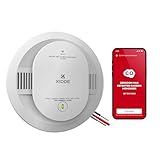
Overview: The Kidde Hardwired Smart Smoke and Carbon Monoxide Detector combines dual hazard detection with app-enabled convenience. This unit alerts to both smoke and CO while offering real-time mobile notifications, remote false alarm hushing, and whole-home connectivity through the Kidde app ecosystem.
What Makes It Stand Out: The ability to hush false alarms directly from your phone addresses one of the most frustrating aspects of traditional detectors. Its whole-home connectivity means a single smart unit can send alerts for all interconnected Kidde alarms. Enhanced sensing technology specifically reduces cooking-related nuisance alarms, a common complaint with older models.
Value for Money: At $70.84, this hardwired combo unit is reasonably priced for dual detection plus smart features. Hardwired alarms with battery backup typically cost $40-60 without smart capabilities, making the app integration a modest premium. For homes with existing hardwired infrastructure, it delivers significant functionality without subscription fees.
Strengths and Weaknesses: Strengths include dual smoke/CO detection, reliable Kidde brand reputation, hardwired reliability with battery backup, remote hush functionality, reduced false alarms, and scalable whole-home alerts. Weaknesses: requires existing hardwiring, professional installation may be needed for some users, and smart features are limited to the Kidde app ecosystem.
Bottom Line: A solid upgrade for homes with hardwired alarms seeking smart functionality. The remote hush feature and dual detection make it particularly appealing for kitchens and main living areas.
5. 10-Year Battery Wireless Interconnected Smoke and Carbon Monoxide Detector, Smart Interlink Smoke CO Alarm with Digital Display, Fire and CO Combo Alarm for Home (3 Pack)
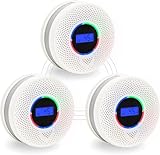
Overview: This 3-pack of wireless interconnected Smoke and Carbon Monoxide Detectors features 10-year sealed batteries, eliminating maintenance for a decade. The units communicate wirelessly, triggering all alarms when one detects danger, while digital displays provide real-time hazard information throughout your home.
What Makes It Stand Out: The 10-year battery life represents true set-and-forget convenience, removing the need for annual battery changes. Wireless interconnectivity achieves whole-home alerting without requiring hardwiring or WiFi networks. The three-unit bundle provides comprehensive coverage at an aggressive price point.
Value for Money: At $78.90 for three units with 10-year batteries and wireless interconnect, this offers exceptional value. Comparable single units from major brands cost $30-40 each, making this bundle highly competitive. The decade-long battery life saves approximately $15-20 in replacement batteries over the unit’s lifespan.
Strengths and Weaknesses: Strengths include maintenance-free 10-year batteries, wireless whole-home interconnectivity, digital display, dual smoke/CO detection, and excellent per-unit pricing. No wiring or WiFi needed. Weaknesses: lack of smartphone connectivity or app features, unknown manufacturer reliability, and sealed batteries mean entire unit replacement after 10 years rather than just batteries.
Bottom Line: Perfect for homeowners wanting reliable, maintenance-free protection without smart features. The wireless interconnect and decade-long battery make it ideal for retrofitting older homes or replacing outdated detectors comprehensively.
6. 1-Pack Smart Smoke and Carbon Monoxide Detector with App Notifications, Replaceable Battery, Wi-Fi Smoke and CO Detector Combo for Home and Office, Easy Setup

Overview: The 1-Pack Smart Smoke and Carbon Monoxide Detector offers WiFi-enabled protection for modern homes. This dual-sensor device connects to the Smart Life app, delivering real-time alerts to your phone when danger is detected. Designed for both residential and office use, it combines photoelectric smoke detection with electrochemical CO sensing in a single unit.
What Makes It Stand Out: The LCD display and three-color LED system provide clear visual status updates, with a sleep-friendly green standby light that won’t disrupt rest. The 5-10 year replaceable battery eliminates frequent maintenance headaches. App-based management allows remote silencing, alarm history review, and device sharing with family members—features rarely found in this price range.
Value for Money: At $42.16, this detector sits between basic battery models and premium smart systems. You’re paying roughly $15-20 extra for WiFi connectivity and app control compared to traditional detectors, which is reasonable for remote monitoring capabilities. The long-life battery further offsets costs over time.
Strengths and Weaknesses: Strengths include instant smartphone notifications, dual-sensor accuracy, user-friendly app integration, and the gentle standby light. The extended battery life reduces maintenance. Weaknesses are the 2.4GHz WiFi limitation (no 5GHz support), reliance on the Smart Life ecosystem, and lack of interconnectivity with other units. Single-unit pricing makes whole-home coverage expensive.
Bottom Line: This is a solid entry-level smart detector for tech-comfortable homeowners wanting app-based monitoring without premium pricing. Ideal for apartments or offices, but consider multi-pack options for larger homes.
7. Heiman Matter Smoke Detector, Smart Photoelectric Fire Alarm, Ul217-9Th Listed, Battery Powered, Real-Time Notification, Compatible With Smartthings, Home Assistant, Mini Portable For Home, Rv, Travel
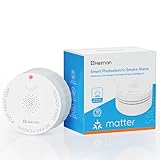
Overview: The Heiman Matter Smoke Detector represents the next generation of smart fire safety, embracing the Matter standard for seamless smart home integration. This photoelectric-only alarm eschews CO detection to focus on superior smoke detection through dual-beam sensors, making it ideal for kitchens and areas prone to false alarms.
What Makes It Stand Out: Matter over Thread support enables local, low-latency notifications without cloud dependency, compatible with SmartThings and Home Assistant. The UL 217 9th Edition certification and California State Fire Marshal approval provide professional-grade reliability. Its Red Dot Design Award-winning compact form factor fits discreetly in any room, including RVs and travel scenarios.
Value for Money: Priced at $39.98, it’s competitive for a Matter-certified device, though cheaper than many smart detectors. However, the lack of CO detection means you’ll need a separate device for complete protection, potentially doubling costs. The value hinges entirely on your smart home ecosystem.
Strengths and Weaknesses: Strengths include Matter/Thread connectivity, advanced dual-photoelectric sensors that reduce false alarms, top-tier certifications, and portable design. The one-touch test/silence function is convenient. Weaknesses are no carbon monoxide detection, limited compatibility (no Google/Alexa), and restricted Apple Home functionality. Battery replacement details are unclear.
Bottom Line: Perfect for Matter ecosystem enthusiasts prioritizing smoke detection accuracy and local control. Verify compatibility before purchasing, and pair with a separate CO detector for comprehensive safety.
8. 3-Pack Wi-Fi Smoke Detector Carbon Monoxide Detector Combo with App Notifications, Test/Silence Button, Smart Smoke Detector & CO Alarm for Any Home, Real-Time Alert

Overview: This 3-Pack Wi-Fi Smoke and Carbon Monoxide Detector Combo delivers comprehensive smart protection across multiple rooms. Each unit combines photoelectric and electrochemical sensors with 2.4GHz WiFi connectivity, managed through the Smart Life app for remote monitoring and control.
What Makes It Stand Out: The three-unit bundle provides immediate whole-home coverage at a discounted per-unit price. The high-definition display and triple-light indicator system ensure alerts are visible from any angle. With 5-10 year batteries and 85dB alarms, these detectors offer long-term reliability without wiring complexities.
Value for Money: At $109.69 for three ($36.56 per unit), this package undercuts buying individual smart detectors by 10-15%. The value proposition strengthens when considering the cost of professional hardwired systems. For homes needing 3+ units, the savings are substantial while maintaining full smart functionality.
Strengths and Weaknesses: Strengths include excellent multi-pack pricing, comprehensive app features (history sharing, remote silence), dual-sensor accuracy, and long battery life. The loud 85dB siren ensures audibility. Weaknesses: no interconnection between units (each alarms independently), 2.4GHz-only WiFi, and dependency on Smart Life app. Lack of advanced certifications mentioned.
Bottom Line: An outstanding value for equipping a medium-sized home with smart detection. Ideal for renters and homeowners wanting app control without premium pricing. Install one per floor for effective coverage, but note the lack of unit-to-unit communication.
9. 10-Year Battery Wireless Interconnected Smoke and Carbon Monoxide Detector, Smart Interlink Smoke CO Alarm with Digital Display, Fire and CO Combo Alarm for Home (2 Pack)

Overview: The 2-Pack Wireless Interconnected Smoke and Carbon Monoxide Detector prioritizes reliability through mesh networking rather than internet connectivity. These units communicate wirelessly across 820 feet, ensuring when one alarms, all alarm—critical for multi-story homes where a distant detector might go unheard.
What Makes It Stand Out: The 10-year sealed lithium battery eliminates maintenance entirely for a decade. The LCD display shows real-time CO levels in PPM and battery status, providing actionable information. Wireless interconnection works without WiFi, making it immune to internet outages. Lifetime free replacement support from KLTsenaife adds exceptional long-term value.
Value for Money: At $52.99 for two ($26.50 per unit), this is among the most affordable interconnected systems available. Hardwired alternatives cost $80-120 per unit plus installation. The decade-long battery and lifetime support make this a set-and-forget investment that pays dividends in safety and convenience.
Strengths and Weaknesses: Strengths include reliable wireless interconnection, true 10-year battery, dual sensors, clear LCD display, and UL certification. The mesh network covers large areas effectively. Weaknesses: no smart app connectivity, basic aesthetics, and potential signal interference in dense housing. The brand is less recognized than First Alert or Kidde.
Bottom Line: The best choice for homeowners prioritizing code-compliant safety and reliability over smart features. The interconnected design and 10-year battery provide peace of mind that app-based systems can’t match during power or internet failures.
10. Ring Alarm Smoke & CO Listener | Mobile App Notifications for Existing Smoke/CO Detectors | Base Station Required

Overview: The Ring Alarm Smoke & CO Listener is a unique add-on that transforms existing traditional detectors into smart devices. Rather than detecting threats itself, it listens for the specific sound patterns of UL-listed smoke and CO alarms, then sends notifications through the Ring ecosystem.
What Makes It Stand Out: This listener leverages your current investment in detectors, extending their lifespan while adding modern connectivity. Setup requires no wiring or tools—simply mount near existing alarms. The 3-year battery life is solid for a listening device, and integration with the robust Ring app provides professional monitoring options.
Value for Money: At $34.99, the hardware cost is reasonable, but the true expense includes the required Ring Alarm Security System and ongoing Ring Protect subscription. For existing Ring users, it’s an economical upgrade. For others, the total ecosystem cost makes standalone smart detectors more financially sensible.
Strengths and Weaknesses: Strengths include seamless Ring integration, easy installation, and ability to smarten existing detectors. It works with any UL-listed alarm. Weaknesses: requires Ring Alarm base station and subscription, doesn’t detect threats independently, limited to detectors under 10 years old, and provides no local alarm. It’s a bridge, not a complete solution.
Bottom Line: Only purchase if you already own the Ring Alarm system and subscribe to Ring Protect. For all others, dedicated smart detectors offer better value and independent functionality. This is a niche product for Ring loyalists, not a general-purpose safety device.
Why Smart CO Detectors with Alexa Integration Are Game-Changers
Understanding Carbon Monoxide: The Silent Threat
Carbon monoxide (CO) claims over 400 lives annually in the United States alone, with thousands more hospitalized from exposure. This toxic gas binds to hemoglobin 240 times more effectively than oxygen, essentially suffocating your body at the cellular level. Symptoms—headaches, dizziness, nausea—mimic common illnesses, causing victims to dismiss warning signs until it’s too late. Traditional detectors sound an alarm when thresholds are breached, but they can’t differentiate between a minor spike and life-threatening accumulation. Smart detectors change this equation entirely by providing granular data, location-specific alerts, and contextual information that helps you make split-second decisions.
How Alexa Integration Transforms Traditional CO Detection
Voice integration does more than eliminate the need to physically check a device. When your CO detector speaks through Alexa, it becomes part of your home’s nervous system. Imagine receiving a clear, calm voice alert through your Echo speaker: “Carbon monoxide detected in the basement. Levels are rising. Evacuate immediately and call emergency services.” This is vastly more actionable than a nondescript beep. Alexa can also broadcast alerts to every connected speaker simultaneously, ensuring nobody misses the warning. Integration allows for custom routines—like automatically turning off smart HVAC systems that might be circulating the gas, or flashing smart lights in visual warning patterns for hearing-impaired family members.
Key Features to Look for in Smart CO Detectors
Voice Alert Capabilities and Customization
The hallmark of Alexa-enabled detectors is sophisticated voice alerting, but implementation varies dramatically. Premium models offer natural language processing that provides specific, room-based notifications rather than generic warnings. Look for devices that allow you to customize alert severity levels—perhaps a gentle notification for low-level detection that warrants ventilation versus urgent commands for dangerous concentrations. The best systems let you record custom messages for different scenarios, which can be particularly valuable for households with children or elderly residents who respond better to familiar voices. Consider whether the device supports Alexa’s “Announce” feature, which overrides Do Not Disturb settings for critical alerts.
Mobile App Integration and Remote Monitoring
While Alexa handles in-home alerts, companion mobile apps extend your safety net globally. A robust app provides real-time CO level graphs, historical data trends, and battery status for every detector in your network. Seek out platforms offering push notifications with rich context—exact ppm readings, duration of exposure, and recommended actions. Geofencing capabilities can automatically arm or adjust sensitivity when you leave home, while multi-user access ensures family members and trusted neighbors receive simultaneous alerts. The interface should be intuitive enough for non-technical users but detailed enough for data enthusiasts who want to analyze patterns.
Sensor Technology and Detection Accuracy
At the core, a CO detector is only as good as its sensor. Electrochemical sensors remain the gold standard for residential use, offering 5-10 year lifespans and accuracy within ±5 ppm. However, smart detectors should also incorporate environmental compensation—adjusting for temperature, humidity, and pressure changes that can trigger false readings. Some advanced units feature dual-sensor arrays that cross-reference data, dramatically reducing nuisance alarms from common culprits like shower steam or cooking fumes. Pay attention to response time specifications; the best devices detect dangerous levels within 60-90 seconds, crucial for fast-acting CO incidents.
Battery Life and Power Options
Power strategy significantly impacts reliability and maintenance burden. Hardwired models with battery backup offer the best of both worlds—uninterrupted monitoring during outages without frequent battery changes. For battery-only installations, lithium cells providing 5+ years of life are preferable to replaceable AA batteries that need annual attention. Some cutting-edge detectors now incorporate energy harvesting from ambient light or minimal wiring, potentially offering decade-long maintenance-free operation. Consider your home’s infrastructure; retrofitting hardwired units in finished spaces may be cost-prohibitive compared to long-life battery models.
Interconnectivity with Other Smart Home Devices
True smart home integration means your CO detector orchestrates responses across your entire ecosystem. Beyond Alexa, look for compatibility with smart thermostats (automatic HVAC shutdown), smart locks (unlock doors for emergency access), and lighting systems (strobe patterns for alerts). Matter protocol support ensures future-proof compatibility as the smart home standard evolves. The ability to create conditional logic—“If CO detected AND it’s nighttime, then turn on all lights and unlock front door”—transforms isolated devices into a cohesive safety network.
Installation Considerations for Optimal Performance
Strategic Placement Throughout Your Home
Building codes mandate CO detectors within 15 feet of bedrooms, but smart technology enables more nuanced placement strategies. Install units on every level, including basements and attached garages, but avoid locations within five feet of fuel-burning appliances where normal operation might trigger false alarms. Ceiling mounting is ideal since CO is slightly lighter than air, but wall placement 12-18 inches below ceiling height works effectively. In multi-story homes, staggering detectors—one per floor but offset horizontally—creates better coverage than stacking them vertically. Consider high-risk zones like near furnaces, water heaters, and fireplaces, but maintain the manufacturer-specified distance to prevent nuisance alarms.
Wi-Fi Requirements and Network Stability
Smart detectors are only smart when connected. Most require 2.4 GHz Wi-Fi networks—5 GHz compatibility remains rare due to power consumption constraints. Assess your router’s range and consider mesh networks for reliable coverage in far-flung areas like detached garages or basement utility rooms. During installation, verify signal strength at each location; many apps provide real-time RSSI readings. Some detectors include cellular backup, a worthwhile investment if your internet reliability is questionable. Remember that during power outages, your Wi-Fi may fail unless you have a UPS battery backup for your networking equipment, potentially silencing remote alerts when you need them most.
Smart Home Ecosystem Compatibility
Working with Alexa Routines
The real magic happens in routine creation. Advanced users can craft sophisticated responses: “When CO detected, announce on all Echo devices, flash all smart lights red, turn off the Nest thermostat, send SMS to emergency contacts, and arm the security system to ‘away’ mode to unlock doors.” Explore whether detectors support Alexa’s “Guard” mode, which can listen for alarm sounds and provide an additional layer of redundancy. Voice command capabilities—“Alexa, what’s the CO level in the kitchen?"—add convenience, but ensure the skill doesn’t create privacy concerns by constantly monitoring audio.
Integration Beyond Amazon: Matter and Other Protocols
While Alexa integration is the focus, future-proofing demands broader compatibility. Matter, the new universal smart home standard, ensures your detector works with Google Home, Apple HomeKit, and Samsung SmartThings regardless of manufacturer promises. Zigbee or Z-Wave radios provide mesh networking that doesn’t rely on Wi-Fi, creating more resilient communication pathways. Some detectors act as hubs themselves, extending your smart home network while performing their primary safety function. Evaluate whether proprietary ecosystems lock you into a single brand or offer open API access for DIY integrations with platforms like Home Assistant.
Advanced Features Worth Considering
Self-Testing and Diagnostic Capabilities
Manual testing with a button press is so 1990s. Modern smart detectors perform automated self-tests daily, verifying sensor functionality, battery health, and wireless connectivity. Look for devices that run full calibration sequences weekly, compensating for sensor drift that occurs naturally over time. The best models provide detailed diagnostic reports in their apps, showing sensor response curves, last test results, and predictive failure warnings months before actual malfunction. Some even simulate CO exposure using controlled gas releases, providing true end-to-end system verification rather than just electrical circuit tests.
Environmental Monitoring: Beyond Just CO
Premium detectors increasingly function as multi-environmental sensors, monitoring temperature, humidity, air quality (VOCs), and even particulate matter. This data feeds into broader home automation—like adjusting humidifiers based on readings or alerting you to dangerous temperature drops that could freeze pipes. While these features shouldn’t distract from core CO detection, they add significant value by reducing the number of devices on your ceiling. Just ensure additional sensors don’t compromise the primary CO detection speed or accuracy.
Privacy and Data Security Considerations
Your safety device shouldn’t become a surveillance tool. Investigate manufacturer privacy policies: Do they encrypt data in transit and at rest? How long do they retain your environmental data? Can you opt out of cloud storage while retaining local functionality? Some privacy-focused models process alerts locally, only pinging the cloud when actual emergencies occur. Be wary of devices requiring unnecessary permissions or accounts with weak security. Remember, a detector that listens for Alexa commands could theoretically listen to everything—choose brands with transparent hardware kill-switches for microphones when voice control isn’t needed.
Maintenance and Long-Term Ownership
Understanding Sensor Lifespan and Replacement
Even the best electrochemical sensors degrade. Most have rated lifespans of 5-7 years, after which accuracy drops precipitously. Smart detectors should track operational hours and environmental exposure, providing countdown timers to replacement rather than just a generic “end of life” chirp. Some manufacturers offer trade-in programs or pro-rated warranties. Factor replacement costs into your purchase decision—a $200 detector that lasts 10 years is cheaper than a $100 unit needing replacement every 5 years. Consider whether the device is designed for sensor module replacement or requires complete unit disposal, impacting both cost and environmental footprint.
Software Updates and Feature Evolution
Your detector’s capabilities should improve over time, not remain static. Choose brands with proven track records of firmware updates that add features rather than just patch bugs. Some companies have transformed basic detectors into sophisticated air quality monitors through free software updates. Verify the update mechanism—over-the-air (OTA) updates are essential, but they should occur during low-risk times and never disable protection. Check user forums for reports of bricked devices or problematic updates. A manufacturer’s commitment to supporting legacy devices for their full hardware lifespan separates premium brands from opportunistic newcomers.
Cost Analysis and Value Proposition
The price spectrum spans from $50 budget models to $300 premium units, but true cost includes installation, subscription fees, and replacement cycles. Avoid detectors requiring monthly subscriptions for basic functionality; premium features like professional monitoring or advanced analytics may justify modest fees. Calculate cost-per-year-of-operation: a $250 detector lasting 10 years with no subscription costs $25 annually, while a $75 detector replaced every 5 years plus a $3/month subscription costs $51 annually. Factor in potential insurance discounts—many providers offer 5-10% reductions for professionally monitored smart safety systems. The value of preventing a single CO incident, however, renders all financial calculations trivial.
Frequently Asked Questions
1. Will my smart CO detector still work if my internet goes down?
Yes, but with limitations. The core CO detection and local alarm function independently of internet connectivity. However, remote notifications, Alexa voice alerts, and app monitoring require an active connection. Hardwired models with battery backup ensure continuous monitoring, but you’ll only receive local audible alerts until connectivity restores. Consider a UPS for your router to maintain smart features during outages.
2. Can Alexa call 911 for me if CO is detected?
Alexa cannot directly dial emergency services, but it can execute routines that include notifying emergency contacts via SMS or push notifications. Some professional monitoring services integrate with Alexa to provide emergency dispatch. Set up Alexa’s “Guard” feature and link it to your detector; when armed, it can alert a monitoring center that contacts emergency services on your behalf.
3. How do I prevent false alarms from cooking or my garage?
Strategic placement is key—install detectors at least 15 feet from cooking appliances and never in garages. Look for models with environmental compensation and multi-sensor arrays that cross-reference data to distinguish between transient spikes and genuine threats. Some smart detectors allow you to set “quiet hours” or temporarily reduce sensitivity through the app when you know you’ll be generating harmless CO (like searing steak).
4. What’s the difference between a smart CO detector and a smart smoke detector with CO sensing?
Dedicated CO detectors use specialized electrochemical sensors optimized for accurate gas measurement. Combination units often use less accurate CO sensors to save space and cost. While combo devices reduce ceiling clutter, a dedicated CO detector typically responds faster and provides more precise readings. For maximum safety, use dedicated CO detectors in high-risk areas and combo units in general living spaces.
5. Do I need to replace all my detectors at once when upgrading to smart models?
Not necessarily. Smart detectors can coexist with traditional units, though you lose interconnectivity benefits. For phased upgrades, start with high-risk areas like furnace rooms and master bedroom hallways. Some smart detectors can listen for traditional alarms via Alexa Guard and trigger smart responses, creating a bridge between old and new systems.
6. How accurate are the CO ppm readings in the app compared to professional equipment?
Consumer-grade detectors are accurate within ±5 ppm for levels between 30-400 ppm, which is sufficient for life safety. Professional equipment offers greater precision and faster response times for industrial applications. For home use, focus on a detector’s ability to respond quickly to dangerous levels rather than laboratory-grade accuracy. Regular self-calibration ensures readings remain reliable throughout the sensor’s life.
7. Can my landlord or insurance company access my CO detector data?
Only if you grant explicit permission through the app’s sharing features. Reputable manufacturers encrypt your data and maintain strict privacy controls. Some insurance programs offer discounts for sharing aggregate data (not real-time alerts), but this requires opt-in enrollment. Read privacy policies carefully and choose brands that allow local-only operation if data sharing concerns you.
8. What happens when my detector reaches its end-of-life after 5-7 years?
The device will chirp and send app notifications indicating sensor expiration. Unlike traditional detectors where you might ignore the chirp, smart models typically disable detection entirely to prevent false confidence. Some brands offer loyalty discounts on replacements. Plan ahead by setting calendar reminders a few months before expiration to research newer models, as technology advances significantly over half a decade.
9. Are there any security risks from having a Wi-Fi-connected CO detector?
Any connected device presents potential attack surface, but reputable manufacturers implement bank-level encryption and regular security patches. The risk is minimal compared to the life-safety benefit. Reduce exposure by using a separate IoT network for smart home devices, enabling two-factor authentication on your accounts, and purchasing from established brands with bug bounty programs. Avoid no-name brands that may not prioritize security updates.
10. Can I install a smart CO detector myself, or do I need an electrician?
Battery-powered models are straightforward DIY installations requiring just a drill and screwdriver. Hardwired units that replace existing detectors are also manageable for homeowners comfortable turning off breakers. However, if you’re adding new hardwired locations or your home lacks interconnected wiring, a licensed electrician ensures code compliance and proper integration. Always check local regulations; some jurisdictions require professional installation for hardwired safety devices.