Mornings in a busy household often feel like orchestrating a three-ring circus while blindfolded. Someone’s lost their homework, you’re mentally juggling three different appointment times, the dog needs feeding, and your youngest is asking what “photosynthesis” means—all before you’ve had your first sip of coffee. This is precisely where smart displays with built-in voice assistants and hub capabilities transform from luxury gadgets into essential family infrastructure. These devices don’t just respond to commands; they anticipate needs, visualize solutions, and serve as the central nervous system for your connected home.
Unlike standalone smart speakers that simply talk back, or basic tablets that lack deep smart home integration, modern smart displays combine the best of both worlds: hands-free voice control with rich visual feedback and the ability to orchestrate dozens of connected devices. For families navigating the complexity of modern schedules, these hubs become command centers that keep everyone synchronized without requiring a computer science degree to operate. This guide cuts through the marketing noise to examine the critical features, strategic considerations, and family-specific functionality that truly matter when evaluating these digital household managers.
Top 10 Smart Displays for Busy Families
Detailed Product Reviews
1. Skylight Calendar: 15-inch Wall Planner Digital Calendar & Chore Chart, Smart Touchscreen Interactive Display for Family Schedules – Wall Mount Included, Great for Organizing Your 2026 Calendar

Overview: The Skylight Calendar dominates the premium digital family organizer market with its expansive 15.4-inch touchscreen display. Designed as a central command hub for busy households, it combines calendar management, chore tracking, and meal planning in a sleek package that mounts on walls or sits on countertops. Setup takes minutes with Wi-Fi connectivity and seamless integration across major calendar platforms including Google, iCloud, Outlook, Cozi, and Yahoo.
What Makes It Stand Out: The Skylight’s generous screen real estate sets it apart, making it easily readable from across a room—critical for families with kids. Its interactive chore chart system assigns colors to family members and tracks completion, while the meal planner eliminates daily dinner dilemmas. The device allows direct on-screen event creation or management through the Skylight app, offering flexibility for different user preferences. The optional Plus Plan unlocks premium features like Magic Import, photo screensaver, and rewards systems.
Value for Money: At $319.99, the Skylight commands a premium price but delivers a polished, purpose-built experience. Unlike repurposed tablets, this dedicated device offers reliability, consistent updates, and family-focused software. The hardware quality and ongoing support justify the cost for households seeking a true command center rather than a DIY solution. However, the subscription model for advanced features adds long-term expense.
Strengths and Weaknesses: Pros: Large, bright 15.4" display; seamless calendar sync; intuitive interface; robust build quality; flexible mounting options; dedicated family-focused features. Cons: Highest price point in category; premium features require subscription; limited customization compared to tablets; dependency on Wi-Fi for full functionality.
Bottom Line: The Skylight Calendar is the best-in-class digital family organizer for those prioritizing screen size and seamless integration. While expensive, its dedicated design eliminates the friction of cobbling together apps on a standard tablet, making it worth the investment for busy families seeking a reliable, central scheduling hub.
2. 10.1 Inch Digital Calendar Chore Chart with Touchscreen - Full HD Interactive Display, Wall & Desk Mountable Family Planner, to-Do List & Meal Planner, Digital Picture Frame Gifts for Women Mom

Overview: This 10.1-inch digital calendar offers a compact yet feature-rich solution for family organization at an accessible price point. The Full HD touchscreen display provides crisp visuals for managing schedules, chores, and meal plans. Its distressed wood frame adds rustic charm that blends with home décor better than sterile tech devices. The unit syncs effortlessly with major calendar services and transforms into a digital photo frame when idle.
What Makes It Stand Out: The aesthetic design is this product’s key differentiator—the distressed wood frame makes it feel like home décor rather than a gadget. It functions as both wall-mounted planner and desk organizer with included stand options. The interactive chore chart gamifies responsibility for children, while meal planning features reduce daily decision fatigue. Its photo frame capability adds sentimental value, displaying family memories during downtime.
Value for Money: At $99.98, this device hits the sweet spot between functionality and affordability. It delivers core features—calendar sync, chore tracking, meal planning—at one-third the price of premium alternatives. While the smaller screen requires closer viewing, the cost savings are substantial. The build quality feels solid, though not as refined as higher-end models. For budget-conscious families, it eliminates paper clutter without breaking the bank.
Strengths and Weaknesses: Pros: Attractive distressed wood frame; Full HD resolution; affordable price; versatile mounting; photo frame mode; simple setup. Cons: Smaller 10.1" screen less visible from distance; limited advanced features; no premium subscription options; basic reward system.
Bottom Line: This digital calendar excels as an entry-level family organizer that doesn’t sacrifice style for function. It’s perfect for smaller spaces or families wanting to test digital organization without a major investment. The charming design and solid feature set make it an excellent value proposition.
3. 10.1 Inch Smart Digital Calendar & Chore Chart Full HD Touchscreen Display WiFi Sync Electronic Planner for Family Schedules Includes Desk Stand Streamline Home Organization Gift for mother mom women

Overview: This streamlined 10.1-inch digital calendar positions itself as a portable family command center with essential organization features. The sleek touchscreen syncs via Wi-Fi with popular calendar applications, allowing families to coordinate schedules, assign chores, and share reminders from a single device. It includes a desk stand and offers wall-mounting capability, making it adaptable to various spaces. The photo frame mode provides dual functionality when calendar features aren’t needed.
What Makes It Stand Out: Portability is this device’s defining characteristic—its lightweight design and included desk stand allow easy relocation between kitchen, office, or bedroom. The interface prioritizes simplicity, making it accessible for less tech-savvy family members. Its transformation into a digital photo frame adds emotional value, turning a functional tool into a display for cherished memories. The Wi-Fi sync ensures real-time updates across all family devices.
Value for Money: Priced at $94.99, this represents one of the most budget-friendly options in the smart calendar market. It delivers core scheduling and chore management features without premium pricing or subscription fees. While it lacks the advanced reward systems and larger displays of competitors, it covers fundamental needs effectively. The value proposition strengthens for families wanting basic digital organization without ongoing costs.
Strengths and Weaknesses: Pros: Very affordable; portable design; simple interface; includes desk stand; photo frame capability; no subscription required. Cons: Small screen size; limited advanced features; basic chore tracking; no premium options; plastic build feels less durable.
Bottom Line: This is an ideal starter digital calendar for families prioritizing simplicity and affordability over advanced features. It reliably handles basic scheduling and chore management while offering flexibility in placement. Perfect for gifting or as a first step into digital family organization.
4. Digital Calendar, 15.6 Inch Wall Planner Electronic Calendar & Chore Chart, Smart Touchscreen Interactive Display for Family Schedules, Great for Organizing Your Routines, Wall & Desk Mountable
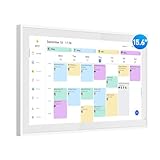
Overview: The flyEVfish 15.6-inch digital calendar competes directly with premium brands by offering an extra-large touchscreen at a mid-range price. This HD display serves as a comprehensive family planner, combining calendar management, interactive chore charts with reward systems, meal planning, and photo display capabilities. Its weather forecasting feature provides three-day outlooks tied to event locations, while sleep mode conserves energy during overnight hours.
What Makes It Stand Out: The screen size-to-price ratio is exceptional—15.6 inches for under $200 rivals competitors charging over $300. The integrated weather forecasting adds practical value for planning outings, while the customizable photo albums transform it into a personalized digital gallery. The reward system allows parents to set custom incentives, motivating children more effectively than basic checkboxes. Sleep mode automation demonstrates thoughtful power management.
Value for Money: At $192.99, this device disrupts the premium segment by delivering large-format utility without premium pricing. It includes features like weather and sleep mode that some expensive competitors lack, while matching them on core functionality. The absence of subscription fees for advanced features enhances long-term value. Build quality is solid, though the brand lacks Skylight’s market recognition.
Strengths and Weaknesses: Pros: Large 15.6" display; excellent price for size; weather forecasting; customizable reward system; sleep mode; photo albums; no subscription needed. Cons: Lesser-known brand; interface less polished than premium options; limited third-party app integration; customer support uncertain.
Bottom Line: This flyEVfish calendar offers the best screen-size value in the market, making large-format digital organization accessible to budget-conscious families. While it may lack some refinement of pricier alternatives, its feature set and display size make it a compelling choice for those wanting maximum visibility without maximum cost.
5. Digital Calendar - 10.1’’ Smart Electronic WiFi Chore Chart with 1280 * 800 IPS HD Touch Screen Display, Interactive Family and Hearth Chore Planner, Auto-Rotate Easy Setup to Sync via AiMOR APP

Overview: The AiMOR digital calendar delivers a feature-packed 10.1-inch organization solution with an emphasis on chore gamification and connectivity. Its IPS HD touchscreen provides clear viewing angles, while dual-band Wi-Fi support ensures stable connections. The AiMOR app enables seamless two-way Google Calendar sync and URL-based integration with other services. This device functions as a centralized family command center combining scheduling, task management, and photo display.
What Makes It Stand Out: The reward point system distinguishes this device, turning chore completion into a game where kids earn points toward unlockable rewards. Auto-rotate functionality adds versatility for portrait or landscape viewing, adapting to different mounting preferences. Dual-band Wi-Fi compatibility (2.4/5 GHz) provides reliable connectivity in crowded network environments. The meal planning module incorporates recipe saving and cooking task assignment for kids, promoting life skills development.
Value for Money: At $89.99, this is the most affordable option reviewed, yet it doesn’t skimp on features. The chore reward system rivals premium devices, and dual-band Wi-Fi is a technical advantage over basic models. While the 1280x800 resolution is lower than Full HD competitors, it’s adequate for calendar functions. The value proposition is strongest for families wanting motivational features on a tight budget.
Strengths and Weaknesses: Pros: Lowest price; innovative reward point system; dual-band Wi-Fi; auto-rotate; recipe integration; two-way Google sync. Cons: Lower resolution (1280x800) than Full HD alternatives; smaller screen; brand recognition limited; interface may have learning curve.
Bottom Line: This AiMOR calendar excels as a budget-friendly motivational tool that makes chores engaging for children. Its technical connectivity features and reward system punch above its price class, making it ideal for families prioritizing behavior incentives over display size. A smart choice for first-time digital organizer buyers.
6. 21.5 Inch Smart Digital Calendar, Wall Electronic Calendar, 1920 * 1080 IPS Full HD Touch Screen Display for Family Meal Planner Support - Streamline Household Organization

Overview: This 21.5-inch smart digital calendar transforms wall space into a centralized family command center. With its full HD IPS touchscreen and seamless calendar sync capabilities, it helps families coordinate schedules, plan meals, and stay organized without the clutter of paper planners.
What Makes It Stand Out: The dual-functionality sets this device apart—it seamlessly switches between a digital calendar and photo frame. When calendar mode isn’t needed, it displays cherished memories as a screensaver. The weather integration provides real-time local updates, eliminating phone checks. Sleep mode automatically dims the screen at night, preserving energy and preventing sleep disruption. Zero subscription fees and compatibility with major calendar apps like Google, iCloud, and Outlook ensure hassle-free synchronization.
Value for Money: Priced at $257.98, this calendar sits in the mid-range category despite its generous 21.5-inch display. Similar-sized smart displays often cost $300+, making this a compelling value. The inclusion of 32GB storage, weather functionality, and dual calendar/photo frame modes adds significant worth. The 1-year warranty and lifetime support further justify the investment compared to cheaper alternatives with limited features.
Strengths and Weaknesses: Strengths: Large, crisp 1080p display visible across rooms; versatile calendar and photo frame modes; real-time weather updates; sleep mode for night-time use; extensive calendar app compatibility; ample 32GB storage; no subscription fees; solid warranty support.
Weaknesses: Wall-mounted design limits placement flexibility; no built-in chore chart or reward system; larger size may overwhelm smaller spaces; touchscreen interface may require familiarization for less tech-savvy users.
Bottom Line: Ideal for families seeking a prominent, wall-mounted organizational hub, this digital calendar delivers excellent screen real estate and versatile functionality at a competitive price. While it lacks advanced chore management, its core calendar and photo frame features make it a worthwhile investment for streamlined household coordination.
7. 10.1 Inch Smart Digital Calendar Planner & Chore Chart, IPS HD Touchscreen Interactive Display, Smart Family Planner, Digital Picture Frame for Seamless Scheduling - Share Photos/Videos via App

Overview: This compact 10.1-inch smart calendar planner combines family scheduling with interactive chore management in a portable touchscreen display. Designed for countertop or desk placement, it helps families coordinate activities, assign tasks, and share memories through an intuitive mobile app integration.
What Makes It Stand Out: The interactive chore chart transforms task management into an engaging experience, allowing families to track progress and foster responsibility. Unique color-coding for each family member provides instant visual organization. The built-in dinner planner eliminates daily meal confusion, while the digital picture frame functionality lets you share photos and videos remotely via a free app. Effortless Wi-Fi setup and compatibility with major calendar platforms ensure seamless integration into existing digital ecosystems.
Value for Money: At $159.99, this device offers exceptional value for families prioritizing task management alongside scheduling. While smaller than wall-mounted alternatives, it packs robust features—chore tracking, meal planning, and photo sharing—typically found in pricier models. The absence of subscription fees and inclusion of mobile app control makes it more economical than maintaining separate calendar and task management systems.
Strengths and Weaknesses: Strengths: Compact, versatile placement options; interactive chore chart promotes family engagement; color-coded scheduling for clear organization; integrated dinner planner; easy photo/video sharing via app; simple Wi-Fi setup; broad calendar compatibility; affordable entry point.
Weaknesses: Not wall-mountable, limiting visibility; 10.1-inch screen may be small for busy families; no mention of weather functionality; limited storage capacity not specified; lacks advanced reward systems.
Bottom Line: Perfect for families seeking a portable, task-oriented organizational tool, this smart planner excels at chore management and scheduling coordination. While its smaller screen and countertop design may not suit everyone, its feature-rich platform and affordable price make it an excellent choice for interactive family planning.
8. BSIMB 10.1 Inch Digital Calendar - Chore Chart, Meal Planner, Rewards System, Photo Display, Smart Electronic Calendar Touchscreen Interactive Display for Family Schedules Seamless Scheduling White
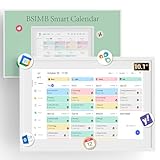
Overview: The BSIMB 10.1-inch digital calendar offers a comprehensive family organization solution as a wall-mounted touchscreen display. It combines calendar synchronization with chore management, meal planning, and a unique rewards system to keep families coordinated and motivated.
What Makes It Stand Out: The integrated rewards system transforms chores into achievements by awarding stars and incentives, making it particularly effective for motivating children. The all-in-one home assistant approach consolidates meal planning, to-do lists, and photo sharing into a single device. Remote management through the eCalendar app allows parents to update schedules and tasks from anywhere. The ability to send wish cards and share moments makes it valuable for connecting with distant relatives or tech-challenged elders.
Value for Money: At $169.99, this calendar justifies its slightly higher price point compared to similar 10-inch models through its robust rewards system and wall-mountable design. While some advanced features require paid “Magic Import” access, the core functionality—including chore tracking, meal planning, and photo sharing—remains free. This tiered approach lets families test basic features before committing to premium tools, offering better long-term value than subscription-based competitors.
Strengths and Weaknesses: Strengths: Wall-mounted design optimizes visibility; innovative star rewards system encourages task completion; comprehensive meal and to-do list integration; remote app management; photo/video sharing with family; thoughtful features for elder connectivity; works with major calendar platforms.
Weaknesses: 10.1-inch screen may feel cramped for complex schedules; some features locked behind paid tier; brand recognition lower than competitors; no weather functionality mentioned; storage capacity unspecified.
Bottom Line: BSIMB delivers a feature-rich family hub that excels at motivating children through gamified chores while keeping everyone organized. Its wall-mountable design and remote management capabilities make it ideal for busy households, though the paid feature tier and smaller screen warrant consideration against larger alternatives.
9. ApoloSign Digital Calendar: Electronic Calendar, Smart Touchscreen Interactive Display for Chore Chart, Family Schedules Planner, Supports All Apps via Google Play (White, 21.5-inch)

Overview: The ApoloSign 21.5-inch digital calendar represents a premium tier family organization hub with unparalleled customization options. Featuring Google Play support and a sophisticated wooden frame design, it merges high-end aesthetics with powerful functionality for tech-savvy households.
What Makes It Stand Out: Google Play integration unlocks limitless possibilities, allowing families to download any app and create a truly personalized dashboard. Drag-and-drop widgets for meal planning, grocery lists, countdowns, and chores provide unmatched flexibility. The premium Incell + AG display technology reduces glare while delivering crystal-clear HD visuals. Unlike competitors, it offers direct Google Photos integration without third-party apps or subscription fees. The natural wooden frame elevates it from tech gadget to home décor piece, while the U.S./Canada gift card compensation guarantee demonstrates exceptional confidence in product reliability.
Value for Money: At $399.99, this is a significant investment, but justified for families wanting maximum customization. The ability to run any Android app extends functionality far beyond standard calendars, potentially replacing multiple devices. While pricier than basic models, its premium materials, superior display technology, and unique support guarantee differentiate it from mass-market alternatives. The stand is sold separately, adding to total cost.
Strengths and Weaknesses: Strengths: Google Play access enables unlimited customization; premium anti-glare display; elegant wooden frame; direct Google Photos integration; flexible wall or tabletop mounting; portrait/landscape orientation; outstanding customer support with compensation guarantee; no hidden fees.
Weaknesses: Highest price point in category; stand costs extra; complexity may overwhelm non-technical users; 21.5-inch size requires substantial wall space; overkill for families wanting simple calendar functionality.
Bottom Line: For households seeking a premium, infinitely customizable family command center, the ApoloSign delivers unmatched flexibility and quality. Its Google Play support and superior design justify the premium price for tech-enthusiast families, though simpler alternatives better suit those wanting basic scheduling without complexity.
10. Digital Calendar – 27 Inch Electronic Wall Calendar & Chore Chart, Smart Family Organizer with Interactive Touchscreen Display, Wall Mount in Portrait or Landscape

Overview: flyEVfish’s 27-inch digital calendar stands as the largest family organization display on the market, transforming walls into immersive command centers. This massive touchscreen combines scheduling, chore management, meal planning, and photo display with unprecedented visibility for busy households.
What Makes It Stand Out: The sheer 27-inch size ensures schedules are readable from across any room, making it ideal for large families or open-concept homes. The interactive task chart gamifies routines with stars and custom rewards, keeping children engaged. Unique custom list creation enables everything from vacation packing to holiday preparation. Weather forecasting integrates directly with event times and locations, providing practical preparation insights. Sleep mode automation ensures the screen respects household routines without manual intervention.
Value for Money: At $449.97, this premium-priced calendar targets families prioritizing maximum visibility above all else. While significantly more expensive than 21-inch alternatives, the extra 6 inches create a truly commanding presence. The comprehensive feature set—including rewards systems, custom lists, and intelligent weather integration—matches premium competitors. However, the lesser-known brand and lack of unique software advantages make the price harder to justify against established alternatives offering similar functionality at lower cost.
Strengths and Weaknesses: Strengths: Massive 27-inch HD display unbeatable for visibility; robust interactive chore rewards system; versatile custom list creation; integrated meal planning; smart weather forecasting; automated sleep mode; portrait/landscape mounting; broad calendar compatibility.
Weaknesses: Highest price point may be prohibitive; enormous size requires significant wall space and may dominate rooms; brand recognition limited; no mention of storage capacity; lacks premium materials or app ecosystem of competitors; potential overkill for average-sized families.
Bottom Line: This colossal calendar serves families needing maximum screen presence and comprehensive organizational tools. While the 27-inch display is genuinely impressive, the premium price and brand obscurity make it best suited for specific needs where size trumps all other considerations. Most families will find better value in smaller, established alternatives.
Why Smart Displays Are the New Family Command Center
The leap from smart speaker to smart display represents more than just adding a screen—it’s a fundamental shift in how families interact with technology. Voice assistants alone can tell you the weather; a smart display shows you the hourly forecast with radar while you’re packing lunches. A speaker can set a timer; a display shows multiple simultaneous timers with visual progress bars so you can coordinate the oven, the dishwasher cycle, and your teen’s practice schedule at a glance. This visual layer eliminates the “did it hear me?” anxiety and creates a shared information space that everyone in the family can access simultaneously.
For parents, this means less time repeating yourself and more time seeing information processed collectively. Kids can visually confirm their chores are checked off, see their schedule for the day, and understand consequences when screen time limits appear as countdowns rather than arbitrary rules. The hub functionality centralizes control of smart lights, locks, thermostats, and security cameras, turning scattered apps into a single, cohesive interface. When properly implemented, these devices reduce cognitive load rather than adding to it—exactly what a busy family needs.
Core Features That Matter Most for Families
Voice Assistant Capabilities: Beyond Basic Commands
The foundation of any smart display is its voice assistant, but not all assistants are created equal when it comes to family dynamics. Look for natural language processing that understands varied accents, speech impediments, and the excited rambling of a seven-year-old. The best systems recognize individual voices automatically, switching to personalized profiles that respect age-appropriate content restrictions without requiring manual logins. This means your teenager can ask about their calendar while your preschooler gets filtered answers to homework questions—all from the same device.
Advanced assistants handle compound commands (“Set a 20-minute timer and turn on the kitchen lights”) and follow-up questions without repeating the wake word. For families, this continuity feels magical. Consider how the system handles interruptions and multiple speakers. Can it parse two people talking simultaneously? Does it prioritize adult voices over children’s for security-sensitive commands? These nuanced capabilities separate frustrating experiences from seamless ones.
Visual Interface: Show, Don’t Just Tell
A display’s screen quality directly impacts its utility. Brightness sensors that automatically adjust for sunny kitchens prevent squinting at recipes. Viewing angles matter when three people are watching a cooking tutorial from different positions around an island. Resolution should be crisp enough to read text from across a room, but battery drain isn’t a concern since these devices are perpetually plugged in.
The user interface design reveals the manufacturer’s understanding of family use cases. Can you pin your family’s most-used commands to a home screen? Is there a “kids mode” that transforms the interface into large, colorful buttons for common requests? How quickly can you dismiss notifications that might distract during homework time? The best interfaces offer glanceable information—calendar events, weather, reminders—that updates in real-time without requiring interaction, turning the display into a digital bulletin board.
Hub Functionality: One Ring to Rule Them All
A true smart home hub does more than just control devices; it bridges different communication protocols. Matter compatibility is now non-negotiable, ensuring your display works with devices from hundreds of brands regardless of their original ecosystem. Thread support provides a mesh network that makes your smart home more reliable and responsive, eliminating the “device not responding” errors that plague Wi-Fi-only setups.
For families, hub strength manifests in routine complexity. Can you create a “Bedtime” routine that locks doors, dims lights, sets thermostats, plays white noise, and displays tomorrow’s weather forecast—all triggered by a single phrase? Does the system allow time-based conditions (“Only on school nights”) or location-based triggers (“When Mom’s phone arrives home”)? The depth of automation determines whether you’re truly simplifying life or just adding another gadget to manage.
Screen Size & Spatial Planning
Kitchen Counter Champions: The 7-10 Inch Sweet Spot
The kitchen represents the heart of family activity, making it the prime location for a smart display. Screens in the 7-10 inch range hit the perfect balance: large enough to display recipes with ingredient lists and step-by-step videos, yet compact enough to avoid dominating precious counter space. These sizes typically mount flush against backsplash walls or tuck neatly under cabinets.
Consider vertical versus horizontal orientation. Portrait mode excels for video calls with grandparents, while landscape mode better suits cooking videos and calendar views. Some models offer motorized rotation that automatically adjusts based on content—a feature that feels luxurious until you’ve experienced recipe instructions that flip orientation mid-cooking. For families, screen durability matters; look for oleophobic coatings that resist fingerprints and easy-clean surfaces that withstand splashes and spills.
Living Room Leadership: 10+ Inch Displays for Shared Spaces
Larger displays in communal areas serve as family bulletin boards and entertainment centers. A 10-15 inch screen visible from the sofa can display rotating family photos, upcoming events, and smart home status indicators. These sizes support split-screen functionality—showing a video doorbell feed while someone watches a cooking tutorial, for instance.
Placement becomes critical. Wall mounting at eye level prevents neck strain during video calls, while furniture-anchored stands should have weighted bases that withstand curious toddlers. Consider power cable management; a beautiful display becomes an eyesore with dangling cords. Some families opt for recessed power outlets or cable-concealing mounts that create a floating effect. The display’s bezel width affects how seamlessly it blends into your decor—thinner bezels make the screen feel more like digital art and less like a computer monitor.
Bedroom & Personal Spaces: Compact 5-7 Inch Options
Smaller displays on nightstands serve as intelligent alarm clocks that gradually brighten to simulate sunrise, display sleep scores from connected fitness trackers, and offer one-tap “goodnight” routines. For kids’ rooms, these sizes feel less intrusive while still providing homework help and music streaming. The key differentiator here is display dimming capability—can the screen turn completely dark except for a faint clock, or does it emit sleep-disrupting blue light?
In bedrooms, physical mute buttons and camera shutters become essential for privacy. Some models include ambient sensors that disable listening when the room is dark, ensuring your midnight cough doesn’t accidentally trigger a shopping order. For teenagers, these displays can serve as study timers with visual Pomodoro technique tracking, creating healthy productivity habits through gamification.
Privacy & Security: Non-Negotiable Family Safeguards
Physical Camera Controls: The Power of a Switch
Any smart display with video calling needs a physical camera shutter or kill switch. Software toggles are insufficient when children are involved; kids accidentally enable cameras, and software glitches happen. The most family-friendly designs include sliding shutters that physically block the lens, often with a bright color indicator visible across the room. Some devices feature motorized covers that automatically close when not in use, though manual sliders prove more reliable and transparent.
Consider the camera’s field of view. Wide-angle lenses capture entire rooms, which might inadvertently show private spaces during video calls with relatives. Adjustable angles or digital cropping features let you frame the view intentionally. For families, the ability to completely disable the camera and microphone via a single hardware button provides peace of mind that no amount of privacy policies can match.
Voice Data & Recording Management
Understanding how voice recordings are stored, processed, and deleted is crucial. The most privacy-conscious systems process common commands locally on the device, only uploading complex queries to cloud servers. Look for settings that auto-delete voice recordings after 3-6 months, and the ability to review and delete specific interactions. Some systems now offer “voice match” data that stays encrypted on-device, never leaving your home network.
For families, the ability to set up voice profiles for children without collecting their data presents a significant differentiator. Certain platforms create anonymized child profiles that don’t link to advertising profiles or store voice patterns beyond basic recognition. Review the company’s data monetization policies—are they selling anonymized usage patterns? Do they share data with third-party skill developers? The answers significantly impact your family’s digital footprint.
Kid-Safe Profiles & Digital Boundaries
Robust parental controls go beyond content filtering. The best systems allow you to set up supervised accounts where you approve contacts for video calling, whitelist specific skills or apps, and set time limits that automatically enforce themselves. Look for “communication only” modes that disable all features except calling approved family members—perfect for younger children who need to reach parents but shouldn’t access the internet.
Age-appropriate responses matter. When your six-year-old asks a question, does the assistant provide a simplified, accurate answer or default to “I don’t know”? Can you set explicit content filters that apply across music, video, and web searches? The ability to review your child’s interaction history (without listening to actual recordings) helps identify interests and potential concerns, turning the device into a parenting tool rather than just a babysitter.
Communication Features That Keep Families Connected
Video Calling: Face-to-Face from Any Room
Smart displays revolutionize family communication by making video calls as simple as saying “call Grandma.” The best systems support high-definition video with automatic framing that keeps subjects centered as they move around the room. Look for group calling capabilities that connect multiple households simultaneously—essential for virtual family gatherings or coordinating with co-parents.
Consider the calling ecosystem. Does it require both parties to use the same brand of device, or can it connect to smartphones, tablets, and other displays seamlessly? The ability to “drop in” on family members (with permission) creates a modern intercom system; parents can check on kids in the playroom without shouting up stairs. For families with elderly relatives, simplified “answer” buttons that auto-accept calls from approved contacts remove technological barriers to staying connected.
Intercom & Announcement Systems
Beyond video, audio broadcast features turn your smart displays into a whole-home communication network. “Dinner’s ready” announcements simultaneously play on every device, while “announcement only” modes let kids send messages to parents without initiating full conversations. Look for scheduling capabilities—automatic reminders that homework starts in 15 minutes, or that it’s time to leave for soccer practice.
The most sophisticated systems offer translation features for multilingual families, converting announcements into different languages for grandparents or au pairs. Location-based announcements (“Welcome home, the garage is open”) add a layer of convenience that feels futuristic but quickly becomes indispensable. For busy parents working from home, the ability to differentiate between urgent family announcements and routine reminders prevents constant interruptions.
Content & Entertainment for Multi-Generational Households
Streaming Services Integration
A smart display should consolidate your family’s entertainment subscriptions into a single, voice-controlled interface. Look for native support for major services, but also consider how the device handles services without direct integration—can it cast content from your phone? The best displays offer “continue watching” queues that sync across devices, so Mom can start a show in the living room and finish it in the kitchen while cooking.
For families, multi-user profiles within streaming apps prevent kids’ cartoons from polluting adult recommendation algorithms. Some displays now offer simultaneous streaming—playing a podcast for you while your child watches a music video on the same screen using picture-in-picture. Consider audio output options; can the display send audio to Bluetooth headphones for quiet viewing, or to your whole-home speaker system for movie night?
Educational Tools & Homework Help
The difference between a glorified tablet and a true family hub lies in educational integration. Top-tier displays partner with learning platforms to offer interactive lessons, visual math problem solvers, and step-by-step science explanations. Voice-activated spelling tests and foreign language pronunciation practice turn homework time into engaging activities. Look for content that aligns with school curricula, providing reinforcement rather than distraction.
For younger children, displays should offer read-along storybooks with highlighted text, building literacy skills while keeping them occupied during dinner prep. The ability to set “learning time” modes that lock out entertainment content ensures devices support education rather than undermining it. Some systems now include progress tracking that parents can review, identifying subjects where children struggle and celebrating achievements.
Kitchen & Recipe Assistance
Smart displays shine brightest in the kitchen, but not all recipe features are equal. The best systems offer hands-free navigation—no need to touch the screen with flour-covered fingers. Step-by-step mode should advance with voice commands, while ingredient lists remain visible. Look for conversion calculators, multiple simultaneous timers with custom labels, and the ability to add ingredients directly to shopping lists.
Consider recipe sources. Does the display pull from a single proprietary database, or can it access the web and your personal recipe collection? Video tutorials that play alongside written instructions cater to different learning styles. For families with dietary restrictions, robust filtering—gluten-free, nut-free, under 30 minutes—prevents disappointment. The ability to scale recipes (“serve six instead of four”) automatically demonstrates sophisticated programming that respects real-world cooking challenges.
Smart Home Integration Depth
Protocol Support: Zigbee, Matter, Thread, Oh My!
The smart home protocol landscape confuses even tech enthusiasts, but your display’s hub capabilities determine long-term compatibility. Matter is the new universal standard that ensures devices work across ecosystems, but Thread provides the mesh network backbone that makes those connections reliable. Zigbee remains relevant for legacy devices, while Z-Wave offers robust security for locks and sensors.
A future-proof display should support at least Matter and Thread, with Zigbee as a valuable bonus. This combination ensures your hub can communicate with door sensors, smart bulbs, thermostats, and locks regardless of manufacturer. For families, this flexibility means you can choose the best smart lock for security and the best smart bulb for dimming quality, rather than being locked into a single brand ecosystem. Check for firmware update commitments—manufacturers should guarantee protocol support for at least five years.
Routine Building for Complex Family Schedules
Simple “good morning” routines that turn on lights and play news are table stakes. Family-grade smart displays offer conditional routines with multiple triggers and actions. Can you create a routine that only runs on school days, adjusts based on who’s home, and branches into different actions depending on the time? For example: “If it’s 7 AM on a weekday and the kids’ phones are detected, announce the weather, flash the lights if it’s raining, and display bus arrival times.”
Look for routine sharing capabilities. Can you export a perfectly crafted routine and import it onto another display in your home? The ability to nest routines—where one routine triggers another—creates sophisticated automation that adapts to your family’s rhythms. For busy parents, location-based triggers (“When I leave work, set the thermostat to 72° and unlock the front door”) transform routines from novelties into genuine time-savers.
Audio Quality & Music Streaming Capabilities
Speaker Performance for Group Listening
Don’t accept tinny, directional audio. Family smart displays need 360-degree sound that fills a room without distortion at high volumes. Bass response matters more than you might think—it’s the difference between music that energizes morning routines and audio that grates on everyone’s nerves. Look for multiple drivers with passive radiators that create full-range sound from a compact package.
Consider how the display handles audio zones. Can you group it with other speakers for synchronized whole-home audio, or does it isolate itself? The ability to set different volumes for voice responses versus music prevents jarring interruptions during quiet songs. For families, a “quiet hours” setting that automatically reduces volume and disables bass during nap times shows thoughtful engineering.
Multi-Room Audio Setup
The true test of a smart display’s audio capabilities is how it integrates with existing speakers. Can it function as a satellite in a larger system, or does it demand to be the primary controller? Look for seamless handoff—start music on the display, then transfer it to the living room soundbar with a voice command. The best systems support multiple simultaneous streams, so your teenager can listen to pop in their room while you enjoy jazz in the kitchen.
For families, audio ducking is crucial. When you say the wake word, music should automatically lower its volume rather than pause completely, allowing for quick interactions without disrupting the flow. The ability to create speaker groups based on activity (“play Disney music everywhere except the office”) simplifies party planning and daily routines alike.
Design & Durability for High-Traffic Homes
Build Quality for High-Traffic Areas
Smart displays in family homes endure more abuse than typical electronics. Look for polycarbonate housings that resist cracking when knocked off counters, and screens with reinforced glass that withstands toy impacts. Ventilation design matters—displays that run cool last longer and can be tucked into corners without overheating. Rubberized bases prevent sliding on slick countertops, while wrap-around fabric coverings should be stain-resistant and removable for washing.
Consider button placement. Physical volume and mute buttons should be accessible but recessed enough to prevent accidental activation by curious toddlers. LED status indicators need to be visible but not bright enough to disrupt sleep in bedroom installations. For families with pets, displays should have chew-resistant power cables or cable management systems that keep cords out of reach.
Mounting & Placement Flexibility
The difference between a display that feels integrated versus one that clutters your space often comes down to mounting options. Look for standard VESA mount compatibility for wall installations, plus proprietary mounts that allow articulation—tilting for glare reduction, swiveling for video calls, and folding flat against walls when not in use. Under-cabinet mounts for kitchens should include cable routing that keeps power cords hidden and safe from spills.
Consider placement sensors. Some displays automatically adjust their interface based on orientation—showing clocks when vertical, recipes when horizontal. Ambient light sensors that dim screens in dark rooms prevent sleep disruption, while proximity sensors that wake the display as you approach conserve energy and feel responsive. For families, the ability to easily move displays between rooms (perhaps with multiple power adapters) lets you reconfigure your setup as needs change.
Total Cost of Ownership Analysis
Upfront Investment vs. Long-Term Value
Entry-level smart displays might save $50 initially but lack hub capabilities, requiring a separate $100 smart home hub. Premium models with built-in Zigbee and Thread radios cost more upfront but eliminate additional hardware purchases. Calculate the cost per family member—a $200 display serving five people costs $40 per user, while a $150 display that only two people use regularly costs $75 per active user.
Consider resale value and longevity. Devices from manufacturers with strong update commitments retain functionality longer, spreading the cost over more years. Displays that become obsolete after two years cost more annually than premium models lasting five. For families, the ability to repurpose older displays—moving a kitchen unit to a child’s bedroom as they mature—maximizes value across life stages.
Subscription Services & Hidden Costs
The sticker price rarely tells the full story. Some displays require premium subscriptions for advanced features like person detection on security camera feeds or extended cloud storage for video calls. Music streaming services, extended recipe databases, and educational content libraries often carry monthly fees. Calculate these costs over a three-year period to understand true ownership expenses.
Look for displays that bundle valuable services. Some include free years of music streaming or cloud storage, while others require immediate subscriptions. For families, the ability to share subscriptions across multiple user profiles without paying per-person fees significantly impacts budget. Be wary of displays that lock basic functionality behind paywalls—timers, weather, and smart home control should never require subscriptions.
Setup, Onboarding & User Management
Initial Configuration for Multiple Ages
The setup process reveals much about a display’s family-friendliness. Look for guided onboarding that helps you create individual voice profiles for each family member, set up parental controls before handing the device to kids, and connect smart home devices in batches rather than one-by-one. The best systems offer mobile apps that let you configure settings remotely, perfect for making changes while the kids are using the display.
Consider the learning curve. Does the display offer interactive tutorials that teach kids how to ask questions effectively? Can you import existing smart home configurations from other platforms, or must you start from scratch? For busy parents, the ability to clone settings from one display to another—copying a perfectly configured kitchen unit’s settings to a new bedroom display—saves hours of repetitive setup.
Ongoing Maintenance & Updates
Smart displays should improve over time through software updates, not degrade. Investigate the manufacturer’s track record for supporting older devices with new features. Some brands provide updates for seven years, while others abandon devices after two. Automatic update scheduling prevents disruptions during critical times—look for options to pause updates during homework hours or family movie nights.
For families, update transparency matters. The display should clearly communicate what’s changing and why, especially when updates modify privacy settings or parental controls. The ability to roll back problematic updates provides insurance against bugs that might disable critical functions. Check user forums for real-world experiences; manufacturers with responsive customer service and quick bug fixes demonstrate commitment to long-term satisfaction.
Troubleshooting Family-Specific Challenges
When Commands Collide: Managing Multiple Voices
In a bustling household, displays often hear multiple people simultaneously. Advanced systems use beamforming microphones to isolate the speaker closest to the device, while superior voice recognition can distinguish between “turn on the lights” spoken by a parent versus a child. Look for displays that queue multiple requests rather than ignoring secondary speakers—a child asking for a timer shouldn’t be lost because a parent simultaneously requested music.
Consider command hierarchies. Can you set priority users whose requests override others? This prevents kids from accidentally disabling security systems or modifying critical routines. Some displays now offer “family mode” where certain commands require confirmation from a second family member—perfect for purchases or smart home changes. The ability to view a log of who asked what (without storing audio recordings) helps resolve disputes about who turned off the alarm clock.
Parental Override & Emergency Controls
When parental controls lock down a display too aggressively, parents need quick override methods without navigating complex menus. Look for PIN-based overrides that work via voice or touchscreen, or mobile app controls that let you temporarily lift restrictions remotely. Emergency modes should be accessible even when the display is in “kids mode”—your child must be able to call 911 or a designated emergency contact regardless of restrictions.
For families, the ability to create “emergency only” profiles that activate during power outages or internet disruptions provides peace of mind. Some displays include cellular backup that maintains calling capabilities even when Wi-Fi fails. Test how the device behaves during internet outages; the best systems continue controlling locally-connected smart home devices and maintain basic timer and alarm functionality without cloud connectivity.
Future-Proofing Your Smart Display Investment
Emerging Standards & Compatibility
The smart home industry evolves rapidly, and today’s cutting-edge protocol might be tomorrow’s Betamax. Displays that support firmware-upgradable radios can adopt new standards without hardware replacement. Look for manufacturers committed to the Connected Standards Alliance and active participation in developing future protocols. The ability to install third-party “skills” or “apps” extends functionality beyond what the manufacturer originally envisioned.
Consider API access for advanced users. While most families won’t code custom integrations, vibrant developer communities create unofficial solutions that bridge gaps between ecosystems. Displays that allow local network control (without requiring cloud servers) future-proof against manufacturer abandonment or internet outages. For families, this means your investment continues working even if the manufacturer pivots business models or gets acquired.
Ecosystem Lock-In vs. Flexibility
Manufacturers naturally want to keep you in their ecosystem, but the best displays play well with competitors. Can your display show a feed from a doorbell camera of a different brand? Will it work with thermostats and lights from multiple manufacturers within the same routine? Displays that support multiple voice assistants (some now offer both Google Assistant and Alexa) provide flexibility as family preferences evolve.
For families, data portability matters. Can you export your configured routines, voice profiles, and smart home device list if you decide to switch platforms? The ability to try different displays without losing months of setup work encourages healthy competition among manufacturers. Look for displays that support open standards like HomeKit (even unofficially) alongside proprietary systems, ensuring you can integrate future devices regardless of brand.
Frequently Asked Questions
1. Can smart displays really understand my toddler’s speech, or will I constantly have to translate for them?
Modern voice assistants use machine learning models trained on thousands of child speech patterns, but performance varies significantly. Look for displays that explicitly advertise child speech recognition and offer voice training exercises where kids read short phrases to improve accuracy. Even with advanced systems, children under five may need coaching to speak clearly and wait for the wake word confirmation tone.
2. How do I prevent my kids from making unauthorized purchases through the smart display?
Enable purchase PINs in parental control settings, requiring a spoken or typed code for any transaction. Better yet, disable voice purchasing entirely and require all purchases to be initiated from your phone. Some displays offer “kids mode” that automatically routes purchase requests to the parent’s mobile app for approval, creating a natural approval workflow.
3. Will a smart display spy on my family’s conversations?
Reputable manufacturers include physical mute buttons that electrically disconnect microphones, making listening impossible. Review privacy settings to disable human review of recordings and set automatic deletion schedules. For maximum privacy, choose displays that process common commands locally without cloud transmission, and regularly audit which third-party skills have microphone access.
4. Can I use smart displays if my family uses both iPhones and Android phones?
Yes, but with caveats. While the core voice assistant functions work regardless of phone type, some advanced features like contact syncing and calendar integration work best within a single ecosystem. Look for displays that support multiple calendar services and offer cross-platform mobile apps with feature parity, ensuring Android users don’t get second-class experiences.
5. How many smart displays does a typical family need?
Most families find two displays optimal: a larger screen (10+ inches) in a central location like the kitchen, and a smaller unit in the primary living area or master bedroom. Additional displays make sense for homes over 3,000 square feet or families with three or more children who need simultaneous access. Start with one high-quality display and expand based on actual usage patterns rather than hypothetical needs.
6. What’s the difference between a smart display and just using an old tablet?
Smart displays offer always-on listening, superior far-field microphones, integrated smart home hubs, and interfaces designed for glanceable information rather than active use. Unlike tablets, they’re engineered for 24/7 operation with automatic updates, robust parental controls, and family-wide voice recognition. Tablets work as budget alternatives but lack the seamless, hands-free integration that makes smart displays transformative for busy families.
7. Can smart displays help manage my family’s screen time limits?
Absolutely. Advanced displays track usage per profile and can enforce daily time limits that lock entertainment features while preserving utility functions like timers and smart home control. Some systems coordinate with phones and TVs to provide a holistic view of each child’s total screen time, automatically logging them out across devices when limits are reached. This turns the display from a screen-time culprit into an enforcement ally.
8. How secure are smart displays from hackers?
Security varies dramatically. Choose displays that offer two-factor authentication for account access, regular security updates, and encrypted local communication for smart home devices. Avoid displays from brands with histories of security breaches or slow patch deployment. For families, the biggest risk is often weak Wi-Fi passwords rather than the display itself—ensure your home network uses WPA3 encryption and a strong, unique password.
9. Will my smart display become obsolete in a year?
Premium displays from established manufacturers typically receive feature updates for 4-7 years. Look for devices with upgradeable firmware and radios that can adopt new protocols like Matter. The physical hardware—microphones, speakers, screens—rarely becomes obsolete; it’s the software support that matters. Reading manufacturer update policies before purchasing helps avoid devices that become expensive paperweights after two years.
10. Can I take my smart display when we travel or move it between rooms?
Most displays are designed for semi-permanent installation but move easily between rooms. The primary consideration is setup time; moving a display requires reconnecting to Wi-Fi and potentially recalibrating smart home device connections. Some families purchase additional power adapters for frequent relocation. Portable battery bases exist for certain models, transforming them into mobile units for backyard parties or hotel rooms, though these add cost and reduce the always-on convenience that defines the category.