The modern kitchen is undergoing its most radical transformation since the invention of the microwave, and at the heart of this revolution sits the smart oven with air-fry capabilities. As we move into 2026, these appliances have evolved from novel gimmicks into indispensable culinary command centers that fundamentally change how we approach daily cooking. The convergence of AI-driven precision, hyper-connectivity, and advanced air-fry engineering means today’s models deliver restaurant-quality results while slashing energy consumption and cooking times by up to 40%.
What makes 2026 particularly pivotal isn’t just incremental improvement—it’s the mainstream adoption of standards like Matter protocol, breakthroughs in multi-zone cooking, and sophisticated moisture management systems that finally bridge the gap between convenience and genuine culinary excellence. Whether you’re renovating your kitchen or upgrading your countertop arsenal, understanding the nuanced features separating exceptional smart ovens from mediocre ones will determine whether your investment becomes a daily workhorse or an expensive regret.
Top 10 Smart Ovens with Air-Fry Features
Detailed Product Reviews
1. Breville BOV900BSS Smart Oven Air Fryer Pro and Convection Oven, Brushed Stainless Steel

Overview: The Breville Smart Oven Air Fryer Pro represents the pinnacle of countertop cooking technology, combining 13 functions into a premium stainless steel package. This 1800-watt powerhouse utilizes intelligent Element iQ System with five independent quartz elements and digital PID temperature control to eliminate cold spots and deliver precise, restaurant-quality results across roasting, air frying, and dehydrating tasks.
What Makes It Stand Out: The Element iQ System is genuinely revolutionary, using smart algorithms to direct power exactly where needed. Its super convection technology reduces cooking time by up to 30%, while the ability to dehydrate four trays simultaneously sets it apart from competitors. The 13 cooking functions essentially replace your main oven, toaster, air fryer, and dehydrator in one sophisticated unit.
Value for Money: At $399.95, this is a premium investment, but justified for serious home cooks. Comparable commercial-grade performance would cost significantly more. It replaces multiple appliances, saving counter space and long-term replacement costs. The build quality ensures longevity that budget alternatives simply cannot match.
Strengths and Weaknesses:
- Pros: Exceptional temperature precision, superior build quality, versatile 13-in-1 functionality, super convection efficiency, large dehydration capacity
- Cons: Premium price point, large countertop footprint, steep learning curve for all features, heavier than competitors
Bottom Line: For culinary enthusiasts seeking professional-grade results and willing to invest in quality, the Breville Smart Oven Air Fryer Pro is unmatched. It justifies its premium price through performance, durability, and versatility that transforms everyday cooking.
2. Nuwave Bravo Air Fryer Toaster Smart Oven, 12-in-1 Countertop Convection, 30-QT XL Capacity, 50°-500°F Temperature Controls, Top and Bottom Heater Adjustments 0%-100%, Brushed Stainless Steel Look

Overview: The Nuwave Bravo delivers exceptional customization in a spacious 30-quart design, offering 12 cooking functions with unprecedented heater control. Its intuitive digital interface allows real-time adjustments without restarting cycles, while the integrated probe thermometer ensures perfect doneness automatically. With 112 presets and Linear T Technology maintaining precise 5°F increments, this appliance prioritizes user control.
What Makes It Stand Out: The ability to independently adjust top and bottom heaters from 0-100% is a game-changer for precision cooking, especially for pizza and baked goods. The integrated digital temperature probe eliminates guesswork by automatically ending cooking when target internal temperature is reached. Combined with Linear T Technology that maintains consistent heat without cycling, it offers professional-level control at a mid-range price.
Value for Money: At $279.99, the Bravo offers remarkable value. Competitors with similar probe technology and heater customization cost $100+ more. The 30-quart capacity accommodates family-sized meals, while the 112 presets provide instant expertise. It’s an affordable alternative to high-end brands without sacrificing core performance features.
Strengths and Weaknesses:
- Pros: Unmatched heater customization, automatic probe thermometer, massive capacity, precise temperature control, extensive presets
- Cons: “Stainless steel look” (not solid steel), brand lacks Breville/Ninja prestige, interface may overwhelm beginners
Bottom Line: The Nuwave Bravo excels for tech-savvy cooks who value precision and customization. Its innovative probe and heater controls make it a standout choice that punches above its weight class, offering premium features without the premium price tag.
3. Ninja Prestige Smart XL with Pro Cook System 10-in-1 Air Fry Digital Countertop Convection Toaster Oven with Air Fry, Air Roast, Broil & Bake, Pro Cook Thermometer, 1800 Watts, Stainless Steel, DT551

Overview: Ninja’s Prestige Smart XL combines robust 1800-watt power with intelligent cooking technology in a sleek stainless steel design. The 10-in-1 functionality covers essential cooking methods, while the Pro Cook System with Auto Temp Detect Intelligence ensures perfect results from rare to well-done. Smart Surround Convection and two-level cooking capability maximize efficiency without requiring food rotation.
What Makes It Stand Out: The Pro Cook System’s integrated thermometer with Auto Temp Detect Intelligence removes all guesswork, automatically adjusting cooking for ideal doneness. Smart Surround Convection technology ensures even heat distribution across both cooking levels simultaneously—a rare feature that saves time and effort. Ninja’s reputation for durability and performance adds confidence to this investment.
Value for Money: Priced at $279.99, it competes directly with the Nuwave Bravo but trades some customization for brand reliability and user-friendly design. While it offers fewer presets, the core technology is equally impressive. For those prioritizing trusted brand performance over exhaustive customization, it delivers strong value.
Strengths and Weaknesses:
- Pros: Excellent even cooking on two levels, reliable Pro Cook thermometer, trusted Ninja build quality, intuitive controls, powerful 1800W performance
- Cons: Only 10 functions vs competitors’ 12-13, fewer presets than Nuwave models, premium price for function count
Bottom Line: The Ninja Prestige Smart XL is perfect for families wanting reliable, even cooking without complexity. Its two-level capability and intelligent thermometer make it a practical workhorse that delivers consistent results with minimal effort.
4. Ninja DT251 Foodi 10-in-1 Smart XL Air Fry Oven, Bake, Broil, Toast, Roast, Digital Toaster, Thermometer, True Surround Convection up to 450°F, includes 6 trays & Recipe Guide, Silver
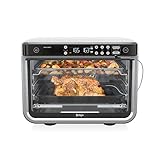
Overview: The Ninja DT251 Foodi offers exceptional value by packaging 10 versatile functions with True Surround Convection technology that delivers up to 10X the power of traditional ovens. The integrated Foodi Smart Thermometer ensures precise doneness, while the 90-second preheat and 30% faster cooking times address busy household needs. Six included trays maximize versatility right out of the box.
What Makes It Stand Out: At its price point, the 10X convection power is remarkable, providing restaurant-quality crisping and juiciness typically found in premium models. The comprehensive accessory package (6 trays) eliminates additional purchases. Ninja’s proven reliability combined with rapid preheating makes this ideal for time-pressed families wanting quality without complexity.
Value for Money: At $192.04, this is the best value proposition in the category. It offers Ninja’s trusted engineering and core smart features at a significantly lower price than competitors. While temperature caps at 450°F versus 500°F, most cooking tasks don’t require the extra heat, making this a practical, budget-conscious choice.
Strengths and Weaknesses:
- Pros: Outstanding price-to-performance ratio, 10X convection power, included accessories, trusted Ninja brand, fast preheating
- Cons: 450°F maximum temperature (vs 500°F), fewer customization options, silver finish less premium than stainless
Bottom Line: The Ninja DT251 is the smart choice for budget-minded buyers refusing to compromise performance. It delivers essential smart features, powerful convection, and brand reliability at an unbeatable price, making premium cooking accessible to everyone.
5. Nuwave Bravo XL Pro Air Fryer Toaster Oven with Grill Combo, 2025 New Ultra-Fast Convection System, 35% Crispier, 2X More Even, 142 Presets, 50-500F, Smarter Probe, PFAS Free, 30QT, Stainless Steel

Overview: The 2025 Nuwave Bravo XL Pro pushes boundaries with its ultra-fast convection system and integrated grill combo, delivering 35% crispier results with twice the cooking evenness of competitors. With 142 presets, a smarter probe, and PFAS-free construction, this 30-quart model emphasizes both performance and health consciousness. Independent heater adjustments and customizable fan speeds provide professional-level control.
What Makes It Stand Out: The grill plate with authentic char-grilled flavor and marks is unique in this category, essentially adding indoor grilling to its 12 core functions. The 2025 ultra-fast convection system represents the latest technology, while PFAS-free components address growing health concerns. With 142 presets and 30 memory slots, it offers unmatched programming flexibility.
Value for Money: At $249.99, it undercuts premium competitors while offering more features. The grill combo alone justifies the cost compared to buying a separate indoor grill. For early adopters wanting cutting-edge technology without the $400+ price tag, it delivers exceptional value.
Strengths and Weaknesses:
- Pros: Latest 2025 convection technology, integrated grill plate, PFAS-free construction, extensive presets, independent heater control
- Cons: New model (long-term reliability unproven), complex interface, Nuwave brand lacks premium perception
Bottom Line: The Nuwave Bravo XL Pro is ideal for tech enthusiasts wanting maximum features and health-conscious design. Its grill combo and cutting-edge convection make it a forward-thinking choice that delivers professional results at a mid-range price.
6. Breville Smart Oven Air Fryer Compact, Brushed Stainless Steel

Overview: The Breville Smart Oven Air Fryer Compact delivers premium performance in a space-saving design. This $249.95 countertop appliance combines five dedicated air fry modes with five smart cooking functions, totaling ten versatile presets controlled by an intuitive dial interface. The brushed stainless steel construction houses Breville’s intelligent Element IQ System, which distributes heat precisely where needed.
What Makes It Stand Out: The innovative Crispy Reheat mode sets this apart, reviving leftovers with radiant heat from both elements while maintaining interior moisture. Super convection technology reduces cooking time by up to 30%, creating extreme airflow for genuinely crispy results. The compact footprint makes it ideal for apartments or smaller kitchens without sacrificing Breville’s signature engineering quality.
Value for Money: At $249.95, this sits in the mid-range premium category. You’re investing in Breville’s proven reliability and smart heating algorithms rather than basic timer-based cooking. While cheaper alternatives exist, the Element IQ system’s precision and durability justify the cost for those who value consistent results and build quality over bargain pricing.
Strengths and Weaknesses: Strengths include intelligent power distribution, compact design preserving counter space, robust stainless steel construction, and specialized reheating capabilities. Weaknesses involve limited interior capacity compared to XL models, fewer total functions than higher-end Breville units, and a price point that may deter budget-conscious buyers.
Bottom Line: Perfect for small households seeking premium air frying performance without committing to a full-sized oven. The Crispy Reheat function alone makes it worth considering if you frequently revive leftovers.
7. Nuwave Bravo Air Fryer Toaster Smart Oven, 10-in-1 Countertop Convection, 1800 Watts, 21-Qt Capacity, 50°-450°F Temp Controls, Top and Bottom Heater Adjustments 0%-100%, PFAS Free, Stainless Steel
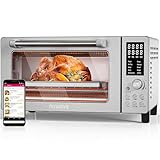
Overview: The Nuwave Bravo offers impressive customization at a budget-friendly $169.99 price point. This 10-in-1 countertop convection oven delivers 1800 watts of power through a 21-quart capacity chamber, with unprecedented control over heating elements and fan speed for tailored cooking results.
What Makes It Stand Out: The ability to adjust top and bottom heaters independently from 0-100% provides professional-level precision rarely seen at this price. On-the-fly adjustments let you modify temperature or time mid-cook without restarting, while the PFAS-free construction addresses health concerns. The 5°F temperature increments offer exceptional accuracy.
Value for Money: Exceptional value. At $169.99, it undercuts competitors by $80-150 while offering features like customizable heater ratios typically reserved for commercial equipment. The 21-quart capacity matches or exceeds many premium models, making this a feature-rich bargain.
Strengths and Weaknesses: Strengths include unbeatable price-to-feature ratio, intuitive digital controls, precise temperature management, and PFAS-free materials. Weaknesses involve a less established brand reputation than Breville or Ninja, potentially shorter lifespan, and a steeper learning curve for users overwhelmed by customization options.
Bottom Line: The best budget choice for tech-savvy cooks who want maximum control without the premium price tag. Ideal for experimenting with precise cooking techniques.
8. Breville BOV860BSS Smart Oven Air Fryer and Convection Oven, Brushed Stainless Steel

Overview: Breville’s flagship Smart Oven Air Fryer commands a premium $349.95 with eleven cooking functions and advanced Element IQ technology. This full-sized countertop oven uses five independent quartz heating elements and digital PID temperature control to eliminate cold spots and deliver professional-grade results across air frying, baking, roasting, and slow cooking.
What Makes It Stand Out: The dedicated air fry setting combines higher temperatures with super convection for restaurant-quality crispiness. Five independent quartz elements respond to smart algorithms that create tailored cooking environments. The digital PID control maintains temperature within precise ranges, while the slow cook function adds versatility beyond typical air fryer ovens.
Value for Money: Premium pricing justified by engineering excellence. The $349.95 investment buys commercial-grade temperature stability, durable construction, and function variety that replaces multiple appliances. For serious home cooks, the precision and reliability offset the cost compared to replacing cheaper units.
Strengths and Weaknesses: Strengths include unmatched heating precision, robust build quality, eleven versatile functions, and consistent results. Weaknesses are the high price point, substantial counter space requirements, and potential overkill for users wanting basic air frying.
Bottom Line: A professional-grade appliance for dedicated home chefs who demand precision and versatility. Worth the investment if you regularly use multiple cooking methods and value consistent, perfect results.
9. Ninja Air Fryer & Toaster Oven | Prestige Smart XL Countertop Oven | Bakes up to 20 Cookies, Fits up to a 12lb Turkey | Pizza, Toast, Bake, Air Fry & Reheat | 1800 Watts | Stainless Steel | DT501

Overview: Ninja’s Prestige Smart XL dominates the family market at $399.99 with massive capacity and innovative Surround Convection technology. This 1800-watt powerhouse fits a 12-pound turkey or twenty cookies simultaneously, while its rear-mounted fan and heat source create 360-degree crisping without rotation.
What Makes It Stand Out: The two-level even cooking system eliminates the need for flipping or shaking, a game-changer for busy families. SMART SURROUND CONVECTION technology ensures all-around crisping, while the 90-second preheat time gets meals started dramatically faster than conventional ovens. The XL capacity handles family-sized portions effortlessly.
Value for Money: Premium pricing reflects substantial capacity and time-saving features. At $399.99, it’s expensive but justifiable for households cooking large quantities regularly. The speed and convenience offset the cost for families who value efficiency over budget.
Strengths and Weaknesses: Strengths include exceptional capacity, even two-level cooking, lightning-fast preheat, and family-oriented design. Weaknesses involve the highest price point, significant counter space consumption, and unnecessary size for singles or couples.
Bottom Line: The ultimate solution for large families needing speed and capacity. If you regularly cook for four or more people, the time savings and portion capacity make this a worthwhile kitchen centerpiece.
10. CHEF iQ MiniOven Smart Toaster Oven Air Fryer Combo, 11-in-1 Countertop Convection Oven, Bake, Broil, Air Fry, Broil, Dehydrate, 1750W, 25 Qt Capacity, Fast Cooking with Touchscreen Controls – Black

Overview: The CHEF iQ MiniOven merges smart home technology with culinary versatility at $399.92. This 11-in-1 convection oven pairs with a dedicated app for remote monitoring and control, while its 3200 RPM DC motor and 25-quart capacity handle family meals. The 70-500°F temperature range exceeds most competitors.
What Makes It Stand Out: WiFi connectivity and the CHEF iQ App transform this into a remote-controlled cooking station with chef-tested presets. The ultra-powerful motor roasts up to 30% faster than conventional air fryers, while varying fan speeds optimize each function. The touchscreen interface provides modern, intuitive operation.
Value for Money: Premium pricing matches feature set. At $399.92, you’re paying for connectivity and power rather than just capacity. For tech enthusiasts, the convenience justifies the cost, though traditional cooks may find equal performance in less expensive non-smart models.
Strengths and Weaknesses: Strengths include app integration, powerful motor, extensive temperature range, modern touchscreen, and large capacity. Weaknesses involve potential app dependency, connectivity issues, steeper learning curve, and premium pricing for features some won’t use.
Bottom Line: Ideal for tech-savvy users who value remote monitoring and app-based cooking guidance. If you enjoy smart home integration and precise control from your phone, this delivers a futuristic cooking experience.
Why Smart Ovens with Air-Fry Are Redefining Modern Kitchens
The Convergence of Convenience and Health
The magic of modern smart ovens lies in their ability to eliminate the traditional trade-off between healthy eating and time constraints. Air-fry technology has matured far beyond simple convection fans, now employing cyclonic air patterns that create crisp exteriors while preserving interior moisture without excessive oil. When paired with AI that automatically adjusts cooking parameters based on food weight, thickness, and even desired browning levels, these ovens transform frozen ingredients and fresh produce alike into nutritious meals that actually taste indulgent. In 2026, the integration of internal cameras and spectral sensors means your oven can detect when chicken skin has reached optimal crispness or when vegetables retain just the right amount of bite—adjusting on the fly without you lifting a finger.
Energy Efficiency in the Connected Home
With residential electricity rates climbing and sustainability becoming non-negotiable, 2026’s smart ovens deliver remarkable efficiency gains. Preheat times have been slashed to under three minutes for most models through advanced insulation materials and rapid-injection heating elements. The air-fry function itself uses 60-75% less energy than traditional ovens while cooking 30% faster, but the real savings come from intelligent power management. These ovens communicate with your home energy management system to automatically schedule energy-intensive cooking during off-peak hours or when your solar panels are producing excess capacity. Some models even feature regenerative braking systems that capture heat energy during cooldown to preheat for the next cycle.
Key Features to Prioritize in 2026 Models
AI-Powered Cooking Intelligence
Forget basic presets—2026’s AI engines analyze thousands of data points per second. They learn your household’s preferences, from how crispy you like your sweet potato fries to your preferred pizza crust char. The most sophisticated systems employ federated learning, meaning they improve from anonymized data across millions of cooking cycles without compromising your privacy. Look for ovens that offer “adaptive path cooking,” where the AI doesn’t just set a temperature but dynamically modifies heat intensity, fan speed, and even rack position throughout the cook cycle. This technology is particularly transformative for air-frying, where maintaining the delicate balance between Maillard reaction and moisture retention determines success.
Multi-Zone Cooking Technology
The days of single-temperature ovens are over. Premium 2026 models feature independently controlled cooking zones that can simultaneously air-fry at 400°F on the top rack while slow-roasting at 225°F below. This is achieved through partitioned heating elements, directional air baffles, and magnetic shielding that prevents thermal bleed. For families with diverse dietary needs, this means you can prepare a crispy tofu bowl for one person while gently reheating leftovers for another—no flavor transfer, no compromise. The best implementations include RFID-enabled racks that automatically configure zones when you insert them, eliminating guesswork.
Precision Temperature Control Systems
True precision goes beyond digital displays. In 2026, you’re looking for ovens with thermal stability within ±2°F, achieved through PID (Proportional-Integral-Derivative) controllers typically found in commercial kitchens. For air-frying, this matters enormously—oil’s smoke point becomes irrelevant when temperatures fluctuate wildly. Advanced models feature dual-probe systems: one monitoring ambient oven temperature, another inserted into food for core temperature tracking. The oven then uses predictive algorithms to anticipate thermal mass and adjust heating patterns accordingly, ensuring that batch of air-fried Brussels sprouts cooks evenly from edge to center.
Advanced Air-Fry Engineering
The air-fry function’s effectiveness hinges on three factors: air velocity, air distribution uniformity, and moisture evacuation. 2026’s leading designs employ tapered fan blades that generate focused vortices rather than diffuse turbulence. Look for models advertising “laminar flow disruption technology”—a fancy term for strategically placed baffles that ensure every surface receives equal air exposure. Equally important is moisture management; superior ovens feature active dehumidification systems that extract water vapor during cooking, preventing that dreaded soggy texture. Some even use pulsed air patterns that alternate between high-velocity crisping phases and brief still periods that allow internal moisture to redistribute.
Understanding Air-Fry Technology Evolution
From Convection to Cyclonic Air Systems
Traditional convection ovens simply circulate hot air, but 2026’s cyclonic systems create targeted, spiraling air columns that behave more like immersive frying than baking. This evolution matters because it dramatically increases the Reynolds number—a measure of air turbulence—around food surfaces, accelerating heat transfer and promoting rapid crust formation. The physics translates to practical benefits: chicken wings achieve deep-fried crispness in half the time, and delicate items like fish fillets develop protective exteriors before overcooking internally. When evaluating models, ask about “air velocity ratings”—premium units reach 35+ mph at food level, while budget options struggle to hit 20 mph.
The Role of Moisture Control
The difference between good and exceptional air-frying often comes down to humidity management. As food cooks, it releases moisture that can create a steaming effect, sabotaging crispness. Advanced 2026 ovens integrate capacitive humidity sensors that trigger exhaust cycles precisely when needed. Some high-end models even employ molecular sieve technology—materials that physically adsorb water molecules from the oven chamber during cooking. This is particularly crucial for high-moisture foods like zucchini or frozen items covered in ice crystals. Without effective moisture control, you’re essentially steaming with extra steps.
Smart Connectivity Standards in 2026
Matter Protocol Integration
The fragmented smart home landscape finally coalesces around Matter, and your oven should be at the forefront. Matter-certified ovens seamlessly integrate with Apple HomeKit, Google Home, Amazon Alexa, and Samsung SmartThings without proprietary bridges or complicated workarounds. This means your oven appears as a native device in whichever ecosystem you prefer, enabling complex automations: “Start preheating when I unlock the front door after work” or “Notify me on my TV when the air-fry cycle completes.” Critically, Matter also enables local control—if your internet drops, your oven still responds to voice commands through your home hub.
Voice Assistant Ecosystems
Beyond basic “preheat to 375” commands, 2026’s voice integration understands contextual cooking language. You can say, “Air-fry these frozen french fries using the extra crispy profile,” and the oven will access its database to determine the exact time, temperature, and fan speed for that specific brand and quantity. The best implementations support multi-turn conversations: “How much longer?” “Should I flip them?” “Switch to keep-warm mode.” Look for ovens that process voice commands locally rather than sending audio to the cloud—this reduces latency and enhances privacy.
App Ecosystems and Recipe Platforms
The companion app should be more than a remote control. Leading platforms in 2026 offer AR-guided cooking, where you point your phone camera at your food and receive visual feedback on doneness. They also feature ingredient recognition—snap a photo of your chicken thighs, and the app suggests optimal air-fry settings based on thickness and whether they’re bone-in. The most robust ecosystems include community-driven recipe sharing with one-tap transfer to your oven, automatic grocery list generation, and integration with nutrition tracking apps. Beware of ovens with abandoned apps; check that the manufacturer has a history of consistent updates and active user communities.
Size and Capacity Considerations
Countertop vs. Built-In Models
Your choice between countertop and built-in fundamentally shapes your kitchen workflow. Countertop models in 2026 offer surprising capacity—many fit a 12-pound turkey while still leaving prep space—but they compete for limited real estate. Built-in units provide seamless aesthetics and often feature larger cavities, but require professional installation and permanent space commitment. The hybrid trend gaining traction is “semi-integrated” designs that slide into a cabinet cutout but can be removed, offering flexibility for renters or future relocations. For air-frying specifically, ensure the interior height accommodates tall items like beer-can chicken; some built-ins sacrifice vertical space for sleek profiles.
Capacity Metrics That Actually Matter
Manufacturers love touting cubic footage, but usable capacity is what counts. A 1.2-cubic-foot oven with poor rack spacing might fit less than a well-designed 1.0-cubic-foot model. For air-frying, pay attention to the “crisping zone”—the vertical space where air velocity is optimized. This zone typically spans 3-4 inches; stacking food above or below yields subpar results. Also consider the “turn radius”—can you rotate a quarter-sheet pan 180 degrees without hitting the walls? This matters for even cooking. For households of 3-4 people, aim for ovens that can handle 4-5 quarts of food per batch—roughly two pounds of wings or a large head of cauliflower.
Material and Build Quality for Longevity
Interior Coating Technologies
The interior coating determines both cleaning ease and long-term durability. 2026’s premium ovens feature diamond-infused ceramic coatings that resist scratching from metal racks and withstand thermal cycling better than traditional PTFE-based non-stick. For air-frying, where high heat and rapid air movement can degrade inferior coatings, look for “reinforced emissivity” surfaces—materials engineered to radiate infrared energy efficiently while remaining chemically inert. Avoid ovens with exposed heating elements in the air-fry zone; these accumulate grease and become failure points. Instead, opt for designs where elements are embedded behind perforated shields that can be easily removed for cleaning.
Exterior Design and Durability
The external build affects both aesthetics and performance. Double-walled construction with vacuum insulation panels (VIPs) keeps exterior surfaces cool to the touch while improving energy efficiency—critical if you have young children or plan to install near cabinetry. For countertop models, a stainless steel body resists fingerprints and corrosion, but fingerprint-resistant matte finishes are gaining popularity. Check the door hinge mechanism; it should open smoothly to at least 120 degrees and use counterbalancing springs rated for 20,000+ cycles. The door seal, typically silicone, should be replaceable—after two years of air-frying, grease infiltration can compromise its integrity.
Safety Features That Should Be Non-Negotiable
Overheat Protection Systems
Modern smart ovens employ redundant thermal protection: primary thermostats, backup thermal fuses, and software-based temperature ramping that prevents dangerous spikes. For air-frying, where temperatures often exceed 400°F, look for “cool-down lockout” features that prevent the door from opening until internal components reach safe levels—this protects both you and the oven’s electronics. The most advanced models include thermal imaging sensors that create heat maps of the oven cavity, detecting hotspots that could indicate impending element failure and automatically derating power to prevent damage.
Child Safety in Connected Appliances
With connectivity comes cybersecurity concerns, but physical child safety remains paramount. 2026’s best ovens feature capacitive touch controls that lock out after 30 seconds of inactivity, requiring a deliberate press sequence to reactivate. Some include weight sensors in the door that detect when a child is hanging on it, triggering automatic shutdown. For the air-fry function specifically, which operates at high fan speeds, look for “tip-over switches” in countertop models that cut power if the unit is knocked off the counter. Connected apps should offer granular permission controls, allowing you to disable remote operation entirely or restrict it to specific user accounts.
Automatic Shut-Off Intelligence
Beyond simple timers, intelligent shut-off systems in 2026 use computer vision to detect smoke or excessive browning, automatically terminating the cycle before fire risk escalates. They also monitor power consumption patterns; a sudden spike could indicate a short circuit, triggering immediate shutdown. For air-frying, where food can go from perfect to burnt in under 60 seconds, look for “sensory redundancy”—the oven should use multiple inputs (camera, humidity, temperature, odor sensors) to make shutdown decisions, not rely on a single data point that could fail.
Energy Consumption and Sustainability
Understanding kWh Ratings
Manufacturers often quote “average annual kWh” based on standardized testing, but your usage pattern dramatically impacts real consumption. Air-frying a single serving uses roughly 0.3-0.5 kWh, while a full-capacity batch might consume 0.8-1.2 kWh. The key efficiency metric is “heat-up energy”—how many kWh are wasted getting the oven to temperature. 2026’s best models achieve 85%+ heat transfer efficiency, meaning most electricity becomes useful cooking energy rather than ambient heat loss. Request the “idle power draw” specification; some connected ovens consume 5-10 watts continuously in standby, adding up to 87 kWh annually just waiting for commands.
Eco Mode Optimization
Eco modes in 2026 do more than dim displays. They optimize cooking algorithms for minimum energy use, often extending cook times by 15-20% but reducing power consumption by 30-40%. Some ovens integrate with utility company demand-response programs, automatically shifting air-fry cycles to off-peak hours in exchange for bill credits. The most innovative feature is “residual heat cooking,” where the oven uses stored thermal energy in its mass to finish cooking after the elements shut off—perfect for gently crisping the exterior of air-fried items without additional electricity draw.
Price Segmentation and Value Analysis
Entry-Level Smart Features
Sub-$300 models in 2026 offer genuine intelligence, not just Wi-Fi badges. Expect basic AI that recognizes 20-30 common foods, reliable air-fry performance with single-zone cooking, and Matter compatibility. These ovens typically lack internal cameras and advanced moisture control but still deliver crisp results through improved convection designs. The trade-off is often build quality—thinner insulation, smaller capacity, and plastic components that may yellow over time. For occasional air-fry users or small households, this tier provides 80% of the premium experience at 40% of the cost.
Premium Tier Innovations
$500+ ovens justify their price through materials and sensors. Think titanium-infused interiors, quadruple-glazed doors, and spectroscopic food analysis that identifies doneness at the molecular level. These models feature “adaptive capacity,” where internal partitions transform a single large cavity into three independently controlled zones. For air-frying enthusiasts, premium tiers offer “pressure-assisted air-frying,” which uses slight positive pressure to force hot air into food crevices, achieving textures previously impossible without submerging in oil. The value proposition hinges on whether you’ll leverage these capabilities weekly or just admire them in the app.
Total Cost of Ownership
Calculate TCO over five years: purchase price + estimated electricity + consumables + potential repairs. A $400 oven using 150 kWh annually costs roughly $520 over five years (at $0.16/kWh). A $700 model using 100 kWh/year costs $780—only $260 more despite the higher upfront cost. Factor in filter replacements for advanced air-fry systems ($15-25 annually) and extended warranties ($50-80/year). Premium models often include free filter subscriptions for the first two years, tipping the TCO equation in their favor if you plan to keep the oven long-term.
Installation and Space Requirements
Ventilation Needs
Air-frying generates significant steam and aerosolized grease, making ventilation critical. Countertop models require 6 inches of clearance on top and 4 inches on sides for proper airflow—ignore these specs and you’ll void warranties while creating fire hazards. Built-in ovens need dedicated exhaust to the exterior, not just recirculating fans. In 2026, some models integrate with range hoods via Matter protocol, automatically activating ventilation when air-fry mode starts. For apartments without external venting, look for ovens with integrated catalytic converters that break down grease particles and odors before releasing air back into the kitchen.
Electrical Specifications for 2026 Models
Most full-featured smart ovens require 1800-2000 watts, necessitating a dedicated 20-amp circuit. Don’t assume you can plug into any kitchen outlet; shared circuits with microwaves or toasters will trip breakers. Built-in models may offer dual-voltage options (120V/240V), with 240V operation reducing preheat times by 40% and improving air-fry performance through more powerful elements. Check if your electrical panel has capacity; upgrading can add $300-500 to installation costs. Some new constructions include “appliance circuits” with smart breakers that communicate load data to your oven, enabling dynamic power management during peak household usage.
Maintenance and Cleaning Innovations
Self-Cleaning Mechanisms
Pyrolytic cleaning (high-temperature burn-off) remains the gold standard for interiors, but 2026 introduces “catalytic air-fry cleaning.” After cooking, the oven runs a 20-minute cycle at moderate temperatures with the air-fry fan at maximum speed, circulating ozone or activated oxygen that breaks down grease molecules without the energy penalty of 900°F pyrolysis. For manual cleaning, look for “hydrophobic rack coatings” that repel oil and allow simple wipe-downs. Avoid ovens claiming “self-cleaning” for air-fry baskets; these components require manual attention, and false claims indicate marketing over substance.
Filter Replacement Systems
Advanced air-fry systems use grease and odor filters that require periodic replacement. These are typically metal-mesh grease filters (washable) and activated carbon odor filters (replaceable). 2026’s smart ovens track filter saturation based on usage hours and cooking types, sending proactive replacement notifications. Some manufacturers offer subscription services delivering filters automatically, with QR codes on each filter that sync with your app to reset monitoring. When evaluating models, check filter costs and availability; proprietary designs can lock you into expensive ecosystem traps, while standardized sizes offer third-party alternatives.
Warranty and Support Expectations
Standard Coverage Trends
The industry baseline in 2026 is 2-year comprehensive warranties covering parts and labor, with 5-year coverage on magnetrons and heating elements. However, “comprehensive” often excludes air-fry specific components like high-velocity fans and moisture sensors. Read the fine print for “commercial use” clauses; if you run a home-based food business, normal warranties may be voided. Leading brands now offer “connected warranty” programs where the oven self-diagnoses issues and sends encrypted logs to support, often resolving problems via firmware updates without service visits.
Extended Protection Plans
Third-party extended warranties are evolving into “performance guarantees.” For $80-120, some plans promise minimum air-fry performance metrics over 5 years—if your oven’s fan speed degrades below spec, you get a replacement. These plans also cover accidental damage, crucial for glass-door ovens in busy households. Before purchasing, verify the insurer’s reputation for smart appliance claims; some still treat connected ovens as traditional appliances, denying coverage for software-related failures. The best plans come directly from manufacturers who understand their product’s technology stack.
Frequently Asked Questions
1. Will a smart oven with air-fry actually replace my traditional oven, or do I need both?
For 90% of households, a quality 2026 smart oven with air-fry completely replaces traditional ovens for daily cooking. The multi-zone technology handles simultaneous dishes, and capacity now matches standard ranges. Keep your traditional oven only if you regularly host large gatherings requiring multiple full-sheet pans or if you bake artisan bread needing steam injection that smart ovens don’t yet provide.
2. How does air-fry performance in smart ovens compare to standalone air-fryers?
2026 smart ovens outperform standalone units through superior engineering: higher air velocities, better moisture control, and larger capacities that prevent overcrowding. Standalone air-fryers still edge out ovens for single servings (they preheat faster), but for families or batch cooking, smart ovens deliver more consistent results. The AI compensation for load size is something standalone units lack entirely.
3. Can I use metal accessories and aluminum foil in these ovens during air-fry mode?
Yes, with important caveats. Metal racks and pans are essential for air-frying, but avoid covering more than 30% of the basket’s surface area with foil, as it disrupts airflow patterns. Never let foil touch heating elements. Some 2026 models include magnetic field sensors that detect improper foil placement and automatically shut down to prevent fire hazards.
4. What happens to my smart oven if the manufacturer goes out of business or stops supporting the app?
This is a legitimate concern. Prioritize ovens with Matter certification, which ensures basic functionality persists regardless of manufacturer support. Premium models offer “offline mode” that stores essential cooking algorithms locally. Before buying, research the company’s acquisition history and app update frequency. Brands with open APIs are safer bets, as community developers can maintain functionality if official support ends.
5. How accurate are the internal cameras for determining doneness?
2026 camera systems achieve 95%+ accuracy for common foods when paired with spectral sensors. However, they struggle with heavily seasoned or dark-colored foods that obscure visual cues. Always use a probe thermometer for thick cuts of meat until the AI learns your preferences. The cameras excel at detecting surface browning and smoke development, making them reliable for air-fried items.
6. Do smart ovens really save money on electricity bills, or is that marketing hype?
Real savings exist but depend on usage patterns. If you currently heat a full-size oven for small meals, a smart oven reduces energy use by 60-70%. For a family cooking three daily meals, expect $80-120 annual savings. The bigger financial benefit is reduced food waste; AI prevents overcooking, and the air-fry function revives leftovers effectively, cutting waste by an estimated 15%.
7. What’s the learning curve like for someone who isn’t tech-savvy?
Manufacturers have finally prioritized intuitive design. Most 2026 models feature “guided first cooks” where the oven walks you through a simple recipe while explaining features. Voice control eliminates app complexity for basic operations. Expect a 2-3 week adjustment period to trust the AI, but after that, most users report these ovens are simpler than traditional models because they eliminate guesswork.
8. Are there any health concerns with the non-stick coatings used in air-fry baskets?
2026 coatings are overwhelmingly ceramic-based, eliminating PTFE/PFOA concerns. However, “ceramic” is a broad term. Look for ISO 9001 certification and specific composition disclosures. Avoid baskets with decorative colored coatings not explicitly rated for 450°F+ air-fry temperatures. If a coating chips, discontinue use immediately; even “food-safe” materials shouldn’t be ingested in particulate form.
9. How do these ovens handle power outages or Wi-Fi disruptions?
All smart ovens operate manually without Wi-Fi, though you lose remote features and AI updates. During cooking, brief power outages (under 5 seconds) are handled by capacitors that maintain settings. Longer outages trigger automatic shutoff for safety. When power returns, the oven prompts you to resume or restart. Models with battery backup preserve clock and settings, but this is a convenience feature, not a safety requirement.
10. Can I air-fry and bake simultaneously in different zones without flavor transfer?
Yes, if you invest in a multi-zone model with independent ventilation. The key technology is “air isolation baffles” that create physical barriers between zones. In practice, you can air-fry garlic parmesan wings in the top zone while baking a delicate lemon cake below with zero cross-contamination. Single-zone ovens cannot achieve this regardless of marketing claims. Verify independent fan motors and exhaust paths before purchasing if this feature is important to your cooking style.