Running out of hot water mid-shower is a modern-day nightmare that smart tankless water heaters have virtually eliminated. But today’s best units do far more than just heat water on demand—they learn your family’s habits, integrate with your smart home ecosystem, optimize energy consumption, and even alert you to maintenance needs before they become expensive problems. The leap from traditional tank-style heaters to tankless was revolutionary; the jump to intelligent, connected models is nothing short of transformative for home comfort and efficiency.
If you’re considering upgrading to a smart tankless system, you’re not just buying an appliance—you’re investing in a sophisticated piece of home infrastructure that will impact your daily life for the next two decades. This comprehensive guide cuts through marketing hype and technical jargon to equip you with everything you need to make an informed decision. We’ll explore the features that genuinely matter, the specifications that determine real-world performance, and the installation considerations that can make or break your investment.
Top 10 Smart Tankless Water Heaters
Detailed Product Reviews
1. Westinghouse 14kW 240V Smart WiFi Tankless Water Heater Electric, Compatible with Alexa & Google Home, ETL Certified, IPX4, Gray - Upgrade (APOLO-2.0)
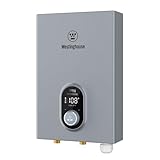
Overview: The Westinghouse APOLO-2.0 merges smart home technology with efficient tankless heating, delivering 3.38 GPM to handle a shower and sink simultaneously. This 14kW electric unit provides instant hot water on demand while eliminating the bulk of traditional tanks, making it suitable for apartments and small homes where space is premium.
What Makes It Stand Out: Voice control compatibility with Alexa and Google Home, plus app-based remote temperature adjustments from 86-140°F in precise 1° increments, distinguish this model. The four-layer safety system protects against leakage, overheating, dry-fire, and voltage spikes. Separate water and electricity pathways prevent corrosion and scaling, while ETL certification and IPX4 rating ensure reliable operation in moist environments.
Value for Money: At $299.99, it’s priced $50-100 above non-smart competitors, but the WiFi capabilities and advanced safety features justify the premium. For homeowners invested in smart ecosystems, the convenience of voice commands and remote monitoring delivers tangible value that basic models cannot match.
Strengths and Weaknesses: Strengths include seamless smart home integration, comprehensive safety protections, ultra-compact flush-mount design, and stable temperature delivery. Weaknesses include the demanding 59A/60A breaker requirement, modest 3.38 GPM flow limiting simultaneous multi-fixture use, and potential connectivity issues in areas with weak WiFi signals.
Bottom Line: Perfect for tech-forward small households, the Westinghouse excels in convenience and safety. Select it if you prioritize smart controls over maximum flow capacity and have compatible electrical infrastructure.
2. EcoSmart ECO 11 Electric Tankless Water Heater, 13KW at 240 Volts with Patented Self Modulating Technology

Overview: The EcoSmart ECO 11 provides targeted hot water solutions in a remarkably compact footprint. This 13kW electric tankless heater delivers 1.3-3.1 GPM, making it perfect for single bathrooms, office breakrooms, or remote sinks. It eliminates waiting for hot water while reducing energy consumption compared to traditional tank systems, serving as an efficient point-of-use upgrade.
What Makes It Stand Out: Patented self-modulating technology continuously monitors water temperature and adjusts power 20,000 times per second, maintaining output within 1°F of your target. The 99% thermal energy efficiency rating is among the highest available, heating water only on demand rather than constantly maintaining tank temperature. Its diminutive 11.5" x 8" x 3.75" size saves precious space.
Value for Money: At $206.76, it represents exceptional value for single-application needs. The low upfront cost combined with 99% efficiency delivers rapid payback through reduced utility bills. Unlike whole-house units, you won’t overpay for unused capacity, making it financially optimal for focused installations.
Strengths and Weaknesses: Strengths include outstanding energy efficiency, minimal space requirements, precise temperature control, and budget-friendly pricing. Weaknesses are flow limitations restricting it to one fixture at a time, the 54A electrical demand requiring dedicated circuitry, absence of smart controls, and basic LED display compared to touchscreen competitors.
Bottom Line: The ECO 11 is the go-to choice for dedicated point-of-use heating. Install it where efficiency and compactness trump high flow rates and advanced features.
3. Rheem 18kW 240V Tankless Electric Water Heater, Gray
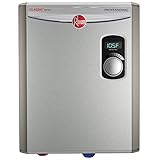
Overview: The Rheem 18kW represents professional-grade tankless heating designed for households with greater hot water demands. Delivering up to 4.4 GPM, it comfortably supports multiple simultaneous fixtures—such as two showers running while a sink operates—making it viable for small families or homes in moderate climates where inlet water temperatures aren’t extreme. The robust construction promises longevity.
What Makes It Stand Out: Its most advanced self-modulation system automatically adjusts power output in real-time to match hot water demand, optimizing energy usage while maintaining stable temperatures. The external digital thermostat provides exceptional +/-1°F accuracy with a bright LED display for easy monitoring. Durable copper immersion heating elements are field-serviceable, enabling repairs rather than costly full-unit replacement, significantly extending service life.
Value for Money: At $448.15, it’s the premium choice, but the superior flow rate and serviceable design justify the investment for appropriate applications. The 3/4" NPT connections support higher volumes, while copper components resist corrosion and scale. For households requiring genuine whole-house performance, the additional cost delivers measurable benefits over underpowered alternatives that cause frustration.
Strengths and Weaknesses: Strengths include industry-leading 4.4 GPM capacity, repairable copper elements, precise temperature control, and proven reliability. Weaknesses are the substantial price premium, demanding electrical requirements, larger physical footprint than smaller units, and absence of modern smart features like WiFi connectivity or voice control.
Bottom Line: The Rheem 18kW excels for families needing reliable multi-fixture performance. Its serviceable design and high capacity warrant the premium for whole-house applications where lesser units would fall short.
4. Tankless Water Heater Electric, ECOTOUCH 14kW 240V Instant Water Heater On Demand Hot Water Heaters Electric, Up to 3.38 GPM for 2-3 Point of Use, ETL Certificated, Self-Modulating, ECO140S White

Overview: The ECOTOUCH ECO140S balances performance, modern features, and affordability in a sleek white package. This 14kW unit delivers up to 3.38 GPM, handling 2-3 simultaneous point-of-use fixtures or a comfortable shower. It positions itself as a feature-rich alternative to premium brands without the matching price tag.
What Makes It Stand Out: The intuitive touch control panel with LED display offers superior user interaction compared to button-only interfaces. Its self-modulating system achieves 99.8% energy efficiency, slashing electric bills by up to 60% versus tank heaters. The smart chip monitors performance 20,000 times per second, eliminating temperature fluctuations. Multiple safety protections (leakage, over-temp, high voltage, dry-heating) with ETL/UL qualifications ensure peace of mind.
Value for Money: At $219.99, it undercuts the Westinghouse by $80 while offering similar capacity and flow rates. The touch panel and 99.8% efficiency match or exceed pricier competitors, delivering exceptional value. You get premium features without the brand premium, making it a smart financial choice for budget-conscious buyers wanting modern amenities.
Strengths and Weaknesses: Strengths include responsive touch controls, exceptional 99.8% efficiency, comprehensive safety certifications, stable temperature delivery, and competitive pricing. Weaknesses include lesser brand recognition, requirement for 60A breaker and 6 AWG wiring, and modest 3.38 GPM limiting whole-house use. Long-term reliability data is less established than legacy brands.
Bottom Line: The ECOTOUCH ECO140S delivers outstanding value for those wanting modern controls and high efficiency at a mid-range price. It’s an excellent choice for tech-friendly households prioritizing features over brand name.
5. Midea 18KW-updated Electric Tankless Water Heater, Touch Control, Wi-Fi Control, LED Display, Child Mode, 240 Volts with Automatic Power Modulation, On-demand Hot Water, White

Overview: The Midea 18kW tankless water heater delivers premium capacity and smart features at a budget-conscious price point. Producing 130°F+ water instantly with flow rates approaching 4.4 GPM, it comfortably serves multiple fixtures across small apartments. The integration of WiFi controls and child safety modes demonstrates surprising sophistication for its aggressive $259 price.
What Makes It Stand Out: The robust 18kW heating system provides genuine whole-house capability, while the Smart Home APP facilitates remote mode selection and specialized temperature presets—90°F for dishwashing, 104°F for gentle child bathing. The dedicated child mode shows thoughtful family-centric design. Automatic power modulation optimizes energy consumption in real-time, maintaining efficiency during variable demand without user intervention.
Value for Money: At $259.00, it dramatically undercuts competitors offering similar capacity and features. The Westinghouse 14kW costs $41 more while delivering less power. This pricing strategy makes premium capabilities accessible to budget-minded buyers. Energy savings from on-demand heating and self-modulation can reduce water heating costs by up to 50%, accelerating payback.
Strengths and Weaknesses: Strengths include exceptional power-to-price ratio, intuitive smart controls, child safety features, clear LED display, and compact wall-mounted design. Weaknesses include Midea’s relatively limited history in North American water heater markets, potentially less robust warranty networks, and demanding electrical installation typical of 18kW units.
Bottom Line: The Midea 18kW dominates the value category for high-demand households wanting smart functionality. It’s the optimal choice for families seeking whole-house performance without paying premium brand prices.
6. EcoSmart ECO 18 Electric Tankless Water Heater, 18 KW at 240 Volts with Patented Self Modulating Technology , 17 x 14 x 3.5, White

Overview: The EcoSmart ECO 18 is a mid-range electric tankless water heater designed specifically for warmer climates where incoming water temperatures remain above 62°F. This 18-kilowatt unit delivers over 2.5 gallons per minute, making it suitable for small households, apartments, or point-of-use applications like a single bathroom or kitchen sink. Its compact white enclosure measures just 17x14x3.5 inches, allowing for discreet wall mounting.
What Makes It Stand Out: EcoSmart’s patented self-modulating technology automatically adjusts energy consumption based on demand, preventing unnecessary power usage and delivering consistent temperatures. The digital temperature control offers precise 1-degree increment adjustments, giving users exacting command over their hot water output—rare in this price category.
Value for Money: At $416, the ECO 18 sits in the middle ground of electric tankless units. While its flow rate is modest compared to 27kW competitors, the self-modulating feature and precise controls justify the cost for warm-climate homeowners. It’s significantly cheaper than whole-house gas systems but requires less electrical infrastructure than higher-powered electric models.
Strengths and Weaknesses: Pros: Self-modulating technology saves energy; precise digital temperature control; compact design; simple installation for DIYers; reliable brand reputation. Cons: Limited to warm climates (62°F+ incoming water); 2.5 GPM insufficient for simultaneous multiple fixtures; may require multiple units for larger homes; no smart connectivity.
Bottom Line: The EcoSmart ECO 18 excels for small households in warm regions seeking energy efficiency and precise control. It’s not suitable for cold climates or high-demand scenarios, but delivers excellent performance within its design parameters. Consider your climate first—if you meet the 62°F threshold, it’s a solid, efficient choice.
7. Westinghouse 27kW 240V Tankless Water Heater Electric, Instant Hot Water Heater, On Demand Hot Water, Smart WiFi Control, Compatible with Alexa & Google Home, (APOLO-27kw)

Overview: The Westinghouse APOLO-27kw is a high-capacity electric tankless water heater built for modern, connected homes. Delivering up to 6.26 GPM, it can effortlessly supply two bathrooms and appliances simultaneously. This 27-kilowatt unit requires three 40-amp double-pole breakers and 8 AWG wiring, making it a serious whole-house solution for medium-sized homes.
What Makes It Stand Out: Smart Wi-Fi integration with Alexa and Google Home voice control sets this unit apart, allowing remote temperature adjustments from 86°F to 140°F in 1° increments via app or voice commands. The IPX4 waterproof rating, ETL certification, and four-layer safety protection system (leakage, overheat, dry-fire, high voltage) provide exceptional peace of mind. The rotary knob and LED display offer convenient manual override.
Value for Money: At $519.99, the APOLO-27kw commands a premium over basic electric models but undercuts many smart-enabled competitors. The combination of high flow rate, intelligent controls, and comprehensive safety features makes it a strong value for tech-forward homeowners wanting whole-house performance without switching to gas.
Strengths and Weaknesses: Pros: Smart Wi-Fi/voice control; high 6.26 GPM capacity; robust safety certifications; compact wall-mount design; precise temperature control; dual control methods. Cons: Requires substantial electrical infrastructure (113A); professional installation likely necessary; higher upfront cost than non-smart alternatives; Wi-Fi dependency may concern some users.
Bottom Line: The Westinghouse APOLO-27kw is ideal for homeowners seeking modern convenience and robust whole-house performance. If your electrical panel can support it, this unit delivers excellent flow rates, smart features, and safety assurances that justify its mid-premium price point.
8. Electric Tankless Water Heater WINTEMP 27kW 240V, Whole House Hot Water Supply, On Demand Instant Endless Water Heater, with LED Temperature Display, WiFi Control, Up to 6.3 GPM, ETL Certified

Overview: WINTEMP’s 27kW electric tankless water heater offers impressive whole-house capacity at a budget-friendly price point. Capable of delivering up to 6.5 GPM, this unit handles multiple simultaneous usage points for 2-4 person households. The wall-mounted design (11.1"W x 19.1"H x 4"D) saves 90% more space than traditional tank heaters, while self-regulating technology automatically adjusts power based on flow rate and incoming temperature.
What Makes It Stand Out: The $288.99 price tag is remarkably low for a 27kW unit with WiFi control and LED display, undercutting most competitors by $200+. The self-regulating technology achieves up to 99% energy savings by consuming zero power when idle and reducing consumption during low-flow periods. A 2-year return/exchange warranty and long-term technical support provide unusual confidence for a budget brand.
Value for Money: This represents exceptional value—few electric tankless heaters offer this capacity and smart features below $300. While the brand lacks Westinghouse or EcoSmart name recognition, the specifications match or exceed pricier alternatives. The warranty helps mitigate reliability concerns, making it a low-risk financial proposition.
Strengths and Weaknesses: Pros: Outstanding price-to-performance ratio; WiFi control included; high 6.3+ GPM capacity; self-regulating energy efficiency; ETL certified safety; generous warranty; compact design. Cons: Lesser-known brand reputation; requires 250A household supply and complex wiring; installation costs may offset savings; long-term durability unproven.
Bottom Line: If you’re comfortable with a newer brand and have adequate electrical infrastructure, the WINTEMP 27kW is the budget champion. It delivers premium features and capacity at an entry-level price, making whole-house electric tankless accessible to cost-conscious buyers.
9. VEVOR Gas Tankless Water Heater, 4.3Gal Indoor 100000 BTU Instant Hot Water Heater, Smart Temperature Control & Clear LED Display & Multiple Security Protections for Whole House,Silver Gray
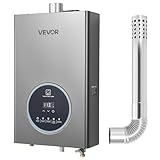
Overview: The VEVOR gas tankless water heater provides an affordable entry into gas-powered on-demand heating for smaller households. Delivering 4.3 GPM at 100,000 BTU/h, this indoor unit suits apartments or homes with modest hot water demands. The silver-gray enclosure features a large LED display with touch controls and standard 1/2" NPT connections for straightforward installation. Multiple venting options accommodate various indoor configurations.
What Makes It Stand Out: At $145.99, it’s one of the cheapest gas tankless units available, making gas-powered efficiency accessible to budget buyers. The ±1°F precision temperature control with smart sensors maintains exceptional temperature stability, while nine safety protections—including flameout, dry burning, overheating, and anti-freeze—provide comprehensive security rarely seen at this price. The sensitive touch panel offers intuitive operation.
Value for Money: This unit redefines budget gas heating, costing 70-80% less than premium brands. While 4.3 GPM limits simultaneous usage, the price makes it viable for single-bathroom homes or as a point-of-use solution. Gas operation offers lower operating costs than electric in many regions, improving long-term value despite modest capacity.
Strengths and Weaknesses: Pros: Extremely affordable; gas efficiency; precise temperature control; extensive safety protections; easy installation; LED display; compact indoor design. Cons: Limited 4.3 GPM flow rate; indoor venting required; not suitable for large households; brand support network unclear; lower BTU output than whole-house gas units.
Bottom Line: The VEVOR is perfect for small homes, apartments, or workshop applications where gas is available and demand is moderate. It’s an unbeatable value for single-bathroom scenarios, but undersized for families. Consider it a budget point-of-use solution rather than true whole-house heater.
10. NEW Rinnai RXP199iN Condensing Smart Sense Natural Gas or Propane Tankless Water Heater, Indoor or Outdoor Water Heater, Up to 11.1 GPM, 199,000 BTU, with Recirculation Pump

Overview: The Rinnai RXP199iN represents the pinnacle of residential tankless water heating. This condensing unit delivers an impressive 11.1 GPM—enough for seven simultaneous fixtures—powered by either natural gas or propane. The compact suitcase-sized design installs indoors or outdoors using Rinnai’s Versa Vent system. An integrated recirculation pump with Smart-Circ technology learns usage patterns to optimize efficiency and eliminate wait times for hot water.
What Makes It Stand Out: Smart-Circ intelligent recirculation is the game-changer, automatically scheduling pump operation based on your household’s hot water habits, saving energy while providing instant hot water. The dual-fuel Smart Sense system automatically detects and adjusts for natural gas or propane. With a UEF of 0.98, it’s among the most efficient gas units available. The Quick Flush feature simplifies maintenance, while optional WiFi control (module sold separately) adds modern convenience.
Value for Money: At $2,067.80, this is a premium investment, but the massive capacity, exceptional efficiency, and intelligent features justify the cost for large households. It eliminates the need for multiple units and reduces energy waste through smart recirculation. When amortized over its 20-year lifespan, the operating savings offset the initial premium versus cheaper, less efficient models.
Strengths and Weaknesses: Pros: Massive 11.1 GPM capacity; ultra-high efficiency (UEF 0.98); Smart-Circ recirculation; dual-fuel versatility; indoor/outdoor flexibility; condensing technology; reputable brand. Cons: Very high upfront cost; professional installation required (adds $500+); WiFi module sold separately; overkill for small homes; complex venting needs.
Bottom Line: For large families wanting the best, the RXP199iN is worth every penny. Its intelligence, capacity, and efficiency are unmatched. However, it’s serious overkill for smaller households. If you have high demand and value premium performance, this is the gold standard—just budget for professional installation.
What Makes a Tankless Water Heater “Smart”?
The term “smart” gets thrown around liberally in appliance marketing, but genuine smart tankless water heaters earn the designation through meaningful connectivity and autonomous optimization. These units transcend simple digital displays by creating a two-way conversation between your water heater and your devices.
IoT Connectivity and App Integration
True smart tankless units feature built-in Wi-Fi or Ethernet connectivity that links to proprietary smartphone apps. This isn’t just a remote control—it’s a command center providing real-time flow rate data, temperature precision to the degree, and historical usage patterns. Look for apps offering granular scheduling, vacation modes that activate automatically based on your phone’s location, and push notifications for performance anomalies. The best platforms maintain connectivity during power outages and restore seamlessly without requiring manual reconfiguration.
Voice Assistant Compatibility
Integration with Amazon Alexa, Google Assistant, or Apple Siri transforms your water heater from a passive appliance into an active home member. Beyond basic voice commands for temperature adjustments, sophisticated implementations allow you to query current energy consumption, receive verbal maintenance reminders, or create complex routines like “start heating water for my 6 AM workout” that trigger pre-heating cycles based on your calendar. Verify whether the integration is native or requires third-party hubs, as this affects reliability and response time.
Adaptive Learning Technology
The smartest units employ machine learning algorithms that analyze your household’s hot water usage patterns over weeks and months. They learn that your teenager takes 25-minute showers at 7:15 AM, that you run the dishwasher at 9 PM, and that weekends have different demand curves. By anticipating needs, these systems pre-heat water precisely when needed and enter deep sleep modes during predictable lulls, delivering 15-25% additional energy savings beyond standard tankless efficiency.
Understanding Tankless Technology Basics
Before diving into smart features, you must grasp the fundamental mechanics that determine whether a unit can actually deliver endless hot water to your specific home.
How Condensing vs Non-Condensing Units Work
Condensing models capture exhaust heat that would otherwise vent outside, achieving efficiency ratings up to 98% by using a secondary heat exchanger. They produce acidic condensate requiring neutralization and specialized venting, but the energy savings typically pay for these requirements within 3-5 years. Non-condensing units, while cheaper upfront, operate at 80-85% efficiency and demand metal venting that can handle 300°F+ exhaust temperatures. For smart systems, condensing technology provides more stable temperature control and better modulation—critical for the precision that intelligent features require.
Flow Rate Explained: GPM Demystified
Gallons Per Minute (GPM) represents the volume of hot water a unit can produce, but this number is meaningless without context. A unit rated at 11 GPM might only deliver 4 GPM in a cold climate where incoming water is 40°F. Calculate your peak simultaneous demand: a shower (2.5 GPM), dishwasher (1.5 GPM), and washing machine (2 GPM) running together requires 6 GPM. Smart units shine here by intelligently prioritizing flow to essential fixtures during peak demand and communicating real-time capacity through their apps.
Temperature Rise and Your Climate Zone
Temperature rise—the difference between incoming groundwater temperature and your desired output—determines real-world performance. A unit might handle three showers in Florida (50°F rise needed) but only one in Minnesota (70°F rise). Smart heaters with GPS integration automatically adjust for seasonal groundwater changes and can be programmed to lower target temperatures during summer months, preventing unnecessary energy expenditure when ambient temperatures rise.
Key Smart Features That Actually Matter
Not all smart features deliver equal value. Focus on capabilities that provide tangible benefits rather than gimmicks.
Remote Temperature Control and Scheduling
Beyond basic temperature adjustment, premium systems offer zone-based scheduling—different temperatures for different bathrooms, recirculation pump activation for remote fixtures, and “away” modes that maintain anti-freeze protection while minimizing energy use. The most advanced units allow temperature changes in 1°F increments and maintain stability within ±1°F, preventing the frustrating temperature swings that plague basic models.
Energy Usage Monitoring and Reporting
Sophisticated smart heaters track consumption in kilowatt-hours or therms, correlate usage with cost based on your local utility rates, and generate monthly reports comparing your consumption to similar households. Some integrate with utility demand-response programs, automatically reducing consumption during peak grid loads in exchange for rebates. Look for systems that export data to home energy management platforms like Sense or Emporia Vue for whole-home analysis.
Leak Detection and Automatic Shutoff
Internal sensors monitor for drips, pressure anomalies, and unusual flow patterns that indicate leaks. Top-tier systems can differentiate between a running toilet and a burst pipe, shutting off water automatically within seconds of detecting catastrophic failure. They’ll send emergency alerts to multiple contacts and integrate with whole-home leak detection systems. This feature alone can prevent tens of thousands in water damage and justifies the smart premium.
Maintenance Alerts and Self-Diagnostics
Smart diagnostics monitor heat exchanger efficiency, combustion quality, scale buildup, and component health. Rather than generic “service needed” lights, these systems specify exactly what’s wrong: “Heat exchanger efficiency down 12%—descaling recommended” or “Combustion fan RPM below spec—clean intake filter.” They track maintenance history, predict component failures before they occur, and can even automatically order replacement filters.
Sizing Your Smart Tankless System Correctly
Oversizing wastes money; undersizing leaves you cold. Smart technology helps, but can’t overcome fundamental miscalculations.
Calculating Peak Household Demand
Create a detailed inventory of every hot water fixture and its flow rate. Don’t forget often-overlooked items like jetted tubs (4-8 GPM), outdoor kitchens, or future additions like a pool house. Multiply each by its probability of simultaneous use. Smart systems with flow sensors can learn your actual usage patterns over time and alert you if you’re consistently exceeding safe operating limits, but you need adequate baseline capacity first.
Whole-House vs Point-of-Use Solutions
Whole-house units serve every fixture from a central location, ideal for smaller homes with short pipe runs. For larger homes over 3,000 square feet, point-of-use units near master suites or kitchen islands eliminate wait times and reduce water waste. Smart technology enables these decentralized systems to communicate, balancing load and preventing demand conflicts. Some manufacturers offer “cascading” systems where multiple units work as one, with smart controllers managing which unit fires based on demand and efficiency curves.
When to Consider Multi-Unit Setups
If your calculated demand exceeds 10 GPM or your home has multiple stories with long pipe runs, two smaller smart units often outperform one large unit. They provide redundancy—if one fails, you still have hot water—and allow zoning for energy savings. Smart controllers synchronize their operation, alternating lead/lag roles to equalize wear and enabling maintenance on one unit without losing all hot water capability.
Fuel Type Considerations: Gas vs Electric
Your home’s infrastructure and local utility costs often dictate this choice, but smart features differ significantly between fuel types.
Natural Gas and Propane Models
Gas smart tankless units dominate the high-capacity market, offering flow rates up to 11 GPM. Smart features include combustion analysis, gas pressure monitoring, and modulating burners that adjust flame intensity in 1,000-BTU increments. They require 120V power for controls and Wi-Fi, meaning they won’t function during power outages without battery backup. Look for models with automatic gas shutoff for earthquakes or gas leaks, and those that integrate with smart gas meters for cost tracking.
Electric Units: Efficiency and Installation
Electric smart heaters excel in efficiency (99%+) but face capacity limitations—most max out at 5-6 GPM, requiring whole-home models to be hardwired to multiple 240V circuits (often 3-4 breakers). Smart features include element cycling to prevent simultaneous startup surges, integration with solar panel systems and home batteries, and time-of-use scheduling to leverage off-peak electricity rates. They shine in point-of-use applications and homes with renewable energy.
Hybrid Electric Heat Pump Options
Emerging hybrid models combine heat pump technology with tankless operation, achieving efficiencies over 300% by extracting ambient heat. Smart controls automatically switch between heat pump, electric resistance, and hybrid modes based on demand, outdoor temperature, and electricity pricing. These units communicate with smart thermostats to optimize whole-home HVAC efficiency but require substantial space and specific climate conditions to perform effectively.
Installation Requirements and Costs
Smart capabilities add complexity to installation that impacts both cost and performance.
Venting Specifications for Gas Models
Condensing units use inexpensive PVC venting that can run horizontally or vertically, but require a condensate drain. Non-condensing units need stainless steel or category III venting with specific pitch requirements. Smart units often need larger diameter vents than their dumb counterparts because the control boards generate additional heat. Plan for a dedicated combustion air intake, and verify that your chosen location maintains proper clearances from windows, doors, and HVAC intakes—smart sensors are sensitive to recirculated exhaust.
Electrical Upgrades for Electric Units
A whole-house electric smart tankless may require 150-200 amp service just for the water heater. Smart features add 50-100 watts of continuous load for connectivity and sensors. You’ll need dedicated circuits with GFCI protection in many jurisdictions, and the control board requires clean power—consider a whole-home surge protector. Some smart units can integrate with home energy monitors to verify proper electrical installation and detect voltage drops that indicate undersized wiring.
Professional vs DIY Installation
While technically possible for skilled homeowners, smart tankless installation demands expertise in plumbing, electrical, gas, and network configuration. Professional installers certified by the manufacturer understand firmware updates, proper sensor calibration, and optimal placement for Wi-Fi connectivity. Many manufacturers void warranties on smart features if not professionally installed, and improper setup can leave security vulnerabilities in your home network. Budget $1,500-$3,000 for installation, with smart features adding $200-$500 for network configuration and app setup.
Energy Efficiency and Certification Standards
Smart features must complement, not compensate for, fundamental efficiency.
Decoding EF, UEF, and Energy Star Ratings
Energy Factor (EF) has been replaced by Uniform Energy Factor (UEF), which provides standardized testing across different climate zones. UEF accounts for standby losses, cycling efficiency, and part-load performance—critical for smart units that modulate constantly. Energy Star certification requires UEF ≥0.87 for gas and ≥0.93 for electric. Smart features can improve real-world efficiency 10-20% beyond these ratings, but only if the underlying hardware is efficient. Don’t accept smart gimmicks on an inefficient platform.
Smart Features That Maximize Savings
Intelligent recirculation pumps save thousands of gallons annually by learning usage patterns and only circulating hot water when needed. Weather-responsive temperature adjustment lowers setpoints during warm weather. Integration with smart thermostats and occupancy sensors prevents heating water when the home is empty. The most advanced systems participate in utility demand response programs, automatically reducing output during peak pricing periods and pre-heating water in anticipation.
Utility Rebates and Tax Incentives
Many utilities offer $300-$1,000 rebates for smart tankless units that can demonstrate demand response capability and energy reporting. The Inflation Reduction Act provides up to $600 for gas tankless and $1,750 for electric heat pump water heaters with smart controls. Keep detailed records of smart feature activation and energy savings; some rebate programs require proof that intelligence features are actively used, not just purchased.
Smart Home Integration Ecosystems
Your water heater shouldn’t exist in isolation—it should orchestrate with your entire smart home.
Works with Apple HomeKit, Google, and Alexa
Native HomeKit integration enables Siri control and automation through the Home app, with data stored locally for privacy. Google Assistant integration allows for complex routines based on calendar events and location. Alexa skills enable voice shopping for replacement parts and integration with Echo devices as temperature displays. Verify that integrations are official and maintained, not community-developed hacks that break with firmware updates.
Z-Wave and Zigbee Compatibility
For hub-based smart homes (SmartThings, Hubitat), Z-Wave or Zigbee integration provides local control without cloud dependency, ensuring your water heater responds during internet outages. These protocols enable direct communication with leak sensors, shutoff valves, and occupancy detectors without Wi-Fi latency. Look for devices certified by the Z-Wave Alliance or Zigbee Alliance, ensuring interoperability and security.
Creating Automated Hot Water Routines
The true power of integration emerges in sophisticated automations: “When both garage doors close after 8 PM, activate away mode.” “If the bathroom humidity sensor detects shower steam, boost temperature by 2°F for 15 minutes.” “When the smart lock detects the cleaning service code, enable high-demand mode.” These routines require IFTTT support or advanced hub programming, but deliver unparalleled convenience and efficiency.
Advanced Safety Features to Demand
Smart technology elevates safety from passive protection to active monitoring.
Scale Prevention and Water Quality Monitoring
Internal sensors measure pressure differential across the heat exchanger, detecting scale buildup before it impacts performance. Smart systems in hard water areas can automatically increase flush frequency, remind you to add scale inhibitors, or even integrate with whole-home water softeners to regenerate based on actual water usage. Some units monitor pH and conductivity, alerting you to corrosive conditions that void warranties.
Overheat Protection and Freeze Prevention
Multiple temperature sensors throughout the unit enable predictive overheat shutdown before safety limits are reached. In vacation homes, smart freeze protection activates recirculation or low-power heating when temperatures approach freezing, sending alerts if power is lost. Geofencing ensures freeze protection activates automatically when you leave and deactivates to save energy when you return.
Combustion Safety and Carbon Monoxide Monitoring
Smart gas units continuously monitor combustion quality through oxygen sensors and flame rectification. They detect incomplete combustion from blocked vents or gas pressure issues, shutting down and alerting you before CO becomes dangerous. Integration with home CO detectors creates redundant safety: if the Nest Protect detects CO, it can signal the water heater to shut off automatically while alerting emergency contacts.
Maintenance and Longevity in Smart Units
Smart diagnostics transform maintenance from reactive repairs to predictive preservation.
Self-Cleaning Capabilities
Advanced units perform automated descaling cycles using built-in pumps and chemical reservoirs. They track water hardness and usage to optimize cleaning frequency, running cycles during off-peak hours. Smart valves isolate the heat exchanger for cleaning without disrupting household water supply. These features can extend heat exchanger life from 15 to 25 years in hard water areas.
Filter Systems and Descaling Procedures
Smart sensors monitor inlet filter pressure drop, alerting you to clean or replace cartridges before flow restriction impacts performance. They track descaling solution concentration and temperature during maintenance cycles, ensuring effective scale removal. The best systems guide you through maintenance with step-by-step video instructions in the app and verify successful completion through sensor feedback.
Warranty Considerations for Smart Components
Standard warranties cover heat exchangers (10-15 years) and parts (3-5 years), but smart components—Wi-Fi modules, sensors, control boards—often have separate, shorter coverage. Verify that firmware updates are covered for the warranty period and that the manufacturer commits to app support for at least 10 years. Some brands offer extended smart service plans covering connectivity failures and app obsolescence.
Common Pitfalls When Buying Smart Tankless
Even intelligent buyers make expensive mistakes. Here’s what to avoid.
Ignoring Water Hardness Levels
Smart features can’t overcome rapid scale accumulation. In areas with hardness over 7 grains per gallon, even the smartest descaling system will struggle. Get your water tested before purchase. If hardness exceeds 10 GPG, budget for a water softener and ensure your smart tankless can communicate with it. Some manufacturers void warranties on smart sensors if scale damage occurs, arguing that alerts should have prompted preventive action.
Underestimating Simultaneous Usage
Smart prioritization helps, but it can’t create hot water from nothing. Families often underestimate how many fixtures run simultaneously during morning routines. Map actual usage for a week, noting every overlapping demand. Smart apps can help by logging real-time usage, but you need this data before sizing your system. Remember that tankless units modulate down to about 30% capacity—oversizing slightly is better than undersizing significantly.
Overlooking App Quality and Reviews
A water heater is a 20-year investment; apps often become unsupported after 3-5 years. Research the manufacturer’s software track record. Do they regularly update apps? What’s their rating trend? Read recent reviews focusing on connectivity reliability, especially after phone OS updates. Some manufacturers open-source their APIs, ensuring community support even if they abandon the app. Others lock down systems, leaving you with a dumb heater if the cloud service shuts down.
Future-Proofing Your Investment
Technology evolves rapidly. Ensure your purchase remains relevant for its full lifespan.
Firmware Update Policies
Commitment to long-term support separates premium brands from commodity manufacturers. Look for companies providing regular firmware updates that add features, improve security, and maintain compatibility with evolving smart home standards. The best offer beta programs for early access to new features and maintain firmware archives allowing rollback if updates cause issues. Avoid brands that haven’t updated firmware in over a year.
Modular Component Design
Smart water heaters with replaceable Wi-Fi modules, sensor arrays, and control boards adapt to future standards. When Wi-Fi 6E becomes obsolete, you should be able to swap a module rather than replace the entire unit. Modular design also enables field upgrades—add a recirculation pump kit later, or upgrade to a more advanced control board. This flexibility protects your investment from premature obsolescence.
Emerging Technologies on the Horizon
Tankless units with heat pump integration, thermal solar preheating controls, and grid-interactive capabilities that respond to real-time electricity pricing are entering the market. Some experimental models incorporate AI that predicts component failures by analyzing micro-fluctuations in electrical signatures. While you shouldn’t wait for tomorrow’s tech, choose platforms with computational headroom and connectivity architecture that can support future upgrades through software or modular hardware additions.
Cost Analysis: Total Ownership vs Traditional Tanks
The smart premium must be justified through measurable returns.
Initial Investment Breakdown
Expect to pay $1,200-$2,500 for the unit, $1,500-$3,000 for installation, and a $300-$600 premium for smart capabilities. Total costs range $3,000-$6,000 versus $1,200-$2,000 for a conventional tank. The smart premium includes control boards, sensors, connectivity modules, and app development costs amortized over the product line. This 50-100% upfront premium must deliver proportional long-term value.
Long-Term Energy Savings Calculations
Smart features typically save an additional $50-$150 annually beyond standard tankless savings of $100-$200 compared to tank heaters. Over a 20-year lifespan, that’s $1,000-$3,000 in additional savings. Calculate your payback period: (Smart Premium) ÷ (Annual Smart Savings + Avoided Repair Costs). Most households see 4-7 year payback periods, with faster returns in high-energy-cost areas or homes with variable occupancy patterns that benefit from intelligent scheduling.
Smart Feature ROI Timeline
Leak prevention features offer immediate ROI by potentially preventing one major incident. Energy monitoring typically pays for itself within 2-3 years through behavior modification. Predictive maintenance saves $200-$500 per service call by preventing emergency repairs. Integration value compounds over time as your smart home ecosystem grows. Document these benefits annually to validate your investment and inform future purchasing decisions.
Making the Final Decision: Your Personal Checklist
Synthesize all factors into a decision framework tailored to your situation.
Questions to Ask Before Purchasing
- Does the manufacturer guarantee app support for the warranty period?
- Can the unit operate safely and efficiently at my winter groundwater temperature?
- Are smart features locally controlled or cloud-dependent?
- Does the app integrate with my existing smart home platform?
- What’s the cost and availability of replacement smart components?
- Can I export my usage data if I switch brands?
- Does the warranty require professional installation and annual smart system calibration?
Red Flags to Avoid
Beware of brands offering smart features only through third-party hubs, units without redundant mechanical safety controls (smart should augment, not replace), apps with recent poor reviews, and manufacturers without a clear privacy policy for your usage data. Avoid units requiring subscription fees for basic smart features—premium features like advanced analytics may justify modest fees, but core connectivity should be free.
Trial Periods and Return Policies
Some manufacturers and retailers offer 30-90 day satisfaction guarantees. Use this period to test app reliability, verify actual GPM performance matches specifications, and confirm smart home integration works as advertised. Document any discrepancies immediately. Keep all packaging and hire professional installers who guarantee their work—many return policies are voided by improper installation, even if performed by “professionals.”
Frequently Asked Questions
How long do smart tankless water heaters typically last?
Quality smart tankless units last 20+ years on the heat exchanger, but smart components like Wi-Fi modules and sensors may need replacement every 7-10 years. Manufacturers with modular designs allow component replacement, extending functional lifespan. Regular firmware updates and professional maintenance are critical for longevity.
Can smart tankless water heaters work during power outages?
No—both gas and electric models require electricity for the control board, sensors, and ignition. Smart features increase power draw slightly (50-100 watts continuous). For outage protection, install a battery backup system sized for at least 500 watts to cover the unit’s peak electrical demand during heating cycles.
Do I need a water softener with a smart tankless heater?
If your water hardness exceeds 7 grains per gallon, absolutely. Smart descaling features help but can’t prevent scale formation in very hard water. Many smart units will void the warranty on heat exchangers and sensors if scale damage occurs and you haven’t addressed water quality issues the system alerted you to.
Will my smart water heater become obsolete when new technology emerges?
Choose brands with modular hardware and strong firmware support track records. While the core heating technology changes slowly, connectivity standards evolve rapidly. Units with replaceable communication modules and open APIs adapt better to new smart home ecosystems than closed, proprietary systems.
How much data do smart water heaters use monthly?
Typical usage is 50-200 MB per month—minimal for most home internet plans. Data spikes during firmware updates (up to 500 MB). Units with video streaming for maintenance tutorials use more. If you have data caps, select models offering data usage controls and local network operation modes that minimize cloud dependency.
Can I install a smart tankless unit myself?
While physically possible for skilled DIYers, manufacturer warranties on smart features almost always require professional installation. The network configuration, sensor calibration, and smart home integration demand specialized knowledge. Improper installation can also create cybersecurity vulnerabilities in your home network.
What’s the difference between a smart tankless and a regular tankless with a smart plug?
Smart plugs only control power on/off—they provide no temperature control, usage data, safety monitoring, or diagnostics. True smart tankless units have integrated sensors, modulating controls, and two-way communication. A smart plug on a tankless unit is like putting a smart bulb in a flashlight—you’re not getting real intelligence.
How do I know if my home’s Wi-Fi is strong enough for a smart water heater?
Most units require at least -70 dBm signal strength. Use a Wi-Fi analyzer app near the installation location. If signal is weak, install a mesh node or Wi-Fi extender with Ethernet backhaul. Hardwired Ethernet connections provide maximum reliability. Some premium units include cellular backup for critical alerts.
Are smart tankless water heaters vulnerable to hacking?
Any connected device carries risk. Choose units with encrypted communications (TLS 1.2+), regular security updates, and local network options that don’t require cloud connectivity. Change default passwords, isolate the water heater on a separate VLAN if possible, and verify the manufacturer has a vulnerability disclosure program. Reputable brands undergo third-party security audits.
Can smart features really save money, or are they just gimmicks?
Genuine savings come from leak prevention (potentially thousands), demand-based scheduling (10-15% energy reduction), and predictive maintenance (avoiding emergency service calls). However, features like remote temperature adjustment provide convenience more than savings. Focus on units with strong energy reporting and automation capabilities rather than flashy but superficial controls.