Imagine stepping into a steaming shower on a frigid Monday morning, knowing with absolute certainty that the hot water won’t run out—no matter how many family members showered before you. That’s not a luxury reserved for spa resorts anymore. Tankless smart water heaters have revolutionized how we experience comfort at home, transforming a basic utility into an intelligent, responsive system that adapts to your lifestyle. These sleek, wall-mounted powerhouses don’t just heat water on demand; they learn your patterns, optimize energy consumption, and put complete control at your fingertips through your smartphone.
But here’s the thing: not all tankless smart water heaters are created equal. The market is flooded with options boasting impressive specs and futuristic features, leaving many homeowners paralyzed by choice. Should you prioritize flow rate over connectivity? Is a condensing model worth the premium? How do you size a unit for a growing family? This comprehensive guide cuts through the marketing noise, delivering the expert insights you need to make a confident decision. We’ll explore the critical features, hidden considerations, and technical nuances that separate exceptional systems from mediocre ones—ensuring your investment delivers truly endless hot water for years to come.
Top 10 Tankless Smart Water Heaters for Endless Hot Water
Detailed Product Reviews
1. Westinghouse 14kW 240V Smart WiFi Tankless Water Heater Electric, Compatible with Alexa & Google Home, ETL Certified, IPX4, Gray - Upgrade (APOLO-2.0)
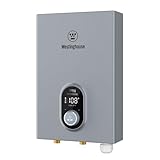
Overview: The Westinghouse APOLO-2.0 delivers 14kW of on-demand hot water with smart home integration. This unit produces up to 3.38 GPM, enough for a shower and sink running simultaneously. Activation requires just 0.5 GPM flow, and installation needs a 60-amp breaker with 6 AWG wiring. The compact gray enclosure measures 14.2" x 9.5" x 3.5", mounting flush to walls with standard 1/2" NPT connections.
What Makes It Stand Out: Voice control compatibility with Alexa and Google Home sets this apart from competitors. Adjust temperatures remotely from 86°F to 140°F in precise 1° increments through the dedicated app. The four-layer safety system includes leakage, overheat, dry-fire, and high voltage protection. Separate water and electricity pathways prevent corrosion and scaling, while IPX4 rating ensures water resistance. Real-time LED display provides continuous system status monitoring.
Value for Money: At $299.99, this sits in the mid-premium range. You’re paying approximately $70 more than non-smart 14kW alternatives for WiFi connectivity and brand recognition. The energy savings from eliminating standby heat loss typically recovers the investment within 18-24 months for average households. Comparable smart units from Rheem or EcoSmart cost $350-$400, making this competitively priced.
Strengths and Weaknesses: Pros include seamless smart home integration, robust safety certifications, compact design, and reliable brand heritage. The 140°F maximum temperature suits most residential needs. Cons involve requiring a dedicated 60A circuit that may necessitate electrical panel upgrades. The 3.38 GPM capacity limits simultaneous usage to two fixtures. Customer support response times can be slow during peak seasons.
Bottom Line: Ideal for tech-savvy homeowners seeking smart integration without premium pricing. Perfect for apartments or small homes where space is limited and voice control adds convenience. Ensure your electrical system can support the 59A draw before purchasing.
2. 8kW Tankless Water Heater Electric, ECOTOUCH 240V On Demand Instant Endless Hot Water Heater for Point of Use, ETL Certificated, Space Saving Design ECO80BP

Overview: The ECOTOUCH ECO80BP provides 8kW of point-of-use heating power for $149.99. This compact unit serves single fixtures or supplements distant main heaters, delivering instant hot water where you need it most. Installation requires a 40-amp breaker and 8 AWG wiring with 1/2" NPT connections. The unit employs self-modulation technology to adjust power consumption based on demand, claiming up to 60% energy reduction compared to traditional tanks.
What Makes It Stand Out: The cast aluminum heating element represents a significant engineering advantage, completely separating water and electricity lines to eliminate leakage risk and corrosion. Self-learning algorithms evolve with your usage patterns for increasingly efficient operation. Multiple protection systems include leakage detection, overheat prevention, and IPX4 waterproofing. ETL certification to UL standards ensures safety compliance. The ultra-compact design fits virtually any limited space.
Value for Money: At $149.99, this offers exceptional value for targeted applications. It’s $80-$100 less than comparable Bosch or Stiebel Eltron point-of-use units while maintaining similar safety certifications. Northern climate users should limit expectations to single faucets under 1.2 GPM, while southern users can run two faucets or a low-flow shower. The cast aluminum technology promises zero maintenance for years, reducing long-term ownership costs.
Strengths and Weaknesses: Pros include innovative cast aluminum heating technology, impressive self-modulation, compact footprint, and strong safety features. The price point makes it accessible for budget-conscious buyers. Cons include limited flow capacity unsuitable for whole-home use, modest temperature rise in cold climates, and basic LED display without advanced controls. Installation requires professional electrical work despite marketing claims of simplicity.
Bottom Line: Excellent choice for targeted hot water delivery at sinks, remote bathrooms, or as a booster. Best suited for moderate climates or low-flow applications. The technology and price make it a smart investment for specific use cases rather than whole-home solutions.
3. Electric Tankless Water Heater 220V, Endless Hot Water Instant Mini Smart, Under Sink Kitchen Household(5.5KW)

Overview: This budget-friendly 5.5kW mini tankless heater costs just $44.88, making it the most affordable option for instant under-sink hot water. The unit delivers temperatures from 30-55°C (86-131°F) through a cast aluminum heating package housed in an ABS shell. Touch control panel and LED display allow easy temperature adjustment. Installation is straightforward for point-of-use applications, requiring only standard 1/2" connections and appropriate electrical wiring.
What Makes It Stand Out: The thermostatic function intelligently maintains set temperatures despite pressure fluctuations, a feature rarely found in sub-$50 units. Cast aluminum heating technology prevents rust and scaling while preserving water quality. The touch-sensitive control panel provides a modern interface uncommon in this price category. Its ultra-compact mini design fits virtually any under-sink cabinet. The unit heats water on demand, eliminating standby energy consumption entirely.
Value for Money: At $44.88, this represents remarkable value—roughly 70% less than name-brand equivalents. While lacking ETL certification in the description, the build quality with ABS shell and aluminum heating suggests decent durability. It’s ideal for handwashing stations, utility sinks, or RV applications where certification isn’t critical. Energy savings from eliminating tank heating can recover the investment within 6-12 months. However, the low power limits it to single, low-flow fixtures only.
Strengths and Weaknesses: Pros include unbeatable price, thermostatic control, compact dimensions, and simple operation. Touch controls feel premium for the cost. Cons involve lack of mentioned safety certifications, limited 5.5kW power insufficient for showers, 55°C maximum temperature may be inadequate for some users, and unknown brand reliability. No specified breaker requirements demand careful electrical planning.
Bottom Line: Perfect for extremely budget-conscious buyers needing basic hot water at a single sink. Suitable for RVs, garages, or temporary installations. Don’t expect whole-home performance, but for point-of-use heating at this price, it’s hard to beat. Verify local electrical codes before installation.
4. 14kW Tankless Water Heater Electric, SIVUATEK 240V Instant On-Demand Hot Water Heater, 2 Point of Use, Self-Modulating, ETL Certified, Endless Water Supply for Home

Overview: The SIVUATEK 14kW unit offers on-demand hot water for $229.99, positioning itself between budget and premium options. Capable of serving 1-2 simultaneous usage points, this heater delivers instant water with 99% thermal efficiency. Installation requires a 60-amp breaker and standard 1/2" NPT connections. The slim profile measures 15.87" x 11.14" x 2.87", mounting under-sink or on-wall. Temperature adjusts from 86°F to 131°F via LED display in 1° increments.
What Makes It Stand Out: The tool-free wiring access panel significantly simplifies installation compared to competitors requiring housing removal. Advanced water-electricity separation technology prevents scale buildup and extends component lifespan. Self-modulating power adjustment maintains stable temperatures despite pressure changes. Comprehensive safety suite includes leakage protection, overheating auto-shutoff, and dry-fire prevention. ETL certification ensures code compliance without the smart-home premium.
Value for Money: At $229.99, this undercuts the Westinghouse smart model by $70 while delivering identical power output. The energy savings claim of 60% over tank heaters is realistic for households using 40-60 gallons daily. You’re sacrificing WiFi connectivity for substantial savings, making this a pragmatic choice. Comparable non-smart units from established brands typically run $250-$280, giving SIVUATEK a slight price advantage.
Strengths and Weaknesses: Pros include easy-access wiring, strong thermal efficiency, reliable self-modulation, and competitive pricing. The 131°F maximum temperature is slightly lower than some competitors but adequate for most uses. Cons include limited brand recognition, no smart features, and customer support uncertainty. The 2.87" depth may still protrude in ultra-tight spaces. Flow capacity drops significantly in cold inlet conditions.
Bottom Line: A sensible mid-range choice for homeowners wanting reliable tankless performance without smart-home markup. Ideal for small families needing 1-2 fixture coverage. The installation-friendly design appeals to DIY enthusiasts, though professional installation remains recommended. Strong value proposition for practical buyers.
5. Electric Tankless Water Heater, ECOTOUCH 27kW on Demand Water Heater Electric 240Volts Instant Endless Hot Water Heaters Point of Use with Self-Modulation to Save Energy ECO270B

Overview: The ECOTOUCH ECO270B delivers 27kW of heating power for $299.69, targeting whole-home applications with up to 5.5 GPM flow. This unit serves 2-4 usage points simultaneously, eliminating preheating and temperature fluctuations. Installation demands substantial electrical infrastructure: 200A main panel with three 40-amp double-pole breakers and appropriate wiring. The digital display and touch controls enable easy temperature management, while self-modulation optimizes energy consumption based on real-time demand.
What Makes It Stand Out: The sheer power output at this price point is remarkable—competing 27kW units from Rheem or Stiebel Eltron cost $400-$500. Self-modulation technology adjusts power input dynamically, preventing scalding and maximizing efficiency. Separate water and electricity lines eliminate leakage risk and scale buildup. Multiple protection systems include electric leakage, high temperature, and dry heating safeguards. ETL listing to UL standards ensures safety compliance for high-power operation.
Value for Money: At $299.69, this offers exceptional cost-per-kilowatt value. The unit can reduce water heating costs by 50% compared to tank heaters, with payback periods of 2-3 years for average families. However, the hidden cost is electrical infrastructure—many homes require $500-$1,500 in panel upgrades to support the 113A draw. Factor this into your budget. For homes with adequate electrical service, it’s among the best values available.
Strengths and Weaknesses: Pros include massive power output, intelligent self-modulation, comprehensive safety systems, and aggressive pricing. The 5.5 GPM capacity handles genuine whole-home demand. Cons include extreme electrical requirements limiting compatibility, potential need for costly panel upgrades, and higher installation complexity. The brand’s long-term reliability is less established than premium competitors.
Bottom Line: Best suited for small homes or apartments with existing 200A service needing true whole-home tankless performance. Verify your electrical capacity before purchasing—this is non-negotiable. If your infrastructure supports it, the performance-to-price ratio is outstanding. Otherwise, consider lower-power alternatives.
6. WINTEMP 36kW Tankless Electric Water Heater 240V, Instant On-Demand Endless Hot Water, Up to 8.7 GPM, LED Temperature Display, Whole House Supply, WiFi Control, ETL Certified

Overview: The WINTEMP 36kW unit is a powerhouse designed for large households demanding endless hot water. With a maximum output of 8.7 GPM and WiFi connectivity, it promises whole-house coverage but comes with substantial electrical requirements including four 40-amp breakers and a recommended 300-amp service panel. This is not a plug-and-play solution but a serious infrastructure upgrade.
What Makes It Stand Out: Its self-regulating technology automatically adjusts power consumption based on flow rate and incoming water temperature, achieving up to 99% energy efficiency. The LED display and remote WiFi control offer modern convenience, while multiple safety protections including leakage, overheat, and dry-fire safeguards provide peace of mind. The wall-mounted design saves 90% more space than traditional tank heaters.
Value for Money: At $375.99, this unit delivers exceptional value for homes that can support its power demands. Compared to gas tankless systems costing $800+, it offers competitive performance. The energy savings versus traditional electric tanks (which constantly heat water) can recoup costs within 2-3 years. However, installation costs may add $500-1,500 for electrical upgrades.
Strengths and Weaknesses:
- Pros: Endless hot water supply; excellent energy efficiency; smart WiFi controls; compact design; ETL certified; 2-year warranty
- Cons: Extreme electrical requirements limit compatibility; requires professional installation; significant upfront infrastructure costs
Bottom Line: Ideal for large families in modern homes with adequate electrical service. Verify your panel capacity before purchasing. For those who can install it, it’s a game-changer delivering continuous hot water with smart controls and long-term energy savings.
7. Tankless Water Heater Electric, Under Sink Instant Hot Water 110V 3KW, On Demand Point of Use for Kitchen Bathroom RV, (Use in Environments Above 0°C/32°F), Lower Flow = Higher Heat

Overview: This 110V/3KW point-of-use heater serves a specific niche: single sinks in moderate climates above 32°F. The manufacturer explicitly warns it’s NOT for showers, delivering modest heating capacity with a maximum flow of 1.0 GPM. While it operates on standard household voltage, installation requires a dedicated 32-amp breaker and 10 AWG wiring, making it more involved than its simple appearance suggests.
What Makes It Stand Out: Military-grade safety features distinguish this unit, including food-grade 304 stainless steel construction, a 316L corrosion-resistant heating tube (claimed 50% longer lifespan), and quad-protection system with dry-fire cutoff, leakage protection, and auto-shutdown at 131°F. The intelligent temperature control allows °C/°F toggle and demonstrates flow-temp sync: lower flow rates produce higher temperatures automatically.
Value for Money: At $54.99, it’s reasonably priced for a specialized sink heater. It’s far cheaper than running hot water lines from a central heater and more efficient than heating water on demand for remote sinks. However, its limited capacity means it’s not a universal solution and cannot replace a primary water heater.
Strengths and Weaknesses:
- Pros: Robust safety certifications; durable materials; compact under-sink fit; energy efficient for point-of-use
- Cons: Cannot serve showers; flow-dependent heating requires user adjustment; mandatory vertical installation limits placement
Bottom Line: Perfect for remote bathroom sinks, kitchen prep areas, or RVs where only modest hot water is needed. Understand its limitations before buying. For dedicated sink service in suitable climates, it’s a safe, efficient choice that pays for itself quickly.
8. Electric Tankless Water Heater WINTEMP 27kW 240V, Whole House Hot Water Supply, On Demand Instant Endless Water Heater, with LED Temperature Display, WiFi Control, Up to 6.3 GPM, ETL Certified

Overview: The WINTEMP 27kW model balances performance and practicality for medium-sized homes, delivering up to 6.3 GPM for 2-4 simultaneous usage points. While less powerful than its 36kW sibling, it still requires substantial electrical infrastructure: three 40-amp breakers and a recommended 250-amp service panel. This represents a more accessible entry point to whole-house tankless heating for average households.
What Makes It Stand Out: Like the larger model, it features intelligent self-regulating technology that adjusts power in real-time for 99% energy efficiency. The WiFi control and LED display provide modern convenience, while the same safety suite (leakage, overheat, dry-fire protection) ensures secure operation. Its compact wall-mount design saves significant space compared to bulky tank heaters.
Value for Money: Priced at $288.99, it offers compelling value—nearly $90 less than the 36kW version while still covering most households’ needs. For homes with 2-3 bathrooms, it provides sufficient capacity without overpaying for unused power. Energy savings versus traditional tanks remain substantial and can offset the investment within a few years.
Strengths and Weaknesses:
- Pros: Balanced power output; smart WiFi features; excellent efficiency; ETL certified; space-saving design
- Cons: Still requires significant electrical upgrades; lower flow may struggle with multiple high-demand fixtures simultaneously
Bottom Line: An excellent middle-ground choice for average-sized homes. Verify your electrical capacity first. For families wanting endless hot water without the extreme demands of a 36kW unit, this delivers optimal performance and value.
9. GEN II Ranein Tankless Water Heater Electric, 27kW 240V On Demand Instant Endless Water Heater with Temperature Display, Control Knob, Up to 6.5 GPM for Whole House Water
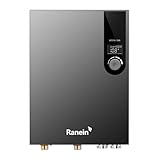
Overview: The GEN II Ranein 27kW unit competes directly with WINTEMP’s offerings, delivering 6.5 GPM for whole-house applications. It requires three dedicated 240V circuits with 40-amp breakers, positioning it as a serious electrical appliance rather than a casual upgrade. The unit targets households with 2-4 water usage points seeking instant, endless hot water without the bulk of storage tanks.
What Makes It Stand Out: CSA certification (meeting US/Canadian standards) provides regulatory confidence. The tactile control knob with LED display offering precise 1°F adjustments from 86-131°F delivers more intuitive operation than touchscreen-only interfaces. Stainless steel heating elements resist scale buildup, addressing a common tankless heater failure point. The 99% thermal efficiency matches top competitors in its class.
Value for Money: At $379.00, it’s priced similarly to the more powerful WINTEMP 36kW, making it less competitive on pure specs. However, the robust controls and CSA certification justify the premium for users prioritizing interface quality and North American standards compliance over raw power output.
Strengths and Weaknesses:
- Pros: Precise manual controls; anti-scale heating elements; CSA certification; proven safety features; durable construction
- Cons: Pricing overlaps with higher-capacity alternatives; no WiFi connectivity mentioned
Bottom Line: A solid, well-engineered unit for those who prefer physical controls and value CSA certification. While not the cheapest 27kW option, its build quality and scale-resistant design promise longevity. Recommended for medium households wanting reliable performance with tactile temperature control.
10. Tankless Electric Water Heater 110V 3000W, Instant Hot Water System with LED Digital Display, Compact On Demand Under Sink Heater for Kitchen Bathroom RV
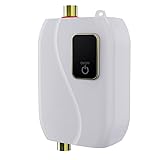
Overview: This basic 110V/3000W point-of-use heater offers minimal hot water for single sinks at an entry-level price. Like similar low-voltage units, it’s explicitly unsuitable for showers, delivering only 0.5 GPM at maximum temperature. The compact design targets under-sink installations in kitchens, bathrooms, or RVs where only occasional hot water is needed for handwashing or light cleaning tasks.
What Makes It Stand Out: The $49.99 price point makes this the most affordable option in the category. Its IPX4 waterproof rating and multiple safety protections (leakage prevention, dry heating protection, auto power-off) provide decent security despite the low cost. The LED digital display and °C/°F toggle offer basic modern convenience in a compact package.
Value for Money: Exceptional value for very specific applications. At half the price of similar 110V units, it’s ideal for budget-conscious buyers needing hot water at an isolated sink. However, installation still requires a 32-amp breaker and proper wiring, adding potential costs that may exceed the unit price itself.
Strengths and Weaknesses:
- Pros: Unbeatable price; compact size; adequate safety features; simple operation
- Cons: Extremely limited flow rate; mandatory vertical installation; basic construction may lack durability
Bottom Line: Best suited for RVs, workshops, or remote sinks where hot water is occasional and demand is minimal. Not a replacement for a primary water heater. If your needs are modest and budget is tight, it delivers acceptable performance, but consider spending more for daily-use applications requiring reliability.
Understanding Tankless Smart Water Heaters
What Makes a Water Heater “Smart”?
Smart technology in water heating transcends basic digital displays. A genuinely intelligent tankless system integrates Wi-Fi or Bluetooth connectivity, allowing two-way communication between the unit and your devices. These systems feature advanced flow sensors, thermostatic controls with precision within 1°F, and self-diagnostic capabilities that alert you to issues before they become emergencies. The smartest models employ machine learning algorithms to analyze your household’s hot water usage patterns, automatically adjusting activation schedules and temperature presets to maximize efficiency without sacrificing comfort.
The Evolution from Tank to Tankless Technology
Traditional tank heaters maintain 40-80 gallons of water at temperature 24/7, a constant energy drain known as standby heat loss. Tankless technology eliminated this waste by heating water only when taps open. The “smart” evolution adds a crucial layer: predictive intelligence. Modern units combine powerful heat exchangers—capable of raising water temperature by 70°F or more in seconds—with cloud connectivity and mobile integration. This fusion creates a system that not only responds instantly but anticipates needs, preheats water for expected demand, and provides granular usage analytics that help you understand and reduce consumption.
Key Benefits of Going Tankless and Smart
Endless Hot Water Supply
The primary advantage lies in the fundamental principle: heating water on demand means never depleting a stored supply. A properly sized unit can deliver 6-11 gallons per minute (GPM) indefinitely, simultaneously feeding multiple showers, a dishwasher, and a washing machine. Smart controls enhance this by maintaining consistent temperatures even when demand fluctuates unexpectedly, eliminating the “cold water sandwich” effect that plagued early tankless models.
Energy Efficiency and Cost Savings
Smart tankless heaters achieve Energy Factors (EF) of 0.95 or higher, compared to 0.60 for conventional tanks. The intelligence layer compounds these savings: automated vacation modes reduce consumption by 15-25% during idle periods, while usage analytics identify inefficiencies. Most households recoup the higher upfront cost through 30-40% reductions in water heating expenses—typically $100-$300 annually—while smart features can tack on another 5-10% in behavioral optimization savings.
Space-Saving Design
Wall-mounted installation frees up 10-15 square feet of floor space previously occupied by a bulky tank. This flexibility allows installation in closets, utility rooms, or even exterior walls with proper weatherproofing. Smart models often feature compact heat exchangers and integrated components, reducing overall footprint by an additional 20% compared to first-generation tankless units.
Remote Control and Monitoring
Picture adjusting your water temperature from bed, or receiving an alert that your teenager’s 45-minute shower just ended. Mobile apps provide real-time GPM monitoring, temperature adjustment, error code diagnostics, and maintenance reminders. Advanced systems integrate with home automation platforms, enabling voice commands and triggering actions based on occupancy sensors or time-of-day routines.
Critical Features to Evaluate
Flow Rate (GPM) Requirements
Flow rate determines how many fixtures can operate simultaneously. Calculate your peak demand: showerheads typically use 2.0-2.5 GPM, faucets 1.5 GPM, dishwashers 1.5 GPM, and washing machines 2.0 GPM. A family of four usually needs 7-9 GPM capacity. However, smart features like dynamic flow management can prioritize certain fixtures, effectively stretching capacity by 10-15% during high-demand periods.
Temperature Control Precision
Look for units offering thermostatic control within ±1°F variance. Smart systems maintain this precision through modulating gas valves or variable heating elements that adjust in real-time to incoming water temperature changes. This matters more than you think: precise control prevents scalding, optimizes energy use, and ensures consistent comfort during seasonal groundwater temperature shifts.
Connectivity Options
Wi-Fi connectivity is standard, but the quality varies. Systems with dual-band Wi-Fi (2.4GHz and 5GHz) offer more reliable connections. Some premium models include cellular backup, ensuring monitoring continues during internet outages. Bluetooth proximity pairing simplifies initial setup and provides local control when Wi-Fi fails. Evaluate whether the system requires a proprietary hub or connects directly to your router—direct connections reduce failure points.
Voice Assistant Integration
Compatibility with Alexa, Google Home, or Siri enables hands-free temperature adjustments, status queries, and emergency shutdowns. The integration depth matters: basic skills might only allow on/off commands, while advanced integrations support custom routines like “start hot water recirculation” or “activate eco-mode.” Verify that voice commands work locally (without cloud processing) for faster response times.
Energy Factor Ratings
While EF ratings indicate efficiency, smart units should also display Uniform Energy Factor (UEF), the current DOE standard. UEF accounts for real-world usage patterns, making it more accurate. Aim for UEF ≥ 0.95 for electric models and ≥ 0.92 for gas. Smart models with eco-modes and usage optimization can exceed these ratings in practice by 3-5%.
Safety Features
Smart safety goes beyond flame sensors and overheat cutoffs. Look for leak detection with automatic shutoff, freeze protection that activates at precise temperatures, and pressure relief systems that alert your phone before failing. Some systems include seismic sensors that shut off gas in earthquakes. The app should provide granular alerts—not just “error code 12,” but “ignition failure: check gas supply and venting.”
Sizing Your Tankless Smart Water Heater
Calculating Your Household Hot Water Demand
Create a usage profile: list all fixtures, their flow rates, and simultaneous usage probability. Morning routines typically represent peak demand. Don’t just add GPMs—smart sizing considers usage patterns. For example, if your family runs the dishwasher at night and showers in the morning, you can size for the larger of the two demands rather than the sum. Smart systems with load management can handle brief overlaps by temporarily reducing flow to non-critical fixtures.
Climate Considerations and Temperature Rise
Temperature rise—the difference between incoming groundwater and desired output—dramatically impacts performance. In Minnesota, 35°F incoming water must rise 85°F to reach 120°F, requiring more heating power than Florida’s 72°F groundwater. Smart units automatically adjust for seasonal temperature variations, but you must size for worst-case scenarios. Manufacturers provide performance charts showing GPM at various temperature rises; always check the 70-90°F rise column for cold climate suitability.
Whole-House vs. Point-of-Use Systems
Whole-house units serve the entire home from a central location, offering convenience and unified control. Point-of-use models install near specific fixtures (like a master bathroom), reducing wait times and eliminating heat loss in long pipe runs. Smart point-of-use heaters can network together, creating a distributed system that communicates to optimize overall efficiency—a hybrid approach gaining popularity in large homes.
Installation Essentials
Professional vs. DIY Installation
While handy homeowners might tackle electric models, gas units require licensed professionals for warranty validation and code compliance. Smart features complicate DIY: firmware updates, connectivity configuration, and integration with home networks often need specialized knowledge. Professional installers certified by manufacturers understand proper venting, gas line sizing, and can optimize sensor placement for smart features. Factor $1,500-$3,000 for installation, with complexity increasing for retrofit projects.
Venting Requirements
Gas tankless heaters produce significant exhaust that must vent properly. Condensing models use PVC pipes, while non-condensing require stainless steel. Smart systems include sensors that monitor backpressure and exhaust temperature, alerting you to blockages or improper installation. Direct-vent systems draw combustion air from outside, crucial for tight modern homes. Ensure your venting plan accommodates the unit’s specific clearance requirements—typically 12 inches from windows and doors.
Electrical and Gas Line Upgrades
Most gas tankless units need 120V for controls and ignition, but may require dedicated circuits. Electric models demand substantial power—often 120-150 amps—necessitating 200-amp service panels and heavy-gauge wiring. Gas units may need ¾-inch or 1-inch supply lines, larger than standard ½-inch tank heater lines. Smart units with recirculation pumps add additional electrical loads. Always have a licensed contractor assess your infrastructure before purchasing.
Smart Home Integration
Compatibility with Smart Home Ecosystems
True integration means more than app control. Look for Matter, Zigbee, or Z-Wave compatibility for seamless communication with hubs like SmartThings or Hubitat. This enables complex automations: your water heater can receive signals from smart water meters to optimize heating based on actual consumption, or integrate with leak sensors for whole-home water management. API availability allows power users to create custom integrations with home-assistant platforms.
Mobile App Functionality
Download the app before buying. Evaluate its UI/UX: does it display real-time GPM, temperature history, and energy consumption in intuitive graphs? Can you adjust temperature remotely, set schedules, and receive push notifications for maintenance? The best apps include usage analytics, showing which fixtures consume the most hot water and suggesting optimization strategies. Check app store ratings—consistent complaints about connectivity or crashes indicate systemic issues.
Automation and Scheduling Features
Advanced scheduling goes beyond simple timers. Look for geofencing capabilities that activate eco-mode when everyone leaves and resume comfort settings before arrival. Learning algorithms that adapt to your changing schedule are invaluable. Some systems integrate with utility demand-response programs, automatically reducing consumption during peak grid loads in exchange for rebates. The ability to create custom scenes—“morning routine,” “vacation mode,” “laundry day”—simplifies complex adjustments.
Energy Efficiency Deep Dive
Condensing vs. Non-Condensing Models
Condensing units capture exhaust heat, achieving UEFs up to 0.96, but require drainage for acidic condensate. Non-condensing models are simpler and cheaper but top out at 0.82 UEF. Smart condensing heaters optimize efficiency by modulating the secondary heat exchanger based on demand, squeezing an extra 2-3% savings. They also monitor condensate pH levels, alerting you when the neutralizer needs replacement—preventing corrosion issues.
Modulating Burners
Unlike traditional burners that fire at full capacity, modulating systems adjust output in 1,000-BTU increments from 10,000 to 199,000 BTU. Smart controls enhance this by predicting required output based on flow rate and temperature rise, eliminating overshooting and temperature oscillation. This precision reduces “short cycling,” extends component life, and maintains consistent comfort even with variable demand.
Recirculation Technology
Built-in recirculation pumps eliminate the wait for hot water, saving thousands of gallons annually. Smart recirculation learns your usage patterns, activating the pump only when needed rather than running continuously. Some systems use temperature sensors at the farthest fixture, creating a closed-loop that returns cooled water to the heater. Look for models with adaptive recirculation that balances convenience with energy use—pumping only enough to maintain temperature without wasting heat.
Maintenance and Longevity
Descaling and Flushing Protocols
Hard water is the nemesis of tankless heaters. Smart units track water hardness, usage volume, and time since last descaling, sending proactive maintenance alerts. The process involves circulating vinegar or descaling solution through the system—smart models can guide you through each step via the app, even controlling valves automatically in premium units. In areas with hardness over 7 grains per gallon, plan for annual descaling; smart tracking ensures you don’t forget.
Filter Systems
Inlet water filters prevent sediment from clogging the narrow passages of heat exchangers. Smart filters include pressure differential sensors that detect clogging before flow reduces, notifying you to clean or replace. Some integrate with the heater’s diagnostics, automatically shutting down if sediment reaches critical levels. Consider whole-house pre-filtration with smart monitoring for comprehensive protection, especially with well water.
Warranty Considerations
Standard warranties range from 10-15 years on heat exchangers and 3-5 years on parts. Smart features can extend practical lifespan: usage tracking prevents overworking, diagnostic alerts enable early intervention, and automatic maintenance reminders ensure proper care. Some manufacturers offer extended warranties if you enroll in smart monitoring programs that verify regular maintenance. Read the fine print—some warranties require professional installation and annual service to remain valid.
Cost Analysis
Initial Investment vs. Long-Term Savings
Expect to pay $1,000-$2,500 for the unit alone, plus installation. Smart features add $200-$400 to the base price. However, the total cost of ownership tells a different story: reduced energy bills ($100-$300/year), water savings from recirculation ($50-$150/year), and avoided damage from leak alerts (potentially thousands). Most homeowners break even in 6-10 years, with smart features accelerating payback by 1-2 years through enhanced efficiency.
Rebates and Incentive Programs
Utility companies offer substantial rebates for high-efficiency units—often $300-$800. Smart models with demand-response capabilities may qualify for additional incentives. The Energy Star website maintains a current database of rebates by zip code. Some manufacturers offer trade-in programs for old tank heaters. Don’t forget federal tax credits: the Energy Efficient Home Improvement Credit covers 30% of costs up to $600 for gas tankless heaters and $2,000 for electric heat pump models through 2032.
Troubleshooting Common Issues
Cold Water Sandwich Effect
This phenomenon—brief cold water between hot water draws—occurs when residual hot water in pipes cools between uses. Smart heaters combat this with mini-buffer tanks (1-2 gallons) or by learning usage patterns to keep the heat exchanger warm during likely demand periods. Some systems pulse the burner at low intervals to maintain temperature without full activation. If you experience this, check that your unit’s anti-sandwich feature is enabled in the app settings.
Flame Failure and Ignition Problems
Smart diagnostics distinguish between gas supply issues, venting problems, and component failures. Error codes should be descriptive, not cryptic numbers. Check the app for troubleshooting steps: often, it’s a simple matter of cleaning the flame sensor or ensuring adequate combustion air. Smart units track ignition attempts and lock out after repeated failures, preventing gas buildup while alerting you to the specific cause. Annual professional inspection prevents most ignition issues.
Mineral Buildup Prevention
Beyond descaling, smart units monitor flow rate degradation as an early indicator of scaling. If flow drops 10% while pressure remains constant, the app should flag potential buildup. Some systems inject small amounts of scale inhibitor or use pulsed water flow to dislodge deposits. In extremely hard water areas, consider pairing with a smart water softener that communicates with the heater, automatically adjusting settings when softener regeneration occurs.
Environmental Impact
Carbon Footprint Reduction
Switching from a tank to tankless heater reduces CO2 emissions by 1,000-2,000 pounds annually for gas models. Electric tankless heaters powered by renewable grids achieve near-zero operational emissions. Smart features amplify these gains: usage optimization reduces consumption by 5-10%, while demand-response participation shifts usage to renewable-heavy periods. Some apps quantify your carbon savings, gamifying conservation.
Water Conservation Features
Smart recirculation saves 5,000-10,000 gallons annually by eliminating wait times. Leak detection prevents catastrophic water waste—a 1/8-inch pipe crack can lose 250 gallons per day. Advanced systems integrate with smart irrigation and greywater recycling, creating a holistic water management ecosystem. Look for WaterSense certification, which verifies the unit meets EPA efficiency criteria for both energy and water use.
Making the Final Decision
Assessing Your Priorities
Rank your needs: endless supply, maximum efficiency, smart home integration, or lowest total cost? Families with teenagers prioritize flow rate; eco-conscious buyers focus on UEF and recirculation; tech enthusiasts demand robust APIs and hub compatibility. Create a decision matrix scoring each feature on importance, then evaluate how different capabilities align with your lifestyle. Remember, the “smartest” heater isn’t always the best fit if it exceeds your technical comfort zone.
When to Upgrade Your Existing System
If your tank heater is over 10 years old, replacement is imminent. But even newer tanks benefit from upgrading when: energy bills exceed $600/year, you experience frequent cold showers, or you’re renovating and can install proper venting/gas lines. Smart features provide compelling reasons: remote monitoring prevents vacation disasters, usage analytics inform conservation efforts, and integration future-proofs your home. Consider the upgrade when installing solar panels—smart electric heaters can time heating to coincide with peak solar production.
Frequently Asked Questions
How long do smart tankless water heaters actually last?
With proper maintenance, quality units last 20+ years—nearly double conventional tanks. Smart diagnostic features help achieve this by preventing minor issues from becoming major failures. Annual descaling in hard water areas and following app maintenance alerts are crucial for maximizing lifespan.
Can I install a smart tankless water heater myself?
Electric models are DIY-feasible for experienced homeowners, but gas units require licensed professionals to maintain warranties and comply with codes. Smart features add complexity: network configuration, firmware updates, and sensor calibration often need specialized knowledge. Most manufacturers mandate professional installation for warranty coverage.
Will a tankless smart water heater work during a power outage?
Standard models shut down without power, but some include battery backup for basic ignition and control. For true outage resilience, pair with a whole-home generator or battery system. Smart features obviously require internet and power, but the core heating function can operate briefly on backup power during emergencies.
Do smart water heaters increase cybersecurity risks?
Any connected device presents potential vulnerabilities. Reputable manufacturers use encrypted connections, regular security patches, and local network options that don’t require cloud access. Disable remote access if not needed, use strong passwords, and keep firmware updated. Some security-focused models offer VLAN support for network isolation.
How much can I realistically save with smart features?
Smart optimization typically adds 5-10% savings beyond base tankless efficiency—$50-$100 annually for average households. The real value lies in behavioral insights: usage analytics often reveal inefficiencies that, once corrected, yield additional savings. Leak prevention alone can save thousands in avoided damage.
What’s the minimum internet speed required for smart features?
Basic remote control and monitoring need only 1-2 Mbps upload speed. However, firmware updates and detailed usage analytics benefit from 5+ Mbps. The critical factor is reliability, not speed—a stable 2.4GHz connection often outperforms intermittent 5GHz. Consider a mesh network if the heater is far from your router.
Can smart tankless heaters integrate with solar water heating systems?
Absolutely. The smartest configurations use solar pre-heating to raise incoming water temperature, dramatically reducing the energy needed to reach target temperature. Smart tankless units act as backup boosters, monitoring solar tank temperature and activating only when supplemental heating is required. This hybrid approach can achieve effective UEFs above 1.0.
How noisy are these units during operation?
Modern tankless heaters produce 45-55 decibels—comparable to a refrigerator hum. Smart modulating burners reduce noise by avoiding full-fire operation when unnecessary. Installation location matters: interior closets amplify sound, while exterior mounting or utility rooms minimize intrusion. Some apps include “quiet mode” that limits maximum fire rate during designated hours.
What happens if the smart features fail? Does the heater still work?
Quality units default to standard operation if connectivity fails. You’ll lose remote control and monitoring but retain basic hot water functionality with last-used temperature settings. Local controls on the unit itself provide manual adjustment. However, some budget models become unusable without cloud connectivity—verify offline operation capability before purchasing.
Are there any health benefits to smart tankless water heaters?
By maintaining precise temperatures, smart units prevent bacterial growth like Legionella, which thrives in storage tanks kept at suboptimal temperatures. Instant heating eliminates stagnant water concerns. Some advanced models include UV purification or anti-scale treatments that improve water quality. Consistent temperature also reduces scalding risks for children and elderly family members.