Leaving your home unattended for extended periods creates a unique set of challenges that standard smart home setups simply aren’t designed to handle. While typical occupancy sensors excel at turning lights on when you walk into a room, vacation mode demands a more sophisticated approach—one that can distinguish between a potential intruder, a trusted visitor checking on your property, or just the neighbor’s cat triggering your backyard sensor. The right presence detection technology becomes your silent sentinel, orchestrating lighting schedules that mimic realistic human behavior, monitoring for environmental anomalies, and providing peace of mind without flooding your phone with false alarms.
Understanding the nuanced differences between various sensor technologies isn’t just for automation enthusiasts anymore. With insurance companies increasingly offering discounts for smart security systems and energy costs continuing to climb, selecting the appropriate occupancy detection method for your vacation property has become a critical financial decision. Let’s explore the ten fundamental sensor categories that form the backbone of intelligent vacation mode automation, examining how each technology works, where it excels, and what limitations you need to consider before integrating it into your absentee home monitoring strategy.
Top 10 Occupancy Detection Sensors for Smart Vacation Mode
Detailed Product Reviews
1. Enerlites MWOS-W Motion Sensor Switch, Ultrasonic and PIR Dual Technology, Occupancy Sensor, Motion Sensor Light Switch, NEUTRAL WIRE REQUIRED, Wall Plate Included, White

Overview: The Enerlites MWOS-W is a commercial-grade occupancy sensor switch that replaces traditional wall switches with advanced dual-technology detection. Designed for professional environments, it combines passive infrared and ultrasonic sensors to eliminate the frustration of lights turning off on occupied rooms.
What Makes It Stand Out: The dual PIR+ultrasonic technology is the star feature, detecting both major and minor movements like typing or reading. This eliminates false negatives that plague standard sensors. With 1,200 sq ft coverage for major movement and 400 sq ft for minor motion, it’s built for substantial spaces. The customizable settings—including adjustable time delay, detection range, and light levels—allow precise tailoring to specific room usage patterns.
Value for Money: At $87.15, this is a premium-priced sensor, but it delivers commercial-grade reliability that consumer sensors can’t match. For offices, meeting rooms, or classrooms where constant re-triggering is unacceptable, the cost is justified. Compared to basic PIR switches at $20-30, you’re paying for accuracy and eliminating productivity-killing interruptions.
Strengths and Weaknesses: Pros: Superior dual-technology accuracy, extensive coverage area, highly customizable settings, UL listed, includes wall plate. Cons: Requires neutral wire (complicates installation), single-pole only, significantly more expensive than basic sensors, overkill for residential use.
Bottom Line: This is a professional solution for commercial spaces where reliable occupancy detection is critical. For homeowners, it’s likely over-engineered and overpriced, but for offices, libraries, or classrooms, it’s worth every penny.
2. LeTianPai Presence Sensor Box, Smart Motion Sensor with 24G mmWave Radar, Occupancy Sensor, Compatible with Alexa, Smart Thing, Google Home, Apple Home

Overview: The LeTianPai Presence Sensor Box represents the next generation of smart home occupancy detection, combining millimeter-wave radar with PIR technology and Matter certification for unprecedented compatibility and accuracy.
What Makes It Stand Out: As the world’s first Matter-enabled presence sensor, it future-proofs your smart home ecosystem across Alexa, Google Home, Apple Home, and SmartThings. The 5-in-1 sensor array, featuring 24G mmWave radar and PIR dual detection, achieves remarkable precision in identifying human presence—even stationary occupants. This eliminates the “waving arms to keep lights on” problem. The magnetic design with multiple accessories enables flexible placement anywhere.
Value for Money: At $29.00, this sensor punches well above its weight. Matter certification alone typically commands a premium, and adding mmWave radar—a feature usually found in $50+ devices—makes this an exceptional value. For smart home enthusiasts invested in multiple ecosystems, it eliminates the need for separate sensors.
Strengths and Weaknesses: Pros: Matter-certified for universal compatibility, dual mmWave+PIR detection, 5-in-1 sensor versatility, flexible magnetic mounting, excellent price. Cons: Relatively unknown brand, may require specific hubs for full functionality, limited long-term reliability data.
Bottom Line: This is an outstanding choice for smart home users wanting cutting-edge presence detection with future-proof Matter support. The dual-sensor approach and unbeatable price make it a top recommendation for new installations.
3. Presence Sensor, WenzhiIoT Smart Motion Sensor Zigbee 5.8 GHz Radar MmWave Presence Sensor Movement Body Motion Detection with illuminance Tuya Smart Life Home Assistant

Overview: The WenzhiIoT Smart Motion Sensor brings sophisticated mmWave radar technology to the budget-conscious Zigbee smart home market, offering presence detection capabilities that far exceed traditional PIR sensors at a fraction of the typical cost.
What Makes It Stand Out: This sensor detects not just motion but static presence—accurately sensing sleeping persons or stationary occupants through 5.8 GHz mmWave radar. The integrated illuminance sensor enables intelligent light-based automations, while the clever magnetic bracket system allows multi-angle positioning on any iron surface or via adhesive mounting. Unique debug mode helps optimize detection range and eliminate interference, addressing a common pain point with mmWave sensors.
Value for Money: At $19.99, it’s one of the most affordable mmWave sensors available, typically a $40+ feature. For Zigbee users, particularly those running Zigbee2mqtt, the “report at trigger” mode reduces network congestion—a thoughtful touch that demonstrates real-world understanding of mesh network limitations.
Strengths and Weaknesses: Pros: Incredibly affordable mmWave technology, detects static presence, illuminance sensor included, versatile magnetic mounting, Zigbee2mqtt optimized. Cons: Requires Zigbee hub, Tuya ecosystem may concern privacy-focused users, setup complexity for beginners, limited to Zigbee networks.
Bottom Line: For Zigbee smart home enthusiasts willing to tinker, this is unbeatable value. The mmWave performance rivals sensors twice the price, making it ideal for bedrooms, offices, or any space where static presence detection matters.
4. Motion Sensor for Economy Central Monitoring Unit

Overview: This Motion Sensor serves as a dedicated wireless component exclusively for the Economy Central Monitoring Unit ecosystem, functioning solely as a remote transmitter with no standalone alarm capabilities whatsoever.
What Makes It Stand Out: The singular focus is its only distinction—this sensor transmits 433 MHz wireless signals only to the 433-EC or 433-CMU monitors. There are no local alerts, LED indicators, or integration options with modern smart home platforms like Alexa or Google Home. It’s entirely dependent on the central monitoring system for functionality, making it a pure accessory rather than an independent device. The product listing explicitly warns “No Alarm in Room!” emphasizing this dependency.
Value for Money: At $29.95, this represents exceptionally poor value for general consumers. For users already locked into the Economy Central Monitoring infrastructure, it’s a necessary but overpriced component. Contemporary standalone sensors offer more features, better range, and smartphone integration for the same price or less, making this a questionable investment.
Strengths and Weaknesses: Pros: Wireless signal transmission to compatible monitors, simple installation for existing system owners. Cons: REQUIRES 433-EC or 433-CMU (not included), no standalone alarm, zero smart home compatibility, proprietary technology, limited documentation, outdated 433 MHz frequency.
Bottom Line: Purchase only if you already own the Economy Central Monitoring Unit. For all other buyers, this is a non-functional device. Modern alternatives provide vastly superior flexibility and value without ecosystem lock-in.
5. Heiman WiFi Smart Motion Sensor, Wireless Home Security PIR Motion Detector, Real-Time App Notifications and Large Area Detection, Contact Sensor for Tuya App Smart Home Automation

Overview: The Heiman WiFi Smart Motion Sensor delivers basic PIR-based motion detection at an entry-level price point, directly connecting to your 2.4 GHz home WiFi without requiring a separate hub or gateway.
What Makes It Stand Out: The standout feature is the claimed 5-year battery life, which is exceptional for a WiFi device that typically drains batteries faster than Zigbee alternatives. Direct WiFi connectivity eliminates hub costs and complexity, while the Tuya app integration provides instant mobile alerts, alarm recording, and device sharing. The smart linkage feature can trigger compatible lights upon detection, creating simple automation routines.
Value for Money: At $13.98, this is among the cheapest WiFi motion sensors available. The battery life claim alone makes it compelling for budget-conscious users. While it lacks advanced mmWave technology for static presence detection, the price-to-functionality ratio is excellent for basic security and lighting automation needs.
Strengths and Weaknesses: Pros: Extremely affordable, impressive 5-year battery life, no hub required, easy app integration, automatic threshold adjustment reduces false alarms, wide 90° detection angle. Cons: PIR only (no static presence detection), WiFi can congest networks with many devices, limited 9m range, basic feature set, Tuya ecosystem privacy concerns.
Bottom Line: This is a solid entry-level choice for simple motion-based automations or basic security coverage. For static presence detection or larger smart homes, invest in mmWave or Zigbee alternatives. For the price, it’s hard to beat for straightforward applications.
6. Smart Caregiver Economy Wireless Monitor and Motion Sensor
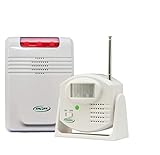
Overview: The Smart Caregiver Economy Wireless Monitor and Motion Sensor delivers fundamental monitoring capabilities for caregivers seeking a straightforward, no-frills solution. This system pairs an economy cordless monitor with a single motion sensor equipped with a swivel bracket, enabling targeted area surveillance to detect when loved ones exit beds or rooms. Designed for immediate local alerts, it operates on basic radio frequency communication without requiring internet connectivity or smart devices.
What Makes It Stand Out: This system’s primary distinction lies in its remarkable simplicity and expandability. Unlike more complex systems, it focuses on delivering reliable motion detection without technological overhead. The adjustable volume control (high/medium/low) accommodates different living environments, while its capacity to support up to six cordless components allows caregivers to scale coverage as needs evolve. The swivel bracket provides precise positioning for monitoring specific zones like doorways or bedside areas.
Value for Money: At $69.95, this represents one of the most economical entry points into professional caregiver monitoring. The absence of monthly subscription fees ensures long-term affordability. However, the hidden costs of three C batteries for the monitor and three AA batteries for the sensor (not included) plus the optional AC-04 adapter should be factored into the total investment. Compared to subscription-based services, it pays for itself within months.
Strengths and Weaknesses: Strengths include straightforward setup, reliable basic functionality, expandable system architecture, and adjustable alert volumes. The local-only monitoring ensures privacy without cloud dependencies. Weaknesses encompass the lack of a call button, absence of remote monitoring capabilities, no smartphone integration, and the additional cost of batteries and adapters. The economy designation also suggests potentially shorter range or durability than premium models.
Bottom Line: This system excels for caregivers needing simple, affordable local monitoring without technological complexity. It’s ideal for in-home use where proximity allows immediate response to alerts, though those requiring remote oversight or two-way communication should consider alternative solutions.
7. Smart Alert Tech Smart Sensor - SAT-1065 - Smart Monitoring System, Wi-Fi Enabled, No Hub Required, Remote Virtual Access, Subscription Free, Easy Set-Up Motion Sensor, PIR Sensor

Overview: The Smart Alert Tech SAT-1065 represents the next generation of caregiver monitoring, leveraging Wi-Fi connectivity and intelligent pattern recognition to provide remote oversight without monthly fees. This system moves beyond simple motion detection by learning daily routines and only alerting caregivers to deviations, reducing notification fatigue while maintaining vigilant oversight of loved ones’ wellbeing.
What Makes It Stand Out: The patent-pending non-use detection algorithm distinguishes this from conventional motion sensors. Rather than bombarding caregivers with every movement, it establishes behavioral baselines and sends push notifications only when expected activities don’t occur. The hub-free Wi-Fi design simplifies installation, while subscription-free operation eliminates recurring costs. Remote virtual access through the dedicated app enables monitoring from anywhere, providing peace of mind for distant family members.
Value for Money: Priced at $139.95, this system commands a premium over basic models but eliminates the $20-50 monthly fees typical of professional monitoring services. The one-time investment essentially pays for itself within 3-7 months compared to subscription alternatives. For tech-comfortable families requiring remote access, the value proposition is compelling, though those satisfied with local-only alerts may find the cost harder to justify.
Strengths and Weaknesses: Strengths include intelligent pattern-based alerting, remote smartphone access, no monthly fees, hub-free installation, and versatile sensor placement. The system scales well for multiple family members. Weaknesses involve dependence on stable Wi-Fi, potential complexity for non-technical users, higher upfront cost, and reliance on smartphone technology that may challenge some elderly caregivers. Battery life and replacement costs remain ongoing considerations.
Bottom Line: This smart sensor is ideal for technology-proficient caregivers requiring remote monitoring capabilities and intelligent alert filtering. It delivers exceptional long-term value by eliminating subscriptions, though its reliance on Wi-Fi and smartphones makes it less suitable for those preferring simpler, local-only solutions.
8. Smart Caregiver® Cordless Motion Sensor and Nurse Call System for Fall Prevention– Know When They Need Help or are Getting up!
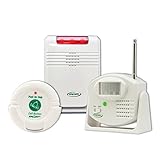
Overview: The Smart Caregiver Cordless Motion Sensor and Nurse Call System provides a more comprehensive local monitoring solution by combining motion detection with a wearable call button. This three-component system includes a cordless monitor, motion sensor, and call button, addressing both proactive movement monitoring and reactive emergency assistance requests in one integrated package designed for immediate in-home response.
What Makes It Stand Out: Unlike basic motion-only systems, this package includes a versatile call button that functions as both a pendant and wall-mounted device, empowering users to actively summon help. The included 12-volt battery for the call button demonstrates thoughtful completeness, while the motion sensor’s doorway or bedside positioning offers flexible deployment. The system’s nurse call designation suggests medical-grade reliability suitable for professional and home care environments.
Value for Money: At $84.95, this mid-tier option costs $15 more than the economy version but adds critical two-way communication capability. The inclusion of the call button battery partially offsets the additional expense. While still requiring separate purchase of three C batteries for the monitor and three AA batteries for the motion sensor, the complete system architecture eliminates the need to buy a separate call button later, representing solid value for caregivers wanting comprehensive coverage.
Strengths and Weaknesses: Strengths include the integrated call button system, multiple alert methods, adjustable monitor volume, flexible call button placement options, and professional-grade design. The system provides both passive monitoring and active emergency signaling. Weaknesses mirror other cordless systems: batteries not included for main components, lack of remote monitoring features, no smartphone integration, and limited expandability details. The motion sensor’s dependency on optimal positioning may create blind spots.
Bottom Line: This system strikes an excellent balance between functionality and affordability for caregivers needing both motion detection and manual alert capabilities. It’s particularly valuable for situations where the monitored individual can reliably use a call button, providing comprehensive local protection without recurring fees.
Understanding Vacation Mode Automation
What Makes Vacation Mode Different from Regular Automation
Standard smart home occupancy detection operates on immediate responsiveness—lights turn on when you enter, HVAC adjusts when motion is detected. Vacation mode, however, requires predictive intelligence and pattern simulation. You’re not automating for convenience; you’re creating digital puppetry that convinces outsiders someone is home while simultaneously gathering intelligence about genuine threats. This dual mandate means your sensors must operate with enhanced sensitivity for security purposes while maintaining enough randomness in their triggers to avoid predictable lighting patterns that burglars can identify.
The Security vs. Energy Efficiency Balance
The fundamental tension in vacation mode sensor configuration lies between comprehensive monitoring and power conservation. Battery-powered sensors in remote locations can’t afford to ping your hub every thirty seconds, yet you need real-time awareness if a window breaks at 2 AM. Advanced systems now employ adaptive polling intervals—checking in less frequently during “quiet hours” but instantly escalating their refresh rate when initial motion is detected. This intelligent resource management extends battery life by up to 400% while maintaining security vigilance.
Passive Infrared (PIR) Sensors: The Tried and True Technology
How PIR Detects Body Heat Signatures
PIR sensors function like thermal cameras on a budget, measuring infrared radiation changes across their detection grid. When a warm body moves across the sensor’s field of view, it creates a differential temperature signature that triggers an event. For vacation mode, you’ll want models with adjustable sensitivity zones that can ignore small heat sources (like rodents) while flagging human-sized signatures. The best implementations use dual-element pyroelectric sensors that can determine direction of movement—crucial for distinguishing someone approaching your door versus walking away.
Limitations in Vacation Mode Scenarios
The Achilles’ heel of PIR technology in vacation applications is its inability to detect motion through obstacles and its poor performance in extreme temperatures. A PIR sensor mounted in an uninsulated garage might fail to trigger when it’s 100°F outside because the ambient temperature matches human body heat. Additionally, PIR sensors require a clear line of sight, making them vulnerable to strategic blocking by intruders who understand the technology. For comprehensive coverage, PIR should never be your sole detection method in vacation mode.
Ultrasonic Sensors: Sound Wave Detection
High-Frequency Operation Principles
Ultrasonic sensors emit sound waves above 20 kHz—inaudible to humans but perfect for mapping room occupancy through echolocation. These sensors continuously measure the time it takes for pulses to return, creating a real-time topographical map of the space. The key advantage for vacation mode is their ability to detect motion around corners and through partial obstructions like furniture. High-end models can even distinguish between movement patterns, recognizing the difference between curtains fluttering in a breeze and human presence.
Pet Immunity Considerations
One of the most valuable features for vacation mode is true pet immunity, which ultrasonic sensors achieve through sensitivity tuning. Unlike PIR sensors that simply raise their detection threshold (often missing human intruders in the process), ultrasonic sensors can filter out movement below a certain height or mass based on echo signature. Look for units with adjustable “pet weight” settings up to 80 pounds and the ability to create virtual “immunity zones” near the floor where pets typically move.
Microwave and Radar Sensors: Through-Wall Detection
Doppler Effect Technology
Microwave sensors operate on the Doppler principle, emitting low-power electromagnetic waves that penetrate non-metallic surfaces like drywall and wood. When these waves reflect off a moving object, the frequency shift indicates motion. For vacation homes, this means a single sensor can monitor multiple rooms or detect someone approaching the house before they reach a door or window. The technology excels at detecting subtle movements like breathing or a person sitting still, which would be invisible to PIR sensors.
Privacy Advantages Over Cameras
In an era of increasing surveillance concerns, radar sensors offer presence detection without capturing visual data—a significant selling point for vacation rentals where guest privacy is paramount. These sensors can’t identify individuals or record activities, yet they provide rich occupancy data including number of people in a space and even vital signs in advanced models. This makes them ideal for properties you occasionally rent out, as they comply with privacy regulations that restrict camera placement in interior spaces.
Millimeter Wave (mmWave) Sensors: Precision Presence
Fine-Grained Motion Sensitivity
mmWave technology represents the precision instrument of presence detection, operating at frequencies between 30-300 GHz. These sensors can detect movements as subtle as a finger twitch, making them exceptionally difficult to fool. For vacation mode, this sensitivity translates to the ability to confirm occupancy without requiring large gestures. A person reading on the couch or working at a desk triggers detection, allowing your automation system to maintain realistic lighting patterns even during sedentary activities.
Fall Detection Capabilities
Beyond simple occupancy, mmWave sensors can recognize specific human postures and movements, including falls—an invaluable feature if you have elderly family members visiting your vacation property. The technology creates a point cloud representation of the human form, enabling it to distinguish between someone bending to tie a shoe versus collapsing. While primarily a safety feature, this capability also serves security purposes by detecting forced physical altercations that might occur during a break-in.
Video-Based Detection: AI-Powered Computer Vision
On-Device Processing vs. Cloud Analysis
When considering camera-based occupancy detection for vacation mode, the processing location critically impacts both latency and privacy. On-device edge processing keeps all footage local, sending only metadata (“person detected in living room”) to your hub. This approach maintains functionality even if internet connectivity fails—a common issue in remote vacation properties. Cloud-based systems, while offering more powerful AI models, create vulnerability during internet outages and raise data sovereignty concerns.
Privacy-Preserving Features to Look For
If you opt for video detection, prioritize cameras with physical privacy shutters that automatically close when you’re on-site, and “masking zones” that pixelate sensitive areas like bedroom windows visible in frame. Advanced systems offer “activity silhouette” mode, where the AI analyzes only the shape and movement pattern without processing identifiable facial features. For vacation mode specifically, seek cameras with “ghost mode” that superimposes fake silhouettes of people moving through the house when the system detects prolonged absence.
Environmental Sensors: Indirect Occupancy Clues
CO2 and VOC Monitoring
Humans continuously exhale CO2 and emit volatile organic compounds through skin and breath. High-precision environmental sensors can detect these trace gases, providing occupancy confirmation without any motion detection. A single person raises CO2 levels by 50-100 ppm within 30 minutes in a sealed room. For vacation mode, this creates a powerful secondary verification—if your motion sensor triggers but CO2 levels remain at baseline, you likely have a false alarm from an inanimate object.
Humidity and Temperature Fluctuation Analysis
Human presence subtly alters room microclimates through respiration, perspiration, and body heat. Advanced environmental sensors can detect these fluctuations with 0.1°F precision and 0.5% humidity sensitivity. During vacation mode, these sensors help distinguish between HVAC system cycling (which creates uniform changes) and human presence (which creates localized pockets of altered climate). This data also proves invaluable for preventing mold in unoccupied properties by ensuring your dehumidifier responds to actual conditions rather than timers.
Pressure and Vibration Sensors: Physical Interaction
Smart Floor Mat Technology
Pressure-sensitive mats and floor tiles detect footsteps through capacitive or piezoelectric sensors embedded in the material. When installed under entry rugs or along common pathways, they provide definitive occupancy confirmation that’s nearly impossible to spoof. Unlike motion sensors that detect movement anywhere in their field of view, pressure sensors confirm someone is physically standing in a specific location. For vacation mode, place these at entry points to trigger immediate alerts and at interior locations to verify that detected motion represents an actual intruder, not shadows or reflections.
Window Vibration Detection
Acoustic vibration sensors attached to windows and glass doors listen for the specific frequency signatures of glass stress, cutting attempts, or frame manipulation. These sensors can distinguish between normal wind-induced vibrations and tool attacks through frequency analysis. In vacation mode, they provide perimeter defense that activates before an intruder gains entry, giving you critical minutes to respond. Look for models with self-calibrating baselines that learn the normal vibration patterns of your property, reducing false alarms from passing trucks or thunderstorms.
Contact Sensors: Entry Point Monitoring
Door and Window Status Tracking
While technically binary open/closed detectors rather than occupancy sensors, smart contact sensors form the foundation of any vacation mode security strategy. Modern units do far more than report on/off states—they measure the speed of door opening (distinguishing between a gust of wind and human action), detect subtle frame shifts indicating tampering, and monitor temperature differentials that suggest seal failure. For vacation applications, prioritize sensors with encrypted communication protocols that resist replay attacks, a common vulnerability that tech-savvy burglars exploit.
Advanced Tamper Detection
High-end contact sensors include accelerometers that detect removal attempts, magnets that verify sensor alignment, and even light sensors that trigger if the case is opened. During vacation mode, these features create multiple verification layers. If a contact sensor reports “closed” but the associated motion sensor detects movement inside, you know someone circumvented the door monitoring—critical intelligence that guides your response decision.
Acoustic Sensors: Sound Pattern Recognition
Glass Break and Footstep Detection
Specialized acoustic sensors use machine learning models trained on thousands of audio samples to recognize specific sound signatures. Glass break detectors analyze the frequency progression of impact followed by shattering, achieving 95%+ accuracy while ignoring dropped dishes or thunder. Footstep detection algorithms can differentiate between human footsteps, pet nails, and mechanical noises by analyzing pressure patterns and gait cadence. For vacation mode, these sensors provide room-specific detection without requiring visual line-of-sight.
Machine Learning Audio Classification
The latest acoustic sensors go beyond pre-programmed signatures, employing on-device neural networks that learn your home’s unique soundscape. They can recognize the specific squeak of your back door, the sound of your particular mailbox opening, or the beep pattern of your oven timer. During vacation mode, this contextual awareness dramatically reduces false positives—a notification that “the kitchen side door opened” carries far more weight than a generic “motion detected.”
Multi-Sensor Fusion: The Hybrid Approach
Cross-Validation for False Positive Reduction
No single sensor technology provides perfect vacation mode coverage. The hybrid approach combines multiple sensor types, requiring consensus before triggering alerts. For example, the system might wait for PIR motion detection plus a CO2 spike plus pressure mat activation before sending an intrusion notification. This cross-validation can reduce false alarms by 99% while maintaining sensitivity to genuine threats. The key is intelligent orchestration—sensors don’t operate independently but as a collaborative network sharing data and confidence levels.
Weighted Algorithm Decision Making
Advanced fusion systems assign confidence scores to each sensor type based on time of day, historical data, and environmental conditions. At 3 AM, a window vibration sensor might carry 90% decision weight, while during afternoon hours, environmental sensors take precedence as people move about normally. For vacation mode, you can configure these algorithms to become increasingly sensitive over time—the longer the property remains unoccupied, the higher the confidence threshold required to dismiss a potential alert.
Key Features to Evaluate Before Buying
Detection Range and Field of View
Manufacturers often advertise optimistic range figures measured in perfect conditions. For vacation homes, consider how seasonal factors affect performance. A sensor with 30-foot range might drop to 15 feet when humidity spikes in summer or when winter cold affects battery voltage. Look for adjustable detection zones that let you create “virtual walls”—particularly important for avoiding neighbor-triggered alerts in close-proximity vacation condos or townhomes.
Response Time and Latency
In vacation mode, sensor response time directly impacts security effectiveness. A sensor that takes three seconds to report motion gives an intruder precious time to locate and disable your hub. Sub-one-second reporting is essential for entry points, while interior sensors can tolerate slightly longer latency. Test this specification yourself during setup by walking through detection zones and measuring the time between movement and smartphone notification. Be wary of cloud-dependent sensors that add network travel time to their inherent processing delay.
Integration Protocols Matter
Your vacation mode sensors must speak the same language as your smart home hub. Zigbee and Z-Wave offer mesh networking that extends range across large properties, while Wi-Fi sensors provide direct internet connectivity but create potential security vulnerabilities. Thread, the emerging standard, promises the best of both worlds with IP-based communication and mesh capabilities. For remote vacation properties, consider sensors with cellular backup that can report directly via LTE if your primary internet fails.
Power Source and Battery Life
Battery life claims often assume residential usage patterns—dozens of triggers per day, not the minimal activity of a vacant property. In vacation mode, many sensors enter sleep states and can achieve 3-5 year battery life, but this depends heavily on polling frequency. Solar-powered sensors with lithium backup offer the best long-term reliability for sunny locations. For cold climate vacation homes, avoid alkaline batteries which lose capacity below 40°F; lithium iron phosphate (LiFePO4) cells maintain performance down to -4°F.
Installation and Placement Strategies
Optimal Mounting Heights and Angles
PIR sensors perform best mounted 7-8 feet high, angled slightly downward to maximize detection of lateral movement across their field of view. Microwave sensors need clear line-of-sight through the targeted area and should be positioned to avoid metal objects that create reflection interference. For vacation mode, consider “cascading placement”—entry sensors trigger interior sensors to increase sensitivity, creating a progressive alert system that conserves battery while maintaining security depth.
Avoiding Common Interference Sources
HVAC vents create moving air patterns that can trigger ultrasonic sensors, while direct sunlight through windows saturates PIR detectors. Microwave sensors can be confused by fish tanks (moving water reflects signals) and large metallic surfaces. During vacation mode installation, map your home’s electromagnetic landscape using a smartphone app that detects Wi-Fi congestion and run a 48-hour interference test before finalizing sensor positions. Place sensors away from smart speakers, which emit ultrasonic frequencies during pairing that can desensitize acoustic detectors.
Privacy and Security Considerations
Data Localization and Edge Processing
Every sensor that transmits data to external servers represents a potential privacy breach and point of failure. For vacation properties, edge processing keeps sensitive occupancy data within your home network. If you must use cloud services, ensure they comply with GDPR or CCPA standards and offer data deletion guarantees. Some jurisdictions now require vacation rental owners to disclose all monitoring devices—sensors that process locally simplify compliance by ensuring you’re not inadvertently recording guest activities.
Network Security Hardening
Sensors are often the weakest link in smart home security, using outdated firmware and unencrypted communication. Before activating vacation mode, isolate your sensor network on a separate VLAN, change default Zigbee/Z-Wave network keys, and disable unnecessary pairing modes. Recent research shows that many Zigbee sensors can be jammed with $15 hardware; counter this by enabling “tamper channel hopping” if your hub supports it, forcing sensors to switch frequencies when interference is detected.
Cost-Benefit Analysis for Vacation Homes
Initial Investment vs. Insurance Savings
A comprehensive sensor network for a 2,000 sq ft vacation home typically costs $800-$1,500, but many insurers offer 10-20% premium reductions for professionally monitored smart security systems. Document your installation with photos and sensor specifications to maximize discounts. Some carriers now require specific sensor types—State Farm, for example, mandates glass break sensors on all ground-floor windows for their “smart home discount” program.
Scalability for Multi-Property Owners
If you manage multiple vacation rentals, standardize on a single sensor ecosystem to reduce training time and spare part inventory. Look for hubs that support property grouping, allowing you to arm/disarm entire locations with one command and compare occupancy patterns across your portfolio to identify maintenance issues. Bulk purchasing through commercial distributors can reduce per-sensor costs by 30-40%, and some manufacturers offer property management dashboards that centralize alerts and maintenance schedules.
Troubleshooting Common Vacation Mode Issues
False Positive Triggers and Solutions
The most common vacation mode false positive is the “ghost event”—sensors triggering without apparent cause. Start by correlating timestamps with environmental data: did a pressure drop precede the event (indicating a door suddenly moving due to air pressure changes)? Was there a temperature spike (suggesting sun hitting the sensor)? Advanced troubleshooting involves reviewing sensor signal strength graphs; a gradual decline followed by a trigger often indicates a spider building a web over the detector, while intermittent spikes suggest electrical interference from a failing appliance.
Connectivity Dropouts in Remote Locations
Vacation homes in rural areas frequently suffer from intermittent internet and power outages that silence sensors. Deploy a UPS with at least 24-hour capacity for your hub and router, and choose sensors that store events locally, transmitting them in batches when connectivity returns. Cellular backup is non-negotiable for remote properties—consider a prepaid IoT SIM card plan that activates only when primary internet fails, costing $5-10 monthly versus $50+ for always-on cellular monitoring.
Frequently Asked Questions
How do I prevent my smart lights from triggering each other’s motion sensors during vacation mode?
Configure your automation system to temporarily disable interior motion sensors for 30 seconds after a light state change. Most advanced hubs support “sensor masking” where one device’s action mutes others in a predefined group. Alternatively, position sensors to face away from light sources and use directed beam bulbs that don’t create wide light spill.
What’s the minimum number of sensors needed for effective vacation mode in a small condo?
For a sub-1,000 sq ft condo, a strategic minimum includes: one mmWave sensor covering the main living area, contact sensors on the entry door and any windows accessible from fire escapes, one acoustic glass break sensor for the main window wall, and an environmental sensor to detect HVAC failure. This four-sensor approach provides layered security without redundancy, costing approximately $300-400.
Can occupancy sensors differentiate between family members and intruders?
Standard occupancy sensors cannot identify individuals, but multi-sensor fusion systems can make educated guesses based on behavior patterns. A “known occupant” might trigger sensors in a predictable sequence (entry door → hallway → kitchen), while an intruder creates anomalous patterns. Some advanced systems integrate with smartphone presence detection, automatically classifying motion detected while your phone is home as “authorized.”
How do vacation mode sensors handle power outages?
Battery-powered sensors continue operating normally, but their communication path fails if the hub loses power. Critical sensors should have cellular backup that reports directly to your phone via SMS during outages. For extended absences, consider a generator with automatic transfer switch dedicated to your security system, or at minimum, a solar panel charging a battery bank that powers only the hub and communication equipment.
Will my sensors alert me if someone cuts my internet or power lines?
Standard sensors cannot alert during complete communication loss. However, some hubs support “heartbeat monitoring” where you receive a daily “all clear” notification; if this stops, you know something’s wrong. For true tamper detection, install a cellular-based monitoring service that calls you if the hub goes offline, or use a sensor with built-in cellular backup that sends a final “power lost” message before shutting down.
Do I need professional monitoring, or can I rely on self-monitoring through smartphone alerts?
Self-monitoring works for tech-savvy owners who respond immediately to notifications, but professional monitoring provides liability protection and ensures response during sleep or travel. Many insurers require professional monitoring for discounts. A hybrid approach—self-monitoring with an optional professional service that activates during vacations—offers the best balance, costing $10-15 monthly versus $30-50 for full-time professional monitoring.
How can I test my vacation mode setup without actually leaving for weeks?
Use your hub’s “vacation simulation” mode, which artificially extends absence timers and disables presence-based overrides. Spend a day away from home while monitoring notifications, then review the event log for false positives. Some systems support “ghost mode” where you can virtually “walk through” your property using the app, testing sensor response times and automation triggers in real-time without physical presence.
What’s the lifespan of these sensors in harsh vacation home environments?
Coastal properties expose sensors to salt air corrosion that reduces lifespan from 5-7 years to 2-3 years. Desert locations subject electronics to temperature swings exceeding 50°F daily, causing solder joint failure. Mountain properties face lightning-induced power surges. For harsh environments, specify industrial-rated sensors with conformal coating on circuit boards and gas-discharge tubes for surge protection, which cost 50% more but last three times longer.
Can I integrate vacation mode sensors with my existing smart home ecosystem, or do I need a separate hub?
Most modern sensors support multiple protocols, but vacation mode’s advanced features often require a dedicated security hub that operates independently of your convenience automation. The ideal setup uses a primary hub for daily smart home functions and a secondary security-focused hub that takes over during vacation mode. This isolation ensures that a crashed lighting automation can’t disable your security sensors, and many insurance discounts require this separation.
How do I handle sensor maintenance and battery replacement for a property I visit only seasonally?
Install sensors with battery level reporting that alert you at 30% capacity, giving you a 3-6 month replacement window. Use lithium batteries rated for 10-year shelf life and schedule replacement every two years regardless of reported level—voltage drops in cold weather can cause sudden failures. For truly remote properties, consider hardwired sensors with battery backup or energy-harvesting sensors that generate power from ambient light or temperature differentials, eliminating maintenance entirely.