Gone are the days when outdoor floodlights simply bathed your driveway in harsh light at the slightest rustle of leaves. Today’s AI-powered floodlights represent a quantum leap in home security—intelligent sentinels that can distinguish between a potential intruder and your neighbor’s cat with remarkable precision. As smart home technology matures, person detection algorithms have evolved from gimmicky novelties to genuinely useful security tools that reduce false alarms by up to 95% while providing peace of mind that actually makes sense.
If you’re considering upgrading your outdoor lighting to include AI person detection, you’re not just buying a brighter bulb—you’re investing in a sophisticated surveillance ecosystem that thinks before it acts. This comprehensive guide will walk you through everything you need to know to make an informed decision, from understanding the underlying technology to navigating installation challenges and privacy considerations.
Top 10 Outdoor Floodlights with AI Person Detection
Detailed Product Reviews
1. Tapo 2K Dimmable Floodlight Security Camera Outdoor Wireless w/Solar Panel, Pan/Tilt, 360º AI Tracking, Free Person/Vehicle Detection, Works w/Alexa and Google Assistant, SD/Cloud, C615F KIT

Overview:
The Tapo C615F KIT revolutionizes outdoor security by combining solar power with 360° pan/tilt functionality in a completely wireless package. This 2K resolution camera features an 800-lumen dimmable floodlight, making it ideal for porches, driveways, and yards where cabling is impractical. The integrated solar panel maintains the 10,400 mAh battery with just 45 minutes of daily sunlight, providing up to 140 days of backup power even without sun.
What Makes It Stand Out:
True wireless freedom distinguishes this model—no power or data cables required. The 360° AI tracking automatically follows subjects across the entire horizontal range, while free person/vehicle detection eliminates monthly subscription fees. Alexa and Google Assistant integration enables seamless smart home automation. The “set it and forget it” solar charging system delivers maintenance-free operation year-round.
Value for Money:
At $84.99, this represents exceptional value for a solar-powered, pan/tilt camera. Comparable wireless models with similar features typically cost $120+. The elimination of installation wiring and electricity costs provides long-term savings, while the included free AI detection saves $30-50 annually versus subscription-based competitors.
Strengths and Weaknesses:
Pros: Solar-powered convenience; 360° AI tracking; No subscription required; Affordable price; Smart home compatible; Long battery life
Cons: 800 lumens is modest compared to wired alternatives; Requires adequate sunlight exposure; 2.4GHz Wi-Fi only; Battery performance varies with activity
Bottom Line:
Perfect for sun-exposed locations needing flexible placement without wiring complexity. The Tapo C615F delivers impressive smart features at an unbeatable price, though users requiring maximum brightness should consider wired options. For wireless convenience and 360° coverage, this is the budget champion.
2. eufy Security Floodlight Camera E30, Security Camera Outdoor, 360° Pan and Tilt, AI Detection and Tracking, 2K Video, 2.4GHz Wi-Fi, 2,000 Lumens, Custom Voice and Light Alerts, 24/7 Recording

Overview:
The eufy E30 is a premium hardwired floodlight camera delivering robust 24/7 surveillance with 2,000-lumen brightness. Its 360° pan/tilt capability with AI tracking ensures comprehensive property coverage without blind spots. The 2K HD resolution captures crisp details day and night, while the Power Amplifier-enhanced Wi-Fi provides superior signal strength and 50% greater range than standard 2.4GHz cameras.
What Makes It Stand Out:
The combination of continuous 24/7 recording and scheduled patrol modes offers unmatched vigilance. Custom voice and light alerts allow personalized deterrence messages, a unique feature for scaring off intruders. The PA-boosted Wi-Fi penetrates walls effectively, solving connectivity issues that plague many outdoor installations. IP65 weatherproofing ensures reliable operation in harsh conditions.
Value for Money:
At $123.18, this positions itself as a mid-range powerhouse. While pricier than battery options, the constant power and uninterrupted recording justify the investment. The enhanced Wi-Fi reliability reduces frustration and potential security gaps. Compared to professional systems costing $200+, the E30 delivers premium features without monthly fees.
Strengths and Weaknesses:
Pros: 24/7 continuous recording; 2,000-lumen brightness; Enhanced Wi-Fi range; AI auto-tracking; IP65 weatherproofing; Customizable alerts
Cons: Hardwired installation required; No 5GHz support; Higher price than battery models; May need professional installation; Fixed power source limits placement
Bottom Line:
Ideal for those prioritizing continuous recording and powerful illumination. The eufy E30 excels in reliability and advanced features, making it worth the premium for comprehensive security coverage. If you can handle the wiring, this is a set-and-forget guardian.
3. Tapo TP-Link 2K QHD Floodlight Camera for Outdoor Security, Wired, 2800 Lumens, 270° Motion-Activated, Free Vehicle/Person Detection, No Subscription Required, Works w/Alexa & Google Home C720

Overview:
The Tapo C720 wired floodlight camera delivers exceptional brightness at 2800 lumens with sharp 2K QHD resolution. Its 270° motion-activation zone provides extensive coverage, while smart AI distinguishes between people, pets, and vehicles. The wired design ensures consistent performance without battery maintenance concerns, making it reliable for high-traffic areas.
What Makes It Stand Out:
The 2800-lumen output dramatically outshines most competitors in its price class. The “no subscription required” model with free AI detection for multiple object types is refreshingly consumer-friendly. The Tapo app provides granular floodlight customization—adjust brightness, set schedules, and fine-tune activation triggers. The 150° wide field of view captures broad areas with minimal blind spots.
Value for Money:
At $99.99, this strikes an excellent balance between brightness, resolution, and intelligent features. The $15 premium over its solar sibling buys nearly 4x the lumens and eliminates solar dependency. Comparable wired cameras with this brightness typically start at $130+, making the C720 a cost-effective choice for serious illumination needs.
Strengths and Weaknesses:
Pros: 2800-lumen brightness; Free multi-category AI detection; No subscription needed; Wired reliability; Alexa/Google integration; Adjustable controls
Cons: No pan/tilt functionality; Fixed 150° field of view; Requires electrical wiring; 2.4GHz Wi-Fi only; Installation complexity for some users
Bottom Line:
The Tapo C720 is perfect for those wanting maximum brightness without recurring fees. Its powerful illumination and intelligent detection make it a top wired choice, though the lack of pan/tilt limits flexibility. For static high-traffic zones needing excellent visibility, this delivers outstanding performance.
4. REOLINK 4K 8MP Floodlight Security Camera Outdoor, Dual-Lens Camera w/ 180° FOV, Dual-Band Wi-Fi 6, Color Night Vision with 1800lm Floodlight, Smart AI Detection, IP67 Waterproof, AC (100~240V)

Overview:
The REOLINK 4K floodlight camera sets the resolution standard with dual-lens 8MP ultra HD and a 180° panoramic view. Wi-Fi 6 technology ensures smooth, lag-free streaming, while the 1800-lumen floodlight provides advanced color night vision. AC power guarantees continuous operation, and the IP67 rating withstands extreme weather conditions from heavy rain to intense heat.
What Makes It Stand Out:
The 4K dual-lens system delivers unparalleled image quality with minimal blind spots, capturing details lesser cameras miss. Wi-Fi 6 support future-proofs your setup with faster speeds, better device handling, and reduced latency. The 10x digital zoom allows detailed examination of distant objects. Smart AI detection filters alerts specifically for persons, vehicles, and animals, reducing false notifications.
Value for Money:
At $169.99, this is the premium choice for those demanding top-tier resolution. While significantly pricier than 2K alternatives, the 4K clarity and Wi-Fi 6 technology justify the cost for tech enthusiasts and security-conscious homeowners. Comparable 4K cameras often exceed $200, making this a competitive high-end option.
Strengths and Weaknesses:
Pros: 4K 8MP resolution; 180° panoramic view; Wi-Fi 6 connectivity; IP67 weatherproofing; AC power reliability; Advanced AI detection; 10x digital zoom
Cons: Highest price in comparison; 1800 lumens lower than some 2K models; No pan/tilt capability; Requires AC wiring; May be overkill for basic security needs
Bottom Line:
For those prioritizing image quality above all else, the REOLINK 4K is unbeatable. The panoramic view and Wi-Fi 6 make it a future-ready investment. While the brightness is moderate, the stunning clarity and robust build quality make it ideal for tech-savvy users wanting the best visual evidence possible.
5. DeerTalk Security Floodlight Cameras Outdoor - Floodlight for Home Security Wired Motion Detection 2-Way Audio Camera 2K and 150dB Siren 4230 lm 2.4G&5G WiFi Alexa-Compatible 3000-5000K 24/7 Recording
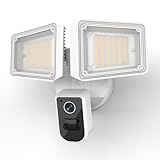
Overview:
The DeerTalk floodlight camera combines extreme brightness with a powerful 150dB siren for maximum deterrence. At 4230 lumens with 2K resolution, it illuminates vast areas while the dual-band WiFi ensures stable connectivity. The included 128GB microSD card enables immediate 24/7 recording without additional purchases, and the adjustable design optimizes coverage angles.
What Makes It Stand Out:
The 4230-lumen output is the brightest in this comparison, providing exceptional visibility across large properties. The 150dB siren adds an aggressive security layer rarely found in consumer cameras, creating a formidable intruder deterrent. Dual-band WiFi (2.4G & 5G) offers installation flexibility and better performance in congested networks. The angle-adjustable camera and LED panel eliminate blind spots effectively.
Value for Money:
At $119.99, this delivers exceptional features for the price. The included 128GB card ($20 value) and extreme brightness make it competitive with cameras costing $150+. The siren feature provides professional-grade deterrence without monthly fees, offering significant security value for larger properties.
Strengths and Weaknesses:
Pros: 4230-lumen brightness; 150dB siren; Dual-band WiFi; 128GB card included; 24/7 recording; Two-way audio; Adjustable design; 3000-5000K color temperature
Cons: Hardwired only; No pan/tilt functionality; Siren may be too loud for dense neighborhoods; Brand less established than competitors; 2K resolution (not 4K)
Bottom Line:
The DeerTalk excels for those wanting maximum brightness and audible deterrence. The dual-band WiFi and included storage make it a feature-packed value, ideal for large properties needing aggressive security measures. If you want to light up and sound the alarm on potential threats, this is your best bet under $120.
6. Onforu Floodlight Camera 360° View 2K HD Video Security Camera Outdoor, 5500LM Motion-Activated Smart Flood Lights Cam, AI Detection and Tracking, 24/7 Recording, Color Night Vision, Work with Alexa

Overview: The Onforu Floodlight Camera delivers comprehensive outdoor security with its 360° rotating view and intelligent tracking capabilities. This dual-function device combines a powerful 5500LM LED floodlight with a 2K HD camera, offering complete property coverage without blind spots. Designed for seamless smart home integration, it works with Alexa and Google Assistant while providing continuous 24/7 recording to ensure no moment goes undocumented.
What Makes It Stand Out: The 360° auto-tracking feature sets this apart from static floodlight cameras, automatically following people, pets, or vehicles across your property. The intelligent PIR sensors combined with AI detection minimize false alerts while ensuring accurate motion tracking. Its three adjustable light heads provide customizable illumination zones, and the full-color night vision maintains detail in complete darkness—critical for identifying potential threats.
Value for Money: At $99.99, this camera strikes an excellent balance between premium features and affordability. Competitors with 360° tracking often cost $150+, making this a smart choice for comprehensive coverage. The 24/7 recording capability, typically a subscription-locked feature in other brands, adds significant value without recurring costs.
Strengths and Weaknesses: Strengths include seamless 360° tracking, bright 5500LM lighting, AI-powered detection, flexible storage options, and smart home compatibility. Weaknesses: 128GB maximum SD capacity may be limiting for 24/7 recording, and the 360° motor could be vulnerable to harsh weather over time. Some users report the app interface could be more intuitive.
Bottom Line: Ideal for homeowners wanting maximum coverage without multiple cameras. The Onforu delivers premium tracking capabilities at a mid-range price, making it a top contender for comprehensive property surveillance.
7. Olafus Floodlight Camera Outdoor – 2K QHD Security Cam with Motion-Activated Flood Lights, Custom Detection Zones, Color Night Vision, 2-Way Talk & 55W Dimmable Lighting White
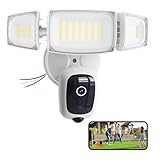
Overview: The Olafus Floodlight Camera offers robust security features at a budget-friendly price point. This 2K QHD camera combines with a 55W, 5500LM dimmable floodlight to provide clear surveillance and powerful illumination. With customizable detection zones and a piercing 105dB siren, it’s designed to deter intruders while giving homeowners precise control over monitoring areas.
What Makes It Stand Out: The standout feature is the aggressive deterrent system—the combination of flashing floodlights and a 105dB siren creates a formidable anti-theft barrier. Customizable detection zones allow you to focus on specific areas like driveways or entry points, reducing nuisance alerts from peripheral movement. The 256GB SD card support offers double the storage capacity of many competitors, enabling longer local recording retention.
Value for Money: At $69.99, this is one of the most affordable 2K floodlight cameras available. The inclusion of a siren alarm, custom zones, and expanded storage support typically commands $100+ from other brands. While it lacks 360° rotation, its fixed-position design offers reliability and simplicity for targeted surveillance.
Strengths and Weaknesses: Strengths include excellent price-to-feature ratio, loud siren deterrent, custom detection zones, high-capacity local storage, and bright adjustable lighting. Weaknesses: No pan/tilt functionality limits coverage area, shorter 16.4ft motion detection range, and the siren may disturb neighbors if not carefully configured. App notifications can occasionally be delayed.
Bottom Line: Perfect for budget-conscious buyers needing reliable front-door or driveway security. The Olafus delivers core features without fluff, though its fixed position requires strategic installation planning.
8. EZVIZ 2K+ Smart Outdoor Security Camera with Floodlight, Built-in 32G Storage, Colour Night Vision, Siren & Light Alarm, AI Human Detection, Two-Way Talk, Waterproof, Hardwired Installation (LC3)

Overview: The EZVIZ LC3 Smart Floodlight Camera targets users frustrated with subscription fees, featuring built-in 32GB local storage and 2K+ resolution. This hardwired unit combines a 4MP camera with a 700-lumen adjustable wall light, emphasizing reliability over raw brightness. Its AI-powered person detection and integrated siren provide intelligent security without ongoing costs.
What Makes It Stand Out: The zero-subscription model is the headline feature—32GB built-in storage eliminates cloud dependency and monthly fees. The AI-powered person detection uses deep learning to filter out animals and shadows, drastically reducing false alarms. Its hardwired installation ensures continuous power for 24/7 operation without battery concerns, while the adjustable 700-lumen light offers ambiance control beyond security.
Value for Money: At $99.99, the value proposition centers on long-term savings. While initial cost matches competitors, avoiding $3-10 monthly subscriptions pays for itself within a year. The 2K+ resolution and AI detection rival premium brands, though the 700-lumen output is modest compared to 5500LM alternatives.
Strengths and Weaknesses: Strengths include no monthly fees, reliable hardwired power, accurate AI detection, built-in storage, and two-way audio. Weaknesses: Lower brightness limits illumination range, 32GB storage may fill quickly at high resolution, hardwired installation requires electrical work, and there’s no mention of expandable storage options. The EZVIZ app has mixed reviews for connectivity.
Bottom Line: Best for homeowners prioritizing cost savings and reliability over maximum brightness. The LC3 excels as a subscription-free, hardwired solution for entryways and small yards.
9. Jarnex Outdoor Porch Light Camera, 2K Wi-Fi Security Cam with AI Human Detection, Pan & Tilt, Dusk to Dawn, 2-Way Audio, Cloud/SD Storage, Wall Lantern Sconce Camera for Porch, Garage, Patio, Doorway
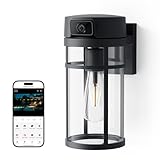
Overview: The Jarnex Outdoor Porch Light Camera redefines aesthetic security by integrating a professional-grade 2K camera into a decorative 10-inch wall lantern. Crafted from anti-rust steel with tempered glass, this matte black fixture provides covert surveillance without compromising curb appeal. It’s designed for homeowners who refuse to choose between security and style.
What Makes It Stand Out: The architectural lantern design is genuinely unique—most security cameras are utilitarian eyesores. The motorized pan and tilt with auto human tracking maintains visual contact with intruders across a 120° field of view. Three lighting modes (Smart, Dusk-to-Dawn, Manual) offer versatility beyond standard motion-only activation, while the anti-rust construction ensures durability in coastal or humid environments.
Value for Money: At $119.99, this commands a premium over basic floodlight cameras, but justifies it through superior build quality and design integration. Traditional lantern lights cost $80-150 alone; adding 2K security camera capabilities with AI tracking represents strong value for design-conscious buyers. It’s cheaper than installing separate decorative lighting and a standalone camera.
Strengths and Weaknesses: Strengths include elegant design, pan/tilt tracking, AI human filtering, multiple lighting modes, durable construction, and wide field of view. Weaknesses: Highest price in this category, lower lumen output than dedicated floodlights, installation requires replacing existing fixtures, and pan/tilt mechanics may have longevity concerns. No built-in storage mentioned.
Bottom Line: Ideal for front porch, patio, or entryway applications where appearance matters. The Jarnex proves security can be stylish, though its premium price targets a specific aesthetic priority.
10. 90W 10000LM LED Security Lights Motion Sensor Outdoor Lights, 4 Head Dusk to Dawn, 6500K Daylight Flood Lights Outdoor Motion Sensor, IP65 Waterproof, Motion Light for Outside, Garage, Yard, Porch
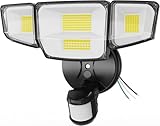
Overview: This 90W LED Security Light delivers pure illumination power with 10,000 lumens covering up to 2,450 square feet. Unlike floodlight cameras, this is a dedicated lighting solution featuring four adjustable heads and three operational modes. Built from aluminum with an IP65 waterproof rating, it’s engineered for maximum brightness and durability in extreme weather conditions.
What Makes It Stand Out: The raw 10,000-lumen output dwarfs typical floodlight cameras (5500LM), making it ideal for large properties, barns, or commercial spaces. The four-head design provides exceptional coverage flexibility, allowing users to illuminate multiple areas from a single fixture. Three modes (Auto, Dusk-to-Dawn, Test) balance security and energy efficiency, while the finned heat sink design ensures longevity in continuous operation.
Value for Money: At $33.23, this represents exceptional value for high-output LED lighting. Comparable lumen output from commercial brands costs $80-150. The 88% energy savings versus halogen alternatives translates to rapid ROI, especially for properties requiring all-night illumination. However, as a light-only solution, it lacks the security intelligence of camera-equipped alternatives.
Strengths and Weaknesses: Strengths include unparalleled brightness, affordable pricing, excellent weatherproofing, flexible head positioning, and energy efficiency. Weaknesses: No camera or smart features, hardwired installation required, 6500K daylight color may be harsh for residential aesthetics, and the high output could create light pollution if not carefully aimed. No remote control or app integration.
Bottom Line: Perfect for users needing maximum illumination without surveillance features. Pair it with a separate camera for a best-of-both-worlds setup, or use it standalone for deterring trespassers through visibility alone.
What Is AI Person Detection and Why Does It Matter for Outdoor Security?
AI person detection uses machine learning algorithms to analyze video feeds in real-time, identifying human shapes, movement patterns, and behavioral cues while ignoring irrelevant motion triggers. Unlike basic pixel-based motion detection that flags any change in the camera’s view, these systems have been trained on millions of images to recognize the unique characteristics of human presence—bipedal gait, body proportions, heat signatures, and even clothing textures.
The significance for outdoor security cannot be overstated. Traditional floodlights with standard motion sensors become notorious for crying wolf, blasting your yard with light dozens of times nightly for swaying branches, passing cars, or raccoons on their evening rounds. This desensitizes homeowners to alerts and wastes energy. AI person detection transforms your floodlight from a reactive noisemaker into a discerning security partner that only demands your attention when it genuinely matters.
How AI Person Detection Differs from Traditional Motion Sensors
The fundamental difference lies in the processing layer. Conventional PIR (passive infrared) sensors detect heat differentials and movement within a defined zone. They’re essentially binary—they sense motion or they don’t. AI systems, by contrast, perform multi-layered analysis: first detecting motion, then classifying the moving object, then determining whether it matches human characteristics. This three-stage process happens in milliseconds, but it dramatically improves accuracy.
Think of it as the difference between a guard dog that barks at every sound versus one trained to recognize specific threat profiles. Modern AI floodlights can even differentiate between a person walking purposefully toward your door versus someone simply passing by on the sidewalk, thanks to directional analysis and zone customization.
The Technology Behind Smart Floodlight Recognition Systems
Most AI floodlights deploy convolutional neural networks (CNNs) trained on vast datasets of human images in various conditions—day, night, rain, snow, and different angles. These models run either on the device itself (edge computing) or in the cloud. Edge-based processing offers faster response times and enhanced privacy since video isn’t transmitted for analysis, while cloud-based systems can leverage more powerful computational resources and continuous learning from millions of devices.
Advanced units incorporate additional sensors: PIR for initial motion wake-up, radar for distance measurement, and ambient light sensors to determine when illumination is actually needed. This sensor fusion creates a more robust detection profile that’s harder to fool and more reliable in challenging conditions.
Key Benefits of Upgrading to AI-Powered Floodlights
The advantages extend far beyond simply fewer false alerts. These intelligent systems fundamentally change how you interact with your home’s security perimeter, creating a proactive rather than reactive defense layer that integrates seamlessly with modern lifestyles.
Eliminating False Alerts from Pets, Wildlife, and Weather
The most immediate benefit you’ll notice is silence—blessed silence. No more 3 AM notifications because a moth flew too close to the camera. Quality AI floodlights can reliably filter out animals under 40 pounds, swaying vegetation in winds up to 25 mph, and precipitation effects. Some advanced models even learn your property’s specific patterns, recognizing that the 6 PM shadow from your flagpole isn’t a threat.
This filtering happens through size exclusion algorithms (ignoring objects below a certain pixel height), shape recognition (distinguishing quadrupeds from bipeds), and movement pattern analysis (recognizing the erratic flight path of insects versus linear human movement).
Enhanced Security Response Times
When a genuine person is detected, AI floodlights respond with purpose rather than panic. Instead of just flooding the area with light, they can trigger graduated responses: initial subtle illumination to capture clear footage, followed by full brightness if the person enters a restricted zone. This staged approach prevents the “deer in headlights” effect that can obscure facial features while still serving as an effective deterrent.
Many systems also initiate pre-recording buffers, capturing the seconds before detection was triggered, ensuring you don’t miss the critical moment when someone first entered your property. This forensic detail proves invaluable for law enforcement if an incident occurs.
Privacy-Focused Monitoring
Paradoxically, AI detection enhances privacy by reducing unnecessary recording. Since the system only activates for human detection, you’re not constantly capturing footage of your family enjoying the backyard or your daily comings and goings. Some systems offer “privacy zones” where detection is disabled entirely—perfect for overlooking neighbor’s windows or public sidewalks—while maintaining perimeter vigilance.
Essential Features to Evaluate Before Buying
Not all AI floodlights are created equal. The market ranges from sophisticated security systems to glorified motion lights with rudimentary person detection. Understanding which specifications actually matter will help you separate marketing fluff from genuine capability.
Lumens and Brightness: Finding the Right Illumination Level
Brightness requirements vary dramatically based on application. For a small entryway, 1,500-2,000 lumens suffices. Driveways and backyards typically need 2,500-3,500 lumens. Large commercial properties might require 5,000+ lumens. More isn’t always better—excessive brightness creates harsh shadows and can actually reduce visibility through overexposure.
Look for adjustable brightness settings or models with multiple LED arrays that can operate at different intensities. This flexibility allows you to customize illumination based on time of day, specific zones, and detection confidence levels.
Color Temperature and Its Impact on Security
Color temperature, measured in Kelvin (K), affects both security effectiveness and aesthetic integration. Cool white light (5000-6500K) provides maximum contrast and detail recognition, crucial for identifying faces and license plates. Warm white (2700-3000K) creates a more welcoming ambiance but may sacrifice some forensic detail.
The sweet spot for security applications is typically 4000-5000K, offering a neutral white that renders colors accurately while maintaining sufficient intensity. Some premium models offer tunable white features, allowing you to adjust color temperature based on the situation.
Camera Resolution and Field of View
While 1080p remains the standard, 2K and 4K resolution cameras are becoming increasingly common. Higher resolution provides more detail for identification but requires more bandwidth and storage. More important than raw resolution is the lens quality and field of view (FOV).
A 130-160° FOV covers most residential applications, but wider angles can introduce fisheye distortion that reduces effective identification distance. Pay attention to the camera’s lux rating for low-light performance—anything below 0.1 lux indicates excellent night vision capability before the floodlight even activates.
Night Vision Capabilities
Quality AI floodlights offer true color night vision through large aperture lenses and advanced sensors, not just infrared black-and-white footage. Infrared illumination should be invisible (940nm) rather than the visible red glow (850nm) of cheaper units, which can alert intruders they’re being watched. The best systems use starlight sensors that can produce full-color images in near-total darkness, only activating the main floodlight when a person is confirmed.
Power and Connectivity Options Explained
Your floodlight’s power source and network connection fundamentally affect reliability, installation complexity, and ongoing maintenance requirements. Each approach involves trade-offs between convenience and performance.
Wired vs. Battery-Powered vs. Solar
Hardwired units offer unlimited power and typically more robust performance but require professional installation if you lack existing wiring. Battery-powered models provide flexibility in placement but demand periodic recharging—expect 3-6 months between charges with moderate activity. Solar-powered options eliminate charging concerns but may underperform during winter months or in shaded locations, and often can’t sustain the brightest LED arrays.
Hybrid systems combining hardwired power with battery backup offer the best of both worlds, ensuring operation during power outages. Some units use Power over Ethernet (PoE), delivering both data and power through a single cable—ideal for new construction or major renovations.
Wi-Fi, Ethernet, and Hub Requirements
Wi-Fi connectivity is convenient but can be unreliable at the edges of your network where floodlights typically reside. Look for units with external antennas or mesh network compatibility. Ethernet connections provide rock-solid reliability but limit placement flexibility. Some systems require a proprietary hub, which can simplify setup but adds cost and another point of failure. Matter and Thread support are emerging as desirable features for future-proofing your smart home ecosystem.
Weather Resistance and Durability Standards
Outdoor electronics face brutal conditions—temperature extremes, moisture, UV degradation, and physical impacts. Understanding durability ratings prevents premature failure and ensures your investment lasts.
Understanding IP Ratings for Outdoor Use
The IP (Ingress Protection) rating consists of two digits: the first for dust protection (0-6), the second for water resistance (0-9). For outdoor floodlights, IP65 represents the minimum acceptable standard—dust-tight and protected against water jets from any direction. IP66 offers protection against powerful water jets, while IP67 indicates temporary submersion capability. For coastal areas, check for salt spray corrosion resistance testing, which goes beyond standard IP ratings.
Temperature Range and Weatherproofing
Operating temperature specifications reveal much about component quality. Quality units function from -4°F to 122°F (-20°C to 50°C). Cheap models may claim similar ranges but use inferior capacitors that fail in extreme heat. Look for silicone gaskets, sealed cable entries, and UV-resistant polycarbonate housings. Metal housings should be die-cast aluminum with powder coating, not plastic that becomes brittle in sunlight.
Smart Home Integration and Compatibility
A floodlight that exists in isolation is merely a bright light. One that integrates with your broader smart home ecosystem becomes a force multiplier for convenience and security.
Voice Assistant Support
Alexa, Google Assistant, and Siri integration should go beyond basic on/off commands. Advanced integration allows you to ask “Alexa, show me the driveway” to view the camera feed on your Echo Show, or create routines like “When person detected after midnight, turn on all outdoor lights and play dog barking sounds on outdoor speakers.” Check whether the floodlight supports two-way audio through voice assistants, enabling you to speak to visitors through the device itself.
Third-Party Platform Integration
IFTTT support expands possibilities infinitely—triggering your sprinkler system when someone lingers too long near your gate, or flashing your smart bulbs inside when the floodlight detects a person. Compatibility with security platforms like SmartThings, Hubitat, or Home Assistant provides local control and advanced automation without cloud dependency. For business users, ONVIF compliance ensures integration with professional NVR systems.
Data Storage and Privacy Considerations
Your floodlight is constantly watching, which means it’s constantly generating potentially sensitive data. How that data is stored, accessed, and protected deserves careful scrutiny.
Cloud vs. Local Storage
Cloud storage offers convenience and off-site backup but introduces monthly subscription fees and potential privacy vulnerabilities. Local storage via microSD cards or NAS integration eliminates ongoing costs and keeps data under your control, but risks loss if the device is stolen or damaged. The best approach is hybrid: local storage with optional cloud backup for critical events.
Pay attention to retention policies—some services delete footage after 30 days regardless of importance. Look for event-based recording with pre-roll buffers rather than continuous recording, which wastes storage on hours of nothing.
Data Encryption and Security Protocols
End-to-end encryption should be non-negotiable, ensuring footage is encrypted on the device before transmission and only you hold the decryption key. Be wary of systems where the manufacturer can access your footage. Two-factor authentication (2FA) is essential for preventing unauthorized access to your camera feeds. For the privacy-conscious, physically shuttered lenses or “privacy mode” that electronically disables the camera when you’re home provides additional peace of mind.
Installation and Placement Best Practices
Even the most advanced AI floodlight underperforms if poorly positioned. Strategic placement maximizes detection effectiveness while minimizing blind spots and nuisance triggers.
Optimal Mounting Heights and Angles
Mount floodlights 8-10 feet high—high enough to prevent tampering but low enough to capture facial details. Angle the camera slightly downward (15-30°) to reduce sky glare and improve ground coverage. Position the unit so the camera view and light coverage overlap but aren’t identical; you want the light to illuminate what the camera sees without washing out the image.
Avoid pointing cameras directly at rising or setting sun, which can blind the sensor and trigger false motion alerts from harsh shadows. For corner installations, consider two units with overlapping fields of view rather than one wide-angle camera that sacrifices detail.
Avoiding Common Installation Mistakes
The most frequent error is installing the floodlight where your Wi-Fi signal is weak. Always test signal strength at the mounting location before installation—your phone’s Wi-Fi indicator is sufficient. Another mistake is placing the unit too close to trees or shrubs that move in wind, even if they don’t trigger person detection, they can obstruct the view or cast moving shadows that reduce image quality.
Don’t forget about lighting uniformity. A single ultra-bright floodlight creates harsh shadows where intruders could hide. Multiple moderately bright sources provide better overall security. Also, ensure the microphone isn’t positioned near HVAC units, water features, or busy streets where ambient noise overwhelms two-way audio.
Cost Analysis and Value Proposition
AI floodlights range from $150 budget models to $500+ premium units, with subscription fees adding $3-10 monthly. Understanding the total cost of ownership helps justify the investment.
Initial Investment vs. Long-Term Savings
While a basic motion-sensing floodlight costs $30-50, the time wasted investigating false alerts and potential security gaps quickly erodes any savings. Consider the cost of a single prevented break-in—deductible alone often exceeds $1,000. Quality AI systems also reduce energy consumption through targeted illumination, potentially saving $20-40 annually compared to lights that blast on repeatedly.
Factor in insurance discounts too. Many providers offer 5-10% reductions on premiums for professionally monitored security systems, and some are beginning to recognize AI-powered self-monitored systems as equally effective.
Subscription Models and Hidden Costs
Beware of “subscription traps” where basic functionality requires monthly fees. Quality systems offer robust features without mandatory subscriptions, with premium tiers adding convenience rather than core capability. Hidden costs include professional installation ($100-300), extended warranties, and potential cloud storage overage fees. Calculate three-year total ownership cost, not just the purchase price.
Maintenance and Troubleshooting Tips
AI floodlights are relatively low-maintenance but benefit from periodic attention to maintain peak performance. A few minutes quarterly prevents degraded detection and premature failure.
Keeping Lenses and Sensors Clean
Spider webs, pollen, and dust accumulate surprisingly quickly on outdoor cameras. Use a microfiber cloth and isopropyl alcohol to clean the lens monthly. Don’t use harsh chemicals or pressure washers, which can damage seals. Check that the PIR sensor window isn’t obscured by cobwebs, which can severely reduce detection range. In winter, gently remove snow and ice buildup—never chip it away, as you’ll likely crack the lens.
Firmware Updates and Performance Optimization
Manufacturers continuously refine AI models through firmware updates. Enable automatic updates but schedule them for low-activity periods (e.g., 3 AM) to avoid missing important events during the reboot. If detection becomes erratic after an update, recalibrate detection zones and sensitivity settings, as algorithms sometimes change fundamentally.
Periodically review detection logs to identify patterns. If you’re getting false person detections every evening at sunset, you may need to adjust the camera angle or create a temporary detection schedule that ignores that timeframe.
Future Trends in AI Floodlight Technology
The technology is evolving rapidly, with several emerging capabilities poised to redefine what’s possible in residential security. Understanding these trends helps future-proof your purchase.
Edge Computing and On-Device Processing
The shift toward on-device AI processing reduces latency, eliminates cloud dependency, and enhances privacy. Next-generation chips can run complex neural networks locally, enabling features like facial recognition of family members vs. strangers, package detection, and even behavioral analysis—all without sending data to external servers. This also means faster alerts, as decisions happen in milliseconds rather than seconds.
Advanced Analytics and Behavioral Recognition
Beyond simple person detection, emerging systems recognize suspicious behaviors: loitering, perimeter testing, or attempting to obscure the camera. Some prototypes can detect the sound of breaking glass or aggressive voices, triggering preemptive responses. We’re moving toward contextual awareness where the system understands not just that a person is present, but whether their presence is appropriate for that time, location, and circumstance.
Frequently Asked Questions
How accurate is AI person detection compared to traditional motion sensors?
AI person detection typically achieves 95-98% accuracy in distinguishing humans from other motion sources, compared to 60-70% for traditional PIR sensors. The technology analyzes multiple data points—shape, movement patterns, heat signature—rather than just detecting any heat and motion. However, accuracy can degrade in extreme weather or unusual lighting conditions, and no system is perfect.
Will AI floodlights work in extreme weather conditions?
Quality units rated IP65 or higher operate reliably from -4°F to 122°F. The AI algorithms are trained on diverse weather data and can recognize people through light rain and snow. Heavy precipitation may temporarily reduce accuracy, and ice covering the lens will obviously obstruct the view. Look for models with built-in heaters for cold climates and hydrophobic lens coatings that repel water.
Do I need a subscription for AI person detection to work?
No, but functionality varies by brand. Many systems perform AI detection locally without subscription, offering real-time alerts and live viewing for free. Subscriptions typically add cloud storage, advanced features like package detection, or longer video history. Read the fine print—some budget models require subscription for basic AI features, while premium units include robust capabilities out-of-the-box.
Can AI floodlights distinguish between family members and strangers?
Standard person detection cannot identify specific individuals—it only recognizes that a human is present. Some premium models offer optional facial recognition features that can differentiate known faces from unknown persons after you tag family members in the app. This feature raises additional privacy considerations and typically requires cloud processing, so evaluate whether the convenience outweighs the privacy trade-off.
What’s the ideal mounting height for AI floodlight cameras?
Mount between 8-10 feet high for optimal balance of tamper resistance and facial detail capture. Too low and the camera is vulnerable; too high and you lose identifying details. Angle the camera 15-30° downward and position it so the top of the frame aligns with the horizon. This placement minimizes sky exposure (which can cause glare) and maximizes ground coverage where people walk.
How much internet bandwidth do AI floodlights consume?
Standby mode uses minimal bandwidth—just occasional keep-alive packets. When streaming or uploading events, expect 1-4 Mbps per camera depending on resolution. A 1080p camera uses roughly 1.5 Mbps, while 4K can use 4+ Mbps. If you have multiple cameras, ensure your upload speed can handle simultaneous streams. Local storage reduces bandwidth needs significantly, as footage only uploads when you remotely access it.
Can I integrate AI floodlights with existing security systems?
Many modern floodlights support ONVIF protocol for integration with NVRs and professional systems. For DIY setups, IFTTT, SmartThings, and Home Assistant compatibility enables sophisticated automation. However, proprietary systems like Ring, Nest, or Arlo often work best within their own ecosystems. Check compatibility before purchasing if integration with existing equipment is a priority.
How do AI floodlights handle multiple people in the frame?
Advanced systems can detect and track multiple individuals simultaneously, typically up to 5-10 people depending on processing power. Each person receives a bounding box with independent tracking. The system prioritizes alerts based on proximity to your home and behavior. If both a pedestrian on the sidewalk and someone approaching your door are detected, you’ll receive differentiated alerts indicating the level of concern.
What happens if the internet goes down?
Functionality depends on the architecture. Cloud-dependent systems essentially become expensive motion lights without internet—they’ll still illuminate but won’t send alerts or record footage. Edge-computing models with local storage continue full operation, saving recordings to SD card and sending alerts through your home network (though you won’t receive notifications remotely until internet is restored). Battery backup ensures the system stays powered during outages.
Are there privacy concerns with AI person detection?
Any camera system raises privacy questions. Mitigate risks by choosing devices with end-to-end encryption, local storage options, and clear privacy policies that state the manufacturer cannot access your footage. Use privacy zones to exclude neighbor’s property and public areas from recording. Consider systems with physical shutters or “home mode” that disables cameras when you’re present. Remember, GDPR and CCPA regulations give you rights over your data—exercise them by requesting data deletion if you discontinue service.