Your coffee maker clicks on at 6:47 AM, drawing exactly 1,247 watts. Within seconds, your smart lights gradually brighten to simulate sunrise, the thermostat nudges up two degrees, and your morning playlist starts streaming—all triggered automatically because a single device recognized that specific power signature. This isn’t futuristic speculation; it’s the practical magic of power-monitoring smart plugs that transform ordinary appliances into intelligent automation triggers.
These unassuming wall adapters have evolved far beyond simple on/off switches. By measuring real-time electrical consumption with precision and translating those measurements into actionable data, they serve as the nervous system for sophisticated smart home ecosystems. Whether you’re looking to slash phantom loads, predict appliance failures before they happen, or create intricate routines based on actual device usage rather than timers or motion sensors, understanding how to select and deploy these tools effectively separates basic gadget users from true home automation architects.
Top 10 Power-Monitoring Smart Plugs for Automations
Detailed Product Reviews
1. KAUF Power Monitoring Smart Plug with ESPHome, Compatible with Tasmota, Made for Home Assistant

Overview: The KAUF Power Monitoring Smart Plug is a single-unit device engineered specifically for Home Assistant enthusiasts seeking complete local control. This 15-amp smart plug arrives pre-flashed with ESPHome, eliminating tedious soldering, YAML configuration, or risky tuya-convert procedures. It connects directly to Home Assistant without cloud intermediaries, offering true privacy-focused home automation via ESPHome’s HTTP API for versatile integration.
What Makes It Stand Out: Its out-of-box ESPHome integration provides 100% local control that privacy-conscious users demand. Unlike mainstream alternatives, this plug doesn’t phone home to corporate servers. The reprogrammable design accepts any ESP8266-compatible firmware, including Tasmota, making it infinitely flexible for existing MQTT infrastructures. Firmware v1.91’s independent LED control and dimming capabilities add granular customization rarely seen in this price tier, allowing visual status indicators tailored to your needs.
Value for Money: At $13.49, this plug undercuts many proprietary alternatives while offering superior openness. Comparable plugs requiring manual flashing cost similar amounts but carry bricking risks and time investments. You’re paying for convenience and hackability without DIY headaches, making it a bargain for the target audience who value both time and privacy.
Strengths and Weaknesses: Strengths include true local control, zero cloud dependency, reprogrammability, accurate power monitoring, and LED customization. Weaknesses: requires Home Assistant technical knowledge, single-unit pricing isn’t bulk-friendly, and lacks mainstream app support for non-technical users.
Bottom Line: This is the definitive choice for Home Assistant power users who prioritize privacy, local control, and open-source flexibility over plug-and-play simplicity.
2. TP-Link 𝗧𝗮𝗽𝗼 Smart Plug Wi-Fi Mini, Energy Monitoring, Compatible with Alexa & Google Home & Samsung SmartThings, Timer, 15A/1800W Max, ETL Certified, 2.4G Wi-Fi Only, Tapo P115(4-Pack)

Overview: The TP-Link Tapo P115 4-Pack delivers mainstream smart plug convenience with comprehensive energy monitoring capabilities. These Wi-Fi mini plugs support Alexa, Google Home, and SmartThings integration, offering seamless voice control and remote management through Tapo’s polished mobile app. Each 15A/1800W ETL-certified plug tracks power consumption in real-time without requiring additional hubs.
What Makes It Stand Out: Beyond basic scheduling, Tapo’s ecosystem includes intelligent features like smart charging that automatically cuts power when devices reach battery thresholds, preventing overcharging. The auto-shutoff protection guards against electrical overload, while billing integration helps visualize electricity costs and optimize off-peak usage. These safety and cost-management features distinguish it from basic smart plugs and add genuine utility.
Value for Money: At $32.99 for four ($8.25 per plug), this pack offers exceptional value from a trusted brand. Individual smart plugs with energy monitoring typically retail for $12-15, making this bundle nearly 40% cheaper while adding premium features like smart charging and overload protection that increase device longevity.
Strengths and Weaknesses: Strengths include robust app experience, voice assistant compatibility, advanced energy management, safety protections, and brand reliability. Weaknesses: cloud-dependent operation raises privacy concerns, 2.4GHz Wi-Fi limitation may cause connectivity issues in congested networks, and advanced features require sharing data with TP-Link’s servers.
Bottom Line: Perfect for everyday users wanting feature-rich, reliable smart plugs without technical complexity, though privacy-conscious buyers should consider local-control alternatives.
3. KAUF Power Monitoring Smart Plug with ESPHome, Compatible with Tasmota, Made for Home Assistant (4)
Overview: The KAUF Power Monitoring Smart Plug 4-Pack bundles four identical ESPHome-enabled plugs for whole-home deployment. Each 15-amp plug runs ESPHome natively, connecting directly to Home Assistant without cloud dependencies or third-party apps. This package maintains all the technical flexibility of the single unit while offering meaningful cost savings for multi-room installations and comprehensive smart home coverage.
What Makes It Stand Out: These plugs deliver the same hacker-friendly benefits as their single counterpart: 100% local control, reprogrammability with Tasmota or any ESP8266 firmware, and independent LED dimming controls via firmware v1.91. The HTTP API enables usage beyond Home Assistant, while native MQTT integration simplifies incorporation into existing automation setups. No soldering or complex YAML editing required for basic functionality.
Value for Money: At $44.99 for four ($11.25 per plug), this 4-pack saves approximately $9 compared to purchasing individual units. While pricier than mainstream Wi-Fi plugs, the value lies in privacy preservation and open-source flexibility. For Home Assistant users planning whole-home coverage, this bulk pricing makes local-control automation financially practical and accessible.
Strengths and Weaknesses: Strengths include true local operation, no cloud required, reprogrammability, power monitoring, bulk savings, and LED customization. Weaknesses: requires technical Home Assistant knowledge, higher per-unit cost than cloud alternatives, and lacks polished mobile apps for non-technical family members.
Bottom Line: The ideal bulk purchase for Home Assistant enthusiasts wanting consistent, private smart plug deployment throughout their home without compromising on openness.
4. THIRDREALITY ZigBee Smart Plug 4 Pack with Real-time Energy Monitoring,15A Outlet, Zigbee Repeater,ETL Certified,ZigBee Hub Required,Work with Home Assistant,Compatible Echo Devices and SmartThings
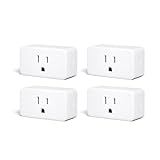
Overview: The THIRDREALITY ZigBee Smart Plug 4-Pack provides hub-dependent smart control with real-time energy monitoring across ZigBee 3.0 networks. These 15A ETL-certified plugs function as ZigBee repeaters, strengthening mesh networks while controlling appliances. Compatible with numerous hubs including Echo devices with built-in ZigBee, SmartThings, and Home Assistant via ZHA or ZigBee2MQTT for maximum flexibility and integration options.
What Makes It Stand Out: The space-saving design prevents blocking adjacent outlets—a common frustration with bulkier smart plugs. As ZigBee repeaters, they actively improve network reliability rather than congesting Wi-Fi. The safety-focused restore-status function lets users customize power-on behavior after outages, supported by Home Assistant and THIRDREALITY’s own hub. Voice control through Alexa and Google Home adds mainstream convenience and accessibility.
Value for Money: At $38.99 for four ($9.75 per plug), these are competitively priced for ZigBee devices. While requiring a hub (additional cost if you don’t own one), they eliminate Wi-Fi congestion and provide mesh networking benefits. Compared to Wi-Fi alternatives, the repeater functionality and broader ecosystem compatibility justify the investment for ZigBee households.
Strengths and Weaknesses: Strengths include ZigBee mesh networking, space-saving design, broad hub compatibility, energy monitoring, and restore-status safety features. Weaknesses: mandatory hub requirement, some advanced features limited to specific hubs, and ZigBee’s shorter range compared to Wi-Fi may require more repeaters.
Bottom Line: An excellent choice for existing ZigBee ecosystem users wanting reliable mesh expansion and energy monitoring without cloud dependency.
5. Kasa Smart Plug HS103P4, Smart Home Wi-Fi Outlet Works with Alexa, Echo, Google Home & IFTTT, No Hub Required, Remote Control, 15 Amp, UL Certified, 4-Pack, White

Overview: The Kasa Smart Plug HS103P4 4-Pack offers straightforward Wi-Fi smart control without hub requirements or energy monitoring complexity. These UL-certified 15A plugs integrate with Alexa, Google Home, and IFTTT for basic automation and voice control. The Kasa app provides simple scheduling and remote management for users wanting reliable functionality without technical overhead or steep learning curves.
What Makes It Stand Out: Simplicity is the core value proposition. Setup takes minutes through the intuitive Kasa app, making these accessible to non-technical users of all skill levels. The brand’s Silicon Valley pedigree and 5-million user base inspire confidence. At just $6.06 per plug, this is the most economical way to add basic smart control to multiple devices without compromising on safety certifications or brand support.
Value for Money: At $24.23 for four, this is the budget champion. While lacking energy monitoring, the price undercuts even no-name brands. For users needing simple on/off scheduling for lamps, fans, or holiday lights, paying extra for unused features makes little sense. The ultra-low cost-per-plug makes whole-home basic automation financially trivial and accessible to everyone.
Strengths and Weaknesses: Strengths include unbeatable price, easy setup, brand reliability, no hub requirement, and broad voice assistant support. Weaknesses: no energy monitoring, cloud-dependent operation, 2.4GHz Wi-Fi only, and limited advanced automation compared to local-control alternatives.
Bottom Line: The go-to choice for budget-conscious buyers wanting dependable, no-fuss smart plugs for basic automation without advanced monitoring needs.
6. Govee Smart Plug with Energy Monitoring, WiFi Bluetooth Plug Work with Alexa and Google Assistant, 15A Smart Outlets with Timer & Group Controller, No Hub Required, ETL&FCC Certified for Home, 2 Pack

Overview: The Govee Smart Plug 2-pack delivers essential smart home functionality with robust energy monitoring capabilities at an accessible price point. These dual-connected plugs work over both WiFi and Bluetooth, allowing remote control of appliances through the Govee Home App without requiring a dedicated hub. Each 15A outlet supports high-power devices like coffee makers and space heaters while providing real-time tracking of power consumption, current, and voltage.
What Makes It Stand Out: The hybrid WiFi/Bluetooth connectivity ensures reliable operation even when your internet falters, a rare feature in budget smart plugs. The comprehensive energy monitoring dashboard lets you review consumption patterns daily, weekly, monthly, or annually—helping identify energy vampires and optimize usage. The 15A rating exceeds many competitors’ 10A limits, making these genuinely useful for power-hungry appliances. Voice control through Alexa and Google Assistant integrates seamlessly into existing smart home routines.
Value for Money: At $9.50 per plug, this 2-pack undercuts most single smart plugs with energy monitoring. Comparable WiFi-only plugs from premium brands often cost $15-20 each without Bluetooth backup. The included ETL and FCC certifications provide safety assurance typically reserved for higher-priced alternatives. For renters or smart home newcomers, this represents minimal financial risk while delivering professional-grade monitoring features.
Strengths and Weaknesses: Strengths include dual connectivity options, detailed energy analytics, high amperage capacity, robust safety certifications, and intuitive group scheduling. The compact design doesn’t block adjacent outlets. Weaknesses involve the lack of 5G WiFi support, which may frustrate users with modern mesh networks, and the Govee ecosystem lock-in that doesn’t play well with other smart home platforms. The app occasionally pushes promotional content.
Bottom Line: These Govee plugs excel for energy-conscious users seeking reliable, high-capacity smart outlets without breaking the bank. The Bluetooth fallback and comprehensive monitoring make them ideal for first-time smart home adopters, though platform flexibility remains limited. Perfect for monitoring specific appliances like dehumidifiers or Christmas lights.
7. Kasa Smart Plug Power Strip HS300, Surge Protector with 6 Individually Controlled Smart Outlets and 3 USB Ports, Works with Alexa & Google Home, No Hub Required , White
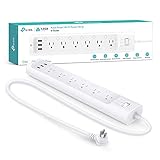
Overview: The Kasa HS300 reimagines the traditional power strip as a fully integrated smart home command center. This ETL-certified surge protector features six independently controllable AC outlets plus three always-on USB ports, transforming cluttered entertainment centers or office setups into streamlined, monitorable ecosystems. Each outlet appears as a separate device in the Kasa app, allowing precise scheduling and energy tracking for every connected component.
What Makes It Stand Out: Individual outlet control distinguishes this from ordinary smart strips, letting you reboot a single device without disrupting others. The built-in surge protection safeguards expensive electronics, while per-outlet energy monitoring identifies which devices consume phantom power. The three USB ports (5V/2.4A total) eliminate wall wart clutter. Voice control through Alexa, Google, and even Cortana provides rare cross-platform compatibility, and the robust scheduling engine supports complex automation routines.
Value for Money: At $39.98, replacing six individual smart plugs ($60-90) plus a surge protector ($15-25) makes this an exceptional value. The USB ports add further utility, while per-outlet monitoring typically commands premium pricing. For home theater systems or workstation setups where multiple devices require independent control, the HS300 consolidates what would otherwise be a mess of separate plugs and power strips into one sleek unit.
Strengths and Weaknesses: Strengths include individual outlet control, surge protection, energy monitoring per socket, USB charging ports, and broad voice assistant support. The build quality feels substantial and professional. Weaknesses center on the single-point-of-failure risk—if the strip fails, you lose six smart devices simultaneously. The bulky 14-inch length may not fit smaller spaces, and the 2.4GHz-only WiFi can struggle in crowded network environments. No battery backup for settings.
Bottom Line: The HS300 is the ultimate solution for tech-heavy areas requiring both protection and granular control. Home office users and home theater enthusiasts will appreciate the clutter reduction and detailed energy insights. Accept the bulkiness in exchange for consolidating multiple smart plugs into one reliable, surge-protected unit with exceptional app support.
8. 𝗭𝗶𝗴𝗕𝗲𝗲 Smart Plug, Energy Monitoring, 𝗭𝗶𝗴𝗯𝗲𝗲 𝗛𝘂𝗯 Required, ETL Certified, Compatible with Alexa, Google Home, Home Assistant, SmartThings, Remote App Control, Smart Outlet, 1 Pack

Overview: This ZigBee 3.0 smart plug targets the DIY smart home enthusiast already invested in a ZigBee ecosystem. Unlike WiFi alternatives, it requires a compatible hub (SmartThings, Home Assistant, etc.) but rewards users with mesh network reliability and reduced WiFi congestion. The single-pack offering provides 15A capacity with real-time energy monitoring at a budget-friendly price point, though the hub requirement means total cost of ownership exceeds the sticker price.
What Makes It Stand Out: ZigBee’s mesh networking creates a self-healing network that remains operational even if individual nodes fail, offering superior reliability to WiFi plugs in larger homes. The 15A capacity handles demanding appliances while the IP20 rating provides basic dust protection. Its slim profile avoids blocking adjacent outlets—a common complaint with bulkier smart plugs. Integration with Home Assistant appeals to privacy-conscious users preferring local control over cloud dependency.
Value for Money: At $9.99, the plug itself is inexpensive, but factoring in a $30-80 ZigBee hub makes this suitable only for existing ecosystem users. For those already equipped, it’s cheaper than most WiFi alternatives while offering superior network stability. However, WiFi-only households should calculate the total investment before committing. The value proposition hinges entirely on whether you own or plan to purchase a compatible hub.
Strengths and Weaknesses: Strengths include reliable ZigBee mesh networking, hub-based local control, non-blocking design, broad hub compatibility, and ETL certification. The protocol avoids congesting WiFi bandwidth. Weaknesses revolve around mandatory hub requirement, limited standalone functionality, potentially complex setup for novices, and dependence on third-party app ecosystems. The NOUS app is less polished than proprietary alternatives from Kasa or Tapo.
Bottom Line: This ZigBee plug serves niche users perfectly while alienating mainstream buyers. If you run Home Assistant or SmartThings, it’s an affordable, reliable addition. For WiFi-only homes, skip it—the hub requirement negates any cost savings. Excellent for expanding existing ZigBee networks but unsuitable as a first smart home purchase.
9. TP-Link 𝗧𝗮𝗽𝗼 Smart Plug Wi-Fi Mini, Energy Monitoring, Compatible with Alexa & Google Home & Samsung SmartThings, Timer, 15A/1800W Max, ETL Certified, 2.4G Wi-Fi Only, Tapo P115(2-Pack)

Overview: The Tapo P115 elevates the humble smart plug into a sophisticated energy management tool. This 2-pack of mini WiFi plugs combines standard remote control and scheduling with advanced features like bill estimation and smart charging cutoff. Supporting up to 1800W (15A), these ETL-certified outlets handle everything from lamps to air conditioners while providing granular consumption data through TP-Link’s polished Tapo app ecosystem.
What Makes It Stand Out: The auto-shutoff feature for overload protection adds a critical safety layer missing from many competitors. Smart charging automatically cuts power when devices reach predefined battery levels, preventing overnight overcharging of phones and laptops. The energy bill estimation integrates with utility rates to forecast costs, transforming abstract wattage numbers into actionable financial insights. The compact mini design leaves adjacent outlets accessible, and Samsung SmartThings compatibility broadens integration options.
Value for Money: At $10 per plug, you’re getting premium energy management features typically found in $20+ devices. The overload protection alone justifies the price premium over basic smart plugs. For users serious about reducing electricity bills, the bill estimation feature pays for itself within months by identifying wasteful devices. The 2-pack pricing makes it easy to monitor multiple high-consumption appliances simultaneously.
Strengths and Weaknesses: Strengths include advanced energy analytics, overload protection, smart charging cutoff, 1800W capacity, broad platform support, and compact design. The Tapo app is intuitive and responsive. Weaknesses include 2.4GHz WiFi limitation, which may cause connectivity issues in congested environments, and the Tapo ecosystem lock-in—while compatible with major platforms, advanced features require the Tapo app. No Bluetooth backup if WiFi fails.
Bottom Line: The P115 is the energy-conscious user’s dream plug, offering safety and savings features that justify every penny. Perfect for monitoring expensive electronics, managing charging stations, or controlling high-wattage appliances. If you prioritize energy insights over basic automation, this is your best bet in the sub-$20 category.
10. Kasa Matter Smart Plug w/ Energy Monitoring, Compact Design, 15A/1800W Max, Super Easy Setup, Works with Apple Home, Alexa & Google Home, UL Certified, 2.4G Wi-Fi Only, White, KP125M (4-Pack)

Overview: The Kasa KP125M represents the next generation of smart plugs, embracing the Matter standard for true cross-platform interoperability. This 4-pack delivers future-proof connectivity that works with Apple Home, Alexa, Google Home, and SmartThings simultaneously without ecosystem lock-in. Each 15A/1800W plug features energy monitoring and a space-saving compact design, while Matter’s local network control ensures functionality even during internet outages.
What Makes It Stand Out: Matter compatibility eliminates the platform wars—buy these once and they’ll work with whatever smart home system you adopt later. The LAN control feature allows direct device-to-device communication without cloud dependency, ensuring faster response times and continued operation during ISP failures. The UL-certified flame-retardant construction exceeds typical ETL standards, while the ultra-compact design stacks neatly in standard outlets. Setup is genuinely plug-and-play via QR code scanning.
Value for Money: At $9.48 per plug, you’re paying standard WiFi plug prices for next-generation Matter technology. Comparable Matter plugs cost $15-20 each, making this 4-pack exceptional value for early adopters. The multi-platform support means you won’t need to rebuy devices if switching from Alexa to Apple HomeKit. For households with mixed ecosystems (iOS and Android users), this unified approach saves money and frustration.
Strengths and Weaknesses: Strengths include Matter future-proofing, offline LAN control, UL certification, compact size, 4-pack value, and seamless multi-platform integration. The Kasa app remains polished and reliable. Weaknesses involve Matter’s current immaturity—some platforms don’t yet support all features—and the 2.4GHz-only limitation. The energy monitoring is less detailed than Tapo’s offering. Firmware updates can be slow to roll out across all platforms simultaneously.
Bottom Line: The KP125M is the most future-proof smart plug purchase you can make today. Ideal for households planning long-term smart home expansion or those frustrated with ecosystem fragmentation. While Matter is still evolving, these plugs ensure you won’t be left behind. Buy these if you value interoperability and offline reliability over cutting-edge energy analytics.
Understanding Power-Monitoring Smart Plug Technology
How Energy Monitoring Works at the Plug Level
Power-monitoring smart plugs function as miniature electrical meters, employing current transformers or shunt resistors to measure amperage flowing through the device. Unlike your utility meter that aggregates whole-home consumption, these plugs isolate individual appliances, providing granular visibility into device-specific energy patterns. The internal microcontroller samples electrical parameters thousands of times per second, calculating real power (watts), apparent power (volt-amps), power factor, and cumulative energy consumption (kilowatt-hours). This precision allows them to distinguish between a washing machine’s agitation cycle and its spin cycle, or detect when your refrigerator’s compressor is working harder than usual—information that becomes the foundation for intelligent automation triggers.
The Automation Trigger Mechanism Explained
The true power of these devices lies not in the data they collect, but in how they act upon it. When an appliance’s power draw crosses a predefined threshold, drops to zero, or matches a specific signature pattern, the plug sends a signal to your smart home hub or cloud service. This trigger can initiate cascading actions across your entire ecosystem. For example, detecting that your TV has entered standby mode (drawing 3-5 watts instead of its active 80-120 watts) can automatically dim surrounding lights, lower motorized shades, and activate a “movie night” scene. The sophistication of these triggers varies dramatically between models, from simple on/off thresholds to complex multi-condition logic involving duration, time-of-day restrictions, and power consumption ranges.
Key Features That Define Premium Power-Monitoring Plugs
Real-Time vs. Interval-Based Energy Reporting
Entry-level plugs typically report energy data in 30-second to 5-minute intervals, which suffices for tracking general usage trends but misses rapid power fluctuations. Premium devices offer true real-time reporting with sub-second refresh rates, capturing transient events like a microwave’s magnetron cycling or a power tool’s startup surge. This matters critically for automation accuracy: a device that only checks power every minute might miss your coffee maker’s 30-second brew cycle entirely. Look for specifications mentioning “instantaneous power reporting” or “live wattage updates” rather than just “energy monitoring,” and verify whether the refresh rate remains consistent when the plug is handling maximum load.
Wattage Thresholds and Customizable Trigger Points
The best power-monitoring plugs allow you to set multiple, nuanced trigger points per device. Instead of a single “above X watts” condition, advanced units support hysteresis settings (different on and off thresholds to prevent rapid cycling), time-based averaging (trigger only if power stays above threshold for Y seconds), and even pattern recognition. For instance, you might configure a trigger that activates only when power consumption rises above 500 watts, stays there for at least two minutes, then drops below 50 watts—perfectly matching your electric kettle’s heating cycle. This level of customization prevents false triggers from brief power spikes and ensures your automations fire precisely when intended.
Local vs. Cloud Processing for Automations
This architectural decision fundamentally impacts reliability and latency. Cloud-dependent plugs send power data to remote servers for processing, introducing 500ms to several seconds of delay and creating vulnerability during internet outages. Locally processed devices evaluate triggers on-device or through a local hub (like Home Assistant, SmartThings, or Hubitat), executing automations in milliseconds and maintaining functionality even when your ISP falters. For critical automations—like shutting off a malfunctioning space heater drawing excessive power—local processing isn’t just preferable; it’s essential. Check whether the plug supports local APIs, MQTT, or direct integration with your chosen hub without requiring cloud connectivity.
Critical Technical Specifications to Evaluate
Maximum Load Capacity and Amperage Ratings
Most residential smart plugs support 15 amps (1,800 watts at 120V), adequate for most appliances but insufficient for power-hungry devices like space heaters, window air conditioners, or table saws. Heavy-duty models rated for 20 amps (2,400 watts) exist but require 20-amp outlets with T-shaped neutral slots. Exceeding the amperage rating doesn’t just risk device failure—it can cause dangerous overheating. Always calculate your appliance’s maximum draw (check the nameplate, not the average consumption) and add a 20% safety margin. For motor-driven appliances, account for startup surges that can be 2-3 times the running wattage.
Voltage Compatibility and Regional Variations
While North American plugs operate at 120V, European models handle 220-240V, and universal travel adapters support multiple voltages. More importantly, verify whether the plug can accurately monitor voltage fluctuations. Line voltage typically varies ±5% throughout the day, affecting both power calculations and trigger accuracy. Premium plugs continuously monitor voltage and adjust their calculations accordingly, while cheaper models assume constant voltage, introducing measurement errors of 5-10%. This becomes particularly relevant in areas with unstable grid power or when monitoring voltage-sensitive equipment.
Wireless Protocols: Wi-Fi, Zigbee, Z-Wave, and Matter
Your choice of wireless protocol cascades through your entire smart home strategy. Wi-Fi plugs offer standalone operation without a hub but contribute to network congestion; aim for devices supporting 802.11n or newer with 2.4GHz/5GHz dual-band capability. Zigbee and Z-Wave plugs create mesh networks that improve reliability as you add more devices but require compatible hubs. The emerging Matter standard promises interoperability across ecosystems while maintaining local control. Consider your home’s size, router capacity, and existing ecosystem when deciding. For large deployments, a Zigbee/Z-Wave mesh network often proves more stable than dozens of Wi-Fi devices competing for bandwidth.
Integration Ecosystems and Platform Compatibility
Major Smart Home Platforms: What to Look For
Native integration with your primary platform—whether Apple HomeKit, Google Home, Amazon Alexa, Samsung SmartThings, or Home Assistant—determines how easily you can incorporate power data into routines. Deep integration means power levels appear as sensor values that can trigger platform-native automations, while shallow integration might only expose on/off controls with energy data buried in a separate app. Investigate whether the plug supports features like HomeKit’s Adaptive Lighting, SmartThings’ SmartApps, or Home Assistant’s energy dashboard out-of-the-box. Some manufacturers provide official integrations, while others rely on community-developed solutions that may lag behind firmware updates.
Hub-Based vs. Hub-Free Operation
Hub-free Wi-Fi plugs appeal to beginners but often sacrifice advanced features and local control. Hub-based systems centralize device management, reduce individual device cost, and enable complex multi-device choreography. A SmartThings or Hubitat hub can process power data from multiple plugs simultaneously, creating sophisticated automations like “when total entertainment center power drops below 20 watts, wait 5 minutes, then turn off all peripheral devices.” This centralized logic is nearly impossible to coordinate with standalone Wi-Fi plugs. However, hub-free operation excels for renters or single-room solutions where simplicity outweighs advanced functionality.
API Access and Advanced Integration Potential
For power users, RESTful APIs, MQTT support, or WebSocket interfaces unlock limitless customization. These interfaces allow you to pipe power data into external systems like Grafana for visualization, Node-RED for complex logic flows, or custom Python scripts for machine learning applications. Some manufacturers publish detailed API documentation, while others reverse-engineer community APIs that could break with firmware updates. If you plan to integrate power monitoring into broader home automation projects, verify API availability before purchasing and check community forums for active developer support.
Automation Logic and Programming Capabilities
Simple Threshold Triggers vs. Complex Conditional Logic
Basic plugs offer simple “if power > X watts, then do Y” triggers. Advanced devices support nested conditions, multiple trigger types, and boolean logic. For example: “If washing machine power exceeds 200 watts AND it’s between 7 AM and 10 PM AND the home mode is ‘occupied,’ then announce ‘Laundry started’ on smart speakers.” This multi-condition approach prevents unwanted notifications during quiet hours or when you’re away. Evaluate whether the plug’s app or platform integration supports AND/OR logic, time restrictions, and device state dependencies.
Time-Based Conditions and Scheduling Layers
Power-based triggers become exponentially more useful when combined with temporal context. Sophisticated systems allow you to create different automation rules based on time of day, day of week, or even sunrise/sunset calculations. A common application: during peak electricity rate hours (4-9 PM), if any entertainment device draws power, send a notification reminding you of higher costs. Some plugs include internal schedulers that work without cloud connectivity, while others rely on platform-based scheduling. Consider whether schedules reside on the device (more reliable) or in the cloud (more flexible but vulnerable).
Multi-Device Orchestration and Scene Creation
The ultimate test of a power-monitoring plug’s automation prowess is its ability to trigger complex scenes involving multiple device types. When your oven reaches its preheat temperature (detected by a sustained 2,400-watt draw dropping to 300 watts), a well-designed system can simultaneously turn on under-cabinet lighting, start a kitchen timer display, and pause your robot vacuum’s cleaning cycle. This orchestration requires the plug to communicate not just power events, but rich contextual data that other devices can interpret. Look for integration with scene controllers or the ability to trigger platform-wide routines rather than just controlling the plug itself.
Data Analytics and Energy Insights
Granularity of Historical Data Storage
Most apps display daily, weekly, and monthly usage graphs, but the underlying data resolution varies dramatically. Some systems store minute-by-minute data for 7 days, then aggregate to hourly for 30 days, then daily thereafter. Others retain second-level granularity for months. This matters when diagnosing issues: detecting that your refrigerator’s compressor runs 15 minutes longer per cycle than last month requires fine-grained historical data. Check whether data exports include timestamps and whether the storage limit is device-based (limited internal memory) or cloud-based (subscription-limited). Local-storage devices often provide indefinite retention limited only by your hub’s storage capacity.
Cost Calculation Features and Utility Rate Integration
Basic cost calculators multiply kWh by a flat rate you provide. Advanced systems support time-of-use rates, tiered pricing, and even demand charges. Some can import your actual utility rate schedule via API or CSV upload, automatically adjusting cost calculations based on when you use power. This enables sophisticated automations like “if running the dishwasher now would cost more than $1.50 versus waiting until off-peak hours, send a cost-saving suggestion.” Verify whether the system can track multiple rate periods and whether it accounts for both energy charges and fixed fees in its calculations.
Exporting Data for External Analysis
The ability to export raw data in CSV, JSON, or via API separates hobbyist tools from professional-grade monitoring. Exported data should include timestamps, voltage, current, power factor, and cumulative energy. This allows you to perform regression analysis, correlate usage with weather data, or build machine learning models to predict appliance failures. Some platforms offer direct integration with energy management systems like Sense or Emporia, while others make you manually download files. For serious energy management, ensure you can access your data without artificial limitations or paywalls.
Installation and Setup Considerations
Electrical Requirements and Outlet Compatibility
Beyond amperage ratings, consider physical dimensions. Many smart plugs block adjacent outlets, especially in duplex configurations. Low-profile or side-oriented designs maintain outlet accessibility. For outdoor applications, verify IP ratings (IP64 or higher for rain resistance) and operating temperature ranges. GFCI compatibility is crucial for garage, bathroom, or kitchen installations—some smart plugs conflict with ground fault protection, causing nuisance tripping. Test with your existing GFCI outlets or ensure the plug itself includes GFCI protection with a documented compatibility list.
Network Configuration and Security Best Practices
Wi-Fi plugs should support WPA3 encryption and offer the ability to disable WPS. For hub-based devices, secure the hub’s Zigbee/Z-Wave network with strong encryption keys. Create a separate IoT VLAN or guest network to isolate smart plugs from sensitive devices like computers and NAS systems. Check whether the plug’s firmware supports automatic security updates and whether the manufacturer has a documented vulnerability disclosure program. Some devices phone home to cloud servers in foreign countries; investigate data residency and whether you can restrict outbound connections to necessary endpoints only.
Calibration and Accuracy Verification
Factory calibration varies ±2-5% from true values. Premium plugs allow user calibration against a known reference like a Kill-A-Watt meter. This involves running a device with a stable, known load through both meters and adjusting the smart plug’s calibration factor. Some units drift over time, especially when operating near maximum capacity or in hot environments. Look for devices that support periodic recalibration or auto-calibration features that compare against internal references. For applications requiring billing-grade accuracy (subletting, roommate cost-sharing), consider plugs with revenue-grade certification, though these command premium prices.
Advanced Use Cases and Practical Applications
Appliance Health Monitoring and Predictive Maintenance
Every appliance exhibits a unique power signature that changes as components wear. A washing machine’s motor developing bearing drag will draw 10-15% more current during spin cycles. A refrigerator with a refrigerant leak runs longer cycles at lower power. By tracking these trends over months, power-monitoring plugs can predict failures weeks in advance. Set up automations to alert you when an appliance’s average cycle power or duration deviates more than 5% from baseline. Some advanced users integrate this data with maintenance scheduling apps, automatically ordering filters when HVAC fan power indicates reduced airflow.
Phantom Load Elimination and Vampire Power Management
Always-on devices consume 5-10% of residential electricity. Smart plugs can identify which devices draw significant standby power and automatically cut it. Configure a “vampire hunt” automation: at 11 PM, if the living room entertainment center’s standby draw exceeds 20 watts, turn off the smart plug completely, then restore power at 6 AM. For devices requiring always-on connectivity (like smart TVs for updates), use conditional logic: “If standby power >15 watts AND no activity for 2 hours AND it’s after midnight, then cut power.” This approach saved typical households $75-150 annually without sacrificing convenience.
Safety Monitoring and Anomaly Detection
Abnormal power draw often indicates dangerous conditions. A space heater drawing 20% over its rated power suggests a failing element or blocked airflow. A sudden drop in refrigerator power could indicate a stuck compressor relay. Configure emergency automations: “If any device exceeds its rated power by 10% for more than 30 seconds, immediately turn off and send urgent alert.” For vacation homes, set up “ghost mode” automations that detect unexpected power usage (indicating break-ins or equipment malfunctions) and notify you remotely. Some insurance companies now offer discounts for homes with active power monitoring and automatic shutoff capabilities.
Mobile App Experience and User Interface Design
Dashboard Customization and Widget Options
A well-designed app transforms raw data into actionable insights. Look for customizable dashboards where you can pin frequently monitored devices, create usage comparison charts, and overlay multiple devices’ power curves. The ability to create custom widgets showing real-time power, daily cost, or carbon footprint on your phone’s home screen provides at-a-glance awareness. Some apps offer family sharing with granular permissions, allowing roommates to view only their devices while you maintain admin access. Evaluate whether the app supports dark mode, landscape orientation on tablets, and accessibility features like screen reader compatibility.
Notification Systems and Alert Management
Effective notifications balance awareness with annoyance. Premium systems support tiered alerts: informational (daily usage summaries), warning (device left on unusually long), and critical (dangerous power anomaly). You should be able to set quiet hours, escalation policies (text if push notification isn’t acknowledged in 5 minutes), and custom sounds for different alert types. Some apps integrate with notification services like Pushover or Telegram for richer messaging. Test notification delivery speed—alerts about a malfunctioning heater should arrive within seconds, not minutes. Also verify whether notifications work locally without internet, crucial for safety-critical automations.
Firmware Update Policies and Long-Term Support
Smart plugs require firmware updates for security patches and feature improvements. Investigate the manufacturer’s track record: Do they provide updates for 3+ years? Are updates automatic, manual, or scheduled? Some brands abandon devices after 18 months, leaving vulnerabilities unpatched. Check community forums for reports of updates bricking devices or removing features. The best manufacturers offer beta programs, detailed changelogs, and rollback procedures if updates cause issues. For enterprise deployments, look for long-term support (LTS) firmware branches that prioritize stability over new features.
Privacy and Security Implications
Data Transmission and Encryption Standards
Your power usage data reveals intimate details about your life—when you wake up, when you’re home, what appliances you own. Ensure all data transmission uses TLS 1.3 encryption or newer. Some devices encrypt data locally before transmission; others send plaintext that gets encrypted at the transport layer only. Investigate whether the plug uses certificate pinning to prevent man-in-the-middle attacks. For local-only operation, verify that you can block the device’s internet access entirely after initial setup without losing core functionality. Some privacy-focused models even offer Tor onion service endpoints for anonymized data access.
On-Device vs. Cloud Data Storage
Cloud storage enables access from anywhere and prevents data loss if the device fails, but creates privacy risks and potential subscription costs. On-device storage keeps data under your control but may be limited to a few days of history. Hybrid approaches store recent data locally and sync aggregated summaries to the cloud. For maximum privacy, choose devices that support local-only operation with optional cloud features. Some Home Assistant-compatible plugs store months of data directly on the plug’s flash memory, accessible via local API even without internet connectivity.
Manufacturer Privacy Policies and Data Sharing
Read the privacy policy carefully. Some manufacturers claim rights to anonymize and sell your usage patterns to utility companies or market research firms. Others share data with third-party analytics services. Look for explicit statements that you retain ownership of your data and can request deletion. European manufacturers often comply with GDPR, providing stronger privacy protections. Check whether the company has experienced data breaches and how they responded. Community-driven audits of smart plug firmware sometimes reveal undisclosed data collection; search security research blogs for your chosen brand before purchasing.
Cost Analysis and Value Assessment
Price-to-Feature Ratio Evaluation
Basic power-monitoring plugs start around $15, while feature-rich models exceed $50. The sweet spot for most users lies in the $25-35 range, where you get accurate monitoring, local control, and robust automation features. Above this price, you’re paying for industrial-grade accuracy, advanced APIs, or premium materials. Calculate cost per monitored amp: a $30 plug monitoring 15 amps costs $2/amp, while a $50 heavy-duty plug monitoring 20 amps costs $2.50/amp but handles more demanding loads. Avoid sub-$10 plugs—they often lack safety certifications and accurate monitoring.
Energy Savings ROI Calculations
Realistic ROI timelines range from 6 months to 3 years depending on usage. A $25 plug controlling a 100-watt phantom load that runs 8 hours daily saves $35/year at average electricity rates (assuming $0.12/kWh), paying for itself in 8.5 months. However, savings compound when automations optimize time-of-use rates. In California’s PG&E territory, shifting 5kWh of daily usage from peak (40¢/kWh) to off-peak (15¢/kWh) saves $456 annually—justifying multiple smart plugs immediately. Create a spreadsheet modeling your specific appliances, their standby loads, and your utility rate structure to predict accurate payback periods.
Subscription Models vs. One-Time Purchase
Some manufacturers lock advanced features like historical data analysis, cost projections, or multi-user access behind subscription paywalls. Evaluate whether these features justify ongoing costs. A $3/month subscription over 5 years adds $180 to the total cost—often exceeding the plug’s purchase price. Prefer devices offering full functionality without subscriptions, even if the upfront cost is higher. For cloud-dependent devices, consider what happens if the company discontinues service: does the plug become a brick, or does it retain local functionality? The best models offer premium cloud features as optional enhancements while maintaining robust local operation.
Troubleshooting Common Issues
False Trigger Prevention and Sensitivity Adjustment
Inconsistent power draw causes most false triggers. A refrigerator’s defrost cycle might spike to 400 watts for 10 minutes, mimicking another appliance’s signature. Combat this with hysteresis settings: set “on” threshold at 150 watts and “off” at 50 watts to ignore minor fluctuations. Use time-based conditions requiring sustained power levels for 30-60 seconds before triggering. Some advanced plugs offer “pattern learning” modes where you run an appliance through its normal cycles, and the plug builds a recognition profile. If false triggers persist, add a small UPS between the plug and sensitive devices to smooth out power fluctuations from the grid.
Connection Drops and Network Stability
Wi-Fi plugs often disconnect during router channel changes or mesh network reconfigurations. Assign static IP addresses or DHCP reservations to prevent IP conflicts. For Zigbee/Z-Wave devices, ensure adequate mesh coverage—a plug at the network’s edge may struggle to maintain connection. Some plugs include “last gasp” functionality, sending a final status update before losing power during outages. If a plug repeatedly drops, check its signal strength in the app and consider adding a mesh repeater. Firmware bugs often cause instability; check if updates address connectivity issues before assuming hardware failure.
Accuracy Discrepancies and Calibration Drift
If your plug’s readings diverge from your utility meter by more than 5%, first verify you’re comparing the right metrics—utility meters measure true power (accounting for power factor) while cheap plugs measure apparent power. Use a Kill-A-Watt meter as a reference standard. Calibration drift often occurs after prolonged high-load operation or exposure to temperatures above 100°F. Some plugs allow field recalibration; otherwise, contact the manufacturer about warranty replacement. For critical applications, annual recalibration against a reference standard ensures ongoing accuracy. Document baseline readings when the plug is new to track drift over time.
Future-Proofing Your Smart Plug Investment
Matter Standard Adoption and Interoperability
Matter promises seamless interoperability between ecosystems while maintaining local control. However, not all Matter devices support all features—some may only expose on/off controls through Matter while requiring proprietary apps for power monitoring. Verify that Matter certification includes energy reporting clusters. Early Matter implementations sometimes lack advanced features present in native integrations; check community feedback before purchasing. Consider whether the manufacturer commits to Matter 1.2 and future updates, or if they’ve implemented Matter as a checkbox feature without ongoing support. True future-proofing means choosing devices that work natively with your primary platform today while offering Matter as a migration path.
Over-the-Air Update Capabilities
Firmware updates extend device lifespan and security, but poorly implemented OTA systems can brick devices. Look for devices with verified boot chains and automatic rollback if updates fail. Some manufacturers publish OTA firmware files for manual flashing, providing a recovery path if automatic updates fail. Check update file sizes—large updates may fail on unstable connections. The best systems support delta updates (only changed code) and can schedule updates during low-usage periods. For enterprise deployments, look for devices that support firmware signing and allow you to approve updates before installation.
Expandable Ecosystem and Brand Roadmap
Choose manufacturers with diverse product lines—lights, sensors, thermostats—that integrate seamlessly with their plugs. This ecosystem approach enables richer automations and simplifies management through a single app. Investigate the company’s financial stability and product roadmap through press releases and investor relations pages. A manufacturer focusing on industrial IoT may discontinue consumer products abruptly. Community-driven brands often provide longer support through open-source firmware alternatives like Tasmota or ESPHome, effectively immortalizing the hardware regardless of manufacturer’s future. Before buying, search GitHub for alternative firmware projects—active development indicates a robust user community.
Regulatory Compliance and Safety Certifications
UL Listing, ETL Certification, and Regional Standards
Never purchase a smart plug lacking UL (Underwriters Laboratories) or ETL (Intertek) certification for your region. These marks indicate the device has been tested for fire, shock, and overload hazards. For international use, look for CE marking (Europe), CCC (China), or RCM (Australia). Certification numbers should be printed on the device and verifiable on the testing organization’s website. Be wary of counterfeit marks—some cheap imports display fake UL logos. Check the certification database; legitimate listings include specific model numbers. For rental properties or commercial use, insurance may require specific certifications, so verify requirements before installation.
Energy Monitoring Accuracy Certifications
Billing-grade accuracy requires compliance with ANSI C12.20 (±0.5% accuracy) or IEC 62053 (±1% for Class 1, ±0.5% for Class 0.5). Most consumer plugs meet neither, instead complying with looser IEC 62301 standby power measurement standards. For submetering applications where you’ll bill tenants or roommates, revenue-grade accuracy is legally required in many jurisdictions. These certified plugs cost 3-5x more but protect you from billing disputes. Even for personal use, understanding accuracy standards helps set realistic expectations—a ±3% plug is fine for general monitoring but insufficient for detecting a 5% efficiency loss in your HVAC system.
Making the Final Decision: A Buyer’s Checklist
Prioritizing Your Specific Use Cases
Before browsing, list your top three automation goals. If eliminating phantom loads is primary, prioritize low standby power consumption (under 0.5 watts) and reliable scheduling. For appliance health monitoring, emphasize data granularity and export capabilities. If safety is paramount, demand local processing and millisecond-response triggers. Rank features by importance: real-time reporting, local control, accuracy, ecosystem integration, and price. This prevents feature creep—paying for advanced APIs you’ll never use while missing critical specifications like amperage rating. Document your existing smart home platform and hub to filter incompatible options immediately.
Ecosystem Lock-In vs. Flexibility Trade-offs
Proprietary ecosystems like Apple HomeKit offer seamless integration but limit device choices. Open platforms like Home Assistant provide maximum flexibility but require technical expertise. Consider your commitment level: if you might switch platforms in 2-3 years, choose plugs supporting multiple protocols or Matter. Avoid cloud-dependent devices from startups that may not survive—their servers shutting down renders your plugs useless. Mid-range brands with established track records and local API support offer the best balance: they integrate with major platforms today while remaining viable if you change ecosystems tomorrow.
Warranty and Customer Support Evaluation
Standard warranties range from 1-3 years. Read the fine print—some exclude damage from power surges or overloads, precisely when you need protection most. Check support channels: chat, email, phone, and community forums. Test responsiveness by asking a pre-sales technical question; slow responses now indicate poor post-purchase support. Some manufacturers offer advanced replacement programs, shipping a new unit before you return the defective one. For commercial deployments, consider extended warranties and service level agreements. Document your purchase date and serial numbers—many warranty claims require proof of purchase from authorized retailers, not third-party marketplaces.
Frequently Asked Questions
What’s the difference between a regular smart plug and a power-monitoring smart plug?
A standard smart plug only controls on/off functionality remotely. Power-monitoring plugs include integrated electrical meters that measure voltage, current, wattage, and energy consumption in real-time. This data enables automations based on actual usage patterns rather than just schedules, allowing you to trigger actions when devices turn on/off or operate abnormally. The monitoring capability typically adds $10-15 to the cost but unlocks advanced features like energy cost tracking, appliance health diagnostics, and safety alerts for dangerous power anomalies.
How accurate are power-monitoring smart plugs compared to utility meters?
Consumer-grade smart plugs typically achieve ±2-5% accuracy under ideal conditions, while utility revenue meters maintain ±0.5% accuracy as required by law. The difference stems from measurement methodology—utility meters use sophisticated algorithms to account for power factor, harmonic distortion, and line voltage fluctuations, while budget plugs often assume ideal conditions. For identifying usage trends and general automation triggers, consumer accuracy is sufficient. However, for billing tenants or detecting subtle efficiency losses, you’ll need revenue-grade certified plugs costing $100+ that meet ANSI C12.20 standards.
Can power-monitoring smart plugs really save me money on electricity bills?
Typical households save $75-150 annually by eliminating phantom loads and optimizing time-of-use rates. The real value emerges from behavioral changes—seeing real-time cost feedback encourages conservation. One study showed households with energy displays reduced consumption by 4-15%. For maximum savings, pair plugs with time-of-use rate plans: shifting 5kWh daily from peak to off-peak rates can save $400+ yearly in high-cost regions. ROI timelines average 8-18 months for single-plug deployments and under 12 months for whole-home installations in areas with demand charges.
Do these plugs work with high-power appliances like dryers or water heaters?
Standard 15-amp plugs (1,800 watts at 120V) cannot safely handle most 240V appliances or high-draw 120V devices like space heaters exceeding 1,500 watts. For these applications, you need heavy-duty 20-amp plugs (2,400 watts) with appropriate NEMA 5-20 connectors, or 240V-specific models for dryers and water heaters. Never exceed 80% of the plug’s rated capacity continuously. For 30-amp appliances (electric vehicles, central AC), smart plugs aren’t appropriate—install hardwired energy monitors like Emporia Vue or Sense at the electrical panel instead.
What happens to my automations if my internet goes down?
Cloud-dependent plugs cease all automation functions without internet, reverting to manual operation only. Locally processed devices continue functioning normally if they use hub-based automation (SmartThings, Hubitat, Home Assistant) or have on-device logic. When evaluating plugs, test this scenario: disconnect your modem and verify automations still trigger. For critical safety automations, local processing is non-negotiable. Some hybrid plugs buffer data locally during outages and sync when connectivity returns, but real-time triggers won’t fire until reconnection.
How much Wi-Fi bandwidth do power-monitoring smart plugs consume?
A typical Wi-Fi plug reporting power every second uses 5-10 KB/s when active—negligible for modern networks. However, 20+ plugs can collectively consume 1-2 Mbps of constant upstream bandwidth, potentially impacting latency-sensitive applications. Zigbee and Z-Wave plugs use far less bandwidth (under 1 KB/s) by design. If you experience network congestion, switch to hub-based protocols or configure plugs to report less frequently (every 5-10 seconds). Some advanced plugs support data compression and batch reporting, reducing bandwidth by 60-80% while maintaining reasonable automation responsiveness.
Can I use power-monitoring smart plugs in rental properties?
Yes, with considerations. Since plugs don’t modify wiring, they don’t violate most lease agreements, but check your lease for “no modifications” clauses that might include plug-in devices. For submetering and tenant billing, you must use revenue-grade meters with legal metrology certification to comply with landlord-tenant laws. Provide tenants with access to their usage data through the app or regular reports. Ensure plugs don’t interfere with safety devices like GFCI outlets, which are common in rental bathrooms and kitchens. Document baseline usage before tenant move-in to prevent disputes about phantom loads.
Are there any fire risks associated with continuous power monitoring?
Certified smart plugs (UL/ETL listed) undergo rigorous testing for thermal runaway, overload protection, and component failure modes. The monitoring function itself doesn’t increase fire risk—it’s just measurement. However, cheap uncertified plugs may use inadequate relays, undersized traces, or poor solder joints that overheat under load. Risks increase when plugs are daisy-chained, used in extension cords, or covered by insulation that traps heat. Always plug directly into wall outlets, ensure ventilation, and never exceed rated capacity. For high-value deployments, consider plugs with built-in thermal fuses that permanently disconnect if internal temperatures exceed safe limits.
How do I prevent false triggers in my automation routines?
Implement three safeguards: First, use hysteresis by setting separate on/off thresholds at least 20% apart. Second, require sustained power levels for 30-60 seconds before triggering to ignore brief spikes. Third, add time-based conditions—“only trigger if power exceeds threshold between 6 AM and 10 PM” prevents nighttime false alarms. For complex appliances, use pattern recognition: many advanced plugs can learn your washing machine’s signature and trigger only on complete cycles, not intermediate pauses. Finally, filter out known anomalies like refrigerator defrost cycles by excluding their specific wattage ranges and durations.
Will a smart plug still monitor power consumption when it’s turned off?
Most smart plugs consume 0.5-1.5 watts themselves in standby, even when the relay is off, and continue monitoring their own power draw. However, they cannot measure power flowing to the connected device when off since the relay physically disconnects the circuit. Some models offer a “soft off” mode where the relay stays closed but the device sends an off command to the appliance—this maintains monitoring but doesn’t work for non-smart devices. For always-on monitoring with occasional control, look for plugs with a “monitor-only” mode that never disconnects power but still reports usage data to your automation system.