Water damage claims have quietly become the second most common home insurance filing, trailing only wind and hail damage. What’s particularly devastating is that most of these disasters start as small, undetected leaks that balloon into five-figure restoration bills before homeowners even notice a problem. Enter the new generation of sensor-based leak detectors with automated shutoff capabilities—devices that don’t just alert you to trouble, but actively prevent catastrophe by cutting off your water supply within seconds of detecting moisture.
These aren’t the simple battery-powered alarms of decades past. Modern systems represent a sophisticated fusion of materials science, IoT connectivity, and precision engineering that can differentiate between a spilled glass of water and a legitimate pipe failure. Whether you’re protecting a single bathroom or an entire commercial property, understanding the nuances of these systems will fundamentally change how you think about home protection.
Top 10 Sensor-Based Leak Detectors with Automation
Detailed Product Reviews
1. X-Sense Wi-Fi Water Leak Detector Kit, Smart Water Sensor Alarm with App Alerts and Ultra-Slim Design, Water Alarm Leak Detector for Basements, 4 Water Sensors and 1 Base Station, Model SWS0A41

Overview: The X-Sense Wi-Fi Water Leak Detector Kit provides comprehensive water monitoring with four ultra-slim sensors and a central base station for $49.99. This complete package covers multiple high-risk areas like basements, bathrooms, and kitchens simultaneously. The system connects via 2.4 GHz Wi-Fi through the X-Sense Home Security App, delivering real-time alerts when moisture is detected.
What Makes It Stand Out: The kit’s 0.7-inch thick sensors squeeze into the tightest spaces, while dual-sided probes detect water as shallow as 0.4 mm from above or below. The feature-rich app offers impressive customization—adjust alarm volume, mute alerts for 10 minutes to 12 hours, view history, and share access with family. The base station blasts a 100 dB alarm while sensors flash red, ensuring you’re alerted even without your phone.
Value for Money: At roughly $12.50 per sensor including the base station, this kit undercuts most competitors. Similar systems often charge $30-40 per sensor plus hub costs. The included base station and four sensors provide immediate whole-home coverage without hidden expenses, making it an exceptional entry point into smart leak detection.
Strengths and Weaknesses: Strengths include the ultra-compact design, sensitive dual-probe detection, loud audible alarms, flexible app controls, and complete kit convenience. Weaknesses are the 2.4 GHz Wi-Fi limitation (no 5 GHz support) and the base station requirement, though it’s included. The 100 dB alarm, while loud, is slightly quieter than some premium alternatives.
Bottom Line: This kit delivers outstanding value for homeowners seeking immediate, comprehensive protection. The slim sensors, robust app, and included base station make it a turnkey solution that outperforms its price point.
2. Aqara Water Leak Sensor 3 Pack, Zigbee Wireless Water Leak Detector for Alarm System and Smart Home Automation, Requires AQARA HUB, App Notifications, for Kitchen, Bathroom, Basement, Works with IFTTT

Overview: The Aqara Water Leak Sensor 3 Pack delivers Zigbee-based water detection for $59.99, targeting smart home enthusiasts invested in the Aqara ecosystem. These compact, wireless sensors detect leaks as small as 0.5 mm and integrate with Apple HomeKit, Google Home, and Alexa through a required Aqara Hub, enabling centralized monitoring of kitchens, bathrooms, and basements.
What Makes It Stand Out: Zigbee technology creates a reliable mesh network while enabling powerful home automation. When water is detected, sensors can trigger other Aqara devices—shutting off smart valves, activating alarms, or turning on lights. The 0.5 mm detection sensitivity and 10-meter hub range provide solid coverage, while the three-pack allows strategic placement across multiple risk zones.
Value for Money: At $20 per sensor, the three-pack appears reasonably priced, but the required Aqara Hub ($30-60) pushes total investment to $90-120. This exceeds all-in-one kits for newcomers, though existing Aqara users avoid the hub premium. The automation capabilities and cross-platform support add significant value that basic detectors cannot match, justifying the cost for ecosystem adopters.
Strengths and Weaknesses: Strengths include seamless smart home integration, automation triggers, cross-platform compatibility, and Zigbee’s power efficiency. Weaknesses are the mandatory hub purchase, brand lock-in (incompatible with third-party hubs), and limited 10-meter range requiring careful placement. Most hubs only support 2.4 GHz Wi-Fi, which may limit flexibility for some networks.
Bottom Line: Perfect for expanding existing Aqara setups with powerful automation. Newcomers should compare total system costs against all-in-one alternatives before committing.
3. Aqara Water Leak Sensor, Zigbee Wireless Water Leak Detector for Alarm System and Smart Home Automation, Requires AQARA HUB, App Notifications, for Kitchen, Bathroom, Basement, Works with IFTTT

Overview: The single Aqara Water Leak Sensor provides an affordable $18.99 entry into Zigbee-based water detection. Functionally identical to the three-pack version, this sensor requires a separate Aqara Hub to send app notifications and trigger automation when detecting water levels as low as 0.5 mm. It’s designed specifically as an expansion unit for existing Aqara ecosystem users seeking to extend their coverage.
What Makes It Stand Out: This sensor excels as a modular addition to established smart homes. It maintains full automation capabilities—triggering lights, valves, or alarms across your Aqara network when leaks occur. The compact, wireless design allows discreet placement under sinks, near water heaters, by sump pumps, or behind appliances without any wiring or installation hassle.
Value for Money: At under $19, the sensor itself is inexpensive, but the required hub creates a hidden cost. First-time buyers must invest $30-60 in a hub, making a single-sensor setup total $50-80. For existing Aqara owners, it’s a cheap way to incrementally add coverage. Without the hub, it’s completely non-functional, so calculate your total system cost before purchasing.
Strengths and Weaknesses: Strengths include low per-sensor cost, excellent smart home integration, reliable Zigbee connectivity, and versatile placement options. Weaknesses are complete hub dependency, limited standalone functionality, 10-meter range constraint from the hub, and lack of bulk pricing compared to multi-packs.
Bottom Line: Perfect for expanding an existing Aqara setup, but a poor choice for first-time buyers. Purchase only if you already own the required Aqara Hub.
4. X-Sense Wi-Fi Water Sensor, Accessory for SWS54 Water Sensor Kit, SBS50 Base Station Required, Model SWS51, 1-Pack

Overview: The X-Sense SWS51 is a $15.99 expansion sensor designed exclusively for existing X-Sense SWS54 or FS31 kit owners. This accessory unit cannot function independently and requires the SBS50 base station (not included) to connect to the X-Sense app and deliver alerts. It’s purpose-built for loyal users who need to extend coverage beyond their initial kit’s limitations.
What Makes It Stand Out: With an exceptional 1,700-foot transmission range, this sensor reaches distant locations like detached garages, far basements, or outbuildings that other systems can’t service. The 110 dB alarm—louder than most competitors—ensures alerts cut through ambient noise. Six sensor probes (two top, four bottom) provide comprehensive detection from any angle, while simple one-button pairing makes expansion effortless and tool-free.
Value for Money: At $16 per sensor, it’s an economical way to extend protection, but only for current X-Sense users. New buyers must purchase the $50+ starter kit first, rendering this accessory useless alone. Compared to buying another complete kit, adding sensors a la carte saves significant money for incremental coverage expansion.
Strengths and Weaknesses: Strengths include remarkable range, extremely loud alarm, sensitive dual-probe detection, and seamless integration with existing X-Sense systems. Weaknesses are complete dependency on a base station, zero standalone functionality, and limited appeal outside the X-Sense ecosystem. The “accessory” nature makes it a niche product unsuitable for first-time buyers.
Bottom Line: An excellent value for X-Sense system owners needing extra coverage. Do not purchase unless you already own the required SBS50 base station.
5. GoveeLife Upgraded Smart Water Leak Detector 1s with 1804ft Ultra-Long Range, WiFi Water Sensor with SMS/Email/APP Push and Sound Alarm,5-Year Battery Life, 5 Pack, Suit for Home, Basement, Kitchen

Overview: The GoveeLife 5-Pack delivers professional-grade leak detection for $59.99 with sensors boasting a staggering 1,804-foot range via advanced Sub-1G wireless technology. This complete kit includes five sensors that send SMS, email, and app notifications while emitting a 105 dB alarm. Unlike many competitors, it operates without requiring a separate hub, simplifying setup.
What Makes It Stand Out: The unprecedented range penetrates five dense walls, making it ideal for large properties, deep basements, detached garages, and outbuildings where Wi-Fi fails. Multiple alert methods—including free unlimited SMS—ensure you never miss a leak, even during internet outages. The IP67 waterproof rating means sensors survive submersion and can be reused after drying, while the five-year battery life eliminates frequent maintenance hassles.
Value for Money: At $12 per sensor, this 5-pack rivals the X-Sense kit’s value but adds superior range, waterproofing, and SMS alerts. Competing systems with similar long-range features cost $100+. The long-range wireless eliminates the need for multiple hubs or range extenders, delivering significant savings for large property owners.
Strengths and Weaknesses: Strengths include industry-leading range, multiple notification methods, exceptional battery life, IP67 durability, and four-level volume customization. Weaknesses are potential app complexity for non-tech users and Sub-1G technology being less common than Wi-Fi or Zigbee. Limited integration with broader smart home platforms like HomeKit may disappoint some users.
Bottom Line: The best value for large homes or properties where distance matters. Superior features and five-sensor coverage make this the top choice for comprehensive protection without hub clutter.
6. GoveeLife Upgraded Smart Water Leak Detector 1s with 1804ft Ultra-Long Range, WiFi Water Sensor with SMS/Email/APP Push and Sound Alarm, 5-Year Battery Life, Suit for Home, Basement, Kitchen, 3 Pack
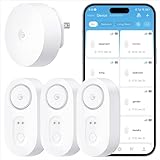
Overview: The GoveeLife 3-pack leak detector system redefines whole-property protection with breakthrough Sub-1G wireless technology reaching 1,804 feet through five walls. This kit provides comprehensive coverage for large homes, basements, and outbuildings where traditional WiFi sensors fail.
What Makes It Stand Out: Unprecedented 550-meter range sets it apart from conventional sensors. The free unlimited SMS alerts ensure you’re notified even without internet, while the 105dB siren with four volume levels accommodates different environments. IP67 waterproofing means sensors survive submersion and can be reused after drying.
Value for Money: At $39.99 for three sensors ($13.33 each), this package delivers enterprise-grade range and multi-channel alerting at a consumer price point. Competing smart sensors often cost $20-30 each with shorter range and fewer alert options.
Strengths and Weaknesses: Strengths include exceptional wireless range, multiple alert methods (SMS/Email/App), long battery life, and robust waterproofing. The app supports family-wide notifications and device location features. Weaknesses: requires a hub (not explicitly mentioned but implied for Sub-1G), and setup may be complex for non-technical users. Silent operation isn’t an option for those wanting discreet monitoring.
Bottom Line: Ideal for homeowners with expansive properties or multiple buildings. The combination of extreme range, free SMS alerts, and durable construction makes this the best choice for comprehensive water damage prevention across large areas.
7. YoLink Water Leak Starter Kit: Hub + 4 Leak Sensor 1 (Silent), LoRa Long-Range, App/SMS/Email Alerts, D2D Offline Triggers, 2 AAA Up to 5-Year Battery, Compatible with Alexa/IFTTT/Home Assistant

Overview: This complete starter kit provides everything needed for whole-home leak detection: a central hub and four silent sensors. Using industrial LoRa technology, it delivers reliable quarter-mile open-air range, penetrating basements and outbuildings where WiFi struggles, creating a robust foundation for property-wide protection.
What Makes It Stand Out: The silent sensor design offers strategic flexibility—add audible alerts via SpeakerHub or sirens only where needed. Patented Control-D2D allows sensors to trigger valves or sirens directly without internet, ensuring protection during outages. The platform scales to 300+ devices, making it a true smart home foundation.
Value for Money: At $54.99 for hub plus four sensors, this kit undercuts buying components separately. Competing systems with similar range and offline capabilities often exceed $100. The five-year battery life on two AAA cells minimizes maintenance costs.
Strengths and Weaknesses: Strengths include exceptional range, offline functionality, smart home integration (Alexa/IFTTT/Home Assistant), and silent operation option. The hub supports numerous future expansions. Weaknesses: sensors lack built-in sirens, requiring additional purchases for audible alerts. Initial setup demands more steps than standalone units.
Bottom Line: Perfect for tech-savvy homeowners building a comprehensive smart home ecosystem. The offline triggers and massive scalability justify the hub requirement, offering professional-grade reliability at DIY pricing.
8. X-Sense Water Leak Detector for Basements, Sinks, Tanks, Pools, Model WS01

Overview: The X-Sense WS01 offers straightforward, budget-conscious leak detection without connectivity complications. This standalone unit operates independently, emitting a loud alarm when its six sensor probes detect water, making it ideal for localized protection in specific high-risk areas.
What Makes It Stand Out: At $9.10, it’s remarkably affordable while delivering a piercing 110dB alarm—louder than many smart sensors. The IP66 waterproof rating and five-year total lifespan with three-year battery life provide reliable, maintenance-minimal operation. Top and bottom probes detect both pooling water and dripping from above.
Value for Money: Exceptional value. No subscription fees, no hub requirements, and no WiFi dependency. While smart sensors cost 3-5x more, this provides core detection functionality for a fraction of the price, perfect for renters or supplemental coverage.
Strengths and Weaknesses: Strengths: extremely affordable, very loud alarm, long battery life, simple installation, and IP66 durability. The low-battery alert prevents silent failures. Weaknesses: no remote notifications, limited to audible range, and cannot integrate with smart home systems. Users must be physically present to hear alerts.
Bottom Line: An excellent choice for cost-effective, no-frills protection. Best suited for apartments, small homes, or as backup to smart systems. If you need reliable local alerting without complexity or ongoing costs, the WS01 delivers outstanding bang for your buck.
9. Resideo CHW3610W8001 WiFi Water Leak Detector For Home, Smart Water Sensor Alarm and Freeze Detector, Water Detector Alarm for Basement, Bathroom, and Under Sink

Overview: Resideo’s premium detector combines leak sensing with freeze and humidity monitoring in one sleek device. The included 5-foot cable sensor detects water along its entire length and can be expanded to 500 feet, offering unmatched placement flexibility for basements and utility rooms where traditional spot sensors fall short.
What Makes It Stand Out: Freeze detection distinguishes this from standard leak sensors, preventing burst pipe damage before it occurs. The expandable cable sensor system allows creative routing through complex spaces and multiple rooms. Integration with Resideo’s L5 shutoff valve creates a complete autonomous water management system. Quick setup and reusable design simplify deployment and long-term use.
Value for Money: At $66.09 for a single unit, this is a premium investment. However, the freeze detection, expandable sensor cable, and shutoff valve compatibility justify the cost for cold climates. Cheaper alternatives lack temperature monitoring and cable flexibility.
Strengths and Weaknesses: Strengths: multi-threat detection (leak/freeze/humidity), expandable cable sensor, smart valve integration, and straightforward WiFi setup. The 100dB alarm is adequate but quieter than competitors. Weaknesses: highest price per unit, requires Resideo ecosystem for full potential, and cable extensions add cost. No offline functionality if WiFi fails.
Bottom Line: Best for homeowners in freezing climates needing comprehensive environmental monitoring. The cable sensor versatility and freeze detection make it worth the premium, particularly when paired with an automatic shutoff valve for complete peace of mind.
10. YoLink Water Leak Detector, 1/4 Mile World’s Longest Range, Wireless Smart Water Leak Sensor, Alexa, IFTTT, Hub Required
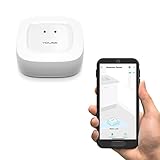
Overview: This individual YoLink sensor leverages LoRa technology to deliver exceptional quarter-mile range without WiFi dependency. Designed as an expansion unit or entry point into the YoLink ecosystem, it provides reliable leak detection for challenging locations like detached garages, basements, and remote outbuildings where wireless coverage is typically problematic.
What Makes It Stand Out: The sensor’s patented direct device-to-device pairing enables offline triggers to YoLink sirens or valves during internet outages. Fully encrypted LoRa communications offer superior security and penetration through obstacles compared to WiFi. Industrial-grade protocol ensures decade-long reliability with minimal power consumption on two AAA batteries.
Value for Money: At $16.99 per sensor, it’s competitively priced for a smart detector, but the required hub (sold separately) adds $25-40 to initial cost. For YoLink ecosystem owners, it’s an inexpensive expansion. New users should consider the starter kit for better overall value.
Strengths and Weaknesses: Strengths: unparalleled wireless range, no WiFi dependency, encrypted communications, five-year battery life, and smart home integration. The setup is genuinely plug-and-play. Weaknesses: hub mandatory for functionality, no built-in siren, and limited utility as a standalone device. App requires hub for battery monitoring.
Bottom Line: An excellent sensor for existing YoLink users or those committed to building a robust LoRa-based smart home. The extreme range and offline reliability justify the hub requirement. For single-sensor needs, consider a WiFi alternative; for whole-home protection, invest in the ecosystem.
Understanding Automatic Water Shut-Off Systems
The core principle behind these devices is elegantly simple: place sensors where leaks occur, connect them to a smart valve on your main water line, and create an instant response protocol that eliminates human hesitation. But the execution involves layers of complexity that separate basic models from truly reliable guardians.
The Technology Behind Sensor-Based Leak Detection
Most sensors operate using one of three detection methods: conductivity probes that complete a circuit when water bridges two contacts, capacitive sensors that detect changes in dielectric properties of surrounding materials, or advanced acoustic sensors that listen for the specific sound signatures of water escaping pressurized pipes. Premium systems often combine multiple detection methods to reduce false positives while maintaining hypersensitivity to actual threats.
The real magic happens in the signal processing. High-end units sample moisture levels multiple times per second, using algorithms to distinguish between gradual humidity changes and the sudden presence of liquid water. This prevents steam from a hot shower or condensation from triggering a system-wide shutdown while still catching a burst pipe within milliseconds.
How Auto-Shutoff Valves Integrate with Sensors
The shutoff valve itself is typically a motorized ball valve installed on your main water supply line. When triggered, it rotates 90 degrees to stop water flow completely. Quality valves use brass or stainless steel construction with NSF-61 certification for potable water safety. The motor mechanism needs enough torque to overcome years of mineral buildup and corrosion that can make manual shutoffs difficult to turn.
Communication between sensors and valve happens via RF mesh networks, dedicated wireless protocols, or hardwired connections. Mesh networks are particularly valuable because they create redundant pathways—if one sensor can’t reach the valve directly, it hops through other sensors. This prevents single-point-of-failure scenarios that could leave an area unprotected.
Types of Leak Sensors You Should Know About
Not all leak sensors are created equal, and the type you choose dramatically impacts your system’s effectiveness. The physical form factor determines both detection speed and coverage area.
Point-of-Use Sensors vs. Whole-Home Systems
Point-of-use sensors protect specific appliances—think washing machines, water heaters, or refrigerators with ice makers. These are ideal for renters or homeowners who want targeted protection without major plumbing modifications. They typically screw directly onto the appliance’s water supply line and include both sensing and shutoff in one compact unit.
Whole-home systems, conversely, monitor everywhere simultaneously using distributed sensors while controlling water at the main entry point. This approach catches leaks behind walls, under slabs, and in irrigation systems that point-of-use units would miss. The trade-off is higher installation complexity but comprehensive protection that follows your plumbing infrastructure rather than just your appliances.
Probe, Rope, and Disc Sensors: Pros and Cons
Probe sensors are the simplest—a small disc with metal contacts sits on the floor. They’re inexpensive and reliable but only protect a few square inches. Place them directly under water heater drain pans or toilet shutoff valves for targeted monitoring.
Rope sensors transform leak detection into a linear coverage model. These cables, embedded with conductive threads along their length, can snake behind washing machines, run along baseboards, or circle perimeter walls. A single 10-foot rope sensor effectively monitors what would require dozens of individual probe sensors. The downside? If the rope gets damaged anywhere along its length, the entire segment fails.
Disc sensors combine the best of both worlds—multiple probe points arranged in a star pattern within a low-profile housing. They cover more area than single probes while maintaining the redundancy that rope sensors lack. Look for models with replaceable cables so you can customize length without replacing the entire unit.
Key Features That Define Premium Systems
When evaluating systems, certain capabilities separate “good enough” from “truly dependable.” These features directly impact real-world performance during an actual emergency.
Response Time: When Seconds Matter
The gold standard is under five seconds from detection to valve closure. This seems fast, but consider a 1/8-inch pipe crack can release 250 gallons per day. Every second of delay means more water saturating your subfloor and seeping into wall cavities. Premium systems achieve this speed through dedicated RF channels that bypass your home Wi-Fi network, which can introduce unpredictable latency.
Ask manufacturers for their “detection-to-closure” specification rather than just sensor response time. The latter only measures when the sensor notices water, not when your home is actually protected. Systems that perform regular heartbeat checks every 30 seconds ensure sensors haven’t failed silently—a critical reliability feature.
Connectivity Options: Wi-Fi, Z-Wave, and Beyond
Wi-Fi connectivity offers convenience but introduces vulnerability. If your router fails or your internet goes down, you might lose remote monitoring capabilities. Top-tier systems use hybrid approaches: Z-Wave or Zigbee for sensor-valve communication (which continues working during internet outages) while using Wi-Fi solely for cloud notifications and app access.
Cellular backup represents the ultimate redundancy. Some systems include SIM cards that trigger SMS alerts and can even allow remote valve control when all other networks are down. This costs more monthly but provides peace of mind during extended power outages or when you’re traveling internationally.
Battery Life and Power Backup Considerations
Sensor batteries should last minimum two years, with five years being the premium benchmark. Look for systems that use standard lithium AA batteries rather than proprietary packs—replacement cost adds up across multiple sensors. Crucially, the main shutoff valve needs battery backup or a UPS connection. A system that can’t close the valve during a power outage is worthless when storms often cause both electrical failures and plumbing stress.
Solar charging options exist for sensors in bright utility rooms, but these are niche applications. More practical is low-battery reporting that gives you at least 30 days warning before sensors go dark. Some systems send escalating alerts—first to your phone, then to backup contacts if you don’t acknowledge.
Installation Complexity: What to Expect
Your plumbing setup and technical comfort level significantly impact which systems make sense. Understanding the installation landscape prevents costly surprises.
Professional vs. DIY Installation
Whole-home systems with main line shutoff valves almost always require professional installation. Plumbers need to cut into your copper or PEX main line, install the valve assembly, and pressure-test connections. This typically costs $300-600 beyond the hardware price but ensures code compliance and warranty validity.
DIY-friendly systems focus on point-of-use applications or clamp-on sensors that don’t require pipe cutting. Some innovative designs strap around existing pipes and use ultrasonic flow detection to monitor for leaks without plumbing modifications. These are perfect for condos or historic homes where altering plumbing is prohibited.
Plumbing Requirements and Compatibility
Your main water line’s size (typically 3/4" or 1" residential) must match the valve assembly. Older homes with galvanized steel pipes present challenges—these often need section replacement before a modern valve can be installed due to diameter inconsistencies and corrosion.
Check your water pressure too. Most valves operate between 20-150 PSI, but well systems can exceed this. Pressure regulators may be necessary upstream of the valve. Also consider flow rate: a family of four needs minimum 15 GPM capacity to avoid noticeable pressure drops during peak usage.
Strategic Sensor Placement Strategies
The 80/20 rule applies to sensor placement: focus on the 20% of locations where 80% of leaks occur. Water heaters, washing machines, dishwasher supply lines, refrigerator ice makers, and toilet bases are mandatory. But smart homeowners also place sensors under sinks (where slow drips rot cabinets), near sump pumps, and in HVAC drain pans.
For multi-story homes, place sensors on upper floors first. A leak upstairs causes downward damage affecting multiple levels, while basement leaks are often contained. In slab foundations, consider sensors near the perimeter where pipes enter and exit the concrete. For cold climates, prioritize exterior walls where pipes freeze.
Smart Home Integration Capabilities
Modern leak detectors don’t operate in isolation—they’re nodes in your broader smart home ecosystem. Integration depth varies dramatically between manufacturers.
Voice Assistant Compatibility
Alexa and Google Assistant integration typically allows status queries (“Is the water on?”) and manual valve control (“Turn off the main water”). More advanced systems provide proactive announcements: “Warning: leak detected in laundry room. Shutting off water in 30 seconds unless cancelled.”
Apple HomeKit support remains rarer but offers superior privacy and local control. HomeKit-enabled valves appear in the Home app and can trigger complex automations—like turning off your water heater when a leak is detected, preventing both water and electrical damage.
Mobile App Features and Alerts
The app is your primary interface during emergencies. Critical features include: real-time water usage graphs to spot anomalies, individual sensor naming with photo attachments (so you know “Sensor 3” is actually the “Guest bathroom toilet”), and multi-user notification chains that alert your spouse, then your neighbor, then your plumber if you don’t respond.
Geofencing capabilities can automatically shut off water when all family members leave home and turn it back on when someone returns—preventing leaks during your 8-hour workday. Look for apps that work on both iOS and Android with consistent feature parity, not stripped-down versions for one platform.
Third-Party Platform Integration
IFTTT support opens unlimited possibilities: flash your Philips Hue lights red when water is detected, log all water events to a Google Sheet for insurance documentation, or trigger your security camera to start recording. API access for advanced users allows integration with home automation platforms like Home Assistant or Hubitat, creating rules like “only shut off water if leak detected AND humidity exceeds 60%.”
Professional monitoring integrations are emerging too. Some systems can alert a monitoring center that dispatches emergency plumbers, similar to how security systems dispatch police. This is particularly valuable for vacation homes or frequent travelers.
Cost Analysis: Beyond the Initial Price Tag
The sticker price tells only part of the story. A comprehensive cost analysis reveals the true value proposition over a system’s 10-15 year lifespan.
Upfront Costs vs. Potential Savings
Basic probe sensor kits start around $50, while whole-home systems with auto-shutoff can reach $1,500+. But consider the average water damage claim: $10,234 according to the Insurance Information Institute. Even one prevented incident pays for the most expensive system multiple times over.
Factor in deductibles too. Many homeowners carry $2,500+ deductibles for water damage, meaning you’d pay that amount out-of-pocket even with insurance. Premium systems effectively become deductible insurance. Plus, undamaged homes sell for 3-5% more—real value if you’re planning to move within the system’s lifespan.
Subscription Models and Hidden Fees
Some systems require monthly fees for cellular backup, professional monitoring, or advanced app features. These range from $5-30/month. Calculate the 5-year total cost of ownership: a $300 system with $20/month subscription actually costs $1,500 over five years, making a $800 no-subscription system more economical.
Watch for cellular data limits too. Systems that send frequent status updates can exceed basic plan allowances, incurring overage charges. Opt for systems that use your home Wi-Fi for routine communication, reserving cellular for true emergencies only.
Insurance Premium Discounts
Most major insurers offer 5-15% discounts on premiums for homes with certified leak detection systems. USAA, State Farm, and Allstate have specific lists of approved devices. The discount typically requires professional installation documentation and annual proof of system testing. Over a decade, a 10% discount on a $1,200 annual policy saves $1,200—potentially covering your entire system cost.
Some insurers are beginning to offer free or subsidized systems for high-risk properties. If you’ve had previous water claims, ask your agent about loss prevention programs. They’d rather pay $500 for a system now than $15,000 for another claim later.
Maintenance and Long-Term Reliability
A leak detector that fails when needed is worse than no detector at all—it provides false confidence. Maintenance ensures reliability.
Sensor Calibration and Testing Protocols
Manufacturers recommend monthly manual tests: place a wet finger across sensor contacts and verify the system responds. But this is impractical for most homeowners. Better systems include automatic monthly health checks that briefly pulse-test sensor circuits without triggering full alarms, confirming connectivity and responsiveness.
Annual deep cleaning is essential. Hard water deposits can insulate sensor contacts, reducing sensitivity. Soak probes in white vinegar for 30 minutes to dissolve mineral buildup. For rope sensors, wipe down with isopropyl alcohol to remove soap scum and oils that interfere with conductivity.
Valve Longevity and Replacement Cycles
The motorized valve is the mechanical weak point. Quality valves are rated for 100,000+ cycles—over 27 years if activated daily. But real-world conditions differ. Mineral buildup can seize valves that sit unused for years. Premium systems include “exercise cycles” that briefly nudge the valve every 30 days to prevent seizure.
Plan for valve replacement every 7-10 years as preventive maintenance. This costs $150-300 in parts and labor—budget it like you would a water heater flush. Keep the original installation manual; valve model numbers change, and having specs ensures you get the correct replacement seals and gears.
Software Updates and Security Patches
IoT devices are notorious for abandoned software support. Choose manufacturers with explicit update policies—minimum five years of security patches from purchase date. Check user forums for real-world update frequency; a company that hasn’t updated their app in 18 months likely won’t fix vulnerabilities.
Ensure firmware updates happen automatically during low-usage hours (like 3 AM), not during your morning shower. The system should fail-safe: if an update bricks the controller, the valve defaults to the open position with manual override accessible, not locked shut leaving you without water.
Common Pitfalls and How to Avoid Them
Even the best systems fail when installed or configured poorly. Learning from others’ mistakes saves you from becoming a cautionary tale.
False Positives: Causes and Solutions
Nothing destroys trust in a system like waking up to a 2 AM alert for a non-existent leak. The most common culprit is condensation. Sensors placed directly on cold water lines or in unventilated bathrooms trigger during humid summer nights. Solution: mount sensors on small foam pads that create an air gap, allowing condensation to evaporate without triggering contacts.
Pet water bowls are another hazard. Place sensors at least 12 inches away from pet areas, or use rope sensors elevated slightly off the floor. Some systems allow “quiet hours” where alerts require confirmation before shutting off water—useful for preventing midnight disasters caused by curious cats knocking over water glasses.
Coverage Gaps in Multi-Level Homes
A single shutoff valve protects your entire home, but sensors only detect where placed. The most dangerous gap is between floors—a burst pipe in a second-story wall can dump hundreds of gallons before water reaches a basement sensor. Solution: install at least one sensor on each floor, even if it’s just a basic probe in a central hallway.
For homes with separate living spaces like in-law suites or rented basements, consider zoned systems with multiple valves. These isolate sections so a leak in the tenant’s kitchen doesn’t shut off water to your master bathroom. Zoning adds cost but provides surgical precision during emergencies.
Winterization Concerns for Cold Climates
Systems installed in unheated garages or crawl spaces face unique challenges. Valve motors can freeze, and battery capacity drops 50% in sub-zero temperatures. Insulate valve assemblies with fiberglass wrap and consider heat tape for extreme climates. Lithium batteries handle cold better than alkaline, but still plan on 18-month replacement cycles instead of 3-year cycles.
For seasonal homes, “away mode” features are critical. These run periodic micro-flow tests to detect leaks from frozen pipe cracks while using minimal power. Some systems integrate with smart thermostats to maintain minimum temperatures and prevent freezing in the first place.
Making the Right Choice for Your Home
With dozens of configurations available, selecting the optimal system requires matching features to your specific situation. There’s no universal best choice—only the best choice for your home.
Assessing Your Risk Profile and Water Usage
High-risk homes need premium features. If you have: slab foundations (pipes in concrete), polybutylene plumbing (prone to sudden failure), or travel frequently (no one to catch leaks), prioritize systems with cellular backup and professional monitoring. Conversely, a condo with new PEX plumbing and someone home most days might only need basic point-of-use protection.
Calculate your peak water usage by checking your utility bill’s GPM during highest-use months. Ensure your chosen valve can handle this flow without causing pressure drops. Large families with multiple simultaneous showers need 1" valves rated for 25+ GPM, while singles can use smaller 3/4" models.
Scalability: Planning for Future Expansion
Start small but think big. Choose systems that allow adding sensors incrementally without replacing the central hub. A common mistake is buying a 4-sensor kit for a 2,000 sq ft home, then discovering expansion sensors cost 3x more than the initial bundled price.
Look for hub capacity that exceeds your current needs. A system supporting 32 sensors gives you room to grow, while one maxing out at 6 sensors boxes you in. Consider future home additions or finished basements—running sensor wires during construction is far cheaper than retrofitting later.
Warranty and Support Evaluation Criteria
Read warranty fine print carefully. Some cover only the hub for three years while sensors are warranted for just one year. The best policies offer unified coverage: 5 years on everything with no prorating. Pay attention to what’s excluded—damage from “acts of God” might not cover flooding, ironically the very event you’re protecting against.
Test customer support before buying. Call their tech support line with a pre-sales question and note wait times and knowledge level. Check if they offer 24/7 emergency support—because leaks don’t respect business hours. Companies with active user communities and detailed online troubleshooting guides demonstrate ongoing commitment to their products.
Frequently Asked Questions
How long do leak detector batteries typically last, and what happens when they die?
Most quality sensors use lithium batteries lasting 2-5 years depending on usage. Premium systems send escalating low-battery alerts starting 30-60 days before depletion. When batteries die, sensors stop reporting but the system should continue protecting other zones. Some systems default to “fail-safe” mode, assuming a dead sensor might indicate water damage and triggering more conservative shutoff protocols for remaining sensors.
Can I install a whole-home auto-shutoff system myself if I’m handy with plumbing?
While technically possible, DIY installation often voids warranties and can violate local plumbing codes. The main concern isn’t the valve itself but proper grounding and backflow prevention. Many jurisdictions require licensed plumbers for any modification to the main line. Additionally, improper installation can cause pressure spikes that damage your plumbing. If you DIY, at minimum have a plumber inspect your work and provide a compliance certificate.
Will these systems work with well water and septic systems?
Yes, but with important caveats. Well systems often have pressure tanks that create pressure spikes exceeding 150 PSI, requiring pressure regulators upstream of the valve. Septic systems don’t affect leak detection, but sensors near drain fields should be waterproof-rated for outdoor use. For well users, prioritize systems that monitor pump cycles—unusual cycling often indicates leaks before sensors even detect moisture.
How do I prevent false alarms from mopping or pet water bowls?
Use the system’s app to create “quiet zones” or temporary bypass modes during cleaning. For pet areas, elevate rope sensors 1/2 inch off the floor using small foam blocks—this allows small spills to evaporate without triggering while still catching significant leaks. Some advanced systems use machine learning to recognize your cleaning patterns and automatically enter a 30-minute “mopping mode” when they detect a mop bucket’s RFID tag.
What’s the difference between flow-based and sensor-based leak detection?
Sensor-based systems detect water where it shouldn’t be using physical moisture contacts. Flow-based systems monitor water usage patterns, shutting off water when flow exceeds normal parameters (like a toilet running for hours). The best systems combine both: sensors provide immediate leak detection while flow monitoring catches slow, hidden leaks like slab leaks that might never reach a sensor. Flow monitoring alone can’t tell you where the leak is, only that one exists.
Are smart leak detectors vulnerable to hacking?
Any internet-connected device carries risk, but reputable manufacturers use bank-level encryption for communications. The bigger concern is firmware vulnerabilities. Choose systems with automatic security updates and a track record of prompt patching. For maximum security, select systems that work locally without cloud dependency—you lose remote access but eliminate internet-based attack vectors entirely.
How many sensors do I actually need for adequate coverage?
Start with high-risk locations: water heater, washing machine, dishwasher, refrigerator ice maker, and each toilet base. That’s 5-7 sensors for most homes. Add one sensor per additional bathroom sink, kitchen sink, and HVAC drain pan. For multi-level homes, place at least one sensor on each floor in a central location. A typical 2,000 sq ft two-story home needs 8-12 sensors for comprehensive coverage.
Can these systems detect gas leaks or other utilities?
Standard water leak sensors cannot detect gas. However, some manufacturers offer multi-function hubs that connect to separate gas detectors using the same communication protocol. The auto-shutoff valve only controls water, but the system can send integrated alerts. For true gas protection, you need dedicated combustible gas detectors with their own shutoff valves for gas lines—an entirely separate system.
What maintenance is required annually besides battery replacement?
Test the entire system quarterly using the manufacturer’s test mode. Annually, clean sensor contacts with vinegar to remove mineral deposits. For the valve, manually cycle it open and closed twice a year to prevent seizure. Check wire connections for corrosion, especially in humid utility rooms. Update firmware and app software. If you have a pressure regulator upstream, verify it’s maintaining proper PSI with a gauge test.
Do leak detectors increase home value or help with home sales?
While they don’t directly increase appraised value, they make homes more attractive to buyers and can speed up sales. In competitive markets, highlight the system in listings as a “smart home safety feature.” Some buyers, especially those relocating from flood-prone areas, specifically search for homes with leak protection. Provide documentation of professional installation and maintenance logs during sale—this demonstrates responsible homeownership and can justify premium pricing compared to similar homes without protection.