The right audio mixer doesn’t just connect your microphones—it becomes the command center of your creative process. As podcasting evolves from hobbyist bedrooms to professional studios, smart mixing technology has emerged as the game-changer that separates amateur productions from polished, broadcast-quality content. These intelligent devices do far more than simply blend audio signals; they think alongside you, automatically adjusting levels, reducing noise, and integrating seamlessly with your entire digital workflow.
But with a dizzying array of features, specifications, and price points flooding the market, choosing the perfect smart mixer can feel overwhelming. Whether you’re upgrading from a basic USB microphone setup or building a multi-host studio from scratch, understanding what makes these devices truly “smart” will empower you to make an investment that grows with your show. Let’s dive deep into the technology, features, and strategic considerations that will transform your podcast studio into a production powerhouse.
Top 10 Smart Audio Mixers for Podcast Studios
Detailed Product Reviews
1. MAONO Podcast Equipment Bundle Audio mixer All-in-One Podcast Production Studio with 3.5mm Microphone for Live Streaming, Podcast Recording, PC, Smartphone, DJ MaonoCaster Lite (AU-AM200-S6 Black)

Overview: The MAONO AU-AM200-S6 consolidates professional audio mixing into a single, intuitive package designed for modern content creators. This all-in-one studio integrates a condenser microphone with a versatile soundboard that supports simultaneous streaming across four platforms. Compatible with PCs, smartphones, and tablets, it eliminates technical barriers for podcasters, DJs, and live streamers seeking broadcast-quality audio without complex setups or multiple devices.
What Makes It Stand Out: Voice modulation technology transforms your voice into male, female, girlish, or robot tones in real-time, a rare feature at this price point. The eight built-in effects (applause, laughter, cheering) plus four user-recordable slots provide extensive creative control. Supporting two microphones and four devices simultaneously with 10-step reverb, 12-step electronic music settings, and three-tone equalization, it offers professional flexibility that typically requires equipment costing twice as much.
Value for Money: At $125.13, this bundle delivers exceptional value by combining mixer, effects processor, and microphone in one package. Multi-platform streaming capability alone justifies the investment for serious creators. While not the cheapest option, its feature set rivals $250+ setups, making it a smart mid-range choice that grows with your content creation needs without requiring immediate upgrades.
Strengths and Weaknesses: Strengths include versatile voice changing, robust effects library, effective DENOISE function, cross-platform compatibility, and plug-and-play simplicity. Weaknesses are the 3.5mm-only microphone input (no XLR support) and lack of phantom power, limiting professional mic upgrades. Phones lacking headphone jacks require an additional OTG adapter not included in the package.
Bottom Line: The AU-AM200-S6 is an excellent choice for intermediate podcasters and streamers wanting professional features without a steep learning curve. Its creative effects and multi-streaming capabilities make it a versatile workhorse that justifies its price through genuine utility and performance.
2. Podcast Microphone Bundle with Live Sound Board Audio Mixer, Podcast Equipment Bundle with 3.5mm Condenser Microphone(P15) for Pc/Phone Live Streaming Singing Gaming, Voice Changer, Denoise

Overview: This professional-grade bundle pairs a 3.5mm condenser microphone with the G10 Sound Board, creating a complete audio production solution for demanding content creators. The package includes a disk bracket for optimal positioning and supports dynamic, condenser, and 48V microphones. Engineered for seamless operation across PC, Mac, and mobile devices, it eliminates technical complexity while delivering studio-quality results for podcasters, gamers, and live streamers.
What Makes It Stand Out: The G10’s universal microphone compatibility accepts 3.5mm, 6.35mm dynamic, and professional 48V condenser mics, providing exceptional upgrade flexibility. Sixteen built-in sound effects—double most competitors—combined with deep customization for bass, treble, reverb, and pitch create limitless creative possibilities. The space-saving disk bracket design offers professional positioning without cluttering your workspace, a practical advantage for small studios.
Value for Money: At $149.99, this premium bundle justifies its cost through superior microphone compatibility and expanded effect libraries. The 48V support represents long-term value for creators planning upgrades, potentially saving $50+ on future interface purchases. Comparable separate components would exceed $200, making this a cost-effective professional starter kit with genuine growth potential.
Strengths and Weaknesses: Key strengths include broad microphone support, extensive effect customization, crystal-clear noise reduction, true plug-and-play simplicity, and the included boom arm for flexible positioning. The main weakness is the price point, which may intimidate absolute beginners. Additionally, the abundance of features could overwhelm users wanting simple operation without a learning curve.
Bottom Line: This bundle is ideal for serious podcasters and streamers ready to invest in professional-quality equipment with room to grow. The microphone versatility and rich feature set make it a future-proof choice for dedicated content creators who prioritize flexibility and audio fidelity.
3. MAONO Podcast Equipment Bundle Audio mixer All-in-One Podcast Production Studio with 3.5mm Microphone for Live Streaming, Podcast Recording, PC, Smartphone, DJ MaonoCaster Lite (AU-AM200-S1)

Overview: The MAONO AU-AM200-S1 delivers the same core functionality as its pricier siblings in the MaonoCaster Lite series at an accessible entry-level price. This all-in-one studio integrates audio mixing, effects processing, and microphone input into a compact unit compatible with PCs, smartphones, and tablets. It’s engineered for creators who want professional podcasting and streaming features without the premium price tag, offering immediate recording capability upon connection.
What Makes It Stand Out: Despite its budget positioning, the S1 retains impressive features like real-time voice changing (male, female, girlish, robot), multi-platform streaming for two people across four devices, and professional-grade controls including 10-step reverb and 12-step electronic music settings. Four user-recordable and eight built-in effects provide substantial creative freedom, while the DENOISE function delivers clean audio that belies the bundle’s affordable price.
Value for Money: At $99.73, this represents the best value in the MAONO lineup, offering identical core features to the S6 model while saving over $25. The complete package—including microphone, tripod, windscreen, and cables—removes any hidden costs. For beginners testing podcasting waters, this minimal financial risk delivers capabilities typically requiring $150+ equipment, making it an unbeatable starter bundle.
Strengths and Weaknesses: Strengths include exceptional affordability, comprehensive effect library, voice modulation, cross-platform compatibility, and effective noise reduction. The explicit warning against phantom power protects equipment from damage. Weaknesses mirror other MAONO models: 3.5mm input only restricts microphone upgrades, and the plastic construction feels less robust than premium alternatives. No support for professional XLR mics limits future expansion.
Bottom Line: The AU-AM200-S1 is the perfect entry point for aspiring podcasters and streamers. It delivers 90% of premium features at 60% of the cost, making it an unbeatable starter bundle that provides room to grow without immediate limitations.
4. Podcast Microphone Bundle with Live Sound Card Audio Mixer, Podcast Equipment Bundle with 3.5mm Condenser Microphone for Pc/Phone Live Streaming Singing Gaming, Sound Board with Voice Changer, Denoise

Overview: This comprehensive streaming solution combines a 3.5mm condenser microphone with the versatile G10 Sound Board, creating an all-in-one package for serious content creators. The system supports multiple microphone types and offers extensive audio customization for professional podcasting, gaming, and live streaming across PC, Mac, and mobile platforms. Its plug-and-play design eliminates technical hurdles while delivering studio-grade audio processing.
What Makes It Stand Out: The G10 Sound Board’s universal microphone compatibility is exceptional, accepting 3.5mm, 6.35mm dynamic, and professional 48V condenser microphones—future-proofing your setup for significant upgrades. With 16 built-in sound effects and deep control over bass, treble, reverb, and pitch, it offers more customization than most competitors. The included disk bracket boom arm provides professional mic positioning while maximizing desk space efficiency, a practical advantage for compact studios.
Value for Money: At $149.99, this bundle competes directly with similar all-in-one solutions while offering superior microphone flexibility. The 48V support justifies the premium over 3.5mm-only mixers, potentially saving $50+ on future interface upgrades. For creators committed to long-term quality, the investment pays dividends in audio fidelity and equipment versatility that cheaper bundles cannot match, making it economically sound.
Strengths and Weaknesses: Strengths include versatile microphone support, extensive effect library, advanced noise reduction, plug-and-play simplicity across all major operating systems, and the space-saving design. Weaknesses include a price point that may exceed casual creators’ budgets and feature overlap with less expensive alternatives. The marketing materials appear nearly identical to the P15 model, causing potential confusion for comparison shoppers.
Bottom Line: This bundle serves dedicated streamers and podcasters who anticipate microphone upgrades. The 48V support and comprehensive effects make it a professional-grade choice worth the investment for serious content creators planning long-term growth and prioritizing audio quality.
5. Podcast Equipment Bundle, Recording Studio Package with Podcast Microphone and Voice Changer, Live Sound Card - Audio Interface for Laptop Computer Vlog Living Broadcast Live Streaming YouTube TikTok

Overview: This ultra-affordable bundle democratizes professional audio production at an astonishing $39.99 price point. The package includes two broadcast-grade condenser microphones with anti-vibration suspension arms, a live sound card with voice changing capabilities, and surprising instrument connectivity options. Designed for creators on extreme budgets, it delivers studio-grade features like smart noise reduction and 360° omnidirectional capture that typically cost significantly more, making professional streaming accessible to everyone.
What Makes It Stand Out: The inclusion of two complete microphone setups at this price is unprecedented. The ability to directly connect electric guitars, bass, and electronic drums without additional hardware sets this apart from all competitors. Four voice variations (female, male, child, monster) and 10 sound effects provide creative flexibility, while USB-C connectivity ensures modern device compatibility across PC, PS5, Xbox, smartphones, and tablets spanning Windows, Mac, Android, iOS, and Chrome OS.
Value for Money: At $39.99, this bundle redefines budget audio equipment value. Competing products with similar features cost 3-4 times more. The dual-microphone configuration alone exceeds the price tag’s value. For beginners, students, or hobbyists, the financial risk is minimal while creative potential is massive. It’s a legitimate alternative to $150+ entry-level kits, removing economic barriers to quality content creation.
Strengths and Weaknesses: Strengths include unbeatable price, dual microphone setup, instrument connectivity, extensive OS compatibility, professional DSP processing, and USB-C plug-and-play operation. Weaknesses involve build quality concerns—components likely use cheaper materials to achieve the low price. The 3.5mm microphone limitations remain, and long-term durability may be questionable under heavy daily use.
Bottom Line: This bundle is a no-brainer for absolute beginners or budget-conscious creators. While it may not match premium build quality, the feature set and dual-mic inclusion make it the best value proposition in podcasting equipment today, delivering professional capabilities at an entry-level price.
6. Podcast Equipment Bundle with 3.5mm Condenser Microphone for Pc/Phone Live Streaming Singing Gaming, Podcast Microphone Bundle with Live Sound Board Audio Mixer Denoise,DJ Sets
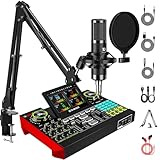
Overview:
This comprehensive podcast bundle delivers professional-grade audio tools in one convenient package. The kit centers around a versatile live sound board that accommodates 3.5mm, XLR, and 48V dynamic microphones, paired with a condenser mic and boom arm. Designed for plug-and-play simplicity across PC, Mac, and mobile devices, it eliminates technical barriers for content creators. The system offers extensive customization including bass, treble, reverb, and pitch controls, plus 12 built-in sound effects to enhance live streams and recordings. Advanced noise reduction technology ensures crystal-clear vocal capture, making it suitable for podcasts, gaming, singing, and voiceover work.
What Makes It Stand Out:
The universal microphone compatibility sets this bundle apart, supporting everything from basic 3.5mm mics to professional XLR setups with phantom power. The included boom arm provides optimal positioning while reducing desk clutter. The 12 integrated sound effects—including applause and laughter—allow real-time audience engagement without external software. The robust noise reduction algorithm effectively minimizes background interference, crucial for untreated home studios.
Value for Money:
At $149.99, this bundle sits in the mid-range category but delivers substantial value. Purchasing comparable components separately—a decent condenser mic ($50+), boom arm ($30+), and feature-rich mixer ($100+)—would easily exceed $180. The all-in-one convenience and seamless device compatibility justify the premium, particularly for beginners seeking professional results without compatibility headaches.
Strengths and Weaknesses:
Strengths: Universal mic compatibility; excellent noise reduction; boom arm included; plug-and-play setup; 12 built-in effects
Weaknesses: Higher price point for budget-conscious creators; condenser mic may pick up room noise despite software reduction; limited to 3.5mm input on included microphone
Bottom Line:
This bundle excels for creators wanting professional flexibility without complexity. The universal compatibility future-proofs your setup, while the noise reduction and effects enhance production value. Ideal for serious beginners or intermediate users ready to invest in quality. The boom arm and comprehensive features make it worth the $149.99 price tag.
7. SINWE Podcast Microphone Bundle, BM-800 Condenser Mic with Live Sound Card Kit, Podcast Equipment Bundle with voice changer and Mixer functions for PC Smartphone Studio Recording & Broadcasting

Overview:
The SINWE BM-800 bundle offers an entry-level pathway into professional podcasting and streaming at an accessible price point. This complete kit includes a cardioid condenser microphone, F998 audio mixer, desktop stand, earbuds, and all necessary cables. The BM-800 microphone features a 2021 professional sound chipset delivering 120kHz sample rate and 24-bit bitrate for detailed vocal capture. The mixer provides 16 background effects, 7 recording modes, and 4 voice changer options, plus functions like denoise and voice-over. Compatible with Windows, Mac, iOS, and Android devices, it supports multi-platform streaming and offers a 45-day satisfaction guarantee.
What Makes It Stand Out:
The BM-800 microphone’s high signal-to-noise ratio delivers surprisingly clean audio for this price tier. The mixer’s extensive 16-effect library and 4 distinct voice changer modes offer creative versatility rarely seen in budget bundles. The ability to connect three mobile phones simultaneously for multi-platform streaming is a unique advantage for content creators maximizing reach.
Value for Money:
At just $45.99, this bundle represents exceptional value. The BM-800 microphone alone typically retails for $30-40, making the included mixer, stand, and accessories essentially free. While build quality reflects the budget price, the feature set competes with kits costing twice as much. The 45-day guarantee eliminates purchase risk, making it ideal for beginners testing the waters.
Strengths and Weaknesses:
Strengths: Unbeatable price; surprisingly good mic quality; extensive effects; multi-platform streaming; 45-day guarantee; complete starter kit
Weaknesses: Plastic construction feels less durable; requires adapters for smartphones (not included); desktop stand less flexible than boom arm; learning curve for mixer functions
Bottom Line:
Perfect for budget-conscious beginners, this bundle delivers professional features without financial risk. The BM-800 microphone punches above its weight, and the extensive effects library sparks creativity. While not built for heavy professional use, it provides everything needed to start creating quality content immediately. The 45-day guarantee makes this a no-brainer for new podcasters and streamers.
8. PUPGSIS Gaming Audio Mixer, Audio Interface for PC/Podcast/Streaming, Sound Board with 3.5mm/XLR Mic Input, 48V Phantom Power, Voice Changer, Live Sound Card with DJ Mixer Effects/Bluetooth/4 Channel

Overview:
The PUPGSIS Gaming Audio Mixer is a compact, feature-rich audio interface designed for streamers and gamers seeking professional sound control at an entry-level price. This standalone mixer supports 3.5mm and XLR microphones with 48V phantom power, making it compatible with a wide range of mics. It features six voice-changing modes, four customizable soundpads, and two reverb presets for creative audio manipulation. The four-channel design allows independent volume control for Mic 1, Mic 2/headset, Aux/Bluetooth, and Line Out. Real-time monitoring with zero latency and instant mute functionality prevent live broadcast mishaps. Bluetooth connectivity enables wireless background music streaming.
What Makes It Stand Out:
The four independent volume faders provide granular control unmatched in this price range. The ability to support three simultaneous microphone inputs allows collaborative streaming or podcasting. The unique monitoring design lets users mute their own voice to focus on game audio or teammates—perfect for competitive gaming. Six voice-changing modes offer more variety than most competitors.
Value for Money:
At $29.86, this mixer delivers extraordinary value. Similar interfaces with phantom power and multiple channels typically cost $80-150. While it lacks an included microphone, its professional preamplifier and comprehensive controls make it a steal for users who already own a decent mic. The build quality exceeds expectations for the price point.
Strengths and Weaknesses:
Strengths: Incredible price; 48V phantom power; 3 mic inputs; independent channel faders; Bluetooth connectivity; voice changer; instant mute; zero-latency monitoring
Weaknesses: No microphone included; plastic construction; limited to 4 soundpads; no boom arm or stand; may require additional cables
Bottom Line:
This mixer is a powerhouse for budget-focused creators who already own a microphone. The multi-mic support and independent faders make it perfect for collaborative content or advanced single-user control. Gamers will love the voice-focus monitoring feature. For under $30, it’s arguably the best value in streaming audio interfaces, provided you supply your own microphone.
9. Podcast Equipment Bundle, PUPGSIS Audio Mixer with XLR Dynamic Microphone, Pro-preamp, Bluetooth 5.3, All-in-One Gaming Equipment Set for Podcast Recording, Live Streaming, Video Vocals, PC, Phone, DJ

Overview:
The PUPGSIS Podcast Equipment Bundle elevates home recording with a professional XLR dynamic microphone and advanced audio mixer. This all-in-one kit features a durable metal-body dynamic mic with cardioid pattern, high-quality preamp, and 48V phantom power for pristine audio capture. The mixer includes four customizable soundpads, six voice-changing effects, and ten RGB lighting modes to enhance visual appeal. Individual channel controls, real-time monitoring, and one-touch mute provide professional workflow. Bluetooth 5.3 ensures stable wireless audio streaming. Compatible with PC, Mac, smartphones, and tablets, this bundle supports multi-scene applications from podcasting to gaming.
What Makes It Stand Out:
The included XLR dynamic microphone offers superior off-axis noise rejection compared to condenser mics in competing bundles. The metal construction ensures durability for long-term use. Bluetooth 5.3 provides faster, more stable connectivity than older versions. The RGB lighting effects add visual flair that streamers crave. The ability to independently mute microphone monitoring while hearing game audio is a game-changer for competitive gamers.
Value for Money:
At $74.99, this bundle strikes an excellent balance between quality and affordability. The dynamic microphone alone would cost $60-80 separately, making the feature-rich mixer an exceptional addition. The build quality and audio fidelity rival kits costing $150+, making it ideal for serious hobbyists or emerging professionals.
Strengths and Weaknesses:
Strengths: Professional dynamic microphone; metal construction; Bluetooth 5.3; RGB lighting; independent monitoring control; 48V phantom power; excellent noise rejection
Weaknesses: No boom arm included; limited to 6 voice effects; RGB may not suit all users; learning curve for advanced features
Bottom Line:
This bundle hits the sweet spot for creators ready to upgrade from entry-level gear. The dynamic microphone’s noise rejection is perfect for untreated rooms, while the mixer’s features support professional growth. At $74.99, it offers genuine professional quality without the premium price. Highly recommended for serious podcasters and streamers seeking reliable, broadcast-grade audio.
10. Podcast Microphone Bundle with Live Sound Card Audio Mixer, Podcast Equipment Bundle Sound Board with 3.5mm Condenser Microphone(P15) for Pc/Phone Live Streaming Singing Gaming,Voice Changer, Denoise

Overview:
This podcast bundle provides a streamlined all-in-one solution for content creators seeking professional audio without complexity. The kit pairs a 3.5mm condenser microphone with a versatile live sound card audio mixer, including a round base stand for stable desktop placement. Designed for plug-and-play operation across PC, Mac, and mobile devices, it eliminates technical barriers for podcasters, streamers, and singers. The mixer supports both 3.5mm and 6.35mm dynamic microphones, offering upgrade flexibility. Users can customize bass, treble, reverb, and pitch settings while accessing 12 built-in sound effects. Advanced noise reduction technology ensures clean vocal capture, making it suitable for home studio recording and live broadcasting.
What Makes It Stand Out:
The round base stand provides superior stability compared to tripod stands while maintaining a small footprint. The mixer’s compatibility with both 3.5mm and 6.35mm microphones offers unusual versatility for a bundle at this price. The 12 integrated sound effects enable real-time audience engagement without external software. The straightforward plug-and-play design requires no drivers, making it accessible for absolute beginners.
Value for Money:
At $129.99, this bundle competes directly with similar kits but offers unique stand stability. The condenser microphone delivers reliable performance for voice work, while the mixer’s dual-input compatibility future-proofs your setup. Purchasing components separately would cost significantly more, though the lack of a boom arm may disappoint some users. The price reflects the convenience and included effects library.
Strengths and Weaknesses:
Strengths: Stable round base stand; dual microphone input support; 12 sound effects; plug-and-play simplicity; effective noise reduction; complete starter package
Weaknesses: No boom arm included; condenser mic may capture room noise; round base occupies more desk space; fewer voice changer options than competitors
Bottom Line:
This bundle excels for creators prioritizing stability and simplicity. The round base stand is ideal for permanent desk setups, while the mixer’s dual-input compatibility allows future microphone upgrades. At $129.99, it offers solid value for beginners wanting reliable performance without technical complexity. If you don’t need a boom arm and value plug-and-play ease, this is an excellent choice for launching your content creation journey.
The Evolution of Podcast Mixing Technology
From Analog to Digital: A Paradigm Shift
Remember the days when podcasters relied on clunky analog mixers with more knobs than a NASA control panel? Those devices demanded constant manual adjustment and offered zero forgiveness for rookie mistakes. The digital revolution didn’t just replace physical circuits with software—it fundamentally reimagined what a mixer could be. Modern smart mixers leverage powerful onboard processors that handle complex audio tasks in milliseconds, freeing you to focus on content rather than faders. This shift means your mixer now operates as a dedicated audio computer, running sophisticated algorithms that would have required a full rack of outboard gear just a decade ago.
What Makes a Mixer “Smart”?
The term “smart” gets thrown around liberally in marketing materials, but genuine intelligence in audio mixing manifests through several key capabilities. True smart mixers feature adaptive processing that learns your voice patterns, automatic feedback suppression that prevents embarrassing squeals during live streams, and network connectivity that allows remote control from a tablet across the room. They remember your preferred settings, route audio to multiple destinations simultaneously, and integrate with streaming platforms without requiring additional software. The smartest devices even monitor your recording levels in real-time, sending alerts to your phone if something goes wrong while you’re mid-interview.
Core Features That Define Smart Mixers
Multi-Channel USB Audio Interface
Gone are the limitations of stereo-only recording. Contemporary smart mixers function as multi-channel audio interfaces, sending each microphone and input source as a separate track directly into your digital audio workstation (DAW). This multitrack capability proves invaluable during post-production when you need to edit crosstalk, apply different processing to each voice, or salvage a segment where one host was too quiet. Look for mixers that offer at least 4-8 discrete USB audio channels, ensuring each guest gets their own isolated track for maximum editorial flexibility.
Onboard DSP Processing
Digital Signal Processing (DSP) represents the beating heart of any smart mixer. This specialized chip handles compression, equalization, noise gating, and effects without taxing your computer’s CPU. The magic lies in near-zero latency monitoring—you hear the processed signal instantly through your headphones, eliminating the distracting delay that plagues software-based solutions. Premium DSP implementations allow you to stack multiple effects per channel, create complex routing matrices, and save processing presets that recall instantly with a single button press.
Touchscreen Interface vs. Physical Controls
The debate between tactile faders and glass interfaces divides the podcasting community. Touchscreens offer deep menu systems, visual feedback, and the ability to display waveforms or metering in vibrant color. However, physical knobs and buttons provide muscle memory and allow adjustments without looking away from your guests. The most intelligent designs hybridize both approaches: motorized faders that snap to saved positions, context-sensitive encoders that change function based on what you touch on screen, and customizable function keys that put your most-used commands at your fingertips.
Bluetooth Connectivity and Mobile Integration
Smart mixers extend their intelligence beyond the device itself through robust wireless connectivity. Bluetooth channels let you patch in remote guests via phone calls or play audio from mobile apps directly into your mix. Advanced implementations support bi-directional communication, sending your main output back to the caller while simultaneously recording everything. Companion mobile apps transform your smartphone into a wireless control surface, letting you adjust levels from across the studio or even another room—perfect for solo operators who need to manage everything without reaching for the hardware.
Automatic Gain Control and Level Management
Nothing screams amateur like wildly inconsistent audio levels. Smart mixers employ sophisticated automatic gain control (AGC) algorithms that maintain consistent volume by continuously analyzing incoming signals. Unlike crude analog compressors of old, modern AGC uses lookahead technology to anticipate peaks and adjusts levels transparently without pumping or breathing artifacts. Some systems even feature per-channel learning modes that analyze a speaker’s typical dynamics and create custom leveling profiles, ensuring your soft-spoken co-host gets the same presence as your boisterous main host.
Understanding Your Podcasting Needs
Solo vs. Multi-Host Setups
Your studio configuration fundamentally dictates mixer requirements. Solo podcasters might thrive with a compact 4-channel unit focusing on simplicity and quick setup. Multi-host shows demand more inputs, independent headphone mixes for each participant, and sophisticated talkback systems. The smartest approach involves planning for growth—even if you fly solo now, choosing a mixer with expandable I/O prevents expensive upgrades when you decide to add a co-host or regular guests.
Interview-Heavy Formats
If your show relies on frequent guest interviews, prioritize mixers with flexible routing and mix-minus capabilities. Mix-minus prevents remote guests from hearing their own voice echoed back, a common problem when using Skype or Zoom. Smart mixers automate this process, creating custom monitor mixes with a few taps rather than requiring manual aux send configuration. Consider units with dedicated phone hybrid inputs or USB return channels designed specifically for remote interview workflows.
Live Streaming vs. Recorded Content
Live streaming podcasts require real-time processing and zero-latency monitoring—you can’t fix issues in post when broadcasting to a live audience. Smart mixers for streaming emphasize robust effects engines, scene recall for different show segments, and seamless integration with streaming software like OBS or vMix. Recorded-content creators might prioritize multitrack recording quality and flexible routing to DAWs, accepting slightly more complex setups that yield cleaner individual tracks for later editing.
Remote Guest Integration
The modern podcast rarely confines itself to the studio. Smart mixers excel at integrating remote guests through multiple pathways: USB connections for computer-based calls, Bluetooth for mobile devices, and direct ethernet streaming for high-quality remote contributions. Advanced units feature built-in codecs that compress audio minimally while maintaining low latency, bridging the gap between studio quality and internet practicality. Look for automatic network configuration that eliminates port forwarding headaches.
Key Technical Specifications Explained
Bit Depth and Sample Rate
Understanding digital audio fundamentals prevents overspending on specs you don’t need. While 24-bit/96kHz recording sounds impressive, podcast distribution platforms compress audio to 16-bit/44.1kHz MP3s. The real benefit of higher specs lies in processing headroom—recording at 24-bit provides more dynamic range for noise reduction and level adjustments without degradation. Sample rates above 48kHz offer diminishing returns for voice content but become crucial if you process heavy effects or pitch-shift audio dramatically.
Preamp Quality and Phantom Power
Microphone preamplifiers determine how clean and detailed your recordings sound. Smart mixers boast preamps with extremely low self-noise (measured in EIN, or Equivalent Input Noise) and ample gain (60-70dB) for powering demanding dynamic mics like the Shure SM7B. Phantom power (+48V) must be switchable per channel—never globally—to protect ribbon microphones and accommodate mix-and-match mic setups. The smartest implementations provide gradual phantom power ramp-up to prevent loud pops that can damage speakers and headphones.
EQ and Compression Basics
Parametric EQ lets you surgically remove room resonances and enhance vocal clarity. Smart mixers offer presets tailored for male and female voices, podcasting spaces, and different microphone types. Compression controls dynamic range, making quiet parts audible and preventing loud moments from clipping. Look for mixers with adjustable compressor knee and ratio settings—soft-knee compression sounds more natural on conversation, while hard-knee works better for controlling unruly laugher or exclamations. The ability to sidechain compress music against voice creates professional ducking effects automatically.
Low-Cut Filters and Noise Reduction
Every studio battles low-frequency rumble from HVAC systems, traffic, or handling noise. Smart mixers feature adjustable high-pass filters (typically 80-120Hz) that remove this mud without thinning voices. Advanced models incorporate adaptive noise reduction that learns the difference between constant background noise and desired speech, suppressing hums and buzzes in real-time. Be wary of aggressive noise gates that can cut off the beginning of words—intelligent expanders work more transparently by gradually reducing volume rather than slamming it shut.
Connectivity Options
XLR vs. USB Microphones
Your microphone ecosystem determines mixer compatibility. XLR microphones remain the professional standard, offering balanced connections that reject interference and allow cable runs up to 300 feet. Smart mixers accommodate both XLR and 1/4" TRS inputs, with some units featuring combo jacks that accept either connector. While USB microphones offer plug-and-play convenience, they lock you into a single device. The smartest strategy involves choosing XLR mics and using the mixer’s superior preamps and processing, even if it means a slightly steeper learning curve initially.
Auxiliary Inputs for Music and SFX
Seamlessly integrating intro music, sound effects, and stingers elevates production value. Smart mixers provide multiple auxiliary inputs: stereo RCA for consumer devices, 1/8" for smartphones, and Bluetooth for wireless streaming. Look for channels with dedicated faders rather than trim pots—this allows live mixing of background music during recording. Advanced units feature sample pads that trigger sound effects directly from the mixer surface, eliminating the need for separate playback software.
Headphone Amplification and Monitoring
Each participant needs clear, customized monitoring. Smart mixers supply multiple headphone outputs with independent level controls and mix assignments. A host might want full program audio while a guest prefers their own voice plus minimal music. Check for adequate headphone amp power (measured in mW into 32 ohms) to drive high-impedance studio headphones without distortion. Talkback functionality lets you communicate with guests privately without recording the conversation—essential for giving direction during live sessions.
Digital I/O and Expandability
ADAT optical inputs dramatically expand channel count by connecting external preamp units. This modular approach lets you start small and add capacity for live events or panel discussions. Some smart mixers include Ethernet AVB or Dante networking, routing audio over standard network cables to other rooms or even buildings. Consider future needs: a mixer with digital expansion ports remains relevant longer, protecting your investment as your show evolves.
Software Integration
DAW Compatibility
Your mixer should appear as a standard audio interface to your computer, requiring no special drivers for basic functionality. Class-compliant USB connectivity ensures plug-and-play operation across Mac, Windows, and even iPadOS. Advanced integration includes custom control surface plugins that map mixer controls directly to your DAW’s transport and faders. This tight coupling lets you arm tracks, start recording, and adjust monitor mixes without touching the mouse—keeping you focused on performance rather than screen-staring.
Virtual Sound Cards
Virtual sound card software routes system audio from any application into your mixer. This means you can record Skype calls, capture YouTube clips, or stream game audio directly into your podcast without physical loopback cables. The smartest implementations provide multiple virtual inputs and outputs, letting you separate Discord chat from game audio for independent control. Check for low-latency drivers (ASIO on Windows, Core Audio on Mac) that maintain sync between sources.
Firmware Updates and Longevity
A truly smart mixer evolves after purchase through regular firmware updates. Manufacturers committed to long-term support add features, fix bugs, and improve stability years after launch. Investigate update frequency and community feedback—abandoned firmware strands you with unresolved issues. Some brands even allow user-created presets and effect algorithms to be shared online, effectively crowd sourcing improvements. This ecosystem approach ensures your hardware investment appreciates in value over time rather than becoming obsolete.
Physical Design Considerations
Desktop vs. Rackmount
Form factor impacts studio ergonomics and workflow. Desktop units position controls at a comfortable angle for seated operation, often including cable management channels that keep clutter off your workspace. Rackmount mixers save space in tight studios and integrate cleanly with other gear but may require separate control surfaces for comfortable use. Hybrid designs offer removable rack ears, adapting as your studio grows from bedroom to dedicated space. Consider your physical workflow—will you operate the mixer while standing for video podcasts, or remain seated behind a desk?
Build Quality and Portability
Podcasters who record on location need rugged construction without excessive weight. Metal chassis withstand travel abuse better than plastic, while still protecting internal components from RF interference. Detachable power cables simplify packing, and Kensington lock slots secure the mixer at public events. For studio-bound setups, weight becomes less critical than stability—heavier units resist sliding when you aggressively adjust faders. Fader caps should feel solid and remove easily for cleaning, while buttons need tactile feedback that confirms presses without requiring visual confirmation.
Cable Management Solutions
Smart mixers acknowledge that cables multiply exponentially. Integrated cable tie points, recessed connectors, and channel numbers printed on both front and rear panels simplify troubleshooting. Some units feature breakout cables that consolidate multiple connections into single, locking connectors—reducing clutter but potentially creating proprietary dependencies. Consider the location of power switches: rear-mounted power buttons frustrate daily operation, while front-panel switches with LED status indicators streamline your power-up routine.
Budgeting for Your Smart Mixer
Entry-Level vs. Professional Tiers
Price correlates with channel count, DSP power, and build quality, but smart features exist across all tiers. Entry-level mixers (under $500) typically offer 4-6 channels, basic DSP effects, and USB connectivity. Mid-range units ($500-$1500) add multitrack recording, advanced routing, and robust mobile apps. Professional mixers ($1500+) provide expandable I/O, networking capabilities, and broadcast-grade preamps. The sweet spot for serious podcasters often lies in the mid-tier, where manufacturers pack the most essential smart features without inflating costs with niche pro-audio functions you’ll never use.
Hidden Costs to Consider
The sticker price rarely tells the full story. Factor in quality XLR cables ($20-40 each), a sturdy boom arm or stand ($50-150), and potentially a cloud service subscription for remote recording features. Some mixers require proprietary power supplies that cost $50 to replace if lost. Mounting hardware, protective cases for travel, and external pads or controllers add up quickly. Budget an additional 20-30% above the mixer cost for essential accessories and cables that ensure you can actually use all those fancy features out of the box.
ROI for Growing Podcasts
A smart mixer represents a business investment, not just gear. Calculate return by considering time saved: automated level setting might save 30 minutes per episode in editing. Multitrack recording reduces costly re-records when crosstalk occurs. Professional sound quality attracts higher-tier sponsors and listeners. Track metrics before and after upgrading—if listener retention improves 10% due to better audio, the mixer pays for itself through increased ad revenue. Consider resale value too; quality gear from reputable brands retains 60-70% of its value, making upgrades less painful financially.
Common Mistakes to Avoid
Overbuying Features You’ll Never Use
That 32-channel mixer with Dante networking looks impressive, but will you ever host a 12-person panel? Probably not. Overspending on capacity you won’t use within two years drains budget from microphones, acoustic treatment, or marketing—areas that directly impact content quality. Be brutally honest about your show’s trajectory. If you typically interview one guest, a 4-6 channel mixer with robust remote integration serves you better than a broadcast console designed for radio stations. Smart features should solve actual problems, not hypothetical scenarios.
Ignoring Future Scalability
The opposite mistake proves equally costly. Buying a mixer that barely meets today’s needs forces replacement when you add a co-host or start live streaming. Look for modular expansion: can you add digital inputs later? Does the mobile app support multiple users? Are firmware updates adding features or just bug fixes? A mixer that grows with you might cost 30% more initially but saves hundreds in replacement costs down the road. Consider your three-year plan, not just next month’s episodes.
Underestimating Learning Curve
Smart capabilities demand smarter operators. A mixer with 50-page manuals and nested menu systems frustrates beginners, leading to abandoned features and wasted potential. Honestly assess your technical comfort level. Some mixers prioritize simplicity with guided setup wizards and intuitive apps, while others cater to audio engineers who speak fluent DSP. Watch tutorial videos before purchasing—if the interface feels overwhelming in demonstrations, it won’t magically become simpler on your desk. Factor in 10-20 hours of learning time to master advanced features.
Setting Up Your Smart Mixer
Initial Configuration
First-time setup determines long-term success. Start by updating firmware before connecting any microphones. Calibrate input levels using tone generators built into most smart mixers—this ensures all channels hit your DAW at consistent levels. Create a default scene with your standard mics, processing, and routing saved, so power cycling never erases your baseline. Label everything: channels in the software, physical tape on the mixer surface, and cable tags. This 30-minute investment prevents hours of confusion later when you’re rushing to record.
Creating Custom Presets
Smart mixers shine when you tailor them to your voice and room. Record test speech, then use the mixer’s analysis tools to identify problematic frequencies. Create EQ presets for each host that notch out room resonances and enhance vocal presence. Build compression settings for different segments—news-style reads need different dynamics than casual conversation. Save scene files for intro music, interview mode, and outro sequences, switching instantly rather than adjusting multiple settings manually. Export these presets to cloud storage; if the mixer ever fails, you can import settings into a replacement unit and resume immediately.
Backup and Redundancy Planning
Smart technology introduces new failure points. What happens if the DSP crashes mid-episode? Configure a backup recording path: send a stereo mix to a portable recorder or second computer via analog outputs. Enable auto-save for scene files, and export configurations monthly. For critical interviews, run a redundant USB cable to a different computer port or use the mixer’s onboard recording to SD card. Test your backup plan quarterly—discovering a dead recorder during an emergency compounds the disaster. True professionalism means preparing for when technology fails, not if.
Advanced Techniques
Sidechain Compression for Voice-Over
Sidechain compression automatically lowers background music when you speak, then gradually raises it during pauses. Smart mixers simplify this technique: select your voice channel as the sidechain trigger, set the ducking amount (typically 6-10dB), and adjust release time to taste. Faster release keeps music energetic but can sound obvious; slower release feels natural but may not recover quickly enough between short phrases. Use this effect sparingly—constant ducking fatigues listeners. The smartest approach applies gentle compression (3-4dB) that maintains musical atmosphere without overwhelming conversation.
Multi-Track Recording Strategies
Recording each source to a separate track provides ultimate flexibility, but managing 8+ tracks overwhelms some DAWs. Smart mixers let you create submixes: group host mics to one stereo pair, guest mics to another, and music/sfx to a third. This hybrid approach balances editability with simplicity. For complex shows, use the mixer’s built-in recorder to capture a safety stereo mix while sending individual channels to your DAW. This redundancy proves invaluable when software crashes or settings get changed mid-session. Always record a “mix-minus” track without remote guests to simplify editing later.
Live Processing vs. Post-Production
Smart mixers tempt you to bake in compression and EQ during recording, but this commits you to decisions that can’t be undone. The professional approach applies gentle processing live—just enough to prevent clipping and ensure comfortable monitoring—while saving heavy compression and effects for post-production. Some mixers offer “dry” multitrack outputs alongside “wet” processed stereo mixes, giving you both options. Use the live processing to create a polished monitor mix that inspires confidence, but preserve clean recordings for final editing flexibility.
Troubleshooting and Maintenance
Firmware Update Best Practices
Never update firmware the day before a critical recording. Wait for community feedback on new releases, and read release notes carefully—sometimes updates remove features or change functionality. Download updates directly from manufacturer websites, never from forums or third-party links. Keep the previous firmware version saved locally in case you need to roll back. During updates, use a UPS battery backup; power loss mid-flash can brick your mixer permanently. After updating, test all functions with a short recording before trusting it for important work.
Dealing with Ground Loops
Ground loops create hums that ruin recordings. Smart mixers combat this with ground lift switches on each channel and transformer-isolated outputs. If hum persists, identify the source by disconnecting devices one at a time. USB connections often cause loops—try different ports or use a powered USB hub with its own ground isolation. For stubborn issues, invest in inline ground isolators or DI boxes with ground lift. Some mixers feature automatic ground loop detection that suggests solutions on screen, but manual troubleshooting remains more reliable.
When to Upgrade
Upgrade triggers include consistently running out of channels, needing features your current mixer lacks (like Bluetooth or multitrack), or when repair costs exceed 50% of replacement value. However, don’t chase incremental improvements—a 10% better preamp won’t revolutionize your show. True upgrade moments come when your current workflow actively hinders creativity or growth. If you find yourself saying “I wish I could…” more than once per episode, it’s time to research new options. Sell your old mixer while it still has value; the used market remains strong for well-maintained gear.
Frequently Asked Questions
What’s the difference between a smart mixer and a regular audio interface?
A regular audio interface simply converts analog signals to digital and sends them to your computer. A smart mixer adds onboard processing, mixing capabilities, routing flexibility, and often standalone recording functions. Think of an interface as a one-way street, while a smart mixer is a full traffic control system that can operate with or without a computer.
Do I need a smart mixer if I’m just starting out?
Not necessarily. If you’re testing podcasting waters with a single USB microphone, a smart mixer adds unnecessary complexity and cost. However, if you plan to grow beyond solo recordings within six months, investing early prevents buying twice. Smart mixers simplify many technical aspects, potentially reducing the learning curve for beginners who want professional results quickly.
Can smart mixers replace my DAW for editing?
No. While some smart mixers offer basic trimming and level adjustments, they lack the sophisticated editing, noise reduction, and mastering tools of dedicated software like Audacity, Adobe Audition, or Reaper. Use your mixer for capture and initial processing, then refine in your DAW for final polish.
How many channels do I really need?
Count your maximum simultaneous sources: each host/guest microphone, a channel for music, another for sound effects, and one for remote call audio. Add two extra channels for growth. Most interview podcasts thrive with 6-8 channels. Remember that stereo sources consume two channels—plan accordingly.
Will a smart mixer improve my audio quality?
Only if your current bottleneck is preamp quality, processing power, or recording workflow. A smart mixer can’t fix a poor microphone, bad room acoustics, or improper mic technique. It will, however, provide cleaner gain, better noise performance, and more flexible processing than basic USB interfaces or entry-level mixers.
Are touchscreen mixers reliable for live podcasting?
Modern touchscreen mixers are highly reliable, but physical faders offer tactile feedback that’s hard to replicate. Many professionals prefer hybrid designs with both. For live streaming, consider having a simple analog backup mixer ready in case of software crashes. Touchscreens excel for complex routing and preset recall but can be slower for precise level adjustments under pressure.
How important is multitrack recording capability?
For interview podcasts, it’s transformative. Being able to edit each voice separately fixes crosstalk issues, balances levels perfectly, and allows removing interruptions cleanly. For solo shows or simple two-person conversations, stereo recording often suffices. If you ever plan to have more than two people speaking, multitrack becomes essential rather than optional.
Can I use a smart mixer for video conferencing and live streaming?
Absolutely. Smart mixers excel at creating custom audio mixes for different destinations. Send a full mix to your live stream while providing a separate mix-minus to Zoom. Many units integrate directly with streaming software as audio sources, eliminating complex virtual cable setups. The ability to process and route audio in real-time makes them ideal for professional video presentations.
What’s the learning curve like for smart mixers?
Basic operation often takes a weekend to master, but unlocking full potential requires 10-20 hours of experimentation. Most manufacturers provide excellent video tutorials. The key is starting simple: use factory presets, gradually customize one parameter at a time, and document your settings. Rushing to use every feature simultaneously leads to frustration and subpar results.
Do smart mixers hold their resale value?
Quality smart mixers from established brands typically retain 60-70% of their value for the first two years, depreciating slower than computers or cameras. Models with strong community support and regular firmware updates command higher used prices. Keep original packaging and manuals to maximize resale value. The modular, expandable nature of smart mixers means they remain desirable on the secondhand market longer than basic interfaces.