Picture this: you’re elbow-deep in dough, hands covered in flour, and your favorite cooking playlist is blasting from the living room—muffled, distant, and completely out of sync with your culinary rhythm. Or worse, you’re trying to follow a recipe video on your tablet, but the sound disappears under the roar of the exhaust fan and sizzling skillet. Kitchens are sensory battlegrounds, and traditional audio solutions simply weren’t designed for the unique acoustic challenges and spatial constraints of modern cooking spaces. That’s precisely why under-cabinet speakers have emerged as the unsung heroes of smart home audio, offering a blend of pristine sound quality, space-saving design, and intelligent features that transform how you experience audio while cooking, entertaining, or simply enjoying your morning coffee.
Unlike bulky countertop radios or splash-prone portable speakers, under-cabinet audio systems integrate seamlessly into your kitchen’s architecture, delivering directed sound exactly where you need it without sacrificing precious counter real estate. But not all under-cabinet speakers are created equal, and navigating the landscape of smart audio technology requires understanding a complex interplay of acoustics, connectivity, installation logistics, and long-term value. This comprehensive guide will equip you with the expert knowledge to select a system that doesn’t just play music, but fundamentally enhances your kitchen’s functionality and ambiance.
Top 10 Smart Audio Under-Cabinet Speakers
Detailed Product Reviews
1. iLive Under Cabinet Music System with Built in Stereo Speakers and FM Radio/USB Port Supports MP3 Files, Aux Port, Bluetooth, Clock and Timer with LCD Display Enjoy Your Kitchen with Style

Overview: The iLive Under Cabinet Music System transforms your kitchen into an entertainment hub without consuming counter space. This sleek unit mounts beneath cabinets, delivering versatile audio playback through multiple sources. Featuring built-in stereo speakers and a negative LCD display with white backlight, it combines practicality with modern connectivity for the contemporary home cook.
What Makes It Stand Out: Bluetooth 5.3 support ensures stable wireless streaming with improved range and power efficiency—a notable upgrade over older protocols. The integrated LED kitchen light provides functional illumination for food prep, while the dimmer control and clock/timer functions enhance usability. USB MP3 playback and digital FM radio offer reliable alternatives when wireless connectivity isn’t preferred.
Value for Money: At $46.97, this system sits comfortably between basic FM radios and premium smart speakers. The comprehensive feature set—particularly Bluetooth 5.3, USB playback, and integrated lighting—justifies the price point. Comparable under-cabinet systems often lack this connectivity combination, making it a sensible mid-range investment for kitchen audio.
Strengths and Weaknesses: Strengths: Modern Bluetooth 5.3, versatile playback options, space-saving design, integrated LED light with dimmer, timer functionality. Weaknesses: Sound quality limited by compact speaker size, requires installation, display may be difficult to read from certain angles, no CD playback for physical media enthusiasts.
Bottom Line: An excellent choice for homeowners seeking modern wireless audio and practical kitchen lighting in one streamlined, affordable package.
2. Jensen® Under Cabinet Bluetooth Music System with Alexa Far-Field and Tap to Talk
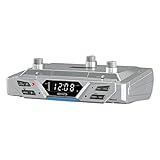
Overview: The Jensen Under Cabinet System merges Alexa voice control with kitchen-friendly design, creating a hands-free smart assistant that streams music and controls your home. This Wi-Fi-enabled device mounts discreetly beneath cabinets, offering far-field voice recognition and Bluetooth streaming, plus a built-in LED work light for enhanced functionality.
What Makes It Stand Out: Alexa integration transforms this from a simple speaker into a comprehensive smart home hub, allowing you to control compatible devices, check weather, or set timers while cooking. The hands-free speakerphone function adds convenience for busy kitchens. Far-field voice capture works reliably even with ambient noise, a critical feature for active cooking environments.
Value for Money: Priced at $42.74, this system undercuts many competitors while offering robust smart features. The inclusion of Alexa, smart home control, and speakerphone capabilities at this price point represents exceptional value. You’re essentially getting a smart speaker, under-cabinet radio, and work light for less than most standalone smart speakers.
Strengths and Weaknesses: Strengths: Hands-free Alexa control, smart home integration, speakerphone functionality, integrated LED light, affordable smart speaker alternative. Weaknesses: Requires stable Wi-Fi, potential privacy concerns with always-on microphone, audio quality prioritized for voice rather than music fidelity, limited to Alexa ecosystem.
Bottom Line: Ideal for smart home enthusiasts wanting voice-controlled convenience and music streaming in the kitchen without sacrificing counter space.
3. iLive Wireless Under The Cabinet Kitchen CD Player Radio Bluetooth Speaker System

Overview: This iLive system caters to CD collectors seeking under-cabinet convenience, offering rare physical media support alongside modern wireless streaming. Designed for kitchen installation, it plays standard CDs, CD-R, and CD-RW discs while retaining Bluetooth connectivity and FM radio, bridging vintage and contemporary audio formats in one compact unit.
What Makes It Stand Out: CD playback capability distinguishes this from nearly all competitors, preserving access to extensive music libraries for those who haven’t digitized collections. The ability to play personally recorded CD-R/RW discs adds flexibility for custom playlists. While other features appear similar to its iLive sibling, the optical drive makes this a unique offering in the under-cabinet category.
Value for Money: At $84.95, this commands a significant premium over non-CD models. The price reflects the increasingly rare CD mechanism and niche market positioning. For users with large CD collections, the convenience justifies the cost, but those who’ve transitioned to digital streaming will find better value elsewhere. Consider it a specialty appliance.
Strengths and Weaknesses: Strengths: Rare CD playback support, plays recordable discs, retains Bluetooth and radio, space-saving design. Weaknesses: Premium pricing, CD format declining, potentially more mechanical failure points, may lack advanced features of dedicated smart speakers.
Bottom Line: Recommended only for dedicated CD enthusiasts who specifically need under-cabinet mounting; digital streaming users should opt for more affordable alternatives.
4. Acoustic Audio by Goldwood Acoustic Audio AA32CB Mountable Indoor Center Speaker 300 Watts Black Bookshelf, 2.5-Inch

Overview: The Acoustic Audio AA32CB delivers center channel dialogue clarity in a compact, mountable package. This passive speaker requires external amplification, making it an ideal addition to existing home theater systems. With dual 2.5-inch polypropylene woofers and a sealed ABS cabinet, it prioritizes speech intelligibility over extended low-frequency response.
What Makes It Stand Out: Exceptional affordability at $35.88 makes this one of the most budget-friendly center channels available. The included mounting bracket enables flexible placement above or below displays, crucial for space-constrained setups. Its compact 3.625" x 8" x 4.25" dimensions allow discreet integration, while the 300-watt power handling provides ample headroom for dynamic movie soundtracks.
Value for Money: This speaker redefines budget home theater. Competing center channels typically start at $60-80, making the AA32CB a remarkable value. While limited to 90Hz-20kHz, it capably handles dialogue and center-mixed effects. The sealed design ensures consistent performance regardless of placement, maximizing versatility for the price-conscious buyer.
Strengths and Weaknesses: Strengths: Extremely affordable, includes mounting hardware, compact design, high power handling, easy wire connections. Weaknesses: Requires separate amplifier, limited bass extension, small drivers may lack fullness, basic aesthetic design.
Bottom Line: A no-brainer for budget home theater builders needing clear dialogue reproduction without investing in premium components.
5. Acoustic Audio AA321B Mountable Indoor Speakers 400 Watts Black Bookshelf Pair

Overview: The AA321B speaker pair offers remarkable value for expanding home theater or whole-house audio systems. These passive bookshelf speakers feature 2.5-inch polypropylene woofers in sealed ABS cabinets, delivering full-range sound from compact 3.5" cubes. Designed for mounting, they provide flexible placement options for surround channels or stereo listening areas.
What Makes It Stand Out: Delivering a matched pair for just $38.88 represents extraordinary value—less than the cost of many single speakers. The 400-watt power handling exceeds many budget competitors, while integrated mounting brackets simplify installation. Their diminutive size belies surprisingly capable performance for surround or background music applications, making them ideal for multi-room audio projects.
Value for Money: This pair demolishes price barriers for quality audio. Individual speakers with similar specs often cost $30-40 each, making this two-for-one pricing exceptional. While frequency response starts at 150Hz, proper integration with a subwoofer yields seamless surround sound. For budget-conscious enthusiasts building 5.1 systems, these speakers slash costs without sacrificing functionality.
Strengths and Weaknesses: Strengths: Unbeatable pair pricing, compact mountable design, high power handling, simple connectivity. Weaknesses: Requires external amplification, limited low-end response, basic finish, may lack refinement for critical listening.
Bottom Line: Perfect for budget surround sound setups or whole-house audio where affordability and easy mounting outweigh audiophile refinement.
6. Sanyun SW205 4" Bookshelf Speakers | Immersive HiFi Audio with Virtual Surround | Flagship DAC/DSP Engine | Geometric Diffusion Cabinet | 80W, Bluetooth 5.4/Optical/AUX Inputs, Wireless Remote, Black
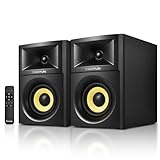
Overview: The Sanyun SW205 bookshelf speakers deliver a compelling blend of advanced digital processing and acoustic engineering in a compact powered package. These 80W active speakers target discerning listeners seeking immersive audio without the complexity of separate components. Featuring a unique geometric cabinet design and flagship dual-core DAC/DSP engine, they promise studio-quality reproduction for music, movies, and gaming from a space-saving footprint.
What Makes It Stand Out: The proprietary Virtual Surround DSP algorithm sets these apart, creating an expansive multi-dimensional soundstage that extends beyond the speakers’ physical placement. The Geometric Diffusion Cabinet, inspired by musical instrument design, actively reduces resonance while optimizing wave projection. Premium glass fiber woofers and silk dome tweeters provide excellent transient response and smooth highs. Triple connectivity via Bluetooth 5.4, optical, and AUX ensures universal compatibility with modern and legacy devices.
Value for Money: At $129.99, the SW205 competes directly with entry-level offerings from Edifier and Klipsch but includes sophisticated DSP processing rarely seen at this price. The integrated high-resolution DAC eliminates need for external equipment, representing significant savings. While not cheap, the combination of premium drivers, advanced digital processing, and versatile inputs justifies the investment for tech-savvy users wanting high-end features without the audiophile price tag.
Strengths and Weaknesses: Strengths:
- Advanced Virtual Surround DSP creates genuinely immersive experience
- High-quality glass fiber woofer and silk tweeter combination
- Multiple digital and analog inputs including lossless optical
- Elegant geometric cabinet reduces resonance effectively
- Convenient wireless remote control
Weaknesses:
- 4-inch woofer limits deep bass extension below 60Hz
- Brand lacks long-term reliability track record
- DSP processing may not suit purists seeking uncolored sound
- No subwoofer output for bass expansion
Bottom Line: The Sanyun SW205 is ideal for apartment dwellers and desktop users wanting immersive, high-fidelity sound without component clutter. Its DSP-driven virtual surround excels in near-field and small-room applications, making it a smart choice for gamers and movie watchers prioritizing spatial audio over raw power.
7. Acoustic Audio AA321W Mountable Indoor Speakers 400 Watts White Bookshelf Pair

Overview: The Acoustic Audio AA321W delivers no-frills passive audio in an ultra-compact, mountable package. Designed for whole-home audio, home theater surrounds, or commercial installations, these white ABS speakers operate with any amplifier or receiver delivering 20-200 watts per channel. Their sealed enclosures and spring-loaded terminals prioritize installation flexibility over sonic refinement, making them practical for background music and basic surround duties.
What Makes It Stand Out: Remarkable affordability meets genuine installation versatility. The tiny 3.5-inch cubic footprint allows placement where traditional speakers won’t fit, while included mounting hardware enables wall or ceiling deployment. The 400-watt peak power handling (though realistically 80-100 watts RMS) provides ample headroom for most multi-room applications. Their passive design integrates seamlessly with existing receiver-based systems without adding another powered component to your setup.
Value for Money: At $38.88 for the pair, these represent exceptional value for budget-conscious installations. Comparable mountable speakers from reputable brands cost 3-4 times more. While audio performance is modest, the price point enables whole-home audio projects that would otherwise be cost-prohibitive. They’re essentially disposable speakers that deliver adequate performance for background listening, making them perfect for non-critical applications where cost trumps fidelity.
Strengths and Weaknesses: Strengths:
- Unbeatable price for pair of mountable speakers
- Extremely compact and lightweight design
- Simple passive operation with any amplifier
- Includes mounting brackets and hardware
- Durable sealed ABS cabinets resist moisture
Weaknesses:
- Limited 150Hz-20kHz frequency response lacks bass foundation
- 2.5-inch polypropylene drivers deliver basic sound quality
- 88dB sensitivity requires more amplifier power
- No low-end impact for music or theater
- White finish may discolor over time
Bottom Line: Perfect for whole-house audio zones, commercial background music, or ultra-budget home theater surrounds. Don’t expect audiophile performance, but for filling spaces with sound affordably, they’re surprisingly capable. Pair with a small amplifier for patios, garages, or secondary rooms where critical listening isn’t priority.
8. Active Bookshelf Speakers 36W RMS - BT 5.4 Wireless Speaker with 5 Inch Woofer, Silk Dome Tweeter PC Speakers - USB Digital Audio Studio Monitors Bass & Treble Adjust AUX Input for Record Player TV

Overview: These MEVOSTO-branded active bookshelf speakers deliver customizable, amplified sound with a focus on PC and desktop gaming applications. The 36W RMS system features larger 5-inch woofers and 1-inch silk dome tweeters in a traditional bookshelf form factor. USB digital audio input and Bluetooth 5.4 provide modern connectivity, while bass and treble controls offer rare EQ adjustment at this price point, targeting users wanting tailored sound without external processing.
What Makes It Stand Out: The 10-level bass and treble adjustment provides genuine tonal customization rarely found in sub-$100 powered speakers. USB digital audio delivers bit-perfect sound from computers without internal DAC interference. The 5-inch woofer size exceeds most competitors in this class, promising deeper bass response. Bluetooth 5.4 ensures stable wireless connectivity with minimal latency for video and gaming, addressing a common pain point in budget speakers.
Value for Money: Priced at $89.99, these speakers undercut comparable models from Edifier and Mackie while offering superior tuning flexibility. The USB digital input alone adds value for PC users seeking clean audio paths. While 36W RMS won’t fill large rooms, the power is adequate for near-field desktop use. The inclusion of both RCA and AUX inputs alongside USB and Bluetooth maximizes device compatibility, making them versatile primary or secondary speakers.
Strengths and Weaknesses: Strengths:
- Independent bass and treble controls with 10 adjustment levels
- USB digital audio input for lossless PC connection
- Larger 5-inch woofers improve low-frequency response
- Latest Bluetooth 5.4 with low latency
- Multiple input options including RCA, AUX, and USB
Weaknesses:
- 36W RMS limits maximum volume and dynamic headroom
- Brand recognition and long-term reliability uncertain
- No optical input for TV connection
- Cabinet construction quality appears basic
- No subwoofer output for system expansion
Bottom Line: Excellent choice for PC gamers and desktop users prioritizing adjustable EQ and digital USB connectivity. The 5-inch drivers deliver satisfying bass for near-field listening, while Bluetooth 5.4 handles mobile device streaming admirably. A practical, feature-rich alternative to basic computer speakers that punches above its weight class.
9. Saiyin 5.0 Home Theater System, 100w HiFi Surround Sound Speakers with Stereo Surround Sound and Classic Rretro Wood Grain for TV/PC, Passive, Amplifier or Receiver Required, Cable Not Included

Overview: Saiyin’s 5.0 speaker system provides a complete passive home theater solution with four matching bookshelf speakers and a dedicated center channel for under $100. The handcrafted wooden enclosures house 3-inch drivers throughout, creating a timbre-matched surround setup for small to medium rooms. Designed for users with existing amplifiers or receivers, this package eliminates the guesswork of mixing speaker brands while delivering authentic 5.0 surround sound with retro aesthetic appeal.
What Makes It Stand Out: Complete surround system pricing is unprecedented—individual center channels often cost more than this entire 5-speaker set. The retro wood grain finish distinguishes it from generic black plastic alternatives, blending with traditional décor. The dedicated center speaker with enhanced dialogue clarity addresses a critical home theater need often overlooked in budget setups. Flexible placement options allow wall-mounting or shelf positioning for all five channels, adapting to challenging room layouts.
Value for Money: At $99.99 for five speakers, value is exceptional. Purchasing even budget components individually would cost twice as much. The 100W total system power handling (25W x 4 + 50W center) suits entry-level AV receivers. While 3-inch drivers inherently limit dynamics, the timbre-matched design ensures cohesive surround imaging. The omission of speaker cables and required amplifier keeps costs down but adds hidden expenses. Still, it’s the most affordable path to genuine 5.0 surround.
Strengths and Weaknesses: Strengths:
- Complete 5.0 system at unbeatable price point
- Timbre-matched speakers ensure cohesive surround field
- Attractive retro wood grain finish
- Dedicated center channel improves dialogue clarity
- Compact size enables flexible placement
Weaknesses:
- 3-inch drivers lack bass extension and dynamic impact
- Passive design requires separate amplifier/receiver
- No subwoofer included limits low-frequency performance
- Speaker wires not included adds hidden cost
- Build quality reflects budget pricing
Bottom Line: Ideal starter system for small rooms and first-time home theater builders. Pair with a basic 5-channel amplifier and budget subwoofer for a surprisingly immersive experience. Don’t expect reference-level dynamics, but for the price, it delivers authentic surround sound that transforms TV watching. Perfect for apartments, bedrooms, or budget-conscious families.
10. Saiyin Slim Center Channel Speaker,for Desktop Stereo or Home Theater Surround Sound, Dual 3.5" Woofer,Requires a Separate Amplifier or Receiver, Wall Mountable, Single,17 Inch

Overview: Saiyin’s dedicated center channel speaker addresses dialogue intelligibility in home theater systems with a slim, wall-mountable design. The 17-inch enclosure houses dual 3.5-inch woofers and a horn tweeter, requiring connection to an external amplifier or receiver. At just $39.99, it offers an affordable upgrade path for users with existing left/right speakers who lack clear vocal reproduction, making it a strategic addition to stereo systems or incomplete surround setups.
What Makes It Stand Out: The horn-loaded tweeter provides superior high-frequency directionality and efficiency compared to conventional dome designs, crucial for center channel dialogue clarity. The slim 17-inch profile fits discreetly under wall-mounted TVs or on shallow shelves where traditional centers won’t fit. Dual woofers increase output capability and horizontal dispersion while maintaining compact dimensions. Wood finish construction elevates appearance beyond typical budget plastic cabinets, adding aesthetic value to home theater setups.
Value for Money: For $39.99, this center channel costs less than many basic bookshelf speakers while serving a specialized, critical role. Comparable entry-level centers from established brands start at $80-120. The horn tweeter technology is rare at this price point, offering genuine acoustic benefits. While power handling is modest and bass extension limited, the focused design priorities dialogue clarity over full-range performance—exactly what a center channel should do. It’s an economical solution to a common home theater problem.
Strengths and Weaknesses: Strengths:
- Horn tweeter enhances dialogue intelligibility
- Ultra-slim profile fits tight spaces
- Wall-mountable with included hardware
- Dual woofers improve vocal richness
- Attractive wood finish at budget price
Weaknesses:
- Requires separate amplifier (passive design)
- 3.5-inch woofers limit low-frequency output
- Single speaker only (not a pair)
- Brand lacks established reputation
- No matching left/right speakers available
Bottom Line: Excellent value for upgrading TV audio or completing a budget surround system. The horn tweeter genuinely improves dialogue clarity compared to using just left/right speakers. Perfect for users with existing amplifiers who need dedicated vocal reproduction. Mount under your TV for immediate improvement in movie and TV show intelligibility without breaking the bank.
Why Under-Cabinet Speakers Are the Ultimate Kitchen Audio Solution
The Evolution of Kitchen Audio: From Countertop Clutter to Seamless Integration
Kitchen audio has undergone a remarkable transformation over the past two decades. We graduated from battery-powered transistor radios precariously perched on windowsills to CD players fighting for counter space with coffee makers and knife blocks. The Bluetooth speaker era brought portability but introduced new problems: charging cables snaking across prep areas, devices vulnerable to spills, and sound that either blasted too loudly in one spot or got lost in the cavernous acoustics of open-plan kitchens. Under-cabinet speakers represent the culmination of this evolution—addressing every pain point while adding layers of intelligence that previous generations couldn’t imagine. By utilizing the often-wasted space beneath upper cabinets, these systems leverage proximity to the listener’s ear level, creating an immersive audio bubble without overwhelming the entire household.
Space-Saving Design Meets Acoustic Innovation
The genius of under-cabinet placement lies in its exploitation of the “near-field listening” principle. Positioned typically 18-24 inches from your primary workspace, these speakers don’t need to compete with the entire room’s volume to deliver clear, impactful sound. This proximity allows for lower power consumption, reduced distortion at high volumes, and dramatically improved speech intelligibility—critical when you’re dictating grocery lists to your voice assistant or following spoken recipe instructions. Modern designs have shrunk driver enclosures to less than 3 inches deep while employing passive radiators and advanced digital signal processing (DSP) to produce bass response that belies their compact footprint. The result is audio fidelity that rivals bookshelf speakers without commandeering a single square inch of your valuable counter space.
Understanding Smart Audio Technology for Kitchen Environments
What Makes a Speaker “Smart” in 2024?
The term “smart” has been diluted by marketing, but genuine smart audio technology encompasses several non-negotiable features. At its core, a smart under-cabinet speaker must offer autonomous connectivity to your home network, enabling it to receive audio streams independently of your phone or tablet. This means built-in Wi-Fi capability, not just Bluetooth tethering. True smart speakers run dedicated operating systems that support over-the-air firmware updates, ensuring your investment improves over time rather than becoming obsolete. They integrate with cloud-based voice recognition services that process commands remotely, allowing for more sophisticated natural language understanding than on-device processing permits. Crucially, they support multi-user profiles, recognizing different household members’ voices and serving personalized calendars, playlists, and reminders—essential in a shared kitchen hub.
Voice Assistant Integration: Your Culinary Companion
Voice control in the kitchen transcends mere convenience; it’s a safety feature and efficiency multiplier. When your hands are contaminated with raw meat or sticky dough, shouting “set timer for 12 minutes” or “add olive oil to my shopping list” becomes invaluable. The best under-cabinet systems feature far-field microphone arrays with beamforming technology that isolates your voice from background noise. However, kitchen acoustics present unique challenges: tile backsplashes create harsh reflections, running water introduces broadband noise, and appliances generate interference. Premium systems employ acoustic echo cancellation (AEC) and noise suppression algorithms specifically tuned for kitchen environments. Some even feature “kitchen mode” that boosts microphone sensitivity and adjusts wake-word detection thresholds when it senses high ambient noise levels through internal sound pressure sensors.
Multi-Room Audio and Whole-Home Connectivity
The kitchen rarely exists as an audio island. Your cooking playlist should follow you to the dining room during dinner, and your morning news podcast shouldn’t cut off when you grab coffee. Modern under-cabinet speakers must support whole-home audio protocols like AirPlay 2, Google Cast, or proprietary mesh networks. The key differentiator is synchronization accuracy—measured in milliseconds of latency between zones. In open-concept homes where kitchen and living areas blend, even 50ms of delay between speaker zones creates a disorienting echo effect. Look for systems advertising “sub-20ms synchronization” or “lip-sync calibration” features. Additionally, investigate whether the speaker can participate in stereo pairing with another under-cabinet unit, creating a proper left-right soundstage that dramatically improves music listening compared to mono playback.
Key Benefits of Installing Under-Cabinet Speakers
Hands-Free Cooking: The Safety Advantage
Beyond convenience, voice-controlled under-cabinet speakers enhance kitchen safety in measurable ways. Touching your phone with contaminated hands spreads bacteria to a device that will later press against your face. More critically, fumbling with audio controls while handling sharp knives or hot pans divides attention and increases accident risk. A study by the National Safety Council identified distracted cooking as a factor in 40% of reported kitchen injuries. By enabling complete hands-free operation, under-cabinet speakers keep your focus on the task and your hands on your tools. Advanced systems even integrate with smart smoke detectors, automatically muting music and broadcasting clear emergency alerts through the kitchen speakers when danger is detected.
Enhanced Entertainment While You Cook
The psychological benefits of audio entertainment during repetitive kitchen tasks are well-documented. Music has been shown to reduce perceived cooking time by up to 15% and lower stress hormones during meal preparation. Podcasts and audiobooks transform mindless chopping into productive learning time. But quality matters—muddy audio with poor dialogue clarity forces your brain to work harder, negating the relaxation benefits. Under-cabinet speakers positioned at ear level deliver direct, clear sound that cuts through ambient noise without requiring excessive volume that would disturb others. This creates a personal audio zone that immerses you in content while maintaining awareness of your environment, unlike noise-canceling headphones that isolate you from important kitchen sounds like timers or boiling water.
Property Value and Modern Kitchen Appeal
In today’s real estate market, smart home features increasingly influence buying decisions. A professionally installed under-cabinet audio system signals a modern, tech-forward home and demonstrates attention to detail in kitchen design. Unlike visible smart displays or countertop gadgets that may clash with a buyer’s aesthetic preferences, integrated speakers are universally appealing—they’re there if you want them, invisible if you don’t. Real estate agents report that homes with whole-home audio systems, including kitchen zones, command 2-3% higher offers and spend less time on market. The key is choosing a system with timeless design and reputable brand backing, ensuring the technology remains supported and desirable for years to come.
Critical Features to Evaluate Before Buying
Sound Quality Metrics That Matter in Kitchen Acoustics
Kitchens are acoustic nightmares—hard surfaces everywhere create reverberation times exceeding 1.5 seconds, while appliances generate broadband noise masking. Traditional audio specs like frequency response (20Hz-20kHz) tell only part of the story. Instead, prioritize speakers with high sensitivity ratings (90dB/W/m or higher), which produce more volume from less power—crucial for overcoming ambient noise. Total Harmonic Distortion (THD) below 1% at 80% volume ensures clean sound when you need to crank it up. Pay special attention to the midrange frequency response (1kHz-4kHz), where human speech resides; a bump in this region improves recipe video comprehension. Some advanced systems include “kitchen EQ” presets that dynamically adjust tuning based on detected ambient noise levels, boosting vocal clarity when the exhaust fan kicks into high gear.
Size and Dimensions: Measuring Your Cabinet Space
Before falling in love with any system, grab your tape measure. Standard upper cabinets are 12 inches deep, but you must account for under-cabinet lighting, crown molding, and any existing trim. Measure the available depth from the cabinet bottom to your countertop backsplash—most speakers require minimum 2.5 inches of clearance. Width matters too; a 24-inch speaker might fit perfectly under a 30-inch cabinet, leaving room for future additions. Consider the “visual height”—how far the speaker protrudes downward. A sleek 1.5-inch profile maintains sightlines and prevents head bumps, while bulkier units can feel intrusive. Don’t forget to measure the distance between the cabinet bottom and any shelves or objects below; you need adequate clearance for sound dispersion and maintenance access.
Power Options: Hardwired vs. Plug-In vs. Battery
Your kitchen’s electrical infrastructure dictates viable power strategies. Hardwired systems connect directly to your home’s 120V wiring, often tying into lighting circuits for seamless control. This approach delivers clean aesthetics and reliable power but requires professional installation and limits placement flexibility. Plug-in models offer DIY-friendly setup using standard outlets, but visible cords can mar the clean look—though some feature recessed cable channels that route power discreetly along cabinet edges. Battery-powered options provide ultimate placement freedom and eliminate electrical work, but runtime becomes critical. Lithium-ion packs typically last 8-10 hours at moderate volume, while power-saving modes can extend this to 20+ hours. However, kitchen environments accelerate battery degradation due to heat and humidity, so expect 2-3 year replacement cycles. Hybrid systems that combine plug-in power with battery backup offer the best of both worlds, maintaining functionality during outages.
Connectivity Standards: Wi-Fi, Bluetooth, and Beyond
Connectivity determines your speaker’s versatility and longevity. Bluetooth-only speakers are fundamentally limited by range (typically 30 feet) and phone-dependent operation—your audio stops when you leave the room or receive a call. Wi-Fi connectivity unlocks true smart functionality: independent streaming, multi-room sync, and voice control. But not all Wi-Fi is equal. Look for dual-band support (2.4GHz and 5GHz) with MIMO antennas for robust signal penetration through kitchen appliances that create RF interference. Wi-Fi 6 compatibility future-proofs your investment, though few kitchen speakers currently support it. For maximum flexibility, seek systems offering both Wi-Fi and Bluetooth with intelligent handoff—automatically switching to Bluetooth when Wi-Fi is unavailable. Some premium models include Ethernet ports for wired backhaul in challenging wireless environments, ensuring rock-solid connectivity.
Moisture and Heat Resistance Ratings Explained
Kitchens expose electronics to environmental stresses that living room speakers never face. Steam from pasta pots, splashes from sinks, and heat from ovens create a hostile operating environment. The IP (Ingress Protection) rating system provides crucial guidance. IPX4 rating means splash resistance from any direction—minimum viable for kitchen duty. IPX5 (low-pressure water jets) offers better protection against accidental sink spray. For placement near stovetops, look for operating temperature specs exceeding 140°F (60°C) and humidity tolerance above 85% RH. Beyond IP ratings, examine material choices: powder-coated metal grilles resist corrosion better than plastic, while silicone-sealed button membranes prevent steam infiltration. Some high-end units include internal humidity sensors that trigger protective shutdowns before damage occurs, a feature worth its weight in gold for steam-heavy cooking styles.
Mounting Mechanisms: What Works Best for Your Cabinetry
Installation method impacts both aesthetics and long-term stability. Magnetic mounting systems offer tool-free installation and easy removal for cleaning or relocation, but require metal plates that may not adhere well to textured cabinet surfaces. Slide-lock brackets provide secure mechanical attachment while allowing quick release, ideal for renters who need non-permanent solutions. Permanent screw-mounting delivers maximum stability and vibration isolation, crucial for preventing cabinet rattle at higher volumes. For custom or high-end cabinetry, consider recessed mounting kits that allow the speaker to sit flush with the cabinet bottom, creating a built-in look. Always verify the mounting system’s weight capacity exceeds your speaker’s weight by at least 50% to account for dynamic loads from bass vibrations and accidental bumps.
Installation Considerations for Different Kitchen Layouts
DIY vs. Professional Installation: Making the Right Choice
Your skill level and kitchen complexity should drive this decision. DIY installation suits plug-in models with simple bracket systems—most homeowners can complete this in under an hour using basic tools. However, hardwired systems demand electrical knowledge, including proper circuit identification, wire gauge selection, and code compliance. Professional installation (typically $150-$400 per speaker) includes expert placement consultation, clean wire routing through cabinets, integration with existing smart home hubs, and proper sealing against moisture. For kitchens with tile backsplashes, stone countertops, or custom cabinetry, professional installation prevents costly damage from drilling mistakes. Many reputable installers offer warranties on their work, providing peace of mind that DIY cannot match. Consider the “total cost of failure”—a botched DIY job that damages cabinets could cost far more than professional fees.
Dealing with Kitchen-Specific Challenges: Tile, Stone, and Studs
Kitchens present unique structural obstacles. Tile backsplashes crack easily under drill pressure and hide voids that prevent secure anchoring. Use diamond-tipped drill bits, apply masking tape to prevent bit slippage, and drill at slow speeds with minimal pressure. For stone or quartz backsplashes, consider adhesive mounting plates that eliminate drilling entirely. Locating studs behind cabinets is tricky; cabinets are typically mounted to studs, but your speaker placement may fall between them. Heavy-duty toggle bolts rated for 50+ pounds provide secure mounting in drywall when studs aren’t accessible. Always check for plumbing and electrical lines before drilling—stud finders with AC detection are essential kitchen tools. For under-cabinet installation, remember that cabinet bottoms are often thin particleboard; mount to the cabinet’s structural frame rather than the panel itself for lasting stability.
Cable Management Strategies for a Clean Look
Visible wires undermine the sleek aesthetic of under-cabinet speakers. For plug-in models, route cables along the cabinet’s rear edge using paintable cord channels that blend with your cabinet color. Some systems offer “power bridge” kits that create in-wall connections between outlets and speaker locations, though this requires minor drywall work. When hardwiring, have electricians install low-voltage recessed plates that accept speaker wire and power cables through a single clean opening. For kitchens with existing under-cabinet lighting, inquire about tapping into those circuits—many LED lighting systems include auxiliary low-voltage outputs perfect for powering speakers. Wireless charging pads integrated into some premium models eliminate the final cable: the power cord. These contact-based systems mount a transmitter under the cabinet and receiver on the speaker, creating a truly cordless appearance while maintaining continuous power.
Integration with Existing Kitchen Lighting
Modern kitchens often feature sophisticated under-cabinet LED lighting systems. The best audio installations complement rather than compete with these setups. Some smart speakers include integrated LED strips, combining illumination and audio in a single device—ideal for minimalists. More commonly, you’ll need to coordinate placement to avoid shadowing or light obstruction. Measure the lighting’s beam angle and position speakers outside the primary light path. For hardwired installations, consider smart switches that control both lights and speakers, enabling single-button “cooking mode” that activates task lighting and audio simultaneously. Dimmable LED compatibility is crucial; some speakers generate electromagnetic interference that causes LED flickering. Look for speakers with FCC Class B certification, indicating they’ve been tested for radio frequency interference with residential electronics.
Smart Home Ecosystem Compatibility
Apple HomeKit, Google Home, and Amazon Alexa: What You Need to Know
Your existing smart home ecosystem heavily influences speaker choice. Amazon Alexa leads kitchen adoption due to extensive recipe skill integration and robust third-party device support. Alexa’s “Follow-up Mode” allows consecutive commands without repeating the wake word—handy when your hands remain dirty. Google Assistant excels at contextual questions (“how many cups in a liter?”) and integrates seamlessly with Android devices for music streaming. Apple HomeKit offers superior privacy and iOS integration but historically supported fewer kitchen-specific accessories; however, this gap is closing rapidly. Crucially, some speakers support multiple platforms simultaneously, letting you switch ecosystems without replacing hardware. Verify “Works with” certifications rather than vague compatibility claims. Test voice recognition accuracy before finalizing installation—some ecosystems perform poorly with certain accents or in high-noise environments.
Creating Kitchen-Specific Routines and Automations
Smart speakers truly shine when programmed with kitchen-specific automations. Morning coffee routines can trigger news podcasts, gradually brighten lights, and start your smart coffee maker with a single “good morning” command. Cooking timers can automatically dim lights and play ambient music when started, then flash lights and announce completion. Advanced systems integrate with smart ovens and cooktops, announcing preheat status or reminding you to flip items based on connected meat thermometer data. The key is choosing a speaker with robust automation platforms: Alexa Routines, Google Home Automations, or HomeKit Shortcuts. Look for trigger flexibility—time-based, device-state-based, and voice-command-based initiation. Conditional logic (“if it’s after sunset, then…”) adds layers of sophistication that transform a simple speaker into a true kitchen assistant.
Interoperability with Other Smart Kitchen Appliances
The modern kitchen is a symphony of connected devices: refrigerators with inventory tracking, faucets with voice-activated dispensing, ranges with remote monitoring. Your under-cabinet speaker should act as the conductor. Matter, the new smart home standard backed by Apple, Google, Amazon, and Samsung, promises universal interoperability. As of 2024, look for Matter-certified speakers that can control compatible appliances directly, bypassing cloud delays and reducing failure points. Zigbee and Z-Wave radios built into some speakers extend connectivity to battery-powered sensors like door contacts (pantry monitoring) and leak detectors (under-sink protection). When evaluating compatibility, don’t just check brand partnerships—verify protocol support. A speaker that bridges multiple protocols creates a unified kitchen ecosystem rather than a collection of isolated gadgets.
Audio Performance in Challenging Kitchen Environments
Combating Reverberation and Hard Surfaces
Kitchens are acoustic deserts—tile, granite, stainless steel, and glass reflect sound rather than absorbing it. This creates reverberation that muddies music and garbles speech. Premium under-cabinet speakers address this through strategic driver placement and DSP correction. Downward-firing tweeters direct high frequencies to your ears before they can reflect off countertops, while side-firing woofers use cabinet boundaries to reinforce bass without boominess. Look for speakers with room correction microphones that measure your kitchen’s acoustic signature and apply inverse EQ curves to compensate for resonant frequencies. Some systems allow manual adjustment of reverb time in their apps—setting this to 0.3-0.5 seconds creates a more intimate listening experience despite the room’s natural tendency toward echo.
Optimal Speaker Placement for Even Sound Distribution
Placement determines performance more than any spec sheet. The golden rule: position speakers at the front edge of the cabinet, not recessed against the wall. This maximizes direct sound and minimizes early reflections. For galley kitchens, a single centrally mounted speaker may suffice, but L-shaped or island kitchens benefit from stereo pairs spaced 6-8 feet apart, creating an even sound field across work zones. Height matters too—mount speakers 18-20 inches above the countertop for optimal ear-level alignment when standing. Avoid mounting directly above the cooktop; heat and steam will degrade components over time. Instead, place them near prep areas and sinks where you spend most of your time. For kitchen islands, consider pendant-style speakers that hang from the ceiling, providing 360-degree coverage without competing with task lighting.
Volume Levels and Speech Intelligibility While Cooking
Kitchen noise levels typically range from 50dB (quiet prep) to 75dB (exhaust fan on high). Your speaker needs to produce clean audio at 80-85dB to overcome this masking effect without fatiguing your ears. More importantly, speech intelligibility—measured by the Speech Transmission Index (STI)—should exceed 0.75 for clear comprehension. This requires a speaker with strong midrange presence and minimal distortion at 70% volume. Many smart speakers include “speech enhancement” modes that dynamically compress music and boost vocal frequencies when detecting spoken content. Test this feature with cooking videos before committing; some implementations sound artificial or create pumping effects. The best systems use AI-based dialogue isolation that separates speech from background audio in real-time, delivering studio-clear recipe instructions even while Metallica plays at moderate volume.
Design Aesthetics and Kitchen Décor Integration
Color and Finish Options to Match Your Style
Gone are the days of black-only tech products. Modern under-cabinet speakers arrive in curated finishes: matte white for Scandinavian kitchens, brushed stainless for professional-grade spaces, matte black for minimalist lofts, and even custom color-matching services for luxury installations. Some manufacturers offer interchangeable faceplates, allowing you to update the look when you refresh your kitchen décor without replacing the entire unit. Consider how finishes age—powder-coated surfaces resist fingerprints and scratches better than painted plastics. For traditional kitchens, look for speakers with fabric grilles in neutral tones that mimic under-cabinet lighting diffusers, making them disappear visually. The goal is cohesion: the speaker should look intentional, not like an afterthought bolted to your beautiful cabinetry.
Minimalist Profiles vs. Feature-Rich Designs
Design philosophy presents a trade-off. Ultra-minimalist speakers (under 2 inches deep) blend seamlessly but may sacrifice features like physical controls or display screens. Feature-rich designs might include LED clocks, touch controls, or even small displays showing album art—functional but visually busier. The sweet spot for most kitchens is a “quiet design” approach: a single multi-function button and subtle LED status indicator that dims automatically after dark. Some premium models use e-ink displays that show information without emitting light, perfect for night-owl cooks who don’t want bright LEDs disrupting their ambiance. Consider your usage patterns—if you primarily use voice control, prioritize minimalism. If you frequently adjust volume or skip tracks manually, ensure controls are accessible without contorting your arm.
Custom Grilles and Faceplates: Personalization Options
For truly bespoke kitchens, some manufacturers offer custom laser-cut grilles that match your cabinet door patterns or incorporate monograms. This service typically adds 20-30% to cost but creates a one-of-a-kind integration. Alternatively, paintable grilles allow your contractor to match the speaker to your cabinet color exactly. When exploring customization, verify that modifications don’t void the warranty or impede acoustic performance—grille patterns should maintain at least 60% open area to avoid muffling sound. For the DIY enthusiast, 3D-printed grille replacements are emerging as an option, with communities sharing designs for popular speaker models. Just ensure any custom parts use heat-resistant materials rated for kitchen environments.
Budget Planning and Value Assessment
Understanding Price Tiers and What You Get
Under-cabinet smart speakers cluster into three price tiers. Entry-level ($80-$150) offers basic Bluetooth and Wi-Fi connectivity, decent sound, and single-ecosystem voice control. Mid-range ($150-$300) adds multi-room sync, better drivers, moisture resistance, and dual-platform support. Premium ($300-$600) delivers audiophile-grade components, advanced DSP, Matter compatibility, professional installation kits, and extended warranties. The law of diminishing returns hits hard above $400—sonic improvements become subtle while feature gains focus on niche use cases. For most homeowners, the $200-$250 sweet spot provides 90% of the premium experience. Allocate budget for accessories: high-quality mounting hardware ($20-$50), professional installation if needed ($150-$400), and potential electrical upgrades ($100-$200). Factor in subscription costs too—some advanced features require music streaming services or cloud storage plans.
Total Cost of Ownership: Installation and Accessories
The sticker price is just the beginning. A $200 speaker requiring $300 in professional installation and $50 in custom mounting hardware actually costs $550. Calculate TCO over a 5-year lifespan: premium speakers often include 3-year warranties versus 1-year for budget models, reducing replacement risk. Energy consumption matters too; a 20W speaker running 4 hours daily costs roughly $3.50 annually in electricity, while inefficient 40W models double that. Consider software support longevity—brands with strong track records of 5+ year firmware updates protect your investment from premature obsolescence. Some manufacturers offer trade-in programs, providing 20-30% credit toward newer models, effectively reducing upgrade costs. Finally, factor in the cost of your time: a DIY installation might save $300 but consume a weekend; value your time accordingly.
Warranty and Support Considerations
Kitchen environments void many standard electronics warranties, so scrutinize terms carefully. Look for explicit “kitchen use” coverage and moisture damage protection. Standard warranties range from 1-3 years, but premium brands offer optional extended warranties covering accidental damage—valuable in splash-prone zones. Support quality varies dramatically: some brands offer 24/7 phone support with sub-5-minute wait times, while others restrict you to email tickets with 48-hour response times. Check community support too—active user forums and Reddit communities often provide faster solutions than official channels. Replacement policies matter; brands offering advance replacement (shipping a new unit before you return the faulty one) minimize kitchen downtime. Finally, verify firmware support commitments—a 2-year warranty means little if security updates cease after 18 months.
Troubleshooting Common Issues
Connectivity Dropouts and Interference
Wi-Fi dropouts plague kitchen speakers due to appliance interference. Microwave ovens operate at 2.4GHz, creating dead zones when running. Dual-band speakers that automatically switch to 5GHz during microwave use solve this problem. Bluetooth suffers from crowded spectrum—multiple phones, tablets, and wearables create interference. If experiencing dropouts, change your Wi-Fi channel to 1, 6, or 11 (non-overlapping) and enable QoS (Quality of Service) in your router settings to prioritize audio traffic. Some advanced speakers include spectrum analyzers in their apps, showing real-time interference and suggesting optimal channels. Physical placement matters too—avoid mounting within 12 inches of microwave ovens, induction cooktops (which generate strong EM fields), and metal range hoods that block signals.
Audio Sync Problems with Video Sources
Nothing ruins a recipe video like audio that lags behind the chef’s lips. Sync issues stem from buffering delays in wireless transmission and DSP processing. Most smart speakers include manual sync adjustment in their apps, typically offering +/- 200ms correction. For persistent problems, enable “low latency mode” which sacrifices some audio quality for faster transmission. When using external video sources like tablets, connect them via Bluetooth rather than Wi-Fi streaming—Bluetooth’s SBC codec has inherently lower latency than Wi-Fi’s HTTP-based streaming. Some premium systems support aptX Low Latency or AAC codecs over Bluetooth, reducing delay to under 40ms. For Apple users, AirPlay 2 generally provides better sync than Chromecast due to its tighter clock synchronization protocol.
Voice Command Recognition in Noisy Environments
If your speaker can’t hear you over the blender, it’s not truly kitchen-smart. First, verify microphone sensitivity settings in the app—some default to conservative levels to prevent false triggers. Enable “kitchen mode” or “high noise adaptation” if available. Physical placement helps: position the speaker away from noise sources like range hoods and dishwashers, and angle it slightly toward your primary prep area. Some users add external microphone extensions—small wired mics that mount closer to their work zone, connecting to the main speaker via a 3.5mm jack. If all else fails, consider a push-to-talk remote (waterproof, of course) that eliminates the need for wake words entirely during loud cooking sessions. As a last resort, integrate a smart button like Flic or Logitech Pop that triggers voice commands silently when pressed.
Future-Proofing Your Kitchen Audio Investment
Emerging Audio Technologies on the Horizon
The next wave of kitchen audio includes spatial audio processing that creates 3D soundscapes from stereo sources, making you feel like the chef is speaking directly in front of you. Ultra-wideband (UWB) technology promises centimeter-precise location tracking, enabling speakers to adjust volume and EQ based on your exact position in the kitchen. AI-powered audio synthesis is emerging—speakers that generate custom background sounds (sizzling, chopping) to enhance cooking videos or mask appliance noise. Wi-Fi 7, arriving in 2025, will enable lossless audio streaming with near-zero latency, finally delivering studio-quality sound wirelessly. When shopping now, prioritize speakers with robust app ecosystems and OTA update capability—these will be the ones that receive these features via firmware updates rather than requiring hardware replacement.
Software Updates and Longevity
A speaker’s hardware is only as good as its software support. Investigate the manufacturer’s update history—brands that consistently deliver quarterly updates for 3+ year-old models demonstrate commitment. Check if updates are automatic or require manual initiation; automatic is preferable for security patches. Open-source platforms like ESPHome or Home Assistant integration future-proof devices by allowing community-driven updates long after official support ends. Some manufacturers publish explicit “end-of-support” timelines, typically 5-7 years from product launch—transparency here is a good sign. Avoid speakers that require deprecated apps or cloud services; if the app hasn’t been updated in 6 months, the product is likely abandoned. Finally, consider data privacy—brands offering local-only control options ensure functionality even if they discontinue cloud services.
Expandability and System Growth
Today’s kitchen speaker might become tomorrow’s whole-home system foundation. Choose speakers that support mesh networking, allowing you to add units that automatically configure and sync. Verify maximum system size—some platforms support only 8-10 zones, while others scale to 32+ rooms. Check for subwoofer outputs; adding a compact under-cabinet subwoofer can transform music playback without visible floor-standing units. Some systems support “satellite” speakers—small, inexpensive units that connect to a main kitchen speaker, extending audio to pantry or dining nook without full smart functionality. Interoperability with outdoor speakers is valuable for patio dining; ensure the platform supports weather-resistant models. Finally, investigate API availability—speakers with open APIs integrate with home automation platforms like Hubitat or SmartThings, enabling custom scenarios that closed ecosystems can’t match.
Frequently Asked Questions
1. Will steam from cooking damage under-cabinet speakers?
Quality under-cabinet speakers designed for kitchen use carry IPX4 or higher ratings, meaning they withstand splashes and humidity. However, direct steam exposure should be avoided. Mount speakers at least 12 inches from stovetops and consider models with internal humidity sensors that trigger protective shutdowns. For steam-heavy cooking, run exhaust fans on high and wipe speakers dry after sessions to prevent moisture accumulation.
2. Can I install under-cabinet speakers myself, or do I need an electrician?
Plug-in models with simple brackets are DIY-friendly for most homeowners, requiring only basic tools and about an hour. Hardwired systems that connect to 120V circuits require electrical knowledge and permit compliance—hire a licensed electrician unless you’re experienced. For kitchens with tile backsplashes or custom cabinetry, professional installation prevents costly damage and ensures optimal placement.
3. How do I prevent my speaker from getting covered in grease and grime?
Choose speakers with smooth, non-porous surfaces that wipe clean easily. Avoid textured finishes that trap oil. Mount speakers near the front cabinet edge, away from splatter zones. Clean weekly with a slightly damp microfiber cloth—never use harsh chemicals or abrasive pads. Some premium models feature oleophobic coatings that repel oils, similar to smartphone screen protectors.
4. Will my speaker work during a power outage?
Only battery-powered or hybrid models with battery backup function during outages. Most plug-in and hardwired speakers will go silent. Consider a small UPS (uninterruptible power supply) if continuous operation is critical—compact models designed for routers work perfectly and provide 2-4 hours of runtime.
5. Can I connect multiple speakers for stereo sound in my kitchen?
Many mid-range and premium speakers support stereo pairing, creating proper left-right separation. This requires two identical models and typically uses the manufacturer’s app for configuration. For even coverage in large kitchens, some systems support “party mode” where multiple speakers play the same audio in sync without stereo separation—better for ambient listening than critical music enjoyment.
6. How do I stop my speaker from activating when the TV is on in the next room?
Enable “voice match” or “speaker recognition” in your smart home app, which trains the system to respond only to recognized voices. Adjust wake-word sensitivity lower in the kitchen speaker’s settings. Some systems allow “do not disturb” schedules that disable voice control during TV-watching hours. Physical mute buttons provide instant privacy when needed.
7. What’s the difference between Wi-Fi and Bluetooth for kitchen speakers?
Wi-Fi enables independent streaming, voice control, and multi-room sync without your phone being present. Bluetooth requires your phone to stay within 30 feet and stops audio when you leave or receive calls. Wi-Fi offers higher audio quality and greater range but requires network setup. Bluetooth is simpler but limited. Premium speakers include both for maximum flexibility.
8. Can under-cabinet speakers integrate with my existing smart lights?
Yes, through smart home platforms like Alexa, Google Home, or HomeKit. You can create routines where saying “start cooking” activates both lights and music. Some speakers include built-in LED strips that replace separate under-cabinet lighting. Verify compatibility with your light brand—Philips Hue, LIFX, and similar brands integrate seamlessly, while proprietary systems may require additional hubs.
9. How long should I expect my kitchen speakers to last?
With proper care, quality under-cabinet speakers last 5-7 years. Kitchen environments accelerate wear due to heat, humidity, and grease exposure. Choose models with metal grilles and sealed enclosures for durability. Battery-powered units may need battery replacement every 2-3 years. Software support typically lasts 5 years from product launch—check manufacturer policies before buying.
10. Are there any health concerns about having a Wi-Fi device so close to food prep areas?
Wi-Fi speakers emit radio frequency energy well below FDA safety limits, and the signal strength decreases dramatically with distance. At 12-18 inches from your head, exposure is minimal—far less than holding a smartphone to your ear. The World Health Organization found no adverse health effects from typical Wi-Fi exposure. If concerned, enable the speaker’s “eco mode” which reduces transmit power when not actively streaming.