Tired of waking up to that one stubborn corner of your bedroom that stays ice-cold no matter how high you crank the thermostat? You’re not alone. Baseboard heaters are notorious for creating uneven heating patterns, leaving you with frustrating cold spots that make certain rooms nearly unusable during winter months. Smart climate controllers have revolutionized how we manage these inefficient heating systems, transforming them into precision instruments that deliver consistent warmth exactly where you need it. These intelligent devices don’t just turn your heaters on and off—they learn your habits, monitor room-by-room conditions, and eliminate those maddening temperature variations that have plagued baseboard heating for decades.
The technology has evolved far beyond simple programmable thermostats. Today’s smart controllers use advanced sensors, machine learning algorithms, and sophisticated zoning capabilities to create micro-climates throughout your home. Whether you’re dealing with drafty windows, poor insulation, or the inherent limitations of baseboard heating itself, the right climate controller can analyze your space and adapt in real-time. But with so many options flooding the market, understanding which features actually matter—and which are just marketing fluff—can mean the difference between cozy comfort and continued frustration.
Top 10 Smart Climate Controllers for Baseboard Heaters
Detailed Product Reviews
1. Mysa Smart Thermostat LITE - Line Voltage Electric Baseboard Heater Thermostat 120V/240V | DIY Install | HomeKit, Alexa, Google | Wi-Fi Programmable | App Control
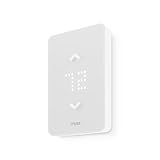
Overview: The Mysa Smart Thermostat LITE brings intelligent climate control to high-voltage electric heating systems at an accessible price point. Designed specifically for 120V-240V baseboard, fan-forced, and convector heaters, this Canadian-engineered device replaces your existing line-voltage thermostat with a sleek, modern unit that integrates seamlessly into major smart home ecosystems without subscription fees.
What Makes It Stand Out: Mysa’s commitment to a truly free app experience distinguishes it from competitors who often hide features behind paywalls. The straightforward 4-wire installation process, backed by a comprehensive video guide, empowers homeowners to complete setup in about 15 minutes without professional help. Its broad voltage compatibility (120V, 208V, 240V) covers virtually all North American electric heating configurations, while the single-pole operation simplifies wiring for most users.
Value for Money: At $99, the LITE version positions itself as a premium yet affordable smart thermostat. While pricier than budget alternatives, it justifies the cost through build quality, reliable Wi-Fi connectivity, and genuinely free advanced features. The potential 26% heating cost reduction can deliver payback within a single winter season for many households, making it a financially sound investment compared to traditional programmable thermostats.
Strengths and Weaknesses: Strengths include intuitive DIY installation, permanent free app access with all features, excellent smart home integration (HomeKit, Alexa, Google), and reliable scheduling capabilities. The minimalist design blends well with modern decor. Weaknesses: single-pole only operation may not suit all existing setups, requires neutral wire which some older homes lack, and the display lacks advanced customization options found in pricier models.
Bottom Line: The Mysa LITE is an excellent choice for homeowners seeking reliable, ecosystem-friendly smart control of electric heaters without recurring fees. Its combination of easy installation and genuine cost savings makes it a top contender in the line-voltage thermostat market.
2. meross Matter Smart Thermostat for Electric Baseboard Heater, Works with Alexa, HomeKit, Google, SmartThings, Programmable WiFi Thermostat for House, Energy Saving, App & Voice Control for Smart Home
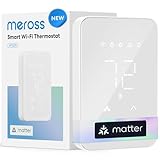
Overview: The meross Matter Smart Thermostat represents the next generation of line-voltage heating control, embracing the new Matter standard for universal smart home compatibility. Engineered for 120-240V electric heating systems, this device breaks down ecosystem barriers while delivering robust scheduling and energy management capabilities at a competitive price point that challenges established brands.
What Makes It Stand Out: Matter certification is the headline feature, ensuring seamless operation across Alexa, Apple Home, Google Home, and SmartThings simultaneously—eliminating the ecosystem lock-in that plagues many smart devices. The open window detection automatically pauses heating when it senses sudden temperature drops, preventing energy waste. Real-time energy monitoring provides immediate feedback on consumption patterns, a feature rarely found in this price category.
Value for Money: Priced at $69.99, this thermostat undercuts many competitors while offering superior interoperability. The Matter future-proofing alone justifies the investment, as it ensures compatibility with emerging smart home standards. Combined with energy monitoring and intelligent features like open window detection, it delivers exceptional value that rivals devices costing twice as much.
Strengths and Weaknesses: Strengths include Matter multi-platform support, energy consumption tracking, intuitive 24/7 visual scheduling, automatic open window detection, and straightforward app control. Installation remains DIY-friendly for those with basic electrical knowledge. Weaknesses: the brand has less heritage in thermostats than established players, some users report occasional Wi-Fi connectivity hiccups, and it requires a neutral wire that may not be present in older installations. The display is functional but less refined than premium alternatives.
Bottom Line: For tech-forward homeowners wanting maximum flexibility and future-proofing, the meross Matter thermostat is a standout choice. Its interoperability and energy insights make it a smart, budget-conscious investment for modern smart homes.
3. meross Smart Thermostat for Electric Baseboard and in-Wall Heaters Work with HomeKit, Alexa and Google Home, 120V-240V Wi-Fi Programmable Thermostat with Easy Install, Energy Saving, 4 Wires Needed

Overview: This meross Smart Thermostat delivers reliable high-voltage heating control with broad smart home integration at a mid-range price point. Supporting electric baseboard, convector, fan-forced, and in-ceiling radiant systems across 120V-240V configurations, it offers precise temperature management with an emphasis on user-friendly operation and clean aesthetics that blend into any room.
What Makes It Stand Out: The thermostat’s impressive 16A maximum load capacity (3840W at 240V) handles more powerful heating systems than many competitors. Its 1℉ temperature accuracy ensures consistent comfort, while the pure white LCD display integrates discreetly into any wall. The 7x24 graphic scheduling interface in the meross app visualizes your entire week’s heating pattern at a glance, simplifying energy-saving programming.
Value for Money: At $75.99, this model strikes a balance between the budget Matter version and premium competitors. It sacrifices Matter certification but maintains core smart features and adds higher power handling. For users committed to a single ecosystem (HomeKit, Alexa, or Google), it offers nearly identical functionality to pricier alternatives, making it a cost-effective solution for larger heating loads.
Strengths and Weaknesses: Strengths include high 16A/3840W load capacity, precise 1℉ temperature control, clean minimalist display, robust scheduling capabilities, and reliable voice control across major platforms. Installation is straightforward with four-wire setups. Weaknesses: lacks Matter future-proofing, requires neutral wire, some users find the app less polished than premium brands, and initial Wi-Fi setup can be finicky. The display, while sleek, offers limited information compared to models with color screens.
Bottom Line: A solid workhorse for larger electric heating systems, this meross thermostat delivers precise control and strong smart integration without the Matter premium. Ideal for users who prioritize power handling and accuracy over cutting-edge interoperability.
4. Mysa Smart Thermostat for Electric Baseboard Heaters 240V | Remote Control with 100% Free APP | Easy Install | HomeKit, Alexa, Google Home | Wi-Fi Programmable | Temp. & Humidity Alerts

Overview: The flagship Mysa Smart Thermostat elevates line-voltage control with premium features and refined design. Built exclusively for 120-240V electric heating, this 40% smaller second-generation unit adds environmental monitoring and adaptive display technology to the brand’s signature easy-install formula, targeting homeowners who want both sophistication and simplicity in climate management.
What Makes It Stand Out: Adaptive brightness technology with sleep/wake on approach creates a futuristic interaction model—the display intelligently responds to your presence. Temperature and humidity alerts provide proactive monitoring beyond basic climate control, notifying you of dangerous conditions. The significantly reduced footprint makes it the most discreet high-voltage thermostat available, perfect for minimalist aesthetics and smaller wall spaces.
Value for Money: At $159, this premium thermostat commands a 60% premium over the LITE version. The investment buys refined hardware, environmental sensors, and adaptive display features absent in cheaper models. For design-conscious homeowners or those needing humidity monitoring, the upgrades justify the cost. However, budget-minded buyers may find the LITE version delivers core functionality at better value.
Strengths and Weaknesses: Strengths include compact 40% smaller design, adaptive proximity-based display, temperature and humidity alert capabilities, rock-solid Wi-Fi performance, permanent free app access, and premium build quality. The scheduling remains intuitive and reliable. Weaknesses: highest price in its category, still requires neutral wire, single-pole only operation, and many users won’t utilize the humidity monitoring enough to justify the premium. The advanced features add complexity some may not need.
Bottom Line: Choose this premium Mysa if you value cutting-edge design, environmental monitoring, and adaptive features. For pure functionality, the LITE offers better value, but this is the line-voltage thermostat to beat for tech-savvy design enthusiasts.
5. KALOR TECH Wi-Fi Smart Thermostat for Electric Baseboard Heaters, 120-240V Systems, Proprietary Wall Plate, LCD Fahrenheit Display, Compatible with Alexa, Google Home, Smart Life and Tuya App

Overview: The KALOR TECH thermostat targets the practical homeowner with a solution-focused approach to line-voltage heating control. Designed for 120-240V systems, this no-nonsense device emphasizes installation certainty and broad app compatibility, shipping with a proprietary wall plate that guarantees fit across North American electrical boxes without additional hardware store trips.
What Makes It Stand Out: The included custom wall plate is genuinely unique—no other brand bundles this crucial component, eliminating the common post-purchase frustration. The Fahrenheit-centric LCD display prominently shows time, target temperature, and Wi-Fi status, prioritizing at-a-glance information over flashy graphics. Compatibility with both Smart Life and Tuya apps provides unusual flexibility for users already invested in those ecosystems.
Value for Money: Priced at $75.95, KALOR TECH positions itself as a pragmatic middle-ground option. The bundled wall plate adds $10-15 value compared to competitors requiring separate purchases. While it lacks advanced features like energy monitoring or humidity sensors, it delivers core smart functionality reliably. The dual-app support and Alexa/Google integration make it a versatile choice for budget-conscious shoppers not needing premium frills.
Strengths and Weaknesses: Strengths include the guaranteed-fit wall plate, clear Fahrenheit LCD display, dual app ecosystem support (Smart Life/Tuya), stable Wi-Fi connectivity, and straightforward programming. The installation is simplified by the included hardware. Weaknesses: less brand recognition than Mysa or meross, limited to 2.4MHz Wi-Fi only, no HomeKit support, basic display aesthetics, and lacks energy monitoring or adaptive features. The app experience feels more utilitarian than polished.
Bottom Line: A practical, frustration-free choice for homeowners who want reliable smart control without premium pricing. The included wall plate and dual-app support make it especially appealing for DIYers and rental property managers seeking hassle-free installation.
6. WOOX Smart Air Conditioner & Heater Pump Controller, WiFi IR Remote Control for Mini Split AC, Portable & Window AC, Temperature and Humidity Automation Controllers, Compatible with Alexa/Google

Overview: The WOOX Smart Controller transforms legacy air conditioners and heat pumps into intelligent devices without replacing your existing unit. Designed for mini-split, window, and portable systems, this WiFi-enabled IR blaster bridges the gap between traditional appliances and modern smart home ecosystems. By connecting to your home network, it enables remote operation through a dedicated app and voice assistants, bringing convenience and energy efficiency to units that lack native connectivity.
What Makes It Stand Out: The built-in Swiss-made thermohygrometer sensor provides precise temperature and humidity monitoring (±0.3°C accuracy), enabling data-driven automation. The 7-day programming and geo-fencing capabilities adapt to your schedule, pre-cooling or heating your space before arrival and shutting down when you leave. The standout IR learning function clones 99% of existing remotes, including ACs, TVs, projectors, and even motorized curtains, making it a universal command center rather than a single-purpose device.
Value for Money: At $49.99, this controller costs a fraction of a new smart AC unit while delivering comparable functionality. The potential energy savings through automated scheduling and geo-fencing can offset the investment within a single cooling season. Compared to brand-specific smart controllers priced at $80-120, WOOX offers broader compatibility at a mid-range price point.
Strengths and Weaknesses: Strengths include wide device compatibility, precise environmental monitoring, comprehensive scheduling options, and multi-device control. The geo-fencing feature genuinely saves energy. Weaknesses involve IR limitations requiring line-of-sight, no support for central HVAC systems, and dependency on stable WiFi. Setup can be tricky with obscure AC brands despite the learning function.
Bottom Line: This controller excels for renters and homeowners with compatible units seeking affordable smart climate control. While not flawless, its versatility and energy-saving features make it a worthwhile upgrade for most ductless or window AC systems.
7. 5PCS Baseboard Heater Thermostat Temperature Control Dial Knob Replacement, Baseboard Heater Knob, Wall Heater Board Knob, White
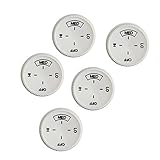
Overview: This five-pack of replacement knobs addresses a common failure point in baseboard heating systems. Designed for specific Engineered Products models, these white plastic knobs restore temperature control functionality to units where original dials have cracked or worn out. Each knob features ribbed sides and clear OFF/LO/MED/HI markings, providing tactile feedback and straightforward operation for basic heating adjustment.
What Makes It Stand Out: The value proposition of five units at this price point distinguishes it from single-knob offerings. The precise compatibility list (1800, 1900, 2500, 2600, C1800, C2500 series) ensures proper fit for designated models, while the ribbed grip design improves usability over smooth alternatives. The standardized D-opening (1/4" x 5/32") matches OEM specifications for secure shaft engagement.
Value for Money: At $18.99 for five knobs ($3.80 each), this pack delivers significant savings compared to purchasing individual replacements at $5-8 apiece. For property managers or homeowners with multiple units, the bulk packaging eliminates repeated shipping costs and ensures matching hardware across installations. However, value diminishes if you only need one knob.
Strengths and Weaknesses: Strengths include cost-effective bulk packaging, exact fit for listed models, improved grip texture, and included accessory kit. Weaknesses involve limited compatibility (won’t fit end-mounted knobs), plastic construction that may degrade again over time, and lack of temperature degree markings (only LO/MED/HI). The D-opening size restricts universal application.
Bottom Line: Ideal for owners of compatible baseboard heater series needing multiple replacements. Verify your model number before purchasing, as the specific fit requirements limit broader applicability. For those with matching units, it’s an economical restoration solution.
8. Smart WiFi Thermostat - Heat & Cool Temperature Controller With Touchscreen | APP & Voice Control Thermostatt For Home Automation | Digital Programmable Thermostat For House RV Hotel | Energy Saving C

Overview: This budget-friendly smart thermostat brings digital climate control to diverse environments including homes, RVs, and hotel rooms. Supporting both heating and cooling modes, it offers touchscreen operation alongside app and voice control integration. The ABS construction withstands temperature fluctuations while the programmable schedule maintains comfort automatically. Designed for DIY installation, it eliminates professional setup costs for standard 24V systems.
What Makes It Stand Out: The sub-$36 price point makes this one of the most affordable WiFi thermostats available. Its versatility across residential and commercial settings (including RVs) broadens its appeal beyond typical home use. The tool-free installation claim simplifies mounting for users uncomfortable with electrical work. Year-round dual-mode operation ensures consistent performance across seasons without manual switching.
Value for Money: At $35.89, it undercuts premium brands like Nest and Ecobee by over $150 while delivering core smart features. For rental properties, RV owners, or budget-conscious homeowners, it provides energy-saving automation without substantial investment. The durable ABS material promises longevity, though long-term reliability remains unproven compared to established brands.
Strengths and Weaknesses: Strengths include exceptional affordability, multi-location versatility, straightforward installation, and comprehensive control options. The touchscreen adds modern interface appeal. Weaknesses involve uncertain build quality at this price, potential limited customer support, basic scheduling compared to advanced learning algorithms, and possible compatibility issues with complex HVAC systems. The touchscreen may be less responsive than premium alternatives.
Bottom Line: A compelling entry-level smart thermostat for straightforward heating/cooling systems. While it lacks advanced features and brand reputation, its price and versatility make it an excellent choice for secondary spaces, rentals, or first-time smart home adopters willing to accept some compromises.
9. Marley Engineered Products Baseboard Heater Thermostat Temperature Control Knob | Marley Fahrenheat Dayton Qmark Berko

Overview: This OEM replacement knob from Marley Engineered Products restores functionality to baseboard heaters across multiple brands including Fahrenheat, Dayton, Qmark, and Berko. As a single-unit offering, it targets homeowners needing one specific replacement rather than bulk quantities. The knob features the same 2-inch diameter and ribbed grip design as original equipment, with standard OFF/LO/MED/HI temperature markings for intuitive operation.
What Makes It Stand Out: Genuine manufacturer backing ensures precise compatibility and reliable fit across the listed brand family. The ribbed sides provide tactile feedback superior to smooth aftermarket alternatives. At under $8, it offers an accessible repair solution that prevents replacing an entire thermostat assembly when only the knob is damaged. The standardized design fits most front-mounted configurations within these brands.
Value for Money: Priced at $7.99 for a single knob, it represents fair value for OEM quality, though more expensive per unit than bulk options. For those needing just one replacement, it avoids overbuying and ensures brand-matched components. The cost remains negligible compared to professional service calls or complete thermostat replacement, making it a sensible DIY repair investment.
Strengths and Weaknesses: Strengths include exact OEM fit, reputable manufacturer support, ribbed grip usability, and clear temperature markings. It’s a simple, effective fix. Weaknesses involve limited compatibility (won’t fit end-mounted units), single-unit packaging requiring multiple orders for several heaters, and basic LO/MED/HI control lacking precise temperature settings. Plastic material may eventually show similar wear to the original.
Bottom Line: Perfect for owners of Marley-family heaters needing a single, guaranteed-fit replacement knob. Verify mounting location before ordering. While not universal, its OEM pedigree justifies the modest premium over generic alternatives for compatible units.
10. Cadet Single Pole Built-In Thermostat Kit for Cadet Electric Baseboard Heaters (Model: BTF1W, Part: 08732), 22 Amp, 240/208/120 Volt, White
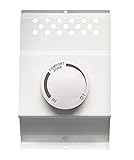
Overview: The Cadet BTF1W thermostat kit provides integrated temperature control for Cadet F series electric baseboard heaters, mounting directly to either end of the unit. This single-pole (2-wire) thermostat offers a 45-80°F temperature range through a large twist dial, eliminating the need for separate wall-mounted controls. Designed for DIY installation, it simplifies wiring while maintaining the heater’s clean aesthetic with its matching white finish.
What Makes It Stand Out: As a built-in solution, it preserves wall space and reduces installation complexity compared to line-voltage wall thermostats. The 22-amp rating accommodates most residential baseboard heaters up to 5,280 watts at 240V. The large, easy-grip dial improves accessibility over small knobs, while the single-pole design provides simple on/off control with low-setting capability when turned fully counterclockwise.
Value for Money: At $19.80, this kit costs less than most wall-mounted line-voltage thermostats while offering comparable functionality. The integrated design saves on additional wiring and installation materials. For Cadet F series owners, it provides OEM-matched performance and aesthetics. However, single-pole operation means no true “off” position at the thermostat, which may concern some users.
Strengths and Weaknesses: Strengths include seamless Cadet F series integration, straightforward mounting, clean aesthetic match, and robust 22-amp capacity. The large dial enhances usability. Weaknesses involve single-pole limitations (no positive off), compatibility restricted to Cadet F series, lack of programming features, and potential temperature inaccuracy compared to digital alternatives. Installation still requires basic electrical knowledge despite DIY claims.
Bottom Line: An excellent OEM upgrade for compatible Cadet baseboard heaters, offering convenient built-in control at a reasonable price. Ideal for homeowners wanting integrated operation without wall thermostat installation. Verify your heater series and consider whether single-pole operation meets your safety preferences before purchasing.
Understanding the Cold Spot Phenomenon
Cold spots aren’t just annoying; they’re symptoms of fundamental inefficiencies in your heating system. Baseboard heaters operate on convection principles, warming air near the floor that then rises unevenly throughout the room. This creates stratification layers where heat pools near ceilings while floor-level spaces remain frigid. Add in variables like exterior wall exposure, window drafts, furniture placement, and room layout, and you get pockets of cold air that traditional thermostats simply cannot address.
The problem compounds in larger rooms or open-concept spaces where a single thermostat reading represents an average temperature that doesn’t reflect actual comfort levels. You might set your thermostat to 72°F, but that reading comes from one location—perhaps a hallway or central wall—while your reading nook by the north-facing window struggles to reach 65°F. Smart climate controllers tackle this issue through distributed sensing and localized control, fundamentally changing how heat is delivered and monitored.
What Defines a “Smart” Climate Controller?
The term “smart” gets thrown around loosely, but genuine intelligence in climate control means more than Wi-Fi connectivity. A truly smart controller processes multiple data streams simultaneously: occupancy patterns, outdoor weather conditions, humidity levels, and thermal characteristics of each room. It anticipates needs rather than merely reacting to temperature drops.
These devices employ predictive algorithms that learn how long your specific baseboard heaters take to warm a space, factoring in insulation quality, solar gain, and even your daily schedule. They understand that your home office needs to be warm by 8 AM on weekdays but can stay cooler on weekends. This predictive capability is what separates sophisticated systems from basic programmable units that simply follow rigid schedules.
Essential Features for Baseboard Heater Compatibility
Voltage and Amperage Matching
Baseboard heaters typically operate on 120V, 240V, or 277V circuits, drawing anywhere from 500 to 2000 watts. Your climate controller must handle your specific electrical configuration without compromise. Smart controllers designed for baseboard systems include robust relays capable of managing high-amperage loads that would fry standard smart thermostats meant for central HVAC systems.
Line-Voltage vs. Low-Voltage Systems
Most baseboard heaters are line-voltage, meaning they carry the full electrical load directly to the heating element. This differs dramatically from low-voltage systems used in furnace-based heating. Smart controllers for baseboard applications must be specifically engineered for line-voltage operation, with appropriate safety certifications and heat dissipation features. Attempting to adapt a low-voltage smart thermostat to a line-voltage system creates serious fire hazards.
Temperature Sensing Technology Explained
Remote Sensor Networks
The magic behind eliminating cold spots lies in distributed temperature sensing. Advanced systems employ wireless remote sensors you place in problem areas—under windows, in distant corners, or near frequently used seating areas. These sensors report real-time conditions back to the main controller, which then adjusts heating output based on the coldest reading rather than an average.
Some premium systems support up to 32 remote sensors per controller, creating a comprehensive thermal map of your home. This network approach ensures that when your toddler’s bedroom by the exterior wall drops below your comfort threshold, the system responds even if the main thermostat location remains adequately warm.
Ambient vs. Object Temperature Measurement
Sophisticated controllers differentiate between air temperature and surface temperatures. Infrared sensors can detect cold walls or drafty windows that pull heat from the room, triggering preemptive heating cycles. This object-based sensing explains why some systems maintain comfort better than others—they’re not just measuring the air; they’re measuring the thermal environment you’re actually experiencing.
Zoning Strategies for Multi-Room Control
True Zone Independence
Effective zoning means each room operates as its own heating zone with independent temperature targets and schedules. The controller manages multiple baseboard circuits simultaneously, directing power where it’s needed most. This requires either multiple controllers synced through a central hub or a single multi-zone unit with separate relay outputs for each room.
The key is independent control, not just remote sensors feeding a single decision-making point. When your kitchen stays warm from cooking while your adjacent dining room remains chilly, true zoning lets you heat the dining room without overcooking the kitchen.
Load Balancing Across Circuits
Smart controllers monitor total electrical load to prevent circuit overloads. If you’re running multiple high-wattage baseboard heaters simultaneously, the system staggers startup times and distributes power intelligently. This protects your electrical panel while maintaining comfort, a critical feature in older homes with limited electrical capacity.
Installation Configurations and Considerations
Wall-Mounted Controllers vs. In-Line Installation
Wall-mounted units replace your existing thermostat, offering user-friendly interfaces and easy access. In-line controllers install directly in the electrical circuit near the baseboard heater itself, providing more discreet operation but requiring more complex installation. Your choice depends on whether you prioritize aesthetics and ease of use or prefer hidden components.
In-line installations often deliver more accurate control since they’re closer to the heat source, but they lack the convenience of on-wall programming. Some hybrid systems use a central wall controller with in-line power modules, giving you the best of both approaches.
Single-Pole vs. Double-Pole Wiring
Baseboard heaters use either single-pole or double-pole thermostats. Single-pole configurations interrupt only one hot wire, leaving the heater partially energized even when “off.” Double-pole setups disconnect both hot wires, providing complete power isolation. Smart controllers must match your existing wiring, though many support both configurations through internal jumper settings.
Wi-Fi Connectivity and Protocol Standards
Mesh Network vs. Direct Wi-Fi
Controllers using mesh networking protocols like Zigbee or Z-Wave create more reliable connections than those relying solely on direct Wi-Fi, especially in homes with thick walls or interference. These devices communicate with a central hub that connects to your router, extending range and reducing the number of devices competing for Wi-Fi bandwidth.
Direct Wi-Fi controllers offer simpler setup—no hub required—but may struggle with connectivity in distant rooms. Consider your home’s layout and Wi-Fi strength when choosing between these approaches.
Offline Operation Capabilities
Quality smart controllers continue functioning during internet outages, maintaining your programmed schedules and local sensor networks. They store settings locally and sync data when connectivity returns. This redundancy ensures you’re not left without heat because of a router reboot or ISP issue, a crucial feature for primary heating systems.
Learning Algorithms and Adaptive Scheduling
Occupancy Pattern Recognition
Advanced systems track your smartphone location, motion sensor data, and manual temperature adjustments to build detailed occupancy profiles. They learn that you typically arrive home around 6:15 PM on weekdays but later on Fridays, adjusting pre-heating cycles accordingly. This goes beyond simple geofencing by incorporating historical patterns and probability modeling.
Thermal Performance Learning
Every home heats differently. Smart controllers measure how quickly temperatures rise and fall in each zone, building thermal models that account for insulation, heater output, and external factors. They learn that your sunroom heats rapidly on sunny winter days but loses warmth quickly after sunset, optimizing energy use accordingly.
Energy Efficiency and Cost Savings Metrics
Degree-Day Analysis Integration
Sophisticated controllers connect to weather services to track heating degree days, correlating energy consumption with outdoor conditions. They provide actual efficiency metrics rather than estimated savings, showing you precisely how many kilowatt-hours you saved during a cold snap versus a mild week. This data helps you understand real-world performance and optimize settings further.
Peak Load Shifting
In regions with time-of-use electricity rates, smart controllers can shift heating to off-peak hours, pre-warming spaces before peak pricing begins. They calculate the optimal pre-heating duration based on your home’s thermal mass and predicted outdoor temperatures, maximizing savings without sacrificing comfort.
Voice Control and Smart Home Ecosystem Integration
Native vs. Bridge Integration
Some controllers offer native support for Alexa, Google Home, and Apple HomeKit, while others require a separate smart home hub as a bridge. Native integration provides faster response times and more reliable voice commands but may limit you to one ecosystem. Bridge solutions offer flexibility but introduce another potential point of failure and latency.
Multi-Command Scenarios
True smart home integration means your climate controller works in concert with other devices. A single voice command like “goodnight” should adjust temperatures, turn off lights, and arm security systems simultaneously. Look for controllers that support complex automation routines rather than just basic temperature adjustments via voice.
Geofencing and Location-Based Control
Multi-User Geofencing Challenges
Households with multiple family members need sophisticated geofencing that considers everyone’s location. Simple radius-based triggers fail when one person stays home while another leaves. Advanced systems use weighted presence detection, maintaining comfort when anyone is home but entering energy-saving mode only when the last person leaves.
Location Accuracy and Battery Impact
Geofencing relies on GPS, Wi-Fi positioning, and cellular triangulation, which impacts smartphone battery life. Quality systems optimize location checking frequency, using motion sensors as primary triggers and geofencing as backup. This preserves battery while maintaining responsiveness.
Data Analytics and Performance Tracking
Granular Usage Reports
Monthly energy reports showing total consumption are table stakes. Advanced controllers provide room-by-room breakdowns, correlating usage with occupancy, weather, and manual overrides. They identify which zones cost the most to heat and suggest optimization strategies, like adjusting setback temperatures or relocating sensors.
Predictive Maintenance Alerts
By monitoring heater resistance and cycling patterns, smart controllers can predict when baseboard units are failing or becoming inefficient. They detect anomalies like extended heating times or unusual power draws, alerting you to maintenance needs before complete failure leaves you without heat.
Safety Certifications and Electrical Standards
UL and ETL Listings
Any controller handling line-voltage must carry UL (Underwriters Laboratories) or ETL (Intertek) certification, confirming it meets rigorous safety standards. These listings verify that the device can handle high currents without overheating, that electrical isolation is adequate, and that failure modes are safe. Never install uncertified controllers on baseboard circuits.
Over-Temperature Protection
Quality controllers include built-in over-temperature sensors that shut down power if internal components exceed safe limits. This protects both the controller and your wiring. Some also monitor the baseboard heater temperature directly, cutting power if the unit itself overheats due to blocked airflow or malfunction.
Troubleshooting Common Installation Issues
Neutral Wire Requirements
Many smart controllers require a neutral wire for their internal electronics, but older baseboard installations often lack neutrals at the thermostat location. Solutions include using controllers with battery backup, installing a neutral wire, or choosing models that power themselves through the heating circuit (though these have limitations). Verify your wiring before purchase to avoid mid-installation surprises.
Ground Loop Interference
In homes with multiple baseboard heaters on separate circuits, controllers can create ground loops that cause erratic operation or communication errors. Isolation transformers or careful circuit mapping may be necessary. This is particularly problematic with remote sensor networks where sensors connect to different electrical panels than controllers.
Future-Proofing Your Investment
Firmware Update Policies
Technology evolves rapidly. Choose controllers from manufacturers with proven track records of multi-year firmware updates that add features and security patches. Some companies abandon older models, leaving you with obsolete hardware. Check community forums and support histories before committing.
Modular System Architecture
The best systems use modular designs where you can upgrade components incrementally. Replace a wall controller without changing in-line modules, or add new sensor types as they become available. This protects your investment and allows you to adopt emerging technologies like occupancy radar or air quality sensors without full system replacement.
Frequently Asked Questions
How do smart climate controllers eliminate cold spots better than traditional thermostats?
Smart controllers use multiple remote sensors placed throughout each room to monitor actual temperatures where you live, not just at a central wall location. They process these readings to identify the coldest zone and adjust heating output accordingly, often running longer but gentler heating cycles that distribute warmth more evenly through convection currents.
Can I install a smart controller myself, or do I need an electrician?
If you’re comfortable with basic electrical work and your installation involves simply replacing an existing thermostat with a compatible unit, DIY installation is feasible. However, any new wiring, circuit additions, or in-line installations near the heater itself should be performed by a licensed electrician due to high voltage and code requirements.
Will smart controllers work with my old baseboard heaters from the 1970s?
Generally yes, as long as the heaters are electrically sound. Smart controllers don’t care about the heater’s age, only its voltage, amperage draw, and wiring configuration. However, extremely inefficient old heaters may benefit more from replacement than from smart control, as their poor design limits what intelligence can achieve.
How many remote sensors do I need per room?
For standard rectangular rooms under 200 square feet, one sensor placed in the coldest area typically suffices. Larger rooms, L-shaped spaces, or rooms with significant architectural features may need two or three sensors. The controller should use the lowest reading to make heating decisions, ensuring no zone drops below your comfort threshold.
Do smart controllers really save money, or just add convenience?
Independent studies show 10-23% energy savings in homes with baseboard heating when using smart controllers with remote sensors and learning algorithms. The savings come from eliminating overheating, optimizing start times, and reducing temperatures in unoccupied zones—not just from scheduling. Convenience is a bonus; efficiency is the primary benefit.
What happens during a power outage?
Smart controllers store all settings and schedules locally in non-volatile memory, so they resume normal operation when power returns. However, you lose remote access and smart features until Wi-Fi and internet service are restored. Battery-backed models maintain time and date settings, while others may need clock resetting after extended outages.
Can I control multiple baseboard heaters in one room with a single controller?
Yes, if they’re on the same electrical circuit. The controller switches the entire circuit, so all heaters on that circuit operate together. For independent control of individual heaters in the same room, you’d need separate circuits or a controller with multiple relay outputs, which is less common in residential systems.
How reliable are geofencing features for controlling heat?
Geofencing works well as a supplemental feature but shouldn’t be your primary control method. GPS accuracy varies, and smartphone battery optimization can delay location updates. The best systems combine geofencing with motion sensors and manual schedules, using location data as one input among many rather than the sole trigger.
Will these controllers interfere with my other smart home devices?
Properly designed controllers use standard communication protocols that coexist peacefully with other devices. However, Wi-Fi-based controllers can congest your network if you have many devices. Mesh protocol controllers (Zigbee/Z-Wave) create their own networks, avoiding interference. Always check protocol compatibility when expanding your smart home ecosystem.
How long do smart climate controllers typically last?
Quality controllers last 10-15 years, matching the lifespan of baseboard heaters themselves. The weak points are usually relay contacts that wear out from switching high currents and capacitors in the power supply. Look for models with replaceable relays and solid-state switching for longevity, and choose manufacturers with strong warranty support.