There’s something almost magical about waking up to the aroma of freshly ground coffee beans, especially when you didn’t have to fumble with a separate grinder before your first cup. Smart coffee makers with built-in grinders have revolutionized the morning routine for coffee enthusiasts, merging the precision of a barista’s toolkit with the convenience of automation. But not all all-in-one machines are created equal, and understanding what separates a truly exceptional brewer from a mediocre appliance requires looking beyond flashy marketing claims.
The marriage of grinding and brewing in a single device promises peak freshness—coffee begins losing its nuanced flavors within minutes of grinding. When executed properly, these machines capture the volatile aromatics and oils at their prime, delivering complexity that pre-ground coffee simply cannot match. Yet the path to barista-quality results depends on a sophisticated interplay of burr geometry, temperature stability, grind consistency, and intelligent programming. This guide dismantles the technology, features, and considerations that matter most, empowering you to evaluate any smart grinder-brewer combination with the discerning eye of a coffee professional.
Top 10 Smart Coffee Makers with Built-In Grinders
Detailed Product Reviews
1. Gevi 10-Cup Drip Coffee Maker with Built-in Grinder, Programmable Brew Coffee Machine with Timer, Reusable Filter, 1.5L Water Tank, Coffee Pot, Warming Plate Burr Grinder Combo

Overview:
The Gevi 10-Cup Drip Coffee Maker with Built-in Grinder positions itself as a versatile mid-range solution for coffee enthusiasts seeking freshness without complexity. This machine combines grinding and brewing in one unit, accommodating anywhere from 2 to 10 cups via its 1.5-liter water tank. The black and silver design houses a burr grinder with extensive customization options, making it suitable for households with varying coffee preferences.
What Makes It Stand Out:
The standout feature is the pre-brew technology that meticulously hydrates grounds before extraction, mimicking professional blooming techniques. With eight grind settings and three strength levels, users can fine-tune their coffee far beyond typical all-in-one machines. The “POWDER 2-10” programming button allows precise coffee-to-water ratio adjustments, ensuring balanced flavor whether brewing a small batch or a full pot.
Value for Money:
At $139.98, this Gevi model strikes an excellent balance between functionality and affordability. Purchasing a separate burr grinder and programmable drip machine would easily cost $200+. The reusable filter eliminates ongoing paper filter costs, while the integrated design saves valuable countertop space.
Strengths and Weaknesses:
Strengths include the burr grinder’s consistency, extensive customization, pre-brew technology for enhanced flavor extraction, and the eco-friendly reusable filter. The 2-10 cup flexibility serves both solo drinkers and families. Weaknesses include limited information about keep-warm duration, the substantial height (16.93") that may not fit under cabinets, and potentially less durable plastic components compared to premium brands.
Bottom Line:
This Gevi coffee maker delivers impressive value for households prioritizing fresh-ground flavor and customization. While it lacks some premium features, its performance-to-price ratio makes it a smart choice for daily use.
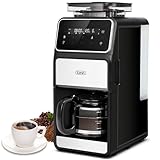
2. Gevi 10-Cup Grind & Brew Coffee Maker with Built-in Burr Grinder – Programmable Touch Screen, 4-Hour Keep Warm, Permanent Filter, Drip Coffee Machine for Home & Office
Overview:
The Gevi 10-Cup Grind & Brew Coffee Maker represents the brand’s premium tier, elevating the coffee experience with smart technology and enhanced versatility. This programmable machine maintains the core 10-cup capacity while introducing a responsive touchscreen interface and extended keep-warm functionality. Designed for both home and office environments, it promises café-quality results with minimal effort.
What Makes It Stand Out:
The oversized touchscreen transforms user interaction, making selection intuitive and modern. Four distinct brewing styles—Classic, Intense, Rich, and Ice—expand your coffee repertoire beyond standard hot drip. The temperature-controlled warming plate maintains coffee for up to four hours, adjustable in 60-minute increments, catering to varied schedules. The 4-10 cup range is more practical for smaller households than the 2-cup minimum of cheaper models.
Value for Money:
At $169.99, this model commands a $30 premium over its sibling but justifies it with meaningful upgrades. The touchscreen alone adds convenience, while the iced coffee capability eliminates separate cold brew equipment. Backed by a 12-month warranty and lifetime technical support, the investment includes peace of mind rare in this category.
Strengths and Weaknesses:
Strengths include the intuitive touchscreen, four brewing styles for ultimate versatility, exceptional 4-hour keep-warm customization, and robust after-sales support. The burr grinder maintains consistency across all settings. Weaknesses include the higher price point, potentially overwhelming options for users wanting simplicity, and the same large footprint requiring ample counter space.
Bottom Line:
For tech-forward households seeking maximum brewing flexibility and extended heat retention, this premium Gevi justifies its price. It’s particularly valuable for offices or families with diverse coffee preferences.
3. Gevi 10-Cup Coffee Maker with Built-in Burr Grinder, Programmable Timer, 1.5L Water Tank, Reusable Filter & Warming Plate – Drip Coffee Machine for Fresh Ground Coffee

Overview:
The Gevi 10-Cup Coffee Maker with Built-in Burr Grinder delivers the essential grind-and-brew experience at an aggressively competitive price point. This model strips away premium interface elements while retaining core technologies like pre-brewing and extensive grind customization. It’s designed for budget-conscious buyers unwilling to compromise on fresh-ground coffee quality.
What Makes It Stand Out:
Remarkably, this sub-$100 machine includes the same pre-brew technology and eight grind settings found in pricier Gevi models. The customizable keep-warm function offers nine time increments from 0-120 minutes, providing more granular control than even some premium competitors. The 2-10 cup capacity with dedicated programming button ensures proper extraction ratios at any volume.
Value for Money:
At $97.49, this represents exceptional value—potentially the best in its class. Comparable machines from established brands start at $150+, making this an accessible entry point for fresh coffee converts. The reusable filter and integrated design maintain long-term savings despite the low upfront cost.
Strengths and Weaknesses:
Strengths include unbeatable pricing, comprehensive grind customization, pre-brew technology, and flexible keep-warm settings. The 1.5L capacity serves groups effectively. Weaknesses include basic button controls lacking modern appeal, limited brand reputation compared to Cuisinart, and the 2-hour default keep-warm being shorter than premium alternatives. The height may also pose under-cabinet clearance issues.
Bottom Line:
This Gevi model is a standout value champion. For those prioritizing function over form and willing to trust a newer brand, it delivers premium features at a budget price that’s hard to ignore.
4. Coffee Maker with Grinder, Programmable Hot and Cold Coffee Maker with 22 oz Glass Carafe, Adjustable Fully Automatic grind and brew Coffee Machine with Timer, Black Americano Iced Coffee Machine

Overview:
This Coffee Maker with Grinder targets a premium niche, offering both hot and cold coffee capabilities in a compact, fully automatic design. With a smaller 22-ounce glass carafe and 1-5 cup capacity, it prioritizes versatility and speed over volume. The machine aims to serve users wanting Americanos, iced coffee, and traditional drip without multiple appliances.
What Makes It Stand Out:
The three-minute brew cycle is remarkably fast, while the ability to produce both hot and cold coffee from whole beans sets it apart. Three grind levels with precision steel burrs and a pure copper motor suggest durable construction. The integrated touch panel controls all variables—strength, temperature, cups, and intensity—with pre-scheduling capability for true automation.
Value for Money:
At $265.99, this machine faces significant value challenges. The limited 22-ounce capacity makes it suitable only for individuals or couples, yet the price rivals commercial equipment. While it replaces separate hot and cold brewers, larger households will find the capacity restrictive. The 30-minute keep-warm is notably short for the price tier.
Strengths and Weaknesses:
Strengths include exceptional brewing speed, hot/cold versatility, quality burr grinder components, and one-minute cleaning with a removable filter. The compact footprint suits small kitchens. Weaknesses include the prohibitive price, limited capacity, frustratingly short warming period, and lack of brand recognition for service support. The glass carafe is more fragile than thermal alternatives.
Bottom Line:
This machine excels for solo users wanting both hot and cold coffee with minimal wait. However, its high price and small capacity make it a specialized choice rather than a practical family solution.
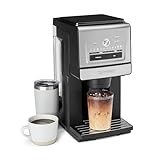
5. Cuisinart Coffee Maker, Custom Grind and Brew Single Cup Coffee Maker, 6 Cup Sizes, Built-in Stainless Steel Burr Mill, Adjustable Strength, Grind Control and Over Ice Feature, Easy Cleaning, DGB-30
Overview:
The Cuisinart DGB-30 Custom Grind and Brew brings the trusted brand’s expertise to the single-serve grind-and-brew category. This machine focuses on delivering one fresh cup at a time, ranging from 8 to 24 ounces, with a built-in stainless steel conical burr mill. It’s engineered for quality-conscious users who prioritize freshness over batch brewing.
What Makes It Stand Out:
Cuisinart’s reputation for durability and performance differentiates it from budget competitors. The machine brews at higher temperatures than typical single-serve units, ensuring proper extraction and hotter coffee. The “Over Ice” feature and adjustable strength settings provide versatility within its single-cup focus. The removable drip tray accommodates travel mugs up to 24 ounces, adding practical flexibility.
Value for Money:
Priced at $172.85, this sits between Gevi’s mid-range and premium models. The Cuisinart name commands a premium but delivers proven reliability and better resale value. For households where one person drinks coffee at a time, it eliminates waste from unused pot coffee. However, batch drinkers will find it limiting compared to 10-cup alternatives at similar prices.
Strengths and Weaknesses:
Strengths include superior build quality with a stainless steel burr mill, hotter brewing temperature, brand-backed warranty support, easy-to-clean removable components, and versatile cup sizing. The grind-off feature accommodates pre-ground coffee. Weaknesses include the single-serve limitation for multiple users, mandatory cleaning after each use, smaller water reservoir requiring frequent refills, and premium pricing for reduced capacity.
Bottom Line:
This Cuisinart excels for solo coffee drinkers or households with staggered schedules who demand premium quality and brand reliability. It’s a worthwhile investment if you value fresh, hot single cups over batch convenience.
6. GE Profile Smart Grind & Brew Coffee Maker w/Podless Single Serve, 90oz Water Reservoir, 10 Cup Thermal Carafe, Voice Control, Adjustable Burr Grinder, SCA Certified, Barista-Quality, Stainless Steel

Overview:
The GE Profile Smart Grind & Brew represents the convergence of specialty coffee standards and modern smart home convenience. This SCA-certified machine delivers barista-quality results through its integrated adjustable burr grinder and extensive customization options. With both single-serve and 10-cup thermal carafe capabilities, it eliminates pod waste while offering voice control integration for tech-savvy households.
What Makes It Stand Out:
Voice control compatibility sets this apart from traditional grind-and-brew units, allowing hands-free operation through smart assistants. The massive 90-ounce removable reservoir means less frequent refilling—brewing up to two full carafes before needing attention. Its six grind settings and programmable bloom time, temperature, and strength controls provide precision typically found only in separate grinder-and-brewer setups. The podless single-serve function directly into your mug is genuinely innovative.
Value for Money:
At $394, this sits in the premium category but undercuts buying separate SCA-grade brewer and burr grinder. Comparable setups easily exceed $500. The thermal carafe, smart features, and dual brewing modes justify the investment for serious coffee enthusiasts wanting convenience without compromising quality.
Strengths and Weaknesses:
Strengths include SCA certification guaranteeing optimal brewing temperatures, exceptional water capacity, true bean-to-cup flexibility, and robust customization. Weaknesses are the limited six grind settings versus dedicated grinders offering 40+ options, reliance on technology that may age, and a learning curve for programming. The stainless steel construction adds durability but increases weight.
Bottom Line:
For those seeking specialty coffee quality with modern convenience, this machine delivers exceptional value. It’s ideal for households wanting both single-serve efficiency and full-carafe capacity without pod waste. The smart features and SCA certification make it a worthwhile investment despite the premium price.
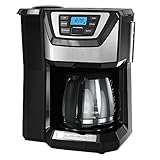
7. Black and Decker BLACK+DECKER 12-Cup Mill and Brew Coffeemaker, Black, CM5000B
Overview:
The BLACK+DECKER 12-Cup Mill and Brew offers entry-level convenience for those seeking an integrated grinding and brewing solution on a strict budget. This straightforward machine combines a blade grinder with a standard drip coffee maker, producing up to 12 cups in one cycle. Its plastic construction keeps costs low while delivering basic programmable functionality for hassle-free mornings.
What Makes It Stand Out:
At this price point, simply having an integrated grinder distinguishes it from conventional drip machines. The 12-cup capacity serves larger households, and the familiar BLACK+DECKER interface requires minimal learning. It’s one of the few grind-and-brew options available under $100, making freshly ground coffee accessible to budget-conscious consumers who prioritize convenience over complexity.
Value for Money:
At $89.99, this is among the cheapest grind-and-brew machines available. While blade grinders and plastic components limit longevity and flavor precision, the price reflects these compromises. For buyers unable to spend more, it still offers fresher coffee than pre-ground alternatives, though separate budget grinder and brewer combos might yield better results for patient consumers.
Strengths and Weaknesses:
Strengths include affordability, large capacity, and simple operation. Weaknesses are significant: blade grinders create inconsistent particle sizes affecting extraction, plastic construction feels cheap and may impact durability, and the generic feature description suggests limited customization. The brewing temperature likely falls below specialty coffee standards, and the product description appears to contain irrelevant espresso-related warnings.
Bottom Line:
This machine suits budget-minded buyers prioritizing convenience over quality. It’s best for households wanting fresher coffee without investing in separate equipment. However, coffee enthusiasts should consider saving for a burr grinder system. For under $100, expectations must remain modest.
8. Cuisinart Single-Serve Coffee Maker + Coffee Grinder with 8, 10, and 12 oz. Serving Size, Compatible with Single-Cup Pods, 48-Ounce Removable Reservoir, Stainless Steel, DGB-2SS

Overview:
The Cuisinart Single-Serve Coffee Maker + Grinder bridges the gap between pod convenience and bean freshness. This versatile machine handles both whole beans—ground automatically via its integrated conical burr grinder—and standard single-serve pods, offering three serving sizes. The 48-ounce removable reservoir and charcoal water filter streamline daily operation while maintaining flavor integrity.
What Makes It Stand Out:
True versatility defines this unit. Unlike dedicated pod machines, it grinds directly into a reusable filter cup, preserving freshness while eliminating pod costs. The sealed bean hopper maintains flavor integrity, and the three-year warranty provides peace of mind rare in this category. Its compatibility with any K-Cup-style pod ensures you’re never locked into one brand ecosystem.
Value for Money:
At $189.95, this mid-range option competes well with premium pod-only machines while adding grinding capability. The conical burr grinder alone justifies $50-75 of the price. Factor in pod savings over time and the generous warranty, and it represents solid value for single-serve households wanting flexibility without multiple appliances.
Strengths and Weaknesses:
Strengths include dual pod/bean functionality, quality burr grinder, generous warranty, and charcoal filtration. Weaknesses are the modest 48-ounce reservoir requiring frequent refills, limited to single-serve (no carafe option), and fewer grind settings than dedicated grinders. Stainless steel construction adds durability but occupies significant counter space compared to compact pod-only units.
Bottom Line:
Perfect for single-serve households torn between pod convenience and bean quality. It eliminates the pod vs. freshness dilemma effectively. While not for large families or espresso lovers, it’s an excellent compromise machine with reliable Cuisinart backing and worthwhile long-term savings.
9. Ninja Luxe Café 3-in-1 Espresso, Drip Coffee and Cold Brew Machine | Integrated Coffee Grinder, Milk Frother, Assisted Tamper & Built-In Espresso Accessory Storage | Stainless Steel | ES601

Overview:
The Ninja Luxe Café redefines home coffee versatility as a true 3-in-1 system capable of espresso, drip coffee, and rapid cold brew. This premium machine eliminates guesswork through Barista Assist Technology, offering guided experiences with automatic grind recommendations, weight-based dosing, and real-time brewing adjustments. Integrated storage and a sophisticated milk frothing system complete the café experience in one sleek package.
What Makes It Stand Out:
No other consumer machine combines these three brewing methods with such intelligence. The 25-grind setting conical burr grinder, weight-based dosing, and active temperature/pressure adjustments deliver professional results. The Dual Froth System simultaneously steams and whisks, creating perfect microfoam without manual skill. Built-in accessory storage maintains countertop elegance while keeping tools organized.
Value for Money:
At $581.99, this is a significant investment but costs less than three separate quality machines. Comparable espresso setups alone exceed $400. For households wanting multiple brewing styles without counter clutter, it offers exceptional value. The technology reduces waste and improves consistency, justifying the premium for serious enthusiasts seeking variety.
Strengths and Weaknesses:
Strengths include unmatched versatility, intelligent automation, professional-grade grinder, exceptional frothing, and compact storage design. Weaknesses are the high price point, complexity that may overwhelm casual users, and potential maintenance demands across three systems. The learning curve is steeper than single-function machines, and its size still requires substantial counter real estate.
Bottom Line:
Ideal for coffee aficionados wanting café-quality variety at home. It masterfully replaces multiple appliances while delivering superior results. Though expensive and complex, it justifies every dollar for those who appreciate espresso, drip, and cold brew. A game-changer for serious home baristas seeking convenience without compromise.
10. Electactic 10-Cup Drip Coffee Maker with Built-in Grinder,Programmable Grind & Brew, Coffee Machines with Smart LED Touchscreen, 24H Timer, Customizable Strength & Grind Size,Black

Overview:
The Electactic 10-Cup Drip Coffee Maker offers programmable grind-and-brew convenience at a budget-friendly price point. This machine combines an integrated grinder with a smart LED touchscreen interface, allowing users to wake to freshly brewed coffee. With adjustable capacity from 2 to 10 cups and customizable strength and grind settings, it provides flexibility for varying household needs and taste preferences.
What Makes It Stand Out:
The 24-hour timer and LED touchscreen bring modern convenience rarely seen under $110. Eight grind settings exceed most budget competitors, while the 2-cup minimum caters to smaller households. The pre-infusion technology and customizable strength levels demonstrate thoughtful engineering for the price. The 2-hour keep-warm function maintains optimal serving temperature above 167°F.
Value for Money:
At $108.63, this represents exceptional value. Most grind-and-brew machines with similar features cost $150+. The combination of programmable timer, multiple grind settings, and thermal management rivals pricier models. While build quality may not match premium brands, the feature set is unbeatable for the price point, making it accessible to budget-conscious consumers.
Strengths and Weaknesses:
Strengths include affordability, programmable convenience, versatile capacity, multiple grind settings, and effective keep-warm function. Weaknesses are unknown brand reputation, likely plastic construction, blade grinder quality concerns (description unclear), and absence of premium features like thermal carafe or advanced filtration. Long-term durability remains unproven, and customer support may be limited.
Bottom Line:
An excellent entry-level choice for budget-conscious buyers wanting programmable freshness. It delivers impressive features for the price, making it perfect for small to medium households. While not built for coffee purists, it outperforms expectations and provides genuine convenience without financial strain. A smart risk for the feature-rich value proposition.
Why Your Grinder is the Unsung Hero of Great Coffee
The grinder is where exceptional coffee begins, yet it’s often the most misunderstood component in home brewing. Particle size distribution directly dictates extraction rate—too fine and you’ll over-extract bitter compounds; too coarse and you’ll under-extract, leaving sour, underdeveloped flavors. Smart coffee makers with built-in grinders eliminate the variables of manual grinding, but the quality of that integrated grinder determines whether you’re achieving uniform extraction or brewing a muddled, inconsistent cup. The best systems use commercial-inspired burr sets and precise motor control to ensure every particle contributes positively to your final brew.
What “Smart” Actually Means in Coffee Maker Terms
“Smart” has become a buzzword that ranges from basic digital timers to sophisticated IoT ecosystems. In the context of premium coffee makers, true smart functionality means adaptive intelligence that responds to variables affecting extraction. This includes automatic grind adjustment based on bean density, altitude compensation for water boiling points, and learning algorithms that remember your strength preferences across different origins. Voice activation and app control are conveniences, but the real intelligence happens in the machine’s ability to maintain consistency while giving you granular control over parameters that matter: grind size, water temperature, bloom time, and brew ratio.
Essential Grinder Features That Make or Break Your Brew
Burr vs. Blade: The Non-Negotiable Distinction
Blade grinders hack beans into random-sized particles, creating dust and boulders that extract unevenly. This is unacceptable for barista-quality coffee. Conical and flat burr grinders, by contrast, crush beans between two precisely engineered surfaces, producing uniform particles. Conical burrs tend to run cooler and are often quieter, while flat burrs can offer slightly more consistency at the cost of generating more heat. In integrated systems, conical burrs dominate due to their compact footprint and thermal management, but the burr material—stainless steel versus ceramic—and diameter significantly impact durability and performance.
Grind Size Settings: Precision Matters
A machine offering only “coarse, medium, fine” settings leaves you guessing. Premium smart grinders provide stepped or stepless adjustment with clear metrics—often 30 to 60 distinct settings calibrated to specific brewing methods from French press to espresso. Look for machines that display the current setting digitally and allow you to save grind profiles for different beans. The ability to make micro-adjustments of 0.1mm or less in burr distance translates to tangible differences in extraction time and flavor clarity.
Grind Consistency: The Secret to Extraction
Consistency isn’t just about average particle size—it’s about the narrowness of the distribution curve. High-end integrated grinders minimize “fines” (ultra-fine particles) and “boulders” (overly large chunks) that create channeling and uneven extraction. This is achieved through burr geometry, motor speed regulation, and declumping mechanisms. Some advanced systems even analyze grind output with sensors and automatically recalibrate, ensuring your medium grind today produces identical results six months from now.
Brewing Technology That Elevates Your Morning Ritual
Temperature Control: The 195-205°F Sweet Spot
The SCAA Golden Cup standard mandates water temperature between 195-205°F throughout the entire brew cycle. Cheap thermostats create temperature swings that muddle flavor profiles. Smart coffee makers use PID (Proportional-Integral-Derivative) controllers—microprocessors that pulse heating elements with precision—to maintain temperature within 1-2°F of target. This stability is crucial for highlighting delicate floral notes in Ethiopian beans or chocolate undertones in Brazilian roasts. Some machines even offer adjustable temperature to optimize for specific origins or roast levels.
Water Distribution: Even Saturation Techniques
Uneven water dispersion creates dry pockets and over-extracted channels, resulting in cups that taste simultaneously bitter and weak. Premium systems employ showerhead designs with multiple nozzles and pulse-brewing patterns that mimic manual pour-over techniques. Look for terms like “pre-infusion” and “pulse brewing” in specifications. The best machines use flow restrictors and pressure profiling to ensure every gram of coffee receives equal water contact, extracting uniform flavor compounds across the entire bed.
Pre-Infusion and Bloom: Mimicking Pour-Over Artistry
Fresh coffee releases carbon dioxide when hot water first hits it—a process called blooming. Without proper pre-infusion, that CO2 creates turbulence that disrupts even extraction. Smart brewers automatically calculate bloom time based on grind size and coffee dose, typically wetting the grounds for 30-45 seconds before full extraction begins. Advanced models allow you to customize bloom volume and duration, letting you experiment with extending bloom time for ultra-fresh roasts or shortening it for older beans that have already degassed.
Smart Features Worth Paying For
Programmability and Scheduling
Basic timers are table stakes; meaningful programmability means setting different schedules for weekdays and weekends, adjusting automatically for daylight saving time, and integrating with your morning alarm. The best systems calculate grind and brew start times so completion coincides with your wake-up moment, not minutes before or after. Look for machines that retain settings during power outages and offer battery backup for the clock.
App Connectivity and IoT Integration
A well-designed coffee app transforms your phone into a remote brewing command center. Beyond starting a brew from bed, premium apps provide grind analytics, water hardness tracking with filter replacement reminders, and brew history logs. Some integrate with smart scales to auto-adjust recipes based on the exact amount of beans you add. True IoT integration means firmware updates that improve performance over time and compatibility with platforms like IFTTT for creating custom automation routines.
Voice Control and Smart Home Ecosystems
“Alexa, start my morning coffee” is convenient, but voice control’s real value lies in complex commands: “Make a strong 12-cup pot using Ethiopian beans” should trigger your saved profile. Effective smart home integration means the coffee maker communicates its status—bean level low, cleaning needed, brew complete—through your home’s ecosystem. Some systems even link to fitness trackers, brewing a lighter cup after your rest day or a stronger one post-workout.
Custom User Profiles and Recipe Saving
Households with multiple coffee drinkers need machines that remember individual preferences. Premium smart brewers store profiles for each user, including grind setting, coffee-to-water ratio, temperature, and brew strength. When you select your profile, the machine automatically adjusts all parameters. Some advanced systems use NFC tags or phone proximity to identify who’s brewing, loading their preferences automatically.
Capacity Considerations for Different Households
Bean Hopper Size: Freshness vs. Convenience
Large hoppers hold a pound or more, reducing refill frequency but exposing beans to light, air, and humidity that degrade quality. The sweet spot for most households is 8-12 ounces—enough for several days without significant freshness loss. Look for hoppers with UV-blocking tinted plastic, airtight seals, and one-way CO2 valves. Some premium machines feature multiple smaller hoppers, letting you switch between decaf and regular or different origins without emptying.
Water Reservoir Capacity
A 60-ounce reservoir means fewer refills but potential for water stagnation. Smart machines with auto-shutoff after 24-48 hours of non-use mitigate this, but ideally, water should be fresh daily. Consider your consumption: a two-cup household doesn’t need a 12-cup machine’s reservoir, while heavy entertainers benefit from plumbed-in models with direct water lines. Removable reservoirs with clear measurement markings simplify cleaning and descaling.
Carafe Options: Glass vs. Thermal
Glass carafes with hot plates keep coffee warm but continue “cooking” it, creating bitter, stewed flavors within 30 minutes. Thermal carafes preserve temperature without heat application, maintaining flavor integrity for hours. Premium thermal carafes use double-wall vacuum insulation and precision-pour spouts. Some smart machines offer both options, detecting which carafe is present and adjusting brew parameters accordingly—thermal carafes often need slightly higher brew temperatures to compensate for heat loss.
Build Quality and Materials That Separate Premium from Problematic
Stainless steel bodies and BPA-free internal components are non-negotiable for durability and safety. The grinder mechanism should be housed separately from electronics to prevent moisture damage. Look for copper or stainless steel boilers rather than aluminum, which can impart metallic notes and deteriorates faster. Heavy-duty brew baskets with flat bottoms promote even extraction better than flimsy, ridged designs. Check warranty terms—three to five years on the grinder mechanism indicates manufacturer confidence.
Maintenance and Cleaning: The Reality Check Most Reviews Skip
Integrated grinders complicate cleaning, and neglect leads to rancid oils and stale grounds tainting every brew. Premium machines feature auto-cleaning cycles for the grinder, removable burr sets for deep cleaning, and clear indicators for maintenance intervals. The brewing path should be fully accessible—look for brew heads that open completely and dishwasher-safe components. Smart diagnostic features can detect clogs or scale buildup before they affect performance, sending alerts to your phone. Budget 15 minutes weekly for thorough cleaning and 30 minutes monthly for deep maintenance.
Price Tiers and What You Actually Get at Each Level
Sub-$200 machines typically use false burrs (crushing, not grinding) and lack temperature stability. The $300-$600 range introduces true conical burrs, PID temperature control, and basic app connectivity. $600-$1,000 machines offer flat burr options, advanced pre-infusion, multiple user profiles, and superior build quality. Above $1,000, you’ll find commercial-grade components, pressure profiling, plumbed-in options, and AI-driven optimization that learns your taste preferences. The law of diminishing returns hits hard around $800—beyond that, you’re paying for marginal gains and luxury materials.
Common Mistakes That Sabotage Your Investment
Buying based on cup capacity rather than brew quality tops the list. Another frequent error is ignoring water quality—hard water destroys internal components and muddies flavor. Using oily dark roasts in grinders not designed for them causes clogging and motor burnout. Many users set grind size once and never adjust it, missing how beans age and require finer grinds over two weeks. Perhaps most damaging is treating the integrated grinder as maintenance-free; failing to clean it weekly leads to flavor degradation that no smart feature can fix.
Matching Machine Features to Your Coffee Personality Type
Are you a “Set It and Forget It” drinker who values consistency above all? Prioritize machines with simple interfaces, reliable scheduling, and minimal manual intervention. The “Tinkerer” needs stepless grind adjustment, customizable temperature, and manual override options for every parameter. “Entertainers” should focus on capacity, speed, and the ability to save multiple profiles for different guests. “Single-Origin Purists” require precise temperature control and gentle pre-infusion to highlight delicate terroir notes. “Tech Enthusiasts” will appreciate API access, detailed brew analytics, and smart home ecosystem depth.
The Environmental and Cost Impact of All-in-One Machines
Integrated systems reduce countertop appliance clutter and energy consumption versus running separate grinder and brewer. However, when one component fails, you may need to replace the entire unit. Calculate total cost of ownership: a $500 machine lasting five years costs less than a $200 machine replaced every 18 months. Look for repairability—machines with replaceable burrs, pumps, and heating elements extend lifespan dramatically. Some manufacturers offer trade-in programs and use recycled materials in construction, reducing environmental footprint.
Future-Proofing: What to Look for in Evolving Smart Tech
Coffee technology evolves rapidly. Choose machines with over-the-air firmware update capability and manufacturers with strong software track records. Modular designs that allow grinder or brew unit upgrades prevent obsolescence. Compatibility with emerging smart home standards like Matter ensures long-term integration. Some forward-thinking brands offer subscription services that include automatic bean delivery synced to your usage patterns and access to cloud-based recipe libraries curated by competition baristas. USB-C ports for firmware updates and accessory connection signal a commitment to future expansion.
Frequently Asked Questions
1. How long do built-in grinders typically last before needing replacement?
With proper maintenance, quality steel burrs last 500-1,000 pounds of coffee (roughly 3-5 years for average households). Ceramic burrs can last longer but are more brittle. Most integrated grinders aren’t designed for user-replacement, so choose machines with robust warranty coverage on the grinding mechanism.
2. Can I use pre-ground coffee in a smart coffee maker with a built-in grinder?
Yes, most machines have a bypass chute for pre-ground coffee, but this defeats the primary benefit of freshness. If you use this feature frequently, ensure the chute is easy to clean, as old grounds can become rancid and contaminate subsequent brews.
3. Are smart coffee makers with grinders too complicated for non-tech-savvy users?
Premium machines balance advanced features with intuitive interfaces. Many offer “simple brew” buttons alongside deep customization menus. The key is finding a model where daily operation is straightforward while advanced settings remain accessible when you want to experiment.
4. How noisy are integrated grinders compared to standalone models?
Integrated grinders typically run 70-85 decibels—similar to standalone burr grinders. However, because they’re enclosed within the machine’s body, some models achieve 5-10 dB noise reduction. Look for grinders with gear reduction motors and rubber isolation mounts for quieter operation.
5. Do these machines work with oily dark roast beans?
Many integrated grinders struggle with very oily beans, which clog burrs and exit chutes. If you prefer dark roasts, look for machines specifically designed with “oily bean” settings, larger burr gaps, and anti-clumping technology. Regular cleaning becomes even more critical.
6. What’s the ideal coffee-to-water ratio for these machines?
While the Golden Ratio is 1:16-1:18 (coffee:water by weight), smart machines let you customize this. Start with 1:17 and adjust based on taste. The machine’s strength settings typically modify this ratio by adjusting grind fineness and contact time rather than just using less water.
7. Can altitude affect performance of smart coffee makers?
Yes, water boils at lower temperatures at high altitude, affecting extraction. Premium machines with altitude compensation automatically adjust brew temperature and time. Without this feature, you may need to manually increase temperature or extend brew time to achieve proper extraction.
8. How do I descale a coffee maker with an integrated grinder?
Descale the brew side every 1-3 months using manufacturer-approved solutions. Never run descaler through the grinder. The grinder itself requires dry cleaning with specialized pellets or manual burr removal for deep cleaning. Smart machines track water hardness and usage to remind you when descaling is needed.
9. Are thermal carafes really better than glass with hot plates?
For flavor preservation, absolutely. Hot plates continue heating brewed coffee, breaking down acids and creating bitter compounds. Thermal carafes maintain temperature without additional heat, keeping coffee tasting fresh for 2-4 hours. The trade-off is slightly higher initial cost and less visual appeal.
10. What happens if the grinder breaks—do I lose the entire machine?
Unfortunately, most integrated units aren’t designed for separate grinder repair. However, some premium brands offer modular repairs through authorized service centers. When purchasing, investigate the manufacturer’s repair policy and whether they sell replacement grinder assemblies. Extended warranties that cover the grinder specifically are worth the investment.