Imagine waking up naturally as sunlight gradually fills your room, or transforming your living space into a cinematic sanctuary with curtains that close automatically as the opening credits roll. Smart curtain motors have revolutionized how we interact with our windows, turning simple fabric panels into intelligent components of a connected home ecosystem. Whether you’re chasing the perfect circadian rhythm or crafting the ultimate home theater experience, these devices offer precision control that was once reserved for luxury hotels and high-end commercial spaces.
But not all smart curtain motors are created equal, and choosing the right system for sunrise alarms versus theater automation requires understanding nuanced differences in performance, connectivity, and integration capabilities. This comprehensive guide dives deep into the technical specifications, installation considerations, and automation features that separate mediocre motors from truly exceptional ones—empowering you to make an informed decision without getting lost in marketing jargon.
Top 10 Smart Curtain Motors for Sunrise Alarms
Detailed Product Reviews
1. Smart Curtain Opener with Remote Control - High-Performance Motor for Roman, T/U-Shaped Tracks - Automated Opening/Closing (WiFi)

Overview: This universal motor adapter transforms existing curtain tracks into smart, automated systems without replacing your hardware. Designed for Roman rods and T/U-shaped tracks, it supports curtains up to 33 pounds and installs tool-free in minutes. Ideal for renters or homeowners seeking an affordable entry into home automation, it works in bedrooms, living rooms, and offices where preserving existing decor matters.
What Makes It Stand Out: The positioning magnet system delivers exceptional accuracy, preventing light leakage and eliminating repetitive calibration—a common frustration with budget smart curtain solutions. The sub-25dB Silent Mode is genuinely whisper-quiet, making it suitable for nurseries and bedrooms. Its broad compatibility stands out: native support for Matter, HomeKit (via optional bridge), Alexa, Google Home, SmartThings, and IFTTT provides future-proof flexibility rarely seen at this price point.
Value for Money: At $57.77, this sits in the sweet spot between basic Bluetooth-only models and premium full-track systems costing $200+. You’re paying for robust smart home integration and a powerful motor that handles heavier curtains than most competitors. While requiring two units for center-opening setups doubles the cost, it’s still more economical than replacing entire window treatments.
Strengths and Weaknesses: Pros include effortless tool-free installation, strong 33lb capacity, ultra-quiet operation, precise magnet-based positioning, and extensive ecosystem support. Cons: incompatible with narrow extendable rods (<5/8"), requires two units for middle-split curtains, and HomeKit integration needs additional hardware. The app experience can be occasionally sluggish during initial setup.
Bottom Line: An excellent choice for retrofitting existing curtains with minimal fuss. Its combination of quiet operation, heavy-duty performance, and comprehensive smart home support makes it ideal for most standard tracks, though center-opening setups require budgeting for a pair.
2. Quoya QL600 Smart Electric Curtain Track, Motorized Motor, Adjustable Track Length, Compatible with Alexa, Google, Siri, Apple Watch (QL600, up to 196 inches (5m))

Overview: This is a complete motorized curtain track system rather than a retrofit adapter, designed for permanent installations and custom window configurations. Supporting tracks up to 196 inches with customizable opening directions, it’s engineered for homeowners undertaking renovations or new builds who want integrated, professional-looking smart window treatments without calling a custom installer.
What Makes It Stand Out: The hidden track joiners and ceiling brackets create a seamless, built-in aesthetic that eliminates the industrial look common with DIY systems. The motor upgrade delivers 20% more power while reducing noise by 10%, handling heavier drapes with authority. The included 63-channel remote is a standout feature for multi-window control, and the availability of 90°/135° bends for bay windows offers solutions rarely found in consumer-grade kits.
Value for Money: At $289, this represents significant value compared to professional motorized track installations that can exceed $1,000. The modular design includes everything needed for standard ceiling mounting (wall brackets cost extra). While pricier than simple motor adapters, you’re investing in a cohesive system with clean aesthetics and robust performance that enhances property value.
Strengths and Weaknesses: Pros: professional hidden hardware design, customizable length up to 5m, powerful yet quiet operation, comprehensive track package, multi-channel remote, bay window bend compatibility. Cons: wall brackets not included, requires more complex installation than clip-on motors, higher upfront cost, bends sold separately, and it’s overkill for renters or simple upgrades.
Bottom Line: Ideal for homeowners seeking a premium, built-in solution during renovations. The clean aesthetics and customization justify the price, but it’s not suitable for renters or those wanting a quick, non-permanent upgrade. Consider only if you’re committed to a full track replacement.
3. Smart Tuya WiFi Blinds Motor, AC100-240V Plug-in for 1.5"/38mm Shade Tubes, Compatible with Alexa/Google Home, APP & Timer Control, No Hub Required - Idea for Zebra, Roman, Roller Shades
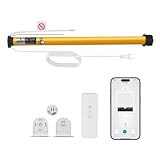
Overview: This specialized motor is designed exclusively for roller-style blinds with 1.5-inch tubes, not traditional curtains. The plug-in AC design eliminates battery concerns, making it perfect for offices and homes with accessible power outlets near windows. It’s a straightforward solution for automating zebra, Roman, and roller shades without replacing the entire window treatment.
What Makes It Stand Out: The universal AC100-240V input is a rare feature, making this motor travel-friendly and suitable for international homes without voltage converters. Direct 2.4GHz WiFi connectivity removes the need for an expensive hub, reducing total ownership costs. The Tuya Smart App ecosystem provides robust scheduling, including sunrise/sunset automation and grouping capabilities that work reliably across multiple windows.
Value for Money: Priced at $88.88, it competes favorably with battery-powered blind motors that require frequent recharging. While cheaper than premium brands like Lutron, it delivers core smart features without proprietary lock-in. The plug-in design means no downtime, justifying the moderate price for those prioritizing convenience over absolute budget savings.
Strengths and Weaknesses: Pros: global voltage compatibility, no hub required, straightforward DIY installation, reliable Tuya app integration, customizable scheduling, and no battery maintenance. Cons: limited to 38mm tubes only (verify before buying), 2.4GHz WiFi constraint, requires proximity to power outlet, not suitable for curtains or tracks, and the included remote feels cheap.
Bottom Line: Perfect for homeowners with compatible roller blinds seeking a hub-free, low-maintenance automation solution. Its niche focus is both its strength and limitation—excellent within its domain but useless for traditional curtains. Measure your tube diameter carefully before purchasing.
4. Aqara Smart Curtain Motor E1(Track Version, 1 Pack), Requires AQARA Zigbee 3.0 HUB, Electric Curtain Driver for Remote Control and Home Automation, Support HomeKit, Alexa, Google Assistant and IFTTT

Overview: This battery-powered motor integrates discreetly behind existing U- and I-rail curtains, offering a wire-free smart solution. However, it demands an Aqara Zigbee hub (sold separately), positioning it specifically for users already invested in the Aqara ecosystem. The 6400mAh battery promises up to a year of operation between charges, making it ideal for clean installations without electrical work.
What Makes It Stand Out: The built-in light sensor enables intelligent automation based on actual sunlight conditions, not just time schedules—a feature rarely found in this price class. Three-speed adjustment allows whisper-quiet morning routines or faster operation when needed. The hidden mounting preserves aesthetic integrity completely, as the motor sits entirely behind curtain folds.
Value for Money: At $89.99 plus a $30-50 hub, total investment reaches $120-140. This is reasonable for a hub-based system offering HomeKit native support and advanced sensors. While cheaper hub-free options exist, the battery convenience and ecosystem integration justify the cost for Aqara users. For others, the hub requirement diminishes value.
Strengths and Weaknesses: Pros: exceptional year-long battery life, wire-free installation, intelligent light sensor, adjustable motor speeds, seamless hub-based automation, and complete aesthetic concealment. Cons: mandatory Aqara hub purchase, limited to specific U/I rail dimensions, lower 26.4lb capacity versus some competitors, and battery anxiety for forgetful users.
Bottom Line: Best suited for existing Aqara smart home owners seeking battery-powered convenience. The hub requirement makes it a poor standalone choice, but within the ecosystem, its sensor-driven automation and long battery life are compelling advantages. Verify rail compatibility meticulously before buying.
5. 2025 Automatic Curtain Opener - Electric Curtains with Remote Smart Curtain Opener Electronic for Roman/U/T Rails, Bluetooth Curtain Opener with App/Timer, Compatible with Alexa and Google Home

Overview: This newcomer positions itself as the most beginner-friendly complete package, bundling both remote and gateway for out-of-the-box voice control without hidden costs. Designed for Roman, U, and T-rails, it targets seniors, renters, and smart home novices with its tool-free, three-step installation that avoids wall damage entirely.
What Makes It Stand Out: Including the required gateway is a major differentiator—competitors often require separate $20-30 hub purchases. The dual-mode operation (Silent at 25dB vs. Power mode) provides flexibility for day/night use. Its marketing emphasizes accessibility for non-tech users, with clear compatibility videos and senior-friendly operation, filling a niche often ignored by tech-heavy brands.
Value for Money: At $85 with gateway included, it undercuts competitors requiring separate hub purchases. This all-in-one pricing eliminates sticker shock and makes true cost clear upfront. While slightly pricier than bare-bones motor-only units, the included remote and gateway, combined with damage-free installation, deliver strong value for renters and gift-givers.
Strengths and Weaknesses: Pros: gateway and remote included, genuinely tool-free installation, supports three common track types, whisper-quiet Silent Mode, intuitive scheduling, and excellent accessibility focus. Cons: being a 2025 model means limited long-term reliability data, requires two units for center-opening curtains, Bluetooth connectivity may be less reliable than WiFi alternatives, and brand recognition is minimal.
Bottom Line: Perfect for first-time smart home users, renters, and as thoughtful gifts for elderly parents. The included gateway and dead-simple installation remove major adoption barriers. While longevity is unproven, its complete package approach and user-friendly design make it an excellent entry point into curtain automation.
6. [Upgraded Version] Aqara Smart Curtain Motor E1 (Rod Version, 1 Pack), Requires AQARA Zigbee 3.0 HUB, Not Support Hubs from Other Brands, Support HomeKit, Alexa and IFTTT
![[Upgraded Version] Aqara Smart Curtain Motor E1 (Rod Version, 1 Pack), Requires AQARA Zigbee 3.0 HUB, Not Support Hubs from Other Brands, Support HomeKit, Alexa and IFTTT](https://m.media-amazon.com/images/I/31MqqXJMVEL._SL160_.jpg)
Overview: The Aqara Curtain Motor E1 offers a seamless way to automate existing curtain rods without drilling or tools. This retrofit solution attaches directly to your current rod, hiding discreetly behind your curtains while providing full smart home integration through the required Aqara Zigbee 3.0 Hub.
What Makes It Stand Out: Its impressive 6000 mAh rechargeable battery delivers up to a year of operation on a single charge, far exceeding most competitors. The native HomeKit support is a major advantage for Apple ecosystem users, while Zigbee connectivity ensures reliable, low-power communication. The tool-free installation preserves your decor and works with most uniform rods measuring 0.99-1.25 inches in diameter.
Value for Money: At $99.99, the motor itself is reasonably priced, but the mandatory Aqara Hub (sold separately) adds $30-60 to your total investment. Compared to complete replacement systems costing $200+, it’s still economical for single-window automation. However, ecosystem lock-in means you can’t use existing Zigbee hubs.
Strengths and Weaknesses: Pros include effortless installation, exceptional battery life, multi-platform support, and stable Zigbee connectivity. Cons are the required Aqara hub purchase, limited rod compatibility (no telescopic rods), and the 400-inch range limitation from hub to motor.
Bottom Line: Ideal for Apple HomeKit users seeking a non-destructive curtain automation solution. The long battery life and clean installation justify the ecosystem commitment, but verify rod compatibility before purchasing.
7. VEVOR Automatic Curtain Opener, APP and Remote Control, Hub Included, Electric Smart Curtain Opener Compatible with Alexa and Google Home, Timed Opening and Closing, for U-shaped/I-shaped Rails

Overview: The VEVOR Automatic Curtain Opener provides an affordable entry into smart curtains, including the hub in the package. Designed for U-shaped and I-shaped tracks common in rental properties, it clips onto existing hardware without drilling or permanent modifications, making it perfect for temporary living situations.
What Makes It Stand Out: Including the hub at this price point is exceptional value. The three control methods—app, remote, and voice—offer flexibility, while Quiet Mode ensures bedroom-friendly operation. Its compatibility with both U and I-track profiles covers most standard curtain installations found in apartments and older homes.
Value for Money: At $58.90 with hub included, this is one of the most cost-effective smart curtain solutions available. Competitors often charge $80-100 just for the motor, plus another $30-50 for a hub. The six-month battery life from dual 2000mAh batteries is adequate for the price point.
Strengths and Weaknesses: Pros include unbeatable price with hub, versatile track compatibility, simple installation, and quiet operation mode. Cons are shorter battery life than premium alternatives, limited smart home platform support (no HomeKit), and VEVOR’s less established smart home ecosystem.
Bottom Line: A fantastic budget choice for renters or first-time smart home users. It delivers core automation features without breaking the bank, though power users may miss advanced integrations.
8. Smart Curtain Track System with Mini Wifi Motor, Automatic Ceiling Curtain Opener, Motorized Curtains Rod 126’’(3.2m) with App, Voice, Remote Control, Compatible with Alexa,Google and Siri

Overview: This complete smart curtain system includes a 126-inch J-track and a remarkably compact WiFi motor measuring just palm-sized. Unlike retrofit options, it replaces your entire track system but offers a clean, integrated solution with noise levels under 33 decibels, making it ideal for bedrooms and living spaces.
What Makes It Stand Out: The mini motor’s diminutive size allows for discreet installation where headspace is limited. The track’s built-in sound-deadening rubber pads achieve 90% physical noise reduction, creating one of the quietest operations available. Native WiFi connectivity eliminates the need for a separate hub, simplifying setup and reducing costs.
Value for Money: At $129 for a complete 10.5-foot track system and motor, it competes favorably with custom installations costing $300+. The hub-free design saves an additional $30-50, though it’s limited to J-track compatibility and requires full track replacement.
Strengths and Weaknesses: Pros include whisper-quiet operation, compact motor design, complete system inclusion, multi-platform voice support, and no hub requirement. Cons are J-track exclusivity (won’t work with existing rods), permanent installation requirement, and potential compatibility issues with non-standard tracks or very heavy curtains.
Bottom Line: Perfect for new installations or full replacements where silence is paramount. The integrated design and quiet operation justify the moderate price premium over basic retrofit kits, especially for noise-sensitive environments.
9. Go Smart Bridge Home Automation Hub for Motorized Blinds Compatible with Alexa, Google Home, IFTTT, Control4, Siri; Remote, App & Voice Control

Overview: The Go Smart Bridge serves as a universal command center for existing motorized window treatments, bridging traditional RF motors with modern smart home platforms. It controls blinds, shades, and curtains from numerous brands through a single interface, eliminating the need for multiple proprietary apps.
What Makes It Stand Out: Unparalleled motor compatibility spans multiple brands including Neo, Bofu, and Simplicity, making it invaluable for homes with mixed window covering types. Professional integration with Control4 and support for advanced platforms like IFTTT and Siri Shortcuts surpass typical consumer hubs, offering scene-based automation and geolocation triggers.
Value for Money: At $189, it’s expensive for a hub alone, but potentially saves hundreds by preserving existing motorized investments. One controller per floor is recommended, making whole-home coverage costly. However, it eliminates the need to replace functional motors just to gain smart features.
Strengths and Weaknesses: Pros include extensive brand compatibility, professional smart home integration, group control capabilities, and multi-platform support. Cons are high price, lack of Apple HomeKit compatibility (despite Siri Shortcuts), 150ft range limitation, and requirement for existing compatible motors.
Bottom Line: A specialized solution for homes with existing motorized window treatments seeking unified smart control. The cost is justified only if you’re leveraging existing motor investments, not for new installations.
10. Sortfle AM25 Smart Blinds Motor for 1.75" (43mm) Shade Tube, Zigbee Electric Roller Shade, Tubular Motor, App Timer and Group Control, Compatible with Alexa and Google Home

Overview: The Sortfle AM25 is a specialized Zigbee motor designed specifically for roller shades with 1.75-inch tubes. It replaces the manual mechanism inside the shade tube, converting existing roller shades into smart, app-controlled window treatments without replacing the entire shade assembly.
What Makes It Stand Out: Built-in 433MHz RF control provides backup operation that penetrates walls, useful when Zigbee connectivity fails. The motor handles up to 8 pounds of fabric, accommodating shades up to 120 inches wide—impressive capacity for the price. The included remote control adds immediate manual operation without app dependency, and multi-channel remotes can control multiple shades.
Value for Money: At $96.88, it’s competitively priced for a shade-specific motor, but requires a separate Tuya Zigbee Hub ($20-30). Total investment remains reasonable compared to complete smart shade replacements costing $200+. The dual control methods and included accessories enhance overall value.
Strengths and Weaknesses: Pros include strong lifting capacity, dual Zigbee and RF control, shade-specific design, and included remote. Cons are mandatory hub requirement, limited to 1.75-inch tubes, moderate 4-6 month battery life, and lack of HomeKit support.
Bottom Line: An excellent retrofit solution for roller shades with compatible tubes. The powerful motor and dual control methods make it practical, but verify tube dimensions and factor in hub cost before purchasing.
Understanding Smart Curtain Motor Technology
Smart curtain motors represent a fascinating convergence of mechanical engineering and wireless communication protocols. At their core, these devices convert electrical energy into precise linear or rotational motion, but the sophistication lies in how they receive commands and integrate with your broader smart home ecosystem. Modern units typically employ either tubular motors that fit inside the curtain rod itself or external drive units that pull the curtains along a track.
The Mechanics Behind Smooth Operation
The internal gearbox design determines everything from lifting capacity to operational noise. High-quality motors use planetary gear systems that distribute load evenly, resulting in whisper-quiet operation at around 30-35 decibels—roughly the sound of a quiet library. Cheaper alternatives often employ spur gears that create more noise and wear down faster, especially when moving heavier blackout curtains essential for both sunrise simulations and theater environments.
Why Smart Curtains Transform Sunrise Alarm Experiences
Traditional alarm clocks jolt you awake with sound, interrupting sleep cycles and leaving you groggy. Sunrise alarms work by gradually increasing light exposure, which naturally suppresses melatonin production and cortisol awakening response. Smart curtain motors take this concept further by providing precise control over how quickly that morning light enters your room, creating a personalized dawn simulation that aligns with your sleep chronotype.
Circadian Rhythm Optimization
Your biological clock responds most effectively to light transitions that mimic natural sunrise patterns—typically 30-45 minutes from first light to full brightness. Smart motors allow you to program this exact progression, adjusting for seasonal changes in sunrise times and even compensating for overcast days when natural light is insufficient. The motor’s speed control becomes crucial here; too fast and you lose the gradual effect, too slow and you might oversleep.
Theater Automation: Creating Immersive Environments
Home theater automation demands a different performance profile. Here, curtain motors must synchronize with multiple AV components—projectors, screens, lighting, and audio systems—to create seamless scene transitions. The opening ceremony of movie night becomes a choreographed performance where curtains close at precisely the right moment, eliminating screen glare and signaling to your brain that it’s time to suspend disbelief.
Synchronization Protocols Matter
For theater applications, motor response time and integration latency become critical factors. You need motors that can receive commands via low-latency protocols like Zigbee 3.0 or Thread, rather than cloud-dependent WiFi that might introduce 1-3 second delays. This ensures your curtains begin moving the instant your projector warms up or your AV receiver switches inputs, maintaining that magical suspension of reality.
Key Features to Evaluate Before Buying
Motor Power and Weight Capacity
The motor’s torque rating directly impacts which curtains it can handle. For theater automation with heavy velvet blackout curtains, you’ll need motors rated for at least 8-12 kg of pull force. Sunrise alarms typically use lighter sheer or linen curtains, allowing for more compact 4-6 kg motors. Always calculate your curtain weight including hardware, then add 20% overhead for reliable long-term operation.
Connectivity Standards Explained
WiFi-enabled motors offer direct smartphone control but can congest your network and rely on cloud servers. Zigbee and Z-Wave create mesh networks that work offline and respond faster, crucial for theater timing. Bluetooth provides simple setup but limited range. Matter-enabled devices promise future-proof interoperability but remain relatively new to market. Consider your existing smart home hub when making this decision.
Decibel Ratings and Noise Control
For sunrise alarms, any motor noise above 40 decibels can become a disruptive alarm itself. Look for models with soft-start technology that gradually ramp up speed, eliminating the jarring initial jolt. Theater applications can tolerate slightly more noise—up to 45 decibels—since they’ll operate before audio begins, but quieter is always better for maintaining that premium feel.
Power Solutions: Battery vs. Hardwired
Battery-powered motors offer installation flexibility but require recharging every 3-6 months depending on usage frequency. For daily sunrise routines, expect to recharge quarterly. Hardwired solutions provide unlimited power but demand electrical work, making them ideal for new construction or major renovations. Solar-powered options exist but remain niche, performing best in south-facing windows with direct sunlight—somewhat ironic for blackout curtain applications.
Battery Chemistry Considerations
Lithium-ion batteries dominate the market, but their performance degrades in temperature extremes. If your theater windows receive direct afternoon sun, internal temperatures can exceed 40°C, accelerating battery aging. Nickel-metal hydride alternatives handle heat better but offer shorter runtimes. Hardwired systems bypass these concerns entirely.
Track Compatibility and Retrofitting
Most smart motors work with existing tracks, but compatibility varies. I-beam tracks common in US homes require different adapters than European U-rail systems. Measure your track profile carefully—width, height, and runner type—before purchasing. Some motors clamp onto existing rods, while others need complete track replacement. For curved tracks often used in theater setups, verify the motor can handle the radius without binding.
Custom Track Solutions
Professional theater installations often use dual-track systems: sheer curtains for daytime privacy and blackout curtains for viewing. Look for motors that support synchronized dual-channel operation or master-slave configurations where one motor triggers another. This allows independent control while maintaining coordinated automation scenes.
Control Interfaces and User Experience
Physical remotes provide reliable basic control but often get lost in sofa cushions. Voice control through Alexa, Google, or Siri offers hands-free operation but requires precise command syntax. Smartphone apps deliver detailed scheduling but can feel cumbersome for simple adjustments. The best systems offer all three, plus wall-mounted control panels that mimic traditional light switches for family-wide accessibility.
Advanced Scheduling Capabilities
Beyond simple open/close timers, sophisticated motors support conditional scheduling: “Open curtains 30 minutes before alarm, but only if sunrise is before 7 AM” or “Close blackout curtains when projector input activates.” These rules-based automations require motors with local processing power, not just cloud relays. Check if the motor stores schedules locally or depends on constant internet connectivity.
Smart Home Integration Depth
Basic integration might allow voice commands, but deep integration means your curtains become triggers for other devices. When sunrise alarm curtains open, they should simultaneously raise smart blinds, adjust thermostat temperature, and start the coffee maker. For theater, closing curtains should dim lights, set receiver to movie mode, and activate soundproofing panels if available. Look for motors with IFTTT support or direct API access for these advanced scenarios.
Hub Ecosystem Compatibility
SmartThings, Hubitat, Home Assistant, and Apple HomeKit each handle devices differently. HomeKit requires HomeKit Secure Video certification for full functionality. Home Assistant users should prioritize MQTT-enabled motors for maximum customization. Proprietary hubs often limit third-party integration, while open ecosystems provide more flexibility at the cost of setup complexity.
Light Sensors and Ambient Intelligence
Integrated light sensors allow curtains to respond to actual conditions rather than just time. For sunrise alarms, this means opening earlier on overcast days to achieve the same light level. In theaters, sensors can automatically close curtains when afternoon sun creates screen glare, even if you haven’t started a movie. The sensor’s placement—whether on the motor itself or on a separate window-mounted unit—affects accuracy and response time.
Calibration and Sensitivity
Quality sensors offer adjustable sensitivity to prevent false triggers from passing clouds or car headlights. Look for models that sample light levels over 5-10 minute averages rather than instant readings. Some advanced systems even use UV sensors to distinguish between natural and artificial light, ensuring your sunrise alarm isn’t triggered by streetlights.
Safety Mechanisms and Obstruction Detection
Children and pets make safety paramount. Good motors include current-sensing technology that reverses direction if they detect resistance—like a caught toy or curious hand. Some also use infrared beams across the track to stop before contact occurs. For theater setups where curtains might hide expensive equipment, this feature prevents costly accidents. Check for certifications like UL 325 or CE marking that validate these safety claims.
Manual Override Options
Power outages shouldn’t trap you behind closed curtains. Quality systems include manual pull cords or clutch releases that disengage the motor, allowing hand operation. Some battery models even harvest energy from manual pulling to recharge slightly. Test this feature before installation—some releases require surprising force or awkward angles that defeat their purpose.
Installation Complexity and Professional Help
DIY installation can save hundreds of dollars but requires basic electrical knowledge and precise measurements. Most manufacturers provide video tutorials and templates. However, hardwired installations, custom tracks, or integration with existing home automation systems often warrant professional installation. Factor $150-$300 per window for professional mounting and configuration.
Calibration and Setup Time
Initial setup involves teaching the motor your curtain’s open and close positions, setting speed profiles, and calibrating sensors. This typically takes 30-45 minutes per window for first-timers. Some motors use auto-calibration that detects endpoints automatically, while others require manual programming. Theater setups need additional time for scene synchronization testing across multiple devices.
Budget Considerations and Total Cost of Ownership
Entry-level motors start around $80 but often lack quiet operation and robust integration. Mid-range options at $150-$250 offer the best balance for most users. Premium systems exceeding $350 provide professional-grade quiet operation, advanced sensors, and rock-solid reliability. Remember to budget for potential track replacement, professional installation, and hub purchases if you don’t already have a compatible system.
Long-term Value Factors
Warranty length reveals manufacturer confidence—look for 2-3 year coverage on motors and at least 1 year on batteries. Firmware update frequency indicates ongoing support; check if the company has updated products older than 2 years. Community forum activity suggests strong user bases that can help troubleshoot issues. A cheap motor that fails in 18 months costs more than a reliable one at double the price.
Troubleshooting Common Performance Issues
Even premium motors experience problems. Sluggish response often indicates weak WiFi signals or mesh network congestion—solvable with signal repeaters. Uneven curtain movement usually means dirty tracks or imbalanced weight distribution; regular track cleaning every 6 months prevents this. Random opening/closing typically stems from interference from neighbor’s devices on the same frequency, requiring channel changes in your hub settings.
Firmware Glitches and Recovery
Some motors freeze during firmware updates, requiring factory resets. Keep documentation handy for reset procedures, which often involve obscure button combinations. Before updating, check community forums for reports of bugs. For theater applications, never update firmware the day of a big movie night—schedule updates for low-usage periods and test thoroughly afterward.
Future-Proofing Your Investment
The smart home landscape evolves rapidly. Matter standard adoption promises universal compatibility, but not all current devices will upgrade via firmware. When possible, choose motors with over-the-air update capability and processors powerful enough to handle new protocols. Modular designs that allow battery pack replacement or connectivity module swaps extend useful lifespan significantly.
Scalability for Whole-Home Deployment
If you plan to automate multiple rooms, ensure the system supports grouping and zone control. You don’t want to control each window individually when leaving home. Look for motors that integrate with whole-home automation platforms like Control4 or Crestron, even if you don’t use them now. This preserves upgrade paths and can increase home resale value.
Frequently Asked Questions
Will smart curtain motors work with my existing curtains, or do I need special ones?
Most smart motors work with standard curtain panels, but weight is the limiting factor. Heavier blackout curtains for theater use require higher torque motors, while lightweight sheers work with virtually any system. The key measurement is total weight including hooks, rings, and liners. Check the motor’s rated capacity and stay below 80% of that maximum for reliable operation. Pleated, grommet, and back-tab curtains all work, though rod-pocket styles may need clip-on adapters.
How reliable are battery-powered motors for daily sunrise alarms?
Modern lithium-ion battery motors reliably handle daily operation for 4-6 months per charge, but this assumes one full cycle per day. Sunrise alarms that only partially open curtains extend battery life significantly. Most systems alert you via app when battery drops below 20%, giving 2-3 weeks of warning. For absolute reliability, consider hardwired installations or keep a backup battery pack charged and ready for quick swaps.
Can I integrate these motors with my existing smart home hub?
Compatibility depends on protocols. Zigbee and Z-Wave motors integrate with most hubs (SmartThings, Hubitat, etc.), while WiFi models often use proprietary apps with limited hub support. Matter-enabled devices promise universal compatibility but are still rolling out. Check your hub’s supported device list before purchasing, and favor motors with official hub certification over “works with” claims that often mean limited functionality.
What’s the noise difference between budget and premium motors?
Budget motors typically operate at 45-55 decibels—noticeable but not disruptive. Premium models achieve 30-35 decibels, quieter than a whisper. The difference comes from gear quality, motor balancing, and vibration damping. For sunrise alarms, this matters greatly; for theater use, you can tolerate slightly more noise since curtains move before audio starts. Listen to video demonstrations with your eyes closed to judge what level you find acceptable.
Do smart curtain motors work during power outages?
Battery-powered motors continue operating normally during outages, making them ideal for areas with unreliable power. Hardwired models with battery backup maintain schedules but may lose remote control connectivity if your WiFi router lacks backup power. Models without backup simply stop where they are. For theater setups, consider an uninterruptible power supply (UPS) for your entire AV rack, including curtain controllers, to maintain full functionality.
How precise can sunrise alarm timing be with these motors?
Precision depends on whether schedules run locally or in the cloud. Local processing achieves ±1 minute accuracy, while cloud-based scheduling can vary by 5-15 minutes depending on internet latency and server load. High-end motors also adjust for your location’s actual sunrise time, pulling astronomical data that accounts for your exact coordinates and the current date, ensuring consistent light levels year-round.
Can I set different opening speeds for morning versus evening use?
Advanced motors support multiple speed profiles programmable through their app. You might want slow, gentle opening over 3 minutes for sunrise alarms but rapid 15-second closing for theater mode. Some systems even allow speed ramping—starting slow, accelerating through the middle, then slowing again for a soft stop. This level of control typically requires motors with dedicated processors rather than basic microcontroller units.
What’s the lifespan of a typical smart curtain motor?
Quality motors rated for 10,000-20,000 cycles can handle daily use for 13-27 years. However, electronic components like capacitors may fail earlier, especially in temperature extremes. Realistic expectations are 5-7 years for battery-powered units and 7-10 years for hardwired models. Motors used only for theater (a few cycles per week) will outlast those running daily sunrise routines. Look for replaceable drive belts and gears in high-end models to extend lifespan.
Are there security risks with internet-connected curtain motors?
Any WiFi device presents potential vulnerabilities. Minimize risks by choosing motors that support WPA3 encryption, disabling remote access if you only use them at home, and keeping firmware updated. Zigbee and Z-Wave are inherently more secure due to their mesh nature and local processing. For maximum security, use a separate IoT network VLAN that can’t access your main computers or NAS devices.
Can I manually control curtains if the motor fails or I lose my phone?
All quality motors include manual override capabilities, typically via a pull cord that disengages the drive mechanism or a button that activates manual mode. Some also work with traditional wall switches wired in parallel. Always test manual operation during installation—don’t wait for an emergency. Keep a physical remote in a known location as backup, and ensure family members know how to operate curtains manually without the app.