Basements are notorious for being damp, musty spaces where mold thrives quietly behind the scenes. That earthy smell hitting you at the bottom of the stairs? It’s not just unpleasant—it’s a warning sign that humidity levels are creating a five-star resort for mold spores, mildew, and dust mites. While traditional dehumidifiers have been battling basement moisture for decades, today’s smart models bring a level of precision, automation, and control that transforms passive moisture removal into active home protection. These intelligent systems don’t just run on timers; they learn your space, adapt to weather patterns, and alert you before problems escalate, making them indispensable tools for any homeowner serious about structural integrity and indoor air quality.
Understanding what makes a dehumidifier truly “smart” for basement applications requires looking beyond flashy app interfaces. The real value lies in sensor accuracy, automated drainage solutions, low-temperature performance, and integration with your broader home ecosystem. Whether you’re dealing with a mildly clammy finished basement or a chronically wet unfinished crawl space, the right technology can mean the difference between constant maintenance and set-it-and-forget-it peace of mind. Let’s explore the critical features and considerations that separate exceptional basement dehumidifiers from underperforming units that’ll leave you disappointed—and still dealing with mold.
Top 10 Smart Dehumidifiers for Basements
Detailed Product Reviews
1. 4500 Sq.Ft Most Efficient Energy Star 2025 Dehumidifier,AEOCKY Max 80 Pint/Day Smart Compressor Dehumidifier with Drain Hose, Intelligent Humidistat,for Basement,Bedroom,Home,Bathroom

Overview: The AEOCKY 4500 Sq.Ft Energy Star 2025 Dehumidifier delivers industrial-grade moisture removal for large homes, extracting up to 80 pints daily in demanding 95°F/95%RH conditions. Engineered for spaces exceeding 4,500 square feet, this unit targets basements, bedrooms, and whole-house applications where precise humidity control is critical. Its compliance with the stringent 2025 Energy Star “Most Efficient” standard—achieved by only 2.6% of models—positions it as a forward-thinking investment for energy-conscious homeowners seeking maximum performance.
What Makes It Stand Out: The cutting-edge Rotor Compressor Pro+ with a “3+3” copper coil configuration distinguishes this unit from conventional alternatives. Unlike competitors using aluminum tubes, AEOCKY employs 7mm pure copper pipes with high-tooth internal threading for superior heat exchange and longevity. Millisecond-level humidity detection with proprietary compensation algorithms maintains precise moisture levels, while the power-off memory function enables seamless smart home integration. Remarkably, it operates effectively down to 42°F thanks to advanced defrost sensors, solving a critical failure point in traditional compressor dehumidifiers.
Value for Money: At $227.97, this unit commands a premium but justifies it through 50% efficiency gains over non-certified models, potentially saving $1,000 annually in electricity for continuous operation. The pure copper construction ensures durability that aluminum alternatives cannot match, translating to a longer service life and fewer replacements. When amortized over 5-7 years, the total cost of ownership favors this investment over cheaper, inefficient competitors that require earlier replacement.
Strengths and Weaknesses: Strengths:
- Exceptional 2025 Energy Star efficiency rating
- Pure copper coil construction for maximum durability
- Smart humidity control with millisecond-level detection
- Reliable operation in temperatures as low as 42°F
- Power-off memory for smart home compatibility
Weaknesses:
- Higher upfront cost may deter budget-conscious buyers
- Complex features require technical understanding
- Larger footprint than basic dehumidifiers
- Drain hose details not prominently featured in marketing
Bottom Line: This dehumidifier represents the pinnacle of residential moisture control technology. For homeowners prioritizing long-term efficiency, durability, and smart integration in large spaces, the AEOCKY Rhea-001 delivers unmatched value despite its premium price point.
2. 5500 Sq.Ft Most Efficient Energy Star 2024 Dehumidifier,AEOCKY Max 105 Pint/Day Smart Compressor Dehumidifier with Drain Hose,Intelligent Humidistat,for Basement,Bedroom,Home,Bathroom
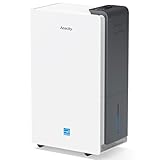
Overview: The AEOCKY 5500 Sq.Ft Energy Star 2024 Dehumidifier scales the brand’s efficient design for expansive homes up to 5,500 square feet, extracting an impressive 105 pints daily in peak summer conditions. Built for whole-house dehumidification, this unit tackles severe moisture problems in basements, crawlspaces, and multi-level residences. Its 2024 “Most Efficient” certification places it among the top 2.6% of units for energy performance, ensuring substantial electricity savings.
What Makes It Stand Out: The Rhea-002 shares the revolutionary Rotor Compressor Pro+ and “3+3” pure copper coil architecture with its smaller sibling, but engineers it for maximum output. The system maintains precise humidity control through millisecond-level sensing and proprietary algorithms, preventing energy waste common with less responsive units. The 42°F operational floor demonstrates superior defrost management, while power-off memory enables integration with smart plugs for automated scheduling. This unit essentially future-proofs large home moisture management.
Value for Money: Priced at $339.99, this represents a significant investment that pays dividends through 50% energy savings versus conventional models—up to $1,000 annually for continuous use. The robust copper construction and commercial-grade components suggest a lifespan exceeding 7-10 years, making the per-year cost competitive with cheaper units requiring replacement. For homes genuinely needing 5,500 sq ft coverage, alternatives often require multiple units, making this single-unit solution economically superior and simpler to manage.
Strengths and Weaknesses: Strengths:
- Massive 105-pint capacity for extra-large spaces
- Premium copper coil construction for longevity
- Advanced smart features and humidity accuracy
- Exceptional low-temperature performance
- Single-unit solution eliminates multiple device complexity
Weaknesses:
- Substantial upfront investment
- Overkill for spaces under 3,500 sq ft
- May require dedicated electrical circuit
- 2024 certification slightly less current than 2025 models
Bottom Line: For homeowners with genuinely large dehumidification needs, this unit eliminates the complexity of managing multiple devices. The premium price is justified by superior efficiency, build quality, and coverage that cheaper alternatives cannot match, making it a wise long-term investment.
3. 4500 Sq.Ft Energy Star 2025 Dehumidifier,AEOCKY Max 74 Pint/D Smart Compressor Dehumidifier with Drain Hose, Intelligent Humidistat,for Basement,Bedroom,Home,Bathroom

Overview: The AEOCKY LEO-Lite offers a slightly refined version of the brand’s flagship technology, covering 4,500 square feet with a 74-pint daily capacity while maintaining 2025 Energy Star compliance. This model balances high efficiency with moderate extraction for large homes that don’t require maximum capacity. It targets the same spaces as the Rhea-001 but optimizes for slightly lower moisture loads while preserving premium features.
What Makes It Stand Out: The LEO-Lite employs the same Rotor Compressor Pro+ but utilizes a “3+2” coil configuration instead of “3+3,” strategically reducing material costs while preserving efficiency. It retains the critical pure copper pipes, blue hydrophilic aluminum foil, and millisecond-level humidity detection that define AEOCKY’s premium line. The power-off memory function and 42°F operational capability remain intact, ensuring smart home compatibility and basement usability. This represents intelligent engineering trade-offs that maintain core performance.
Value for Money: At $239.96, this positions itself as a middle-ground option—$12 more than the higher-capacity Rhea-001. The pricing strategy reflects component variations and market positioning. It still delivers 50% energy savings and potential $1,000 annual reductions in operating costs. The slightly reduced capacity may actually improve runtime efficiency in moderately damp spaces, preventing short-cycling that wastes energy and extends compressor life.
Strengths and Weaknesses: Strengths:
- Latest 2025 Energy Star certification
- Premium copper construction maintained
- Full smart feature suite intact
- Effective low-temperature operation
- Potentially better sizing for moderate dampness levels
Weaknesses:
- Confusing pricing versus higher-capacity sibling
- “3+2” coil has less surface area than flagship “3+3”
- 6-pint capacity reduction may matter in extreme humidity
- Brand differentiation unclear between models
Bottom Line: The LEO-Lite makes sense for buyers prioritizing the latest 2025 certification with slightly lower moisture loads. However, the Rhea-001 offers better value unless this model’s specific capacity perfectly matches your needs, making it a niche rather than primary recommendation.
4. DEVERSE Max 25 Pints Dehumidifier for Home/Bedroom/Basement, 1500 Sq.Ft Coverage, with Drain Hose, Smart Humidity Control & Large Tank

Overview: The DEVERSE 25-Pint Dehumidifier targets budget-conscious consumers needing moisture control in smaller spaces up to 1,500 square feet. This compact unit extracts up to 25 pints daily—sufficient for apartments, bedrooms, and light basement duty. Its design emphasizes affordability and essential functionality over advanced features, making it accessible for first-time buyers or supplemental dehumidification needs without overwhelming complexity.
What Makes It Stand Out: The dual-mode fan system offers unusual flexibility at this price point, allowing users to prioritize either whisper-quiet operation (43dB sleep mode) or rapid drying. The 360° swivel wheels and ergonomic handle provide genuine portability, while the washable filter reduces maintenance costs. The 24-hour timer and continuous drain option deliver convenience typically reserved for pricier models. This unit democratizes effective moisture control without sacrificing core usability features.
Value for Money: At $109.99, this represents exceptional entry-level value. While lacking Energy Star certification, its smaller capacity naturally limits energy consumption. The unit pays for itself by preventing mold damage in targeted areas. However, running costs over time will exceed efficient larger units, making it ideal for intermittent use or small spaces rather than whole-home, 24/7 operation. It’s a smart short-term investment but less economical for permanent installation in large areas.
Strengths and Weaknesses: Strengths:
- Highly affordable entry price point
- Ultra-quiet 43dB operation in sleep mode
- Portable design with swivel wheels
- Dual fan speeds for flexibility
- Continuous drain option included
Weaknesses:
- No Energy Star certification for efficiency
- Limited to 1,500 sq ft coverage
- Lower durability than premium brands expected
- Lacks smart features or precise humidity control
- Likely uses aluminum components internally
Bottom Line: Perfect for renters, small homes, or targeted moisture problems on a tight budget. Don’t expect premium efficiency or decades-long durability, but it reliably delivers core dehumidification at an unbeatable price point for its class.
5. Midea Cube 20 Pint Dehumidifier for Basement, Up to 1,500 Sq. Ft. dehumidifier with drain hose, ENERGY STAR Certificated, Smart Control, Compatible with Alexa, White

Overview: The Midea Cube 20-Pint Dehumidifier reimagines residential moisture control through innovative design and smart connectivity. Covering 1,500 square feet, this Energy Star certified unit collects 20 pints daily while offering unprecedented tank flexibility and app-based control. Its cube design addresses storage and capacity limitations that plague conventional portable dehumidifiers, making it ideal for modern smart homes where convenience matters as much as performance.
What Makes It Stand Out: The revolutionary extendable tank system provides up to 3x the capacity of traditional units, enabling extended operation without emptying. Wi-Fi connectivity and Alexa/Google Assistant integration allow remote monitoring and voice control—features rare in this capacity class. The nested storage design solves off-season space concerns, while the removable bucket offers versatile placement options above sinks or floor drains. This is thoughtful engineering focused on user experience rather than just specifications.
Value for Money: At $189.99, it commands a premium over basic 20-pint units but undercuts most smart-enabled competitors. The Energy Star certification ensures reasonable operating costs, while the large tank reduces maintenance frequency—a hidden value for busy households. For tech-savvy users wanting automation and convenience, the price aligns well with features. However, those seeking maximum capacity per dollar should consider larger, non-smart alternatives that offer more moisture removal for similar investment.
Strengths and Weaknesses: Strengths:
- Innovative extendable tank design
- Wi-Fi and voice assistant compatibility
- Energy Star certified efficiency
- Nested storage for compact off-season keeping
- Flexible drainage options included
Weaknesses:
- Lower capacity (20 pints) for the price point
- Smart features may be unnecessary for some users
- App dependency could concern privacy-focused buyers
- Limited to 1,500 sq ft coverage
- Premium pricing versus capacity ratio
Bottom Line: Ideal for tech enthusiasts in apartments or small homes who value convenience and smart home integration over raw capacity. The innovative design justifies the moderate premium for the right user, though capacity-focused buyers should look elsewhere.
6. PLUSCENT 1,500 Sq. Ft Dehumidifier for Basement, 21 Pints Dehumidifiers for Home with Drain Hose, Quiet Operation, Smart Humidity Control, Auto Defrost, 24H Timer, Portable for Bedroom, RV, Bathroom

Overview: The PLUSCENT dehumidifier targets medium-sized spaces up to 1,500 square feet, extracting 21 pints daily using advanced compressor technology. Engineered for basements, bedrooms, and RVs, it balances performance with user-friendly features in a portable package that moves effortlessly between rooms.
What Makes It Stand Out: Three specialized modes—Dehumidification, Continuous, and Laundry—adapt to specific needs via a smart touch panel. The 24-hour timer enables energy-saving schedules, while Auto-Defrost ensures reliable operation in cooler environments. Its whisper-quiet compressor makes it suitable for bedrooms and nurseries, complemented by a Child Lock safety feature for peace of mind.
Value for Money: At $199.99, this unit sits in the mid-range category. The compressor-driven performance typically commands higher prices, making it reasonably priced for those prioritizing modes over maximum capacity. Dual drainage options (1.5L tank or 39.4-inch hose) add convenience that budget models often lack, justifying the investment for targeted use.
Strengths and Weaknesses: Pros: Versatile operation modes, quiet performance suitable for sleeping areas, dual drainage flexibility, auto-defrost for cold spaces, child safety lock, and easy-roll portability. Cons: 21-pint capacity lags behind competitors at similar prices, 1.5L tank requires frequent emptying without hose, and lacks WiFi connectivity for remote monitoring.
Bottom Line: Ideal for users needing targeted dehumidification with mode flexibility rather than raw power. Perfect for bedrooms, laundry rooms, and medium basements where quiet operation and safety features matter. Worth the investment if smart connectivity isn’t essential.
7. 4500 Sq.Ft. Most Efficient Energy Star 2025, Max 80 Pint/D (Standard 52Pint/D) Smart Compressor Dehumidifier with APP/WIFI, Intelligent Humidistat for Basement, Home, Bedroom, Bathroom, Garage

Overview: This Energy Star-certified powerhouse covers an impressive 4,500 square feet, removing up to 80 pints of moisture daily. Designed for large homes and demanding environments, it combines high-efficiency performance with smart technology for comprehensive humidity control across multiple rooms or open basement layouts.
What Makes It Stand Out: Smart WiFi control via the Tuya/Smart Life app enables remote adjustments of humidity, modes, timers, and child lock from anywhere. Three intelligent modes—Custom, Comfort (maintaining 45-55% humidity), and Continuous—provide tailored operation. Ultra-quiet performance at 45dB (40dB in Sleep Mode) makes it suitable for bedrooms and nurseries without disruption.
Value for Money: Priced at $224.99, this unit delivers exceptional value for large-space coverage and smart features. Energy Star certification reduces long-term operating costs by up to 30% compared to non-certified models. Competitors with similar specs typically cost $280-$350, making this a financially savvy choice for serious moisture issues.
Strengths and Weaknesses: Pros: Massive coverage area, energy-efficient operation, comprehensive app control, extremely quiet, large 5.5L tank, multiple drainage options, and robust child lock. Cons: May be excessive for spaces under 1,500 sq ft, requires 2.4GHz WiFi for smart features, and higher upfront cost than basic models.
Bottom Line: The top choice for large basements, whole-house dehumidification, or tech-savvy users wanting remote monitoring. Energy efficiency and smart controls justify the premium price. Skip if you have a small apartment or prefer manual operation.
8. GoveeLife Dehumidifier for Home 4,500 Sq.Ft, 50 to 137 Pint Smart Auto Humidity Control, Drain Hose, 2.0Gal Bucket, Compressor Dehumidifiers for Basement with Auto Shut Off, Bathroom, Garage, w/WiFi

Overview: The GoveeLife dehumidifier handles expansive areas up to 4,500 square feet with capacity ranging from 50 to 137 pints. Built for smart homes, it integrates seamlessly with Alexa, Google Assistant, and IFTTT while delivering powerful compressor-based moisture removal for basements and living spaces.
What Makes It Stand Out: Unmatched smart integration allows control via app, voice commands, or touch panel. Automatic humidity sensing maintains target levels without manual intervention. The unit uses eco-friendly R32 refrigerant and features a washable filter for cost savings. Flexible drainage includes a 3ft hose and 2-gallon tank for attic-to-basement versatility.
Value for Money: At $193.49, it undercuts most smart dehumidifiers by $30-$50 while matching or exceeding their capabilities. The washable filter saves $20-$40 annually in replacement costs. For smart home enthusiasts needing large-area coverage, this represents one of the best price-to-feature ratios available in 2025.
Strengths and Weaknesses: Pros: Excellent smart home compatibility, powerful variable capacity, large 2-gallon tank, washable filter, auto-defrost, and flexible drainage. Cons: Requires location services and 2.4GHz WiFi for setup, emits noticeable heat during high-speed operation, and capacity specifications can be confusing for buyers.
Bottom Line: A stellar value for smart home users with large spaces. The minor WiFi setup requirements are worthwhile trade-offs for the convenience and power offered. Ideal for basements, garages, and whole-house humidity management where app control is desired.
9. Dravonic 2000 Sq. Ft Dehumidifier for Basement, 30 Pint Dehumidifiers for Home, Bedroom and Bathroom, 3 Modes Dehumidifier with Drain Hose, Smart Humidity Control, 24H Timer (White, 30 Pints)

Overview: The Dravonic dehumidifier efficiently serves medium-large spaces up to 2,000 square feet, removing 30 pints of moisture daily. Its clean white design and comprehensive feature set make it a versatile solution for basements, bedrooms, and bathrooms without the premium price tag of smart-enabled competitors.
What Makes It Stand Out: Three distinct modes—precise humidity control, quick drying for laundry, and continuous operation—handle diverse situations. Smart technology provides real-time humidity monitoring with auto on/off functionality for energy conservation. The programmable 24-hour timer and child lock enhance safety and convenience in family spaces.
Value for Money: At $139.98, this unit punches above its weight class. It offers features typically found in $180-$220 dehumidifiers: smart monitoring, dual drainage, multiple modes, and portability. For users seeking performance without premium pricing, it delivers exceptional functionality per dollar spent.
Strengths and Weaknesses: Pros: Strong capacity for coverage area, versatile operation modes, smart humidity monitoring, 360° casters for mobility, dual drainage options, and comprehensive safety features. Cons: Lacks WiFi connectivity, 0.4-gallon tank empties frequently without hose, basic aesthetic design, and compressor noise may be noticeable in quiet rooms.
Bottom Line: An excellent budget-conscious choice for medium-sized homes. Delivers reliable performance and useful features without the smart home premium. Perfect for basements, laundry rooms, and bedrooms where basic programmable operation suffices. The best value in its class for non-connected dehumidification.
10. PSOS Dehumidifier, Dehumidifiers for Home, 98 OZ Water Tank, (1000 sq.ft) Quiet Dehumidifier for Basement Bathroom Bedroom with Humidity Display, Auto Shut Off, Relaxing 7 Color Ambient Light(Gray)

Overview: The PSOS dehumidifier employs dual-core semiconductor technology to quietly extract moisture in spaces up to 1,000 square feet. Its compact gray design integrates a 98-ounce tank with unique ambient lighting, targeting small rooms, bathrooms, and bedrooms where silence and aesthetics matter as much as performance.
What Makes It Stand Out: Operating below 28dB—quieter than a library—it ranks among the silentest units available. The 7-color LED night light serves dual purposes as mood lighting and nighttime visibility. A precise humidity display enables real-time monitoring, while auto-defrost maintains performance down to 41°F. The intelligent power management system reduces energy consumption by 20%.
Value for Money: At $59.98, this is an entry-level performer prioritizing quiet operation and aesthetics over raw power. It competes with basic compressor models but offers superior noise levels and features. Best suited for supplemental dehumidification rather than primary moisture control in damp basements.
Strengths and Weaknesses: Pros: Extremely quiet operation, attractive color-changing light, humidity display, auto-defrost, compact portability, and energy-efficient design. Cons: Limited 40 oz/day extraction rate, small 98 oz tank requires frequent emptying, semiconductor technology less effective than compressors in high humidity, and coverage is modest.
Bottom Line: Perfect for noise-sensitive environments like baby rooms or bedrooms where whisper-quiet operation is paramount. The ambient light adds value for nighttime use. However, it’s inadequate for serious dampness or large areas. Purchase as a secondary unit or for light-duty moisture control in small spaces.
Why Basements Are Mold’s Favorite Breeding Ground
Basements create a perfect storm of conditions that mold finds irresistible. The combination of cooler temperatures, minimal air circulation, and proximity to groundwater makes these subterranean spaces naturally humid. Concrete walls, while sturdy, are porous and wick moisture from the surrounding soil like a sponge. Even in relatively dry climates, the temperature differential between your basement and the air outside causes condensation to form on walls and pipes, providing the consistent moisture mold needs to colonize.
The real danger lies in how quickly mold can establish itself. Spores are everywhere, floating in the air and waiting for humidity levels to exceed 60% relative humidity. Once that threshold is crossed, mold can begin growing within 24 to 48 hours on virtually any organic surface—wood framing, drywall, cardboard boxes, even dust. Unlike above-ground rooms where natural ventilation and sunlight inhibit growth, basements trap moisture and create microclimates where mold flourishes undetected for months.
How Smart Dehumidifiers Work to Prevent Mold
Smart dehumidifiers operate on fundamentally different principles than their basic counterparts. Instead of simply running until a manual bucket fills, these units continuously monitor ambient conditions through precision hygrometers and adjust their operation in real-time. When humidity spikes after heavy rain or during seasonal transitions, the compressor automatically ramps up. During drier periods, the unit scales back or enters sleep mode, conserving energy while maintaining a protective baseline humidity level—typically between 30-50% where mold cannot thrive.
The intelligence extends beyond reactive adjustments. Advanced models track historical data, identifying patterns in your basement’s moisture load. They might learn that your space experiences peak humidity at 6 AM during summer months or that certain weather systems consistently drive moisture levels up. This predictive capability allows the system to preemptively activate, stopping mold before conditions become favorable. Integration with home Wi-Fi networks enables remote monitoring, so you can check basement conditions from vacation or receive push notifications if the unit detects a malfunction or unusual humidity spike.
Key Features to Look for in Basement Dehumidifiers
Capacity Ratings: What Do Pints Per Day Really Mean?
Dehumidifier capacity, measured in pints of moisture removed per 24 hours, represents the maximum extraction under specific conditions—typically 80°F and 60% relative humidity. For basements, you need to understand that real-world performance often differs significantly from these laboratory ratings. A 50-pint unit in a damp 65°F basement might only extract 35 pints daily because cold air holds less moisture and compressor efficiency drops at lower temperatures.
Undersizing is the most common mistake homeowners make. That tempting 30-pint model might handle a small, mildly damp basement, but add concrete walls, occasional water seepage, and summer humidity, and you’ll quickly find the unit running continuously without ever reaching target humidity. The constant operation strains the compressor, drives up electricity costs, and still leaves your space vulnerable to mold. When in doubt, size up by at least one capacity tier—going from 50 to 70 pints can mean the difference between cycling operation and ineffective continuous running.
Coverage Area: Matching Square Footage to Performance
Manufacturers’ coverage area claims—often ranging from 1,500 to 4,500 square feet—assume ideal conditions that rarely exist in basements. These calculations typically factor in 8-foot ceilings, moderate dampness, and temperatures around 70°F. Your unfinished basement with 10-foot ceilings, stone foundation walls, and chronic moisture issues might require a unit rated for spaces twice its actual square footage.
The basement’s purpose dramatically affects sizing needs. A finished basement with drywall, carpet, and furniture has more moisture-absorbing materials that release humidity slowly, requiring sustained dehumidification. An unfinished storage basement might have less absorbent material but often suffers from greater air leaks and temperature fluctuations. Consider the entire contiguous air space—if your basement has open stairwells to upper levels or connected crawl spaces, the dehumidifier must handle that combined volume, not just the main room’s dimensions.
Humidity Control: Built-In Hygrometers and Smart Sensors
The accuracy of a dehumidifier’s internal humidity sensor determines its effectiveness. Budget models might use basic capacitive sensors with ±10% accuracy, meaning your display could read 50% while actual conditions hover at a mold-friendly 60%. Premium smart dehumidifiers employ digital hygrometers calibrated to ±3-5% accuracy, providing reliable feedback for precise control.
Look for units offering adjustable humidistats with digital displays showing both setpoint and current humidity. The best models allow you to set specific targets (e.g., 45%) rather than vague “low-medium-high” settings. Smart sensors should also monitor temperature, as this affects optimal humidity levels. Some advanced units calculate dew point—the temperature at which condensation forms—and adjust operation to keep surfaces dry, providing superior mold prevention beyond simple relative humidity control.
Energy Efficiency: Keeping Your Utility Bills in Check
Understanding Energy Star Certification
Energy Star certification for dehumidifiers indicates the unit removes moisture efficiently relative to power consumption, but the standards vary by capacity. A 50-pint unit must achieve at least 2.80 liters of water per kilowatt-hour to qualify, while 70-pint models need 2.95 L/kWh or better. These metrics matter because basement dehumidifiers often run 12-24 hours daily during humid months, making efficiency differences substantial over time.
The certification also requires low standby power consumption—crucial for smart models that remain connected to Wi-Fi even when idle. Some inefficient units draw 5-10 watts continuously just maintaining network connectivity, adding up to 87 kWh annually. Energy Star models typically limit standby draw to under 1 watt. Check the yellow EnergyGuide label for estimated annual operating costs, but remember these figures assume moderate use at 70°F; your damp, cool basement will likely push consumption higher.
The Real Cost of Running a Dehumidifier 24/7
Continuous operation transforms energy efficiency from a nice-to-have feature into a critical financial consideration. A 70-pint unit drawing 700 watts running 16 hours daily consumes 11.2 kWh per day—at $0.13 per kWh, that’s $1.46 daily or $44 monthly. Over a humid summer, you could spend $200+ just on dehumidification. Smart features that optimize runtime can reduce this by 30-40% by preventing unnecessary operation.
Variable-speed compressors represent the latest advancement in energy management. Unlike traditional single-stage units that cycle on and off, these inverter-driven compressors modulate output to match the exact moisture load. During moderate humidity, they might run at 40% capacity, consuming far less power while maintaining steady conditions. This technology also reduces noise and compressor wear, extending the unit’s lifespan while keeping operating costs manageable.
Smart Features That Actually Matter
Wi-Fi Connectivity and App Control
Not all Wi-Fi connectivity is created equal. Basic app control might only allow you to turn the unit on/off or adjust settings remotely. Advanced smart dehumidifiers provide real-time data logging, historical humidity graphs, filter change notifications, and diagnostic alerts. The most sophisticated apps integrate with weather services, automatically increasing dehumidification when incoming storms or high humidity are forecasted.
Consider the app’s reliability and update frequency. Some manufacturers abandon app support after 1-2 years, leaving you with a “smart” device that’s no longer connected. Look for established brands with proven track records of long-term software support. The best apps work across Android and iOS, offer tablet optimization, and allow multiple user accounts so family members can monitor conditions. Some even provide IFTTT integration, letting you create custom automations like “When humidity exceeds 55%, turn on basement exhaust fan.”
Voice Assistant Integration
Alexa and Google Assistant integration offers genuine convenience beyond gimmickry. Voice commands let you check humidity levels while cooking dinner or adjust settings without climbing stairs to a dark basement. More importantly, you can query the unit’s status—“Alexa, is the basement humidity okay?"—and receive spoken updates. This hands-free monitoring encourages more frequent checks, increasing the likelihood you’ll catch problems early.
The real power emerges when you create routines. A “Goodnight” routine could query the basement dehumidifier, ensure it’s running optimally, and announce any alerts before you sleep. Some smart home enthusiasts integrate dehumidifiers with security systems, so if a water leak sensor triggers, the dehumidifier automatically switches to maximum power while you receive an emergency notification. This ecosystem approach transforms a standalone appliance into a coordinated home protection system.
Automated Scheduling and Learning Patterns
Machine learning algorithms distinguish premium smart dehumidifiers from merely “connected” ones. These systems analyze weeks of operational data to identify your basement’s unique moisture signature. They might detect that humidity peaks every Tuesday evening (when you do laundry) or that the space stays drier on weekends when the HVAC runs more frequently. Over time, the unit predicts these patterns and pre-emptively adjusts, maintaining tighter control while reducing energy waste.
Custom scheduling remains valuable even without AI. You might program the dehumidifier to run aggressively during overnight hours when electricity rates drop, then maintain baseline levels during expensive peak periods. For finished basements used as living spaces, quiet modes can automatically activate during evening TV hours. The key is flexibility—look for units offering at least 7-day scheduling with multiple on/off periods per day, not just basic “run 4 hours, rest 2 hours” timers.
Drainage Options: Gravity vs. Pump Systems
Continuous Drainage Setup
Manual bucket emptying becomes unsustainable in truly damp basements where a unit might extract 50+ pints daily. Gravity drainage, using a standard garden hose routed to a floor drain or utility sink, solves this but requires the dehumidifier to be positioned above the drain point. Even a few inches of elevation loss can stop water flow, so plan placement carefully.
The hose connection quality matters enormously. Cheap plastic threads strip easily, causing leaks that undermine the entire purpose. Brass or reinforced nylon fittings last longer. Hose diameter affects drainage speed—most units use 3/4-inch connections, but some high-capacity models feature 1-inch ports for faster flow. Ensure the hose runs continuously downward without dips or loops where water can stagnate and breed bacteria. In winter, insulate any hose sections running through unconditioned spaces to prevent freezing and blockage.
Internal Condensate Pumps Explained
For basements without accessible floor drains, internal condensate pumps are game-changers. These integrated pumps automatically push water upward through a small discharge line, allowing you to route moisture to a sink, out a window, or even to a distant drain. Pump lift capacity varies—most handle 5-15 feet vertically and 20+ feet horizontally, but check specifications carefully against your layout.
Pump reliability is critical; a failed pump means water backing up and shutting down the unit. Premium models use dual-float switches that provide redundant safety shutoffs if the pump chamber overfills. Some feature self-priming pumps that clear air locks automatically. The pump should be serviceable—look for units with accessible pump filters that can be cleaned without disassembling the entire machine. Noise is another factor; diaphragm pumps are quieter but slower than impeller pumps, which might matter in finished spaces.
Filtration Systems: Beyond Just Removing Moisture
HEPA and Activated Carbon Filters
While dehumidifiers primarily target moisture, air filtration provides secondary mold prevention. HEPA filters capture airborne mold spores, preventing them from settling on surfaces and germinating when humidity briefly spikes. This is crucial because even the best dehumidifier can’t instantly respond to every moisture surge. A unit that removes spores from circulation provides continuous protection.
Activated carbon filters address the musty odors associated with basements. These charcoal-based filters adsorb volatile organic compounds (VOCs) released by mold and mildew, as well as typical basement smells from stored chemicals or radon mitigation systems. Some smart dehumidifiers monitor filter life based on actual runtime and airflow resistance, sending replacement alerts through the app. This prevents the common problem of running with clogged filters that reduce efficiency and strain the compressor.
Washable vs. Replaceable Filters
Washable foam pre-filters catch large dust particles and hair, protecting internal components. These should be rinsed monthly in damp basements where dust mites thrive. The main filter—whether HEPA or standard—is typically replaceable. While washable HEPA filters exist, they lose effectiveness after each cleaning as water damages the delicate fiber matrix. Replaceable filters maintain certified efficiency but add ongoing costs of $20-50 annually.
Some manufacturers offer antimicrobial filter treatments that inhibit bacterial growth on the filter itself—a valuable feature in humid environments where filters can become breeding grounds. Smart dehumidifiers track filter life accurately, using pressure sensors rather than simple timers. This ensures you replace filters based on actual contamination, not arbitrary 3-month intervals, saving money while maintaining air quality.
Noise Levels: Maintaining Peace and Quiet
Decibel Ratings and What They Mean
Manufacturers love quoting low decibel numbers, but these ratings are often measured at minimum fan speed in soundproof labs. A unit rated at 48 dB might hit 55 dB at full compressor output—equivalent to a loud refrigerator. In open basement stairwells, this noise travels upstairs, disrupting living areas. For finished basements used as bedrooms or offices, aim for units staying under 50 dB even at maximum dehumidification.
Sound quality matters as much as volume. High-pitched compressor whines and rattling fan bearings prove more irritating than low-frequency hums. Inverter-driven compressors produce smoother, less jarring noise profiles. Some smart dehumidifiers offer “quiet modes” that sacrifice some moisture removal for near-silent operation—useful during evening hours. The app should allow you to schedule these modes automatically, so the unit runs full-power during the day and whispers at night.
Placement Strategies for Noise Reduction
Strategic positioning can reduce perceived noise by 30-40% without sacrificing performance. Place the dehumidifier away from walls and corners where sound reflects and amplifies. Keep it off wooden shelves or platforms that resonate; instead, set it directly on the concrete floor, which absorbs vibration. If routing drainage hose through walls, use foam grommets to prevent hose vibration from transferring to drywall.
For finished basements, consider building a simple sound enclosure using acoustic panels, ensuring you don’t block airflow. Maintain at least 12 inches of clearance on all sides. Some homeowners install the dehumidifier in a separate utility room with louvered doors for ventilation. Smart monitoring becomes essential here—place a remote humidity sensor in the main basement area while the unit runs isolated, using app data to ensure conditions remain optimal.
Temperature Considerations for Basement Environments
Low-Temperature Operation and Auto-Defrost
Standard dehumidifiers struggle below 65°F. As air temperature drops, condensation freezes on the evaporator coils, forming ice that blocks airflow and triggers shutdowns. Basement-specific models feature low-temperature operation down to 41°F, using hot gas defrost cycles to melt ice buildup. The auto-defrost sensor detects frost formation and temporarily reverses refrigerant flow, warming the coils without interrupting moisture removal for long.
The frequency of defrost cycles directly impacts efficiency. A poorly designed unit might defrost every 30 minutes in a 55°F basement, wasting energy and reducing actual dehumidification time to 50%. Premium models use larger coil surface areas and optimized refrigerant charges to extend defrost intervals to 2-4 hours. Smart dehumidifiers log defrost frequency in their apps, alerting you if cycles become excessive—a sign of low refrigerant or failing sensors.
Operating Ranges and Limitations
Every dehumidifier has an optimal temperature and humidity window. Below 40°F, even the best units become ineffective as ice formation overwhelms defrost capabilities. Above 95°F, compressor efficiency plummets and thermal protection may shut the unit down. Basements rarely hit these extremes, but unconditioned crawl spaces and utility rooms can.
Relative humidity range matters too. Most units operate between 30-90% RH, but accuracy suffers at the extremes. Below 35%, they may struggle to maintain precise control, cycling excessively. Above 80%, some units enter a “turbo” mode that runs continuously until conditions moderate. Smart dehumidifiers display both temperature and humidity operating ranges prominently in their specs. For challenging spaces, consider models with extended ranges and industrial-grade components designed for harsh conditions.
Maintenance Requirements for Long-Term Performance
Cleaning Coils and Filters
Evaporator and condenser coils accumulate dust, mold, and mineral deposits from condensed water. Dirty coils reduce heat transfer efficiency by up to 30%, forcing the compressor to work harder and increasing energy consumption. In damp basements, mold can actually grow on the coils themselves, creating a disgusting cycle where the dehumidifier spreads spores instead of removing them.
Quarterly coil cleaning is non-negotiable for basement units. Unplug the unit, remove the front panel, and use a soft brush to loosen debris. Spray with a no-rinse coil cleaner—available at HVAC supply stores—that foams up and dissolves buildup. Avoid pressure washers or harsh chemicals that damage delicate aluminum fins. Smart dehumidifiers with coil temperature sensors can detect efficiency loss from dirty coils and send cleaning reminders through the app, taking guesswork out of maintenance schedules.
Winter Storage Best Practices
If you shut down your dehumidifier during dry winter months, proper storage prevents damage and mold growth inside the unit itself. Run the unit on fan-only mode for 24 hours before storage to dry internal components completely. Remove and clean the filter, ensuring it’s bone-dry before reinstallation. Drain all water from the tank and internal reservoir—stagnant water breeds bacteria and can freeze, cracking components.
Store the unit upright in a clean, dry area. Cover it with a breathable cloth, not plastic, which traps moisture. Place desiccant packs inside the air intake to absorb residual humidity. Smart dehumidifiers with “storage mode” run a final self-drying cycle and seal internal dampers to prevent dust ingress. When restarting in spring, inspect the power cord for rodent damage—a common issue in seasonal storage—and run the unit empty for a few hours to verify operation before trusting it with summer humidity loads.
Installation and Placement Best Practices
Ideal Locations in Your Basement
Placement directly impacts performance. Position the dehumidifier centrally in the space, away from walls and large obstructions that block airflow. Maintain at least 12-18 inches of clearance on all sides, especially around the air intake and discharge. Never place the unit against a wall where the air outlet blows directly onto cold concrete—this creates localized condensation and fools the humidity sensor into thinking the entire space is wetter than it is.
For multi-room basements, place the unit in the dampest area, typically near the foundation walls or utility room. If you have a sump pit, positioning the dehumidifier nearby allows easy pump discharge into the pit. Avoid placing units near water heaters or furnaces where heat can affect sensor readings. In finished basements, hide the unit in a closet with louvered doors, but ensure the closet is large enough to prevent heat buildup. Smart sensors with remote monitoring become essential when the unit is concealed, allowing you to verify conditions without physically checking.
Electrical Requirements and Safety
Most residential dehumidifiers operate on standard 115V circuits, but high-capacity models may draw up to 7 amps continuously. This approaches the safe limit for a 15-amp circuit shared with other devices. A dedicated 20-amp circuit is ideal, preventing nuisance trips when the compressor starts. Never use extension cords; the high current draw can overheat undersized cords, creating fire hazards. If you must extend reach, use a 12-gauge appliance-grade cord no longer than 10 feet.
Ground Fault Circuit Interrupter (GFCI) protection is mandatory in damp basements. Modern building codes require GFCI outlets within 6 feet of sinks or damp locations. Even if your basement outlet isn’t GFCI-protected, replace it with a GFCI outlet or breaker. Smart dehumidifiers with current leakage sensors can detect electrical faults and shut down before tripping breakers, providing an extra safety layer. Ensure the unit sits on a level surface; tilt sensors in smart models will shut off the compressor if the unit tips, preventing water spillage and compressor damage from oil starvation.
Troubleshooting Common Basement Dehumidifier Issues
When Your Unit Freezes Up
Ice formation on coils indicates either low ambient temperature or airflow problems. First, verify the room temperature is within the unit’s operating range. If it’s above 65°F and still freezing, check the air filter—clogged filters reduce airflow, causing coil temperatures to drop below freezing. Clean or replace the filter and ensure nothing blocks the air intake.
If icing persists, the refrigerant charge may be low, indicating a leak. Smart dehumidifiers with pressure sensors will display error codes and may shut down to protect the compressor. Unfortunately, residential units are sealed systems; recharging requires professional service often costing more than replacement. Check your warranty—some premium brands cover sealed system repairs for 3-5 years. In cold basements, ensure the auto-defrost function is enabled; some units allow you to disable it for energy savings, which backfires in low-temperature environments.
Addressing Insufficient Moisture Removal
When your dehumidifier runs constantly but humidity barely budges, several culprits exist. First, verify the space is reasonably sealed—open windows, gaps around pipes, or missing insulation introduce infinite moisture. A simple test: run the unit for 4 hours, then turn it off and watch a separate hygrometer. If humidity jumps 10% within an hour, you have air leakage, not a dehumidifier problem.
Assuming the space is sealed, the unit may be undersized. Calculate the actual cubic footage (length × width × height) and compare it to the dehumidifier’s rated capacity at your basement’s typical temperature. If sizing seems correct, the compressor may be failing. Smart dehumidifiers log runtime versus moisture removal, and declining performance trends appear in app data before total failure. Check that the drain hose isn’t clogged—water backing up into the reservoir triggers a full-tank shutoff even when the unit should be draining continuously.
Cost Analysis: Upfront vs. Long-Term Investment
Price Ranges and What You Get
Entry-level “smart” dehumidifiers start around $250, offering basic app control and 50-pint capacity. These typically lack pumps, use lower-grade compressors, and provide limited data logging. Mid-range units ($400-600) add integrated pumps, better sensors, voice assistant integration, and more robust apps. Premium models ($700-1,200) feature variable-speed compressors, industrial-grade components, extended warranties, and advanced analytics.
The price jump from mid-range to premium often pays for itself within 2-3 years through energy savings. A $900 variable-speed unit might use 40% less electricity than a $450 single-speed model, saving $150+ annually in a damp climate. Premium units also last longer—10-15 years versus 3-5 for budget models—spreading the investment over more years. Consider your basement’s severity: a mildly damp finished basement might suit a mid-range unit, while a chronically wet foundation space demands premium durability.
Calculating Total Cost of Ownership
Beyond purchase price, factor in annual operating costs, filter replacements, and eventual repairs. A 70-pint unit running 8 months yearly might consume $180 in electricity, plus $30 in filters. Over 5 years, that’s $1,050 in operating costs on top of a $500 purchase—totaling $1,550. A more efficient $800 unit might use only $100 annually in electricity and last 10 years, costing $1,800 total but providing 5 extra years of service.
Smart features that extend lifespan add hidden value. Filter change reminders prevent compressor damage from restricted airflow. Defrost cycle logging alerts you to refrigerant leaks early, when repairs are cheaper. Some manufacturers offer subscription services that monitor your unit’s performance remotely, dispatching technicians before catastrophic failures. These services, typically $50-100 annually, can be worthwhile for expensive units or remote properties where you can’t easily check the basement yourself.
Environmental Impact and Refrigerant Types
Modern dehumidifiers use eco-friendly refrigerants, but not all are equal. R-410A, common in older models, has a high global warming potential (GWP) of 2,088. Newer units use R-32 (GWP 675) or R-290 (propane, GWP 3), significantly reducing environmental impact if the unit leaks. R-290 is remarkably efficient but flammable, requiring careful handling during service.
Smart dehumidifiers with leak detection sensors minimize environmental damage by shutting down at the first sign of refrigerant loss. Some premium models are hermetically sealed with laser-welded joints, virtually eliminating leaks over the unit’s lifetime. When disposing of an old unit, ensure the refrigerant is recovered by a certified technician—illegal venting releases potent greenhouse gases. Many manufacturers offer take-back programs, recycling components and properly handling refrigerants.
Frequently Asked Questions
1. What humidity level should I maintain in my basement to prevent mold?
Aim for 30-50% relative humidity. Below 30% can cause wood to crack and static electricity; above 50% creates conditions where mold can grow. Most experts recommend 45% as the sweet spot—dry enough to inhibit mold but not so dry that it strains the unit or creates discomfort.
2. Can a dehumidifier be too big for my basement?
Oversizing isn’t problematic like with air conditioners. A larger unit simply runs shorter cycles, reaching target humidity faster and spending more time in energy-saving standby. The only downside is higher upfront cost and potentially more noise during brief full-power runs.
3. How do I know if I need a dehumidifier with a pump?
If you lack a floor drain or sink below the unit’s level, you need a pump. Even with a drain, pumps provide flexibility to place the unit away from walls. Test your drainage route: if you can’t maintain continuous downward slope to the drain, the pump will push water uphill and through horizontal runs.
4. Why does my dehumidifier ice up even when the basement feels warm?
The air temperature at the coils is much colder than room temperature. If airflow is restricted by a dirty filter or blocked intake, coil temperature drops below freezing. Also, many units measure room temperature at the exhaust, not the intake, giving false readings. Check filters first, then verify actual room temperature with a separate thermometer.
5. Are smart dehumidifiers worth the extra cost?
For basements, absolutely. The ability to monitor conditions remotely prevents costly mold damage when you’re away. Automated scheduling saves energy, and predictive maintenance alerts extend unit lifespan. The premium typically pays for itself within 2-3 years through prevented problems and optimized operation.
6. Can I run my dehumidifier in winter?
Only if your basement stays above the unit’s minimum operating temperature (typically 41-65°F). In cold climates, winter air is dry, and heating systems further reduce humidity. Running a dehumidifier in a cold basement wastes energy and risks coil freezing. Smart units with temperature sensors will shut down automatically if conditions are too cold.
7. How often should I clean the filter in a damp basement?
Monthly cleaning is essential. Damp basements load filters with dust and mold spores faster than dry living spaces. A clogged filter reduces efficiency by up to 30% and can cause icing. Smart units with pressure sensors will alert you when airflow restriction reaches critical levels, but proactive monthly cleaning prevents performance loss.
8. What’s the difference between a basement dehumidifier and a regular one?
Basement models feature low-temperature operation with auto-defrost, more robust construction for continuous running, and often include pumps. They’re designed for harsher conditions and higher moisture loads. Regular dehumidifiers prioritize quiet operation and aesthetics for living spaces, lacking the durability needed for basement duty.
9. Can one dehumidifier handle my entire basement and attached crawl space?
If the spaces are connected with free airflow, yes. Calculate total cubic footage and size accordingly. However, if crawl spaces are sealed or have significantly different conditions, consider separate units. Smart dehumidifiers with remote sensors can monitor multiple zones, but moisture sources in isolated areas may overwhelm a single unit.
10. How long should a quality basement dehumidifier last?
With proper maintenance, 8-12 years is typical for premium models. Budget units may fail in 3-5 years due to compressor wear. Smart features that provide maintenance reminders and performance analytics can extend lifespan by preventing issues before they cause catastrophic failure. Look for units with 5-year warranties on the sealed system and 1-2 years on electronics.