That sinking feeling when you check your doorbell camera and see a delivery driver walking away—package already placed, but you missed the crucial moment of them actually arriving. Standard motion-activated cameras start recording after movement is detected, leaving you with footage of someone’s back instead of their face. For the 79% of Americans who shop online regularly, this blind spot has become a frustrating gap in home security. Enter pre-buffer recording technology, the feature that’s revolutionizing how smart doorbells capture life’s important doorstep moments. Unlike traditional systems that begin recording post-trigger, pre-buffer cameras continuously cache a rolling segment of video, ensuring you see the complete story—from the delivery truck pulling up to the driver snapping proof-of-delivery.
This comprehensive guide dives deep into everything you need to know about pre-buffer smart doorbell cameras. We’ll explore the technology that makes them indispensable for package protection, break down the features that separate premium systems from basic models, and help you navigate the complex landscape of storage options, power requirements, and privacy considerations. Whether you’re combating porch pirates or simply want to catch every delivery moment in crystal-clear detail, understanding pre-buffer technology is your first step toward complete doorstep surveillance.
Top 10 Smart Doorbell Cameras with Pre-Buffer Recording
Detailed Product Reviews
1. Tapo by TP-Link Smart Video Doorbell Camera Wireless with Chime, 2K with Full Color Night Vision & Spotlights, No Monthly Fee, Ring Call, 160° Ultra-Wide View, Free AI Detection, Local Storage,D210

Overview: The Tapo D210 delivers exceptional 2K resolution monitoring without the burden of monthly subscriptions. This wireless doorbell camera combines sharp video quality with intelligent features, offering a comprehensive view of your entryway through its 160° ultra-wide field of view. Operating exclusively on 2.4GHz Wi-Fi, it provides reliable connectivity for most home networks while maintaining impressive detail capture.
What Makes It Stand Out: The standout Ring Call feature transforms visitor alerts into actual phone calls, allowing instant one-click responses without launching the app. Combined with free AI-powered person detection and customizable activity zones, it eliminates false alarms from passing cars or animals. The support for massive 512GB microSD local storage (card not included) ensures complete privacy without cloud dependency.
Value for Money: At $47.48, this doorbell strikes an excellent balance between premium features and affordability. Unlike competitors requiring $3-10 monthly subscriptions, the Tapo D210’s one-time cost model saves significant money over time. The 2K resolution alone justifies the price point compared to standard 1080p alternatives in this range.
Strengths and Weaknesses:
- Pros: 2K resolution with superior detail; No mandatory subscription fees; Generous 160° viewing angle; Innovative Ring Call functionality; Free AI detection reduces false alerts; Massive local storage capacity (512GB).
- Cons: 2.4GHz Wi-Fi only (no 5GHz support); microSD card not included; Limited to battery power (no wired option mentioned); Color night vision requires spotlights.
Bottom Line: The Tapo D210 is an outstanding choice for privacy-conscious homeowners seeking high-resolution monitoring without recurring costs. Its intelligent features and excellent video quality make it a compelling alternative to subscription-heavy brands, ideal for those comfortable managing local storage.
2. KyraNexo Smart 1080p Video Doorbell Camera with Doorbell Receiver, Live View, AI Human Detection, 2-Way Audio, Night Vision, Cloud Storage (Sold Separately), 2.4G WiFi

Overview: The KyraNexo doorbell camera offers essential smart security features at an entry-level price point. This 1080p system includes a dedicated indoor receiver, ensuring you never miss alerts even without your phone nearby. Designed for simplicity, it provides reliable monitoring through stable 2.4GHz Wi-Fi connectivity and straightforward two-way communication.
What Makes It Stand Out: The included wireless receiver sets this apart from budget competitors, allowing multi-room coverage without additional purchases. Its advanced AI algorithms intelligently filter out non-human motion, sending meaningful notifications only when people approach. The ability to link multiple receivers to a single doorbell creates a customizable alert system throughout larger homes.
Value for Money: At just $24.99, this represents exceptional affordability for a feature-complete video doorbell. While cloud storage requires a separate subscription, the 30-day trial allows adequate testing. The inclusion of a physical receiver adds tangible value rarely found at this price, making it cheaper than buying a doorbell and chime separately.
Strengths and Weaknesses:
- Pros: Extremely budget-friendly; Included indoor receiver; AI human detection reduces false alerts; Stable 2.4GHz performance; Multiple receiver support; 30-day cloud trial.
- Cons: 1080p resolution lags behind 2K competitors; No local storage option; Cloud subscription required for recording; Narrower field of view than premium models; No mention of battery vs wired power.
Bottom Line: The KyraNexo is perfect for first-time smart home users seeking reliable basic security without breaking the bank. The receiver inclusion makes it particularly valuable for those wanting audible alerts throughout their home, though the lack of local storage may deter privacy-focused buyers.
3. WarmBot 1080p Smart Video Doorbell Camera with AI Motion Detection, Night Vision, Cloud Storage, 2 Way Audio, Battery Powered, 2.4GHz Wi-Fi Only

Overview: The WarmBot doorbell camera positions itself as the most accessible smart security solution at under twenty dollars. This completely wireless, battery-powered unit delivers fundamental monitoring capabilities with 1080p resolution and AI-enhanced motion detection. Its straightforward design prioritizes ease of installation and multi-user accessibility for families.
What Makes It Stand Out: Unbeatable pricing combined with genuine smart features makes this remarkable for budget shoppers. The multi-user support allows family members to monitor feeds independently, while the 12-meter night vision range exceeds many competitors. Bank-level AES 128-bit encryption ensures cloud footage remains secure despite the low price point.
Value for Money: At $19.99, it’s nearly impossible to find a cheaper reputable smart doorbell. However, the mandatory cloud subscription adds ongoing costs that diminish initial savings. For those prioritizing upfront affordability over long-term value, it remains compelling, though subscription-averse buyers should consider total cost of ownership.
Strengths and Weaknesses:
- Pros: Lowest price point; True wireless battery operation; Multi-user account support; Impressive 12m night vision; Strong cloud encryption; Simple setup.
- Cons: No local storage option; Requires cloud subscription; Basic 1080p resolution; 2.4GHz Wi-Fi limitation; Shorter battery life than premium models; Lacks advanced AI detection types.
Bottom Line: The WarmBot serves ultra-budget-conscious consumers needing simple wireless monitoring. While feature limitations are evident, it delivers core functionality at an unmatched price. Best suited for apartment dwellers or temporary installations where advanced features aren’t critical.
4. Tapo by TP-Link Smart Video Doorbell Camera with Chime, Battery or Wired, 2K QHD Color Night Vison, No Monthly Fee, 180° Ultra-Wide Head-to-Toe View, Ring Call, Free AI Detection, Local Storage (D225)

Overview: The Tapo D225 represents the premium tier of TP-Link’s doorbell lineup, offering unprecedented installation flexibility and coverage. This versatile unit functions as either a battery-powered wireless device or hardwired 24/7 recorder, adapting to any home configuration. Its stunning 180° field of view eliminates blind spots completely.
What Makes It Stand Out: The dual-power capability is genuinely unique, supporting 8-24V hardwiring for continuous recording while offering up to 8 months of battery life for wireless installations. The expanded AI detection identifies people, packages, and vehicles with remarkable accuracy. Combined with the innovative Ring Call system, it provides unmatched convenience.
Value for Money: Priced at $84.98, it’s a significant step up from the D210 but justifies the cost through superior flexibility and coverage. The ability to hardwire for continuous recording adds professional-grade functionality, while the 180° FOV means one camera covers what others need two to accomplish. No subscription fees preserve long-term value.
Strengths and Weaknesses:
- Pros: Dual power options (battery or wired); 180° ultra-wide viewing angle; 2K QHD resolution; Free AI detection for people/packages/vehicles; Exceptional 8-month battery life; 24/7 recording when hardwired; No subscription required.
- Cons: Premium pricing; 2.4GHz Wi-Fi only; microSD card not included; Hardwiring requires existing doorbell transformer; Larger form factor than basic models.
Bottom Line: The Tapo D225 is the ultimate choice for homeowners wanting maximum flexibility and coverage. Its dual-power design and panoramic view make it ideal for both renters and owners, while the advanced AI and local storage appeal to security-conscious users seeking a premium, subscription-free experience.
5. Feit Electric Smart Wireless Doorbell w/Dual-Lens 1080p HD Camera, 24/7 Local Recording, Night Vision, Voice Assistant, AI Detection for People & Packages, Includes Wireless Chime, CAM2/DOOR/WIFI/BAT

Overview: Feit Electric’s premium dual-lens doorbell camera brings professional-grade surveillance to residential doorways. The innovative two-camera system captures comprehensive footage while integrated voice assistant support enables hands-free operation. Designed for serious smart home enthusiasts, it combines 24/7 local recording with intelligent detection up to 32 feet.
What Makes It Stand Out: The dual-lens configuration provides both wide-angle context and detailed focus simultaneously, a feature rarely seen in consumer doorbells. Native Alexa and Google Assistant integration allows direct voice control and video streaming to smart displays. The 24/7 local recording capability ensures continuous coverage without cloud dependency.
Value for Money: At $128.04, this is the most expensive option reviewed, targeting users wanting advanced features. While 1080p resolution seems modest for the price, the dual-lens system and continuous recording justify the premium. Included wireless chime and robust AI detection add value, though budget shoppers may find better resolution elsewhere for less.
Strengths and Weaknesses:
- Pros: Unique dual-lens camera system; 24/7 continuous local recording; Voice assistant integration; 32ft AI detection range; Included wireless chime; Professional-grade build quality; No subscription required for basic function.
- Cons: Highest price point; 1080p resolution (not 2K); Complex setup for non-tech users; Requires significant local storage for 24/7 recording; Larger physical footprint.
Bottom Line: The Feit Electric doorbell excels for smart home power users wanting voice control and continuous recording. Its dual-lens system offers unique surveillance advantages, making it worth the premium for those prioritizing coverage over pure resolution. Best suited for tech-savvy homeowners with existing smart ecosystems.
6. ElioVana 1080P Smart Video Doorbell Camera with Motion Detection, Night Vision, Cloud Storage, Two-Way Talk, Battery Powered, Home or Business Security, 2.4GHz Wi-Fi(Excluding Receiver)
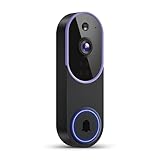
Overview: The ElioVana 1080P Smart Video Doorbell delivers essential smart security features at an entry-level price point. This battery-powered unit offers AI-driven human detection, encrypted cloud storage, and two-way communication, making it suitable for renters and homeowners seeking basic front-door monitoring without complex wiring.
What Makes It Stand Out: The pre-capture recording feature for cloud subscribers ensures you never miss the critical moment leading up to an event. Its AI-powered detection intelligently filters out vehicles and animals, reducing notification fatigue significantly. The AES-128 encrypted cloud storage provides peace of mind for privacy-conscious users, and the 30-day free trial allows thorough testing before committing to a subscription.
Value for Money: At $24.98, this is one of the most affordable smart doorbells available. The feature set rivals products costing twice as much, though the absence of an included receiver means additional expense if you need an indoor chime. For smartphone-centric users, this represents exceptional value, but those wanting traditional doorbell functionality must factor in extra costs.
Strengths and Weaknesses: Strengths include intelligent AI detection, strong night vision with four IR LEDs, straightforward installation, and robust encryption. Weaknesses are the 2.4GHz Wi-Fi limitation (no 5GHz support), lack of included receiver, and reliance on cloud storage for advanced features like pre-capture. Battery life varies based on activity, requiring periodic recharging.
Bottom Line: The ElioVana doorbell is an excellent budget choice for tech-savvy users comfortable with app-based monitoring. Its AI detection and encryption punch above its price class, but the missing receiver and single-band Wi-Fi may limit appeal for some households.
7. ALPHAPEACH 1080p Smart Video Doorbell Camera Wireless, Doorbell Receiver Included, Live View, AI Human Detection, Night Vision, Cloud Storage, 2.4G WiFi, Battery Powered, Indoor Outdoor Surveillance

Overview: The ALPHAPEACH doorbell camera positions itself as a complete package solution, bundling a wireless receiver with a feature-rich 1080p camera. It targets families and households wanting both smartphone alerts and traditional indoor chime functionality without purchasing accessories separately.
What Makes It Stand Out: Family access sharing stands out as a key differentiator, allowing multiple household members to monitor the entrance collaboratively. The included receiver solves a common pain point with budget doorbells, providing immediate value. Its AI human detection minimizes false alerts effectively, while the four infrared LEDs deliver consistent night performance.
Value for Money: At $24.99, the included receiver makes this arguably better value than receiver-less competitors at similar prices. You’re getting a complete system ready for immediate use. While cloud storage requires subscription for full features, the core functionality works without ongoing fees. The minimal price premium over basic models is justified by the bundled receiver and family sharing capabilities.
Strengths and Weaknesses: Strengths include the comprehensive package, collaborative monitoring features, solid night vision, and reliable two-way audio. The device offers good build quality for indoor/outdoor use. Weaknesses mirror budget competitors: 2.4GHz Wi-Fi only, no 5GHz support, and battery dependence requiring regular charging cycles. The app interface, while functional, lacks polish compared to premium brands.
Bottom Line: The ALPHAPEACH doorbell is a smart buy for families wanting shared access and traditional chime functionality in one affordable package. It balances cost and features effectively, though power users may eventually desire higher resolution or dual-band connectivity.
8. Smart Lock with Camera & Doorbell, 3-in-1 Smart Deadbolt for Front Door, Fingerprint Keyless Entry Door Lock with Live View, Video Smart Lock Built-in Wi-Fi, Auto Lock, Siri Unlock, IP66 Waterproof
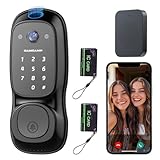
Overview: This 3-in-1 device integrates a smart lock, video doorbell, and deadbolt into a single front-door security solution. Designed for comprehensive access control, it offers six keyless entry methods including fingerprint recognition and Siri voice unlock, targeting homeowners wanting maximum convenience and security integration.
What Makes It Stand Out: The unified design eliminates multiple devices, providing seamless coordination between locking and monitoring functions. Six entry options—from biometric to traditional key—offer unmatched flexibility. Proactive security features like automatic video recording after five failed attempts and instant activity logs provide active deterrence. The IP66 waterproof rating ensures durability in harsh weather.
Value for Money: At $129.99, this represents significant savings versus purchasing separate smart locks and doorbells. The six-month battery life and USB-C emergency power port address common smart lock anxieties. However, the higher upfront cost and installation complexity may deter renters or those with existing smart home ecosystems. It’s a value play for new installations or complete security overhauls.
Strengths and Weaknesses: Strengths include comprehensive integration, flexible access methods, robust weatherproofing, and intelligent security responses. The wide-angle camera provides excellent coverage. Weaknesses involve complex installation requiring door modification, potential single-point-of-failure risk, and limited compatibility with non-Apple smart home platforms. The premium price may exceed casual users’ budgets.
Bottom Line: This 3-in-1 solution excels for homeowners undertaking full front-door renovations or seeking streamlined security. The integration justifies the cost, but those with existing devices or renters should consider separate components for greater flexibility and easier installation.
9. Wemo Smart Video Doorbell - Apple HomeKit Secure Video with HDR - Smart Home Products Video Doorbell Camera - Ring Doorbell for Security Camera System - WiFi Camera Doorbell w/ 223° FOV & 2-Way Audio
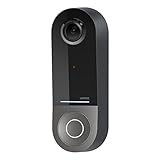
Overview: The Wemo Smart Video Doorbell is engineered specifically for Apple HomeKit users, offering deep ecosystem integration with Secure Video storage and HDR imaging. Its ultra-wide 223° diagonal field of view captures more of your entryway than nearly any competitor, while dual-band Wi-Fi ensures reliable connectivity.
What Makes It Stand Out: HomeKit Secure Video integration enables face recognition, end-to-end encryption, and seamless iCloud storage without additional subscriptions. The exceptional field of view eliminates blind spots, capturing packages on the ground and visitors from head-to-toe. Dual-band Wi-Fi support (2.4GHz and 5GHz) provides installation flexibility and robust performance. HDR technology enhances image quality in challenging lighting.
Value for Money: Priced at $89.99, it sits in the mid-range but delivers premium features for Apple households. The lack of required cloud subscription fees offsets the initial cost for iCloud users. However, the requirement for wired 16-24V AC power limits installation options and may necessitate professional help. Non-Apple users should look elsewhere entirely.
Strengths and Weaknesses: Strengths include unparalleled HomeKit integration, extraordinary field of view, HDR video quality, dual-band Wi-Fi, and no mandatory subscription fees. Weaknesses are the mandatory wired installation, Apple ecosystem exclusivity, and higher price compared to battery-powered alternatives. Android users cannot access any features.
Bottom Line: The Wemo doorbell is the definitive choice for committed Apple HomeKit households prioritizing privacy and ecosystem integration. Its extreme field of view and HDR imaging are best-in-class, but the wired requirement and Apple-only compatibility make it unsuitable for mixed-platform homes or renters.
10. Tapo Smart Video Wireless Doorbell Camera - 2K, 160° Ultra-Wide View, Up to 180 Days Battery, Alexa, Google Assistant Compatible, Free AI Person Detection, IP54, SD/Cloud Storage, D205

Overview: The Tapo D205 elevates the budget smart doorbell category with 2K resolution and exceptional six-month battery life. Designed for broad smart home compatibility, it offers free AI person detection without subscription requirements, appealing to users wanting high-end specs without premium pricing.
What Makes It Stand Out: The 2K resolution provides noticeably sharper image quality than 1080p competitors, crucial for identifying faces and reading license plates. Remarkable 180-day battery life minimizes maintenance, while the 160° field of view balances coverage with minimal distortion. Free AI detection without mandatory fees is a major differentiator. Phone-call style answering via the Tapo app creates intuitive visitor interaction.
Value for Money: At $49.99, it bridges the gap between budget and premium models. The 2K resolution and extended battery life justify the price premium over $25 alternatives. Free AI detection eliminates subscription pressure, while Alexa/Google compatibility enhances smart home value. The lack of included chime requires separate purchase, slightly diminishing the out-of-box value.
Strengths and Weaknesses: Strengths include superior 2K video, class-leading battery life, free AI features, broad assistant compatibility, and flexible storage options (SD/cloud). The phone-call notification style is user-friendly. Weaknesses are the modest IP54 weather rating (less robust than IP66), 2.4GHz Wi-Fi only, and missing indoor chime. Installation requires careful positioning for optimal motion detection.
Bottom Line: The Tapo D205 delivers the best feature-to-price ratio for most users, combining high-resolution video, exceptional battery life, and free AI detection. It’s ideal for renters and homeowners wanting premium performance without ecosystem lock-in or subscriptions, though you’ll need to purchase a chime separately.
What Is Pre-Buffer Recording and Why It Matters for Package Deliveries
Pre-buffer recording, often called “look-back” or “pre-roll” recording, is a sophisticated video caching technology that continuously records and temporarily stores a short segment of footage—typically 3 to 8 seconds—before a motion event is officially triggered. Think of it as your doorbell’s short-term memory, constantly overwriting itself until an actual event occurs. When motion is detected, that cached pre-buffer gets permanently saved and appended to the main recording, creating a seamless video that starts before the trigger.
The Technology Behind Pre-Buffer Recording
The magic happens through continuous low-power video processing. Your doorbell’s camera sensor remains active 24/7, feeding a compressed video stream into a small, volatile memory buffer. This isn’t full-resolution footage being stored permanently—it’s a temporary, highly compressed cache that uses minimal power and storage. When the system’s processor detects motion, it immediately finalizes the buffer contents and begins high-quality recording. The two segments merge into one cohesive video file. Advanced systems use dedicated video processing chips to handle this task without draining battery life or overwhelming your Wi-Fi network.
How Pre-Buffer Differs from Standard Motion Detection
Traditional doorbell cameras operate on a reactive model: something moves, the sensor wakes up, the camera starts recording. This process creates a 1-3 second delay where crucial footage is lost. Pre-buffer systems are proactive, maintaining that rolling cache so there’s no gap. The difference is night and day for deliveries—instead of seeing a driver already bent over placing your package, you watch them approach, read your delivery instructions, and complete the drop-off. For security purposes, this means capturing faces and identifying features before someone has a chance to obscure them.
Key Benefits of Pre-Buffer Recording for Homeowners
Never Miss the Beginning of an Event
The most obvious advantage is completeness. You witness the entire delivery sequence, including the moment the driver exits their vehicle, scans the package, and walks toward your door. This is invaluable for disputed deliveries where you need to prove whether a package was actually left, where it was placed, or if the driver took a photo of the wrong location. The pre-buffer captures their approach path, which can reveal if they were already holding your package or retrieved it from a vehicle.
Reduced False Alerts and Notification Fatigue
Paradoxically, pre-buffer technology helps reduce false positives. By analyzing the pre-buffer segment, AI algorithms can better distinguish between meaningful events (a person walking to your door) and irrelevant motion (a car passing on the street or a tree branch swaying). The system reviews the context before the trigger, making smarter decisions about whether to send you a notification. This means fewer 3 AM alerts for shadows moving across your porch.
Enhanced Evidence Collection
For security incidents, pre-buffer footage provides critical context. You’ll see suspicious individuals casing your property before they actually touch anything, giving law enforcement better identifying footage and establishing intent. In one documented case, pre-buffer footage revealed a porch pirate had been scouting the neighborhood for 20 minutes before stealing packages, leading to identification through their vehicle and clothing—details that would have been missed with standard recording.
Essential Features to Look for in Pre-Buffer Doorbell Cameras
Recording Duration and Buffer Length
Not all pre-buffer systems are created equal. Buffer lengths typically range from 3 to 8 seconds, but some premium models offer up to 10 seconds. For delivery capture, aim for at least 5 seconds of pre-buffer—this gives enough time to see someone approach from a reasonable distance. Be wary of systems that advertise pre-buffer but only provide 1-2 seconds; this barely covers the wake-up delay and offers minimal real-world benefit.
Video Quality and Resolution Considerations
Pre-buffer footage is often recorded at lower resolution to conserve bandwidth and power—sometimes as low as 480p—while the main event records in full HD or 4K. This is a reasonable compromise, but ensure the pre-buffer quality is sufficient for facial recognition within 10-15 feet. Look for systems that maintain at least 720p in the buffer, with smooth 15-20 fps frame rates. The transition between pre-buffer and main recording should be seamless, without jarring quality jumps or frame drops.
Field of View and Aspect Ratio
A wide field of view (160-180 degrees) ensures the pre-buffer captures activity from the edges of your property, not just directly in front of the door. However, ultra-wide lenses can create fisheye distortion that makes distant objects harder to identify. The sweet spot for most homes is 160 degrees horizontal with a 1:1 or 4:3 aspect ratio—this “head-to-toe” view shows the person’s full body and any packages they’re carrying, unlike traditional 16:9 widescreen formats that crop vertically.
Night Vision Capabilities
Deliveries happen after dark, especially during holiday seasons. Infrared night vision is standard, but quality varies dramatically. Look for 850nm IR LEDs with at least 15 feet of illumination range. Color night vision, achieved through starlight sensors or small LED spotlights, provides far more identifiable detail than grayscale IR footage. For pre-buffer to be effective at night, the system needs to maintain the same buffer quality in low-light conditions—some cheaper models disable pre-buffer entirely after dark to conserve power.
Power Options and Their Impact on Pre-Buffer Functionality
Hardwired vs. Battery-Powered Systems
Hardwired doorbells connect to your existing doorbell transformer (typically 16-24VAC) and provide continuous power, making them ideal for pre-buffer technology. They can maintain the rolling cache indefinitely without battery concerns. Battery-powered models must balance pre-buffer functionality against power consumption—continuous video processing drains batteries 30-40% faster than standard motion detection. Premium battery models use clever power management, keeping the camera in ultra-low-power mode while only the sensor remains active, but expect to charge them every 2-4 weeks with heavy pre-buffer use.
Power Consumption Considerations
Pre-buffer recording increases power draw by keeping the camera sensor and processor partially active. For battery units, this translates to 200-300mAh additional daily consumption. In cold weather, battery efficiency drops by up to 50%, further reducing lifespan. If you live in a climate with harsh winters, hardwired is strongly recommended for reliable pre-buffer performance. Some systems offer “smart pre-buffer” that activates only during scheduled hours (like typical delivery windows) to conserve power.
Solar Panel Integration
Several manufacturers offer solar panel accessories for battery-powered models. A well-placed panel can extend battery life indefinitely, but pre-buffer functionality complicates this equation. Solar charging provides 300-500mAh on a sunny day, which may only offset half the pre-buffer power consumption. For reliable operation, your doorbell needs at least 4-6 hours of direct sunlight daily. Partial shade or cloudy climates will still require manual charging every 6-8 weeks.
Storage Solutions: Local vs. Cloud
SD Card Local Storage Pros and Cons
Local storage via built-in SD card slots offers privacy and zero subscription fees. You maintain complete control of your footage, and pre-buffer video is stored locally before being uploaded. However, local storage limits accessibility—you can’t view footage remotely if the doorbell is stolen or damaged. Card capacity matters: a 32GB card stores roughly 2-3 days of continuous pre-buffer plus triggered events. Look for systems with loop recording that automatically overwrites oldest footage, and ensure the SD card is rated for continuous write cycles (high-endurance cards).
Cloud Storage Subscriptions Explained
Most pre-buffer doorbells require a cloud subscription to access the full feature set. These typically range from $3-10 monthly and include anywhere from 30-180 days of video history. The pre-buffer footage is temporarily stored on the device, then uploaded to cloud servers after the event completes. This requires stable Wi-Fi—if connectivity drops during upload, you might lose the pre-buffer segment. Premium tiers often include AI-powered recognition, longer retention, and the ability to download and share clips.
Hybrid Storage Models
The best of both worlds: systems that store pre-buffer and recent events locally while backing up critical clips to the cloud. This ensures you have footage even during internet outages, but still provides remote access and theft protection. Some models upload only low-resolution previews to save bandwidth, with full HD available via local download when you’re home. Evaluate whether the hybrid model requires a subscription for basic functionality—some brands lock local playback behind a paywall.
Smart Home Integration and Compatibility
Voice Assistant Integration
Pre-buffer doorbells should integrate seamlessly with Alexa, Google Assistant, or HomeKit. This goes beyond basic announcements—advanced integration lets you view the pre-buffer clip on your smart display (“Alexa, show me the front door delivery”) or create routines based on delivery detection. HomeKit Secure Video offers end-to-end encryption and free cloud storage for Apple users, though it requires a HomePod or Apple TV as a hub. Check if pre-buffer clips are accessible through voice commands or only live view.
Integration with Smart Locks and Security Systems
The real power unlocks when your doorbell communicates with smart locks. Imagine a delivery triggers the pre-buffer, AI confirms it’s a legitimate driver, and you remotely unlock the door for secure package placement inside. Systems like Alarm.com and other security platforms offer this level of automation. Your doorbell should act as a trigger for broader security scenes—turning on lights, unlocking doors, or disarming alarms for recognized visitors.
IFTTT and Third-Party Platform Support
IFTTT (If This Then That) compatibility allows custom automations: save pre-buffer clips to Google Drive, trigger phone calls for specific events, or flash smart bulbs when motion is detected. However, IFTTT adds 2-5 seconds of delay, which may cause you to miss the live interaction. Direct API access is preferable for power users who want to build custom integrations without latency. Check whether pre-buffer clips are accessible via API or only through the manufacturer’s app.
Installation and Setup Considerations
DIY Installation vs. Professional Installation
Hardwired installations require working with 120V AC wiring and low-voltage transformers—manageable for experienced DIYers but potentially hazardous for novices. Battery models are universally DIY-friendly, often taking under 30 minutes. Professional installation ($100-200) ensures optimal placement, proper transformer voltage, and clean wiring. For pre-buffer systems, professional installers can fine-tune motion zones and buffer settings based on your specific entryway layout.
Wi-Fi Requirements and Signal Strength
Pre-buffer footage is uploaded immediately after an event, requiring stable 2Mbps upload speeds minimum. The doorbell should maintain at least -65dBm signal strength for reliable operation. Use Wi-Fi analyzer apps to check signal at your installation location—if it’s weak, consider a mesh network node near your entrance. Some doorbells include built-in Wi-Fi extenders or use proprietary long-range protocols. Remember that video doorbells operate on 2.4GHz for range or 5GHz for bandwidth; pre-buffer works better on 5GHz due to faster upload speeds.
Optimal Placement for Delivery Capture
Mount your doorbell 48-52 inches high, angled slightly downward to capture packages at your feet. For pre-buffer to be effective, the camera needs clear sightlines extending 15-20 feet from your door. Remove obstructions like decorative columns or overgrown shrubs. Consider the sun’s path—avoid pointing directly east or west where sunrise/sunset will wash out footage. For wide porches, a wedge mounting kit can angle the camera to better capture approach paths from the driveway.
Privacy and Security Features
End-to-End Encryption
Your pre-buffer footage contains sensitive information about your daily routines and visitors. End-to-end encryption ensures only you can view recordings, not even the manufacturer. Look for AES-256 encryption and verify whether encryption covers both local storage and cloud uploads. Some systems encrypt only cloud footage, leaving local SD cards vulnerable if the device is stolen. Be wary of brands based in countries with data sharing laws that could compel access to your footage.
Data Privacy Policies
Read the privacy policy carefully—some manufacturers reserve the right to use anonymized footage for AI training or share data with third-party advertisers. Pre-buffer footage is particularly sensitive since it captures incidental activity (neighbors walking by, cars passing) that you might not want stored indefinitely. GDPR-compliant companies offer data deletion requests and clear retention policies. Check if the system allows you to set custom retention periods for pre-buffer versus main recordings.
Customizable Privacy Zones
Essential for urban or close-quarter living, privacy zones let you black out areas like your neighbor’s windows or the sidewalk. Advanced systems maintain the pre-buffer but automatically mask designated zones until motion enters an approved area. This protects neighbor privacy while still capturing your delivery approach. Ensure privacy zones apply to both live view and recorded footage, and verify whether pre-buffer respects these zones or only the post-trigger recording.
Understanding Motion Detection and AI Features
PIR vs. Pixel-Based Detection
Passive Infrared (PIR) sensors detect heat signatures, reducing false alerts from inanimate objects but potentially missing slow-moving delivery carts. Pixel-based detection analyzes frame-by-frame changes, catching everything but triggering on shadows and leaves. The best pre-buffer systems use hybrid detection: PIR for initial wake-up, then pixel analysis on the pre-buffer to confirm it’s a person. This two-stage approach conserves power while maintaining accuracy.
AI-Powered Person, Package, and Vehicle Detection
Modern AI can distinguish between people, animals, vehicles, and packages. For deliveries, “package detection” is crucial—some systems can identify when a box appears in your designated delivery zone and send specific alerts. Vehicle detection helps you know when delivery trucks arrive, even if the driver approaches from a blind spot. These AI features analyze the pre-buffer to make determinations before notifying you, reducing false positives by up to 90%.
Customizable Motion Zones
Draw specific zones for where you want pre-buffer to activate—your walkway and porch, but not the street. Advanced systems support multiple zones with different sensitivity settings: high sensitivity for your delivery area, low for the street. Some allow “tripwire” zones that trigger only when motion crosses a virtual line, perfect for capturing approach paths without triggering on parallel movement. The pre-buffer should begin recording as soon as motion enters any zone, giving you the full approach sequence.
Audio Features: Two-Way Talk and Pre-Recorded Messages
Two-Way Communication Quality
Full-duplex audio (where both parties can speak simultaneously, like a phone call) is vastly superior to half-duplex (walkie-talkie style). Look for echo cancellation and noise reduction to minimize wind and traffic sounds. The pre-buffer should include audio from before the trigger, letting you hear the driver’s approach and any comments they make. Test audio latency—delays over 1 second make conversations awkward and frustrate delivery drivers.
Quick Response Messages for Delivery Drivers
Pre-recorded messages let you communicate instantly: “Please leave packages behind the planter” or “I’ll be right there!” These play through the doorbell’s speaker with a single tap in the app. The best systems tie these messages to AI detection—automatically playing a delivery instruction when a package is detected. Ensure these messages are loud enough (85+ decibels) to be heard over traffic or lawn equipment.
Cost Analysis and Subscription Models
Upfront Hardware Costs
Pre-buffer doorbells range from $100 to $350 for the hardware alone. Budget models under $150 typically offer 3-4 seconds of pre-buffer with basic features. Mid-range $200-250 units provide 5-6 seconds, better AI, and superior video quality. Premium $300+ models deliver 8-10 second buffers, 4K resolution, and advanced integration. Factor in additional costs: chime kits ($20-50), wedge mounts ($15), and solar panels ($50).
Monthly Subscription Tiers
Subscriptions unlock pre-buffer functionality on many models. Basic plans ($3-5/month) typically include 30 days of event history and 3-5 second pre-buffer. Premium plans ($6-10/month) extend to 60-180 days, longer buffers, and advanced AI. Some manufacturers offer annual discounts equivalent to two free months. Calculate the total cost of ownership over 3 years—hardware plus subscriptions—to compare real value. A $150 doorbell with a $10/month plan costs $510 over three years, while a $300 model with a $5/month plan costs $480.
Hidden Costs to Watch For
Watch for fees for additional cameras, higher resolution recording, or extended cloud storage beyond the base plan. Some brands charge extra to download or share clips. Professional monitoring integration may add $10-20 monthly. If you exceed your internet data cap due to frequent uploads, you could face overage charges. Battery models may need replacement batteries every 2-3 years at $30-50 each.
Troubleshooting Common Pre-Buffer Issues
Connectivity Problems and Solutions
Pre-buffer clips are lost if Wi-Fi drops during the critical upload window. If you see frequent “incomplete recordings,” check your router’s client limit—some older routers only support 20-30 devices. Assign your doorbell a static IP address to prevent DHCP conflicts. For dual-band routers, force the doorbell to 5GHz for better bandwidth, but only if signal strength exceeds -65dBm. Mesh networks should prioritize the doorbell as a “critical device” to prevent roaming between nodes.
Battery Drain Concerns
If your battery-powered doorbell needs charging weekly, pre-buffer may be too aggressive. Reduce buffer length in settings from 6 to 3 seconds. Disable audio pre-buffer if video is sufficient. Set “quiet hours” where pre-buffer disables during times deliveries never occur (midnight to 6 AM). In cold weather, bring the battery indoors to charge at room temperature—charging below freezing damages lithium cells permanently. Consider a battery model that supports removable cells so you can swap without downtime.
Video Quality Degradation
Pre-buffer footage may appear grainy or have frame rate stutters. This often indicates insufficient Wi-Fi bandwidth or processor overload. Lower the main recording quality slightly (from 4K to 1080p) to free up resources for stable pre-buffer. Check if your doorbell is overheating—direct sunlight can throttle the processor, reducing pre-buffer quality. Some models allow you to allocate storage priority: choose “pre-buffer quality” over “main recording quality” if capturing the approach is more important than ultra-HD close-ups.
Legal Considerations and Neighborhood Etiquette
Recording Laws and Consent
In the US, video recording in public view (like your porch) is generally legal, but audio recording falls under wiretapping laws. Twelve states require two-party consent for audio recording. Some doorbells allow you to disable audio pre-buffer while keeping video, staying compliant. Post visible signage (“Audio/Video Recording in Progress”) to establish implied consent. For rental properties, you must have landlord permission to install hardwired devices. Check HOA regulations—some prohibit visible security devices or require specific aesthetics.
Neighbor Privacy Concerns
Your pre-buffer inevitably captures neighbors walking their dogs or parking on the street. Position your doorbell to minimize incidental recording, and aggressively use privacy zones. Have a conversation with adjacent neighbors, showing them how you’ve configured privacy settings. If they object, some jurisdictions allow them to file complaints about “nuisance surveillance.” Offering to share relevant security footage (like a suspicious vehicle) builds goodwill and demonstrates you’re a responsible user, not a snooper.
Comparing Pre-Buffer Technology Across Brands
Proprietary vs. Open Standards
Each manufacturer implements pre-buffer differently. Proprietary systems optimize hardware-software integration for better efficiency but lock you into their ecosystem. Open standards like ONVIF allow integration with third-party NVRs but may have less optimized pre-buffer performance. Some brands use unique codecs for pre-buffer that aren’t widely supported, making it difficult to export footage for legal purposes. Consider whether you want ecosystem flexibility or optimized performance.
Firmware Update Frequency and Support
Pre-buffer algorithms improve over time through firmware updates. Reputable brands release security patches quarterly and feature updates semi-annually. Check the company’s track record—do they support devices for 3+ years, or abandon older models? Community forums reveal whether updates introduce bugs or fix them. Some manufacturers beta-test pre-buffer improvements with user opt-in programs. Avoid brands with no public changelog or infrequent updates, as pre-buffer performance issues may never be resolved.
Frequently Asked Questions
1. Does pre-buffer recording work during an internet outage?
Pre-buffer footage is temporarily stored on the device’s internal memory, but if the internet is down when an event occurs, the clip may not upload successfully. Most systems will retry uploading once connectivity is restored, but there’s a risk of losing the pre-buffer segment if the device loses power before upload completes. Local storage models with SD cards will save everything regardless of internet status.
2. Will pre-buffer drain my battery-powered doorbell too quickly?
Expect 30-40% faster battery drain compared to standard motion detection. A doorbell that normally lasts 3 months might need charging every 6-8 weeks with pre-buffer enabled. You can mitigate this by reducing buffer length, setting quiet hours, or using a solar panel accessory. In cold weather below 32°F, battery efficiency drops significantly, potentially cutting lifespan in half.
3. Can I adjust how long the pre-buffer records?
Most premium models let you customize buffer length from 3 to 10 seconds in the app settings. Shorter buffers conserve power and storage; longer buffers capture more context. For delivery monitoring, 5-6 seconds is optimal. Some systems also let you adjust pre-buffer quality independently from main recording quality.
4. Does pre-buffer recording increase my data usage?
Yes, but minimally. The pre-buffer itself is highly compressed and only uploaded as part of the main event clip. Each event might be 10-15% larger with pre-buffer enabled. If you receive 20 notifications daily, expect an additional 2-3GB monthly data usage. The bigger impact is on upload bandwidth—ensure your internet plan has at least 5Mbps upload speed for reliable performance.
5. Is pre-buffer footage included in free cloud storage tiers?
Most manufacturers require a paid subscription to access pre-buffer recordings. Free tiers typically include only live view and basic motion alerts. Some brands offer 24-hour event history with 3-second pre-buffer for free, but longer retention and buffers require payment. Always verify the specific plan details before purchasing.
6. Can pre-buffer capture audio, or just video?
This varies by model. Many systems record audio in the pre-buffer, letting you hear approach sounds and conversations before the visual trigger. However, some only cache video to save power and storage. Audio pre-buffer is particularly useful for deliveries—you might hear a truck door slam before the driver appears. Check settings to ensure audio recording is enabled and legal in your area.
7. How does pre-buffer work with package detection AI?
AI analyzes both the pre-buffer and main recording to identify packages. The system looks for rectangular objects being carried or placed in your delivery zone. Pre-buffer helps the AI track the package’s origin—distinguishing a delivery from someone picking up an existing package. False positives decrease by up to 60% when AI has pre-buffer context.
8. Will pre-buffer recording capture my neighbor’s activities?
Unfortunately, yes, unless you configure privacy zones. Most systems let you black out specific areas in the frame where the pre-buffer won’t record or will be masked. This is crucial for maintaining neighborly relations and complying with privacy laws. Be proactive about setting these zones during initial setup.
9. Can I download and share pre-buffer clips?
Yes, through the manufacturer’s app you can typically download complete clips (pre-buffer + main recording) to your phone or computer. Some systems watermark pre-buffer segments to indicate they’re from the buffer. For legal evidence, ensure the downloaded file includes metadata like timestamp and device ID. Cloud subscriptions often include sharing links that expire after a set time.
10. What happens if someone steals my doorbell? Do I lose the pre-buffer footage?
If the device is stolen during an event, the pre-buffer uploads immediately after the trigger. Most systems complete upload within 3-5 seconds, so you’ll likely have the footage showing the theft in progress. Cloud-stored clips remain accessible even if the device is gone. Some models have anti-theft alarms that trigger when the device is removed, and a few include cellular backup for instant upload. Always report theft to police and provide them with the cloud footage.