There’s nothing quite like walking into a perfectly cooled room on a sweltering afternoon, especially when that breeze starts with a simple voice command or tap on your phone. But for most homeowners, the dream of smart ceiling fan control hits a harsh reality: the daunting prospect of opening walls, running new wires, and hiring expensive electricians. Thankfully, the smart home revolution has delivered a better way. Today’s generation of intelligent fan switches promises sophisticated control without the construction mess, leveraging clever engineering to transform your existing setup into a modern marvel of convenience.
Whether you’re renting an apartment, living in an older home without neutral wires, or simply allergic to DIY projects that involve drywall repair, these innovative devices offer a legitimate path to automated comfort. But not all “no-rewiring” solutions are created equal, and understanding the technology behind the marketing claims is crucial to making a smart investment. This comprehensive guide will walk you through everything you need to know about selecting, installing, and maximizing smart fan switches that deliver instant breeze without turning your home into a construction zone.
Top 10 Smart Fan Switches for Instant Breeze
Detailed Product Reviews
1. Kasa Smart Ceiling Fan Control & Dimmer Switch | Adjustable 4-Speed Fan & Brightness Control | Works w/Apple HomeKit, Alexa & Google Home | 2.4G Wi-Fi Only, Single Pole, Neutral Wire Required | KS240

Overview: The Kasa KS240 from TP-Link consolidates ceiling fan speed control and light dimming into one sleek smart switch. Compatible with Apple HomeKit, Alexa, and Google Assistant, it transforms any standard four-wire ceiling fan into a fully automated fixture. Operating exclusively on 2.4GHz Wi-Fi, this single-pole switch requires a neutral wire and supports four fan speeds plus smooth brightness adjustment through the Kasa Smart app.
What Makes It Stand Out: Native Apple HomeKit support distinguishes this switch from most competitors, enabling seamless Siri voice commands and Home app integration. The Kasa ecosystem is renowned for reliability, offering rock-solid scheduling that can automatically adjust fan speeds and lighting based on time of day or occupancy simulation. Four distinct speed settings provide optimal airflow control, while precise dimming creates perfect ambiance.
Value for Money: Priced at $41.39, the KS240 commands a modest premium over generic alternatives. The investment is justified through TP-Link’s established track record, superior app stability, and unique multi-platform support. As a 2-in-1 solution, it eliminates the need for separate switches, saving both money and wall space while delivering professional-grade performance.
Strengths and Weaknesses: Strengths include exceptional smart home integration, trustworthy brand reputation, intuitive scheduling, and responsive voice control. Weaknesses involve the neutral wire requirement (challenging for pre-1980s homes), single-pole-only design, and lack of 3-way configuration support.
Bottom Line: Perfect for Apple ecosystem users wanting reliable, integrated fan and light control. The KS240’s premium features and proven reliability make it a worthwhile investment for compatible installations, despite its wiring limitations.
2. Smart Ceiling Fan Control and Light Dimmer Switch, Compatible with Alexa/Google Assistant/Smart Life, Neutral Wire Required, Single Pole Fan Light Switch, 2.4G Wi-Fi only, Timer, No Hub Required, 1PC

Overview: This budget-friendly smart combo switch delivers 2-in-1 ceiling fan speed control and light dimming through the Smart Life app. Supporting four fan speeds and 14-level brightness adjustment (10%-100%), it transforms standard fixtures into smart devices. The switch requires a neutral wire and separate load wires for fan and light, operating on 2.4GHz Wi-Fi for single-pole installations only.
What Makes It Stand Out: Independent LED indicators for fan speed and brightness provide real-time status at a glance—a feature rarely seen at this price point. The granular 14-level dimming offers exceptional lighting precision, while voice control through Alexa and Google Assistant enables hands-free operation. Automatic scheduling based on weather and temperature adds intelligent automation.
Value for Money: At $29.99, this is the most economical option reviewed. It sacrifices brand recognition and broad compatibility for affordability, making it ideal for cost-conscious shoppers with standard ceiling fan setups. The feature set rivals pricier alternatives, delivering core smart functionality without premium overhead.
Strengths and Weaknesses: Strengths include unbeatable pricing, independent status indicators, detailed dimming control, and weather-based automation. Weaknesses are extensive compatibility restrictions (no exhaust fans, canopy modules, or smart bulbs), generic brand support, and limitations to single-pole, 2.4GHz-only operation.
Bottom Line: An excellent value for straightforward installations without special requirements. Best suited for tech-savvy budget shoppers who can verify compatibility beforehand. Avoid if you have proprietary fan systems or need robust technical support.
3. Leviton Decora Smart Fan Speed Controller, Wi-Fi 2nd Gen, Neutral Wire Required, Works with My Leviton, Alexa, Google Assistant, Apple Home/Siri & Wired or Wire-Free 3-Way, D24SF-1RW, White

Overview: Leviton’s Decora Smart Fan Speed Controller brings professional-grade automation to ceiling fans, offering four quiet speed settings via Wi-Fi connectivity. As a second-generation device, it integrates with My Leviton, Alexa, Google Assistant, and Apple Siri, while supporting both wired and wireless 3-way configurations. The switch requires a neutral wire and replaces standard on/off controls.
What Makes It Stand Out: Unlike most competitors, Leviton offers true 3-way compatibility through wireless remote paddles, making it ideal for multi-location control. The device’s LEDs visually indicate current fan speed, eliminating guesswork. Leviton’s century-long reputation in electrical components ensures code compliance and safety, while broad platform support provides flexibility across smart home ecosystems.
Value for Money: At $44.90, this premium switch costs more than most alternatives. The investment secures UL-listed reliability, professional installation support, and unique 3-way functionality. For complex wiring scenarios or whole-home Leviton integration, the price premium delivers tangible benefits over budget brands.
Strengths and Weaknesses: Strengths include trusted brand heritage, versatile 3-way options, multi-platform voice control, and clear speed indicators. Weaknesses are the highest price point, fan-only control (no light dimming), and lack of advanced scheduling features found in 2-in-1 units.
Bottom Line: The ideal choice for homeowners needing multi-location control or prioritizing brand reliability. Worth the premium for new construction and renovations where code compliance matters. Not optimal if integrated light dimming is required.
4. TREATLIFE Smart Ceiling Fan Control and Dimmer Light Switch, 2.4GHz WiFi Only, Neutral Wire Required, Single Pole Fan & Light Switch Combo, Works with Alexa, Google Home & SmartThings, Remote Control

Overview: Treatlife’s 2-in-1 smart switch combines four-speed ceiling fan control with smooth light dimming in a single device. Operating via 2.4GHz Wi-Fi without a hub, it uses the Smart Life or Treatlife apps for remote management. The switch requires a neutral wire and separate loads for fan and light, supporting single-pole installations with up to 1.5A fans and 150W dimmable LEDs.
What Makes It Stand Out: FCC certification ensures electromagnetic safety and quality assurance—a notable credential in the crowded smart switch market. The Gentle On & Off feature creates smooth lighting transitions that reduce eye strain, while flicker-free dimming supports a broad 10%-100% range. Vacation mode randomizes lighting patterns to enhance security.
Value for Money: At $39.99, this switch positions itself as a feature-rich mid-range alternative. It undercuts premium brands while offering comparable functionality, though lacking Apple HomeKit support. The 2-in-1 design provides excellent value for combined fan and light control.
Strengths and Weaknesses: Strengths include safety certification, smooth dimming transitions, robust scheduling, and competitive pricing. Weaknesses involve extensive compatibility restrictions (no smart bulbs, DC motors, or canopy modules), single-pole-only design, and absence of HomeKit integration.
Bottom Line: A compelling choice for Google Home and Alexa users wanting integrated control without premium cost. The FCC certification and gentle dimming make it stand out, but verify fan compatibility before purchasing. Apple users should look elsewhere.
5. Breeze Bay Smart WiFi Universal Ceiling Fan Remote Control Kit, 3-Speed Light Dimmer Wall Controls Compatible with Alexa Google Phone APP Control, Replacement for Hunter Hampton Bay Harbor Breeze

Overview: Breeze Bay’s universal remote kit offers a wire-free smart upgrade for existing ceiling fans, bypassing electrical installation entirely. The battery-powered transmitter communicates with a receiver installed in the fan canopy, controlling three speeds and dimming compatible bulbs. Designed for 110V AC fans, it works with major brands like Hunter and Hampton Bay via 2.4GHz Wi-Fi and the Smart Life app.
What Makes It Stand Out: The completely wireless design makes this ideal for renters and those unable to modify wall wiring. The magnetic wall mount doubles as a handheld remote, providing flexibility traditional switches cannot match. Universal compatibility across dozens of fan brands eliminates guesswork, while timer presets (2H, 4H, 8H) offer convenient automation.
Value for Money: At $35.97, this kit costs less than hardwired switches while offering unique installation advantages. It avoids electrician fees and wall repair, delivering smart control through a simple receiver connection. For retrofit applications, it provides exceptional value despite having only three speeds.
Strengths and Weaknesses: Strengths include tool-free installation, renter-friendly design, brand versatility, and portable control. Weaknesses are limited three-speed operation (versus four on wired switches), requirement for canopy access, and potential signal interference in crowded Wi-Fi environments.
Bottom Line: Perfect for apartments, rentals, or anyone wanting smart control without electrical work. The universal compatibility and easy setup outweigh the three-speed limitation for most users. Choose hardwired alternatives for new construction or maximum speed granularity.
6. Lutron Caseta Smart Fan Speed Control Switch (Lutron Smart Hub Required), Single-Pole, PD-FSQN-WH, White
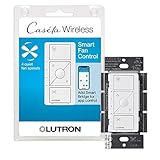
Overview: The Lutron Caseta Smart Fan Speed Control Switch delivers premium wall-mounted ceiling fan control for smart home enthusiasts seeking reliability and broad compatibility. This single-pole switch eliminates pull chains by offering four discrete speed settings plus off, integrating seamlessly into the established Caseta ecosystem. Designed for homeowners wanting professional-grade performance, it requires the Lutron Smart Hub but rewards users with exceptional stability and cross-platform support that budget alternatives cannot match.
What Makes It Stand Out: Unlike WiFi-only competitors, Caseta’s proprietary Clear Connect RF technology ensures rock-solid communication without congesting your network. The switch supports more smart home platforms than any rival—including Alexa, Apple Home, Google Assistant, Ring, Serena shades, and Sonos—creating a truly unified ecosystem. The innovative Pico remote compatibility enables wireless control from anywhere, while the unique wall-mount bracket system simplifies three-way setups without rewiring. This combination of reliability, ecosystem breadth, and installation flexibility sets it apart in a crowded market.
Value for Money: At $69.95 plus the required hub investment, this is a premium purchase. However, the price is justified for users already invested in the Caseta ecosystem or those prioritizing reliability over cost. Comparable hub-based systems from other premium brands often exceed this price point, while cheaper WiFi switches frequently suffer from connectivity issues. For whole-home automation where consistency matters, the long-term value substantially outweighs the initial expense.
Strengths and Weaknesses: Pros: Unmatched smart home ecosystem integration; Proprietary RF technology eliminates WiFi congestion and dropouts; Simple three-way installation without new wiring; Professional-grade build quality; Reliable scheduling and scene control. Cons: Requires expensive Lutron Smart Hub; Pico remote and wall bracket sold separately; Higher upfront cost than WiFi alternatives; Limited to single-pole unless adding accessories.
Bottom Line: If you demand bulletproof reliability and have or plan to build a comprehensive smart home, the Lutron Caseta is worth every penny. For casual users or single-switch installations, cheaper WiFi options may suffice.
7. TREATLIFE Smart Fan Switch, 4 Speed Fan Switch for Ceiling Fan, Neutral Wire Required, 2.4GHz WiFi Smart Ceiling Fan Control Works with Alexa, Google Home, Remote Control, Schedule, No Hub Required
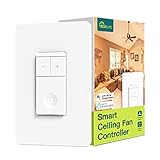
Overview: The TREATLIFE Smart Fan Switch offers budget-conscious homeowners straightforward WiFi-based ceiling fan control without requiring a hub. This single-pole switch provides four speed settings accessible via physical control, voice commands through Alexa or Google Assistant, or remote app operation. Designed for standard AC ceiling fans, it includes scheduling capabilities and a sleek design, making it an accessible entry point into smart home automation for those with compatible wiring and fan configurations.
What Makes It Stand Out: Its dual-wall-plate inclusion—both standard and screwless snap-on options—adds unexpected value at this price point. The ability to disable the LED indicator through the app addresses a common complaint about bedroom installations. FCC certification and explicit compatibility warnings demonstrate manufacturer transparency often missing in budget brands. The dedicated fan-only focus, rather than forcing a combo light/fan unit, ensures cleaner operation for users who only need fan control without unnecessary complexity or feature bloat.
Value for Money: At $36.99, this switch sits in the sweet spot between ultra-budget and premium options. It undercuts most competitors while delivering essential smart features reliably. The absence of a hub requirement saves $50-100 compared to Lutron Caseta. However, the strict compatibility limitations mean potential additional costs if your fan doesn’t qualify. For compatible setups, it delivers 90% of the functionality of $60+ alternatives at a significant discount, making it excellent value for targeted use cases.
Strengths and Weaknesses: Pros: Affordable price with solid feature set; No hub required; Dual wall plates included; LED indicator can be disabled; Reliable scheduling and voice control; FCC certified. Cons: Incompatible with remote-controlled, Bluetooth, WiFi, or DC motor fans; Single-pole only; 2.4GHz WiFi limitation; 1.5A maximum load restricts some high-power fans.
Bottom Line: Perfect for standard AC ceiling fans in single-pole configurations, offering impressive value if your setup meets compatibility requirements. Verify your fan specifications carefully before purchasing.
8. Amazon Basics Smart Fan Control Switch, Single Pole, 4 Speed Settings, Works with Alexa Only, 2.4 GHz Wi-Fi, No Hub Required, White

Overview: The Amazon Basics Smart Fan Control Switch delivers no-frills, Alexa-exclusive ceiling fan automation at an entry-level price point. This single-pole switch provides four speed settings with clear LED indicators, controlled exclusively through the Alexa app or voice commands. Designed for Amazon ecosystem loyalists, it eliminates hub requirements and third-party apps, streamlining setup and daily operation. It’s ideal for users already committed to Alexa who want simple, reliable fan control without paying for multi-platform features they’ll never use.
What Makes It Stand Out: Its tight Alexa integration creates a frictionless experience for Amazon households—setup, control, and scheduling all occur within the familiar Alexa app. The product’s simplicity is its virtue: no complex compatibility matrices, no hub dependencies, and no feature creep. Amazon’s brand backing provides confidence in basic quality assurance and return policies that obscure Chinese brands often lack. The aggressive $31.99 pricing makes it one of the most accessible smart switches from a recognizable manufacturer, lowering the barrier to smart home entry.
Value for Money: This is among the cheapest reliable smart fan switches available. The Alexa-only limitation becomes a cost-saving feature rather than a drawback for committed users, as you’re not paying for unused HomeKit or Google integrations. While it lacks advanced features like dimming or combo light control, it nails core functionality at a price that makes whole-home fan automation feasible on modest budgets. Competitors offering similar simplicity typically cost $10-15 more, making this exceptional value for the target audience.
Strengths and Weaknesses: Pros: Extremely affordable; Seamless Alexa integration; No hub or third-party apps needed; Simple installation and operation; Clear LED speed indicators; Amazon brand reliability. Cons: Alexa-only compatibility excludes Google Home and HomeKit users; Requires neutral wire and 2.4GHz WiFi; Single-pole only; No advanced scheduling beyond Alexa routines; Limited feature set.
Bottom Line: An unbeatable choice for Alexa households wanting simple, cost-effective fan control. Look elsewhere if you need multi-platform support or advanced features, but for pure Alexa integration, it’s outstanding.
9. GHome Smart Dimmer Switch with 4-Speed Ceiling Fan Control, Ceiling Fan and Light Switch Combo with Dimmer Compatible with Alexa and Google Assistant, 2.4Ghz Only, Single-Pole, UL Certified

Overview: The GHome Smart Dimmer Switch combines ceiling fan speed control and light dimming in a single 2-in-1 unit, streamlining wall plates for fans with integrated lighting. This single-pole switch offers four fan speeds plus stepless 0-100% dimming controlled via touch slider, voice commands through Alexa and Google Assistant, or mobile app. UL certification and a clean design make it an attractive option for users wanting consolidated control without purchasing separate switches, provided they have neutral wires and standard AC fans.
What Makes It Stand Out: The integrated 2-in-1 design solves a common installation headache—replacing two switches with one sleek unit. Its sensitive touch dimming slider offers more granular light control than button-based alternatives, creating a premium feel uncommon at this price. The ability to create conditional schedules based on time, temperature, or weather adds sophisticated automation typically reserved for hub-based systems. UL certification provides safety assurance that many budget competitors lack, while the 120W fan/400W light capacity handles most residential installations comfortably.
Value for Money: At $39.99, this combo switch costs less than purchasing separate smart fan and dimmer switches, typically saving $15-25. The feature set rivals $60+ competitors, with the touch dimming and advanced scheduling particularly impressive. While it requires careful compatibility verification, successful installations gain significant value from consolidation. The UL certification alone justifies the modest premium over no-name alternatives, making this a smart financial choice for compatible fan/light combo setups.
Strengths and Weaknesses: Pros: 2-in-1 design reduces wall clutter; Stepless touch dimming; Advanced conditional scheduling; UL certified; Strong value for combo fixtures; Voice and app control. Cons: Not compatible with smart bulbs or DC motors; Single-pole only; 2.4GHz WiFi limitation; Requires neutral wire; Complex installation for novices; Touch slider may be sensitive.
Bottom Line: Excellent choice for ceiling fan/light combos where consolidation and advanced dimming matter. Verify compatibility thoroughly, but if your setup works, it’s a feature-rich bargain.
10. meross Smart Ceiling Fan Control & Dimmer Light Switch, Works w/Apple HomeKit, Alexa, Google & SmartThings, 4-Speed Fan Control, 2.4G Wi-Fi Fan and Light Switch Combo, Neutral Wire Needed, Single Pole

Overview: The meross Smart Ceiling Fan Control & Dimmer Light Switch delivers exceptional multi-platform compatibility in a 2-in-1 package, supporting Apple HomeKit, Alexa, Google Home, and SmartThings simultaneously. This single-pole switch offers customizable fan speeds (3 or 4 levels) and 1-100% dimming, controlled via voice, app, or manual operation. Its ability to maintain schedules during internet outages and customizable backlight settings demonstrate thoughtful engineering for real-world use, making it ideal for users wanting maximum flexibility without hub requirements.
What Makes It Stand Out: Multi-platform support is the headline feature—few switches under $40 work with HomeKit, Alexa, Google, and SmartThings simultaneously. The customizable fan speed count (3 or 4 levels) lets users tailor operation to their fan’s capabilities. Offline schedule retention ensures reliability when WiFi fails, a critical feature for security lighting or climate routines. The backlight-off option addresses bedroom light pollution concerns, while sunrise/sunset scheduling adds sophisticated automation. These user-centric details show meross understands practical smart home challenges better than many competitors.
Value for Money: At $35.99, this is arguably the best value in smart fan controls. Achieving HomeKit compatibility typically requires a $50+ investment, making this a rare budget-friendly option for Apple households. The 2-in-1 design saves additional money and wall space. While it lacks Lutron’s RF reliability, it matches or exceeds feature sets of switches costing twice as much. For multi-platform homes or HomeKit users on a budget, the value proposition is unmatched in the current market.
Strengths and Weaknesses: Pros: Unbeatable multi-platform support including HomeKit; 2-in-1 fan and light control; Offline schedule retention; Customizable backlight and fan speeds; Sunrise/sunset scheduling; Excellent price. Cons: Requires separate load wires for fan and light; Not compatible with smart bulbs or DC motors; Single-pole only; 2.4GHz WiFi only; Complex wiring for some installations.
Bottom Line: The definitive choice for multi-platform smart homes, especially Apple HomeKit users seeking budget-friendly 2-in-1 control. Superior value with thoughtful features that address real user needs.
What Makes a Fan Switch “Smart”?
A smart fan switch transcends the basic on/off functionality of traditional wall controls by embedding wireless connectivity, microprocessors, and sophisticated power management into a deceptively simple package. Unlike standard switches that merely interrupt electrical flow, these devices create a two-way communication channel between your ceiling fan and your smartphone, voice assistant, or broader smart home ecosystem. This intelligence allows for variable speed control, directional changes, scheduling, and integration with sensors that respond to temperature, occupancy, or even the weather outside.
The real magic lies in the firmware. Quality smart fan switches contain algorithms that learn your preferences, protect your fan motor from electrical stress, and optimize energy consumption by adjusting speeds based on actual cooling needs rather than fixed settings. They essentially transform your decades-old ceiling fan into an IoT device that contributes to a responsive, automated home environment.
The “No Rewiring” Revolution: How It Actually Works
The promise of installation without new wiring hinges on two primary engineering approaches, each with distinct advantages and trade-offs. Understanding these technologies helps set realistic expectations and prevents costly mismatches between your chosen device and your home’s infrastructure.
Battery-Powered Convenience vs. Existing Wire Harvesting
Battery-powered smart switches represent the truest form of “no wiring” installation. These devices mount directly over your existing wall box or even attach with adhesive, containing long-life lithium batteries that power the wireless communication and control circuitry for years before needing replacement. The switch communicates with a receiver module installed in the fan’s canopy, which does require basic wiring connections but avoids any wall modifications. This approach shines in rental properties or historic homes where electrical work is prohibited or impractical.
The alternative method, often marketed as “no new wiring,” actually repurposes your existing wires in clever ways. Some devices use the ground wire as a neutral conductor (a practice that meets specific electrical codes when properly engineered), while others send control signals over the existing hot wire using power-line communication technology. These solutions eliminate the need to fish new cables through walls but still require basic electrical knowledge to install safely.
Understanding Wireless Protocols: Wi-Fi, Zigbee, and Z-Wave
Your smart fan switch’s reliability and integration capabilities depend heavily on its wireless foundation. Wi-Fi switches offer direct smartphone control without additional hubs, making them ideal for smaller setups or beginners. However, they can strain your network with dozens of devices and typically consume more power, which matters for battery-operated units.
Zigbee and Z-Wave switches create mesh networks that become more robust as you add devices, using significantly less power and operating on dedicated frequencies less prone to interference. These protocols require a hub but deliver superior reliability and response times. For fans specifically, the instant response of Zigbee or Z-Wave can be noticeable compared to Wi-Fi’s occasional latency when you’re trying to adjust speeds quickly.
Key Features That Separate Good from Great
The market contains a wide spectrum of capabilities, and knowing which features genuinely enhance daily use prevents paying for flashy gimmicks you’ll never touch. Focus on functionality that aligns with your lifestyle and existing smart home architecture.
Speed Control Capabilities: Beyond On and Off
Entry-level smart switches offer basic low-medium-high speed settings, but premium models provide stepless dimming-style control with 50 or more incremental levels. This granularity matters more than you might think. A gentle 15% speed can maintain air circulation while minimizing noise during conference calls, while a rapid 85% blast provides immediate relief during heatwaves. Look for devices that preserve this fine control through all interfaces—physical button, app, and voice commands—rather than reducing voice control to just three presets.
Scheduling and Automation: Set It and Forget It
True intelligence means your fan operates autonomously based on conditions, not just a rigid timer. Advanced switches integrate with temperature sensors to increase speed as rooms warm up, or with contact sensors to shut off when windows open. Circulation mode features run fans intermittently at low speeds to prevent stale air without creating a constant draft. The best devices even factor in humidity, running clockwise in winter to push warm air down and counterclockwise in summer for cooling breezes, all triggered automatically by calendar dates or temperature thresholds.
Voice Control Integration: Hands-Free Breeze
While most smart switches claim Alexa and Google Assistant compatibility, the depth of integration varies dramatically. Quality devices support natural language commands like “set bedroom fan to breeze mode” or “increase fan speed by 20%.” They also provide status queries—“Is the kitchen fan on?"—and can be grouped into routines with other devices. Before purchasing, verify that the switch supports the specific voice platform you use and check recent firmware update history to ensure ongoing compatibility as platforms evolve.
Installation Realities: What “No Rewiring” Really Means
Marketing departments love the phrase “installs in minutes,” but your actual experience depends on several factors that deserve honest assessment before you unbox anything. The term “no rewiring” typically refers to avoiding new cable runs through walls, not necessarily eliminating all electrical work.
Single-Pole vs. Multi-Location Setups
If your fan is controlled from a single wall switch, installation is straightforward regardless of technology. However, three-way configurations—where switches at two locations control the same fan—introduce complexity. Some smart switches require replacing all locations with compatible units, while others allow a hybrid approach with one smart switch and one traditional. Battery-powered options often solve this elegantly by making the secondary location completely wireless, but confirm this capability before purchase to avoid rewiring you hoped to avoid.
Ceiling Height and Motor Compatibility
Cathedral ceilings present unique challenges. The receiver module in the fan canopy must maintain reliable wireless communication with the wall switch, and distance matters. Most devices specify maximum effective ranges, but these assume open air without interference. For ceilings over 12 feet, prioritize switches with external antenna options or mesh network protocols that can route signals through intermediate devices. Additionally, verify your fan’s motor type—standard AC induction motors work with virtually all smart switches, but energy-efficient DC motors require specifically compatible controllers to avoid damaging sensitive electronics.
Compatibility Check: Will It Work With Your Fan?
A smart switch is only as good as its partnership with your existing ceiling fan. Assuming universal compatibility is the most common mistake that leads to returns and frustration. Take time to understand your specific fan’s electrical and mechanical characteristics.
AC vs. DC Motor Considerations
Traditional AC motors, found in fans manufactured before 2015 and most economy models today, use simple electromagnetic principles that work with virtually any smart switch. The load is predictable and forgiving. DC motors, however, use integrated electronic speed controls that communicate with the fan’s internal circuitry through proprietary protocols. Smart switches designed for AC motors can permanently damage DC electronics. Check your fan’s manual or look for a motor housing label indicating “DC” or “inverter motor.” If you have a DC fan, you need a smart switch specifically engineered for low-voltage motor control, often from the same manufacturer.
Wattage and Load Capacity
Smart switches have maximum load ratings, typically ranging from 150 to 300 watts for fan controllers. This seems generous since most fans draw under 75 watts, but add-on accessories like integrated light kits, heaters, or ionizers can push you over the limit. Calculate your fan’s total wattage by summing the motor rating (found on a label inside the canopy) and any additional components. Then select a switch rated for at least 125% of that total to ensure safe, cool operation and extend the device’s lifespan.
Smart Home Ecosystem Integration
The value of any smart device multiplies when it collaborates with other systems. A fan switch that operates in isolation feels limited within weeks of installation. Consider how the device will interact with your broader automation strategy.
Look for switches that expose their full feature set to platforms like SmartThings, Hubitat, or Home Assistant rather than locking advanced functions behind a proprietary app. This openness allows creating sophisticated scenes like “Movie Night” that dims lights, sets fan speed to quiet mode, and adjusts the thermostat simultaneously. For Apple HomeKit users, confirm native integration rather than relying on third-party bridges, which can introduce latency and reduce reliability. The Thread protocol, built into the latest HomeKit architecture, offers exceptional responsiveness and should be prioritized for new installations.
Design and Aesthetics: Form Meets Function
You’ll interact with this switch daily, and its physical presence matters. The best technology fails if the tactile experience feels cheap or the aesthetics clash with your decor. Modern smart switches come in various form factors, from traditional toggle replacements that preserve your home’s classic look to sleek glass touch panels that scream high-tech.
Consider backlighting options for nighttime visibility—some switches offer customizable LED colors that can serve as status indicators or nightlights. Physical button travel and feedback vary widely; premium models mimic the satisfying click of high-end commercial switches while budget options feel mushy and uncertain. If mounting over existing switches, ensure the profile isn’t so deep that it interferes with switch plate alignment or looks bulky and aftermarket.
Energy Efficiency and Cost Savings
While convenience drives most purchases, the energy impact deserves attention. Smart fan switches can reduce cooling costs by 15-30% when used strategically, but only if they provide the right tools. Automated seasonal direction changes ensure you’re not accidentally heating your room in summer. Occupancy-based shutoff prevents running fans in empty rooms, a common source of wasted energy.
Look for energy monitoring features that track consumption over time. This data reveals patterns—perhaps your bedroom fan runs unnecessarily for four hours each morning—and enables precise adjustments. Some advanced models integrate with utility time-of-use pricing, automatically shifting high-speed operation to off-peak hours when electricity rates drop. The initial investment typically pays for itself within 18-24 months through reduced HVAC runtime alone.
Troubleshooting Common Issues
Even the best installations encounter hiccups. Understanding common failure modes prepares you to resolve problems quickly without calling support or abandoning the technology. The most frequent issue is intermittent connectivity, often caused by Wi-Fi congestion or mesh network interference. Relocating your hub or adding a signal repeater usually solves this.
Fans that hum or buzz at certain speeds indicate incompatible motor control algorithms. Quality switches include motor type calibration in their setup menus—running through this process often eliminates noise. If your fan randomly turns on or off, you’ve likely created an automation loop where a temperature sensor triggers the fan, which changes the temperature, which triggers the sensor again. Review your automation logic and add debounce delays or hysteresis thresholds to prevent oscillation.
Future-Proofing Your Investment
Smart home technology evolves rapidly, and today’s cutting-edge switch can become tomorrow’s unsupported relic. Protect your investment by choosing devices with over-the-air firmware update capabilities and manufacturers with proven track records of supporting products for at least five years. Open-source platforms like ESPHome or Tasmota compatibility provide an escape hatch if the manufacturer abandons support, allowing community-driven updates that keep hardware functional indefinitely.
Consider modular systems where the wireless radio is a replaceable module. This design lets you upgrade from Wi-Fi 4 to Wi-Fi 6E or from Zigbee to Matter/Thread without replacing the entire switch. While this flexibility commands a premium upfront, it prevents a complete rip-and-replace cycle when standards inevitably shift.
Frequently Asked Questions
Do I absolutely need a neutral wire for a smart fan switch?
Not necessarily. Many battery-powered options require no neutral connection at the switch location, while some wire-harvesting models can use the ground wire as a neutral path when properly engineered. However, if you have a neutral wire available, hardwired switches generally provide more reliable power and eliminate battery replacement concerns.
Can I install a smart fan switch myself or do I need an electrician?
Most “no rewiring” switches are designed for DIY installation with basic tools and clear instructions. If you’re simply replacing an existing switch and feel comfortable turning off the breaker, you can likely handle it. However, any work inside the fan canopy or electrical panel should be performed by a qualified electrician, especially if your home has aluminum wiring or lacks proper grounding.
Will these switches work with ceiling fans that have integrated light kits?
Many smart fan switches can control both fan and light functions, but this typically requires separate load wires. If your existing setup uses a single wire for both, you’ll need either a switch designed for combined control or you’ll need to install a separate module in the fan canopy to split the circuits. Always verify the switch’s load capacity includes both fan and lighting wattage.
What’s the realistic wireless range I can expect?
In open air, most switches reach 30-50 feet. Through walls, expect 15-25 feet reliably. For larger homes, mesh protocols like Zigbee or Z-Wave extend range through intermediate devices. Concrete walls and metal junction boxes significantly reduce range, so consider a signal repeater or choose battery-powered switches that can be positioned for optimal line-of-sight.
Are smart fan switches safe for older homes with outdated wiring?
Safety depends on the specific switch and your wiring condition. Battery-powered options that don’t tap into existing circuits are inherently safer for questionable wiring. For hardwired units, choose models with UL or ETL certification and built-in arc-fault protection. If your home has knob-and-tube or aluminum wiring, consult an electrician before any installation, as these systems may not be compatible with modern electronic loads.
Can one smart switch control multiple ceiling fans?
Generally, no. Each fan requires its own receiver module and corresponding control channel. However, you can group multiple smart switches within your home automation platform to create synchronized control scenes. Some commercial-grade systems offer multi-fan control, but these typically require dedicated control wiring that contradicts the “no rewiring” premise for residential use.
What happens when my Wi-Fi goes down?
Wi-Fi switches lose remote and voice control but usually retain basic physical button functionality. For true offline reliability, consider Zigbee or Z-Wave switches that continue operating via local hub control even without internet. Battery-powered switches often store schedules locally and execute them regardless of network status, ensuring your automation continues during outages.
How often will I need to replace batteries in wireless switches?
Quality lithium batteries typically last 3-5 years under normal use. Factors affecting lifespan include the number of daily commands, wireless protocol (Wi-Fi consumes more power), and temperature extremes. Many switches provide low-battery warnings through their apps, and some use energy-harvesting technology that generates tiny amounts of power from button presses, theoretically eliminating batteries entirely.
Is the energy savings really worth the higher upfront cost?
For homes that use ceiling fans strategically, payback often occurs within two years. The key is utilizing automation features that reduce HVAC runtime. A smart switch that runs your fan at optimal speeds based on room occupancy and temperature can save $50-150 annually in cooling costs. The convenience factor, while harder to quantify, often justifies the investment alone for tech-savvy homeowners.
Can I use a smart fan switch with a dimmer switch on the same circuit?
Never install a smart fan switch on a circuit controlled by a dimmer. Dimmers alter voltage in ways that can damage smart switch electronics and create fire hazards. If your fan currently connects through a dimmer, you must replace the dimmer with a standard on/off switch before installing any smart fan control. For fans with lights, use a smart switch designed for combined fan/light control rather than separate dimming devices.