We’ve all experienced that sinking feeling—you’re halfway to work, coffee in hand, when the sudden realization hits: did I close the garage door? That moment of uncertainty can derail your entire morning. Enter the world of smart garage controllers with geofencing auto-close features, where your garage door becomes an intelligent guardian that knows when you’re coming and going. These sophisticated devices transform a simple motorized door into a proactive security system that automatically closes behind you when you leave and can open as you approach, all without touching a button.
Unlike traditional remote controls that require manual operation, geofencing-enabled controllers use your smartphone’s location to create an invisible boundary around your property. When you cross this digital perimeter, the system springs into action—closing the door as you depart and preparing to welcome you home upon your return. This technology represents more than just convenience; it’s a fundamental shift in how we think about home security and automation. Whether you’re a tech enthusiast looking to expand your smart home ecosystem or a homeowner seeking peace of mind, understanding the nuances of these systems will help you make an informed decision that matches your lifestyle and security needs.
Top 10 Garage Controllers with Geofencing Auto-Close
Detailed Product Reviews
1. CHAMBERLAIN Smart Garage Control - Wireless Garage Hub and Sensor with Wifi & Bluetooth - Smartphone Controlled, myQ-G0401-ES, White
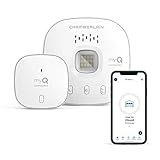
Overview: The CHAMBERLAIN Smart Garage Control upgrades traditional openers with smartphone connectivity for $29.98. This wireless hub and sensor combination enables remote operation through the myQ app without replacing existing hardware, bridging the gap between conventional and smart garage systems for budget-conscious homeowners.
What Makes It Stand Out: Dual WiFi and Bluetooth connectivity ensures reliable operation even during network outages. The myQ app provides advanced scheduling for automatic nighttime closing, while Amazon Key integration offers Prime members secure in-garage package delivery—a feature unique at this price point. Guest access sharing adds convenience for families and service providers.
Value for Money: At under $30, this costs a fraction of a new smart opener while delivering comparable features. The inclusion of both hub and sensor, plus premium services like Amazon Key, makes it exceptional value. Competing smart garage systems typically start at $50-80 for similar functionality, making this a high-ROI upgrade.
Strengths and Weaknesses: Pros: Remote smartphone control; scheduled closing; Amazon Key compatibility; easy app setup; guest access sharing; dual connectivity. Cons: Requires compatible opener; some features need subscriptions; sensor battery replacement needed; internet-dependent operation.
Bottom Line: Perfect for homeowners wanting affordable smart garage integration. The Chamberlain hub offers premium features at a budget price, especially valuable for Amazon Prime users seeking secure deliveries and peace of mind.
2. Smart WiFi Garage Door Opener Remote Controller, Smartphone App Control, Compatible with Alexa, Google Assistant and IFTTT, No Hub Required

Overview: This $28.99 WiFi controller transforms existing garage door openers into smart devices. Using the Smart Life app, it provides smartphone control without requiring a separate hub, offering a streamlined upgrade for traditional garage systems with minimal investment and installation complexity.
What Makes It Stand Out: The controller supports Alexa, Google Assistant, and Siri simultaneously—uncommon versatility at this price. The manufacturer provides a simple compatibility test using a wire or paperclip, preventing ordering errors. Installation requires only two wires, making it accessible for DIYers without professional help or electrical expertise.
Value for Money: This is one of the most affordable smart garage solutions available. Multi-platform voice control typically costs $50+ in competing products. For budget-conscious smart home enthusiasts, it delivers premium functionality without the premium price tag or recurring fees, maximizing value.
Strengths and Weaknesses: Pros: Multi-platform voice control; simple 2-wire installation; real-time notifications; family sharing; compatibility test option; no hub required. Cons: Compatibility must be verified; no Bluetooth backup; app reliability varies; potential WiFi interference; limited support documentation.
Bottom Line: Excellent budget smart controller for tech-savvy users willing to verify compatibility. If your opener passes the simple test and you desire voice control, this offers unbeatable value and modern convenience in a simple package.
3. 2X for Multicode Linear 308911, 10 dip Switch Gate Opener Remote 300MHz, Multi Code Garage Door Opener Remote, Garage Clicker Replacement

Overview: This $15.95 two-pack delivers replacement remotes exclusively for Linear Multicode 308911 systems. These 300MHz transmitters use traditional 10-dip switch programming, providing basic remote operation without smart features for older garage door and gate setups that require specific compatibility.
What Makes It Stand Out: The two-for-one pricing offers exceptional value, with each remote costing under $8. The 120-foot range surpasses many OEM remotes, and included visor clips enable convenient vehicle mounting. Pre-installed CR2032 batteries and DIY programming videos ensure immediate, hassle-free setup without technical expertise.
Value for Money: For Linear Multicode 308911 owners, this represents massive savings over $20+ individual OEM replacements. However, the extreme compatibility limitations mean it’s worthless for other systems. The value is entirely dependent on owning the exact matching receiver model, making verification critical.
Strengths and Weaknesses: Pros: Excellent price for two units; long 120-foot range; batteries included; visor clips provided; simple dip switch programming; immediate use. Cons: Extremely limited compatibility; outdated fixed-code technology; no smart features; security vulnerabilities; not universal.
Bottom Line: Purchase only if you own a Linear Multicode 308911 system. For that specific niche, it’s an unbeatable value proposition. All others should avoid this product completely—verify your model number before ordering to prevent disappointment.
4. 1 Garage Door Opener Remote for Multicode Linear 3089 308911 MCS308911,1089, 3070, 3060, 10 dip Switch Gate Opener Remote 300MHz, Garage Clicker Replacement

Overview: Priced at $9.95, this single replacement remote targets specific Multi-Code 300MHz receivers including models 1090, 1099 series, 3021, and 3028. It uses 10-dip switch configuration to match existing receiver codes, providing a straightforward solution for compatible systems without any smart capabilities.
What Makes It Stand Out: This is the most economical option for specific Linear/Nice gate and garage door receivers. The dip switch programming requires no technical tools or expertise. Like premium alternatives, it includes a visor clip and pre-installed battery, delivering immediate functionality once codes are matched correctly.
Value for Money: At under $10, it’s substantially cheaper than OEM replacements that cost $25+. The price reflects its narrow focus—it serves a very limited audience extremely well. For users with matching receivers, it provides significant savings, but compatibility restrictions make verification essential before purchasing.
Strengths and Weaknesses: Pros: Lowest price point; simple programming; battery and clip included; decent 120-foot range; immediate functionality; lightweight design. Cons: Highly specific compatibility; single unit only; outdated dip switch security; no modern features; requires manual code matching.
Bottom Line: Buy only after verifying exact receiver compatibility. For the specified Linear/Nice models, it’s a budget-friendly lifesaver. The low price is only advantageous if your model number matches precisely—double-check before ordering to ensure this works with your system.
5. 2-Pack Universal Garage Remotes for LiftMaster, Chamberlain, Genie, Linear | Replaces Clicker KLIK1U, 375UT, 375LM | Operates 2 Doors or Gates, Dip Switch & Learn Button Ready

Overview: This $19.95 two-pack universal remote works with most major brands manufactured after 1993, including Chamberlain, Genie, LiftMaster (excluding MyQ), Craftsman, and Linear. The dual-button design controls two separate doors or gates, supporting both dip switch and Smart Learn programming for versatile operation.
What Makes It Stand Out: True universality across 7-12 dip switches and rolling codes on 315-390MHz frequencies distinguishes this remote. Smart Learn technology enables programming in seconds without dip switch manipulation on compatible systems. The dual-button configuration consolidates mixed-brand setups into one compact device, reducing keychain clutter significantly.
Value for Money: For multi-door households, this offers exceptional value—two universal remotes for less than the price of one branded replacement. The ability to control different brands from a single remote eliminates the need for multiple devices, providing organizational and financial benefits that compound for families with several access points.
Strengths and Weaknesses: Pros: Broad compatibility; controls two doors; Smart Learn technology; supports dip switches; durable construction; long battery life; ergonomic grip. Cons: Not compatible with MyQ, Allstar, Marantec, Hormann; no smartphone connectivity; limited to post-1993 openers; requires brand-specific programming.
Bottom Line: Ideal for households with multiple garage doors or mixed brands. If you need to replace several remotes without requiring smart features, this provides unmatched versatility and value. Verify your opener’s brand and year first, but for most users, it’s a perfect consolidation solution.
6. 2X Universal Garage Door Opener Remote – Replacement for LiftMaster, Chamberlain, Genie, Craftsman, Linear – Works with 375LM, 375UT, KLIK1U – Learn Button & DIP Switch – Operates 2 Doors/Gates

Overview:
The 2X Universal Garage Door Opener Remote delivers comprehensive compatibility across major brands like LiftMaster, Chamberlain, and Genie. This two-pack system allows control of up to four doors total, with each remote handling two separate access points. The kit includes everything needed for immediate deployment—batteries, visor clips, and clear programming instructions.
What Makes It Stand Out:
Versatility defines this remote. It uniquely supports both modern learn-button systems and legacy DIP-switch configurations, eliminating compatibility guesswork. The Security+ 2.0 rolling-code technology provides bank-level encryption that changes codes with every use, preventing code-grabbing theft. The dual-channel design consolidates control of gates and garage doors into a single device.
Value for Money:
At $19.95 for two fully-equipped remotes, this offering dramatically undercuts brand-name replacements that often cost $30-40 each. You’re getting premium security features and universal compatibility at budget pricing, making it ideal for multi-door households or as backup units.
Strengths and Weaknesses:
Pros include broad brand compatibility, advanced rolling-code security, comprehensive kit contents, and intuitive programming. The two-button-per-remote design reduces clutter. Cons involve notable exclusions—it’s incompatible with MyQ systems, Allstar, Marantec, and Hormann openers, which limits its usefulness for some modern installations.
Bottom Line:
This remote set excels for standard garage door systems, delivering professional-grade security and convenience at an unbeatable price. Perfect for homeowners seeking reliable replacements without premium costs, provided your system isn’t on the exclusion list.
7. Liftmaster myQ Smart Garage Control - Wireless Garage Hub and Sensor with WiFi & Bluetooth - Smartphone Controlled, 821LMC-S, White

Overview:
The LiftMaster myQ Smart Garage Control transforms any compatible opener into a smartphone-controlled smart device. This wireless hub connects to your existing garage door system, enabling remote operation, monitoring, and scheduling from anywhere via the myQ app. Its compact white design discreetly mounts on ceilings or walls.
What Makes It Stand Out:
Bluetooth Low Energy (BLE) integration revolutionizes setup, making installation faster and more reliable than WiFi-only alternatives. The Amazon Key compatibility enables secure in-garage package delivery, solving porch piracy concerns. Unlike basic remotes, it provides real-time status notifications and activity history, turning your garage into a monitored access point.
Value for Money:
At $59.04, it sits in the mid-range for smart garage controllers. While pricier than simple remotes, it delivers connectivity features that typically require purchasing a new smart opener ($200+). The peace of mind from remote monitoring justifies the cost for tech-forward homeowners.
Strengths and Weaknesses:
Pros include excellent app integration, broad compatibility with post-1993 openers, easy BLE setup, and valuable delivery features. The modern aesthetic blends seamlessly. Cons require photoelectric sensors and exclude low-power-mode openers. It also demands a stable internet connection and isn’t compatible with certain proprietary systems.
Bottom Line:
This is the ideal upgrade for users wanting smart functionality without replacing their entire opener. The myQ hub delivers robust features and reliable performance, making it worth the investment for convenience and security.
8. Garage Door Opener Control Panel, Multi-Function Wall Keypad Button Replacement for 78LM, Wired

Overview:
The Briidea Multi-Function Control Panel serves as a direct replacement for standard LiftMaster wall consoles, adding enhanced functionality to your garage door system. This wired unit provides reliable hardwired control with additional features beyond basic open/close operation, compatible with green, red, and purple learn-button systems.
What Makes It Stand Out:
The integrated lock button provides security by disabling remote controls—a feature absent in many basic panels. The dedicated light control button offers convenient illumination management independent of door operation. Its design prioritizes visibility in low-light conditions, making it practical for dimly lit garages.
Value for Money:
At $12.99, this panel costs significantly less than OEM replacements while delivering comparable functionality. For homeowners with compatible LiftMaster systems, it provides an affordable way to upgrade from a simple button to a multi-function console without professional installation costs.
Strengths and Weaknesses:
Pros include straightforward operation, robust security lock feature, independent light control, and wide LiftMaster compatibility. The wired connection ensures reliable operation without battery concerns. Cons involve requiring wired installation (potentially challenging for some users), limited to LiftMaster openers, and lacking smart home integration. It’s a basic functional upgrade rather than a technological one.
Bottom Line:
This control panel is perfect for LiftMaster owners needing a reliable replacement or security upgrade. It delivers essential features at a budget price, though it won’t modernize older systems. Consider it for straightforward, dependable wall-mounted control.
9. XIHADA 4-Button Universal Gate and Garage Door Fixed Code and Rolling Code Garage Door Remote Control/Remote Keyless Key Multi Frequency 280MHZ-350MHZ/380MHZ-450MHZ/867MHZ-868MHZ (Yellow)

Overview:
The XIHADA 4-Button Universal Remote offers unprecedented consolidation, cloning up to four different original remotes into one keychain-sized device. Supporting frequencies from 280MHz to 868MHz, it handles both fixed and rolling codes across numerous brands, making it ideal for users juggling multiple access devices.
What Makes It Stand Out:
Its super-compact design—smaller than a business card—combined with multi-frequency support sets it apart. The ability to clone remotes operating on different frequencies into a single unit is unique. The built-in clip and keychain form factor prioritize portability and everyday carry convenience.
Value for Money:
At $19.99, it’s competitively priced for a cloning remote. However, its value depends entirely on your specific needs. For consolidating multiple remotes, it’s excellent. For simple replacement, cheaper alternatives exist. The complex compatibility requirements may negate savings if it doesn’t work with your system.
Strengths and Weaknesses:
Pros include extreme portability, multi-remote consolidation, wide frequency range, and ability to clone diverse systems. Cons feature a dauntingly long incompatibility list (including MyQ, Security 2.0+, and numerous brands), requirement of a working original remote for programming, and potentially complex setup process. The yellow color may not appeal to all users.
Bottom Line:
This remote serves a specific niche: users needing to consolidate multiple different remotes. It’s not a simple replacement solution. Verify compatibility meticulously before purchasing. For the right user, it’s incredibly convenient; for others, it’s a frustrating mismatch.
10. GT90-1 Garage Door Remote Control, Compatible with Genie Overhead Door 9 and 12 Dip Switches 390MHZ openers, Replacement for GT90 MAT90 GT912 AT90 (2 Pack)

Overview:
The GT90-1 Remote Control provides a targeted replacement solution for Genie and Overhead Door openers using 9 or 12 DIP switch configurations on the 390MHz frequency. This two-pack offers straightforward programming for older systems that rely on fixed-code technology, delivering reliable operation up to 150 feet.
What Makes It Stand Out:
Its specificity is its strength—designed exclusively for DIP-switch Genie models, it ensures perfect compatibility where universal remotes might fail. The manufacturer testing against OEM standards and included one-year warranty provide confidence. The upgraded ABS alloy construction promises durability beyond original equipment.
Value for Money:
At $19.99 for two remotes with batteries included, it matches market rate for specialized replacements. While fixed-code technology is less secure than rolling code, it’s authentic to these older systems. The warranty and quality materials add value over generic alternatives.
Strengths and Weaknesses:
Pros include precise compatibility with listed Genie/Overhead models, simple DIP-switch programming, long range, durable construction, included batteries, and warranty support. Cons involve fixed-code security limitations (vulnerable to code grabbing), incompatibility with modern rolling-code systems, and being non-OEM (though manufacturer-tested). It only serves a narrow segment of older openers.
Bottom Line:
This is the go-to solution for owners of compatible Genie DIP-switch openers seeking reliable replacements. Don’t expect smart features or advanced security—this is about maintaining older systems affordably. Perfect for its intended niche, irrelevant for modern setups.
Understanding Geofencing Technology in Garage Automation
What Is Geofencing and How Does It Work?
Geofencing is a location-based service that uses GPS, Wi-Fi, cellular data, or a combination of these technologies to trigger an action when a device enters or exits a predefined virtual boundary. In the context of garage door controllers, your smartphone becomes the beacon that communicates your proximity to your home. The technology relies on constant but low-power location monitoring, creating a radius that typically ranges from 500 feet to several miles around your property. When your phone’s location coordinates cross this threshold, the system sends a signal to your garage door controller through cloud servers or direct communication protocols.
The sophistication of modern geofencing algorithms means they can distinguish between a brief signal loss and an actual departure, reducing false triggers. Most systems use a combination of GPS for accuracy and Wi-Fi/cellular for reliability, creating a hybrid approach that works even in areas with spotty satellite coverage. Understanding this dual-mode operation is crucial when evaluating systems, as it directly impacts reliability and battery consumption on your mobile device.
The Auto-Close Mechanism Explained
The auto-close feature is the logical counterpart to geofencing-based opening, but its implementation varies significantly across platforms. When you exit your geofenced area, the system initiates a countdown timer—typically 5 to 15 minutes—before commanding the door to close. This delay serves two purposes: it prevents the door from closing prematurely if you’re just making a quick trip to the corner store, and it allows time for other household members to exit if needed.
Advanced systems incorporate additional sensors and logic checks before executing the close command. They may verify the door’s current position, check for obstructions using infrared sensors, and even confirm that no other authorized users remain within the geofence. Some controllers integrate with your car’s Bluetooth system or use vehicle detection to differentiate between you leaving in your primary vehicle versus a rideshare dropping you off, preventing unwanted closures when you’re still home.
Key Benefits of Smart Garage Controllers with Geofencing
Enhanced Security and Peace of Mind
The primary advantage of geofencing auto-close functionality is the elimination of human error from your home security routine. A forgotten open garage door is an invitation to opportunistic thieves and can compromise your entire home’s security. These systems act as a digital safety net, ensuring your largest entry point is secured even when your mind is elsewhere. Many insurance companies recognize this risk reduction and may offer premium discounts for homes equipped with automated security features.
Beyond simple closure, these systems provide detailed activity logs, showing exactly when the door was opened, closed, or triggered by geofencing. This audit trail can be invaluable for security reviews or in the event of a neighborhood incident. Some advanced controllers even integrate with local crime databases or neighborhood watch apps, automatically closing the door if suspicious activity is reported nearby.
Convenience and Lifestyle Integration
Imagine approaching your home with arms full of groceries, and your garage door opens automatically without fumbling for a remote or phone. This seamless experience extends to family members who may not have traditional remotes, like teenagers with smartphones or guests with temporary access. The system learns your routines and adapts, recognizing the difference between your regular commute and a weekend errand.
For households with multiple vehicles, geofencing eliminates the need for separate remotes or codes. Each family member’s phone becomes their personal access credential, and the system can trigger different responses based on who’s arriving—perhaps opening only the side door for a teenager while fully opening the main bay for the primary homeowner. This level of personalization transforms the garage from a simple storage space into an intelligent extension of your home’s welcome mat.
Energy Efficiency and Home Automation Synergy
A properly closed garage door significantly impacts your home’s thermal envelope, especially for attached garages. An open door can waste heating and cooling energy, forcing your HVAC system to work harder. Geofencing ensures the door isn’t left open for hours, reducing energy waste and maintaining temperature control in adjacent living spaces.
Integration with broader home automation platforms creates powerful synergies. Your garage door can trigger thermostat adjustments, activate security cameras, turn on pathway lighting, or even start your robot vacuum when you leave. Upon return, it can disarm the alarm system, adjust lighting to your preferred settings, and resume normal climate control. This orchestration transforms isolated smart devices into a cohesive ecosystem that responds intelligently to your presence.
Essential Features to Evaluate Before Buying
Geofencing Precision and Customizable Radius
Not all geofencing is created equal. Entry-level systems may offer a fixed-radius geofence that can’t be adjusted, while premium controllers allow you to draw custom boundaries around your property. Look for systems that let you set multiple geofences—perhaps a larger one for arrival notifications and a smaller, more precise one for auto-close triggers. The ability to adjust the radius in increments of 100 feet provides fine-tuned control that prevents false triggers in dense urban areas or overly large boundaries in rural settings.
Precision also depends on how quickly the system updates your location. Some apps refresh every few minutes to conserve battery, which could cause delays in triggering. The best systems use adaptive refresh rates, increasing frequency as you approach home while maintaining low power consumption when you’re far away. Ask about the minimum radius supported—some systems can’t reliably operate below 500 feet, which may be too large for apartment complexes or closely spaced homes.
Real-Time Notifications and Alerts
A robust notification system is your window into the controller’s decision-making process. You should receive clear, actionable alerts for every significant event: when you exit the geofence and auto-close is armed, when the door actually begins closing, and if any issues prevent closure. The best systems differentiate between notification types—perhaps a gentle chime for routine closures and a persistent alarm for security concerns.
Critical alerts include failed close attempts due to obstructions, connectivity losses that prevent geofencing from working, and unauthorized access attempts. Some systems offer escalation protocols, sending an initial notification to your phone, then a text message, and finally a call to a backup number if you don’t acknowledge a security issue. Evaluate whether the notification system works when your phone is in do-not-disturb mode—some can bypass this for critical security alerts.
Multi-User Support and Guest Access
Your garage door controller must handle multiple users gracefully, with individualized geofencing for each person. Look for systems that support at least 5-10 unique users without performance degradation. Each user should have customizable permissions—perhaps full auto-open/close for family members, notification-only for teenagers, and time-limited access for guests.
Guest access features should allow you to create temporary geofences that expire after a set period. For example, you might grant a dog walker access only during weekday afternoons, or give house-sitters a two-week geofence that automatically deletes when you return. The system should log all guest activity separately and provide an easy interface to revoke access instantly. Consider whether the system supports vehicle-based access in addition to phone-based—some can pair with your car’s built-in garage door buttons while still providing geofencing intelligence.
Compatibility and Integration Considerations
Garage Door Opener Compatibility
Before falling in love with any system, verify it works with your specific garage door opener. Most smart controllers are compatible with standard sectional doors using chain, belt, or screw drives manufactured after 1993, but compatibility gets murky with older models, jackshaft openers, or commercial-grade systems. Check for DIP switch compatibility, Security+ 2.0 support, and whether the controller can learn your existing remote’s frequency.
Some openers, particularly those with proprietary “smart” features already built-in, may resist third-party controllers. Manufacturers like Chamberlain/LiftMaster have begun encrypting their signals, requiring specific bridge devices. Measure your opener’s clearance and access panel location—some controllers require direct wiring to the opener’s terminals, while others simply pair with an existing remote. If you have a dual-door garage, ensure the system supports multiple doors without requiring separate controllers.
Smart Home Ecosystem Integration
A geofencing garage controller becomes significantly more powerful when integrated into your existing smart home platform. Evaluate native support for major ecosystems like Amazon Alexa, Google Home, Apple HomeKit, Samsung SmartThings, and Hubitat. Native integration means faster response times and more reliable operation compared to cloud-based bridging services.
For HomeKit users, look for Thread or HomeKit Secure Video support, which provides local control and enhanced privacy. Alexa and Google users should check for routines integration—can the garage door trigger a “Goodbye” routine that locks doors and arms cameras? SmartThings and Hubitat users need robust API access and community-supported drivers for advanced automation. Consider whether the system supports Matter, the emerging smart home standard that promises universal compatibility. Even if you don’t currently use a smart home hub, choosing a Matter-compatible device future-proofs your investment.
Mobile App Quality and OS Support
The mobile app is your primary interface with the geofencing system, so its quality directly impacts your daily experience. Evaluate app store ratings across both iOS and Android platforms, paying attention to recent reviews that mention geofencing reliability. The app should offer intuitive setup wizards for geofence configuration, clear status indicators, and easy access to logs and settings.
Cross-platform consistency matters if your household uses mixed devices. Some manufacturers prioritize one platform over the other, leading to feature disparities. Test the app’s offline capabilities—can you still operate the door manually via Bluetooth if your internet is down? Check how the app handles background location permissions, as both iOS and Android have tightened these settings in recent versions. The best apps provide clear explanations for why each permission is needed and how location data is used.
Installation and Setup Requirements
DIY vs Professional Installation
Most smart garage controllers are marketed as DIY-friendly, typically requiring 30-60 minutes of installation time. However, geofencing adds complexity to the setup that may challenge less tech-savvy users. You’ll need to mount the controller, connect it to your opener (either by wiring or pairing), configure your Wi-Fi network, and then tackle the geofence calibration. If you’re comfortable with smartphone settings and basic wiring, DIY installation can save $100-200 in professional fees.
Professional installation becomes worthwhile if you have an older or non-standard opener, want clean wiring through walls, or need help with network configuration. Some installers will also optimize geofence placement based on local geography and cell tower locations. Consider whether the manufacturer offers remote setup assistance—some provide video calls with technicians who can walk you through geofencing configuration. If you opt for DIY, verify the warranty isn’t voided by self-installation, and check if the company provides pre-installation compatibility checks.
Wiring and Power Requirements
Geofencing controllers require constant power and connectivity, which means understanding your garage’s electrical setup. Most devices plug into a standard outlet and include a battery backup, but the location of your outlets matters. You’ll need power within 6 feet of the controller’s mounting location, which should be near your opener but away from excessive vibration. Some units can be hardwired for a cleaner look, but this may require an electrician.
Consider the power consumption of the controller itself—while minimal (typically 2-5 watts), this adds up over time. More importantly, evaluate how the controller handles power outages. Does the battery backup maintain geofencing functionality, or just manual operation? How long does the battery last, and is it user-replaceable? Some advanced systems can tap into your garage door opener’s battery backup if it has one, providing seamless operation during outages. For solar-powered garages, verify the controller’s voltage range and whether it can operate directly from solar-charged batteries.
Calibration and Testing Procedures
Proper geofence calibration is critical for reliable operation and requires patience. The process typically involves driving your normal routes multiple times while the system learns your departure and arrival patterns. Most apps will show your location in real-time relative to the geofence, helping you visualize the boundary. Test during different times of day and weather conditions, as GPS accuracy varies with satellite visibility.
Create a systematic testing plan: start with a large geofence (1-2 miles) and gradually shrink it until you find the sweet spot where the door closes reliably after you leave but doesn’t trigger during neighborhood walks. Test the auto-close delay timer by making trips of varying durations. Document any false triggers and adjust accordingly. Some systems offer “learning mode” where they suggest optimizations based on your behavior patterns. Don’t skip testing with multiple users—each person’s phone may have different location accuracy based on their settings and device model.
Security and Privacy Safeguards
Encryption and Data Protection
Your garage door is a critical security barrier, so the communication between your phone, the cloud service, and the controller must be encrypted end-to-end. Look for systems using AES-256 encryption for data transmission and TLS 1.3 for cloud communications. The controller itself should have secure boot capabilities, preventing malicious firmware from being installed.
Investigate how location data is handled. Does your phone send raw GPS coordinates to the cloud, or does it process location locally and only send geofence crossing events? The latter is more privacy-preserving. Check if the manufacturer has undergone third-party security audits or holds certifications like SOC 2. Some premium systems offer zero-knowledge architecture, where even the manufacturer can’t access your usage data or location history.
Preventing Unauthorized Access
Geofencing introduces new attack vectors that traditional remotes don’t face. A stolen phone could theoretically grant access to your garage, so the system must include robust authentication. Look for multi-factor authentication requirements for critical actions like disabling auto-close or adding new users. Some systems require biometric confirmation (fingerprint or face ID) before executing geofence-based commands.
Consider scenarios like phone cloning or SIM swapping. The best controllers use device fingerprinting in addition to login credentials, recognizing when a new phone attempts to access your account. They should also allow you to remotely wipe all access from a lost device instantly. Evaluate the system’s response to suspicious location patterns—if your phone suddenly appears to teleport across town, the system should flag this and require manual verification before operating the door.
Privacy Settings and Location Data
Location tracking raises legitimate privacy concerns that manufacturers must address transparently. You should have granular control over when location tracking is active—perhaps only during your typical commute hours, or disabled entirely when you’re on vacation. The app should clearly show what location data is stored, for how long, and provide one-tap deletion options.
Check whether the system uses your location data for purposes beyond garage control. Some free apps sell anonymized location data to third parties. Paid subscription models are often more privacy-respecting. iOS users should verify HomeKit integration, which processes geofencing locally on Apple devices without sharing location with the manufacturer. Android users should look for apps that support Google’s Privacy Sandbox features. The privacy policy should explicitly state that location data is never shared with advertisers or data brokers.
Connectivity and Performance Factors
Wi-Fi vs. Bluetooth vs. Proprietary Protocols
Geofencing controllers rely on multiple connectivity layers, each with trade-offs. Wi-Fi provides the backbone for cloud communication and remote access but can be unreliable in garages, which are often Wi-Fi dead zones. Look for controllers with external antennas or mesh network support (Wi-Fi 6E offers better penetration). Bluetooth is used for close-range, direct control when you’re in the garage and can provide faster response than cloud-reliant Wi-Fi commands.
Some premium systems use proprietary radio protocols like Z-Wave or Zigbee for hub-based installations, offering more reliable mesh networking. Thread, the new IP-based mesh protocol, promises the best of both worlds: local control with cloud backup. When evaluating protocols, consider latency—how quickly does the door respond when you cross the geofence? Cloud-dependent systems may have 2-5 second delays, while local network systems can react in under a second. The ideal controller uses a hybrid approach: geofence detection via cloud, but door operation via local network when possible.
Range Limitations and Signal Strength
Your geofence is only as reliable as your phone’s ability to communicate its location. In rural areas with poor cellular coverage, GPS-only geofencing may be inconsistent. Urban canyons with tall buildings can reflect GPS signals, causing location drift. Test your phone’s location accuracy using a GPS diagnostic app before committing to a geofencing system.
The controller’s connectivity range matters too. If your garage is detached or far from your router, verify the controller’s Wi-Fi sensitivity. Some units support Ethernet-over-powerline adapters as a backup connectivity method. For very large properties, consider whether you can deploy multiple access points or if the system supports cellular backup via integrated SIM cards. The geofence radius should be adjustable based on your property size—rural homeowners might need a 5-mile radius to ensure reliable detection, while apartment dwellers might require a 200-foot precision boundary.
Backup Connectivity Options
What happens when your internet goes down? The best geofencing controllers don’t become useless bricks during outages. Look for local network fallback—if the controller can’t reach the cloud, it should still respond to direct Bluetooth commands from your phone when you’re nearby. Some systems can store a queue of geofence events and execute them once connectivity is restored.
Cellular backup is a premium feature worth considering if your garage is critical infrastructure. These systems include a low-data SIM card that maintains geofencing functionality even during broadband outages. For less critical applications, consider whether the controller can integrate with your home security system’s cellular communicator. Power-over-Ethernet (PoE) models offer the most reliable connectivity, combining data and power in a single cable that’s less susceptible to interference than Wi-Fi.
Power Management and Backup Solutions
Battery Backup Capabilities
A geofencing controller without power backup defeats its own security purpose during outages. Evaluate the battery type—lithium-ion provides longer life but may degrade in extreme garage temperatures (which can range from -20°F to 120°F). Lead-acid batteries handle temperature swings better but require more maintenance. The battery should power the controller for at least 24 hours and maintain geofencing functionality, not just manual operation.
Check the battery management features. Does the system send low-battery warnings to your phone? Can you monitor battery health through the app? Some systems use supercapacitors instead of batteries, providing enough power for a graceful shutdown and status message rather than continued operation. Consider whether the battery is user-replaceable or requires professional service. For areas with frequent outages, look for systems that can connect to external UPS units or solar battery banks.
Solar Integration Possibilities
For eco-conscious homeowners or those with detached garages lacking electrical service, solar integration is an attractive option. Some controllers are specifically designed for solar operation, with ultra-low power consumption and efficient charging circuits. These systems typically require a 20-50 watt solar panel and a small deep-cycle battery, providing completely off-grid operation.
When evaluating solar compatibility, check the controller’s voltage input range and whether it includes a built-in charge controller. The system should have power management features that prioritize essential functions during low-light conditions—perhaps disabling non-critical features like LED status lights to conserve energy. Consider the panel mounting options and whether the controller can monitor solar production and battery levels. In cloudy climates, hybrid systems that primarily use solar but can fall back to grid power offer the best reliability.
Low-Power Mode Features
Even grid-powered controllers benefit from power management features. Look for systems with adjustable polling intervals—how often they check your location or listen for commands. During nighttime hours or when you’re on vacation, the system can enter a low-power state, checking in less frequently to save energy. Some controllers can detect when your home’s overall power consumption drops (indicating you’ve left) and automatically increase geofencing sensitivity while reducing other non-critical functions.
The mobile app’s power consumption is equally important. Poorly designed apps can drain your phone’s battery by constantly polling GPS. Quality systems use geofencing APIs built into iOS and Android that are optimized for efficiency, waking the app only when you cross a threshold rather than continuously tracking. Check user reviews for complaints about battery drain, and test the app yourself for a few days before final installation.
User Experience and Interface Design
App Interface Intuitiveness
The best geofencing technology is worthless if the app is frustrating to use. A well-designed interface should display your geofence visually on a map, allow drag-and-drop adjustment of the boundary, and show real-time location indicators for all authorized users. The main dashboard should clearly indicate whether auto-close is armed, disarmed, or suspended due to a holiday mode.
Look for thoughtful touches: Does the app show a countdown timer when auto-close is triggered? Can you easily snooze geofencing for a few hours if you’re working in the yard? Are there widgets for quick access without opening the full app? The setup process should include guided tutorials for geofence placement, with tips based on your address’s geography. Dark mode support is essential for nighttime use, and accessibility features like voice control and large text options make the system usable for all family members.
Voice Control Capabilities
While geofencing automates operation, voice control provides manual override convenience. Evaluate integration depth with your preferred voice assistant. Basic integration might only support “open” and “close” commands, while advanced systems allow you to ask “Is the garage door closed?” or “When did John last arrive home?” Some controllers support natural language commands like “I’m leaving for vacation, secure the garage.”
Security is paramount with voice control. The system should require a PIN code for open commands (to prevent thieves from yelling through windows) but might allow status checks without authentication. Consider whether voice commands work locally (without internet) for basic operations. Multi-language support is important for bilingual households, and the system should recognize different family members’ voices for personalized responses.
Scheduling and Automation Rules
Geofencing works best when combined with intelligent scheduling. Look for systems that allow you to create conditional rules: “Only auto-close on weekdays between 8 AM and 6 PM,” or “Disable geofencing when the security system is disarmed.” These rules prevent conflicts with other automation and accommodate irregular schedules.
Advanced controllers support calendar integration, automatically adjusting behavior on holidays or when you’re traveling. You might set a “vacation mode” that disables auto-open (preventing the door from opening if you happen to drive by) but maintains auto-close for security. Some systems can learn from your patterns and suggest schedule optimizations, like noticing you always manually override auto-close on Tuesdays and suggesting a schedule adjustment.
Advanced Automation Features
IFTTT and Third-Party Integrations
The true power of geofencing emerges when connected to broader automation platforms. IFTTT (If This Then That) support allows you to create custom applets: “If I exit the geofence, then turn off all smart lights and lower the thermostat.” However, IFTTT’s cloud-based nature introduces latency, so also check for direct integrations with popular services like Tesla’s app, Ring doorbells, or August smart locks.
For power users, API access enables custom integrations. Does the manufacturer provide documented APIs for geofence events? Can you query the API to build custom dashboards? Some systems support MQTT, a lightweight messaging protocol popular in home automation communities. This allows direct, local integration with platforms like Node-RED for sophisticated automation without cloud dependency.
Seasonal Adjustments and Learning Algorithms
Your comings and goings vary with seasons—summer evenings spent in the yard, winter trips that start before sunrise. Advanced geofencing systems can adjust sensitivity based on time of year and daylight hours. They might expand the geofence radius during summer months when you’re more likely to take evening walks, or tighten it in winter when GPS signals are weaker due to atmospheric conditions.
Machine learning algorithms can analyze your patterns and predict when you’re likely to leave. If the system notices you always depart at 7:15 AM on weekdays, it can pre-arm the geofence and reduce polling intervals starting at 7:00 AM, improving response time while saving power during low-activity periods. Conversely, it can detect anomalies—like a departure at 3 AM—and require additional confirmation before auto-closing, in case you’re just stepping out briefly.
Vehicle-Specific Recognition
The most sophisticated systems go beyond phone-based geofencing to recognize specific vehicles. Using Bluetooth Low Energy beacons placed in each car, the controller can identify which vehicle is arriving and respond accordingly. Your electric car might trigger the door to open and start charging, while your spouse’s car arriving home might send a notification but not open the door if it’s after midnight.
This technology also solves the “rideshare problem”—when you arrive home in an Uber, your phone crosses the geofence but you don’t want the door to open. Vehicle recognition ensures the door only responds when your specific car is detected. Some systems can even integrate with your car’s built-in GPS and cellular connection, using the vehicle’s more accurate location data instead of your phone’s.
Cost Analysis and Value Proposition
Initial Investment vs. Long-Term Savings
Geofencing garage controllers typically cost $50-150 more than basic smart controllers without location features. This premium covers GPS processing, more sophisticated software, and cloud services. However, the investment can yield savings: prevented theft (average garage burglary costs $2,500 in losses), reduced energy waste (10-15% HVAC savings for attached garages), and potential insurance discounts (5-10% for smart security devices).
Calculate the payback period based on your specific situation. If you forget to close your door twice a month, and each incident costs $5 in wasted energy and anxiety, a $100 premium pays for itself in less than a year. For frequent travelers, the peace of mind alone justifies the cost. Consider bundled deals—some manufacturers offer discounts when you purchase multiple controllers for multi-door garages or include free installation with premium models.
Subscription Models and Hidden Fees
Many geofencing features require cloud processing, which some manufacturers gate behind subscription fees. A typical model includes basic app control for free but charges $3-10 monthly for advanced geofencing, activity history beyond 7 days, and integration with third-party services. Evaluate what’s included in the free tier—some systems provide full geofencing without subscription, using the fee only for premium features like video recording.
Watch for hidden costs: Does the mobile app require a subscription for each user, or is one fee per household? Are firmware updates free, or are major version upgrades paid? Some manufacturers offer “lifetime” subscriptions for a one-time fee, which can be cost-effective if you plan to stay in your home long-term. Check whether the system works at all without an active subscription—you don’t want a useless device if you decide to cancel.
Warranty and Support Considerations
Geofencing reliability depends on both hardware and software, so warranty coverage should address both. Look for at least a 2-year hardware warranty and explicit commitments to software updates for 5+ years. The company should have a track record of maintaining cloud services for legacy products—nothing is more frustrating than a “smart” device that becomes dumb when servers are shut down.
Evaluate support channels: Is there 24/7 phone support for security issues? Are there active community forums where users share geofencing tips? Some premium brands offer remote diagnostics, where support staff can analyze your geofence logs to troubleshoot false triggers. Check the company’s financial stability—startups may offer innovative features but risk shutting down, while established brands provide longevity but may innovate more slowly.
Common Troubleshooting Scenarios
False Triggers and Inaccurate Geofencing
The most common complaint with geofencing systems is false triggers—doors closing when you’re still home or opening unexpectedly. These usually stem from GPS drift, where your phone’s location jumps randomly due to poor satellite visibility. Solutions include increasing the geofence radius, switching to Wi-Fi-based geofencing for the final 100 feet, or enabling “location smoothing” algorithms that ignore sudden position jumps.
Another cause is overlapping geofences from other apps or family members. If your spouse’s phone has a different geofencing app with a large radius, it might interfere. Test by temporarily disabling other location-based apps. Also, check your phone’s battery optimization settings—aggressive power saving can kill the background location service, causing the app to miss geofence crossings entirely. Most apps provide diagnostic tools showing exactly when and why geofence events fired.
Connectivity Drops and Offline Issues
Garages are notorious Wi-Fi dead zones due to metal construction and interference from opener motors. If your controller frequently goes offline, consider a mesh Wi-Fi system with a node in or near the garage. Powerline adapters that use your home’s electrical wiring as network cables can provide reliable connectivity without running Ethernet.
For geofencing specifically, offline controllers can’t receive cloud-based location updates. Some systems handle this gracefully by queuing commands and executing them when reconnected. Others simply disable geofencing until connectivity is restored. Test this scenario by temporarily disconnecting your garage’s internet—does the app alert you that geofencing is suspended? Does it fall back to Bluetooth? The best systems provide multiple connectivity paths, ensuring some level of functionality even when your primary internet is down.
Calibration Drift Over Time
Geofence boundaries can become less accurate over months due to changes in GPS satellite constellations, cell tower modifications, or software updates. You may notice the door closing later than usual or triggering too early. Most systems require recalibration every 6-12 months, but premium controllers can self-calibrate by comparing your actual arrival times with predicted times and adjusting accordingly.
Set calendar reminders to review geofence performance quarterly. Drive your normal routes and note any discrepancies. Some apps provide calibration reports showing the average time from geofence crossing to door operation, helping you spot drift before it becomes problematic. If your system supports multiple location sources (GPS, Wi-Fi, cellular), periodically verify they’re all enabled—OS updates sometimes reset location permissions.
Maintenance and Longevity Best Practices
Regular Firmware Updates
Manufacturers continuously improve geofencing algorithms through firmware updates. These updates might enhance battery efficiency, improve location accuracy, or patch security vulnerabilities. Enable automatic updates if available, but verify the system doesn’t update during critical times (like 7 AM on weekdays when you’re leaving). Some systems allow you to schedule update windows.
Before major updates, the system should backup your geofence settings and automation rules. Read update changelogs carefully—some may reset location permissions or require re-calibration. If you manage multiple properties with geofencing controllers, look for bulk management tools that update all devices simultaneously. Keep a log of firmware versions and update dates to track improvements or identify when issues started.
Sensor Cleaning and Alignment
Geofencing controllers often work in conjunction with door position sensors. These optical or magnetic sensors can become misaligned due to vibration or dirt accumulation, causing the system to think the door is open when it’s closed (or vice versa). Clean sensor lenses monthly with a soft cloth and check alignment quarterly. The app should provide a sensor health check that displays signal strength and alignment status.
For controllers with integrated cameras for visual confirmation, keep the lens clean and check that infrared night vision illuminators aren’t obstructed. Extreme temperatures can cause sensor drift—some systems include temperature compensation, but manual recalibration may be needed seasonally. If your garage experiences condensation, choose sensors with IP65 or higher weather resistance ratings.
Battery Replacement Schedules
If your controller uses replaceable batteries for backup power, mark your calendar for proactive replacement every 2-3 years, or when the app indicates capacity below 30%. Don’t wait for failure—dying batteries can cause erratic behavior that’s hard to diagnose. Use only manufacturer-recommended battery types; substituting different chemistries can damage the charging circuit.
For controllers with rechargeable lithium batteries, understand that extreme garage temperatures shorten battery life. If possible, mount the controller on a wall shared with conditioned space rather than on the opener itself. Some systems allow you to set temperature alerts, warning you when garage conditions exceed safe operating ranges. Consider a small, insulated enclosure for the controller in very hot or cold climates.
Future Trends in Garage Automation
AI-Powered Predictive Closing
The next evolution of geofencing moves beyond reactive location tracking to predictive behavior modeling. AI systems will analyze weeks of your movement patterns to predict when you’re about to leave, pre-arming the system for faster response. They might integrate with your calendar, traffic data, and weather forecasts to adjust behavior—auto-closing more quickly on snowy days when you’re unlikely to return soon.
These systems could also differentiate between routine departures and unusual ones, requiring extra confirmation for anomalous patterns. Imagine a system that knows you never leave after 11 PM on weeknights, so when you do, it asks for fingerprint confirmation before auto-closing. This predictive approach reduces false triggers while increasing security during high-risk periods.
Integration with Electric Vehicle Charging
As EVs become mainstream, garage controllers will integrate with charging systems. Your geofence arrival could trigger not just door opening but also charging initiation, with the system checking electricity rates and your battery level to optimize charging time. Departure geofencing could pause charging and secure the connector.
Vehicle-to-home (V2H) integration will allow your EV’s precise location and battery state to inform garage operations. The car’s GPS is typically more accurate than a phone’s, enabling geofences as small as 50 feet. The system could also use the EV’s arrival time estimate from navigation systems to open the door exactly as you pull in, rather than relying on less precise phone location.
Matter Standard Adoption
Matter, the new smart home connectivity standard backed by Apple, Google, Amazon, and others, promises to revolutionize geofencing by enabling local, hub-independent operation. Matter-compatible garage controllers will process geofence events locally on your phone and home network, eliminating cloud dependency and improving privacy. This standardization means geofencing will work consistently across all your smart home platforms.
As Matter rolls out, expect to see geofencing become a system-level feature rather than app-specific. You’ll set one geofence in your phone’s OS settings that all Matter devices can use, with unified privacy controls. This will simplify setup and improve reliability, as the phone’s OS can optimize location polling for all smart home apps simultaneously rather than each app doing it inefficiently.
Frequently Asked Questions
1. How accurate is geofencing for garage doors, and what causes false triggers?
Geofencing accuracy typically ranges from 100 to 500 feet depending on your phone’s GPS, cellular signal, and local geography. False triggers usually occur due to GPS drift in urban canyons or near large buildings, aggressive phone battery optimization killing background location services, or overlapping geofences from other apps. Modern systems use Wi-Fi and cellular triangulation to supplement GPS, improving accuracy to about 50 feet in optimal conditions. To minimize false triggers, set a larger initial geofence and gradually reduce it while testing, and ensure your phone exempts the garage app from battery restrictions.
2. Will geofencing drain my smartphone’s battery?
Properly implemented geofencing has minimal battery impact—typically less than 2% per day. Systems using native iOS/Android geofencing APIs are very efficient because the operating system manages location polling across all apps, waking your phone only when crossing boundaries. Poorly designed apps that constantly poll GPS can drain battery significantly. To optimize, enable Wi-Fi scanning (which uses less power than GPS), set realistic geofence sizes (larger boundaries require less frequent checking), and limit the number of geofencing apps running simultaneously. Most users notice no meaningful difference in daily battery life.
3. Can I use geofencing if I have multiple family members coming and going?
Yes, but it requires a system with robust multi-user support. Each family member installs the app on their phone and receives individualized geofencing. The controller tracks each person’s location separately and only closes the door when the last authorized user leaves the geofence. You can set different permissions per user—full auto-open for adults, notification-only for teens, and time-limited access for guests. The best systems show a live map of who’s home and who has left, preventing confusion. During setup, test with each user’s phone separately, as location accuracy varies by device model and settings.
4. What happens if I lose my phone or it gets stolen?
Immediately log into the system’s web portal from another device and revoke access for the lost phone. All reputable systems allow remote device management. Enable multi-factor authentication so a thief can’t access your garage even with your phone. For security, some systems require biometric confirmation for geofence-based operations, which a thief can’t provide. As a precaution, set up a “lost phone” routine that disables geofencing and sends you email alerts for any access attempts. Keep a backup access method like a keypad or traditional remote in a secure location. Never rely solely on phone-based access.
5. Does geofencing work when my phone is in airplane mode or has no signal?
No, geofencing requires either cellular data, Wi-Fi, or GPS to determine your location. In airplane mode, location services are disabled and geofencing won’t function. However, some systems have clever workarounds: they can use your car’s Bluetooth connection as a proximity trigger when you lose signal near home, or they can queue commands and execute them once connectivity is restored. If you frequently travel through areas with poor coverage, choose a system with “offline mode” that uses local network connections (like Bluetooth) when cloud services are unavailable. For critical security, never depend entirely on geofencing—always have a backup like a timer-based auto-close.
6. How do I prevent the door from auto-closing when I’m just walking the dog or checking the mail?
Configure an appropriate delay timer—most systems default to 10-15 minutes, which is sufficient for short trips. For longer activities, use the app’s “snooze” feature to temporarily disable auto-close for 30-60 minutes. Advanced systems can differentiate between walking and driving based on speed and distance traveled. Set up multiple geofences: a small one for walking activities that only sends notifications, and a larger one for driving that triggers auto-close. Some systems integrate with fitness trackers or smartwatches, detecting when you’re on foot versus in a vehicle. You can also schedule geofencing to be less sensitive during typical “yard work” hours.
7. Will my garage door opener be compatible with a geofencing controller?
Most garage door openers manufactured after 1993 with standard safety sensors are compatible. Check for a “learn” button on your opener unit—this indicates it can pair with third-party controllers. For openers without a learn button (older DIP-switch models), you’ll need a controller that can clone your existing remote’s signal. Jackshaft openers and some commercial units may require specific adapter kits. Before purchasing, use the manufacturer’s compatibility checker tool, which often involves uploading a photo of your opener’s model number. If you have a “smart” opener from brands like Chamberlain or Genie, you may need to disable its built-in Wi-Fi to avoid conflicts with the geofencing controller.
8. Can geofencing work with my apartment’s shared garage or underground parking?
Geofencing in shared or underground garages presents unique challenges. GPS signals are often unavailable underground, forcing reliance on Wi-Fi or cellular triangulation, which is less accurate. For shared garages, you may not have permission to install controllers on the opener mechanism itself. Solutions include using a controller that pairs with an existing remote rather than wiring to the opener, or choosing a system with “virtual geofencing” that triggers based on when your phone disconnects from your home Wi-Fi network. For underground parking, set a larger above-ground geofence that triggers before you descend. Always check with property management before installation, and consider portable solutions that don’t require permanent mounting.
9. How secure is the location data collected by these systems?
Reputable manufacturers treat location data as highly sensitive information. Look for systems with end-to-end encryption, where location is processed on your phone and only anonymized crossing events are sent to the cloud. Read the privacy policy carefully—data should never be sold to third parties or used for advertising. iOS HomeKit integration offers the best privacy, as location processing stays entirely on Apple devices. Android users should check for Google’s Privacy Sandbox compliance. The app should allow you to delete location history permanently and disable cloud storage of geofence data entirely. For maximum privacy, choose a system with local processing that doesn’t require cloud services at all.
10. What should I do if geofencing stops working after a phone OS update?
OS updates frequently reset location permissions and background app settings, breaking geofencing functionality. First, check that the garage app has “Always” location permission (not just “While Using”). On iOS, verify that “Precise Location” is enabled and “Background App Refresh” is allowed. Android users should check battery optimization settings and ensure the app is exempt from power-saving features. Reboot your phone after making these changes. If problems persist, delete and recreate your geofence in the app, as OS updates sometimes change how location coordinates are reported. Most manufacturers release app updates within days of major OS updates to address compatibility issues, so check for app store updates. Contact support if issues continue—they can often diagnose problems by analyzing your geofence logs.