Summer entertaining has evolved beyond extension cords precariously draped through kitchen windows. Today’s backyard gatherings demand serious power infrastructure—string lights, Bluetooth speakers, projector screens, margarita machines, and charging stations for a dozen devices. But here’s the catch: ordinary power strips fold faster than a cheap lawn chair when exposed to splashing pool water, unexpected downpours, or even the humidity from your patio mister. The difference between a memorable bash and a trip to the emergency room often comes down to one overlooked detail: your outdoor power distribution strategy.
Smart outdoor power strips have revolutionized how we electrify our exterior spaces, but not all are created equal to survive the rigors of splash-heavy summer festivities. We’re talking about devices engineered to withstand not just water exposure, but UV radiation, temperature swings, and the constant plug-unplug cycle of party equipment. This guide dives deep into the technical specifications, safety certifications, and practical features that separate the weekend warriors from the professional-grade workhorses—ensuring your outdoor entertainment setup remains both powerful and protected from Memorial Day through Labor Day.
Top 10 Smart Garden Power Strips for Outdoor Parties
Detailed Product Reviews
1. SURAIELEC Outdoor Smart Plug, WiFi Power Stake Light Timer with 6 Outlet, 6FT Extension Cord, Electrical Weatherproof for Patio Lights, Christmas Decorations, Compatible with Alexa/Google Assistant
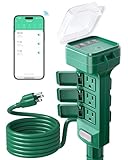
Overview: The SURAIELEC Outdoor Smart Plug delivers six simultaneously controlled outlets in a weatherproof stake design for $29.99. Operating exclusively on 2.4GHz Wi-Fi through the Tuya Smart Life app, it offers scheduling, countdown, and astronomical timer functions that repeat weekly. The 6-foot green extension cord provides flexible placement for holiday lighting, landscape features, or pond equipment, while voice control compatibility with Alexa and Google Assistant enables hands-free operation.
What Makes It Stand Out: This unit’s integrated 15-amp fused circuit breaker provides genuine overload protection—a critical safety feature often overlooked in budget smart plugs. The heavy-gauge 14/3C SJTW power cord resists abrasion, moisture, and UV degradation, while the large protective cover shields connections from rain and snow. The reinforced stake design penetrates hard ground more effectively than flimsier competitors, making seasonal installation significantly easier.
Value for Money: At $29.99 for six smart outlets, this represents excellent value, costing roughly $5 per controllable outlet. Comparable smart plugs with fewer outlets often retail for similar prices, and the inclusion of robust weatherproofing and safety certification makes it a financially prudent choice for outdoor automation.
Strengths and Weaknesses: Strengths include collective outlet control maximizing convenience for holiday lighting, comprehensive scheduling options, genuine overload protection, and durable construction. The 2.4GHz-only limitation is standard for this price tier but may require network adjustments. Outlets cannot be controlled individually, which limits flexibility for diverse setups.
Bottom Line: This is an outstanding entry-level smart outdoor power solution perfect for holiday decorators and landscape lighting enthusiasts seeking reliable, safe, and affordable automation without complex installation.
2. Smart Heavy Duty Outdoor Power Strip WiFi Plug Water-Resistant Socket, Electrical Power Extension Cord, Outlet Switch and Timer Works Remotely with Alexa, G Assistant (4 Sockets) Black

Overview: This heavy-duty smart power strip provides four Wi-Fi-enabled outlets for $39.97, controlled via the Smart Life app with Alexa and Google Assistant integration. The black weather-resistant housing includes protective button caps for unused sockets, and the unit supports scheduling and timer functions for automated operation of holiday decorations, fountains, and garden equipment.
What Makes It Stand Out: The manufacturer emphasizes “long-range WiFi capabilities,” though this appears to be standard 2.4GHz connectivity rather than enhanced hardware. The water-resistant socket covers provide extra protection against debris and moisture when outlets remain unused, a thoughtful design element for year-round outdoor deployment.
Value for Money: At nearly $40 for only four outlets, this product commands a significant premium—approximately $10 per outlet—making it the most expensive option per controlled socket in this comparison. While functional, competitors offer six outlets for 25% less money, diminishing this unit’s overall value proposition.
Strengths and Weaknesses: Strengths include reliable app integration, voice control compatibility, and protective socket covers. However, the limited four-outlet configuration severely restricts its utility for elaborate holiday displays. The higher price point is difficult to justify without offering individual outlet control or enhanced power ratings. The 2.4GHz-only limitation remains standard but noteworthy.
Bottom Line: Consider this product only if you specifically need four outlets rather than six and prioritize the black aesthetic. For most users, better value exists elsewhere in the smart outdoor plug market.
3. HBN Outdoor Smart Plug Waterproof with 6 Outlets,WiFi Power Stake Timer 6Ft Cord,Outdoor Outlet Timer for Halloween/Christmas Lights,Compatible with Alexa & Google Assistant, Voice Control,ETL Listed
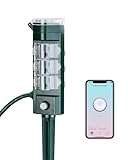
Overview: The ETL-listed HBN Outdoor Smart Plug offers six weatherproof outlets on a 6-foot cord for $31.99, managed through the HBN Smart/BN-hub app. Compatible with Alexa and Google Assistant, it supports collective outlet control, scheduling, and timer functions. The IP44-rated stake design includes built-in overload protection and a 12-inch green stake for secure ground installation, making it suitable for holiday lighting and landscape applications.
What Makes It Stand Out: ETL certification provides verified safety assurance—a crucial differentiator for outdoor electrical devices exposed to harsh conditions. The manufacturer explicitly states outlets are controlled collectively, not individually, demonstrating transparency about limitations. The 12-inch stake length offers superior ground stability compared to shorter alternatives.
Value for Money: At $31.99, this unit costs slightly more than non-certified alternatives but justifies the premium through independent safety testing. The per-outlet cost of approximately $5.33 remains reasonable, particularly for users prioritizing certified protection for valuable holiday displays or permanent landscape lighting.
Strengths and Weaknesses: Strengths include ETL safety certification, robust overload protection, honest marketing about control limitations, and IP44 weatherproofing. The requirement for the proprietary HBN app may fragment smart home ecosystems already using Tuya or Smart Life platforms. Collective control restricts granular device management, and 2.4GHz-only connectivity requires compatible network infrastructure.
Bottom Line: This is a trustworthy choice for safety-conscious buyers willing to pay a modest premium for certified protection and transparent product specifications in their outdoor smart plug.
4. HBN Outdoor Smart Plug Waterproof WiFi Outdoor Outlet Timer with 6 Grounded Outlets, Remote & Voice Control Heavy Duty Yard Stake Plug Compatible with Alexa and Google Assistant No Hub Required
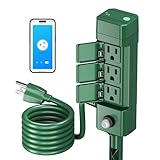
Overview: This HBN smart plug delivers six grounded outlets on a 6-foot cord for $29.99, controlled via the BN-HUB app with Alexa and Google Assistant voice integration. The IP44-rated unit features a 12-inch green stake for garden installation and includes built-in overload protection. A one-year warranty backs the product, which supports scheduling and timer functions for holiday decorations, landscape lighting, and outdoor appliances.
What Makes It Stand Out: The explicit one-year warranty provides purchase confidence rarely stated in budget smart plug documentation. The product’s dual identity as both yard stake timer and outdoor outlet timer highlights its versatility for users transitioning between seasonal and permanent installations. At $29.99, it matches the most aggressive pricing while maintaining six-outlet configuration.
Value for Money: Offering six smart outlets for $29.99 with warranty protection creates exceptional value, undercutting competitors with similar feature sets. The cost per outlet approaches just $5, making it one of the most economical choices for comprehensive outdoor automation without sacrificing core functionality or safety features.
Strengths and Weaknesses: Strengths include competitive pricing, warranty coverage, six-outlet capacity, and IP44 weatherproofing. The proprietary BN-HUB app requirement may complicate integration for users preferring unified smart home platforms. Collective outlet control limits device-specific automation, and the 2.4GHz-only constraint necessitates compatible wireless networks. Documentation warns against pump usage, restricting some applications.
Bottom Line: This budget-friendly smart stake offers the best price-to-outlet ratio with warranty protection, ideal for cost-conscious holiday decorators seeking reliable multi-device control without premium pricing.
5. VEVOR Outdoor Power Stake Timer, 50FT Extension Cord, Remote Control Outdoor Power Strip with Cover, Dusk to Dawn Light Timer Waterproof, 6 Outlets for Halloween Christmas Lights, Garden Decorations

Overview: The VEVOR Outdoor Power Stake Timer distinguishes itself as a non-smart alternative, offering six outlets on an exceptional 50-foot cord for $45.90. Unlike Wi-Fi competitors, it uses a physical remote control operating up to 98.4 feet and features two timer modes: dusk-to-dawn and dusk plus 2/4/6/8-hour shutoff. The unit handles 15A/1875W and includes weatherproof outlet covers and impact-resistant housing for harsh outdoor conditions.
What Makes It Stand Out: The 50-foot extension cord dramatically expands placement possibilities, eliminating extension cord daisy-chaining for large properties. The dusk-to-dawn sensor provides automated operation based on actual light conditions rather than predetermined schedules, offering superior energy efficiency. The included physical remote delivers immediate control without smartphone dependency.
Value for Money: At $45.90, this is the most expensive option but justifies the premium through its extraordinary cord length and sensor-based automation. For users with sprawling landscapes or those avoiding smart home complexity, the cost is reasonable compared to purchasing separate long cords and timers.
Strengths and Weaknesses: Strengths include unmatched cord length, light-sensing automation, physical remote convenience, and straightforward operation without Wi-Fi or apps. However, the lack of app or voice control limits integration with modern smart homes. The higher price and absence of network connectivity make it unsuitable for users seeking remote smartphone access or voice commands.
Bottom Line: Choose this timer for large properties requiring extensive reach and simple, reliable automation without smart home integration. It’s perfect for traditionalists prioritizing plug-and-play functionality over connected convenience.
6. K KASONIC Outdoor Power Stake, Kasonic 6-Outlet 9 ft Extension Cord Power Strip, Double Sided with Weatherproof Safety Flip Covers, ETL Certified Multi-Outlets (Outdoor)
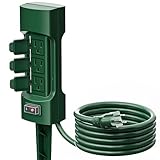
Overview: The K KASONIC Outdoor Power Stake delivers robust exterior power distribution with six grounded outlets split across both sides of the unit. Its 9-foot SJTW-rated cord provides exceptional reach for landscaping projects, while the weatherproof flip covers protect each outlet individually. The green color blends naturally into garden settings, and the sharp stake design ensures stable ground placement.
What Makes It Stand Out: This unit’s double-sided configuration maximizes outlet accessibility without cord clutter, a significant improvement over traditional three-outlet stakes. The 9-foot cord length exceeds standard offerings, reducing the need for additional extensions. Each outlet features independent spring-operated covers that automatically seal when not in use, providing superior moisture protection compared to single-cover designs.
Value for Money: At $21.99, this stake offers excellent value. The heavy-duty 14AWG cord alone justifies the cost, while the ETL certification and individual safety covers add premium features typically found in more expensive models. It competes favorably against basic power stakes lacking weatherproofing, making it a smart investment for serious outdoor enthusiasts.
Strengths and Weaknesses: Strengths include the generous cord length, double-sided outlet layout, robust weatherproofing with individual covers, and reliable circuit breaker protection. The green color provides aesthetic integration. Weaknesses include the lack of timer functionality, which requires separate purchase for automated lighting, and the stake design that, while removable, isn’t optimized for indoor use.
Bottom Line: Ideal for homeowners needing dependable, weather-resistant power access for tools, lighting, or water features. The K KASONIC stake excels in safety and build quality, though those wanting automation should consider timer-equipped alternatives.
7. SURAIELEC Outdoor Power Stake Light Timer, Dusk to Dawn, 6 Electrical Outlet Power Strip Weatherproof, 6FT Extension Cord Multiple Outlet for Patio Lights, Sprinkler, Garden, Christmas Decorations

Overview: The SURAIELEC Outdoor Power Stake combines a six-outlet power distribution unit with an intelligent dusk-to-dawn timer system. The integrated photocell sensor automatically detects ambient light levels, enabling hands-free operation of landscape lighting, holiday decorations, and irrigation systems. Its 6-foot heavy-gauge cord and weatherproof construction ensure reliable performance in harsh conditions.
What Makes It Stand Out: The versatile timer offers three operational modes and eight specific settings, including dusk-to-dawn, dusk plus 2-10 hour countdowns, and manual override. This flexibility surpasses basic mechanical timers. The thick stake design elevates outlets above wet ground, while the 15-amp fused circuit breaker provides critical overload protection that many competitors lack.
Value for Money: Priced at $24.99, this unit delivers significant savings compared to purchasing a separate smart timer and power stake. The robust 14/3C SJTW cord and comprehensive safety features justify the modest premium over non-timer models. For seasonal decorators or automated garden lighting users, it pays for itself through energy savings and convenience.
Strengths and Weaknesses: Strengths include intelligent light-sensing automation, multiple timer options, superior overload protection, and stable ground installation. The flame-retardant materials enhance safety. Weaknesses include the shorter 6-foot cord that may limit placement options, and the photocell’s potential sensitivity to artificial light sources. The timer complexity might overwhelm users preferring simple mechanical controls.
Bottom Line: Perfect for homeowners seeking automated outdoor power control. The SURAIELEC stake eliminates manual switching while providing robust protection, making it ideal for holiday displays and permanent landscape lighting installations.
8. K KASONIC - 24 Hour Outdoor Stake Timer, 6 Outlets 6 ft Extension Cord Mechanical Power Timer for Outdoor Lights, Christmas Decorations, ETL Certified, Weatherproof Safety Cover (Black)

Overview: This K KASONIC mechanical timer stake provides automated outdoor power control without electronic complexity. The 24-hour mechanical timer supports up to 48 on/off cycles daily in 30-minute increments, controlling six grounded outlets through a simple pin-based programming system. The 6-foot heavy-duty cord and weatherproof housing make it suitable for year-round exterior use.
What Makes It Stand Out: The mechanical timer operation requires no batteries or programming knowledge, offering reliability that digital models can’t match during power outages. At 30-minute intervals, it provides sufficient granularity for most lighting and irrigation schedules. The lightweight design with removable stake allows quick conversion between outdoor and indoor applications.
Value for Money: At $15.99, this represents exceptional value—costing less than many non-timer stakes while providing automation capabilities. It’s an ideal entry-level solution for users wanting timer functionality without investing in sophisticated electronics. The ETL certification and fireproof materials deliver safety assurances rare in this price range.
Strengths and Weaknesses: Strengths include unbeatable price, simple mechanical operation immune to power failures, ETL certification, and flexible indoor/outdoor use. The 14/3 SJTW cord ensures safe high-power operation. Weaknesses include less precise timing than digital alternatives, manual pin setting that some may find tedious, and the 6-foot cord limiting placement options. Mechanical timers lack the photocell convenience of smart models.
Bottom Line: An excellent budget-conscious choice for basic automation needs. While lacking advanced features, it reliably controls holiday lights and water features at a fraction of the cost of digital alternatives, making it perfect for cost-aware homeowners.
9. SURAIELEC Outdoor Power Stake Timer Waterproof, 100FT Wireless Remote Control, Dusk to Dawn Timer, 6 Grounded Plug Outlets, 6FT Extension Cord, for Christmas Lights, Garden, Patio Lights
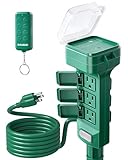
Overview: The SURAIELEC Remote Control Power Stake merges intelligent timer functionality with wireless convenience. The 100-foot range remote allows users to control six grounded outlets without venturing outdoors, while the integrated photocell provides automated dusk-to-dawn operation. The 6-foot heavy-duty cord and weatherproof construction ensure durability through seasonal changes.
What Makes It Stand Out: The combination of remote manual control and automatic light-sensing operation offers unmatched flexibility. Users can override timer settings from inside their home, a significant advantage during inclement weather. The dusk-to-dawn with countdown options provides eight programmable settings, while the remote enables instant on/off commands beyond preset schedules.
Value for Money: At $19.99, this unit delivers premium features at a mid-range price. Comparable remote-controlled outdoor power solutions typically cost $30 or more. The dual control modes effectively provide two products in one—a smart timer and a remote switch—representing excellent value for tech-savvy homeowners.
Strengths and Weaknesses: Strengths include exceptional wireless range, versatile control options, robust overload protection, and weatherproof design. The remote eliminates daily outdoor trips. Weaknesses include dependency on remote batteries, potential signal interference from obstacles, and the standard 6-foot cord length. Some users may find the multiple control modes initially confusing.
Bottom Line: Highly recommended for those prioritizing convenience and flexibility. The remote functionality proves invaluable for controlling hard-to-reach outdoor displays or during harsh weather, making it superior to timer-only alternatives at a competitive price point.
10. DEWENWILS Outdoor Digital Power Strip Timer, Multi Sockets, Waterproof 6 Outlets Garden Power Stake, 6ft Cord, Outdoor Timer for Christmas Lights, Yard, Garden, 15A Heavy Duty
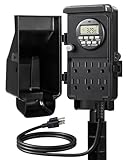
Overview: The DEWENWILS Digital Power Stake represents the premium tier of outdoor timer technology. The programmable digital timer supports up to 20 weekly on/off cycles, controlled via a clear LCD display. Its standout feature—a built-in backup battery—preserves all settings during power outages for up to three months, eliminating reprogramming headaches.
What Makes It Stand Out: The backup battery system sets this apart from all mechanical and most digital competitors. The 24-hour programming format allows precise minute-level scheduling, while the rugged weatherproof cover protects the digital interface from moisture and UV damage. The fireproof PC material and integrated overload switch provide commercial-grade safety.
Value for Money: At $25.99, this is the most expensive option reviewed, but the backup battery and digital precision justify the premium. For users running critical outdoor equipment like pond pumps or irrigation systems, the reliability during power interruptions provides peace of mind worth the extra cost. It competes with indoor smart plugs while offering superior outdoor durability.
Strengths and Weaknesses: Strengths include unmatched programming accuracy, power-failure memory retention, heavy-duty 15A capacity, and robust weatherproofing. The digital display simplifies complex scheduling. Weaknesses include the highest price point, the 6-foot cord limiting placement flexibility, and the 24-hour military time format potentially confusing some users. Digital complexity may exceed needs for simple holiday lighting.
Bottom Line: The ideal choice for demanding applications requiring schedule reliability. The backup battery feature alone makes it worth considering for permanent installations. While overkill for basic needs, it excels for sophisticated outdoor automation where power continuity is critical.
Understanding Outdoor Power Strip Ratings
Decoding IP Ratings for Splash Protection
That “weather-resistant” label means nothing without an IP (Ingress Protection) rating to back it up. For summer splash parties, you need a minimum of IPX4, which certifies protection against water splashes from any direction. However, IPX6—handling powerful water jets—offers a significant upgrade for poolside use. The first digit indicates solid particle protection; while IP6X (dust-tight) is ideal, it’s the second digit that matters most for water exposure. Don’t settle for vague marketing terms like “waterproof” without demanding the specific IP code. A strip rated IP44 might handle light rain but will fail when your cousin’s cannonball creates a targeted tsunami across your deck.
What NEMA Ratings Mean for Your Backyard
NEMA (National Electrical Manufacturers Association) ratings provide a North American standard for electrical enclosures. For outdoor party applications, NEMA 3R offers basic rain protection but won’t handle directed water streams. NEMA 4 is the sweet spot—designed to withstand hose-directed water, making it perfect for cleaning off post-party spills or surviving an enthusiastic sprinkler. NEMA 4X adds corrosion resistance, crucial if you live in coastal areas where salt air eats standard housings alive. These ratings appear on commercial-grade equipment and represent real-world testing, not just laboratory conditions.
GFCI Protection: The Non-Negotiable Safety Feature
Ground Fault Circuit Interrupter protection isn’t optional for outdoor use—it’s life-saving technology that cuts power in 1/40th of a second if electricity diverts from its intended path (like through a person). Smart strips with integrated GFCI are superior to relying on your home’s outdoor outlet GFCI, which can trip and kill power to your entire entertainment setup. Look for GFCI with auto-monitoring that self-tests every 15 minutes and provides visual confirmation of protection status. The reset button should be large, weather-sealed, and accessible without dismounting the unit—because nobody wants to fumble with tiny buttons in the dark after a trip.
Smart Features That Actually Matter
Voice Control Integration
Voice commands shine when your hands are full of grilling tongs and drink trays, but outdoor acoustics create unique challenges. The best smart strips support multiple protocols (Alexa, Google Assistant, Apple HomeKit) and feature noise-cancellation microphones that can distinguish your voice over background music and chatter. More importantly, they offer customizable voice shortcuts—so “party mode” can simultaneously activate string lights, speakers, and that inflatable movie screen without individual commands. Beware of cloud-dependent systems; local network control ensures your voice commands work even when your internet decides to take a summer siesta.
App-Based Scheduling and Energy Monitoring
Real-time energy monitoring transforms how you manage summer power consumption. Quality apps show per-outlet usage, letting you identify which inflatable decoration is secretly a power vampire. Scheduling should include astronomical timing—automatically adjusting for sunset/sunrise throughout the season—and weather-based triggers that shut down non-essential devices when rain is detected. The most sophisticated apps offer geofencing: when your phone leaves the property, the strip automatically cuts power to everything except security lighting, eliminating that nagging “did I leave the patio lights on?” anxiety.
Weather-Responsive Automation
Top-tier smart strips integrate with local weather APIs to proactively protect your gear. When the app detects incoming storms, it can automatically shut down sensitive electronics before the first drop hits. Some units feature built-in hygrometers and temperature sensors that trigger protective shutdowns at predetermined thresholds—like cutting power when humidity exceeds 85% or temperatures drop below freezing. This isn’t just convenience; it’s insurance against equipment damage from unexpected weather swings that summer is notorious for producing.
Design Elements Built for Summer Abuse
UV-Resistant Housings That Won’t Yellow
Standard plastic housings become brittle and crack after a few months of sun exposure. Look for polycarbonate or ASA (Acrylonitrile Styrene Acrylate) housings rated for UV stability—materials that maintain structural integrity and color through 5,000+ hours of accelerated weathering tests. The best units use titanium dioxide additives that reflect UV radiation rather than absorbing it. This matters because a cracked housing compromises the entire water seal, turning your “weatherproof” strip into an electrocution hazard by August.
Cord Length and Gauge Considerations
Summer parties rarely happen within six feet of an outlet. You need at least a 12-gauge, 25-foot cord to handle the voltage drop over distance without overheating. Thinner 16-gauge cords might work for light-duty indoor use but will become dangerously hot when powering a pellet smoker, string lights, and a karaoke machine simultaneously. The cord jacket should be SJTW-rated—designed for hard service, water-resistant, and temperature-rated from -40°F to 140°F. Reinforced strain relief at both ends prevents the cord from pulling loose when someone inevitably trips over it.
Mounting Options for Permanent Installation
The best outdoor smart strips offer multiple mounting configurations: keyhole slots for screw mounting, magnetic backing for metal surfaces, and integrated ground stakes for temporary placement in landscaping. For permanent installation, look for units with removable mounting brackets that let you install the bracket first, then snap the strip in place—eliminating awkward screwing while holding the unit. The mounting system should position outlets at a 45-degree downward angle, preventing water from pooling in unused sockets even when mounted vertically.
Power Capacity and Outlet Configuration
Calculating Your Summer Party Power Needs
Add up the wattage of everything you’ll run simultaneously, then add 25% headroom. That 1,500-watt margarita machine plus 400 watts of string lights and 200 watts of speakers already pushes a standard 15-amp (1,800-watt) circuit to its limit. Smart strips with 20-amp capacity and appropriate circuit breakers provide breathing room. Per-outlet power limits are equally important—some strips limit individual outlets to 10 amps, which won’t work for high-draw appliances. The product specs should clearly state both total and per-outlet maximums.
USB Ports vs. Traditional Outlets
Dedicated USB-C ports with Power Delivery (PD) up to 100W eliminate the clutter of wall warts and ensure fast charging for tablets and phones. However, these ports add complexity to the water seal design. The best implementations use magnetic USB covers that automatically seal when not in use. Traditional outlets remain essential for appliances, but look for recessed designs with individual slide-shutters that create a water barrier without requiring you to hunt for plastic caps that get lost after the first use.
Surge Protection for Sensitive Electronics
Outdoor surge protection faces unique challenges: lightning strikes travel through ground wires, and nearby strikes induce voltage spikes in long outdoor runs. Look for a minimum 2,000-joule rating with <1 nanosecond response time and EMI/RFI noise filtering. The MOVs (Metal Oxide Varistors) should be thermally fused—meaning they disconnect from power if overheating rather than catching fire. Some premium strips offer connected equipment warranties up to $100,000, but read the fine print: many exclude outdoor use unless the strip is specifically rated for it.
Connectivity Protocols Explained
Wi-Fi vs. Bluetooth Range in Open Spaces
Bluetooth 5.0 theoretically reaches 800 feet in open space, but your body, walls, and other devices create interference. Wi-Fi 6 offers better range and reliability for outdoor use, especially with mesh networks. The critical factor is the antenna design—external, articulated antennas outperform internal ones. Some strips include signal strength LEDs that help you find the optimal mounting location during installation. For large properties, consider strips with built-in Wi-Fi extenders that rebroadcast your network, turning each power strip into a connectivity node.
Mesh Network Compatibility
Zigbee and Z-Wave strips create mesh networks where each device strengthens the overall signal, crucial for sprawling backyards where Wi-Fi struggles. The downside? You’ll need a compatible hub. Thread-enabled strips represent the future—creating a self-healing mesh that works with existing smart home ecosystems without proprietary hubs. When evaluating mesh options, check the maximum number of hops (device-to-device connections) supported; some protocols limit this to 4-5 devices, which may not cover larger properties.
Offline Functionality When Wi-Fi Fails
The best smart strips store schedules locally and continue executing them even when cloud connectivity drops. Physical buttons should provide full manual control of every outlet—because nothing kills a party faster than a “smart” device that becomes a brick when the router hiccups. Look for strips with Bluetooth fallback that lets your phone connect directly for local control without internet. This redundancy ensures your party continues whether your ISP is cooperating or not.
Installation Best Practices
Elevation Strategies to Prevent Water Pooling
Mount your strip at least 12 inches above ground level and 6 inches above the expected splash height of your pool or hot tub. When wall-mounting, angle the unit 5-10 degrees downward so water runs off rather than collecting around seals. For temporary setups, use a weatherproof pedestal or create a stable platform using pavers—never place directly on grass where dew and sprinkler runoff create constant moisture exposure. Remember: gravity is your enemy when water meets electricity.
Securing Cables to Prevent Trip Hazards
Use UV-resistant cable ramps with high-visibility yellow lids for runs across walkways. For perimeter routing, garden staples should secure cords every 12 inches to prevent them from becoming snake-like tripping hazards. The smart strip’s cord should have a built-in Velcro strap or cable management system to keep excess length coiled and off the ground. Never run cords through doorways or windows where they can be pinched—this damages insulation and creates shock risks. Consider burying permanent runs in PVC conduit 18 inches deep, but only with direct-burial rated cords.
Daisy-Chaining Dangers and Safe Alternatives
Daisy-chaining multiple strips violates electrical codes and voids warranties, yet it’s tempting when you need more outlets. The safe alternative is using a smart strip with pass-through power monitoring that can control a separate, non-smart outdoor power distribution box. This keeps the smart functionality at a single point while safely expanding capacity. Some commercial-grade strips offer modular designs where you can add extension pods that communicate via low-voltage cables, maintaining a single connection to your wall outlet while adding outlets where needed.
Seasonal Maintenance and Longevity
Post-Party Cleaning Protocols
After each event, unplug everything and wipe down the housing with a damp cloth—never a hose. Use compressed air to blow out debris from outlet covers and crevices. For saltwater pool areas, monthly cleaning with a mild vinegar solution neutralizes corrosive salt buildup. Check GFCI function monthly by pressing the test button; if it doesn’t trip immediately, replace the unit. The contacts inside outlets can be refreshed with a contact cleaner spray, but only after confirming the strip is completely dry and powered off.
Winter Storage vs. Year-Round Exposure
Even “all-weather” strips last longer with seasonal storage. If you choose year-round mounting, verify the operating temperature range includes your local winter lows—many “outdoor” strips only function down to -4°F. For storage, coil cords loosely (never tight loops that damage internal wires) and store in a sealed container with desiccant packs. Before spring redeployment, inspect for rodent damage to cords and test all functions indoors. Strips left outside should have their outlets treated with dielectric grease to prevent corrosion during dormant months.
Firmware Updates for Security
That smart strip is a network-connected computer; outdated firmware is a hacker’s invitation. Enable automatic updates but schedule them for 3 AM to avoid mid-party disruptions. Some manufacturers push updates during known low-usage windows, but verify this in the app settings. After updates, always test GFCI and manual controls—occasionally firmware glitches affect hardware functions. If a manufacturer stops providing updates after two years, consider that strip end-of-life and replace it. Security patches are non-negotiable for devices controlling 120V electricity.
Troubleshooting Common Issues
Resetting After a Power Surge
When a surge trips your smart strip, don’t just hit reset. First, unplug all devices and inspect for damage. The strip’s app should log surge events with voltage levels—review this data. If MOVs sacrificed themselves, the strip might still work but without surge protection; some units have indicator lights showing protection status. After a major lightning event, even if the strip appears functional, consider replacing it. Micro-damage to components creates future failure risks. Always reset GFCI before attempting to reconnect—surges often trigger ground faults that persist until manually cleared.
Connectivity Drops During Storms
Heavy rain and humidity absorb Wi-Fi signals, reducing range by 30-50%. If your strip drops offline during storms, it’s likely not defective—just out of range. Relocate your router closer to outdoor areas or install a Wi-Fi 6E access point rated for high humidity. Some smart strips include signal boost mode that temporarily increases transmission power during poor conditions, though this drains standby power. For persistent issues, switch to a mesh protocol like Thread that’s less susceptible to atmospheric interference.
When GFCI Trips Become Frequent
Frequent GFCI tripping indicates a ground fault, not necessarily a defective strip. Disconnect all devices and reset; if it holds, plug items back one at a time to identify the culprit. Moisture in appliance cords is a common cause—those string lights with cracked insulation are often to blame. If the strip trips with nothing connected, internal moisture intrusion has likely compromised the seal. Discontinue use immediately. For strips under warranty, document the issue with photos and app logs before contacting support—most manufacturers require proof of proper installation for claims.
Frequently Asked Questions
1. Can I use an indoor smart power strip on my covered patio if it never gets directly rained on?
Absolutely not. Indoor strips lack UV protection, proper water seals, and temperature-rated components. Even humidity from summer air and condensation from temperature swings can cause internal corrosion and shock hazards within weeks. The fire risk alone makes this a dangerous shortcut.
2. How many devices can I safely run from one outdoor smart strip?
It depends on total wattage, not device count. A 15-amp strip supports 1,800 watts; a 20-amp handles 2,400 watts. Add up the wattage of all devices that will run simultaneously, then stay 25% below the maximum. Remember, high-draw appliances like smokers or inflatables can consume 80% of capacity by themselves.
3. Will my smart strip work if my internet goes down during a party?
Only if it offers local control. Premium strips store schedules and respond to manual button presses without internet. Some provide Bluetooth fallback for direct phone connection. Always test offline functionality before relying on it—many budget models become inoperable without cloud connectivity.
4. How do I know if my outdoor outlet’s GFCI is adequate, or do I need a strip with built-in GFCI?
Your home’s outdoor GFCI protects the circuit, but a strip with integrated GFCI protects each individual outlet and provides granular diagnostics. Built-in GFCI is superior because it isolates faults to specific devices rather than killing power to everything on the circuit, and it works even if your home’s GFCI fails.
5. Can I leave my smart power strip plugged in all winter?
Only if it’s rated for your local temperature extremes and you’re using it regularly. For dormant periods, storage extends lifespan. Check the operating temperature range—many strips rated for “outdoor use” only function down to -4°F, inadequate for northern winters. Year-round exposure also accelerates seal degradation.
6. What’s the difference between surge protection and GFCI, and do I need both?
They protect against completely different threats. GFCI prevents electrocution by detecting current leaks to ground. Surge protection shields electronics from voltage spikes. You absolutely need both for outdoor use—GFCI for life safety, surge protection for equipment longevity. One does not replace the other.
7. How often should I test my outdoor smart strip’s safety features?
Test GFCI functionality monthly using the test/reset buttons. Verify surge protection status quarterly (most strips have indicator lights). Perform a visual inspection for cord damage and seal integrity before each major event. After severe weather, do a full functionality test even if the strip appears undamaged.
8. Will connecting my smart strip to a mesh network slow down my other smart home devices?
Properly designed mesh devices actually strengthen network reliability. However, poorly implemented firmware can create excessive traffic. Look for strips certified by the mesh alliance (Zigbee, Z-Wave, Thread) and check user forums for reports of network congestion. Limit polling frequency in the app settings to reduce unnecessary chatter.
9. Can I use a smart power strip to control my pool pump or hot tub?
Never control permanently installed pool equipment with a smart power strip. These require dedicated, hardwired circuits with specific disconnects per electrical code. For temporary accessories like floating pool lights or a hot tub’s audio system, yes—provided the total draw is within the strip’s rating and the devices are explicitly rated for plug-in use.
10. Why does my outdoor smart strip cost three times more than an indoor model?
The price difference reflects legitimate engineering costs: UV-stabilized polymers, gold-plated contacts to resist corrosion, sealed circuit boards with conformal coating, extensive water intrusion testing, and certified safety components. Indoor strips use commodity parts that fail catastrophically outdoors. The premium pays for safety, longevity, and reliable performance in harsh conditions—non-negotiable factors for outdoor electricity.