Your smart home shouldn’t feel like a digital traffic jam, yet that’s precisely what happens when dozens of connected devices compete for bandwidth without proper coordination. From security cameras uploading footage to cloud servers, to smart speakers streaming music, to sensors sending constant status updates—IoT traffic can silently choke your network, leaving you with buffering videos, laggy video calls, and unresponsive devices. The right smart home hub acts as a sophisticated network conductor, orchestrating this data symphony so every device gets the bandwidth it needs without overwhelming your internet connection.
Understanding bandwidth management in smart home hubs isn’t just for IT professionals anymore. As homes average 20-30 connected devices—and that number climbing toward 50 or more—knowing how your hub handles traffic congestion, prioritizes critical devices, and processes data locally versus in the cloud has become essential knowledge. Let’s dive deep into what separates a basic hub from a true network management powerhouse, and how to evaluate the features that will keep your smart home running smoothly even when your internet connection is under heavy load.
Top 10 Smart Home Hubs with Bandwidth Management
Detailed Product Reviews
1. Aeotec Smart Home Hub, Works as a SmartThings Hub, Z-Wave, Zigbee, Matter Gateway, Compatible with Alexa, Google Assistant, WiFi
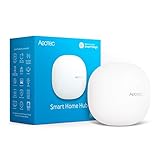
Overview: The Aeotec Smart Home Hub serves as a powerful central command center for modern smart homes, functioning as an official SmartThings Hub with comprehensive protocol support. This device seamlessly bridges thousands of products from major brands by supporting Matter, Z-Wave, Zigbee, and Wi-Fi standards, making it one of the most versatile connectivity solutions available for North American households.
What Makes It Stand Out: Its multi-protocol capability sets it apart from single-ecosystem hubs. The Matter certification ensures future-proof compatibility with emerging devices, while local automation processing delivers faster, more reliable responses when internet connectivity is spotty. The flexibility of both Wi-Fi and Ethernet setup options accommodates various network configurations.
Value for Money: At $149.99, the Aeotec hub sits in the mid-range pricing tier. While more expensive than basic Wi-Fi hubs, it eliminates the need for multiple proprietary bridges. Compared to building a piecemeal solution with separate Z-Wave and Zigbee controllers, this integrated approach saves money and reduces complexity, justifying the premium for serious smart home enthusiasts.
Strengths and Weaknesses: Strengths include broad device compatibility, local automation capabilities, intuitive SmartThings app interface, and robust voice assistant integration. Weaknesses involve dependency on Samsung’s SmartThings platform for setup, occasional cloud service requirements for advanced features, and limited customization compared to open-source alternatives. Some power users may find the automation scripting less flexible than specialized solutions.
Bottom Line: This hub excels for mainstream users seeking extensive device compatibility without technical complexity. It’s an ideal foundation for a comprehensive smart home ecosystem, though tech-savvy users wanting maximum customization might prefer more flexible platforms.
2. Home Assistant | Smart Home hub with Advanced Automation | Official HomeAssistant ((4G+32G)+Hub)

Overview: This official Home Assistant hardware bundle delivers a professional-grade automation platform designed for continuous 24/7 operation. Powered by a 64-bit Quad-Core Cortex-A53 processor with 4GB SDRAM and 32GB eMMC storage, it provides robust performance for complex smart home orchestration in a compact, fanless design that consumes under 10W.
What Makes It Stand Out: The “+Hub” designation indicates included radio connectivity, likely Zigbee or Z-Wave, making it a complete out-of-box solution. Unlike cloud-dependent alternatives, Home Assistant offers full local control, ensuring privacy and functionality even during internet outages. The open-source nature provides unlimited customization potential.
Value for Money: At $63, this represents exceptional value. Building a comparable system with a Raspberry Pi and separate radios would cost significantly more while requiring extensive configuration. The official hardware guarantees compatibility and reliability, saving countless hours of troubleshooting. This price point makes professional-grade home automation accessible to serious enthusiasts.
Strengths and Weaknesses: Strengths include complete local processing, extensive protocol support through add-ons, powerful automation engine, vibrant community support, and fanless silent operation. Weaknesses involve a steep learning curve for beginners, potential storage limitations with 32GB for extensive logging or add-ons, and the need for periodic manual updates. The interface, while powerful, can overwhelm non-technical users.
Bottom Line: Perfect for tech-savvy users prioritizing privacy, flexibility, and local control. The included hub functionality makes it ready for immediate deployment. Beginners should prepare for a learning investment, but the rewards in capability and independence from cloud services are substantial.
3. Home Assistant | Smart Home hub with Advanced Automation | Official HomeAssistant (4G+32G)

Overview: This official Home Assistant device provides the same powerful automation core as its bundled counterparts, featuring a 64-bit Quad-Core processor, 4GB SDRAM, and 32GB eMMC storage. Designed for 24/7 operation with fanless, sub-10W power consumption, it delivers professional smart home control in a compact 85mm square footprint that fits discreetly anywhere.
What Makes It Stand Out: As the base model without additional hub hardware, it offers the pure Home Assistant experience at the lowest official hardware price point. Users get identical processing power and software capabilities, maintaining full access to Home Assistant’s renowned automation engine and extensive integration library.
Value for Money: At $53, this is the most affordable entry into official Home Assistant hardware. The $10 savings over the bundled version is worthwhile if you already own USB radio sticks or plan to use primarily Wi-Fi devices. For those needing Zigbee or Z-Wave, separate dongles cost $20-40, potentially making the bundle more economical.
Strengths and Weaknesses: Strengths mirror the bundled version: complete local control, powerful automation, privacy-focused operation, and silent performance. The primary weakness is lack of included radio connectivity, requiring additional purchases for multi-protocol support. The 32GB storage may also limit extensive add-on installations. Setup complexity remains a barrier for beginners, though documentation is excellent.
Bottom Line: Ideal for existing Home Assistant users upgrading hardware or those with specific radio preferences. If you’re starting fresh and need multi-protocol support, consider the “+Hub” variant. For Wi-Fi-centric setups or users with spare USB radios, this offers unbeatable value for professional-grade automation.
4. Home Assistant | Smart Home hub with Advanced Automation | Official HomeAssistant ((4G+64G)+Hub)
Overview: This premium Home Assistant configuration combines the same robust 64-bit Quad-Core Cortex-A53 processor and 4GB SDRAM with expanded 64GB eMMC storage. The “+Hub” inclusion ensures multi-protocol support out-of-the-box, while the doubled storage capacity accommodates extensive add-ons, detailed logging, and future expansion in the same compact, fanless design that maintains under 10W power consumption.
What Makes It Stand Out: The 64GB storage significantly enhances long-term viability, preventing the storage anxiety that can plague 32GB devices as add-ons accumulate and databases grow. This future-proofing ensures smooth operation for complex installations with multiple integrations, camera recordings, and historical data retention without requiring manual storage management.
Value for Money: At $70, the $7 premium over the 32GB bundled version is modest for doubled storage capacity. For users planning extensive customization, this small upfront cost prevents later headaches and potential reinstallation. Compared to cloud subscription services that charge monthly fees, the one-time investment pays for itself within months while keeping data private and local.
Strengths and Weaknesses: Strengths include ample storage headroom, included radio hub, silent operation, complete local processing, and unlimited customization potential. Weaknesses remain the platform’s steep learning curve and potential overkill for simple setups. The additional storage provides no immediate performance benefit, representing purely future-proofing value that casual users may not leverage.
Bottom Line: The smart choice for power users and growing smart homes. If you plan to explore Home Assistant’s full potential with multiple add-ons, integrations, and long-term data retention, the 64GB version is worth the slight premium. For basic automation, the 32GB model suffices, but this variant eliminates storage concerns entirely.
5. Smart Home Starter Kit | Includes Echo Hub, Amazon Smart Plug and 4 Amazon Basics Smart Bulbs, with Alexa+ Early Access
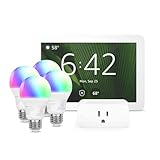
Overview: Amazon’s all-in-one smart home package bundles the Echo Hub with an Amazon Smart Plug and four Smart Bulbs, creating an instant ecosystem for Alexa-centric households. This kit targets beginners seeking frictionless entry into home automation with guided setup and immediate functionality across lighting and basic device control.
What Makes It Stand Out: The kit eliminates guesswork by providing every component needed for a functional smart home in one box. The Echo Hub serves as both voice assistant and central controller, while Alexa+ Early Access promises enhanced AI capabilities. The guided setup process reduces installation time to minutes rather than hours.
Value for Money: At $229.99, the package carries a convenience premium. Individually, these components would cost approximately $180-200, making the markup reasonable for the integrated experience and simplified configuration. For Alexa loyalists, the ecosystem cohesion justifies the cost, though protocol flexibility is sacrificed.
Strengths and Weaknesses: Strengths include effortless setup, comprehensive package, reliable Alexa integration, and professional aesthetics. The Echo Hub’s compatibility with thousands of Wi-Fi devices provides expansion options. Weaknesses include no Zigbee or Z-Wave support, deep lock-in to Amazon’s ecosystem, limited advanced automation compared to dedicated hubs, and higher per-device cost than DIY approaches. Privacy-conscious users may object to cloud dependency.
Bottom Line: Perfect for Alexa households prioritizing convenience over customization. If you want smart home functionality without technical complexity, this kit delivers immediate satisfaction. Tech enthusiasts and privacy-focused users should look elsewhere, but for mainstream consumers, it’s an excellent plug-and-play solution that just works.
6. MOES ZigBee & Bluetooth & Mesh Gateway, Tuya Wireless Smart Home Bridge Hub, Only Support Tuya Smart Device Work with Smart Life/MOES App

Overview: The MOES ZigBee & Bluetooth & Mesh Gateway serves as an affordable central command center for Tuya-based smart homes. This dual-protocol hub bridges both ZigBee 3.0 and Bluetooth Mesh devices onto your 2.4GHz network, eliminating the need for multiple gateways. Supporting up to 128 devices—from door locks and sensors to switches and thermometers—it consolidates control through the MOES or Smart Life app while enabling voice commands via Alexa and Google Assistant.
What Makes It Stand Out: Its hybrid protocol support at this price point is genuinely impressive. Most budget hubs support only ZigBee OR Bluetooth, not both. The integrated sound and light alarm function adds security system potential, while local automation capabilities ensure your routines work even during internet outages. The completely wireless, no-wiring-required design makes it accessible for renters and homeowners alike.
Value for Money: At $39.99, this hub undercuts many single-protocol competitors while delivering dual-protocol flexibility. Comparable hubs from established brands typically cost $60-80 for similar functionality. The ability to manage 128 devices from one $40 hub represents exceptional cost efficiency for expanding smart home ecosystems.
Strengths and Weaknesses: Strengths include versatile dual-protocol support, high device capacity, straightforward setup, local automation, and robust app integration. Weaknesses involve Tuya ecosystem lock-in (won’t work with non-Tuya devices), 2.4GHz-only Wi-Fi limitation, and potential reliability concerns compared to premium brands. Some users report occasional connectivity hiccups with Bluetooth devices.
Bottom Line: This gateway is ideal for budget-conscious users invested in the Tuya ecosystem. If your devices are Tuya-compatible and you want to avoid multiple hubs, the MOES gateway delivers remarkable value despite minor reliability trade-offs.
7. MOES Tuya ZigBee 3.0 Hub/Wired Gateway, WiFi Smart Home Bridge Remote Controller,Work with Tuya ZigBee Smart Device, White

Overview: The MOES Tuya ZigBee 3.0 Hub represents a more focused approach to smart home control, offering dedicated ZigBee 3.0 connectivity in a wired gateway configuration. Unlike its dual-protocol sibling, this hub concentrates solely on ZigBee devices, potentially offering enhanced stability for pure ZigBee ecosystems. It serves as the bridge between your Tuya-compatible ZigBee sensors, switches, and controllers and your home network.
What Makes It Stand Out: The wired Ethernet connection distinguishes this hub from wireless alternatives, providing more stable connectivity and eliminating Wi-Fi congestion concerns. This makes it particularly suitable for users who prioritize reliability over flexibility. As a dedicated ZigBee solution, it may offer more consistent performance for ZigBee-only households without the potential interference issues of dual-protocol hubs.
Value for Money: Priced identically to the dual-protocol version at $39.99, its value proposition is questionable unless you specifically require wired connectivity. You’re sacrificing Bluetooth Mesh support without a price reduction. For pure ZigBee setups, it’s adequate, but most users would get more versatility from the hybrid model at the same cost.
Strengths and Weaknesses: Strengths include stable wired connection, simplified single-protocol focus, and seamless Tuya integration. Weaknesses are the lack of Bluetooth support at the same price point as the superior dual-protocol model, limited product information, and ecosystem lock-in. The absence of wireless flexibility may inconvenience users without Ethernet access near their device cluster.
Bottom Line: Only consider this hub if you absolutely need wired connectivity or have a ZigBee-only setup. For the vast majority of users, the dual-protocol MOES gateway offers substantially better value at an identical price point.
8. YoLink Smart Home Starter Kit: Smart Plugs with Energy Monitoring & Hub Kit, 2 Smart Outlet, Compatible with Alexa, Google, IFTTT, 1/4 Mile World’s Longest Range

Overview: The YoLink Smart Home Starter Kit revolutionizes smart home connectivity through LoRa technology, delivering an unprecedented 1/4-mile wireless range that demolishes traditional Wi-Fi limitations. This kit includes a hub and two smart plugs with energy monitoring, designed for properties where standard wireless fails—basements, outbuildings, and expansive outdoor areas. The system operates independently of your Wi-Fi network, preventing bandwidth congestion while maintaining robust connectivity.
What Makes It Stand Out: LoRa technology is the star, providing penetration and distance that Wi-Fi and ZigBee simply cannot match. The included energy monitoring offers detailed consumption analytics through daily, weekly, and monthly tracking. With Alexa, Google, and IFTTT integration, it bridges the gap between proprietary technology and mainstream smart home platforms. The ETL-listed, fire-resistant design supports loads up to 12.5A, handling most residential appliances safely.
Value for Money: At $79.99 for a hub and two monitoring plugs, the kit is reasonably priced for pioneering technology. While individual YoLink devices carry a premium, this starter bundle effectively demonstrates the platform’s unique capabilities. For users struggling with range issues, it eliminates the cost of multiple repeaters or mesh systems.
Strengths and Weaknesses: Strengths include exceptional range, Wi-Fi independence, energy monitoring, robust safety certifications, and versatile automation. Weaknesses involve proprietary protocol limiting device selection, higher per-device costs compared to ZigBee/Wi-Fi alternatives, and potential latency due to long-range prioritization.
Bottom Line: Perfect for large properties, challenging layouts, or outbuilding control where traditional smart home tech falters. For standard apartments or small homes, conventional options remain more economical.
9. SmartThings Hub 3rd Generation [GP-U999SJVLGDA] Smart Home Automation Hub Home Monitoring Smart Devices - Alexa Google Home Compatible - Zigbee, Z-Wave, Cloud to Cloud Protocols – White
![SmartThings Hub 3rd Generation [GP-U999SJVLGDA] Smart Home Automation Hub Home Monitoring Smart Devices - Alexa Google Home Compatible - Zigbee, Z-Wave, Cloud to Cloud Protocols – White](https://m.media-amazon.com/images/I/21hChu0ounL._SL160_.jpg)
Overview: The SmartThings Hub 3rd Generation positions itself as a premium universal smart home controller, supporting ZigBee, Z-Wave, and Cloud-to-Cloud protocols. This hub aims to unify disparate smart devices under a single, sophisticated automation platform controlled through one smartphone app. It enables complex routines triggered by doors, motion, or presence, creating a truly integrated smart home experience.
What Makes It Stand Out: Samsung’s SmartThings ecosystem boasts one of the broadest compatibility ranges in the industry, supporting thousands of devices across multiple protocols. The platform’s maturity shows in its advanced automation capabilities and reliable performance. Unlike budget hubs, SmartThings offers robust developer tools and community support for power users seeking sophisticated customization.
Value for Money: At $349.99, this hub’s pricing is severely problematic. This appears to be discontinued stock or third-party price gouging, as the typical retail price was $99-129 before Samsung transitioned to the Aeotec partnership. At this inflated cost, it’s an exceptionally poor value proposition, especially with newer alternatives offering similar functionality for a fraction of the price.
Strengths and Weaknesses: Strengths include unparalleled device compatibility, reliable automation, professional monitoring options, and excellent third-party integration. Weaknesses are the outrageously inflated price, discontinued status limiting future support, requirement for cloud connectivity for most features, and complexity that may overwhelm beginners.
Bottom Line: Do not purchase at this price. Seek the Aeotec SmartThings Hub (the official successor) or consider modern alternatives like Hubitat or SmartThings Station at reasonable price points. This listing represents terrible value.
10. TP-Link 5 Port Gigabit PoE Switch | 4 PoE+ Port @65W | Easy Smart | Plug & Play | Limited Lifetime Protection | Shielded Ports | Support QoS, Vlan, IGMP and Link Aggregation (TL-SG105PE)

Overview: The TP-Link TL-SG105PE is a compact 5-port Gigabit PoE+ switch designed for small business and advanced home networks requiring power-over-Ethernet capabilities. Four ports deliver up to 30W each with a 65W total budget, powering IP cameras, access points, and VoIP phones without separate power supplies. The “Easy Smart” management provides essential features without enterprise complexity.
What Makes It Stand Out: This switch democratizes managed PoE+ functionality at an entry-level price point. The web-based interface offers VLAN segmentation, QoS prioritization, IGMP snooping, and link aggregation—features typically reserved for switches costing twice as much. Shielded ports enhance durability and interference resistance, while the limited lifetime protection demonstrates TP-Link’s confidence.
Value for Money: At $49.49, this switch delivers exceptional value. Comparable PoE+ managed switches start around $80-100. The 65W budget adequately supports several moderate-power devices, and the smart features provide room for network growth without immediate upgrade requirements. It’s a rare blend of affordability, performance, and manageability.
Strengths and Weaknesses: Strengths include affordable PoE+ support, robust management features, shielded ports, lifetime warranty, and fanless silent operation. Weaknesses are the limited 65W total budget restricting high-power device combinations, only four PoE ports, and lack of advanced Layer 3 features for complex deployments.
Bottom Line: An outstanding choice for small offices, home security systems, or anyone needing managed PoE+ on a budget. It punches far above its weight class and provides professional features without the premium price tag.
Understanding IoT Traffic and Why Bandwidth Management Matters
The Hidden Data Cost of Smart Homes
Every connected device in your home contributes to background noise that your router must process, even when you’re not actively using it. A single 4K security camera can consume 3-8 Mbps continuously, while smart thermostats, door sensors, and light switches might ping cloud servers every few seconds with tiny data packets that add up surprisingly fast. Multiply this by 30+ devices, and you’ve got a constant stream of traffic that can saturate a modest internet connection before you even start streaming Netflix.
How IoT Devices Differ from Regular Internet Traffic
Unlike your laptop or phone, which burst data when you’re browsing or downloading, IoT devices create persistent, low-level chatter that never stops. This “long-tail” traffic pattern is uniquely challenging for consumer routers designed for human usage patterns. Smart home hubs with proper bandwidth management understand these differences, treating a 2KB sensor update differently from a 4GB file download, ensuring neither gets lost in the shuffle.
The Impact of Poor Bandwidth Management
When bandwidth management fails, the symptoms cascade throughout your home. Lights take seconds to respond to voice commands, security camera motion alerts arrive too late to be useful, and your work video call drops because your smart sprinkler system decided to download a firmware update. Worse, some devices may repeatedly retry failed connections, creating a traffic storm that compounds the original problem.
What Makes a Smart Home Hub “Smart” About Bandwidth?
Local vs. Cloud Processing: The Foundation of Efficiency
The most critical bandwidth-saving feature is local processing capability. Hubs that handle automation rules, device status updates, and even AI analytics on-device prevent thousands of daily cloud round-trips. This edge computing approach can reduce your IoT bandwidth consumption by 70-90% while also improving response times from seconds to milliseconds. When evaluating hubs, look for processing power specifications—CPU cores, clock speed, and RAM—as these directly translate to local capabilities.
Protocol Translation and Traffic Consolidation
A sophisticated hub acts as a universal translator, speaking Zigbee, Z-Wave, Thread, and Wi-Fi natively while consolidating multiple device communications into single, efficient data streams to your router. Instead of 20 separate devices each maintaining their own cloud connections, the hub manages one robust connection and handles local device communication through low-power mesh networks that don’t touch your main Wi-Fi at all.
Quality of Service (QoS) Capabilities
True QoS goes beyond simple prioritization. Advanced hubs implement deep packet inspection specifically tuned for IoT protocols, recognizing device types automatically and applying traffic policies accordingly. They can distinguish between a critical smoke alarm alert and a routine temperature update, ensuring life-safety messages always get immediate bandwidth priority.
Key Bandwidth Management Features to Look For
Dynamic QoS and Traffic Prioritization
Static QoS rules quickly become outdated as you add devices. Look for hubs that offer dynamic, learning-based QoS that adapts to usage patterns. These systems monitor which devices are actively being used and automatically deprioritize background tasks. The best implementations let you set broad categories—“Work Devices,” “Entertainment,” “Security,” “Automation”—and the hub intelligently sorts traffic accordingly.
Bandwidth Monitoring and Reporting
You can’t manage what you can’t measure. Robust hubs provide granular per-device bandwidth reporting showing not just total data usage but also connection frequency, average packet size, and peak usage times. This data helps identify bandwidth hogs and optimize automation rules. The reporting should be accessible through a clean dashboard, not buried in technical logs.
Device-Level Throttling and Limits
Sometimes you need to set hard limits. Whether it’s capping a chatty security camera to 2 Mbps or restricting firmware updates to off-peak hours, the ability to set device-specific bandwidth caps prevents any single gadget from monopolizing your connection. Advanced hubs let you create time-based policies—unlimited bandwidth at night, throttled during work hours.
Offline Automation Capabilities
The ultimate bandwidth saver is not needing the internet at all. Hubs with comprehensive offline automation store device states, execute complex rules, and maintain functionality during internet outages. This isn’t just about reliability; it’s about keeping local traffic local, ensuring your “Goodnight” routine doesn’t require a round-trip to a server 500 miles away.
Edge Computing and Local Processing Power
Check the technical specs. A hub with a quad-core processor and 2GB+ RAM can run machine learning models locally, processing camera feeds and voice commands without cloud dependency. This spec sheet matters more than brand names—ARM Cortex-A53 cores or better, 64-bit architecture, and dedicated neural processing units indicate serious local capabilities.
Mesh Networking Integration
The hub’s relationship with your mesh network defines overall performance. Look for hubs that can serve as mesh nodes themselves or integrate deeply with systems like eero, Orbi, or TP-Link Deco. This integration allows the hub to influence mesh routing decisions, steering IoT devices to less-congested bands and nodes automatically.
Guest Network Segregation for IoT
Security and bandwidth management go hand-in-hand. Hubs that can create isolated guest networks specifically for IoT devices prevent compromised smart plugs from attacking your main network while also letting you apply stricter bandwidth limits to these potentially vulnerable devices. VLAN support takes this further, creating true network segmentation.
Firmware Update Management
Uncontrolled firmware updates can bring a network to its knees. Smart hubs schedule updates intelligently, downloading them during off-peak hours, staggering installations across devices, and even caching updates locally so multiple identical devices don’t each download the same file. Look for hubs that let you approve updates manually and set maintenance windows.
Data Compression and Optimization
Some hubs implement protocol-level optimizations, compressing device communications and batching multiple status updates into single transmissions. This is particularly valuable for cellular backup connections or satellite internet users with strict data caps. The hub should transparently optimize traffic without requiring device firmware changes.
API and Integration Flexibility
Your hub must play nice with your existing network infrastructure. Robust REST APIs and MQTT support let you integrate with enterprise-grade monitoring tools, create custom bandwidth dashboards, and build sophisticated automation that considers network conditions. Avoid hubs with closed ecosystems that can’t export metrics to tools like Prometheus or Home Assistant.
Network Architecture Considerations
Single-Band vs. Dual-Band vs. Tri-Band Support
While the hub itself might connect via Ethernet, its ability to manage devices across bands matters. Tri-band hubs can dedicate an entire 5GHz or 6GHz band to high-bandwidth IoT devices like cameras, keeping them off your main device bands. The hub should intelligently steer devices to optimal bands based on their bandwidth needs and signal strength.
Wired Backhaul Options
For serious bandwidth management, Ethernet backhaul isn’t optional—it’s essential. Hubs with Gigabit Ethernet ports and support for wired mesh backhaul ensure the hub’s own communications never add Wi-Fi congestion. Some advanced units support Link Aggregation, combining multiple Ethernet ports for 2Gbps+ backhaul speeds.
VLAN Support for Network Segmentation
True network segmentation requires VLAN (Virtual LAN) support. This lets you create entirely separate networks for different device categories, each with its own bandwidth policies and security rules. Your hub should support 802.1Q VLAN tagging and integrate with managed switches for enterprise-grade network architecture at home.
Security Implications of Bandwidth Management
How Proper Traffic Management Enhances Security
Bandwidth-aware hubs can detect anomalous traffic patterns that indicate compromise—a smart bulb suddenly trying to upload gigabytes of data should trigger immediate blocking. By monitoring normal device communication baselines, the hub becomes an intrusion detection system, not just a controller.
DDoS Mitigation at the Hub Level
Compromised IoT devices often become DDoS bots. A hub with proper bandwidth management can rate-limit device communications, preventing a single smart plug from flooding your network or participating in external attacks. Look for hubs that implement per-device connection limits and can automatically quarantine suspicious devices.
Encrypted Traffic Inspection Challenges
Modern IoT devices use TLS encryption, making deep packet inspection difficult. Advanced hubs solve this by terminating TLS connections locally, inspecting traffic, then re-encrypting it to the cloud. This requires significant processing power but provides visibility into encrypted IoT communications without compromising security.
Scalability: Planning for Future IoT Growth
Device Capacity Limits
Hubs have practical limits, often undocumented. A hub rated for 100 devices might struggle with 50 bandwidth-heavy cameras. Look for specifications on concurrent connection limits, and read between the lines—Zigbee 3.0 support theoretically handles thousands of devices, but the hub’s CPU and RAM determine real-world performance.
Processing Power and RAM Considerations
As you add devices, the hub’s resource consumption grows linearly or worse. A hub with 1GB RAM might work for 20 devices but crawl with 50. Future-proof by choosing hubs with at least 2GB RAM and processors benchmarked above 10,000 DMIPS (Dhrystone Million Instructions Per Second).
Expandable Storage for Logs and Data
Local logging and data retention require storage. Hubs with USB 3.0 ports for external SSDs or internal SATA slots let you expand storage for months of bandwidth logs, video clips, and automation data. This local storage reduces cloud dependency and provides faster access to historical data.
Compatibility and Ecosystem Lock-in
Protocol Support: Zigbee, Z-Wave, Thread, Matter
The more protocols, the better—but implementation quality varies. Look for hubs with dedicated radios for each protocol, not software-defined radios that switch between them. Matter support is crucial for future compatibility, but ensure it’s the full Matter implementation, not just a bridge that requires cloud translation.
Cloud Dependency vs. Local Control
Evaluate what happens when the internet dies. Can you still edit automation rules? Access local camera feeds? Some “smart” hubs become expensive paperweights without cloud connectivity. True bandwidth management requires local control—cloud services should be optional enhancements, not core requirements.
Integration with Existing Networking Equipment
Your hub must coexist with your router, not fight it. Look for UPnP and NAT-PMP support for automatic port management, but also manual configuration options for advanced users. The hub should respect your router’s DHCP settings and integrate with Pi-hole or other DNS-based ad blockers for additional bandwidth savings.
Setup and Management Complexity
User Interface and Mobile App Experience
Complex bandwidth management features are useless if you can’t access them. The hub’s app should provide intuitive sliders for bandwidth allocation, visual network maps showing real-time traffic flow, and simple troubleshooting wizards. Avoid hubs that hide advanced features behind CLI interfaces unless you’re comfortable with command-line management.
Automation Rule Complexity
Basic “if this then that” rules don’t cut it for bandwidth management. You need conditional logic—“if bandwidth usage exceeds 80%, then throttle non-critical devices.” Look for hubs with scripting support (Lua, JavaScript, or Python) that let you create sophisticated, network-aware automation that adapts to congestion.
Learning Curve vs. Granular Control
There’s a trade-off between simplicity and power. Beginner-friendly hubs offer good defaults but limited customization. Power-user hubs require learning but provide surgical control over every aspect. Choose based on your technical comfort level, but remember: you can grow into a complex hub, but you’ll quickly outgrow a simple one.
Real-World Performance Metrics
Latency Benchmarks
Test before you commit. A hub should add less than 10ms latency to device commands during normal operation and no more than 50ms under heavy load. Some hubs publish latency benchmarks; for others, you’ll need to search community forums for real-world measurements. Sub-100ms total latency from trigger to action is the gold standard.
Throughput Under Load
A hub’s backplane matters. Can it handle 500 Mbps of concurrent IoT traffic while processing automation rules? Look for specifications on maximum sustained throughput and test with bandwidth-intensive devices like multiple 4K cameras. The hub shouldn’t become a bottleneck itself.
Uptime and Reliability Expectations
Bandwidth management features are only effective if the hub stays online. Check for redundant power options (PoE+ support is ideal), automatic recovery from crashes, and watchdog timers that reboot frozen systems. Mean Time Between Failures (MTBF) ratings above 50,000 hours indicate enterprise-grade reliability.
Cost Considerations and Value Proposition
Initial Investment vs. Long-Term Savings
A $300 hub might seem expensive compared to a $50 basic model, but if it saves you from upgrading to a $100/month gigabit plan, it pays for itself in months. Calculate total cost of ownership including potential ISP savings, reduced cloud subscription fees (through local processing), and avoided frustration.
Subscription Models and Hidden Costs
Many hubs charge monthly fees for advanced bandwidth analytics, cloud storage, or remote access. Factor these into your decision. A hub with a higher upfront cost but no subscription often provides better long-term value. Read the fine print—some “free” apps require subscriptions for features like bandwidth history beyond 24 hours.
Energy Consumption of the Hub Itself
A hub running 24/7 at 15W costs about $20/year in electricity; a power-hungry model at 30W doubles that. More importantly, thermally efficient hubs (under 10W) can run fanless, increasing reliability. Check the power supply rating and search for teardown reviews showing actual consumption measurements.
Troubleshooting Common Bandwidth Issues
Identifying Bandwidth Hogs
Your hub’s monitoring tools should make it obvious which device is consuming bandwidth. Look for features that show top talkers in real-time and historically. Some hubs can automatically generate reports when usage spikes, emailing you alerts when a device behaves abnormally.
Resolving Interference Problems
Bandwidth management isn’t just about data rates—it’s about airtime fairness. Hubs that support Wi-Fi 6’s OFDMA and MU-MIMO technologies can serve multiple IoT devices simultaneously, reducing contention. The hub should also provide spectrum analysis tools to identify interference from neighbors and suggest channel changes.
When to Upgrade Your ISP Plan
Sometimes the problem is simply insufficient internet speed. Your hub’s bandwidth reports can justify an ISP upgrade by showing concrete data. Look for hubs that generate ISP-friendly reports proving you need more bandwidth, complete with time-stamped graphs and device breakdowns that make your case undeniable.
Future-Proofing Your Smart Home Network
Matter Standard Adoption
Matter promises seamless interoperability, but bandwidth management across Matter devices requires hub support for Matter’s data model and cluster specifications. Ensure your hub implements the full Matter 1.0+ specification, not just basic on/off control. Matter’s local networking emphasis makes bandwidth management even more critical.
Wi-Fi 6E and Wi-Fi 7 Readiness
6GHz Wi-Fi offers massive bandwidth but shorter range. Future-ready hubs should support Wi-Fi 6E or Wi-Fi 7, allowing you to migrate high-bandwidth IoT devices to the 6GHz band while keeping legacy devices on 2.4GHz. The hub should manage this band steering automatically based on device capabilities and bandwidth needs.
AI-Driven Traffic Optimization
Emerging hubs use machine learning to predict bandwidth needs, pre-loading content during off-peak hours and dynamically reconfiguring QoS based on learned patterns. Look for hubs with dedicated AI accelerators or NPUs (Neural Processing Units) that can run these models locally without cloud dependency.
Frequently Asked Questions
1. How much internet bandwidth do I actually need for a smart home with 30 devices?
For basic automation devices, plan for 5-10 Mbps of continuous overhead. Add 3-8 Mbps per 4K security camera, 1-2 Mbps per smart display, and 0.5 Mbps per audio streaming device. A 100 Mbps connection can handle 30-40 typical devices, but you’ll want 200+ Mbps if you have multiple cameras or work from home. The hub’s local processing can reduce this by 50-70% by keeping routine traffic off your internet connection entirely.
2. Can a smart home hub really replace my need for a faster internet plan?
Yes, but with limits. A hub with strong local processing can eliminate cloud dependency for automation, status updates, and even AI analytics, potentially saving 50-150 GB of monthly data and reducing peak bandwidth needs by 30-60%. However, it can’t reduce bandwidth for activities like streaming 4K video or video conferencing. Many users find they can drop one ISP tier after installing a capable hub.
3. What’s the difference between QoS on my router versus QoS on my smart home hub?
Router QoS treats all traffic from a device equally, while hub QoS understands the content. Your router sees “smart hub traffic” as a single stream; the hub knows it’s actually smoke alerts, temperature updates, and camera streams. Hub-level QoS can prioritize the smoke alert within that stream, something router QoS cannot do. For best results, use both: router QoS to prioritize the hub overall, and hub QoS to manage internal device priority.
4. Will bandwidth management features slow down my device response times?
Properly implemented, they improve response times. By prioritizing critical commands and processing automation locally, a good hub reduces latency. The key is sufficient processing power—underpowered hubs add delay, while capable hubs remove internet round-trips. Look for sub-100ms response time guarantees and user reviews specifically mentioning speed.
5. How do I know if my current hub is causing bandwidth problems?
Check if devices become unresponsive when you’re streaming video or downloading large files. Use your router’s traffic monitor to see if IoT traffic spikes correlate with network slowdowns. If disconnecting your hub improves performance, it’s likely mismanaging bandwidth. Advanced hubs provide diagnostic tools showing their own resource utilization and network impact.
6. Are there privacy benefits to hubs with strong bandwidth management?
Absolutely. Hubs that process data locally send less information to cloud servers, reducing your digital footprint. Bandwidth monitoring can also detect when devices “phone home” excessively, revealing privacy-invasive behavior. Some hubs let you block telemetry entirely while maintaining core functionality, a win for both bandwidth and privacy.
7. What’s the most important spec to check for bandwidth management performance?
Focus on RAM and CPU architecture. 2GB+ RAM ensures the hub can cache data and run multiple services simultaneously. A modern ARM processor (Cortex-A53 or newer) with benchmarks above 10,000 DMIPS provides headroom for traffic inspection and local processing. Don’t just count cores—clock speed and architecture matter more for single-threaded automation tasks.
8. Can I mix devices from different brands and still get effective bandwidth management?
Yes, if your hub supports the relevant protocols natively. The hub should consolidate all device communications through its own optimized connection, regardless of brand. Matter compatibility is key here—it ensures devices follow standard communication patterns the hub can manage predictably. Avoid hubs that require brand-specific bridges or cloud services.
9. How does mesh networking affect IoT bandwidth management?
Mesh networks complicate bandwidth management because traffic hops between nodes. Your hub should integrate with mesh systems to understand topology and signal strength, steering devices to optimal nodes. Without this integration, IoT devices might connect to distant nodes, wasting airtime and reducing effective bandwidth. Look for hubs certified to work with your mesh system.
10. Will Matter make smart home hubs obsolete for bandwidth management?
No—Matter makes hubs more important. While Matter enables direct local communication between devices, it doesn’t provide bandwidth management itself. You still need a hub to coordinate Matter devices, enforce QoS policies, and provide the processing power for automation. Matter is a protocol; bandwidth management is a policy engine. The hub becomes the policy manager for your Matter fabric, not a replacement for it.