Picture this: it’s 2 AM, your smart lock’s battery has been dead for hours, and a severe storm just knocked out your Wi-Fi. Your phone—the key to your digital fortress—is inside on the charger. This isn’t a rare nightmare scenario; it’s a reality that plays out more often than smart lock manufacturers care to admit. While the convenience of keyless entry has revolutionized home security, the absence of a physical backup can transform a minor inconvenience into a full-blown emergency.
The truth is, the most reliable smart locks aren’t the ones with the flashiest apps or the longest feature lists—they’re the ones that remember the fundamentals. A physical key override isn’t a design flaw or a step backward; it’s your insurance policy against technology’s inevitable failures. In this guide, we’ll cut through the marketing hype and explore what truly matters when selecting a smart lock that keeps you secure both digitally and physically, ensuring you’re never locked out when it matters most.
Top 10 Smart Locks with Physical Key Override
Detailed Product Reviews
1. Smart Door Lock, Anybell Fingerprint Door Lock Keyless Entry with Electronic Keypad Deadbolt, App Control, Auto Lock, Biometric Lock for Front Door, Hotel & Office

Overview: The Anybell smart lock delivers keyless convenience at an accessible price point, targeting DIY enthusiasts and security-conscious homeowners. This biometric deadbolt eliminates key clutter through three primary entry methods—fingerprint, keypad PIN, and traditional key backup. Designed specifically for standard American door preparations, it promises installation in minutes without specialized tools or drilling, making it an attractive option for renters and new homeowners seeking non-permanent security upgrades.
What Makes It Stand Out: The standout feature is its lightning-fast 0.3-second fingerprint recognition combined with a 5-second auto-lock function that provides peace of mind for busy households. The anti-lock button on the interior adds a privacy layer typically found in commercial-grade locks, preventing unauthorized entry even from those with codes. Supporting up to 100 unique users with customizable temporary access, it bridges residential and light commercial applications seamlessly. The company’s lifetime customer support paired with a one-year replacement guarantee demonstrates unusual confidence in a budget-tier product.
Value for Money: At $59.99, this lock undercuts most biometric competitors by 30-50% while delivering core smart features. The absence of required subscription fees and included physical keys adds long-term value. However, the lack of built-in Wi-Fi means remote management requires proximity, limiting its appeal for Airbnb hosts who need off-site control. For homeowners prioritizing local access control over remote monitoring, it represents exceptional value.
Strengths and Weaknesses: Strengths include tool-free installation, rapid fingerprint scanning, robust user management, and strong warranty coverage. The auto-lock feature enhances security for forgetful users. Weaknesses involve no native Wi-Fi connectivity, limiting remote access; battery dependency without backup power options; and compatibility restricted to specific door thickness ranges. The plastic components may not match premium brands’ durability.
Bottom Line: The Anybell smart lock excels for budget-conscious buyers wanting reliable biometric security without complexity. Ideal for primary residences, home offices, or small rental properties where on-site management is feasible. While it lacks advanced remote features, its core performance and warranty make it a solid entry-level choice.
2. Smart Door Handle Lock with Keypad: Yamiry Fingerprint Smart Knob - Keyless Entry Digital Lock for Front Door - Deadbolt with APP - Generate Passcode Remotely - DIY Installation

Overview: The Yamiry smart knob positions itself as the Swiss Army knife of entry solutions, offering six distinct unlocking methods including fingerprint, Bluetooth app, keypad, key fobs, mechanical keys, and optional voice control via Alexa. Tailored for property managers and tech-savvy homeowners, this lock transforms standard doors into smart access points without permanent modifications. Its reversible handle design accommodates both left and right-handed installations across most American wooden doors.
What Makes It Stand Out: Remote passcode generation via the intuitive mobile app distinguishes this lock for rental applications. Landlords can create time-sensitive codes for guests, cleaners, or contractors without physical presence. The ability to manage multiple properties through a single interface streamlines operations for Airbnb hosts and apartment supervisors. The 10-minute installation claim, backed by a screwdriver-only setup, removes traditional barriers to smart lock adoption for multi-unit properties.
Value for Money: Priced at $64.50, it sits in the competitive mid-range bracket. The six entry methods provide flexibility unmatched by similarly priced rivals, though Wi-Fi gateway requirements for voice control and remote access add hidden costs. For property managers, the time saved on key exchanges and lockouts justifies the investment within months. Residential users may find the feature set more than necessary, but the price remains reasonable for future-proofing.
Strengths and Weaknesses: Strengths include versatile entry options, excellent property management features, simple installation, and comprehensive access logs. The reversible handle enhances compatibility. Weaknesses center on requiring separate Wi-Fi gateway for full functionality, potential app reliability issues, and battery life concerns with heavy use. The knob design may not suit all aesthetic preferences.
Bottom Line: Perfect for landlords and short-term rental operators needing flexible, remote-managed access. The Yamiry delivers professional-grade features at consumer prices. While residential users might underutilize its capabilities, property managers will appreciate its centralized control and guest management efficiency.
3. OLUMAT Smart Lock with Handle: Wi-Fi Keyless Entry Door Lock - Smart Locks for Front Door - Biometric Fingerprint Door Lock - Smart Door Lock with Keypad - Garage Door with App Control - Auto Lock

Overview: The OLUMAT smart lock champions versatility with its eight-entry-method ecosystem, positioning itself as a universal solution for both homeowners and rental hosts. This Wi-Fi-enabled device (via optional gateway) supports fingerprints, passcodes, multiple fob types, smartphone control, physical keys, auto-lock, and one-time PINs. Designed for standard American doors with reversible handle installation, it targets users wanting maximum flexibility without premium pricing. The 30-day money-back guarantee signals confidence in its plug-and-play appeal.
What Makes It Stand Out: The eight unlocking options create redundancy rarely seen in sub-$60 locks, ensuring access even if batteries die or primary methods fail. Its specific targeting of Airbnb hosts through remote passcode generation and access logs makes it a niche competitor to more expensive property management systems. The promise of free app software forever eliminates subscription fatigue common with budget smart home devices, protecting long-term ownership costs.
Value for Money: At $58.99, it’s the most affordable option in this roundup, yet offers the most entry methods. The value proposition hinges on the optional Wi-Fi gateway—without it, remote features are disabled, reducing its rental-host appeal. For homeowners satisfied with Bluetooth range, it’s unbeatable value. The one-year warranty and lifetime support match premium brands, while the money-back guarantee reduces purchase risk significantly.
Strengths and Weaknesses: Strengths include exceptional entry variety, rental-focused features, easy installation, and strong guarantee package. The reversible handle adds installation flexibility. Weaknesses involve Wi-Fi gateway sold separately, unclear battery life specifications, and potential complexity from too many options for non-tech users. Build quality may reflect the aggressive pricing.
Bottom Line: An outstanding value for experimental users and rental hosts on tight budgets. The OLUMAT maximizes features per dollar, though Wi-Fi capabilities require additional investment. Ideal for those wanting to test smart lock benefits without significant financial commitment.
4. Fingerprint Smart Door Lock with Handle & Keypad – No More Lost Keys, Keyless Entry & Remote Access for Home, Kids, Airbnb & Rental Property, DIY Install, Alexa & Google Compatible

Overview: This smart lock markets itself as the family-friendly solution to lost keys, offering five entry methods including fingerprint, keypad, app, FOB, and traditional key. Engineered for simplicity, it targets households with children, elderly members, and rental property owners who need reliable, intuitive access control. The DIY installation requires no drilling on standard doors, while the reversible handle ensures compatibility across door orientations. Bluetooth app connectivity provides local management, with optional Wi-Fi gateway enabling remote capabilities.
What Makes It Stand Out: Its emphasis on multi-generational usability sets it apart—kids can use fingerprints, parents can issue temporary app codes, and elderly users retain physical key options. For Airbnb hosts, instant guest code generation via web or app eliminates check-in logistics, while remote access logs provide security oversight. The Alexa and Google compatibility, though requiring separate gateway, positions it within broader smart home ecosystems for hands-free operation.
Value for Money: At $79.99, it commands a premium over basic biometric locks but undercuts Wi-Fi-enabled competitors. The family-focused design justifies the cost for households needing multiple user types, while rental hosts gain professional features without monthly fees. However, the Wi-Fi gateway requirement for remote access and voice control adds hidden costs that should be factored into the total investment.
Strengths and Weaknesses: Strengths include excellent user diversity accommodation, strong rental management tools, straightforward installation, and smart home integration potential. The handle design suits residential aesthetics. Weaknesses involve separate gateway purchase for full features, Bluetooth range limitations, and battery dependency. The brand’s lesser-known status may concern warranty-conscious buyers.
Bottom Line: An excellent middle-ground option for families and rental hosts wanting comprehensive features without premium pricing. While not the cheapest, its user-centric design and smart home compatibility make it a versatile, future-proof investment for busy households.
5. Philips Wi-Fi Door Lock, WiFi Smart Lock Keyless Entry Deadbolt for Front Door, Compatible with Alexa & Google Assistant, Remote Control, Built-in WiFi, APP Fingerprint Passcode Unlock, Auto Locking

Overview: The Philips Wi-Fi Door Lock represents the premium tier with built-in 2.4GHz Wi-Fi, eliminating gateway requirements for true remote access. This deadbolt targets tech-forward homeowners wanting seamless smart home integration with Alexa and Google Assistant voice control. Supporting app, passcode, fingerprint, physical key, and voice unlocking, it stores up to 100 customizable codes for family, guests, or service providers. The brand recognition and built-in connectivity justify its higher price point.
What Makes It Stand Out: Native Wi-Fi connectivity is the game-changer, enabling remote lock/unlock from anywhere without additional hardware. Voice control integration allows hands-free operation when your hands are full—a convenience feature that becomes essential once experienced. Philips’ engineering pedigree suggests superior reliability and security protocols compared to no-name brands. The ability to create unlimited one-time or scheduled codes directly through the app streamlines guest management for both homeowners and rental operators.
Value for Money: At $129.99, it’s nearly double the budget options, but built-in Wi-Fi saves $30-50 on gateway accessories. For users prioritizing remote access and voice control, the premium is justified. The Philips brand carries weight for warranty support and long-term software updates. However, the 2.4GHz-only limitation may require network adjustments, and batteries aren’t included—a minor but notable omission at this price.
Strengths and Weaknesses: Strengths include true remote access, voice control readiness, brand reliability, comprehensive user management, and no subscription fees. The auto-lock feature enhances security. Weaknesses involve higher upfront cost, 2.4GHz Wi-Fi limitation, battery omission, and potential complexity for non-tech users. Compatibility with non-standard doors may require professional installation.
Bottom Line: The Philips Wi-Fi lock is the premium choice for users demanding full smart home integration and reliable remote access. While expensive, it eliminates gateway clutter and leverages brand trust. Best suited for primary residences where voice control and remote monitoring are priorities, not budget-conscious shoppers.
6. Built-in WiFi Fingerprint Smart Door Lock with Handle & Keypad – Remote Access & Auto-Lock, Keyless Entry for Home, Airbnb & Rental, 6-in-1 Unlock: Code/Card/App/Key, Compatible with Alexa & Google

Overview: This built-in WiFi smart lock delivers comprehensive keyless entry with its 6-in-1 unlocking system. Designed for modern households and rental properties, it combines fingerprint recognition, keypad codes, RFID cards, smartphone app control, physical keys, and voice commands through Alexa and Google integration. The integrated WiFi eliminates the need for additional hubs, enabling true remote management from anywhere.
What Makes It Stand Out: The native WiFi connectivity sets it apart from competitors requiring separate gateways. Its rental-focused features are exceptional—hosts can generate time-limited or one-time codes, manage multiple doors through a dedicated portal, and store up to 200 codes plus 100 fingerprints. The inclusion of both a handle and deadbolt knob in durable zinc alloy provides a complete security upgrade in one package.
Value for Money: At $89.99, this lock punches above its weight class. Comparable WiFi-enabled biometric locks typically retail for $120-$150. The six-month battery life with USB-C emergency backup adds reliability without ongoing costs, making it an intelligent investment for Airbnb hosts and homeowners alike.
Strengths and Weaknesses: Strengths include built-in WiFi, robust rental management tools, multiple entry methods, and emergency power backup. The DIY installation fits most US doors without professional help. Weaknesses are modest battery life compared to some rivals, and voice control requires separate smart speakers. The 200-code capacity may be excessive for single-family use but perfect for properties.
Bottom Line: An outstanding mid-range smart lock that brilliantly balances advanced features, rental-friendly functionality, and affordability. Ideal for tech-savvy homeowners and property managers seeking reliable keyless entry without premium pricing.
7. Veise VE017 Fingerprint Smart Door Lock, App Control, 8-in-1 Keyless Entry, Auto Lock, Emergency Power Port, Electronic Touchscreen Keypad, Biometric Smart Locks for Front Door, Satin Nickel

Overview: The Veise VE017 redefines budget smart locks by packing premium biometric technology into a sub-$50 package. This 8-in-1 keyless entry system features Swedish FPC fingerprint sensor technology with self-learning AI that improves accuracy over time. The satin nickel finish and ANSI Grade 3 certification provide unexpected quality at this price point, making advanced security accessible to everyone.
What Makes It Stand Out: The combination of Swedish FPC biometric technology and dedicated AI chip delivers under-0.2-second recognition speeds typically found in locks three times the price. Its remarkable 12-month battery life on just 4 AA batteries outlasts most competitors. The IP55 waterproof rating and extreme temperature tolerance (-35°F to 160°F) ensure reliable performance in harsh conditions.
Value for Money: At $49.99, this is arguably the best value in smart locks today. Comparable fingerprint locks start at $80+, and few match its battery longevity or certification level. The unlimited code generation and remote management capabilities via app provide professional-grade features without subscription fees.
Strengths and Weaknesses: Strengths include exceptional price-point, premium fingerprint sensor, year-long battery life, and robust certifications. The self-learning AI genuinely improves performance. Weaknesses: the G1 gateway for Alexa/Google voice control is sold separately, and Veise lacks the brand recognition of established competitors. App interface may be less polished than premium brands.
Bottom Line: A breakthrough budget biometric lock that refuses to compromise on core performance. Perfect for cost-conscious homeowners wanting reliable fingerprint access without breaking the bank.
8. Keypad Smart Door Lock with Handle: Kucacci Keyless Entry Door Lock - Smart Lock for Front Door - Electronic Door Lock with Keypad for Exterior Door - Deadbolt Lever Alternative - Easy Installation

Overview: The Kucacci smart lock prioritizes user-friendliness with its revolutionary 10-minute DIY installation and comprehensive keyless access. Supporting fingerprint, PIN, app, key fob, and mechanical keys—with optional Alexa voice and remote unlock via gateway—this lock adapts to any household’s needs. Its reversible handle fits both left and right doors, making it a versatile upgrade for standard exterior doors.
What Makes It Stand Out: The installation speed is unmatched—requiring only a screwdriver with no additional drilling. The free-for-life NICE DIGI app with multi-property management capabilities makes it exceptional for Airbnb hosts and landlords. Unlike competitors charging subscription fees, Kucacci provides lifetime app access, 30-day money-back guarantee, and lifetime after-sales support, demonstrating remarkable customer commitment.
Value for Money: At $69.99, it sits in the sweet spot between budget and premium options. While requiring a separate WiFi gateway for full remote features, the included management tools and warranty package add significant value. It competes directly with $80-$100 locks while offering superior support terms.
Strengths and Weaknesses: Strengths include effortless installation, versatile access methods, excellent property management features, and industry-leading warranty/support. The reversible handle adds flexibility. Weaknesses: WiFi gateway not included for voice/remote access, and brand recognition trails established names. Battery life specifications aren’t prominently stated.
Bottom Line: An excellent choice for DIY enthusiasts and rental property owners who value easy setup and robust management tools over brand prestige. The lifetime support makes it a worry-free investment.
9. Philips Smart Lock with Handles, Keyless Entry Door Lock Set, Smart Door Lock with 2 Level Handles, Digital Keypad Deadbolt for Front Door, App Fingerprint PIN Code Unlocking, Auto Locking
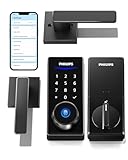
Overview: Philips delivers a premium smart lock experience with this complete handle set package, combining their renowned reliability with comprehensive keyless entry. The system includes two lever handles plus the smart deadbolt, providing a unified aesthetic upgrade. With fingerprint, PIN, key, and app unlocking, it covers all essential access methods while maintaining Philips’ signature build quality and design standards.
What Makes It Stand Out: The inclusion of both interior and exterior lever handles distinguishes it from deadbolt-only competitors, offering a complete door hardware solution. Philips’ reputation for durability and the unlimited one-time PIN capability—where codes auto-delete after use—provides exceptional security for high-traffic situations. The Bluetooth connectivity ensures reliable local control with optional WiFi expansion.
Value for Money: At $189.99, this is a premium investment. The price reflects Philips’ brand equity, superior materials, and complete handle set. While expensive compared to feature-rich competitors, you’re paying for proven reliability and cohesive design. The requirement to purchase a separate WiFi gateway for remote access adds to total cost.
Strengths and Weaknesses: Strengths include trusted brand reputation, complete hardware set, unlimited one-time PINs, and solid build quality. The fingerprint capacity of 50 is adequate for most homes. Weaknesses: high price point, Bluetooth-only without gateway, limited fingerprint storage compared to cheaper alternatives, and no voice control out-of-box.
Bottom Line: Ideal for brand-conscious homeowners wanting a premium, all-in-one hardware upgrade from a trusted name. Worth the premium if reliability and aesthetics outweigh advanced smart features.
10. Philips WiFi Smart Keypad Deadbolt Lock, App Remote Control, No Hub Required, Support Alexa & Google Assistant, Keyless Entry Door Lock with Auto Lock, Digital Smart Locks for Front Door, Satin Nickel

Overview: The Philips WiFi Smart Keypad Deadbolt brings trusted brand reliability to the mid-range market with built-in WiFi eliminating hub requirements. This lock focuses on practical keyless entry through passcode, mobile app, physical keys, and voice commands via Alexa/Google integration. The physical button keypad offers a tactile alternative to touchscreens, prioritizing reliability over flashy tech.
What Makes It Stand Out: Native WiFi connectivity at $129.99 from a premium brand like Philips is compelling. The physical button design resists wear and works reliably in wet conditions where touchscreens fail. Flexible auto-lock timing (10-180 seconds) provides customizable security, while the straightforward four-method approach avoids feature bloat.
Value for Money: Positioned between budget and premium options, this lock justifies its price through Philips’ quality assurance and built-in WiFi. While lacking fingerprint scanning found in cheaper alternatives, the brand reputation and reliable performance offer peace of mind. The six-month battery life is acceptable but requires 8 batteries.
Strengths and Weaknesses: Strengths include trusted brand, built-in WiFi, reliable physical buttons, and flexible auto-lock settings. The app provides comprehensive remote management. Weaknesses: no biometric option, shorter battery life than some competitors, and requires many batteries. Voice control needs smart speakers, and the design is utilitarian.
Bottom Line: A solid, no-nonsense WiFi smart lock from a reliable brand. Perfect for users wanting remote access without fingerprints and preferring proven brand support over cutting-edge features.
Why Physical Key Override Isn’t Outdated—It’s Essential
The smart home industry has spent years convincing us that physical keys belong in the same category as VHS tapes and flip phones. But seasoned security professionals know better. A physical key override represents the ultimate fail-safe—a mechanical bypass that operates independently of batteries, Wi-Fi signals, or software updates. When your lock’s firmware glitches during a cold snap, or your rechargeable lithium battery decides it’s had its last cycle, that tiny metal key becomes the most valuable piece of technology you own.
Emergency access isn’t just about convenience; it’s about safety. First responders, trusted neighbors, or family members may need immediate entry when you’re incapacitated. A physical key stored in a secure lockbox eliminates the complexity of digital credential sharing during high-stress situations. The most sophisticated smart lock in the world is worthless if it can’t perform its most basic function: letting the right people in when they need access most.
Understanding Smart Lock Security Grades and Certifications
Before diving into features, you need to understand the language of lock security. Not all smart locks with key overrides are created equal, and the difference between a secure lock and a decorative one often lies in certifications most buyers overlook.
ANSI/BHMA Lock Grade Ratings Explained
The American National Standards Institute (ANSI) and Builders Hardware Manufacturers Association (BHMA) grading system is your first line of defense against subpar hardware. Grade 1 locks withstand 1 million cycles and 10 strikes of 75 pounds of force—this is commercial-grade security that belongs on your front door. Grade 2 locks handle 800,000 cycles and 5 strikes of 75 pounds, suitable for residential use but with less durability. Grade 3 locks, often found on interior doors, are inadequate for primary entry points.
Here’s the critical detail: many smart locks achieve their Grade 2 rating only for the electronic components, while the physical override mechanism might be Grade 3 or unrated. Always verify that both the electronic and mechanical portions meet Grade 1 or Grade 2 standards. A weak physical override creates a vulnerable backdoor into your smart security system.
UL Listings and What They Mean for Emergency Access
Underwriters Laboratories (UL) testing goes beyond cycle counts. UL 437 rating specifically tests locks against picking, drilling, and other forced entry techniques. For smart locks with physical overrides, this certification ensures your keyway won’t be the weak link that compromises your entire system. Some manufacturers skip UL testing for the mechanical portion, assuming the “smart” features provide sufficient protection. This assumption can cost you dearly during a targeted attack.
Key Features to Prioritize in Emergency-Ready Smart Locks
When evaluating options, certain features separate reliable emergency-ready locks from flashy gadgets that’ll fail when you need them most. Focus on these non-negotiable elements:
Battery Backup Systems vs. Physical Keys
Many manufacturers tout “battery backup” as a solution to power failures, but this feature often creates more problems than it solves. A 9V battery terminal on the bottom of your lock might provide temporary power—if you happen to carry a 9V battery, if the contacts aren’t corroded, and if the internal battery isn’t completely shot. Physical key overrides require no preparation, no spare batteries, and no troubleshooting. They’re either there and working, or they’re not. The simplicity is the feature.
Weather Resistance for Outdoor Components
Your lock’s physical keyway faces the same environmental assaults as traditional locks, plus additional electronic vulnerabilities. Look for IP65 or higher ratings protecting against water and dust intrusion. But here’s what spec sheets won’t tell you: extreme cold can cause metal components to contract, making key insertion difficult. Quality locks include de-icing features or weather-resistant keyway covers that maintain functionality from -40°F to 150°F. Test the physical key after installation in various weather conditions—don’t wait for an emergency to discover a problem.
How Physical Key Override Mechanisms Actually Work
Understanding the mechanics behind your lock’s backup system helps you evaluate its true security and reliability. Manufacturers implement physical overrides in three primary ways, each with distinct advantages and vulnerabilities.
Traditional Pin-and-Tumbler Systems in Smart Locks
Most premium smart locks integrate a standard pin-and-tumbler cylinder alongside the electronic mechanism. This approach allows you to rekey the lock to match your existing house key, reducing keychain clutter and simplifying emergency access. However, the placement matters enormously. Some designs position the keyway at the bottom of the unit, making it awkward to use and exposing it to more dirt and moisture. Top-mounted or front-facing keyways typically offer better ergonomics and protection.
The internal construction reveals quality differences. High-end locks use brass or steel cylinders with anti-drill plates and security pins that resist picking and bumping. Budget options might use zinc alloy cylinders that corrode faster and provide minimal resistance to forced entry. Ask for a cutaway diagram or technical specification sheet before purchasing.
Hidden Keyways and Covert Entry Points
Some manufacturers hide the physical keyway behind a sliding cover or magnetic plate, preserving the lock’s sleek aesthetic. While visually appealing, these concealed access points can become problematic. Covers can jam with ice or debris, and the mechanism that secures the cover itself can fail. If you choose a lock with a hidden keyway, test the cover mechanism repeatedly under various conditions. Better yet, opt for designs where the keyway remains exposed but aesthetically integrated—functionality should never hide behind fragility.
Battery Life Realities: When Your Smart Lock Goes Dark
Manufacturer claims of “one-year battery life” deserve serious skepticism. Real-world usage rarely matches lab conditions. Cold weather drains batteries 30-50% faster. Frequent use, especially with auto-lock features enabled, accelerates drain. Wi-Fi connectivity (as opposed to Bluetooth or Z-Wave) can reduce battery life by months.
The critical question isn’t how long batteries last—it’s how the lock behaves as power dwindles. Quality locks provide weeks of low-battery warnings through the app and audible chirps. But what happens when you ignore those warnings? Some locks enter a “sleep mode” where only the physical key works, preserving enough juice for emergency electronic access. Others die completely, leaving you with nothing but the mechanical override. Understand your lock’s specific power failure behavior before you’re standing in the rain with a dead keypad.
Emergency Scenarios You Haven’t Considered
Most buyers think about dead batteries. Few consider these equally plausible situations where physical keys become lifesavers:
Electromagnetic Pulse (EMP) Events: While rare, solar flares or other EMP events would fry unshielded electronic components. Your physical key operates entirely mechanically, unaffected by electromagnetic interference.
Firmware Bricking: A failed software update can render electronic functions useless until the manufacturer provides a fix—potentially days or weeks. The mechanical override remains unaffected.
Legal Lockouts: In some jurisdictions, landlords or law enforcement can disable electronic locks via wireless commands under certain circumstances. A physical key bypasses remote disabling.
Digital Kidnapping: Ransomware attacks targeting smart home devices are increasing. Hackers could lock you out digitally while demanding payment. The physical key is your unhackable backup.
Installation Complexities: What Your Door Needs
A smart lock is only as good as its installation. Even the best lock with a perfect physical override will fail if improperly installed or matched to the wrong door.
Door Thickness, Backset, and Bore Hole Measurements
Standard US doors range from 1-3/8" to 2" thick, but smart locks often accommodate only 1-3/8" to 1-3/4". Measure your door before purchasing. The backset—the distance from the door edge to the center of the bore hole—must match exactly (typically 2-3/8" or 2-3/4"). Some locks offer adjustable backsets; others require precise matching.
The bore hole diameter matters too. Most smart locks need a 2-1/8" hole, but older doors might have 1-1/2" holes requiring professional modification. The physical override mechanism’s housing requires specific clearance that can’t be fudged. A lock installed in an improperly sized hole may bind, making the physical key difficult or impossible to turn under torque.
Smart Deadbolts vs. Full Lockset Replacements
Smart deadbolts replace only the deadbolt portion, leaving your existing handle and latch unchanged. This approach is simpler to install and maintains your door’s aesthetic, but the physical key only operates the deadbolt. Full lockset replacements integrate smart technology into both the deadbolt and handle set, but they require complete door modification and cost significantly more. For emergency access, a smart deadbolt with a robust physical override often provides the best balance of security, cost, and reliability.
Smart Home Integration Without Sacrificing Security
Integration with Alexa, Google Home, or Apple HomeKit adds convenience but introduces vulnerabilities. Voice unlocking through smart speakers creates a security hole—what’s stopping someone from shouting through your window to unlock the door? The best locks disable voice unlocking by default or require a spoken PIN.
More importantly, consider how integration affects emergency access. If your lock requires cloud connectivity for any function, that function fails when your internet drops. The physical key remains your only local, guaranteed access method. Prioritize locks that function fully via Bluetooth or a local hub, ensuring basic operation continues even when the broader smart home ecosystem goes offline.
The Hidden Costs of Smart Lock Ownership
The sticker price is just the beginning. Factor these ongoing costs into your decision:
Battery Replacement: Budget $20-40 annually for quality lithium batteries. Rechargeable options exist but often provide shorter life per charge.
Professional Rekeying: While you can rekey some smart locks yourself, many require a locksmith familiar with the specific model. Expect $75-150 per rekeying, comparable to traditional high-security locks.
Subscription Fees: Some locks require monthly fees for advanced features like activity logs or remote access. The physical override never requires a subscription—it’s the feature that keeps working after you cancel.
Replacement Parts: If the electronic portion fails after warranty, you’re often looking at complete replacement. However, a quality mechanical cylinder can last decades. Consider the lock’s modular design—can you replace just the smart components while keeping the mechanical core?
Maintenance Routines for Reliable Emergency Access
A physical key override that hasn’t been used in three years might as well not exist. Corrosion, seized pins, and forgotten key locations turn emergencies into disasters. Establish this quarterly maintenance routine:
- Operate the physical key monthly: Insert and turn the key fully, even if you don’t need to. This distributes lubricant and prevents pins from seizing.
- Inspect the keyway: Use a flashlight to check for corrosion, insect nests, or debris. A can of compressed air clears obstructions without introducing moisture.
- Lubricate properly: Use graphite powder or a dry Teflon lubricant specifically designed for locks. Never use WD-40—it attracts dust and gums up the mechanism over time.
- Test keys: Ensure all copies of your physical key work smoothly. A poorly duplicated key can break off in the cylinder, destroying your emergency access.
- Update key storage: Verify your emergency key location remains secure and accessible. A key in a rusted lockbox is useless.
Physical Security vs. Cybersecurity: Finding Balance
Smart lock marketing emphasizes cybersecurity—encryption, two-factor authentication, secure boot processes. These matter, but they shouldn’t overshadow physical security fundamentals. A lock with military-grade encryption but a zinc alloy cylinder that surrenders to a $20 lock pick set is security theater.
Conversely, a fortress-grade mechanical lock with weak electronic security invites digital bypass. The ideal smart lock with physical override achieves both: a Grade 1 or 2 mechanical cylinder with anti-bump, anti-pick, and anti-drill features, paired with encrypted wireless communication and regular security patches. One without the other is simply half a lock.
Design Considerations: Aesthetics Meet Functionality
Your lock is the first thing visitors see and the last thing you rely on in emergencies. Modern smart locks offer finishes from oil-rubbed bronze to polished nickel, but finish durability affects emergency functionality. Powder-coated finishes resist corrosion better than plated finishes, ensuring the keyway remains clean and accessible.
Consider key visibility. A lock that hides its physical override too well might look sleek, but can you find the keyhole in the dark during a power outage? Subtle backlighting or tactile indicators around the keyway help without compromising aesthetics. The best designs integrate the physical key as a design feature, not an afterthought.
Warranty and Support: What Happens When Things Fail
Read warranty terms carefully. Many manufacturers offer lifetime mechanical warranties but only 1-2 year electronic warranties. This disparity reveals their confidence in each component. A company that won’t stand behind the electronic portion for more than a year is telling you something important about expected longevity.
Support quality matters enormously for smart locks. If the electronic functions fail, can you reach support at 2 AM? More importantly, will they walk you through using the physical override, or will they treat it as an embarrassing afterthought? Look for companies with 24/7 support and detailed mechanical override documentation. The best manufacturers treat the physical key as a premium feature, not a legacy concession.
Frequently Asked Questions
Are physical key overrides on smart locks less secure than traditional deadbolts?
Not inherently. A quality smart lock with a Grade 1 or 2 mechanical cylinder offers the same physical security as a traditional deadbolt. The keyway is often identical to high-security traditional locks, including anti-pick pins and hardened steel anti-drill plates. Security only degrades if the manufacturer treats the mechanical portion as an afterthought. Always verify independent ANSI/BHMA ratings specifically for the mechanical override, not just the electronic components.
How often should I test the physical key to ensure it works in an emergency?
Test the physical key monthly by fully inserting and turning it in the cylinder. This prevents pins from seizing and distributes lubricant. Additionally, perform a full “emergency drill” quarterly: disable all electronic functions (or remove batteries) and rely solely on the physical key for entry. This reveals any developing issues before they become crises. Keep a log of tests to identify patterns, like seasonal stiffness that might indicate moisture intrusion.
What should I do if I lose the physical key to my smart lock?
Treat it as a security breach immediately. Rekey the mechanical cylinder—most quality smart locks allow this without replacing the entire unit. If rekeying isn’t possible, replace the lock. Don’t assume the electronic features provide sufficient protection; a lost key creates an unlogged, untraceable access method. After rekeying, test all copies of the new key thoroughly. Consider this a reminder to maintain a secure, limited number of key copies rather than distributing them widely.
Can a locksmith help if I’m locked out and the electronic features have failed?
Absolutely, but with caveats. Any competent locksmith can pick or bypass the mechanical cylinder, but they’ll need proof of residency. Keep your lock’s manual and keyway specifications accessible (digitally and physically) so the locksmith knows what they’re working with. Some smart locks use non-standard keyways requiring specialized tools. Establish a relationship with a locksmith before an emergency, and verify they’re familiar with smart lock mechanical overrides. In a true emergency (fire, medical), locksmiths can drill the cylinder—destroying it but providing entry.
Will the physical key still work if the batteries are completely dead?
Yes, that’s the entire point of a physical override. The mechanical cylinder operates independently of all electronic components, including the battery. However, some poorly designed locks require minimal battery power to release the cylinder. This defeats the purpose of a physical override. Before purchasing, verify with the manufacturer that the key works with zero electrical power. Test this yourself after installation by removing batteries entirely and confirming smooth mechanical operation.
Are there smart locks that don’t have physical key overrides?
Yes, several models market “keyless only” designs as a security feature, arguing that keyways are vulnerable to picking or bumping. These locks rely entirely on battery backup, external power terminals, or emergency access codes. For most homeowners, this creates unacceptable risk. The vulnerabilities of a well-designed keyway are minimal compared to the certainty that electronics will eventually fail. Keyless-only locks might suit high-security commercial applications with redundant entry methods, but they’re a poor choice for primary residential entry.
What’s the difference between battery backup and a physical key override?
Battery backup provides temporary power to electronic components, allowing keypad or app unlocking during outages. It requires spare batteries, functional contacts, and often specific battery types. A physical key override is a complete mechanical bypass requiring no power, batteries, or electronics. Battery backup is a convenience feature; a physical key is an emergency failsafe. The best locks offer both, but never rely solely on battery backup for emergency access. Batteries leak, contacts corrode, and electronics fail in ways mechanical systems don’t.
Can I rekey the physical override myself, or do I need a locksmith?
Many smart locks with traditional pin-and-tumbler cylinders are rekeyable using a “smart key” tool or following the manufacturer’s process, often without removing the lock from the door. However, this varies dramatically by model. Some use specialized cylinders requiring proprietary tools only available to certified locksmiths. Others are “non-rekeyable,” forcing complete replacement if keys are compromised. Before buying, confirm the rekeying process and whether you can perform it yourself. Even if DIY is possible, consider having a locksmith do it initially to ensure proper pin placement and smooth operation.
Do homeowners insurance policies require physical key overrides on smart locks?
Most policies don’t explicitly require physical key overrides, but they often mandate “reasonable security measures.” If you’re denied a claim after a break-in, an insurer could argue that a keyless-only smart lock without mechanical backup constitutes inadequate security, especially if electronic failure contributed to the incident. Some insurers offer discounts for ANSI Grade 1 locks regardless of smart features. Contact your insurance provider to discuss specific requirements. Document your lock’s security ratings and maintain records of professional installation to support any future claims.
How do extreme weather conditions affect physical key override mechanisms?
Weather impacts mechanical locks more than most realize. Extreme cold causes metal contraction, potentially making keys difficult to insert or turn. Quality locks use temperature-resistant materials and precise tolerances to minimize this. Extreme heat and humidity accelerate corrosion, especially in coastal areas. Salt air can seize mechanisms within months without proper maintenance. Ice formation inside the keyway can completely block access. The best emergency-ready locks include weather-resistant keyway covers, drainage channels to prevent ice formation, and materials selected for your climate zone. Always choose a lock rated for your specific environmental conditions, not just generic “outdoor use.”