Gone are the days when a simple floodlight was enough to secure your property. Today’s smart security lights have evolved into sophisticated deterrent systems that leverage color psychology, automation, and intelligent design to protect homes and businesses more effectively than ever before. Color-changing deterrent modes represent one of the most innovative developments in this space, transforming ordinary exterior lighting into dynamic crime-prevention tools that adapt to threats in real-time.
These advanced systems do more than just illuminate dark corners—they communicate. By cycling through specific colors, intensities, and patterns, they can simulate occupancy, signal alerts, or create psychological barriers that make intruders think twice. Whether you’re a tech-savvy homeowner looking to upgrade your security infrastructure or a property manager seeking scalable solutions, understanding how these smart lights function and what features truly matter will help you make an informed investment that pays dividends in peace of mind.
Top 10 Smart Security Lights with Deterrent Modes
Detailed Product Reviews
1. Onforu 100W 9000LM Smart LED Security Lights Motion Sensor Outdoor,WiFi Alexa Flood Light APP Control, 2500K-6500K, Motion Detector with Adjustable 3 Head, IP65 Wall Light for Yard (White)

Overview: The Onforu 100W security light delivers an impressive 9000 lumens with smart connectivity, making it ideal for comprehensive yard coverage. Its three adjustable heads and wide color temperature range (2500K-6500K) offer versatility for various outdoor scenarios, from warm ambient lighting to crisp security illumination.
What Makes It Stand Out: This model excels with its stepless dimming and granular app control via the “Onforu” app. Unlike basic motion lights, it records trigger events, supports group linkage for multiple lights, and offers micro-bright mode for energy-efficient ambient lighting. The IP65 rating and aluminum construction ensure durability, while the 72.7-foot detection range provides extensive coverage.
Value for Money: At $79.99, this premium option costs more than basic models but justifies the price with smart features and exceptional brightness. Comparable WiFi-enabled lights with similar lumen output typically run $90-120. The energy savings from LED technology and customizable scheduling offset the initial investment within 1-2 years.
Strengths and Weaknesses: Strengths:
- Unmatched 9000LM brightness for large properties
- Comprehensive app control with motion history logging
- Adjustable color temperature suits multiple use cases
- Group linkage creates synchronized security zones
Weaknesses:
- 2.4GHz WiFi limitation may cause connectivity issues
- Adapter isn’t waterproof, requiring careful installation
- App interface has occasional lag reports
Bottom Line: Best for tech-savvy homeowners needing maximum coverage and smart integration. The brightness and feature set justify the premium price for large yards or commercial applications.
2. NOVOSTELLA Security Lights Motion Sensor Outdoor, 2Pack LED Flood Lights with Remote, Dusk to Dawn 45W 5000lm 5000K, 3 Heads Wired Wall Adjustable Floodlights, IP65 Waterproof for Garage Yard House

Overview: This twin-pack from NOVOSTELLA offers 5000 lumens per unit at a budget-friendly price point. The 45W LED fixtures replace 400W incandescent bulbs, providing substantial energy savings. With three adjustable heads and IP65 waterproofing, these lights suit garages, yards, and entryways requiring reliable, no-frills security illumination.
What Makes It Stand Out: The included IR remote eliminates ladder-climbing for adjustments—a practical feature rarely found in this price range. It offers three distinct modes: motion-sensing, dusk-to-dawn, and always-on, providing flexibility without app dependency. The 60-foot detection range and adjustable brightness (100% or 20%) add customization.
Value for Money: At $59.99 for two ($30 each), this represents exceptional value. Single comparable units often cost $40-50. While lacking smart connectivity, the remote functionality and dual-pack configuration make it ideal for covering multiple areas without breaking the bank. The 80%+ energy savings deliver quick ROI.
Strengths and Weaknesses: Strengths:
- Excellent value with two units included
- Remote control for easy mode switching
- Multiple operational modes for varied needs
- Simple installation without WiFi setup
Weaknesses:
- Fixed 5000K color temperature limits ambiance options
- No app control or smart home integration
- IR remote requires line-of-sight operation
Bottom Line: Perfect for budget-conscious buyers wanting reliable, bright security lighting without smart features. The remote control and dual-pack offer convenience and coverage that outperforms single-unit competitors.
3. Onforu 32W 2 Head Smart LED Security Lights, 3200LM Motion Sensor Outdoor Lights Hardwired, 2700K-6500K, APP Control, WiFi Alexa Motion Detector Light for Outside, IP65 Waterproof Flood Lights(Black)
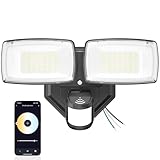
Overview: This compact 32W smart security light delivers 3200 lumens through two adjustable heads, making it suitable for smaller yards, porches, or side entrances. The WiFi-enabled design supports Alexa/Google Assistant and offers full color temperature control from warm 2700K to cool 6500K, bridging the gap between basic and premium smart lighting.
What Makes It Stand Out: The stepless dimming system provides precise color tuning beyond typical stepped adjustments. Its motion sensor covers up to 72 feet with a 180° angle, impressive for its size. The “Onforu” app enables group control and scheduling, while the memory function retains settings after power cycles—features often missing in sub-$50 lights.
Value for Money: At $39.99, this hits the sweet spot for smart security lighting. Competitors with similar WiFi capabilities typically start at $55-70. While less bright than its 100W sibling, it offers 80% of the smart functionality at half the price, making it ideal for targeted coverage areas rather than entire properties.
Strengths and Weaknesses: Strengths:
- Affordable entry into smart outdoor lighting
- Full color temperature adjustment range
- Compact two-head design fits tighter spaces
- Comprehensive app features including scheduling
Weaknesses:
- 3200LM may be insufficient for large driveways
- Only 2.4GHz WiFi compatible
- Black finish may absorb more heat in sunny climates
Bottom Line: An excellent smart lighting starter option for smaller homes or specific zones. Delivers premium app control and customization at a mid-range price point without overkill brightness.
4. OREiN Outdoor Motion Sensor Light, Smart Motion Lights for Outside with Bluetooth APP Control, 5000K LED Flood Light Security Light with IP65 Waterproof for Stairs Front Door (Hardwired)

Overview: The OREiN light distinguishes itself with Bluetooth APP control at an entry-level price of $26.99. Designed for stairs and front doors, it provides targeted illumination with a 120° detection angle and 26-foot range. The 5000K daylight color temperature ensures clear visibility for safety and security in compact outdoor spaces.
What Makes It Stand Out: Its Security Mode flashes lights and sends phone notifications when motion is detected—an advanced feature uncommon in budget lights. The Travel Mode simulates occupancy, deterring intruders. Bluetooth connectivity avoids WiFi setup complexities, while the Aidot App supports group control with other OREiN devices, creating a mesh network for expanded coverage.
Value for Money: This is among the most affordable smart motion lights available. While Bluetooth range limits remote access compared to WiFi models, it delivers core smart features—app control, scheduling, and security alerts—at half the price of WiFi alternatives. For single-location coverage, it outperforms basic non-smart lights costing $20-25.
Strengths and Weaknesses: Strengths:
- Unbeatable price for app-controlled lighting
- Security Mode with flashing alerts and notifications
- Bluetooth simplifies setup without WiFi passwords
- Travel Mode provides peace of mind
Weaknesses:
- Bluetooth range limits control distance
- Fixed 5000K temperature offers no warm option
- Single-head design covers less area than multi-head units
Bottom Line: Ideal for apartment dwellers or those wanting smart features on a tight budget. The security alerts and flashing mode add value beyond basic illumination, though Bluetooth limitations suit smaller properties best.
5. TECKNET 7500LM Flood Ourtdoor Motion Sensor Lights, 150LEDs 6500K 4 Working Modes Security Flood Lights Outdoor with Remote Control & IP66 Waterproof, Adjustable Light for Garage Yard Porch

Overview: TECKNET’s 7500-lumen floodlight uses 150 LED beads and a reflective structure to maximize brightness, making it one of the most powerful non-smart options at $36.99. The 6500K cool white output and 300° lighting angle ensure expansive coverage for yards, garages, and porches. Four working modes provide flexibility without app complexity.
What Makes It Stand Out: The innovative 150-LED array with reflective design outshines typical 36-LED competitors, delivering exceptional brightness per dollar. Its 70-foot detection range and 180° sensor angle match premium models. The four modes—including continuous dim-light and motion-activated high-beam—offer versatility without requiring smartphone control. IP66 rating exceeds standard IP65 for better weather resistance.
Value for Money: At $36.99, this delivers near-premium brightness at a budget price. Comparable 7500LM lights typically cost $60-80. While lacking smart features, the remote control, superior waterproofing, and extreme brightness make it a practical choice for large areas where raw illumination matters more than connectivity. The energy efficiency provides immediate utility bill savings.
Strengths and Weaknesses: Strengths:
- Exceptional 7500LM brightness from 150 LEDs
- IP66 rating for superior weather protection
- Four customizable modes including all-night dim
- 70-foot detection range rivals expensive models
Weaknesses:
- No smart home integration or app control
- Fixed 6500K color may feel harsh for some users
- Remote requires line-of-sight; no motion history
Bottom Line: Perfect for users prioritizing maximum brightness and durability over smart features. The IP66 rating and 150-LED design make it ideal for harsh climates and large properties needing straightforward, powerful security lighting.
6. JJC Security Floodlight Camera Outdoor,1080P Smart Motion Sensor Outdoor Lights with Camera(4 Working Modes), 110dB Siren 25W 2200 Lumen Brightness, IP65 Weatherproof, 2-Way Talk

Overview: The JJC Security Floodlight Camera combines illumination and surveillance in one affordable package. This 25W LED fixture delivers 2200 lumens of daylight-balanced light while its integrated 1080P camera captures activity across a 130-degree field of view. Designed for homeowners seeking basic security enhancement without professional installation costs, it offers four operational modes controlled through the HomeLinking app.
What Makes It Stand Out: This product’s main differentiator is its aggressive pricing for a camera-light combo. The four working modes (Auto, Manual, Dimming, Timing) provide unusual flexibility at this price point. The 110dB siren adds an active deterrent layer many competitors lack. Motion detection focuses on warm objects (people/cars) to reduce false alerts from animals or moving branches, while the 5000K color temperature option ensures clear video capture.
Value for Money: At $31.99, this is one of the most budget-friendly floodlight cameras available. Comparable products typically start at $60-80. While features are basic compared to premium brands, the cost-per-function ratio is exceptional for entry-level home security. The three-day free cloud storage is adequate for most incidents.
Strengths and Weaknesses: Strengths include unbeatable price, integrated siren, multiple control modes, and IP65 weatherproofing. Weaknesses are the relatively low 1080P resolution (versus 2K/4K options), lesser-known app ecosystem, limited 130° viewing angle, and short free storage period. Build quality may not match premium alternatives.
Bottom Line: Ideal for budget-conscious homeowners wanting basic surveillance and deterrence. While not feature-rich, it delivers core security functions at an accessible price point. Consider this if you’re testing smart security waters or need coverage for less critical areas.
7. EMANER Smart Security Light Motion Sensor, Compatible with Alexa/Google Home, Warm White to Daylight White Brightness Adjust, App Controlled WiFi Flood Light (White, 1-Pack)

Overview: The EMANER Smart Security Light offers intelligent illumination control with its tunable white spectrum and WiFi connectivity. This single-head fixture connects to mainstream smart home platforms, allowing users to adjust color temperature from warm 2700K to daylight 6500K via the Smart Life or Tuya apps. Designed for seamless integration into existing smart ecosystems, it eliminates manual adjustments through its comprehensive app-based controls.
What Makes It Stand Out: Voice control compatibility with Alexa and Google Assistant distinguishes this from basic motion lights. The stepless dimming (1-100%) and precise color temperature tuning provide exceptional customization for both security and ambient lighting. The memory function retains settings after power cycles, while the dual-mode operation (Manual and Sensor) offers versatility for everyday use versus security applications.
Value for Money: Priced at $39.99, it sits in the mid-range for smart security lights. While lacking a camera, its advanced lighting controls and voice integration justify the cost compared to $25-30 non-smart alternatives. The ability to avoid ladder-climbing for adjustments adds long-term convenience value.
Strengths and Weaknesses: Strengths include wide color temperature range, voice assistant support, flexible app controls, and adjustable sensor settings. Weaknesses are the modest 26-foot detection range, single-light configuration limiting coverage, and 2.4GHz-only WiFi which may cause connectivity issues. No integrated camera means it complements rather than replaces surveillance systems.
Bottom Line: A solid choice for smart home enthusiasts prioritizing lighting flexibility over video surveillance. Best for entryways, garages, or secondary security zones where customizable illumination matters more than recording capability.
8. homeshadows Attendance Simulator - DIY Home Security System That Casts Shadows on Curtains or Walls to Deter burglars Before They Try to Break in - Security Light for Home Safety - Black

Overview: The homeshadows Attendance Simulator takes a unique psychological approach to home security by casting random moving shadows onto curtains or walls, simulating active occupancy. This DIY system uses computer-controlled algorithms to project unpredictable shadow patterns, creating the impression of people moving inside. Unlike traditional lights that activate after intrusion attempts, this device works preemptively to deter potential burglars before they approach.
What Makes It Stand Out: This is the only product focused purely on presence simulation rather than illumination or recording. The randomization algorithms prevent predictable patterns that criminals might detect. Operating for 1-10 hour cycles, it’s specifically designed for vacation security or empty homes during evening hours. Its preventive philosophy addresses security at the earliest stage.
Value for Money: At $69.00, it’s priced as a premium specialty device. While expensive compared to basic timers, its unique shadow-casting technology has no direct competitors. The value depends entirely on your security strategy—if psychological deterrence is your priority, it’s worth the investment. However, traditional lights with cameras offer more tangible protection for similar money.
Strengths and Weaknesses: Strengths include innovative presence simulation, proactive deterrence, adjustable duration, and silent operation. Major weaknesses are the high cost for a single-function device, no actual lighting capability, and questionable effectiveness—shadows may not appear realistic enough to fool determined criminals. It also lacks integration with smart home systems or mobile notifications.
Bottom Line: A niche product for homeowners who travel frequently and want layered psychological deterrence. Most effective when combined with traditional security systems. Skip this if you need actual surveillance or lighting; consider it as a supplemental vacation security tool.
9. Olafus 65W Smart LED Flood Light Outdoor with Motion Sensor, 6500LM, 2700K-6500K WiFi Security Light Work with Alexa/Google, Motion Detector Lights with APP Control, IP65 Floodlight Outside (Black)

Overview: The Olafus 65W Smart LED Flood Light delivers professional-grade brightness with 6500 lumens while offering comprehensive smart controls. This high-output fixture connects via 2.4GHz WiFi to Alexa and Google Assistant, providing tunable white light from 2700K to 6500K. Its standout feature is the enhanced motion sensor boasting a 180-degree detection angle and 72-foot range, making it suitable for large properties requiring extensive coverage.
What Makes It Stand Out: The exceptional motion detection capabilities set this apart from consumer-grade options. The ability to link multiple lights for simultaneous activation creates a coordinated security perimeter. Group control, activation recording, and customizable delay timers (6 seconds to 60 minutes) provide enterprise-level customization. The memory function and low-light mode offer energy-saving convenience.
Value for Money: At $52.99, it offers impressive specs for the price. Competing products with similar brightness and detection range often exceed $70. The 65W power consumption is reasonable for the 6500LM output, delivering strong value for large-area security needs. Advanced features like group linking typically appear in more expensive commercial systems.
Strengths and Weaknesses: Strengths include powerful illumination, industry-leading sensor range, flexible scheduling, and robust weatherproofing. Weaknesses are 2.4GHz-only connectivity, potential overkill for small spaces, and higher energy consumption than lower-lumen alternatives. The app interface, while functional, may not be as polished as premium brands.
Bottom Line: Excellent for property owners needing maximum coverage and brightness. Ideal for driveways, large yards, or commercial applications where detection range and light output are paramount. A feature-rich, powerful security solution at a mid-range price.
10. OREiN Wired and Solar Hybrid LED Smart Motion Sensor Light Outdoor Flood Lights with RGB Uplight Bluetooth APP Solar Motion Lights Outdoor Waterproof IP65 for Yard Garage Gate

Overview: The OREiN Hybrid LED Smart Light offers innovative dual-power flexibility, combining solar and wired electricity for uninterrupted operation. Delivering 3500 lumens, this fixture features three operational modes controlled via Bluetooth app: Sensing, Dusk-to-Dawn, and Security flash. The included RGB uplight adds ambient lighting versatility, making it functional for both security and decorative purposes.
What Makes It Stand Out: The hybrid power system is the primary differentiator, automatically prioritizing solar when battery levels exceed 20% to minimize electricity costs. The oversized 7.1" x 5.2" solar panel and 4400mAh battery provide reliable off-grid performance. The 240-degree sensor angle and 50-foot detection range offer exceptional coverage, while the RGB uplight creates unique aesthetic possibilities absent in standard security lights.
Value for Money: At $39.99, this represents exceptional value for a solar-capable smart light. Standalone solar security lights with similar brightness typically cost $50-60, while wired smart lights run $35-45. Getting both capabilities under $40 is rare. The energy savings from solar operation provide ongoing value, particularly in sunny climates.
Strengths and Weaknesses: Strengths include dual-power reliability, wide sensor angle, RGB customization, and eco-friendly operation. Weaknesses are Bluetooth’s limited range versus WiFi, solar panel mounting requirements adding installation complexity, and 3500LM being less bright than some competitors. The Bluetooth app may lack the remote access convenience of cloud-based WiFi systems.
Bottom Line: Perfect for environmentally conscious homeowners wanting flexible, cost-effective security lighting. The hybrid design ensures reliability during power outages or cloudy periods. Best for yards, gates, and detached structures where running constant power is expensive or impractical.
Understanding Smart Security Lights with Color-Changing Deterrent Modes
Smart security lights with color-changing capabilities represent the convergence of LED technology, motion sensors, and intelligent software. Unlike traditional motion-activated lights that simply switch on white illumination, these systems use programmable RGB or RGBW LEDs to display a spectrum of colors strategically designed to deter unwanted visitors. The core principle operates on two fronts: unexpected visual disruption that startles potential intruders, and subtle psychological cues that suggest an active, monitored property.
The Psychology Behind Color-Changing Deterrents
Color psychology plays a pivotal role in how these systems function as security tools. Blue and red alternating patterns can mimic police presence, creating an immediate association with law enforcement. Rapid white strobing disorients and draws attention, while purple or unusual colors signal high-tech surveillance that most criminals prefer to avoid. Research in environmental criminology suggests that unpredictable environmental cues significantly increase a perpetrator’s perceived risk of detection. When a light doesn’t behave like a standard fixture, it suggests human control or advanced automation—both effective deterrents.
How These Systems Work
At their foundation, these lights combine high-efficiency LED arrays with microprocessors that control color output based on triggered events. When motion sensors detect movement, the system doesn’t just activate—it makes decisions. It can reference time of day, previous activity patterns, and user-defined rules to select appropriate color responses. Advanced models incorporate machine learning to distinguish between pets, vehicles, and human intruders, adjusting their deterrent strategy accordingly. The color-changing mechanism typically uses pulse-width modulation (PWM) to blend red, green, and blue diodes into millions of possible hues, all while maintaining energy efficiency.
Key Features to Evaluate Before Buying
Not all color-changing security lights are created equal. The market ranges from basic models with preset color cycles to professional-grade systems with military-inspired deterrent protocols. Understanding which specifications impact real-world performance will prevent disappointment and ensure your investment delivers genuine security value.
Brightness and Lumens: Finding the Right Intensity
Brightness directly impacts deterrent effectiveness. While a 500-lumen light might suffice for accenting a doorway, effective perimeter security typically requires 2,000-3,000 lumens minimum. The key is adjustable intensity—look for systems offering 10-100% dimming capability across all color modes. This allows you to maintain ambient colored lighting for aesthetics after dark, then surge to maximum brightness with deterrent colors when motion is detected. Pay attention to lumen maintenance ratings too; quality LEDs should retain 90% of their initial brightness after 25,000 hours.
Color Range and Customization Options
The term “color-changing” can be misleading. Entry-level models might offer 8-16 preset colors, while premium systems provide full RGBW (Red, Green, Blue, White) spectrums with 16 million+ customizable hues. More important than quantity is control granularity. Can you program custom sequences? Adjust transition speeds? Sync multiple fixtures? The best systems allow you to create “deterrent profiles”—for example, a subtle amber glow that shifts to rapid red/blue alternating when motion is detected near a vulnerable window. Verify the color rendering index (CRI) as well; even deterrent colors need to be vivid and recognizable, not muddy or washed out.
Motion Detection Technology
PIR (passive infrared) sensors remain the industry standard, but their effectiveness varies dramatically. Detection range should match your property layout—options typically span 30 to 70 feet. More crucial is the field of view: 180 degrees covers most wall-mounted applications, while 270-360 degrees suits corner installations. Advanced systems now integrate dual-tech sensors combining PIR with microwave or ultrasonic detection, drastically reducing false triggers from swaying branches or small animals. Look for adjustable sensitivity zones and the ability to mask areas like busy streets to prevent nuisance activations.
Weatherproofing and Durability Ratings
Exterior security lighting must withstand years of environmental abuse. The IP (Ingress Protection) rating tells the complete story. IP65 offers dust-tight protection and resistance to water jets—suitable for most installations. IP67 provides temporary immersion protection for flood-prone areas. Beyond the rating, examine construction materials: die-cast aluminum housings with powder-coated finishes outperform plastic in UV resistance and impact protection. Tempered glass lenses resist scratching better than polycarbonate, maintaining optical clarity for precise color projection. Operating temperature ranges matter too; quality units function from -40°F to 120°F.
Power Source Options: Wired vs. Wireless
Your property’s infrastructure dictates the best power solution. Hardwired 120V systems deliver unlimited runtime and typically support higher brightness levels, but require professional installation and limit placement flexibility. Solar-powered wireless units offer DIY-friendly installation and work during power outages, though their performance depends on sun exposure and battery capacity. Hybrid models that combine hardwired power with battery backup provide the best of both worlds. When evaluating wireless options, scrutinize battery chemistry—lithium iron phosphate (LiFePO4) batteries outlast standard lithium-ion in temperature extremes and offer 2,000+ charge cycles.
Installation and Placement Strategies
Even the most advanced security light underperforms if installed incorrectly. Strategic placement transforms these devices from simple motion lights into comprehensive perimeter defense systems. Consider both the technical requirements and the psychological impact of your lighting layout.
Optimal Mounting Heights and Angles
Mounting height directly affects detection accuracy and light distribution. The sweet spot for most residential applications is 8-10 feet high—high enough to prevent tampering but low enough for effective motion detection and color visibility. Angle the fixture downward 10-15 degrees to maximize ground coverage while minimizing light pollution into neighboring properties. For color deterrents specifically, ensure the LED array faces potential approach paths directly; colors lose psychological impact when viewed obliquely or reflected off surfaces. Corner mounts should utilize 270-degree sensors to eliminate blind spots where intruders could approach undetected.
Zoning Your Property for Maximum Coverage
Divide your property into security zones based on risk level and access patterns. Zone 1 typically includes entry doors and ground-floor windows—areas requiring immediate, aggressive deterrent responses. Zone 2 covers driveways and side yards where you might want graduated responses: soft illumination for authorized movement, escalating colors for suspicious behavior. Zone 3 encompasses property perimeters and outbuildings where early detection and warning colors can prevent intrusion attempts. The most effective systems allow independent color programming per zone, creating a layered defense that communicates different messages based on location and threat level.
Smart Home Integration Capabilities
Isolated security lights provide limited protection. Integration transforms them into force multipliers that coordinate with cameras, alarms, and other smart devices. The depth of integration determines how intelligently your system can respond to potential threats.
Voice Assistant Compatibility
Alexa, Google Assistant, and Siri support enable hands-free control and voice-activated deterrent modes. Beyond basic on/off commands, advanced integration allows you to trigger specific color scenes with phrases like “Alexa, activate security mode,” which might set all lights to patrol with random color shifts. Look for systems that support custom voice routines—being able to simultaneously lock doors, arm cameras, and set lights to deterrent mode with one command creates a powerful security ecosystem. However, verify local processing capabilities; cloud-dependent voice control can fail during internet outages precisely when you need security most.
Mobile App Functionality and Control
The smartphone app serves as your primary control interface. Evaluate app store reviews focusing on reliability and update frequency. The best apps offer real-time status monitoring, activity logs with color-coded event types, and the ability to adjust settings remotely. Geofencing capabilities automatically switch between ambient and deterrent modes based on your phone’s location—lights remain subdued when you’re home, then activate protective color cycling when you leave. Critical app features include offline mode functionality, multi-user access with permission levels, and detailed analytics showing which deterrent colors triggered most frequently and at what times.
Integration with Existing Security Systems
True security value emerges when lights communicate with cameras, door/window sensors, and alarm panels. Look for Z-Wave or Zigbee compatibility for hub-based systems, or robust IFTTT support for cloud-based automation. When a door sensor triggers at 2 AM, your lights should immediately respond with specific colors that illuminate the area for cameras while warning the intruder they’ve been detected. Professional-grade systems offer API access for custom integrations—ideal for tech enthusiasts who want lights to respond to specific camera AI detections (person vs. vehicle) with tailored color sequences.
Deterrent Mode Strategies and Customization
Pre-programmed color cycles rarely address specific property vulnerabilities. The ability to customize deterrent responses based on time, location, and threat type separates basic models from genuine security tools. Understanding strategic color deployment maximizes psychological impact.
Simulating Occupancy with Color Patterns
Static lighting signals an empty house. Dynamic, unpredictable color shifts suggest active presence. Program your system to cycle through warm, dim colors during typical evening hours—subtle amber to soft white transitions that mimic TV glow or room lighting. Schedule these patterns to vary by 15-30 minutes nightly, preventing predictable timing. Advanced systems can randomize color selection within user-defined parameters, creating authenticity that fools even observant criminals. For multi-fixture setups, ensure lights don’t synchronize perfectly; staggered activation with different colors in different zones creates the illusion of movement through the house.
Emergency Response Color Protocols
Define clear color languages for different emergency types. Red rapid flashing might indicate break-in attempts, while solid blue could signal medical emergencies for first responders. Some systems integrate with panic buttons or duress codes, instantly flooding the property with disorienting strobe patterns designed to confuse intruders while alerting neighbors. Consider community coordination—if multiple homes on a street use compatible systems, a coordinated color response to neighborhood threats creates a visible network effect that dramatically increases perceived risk for criminals. Program override codes that allow you to silently signal distress with specific color sequences that appear random to observers but alert household members.
Seasonal and Holiday Adaptations
Security shouldn’t compromise aesthetics during holidays. Quality systems allow scheduled color themes—orange/purple for Halloween, red/green for December—while maintaining deterrent functionality. The key is dual-layer programming: festive colors during low-risk evening hours, automatically reverting to security-optimized palettes after midnight or when motion triggers alert states. Some advanced models incorporate light sensors that detect ambient holiday lighting and adjust their deterrent colors to remain noticeable without clashing. This prevents the common problem where decorative lighting inadvertently signals that security lighting has been disabled or ignored.
Technical Specifications Deep Dive
Marketing materials highlight features, but specifications reveal true performance. Understanding technical details helps you differentiate between durable, effective systems and those that look impressive on paper but fail in real-world conditions. This knowledge protects your investment.
Understanding Color Temperature and Rendering
Color temperature (measured in Kelvin) affects how colors appear and how humans perceive them. For deterrent applications, cooler temperatures (5000K-6500K) make blue and white colors appear more authoritative and noticeable. However, the Color Rendering Index (CRI) determines how accurately colors render under the light’s illumination. A CRI below 80 makes red appear washed out and pinkish, diminishing the psychological impact of police-style patterns. Premium security lights achieve CRI 90+ even in color modes, ensuring deterrent colors appear vivid and unmistakable. Some systems also specify R9 values (deep red rendering), critical for true red deterrent effectiveness.
Network Requirements and Connectivity
Smart features demand stable connectivity. Wi-Fi-enabled lights should support dual-band 2.4GHz/5GHz connections, with 802.11ac minimum for reliable performance. For larger properties, consider systems with mesh networking capabilities that allow lights to communicate with each other, extending range and maintaining functionality even if one unit loses router connection. Zigbee and Z-Wave systems require compatible hubs but offer superior reliability and lower power consumption. Always verify the system’s behavior during internet outages—locally stored deterrent programs should continue functioning even when cloud connectivity fails. Check firmware update policies; manufacturers should provide security patches for at least five years post-purchase.
Data Storage and Privacy Considerations
Color-changing security lights with built-in cameras or microphones raise legitimate privacy concerns. Understand what data the system collects and where it’s stored. Opt for systems offering local storage options (SD cards or NAS integration) rather than mandatory cloud subscriptions. If cloud storage is necessary, verify end-to-end encryption standards and data retention policies. The ability to disable microphones or cameras while retaining color deterrent functionality provides flexibility for privacy-conscious users. Review the manufacturer’s privacy policy for data sharing practices—some companies sell anonymized usage data that could reveal occupancy patterns. GDPR or CCPA compliance indicates higher privacy standards.
Cost Analysis and Value Assessment
Price tags range from under $50 to over $500 per fixture. Understanding what drives these costs helps identify where spending more yields tangible security benefits versus paying for unnecessary features. Long-term value often differs significantly from initial purchase price.
Initial Investment vs. Long-Term Savings
Budget systems might seem attractive, but frequent replacements and limited effectiveness erode savings. Quality fixtures with 50,000-hour LED lifespans and 5-year warranties cost more upfront but eliminate replacement costs for a decade. Calculate total cost of ownership: include installation (DIY vs. professional), energy consumption (wattage × hours used × electricity rates), and subscription fees. A $200 light using 30 watts for 8 hours nightly costs approximately $13 annually to operate at average US rates—far less than the $30-50 yearly cost of running a 150-watt halogen security light. Solar-hybrid models can achieve near-zero operating costs after installation.
Subscription Models: Are They Worth It?
Many smart security lights offer basic functionality without subscriptions but reserve advanced deterrent features for paid tiers. Evaluate what you’re actually getting: cloud storage for activity logs might be worth $3-5 monthly, but paying for the ability to customize colors often isn’t. Some manufacturers lock essential security features like geofencing or multi-user access behind paywalls—avoid these models. The best value comes from systems offering robust local control with optional subscriptions for convenience features like extended cloud history or professional monitoring integration. Always test the free tier thoroughly before committing; some apps become nearly unusable without premium subscriptions.
Maintenance and Troubleshooting
Even maintenance-free systems require periodic attention to maintain peak deterrent effectiveness. Proactive care prevents the gradual degradation that turns a security system into a decorative light. Understanding common failure modes empowers you to address issues before they compromise safety.
Routine Care for Optimal Performance
Clean lenses monthly using a microfiber cloth and mild soap solution—dirt and pollen can reduce light output by 30% or more, dulling color intensity. Inspect seals and gaskets seasonally; UV exposure degrades rubber over time, compromising weatherproofing. Test motion detection zones quarterly by walking the perimeter during different times of day; sensor sensitivity can drift due to temperature changes or spider webs. Update firmware promptly when available, but wait 2-3 weeks after release to ensure stability. For solar units, clean panels weekly during pollen season and check battery connections for corrosion annually. Keep a log of all maintenance activities to identify patterns and validate warranty claims.
Common Issues and DIY Solutions
False triggers remain the most frequent complaint. If your light cycles through deterrent colors for every passing car, adjust the sensor’s angle downward and reduce range sensitivity. Color drift—where lights no longer match your programmed hues—often indicates LED degradation; most quality systems allow individual diode calibration through the app. Connectivity drops can frequently be resolved by assigning static IP addresses to each fixture in your router settings. If colors appear washed out, verify voltage stability; flickering or dimming when the light activates suggests inadequate wiring gauge or transformer capacity. For persistent issues, factory reset procedures typically resolve software glitches, but document your custom settings first as these will be erased.
The Future of Color-Changing Security Lighting
The next generation of these systems incorporates AI-driven threat assessment that analyzes movement patterns to predict intrusion attempts before they occur. Imagine lights that shift to warning colors when someone lingers near your gate too long, or that coordinate with neighborhood networks to create moving “light barriers” that track suspicious individuals along a street. LiDAR integration promises centimeter-accurate detection that can identify specific actions like climbing or tool use, triggering precisely targeted color responses. As LED technology advances, expect to see tunable spectrum lights that can project infrared patterns invisible to humans but visible to security cameras, enhancing night vision while maintaining a dark appearance to intruders. The convergence with autonomous drone technology may soon enable lights that literally follow trespassers with colored beams, creating an inescapable psychological pressure to leave.
Frequently Asked Questions
How effective are color-changing modes compared to traditional white security lights?
Color-changing modes are significantly more effective because they introduce unpredictability and specific psychological triggers that static white lighting cannot achieve. Studies in crime prevention show that dynamic, unusual lighting increases perceived risk of detection by up to 60% compared to conventional floodlights. The key advantage is signaling active monitoring rather than automated timers.
Can the color sequences be customized for different times of day?
Yes, premium systems allow time-based scheduling with different color profiles for morning, evening, and overnight hours. You can program subtle, warm tones during high-traffic family hours that shift to aggressive deterrent patterns during late-night vulnerability windows. Most advanced models also support astronomical timers that automatically adjust schedules based on sunrise/sunset times throughout the year.
Do these lights require professional installation?
It depends on the power source and your comfort level. Solar and battery-powered units are typically DIY-friendly with basic tools. Hardwired 120V models should be installed by a licensed electrician to ensure code compliance and maintain warranties. Many manufacturers offer installation services or partner with local providers for integrated purchases.
Will color-changing security lights increase my electricity bill significantly?
Modern LED systems are highly efficient. A typical 25-watt color-changing light used for 8 hours nightly costs roughly $8-12 annually to operate. The deterrent modes are activated only during motion events, which usually total less than 30 minutes per night. Solar-hybrid models can reduce grid consumption by 70-90% in sunny climates.
Can neighbors or HOAs object to colored security lighting?
Yes, which is why most quality systems include “courtesy modes” that limit color brightness and restrict aggressive patterns to late-night hours. Many also feature directional shields that focus colored light onto your property while minimizing light trespass. Always check local ordinances and HOA guidelines before installation; some communities restrict certain colors like red/blue flashing that could be mistaken for emergency vehicles.
How long do the LED arrays typically last in these systems?
Quality fixtures use LEDs rated for 50,000 hours of operation. In practical terms, running 8 hours nightly, this equates to over 17 years. However, color-changing functionality can accelerate degradation if certain hues are used excessively. Look for systems with individual diode control and heat management features that extend lifespan by preventing thermal stress on frequently used colors.
Are these systems vulnerable to hacking or interference?
Any connected device carries some risk, but reputable manufacturers implement security measures including WPA3 encryption, two-factor authentication, and local network operation modes that function without internet connectivity. Disable remote access features if not needed, and always change default passwords. Wired systems with no Wi-Fi connectivity offer maximum security but sacrifice smart features.
Can the lights integrate with my existing alarm system?
Many systems support IFTTT, Z-Wave, or Zigbee protocols that enable integration with popular alarm panels from brands like Ring, ADT, or SimpliSafe. This allows your lights to respond to alarm triggers with specific color patterns. Check compatibility lists before purchasing, and consider systems with API access for custom integrations with proprietary alarm systems.
What maintenance is required to keep color accuracy consistent?
Clean lenses monthly, recalibrate colors seasonally through the app (takes 2-3 minutes), and inspect seals annually. Most color drift issues stem from dirty optics or LED aging, not software problems. Keep firmware updated, but avoid beta releases. If colors appear inconsistent across multiple fixtures, use the app’s grouping features to synchronize them or replace units showing significant deviation as this indicates failing LEDs.
Do color-changing deterrents work during daylight hours?
Most color modes are ineffective in bright sunlight, though high-intensity strobing can still create visible flicker effects. For daytime security, focus on systems with excellent motion detection that trigger recording devices and send alerts. Some advanced models incorporate high-powered infrared floods for daytime camera enhancement, but visible color deterrence primarily functions during dawn, dusk, and nighttime hours. Consider supplemental daytime security measures like visible cameras and signage.