Your entertainment center is silently bleeding money. That sleek gaming console, the streaming device blinking in standby, the soundbar waiting for its next command—they’re all consuming electricity 24/7, even when you’re not using them. Across the average American home, these “phantom loads” from idle electronics account for up to 10% of your annual electric bill. That’s roughly $100-$200 disappearing into thin air every year. Smart surge protectors with individual outlet control have emerged as the precision tool to stop this energy waste, offering surgical control over each device while safeguarding your valuable electronics from power anomalies.
Unlike traditional power strips that either power everything on or shut everything down, these intelligent devices let you cut power to your TV while keeping your DVR recording, or turn off your monitor while your computer charges overnight. They combine robust surge protection with granular outlet-level management through smartphone apps, voice commands, and automated schedules. Let’s dive deep into what makes these devices essential for the modern energy-conscious household.
Top 10 Smart Surge Protectors with Individual Outlet Control
Detailed Product Reviews
1. Kasa Smart Plug Power Strip KP303, Surge Protector with 3 Individually Controlled Smart Outlets and 2 USB Ports, Works with Alexa & Google Home, No Hub Required , White
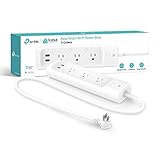
Overview: The Kasa KP303 is TP-Link’s budget-friendly entry into smart power strips, offering three individually controlled smart outlets alongside two always-on USB ports. This ETL-certified surge protector delivers core smart home functionality for users with modest needs. Its compact, minimalist design works seamlessly in home offices, entertainment centers, or bedside setups where controlling a few key devices remotely provides meaningful convenience without unnecessary complexity.
What Makes It Stand Out: Individual outlet control at this price point distinguishes the KP303 from basic smart plugs. Each of the three outlets can be scheduled, voice-controlled, or managed remotely through the polished Kasa app. The ETL-certified surge protection safeguards valuable electronics, while hub-free 2.4GHz Wi-Fi connectivity ensures straightforward setup. The scheduling feature enables intelligent automation, potentially reducing phantom power draw from idle devices.
Value for Money: Priced at $23.38, the KP303 represents exceptional value from a premium brand. It’s roughly 40% less expensive than Kasa’s HS300 model, making it accessible for smart home newcomers. You’re essentially getting three smart outlets, surge protection, and USB charging capability in one integrated device—significantly cheaper than buying separate smart plugs while maintaining ecosystem consistency.
Strengths and Weaknesses: Strengths include TP-Link’s reliable, user-friendly app, robust scheduling options, compatibility with both Alexa and Google Assistant, and the safety of ETL certification. The compact design fits tight spaces. Weaknesses include only three smart outlets (non-expandable), no energy monitoring feature, USB ports that lack app control, and 2.4GHz-only Wi-Fi which may limit placement options in some homes.
Bottom Line: An ideal starter smart power strip for those prioritizing brand reliability and essential features. The KP303 delivers where it counts without premium cost.
2. Kasa Smart Plug Power Strip HS300, Surge Protector with 6 Individually Controlled Smart Outlets and 3 USB Ports, Works with Alexa & Google Home, No Hub Required , White
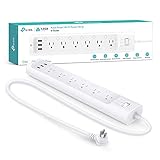
Overview: The Kasa HS300 is TP-Link’s premium smart power strip, doubling down on capacity with six individually controlled smart outlets and three always-on USB ports. Designed for serious smart home enthusiasts, this ETL-certified surge protector adds energy monitoring—a feature power users crave. Its larger footprint accommodates entertainment centers, home offices, or small business environments where comprehensive device management and consumption tracking deliver tangible benefits.
What Makes It Stand Out: Energy monitoring sets the HS300 apart, allowing real-time tracking of power consumption for each outlet through the Kasa app. This data-driven approach helps identify energy hogs and reduce utility bills. Six smart outlets provide extensive control flexibility, while the same reliable voice assistant integration and scheduling capabilities from the KP303 remain intact. The 3-prong grounded plug ensures compatibility with demanding appliances.
Value for Money: At $39.98, the HS300 commands a 70% premium over the KP303, but justifies this with double the smart outlets and energy monitoring. For users managing multiple devices, the per-outlet cost becomes competitive. Compared to buying individual smart plugs with energy monitoring, this integrated solution saves money and reduces clutter. It’s an investment that pays dividends through energy insights.
Strengths and Weaknesses: Strengths include comprehensive energy monitoring, six independently controllable outlets, robust surge protection, TP-Link’s excellent app ecosystem, and broad voice assistant support including Cortana. The ETL certification ensures safety. Weaknesses are the higher price point, larger physical size, lack of smart USB ports, and 2.4GHz Wi-Fi limitation. Some users may find energy data overwhelming.
Bottom Line: Best suited for tech-savvy users wanting detailed energy analytics. The HS300 is worth the premium if you’ll leverage monitoring capabilities.
3. Alitayee Wall Outlet Extender Surge Protector, USB Power Strips with Individual Switches and 15.5W Type-C Fast Charging Ports for Cell Phone,Home,Office,Dorm ETL Listed White

Overview: The Alitayee Wall Outlet Extender takes a refreshingly simple approach to power management, offering three AC outlets with individual physical switches and three USB ports (including USB-C). Unlike the other products reviewed here, this is not a Wi-Fi-enabled smart device—instead, it provides manual control and surge protection at an unbeatable price point. Its wall-mount design saves space while delivering flexible power access for home offices, dorms, or travel scenarios.
What Makes It Stand Out: Individual physical switches on each AC outlet provide immediate, reliable control without app dependency or Wi-Fi concerns. The inclusion of a USB-C port delivering up to 3.1A is notable for budget extenders. With 490 Joules surge protection and ETL/FCC/RoHS certifications, safety isn’t compromised. The 15.5W total USB output intelligently distributes power among devices, making it practical for mixed charging needs.
Value for Money: At $16.98, this is the most affordable option by a significant margin—roughly 30% cheaper than the Kasa KP303. However, it’s crucial to recognize you’re sacrificing smart features for savings. For users who don’t need remote control, this represents excellent value: you’re getting surge protection, USB-C charging, and individual outlet control in a compact package that costs less than most basic power strips with USB.
Strengths and Weaknesses: Strengths include ultra-low price, physical switches for reliable control, USB-C support, comprehensive safety certifications, and fire-resistant PC shell construction. The wall-plug design eliminates cord clutter. Major weaknesses: no app or voice control, no scheduling capabilities, not a true “smart” device, and limited to three AC outlets. The USB-C port won’t charge laptops requiring higher voltage.
Bottom Line: A practical choice for budget-focused users wanting manual outlet control and USB-C charging without smart home complexity. Not for automation enthusiasts.
4. GHome Smart Plug Outlet Extender, USB Wall Charger with 3 Individual Smart Outlets and 3 Smart USB Ports, Works with Alexa Google Home, Surge Protector Plug Extender for APP Control,15A/1800W

Overview: The GHome Smart Outlet Extender carves a unique niche by blending three individually controlled smart outlets with three smart USB ports and three always-on AC outlets. This hybrid approach totals nine available connections, addressing scenarios where some devices need constant power while others benefit from automation. Designed for 2.4GHz Wi-Fi networks, it targets users wanting flexible control without committing to premium brand pricing.
What Makes It Stand Out: The combination of smart and always-on outlets in one device is genuinely innovative—most competitors force an either/or choice. The three smart USB ports, controllable as a group via app, add versatility for charging stations. Voice control through Alexa and Google Home integrates seamlessly, while scheduling capabilities automate lighting, fans, or holiday decorations. The V0-fireproof casing and multiple safety protections demonstrate thoughtful engineering.
Value for Money: At $26.99, the GHome extender positions itself between budget and premium options. You’re getting three smart outlets plus smart USB control—features typically reserved for higher-priced units. The inclusion of always-on outlets adds practical value, effectively giving you two products in one. While the brand lacks TP-Link’s recognition, the feature set justifies the moderate price premium over basic smart plugs.
Strengths and Weaknesses: Strengths include the innovative outlet mix, smart USB control, robust safety features, and competitive pricing. The 15A/1800W rating handles demanding appliances. Weaknesses include only three individually controlled outlets (versus six on some competitors), reliance on a lesser-known brand with potentially less polished app experience, 2.4GHz Wi-Fi limitation, and lack of energy monitoring.
Bottom Line: An excellent versatile solution for users needing both automated and constant power. The GHome extender balances features and cost effectively.
5. Smart Power Strip, Yozisital Surge Protector with 6 Smart Outlets and 4 USB Ports, 5FT Flat Plug Extension Cord for Home Office

Overview: The Yozisital Smart Power Strip delivers maximum connectivity with six individually controlled smart outlets and four USB ports (two USB-A and two USB-C). Its 5-foot flat plug extension cord solves installation challenges behind furniture, making it ideal for home offices, entertainment centers, or aquarium setups. Using the Smart Life app ecosystem, this 12-in-1 solution targets power users wanting comprehensive control without premium brand pricing.
What Makes It Stand Out: The inclusion of two USB-C ports alongside two USB-A connections future-proofs this power strip for modern devices. Six smart outlets match premium competitors, while the flat plug design demonstrates practical installation thinking. The Smart Life app provides scheduling, timers, and remote access. The strip’s 5-foot cord length offers flexibility that wall-mounted units cannot match, and the ability to control aquarium lights, filters, and plant lights showcases its versatility.
Value for Money: At $43.99, Yozisital matches the Kasa HS300’s price point while adding USB-C ports and a lengthy cord. You’re getting six smart outlets and four USB ports—more total connections than most competitors. For users needing both AC and modern USB-C charging control, this represents strong value. However, the lesser-known brand carries some risk regarding long-term app support and reliability compared to established players.
Strengths and Weaknesses: Strengths include six smart outlets, USB-C support, generous 5-foot cord, flat plug design, and competitive feature set. The Smart Life app is widely compatible. Weaknesses include brand recognition concerns, 2.4GHz Wi-Fi only, lack of energy monitoring, potentially less intuitive app experience, and unclear USB power distribution details. The initial setup process appears more complex than Kasa’s streamlined approach.
Bottom Line: A feature-packed alternative for users prioritizing USB-C and cord flexibility over brand reputation. Worth considering for specific needs.
6. Individual Switch Power Strip Surge Protector with 6 Outlets 3 USB(17W USB C), 5Ft Braided Cord Ultra Thin Flat Plug, 13A Wall Mount Extension Cord with Circuit Breaker for Travel Home Office Dorm

Overview: The Individual Switch Power Strip delivers exceptional versatility with six AC outlets and three USB ports, including USB-C, in a travel-friendly design. This 9-in-1 charging station provides 1625W/13A power distribution with 980J surge protection, making it ideal for home offices, dorms, and travel. The braided 5-foot cord and ultra-thin flat plug allow discreet placement behind furniture, while individual switches give you precise control over each outlet’s power state without unplugging devices.
What Makes It Stand Out: The individual outlet switches set this apart from standard power strips, letting you cut power to specific devices while leaving others running—perfect for aquariums, chargers, or intermittent-use equipment. The 0.4-inch ultra-thin flat plug with 45° right-angle design hugs walls tightly, solving clearance issues behind beds and desks. Four widely spaced outlets accommodate bulky adapters without blocking adjacent sockets. The braided cord resists tangling and adds durability compared to standard plastic cables.
Value for Money: At $20.99, this surge protector offers excellent value. Competing strips with individual switches typically cost $25-35, and the addition of USB-C plus braided cord construction makes it particularly competitive. The 980J surge protection rating provides solid defense for everyday electronics without the premium price of professional-grade units.
Strengths and Weaknesses: Strengths include individual outlet control, space-saving flat plug, durable braided cord, widely spaced outlets, and strong surge protection. The 17W total USB output is modest for multiple devices, and the USB-C port won’t charge MacBooks requiring higher voltage. The 13A rating is adequate but lower than some 15A competitors.
Bottom Line: This power strip excels for users needing granular outlet control and space-saving design. It’s perfect for desks, entertainment centers, and travel, though power users may want higher USB output. For $20.99, it’s a smart, versatile choice that solves common placement problems while offering professional-level control.
7. TP-Link Tapo Smart Plug Outlet Extender, Surge Protector, 18W Fast Charging, 3 Individual Smart Outlets, 1x USB-C & 2X USB-A, Smart Night Light, Works w/Apple HomeKit, Alexa & Google Home, Tapo P306

Overview: The TP-Link Tapo P306 transforms any wall outlet into a sophisticated 9-in-1 smart charging hub. With three individually controllable smart outlets, three always-on outlets, and three USB ports (one USB-C), this surge protector delivers 18W fast charging and seamless integration with Apple HomeKit, Alexa, and Google Home. The built-in smart night light adds ambient illumination, making it ideal for bedrooms, offices, and living spaces where both power and automation are essential.
What Makes It Stand Out: Apple HomeKit compatibility distinguishes this from most smart strips that only support Alexa/Google. The 18W USB fast charging rapidly powers modern smartphones, while the three individually controlled outlets let you automate lamps, fans, or other devices independently. The integrated night light with adjustable brightness provides subtle illumination without consuming an additional outlet. TP-Link’s reliable Tapo app offers robust scheduling and timer functions.
Value for Money: At $29.98, this represents strong value for HomeKit users. Standalone smart outlets cost $15-25 each, making this multi-device hub economical. The 18W fast charging and surge protection add further value, though comparable non-HomeKit smart strips cost $5-10 less. You’re paying a modest premium for HomeKit certification and TP-Link’s ecosystem reliability.
Strengths and Weaknesses: Strengths include HomeKit support, 18W fast charging, individual smart outlet control, night light, and brand reliability. Weaknesses include only three smart outlets (three are always-on), requiring a mounting screw for stability, and needing a 2.4GHz WiFi connection. Setup may challenge less tech-savvy users.
Bottom Line: The Tapo P306 is the top choice for Apple HomeKit households seeking integrated smart power management. Its fast charging and individual outlet control make it versatile, though Android-centric users can find similar features for less. For $29.98, it delivers premium smart home convenience with proven reliability.
8. GHome Smart Plug Outlet Extender, USB Wall Charger with 3 Individual Smart Outlets and 3 Smart USB Ports, Works with Alexa Google Home, Surge Protector Plug Extender for APP Control,15A/1800W

Overview: The GHome Smart Power Strip offers comprehensive smart control with nine total outlets: three individually controlled smart outlets, three group-controlled smart USB ports, and three always-on standard outlets. Rated for 15A/1800W, it handles high-wattage appliances like air conditioners while providing surge protection and voice control via Alexa and Google Home. The timer and scheduling functions automate daily routines, making it ideal for modern homes and offices seeking energy efficiency and convenience.
What Makes It Stand Out: The flexible control scheme allows individual management of three outlets while grouping USB ports for unified control—a practical configuration for charging stations. The 15A/1800W rating exceeds many competitors, safely powering heavy-duty appliances. Timer and schedule functions include random mode for security lighting when away. The compact design wall-mounts easily, saving valuable desk or floor space while keeping cables organized.
Value for Money: Priced at $26.99, this delivers exceptional value. Competing smart strips with similar outlet counts and 15A ratings typically cost $35-45. The combination of individual smart control, high power capacity, and surge protection at this price point makes it budget-friendly without sacrificing core functionality. The USB ports add convenience for device charging without needing separate adapters.
Strengths and Weaknesses: Strengths include high 15A power rating, flexible individual/group control, timer/scheduling features, safety certifications, and competitive pricing. Weaknesses include 2.4GHz WiFi only (no 5GHz), USB ports limited to group control only, and GHome’s smaller brand ecosystem compared to TP-Link or Kasa. App interface may be less polished than premium brands.
Bottom Line: This GHome strip is a powerhouse for Alexa/Google users needing high-wattage capacity and smart automation. The individual outlet control and robust scheduling make it perfect for home theaters, offices, and kitchens. At $26.99, it’s an affordable, feature-rich alternative to premium brands, ideal for budget-conscious smart home builders.
9. Smart Strip ECG-7MVR Energy Saving Surge Protector with Autoswitching Technology, 7 Outlet

Overview: The Smart Strip ECG-7MVR employs innovative autoswitching technology to eliminate phantom power drain, automatically cutting power to peripheral devices when a master device turns off. With seven total outlets—one control, two always-on, and four switched—it provides intelligent energy management without complex setup. The 4-foot cord with right-angle flat plug fits behind furniture, while the adjustable sensitivity screw ensures compatibility with various devices, from computers to entertainment systems.
What Makes It Stand Out: The autoswitching technology offers true “set and forget” energy savings, paying for itself over time by reducing standby power consumption. Unlike smart strips requiring WiFi and apps, this works automatically using power sensing, making it ideal for non-tech users. The adjustable threshold fine-tunes activation sensitivity, preventing accidental shutoffs with low-power devices. This simplicity and reliability have made it a long-standing favorite for energy-conscious consumers.
Value for Money: At $21.99, it’s competitively priced for a specialized energy-saving strip. While standard surge protectors cost $15-25, the autoswitching feature adds tangible long-term value through reduced electricity bills. For users with computer setups or home theaters, the savings can recoup the cost within a year. However, modern smart strips offer more control for similar prices, making this best for those prioritizing simplicity over features.
Strengths and Weaknesses: Strengths include automatic energy savings, adjustable sensitivity, flat plug design, simple operation, and proven reliability. Weaknesses include no USB ports, limited outlet spacing, lack of manual control for switched outlets, and dated design. The 4-foot cord is shorter than many competitors, and there’s no surge protection joules rating mentioned.
Bottom Line: This Smart Strip excels for users wanting effortless energy savings without smart home complexity. It’s perfect for PC workstations and TV setups where peripherals should power down automatically. While lacking modern USB charging and app control, its reliable autoswitching justifies the $21.99 price for eco-conscious buyers seeking simplicity.
10. GHome Smart Plug Outlet Extender, Surge Protector with 3 Individually Controlled Smart Power Strips and 3 USB Ports, Works with Alexa & Google Home, 15A/1800W, White

Overview: The GHome Smart Outlet Extender provides voice-controlled power management through Alexa and Google Home integration. This 9-in-1 device features three individually controlled smart outlets, three group-controlled USB ports, and three always-on outlets, all rated for 15A/1800W. The wall-mountable design saves space while surge protection and multiple safety features guard your electronics. Remote app control and scheduling allow automation from anywhere, making it suitable for modern smart homes and offices.
What Makes It Stand Out: The space-saving wall-mount design integrates seamlessly into any room, keeping floors and desks clutter-free while providing comprehensive smart control. The combination of individual smart outlets for appliances like coffee makers or lamps with always-on outlets for essential devices like routers offers practical flexibility. Voice command simplicity eliminates the need to manually switch devices, while the scheduling function creates automated routines that enhance convenience and security.
Value for Money: At $26.99, this GHome model matches its sibling product’s competitive pricing, undercutting major brands like TP-Link while delivering similar core features. The 15A rating and surge protection add premium value at a budget price point. However, the lack of individual USB control and 5GHz WiFi support mirrors limitations of other value-tier smart strips, making it best for users prioritizing outlet control over USB management.
Strengths and Weaknesses: Strengths include voice control integration, high 15A power capacity, wall-mountable design, comprehensive safety protections, and scheduling capabilities. Weaknesses include 2.4GHz WiFi limitation, USB ports only offering group control, no energy monitoring, and GHome’s less established brand reputation. Setup may require troubleshooting for some networks.
Bottom Line: This GHome extender is a solid, affordable entry into smart home power management for Alexa/Google users. Its high power rating and individual outlet control make it versatile for various appliances, while the mounting design saves space. At $26.99, it’s a practical choice for those wanting smart convenience without premium brand pricing, though tech enthusiasts may miss advanced features.
Understanding Smart Surge Protectors with Individual Outlet Control
Smart surge protectors represent the evolution of power management, integrating advanced circuitry with wireless connectivity to transform a passive safety device into an active energy management hub. The “individual outlet control” feature is the game-changer—each receptacle operates as an independent controllable switch, complete with its own power monitoring and scheduling capabilities.
How They Differ from Traditional Power Strips
Traditional surge protectors are reactive devices. They sit passively until a voltage spike occurs, then divert excess energy to protect connected equipment. Their only active feature is a master on/off switch. Smart surge protectors, conversely, are proactive energy managers. They continuously monitor power consumption, respond to remote commands, execute complex schedules, and provide detailed analytics—all while maintaining their core protective functions.
Think of it this way: a conventional power strip is like a light switch that controls your entire house’s lighting at once. A smart surge protector with individual control is like having a smart lighting system where you can dim, schedule, and control each bulb independently, except for your appliances.
The Technology Behind Individual Outlet Control
Each outlet contains a miniature relay switch controlled by a microprocessor. This processor communicates with the device’s main controller via an internal bus system, receiving commands from your Wi-Fi network and reporting back status and power consumption data. Advanced models feature solid-state relays that operate silently and last for hundreds of thousands of cycles, far exceeding the lifespan of mechanical switches. The power monitoring is typically handled by dedicated integrated circuits that measure voltage, current, and power factor with accuracy within 1-2% of utility-grade meters.
The Energy-Saving Science Behind Smart Control
The financial and environmental impact of these devices extends beyond simple convenience. They address one of the most persistent problems in residential energy efficiency: standby power consumption.
Phantom Load Elimination
Phantom load, also called vampire power, occurs when devices draw electricity while appearing off. Your microwave’s clock, your TV’s instant-on feature, your printer’s sleep mode—these collectively consume 5-10 watts per device, 24 hours a day. A smart surge protector lets you completely disconnect these devices from power during predetermined hours. For example, cutting power to six devices drawing 8 watts each for 16 hours daily saves approximately 280 kWh annually. At $0.13 per kWh, that’s $36 saved per year from just one smart surge protector in your entertainment center.
Scheduling and Automation Benefits
The real power lies in intelligent scheduling. Programming your home office equipment to shut down completely at 7 PM and restart at 7 AM eliminates 12 hours of standby consumption. Vacation mode features can randomize outlet cycling to simulate occupancy while ensuring non-essential devices remain completely off. Geofencing capabilities take this further—when your smartphone leaves home, the surge protector automatically cuts power to selected outlets, then restores them when you return.
Key Features That Define Top-Tier Smart Surge Protectors
Not all smart surge protectors are created equal. The market spans from basic Wi-Fi-enabled strips to sophisticated power management centers. Understanding the feature spectrum helps identify what matches your needs.
App-Based Control and User Interface
The companion app serves as your command center. Premium interfaces offer real-time power visualization with wattage graphs, cost calculators, and historical trend analysis. Look for apps that support grouping multiple devices across rooms, creating scenes (e.g., “Movie Night” powers only TV, soundbar, and streaming device), and setting cascading rules where turning on one outlet automatically shuts off another. The best apps work locally without cloud dependency, ensuring functionality during internet outages.
Voice Assistant Integration
Alexa, Google Assistant, and Siri compatibility transforms these devices into seamless smart home components. Advanced integration goes beyond simple on/off commands. You can ask, “Alexa, how much power is my office equipment using?” or create routines: “Hey Google, I’m going to bed” triggers shutdown of entertainment devices while keeping essential items powered. Matter-compatible devices promise even deeper integration across ecosystems, eliminating the fragmentation that currently plagues smart home devices.
Energy Monitoring and Reporting
Granular energy monitoring per outlet separates premium models from basic units. This feature reveals which devices are efficiency hogs. You might discover your cable box consumes 28W continuously, while your smart TV uses only 0.5W in standby. Advanced reporting includes cost projections, carbon footprint calculators, and exportable data for spreadsheet analysis. Some utilities partner with manufacturers to provide rebates based on verified energy savings from these reports.
USB Charging Ports and Smart Features
Integrated USB ports with smart control add another layer of utility. These ports can charge devices at optimized rates, stop charging when batteries reach full capacity to prevent trickle charging waste, and even schedule charging during off-peak utility hours if you’re on time-of-use rates. USB-C PD (Power Delivery) ports supporting up to 100W are becoming standard, capable of charging laptops directly without bulky power bricks.
Technical Specifications Decoded
Understanding the electrical ratings ensures you select a device that protects effectively while handling your equipment’s demands.
Joule Rating and Clamping Voltage
Joule rating indicates energy absorption capacity before failure. For comprehensive home theater or office protection, seek ratings of 2000+ joules. Clamping voltage—the threshold where protection activates—should be 400V or lower (UL 1449 standard). Lower clamping voltages provide better protection but may trigger more frequently during minor fluctuations. Premium units use hybrid surge protection combining metal oxide varistors (MOVs) with gas discharge tubes for faster response and longer lifespan.
Response Time and UL Certification
Response time measures how quickly protection activates. Look for specifications under 1 nanosecond. UL 1449 certification is non-negotiable—it ensures the device meets Underwriters Laboratories’ safety standards for surge protective devices. Advanced certifications include UL 1449 3rd Edition, which introduced more stringent testing for thermal protection and failure modes. Some manufacturers also seek IEEE compliance for additional credibility.
Wi-Fi Standards and Connectivity Requirements
Most devices operate on 2.4GHz Wi-Fi networks for better range through walls. However, dual-band 2.4/5GHz support indicates more robust hardware. Thread-enabled devices create a mesh network, improving reliability in large homes. Bluetooth is often included for initial setup, creating a direct connection for configuration without network dependency. For commercial applications, Power over Ethernet (PoE) models eliminate the need for separate power adapters.
Smart Home Ecosystem Compatibility
The smartest surge protector becomes frustratingly dumb if it doesn’t integrate with your existing smart home infrastructure.
Matter, Thread, and Emerging Protocols
Matter, the new universal smart home standard backed by Apple, Google, Amazon, and Samsung, promises true interoperability. Matter-certified surge protectors will work seamlessly across all major platforms without separate hubs or apps. Thread, the underlying mesh networking protocol, provides ultra-low power consumption and self-healing network capabilities. Early adopters should prioritize Matter/Thread compatibility to future-proof their investment.
Cross-Platform Integration Challenges
Current fragmentation means an Alexa-enabled surge protector might not appear in Apple HomeKit without complex workarounds like HomeBridge. IFTTT (If This Then That) support bridges some gaps, allowing creative automations like “When energy consumption exceeds 500W, send a notification and flash smart lights.” Evaluate your primary ecosystem and verify native support before purchasing. Manufacturer APIs for tech-savvy users enable custom integrations with home automation platforms like Home Assistant.
Installation and Setup Best Practices
Proper installation maximizes both protection effectiveness and smart feature reliability.
Network Requirements and Placement
Place your smart surge protector within strong Wi-Fi signal range—ideally above 70% signal strength. Avoid locating them behind metal entertainment centers or in basements with poor coverage. If using multiple units, space them throughout your home to create a robust mesh if they support Thread. For maximum surge protection, connect them directly to wall outlets rather than daisy-chaining. The first device in the chain provides the primary protection; subsequent strips receive diminished protection.
Initial Configuration and Firmware Updates
During setup, most devices create a temporary Wi-Fi network for initial pairing. After connecting, immediately check for firmware updates. Manufacturers regularly release updates patching security vulnerabilities and adding features. Enable automatic updates if available. For security, change default passwords and use a separate IoT network segment with strong WPA3 encryption. Document which device connects to each outlet—naming outlets in the app prevents confusion later.
Maximizing Energy Savings: Strategies and Use Cases
Strategic deployment transforms these devices from gadgets into genuine money-saving tools.
Home Office Optimization
Connect your monitor, printer, desk lamp, speakers, and phone charger to controlled outlets. Keep your computer and router on always-on outlets. Schedule a “workday shutdown” for 6 PM that cuts power to everything except essentials. The printer alone, consuming 5-10W in standby, costs $5-$10 annually in phantom load. Multiply across five devices, and you’re saving $25-$50 per year in one room.
Entertainment Center Management
This is where smart surge protectors shine brightest. Cable/satellite boxes are notorious energy vampires, often consuming 20-30W continuously. Program the surge protector to cut power to the TV, soundbar, streaming device, and game console at midnight, but keep the DVR powered for recordings. Create a “watch TV” scene that powers only necessary components while leaving the game console off. The scheduling ensures you never forget to flip the switch.
Kitchen Appliance Control
Small kitchen appliances like coffee makers, toasters, and microwaves draw standby power for clocks and displays. While you can’t schedule these like entertainment devices, you can manually cut power via app after morning use. For coffee makers with thermal carafes, schedule the outlet to turn off two hours after brewing, preventing the heating element from cycling all day. This strategy saves approximately 50-100 kWh annually.
Safety Considerations and Best Practices
Intelligent features must never compromise fundamental electrical safety.
Overload Protection and Fire Safety
Smart surge protectors include thermal fuses that permanently disconnect if internal temperatures exceed safe limits. Some feature ceramic-encased MOVs that won’t ignite during catastrophic surge events. Always respect the ampere rating—typically 15A for residential units. Exceeding this trips the internal breaker, requiring manual reset. Never connect high-draw appliances like space heaters or air conditioners to these devices unless specifically rated for such loads.
Cybersecurity and Data Privacy
Any internet-connected device presents potential vulnerabilities. Reputable manufacturers undergo third-party security audits and publish privacy policies detailing data collection. Look for features like local-only control modes, two-factor authentication, and encrypted communications. Disable remote access if you only need local network control. Regularly review which third-party services have access to your device through integrations like IFTTT or SmartThings.
Cost-Benefit Analysis: Are They Worth the Investment?
Premium smart surge protectors range from $40 to $120, significantly more than basic $15 power strips. The value proposition depends on your usage patterns and electricity rates.
Calculating Your ROI
Start by measuring phantom loads using a plug-in meter or the surge protector’s own monitoring. Identify devices drawing more than 5W in standby. Calculate annual consumption: Watts × 24 hours × 365 days ÷ 1000 = kWh/year. Multiply by your electricity rate. If you can save $30-$50 annually per surge protector, the payback period is 1-3 years. The surge protection itself, which can prevent thousands in equipment damage, provides additional unquantified value.
Utility Rebates and Incentive Programs
Many utilities offer instant rebates for smart power strips, particularly in states with aggressive energy efficiency mandates. California’s Energy Upgrade California program, New York’s Con Edison marketplace, and similar initiatives often subsidize 50-75% of the cost. Check the Database of State Incentives for Renewables & Efficiency (DSIRE) for local programs. Some utilities even provide free units to customers participating in demand response programs.
Troubleshooting Common Issues
Even reliable devices encounter problems. Understanding solutions prevents frustration.
Connection drops are the most frequent complaint. This often stems from weak Wi-Fi signals or router channel congestion. Try changing your router’s 2.4GHz channel to 1, 6, or 11 to reduce interference. If outlets become unresponsive, power cycle the unit by unplugging it for 30 seconds. Firmware glitches sometimes require factory resets—usually accomplished by holding the power button for 10+ seconds. Energy monitoring inaccuracies can be calibrated in some apps by comparing against a known-accurate plug-in meter and applying correction factors.
Future Trends in Smart Power Management
The next generation of smart surge protectors will function as distributed energy resource (DER) managers. With bidirectional EV charging becoming mainstream, these devices will intelligently schedule charging based on grid demand, solar generation, and time-of-use rates. Integration with home battery systems like Tesla Powerwall will allow them to shed loads automatically during peak rate periods or grid outages. AI-driven pattern recognition will learn your habits and suggest optimization strategies, potentially negotiating with your utility for demand response payments automatically.
Frequently Asked Questions
What exactly is a smart surge protector with individual outlet control?
It’s an advanced power strip that combines surge protection with independent, remote-controllable outlets. Each receptacle can be turned on or off via smartphone app, voice command, or automated schedule while protecting connected devices from voltage spikes and electrical noise.
How much money can I realistically save on my electric bill?
Typical households save $30-$75 annually per device, depending on the number of electronics controlled and local electricity rates. Entertainment centers and home offices offer the fastest payback, with some users recouping the purchase cost in under two years through phantom load elimination alone.
Are these devices safe to use with expensive electronics?
Yes, provided they carry UL 1449 certification and adequate joule ratings (2000+ for valuable equipment). In fact, they offer superior protection to basic power strips while adding energy-saving benefits. Always verify the clamping voltage is 400V or lower for optimal protection.
Will the smart features work during a power outage or internet failure?
During power outages, the unit obviously cannot operate. However, most quality devices retain their programming and will resume schedules when power returns. For internet failures, many support local network control via Bluetooth or direct Wi-Fi connection, though cloud-dependent features like remote access and voice control will be unavailable until connectivity restores.
What’s the difference between a smart surge protector and multiple smart plugs?
Smart surge protectors offer integrated surge protection, centralized control in one app, cleaner cable management, and typically lower cost per outlet. Smart plugs provide flexibility for distributed devices but lack coordinated protection and create Wi-Fi network clutter with multiple devices.
How many devices can I safely connect to one unit?
Follow the ampere rating, usually 15A for residential models. This translates to roughly 1800 watts total. Count the wattage of all devices, not just the number of plugs. High-draw appliances like heaters or power tools often exceed safe limits and should connect directly to wall outlets.
Do I need a smart home hub for these to work?
Most modern units connect directly to Wi-Fi and work standalone via manufacturer apps. However, hub-based systems like SmartThings or Hubitat offer more advanced automation and local control. Matter-compatible devices will work seamlessly across ecosystems without proprietary hubs.
Can I control outdoor devices with an indoor smart surge protector?
Only if the unit is specifically rated for outdoor use and has weather-resistant outlets. Standard indoor units lack moisture protection and pose serious shock hazards outdoors. For outdoor control, use weather-resistant smart plugs or outdoor-rated smart surge protectors with appropriate IP ratings.
What’s the lifespan of these devices compared to regular surge protectors?
The smart components typically last 5-7 years before obsolescence or failure. The surge protection elements degrade with each spike absorbed. Quality units include LED indicators showing protection status—replace immediately when this light extinguishes. Regular power strips without indicators should be replaced every 2-3 years in surge-prone areas.
Are there any cybersecurity risks with connecting these to my network?
Any IoT device presents potential vulnerabilities. Mitigate risks by purchasing from reputable brands with documented security practices, using a separate IoT network segment, enabling automatic firmware updates, and disabling unused features like remote access if not needed. Never use default passwords and enable two-factor authentication when available.