Every time your child takes a sip from the kitchen tap, they could be consuming thousands of invisible plastic particles. Microplastics—fragments smaller than 5 millimeters—have infiltrated municipal water supplies, bottled water, and even remote mountain springs. While the long-term health impacts are still being studied, early research links these persistent particles to inflammation, hormonal disruption, and cellular damage. For families, this isn’t just another environmental headline; it’s a daily exposure that demands immediate action. Smart water purifiers represent the evolution of home filtration—combining advanced membrane technology with IoT connectivity to not only remove these contaminants but provide real-time assurance that your family’s water is truly safe.
Top 10 Smart Water Purifiers for Family Wellness
Detailed Product Reviews
1. Bluevua RO100ROPOT-UV Reverse Osmosis System Countertop Water Filter - 6 Stage Purification with UV and Remineralization, Counter RO Filtration, Portable Water Purifier

Overview: The Bluevua RO100ROPOT-UV represents premium countertop water purification with its comprehensive 6-stage filtration system. This plug-and-play unit combines reverse osmosis with UV sterilization and remineralization, certified by WQA against NSF/ANSI/CAN 372 and tested by SGS for lead-free construction. It effectively tackles TDS, PFOA/PFOS, chlorine, fluoride, arsenic, and lead while reintroducing beneficial minerals.
What Makes It Stand Out: The standout feature is the genuine 6-stage process culminating in UV treatment and remineralization—rare in countertop units. Unlike competitors using plastic reservoirs, Bluevua employs a high borosilicate glass carafe, eliminating secondary contamination risks. The intelligent power-saving standby mode and impressive 2:1 pure-to-drain ratio demonstrate thoughtful engineering. Filter life monitoring displays real-time water quality and replacement schedules, simplifying maintenance.
Value for Money: At $409, this is a premium investment that delivers bottled-quality water for roughly $0.56 daily over a two-year filter lifespan. When compared to purchasing bottled water, it pays for itself within months. The included 1-year warranty and ClimatePartner certification add tangible value for eco-conscious consumers seeking sustainable hydration without plumbing modifications.
Strengths and Weaknesses: Strengths include superior 6-stage filtration, UV sterilization, remineralization, glass carafe construction, certified safety, and automated power management. The 12-24 month filter lifespan reduces maintenance frequency. Weaknesses are the higher price point relative to non-UV models and a 2:1 ratio that lags behind newer high-efficiency competitors. The countertop footprint may challenge smaller kitchens.
Bottom Line: For health-focused households prioritizing certified purification, mineral balance, and zero installation, the RO100ROPOT-UV justifies its premium price through exceptional filtration quality and sustainable design.
2. Bluevua RO100ROPOT Reverse Osmosis System Countertop Water Filter, 5 Stage Purification, Counter RO Filtration, 2:1 Pure to Drain, Purified Tap Water, Portable Water Purifier for Home

Overview: The Bluevua RO100ROPOT delivers comprehensive countertop filtration without the UV premium. This 5-stage RO system removes 99.9% of contaminants including heavy metals, chlorine, and chemical pollutants, while its remineralization stage restores essential minerals for improved taste and health benefits. The plug-and-play design requires zero plumbing.
What Makes It Stand Out: The system shares the brand’s signature high borosilicate glass carafe, eliminating plastic contamination concerns. Its power-saving standby mode and 2:1 pure-to-drain ratio optimize resource efficiency. The integrated filter life monitor tracks both water quality and cartridge status across the 12-24 month lifespan, making maintenance predictable and straightforward.
Value for Money: Priced at $389, this model offers nearly identical performance to its UV sibling at a $20 savings. For municipal water supplies already treated for microorganisms, the UV stage provides minimal practical benefit. The long filter life translates to approximately $0.53 daily cost, delivering significant savings versus bottled water while reducing plastic waste.
Strengths and Weaknesses: Strengths include the glass carafe, remineralization capability, certified contaminant removal, automated power management, and included warranty. The maintenance-free installation and ClimatePartner certification appeal to eco-conscious users. Weaknesses mirror the UV model: a 2:1 efficiency ratio that falls short of newer systems, and a premium price point that may deter budget shoppers.
Bottom Line: Ideal for households seeking Bluevua’s build quality and remineralization without paying for unnecessary UV sterilization, this model balances performance and value effectively.
3. Whole House Water Filter System, 3-Stage Home Water Filtration System Highly Reduces Chlorine Odor,Taste, Delivers Crisp Water for Healthier Skin, 3/4" Ports with 2 Valves, Extra 2 Sets Filter Supply
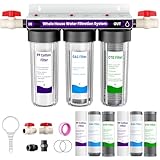
Overview: This 3-stage whole-house system addresses water quality at the point of entry, delivering 15 GPM flow rate to every tap. Designed for both city and well water, it reduces chlorine, rust, odors, and unpleasant tastes throughout the home. The included two spare filter sets provide 12-24 months of coverage.
What Makes It Stand Out: Unlike RO systems, this unit preserves beneficial minerals while improving aesthetic water quality. The individual shut-off valves for each stage enable cartridge replacement in under 30 seconds without tools. The 0.5-micron filtration captures more impurities than standard whole-house filters, while protecting appliances from scale and sediment damage.
Value for Money: At $193.99, this system costs less than half of most countertop RO units while serving the entire home. The included spare filters represent substantial added value, reducing first-year operating costs to near zero. For households primarily concerned with chlorine, taste, and appliance protection rather than drinking water purification, the ROI is immediate.
Strengths and Weaknesses: Strengths include whole-home coverage, high flow rate, tool-free maintenance, included spare filters, and appliance protection benefits. The system improves skin and hair quality by removing harsh chemicals. Weaknesses: it doesn’t reduce TDS or remove contaminants like heavy metals, fluoride, or arsenic. Installation requires basic plumbing, and it’s unsuitable for serious drinking water purification needs.
Bottom Line: Perfect for homeowners wanting comprehensive aesthetic improvement and appliance protection across all water outlets, but not a substitute for dedicated drinking water filtration systems.
4. Bluevua RO100ROPOT-Lite(UV) Countertop Reverse Osmosis Water Filter System, 7-Stage Purification with UV and Remineralization, 3:1 Pure to Drain, Portable Water Purifier (Blue)

Overview: The ROPOT-Lite(UV) condenses advanced purification into a compact countertop unit perfect for smaller households. This 7-stage system combines RO filtration, UV sterilization, and remineralization with an improved 3:1 pure-to-drain ratio. Certified lead-free and SGS-tested, it delivers premium water quality while conserving resources.
What Makes It Stand Out: The enhanced 3:1 efficiency ratio uses 50% less water than standard RO systems. Smart LED controls offer one-touch operation and real-time water quality monitoring, while the innovative fruit infuser transforms the glass carafe into a hydration tracker and flavor enhancer. Annual filter changes at $0.22 daily cost represent exceptional convenience.
Value for Money: At $319, this Lite model undercuts the standard UV version by $90 while offering superior water efficiency and smarter features. The yearly maintenance schedule reduces ongoing costs and effort compared to 12-month replacement cycles. For singles or couples, the compact design maximizes counter space without sacrificing filtration quality.
Strengths and Weaknesses: Strengths include best-in-class 3:1 efficiency, 7-stage filtration, UV sterilization, smart monitoring, glass carafe with infuser, and space-saving design. The certified construction ensures safety. Weaknesses: limited capacity suits only 1-2 people, making it impractical for families. The compact size may mean more frequent refilling.
Bottom Line: An excellent choice for individuals or couples prioritizing water efficiency, smart features, and compact design without compromising on purification quality.
5. Aigerri Portable Countertop Reverse Osmosis Water Filter with UV, 5-Stage RO Filtration System, No Installation Needed, 5:1 Pure to Drain Ratio, Compact Water Purifier for Home, Office & RV

Overview: The Aigerri system redefines efficiency in portable RO filtration with an industry-leading 5:1 pure-to-drain ratio. This 5-stage countertop unit includes UV sterilization and delivers 529 gallons of purified water—equivalent to 6,000 plastic bottles. The dual-tank design holds 5L raw and 2L purified water, requiring zero installation.
What Makes It Stand Out: The remarkable 5:1 ratio produces five gallons of clean water per gallon of waste, setting a new standard for eco-friendly operation. True portability allows use in homes, offices, RVs, and even camping trips. The system handles tap or well water up to 500 TDS, converting it to pure drinking water without chemical byproducts.
Value for Money: At $249.98, this is the most affordable UV-RO system reviewed, undercutting competitors by $70-160. The included two filters provide substantial initial value, while the extreme efficiency minimizes water costs. Daily operating expenses remain low, and the versatility across multiple environments maximizes utility.
Strengths and Weaknesses: Strengths include unmatched 5:1 efficiency, UV sterilization, true portability, large capacity tanks, zero installation, and competitive pricing. The system effectively removes heavy metals, chlorine, and sediments. Weaknesses: the lesser-known brand may raise durability questions, likely uses more plastic components than Bluevua, and warranty details are less prominent.
Bottom Line: For budget-conscious, eco-minded consumers needing portable, high-efficiency purification, Aigerri delivers exceptional value despite the brand recognition trade-off.
6. Powerful Air Purifiers for Home Air Purifier Up to 2400 Ft² with Smart WiFi Air Quality Monitor Sleep Mode, Air Purifier for Bedroom Large Room Office Living Room HAP602WF

Overview: The HAP602WF air purifier offers exceptional whole-home coverage up to 2,400 square feet at a remarkably low price point. This unit features a built-in PM2.5 sensor with real-time air quality display, three-stage filtration, and intelligent auto-mode that adjusts fan speed based on detected pollution levels. Designed for bedrooms, living rooms, or offices, it effectively removes airborne dust, pollen, pet dander, and smoke.
What Makes It Stand Out: The combination of massive coverage area and sub-$90 pricing is virtually unmatched. The color-coded air quality indicator (green to red) provides instant visual feedback, while WiFi connectivity enables remote monitoring. Sleep mode operates at whisper-quiet levels, creating an ideal sleeping environment. The auto-mode function intelligently responds to cooking odors or outdoor pollution spikes without manual intervention.
Value for Money: At $89.99, this purifier costs 50-70% less than competitors with similar coverage. While filters require replacement every 3-6 months, the low initial investment makes it accessible for budget-conscious households. The energy-efficient operation and lack of installation costs further enhance its affordability compared to whole-house HVAC systems.
Strengths and Weaknesses: Strengths include outstanding price-to-coverage ratio, intelligent auto-adjustment, ultra-quiet sleep mode, and real-time air quality monitoring. Weaknesses involve frequent filter replacements, limited brand recognition, and reduced effectiveness on surface pet hair. The unit excels at airborne particle removal but isn’t a substitute for vacuuming.
Bottom Line: The HAP602WF is an excellent value for apartments and homes needing comprehensive air purification without premium pricing. It’s ideal for users prioritizing smart features, quiet operation, and large-area coverage on a budget.
7. Waterdrop TSU 0.01 Micron Ultra Filtration Under Sink Water Filter System, 3-Stage Tankless Under Sink Water Filtration System with Faucet, Smart Panel, Not Lower TDS, Drilling Required

Overview: The Waterdrop TSU ultrafiltration system provides three-stage filtration down to 0.01 microns for municipal tap water without reducing beneficial TDS. This tankless under-sink unit removes chlorine, PFAS, heavy metals, and odors while retaining essential minerals. The smart panel displays filter lifespan, and the system operates without electricity or water waste, making it an eco-friendly choice for health-conscious households.
What Makes It Stand Out: The 24-month UF filter lifespan significantly reduces maintenance frequency compared to competitors requiring annual changes. The tankless design saves under-sink space and eliminates stagnant water concerns. Smart panel indicators remove guesswork from filter replacement timing. Importantly, it preserves healthy minerals that reverse osmosis systems strip away, delivering better-tasting water for drinking and cooking.
Value for Money: At $179.99, the TSU positions itself between basic carbon filters and premium RO systems. The extended filter lifespan (6 months for PP, 12 months for CT, 24 months for UF) translates to lower annual maintenance costs. With no electricity costs and zero water waste, long-term operational expenses are minimal, offering compelling value for mineral-retaining filtration.
Strengths and Weaknesses: Strengths include exceptional filter longevity, mineral preservation, space-saving tankless design, smart monitoring, and no water waste. Weaknesses involve inability to reduce TDS, incompatibility with well/hot water, required drilling for installation, and limited filtration compared to RO systems for dissolved solids.
Bottom Line: Perfect for municipal water users wanting improved taste and contaminant reduction without sacrificing minerals. The TSU excels in low-maintenance operation and is ideal for those prioritizing mineral retention over TDS reduction.
8. Waterdrop G3P800 Reverse Osmosis System, 800 GPD Fast Flow, NSF/ANSI 42 & 53 & 58 & 372 Certified, 3:1 Pure to Drain, Tankless Under Sink RO Water Filter System, LED Purifier, Smart Faucet

Overview: The Waterdrop G3P800 represents the pinnacle of under-sink reverse osmosis technology, delivering 800 gallons per day through a 10-stage filtration process. Certified to NSF/ANSI standards 42, 53, 58, and 372, this tankless system reduces TDS, PFAS, fluoride, heavy metals, and 1,000+ contaminants. The 3:1 pure-to-drain ratio conserves water while the smart faucet displays real-time TDS levels.
What Makes It Stand Out: The 800 GPD capacity fills a cup in 5 seconds—far exceeding standard 50-75 GPD systems. Multiple NSF certifications provide verified performance assurance. The integrated LED sterilization lamp offers 50-year lifespan and activates automatically during water flow. The tankless design prevents secondary contamination while saving 70% of under-sink space compared to conventional systems.
Value for Money: At $849, the G3P800 commands a premium but delivers professional-grade performance. The high efficiency (3:1 ratio vs typical 1:3) saves thousands of gallons annually. Combined with low maintenance needs and certified contaminant reduction, it eliminates bottled water costs for large families, typically paying for itself within 2-3 years while providing superior safety.
Strengths and Weaknesses: Strengths include exceptional flow rate, comprehensive certifications, water efficiency, space-saving design, smart monitoring, and LED sterilization. Weaknesses involve high upfront cost, complex installation requiring professional help, significant under-sink space requirements, and filter replacement expense for 10 stages.
Bottom Line: For families demanding the highest water purity with convenience, the G3P800 justifies its premium price through performance, efficiency, and certified safety. It’s a long-term investment in health and sustainability.
9. AquaTru Carafe Smart Alkaline Countertop Water Purifier | App-Connected 4-Stage Reverse Osmosis System with Glass Carafe Removes Forever Chemicals, Lead & Fluoride | Adds Minerals | No Plumbing
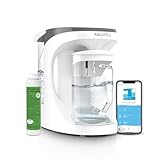
Overview: The AquaTru Carafe combines four-stage reverse osmosis filtration with alkaline remineralization in a countertop unit requiring no plumbing. Independently certified to remove 84 contaminants including PFAS, lead, fluoride, and microplastics, this smart system adds beneficial calcium and magnesium back into purified water. WiFi connectivity enables app-based filter tracking and water quality monitoring.
What Makes It Stand Out: The alkaline mineral boost creates pH-balanced, great-tasting water that many RO systems lack. App integration provides proactive filter life alerts and usage analytics. The glass carafe eliminates plastic contact with purified water. Zero-installation design makes it perfect for renters, while each filter set replaces 4,500 plastic bottles, delivering exceptional environmental impact.
Value for Money: At $445, the AquaTru Carafe sits in the premium countertop category but avoids $200+ installation costs. Filter lifespan ranges from 6 months to 2 years, reducing maintenance frequency. For those unable to modify plumbing, it provides RO-level purification at a fraction of under-sink system costs when factoring in installation, making it financially competitive.
Strengths and Weaknesses: Strengths include certified contaminant removal, alkaline remineralization, smart app connectivity, no-installation convenience, and eco-friendly design. Weaknesses involve countertop space requirements, glass carafe fragility, higher price than basic filters, and reliance on manual water filling.
Bottom Line: Ideal for renters, apartment dwellers, or anyone seeking premium purified alkaline water without permanent installation. The AquaTru Carafe excels in convenience, smart features, and health-focused water enhancement.
10. ecoviva water Mate 3 Countertop Reverse Osmosis Water Filter System, 8 Stage Purification, 3:1 Pure to Drain, No Installation Required, Smart Sensor Water Dispensing, Reduce TDS, RO Water Purifier

Overview: The ecoviva Water Mate 3 delivers reverse osmosis purification in a plug-and-play countertop design at an aggressive $179.99 price point. This eight-stage system reduces TDS while adding beneficial minerals, achieving a 3:1 pure-to-drain ratio. Smart sensor dispensing enables hands-free operation, while auto-flush technology maintains filter performance. The borosilicate glass kettle includes measurement markings for convenience.
What Makes It Stand Out: The sub-$200 price for a countertop RO system disrupts the market, making reverse osmosis accessible to budget-conscious buyers. Auto-sensing dispensing automatically fills containers without manual button pressing. The ultra-low $0.14 daily operating cost and 3:1 efficiency ratio minimize waste. Eight-stage filtration with remineralization matches premium systems at a fraction of the cost.
Value for Money: At $179.99, this system costs less than most non-RO countertop filters while delivering superior purification. The 3:1 ratio reduces water waste compared to traditional RO systems. With no installation costs and minimal operating expense, it pays for itself within months compared to bottled water, offering unprecedented value in its category.
Strengths and Weaknesses: Strengths include exceptional affordability, true RO filtration, smart dispensing, mineralization, no-installation convenience, and low operating costs. Weaknesses involve lesser-known brand reputation, countertop space requirements, warranty excluding filters, and potential long-term durability questions.
Bottom Line: The Water Mate 3 democratizes reverse osmosis technology, offering premium features at a budget price. It’s perfect for first-time RO users, renters, and cost-conscious families wanting purified water without installation complexity or expense.
Understanding the Microplastic Crisis in Your Tap Water
What Are Microplastics and Why They’re a Family Health Concern
Microplastics aren’t just the fragments you see breaking off from a plastic bottle. They’re primarily invisible to the naked eye, ranging from 1 micron to 5 millimeters in size. To put this in perspective, a human hair is about 70 microns wide, meaning many microplastics are 70 times smaller. These particles come from synthetic clothing fibers, degraded packaging, tire dust, and industrial processes. When ingested, they don’t simply pass through your system. Studies have detected microplastics in human blood, lung tissue, and even placentas. For children whose bodies are still developing, the concern magnifies—their higher water intake per pound of body weight and developing organs make them more vulnerable to chemical burdens.
How Microplastics Sneak Into Your Home’s Water Supply
Your water’s journey to the tap is more complex than you might think. Municipal treatment plants weren’t designed to capture particles smaller than 10 microns, leaving a massive gap for microplastic infiltration. Aging infrastructure compounds the problem—plastic pipes degrade over time, shedding particles directly into the water stream. Well water isn’t immune either; agricultural runoff and atmospheric deposition contaminate groundwater sources. Even the act of collecting water in plastic containers can introduce fresh microplastics. The unsettling truth is that by the time water reaches your glass, it has likely traveled through miles of plastic infrastructure, each foot potentially adding to the contamination load.
The Science Behind Microplastic Health Risks
What Research Reveals About Ingestion and Inflammation
The scientific community has moved from asking “if” microplastics harm health to “how much.” When these particles enter the body, they don’t just physically irritate tissues—they act as Trojan horses, carrying adsorbed pollutants like PCBs, pesticides, and heavy metals directly into cells. Laboratory studies show microplastics can cross the intestinal barrier, enter the bloodstream, and accumulate in organs. They trigger inflammatory responses at the cellular level, potentially contributing to chronic conditions over time. The immune system often can’t break them down, leading to persistent low-grade inflammation. For families, this means that what seems like a minor contaminant could be a contributing factor to unexplained health issues, from digestive problems to immune dysfunction.
Why Children Face Greater Exposure Dangers
Children aren’t just small adults when it comes to toxic exposure—they’re fundamentally more vulnerable. Their higher metabolic rate means they consume more water relative to body weight, increasing their microplastic dose. Their intestinal tracts absorb substances more readily, and their blood-brain barrier is more permeable. Developmental windows are easily disrupted by endocrine-disrupting chemicals that often ride on microplastic surfaces. A recent study found that infants fed with plastic bottles ingest millions of microplastic particles daily. While we can’t control every exposure, drinking water is one source we can—and must—address directly through effective filtration.
Smart Purification Technology: How It Works
The Mechanics of Microplastic Filtration
Removing microplastics requires physical filtration, not just chemical adsorption. Think of it like a sieve that catches particles while allowing water molecules to pass through. The most effective systems use membrane technology with pores measured in microns. For reliable microplastic removal, you need filtration down to at least 0.1 microns—smaller than most bacteria. Smart purifiers take this a step further by embedding sensors that detect when these membranes are compromised, alerting you before contamination can slip through. They monitor water pressure, flow rates, and even the electrical conductivity that changes as filters become saturated with trapped particles.
Smart Systems vs. Traditional Filters: Key Differences
Traditional filters are passive devices—you install them and hope they work until the replacement date. Smart purifiers are active guardians. They continuously test water quality, adjust filtration parameters based on incoming contamination levels, and provide data-driven insights about your family’s water consumption patterns. If a filter fails or your water pressure drops below optimal levels, you get an instant notification. This matters because microplastic removal efficiency drops dramatically when filters age or when water conditions change. Smart systems ensure you’re never operating blindly, giving you proof—not just promises—of clean water.
Core Filtration Methods That Remove Microplastics
Reverse Osmosis: The Most Effective Barrier
Reverse osmosis (RO) remains the gold standard for microplastic removal, using a semi-permeable membrane with pores as small as 0.0001 microns. This doesn’t just reduce microplastics—it eliminates virtually all particles larger than water molecules. The process forces water through the membrane under pressure, leaving contaminants behind in a reject stream. Modern smart RO systems optimize this process, adjusting pressure based on water temperature and TDS levels to maintain efficiency while minimizing waste. For families, this means consistent removal rates exceeding 99.9% for particles down to 0.001 microns, effectively creating a plastic-free water supply.
Ultrafiltration and Nanofiltration: Emerging Alternatives
While RO dominates, ultrafiltration (UF) and nanofiltration (NF) offer compelling alternatives for specific situations. UF membranes filter down to 0.01 microns, capturing most microplastics while retaining beneficial minerals. This makes UF ideal for families wanting mineral-rich water without the waste associated with RO. Nanofiltration sits between RO and UF, removing particles as small as 0.001 microns while selectively allowing some minerals through. Smart versions of these systems include pressure monitoring and flux optimization, ensuring the membranes maintain their tight pore structure over time—a critical factor since stretched or damaged membranes lose their microplastic-blocking capability.
Why Activated Carbon Alone Isn’t Sufficient
Many families mistakenly believe their refrigerator filter or pitcher system provides adequate protection. Standard activated carbon excels at removing chlorine, odors, and some chemicals through adsorption, but it’s largely ineffective against microplastics. The carbon’s pores are too large to mechanically filter these particles, and there’s no chemical attraction between plastic and carbon. Some advanced carbon blocks combine mechanical filtration with adsorption, but their pore sizes typically only reach 0.5 microns at best—missing the smallest and potentially most dangerous microplastics. Smart purifiers that include carbon stages use them as complementary protection, not primary microplastic defense.
Smart Features That Transform Family Wellness
Real-Time Water Quality Monitoring
The cornerstone of smart purification is continuous monitoring. Optical sensors count particles in real-time, distinguishing between air bubbles, minerals, and actual contaminants like microplastics. TDS (total dissolved solids) meters track dissolved substances, while turbidity sensors measure water clarity. When microplastic levels spike—perhaps due to pipe maintenance in your area—the system alerts you and may automatically increase filtration intensity. This data streams to your smartphone, creating a daily water quality log that reveals patterns. You’ll know if your water is worse in the morning after sitting in pipes overnight or during certain seasons when runoff increases.
AI-Powered Filter Management
Smart purifiers learn your family’s water usage patterns and predict filter exhaustion with surprising accuracy. Instead of relying on a calendar date or simple gallon counter, AI algorithms analyze water quality trends, pressure differentials, and usage frequency. If your incoming water contains high microplastic loads, the system recognizes that your filters are working harder and will recommend earlier replacement. This prevents the dangerous gap where filters are physically clogged but haven’t hit their time-based replacement date—a common failure point in traditional systems that compromises microplastic removal.
Mobile App Integration and Health Insights
Modern smart purifier apps do more than display filter life. They quantify your microplastic avoidance—showing you exactly how many plastic particles you’ve prevented from entering your family’s bodies. Some apps integrate with health trackers, correlating water intake with wellness metrics. You can set hydration goals for each family member, track consumption, and receive alerts when kids haven’t had enough water. The most advanced systems even provide local water quality comparisons, showing how your filtered water stacks up against neighbors’ tap water and national averages.
Smart Home Ecosystem Compatibility
The true power of smart purification emerges when it integrates with your broader smart home. Connect your purifier to smart faucets that display water quality on an LED screen. Link it to your home automation system to pause ice makers when filter life drops below 10%. Voice assistants can answer “Is the water safe for baby formula?” with real-time data. Some systems even coordinate with smart water heaters, ensuring the water entering your tank is pre-filtered, reducing sediment buildup. This ecosystem approach means microplastic removal becomes a seamless part of your home’s health infrastructure, not an isolated appliance.
Capacity and Flow Rate Essentials
Gallons Per Day (GPD): Calculating Your Family’s Needs
Sizing a water purifier requires honest math about your family’s consumption. The average person uses 0.5-1 gallon of drinking water daily, but cooking, coffee, and pet water add up quickly. A family of four typically needs 3-5 gallons of purified water daily for consumption alone. However, RO systems produce water slowly and store it in a tank. A 50 GPD system makes about 2 gallons per hour—plenty for most families—but peak demand matters. If everyone fills water bottles before school and work, you need adequate storage or higher production. Smart systems track your actual usage patterns, helping you size correctly and avoid the frustration of empty tanks during high-demand periods.
Tankless vs. Storage: Performance Comparison
Traditional RO systems use pressurized storage tanks, which can become breeding grounds for bacteria and take up considerable under-sink space. Tankless smart purifiers use high-flow membranes and instant heating to deliver purified water on demand. For microplastic removal, both approaches work equally well if properly maintained. However, tankless systems eliminate the risk of tank contamination and provide fresher water. The trade-off? They require higher water pressure and may waste more water during short draws. Smart tankless units compensate with recirculation pumps and pressure-boosting technology, optimizing efficiency while maintaining that critical microplastic barrier.
Whole-House, Under-Sink, or Countertop?
Your lifestyle dictates the best configuration. Whole-house systems protect every tap, shower, and appliance, crucial for families wanting to avoid microplastic exposure through bathing and cooking steam. However, they’re expensive and require significant plumbing modifications. Under-sink systems deliver purified water to a dedicated faucet, offering the best balance of performance and cost for drinking and cooking water. Countertop units provide portability for renters but typically have lower capacity and fewer smart features. Smart whole-house systems include zone monitoring, letting you check water quality at different points of use—a valuable feature for large families concerned about comprehensive protection.
Installation: What to Expect Before You Buy
DIY Installation Feasibility
Many smart purifiers market themselves as DIY-friendly, but the reality depends on your plumbing skills and water conditions. Under-sink RO systems require drilling a hole in your countertop for the faucet, connecting to your cold water line with a saddle valve, and installing a drain connection. Smart systems add the complexity of Wi-Fi setup and sensor calibration. If you can install a garbage disposal, you can likely handle a smart RO installation. However, homes with galvanized pipes, low water pressure, or unusual sink configurations may need professional help. Smart systems often include video-guided installation in their apps, with augmented reality features showing exactly where each component fits.
Professional Installation Requirements
Whole-house systems and some high-end under-sink units require certified installers. This isn’t just about convenience—proper installation ensures the system’s microplastic removal efficiency. Incorrectly fitted connections can bypass the filtration membrane, rendering the system useless against microplastics. Professional installers perform pressure tests, check for cross-connections, and calibrate smart sensors to your specific water chemistry. They’ll also assess pre-filtration needs; if your water has high sediment, you need additional filters to protect the fine microplastic-blocking membrane from premature clogging. The installation cost typically ranges from $150-$500 but ensures your family’s protection works as advertised.
Space and Clearance Considerations
Smart purifiers require more space than basic filters due to additional components like pumps, sensors, and control units. Under-sink installations need at least 18 inches of vertical clearance and 12 inches of depth. The system must sit level, away from heat sources like dishwasher vents. Electrical outlets are essential for the smart features—most systems need a standard 120V outlet within 3 feet. For tankless units, ensure adequate ventilation as the high-pressure pump generates heat. Smart whole-house systems need a dedicated space near your main water line, often in a garage or utility room, with protection from freezing temperatures that can damage sensitive electronic components.
The Real Cost of Ownership: Maintenance Deep Dive
Filter Replacement Schedules and Budgeting
The microplastic removal membrane is your system’s heart, but it’s not the only filter needing regular changes. A typical smart RO system has three to five stages: sediment pre-filter (6-12 months), carbon pre-filter (6-12 months), RO membrane (2-3 years), carbon post-filter (12 months), and sometimes a remineralization filter (12 months). Smart tracking helps, but budget $150-$300 annually for a family of four. The app will alert you to each filter’s status, but don’t ignore these warnings—microplastic removal drops significantly when filters age. Some manufacturers offer subscription services that auto-ship filters based on your actual usage data, ensuring you never run out.
Self-Cleaning Functions: Hype or Helpful?
Many smart purifiers boast automatic membrane flushing to extend filter life. This feature periodically rinses the membrane surface with filtered water, washing away accumulated debris before it can compact and clog the pores. For microplastic removal, this is genuinely beneficial. Microplastics can wedge into membrane pores; flushing dislodges them, maintaining optimal flow and rejection rates. However, self-cleaning doesn’t eliminate the need for eventual replacement—it merely optimizes performance between changes. The best systems allow you to customize flush frequency based on your water quality data, balancing water conservation with membrane longevity.
Hidden Costs to Factor In
Beyond filters, smart purifiers have ongoing expenses. Many advanced features require subscription plans for full app functionality, cloud data storage, and filter auto-delivery. Water waste from RO systems increases your water bill—traditional systems waste 3-4 gallons for every gallon purified, though smart systems cut this to 1:1 or better. Electricity costs are minimal ($20-40 annually) but real. Some municipalities require permits for whole-house installations. Factor in periodic professional servicing for sensor calibration and membrane integrity testing, especially after the warranty period. The smart features that protect your family also add complexity, meaning repairs may require specialized technicians rather than DIY fixes.
Certifications That Actually Matter
NSF/ANSI Standards Explained
When it comes to microplastic removal, only third-party certifications provide verifiable proof. NSF/ANSI Standard 58 covers reverse osmosis systems, but look specifically for testing data on particle removal, not just TDS reduction. The NSF P473 standard addresses PFOA/PFOS, indicating the system can handle tiny particles. For microplastics, focus on systems tested to NSF/ANSI 53 for cyst reduction—if it removes 99.95% of 1-micron cryptosporidium cysts, it will capture most microplastics. Smart purifiers should display real-time certification compliance, showing that pressure, flow, and rejection rates remain within certified parameters. Be wary of vague “tested to NSF standards” claims without specific listings.
Micron Ratings: How Small Is Small Enough?
Manufacturers love to advertise “0.0001 micron filtration,” but context matters. The smallest microplastics detected in drinking water are around 0.1 microns. A 0.01-micron ultrafilter catches 99% of these, while RO membranes at 0.0001 microns provide a safety margin for even smaller nanoplastics. However, micron rating alone doesn’t guarantee performance—membrane integrity is crucial. A damaged 0.0001-micron membrane performs worse than an intact 0.01-micron filter. Smart systems continuously monitor membrane integrity through pressure decay tests and flux rates, alerting you to breaches that could let microplastics through before you notice taste or flow changes.
Red Flags in Marketing Claims
“BPA-free” doesn’t mean microplastic-free. “Removes 99% of contaminants” is meaningless without specifying which contaminants and at what sizes. “Natural” and “mineral” filters often lack the fine pores needed for microplastic removal. Be skeptical of “lifetime filters”—no membrane lasts forever, and microplastic accumulation degrades performance. Smart purifiers that make verifiable claims will show you the data: particle counts before and after filtration, pressure differentials, and historical performance graphs. If a system promises microplastic removal but won’t share independent lab reports or only tests to 10 microns, keep shopping.
Environmental Considerations and Water Efficiency
The RO Water Waste Problem and Solutions
Traditional RO systems waste 3-4 gallons for every gallon purified, a significant environmental concern. Smart systems tackle this through multiple strategies. Permeate pumps use hydraulic energy to boost efficiency, reducing waste to 1:1 ratios. Some systems recirculate reject water back through pre-filters for a second pass. Advanced controllers adjust pressure based on water temperature and TDS, optimizing the rejection ratio. Zero-waste systems route reject water to your water heater or garden irrigation. For families, this means you can protect against microplastics without the guilt of excessive water waste—smart technology ensures every drop counts.
Energy Consumption of Smart Systems
Smart features require power, but the impact is surprisingly small. Most systems use 3-5 watts in standby mode, jumping to 50-100 watts during production—comparable to a light bulb. Annual energy costs typically run $20-40. The real energy consideration is the pump: high-efficiency booster pumps make or break both performance and consumption. Smart systems use variable-speed pumps that ramp up only as needed, unlike traditional fixed-speed pumps that run full-tilt regardless of demand. Some units even connect to home solar systems or schedule production during off-peak electricity hours, further reducing environmental impact while maintaining microplastic protection.
Sustainable Filter Disposal
Used filters loaded with microplastics and chemicals pose a disposal challenge. Simply tossing them in the trash returns captured contaminants to the environment. Some smart purifier manufacturers offer take-back programs, sending prepaid shipping labels for used filters, which they then incinerate in waste-to-energy facilities. Others design recyclable filter housings with replaceable media cartridges, reducing plastic waste by 70%. When shopping, ask about end-of-life programs. The most eco-conscious families choose systems with biodegradable carbon blocks and metal housings that last decades. Your smart app can track filter weight and contamination load, helping you understand your environmental impact beyond water waste.
Financial Analysis: Investment vs. Return
True Cost Per Gallon Calculation
The sticker price is misleading; calculate cost per gallon over five years. A $600 smart RO system with $200 annual filter costs processing 2,000 gallons yearly comes to $0.16 per gallon. Compare this to bottled water at $1.50 per gallon or premium filtered pitchers at $0.25 per gallon when factoring in frequent cartridge changes. Smart systems’ efficiency improvements and longer membrane life often make them cheaper long-term than basic filters. Add the intangible value: knowing your children aren’t drinking microplastics, avoiding potential health costs, and the convenience of unlimited purified water. For most families, the break-even point occurs within 18-24 months.
Subscription Models vs. Direct Purchase
Many smart purifier brands now offer subscription services that bundle the system, filters, and monitoring into a monthly fee ($30-60). This includes automatic filter shipments based on actual usage, priority support, and extended warranties. For tech-savvy families who prioritize convenience, subscriptions ensure uninterrupted microplastic protection without upfront costs. However, direct purchase gives you control over filter brands and replacement timing. The math often favors purchase if you can afford the initial investment—subscriptions typically cost 30-40% more over five years. Some families hybridize, buying the system outright but subscribing to filter auto-delivery to balance cost and convenience.
Warranty and Support Value
Smart systems have more failure points than basic filters, making warranty terms critical. Look for at least 2-year comprehensive coverage including electronics, pumps, and sensors. The best manufacturers offer 5-year warranties on housings and 2-year warranties on smart components. Support quality varies dramatically—premium brands provide 24/7 chat support with actual technicians, while budget options offer email-only help desks. Consider the cost of downtime: if your smart system fails and takes a week to repair, your family loses microplastic protection. Some warranties include loaner units during repairs. The smart app itself should offer diagnostic tools that help you troubleshoot issues before calling support, saving time and service fees.
Critical Mistakes Buyers Make
Ignoring Local Water Quality Data
Your neighbor’s perfect purifier might be wrong for your water. Municipal water reports show microplastic levels vary by 1000% between cities. Well water users face different challenges—agricultural runoff may carry higher microplastic loads from fertilizer coatings. Smart purifiers can adapt to these conditions, but only if you choose the right baseline technology. Before buying, request your water utility’s Consumer Confidence Report and look for microplastic data. If unavailable, invest in a $100 independent lab test that specifically counts particles in the 0.1-10 micron range. This data lets you size your system correctly and choose between RO, UF, or NF based on actual contamination levels rather than guesswork.
Choosing Price Over Performance
A $200 non-smart RO system removes microplastics initially, but without monitoring, you won’t know when it fails. Budget smart systems often cut corners on sensor quality, providing false confidence. They might monitor filter time but not actual performance, missing membrane breaches that let microplastics through. Mid-range smart systems ($400-800) typically offer the best value—genuine particle counting, reliable connectivity, and quality membranes. The cheapest option that actually protects your family isn’t the cheapest system; it’s the one that consistently performs. Remember, you’re not buying a gadget; you’re investing in a health safeguard that needs to work flawlessly for years.
Overlooking Smart Feature Integration
That fancy smart purifier is useless if it doesn’t work with your home network. Check Wi-Fi requirements—some systems only support 2.4GHz networks, causing connection issues in modern homes. Verify app compatibility with your phone’s operating system and read recent app store reviews for connectivity complaints. If you’re invested in a smart home ecosystem (Alexa, Google Home, Apple HomeKit), confirm integration. The best smart purifiers offer IFTTT support, letting you create custom automations like “When filter life drops below 20%, order replacement and flash smart lights yellow.” Without integration, you’re left with a standalone device rather than a cohesive family wellness solution.
Enhancing Your System for Complete Protection
Pre-Filtration and Post-Filtration Add-Ons
Microplastic removal works best as part of a multi-barrier approach. Sediment pre-filters (5 microns) catch larger particles that would quickly foul your fine microplastic membrane. Carbon pre-filters remove chlorine that degrades RO membranes, extending their life. Post-filters add polishing—carbon improves taste, while UV sterilizers kill any bacteria that might have passed through. Smart systems monitor each stage independently, telling you exactly when each filter needs attention rather than using a blanket replacement schedule. This modular approach ensures microplastic removal remains consistent while optimizing costs and maintenance effort.
Remineralization Options
RO membranes are so effective they remove beneficial minerals like calcium and magnesium along with microplastics. While not harmful, mineral-free water tastes flat and may leach minerals from your body. Remineralization filters add back healthy minerals, but quality varies. Smart systems with remineralization monitor pH and mineral content, adjusting the release rate to maintain optimal levels. Some advanced units use mineral cartridges that last twice as long as standard versions, with app notifications when replacement is needed. For families, this means you get microplastic-free water that still supports healthy development rather than empty H2O.
UV Sterilization for Biological Contaminants
Microplastics aren’t the only threat. Smart purifiers often integrate UV sterilizers that destroy bacteria and viruses without chemicals. This is especially valuable for well water users or during boil-water advisories. The UV component sits after the microplastic filter, ensuring particles don’t shield microorganisms from UV exposure. Smart UV systems monitor lamp intensity and water clarity, alerting you when the bulb needs replacement or when turbidity is too high for effective sterilization. Some units automatically shut off water flow if UV intensity drops below safe levels, providing fail-safe protection that basic systems can’t match.
Building a Connected Wellness Home
Integration With Other Health Monitors
Smart water purification becomes more powerful when connected to air quality monitors, sleep trackers, and nutrition apps. Imagine your system noticing that water quality dips during high-pollen days when you keep windows open, suggesting outdoor contamination sources. Or correlating your family’s hydration levels with sleep quality data, providing personalized recommendations. The most advanced ecosystems share anonymized data with local utilities, helping identify community-wide contamination events. This transforms your family from passive consumers to active participants in environmental health monitoring, with your smart purifier as the central data node.
Voice Assistant Setup
“Alexa, is the water safe for baby’s bottle?” Voice integration turns your smart purifier into an instant information source. Setup typically involves enabling a skill in your voice assistant’s app and linking your purifier account. You can ask about filter status, today’s water quality, or even request a glass of purified water (if connected to a smart faucet). For families with elderly members or accessibility needs, voice control provides independence without needing to navigate phone apps. The best implementations use local processing for basic queries, so you still get critical information during internet outages—essential for maintaining confidence in your microplastic removal system.
Data Privacy and Security
Smart purifiers collect intimate data about your family’s water usage, health patterns, and home occupancy. Before buying, review the privacy policy. Does the manufacturer sell anonymized data? How is your information encrypted? The best systems use end-to-end encryption and store data locally when possible, only syncing summaries to the cloud. Look for GDPR or CCPA compliance, even if you don’t live in those regions—it indicates stronger privacy practices. Some families set up dedicated guest networks for their purifier, isolating it from other smart devices. Remember, protecting your family’s health data is as important as protecting them from microplastics.
Future-Proofing Your Water Purifier Investment
Upgradable and Modular Designs
Water contamination evolves—today’s microplastic concern may be tomorrow’s nanoplastic crisis. Modular smart purifiers let you swap filter cartridges as technology advances without replacing the entire system. Look for systems with standard-sized filter housings and open API software that supports third-party cartridge integration. Some manufacturers release firmware updates that improve filtration algorithms, particle detection sensitivity, and app features. The best systems have a track record of supporting hardware for 7-10 years, with backwards-compatible upgrades. This ensures your investment protects against emerging threats rather than becoming obsolete when new research reveals smaller particle dangers.
Firmware and Technology Updates
Smart purifiers are essentially computers that filter water. Regular firmware updates fix bugs, improve sensor accuracy, and add features. Before buying, check if the manufacturer provides free updates and for how long. Some budget brands abandon support after 2-3 years, leaving you with outdated software and potential security vulnerabilities. Premium brands commit to 5+ years of updates, with some offering lifetime firmware support. The update process should be automatic and seamless, occurring during low-usage hours without interrupting water availability. This ongoing improvement means your microplastic removal capabilities can actually enhance over time as algorithms become more sophisticated.
Preparing for Emerging Contaminants
Microplastics are just the beginning. Researchers are now finding “forever chemicals” like PFAS, pharmaceutical residues, and engineered nanoparticles in drinking water. Smart purifiers with advanced sensors are beginning to detect these threats. Some systems now include broad-spectrum contaminant detection that flags unusual water chemistry changes, prompting further testing. When shopping, ask about the system’s sensor array and whether it can be upgraded to detect new contaminants. The most forward-thinking manufacturers partner with research institutions, updating their threat databases as new contaminants are identified. This positions your family at the forefront of water safety, not just reacting to today’s known dangers.
Frequently Asked Questions
1. Can smart water purifiers remove microplastics smaller than what lab tests can detect?
Smart purifiers with RO membranes filter down to 0.0001 microns, which is smaller than most detection methods can verify. While current lab tests typically identify particles down to about 1 micron, the physical barrier of RO membranes catches theoretically smaller particles including nanoplastics. The smart monitoring ensures the membrane remains intact, so you’re protected even against contaminants we can’t yet measure.
2. How often do I really need to replace the microplastic filter if the app says it’s still good?
Trust the smart monitoring over calendar dates. The app analyzes pressure differentials and flow rates that indicate actual filter condition. However, never exceed the manufacturer’s maximum recommended interval—usually 2-3 years for RO membranes—as material degradation can create microscopic tears that let microplastics through, even if performance seems normal.
3. Will a smart purifier slow down my water pressure significantly?
Expect a 20-30% reduction in flow rate at the dedicated faucet, but smart systems minimize this through pressure-boosting pumps and optimized membrane design. The app will alert you if pressure drops below optimal levels for microplastic removal. For whole-house systems, choose models with integrated pumps that maintain household pressure while providing complete filtration.
4. Are smart water purifiers safe for infants and baby formula preparation?
Absolutely. In fact, they’re ideal. The real-time monitoring ensures water purity when you need it most, and many systems have a “baby formula” mode that provides extra filtration and temperature control. The removal of microplastics and other contaminants creates the safest possible water for developing bodies, far exceeding the safety of boiled tap water or most bottled options.
5. Can I install a smart purifier myself, or do I need a plumber?
Most under-sink smart purifiers are designed for DIY installation with video guidance in the app. If you’re comfortable installing a faucet or garbage disposal, you can likely handle it. However, whole-house systems, complex plumbing configurations, or homes with low water pressure require professional installation to ensure microplastic removal efficiency and maintain warranty coverage.
6. Do smart purifiers waste more water than traditional systems?
Actually, they waste less. Smart controllers optimize the rejection ratio by adjusting pressure based on real-time water conditions. Many achieve 1:1 or even 1:0.5 waste ratios, compared to 4:1 in basic systems. The app tracks total water usage and waste, helping you monitor environmental impact while protecting your family.
7. What happens during a power outage? Do I lose microplastic protection?
Most smart purifiers store purified water in a tank, providing several gallons during outages. The filtration system won’t produce new water without power, but stored water remains safe. Basic manual bypass valves let you access unfiltered water if needed. Some premium systems include battery backup for critical monitoring, alerting you to consume stored water before it becomes stale.
8. How do I know the smart sensors are accurate and not giving false confidence?
Quality smart purifiers include self-calibration routines and cross-validation between multiple sensor types. Look for systems with NSF certification for the sensors themselves. The best units allow you to send water samples for verification when the app shows unusual readings, providing lab confirmation. Annual professional servicing should include sensor calibration checks.
9. Can smart purifiers remove microplastics from hot water, or just cold?
RO membranes are damaged by temperatures above 100°F, so most systems only filter cold water. However, some smart whole-house systems include heat-tolerant pre-filters that remove microplastics from hot water lines. For drinking water, it’s best practice to filter cold water and heat it afterward. Smart faucets with instant heaters provide this capability while maintaining microplastic removal.
10. Will my smart purifier become obsolete as new microplastic research emerges?
Quality systems are designed for longevity. Modular filter designs allow you to upgrade to newer membranes as technology advances. Firmware updates improve detection algorithms and add features. Look for manufacturers with a history of supporting products for 7+ years. While the physical system remains relevant, ensure the app and cloud services have long-term support commitments to protect your investment.