Picture this: you’ve just arrived at your off-grid cabin after a four-hour trek through winding forest roads. Your arms are loaded with supplies, rain is starting to fall, and you realize your keys are buried somewhere in your pack. Now imagine simply pressing a code on a weatherproof keypad or tapping your phone, and your gate swings open—powered entirely by the sun. This isn’t some futuristic fantasy; it’s the reality of modern solar-powered smart locks designed specifically for remote properties where traditional power sources simply don’t exist.
For off-grid cabin owners, securing your perimeter isn’t just about convenience—it’s about protecting your investment and ensuring peace of mind when you’re miles from the nearest neighbor. Unlike urban smart locks that rely on consistent Wi-Fi and grid power, solar-powered gate and fence locks must withstand extreme weather, operate independently for weeks during cloudy spells, and maintain security without cellular service. Whether you’re securing a driveway gate against unwanted visitors or adding a layer of protection to your storage shed, understanding the unique requirements of these systems will save you from costly mistakes and frustrating malfunctions when you’re least equipped to handle them.
Top 10 Solar-Powered Gate Locks for Off-Grid Cabins
Detailed Product Reviews
1. Gate Lock – Secure Keyless Fence Lock and Latch with 2-Way Access – Strong Durable System for Theft Prevention and Home Security, Easy Installation on Wood or Vinyl Gates/Fences (Regular – 1-Pack)

Overview: This keyless gate lock offers a clever mechanical solution for homeowners seeking secure, convenient access without keys or batteries. The system uses a wire mechanism that runs through your gate post—enter a code on the exterior box to lift the latch from inside, while exiting requires simply lifting the latch manually. Designed specifically for wood and vinyl gates that swing either direction, it eliminates the hassle of lost keys or dead batteries.
What Makes It Stand Out: The patented design (US Patent: 9,528,306) provides genuine security through its covered latch that can’t be manipulated from over the fence. Unlike electronic smart locks, this purely mechanical system needs no power source and won’t rust or fail due to weather exposure. The die-cast construction and waterproof design ensure longevity, while the 2-way access means quick exit during emergencies without fumbling for codes.
Value for Money: At $64.99, this sits in the premium category for gate hardware, but justifies its price through patented engineering and durable materials. Compared to electronic keypad locks ($100+) that require battery changes and may malfunction in extreme weather, this offers comparable convenience with superior reliability. The one-time investment eliminates ongoing costs and provides peace of mind that cheaper latches can’t match.
Strengths and Weaknesses: Strengths include keyless convenience, weatherproof durability, secure anti-tamper design, and straightforward operation. The installation requires drilling and precise measurement, which may challenge DIY novices. The price point exceeds basic latch options, and it’s limited to gates where the wire mechanism can be properly routed. The 2.5" x 3.5" size may feel small for users with limited dexterity.
Bottom Line: This is an excellent choice for security-conscious homeowners wanting reliable keyless entry without electronic vulnerabilities. Its robust construction and clever engineering make it worth the investment for primary residential gates.
2. NBYT 4-Digit Cable Locks with Combination - Heavy Duty Outdoor Gate Lock for Fence, Cabinet,Refrigerator ,Dumpster,lockers,Gym,Toolbox,case, hasp Storage,Sheds
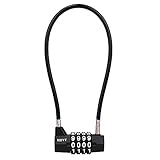
Overview: This versatile combination cable lock delivers flexible security across multiple applications beyond just gates. The zinc alloy body paired with a steel wire rope shackle provides a lightweight yet sturdy solution for securing cabinets, refrigerators, dumpsters, sheds, and fence gates. Its portable design and 4-digit combination system eliminate key management headaches while offering decent deterrence for light to medium security needs.
What Makes It Stand Out: The cable’s extended length provides exceptional versatility, reaching around awkward angles and through multiple attachment points that rigid locks can’t manage. This adaptability makes it uniquely suitable for both indoor and outdoor use—from gym lockers to outdoor fence gates. The 4-digit combination offers 10,000 possible codes, providing reasonable security without the vulnerability of keyed mechanisms that can be picked or keys that can be lost.
Value for Money: At $14.99, this represents exceptional affordability in the security market. While permanent gate locks cost $50-$80, this provides a practical alternative for renters, temporary installations, or supplementary security. The multi-purpose functionality spreads value across numerous applications, making it more economical than buying separate locks for each use case. However, it’s not a replacement for heavy-duty permanent gate security.
Strengths and Weaknesses: Strengths include remarkable versatility, low cost, portability, and simple operation. The cable design allows securing oddly-shaped items and provides reach advantage. Weaknesses involve vulnerability to bolt cutters, less robust construction than solid locks, and potential wear on the combination mechanism over time. The cable length may be excessive for some gate applications, creating slack that could be exploited.
Bottom Line: Ideal for users needing flexible, light-duty security across multiple locations. It’s a practical supplement to primary locks but shouldn’t be your only gate security for high-risk areas.
3. Gate Lock XLB – Secure Keyless Fence Lock and Latch with 2-Way Access – Strong Durable System for Theft Prevention and Home Security, Easy Installation on Wood or Vinyl Gates/Fences

Overview: The XLB version upgrades the standard keyless gate lock with enhanced sizing and premium materials for improved usability and durability. Maintaining the same proven wire-pull mechanism and patented design, this larger model addresses user feedback about dial size and hardware quality. It provides identical keyless convenience and 2-way access while offering a more substantial presence on your gate and easier operation for users with limited dexterity or vision challenges.
What Makes It Stand Out: The enlarged 3" x 5" housing features XL-sized dials that are significantly easier to read and manipulate, especially in low-light conditions or for those with arthritis. The upgrade to stainless-steel latch and hardware components provides superior corrosion resistance compared to the standard model’s die-cast parts. This enhanced material specification extends lifespan in coastal or harsh weather environments where rust prevention is critical.
Value for Money: At $79.99, the XLB commands a $15 premium over the regular version. This upcharge is justified if you need the larger interface or require stainless hardware for extreme weather exposure. For most users, the standard version suffices, but the XLB’s enhanced ergonomics and material upgrade deliver tangible benefits that justify the cost for specific needs. It’s still competitively priced against electronic alternatives.
Strengths and Weaknesses: Strengths include enlarged, accessible dials; premium stainless hardware; identical security features to the proven regular model; and rugged weather resistance. Weaknesses mirror the standard version: installation requires precise drilling and comfort with power tools. The larger size may look disproportionate on smaller gates, and the higher price point may not be necessary for all climates or users.
Bottom Line: Choose the XLB if you prioritize ease of use or live in corrosive environments. For standard applications, the regular version offers better value.
4. LAJIAOZ Black Heavy Duty Slide Bolt Gate Latch with Padlock Hole - Solid Hardware Thickened Metal Sliding Bolt Door Locks Gate Latches for Shed Door,Wooden Fences,Barn Doors,Yard Door,Outdoor Latch

Overview: This traditional slide bolt latch offers fundamental security through simplicity and robust metal construction. The thickened steel design provides reliable physical barrier functionality for various door and gate applications, from sheds to barn doors. Measuring 6.34 inches in length, it delivers substantial heft and includes a padlock hole for optional enhanced security. The two-way directional design accommodates both left and right-swinging installations, increasing its versatility across different gate configurations.
What Makes It Stand Out: The latch’s straightforward mechanical operation ensures reliability without complexity—no batteries, no combinations, no electronics to fail. Its heavy-duty thickened metal construction resists forced entry attempts better than flimsier hardware store alternatives. The universal design works across numerous applications, making it a versatile addition to any property maintenance toolkit. The included mounting hardware simplifies installation with basic tools.
Value for Money: At $6.99, this represents the most budget-friendly option in gate security. However, true cost requires factoring in a separate padlock purchase ($10-$20) for meaningful security. Even combined, it remains under $30, making it attractive for secondary structures like sheds, chicken coops, or low-risk gates. The trade-off is manual operation from both sides and lack of keyless convenience. For primary residential gates, the inconvenience may outweigh savings.
Strengths and Weaknesses: Strengths include rock-bottom pricing, simple bulletproof mechanics, versatile application range, heavy-duty materials, and included installation hardware. Weaknesses involve requiring manual operation from both sides, needing a separate padlock for real security, vulnerability to bolt cutters if using padlock, and no keyless entry convenience. The basic design offers minimal theft deterrence without a padlock.
Bottom Line: Perfect for budget-conscious users securing outbuildings or low-risk areas where simple physical latching suffices. Pair with a quality padlock for modest security improvements.
5. Self-Locking Gate Latch Heavy Duty Post Mount Automatic Gravity Lever Wood/PVC Fence Gate Lock with Fasteners Hardware,for Secure Pool |Yard | Garden, Steel,Black

Overview: This automatic gravity-locking latch prioritizes convenience and safety through innovative self-latching mechanics. Designed for wood and PVC gates, it uses gravity to automatically secure the gate upon closing, eliminating user error in high-risk areas like pools or yards containing pets. The heavy-duty steel construction withstands outdoor exposure while the fingertip release allows easy operation from the exterior. It can be supplemented with a padlock for enhanced security when needed.
What Makes It Stand Out: The gravity-based automatic locking mechanism is the defining feature—gates lock themselves without conscious effort, crucial for pool safety compliance and preventing pet escapes. The self-latching design ensures security even when users forget to manually lock up. The 30+ year manufacturer heritage suggests refined, reliable engineering. The ability to add a padlock provides flexibility between convenience mode and maximum security mode.
Value for Money: At $18.99, this mid-range option balances cost with specialized functionality. It costs less than keyless systems but more than basic slide bolts. The automatic locking feature justifies the premium for pool owners or pet parents, potentially preventing costly accidents or escapes. However, requiring a separate padlock for true security adds expense. Compared to electronic auto-locking systems, it offers similar convenience without power requirements at a fraction of the cost.
Strengths and Weaknesses: Strengths include automatic gravity locking for safety, easy fingertip release, heavy-duty steel construction, versatile wood/PVC compatibility, and optional padlock augmentation. Weaknesses involve dependence on gravity mechanism that could jam with debris, lack of keyless entry from outside (requires reaching over or through), and necessity of separate padlock for theft deterrence. Installation requires precise alignment for proper gravity function.
Bottom Line: An excellent safety-first choice for pool gates and pet enclosures where automatic locking prevents accidental breaches. Supplement with a padlock for security, not just safety.
6. Barn Door Lock, 2", Fence Gate Lock, Double Sided Gate Latch, Shed Door Lock for Wooden Garage Vinyl Metal Gate with 5 Keys, for Right & Left Door

Overview: The Barn Door Lock is a versatile mechanical solution for securing various gate types including wooden, vinyl, and metal installations. This double-sided latch features a 2-inch keyed cylinder accessible from both sides, making it ideal for gates that require entry and exit security. With five keys included, it offers immediate functionality for multiple users right out of the box.
What Makes It Stand Out: The universal fit design accommodates right and left-swinging doors without modification, while the no-mortise installation saves significant time and effort. The 2.5-inch throw bolt provides substantial engagement, and the weather-resistant epoxy black coating ensures durability against rust and corrosion. The rim lock housing design works across different gate materials, making it a truly adaptable solution.
Value for Money: At $19.99, this lock delivers exceptional value, essentially providing double-sided security at the price of a basic single-sided latch. The inclusion of five keys eliminates immediate additional costs, and the stainless steel bolt construction rivals more expensive options. Comparable double-sided locks typically retail for $25-35, making this a budget-friendly choice.
Strengths and Weaknesses: Strengths include easy installation without specialized tools, universal compatibility, weather-resistant construction, and generous key count. The 2-inch cylinder length fits most standard gates, and the rust-proof design ensures longevity. Weaknesses include the inherent risk of lost keys, basic security level that may not deter determined intruders, and the black coating potentially scratching over time. The mechanical nature means no smart features or keyless entry.
Bottom Line: This Barn Door Lock is an excellent choice for homeowners seeking straightforward, reliable security without breaking the bank. While it lacks advanced features, its ease of installation, universal fit, and double-sided convenience make it a practical solution for sheds, gates, and barn doors where basic deterrence is sufficient.
7. Combi-Bolt 4-Digit Combination Sliding Bolt Gate Lock, Secure Gates, Sheds, Windows, Doors, Barns, Fences, Iron or Wooden Gates, Equipment, Tools, Backyards, Livestock, and More (CB2000-BLACK)

Overview: The Combi-Bolt CB2000-BLACK revolutionizes gate security with its keyless 4-digit combination sliding bolt design. This lock eliminates key management headaches while providing robust protection for gates, sheds, barns, and even interior childproofing applications. The solid metal construction ensures year-round reliability in any weather condition.
What Makes It Stand Out: The 10,000 possible combinations offer substantial security while the keyless convenience means never worrying about lost keys again. The versatile mounting system allows both recessed and flush installation without special tools. Chrome-plated dials resist corrosion, and the sliding barrel bolt design is more secure than traditional hasp and padlock setups. FJM Security’s 50-year heritage adds credibility to the engineering.
Value for Money: Priced at $25.95, the Combi-Bolt presents strong value by eliminating ongoing key replacement costs and lock changes. Traditional padlock and hasp combinations often exceed this price point while offering less convenience. The resettable combination provides long-term flexibility that keyed locks cannot match.
Strengths and Weaknesses: Strengths include keyless operation, weather-resistant solid metal construction, easy installation, versatile applications, and childproofing capabilities. The 4-dial mechanism is straightforward to operate. Weaknesses include the possibility of forgetting combinations, potentially lower security compared to high-security keyed cylinders, and the need to periodically change combinations for optimal security. Some users may find the dials stiff in extreme weather.
Bottom Line: The Combi-Bolt is ideal for anyone prioritizing convenience and keyless entry. It’s particularly valuable for rental properties, shared spaces, or families with children. While serious security applications may require heavier-duty options, this lock excels for everyday gate and shed protection where convenience matters as much as security.
8. TOPENS ET24 Automatic Electric Gate Lock for DC 24V Swing Gate Opener Gate Operator System Device Safe Security Gate Lock

Overview: The TOPENS ET24 is an automatic electric gate lock designed specifically for 24V swing gate opener systems. This intelligent device automatically engages when your gate closes and releases before opening, providing enhanced security and stability. It’s particularly recommended for gates exceeding 5 feet in length, where wind forces can cause damage.
What Makes It Stand Out: The seamless integration with existing gate openers eliminates the need for a second remote, operating automatically through your current system. The Q235 steel construction reduces weight while maintaining strength, and the weather-resistant plastic-spraying surface ensures durability. Manual override keys provide access during power outages, addressing a common concern with electric locks.
Value for Money: At $99.00, the ET24 represents a premium investment that pays dividends in gate protection and stability. For automated gate owners, it prevents costly wind damage and extends gate lifespan. Compared to replacing damaged gates or repairing opener systems, this lock is cost-effective insurance. It works across multiple brands, not just TOPENS systems.
Strengths and Weaknesses: Strengths include automatic operation, universal 24V compatibility, weather resistance, manual backup keys, and damage prevention for long gates. The DIY-friendly installation with clear instructions is a plus. Weaknesses include the 24V system requirement, higher price point than mechanical locks, power dependency, and potential complexity for non-technical users. It’s overkill for manual gates.
Bottom Line: The TOPENS ET24 is essential for anyone with a 24V automated swing gate system, especially for longer or heavier gates. The automatic convenience and damage prevention justify the premium price. While not suitable for manual gates, it perfectly complements automated systems, providing peace of mind and structural integrity that mechanical locks cannot match.
9. Sidco Supply Sliding Gate Lock - Hook Bolt Mortise Lock - Weldable Steel Hook Lock for Sliding Gate - Double Cylinder 1-1/8" Backset – Metal Gate Lock - Weld On Hook Lock for Rolling Gate Sliding Gate

Overview: The Sidco Supply Sliding Gate Lock is a heavy-duty weldable hook bolt mortise lock engineered for serious security on metal sliding gates. This commercial-grade solution features a high-security Adams Rite cylinder designed to resist picking and bumping attacks. The all-in-one kit includes everything needed for professional installation.
What Makes It Stand Out: The weldable steel box construction provides tamper-proof installation that surpasses surface-mounted locks. The hook bolt design offers superior holding power against forced entry attempts. With a 1-1/8-inch backset and compatibility for doors 1.5 to 2 inches thick, it fits most metal sliding gates. The keyed-alike option for up to 6 locks simplifies key management for multiple gates.
Value for Money: At $39.99, this lock delivers professional-grade security at a fraction of commercial locksmith prices. The included high-security cylinder, three keys, and complete mounting hardware eliminate hidden costs. Comparable weldable locks often exceed $60, making this an exceptional value for the construction quality and security level provided.
Strengths and Weaknesses: Strengths include heavy-duty weldable steel construction, pick-resistant cylinder, weatherproof powder coating, complete installation kit, and commercial-grade durability. The hook bolt provides excellent forced entry resistance. Weaknesses include requiring welding skills for optimal installation, being specific to sliding gates only, permanent mounting that complicates removal, and potentially being over-engineered for residential applications.
Bottom Line: The Sidco Supply lock is the top choice for securing metal sliding gates where maximum security is paramount. It’s ideal for commercial properties, industrial facilities, and serious residential applications. While installation requires welding expertise, the resulting security is unparalleled in its price class. For sliding gate owners wanting professional-grade protection, this is the definitive solution.
10. Bolt Lock Gate Locks for Outdoor Fence Zinc Alloy Slide Lock 4 Inch Outdoor Keyless Gate Lock with 12 Screws Includes 6 Anti-Theft Screws Gate Lock with Code for Room Doors Cabinets Pool Doors

Overview: This Bolt Lock Gate Lock offers keyless convenience in a compact zinc alloy package designed for light-duty outdoor applications. The 4-inch slide lock provides security for fences, sheds, pool gates, and cabinets without the hassle of keys. The included anti-theft screws add an extra layer of tamper resistance to the installation.
What Makes It Stand Out: The keyless operation eliminates key management issues entirely, while the inclusion of 6 anti-theft screws (among 12 total) demonstrates thoughtful security consideration. The zinc alloy construction balances durability with lightweight design, and the 4-inch size fits applications where larger locks would be cumbersome. The slide bolt mechanism is intuitive and quick to operate.
Value for Money: At $19.99, this lock competes directly with basic keyed latches while offering keyless convenience. The anti-theft screws alone would cost $5-8 separately, adding to the value proposition. For light-duty applications, it provides adequate security without the ongoing costs of key duplication or replacement.
Strengths and Weaknesses: Strengths include keyless convenience, easy installation, anti-theft screws, versatile applications, and budget-friendly pricing. The slide lock design is user-friendly. Weaknesses include zinc alloy being less robust than steel for heavy-duty use, the 4-inch size limiting application on larger gates, unspecified security rating, and potential vulnerability to forced entry compared to heavier locks. Weather resistance details are minimal.
Bottom Line: This keyless slide lock is perfect for securing low-risk areas where convenience trumps maximum security. It’s ideal for pool gates, storage cabinets, and interior shed doors. While not suitable for high-security applications, its ease of use and installation make it an excellent choice for homeowners wanting simple, keyless access control on a budget.
Why Solar-Powered Locks Are Essential for Remote Properties
Off-grid living presents security challenges that suburban homeowners never consider. Your property might sit vacant for weeks or months, making it a target for trespassers, poachers, or squatters. Traditional padlocks are easily cut, and keys can be lost or duplicated. More importantly, running electrical wiring hundreds of feet from your solar panel array to a gate is prohibitively expensive and often technically impossible.
Solar-powered smart locks eliminate these barriers by combining self-contained power generation with advanced access control. They operate as independent security nodes, requiring no connection to your cabin’s main power system. This autonomy means your gate security remains active even if your primary solar system fails or your cabin’s batteries are depleted. For properties accessed by rough roads where key exchanges are impractical, these systems allow you to grant temporary access to guests, maintenance workers, or emergency services without physically being present.
Understanding Solar Power Requirements for Smart Locks
Panel Size and Efficiency Ratings
The solar panel integrated into your lock system isn’t just a decorative feature—it’s the lifeline of your security. Most quality units come with panels between 3-5 watts, which seems small but is sufficient for a low-power deadbolt mechanism. However, panel efficiency matters more than raw size. Monocrystalline panels, while more expensive, perform significantly better in low-light conditions common to forested cabin locations. Polycrystalline panels might save you $20 upfront but could leave you locked out during a string of overcast days.
Calculating Energy Storage Needs
Your lock’s power consumption depends on usage frequency and standby draw. A typical smart lock uses 0.5-2 watts in standby and 5-15 watts during operation. If your gate opens 10 times daily, you’ll need approximately 20-30 watt-hours of stored energy. This is where battery capacity becomes critical. Look for systems with at least 4000mAh of battery storage, which provides a 7-10 day buffer during periods of minimal solar charging. Some advanced models include a secondary backup battery that can last up to 30 days in complete darkness—a feature worth prioritizing if your cabin sits in a deep valley or dense canopy.
Battery Technology: What You Need to Know
Lithium-Ion vs. LiFePO4 Chemistry
The battery type inside your solar lock determines its lifespan, temperature tolerance, and safety. Standard lithium-ion batteries, similar to those in smartphones, work fine in moderate climates but struggle below freezing and degrade quickly in temperatures above 100°F. For cabin applications, lithium iron phosphate (LiFePO4) batteries are the superior choice. They withstand temperatures from -4°F to 140°F, last 3-5 times longer (up to 2000 charge cycles), and won’t catch fire if punctured—a real concern in areas with wildlife or falling branches.
Cold Weather Performance Considerations
Batteries lose 20-50% of their capacity in freezing temperatures. Quality solar locks include built-in battery warmers that activate when temperatures drop below 32°F, drawing minimal power to keep the battery at operational temperature. Without this feature, your lock might show a full charge but fail to operate when you need it most. Additionally, cold-weather models position the battery pack away from direct metal contact, which acts as a heat sink and accelerates power loss.
Connectivity Options for Off-Grid Locations
Bluetooth vs. LoRaWAN vs. Cellular
Wi-Fi is rarely viable at property gates located hundreds of feet from your cabin. Bluetooth offers reliable short-range control (30-50 feet) but requires you to be physically near the gate—defeating the purpose of remote access. LoRaWAN (Long Range Wide Area Network) technology provides a game-changing alternative, transmitting signals up to 10 miles with minimal power consumption. Some systems create a mesh network, where each lock acts as a repeater, extending range across large properties.
For ultimate remote access, cellular-equipped locks connect via 4G LTE networks. However, this requires a data plan ($5-15 monthly) and strong signal strength. Before purchasing, test cellular reception at your gate location during different weather conditions. Many rural areas have spotty coverage that drops during storms precisely when you might need emergency access.
Offline Mode Capabilities
The best solar locks for off-grid use prioritize offline functionality. These units store access codes and user permissions locally, operating independently of cloud services. When connectivity returns, they sync activity logs and update permissions. This ensures your lock works even during extended internet outages. Look for models that support at least 50 unique offline codes and maintain 6 months of access history in local memory.
Weather Resistance and Durability Standards
IP Ratings Explained
Ingress Protection ratings tell you exactly how well a lock withstands environmental assault. IP65 is the minimum you should accept—dust-tight and protected against water jets from any direction. For gate locks exposed to direct rain and wind, IP67 (submersion up to 1 meter for 30 minutes) provides better peace of mind. The keypad should be separate from the main locking mechanism, allowing you to mount the electronics in a more protected location while keeping the input interface exposed.
UV Resistance and Material Selection
Prolonged sun exposure degrades cheap plastics, causing them to crack and discolor within a year. High-quality locks use ASA (Acrylonitrile Styrene Acrylate) plastic or powder-coated aluminum for external components. These materials maintain structural integrity after years of UV bombardment. Metal keypads with silicone button covers outperform all-plastic designs, providing tactile feedback even when wearing gloves and resisting vandalism attempts.
Security Features That Matter Most
Encryption and Anti-Tampering Technology
A smart lock is only as secure as its digital defenses. AES-128 encryption is the industry standard, but AES-256 provides military-grade protection against hacking attempts. More important is how the lock handles physical tampering. Accelerometers should detect cutting or prying attempts, triggering a local alarm and sending immediate alerts. Some advanced models include a “secure boot” feature that prevents firmware tampering, essential if you’re storing valuable equipment at your cabin.
Temporary Access and Time-Based Permissions
The ability to grant time-limited access codes transforms how you manage your property. Create a code valid only for a weekend for hunting buddies, or a recurring Tuesday code for your property manager. Look for systems that allow you to set specific hours of operation—preventing access during quiet hours or ensuring workers can only enter during daylight. The best platforms let you generate codes remotely that activate and expire automatically, eliminating the risk of forgotten or shared codes compromising security.
Installation Considerations for Gates vs. Fences
Swing Gate vs. Slide Gate Mechanisms
Solar locks aren’t one-size-fits-all solutions. Swing gates require locks with adjustable latch positions to accommodate gate sag over time. The locking mechanism should mount on the gate frame, not the moving gate itself, reducing wiring complexity. Slide gates need locks with horizontal bolt throws and reinforced strike plates that can handle the gate’s momentum. Some solar locks include magnetic alignment guides that ensure proper engagement even if the gate shifts seasonally due to ground freezing and thawing.
Fence-Mounted Solutions for Storage Areas
Not every off-grid security need involves a main gate. Fence-mounted locks protect tool sheds, generator enclosures, and water storage tanks. These units typically use shorter bolt throws (1/2 inch vs. 1 inch for gates) but require the same solar and battery specs. The key difference is installation flexibility—look for models with 360-degree adjustable solar panels that can be positioned for optimal sun exposure regardless of fence orientation. Some designs allow the panel to be mounted up to 10 feet away from the lock, connected by a thin cable, perfect for securing north-facing fences.
Access Methods and User Management
Keypad, Biometric, and Mobile App Options
Multiple access methods ensure you’re never locked out. Backlit keypads with large buttons work reliably when your fingers are cold or gloved. Biometric fingerprint readers offer convenience but often fail when fingers are wet, dirty, or extremely cold—common conditions at remote cabins. Mobile app control via Bluetooth provides the most flexibility, allowing you to unlock from your vehicle without exposing yourself to weather.
The ideal system combines all three: keypad as primary entry, Bluetooth app for management, and biometric as a backup for trusted users. Ensure the system supports at least 100 unique users with customizable permission levels, from one-time visitors to full administrators who can add other users.
Audit Trails and Activity Monitoring
Knowing who accessed your property and when provides invaluable peace of mind. Comprehensive audit trails record every lock interaction with timestamp and user ID. For off-grid properties, this data should store locally for at least 90 days and sync when connectivity allows. Look for systems that export logs in standard formats (CSV, PDF) for insurance purposes or law enforcement if an incident occurs. Some advanced locks include photo capture capabilities, snapping a picture of each user when they enter a code—though this feature significantly increases power consumption.
Integration with Off-Grid Cabin Systems
Connecting to Your Primary Solar Array
While solar locks are self-contained, integrating them with your cabin’s main solar system provides redundancy. Some locks accept 12V DC input from your battery bank as a backup charging source, automatically switching when internal batteries drop below 20%. This requires running low-voltage wire (16-18 AWG) to the gate, but eliminates power concerns entirely. Ensure any such connection includes proper voltage regulation and isolation to prevent your cabin’s larger battery bank from damaging the lock’s sensitive electronics.
Home Automation Compatibility
Even off-grid cabins benefit from automation. Z-Wave and Zigbee protocols allow solar locks to communicate with cabin hubs, triggering lights or cameras when the gate opens. However, these protocols consume more power than proprietary systems. A practical compromise uses IFTTT (If This Then That) compatibility, enabling simple automation without constant connectivity. For example, unlocking the gate could automatically turn on pathway lights powered by your main solar system, or send a notification to your satellite internet connection.
Maintenance and Troubleshooting
Seasonal Maintenance Checklist
Solar locks require minimal upkeep, but neglecting seasonal maintenance leads to failures when you least expect it. Every spring, clean the solar panel with mild soap and water to remove pollen and dust that can reduce charging efficiency by 30%. Check mounting bolts for rust and tighten any loose connections. In fall, clear falling leaves from around the lock mechanism and apply silicone lubricant to moving parts. Winter preparation includes verifying battery warmer functionality and ensuring snow drifts won’t bury the solar panel.
Common Failure Points and Solutions
The most frequent issue is battery depletion during extended cloudy periods. Keep a portable USB battery pack in your cabin specifically for emergency lock charging—most models include a hidden micro-USB port for manual charging. Keypad unresponsiveness in extreme cold often results from condensation freezing inside the button mechanism. Installing a small desiccant pack inside the keypad housing absorbs moisture and prevents this issue. If the lock fails to engage fully, the gate alignment has likely shifted; adjustable strike plates with 1/4-inch play can compensate for seasonal movement without requiring professional adjustment.
Cost Analysis and ROI
Initial Investment vs. Long-Term Value
Quality solar-powered gate locks range from $250 to $600, significantly more than a $50 padlock. However, factor in the cost of rekeying after lost keys ($75 per occurrence), fuel for trips to exchange keys with guests, and potential losses from break-ins. Most off-grid cabin owners recover the initial investment within 2-3 years through avoided costs and insurance discounts. Many providers offer 10-15% premium reductions for properties with monitored smart locks, saving $100-300 annually.
Hidden Costs to Consider
Beyond the lock itself, budget for mounting hardware ($30-80), potential cellular data plans ($60-180 yearly), and a backup battery pack ($40). Professional installation might add $200-400, though most solar locks are designed for DIY installation with basic tools. Consider the cost of a compatible smart hub if you want integration capabilities ($100-200). Finally, factor in replacement batteries every 3-5 years ($50-80), though LiFePO4 batteries often last 7+ years in moderate climates.
Common Challenges and Practical Solutions
Dealing with Wildlife Interference
Deer, bears, and curious raccoons can trigger motion sensors or damage exposed components. Install the keypad at least 5 feet high to prevent deer from rubbing against it. Use metal conduit to protect wires running along fence lines from rodent chewing. Some locks include “animal mode” that reduces sensor sensitivity during dawn and dusk when wildlife is most active. If bears are a concern, choose models with metal housings rated for impact resistance—they’ve been known to swat at blinking LEDs out of curiosity.
Managing Multiple Access Points
Large properties often need locks on the main gate, storage shed, and perhaps a boat dock. Managing separate systems becomes cumbersome. Look for ecosystems that support multiple locks on one platform, allowing unified user management. Some systems use a master code that works across all locks, with secondary codes for specific areas. For ultimate convenience, RFID tag systems let you wave a key fob at any lock on the property, though this requires carrying a physical token. The most advanced solutions use geofencing, automatically unlocking the main gate when your phone approaches while keeping storage areas secured until manually accessed.
Legal and Insurance Considerations
Liability and Code Compliance
Before installing any gate lock, verify local regulations. Some jurisdictions require gates to remain unlocked for emergency vehicle access, with fines up to $500 for non-compliance. Many rural areas have “knock and announce” laws for hunters and landowners—an automatically locking gate might violate these statutes. Check with your county planning department about gate height restrictions (often 6 feet maximum) and setback requirements from property lines.
Insurance Documentation Requirements
Insurance companies increasingly require proof of security measures for remote properties. Maintain detailed records of your lock’s installation date, model specifications, and maintenance logs. Photograph the installation, particularly the solar panel positioning and lock mechanism. Store activity logs showing regular access patterns—this demonstrates occupancy and can disprove squatters’ claims. Some insurers require UL 325 compliance for automated gates, which covers entrapment protection and safety sensors. While this standard primarily applies to automatic openers, using a UL-listed lock demonstrates due diligence.
Future-Proofing Your Investment
Firmware Updates and Technology Longevity
A solar lock is a 5-10 year investment, but technology evolves rapidly. Choose manufacturers with a track record of providing firmware updates for at least 3 years post-purchase. Some locks support over-the-air updates via Bluetooth, while others require USB connection. Avoid proprietary systems that lock you into a single ecosystem—opt for locks supporting Matter or Thread protocols, emerging standards that ensure compatibility with future smart home devices. Consider the company’s financial stability; a startup might offer innovative features but could disappear, leaving you with an unsupported device.
Scalability for Property Expansion
Your off-grid setup might start with a simple cabin, but many owners later add guest houses, workshops, or rental units. Select a lock system that scales easily, supporting up to 20+ locks on a single management platform. Modular designs allow you to add features later—start with basic keypad entry, then add cellular connectivity or camera integration as your budget allows. Some systems offer “hub” devices that extend range and add features without replacing existing locks, protecting your initial investment.
Frequently Asked Questions
How long do solar-powered gate locks last on a single charge during cloudy weather?
Most quality systems store enough energy for 7-14 days of normal use without direct sunlight. Models with LiFePO4 batteries and 6000mAh+ capacity can extend this to 30 days. Cold weather reduces this by 30-50%, so choose cold-weather rated models if winter temperatures regularly drop below freezing.
Can I install a solar gate lock myself, or do I need a professional?
DIY installation is absolutely feasible for anyone comfortable with basic tools. The process typically involves mounting the solar panel, installing the lock mechanism, and running a small cable between them. Most manufacturers provide templates and video guides. Professional installation ($200-400) makes sense only for slide gates requiring precise alignment or properties needing custom fabrication.
What happens if the lock’s battery dies completely?
All reputable models include a hidden manual override, typically accessed via a 9V battery terminal on the keypad exterior. Touching a charged 9V battery to these contacts provides enough power for one unlock cycle. Some designs include a traditional key cylinder as ultimate backup, though this reduces pick resistance. Keep a portable USB battery pack in your vehicle for emergency charging through the lock’s maintenance port.
Do these locks work in areas with no cell service?
Absolutely. Bluetooth and local keypad functionality operate independently of cellular networks. LoRaWAN models provide extended range communication without cell towers. For remote management without cellular, some systems store commands locally and execute them when your phone comes within Bluetooth range, or sync when you visit the property and connect to Wi-Fi.
How secure are solar locks compared to traditional padlocks?
Properly installed solar locks significantly outperform padlocks. They resist cutting, picking, and bumping through hardened steel bolts and encrypted digital mechanisms. The real security improvement comes from audit trails and instant tamper alerts—features mechanical locks can’t offer. However, no lock is impenetrable; they deter opportunistic thieves and slow determined ones, which is often sufficient for remote properties.
Will snow covering the solar panel disable the lock?
A light dusting won’t affect performance, but heavy snow accumulation will block charging. Mount the panel vertically or at a steep angle (45-60 degrees) to encourage snow shedding. Some owners install a small “roof” over the panel, leaving the front exposed but preventing snow buildup. The lock’s internal battery buffer handles multi-day storms, but brush snow off after major accumulations.
Can I grant access to delivery drivers or emergency services remotely?
Yes, through several methods. Time-limited codes work well for deliveries—create a code valid only for a specific day and timeframe. For emergency services, some systems integrate with local 911 dispatch, providing a master code upon verified emergency call. Alternatively, keep a lockbox with a physical key near the gate, secured by a code you can share verbally with dispatchers.
How do I prevent the lock from freezing in winter?
Choose models with integrated battery warmers and silicone-sealed keypads. Apply a thin layer of dielectric grease to the bolt mechanism in fall. Install the lock on the side of the gate facing your cabin, providing some wind protection. Avoid models with metal keypads that conduct cold; silicone or rubber-coated buttons perform better. If temperatures regularly drop below -10°F, consider adding an external insulation blanket specifically designed for gate locks.
What’s the realistic lifespan of a solar-powered gate lock?
With proper maintenance, expect 7-10 years of service. The solar panel itself can last 20+ years, but the locking mechanism typically wears after 50,000+ cycles. LiFePO4 batteries last 5-7 years before capacity drops below 80%. Keypads may need replacement after 5 years due to button wear. Choose manufacturers offering replacement parts rather than forcing complete system replacement.
Are there any monthly fees associated with these locks?
Basic Bluetooth and keypad functions have no ongoing costs. Cellular connectivity requires a data plan ($5-15/month). Cloud storage for video or extensive activity logs might cost $3-10 monthly. Some premium management platforms charge subscription fees for advanced features like bulk user management or integration APIs. Calculate total cost of ownership over 5 years when comparing models, as “free” apps sometimes become paid services after initial adoption.