Your prized Bordeaux collection represents years of careful curation and significant investment. Yet without proper climate oversight, those bottles could deteriorate faster than a corked vintage at a summer picnic. Temperature and humidity monitors serve as the vigilant guardians of your wine cellar—silent sentinels that transform guesswork into precision and protect your liquid assets from invisible threats. While the right cooling unit creates the environment, it’s the monitoring system that ensures perfection 24/7, alerting you to fluctuations before they become disasters.
Understanding what makes an exceptional wine cellar monitor requires more than comparing spec sheets. The difference between a basic thermometer and a professional-grade monitoring system can mean the difference between a bottle that ages gracefully for decades and one that disappoints after just a few years. Let’s explore the critical features, advanced capabilities, and strategic considerations that separate essential monitoring tools from mere gadgets.
Top 10 Temperature & Humidity Monitors for Wine Cellar
Detailed Product Reviews
1. Govee Digital Hygrometer Indoor Thermometer Room H5075, Bluetooth Temperature Humidity Meter with 164ft Remote App Control, Notification Alerts, 2 Years Data Storage Export for Bedroom, Wine Cellar
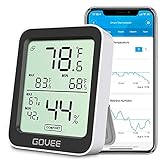
Overview: The Govee H5075 is a Bluetooth-enabled indoor climate monitor that brings smart functionality to temperature and humidity tracking. Designed for bedrooms, wine cellars, and greenhouses, this compact device pairs with your smartphone for remote monitoring up to 164 feet away, offering a modern alternative to traditional thermometers without requiring WiFi.
What Makes It Stand Out: Its Swiss-made sensor delivers impressive accuracy (±0.54°F, ±3%RH) with rapid 2-second refresh rates—40% faster than many competitors. The 3-inch LCD display provides excellent visibility with comfort indicators and min/max records. The standout feature is the 2-year data storage with CSV export capability, allowing you to track trends and make informed decisions about your environment. Smart app alerts notify you instantly when conditions drift outside your preset ranges.
Value for Money: At $9.99, this device offers remarkable value by delivering smart features typically found in more expensive WiFi models. It competes directly with basic digital hygrometers while adding app connectivity and data logging at virtually no premium, making advanced monitoring accessible to everyone.
Strengths and Weaknesses: Strengths include high accuracy, fast refresh rate, excellent data storage, and intuitive app integration. The bright display is easy to read from across the room. Weaknesses are the Bluetooth-only connection (no true remote access beyond 164ft), potential connectivity issues through walls, and dependence on your phone for alerts rather than independent notifications.
Bottom Line: The Govee H5075 is an outstanding entry-level smart monitor for users wanting app-based tracking without the cost of WiFi models. It’s perfect for single-room monitoring where Bluetooth range isn’t an issue.
2. BaldrTherm 2.2’’ Digital Thermometer and Hygrometer Meter, Solar-Powered Indoor Temperature Sensor Humidity Monitor, Humidity Gauge for Baby Rooms, Bedrooms, Home, Office, and Wine Cellars, 1Pack

Overview: The BaldrTherm offers a refreshingly simple approach to indoor climate monitoring with its innovative solar-powered design. This 2.2-inch device eliminates battery concerns while providing essential temperature and humidity readings for baby rooms, bedrooms, and wine cellars without any complicated setup or connectivity requirements.
What Makes It Stand Out: The solar panel provides continuous power from any light source, ensuring the device never powers off. Its unique three-sided ventilation system and curved shape enhance accuracy by detecting subtle air changes. The smiley face comfort indicator offers an immediate visual assessment when temperature (68-79°F) and humidity (30-70%) are in optimal ranges. The inclusion of a 3-year warranty and 24/7 support demonstrates exceptional manufacturer confidence.
Value for Money: At $7.99, it’s the most economical option reviewed. The solar power eliminates ongoing battery costs, while the extensive warranty provides long-term peace of mind. You’re getting reliable, maintenance-free operation for less than a meal, with accuracy that rivals more expensive units.
Strengths and Weaknesses: Strengths include the innovative solar power, clear comfort indicator, solid accuracy (±1°F, ±2-3%RH), and outstanding warranty coverage. The display is large and readable. Weaknesses include the slower 10-second refresh rate, lack of smart connectivity or data logging, and basic functionality compared to app-enabled competitors that offer remote access.
Bottom Line: Ideal for users seeking a no-fuss, maintenance-free monitoring solution. The BaldrTherm excels in simplicity and reliability, making it perfect for those who don’t need smartphone integration and want to avoid battery changes entirely.
3. Govee Smart Thermometer Hygrometer, WiFi Humidity Temperature Sensor with App Notification Alert, 2 Years Free Data Storage Export, Wireless Remote Monitor for Room Greenhouse Incubator Wine Cellar

Overview: The Govee WiFi Thermometer Hygrometer elevates home monitoring with dual connectivity options, allowing you to check conditions from anywhere via the internet. This upgraded model maintains the brand’s reputation for accuracy while adding true remote access for critical spaces like greenhouses, wine cellars, and nurseries where constant monitoring is essential.
What Makes It Stand Out: Unlike its Bluetooth sibling, this device offers both WiFi and Bluetooth connections, enabling monitoring when you’re away from home. The Swiss-made sensor maintains excellent precision (±0.54°F, ±3%RH) with 2-second updates. The widget function provides at-a-glance readings on your phone’s home screen. Data automatically uploads to the cloud when connected, ensuring you never lose historical information and can access it from any location.
Value for Money: At $29.99, it’s three times the price of the Bluetooth version, but the WiFi capability justifies the premium if you need remote monitoring. For frequent travelers or those managing sensitive environments like incubators, this investment pays dividends in peace of mind and prevents costly losses.
Strengths and Weaknesses: Strengths include flexible connectivity, high accuracy, fast refresh, comprehensive app features, and robust data export. The lanyard loop adds placement versatility. Weaknesses include no 5G WiFi support, alert setup limited to Bluetooth range, and higher cost that may be unnecessary for single-room use where you don’t need remote access.
Bottom Line: A worthwhile upgrade for users requiring remote monitoring capabilities. The Govee WiFi model delivers reliable performance and excellent app integration for those who need access beyond Bluetooth range and want true anywhere-access to their data.
4. YoLink Smart Temp & Humidity Sensor, LoRa Long Range, 2 Year Battery, Indoor Monitoring for Wine Cellar, Bedroom, Nursery, Greenhouse, RV, with App, Email & SMS Alerts, Alexa IFTTT, 2 Pack + Hub

Overview: The YoLink Smart Sensor System takes a different approach with LoRa technology, offering unmatched range and battery life for indoor monitoring. This 2-pack with included hub is designed for large properties, basements, and outbuildings where WiFi fails to reach, making it a specialized but powerful solution for challenging environments that defeat conventional wireless signals.
What Makes It Stand Out: LoRa sensors achieve an impressive 1/4-mile range in open air—far exceeding WiFi and Zigbee—while maintaining up to 2-year battery life. The system includes SMS, email, and push alerts, with iOS Critical Alerts that bypass silent mode for urgent notifications. Alexa and IFTTT integration enable smart home automation. The hub supports an entire ecosystem of YoLink sensors for comprehensive property monitoring, from leak detectors to door sensors.
Value for Money: At $49.99 for two sensors plus hub, the per-unit cost is $25. While higher than basic smart sensors, the LoRa technology and included hub make it economical for monitoring detached structures or large homes where additional WiFi equipment would be needed, saving money on repeaters or extenders.
Strengths and Weaknesses: Strengths include exceptional range, long battery life, multiple alert methods, expandable ecosystem, and reliable performance in challenging environments like metal enclosures and basements. Weaknesses include higher initial cost, requirement for hub, not suitable for outdoor use, and limited free SMS messages (20/month) that may require paid plans for heavy users.
Bottom Line: The YoLink system is unparalleled for large properties or areas with poor WiFi coverage. If you need to monitor a barn, detached garage, or basement, this long-range solution justifies its premium price and provides a foundation for a comprehensive smart home sensor network.
5. ThermoPro TP49 Digital Hygrometer Indoor Thermometer Humidity Meter Room Thermometer with Temperature and Humidity Monitor Mini Hygrometer Outdoor
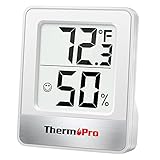
Overview: The ThermoPro TP49 is a straightforward, no-nonsense digital hygrometer that prioritizes simplicity and reliability. This compact device delivers accurate temperature and humidity readings without the complexity of apps or connectivity, making it accessible for users of all technical levels who just want basic environmental data at a glance without reaching for their phone.
What Makes It Stand Out: The face icon comfort indicator provides intuitive at-a-glance feedback on air conditions, quickly informing you whether to adjust humidifiers or dehumidifiers. Its three placement options—tabletop stand, magnetic back, and hanging mount—offer unmatched versatility for any space from guitar rooms to greenhouses. The high accuracy (±1°F, ±2-3%RH) rivals more expensive units, while the 10-second refresh rate keeps information current without being sluggish or draining power.
Value for Money: At $8.99, it strikes an excellent balance between affordability and performance. You get professional-grade accuracy and versatile placement without paying for unnecessary smart features. It’s a practical choice for equipping multiple rooms on a budget, costing less than two cups of coffee per device.
Strengths and Weaknesses: Strengths include high accuracy, flexible mounting options, easy-to-read compact display, simple operation, and reliable performance. The face icons are helpful for quick assessment. Weaknesses include lack of data logging, no remote monitoring capabilities, no customizable alerts, and basic functionality compared to app-enabled alternatives that offer historical trends.
Bottom Line: The ThermoPro TP49 is the ideal choice for budget-conscious buyers seeking accurate, reliable monitoring without smartphone dependency. Perfect for guitar rooms, kitchens, cellars, and other spaces where simple, local readings suffice and you don’t need the complexity of connected devices.
6. GoveeLife 2.0 WiFi Hygrometer Thermometer 3 Pack, Smart Humidity Temperature Sensor with App Notifications, Temperature Humidity for Bedroom, Wine Cellar, Basements(Only Support 2.4G Wi-Fi)

Overview: The GoveeLife 2.0 WiFi Hygrometer Thermometer 3 Pack transforms environmental monitoring into a connected smart home experience. This system includes three compact sensors and a gateway, enabling remote temperature and humidity tracking across multiple locations simultaneously. Designed for serious monitoring applications like wine cellars, greenhouses, and basements, it delivers professional-grade precision through Swiss-made sensors with ±0.54°F temperature and ±3% RH humidity accuracy.
What Makes It Stand Out: The standout feature is genuine WiFi connectivity paired with an exceptional 2-year battery life, eliminating frequent battery changes common with smart sensors. The remote alarm system sends instant app and email notifications when readings exceed preset thresholds, providing crucial response time for sensitive environments. Data storage capabilities are impressive, offering 20-day trend charts and 2-year exportable data logs, making it ideal for agricultural or preservation applications requiring historical analysis.
Value for Money: At $55.99 ($18.66 per unit), this 3-pack offers substantial value compared to buying individual smart sensors that typically cost $30-40 each. The included gateway and triple sensors make it economical for whole-home monitoring, though the initial investment exceeds basic digital hygrometers. For users needing multiple monitoring points, the bundled pricing is compelling.
Strengths and Weaknesses: Strengths include remote access, high precision, multi-location monitoring, extensive data logging, and exceptional battery life. The compact design with lanyard allows placement in drawers, guitar cases, or wine cabinets. Weaknesses are the 2.4GHz WiFi limitation, requirement for a specific gateway (H5151/H5042), more complex initial setup, and higher upfront cost versus non-smart alternatives. The system also requires compatible gateway models for expansion.
Bottom Line: Ideal for enthusiasts needing reliable, remote environmental monitoring across multiple spaces. The GoveeLife 3 Pack justifies its premium price through connectivity, accuracy, and convenience that basic units cannot match, making it perfect for wine collectors, greenhouse operators, and smart home integrators.
7. ThermoPro TP50 Digital Hygrometer Indoor Thermometer Room Thermometer and Humidity Gauge with Temperature Humidity Monitor

Overview: The ThermoPro TP50 is a straightforward, no-frills digital hygrometer that delivers reliable temperature and humidity monitoring at an entry-level price point. This compact device focuses on essential functionality without smart features, making it perfect for users who prefer simplicity and battery longevity. The unit displays current readings alongside intuitive wellness indicators, providing immediate environmental feedback for bedrooms, offices, or reptile enclosures.
What Makes It Stand Out: The three-level wellness indicator (DRY/COMFORT/WET) offers at-a-glance air quality assessment, while the high/low records function automatically tracks environmental extremes. Its versatile design includes both a tabletop stand and magnetic back, allowing placement on counters, refrigerators, or any metal surface. The included AAA battery means it’s ready to use out of the box, and the 10-second refresh rate provides timely updates for most applications.
Value for Money: At $9.99, the TP50 represents exceptional value. It provides accurate readings (±2~3%RH, ±1°F) comparable to units costing twice as much, without subscription fees or connectivity dependencies. For basic monitoring needs, it’s nearly impossible to beat this price-performance ratio. The included battery and dual mounting options add convenience typically absent in this price range.
Strengths and Weaknesses: Strengths include affordability, ease of use, reliable accuracy, versatile mounting, immediate visual feedback, and broad application potential (refrigerator, humidor, reptile tank). Weaknesses are the lack of remote monitoring, manual data tracking requirements, 10-second refresh rate (slower than premium units), and basic LCD display without backlight. Health-conscious users will appreciate the wellness indicator’s simplicity.
Bottom Line: Perfect for budget-conscious users seeking reliable, simple environmental monitoring. The ThermoPro TP50 excels at its core mission without unnecessary complexity, making it an excellent choice for casual monitoring where smart features would be overkill. It’s a practical workhorse for everyday household use.
8. VOCOO Humidity Gauge Indoor Thermometer - Digital Indoor Humidity Sensor Room Thermometer with Temperature Humidity Monitor, Accurate Hygrometer Temp Meter for Home Greenhouse Wine Cellar

Overview: The VOCOO Humidity Gauge Indoor Thermometer packs surprising features into a budget-friendly device, offering more than basic temperature and humidity monitoring. This compact unit distinguishes itself with a built-in clock and date function, making it a dual-purpose device for desks, shelves, or walls. Its clear color-coded comfort indicator provides instant air quality assessment for health-conscious households monitoring family living conditions.
What Makes It Stand Out: The integrated date and clock display is rare in this price category, eliminating the need for a separate timepiece. Three placement options—magnetic back, adhesive pad, and built-in stand—offer exceptional versatility for any location from baby rooms to greenhouses. The device includes two CR2032 batteries, providing 8-12 months of operation, and the large 3.26-inch LCD ensures excellent readability without the power drain of a backlight.
Value for Money: At $9.99, this unit delivers outstanding value by combining timekeeping with environmental monitoring. The inclusion of dual batteries and multiple mounting options adds convenience that competitors often lack at this price point. For users wanting maximum utility per dollar, the clock feature alone makes it more functional than basic hygrometers.
Strengths and Weaknesses: Strengths include the clock feature, versatile mounting, clear display, dual batteries, and color-coded comfort indicator. The device covers temperature ranges from 14.2°F to 140°F and humidity from 10% to 95%. Weaknesses are the ±5% RH accuracy (lower than premium models), lack of backlight for low-light viewing, no smart connectivity, and limited extreme reading display (“LL” or “HH” outside ranges). The adhesive pad requires 24-hour curing before use.
Bottom Line: An excellent choice for users wanting maximum features on a minimal budget. The VOCOO is ideal for bedrooms, offices, or greenhouses where basic monitoring and time display are valued. While accuracy-conscious users may prefer Swiss-sensor alternatives, the feature set makes it a compelling value proposition for general household use.
9. TXL Large Digital Hygrometer Indoor Thermometer with Humidity Gauge, Smart Room Temperature Humidity Sensor Monitor with Touch LCD Backlight for Home Office Warehouse Greenhouse Garden Wine Cellar

Overview: The TXL Large Digital Hygrometer positions itself as a mid-range solution for users seeking premium sensor quality without smart connectivity. Featuring a Swiss-made sensor in a device costing half of typical smart monitors, it targets accuracy enthusiasts who prefer standalone operation. The larger form factor accommodates an LED backlight, addressing a common limitation of budget units while providing professional-grade monitoring for homes, warehouses, and wine cellars.
What Makes It Stand Out: The one-second refresh rate is remarkably fast for a non-smart device, providing near real-time environmental feedback. The LED backlight enables nighttime reading without disrupting sleep, a thoughtful feature for bedroom use. Its Swiss-made sensor promises reliable 24/7 monitoring with professional-grade precision, controlling temperature exactness within ±2℃/±5ºF and humidity within ±5% RH. The magnetic back and included 3M metal plate offer flexible placement anywhere.
Value for Money: At $15.39, this unit bridges the gap between basic $10 hygrometers and $40+ smart sensors. The Swiss sensor and backlight justify the modest price premium, delivering premium components without recurring costs or app dependencies. For users wanting accuracy and visibility without complexity, the pricing is well-positioned.
Strengths and Weaknesses: Strengths include rapid refresh rate, night-readable display, Swiss sensor accuracy, simple setup, and versatile mounting. The concise screen displays only essential data clearly. Weaknesses are the lack of data logging capabilities, no remote monitoring features, unspecified battery life in product details, and larger size (4.88×3.94 inches) that may not suit compact spaces. It lacks the trending features of smart alternatives.
Bottom Line: Ideal for users prioritizing sensor quality and night visibility over connectivity. The TXL excels in bedrooms, wine cellars, and offices where accurate, immediate readings matter but smart features don’t. It’s a sensible upgrade from basic models without jumping to premium smart systems, offering a sweet spot of quality and simplicity.
10. Govee WiFi Thermometer Hygrometer H5103, Indoor Bluetooth Temperature Humidity Sensor with Electronic Ink Display, App Notification Alert, Free Data Storage Export, Digital Remote Monitor for Bedroom
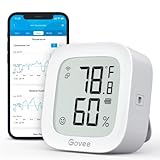
Overview: The Govee WiFi Thermometer Hygrometer H5103 offers single-zone smart monitoring with premium features typically reserved for multi-packs. This standalone unit combines WiFi and Bluetooth connectivity with an electronic ink display, creating a device that’s both connected and energy-efficient. Designed for spaces requiring remote monitoring like wine cellars, basements, or bedrooms, it delivers professional accuracy through a Swiss-made sensor with ±0.54°F temperature and ±3%RH humidity precision.
What Makes It Stand Out: The electronic ink display provides exceptional readability while extending battery life to six months—superior to LCD smart sensors. Its Swiss-made sensor ensures laboratory-grade precision, while the Govee Home App enables remote monitoring, smart alerts, and free data export for up to two years. The dual connectivity ensures data access even when WiFi is unstable, and the 2-second refresh rate keeps information current.
Value for Money: At $37.97, this single unit commands a premium over non-smart alternatives but undercuts multi-sensor systems. For users needing remote monitoring in just one location, it avoids the expense of unnecessary additional sensors while delivering full smart functionality. The free data storage and export capabilities add professional value without subscription fees.
Strengths and Weaknesses: Strengths include remote access, high precision, e-ink display, extensive data logging, and dual connectivity for reliability. The device is compact and easy to set up. Weaknesses are the 2.4GHz WiFi limitation (no 5G support), single-unit price (less economical than 3-packs), six-month battery life (shorter than GoveeLife’s 2-year claim), and lack of expandability without additional gateways. It’s designed for targeted monitoring rather than whole-home coverage.
Bottom Line: Perfect for targeted smart monitoring in a single critical space. The Govee H5103 justifies its price through reliable connectivity, precision, and data management that basic units cannot provide, making it ideal for wine collectors, plant enthusiasts, or remote property monitoring where alerts and historical data are essential.
Why Temperature and Humidity Control is Non-Negotiable for Wine Collectors
The Science of Wine Aging
Wine aging is a delicate chemical ballet where tannins polymerize, acids mellow, and complex flavor compounds develop through controlled oxidation. This process demands stability. Even minor temperature swings accelerate undesirable reactions, causing premature aging or “cooked” flavors. Humidity levels directly impact cork integrity—too dry and corks shrink, allowing oxygen invasion; too humid and labels peel, mold proliferates, and corks become saturated. Professional-grade monitors don’t just display numbers; they provide the data that preserves the biochemical integrity of every bottle in your collection.
The Cost of Getting It Wrong
A single temperature spike above 75°F can permanently damage an entire case of wine in hours. Humidity fluctuations that seem insignificant can lead to thousands of dollars in losses over time through label damage, cork failure, and oxidation. Insurance rarely covers climate-related wine damage because it’s considered preventable. The right monitoring system becomes your financial safeguard, providing documented proof of stable conditions while preventing the very incidents that would require claims.
Understanding the Ideal Wine Cellar Environment
Temperature: The 55°F Sweet Spot
The universally accepted ideal cellar temperature hovers around 55°F (13°C), but consistency matters more than the exact number. A stable 58°F beats a fluctuating 55°F every time. Quality monitors track not just current temperature but rate of change, helping you identify when your cooling system cycles too frequently or struggles during heat waves. Look for devices that display both real-time readings and trend graphs, revealing patterns invisible to simple thermometers.
Humidity: The 60-70% Goldilocks Zone
Humidity monitoring requires precision instruments, not the cheap hygrometers found at hardware stores. The 60-70% range prevents cork desiccation while inhibiting mold growth. Premium monitors use capacitive sensors that maintain accuracy within ±2% RH, unlike resistive sensors that drift significantly within months. Your monitor should alert you before humidity drops below 55% or climbs above 75%, giving you time to adjust humidification or ventilation systems proactively.
The Danger of Fluctuations
Daily temperature swings of even 3-5°F stress wine through expansion and contraction of the liquid, accelerating aging and potentially compromising seals. Seasonal humidity shifts can be equally destructive. Advanced monitoring systems calculate fluctuation indices, helping you understand your cellar’s stability score rather than just showing snapshots. This data proves invaluable when evaluating whether your insulation, vapor barriers, or cooling capacity meet professional standards.
Key Features to Look for in a Wine Cellar Monitor
Accuracy and Calibration
Professional wine monitors should offer accuracy of ±0.5°F for temperature and ±2% RH for humidity. More importantly, they must be user-calibratable. Sensors drift over time, and the ability to perform salt-slurry calibrations or compare against NIST-traceable standards ensures your data remains trustworthy. Avoid sealed units that can’t be calibrated—planned obsolescence has no place in serious wine storage.
Connectivity Options
Modern monitors offer Wi-Fi, Bluetooth, LoRaWAN, or cellular connectivity. Wi-Fi provides comprehensive remote access but may struggle in underground cellars. Bluetooth conserves battery but requires proximity. LoRaWAN offers exceptional range through walls but needs a gateway. Cellular ensures alerts even during internet outages but incurs subscription fees. Your choice depends on cellar location, home network reliability, and how critical immediate notifications are to your collection’s safety.
Alert Systems
The best monitors provide tiered alerts: warnings for concerning trends and critical alarms for dangerous conditions. Look for customizable thresholds, multiple notification channels (push, SMS, email, phone calls), and escalation protocols that contact backup people if you don’t respond. Smart systems learn your cellar’s normal patterns, reducing false alarms while catching genuine threats faster than static threshold systems.
Data Logging Capabilities
Data storage reveals your cellar’s personality. Minimum specifications should include logging every 10-15 minutes with at least 30 days of onboard storage. Cloud storage preserves data even if the device fails. Exportable logs in CSV format let you analyze long-term trends, correlate external weather with cellar performance, and provide documentation for insurance or resale purposes. Some systems even integrate with wine management software, linking climate data to specific bottles.
Display and Readability
While remote monitoring is essential, local displays matter during cellar visits. E-ink displays offer perfect readability without light exposure that could harm wine. Backlit LCDs should activate with a button press, not remain constantly illuminated. The display must show both temperature and humidity simultaneously, plus connectivity status and battery level. Touchscreens in dark cellars are frustrating; physical buttons often prove more practical.
Advanced Features That Set Premium Monitors Apart
Multi-Zone Monitoring
Serious collectors know that temperature varies by several degrees between floor and ceiling, and near walls versus cellar center. Premium systems support multiple sensors, mapping your cellar’s microclimates. This reveals whether that case of Barolo on the top rack experiences different conditions than your Burgundy at floor level. Wireless sensors should transmit through stone and earth, using sub-GHz frequencies that penetrate better than 2.4GHz Wi-Fi.
Integration with Smart Home Systems
API access transforms your monitor from a standalone device into a central nervous system. Integration with Home Assistant, Hubitat, or proprietary smart home platforms enables automated responses: triggering backup cooling, adjusting humidifiers, or closing motorized vents when conditions drift. Look for IFTTT support, MQTT protocol compatibility, and documented APIs that don’t require cloud dependency for local control.
Battery Life and Power Options
Hardwired monitors eliminate battery concerns but require professional installation. Battery-powered units should last 12-24 months on standard cells, or offer rechargeable lithium packs with solar options for above-ground installations. Power failure detection is crucial—the monitor should alert you when it switches to battery backup, indicating potential HVAC system failure before temperatures rise.
Build Quality and Aesthetics
Your monitor lives in a damp, potentially corrosive environment. IP65 or better rating ensures protection against humidity and accidental splashes. Materials should resist UV degradation if exposed to any light. Aesthetics matter in showcase cellars; choose monitors with customizable faceplates or minimal visual impact. Some premium units disguise as wine labels or corks, maintaining cellar ambiance while providing invisible protection.
Installation and Placement Strategies
Where to Position Your Monitors
Place primary sensors at mid-height in the cellar’s center, away from direct cooling vents and doors. Secondary sensors belong near the ceiling, floor, and any exterior walls. Never position monitors above cooling units where condensation drips, or near humidifier outputs where readings become artificially inflated. For collections over 500 bottles, consider sensor density of one per 200 square feet.
Avoiding Common Placement Mistakes
The most frequent error is mounting monitors on exterior walls, which conduct temperature fluctuations. Another mistake is placing sensors inside wine racks where airflow is restricted. Avoid direct contact with wood, stone, or bottle surfaces—these materials have different thermal masses and create false readings. Use the provided stands or mount on small brackets that ensure air circulation around the sensor element.
Professional vs. DIY Installation
DIY installation works for wireless, battery-powered units. Hardwired systems with integrated cooling control benefit from professional installation, ensuring proper wire gauges for low-voltage signals and compliance with electrical codes. Professionals can also perform commissioning tests, verifying sensor accuracy across your entire cellar and creating heat maps that reveal insulation weaknesses you never knew existed.
Interpreting Your Data: Beyond the Numbers
Understanding Temperature Trends
Daily cycling patterns reveal cooling system efficiency. Ideal systems maintain temperature within a 1°F band. Wider swings suggest undersized equipment, poor insulation, or thermostat placement issues. Look for seasonal drift—cellars naturally run cooler in winter. If your monitor shows summer temperatures creeping up year-over-year, your cooling unit may be losing refrigerant or your insulation could be degrading.
Humidity Patterns and Seasonal Adjustments
Humidity naturally drops in winter as outside air becomes drier. Your monitor should help you distinguish between normal seasonal variation and problematic trends. Sudden humidity spikes often indicate water intrusion or cooling unit drain line backups. Gradual declines suggest humidifier maintenance needs or increased air infiltration. Track humidity alongside outdoor weather to understand your cellar’s vapor barrier performance.
When to Take Action
Set action thresholds, not just alarm thresholds. For example, if temperature trends upward for three consecutive days, schedule cooling service before an alarm triggers. If humidity drops below 60% for a week, check humidifier output rather than waiting for the critical 50% alarm. Use your monitor’s data export features to create monthly reports that guide preventive maintenance, transforming reactive responses into proactive cellar management.
Troubleshooting Common Monitoring Issues
False Alarms and How to Prevent Them
False alarms typically stem from poor sensor placement or overly sensitive thresholds. Implement 15-minute averaging to ignore brief door openings. Set humidity alarms to trigger only after 30 minutes of sustained out-of-range conditions. Position sensors away from doors but where they sense airflow. Some advanced monitors use machine learning to distinguish between “door opened” spikes and genuine climate failures.
Connectivity Dropouts
Underground cellars block signals. If Wi-Fi drops, consider powerline Ethernet adapters or cellular backup. Bluetooth systems benefit from mesh networking where sensors relay signals to a central hub. For stone-walled cellars, external antennas mounted through a small wall penetration can maintain connectivity while preserving cellar integrity. Test signal strength during installation, not after you’ve mounted devices permanently.
Calibration Drift
All sensors drift. Check calibration quarterly using saturated salt solutions (75% RH) and ice-bath temperature references (32°F). Premium monitors include automatic drift detection that alerts you when readings become inconsistent with historical patterns or other sensors. Document all calibrations—this creates a traceability record that adds value when insuring or selling your collection.
The Role of Monitors in Overall Cellar Management
Working with Cooling Systems
Your monitor should interface with your cooling unit, either directly through control wires or via smart home integration. This creates closed-loop control where the monitor—not the cooler’s built-in thermostat—becomes the primary sensor. Why? Because your monitor’s sensor is placed optimally for wine storage, while the cooler’s sensor is placed for equipment protection. This arrangement prevents short-cycling and provides more stable temperatures.
Coordinating with Humidification
Standalone humidifiers often have crude humidistats. Use your monitor’s superior accuracy to control the humidifier via a smart plug or relay. Program hysteresis to prevent constant cycling—turn on at 58% RH, off at 65% RH. Monitor both humidifier runtime and water level, correlating this with humidity data to detect when humidifier pads need replacement or when your water supply fails.
Creating a Redundancy System
Never rely on a single monitor. Professional cellars use triple redundancy: a primary monitor controlling systems, a secondary monitor for verification, and a battery-powered backup that operates independently during power failures. This ensures that no single point of failure can leave your collection unmonitored. Cross-reference data from all three systems weekly—discrepancies indicate which sensor needs calibration or replacement.
Frequently Asked Questions
How often should I check my wine cellar monitor data?
Review real-time data weekly for trend analysis, but configure alerts for immediate notifications. Daily manual checks become unnecessary with proper alert settings. However, perform a comprehensive data review monthly, exporting logs to identify subtle patterns that preempt equipment failures.
Can I use a regular room thermometer instead of a specialized wine monitor?
Standard thermometers lack the accuracy, humidity sensing, alerting capabilities, and data logging critical for wine preservation. The ±2°F accuracy of typical indoor thermometers is insufficient when a 1°F fluctuation impacts aging. Wine-specific monitors justify their cost the first time they prevent a climate emergency.
What’s the difference between active and passive monitoring?
Passive monitoring displays conditions without alerts. Active monitoring provides real-time notifications, trend analysis, and system integration. For collections exceeding $5,000 in value, active monitoring isn’t optional—it’s essential insurance that also provides actionable data for optimizing storage conditions.
How many sensors do I need for my cellar?
One sensor covers 150-200 square feet of uniform space. Add sensors for each distinct zone: near the ceiling, floor, cooling vent, door, and any exterior walls. A 300-bottle cellar typically needs three sensors; a 1,000-bottle collection may require six or more for comprehensive coverage.
Will monitoring systems work in underground cellars with thick stone walls?
Standard Wi-Fi and Bluetooth often fail in these environments. Choose systems using sub-GHz frequencies (915MHz in North America, 868MHz in Europe) that penetrate stone effectively, or install cellular-based monitors. External antennas mounted through conduit provide reliable connectivity without compromising cellar integrity.
How long do wine cellar monitor sensors last before needing replacement?
Quality sensors maintain accuracy for 2-3 years before requiring replacement or professional recalibration. Capacitive humidity sensors typically outlast resistive types. Budget for sensor replacement every three years, and choose monitors with user-replaceable sensor modules to avoid replacing the entire unit.
Can monitors help with energy efficiency?
Absolutely. Data revealing cooling cycle frequency and duration helps optimize thermostat setpoints and identify insulation deficiencies. Some monitors calculate energy costs based on runtime, showing ROI through reduced electricity bills. Integration with smart home systems can shift cooling to off-peak hours without risking temperature stability.
What should I do if my monitor shows gradual temperature increase over months?
This indicates cooling system degradation, refrigerant leaks, or insulation failure. First, verify calibration against a reference thermometer. If accurate, schedule immediate HVAC service. Use your monitor’s historical data to show technicians the trend—this diagnostic information speeds repairs and prevents catastrophic failure.
Are cloud-connected monitors secure?
Reputable brands encrypt data end-to-end and store it in secure data centers. For maximum security, choose monitors offering local network access without mandatory cloud dependency. Avoid devices with default passwords and always enable two-factor authentication. Your wine collection data reveals when you’re away, making security a genuine concern.
How do I integrate monitoring with my existing wine inventory management?
Export climate data in CSV format and import into programs like CellarTracker or VinCellar. Some premium monitors offer direct API integration, automatically logging conditions alongside tasting notes. This correlation proves invaluable—when a bottle underperforms, you can verify it received perfect storage conditions, isolating bottle variation from storage issues.