The smart home landscape is evolving at breakneck speed, but not all innovations are created equal. While early adopters wrestled with power-hungry Wi-Fi devices that strained routers and drained electricity, a quiet revolution has been brewing in the protocol wars. Thread technology represents a fundamental shift toward truly intelligent, self-healing networks that sip power instead of gulping it. For energy-conscious homeowners, Thread-enabled smart plugs aren’t just another gadget—they’re the foundation of a responsive, ultra-efficient home ecosystem that can slash standby power consumption by up to 90% compared to traditional connected devices.
Understanding this technology matters now more than ever. As utility rates climb and climate consciousness grows, every milliwatt counts. Thread’s mesh architecture doesn’t just improve reliability; it redefines what’s possible for distributed energy management. Unlike their Wi-Fi counterparts that constantly ping cloud servers, Thread devices create a local, low-power network that responds in milliseconds while drawing barely enough electricity to register on your bill. This guide dives deep into the technical and practical considerations that separate genuine ultra-low-power solutions from marketing fluff, empowering you to build a smart home that’s both intelligent and genuinely sustainable.
Top 10 Thread-Enabled Smart Plugs for Energy Management
Detailed Product Reviews
1. Onvis Matter Over Thread Smart Plug, Smart Mini Outlet, Works with Apple Home, Alexa & Google Home, 15A/1800W (2 Pack)
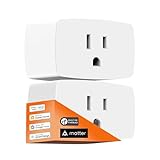
Overview: The Onvis Matter Over Thread Smart Plug offers a two-pack entry point into the Thread ecosystem at $34.99. These compact outlets support all major platforms including Apple Home, Alexa, Google Home, and SmartThings, making them versatile additions to any modern smart home setup.
What Makes It Stand Out: Thread technology sets these plugs apart from standard Wi-Fi alternatives, providing faster response times and improved reliability through mesh networking. The ultra-compact design is particularly noteworthy—you can stack two units in a single outlet without blocking adjacent sockets, maximizing your outlet real estate. Matter certification ensures seamless interoperability across ecosystems.
Value for Money: At $17.50 per plug, this 2-pack delivers solid value for Thread-enabled devices. While slightly pricier than basic Wi-Fi plugs, the Thread future-proofing and enhanced responsiveness justify the premium. For Apple Home users with a HomePod mini or Apple TV, the remote access capabilities add significant convenience.
Strengths and Weaknesses:
- Strengths: Thread connectivity for faster response; compact, stackable design; broad Matter compatibility; no subscription fees; works offline during internet outages.
- Weaknesses: Requires Apple hub for remote control; Thread benefits limited without additional Thread devices; brand less established than competitors.
Bottom Line: Ideal for Apple ecosystem users looking to build a Thread network without overspending. The compact design and Matter certification make it a smart investment for responsive, reliable smart home automation.
2. Kasa Matter Smart Plug w/ Energy Monitoring, Compact Design, 15A/1800W Max, Super Easy Setup, Works with Apple Home, Alexa & Google Home, UL Certified, 2.4G Wi-Fi Only, White, KP125M (4-Pack)

Overview: Kasa’s 4-pack Matter-enabled smart plugs bring energy monitoring to the masses at an aggressive $37.93 price point. These UL-certified outlets deliver core smart features while tracking power consumption, making them practical tools for both automation and energy management across any compatible platform.
What Makes It Stand Out: Energy monitoring at under $10 per plug is exceptional value rarely matched in the market. The Matter certification ensures frictionless operation across Apple Home, Alexa, Google Home, and SmartThings from a single app. Kasa’s reputation for reliability and straightforward setup removes typical smart home complexity.
Value for Money: At $9.48 per unit, this 4-pack represents outstanding value. Energy monitoring typically commands a 50-100% price premium, yet Kasa bundles it at entry-level pricing. The UL certification and 2-year warranty provide peace of mind that budget alternatives lack.
Strengths and Weaknesses:
- Strengths: Unbeatable price with energy monitoring; trusted brand reliability; Matter multi-platform support; UL certified flame-retardant design; no hub required; simple app interface.
- Weaknesses: 2.4GHz Wi-Fi only (no 5GHz); lacks Thread’s mesh networking; may experience Wi-Fi congestion in crowded networks; no power usage history export.
Bottom Line: The best budget choice for energy-conscious users. If you want reliable energy monitoring without paying premium prices, this 4-pack delivers unbeatable value and performance for most smart home setups.
3. Eve Energy (Matter) - Smart Plug, App and Voice Control, 100% Privacy, Matter Over Thread, Works with Apple Home, Alexa, Google Home, SmartThings

Overview: The Eve Energy smart plug positions itself as the privacy-focused premium option at $39.95. Built exclusively for Thread networks, it targets users who prioritize data security and local control over cloud-dependent alternatives while maintaining broad Matter ecosystem compatibility.
What Makes It Stand Out: The uncompromising privacy stance—no Eve cloud, no registration, no tracking—is unique in a market dominated by data-hungry platforms. Thread technology provides robust mesh networking that strengthens as you add devices. The UL-certified build quality and native integration with major platforms demonstrate serious engineering.
Value for Money: At nearly $40 for a single plug, this is a premium investment. The price is justified for privacy-conscious users and Thread ecosystem builders who value local-only communication. However, casual users may find Wi-Fi alternatives more economical for basic automation needs.
Strengths and Weaknesses:
- Strengths: 100% private local control; Thread mesh networking; premium build quality; no subscription required; works during internet outages; excellent Apple Home integration.
- Weaknesses: Requires specific Thread border router; highest per-unit cost; Android support less refined; limited energy data visualization compared to competitors.
Bottom Line: Perfect for Apple-centric households prioritizing privacy and Thread networking. If you’re building a robust, cloud-independent smart home, the premium price delivers unmatched data security and reliability.
4. Eve Energy (Matter) 2 Pack – Smart Plug, App and Voice Control, 100% Privacy, Matter Over Thread, Works with Apple Home, Alexa, Google Home, SmartThings, Requires Thread Border Router

Overview: This two-pack of Eve Energy smart plugs brings the same privacy-first Thread technology at a reduced per-unit cost of $34.98 each. Designed for users committed to building a secure, local-only smart home network across Apple, Amazon, Google, or Samsung ecosystems.
What Makes It Stand Out: The privacy-centric design remains the headline—zero cloud dependency, no data tracking, and local-only communication. Thread’s mesh networking becomes more valuable with multiple units, creating a self-healing network that improves coverage and reliability throughout your home without congesting Wi-Fi.
Value for Money: At $69.95 for two, the per-unit savings are noticeable but still position this as a premium offering. The value emerges when building a comprehensive Thread network where privacy is non-negotiable. For single-room automation, cheaper Wi-Fi alternatives make more sense.
Strengths and Weaknesses:
- Strengths: Unparalleled privacy protection; Thread network strengthening with multiple units; Matter-certified interoperability; high-quality UL construction; reliable offline operation.
- Weaknesses: Requires compatible Thread border router; significant upfront investment; limited to 2.4GHz Thread (not Wi-Fi); sparse energy usage analytics.
Bottom Line: A strategic purchase for privacy-focused users expanding their Thread mesh network. The 2-pack offers modest savings while delivering the same premium, cloud-free experience that Eve is known for.
5. Kasa Smart Plug, Matter Compatible, Energy Monitoring, Compact Design, 15A/1800W Max, Super Easy Setup, Works with Apple Home, Alexa & Google Home, UL Certified, 2.4G Wi-Fi Only, White, KP125M(2-Pack)

Overview: Kasa’s 2-pack energy monitoring smart plugs deliver core Matter functionality at $22.73, making them an accessible entry point for budget-conscious shoppers. These UL-certified outlets combine power tracking with reliable Wi-Fi connectivity across all major smart home platforms.
What Makes It Stand Out: Energy monitoring at $11.37 per plug is remarkable value from a trusted brand. The Matter certification eliminates platform lock-in, allowing seamless control through Apple Home, Alexa, Google Home, or SmartThings. Kasa’s proven track record for stable connections and intuitive app control stands out in the crowded budget segment.
Value for Money: This 2-pack hits the sweet spot for small-scale deployments. The per-unit cost is slightly higher than the 4-pack but remains highly competitive. You get energy monitoring, UL safety certification, and Matter compatibility at a price point where most competitors offer basic on/off functionality only.
Strengths and Weaknesses:
- Strengths: Excellent price for energy monitoring; reputable brand reliability; Matter multi-platform support; compact non-blocking design; 2-year warranty; no hub needed.
- Weaknesses: 2.4GHz Wi-Fi only; no Thread mesh capabilities; energy data lacks export options; setup can be tricky on mesh Wi-Fi networks.
Bottom Line: The perfect starter kit for energy-conscious smart home beginners. If you need two reliable, safe, and feature-rich smart plugs without the Thread premium, this package offers outstanding bang for your buck.
6. Linkind Matter Smart Plug, Work with Apple Home, Siri, Alexa, Google, SmartThings, Smart Home Smart Outlet Timer 15A/1800W, APP Remote Control & Schedule, ETL & FCC Certified, 2.4G Wi-Fi Only, 4 Pack

Overview: The Linkind Matter Smart Plug 4-Pack delivers future-proof smart home control at an aggressive price point. These 15A/1800W outlets support Apple Home, Alexa, Google Home, and SmartThings through the Matter standard, enabling seamless cross-platform compatibility. A critical advantage is offline-ready control—once configured on your local network, devices continue communicating during internet outages using the Matter protocol. While major platforms require a Matter-certified hub, the AiDot app offers hub-free operation for simpler setups. The plugs support scheduling, timers, and remote app control, making them suitable for lights, fans, humidifiers, and holiday decorations.
What Makes It Stand Out: Matter certification under $6 per plug is virtually unmatched. The offline control capability ensures reliability during connectivity issues, a feature often reserved for premium devices. Using the AiDot app bypasses hub requirements entirely, lowering the entry barrier for smart home newcomers who want immediate functionality without additional hardware investments.
Value for Money: At $23.73 for four ($5.93 each), this package undercuts most competitors by 40-60%. You’re getting Matter compatibility and offline functionality typically found in $12-15 plugs, representing exceptional value for multi-room deployments. The cost-per-outlet makes it feasible to automate entire homes without the usual financial barrier.
Strengths and Weaknesses: Strengths include Matter support, offline operation, broad platform compatibility, and unbeatable pricing. Weaknesses include 2.4G Wi-Fi only (no 5G support), mandatory hub for native platform integration, and AiDot’s smaller user community compared to Tapo or Kasa, which may affect long-term support.
Bottom Line: The best budget gateway into Matter-enabled smart homes. Ideal for users prioritizing interoperability and reliability over premium brand polish, and perfect for beginners expanding their smart home ecosystem gradually.
7. TP-Link 𝗧𝗮𝗽𝗼 Smart Plug Wi-Fi Mini, Energy Monitoring, Compatible with Alexa & Google Home & Samsung SmartThings, Timer, 15A/1800W Max, ETL Certified, 2.4G Wi-Fi Only, Tapo P115(2-Pack)

Overview: The TP-Link Tapo P115 Mini Smart Plug 2-Pack prioritizes energy consciousness over emerging connectivity standards. These Wi-Fi plugs deliver comprehensive energy monitoring through clear statistics and intuitive charts, enabling users to identify power-hungry appliances. The standout billing integration estimates costs and suggests off-peak scheduling for high-consumption devices. Unique smart charging automatically disconnects power when devices reach custom battery thresholds, preventing overcharging damage. With 15A/1800W capacity and auto-shutoff overload protection, they safely manage most household electronics. Alexa, Google Assistant, and SmartThings support enables voice control, while the Tapo app provides remote access and scheduling.
What Makes It Stand Out: The energy management suite rivals standalone monitors, offering cost visualization and automated off-peak operation. Smart charging is a rare feature that actively extends device lifespan without manual intervention, making it genuinely useful rather than just a data source.
Value for Money: At $10 per plug, you’re paying a modest premium over basic smart plugs but gaining comprehensive energy insights. Dedicated energy monitors often cost $15-20 alone, making this a smart 2-in-1 purchase for conservation-minded users who want both control and analytics.
Strengths and Weaknesses: Strengths include detailed energy analytics, billing estimates, smart charging, safety features, and TP-Link’s mature app ecosystem. Weaknesses include lack of Matter support (potential obsolescence), 2.4G Wi-Fi limitation, and narrower platform compatibility than Matter alternatives.
Bottom Line: Perfect for users wanting actionable energy data today rather than tomorrow’s connectivity standards. A practical choice for monitoring high-consumption devices where immediate cost savings outweigh future-proofing concerns.
8. Onvis Matter Over Thread Smart Plug, Smart Mini Outlet, Works with Apple Home, Alexa & Google Home, 15A/1800W (4Pack)

Overview: The Onvis Matter Over Thread Smart Plug 4-Pack represents the cutting edge of smart home connectivity, combining Matter certification with Thread networking for superior performance. These 15A/1800W outlets work seamlessly across Apple Home, Alexa, Google Home, and SmartThings, ensuring maximum compatibility. Thread technology provides faster, more reliable communication than Wi-Fi alone, creating a robust mesh network that improves with each added device. When internet service fails, Matter’s local networking keeps your automations running. The ultra-compact design prevents outlet blocking and allows vertical stacking, solving a common smart plug frustration. Remote access requires a HomePod mini or Apple TV, positioning this as ideal for Apple-centric households.
What Makes It Stand Out: Thread integration delivers noticeably faster response times and improved reliability versus Wi-Fi-only alternatives. The space-saving design is genuinely innovative, doubling outlet capacity in tight spaces—a practical benefit that matters more than specs alone.
Value for Money: At $14 per plug, you’re paying a 40% premium over Wi-Fi Matter plugs. However, Thread’s performance benefits and future-proofing justify the cost for serious smart home enthusiasts building a comprehensive ecosystem where responsiveness is critical.
Strengths and Weaknesses: Pros include Thread speed, Matter compatibility, offline operation, compact stackable design, and robust build quality. Cons are higher price, Thread benefits limited without Apple hubs, and marginal gains for small deployments where Wi-Fi is already reliable.
Bottom Line: The premium choice for Apple-heavy smart homes seeking Thread’s performance advantages. Best purchased in multi-packs to maximize mesh network benefits and achieve full value from the technology investment.
9. TP-Link 𝗧𝗮𝗽𝗼 Smart Plug Wi-Fi Mini, Energy Monitoring, Compatible with Alexa & Google Home & Samsung SmartThings, Timer, 15A/1800W Max, ETL Certified, 2.4G Wi-Fi Only, Tapo P115(4-Pack)

Overview: The TP-Link Tapo P115 4-Pack scales the energy monitoring prowess of its 2-pack sibling for whole-home deployment. These mini smart plugs provide granular energy consumption data through detailed charts and cost estimation tools, making it economical to track multiple appliances simultaneously. The smart charging feature protects device batteries by cutting power at custom thresholds, while auto-shutoff prevents dangerous overloads. With 15A/1800W capacity, they handle everything from space heaters to entertainment centers. Alexa, Google Assistant, and SmartThings integration enables voice control, and the Tapo app supports remote management and scheduling across all four devices from a single interface.
What Makes It Stand Out: Bulk energy monitoring at under $8.25 per plug is exceptional value. The ability to identify energy vampires across multiple rooms simultaneously provides actionable data that single plugs cannot match, enabling whole-home efficiency strategies rather than spot-checking.
Value for Money: The 4-pack reduces per-unit cost by 18% versus the 2-pack, making comprehensive home energy tracking affordable. Competing energy monitoring solutions would cost 2-3x more for equivalent coverage, and you’d still need separate smart plugs for control.
Strengths and Weaknesses: Strengths include detailed energy analytics, cost projections, smart charging, overload protection, and TP-Link’s proven reliability. Weaknesses are no Matter support, 2.4G Wi-Fi only, and limited cross-platform flexibility compared to Matter devices that offer broader ecosystem compatibility.
Bottom Line: The most cost-effective solution for whole-home energy monitoring. Perfect for users wanting to audit and optimize household power consumption without investing in a Matter ecosystem, delivering immediate utility bill insights.
10. Onvis Matter Over Thread Smart Plug, Smart Mini Outlet, Works with Apple Home, Alexa & Google Home, 15A/1800W (1Pack)

Overview: The Onvis Matter Over Thread Smart Plug single pack provides a low-risk entry point into next-generation smart home connectivity. This 15A/1800W outlet merges Matter certification with Thread networking, delivering cross-platform compatibility with Apple Home, Alexa, Google Home, and SmartThings while offering superior speed and reliability versus Wi-Fi alternatives. Thread’s mesh architecture becomes more robust with each added device, creating a self-healing network less prone to congestion. The ultra-compact design prevents outlet blocking and enables stacking, solving practical installation challenges. Matter’s offline protocol ensures local control during internet outages. Remote access requires a HomePod mini or Apple TV, positioning this as ideal for Apple-centric users wanting to evaluate Thread performance before scaling.
What Makes It Stand Out: Single-unit availability for Thread technology is uncommon, allowing risk-free evaluation of performance benefits. The compact form factor is genuinely innovative, maximizing outlet utility without sacrificing functionality or compatibility.
Value for Money: At $19.99, the per-unit premium is steep, but it serves as an inexpensive trial compared to buying a discounted multi-pack that may not meet expectations. For curious adopters, it’s a smart validation purchase that prevents larger wasted investments.
Strengths and Weaknesses: Strengths include Matter future-proofing, Thread responsiveness, space-saving design, and offline operation. Weaknesses include poor bulk pricing, minimal Thread mesh benefits with one device, and Apple hub requirements for remote access that limit appeal for Android households.
Bottom Line: Perfect for testing Thread’s real-world performance in your specific environment. Commit to the 4-pack only after confirming compatibility and measuring responsiveness gains, making this a sensible pilot purchase.
Understanding Thread Technology and Its Role in Smart Plugs
Thread isn’t just another wireless standard—it’s a complete reimagining of how smart devices communicate. Built on IPv6 and 6LoWPAN, Thread creates a secure, mesh network where each device acts as a router, eliminating single points of failure. For smart plugs, this means they can relay signals for neighboring devices while maintaining their primary function of power control.
What Makes Thread Different from Other Protocols?
Traditional protocols like Wi-Fi force devices to maintain constant high-power connections to a central access point. Thread devices, by contrast, enter extended sleep states, waking only to transmit brief data packets before returning to microamp-draw slumber. The protocol’s time-slotted channel hopping reduces radio-on time to mere milliseconds, while its mesh topology means devices can communicate directly with each other rather than routing everything through power-hungry intermediaries. This architectural difference translates to typical standby consumption of 0.5 watts versus 1.5-2 watts for Wi-Fi alternatives.
The Mesh Network Advantage for Energy Management
In a Thread mesh, each smart plug strengthens the network while barely increasing overall power draw. A single plug might use 0.4 watts, but adding five more plugs only raises total network consumption to 0.6 watts due to shared routing efficiencies. This scalability is crucial for whole-home energy management. The network automatically optimizes paths based on signal strength and device health, ensuring your energy monitoring data always finds the most efficient route to your border router—even if several devices are physically unplugged.
Why Ultra-Low-Power Matters for Smart Plugs
The promise of smart plugs has always been energy savings, but the irony is that many older models consume more power than they save. Vampire power—the electricity devices draw in standby mode—can account for 10% of residential energy use. Thread-enabled plugs tackle this at the protocol level.
Standby Power Consumption Explained
A typical Wi-Fi smart plug maintains a persistent TCP connection to cloud servers, requiring the radio to wake every 30-50 milliseconds to maintain association. This “keep-alive” traffic consumes 800-1200 milliwatts continuously. Thread’s design eliminates this requirement through sleepy end node operation. Devices can sleep for seconds or minutes, waking only when polled by the border router or when local events require action. This reduces idle power to 50-150 milliwatts—a difference that compounds across dozens of devices.
Real-World Impact on Your Energy Bills
Consider a home with 20 smart plugs. Wi-Fi-based units would consume roughly 35 kWh monthly just staying connected—about $5-7 on average bills. Equivalent Thread devices would use under 5 kWh, or less than $1. Over a year, that’s a $50-70 difference, meaning Thread plugs can pay for their own premium within 18-24 months through protocol efficiency alone. Factor in more accurate energy monitoring that enables behavioral changes, and the savings multiply further.
Key Features to Look for in Thread-Enabled Smart Plugs
Not all Thread plugs are created equal. The protocol provides the foundation, but implementation details determine real-world performance and longevity. Focus on specifications that indicate genuine engineering commitment rather than checkbox features.
Native Thread Support vs. Border Router Dependency
Some devices claim Thread compatibility but function as minimal Thread nodes, offloading all logic to the border router. Look for plugs with full Thread router capability—these can extend your mesh and maintain network stability even if the border router reboots. Check technical specs for “Thread Certified” status and router-eligible device class. Avoid products that only support Thread as an end device unless you’re deploying them in small numbers.
Power Monitoring Capabilities
True energy management requires more than on/off control. Seek plugs with integrated power measurement chips sampling at 1 kHz or higher for accurate readings of inductive loads like refrigerators. The best units report voltage, current, power factor, and cumulative consumption with ±1% accuracy. Verify that power data is processed locally and transmitted efficiently—some cheaper models poll constantly, negating Thread’s power advantages.
Overload Protection and Safety Certifications
Thread’s low power draw doesn’t eliminate electrical hazards. Quality plugs include 15A relays with UL or ETL certification, 1000V surge protection, and thermal cutoffs at 85°C. Check for independent lab testing—UL 60730 compliance for automatic electrical controls is the gold standard. Avoid units lacking specific safety certifications, as Thread’s mesh networking can mask device failures until catastrophic.
Compact Design and Form Factor Considerations
The most efficient Thread plug is useless if it blocks adjacent outlets. Measure your receptacle spacing—standard wall plates have 1.5 inches between outlets. Look for plugs under 1.3 inches thick that position the Thread antenna away from metal wall boxes. Right-angle designs often perform better by orienting the antenna horizontally, improving mesh connectivity while maintaining furniture clearance.
HomeKit, Matter, and Cross-Platform Compatibility
Thread is the transport; Matter is the language. Ensure plugs support Matter 1.0 or higher for broad ecosystem compatibility. For Apple-centric homes, native HomeKit support via Thread means local control without cloud dependencies. Android users should verify Google Home integration. The key is multi-admin capability—plugs that can pair with multiple platforms simultaneously without factory resetting, preserving your mesh network investment.
Scheduling and Automation Intelligence
Evaluate the plug’s onboard processing. Premium models store schedules locally in non-volatile memory, executing timers even if the network is down. Look for sunrise/sunset calculations performed on-device, conditional logic (“turn off if power draw drops below X”), and millisecond-accurate time synchronization via Thread’s network-wide time protocol. Cloud-dependent scheduling defeats Thread’s local reliability benefits.
Firmware Update Policies and Longevity
Thread’s security relies on regular updates. Investigate manufacturers’ track records—do they provide updates for 3+ years? The best vendors offer automatic, incremental updates over Thread that consume minimal bandwidth. Check for signed firmware and rollback protection. Avoid brands without stated update policies; orphaned devices become security liabilities and degrade mesh performance.
Installation and Setup Best Practices
Proper deployment determines whether your Thread network achieves its ultra-low-power potential. Random placement creates coverage gaps and forces devices to transmit at higher power, negating efficiency gains.
Positioning Your Thread Border Router
The border router is your network’s gateway to Wi-Fi and ethernet. Place it centrally, at waist height, away from metal appliances. Ideal locations include open shelves or mounted on interior walls. Avoid closets, basements, or proximity to microwave ovens. For multi-story homes, position the border router on the main floor—Thread’s mesh propagates well horizontally but struggles with vertical concrete barriers.
Building a Robust Mesh Network
Start with three to four router-capable plugs forming a triangle around your border router. Space them 20-40 feet apart, with no more than two walls between nodes. This creates redundant paths. Add end-device plugs afterward—they’ll automatically attach to the strongest router. Power-cycle the entire network after installation to force route optimization. Use a Thread network analyzer (available in some advanced home automation apps) to verify mesh health and identify weak links.
Troubleshooting Common Connectivity Issues
Thread networks can be self-healing, but not self-configuring. If a plug shows intermittent connectivity, check for 2.4 GHz Wi-Fi congestion—Thread uses the same spectrum but should auto-select clear channels. Physical obstructions like mirrored walls or refrigerators create dead zones; relocate router plugs accordingly. Network partition issues often stem from mixing Thread 1.1 and 1.2 devices—ensure firmware uniformity. Persistent problems may indicate a defective router-capable plug flooding the mesh with bad routes; isolate devices one by one to identify the culprit.
Advanced Energy Management Strategies
Thread-enabled plugs enable sophisticated conservation tactics impossible with cloud-dependent devices. Their low latency and local processing allow responsive control that adapts to real-time conditions.
Creating Zone-Based Power Control
Group plugs by electrical circuit rather than room. This lets you monitor circuit-level consumption and identify breaker overloads before they trip. Create Thread “zones” where plugs communicate usage patterns to a local coordinator—perhaps a Raspberry Pi running Home Assistant—enabling intelligent load shedding during peak rate periods. For example, when HVAC systems draw high current, the coordinator can automatically defer EV charging or pool pump operation without cloud round-trips.
Integrating with Solar and Battery Systems
Thread’s local control shines in hybrid energy setups. Configure plugs as controllable loads that respond to solar inverter output in real-time. When panels generate excess power, Thread’s sub-100ms latency allows immediate activation of opportunistic loads like water heaters or battery maintainers. Use power-monitoring plugs on critical circuits to provide telemetry to energy management systems via MQTT over Thread, enabling sophisticated charge/discharge cycling that maximizes self-consumption.
Using Data Analytics for Usage Patterns
Export your Thread plug’s power data to local databases. High-frequency sampling reveals appliance degradation—a refrigerator’s compressor drawing progressively more current indicates failing seals. Analyze duty cycles to identify devices that should be replaced. Thread’s efficient data transport means you can sample every second without network congestion, building rich datasets for machine learning models that predict optimal automation schedules based on your actual behavior patterns.
Thread vs. Wi-Fi vs. Zigbee: Making the Right Choice
The protocol debate isn’t about superiority—it’s about suitability. Each technology has valid use cases, but Thread’s architecture makes it uniquely suited for energy-focused deployments.
When Wi-Fi Smart Plugs Still Make Sense
Wi-Fi plugs excel in single-device scenarios where mesh benefits don’t apply. For remote cabin monitoring with one camera and one plug, Wi-Fi’s direct cloud connection is simpler. They’re also preferable for high-bandwidth applications like plugs with integrated cameras or speakers. However, for pure energy management, Wi-Fi’s power overhead rarely justifies its use unless you have fewer than three devices total.
Zigbee’s Place in the Modern Smart Home
Zigbee remains relevant in established smart homes, but its 250 kbps data rate and channel limitations create bottlenecks for power-monitoring data. Zigbee devices often consume 20-30% more power than Thread equivalents due to less aggressive sleep scheduling. Migration is worthwhile for energy-focused users, though Zigbee’s mature ecosystem means you can phase the transition—some advanced hubs support both protocols, allowing gradual replacement as devices fail.
Future-Proofing Your Smart Plug Investment
Technology obsolescence is expensive and wasteful. Thread’s design anticipates evolution, but hardware choices today determine upgrade paths tomorrow.
Matter Standard Evolution
Matter 1.1 and 1.2 introduced device type expansions and improved commissioning. Ensure your plugs have enough flash memory (minimum 2MB) to accommodate future Matter updates. Devices with modular firmware design can add new cluster types—like water leak detection or temperature sensing—via over-the-air updates, effectively becoming multi-function sensors that justify their outlet real estate long-term.
Thread 1.3 and Beyond
Thread 1.3 promises enhanced security and better coexistence with Wi-Fi 6E. While current devices are forward-compatible, look for chips supporting the latest Thread specification (nRF52840, EFR32MG24). These have hardware accelerators for future cryptographic requirements and sufficient RAM for more complex mesh routing algorithms. Investing in current-generation silicon ensures your plugs won’t become network bottlenecks as Thread evolves.
Security Considerations for Thread Networks
Ultra-low-power doesn’t mean ultra-low-security. Thread’s design includes robust protections, but implementation varies dramatically between vendors.
Encryption and Authentication Protocols
Thread mandates AES-128 CCM encryption at the network layer, but application-layer security is optional. Insist on plugs that also encrypt power monitoring data end-to-end using Matter’s certificate-based authentication. Verify support for hardware secure elements that store private keys—software-only implementations are vulnerable to physical extraction. Check for secure boot chains that verify firmware signatures before execution, preventing malicious code injection.
Physical Security Features
Tamper-evident seals and locked firmware modes prevent attack vectors that bypass wireless security. For outdoor or garage installations, select plugs with IP-rated enclosures and grounded metal housings that act as Faraday cages, preventing electromagnetic side-channel attacks. Internal current sensors should be galvanically isolated from control circuitry—this prevents a compromised plug from becoming a pathway for mains voltage to reach low-voltage networks.
Cost Analysis: Total Cost of Ownership
Sticker price rarely reflects true value. A comprehensive cost model reveals why premium Thread plugs often deliver better returns than budget alternatives.
Initial Investment vs. Long-Term Savings
A quality Thread plug costs $25-40 versus $10-15 for basic Wi-Fi models. However, the Thread plug’s $5-7 annual energy savings per device means break-even occurs in 3-5 years. Add reduced router load (extending your $200 Wi-Fi 6 router’s lifespan) and avoided cloud subscription fees, and the payback period drops to under two years. Budget plugs with poor power supplies often fail within 18 months, while robust Thread devices typically last 5-7 years.
Subscription Fees and Hidden Costs
Many Wi-Fi plugs require $2-5 monthly subscriptions for advanced features like energy history or automation. Thread plugs using local control via HomeKit or Home Assistant avoid these fees entirely. Factor in data privacy costs—cloud-based plugs monetize usage patterns, while Thread’s local architecture keeps your behavioral data in your home. The hidden cost of network congestion is harder to quantify but manifests as streaming buffering and video call drops when too many IoT devices saturate your Wi-Fi.
Environmental Impact and Sustainability
True sustainability considers the entire lifecycle, from manufacturing to e-waste. Thread’s architecture aligns with circular economy principles better than competing protocols.
E-Waste Reduction Through Longevity
Thread’s lower operating temperatures and efficient power supplies extend component life. Solid-state relays in premium models eliminate mechanical wear points, achieving 100,000+ switching cycles versus 10,000 for electromechanical relays. Firmware support for 5+ years means devices remain functional and secure, reducing replacement frequency. When devices do fail, Thread’s standardized components make recycling easier—many manufacturers now offer take-back programs specifically for Thread devices.
Energy Savings vs. Manufacturing Footprint
A Thread plug’s manufacturing carbon footprint is roughly 15 kg CO2e, about 2 kg more than basic Wi-Fi plugs due to more complex radio chips. However, the energy savings of 30 kWh annually offset this in under six months of operation. Over a typical 5-year lifespan, each Thread plug prevents approximately 150 kg of CO2 emissions compared to Wi-Fi alternatives. For a whole-home deployment, this is equivalent to taking a car off the road for a month.
Frequently Asked Questions
How many Thread-enabled smart plugs do I need to see meaningful energy savings?
Even a single plug controlling a high-standby device like a gaming console can save $10-15 annually, but the real benefits emerge with three or more devices forming a mesh. At 10-15 plugs covering entertainment centers, office equipment, and kitchen appliances, most households see 5-8% total bill reductions.
Can Thread smart plugs work without internet connectivity?
Absolutely. Thread networks operate locally using Matter protocols. You can control devices, execute schedules, and monitor power through HomeKit or Home Assistant with no cloud connection. Internet is only required for initial firmware downloads and remote access.
Will Thread devices interfere with my Wi-Fi network?
Thread uses the same 2.4 GHz band but employs channel hopping and low duty cycles that minimize interference. In practice, well-designed Thread networks reduce Wi-Fi congestion by offloading IoT traffic, often improving overall network performance.
What’s the maximum range between Thread devices?
In open space, Thread routers can communicate up to 200 feet. Through typical residential walls, plan on 30-50 feet between router-capable devices. End devices can be farther from routers since they don’t relay traffic. Concrete and metal significantly reduce range.
Do I need a special hub for Thread smart plugs?
You need a Thread border router, which is built into many modern smart speakers, thermostats, and some Wi-Fi access points. Unlike proprietary hubs, Thread border routers from different brands interoperate, so you can add redundancy without vendor lock-in.
How secure are Thread networks compared to Wi-Fi?
Thread networks use AES-128 encryption and device authentication by default—features that are optional on many Wi-Fi IoT devices. The mesh topology eliminates single points of failure, and local control reduces attack surfaces. However, physical device security varies by manufacturer.
Can I mix Thread and non-Thread devices in the same automation?
Yes, through platforms like Home Assistant or SmartThings that bridge protocols. However, the automation’s reliability depends on the weakest link. For time-critical energy management, keep core logic within the Thread network and use bridging only for non-critical integrations.
What’s the typical payback period for upgrading from Wi-Fi to Thread plugs?
For homes with 10+ smart plugs, expect 18-24 months based on energy savings alone. Faster payback occurs if you’re paying IoT cloud subscriptions or need to upgrade your Wi-Fi router due to congestion. The network resilience benefits provide additional value that’s harder to monetize.
Do Thread smart plugs support high-power appliances?
Most residential Thread plugs support 15A/1800W resistive loads. For inductive loads like air conditioners or pumps, check for specific ratings—many are limited to 1/3 HP motors. Always verify the relay type and surge current rating before controlling large appliances.
How future-proof is Thread technology?
Thread is maintained by the Connectivity Standards Alliance alongside Matter, with major tech companies committed to its roadmap. The protocol is designed for over-the-air evolution, and current hardware is expected to support updates for at least 5-7 years. Its IP-based architecture aligns with broader IoT trends, making it a safe long-term investment.