Imagine walking up to your front door with arms full of groceries and saying, “Hey Google, unlock the front door,” then hearing that satisfying click as the deadbolt retracts automatically. Or setting your home to “Goodnight” mode and having every lock secure itself while lights dim and the thermostat adjusts—all with a single phrase. This isn’t futuristic fantasy; it’s the reality of voice-activated smart locks integrated with Google Routines. But with dozens of options flooding the market, each promising seamless integration, how do you separate genuine game-changers from glorified Bluetooth deadbolts?
The landscape of smart home security has evolved dramatically, and Google Routines represent the connective tissue that transforms isolated gadgets into a cohesive, intelligent ecosystem. This guide cuts through the marketing noise to examine what truly matters when selecting a voice-activated lock that will play nice with your Google Home setup. We’ll explore the technical foundations, security imperatives, and practical considerations that separate a frustrating purchase from a five-year love affair with your front door.
Top 10 Voice-Activated Locks for Google Routines
Detailed Product Reviews
1. Philips Smart Lock, Smart Door Lock Built-in WiFi, App Remote Control, Keyless Entry Door Lock for Front Door, Deadbolt Lock Auto Lock, Support Alexa & Google, IP54 Waterproof, Black

Overview: The Philips Smart Lock delivers robust keyless entry at a mid-range price point, combining built-in WiFi connectivity with practical security features. Designed for homeowners seeking reliable remote access without additional hubs, this black deadbolt integrates directly with your home network and supports both Alexa and Google Assistant for voice control. The lock offers four entry methods including physical buttons, mobile app, voice commands, and traditional keys, making it versatile for various household needs.
What Makes It Stand Out: Its integrated WiFi eliminates the need for a separate hub, reducing clutter and setup complexity. The IP54 waterproof rating provides durability against weather elements, while the physical button design offers reliability over touchscreens in wet conditions. The ability to generate 100 customizable passwords—including permanent, one-time, and timed options—makes it exceptionally versatile for managing access for family, guests, and service providers with granular control.
Value for Money: At $129.99, this lock sits in the sweet spot between budget Bluetooth models and premium options. The built-in WiFi alone justifies the cost compared to hub-dependent alternatives, saving you $50-100 on additional hardware. Six-month battery life and comprehensive app controls deliver ongoing value that matches pricier competitors while maintaining the trusted Philips brand reputation.
Strengths and Weaknesses: Strengths include hub-free WiFi, flexible password management, weather resistance, and reliable physical buttons. Weaknesses are the lack of included batteries and the button interface, which some may find less modern than glass touchscreens. The brand recognition of Philips also inspires confidence in long-term support and reliability.
Bottom Line: The Philips Smart Lock is an excellent choice for homeowners wanting reliable, hub-free remote access with robust access management. It balances features, price, and reliability without significant compromise, making it a smart middle-ground investment.
2. Google Nest x Yale Lock - Tamper-Proof Smart Lock for Keyless Entry - Keypad Deadbolt Lock for Front Door - Satin Nickel

Overview: The Google Nest x Yale Lock represents a premium collaboration between two industry leaders, delivering a tamper-proof smart deadbolt designed specifically for the Google ecosystem. This satin nickel lock replaces your existing deadbolt with a sleek LED keypad that eliminates physical keys entirely. Built for seamless integration with Google Home, it offers sophisticated access management and security monitoring for discerning homeowners who value ecosystem cohesion.
What Makes It Stand Out: Its deep Google integration enables remote unlocking from anywhere through the app, while Privacy Mode lets you disable the keypad entirely when you don’t want to be disturbed. The ability to schedule passcodes for specific time windows is ideal for managing dog walkers, cleaners, or Airbnb guests. Tamper alerts and entry notifications provide peace of mind that cheaper alternatives lack, creating a truly security-conscious experience.
Value for Money: At $199, this lock commands a premium but delivers commensurate value for Google Home users. The specialized integration, robust security features, and build quality justify the price over generic smart locks. However, those outside the Google ecosystem won’t reap full benefits, making it a targeted rather than universal value proposition that rewards ecosystem commitment.
Strengths and Weaknesses: Strengths include seamless Google integration, scheduled passcodes, Privacy Mode, tamper detection, and a clean, keyless design. Weaknesses are the premium price, requirement for specific door measurements, and limited compatibility with other smart home platforms. Battery dependence without a physical key backup may concern some traditional users.
Bottom Line: This is the ideal smart lock for committed Google Home users who prioritize ecosystem integration and advanced access scheduling. The premium price delivers a polished, secure experience that cheaper alternatives can’t match within the Google environment.
3. Yale Smart Lock with Matter - Made for Google Home - Snow - YRD510-MT1-SNW

Overview: Yale’s Matter-enabled smart lock positions itself as a future-proof entry solution for Google Home users at an aggressively competitive price. This snow-finished deadbolt leverages emerging Matter standards to ensure long-term compatibility across smart home ecosystems. While requiring a Matter-enabled hub for full remote functionality, it delivers core smart lock capabilities with an eye toward tomorrow’s connected home standards, making it a forward-thinking investment.
What Makes It Stand Out: Matter integration sets this apart, promising interoperability with multiple platforms beyond just Google, though it currently shines within Google’s ecosystem. The sub-$120 price point makes it one of the most affordable ways to adopt this next-generation technology. Hands-free Google Assistant control and the trusted Yale brand name add further distinction, while the snow finish offers a modern aesthetic alternative.
Value for Money: At $115.10, this lock offers exceptional value for early adopters and budget-conscious buyers alike. You’re getting Matter future-proofing and Google Home integration at a price that undercuts many non-Matter alternatives. The trade-off is hub requirement, but those already invested in Google Nest devices likely have the necessary hardware, making the total cost of ownership quite low.
Strengths and Weaknesses: Strengths include Matter future-proofing, seamless Google device integration, voice control, and aggressive pricing. Weaknesses are the hub requirement for remote access and current limitation to Google ecosystem despite Matter’s promise. The snow color may not suit all door aesthetics, and setup complexity is slightly higher than hub-free alternatives.
Bottom Line: Perfect for Google Home users wanting to future-proof their smart home without breaking the bank. The Matter support ensures this lock won’t become obsolete as smart home standards evolve, protecting your investment.
4. LaView Bluetooth Enabled Door Lock, Wireless & Keyless Entry Smart Door Lock, Alexa and Google Assistant-Enabled Smart Lock, Auto-Lock, Unlock Tracking, LaView App Control, Fits on Most Deadbolts

Overview: The LaView Bluetooth Door Lock democratizes smart home security with an ultra-affordable price that makes keyless entry accessible to virtually anyone. This minimalist device replaces only your deadbolt’s thumbturn, offering Bluetooth-based control within a limited range. Designed for renters and budget-conscious homeowners, it provides essential smart features without the complexity or cost of WiFi-enabled alternatives, focusing on local convenience.
What Makes It Stand Out: The $21.57 price point is revolutionary, undercutting competitors by hundreds of dollars. Installation takes minutes without replacing the entire deadbolt, making it ideal for renters who can’t modify doors. Eight-month battery life exceeds many premium locks, while the 200-event tracking history provides surprising accountability for such a cheap device. The auto-lock feature adds genuine security value despite the low cost.
Value for Money: The value proposition is undeniable—you’re getting basic smart lock functionality for less than a dinner out. While it lacks remote access, the auto-lock feature and app control within Bluetooth range deliver genuine convenience. This is a no-brainer for those wanting to test smart lock waters without financial commitment, though power users will quickly outgrow its limitations.
Strengths and Weaknesses: Strengths include unbeatable price, simple installation, excellent battery life, and basic tracking. Weaknesses are Bluetooth-only connectivity (no remote access), limited 20-user capacity, and short 10-meter app range. The retrofit design may not fit all deadbolt types, and the lack of WiFi restricts true smart home integration.
Bottom Line: An outstanding entry-level smart lock for the budget-conscious or technically hesitant. Don’t expect advanced features, but for local Bluetooth control at this price, it’s remarkably capable and surprisingly reliable for basic keyless entry needs.
5. Lockly Secure Pro Wi-Fi Smart Door Lock, Keyless Entry with PIN Genie® Digital Keypad, 3D Biometric Fingerprint Sensor Front Door Lock Deadbolt, Voice Control & Auto Lock - Left Fingerprint Edition

Overview: The Lockly Secure Pro represents the pinnacle of consumer smart lock technology, packing advanced security features into a premium package designed for homes, offices, and rental properties. This WiFi-enabled deadbolt combines a patented peek-proof keypad with 3D biometric fingerprint scanning, offering five entry methods including voice control. The left-side fingerprint edition caters to specific installation needs while delivering commercial-grade security.
What Makes It Stand Out: The PIN Genie keypad randomly shuffles numbers after each entry, defeating code theft attempts. Second-generation 3D fingerprint recognition unlocks in under 0.3 seconds with 99-print capacity. Offline access codes function without internet, crucial for rental properties. The five-year mechanical warranty and lifetime technical support demonstrate exceptional manufacturer confidence unmatched by competitors.
Value for Money: At $299.99, this is a significant investment, but the feature set justifies the premium for security-conscious users. Airbnb hosts gain reliable guest management and offline codes, while homeowners get bank-grade security. Comparable commercial-grade locks cost significantly more, making this a relative bargain for professional applications despite the high consumer price point.
Strengths and Weaknesses: Strengths include unmatched security features, fingerprint speed, offline functionality, robust warranty, and rental property optimization. Weaknesses are the high price, complexity that may overwhelm casual users, and left-side fingerprint orientation that may not suit all doors. The advanced features may be overkill for simple residential use.
Bottom Line: The ultimate smart lock for those prioritizing security and managing multiple users. Rental property owners and tech enthusiasts will find the premium price delivers professional-grade features that cheaper locks simply cannot match, making it a worthwhile business investment.
6. Lockly Secure Pro Wi-Fi Smart Door Lock, Keyless Entry with PIN Genie® Digital Keypad, 3D Biometric Fingerprint Sensor Front Door Lock Deadbolt, Voice Control & Auto Lock - Left Fingerprint Edition
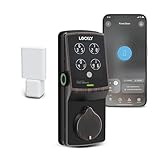
Overview: The Lockly Secure Pro offers comprehensive keyless entry for modern homes, offices, and rental properties. This left-handed edition features five distinct unlocking methods including a patented PIN Genie keypad, 3D biometric fingerprint sensor, smartphone app, voice control, and traditional physical key, making it exceptionally versatile for various security needs.
What Makes It Stand Out: The revolutionary PIN Genie technology displays three numbers per button that shuffle after each entry, preventing code theft even when watched. The second-generation 3D fingerprint sensor grants access in under 0.3 seconds with 99 print capacity. Real-time monitoring, programmable auto-lock, and offline access codes provide unmatched flexibility for Airbnb hosts and property managers who need reliable, remote security management.
Value for Money: At $299.99, this lock sits at the premium end but justifies its cost through bank-level security features and rental-focused capabilities. The five-year mechanical warranty, two-year electronics coverage, and lifetime technical support exceed industry standards. Compared to basic smart locks, the advanced anti-peep technology and multi-modal access make it a worthwhile investment for security-conscious users and property managers.
Strengths and Weaknesses: Strengths include superior anti-theft keypad technology, lightning-fast biometric recognition, comprehensive access management, and robust warranty coverage. The auto-lock feature adds convenience, while offline codes ensure access during internet outages. Weaknesses include a premium price point that may exceed casual residential needs, left-hand specificity limiting universal application, and potential complexity for non-technical users. Full functionality requires stable Wi-Fi.
Bottom Line: The Lockly Secure Pro is an excellent choice for Airbnb hosts, property managers, and security-focused homeowners who need advanced protection and flexible access control. The innovative PIN Genie system and rapid biometric sensor make it a top-tier smart lock worth the investment.
7. Lockly Secure Pro Wi-Fi Smart Door Lock, Keyless Entry with PIN Genie® Digital Keypad, 3D Biometric Fingerprint Sensor Front Door Lock Deadbolt, Voice Control & Auto Lock - Left Fingerprint Edition

Overview: Designed for high-security applications in homes, offices, and short-term rentals, this Lockly Secure Pro edition delivers keyless convenience through multiple authentication methods. The left-handed configuration accommodates specific door setups while providing property managers and homeowners with sophisticated access control and monitoring capabilities from anywhere.
What Makes It Stand Out: Five unlocking options—including the patented shuffling PIN Genie keypad, sub-half-second 3D fingerprint scanning, mobile app control, voice commands via Alexa/Google, and mechanical key backup—ensure you’re never locked out. The standout feature is its ability to generate offline access codes for trusted users without internet connectivity, making it ideal for remote properties or during network failures. Real-time alerts and eKey distribution streamline rental management.
Value for Money: Priced at $299.99, this lock competes with high-end smart locks while offering unique rental-oriented features. The extensive warranty package—five years on mechanical components, two years on electronics, plus lifetime support—provides long-term peace of mind. For Airbnb operators, the ability to remotely manage access and monitor entries eliminates costly lockbox solutions and in-person key exchanges, delivering strong ROI.
Strengths and Weaknesses: Key strengths include the virtually unpickable PIN Genie interface, rapid biometric authentication, versatile access methods, and property management tools. DIY installation with common tools and rekeying capability add practical value. Downsides are the premium cost, left-hand orientation restricting installation options, and feature richness that may overwhelm users wanting simple keyless entry. Battery dependence and Wi-Fi reliance for remote features are typical smart lock limitations.
Bottom Line: This Lockly model excels for tech-savvy property managers and security-minded homeowners who prioritize advanced features over budget. The rental-specific tools and anti-peep technology justify the price for those managing multiple users and seeking maximum security.
8. Google Nest x Yale Lock with Matching Knob - Smart Lock with Knob for Keyless Entry - Bronze

Overview: The Google Nest x Yale Lock combines Yale’s hardware expertise with Nest’s smart home ecosystem in an attractive bronze finish. This keyless deadbolt replacement includes a matching passage knob for complete door hardware upgrades. Designed for seamless integration with Google Assistant and the Nest app, it offers tamper detection, low battery alerts, and emergency 9V battery power backup for reliable operation.
What Makes It Stand Out: Deep Nest ecosystem integration allows voice control, remote access, and automatic locking when Nest detects you’re away. The tamper-proof design sends immediate alerts to your phone, while the included matching passage knob provides aesthetic cohesion often missing from standalone smart locks. The emergency 9V battery terminal solves a common smart lock failure point, ensuring you can always enter during power depletion.
Value for Money: At $299.00, it’s priced competitively with premium smart locks while adding $50-100 value through the included matching hardware. The tamper alerts and emergency power feature prevent costly lockouts, while Nest integration eliminates the need for separate hubs. However, the lack of biometric scanning and limited to four entry methods (app, keypad, voice, manual) may feel restrictive compared to similarly priced competitors.
Strengths and Weaknesses: Strengths include flawless Google/Nest integration, proactive security alerts, emergency power backup, and cohesive design with included knob. The touchscreen keypad is responsive, and automatic away-locking adds convenience. Weaknesses include no fingerprint scanner, dependence on Nest ecosystem (limited Alexa support), no offline access codes, and fewer unlocking options than rivals. Battery life could be better with heavy usage.
Bottom Line: Perfect for households already invested in the Google/Nest ecosystem who prioritize seamless integration and design cohesion over advanced biometric features. The emergency power and tamper alerts provide peace of mind, making it a solid choice for Nest users.
Understanding Voice-Activated Smart Locks
Voice-activated smart locks represent more than just a convenience upgrade—they’re a fundamental shift in how we interact with home security. Unlike traditional smart locks that require manual app control or keycode entry, these devices respond to spoken commands through Google Assistant, transforming your voice into a virtual key. However, not all “Google-compatible” locks are created equal, and understanding the architecture behind this technology is crucial before investing.
The core functionality relies on a cloud-to-cloud communication pathway. When you issue a command, your Google device sends an encrypted signal through Google’s servers to the lock manufacturer’s cloud platform, which then relays the instruction to your physical lock. This indirect route introduces latency—typically one to three seconds—but enables the sophisticated automation that makes Google Routines so powerful. The best implementations minimize this delay while maximizing reliability, which depends heavily on the manufacturer’s infrastructure and their adherence to Google’s Smart Home API standards.
How Google Assistant Integration Actually Works
Google Assistant integration operates on a permission-based security model that might surprise first-time users. You can’t simply buy a lock and start barking commands. The setup requires linking the lock manufacturer’s app to your Google Home ecosystem through the Google Home app, granting explicit permissions for each action: lock, unlock, check status, or view battery level. This OAuth authentication creates a secure token that allows Google to communicate with your lock without storing your actual lock account credentials.
What many shoppers miss is that Google Assistant doesn’t directly control your lock—it sends intent signals. When you say “lock the front door,” Google interprets this as a request and asks the manufacturer’s cloud, “Can you lock device ID 12345?” The manufacturer’s system verifies your account, checks the device status, executes the command, and reports back. This round-trip architecture explains why locks with robust cloud infrastructure (think 99.9% uptime) provide vastly superior experiences than budget options running on strained servers.
The Difference Between Basic Voice Control and Google Routines
Here’s where confusion often derails purchasing decisions. Basic voice control means saying “Hey Google, lock the door” and getting a single action. Google Routines, however, enable cascading, conditional automation triggered by a custom phrase or scheduled event. The distinction is profound: one is a remote control replacement, the other is home automation sorcery.
A Routine might trigger when you say “I’m home,” unlocking the door, turning on entryway lights, adjusting the thermostat, and playing your favorite playlist simultaneously. Or it could automatically lock all doors at 10 PM if they’re currently unlocked, then send a confirmation notification. The magic lies in conditional logic—something basic voice control lacks. When evaluating locks, ensure they support not just Assistant commands but also expose their full feature set to Google Routines, including status queries and multi-device scenes.
Key Benefits of Integrating Locks with Google Routines
The true value proposition extends far beyond hands-free unlocking. Integration with Google Routines creates contextual security that adapts to your lifestyle patterns. Morning routines can automatically unlock doors at sunrise while simultaneously disarming security systems and starting coffee makers. Bedtime routines can verify all entry points are secured, then activate cameras and enable motion alerts.
For households with children or elderly family members, Routines provide safety nets that traditional locks can’t match. A “Kids Home from School” routine could unlock the door at 3:30 PM, send you a notification, then re-lock it after five minutes. For caregivers, voice commands eliminate fumbling for keys while assisting someone with mobility challenges. The psychological benefit is equally significant—knowing your door is secure without physically checking creates genuine peace of mind that transcends the technology itself.
Essential Features to Look for in Google-Compatible Smart Locks
When evaluating compatibility, look beyond the “Works with Google Assistant” badge. The lock must support the Google Smart Home Lock/Unlock trait, which enables the full command vocabulary. More importantly, verify it supports the RunLocal trait, which allows certain commands to process on your local network rather than routing through the cloud—dramatically improving speed and reliability when you’re home.
Battery status reporting is another critical but overlooked feature. The best locks push detailed battery levels to Google Home, allowing you to create Routines like “If front door lock battery is below 20%, send a notification to my phone and add ‘buy batteries’ to my shopping list.” Auto-lock customization matters too—can you set different timeout periods for day vs. night? Can Google Routines override these settings temporarily? These nuanced capabilities separate premium integrations from basic checkboxes.
Security Standards and Certifications That Matter
The smart lock industry suffers from a certification wild west, making independent validation essential. Look for locks certified to ANSI/BHMA Grade 1 or Grade 2 standards—the same grades used for commercial locks. Grade 1 withstands 1 million cycles and 10 strikes of 75 pounds of force; Grade 2 handles 800,000 cycles and 5 strikes. Anything lower is residential-grade at best.
For digital security, WPA3 Wi-Fi certification is non-negotiable. The lock should also feature AES 128-bit or higher encryption for data transmission and secure element storage for encryption keys. Some manufacturers now pursue SOC 2 Type II certification for their cloud infrastructure—a rigorous audit proving they maintain enterprise-grade security practices. Don’t trust marketing claims; verify these certifications through independent databases, not just product listings.
Connectivity Protocols: Wi-Fi vs. Thread vs. Matter
Your lock’s connectivity protocol determines reliability, battery life, and future compatibility. Wi-Fi direct locks offer the simplest setup but drain batteries fastest—expect 3-6 months between charges. They also compete for bandwidth on your crowded 2.4GHz network, potentially causing delays when you need immediate response.
Thread-enabled locks represent the next generation, creating a mesh network with other Thread devices that improves reliability while sipping power—battery life often exceeds 12 months. They’re the foundation of Matter, the new universal smart home standard Google heavily supports. Matter-certified locks promise seamless interoperability across ecosystems (Google, Apple, Amazon) while maintaining local control. When shopping, prioritize Matter-certified locks with Thread radios. If Matter isn’t available, a Wi-Fi lock with a clear Matter upgrade path (via firmware update) is your second-best option.
Installation Considerations Before You Buy
Smart lock installation isn’t plug-and-play, and compatibility issues can turn excitement into frustration. First, photograph your existing deadbolt from both sides, measuring the backset (distance from door edge to lock center), door thickness, and the type of strike plate. Most smart locks require standard 2-1/8" bore holes and 1" edge bore—common in doors built after 1990, but a dealbreaker for older homes.
Check your door’s alignment. Smart locks are less forgiving than mechanical ones; a door that requires shoulder pressure to latch will drain batteries and strain motors. The deadbolt must extend and retract smoothly without binding. Some locks include alignment sensors that prevent operation if the door isn’t properly closed—a feature that prevents security gaps but requires precise installation.
DIY vs. Professional Installation: What to Expect
Most smart locks position themselves as DIY-friendly, typically requiring just a screwdriver and 15-30 minutes. However, the reality depends on your door’s condition and your technical comfort. If you’re replacing an existing deadbolt, DIY is straightforward. But if you need to drill new holes, enlarge existing ones, or adjust strike plates, professional installation ($100-$200) prevents costly mistakes.
Consider your comfort with digital setup too. Linking the lock to your Wi-Fi, updating firmware, and connecting to Google Home can stump non-technical users. Professional installers often include ecosystem integration in their service, ensuring optimal placement of any included Bluetooth extenders or bridge devices. For renters, look for locks that install over existing hardware without permanent modifications—though these typically sacrifice some features and security.
Power Management: Battery Life and Backup Options
Battery anxiety is the number one concern for smart lock owners, and voice-activated models are particularly power-hungry. Wi-Fi locks typically use four AA batteries lasting 3-6 months under normal use. Thread/Matter locks can achieve 12-18 months with the same batteries. Lithium batteries outperform alkaline in extreme temperatures, making them worth the premium for exterior doors in harsh climates.
Critical feature: low-battery behavior. Premium locks send multiple escalating warnings before shutting down, and maintain enough reserve power for 100+ additional operations after the first warning. They also feature 9V battery terminals on the exterior—touching a 9V battery to these contacts provides instant power to operate the lock, even with dead internal batteries. Some models include micro-USB ports for emergency power. Avoid locks that become completely inoperable when batteries die; mechanical key overrides are essential but shouldn’t be your only backup.
Privacy and Data Security Concerns Addressed
Voice-activated locks create legitimate privacy questions that manufacturers often gloss over. Every voice command is processed by Google, creating a digital footprint. While Google anonymizes these recordings, the metadata (timestamp, device ID, command type) remains linked to your account. For true privacy, enable Google’s Guest Mode for sensitive commands, or use the lock’s app for unlocking while reserving voice commands for locking and status checks only.
Data minimization is your best defense. Choose locks that process voice commands locally when possible, and that don’t require location tracking for basic functionality. Review the manufacturer’s privacy policy—look for explicit statements about data retention periods, third-party sharing, and whether they sell anonymized usage data. Some premium brands now offer end-to-end encryption where even the manufacturer can’t access your lock’s activity logs, only you can through your private encryption key.
Building Effective Google Routines with Your Smart Lock
Creating powerful Routines requires understanding Google’s trigger and action limitations. Start simple: “Hey Google, goodnight” could lock the door, turn off lights, and set an alarm. But the real power emerges with conditional logic and time-based triggers. Use the “Adjust home devices” action to lock doors, but add “Tell me if [door name] is already locked” as a condition to avoid redundant commands.
For presence-based automation, combine your lock with Google Home’s presence sensing (using your phone’s location or Nest devices). A “Leaving Home” routine can trigger when your phone exits the geofence, verifying the door locks after a 10-minute delay—giving you time to return if you forgot something. Pro tip: always include a notification action in your Routines. If a lock fails to respond, you’ll know immediately rather than discovering it hours later.
Voice Commands That Actually Work (And Ones That Don’t)
Google Assistant understands a surprisingly nuanced vocabulary for locks. “Lock the front door,” “Is my door locked?” and “Secure all doors” work reliably. However, “Unlock the door” requires additional authentication—either a voice match confirmation or a PIN code, preventing strangers from yelling through windows.
Commands that consistently fail include conditional ones like “Lock the door if it’s unlocked” (Google doesn’t support conditional voice commands natively) and multi-device coordination like “Lock the door and turn off the lights” (Routines handle this, not direct voice commands). Also avoid ambiguous device names; “door lock” confuses Google more than “front door deadbolt.” Test your chosen lock’s command vocabulary before installation—some manufacturers support custom commands through the Google Home app, while others offer a rigid, limited set.
Advanced Routine Ideas Beyond Locking and Unlocking
The most innovative users treat their lock as a home automation trigger, not just a target. Configure a Routine that activates when the lock unlocks after sunset: lights fade on, thermostat adjusts to evening temperature, and your favorite podcast starts playing on the nearest speaker. For security, create a “Vacation Mode” routine that locks all doors at random intervals between 10 PM and 6 AM, simulating occupancy.
Consider integrating with third-party services through Google Home’s custom actions. When you lock the door with the phrase “I’m leaving for work,” trigger a Routine that not only secures the house but also starts your navigation to work, sends a preset “headed to office” message to your partner, and enables your security camera’s motion alerts. The lock becomes a physical anchor for digital workflows, transforming a simple security device into a lifestyle automation hub.
Troubleshooting Common Integration Issues
Even premium locks experience hiccups. The most common problem: commands work in the manufacturer’s app but fail via Google. This usually indicates a cloud sync issue. Unlink and relink the account in Google Home, ensuring you grant all requested permissions. Check if the lock appears in the correct “home” and “room” within the Google Home app—misplacement prevents Routines from finding the device.
Delayed responses often stem from Wi-Fi congestion. Smart locks need strong 2.4GHz signals; if your router combines 2.4GHz and 5GHz under one SSID, create a separate 2.4GHz network for IoT devices. For Thread/Matter locks, ensure you have at least one Thread border router (like a Nest Hub Max or Apple TV 4K) within 30 feet. If Google says “I can’t reach the front door lock,” but the lock responds in its native app, the manufacturer’s cloud service is likely down—check their status page and consider this reliability when choosing brands.
Cost Analysis: What You Should Expect to Invest
Entry-level Google-compatible locks start around $150, but these often use Wi-Fi only, lack Matter support, and have basic Routine integration. Mid-range options ($200-$300) offer Thread/Matter radios, better security certifications, and advanced features like fingerprint readers and keypad backups. Premium locks ($300-$450) include robust cloud infrastructure, extended warranties, professional installation credits, and sophisticated power management.
Factor in hidden costs: a Wi-Fi bridge ($50-$80) if the lock uses Bluetooth-to-Wi-Fi conversion, replacement batteries ($15-$30 annually), and potential subscription fees. Some manufacturers charge $3-$5/month for advanced features like detailed activity logs or temporary guest codes—features that should be free but are often paywalled. Professional installation adds $100-$200. Budget $250-$350 total for a quality setup that won’t disappoint.
Future-Proofing Your Smart Lock Investment
The smart home landscape evolves rapidly, and today’s cutting-edge lock can become tomorrow’s obsolete paperweight. Matter certification is the single most important future-proofing feature—it ensures compatibility with emerging ecosystems and guarantees local control even if the manufacturer abandons the product. Prioritize locks with over-the-air firmware update capabilities and a manufacturer history of supporting products for at least 5 years post-launch.
Hardware considerations matter too. Choose locks with modular designs allowing radio upgrades. Some premium models let you swap the communication module—upgrade from Wi-Fi to Thread without replacing the entire lock. Battery compartments should accommodate both AA and rechargeable lithium packs, giving you flexibility as battery technology advances. Finally, verify the lock’s physical dimensions match standard deadbolt sizes—proprietary form factors become replacement nightmares if the company discontinues support.
Frequently Asked Questions
Can I use voice commands to unlock my door, or is locking the only option?
You can unlock with voice, but Google requires additional authentication for security. You’ll need to set up Voice Match and may be prompted for a spoken PIN. Alternatively, you can unlock through the Google Home app without a PIN. For security, many users disable voice unlocking entirely and use it only for locking and status checks.
What happens to my lock if my internet goes down?
Most Wi-Fi locks will not respond to voice commands during an outage since they can’t reach Google’s servers. However, local control via Bluetooth or the physical keypad still works. Thread/Matter locks with a Thread border router maintain local voice control even without internet—your commands process on your local network. Always verify the lock has a mechanical key override as the ultimate backup.
Will integrating with Google Routines drain my lock’s battery faster?
Routine execution itself uses minimal power since it sends a single command. However, the lock’s constant cloud connectivity for status updates causes most battery drain. Wi-Fi locks check in every 30-60 seconds, while Thread devices report only on state changes. Expect 3-6 months for Wi-Fi locks, 12-18 months for Thread/Matter locks, regardless of Routine complexity.
Can I create different access levels for family members through Google Routines?
Google Routines don’t directly manage user access levels—that’s handled in the lock’s native app. However, you can create personalized Routines that trigger based on who’s speaking (via Voice Match). A child’s “I’m home” Routine might only lock/unlock the door, while a parent’s version could also disarm security cameras. For temporary guest access, use the lock’s app to generate time-limited codes; these won’t integrate with Google but work independently.
Do voice-activated locks work with Google Nest Hub displays?
Yes, and this is where integration shines. Nest Hub displays show lock status visually and let you tap to lock/unlock. When you say “Hey Google, show me the front door,” it displays the lock’s status along with any paired camera feed. You can also use the Hub’s Quick Controls to manage locks without voice commands—ideal for quiet hours or when privacy matters.
What’s the difference between a lock that “Works with Google Assistant” versus one that’s “Matter-certified”?
“Works with Google Assistant” means basic voice control through cloud integration. Matter-certified locks offer deeper, faster integration with local processing, work across multiple ecosystems (Apple HomeKit, Amazon Alexa), and continue functioning if the manufacturer goes out of business. Matter is the future; Assistant-only support is legacy compatibility.
Can I include my smart lock in multiple Google Routines?
Absolutely. A single lock can appear in unlimited Routines. Your front door might be part of “Good Morning,” “Leaving Home,” “Goodnight,” and “Vacation Mode” Routines simultaneously. Just ensure the commands don’t conflict—if two Routines trigger at 10 PM, one might fail. Use specific time offsets (10:00 PM and 10:02 PM) to prevent collisions.
How secure are voice commands against unauthorized access?
Google requires Voice Match for unlocking, which analyzes voice patterns. However, sophisticated voice recordings can theoretically fool this system. For maximum security, disable voice unlocking and require PIN authentication, or only use voice for locking and status checks. Physical security remains strong—voice commands can’t bypass encryption or mechanical protections.
Will my smart lock still work if the manufacturer goes out of business?
If it’s a Wi-Fi lock, likely not—cloud servers shutting down bricks the device. Matter-certified locks with Thread radios continue working locally through your Google Home ecosystem, though firmware updates cease. Always research a company’s financial health and choose brands with at least 3-5 years of market presence. Community support forums can sometimes reverse-engineer solutions for orphaned devices, but this isn’t guaranteed.
Can I integrate my existing traditional deadbolt with Google Routines, or must I replace it completely?
Several retrofit adapters (typically $70-$120) can make existing deadbolts voice-controlled by motorizing the interior thumb turn. These preserve your exterior hardware and keys but often sacrifice advanced features like keypads or fingerprint readers. They work well for renters or historic homes where replacing the entire lock is undesirable. Ensure the retrofit device explicitly states Google Assistant and Routine support, as many only offer basic app control.