Imagine walking through your front door, arms full of groceries, and simply saying “I’m home” to trigger the perfect temperature throughout your house. By 2026, voice-enabled thermostat controllers have evolved from novelty gadgets into sophisticated energy management systems that can reduce heating and cooling costs by up to 30%—all while learning your family’s unique patterns and preferences. These intelligent devices don’t just respond to commands; they anticipate needs, adapt to weather changes in real-time, and integrate seamlessly with broader smart home ecosystems to optimize every dollar spent on climate control.
The landscape of home energy efficiency has transformed dramatically, with artificial intelligence and natural language processing reaching new levels of sophistication. Today’s voice-controlled thermostats leverage contextual awareness, multi-zone management, and predictive analytics to deliver savings that were impossible just a few years ago. Whether you’re building a new smart home from scratch or upgrading an existing system, understanding the features that genuinely impact your utility bills—versus marketing fluff—will determine whether you achieve modest improvements or dramatic cost reductions.
Top 10 Voice-Enabled Thermostat Controllers
Detailed Product Reviews
1. Sensi Smart Thermostat, 100 Years Of Expertise, Wi-Fi, Data Privacy, Programmable, Easy DIY Install, Works With Alexa, Energy Star Certified, Mobile App, ST55
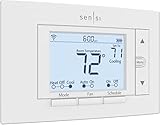
Overview: The Sensi ST55 represents Emerson’s century-long HVAC legacy translated into a smart home device. This thermostat prioritizes user privacy while delivering core smart features like remote access, flexible scheduling, and energy usage reporting. Designed to replace traditional thermostats without wall modifications, it bridges the gap between conventional controls and modern connectivity.
What Makes It Stand Out: Sensi distinguishes itself through an uncompromising privacy policy that pledges never to sell customer data—a rarity in today’s connected ecosystem. The built-in level and intuitive app-guided installation eliminate the common C-wire requirement in most setups, making DIY setup genuinely accessible. Its physical button interface and standard footprint mean no drywall patching or aesthetic compromises, preserving your home’s original look while adding smart capabilities.
Value for Money: At $81, the ST55 positions itself as a mid-tier option that undercuts premium brands like ecobee and Nest while offering ENERGY STAR-certified efficiency promising 23% HVAC energy savings. The elimination of professional installation costs and included smart maintenance features like filter reminders and system alerts provide additional long-term value that justifies the investment over basic programmable models.
Strengths and Weaknesses: Strengths:
- Strong privacy protection commitment
- No C-wire required in most applications
- Traditional thermostat form factor preserves wall aesthetics
- Comprehensive maintenance monitoring and alerts
- Established brand with century of HVAC expertise
Weaknesses:
- Lacks advanced learning algorithms
- Physical buttons may feel dated compared to touchscreens
- Limited smart home ecosystem integration beyond Alexa
- No native support for newer protocols like Matter
Bottom Line: The Sensi ST55 is ideal for privacy-conscious homeowners seeking reliable smart climate control without complicated installation. Its traditional design and trustworthy brand backing make it a solid choice for those prioritizing data security and straightforward functionality over cutting-edge aesthetics.
2. meross Smart Thermostat for Home, WiFi Thermostat Works with Matter, Alexa, Apple Home, Google Assistant, App & Voice Control, 7x24h Scheduling, Energy Saving, C-Wire Required

Overview: The meross Smart Thermostat delivers future-ready smart home integration at an aggressive price point. Designed for the connected ecosystem, it supports 95% of HVAC systems while emphasizing cross-platform compatibility. This device targets tech-savvy users who want comprehensive control without being locked into a single ecosystem.
What Makes It Stand Out: Matter certification represents the standout feature, ensuring local, secure integration across Apple Home, Alexa, Google Home, SmartThings, and Home Assistant without cloud dependency. The 24/7 flexible scheduling with granular customization adapts to complex routines, while intelligent alerts proactively notify users about filter status and system malfunctions. This forward-thinking approach reduces app overload and future-proofs your smart home investment.
Value for Money: At $59.84, this thermostat significantly undercuts competitors while offering premium features like Matter support and multi-platform voice control. However, the C-wire requirement for some configurations may necessitate wiring upgrades, potentially offsetting initial savings. For compatible homes, it delivers exceptional value with professional-grade scheduling and monitoring capabilities typically found in higher-priced alternatives.
Strengths and Weaknesses: Strengths:
- Matter integration for universal smart home compatibility
- Comprehensive 24/7 scheduling with multiple daily periods
- Multi-platform voice control (Alexa, Google, Apple)
- Detailed energy usage tracking and management
- Proactive system alerts and maintenance reminders
Weaknesses:
- C-wire required for some wiring configurations
- Not compatible with electric baseboard or millivolt systems
- Brand lacks long-term HVAC heritage
- Installation may require professional help for some users
Bottom Line: The meross thermostat excels for users invested in diverse smart home ecosystems. Its Matter support and aggressive pricing make it a compelling choice, but verify C-wire compatibility before purchasing to avoid installation surprises.
3. Smart WiFi Thermostat - Heat & Cool Temperature Controller With Touchscreen | APP & Voice Control Thermostatt For Home Automation | Digital Programmable Thermostat For House RV Hotel | Energy Saving C

Overview: This budget-friendly smart thermostat targets cost-conscious consumers seeking basic Wi-Fi climate control across diverse environments. Marketed for homes, RVs, hotels, and dormitories, it prioritizes versatility and accessibility over brand recognition. The ultra-low price point makes it an entry-level gateway to smart temperature management.
What Makes It Stand Out: The remarkable sub-$36 price distinguishes this thermostat in a market where competitors cost twice as much. Its ABS construction promises durability against temperature extremes, while dual heating/cooling modes adapt to seasonal changes. The tool-free installation design appeals to renters and RV owners who need non-permanent, portable climate solutions without professional assistance or wiring complexity.
Value for Money: At $35.89, this thermostat costs less than a dinner out, delivering fundamental smart features like app control and voice commands. While it lacks ENERGY STAR certification and brand-backed support, the price justifies compromises for secondary spaces, rental properties, or temporary installations where advanced features and longevity are secondary concerns. It’s disposable tech that works rather than an investment piece.
Strengths and Weaknesses: Strengths:
- Unbeatable price point for basic smart functionality
- Tool-free installation ideal for renters and RVs
- Versatile application across residential and commercial settings
- Durable ABS material construction
- Voice control and app connectivity included
Weaknesses:
- No brand recognition or stated warranty
- Lacks ENERGY STAR certification and verified energy savings
- Unclear compatibility with HVAC systems
- No advanced scheduling or learning features
- Questionable long-term reliability and support
Bottom Line: This thermostat suits RV owners, landlords, or budget-minded experimenters willing to accept reliability risks for extreme affordability. Avoid for primary home HVAC control where dependability and support matter more than initial cost savings.
4. ecobee Smart Thermostat Essential - Energy Star Certified programmable Wi-Fi Thermostat - Works with Siri, Alexa, and Google Assistant

Overview: The ecobee Smart Thermostat Essential brings the brand’s premium features to a more accessible price point while maintaining the quality and ecosystem integration that established ecobee’s reputation. This ENERGY STAR-certified device focuses on intuitive interaction and broad smart home compatibility, representing a middle ground between basic and flagship models.
What Makes It Stand Out: The color touchscreen interface provides immediate, intuitive control without app dependency, while free automatic software updates ensure continuous improvement. Ecobee’s Power Extender Kit (PEK) availability solves C-wire limitations for older homes, though sold separately. The device’s ability to deliver up to 23% annual HVAC savings through intelligent scheduling and remote optimization demonstrates mature, proven algorithms refined over years of market leadership.
Value for Money: At $134.99, this thermostat commands a premium but delivers justified value through robust build quality, comprehensive platform support including Siri, and ongoing software enhancements. The brand’s established ecosystem, reliable customer support, and proven energy savings calculator offset the higher upfront cost within one to two heating/cooling seasons, making it a wise long-term investment over cheaper, less reliable alternatives.
Strengths and Weaknesses: Strengths:
- Premium brand with proven reliability track record
- Intuitive color touchscreen interface
- Comprehensive voice assistant integration (Siri, Alexa, Google)
- ENERGY STAR certification with verified savings
- PEK solution available for C-wire challenges
Weaknesses:
- Highest price point among reviewed options
- PEK kit sold separately adds hidden cost
- Lacks advanced room sensors capability
- May be overkill for users wanting basic scheduling
Bottom Line: The ecobee Essential is perfect for homeowners seeking a premium, reliable smart thermostat with excellent support and proven energy savings. The investment pays dividends in comfort, convenience, and reduced utility bills for those willing to pay for quality.
5. vine Smart Thermostat for House, WiFi Thermostats for Home Compatible with Alexa and Google Assistant, 7day x 8period Programmable, Energy Star Certified, C-Wire Required

Overview: The vine Smart Thermostat targets schedule-driven users with its exceptional programming flexibility and solid compatibility coverage. This ENERGY STAR-certified device emphasizes practical functionality over flashy features, providing reliable smart climate control for conventional and heat pump systems. Its straightforward approach appeals to users wanting granular temperature management without complexity.
What Makes It Stand Out: The 7-day by 8-period scheduling offers unmatched routine customization, surpassing most competitors’ limited daily periods. Vine’s pre-purchase QR code compatibility checker demonstrates customer-first thinking, reducing installation surprises. The Auto Home/Away mode automatically adjusts temperatures based on occupancy patterns, while practical features like temperature alerts, filter reminders, and child lock functionality show attention to everyday user needs often overlooked by minimalist designs.
Value for Money: Priced at $57.99, the vine thermostat occupies the sweet spot between budget and premium options. ENERGY STAR certification ensures legitimate energy savings, while the extensive scheduling capabilities rival more expensive units. The C-wire requirement remains the primary value consideration—compatible homes get feature-rich performance at a mid-tier price, but wiring upgrades could double the total investment.
Strengths and Weaknesses: Strengths:
- Exceptional 7-day x 8-period scheduling flexibility
- Proactive compatibility verification tool
- ENERGY STAR-certified efficiency
- Comprehensive practical features (alerts, child lock)
- 90% system compatibility including heat pumps
Weaknesses:
- C-wire mandatory for all installations
- No support for Siri or Matter protocol
- Brand recognition lags behind ecobee and Nest
- Lacks learning capabilities or advanced algorithms
Bottom Line: The vine thermostat excels for users who prioritize detailed scheduling and practical features over brand prestige. Verify C-wire availability first—if compatible, it delivers premium programmability at a reasonable price point with reliable energy savings.
6. meross Smart Thermostat for Home, WiFi Thermostat Works with Matter, Alexa, Apple Home, Google Assistant, App & Voice Control, 7x24h Scheduling, Energy Saving, C-Wire Required

Overview: The meross Smart Thermostat delivers modern climate control at an accessible price point. Designed for 95% of HVAC systems including heat pumps, furnaces, and boilers, this WiFi-enabled device brings Matter-certified smart home integration to budget-conscious consumers. With 24/7 scheduling and remote app control, it covers the essentials of smart temperature management without unnecessary complexity.
What Makes It Stand Out: Matter certification sets this apart from many budget alternatives, ensuring seamless local integration with Apple Home, Alexa, Google Home, and SmartThings without cloud dependency. The intelligent scheduling system automatically adjusts temperatures based on occupancy patterns, while smart alerts notify you of filter changes and system issues. Its broad compatibility with conventional and heat pump systems makes it versatile for most homes.
Value for Money: At $66.49, this thermostat dramatically undercuts premium competitors while delivering core smart features. You’re getting Matter support, multi-platform compatibility, and energy tracking typically found in devices costing twice as much. For homeowners wanting modern connectivity without the premium price tag, the value proposition is compelling and recoups quickly through energy savings.
Strengths and Weaknesses: Strengths include Matter integration, excellent HVAC compatibility, intuitive scheduling, and proactive maintenance alerts. The companion app provides detailed energy usage insights. Weaknesses include the C-wire requirement for many configurations, which may necessitate professional installation. The meross brand lacks the long-term track record of established competitors, and the interface may feel less polished than premium alternatives.
Bottom Line: The meross Smart Thermostat is an outstanding budget option for tech-savvy homeowners prioritizing Matter compatibility and multi-platform support. It sacrifices some refinement but delivers essential smart features at an unbeatable price.
7. Google Nest Thermostat - Smart Thermostat for Home - Programmable Wifi Thermostat - Snow

Overview: Google’s entry-level Nest Thermostat brings intelligent climate control to the masses with ENERGY STAR certification and sophisticated automation. Designed to work without a C-wire in most homes, this $112.93 device learns your schedule and automatically adjusts temperatures when you’re away. It integrates seamlessly with the Google Home ecosystem for intuitive control and energy management.
What Makes It Stand Out: The Nest’s adaptive learning capabilities differentiate it from programmable-only competitors. It automatically creates energy-efficient schedules based on your comings and goings, potentially saving more than rigid timers. The Savings Finder feature proactively suggests schedule optimizations, while remote access lets family members adjust settings from anywhere. Its compatibility checker helps avoid installation surprises.
Value for Money: Positioned in the mid-range, the Nest Thermostat justifies its price through intelligent automation that reduces manual programming. The potential energy savings and utility rebates enhance its value. While more expensive than basic smart thermostats, its learning algorithms and polished Google integration offer meaningful upgrades for the price difference, paying for itself within two years.
Strengths and Weaknesses: Strengths include automatic scheduling, reliable away detection, excellent app experience, and broad compatibility without C-wire requirements in many systems. The Savings Finder provides ongoing optimization. Weaknesses include occasional over-aggressive temperature adjustments requiring manual correction. It lacks remote room sensors found in premium models and may struggle with complex multi-zone systems. Privacy-conscious users might hesitate with Google’s data collection.
Bottom Line: The Google Nest Thermostat excels for users invested in Google’s ecosystem who want automation without complexity. Its learning features genuinely reduce energy waste, making it a smart mid-range investment.
8. ecobee Smart Thermostat Premium with Smart Sensor and Air Quality Monitor - Programmable Wifi Thermostat - Works with Siri, Alexa, Google Assistant

Overview: The ecobee Smart Thermostat Premium represents the pinnacle of climate control technology, combining temperature management with air quality monitoring and home security features. At $249, this flagship device includes a SmartSensor and boasts premium materials like metal siding and a vibrant cinematic display. It promises up to 26% annual savings on heating and cooling costs through intelligent automation.
What Makes It Stand Out: Built-in air quality monitoring alerts you to pollutants and provides actionable improvement tips—uncommon in thermostats. The included SmartSensor eliminates hot/cold spots by adjusting based on occupancy in specific rooms. Advanced radar technology enables precise presence detection for both comfort and security. Integration with ecobee’s doorbell camera creates a cohesive smart home ecosystem managed from one device.
Value for Money: While the highest-priced option, it bundles $50 worth of sensors and air quality hardware typically requiring separate purchases. For health-conscious homeowners or those with respiratory concerns, the air monitoring alone justifies the premium. The comprehensive feature set eliminates need for multiple devices, potentially saving money overall while delivering superior comfort and wellness monitoring.
Strengths and Weaknesses: Strengths include exceptional build quality, multi-functionality (thermostat + air monitor + security), accurate occupancy sensing, and included installation kit. The SmartSensor provides true room-by-room comfort. Weaknesses include the steep upfront cost and potential feature overload for users wanting simple temperature control. The premium interface may intimidate less tech-savvy users. Some advanced features require subscription services.
Bottom Line: The ecobee Premium justifies its price for homeowners wanting a comprehensive smart home hub that monitors both climate and air quality. It’s overkill for basic needs but unmatched for integrated wellness-focused automation.
9. Vine Thermostat for Home with Touchscreen Color Display, WiFi Smart Thermostat Compatible with Alexa and Google Assistant, 7day/8period Programmable, Energy Saving, C-Wire Required, Screen Size 2.8"

Overview: The Vine Thermostat offers touchscreen smart climate control at a budget-friendly $69.99 price point. This WiFi-enabled device features a 2.8-inch color display and supports 90% of HVAC systems including conventional, heat pump, and dual fuel configurations. With 7-day/8-period programming and voice control via Alexa and Google Assistant, it covers smart essentials without premium complexity.
What Makes It Stand Out: The vibrant color touchscreen provides intuitive local control rarely found in this price range. Auto Home/Away mode automatically adjusts temperatures based on your location, delivering legitimate energy savings without complex programming. The thermostat synchronizes time and date automatically while providing practical alerts for filter changes and temperature anomalies. Child lock functionality adds family-friendly security.
Value for Money: At under $70, the Vine Thermostat competes directly with entry-level models while offering a superior touchscreen interface. Energy Star certification ensures utility bill reductions that can recoup the investment within a year. For renters or first-time smart home adopters, the low financial barrier makes it an attractive trial option that doesn’t sacrifice core functionality.
Strengths and Weaknesses: Strengths include the responsive color display, straightforward app control, reliable voice integration, and comprehensive scheduling options. The automatic Home/Away feature works surprisingly well. Weaknesses include the mandatory C-wire requirement, which limits DIY installation. Compatibility at 90% falls slightly short of leading competitors. The Vine brand lacks the established support network of major manufacturers, and the app experience feels basic compared to premium alternatives.
Bottom Line: The Vine Thermostat delivers surprising value for budget shoppers wanting a touchscreen interface and core smart features. It’s ideal for simple HVAC systems where the C-wire requirement isn’t a barrier.
10. Honeywell Home RTH9585WF1004 Wi-Fi Smart Color Thermostat, 7 Day Programmable, Touch Screen, Energy Star, Alexa Ready, Gray

Overview: The Honeywell Home RTH9585WF1004 brings decades of HVAC expertise to the smart thermostat market with a customizable color touchscreen interface. Priced at $124.23, this 7-day programmable WiFi thermostat works with most conventional and heat pump systems. Its proven reliability and utility company partnerships make it a trusted choice for conservative homeowners wanting established brand confidence.
What Makes It Stand Out: The ability to personalize the thermostat’s color scheme to match your décor is a unique aesthetic feature. Honeywell’s established relationships with utility companies enable participation in demand response programs that can earn you rebates and credits. The bright, intuitive touchscreen provides easy local control without always reaching for your phone. Decades of climate control experience ensure rock-solid reliability and accurate temperature management.
Value for Money: Positioned in the mid-range, the Honeywell offers brand trustworthiness that justifies its price over no-name alternatives. Potential utility rebates can significantly offset the cost. While lacking advanced learning algorithms, its programmable scheduling and remote access deliver core smart functionality at a fair price point, making it a safe investment for risk-averse buyers.
Strengths and Weaknesses: Strengths include Honeywell’s legendary reliability, customizable display, straightforward programming, and utility program compatibility. The touchscreen is responsive and easy to read. Weaknesses include the C-wire requirement and absence of learning capabilities or remote sensors. It doesn’t support the advanced automation features of newer competitors. The app experience, while functional, feels dated compared to Google’s or ecobee’s polished interfaces.
Bottom Line: The Honeywell RTH9585WF1004 is perfect for homeowners prioritizing brand reliability and straightforward operation over cutting-edge automation. It’s a dependable workhorse that integrates smart features without unnecessary complexity.
How Voice-Enabled Thermostats Revolutionize Home Energy Management
Voice control eliminates the friction that prevents most homeowners from optimizing their thermostat settings. Traditional programmable thermostats require manual navigation through clunky menus, which means most people set them once and forget them. Voice interfaces remove these barriers, allowing you to make immediate adjustments without interrupting your daily routine. The psychological shift is profound: when controlling your climate becomes as effortless as speaking, you’re more likely to implement aggressive energy-saving strategies like turning temperatures down when you leave and only warming specific zones you’re actually using.
The real magic happens when voice commands combine with occupancy sensing and machine learning. Instead of rigid schedules that waste energy when life deviates from the plan, these systems create dynamic comfort zones that follow your household’s actual movements. A simple “goodnight” command can trigger a cascade of energy-saving actions: lowering temperatures in unused wings of your home, adjusting humidity levels for optimal sleep, and preparing the morning warmup schedule based on tomorrow’s weather forecast and your calendar appointments.
Understanding the Technology Behind Voice-Controlled Climate Systems
Natural Language Processing Advances
Modern voice-enabled thermostats in 2026 utilize contextual NLU that goes far beyond basic command recognition. These systems understand intent, follow multi-turn conversations, and interpret vague requests like “make it comfortable” based on historical preferences, current weather, and time of day. The processing happens locally on the device edge rather than in the cloud, reducing latency and improving privacy while still delivering sophisticated comprehension.
Multi-Microphone Arrays and Far-Field Detection
The hardware architecture has evolved to include beamforming microphone arrays that can isolate your voice from background noise like running HVAC equipment, televisions, or conversations. This means you can adjust temperatures from across a large room without shouting, and the system won’t misinterpret dialogue from movies or podcasts as commands. Some advanced models even use ultrasonic sensing to detect presence before you speak, priming the system for immediate response.
Key Features That Actually Drive Energy Savings
Dynamic Scheduling with Predictive Overrides
Forget simple 7-day programming. True energy-saving thermostats analyze your utility’s time-of-use rates, weather forecasts, and your home’s thermal mass to pre-cool or pre-heat during off-peak hours. They’ll automatically override scheduled settings when they detect you’re away for an unexpected weekend, preventing wasted conditioning of an empty house.
Multi-Zone Precision Control
Whole-home averaging is inefficient. Advanced systems manage up to 16 independent zones, each with its own temperature, humidity, and occupancy sensors. Voice commands can target specific rooms—“cool the bedroom to 68 degrees”—while leaving unused areas in energy-saving mode. This granular control can cut HVAC runtime by 40% in larger homes.
Humidity Integration and Dew Point Management
Energy efficiency isn’t just about temperature. Smart thermostats now manage humidity to make higher temperatures feel cooler in summer and lower temperatures feel warmer in winter. By maintaining optimal dew points, you can set your thermostat 3-4 degrees higher in summer while maintaining comfort, directly translating to 12-15% cooling energy reduction.
Smart Integration: The Ecosystem Advantage
Cross-Platform Automation Workflows
The real power emerges when your thermostat communicates with smart windows, blinds, ceiling fans, and air purifiers. A “leaving for work” command can simultaneously adjust temperature, close motorized shades to block solar heat gain, and activate energy recovery ventilators. These coordinated actions multiply savings beyond what any single device could achieve alone.
Utility Company Demand Response Participation
Many utilities offer significant rebates and bill credits for enrolling in demand response programs. Advanced voice-enabled thermostats automatically participate by briefly adjusting temperatures during peak grid stress, often without you noticing. The voice interface provides transparent notifications: “I’m participating in today’s energy-saving event, which will earn you a $15 credit.”
Learning Algorithms vs. Fixed Scheduling: What Works Best?
The Myth of “Set It and Forget It” Learning
While learning algorithms sound appealing, they can waste energy during transitional periods like holidays, illness, or schedule changes. The most effective systems in 2026 use hybrid intelligence—they learn your baseline patterns but require voice confirmation for deviations. This prevents the system from heating an empty house because it “learned” you usually work from home on Fridays, even when you’ve taken a vacation day.
Voice-Triggered Scenarios Over Automation
Paradoxically, manual voice control combined with intelligent suggestions often beats full automation. The optimal approach involves the thermostat proposing actions—“I noticed you’re home early; would you like me to start the evening comfort schedule?"—and you confirming via voice. This maintains human oversight while leveraging AI insights, preventing the energy waste that occurs when algorithms make incorrect assumptions.
Geofencing and Occupancy Sensing: The Silent Savers
Multi-User Geofencing Precision
Early geofencing systems used crude radius-based triggers that caused problems in dense urban areas or when family members had varying schedules. Modern implementations use nested geofences combined with phone presence detection and voice confirmation. The system knows the difference between someone taking a quick walk versus leaving for the day, and it can ask: “I see everyone has left. Should I switch to away mode?”
Radar-Based Occupancy Detection
Camera-based sensing raises privacy concerns, while motion sensors fail when you’re sitting still. 2026’s leading systems use low-power radar that detects breathing patterns and micro-movements through walls. This allows true presence detection without cameras, enabling aggressive setback strategies that immediately restore comfort when you return—no voice command necessary, though you can always override with one.
Energy Reporting and Analytics: Data-Driven Decisions
Real-Time Cost Visibility
The most impactful feature for behavior change is seeing real-time energy costs, not just kilowatt-hours. Advanced thermostats display your current day’s spending via voice query: “You’ve spent $4.23 on heating today, which is 18% below your weekly average.” This immediate feedback loop motivates action far more than monthly utility bills.
Thermal Performance Scoring
These systems analyze your home’s heating and cooling efficiency relative to outside temperature, identifying insulation problems, duct leaks, or failing HVAC components. A voice prompt like “How’s my home performing?” might reveal: “Your upstairs zone is losing heat 40% faster than last year. I recommend checking attic insulation before winter.”
Installation Considerations: DIY vs. Professional Setup
Wiring Complexity in Older Homes
While many voice-enabled thermostats advertise DIY installation, homes built before 2010 often lack the necessary C-wire (common wire) for stable power delivery. Battery-powered operation leads to unreliable WiFi and voice recognition. Professional installers can add a C-wire, install power adapters, or recommend thermostats with power-stealing technology that works reliably with legacy systems.
HVAC System Compatibility Nuances
Heat pumps, multi-stage systems, and dual-fuel configurations require specific thermostat capabilities. A voice-enabled thermostat designed for conventional gas furnaces won’t properly modulate a variable-speed heat pump, potentially increasing energy use by 25%. Professional assessment ensures you get a controller that matches your system’s communication protocols, whether that’s standard relays, proprietary serial communication, or modern communicating protocols.
Compatibility Check: HVAC Systems and Wiring Requirements
Decoding Terminal Designations
Understanding your current wiring is crucial before purchasing. Systems with W1, W2, and W3 terminals indicate multi-stage heating that requires compatible thermostats. O/B terminals control heat pump reversing valves, and Y1/Y2 manage cooling stages. Voice-enabled controllers for advanced systems need to support these terminals plus additional accessories like humidifiers, dehumidifiers, and ventilators.
Millivolt and High-Voltage Exceptions
Standard smart thermostats won’t work with millivolt systems (common in wall heaters) or high-voltage baseboard heating (120V/240V). Specialized voice-enabled line-voltage thermostats exist for these applications, but they use different communication protocols and often have limited voice features. Attempting to force compatibility creates safety hazards and guarantees energy waste through improper control.
Voice Assistant Compatibility: Alexa, Google, Siri and Beyond
Local vs. Cloud Voice Processing
Cloud-dependent systems fail during internet outages and raise privacy concerns. The most reliable voice-enabled thermostats process common commands locally while using cloud resources for complex queries. This hybrid approach means “set temperature to 72” works offline, but “what’s my energy forecast for this weekend” requires connectivity. Always verify which functions remain available during outages.
Multi-Assistant Household Strategies
Families often mix ecosystems—perhaps Alexa in the living room, Google Assistant on phones, and Siri on Apple Watches. Premium thermostats now support simultaneous multi-assistant pairing without conflicts. They use a unified command structure so you don’t have to remember different phrasing for each platform, and they prevent duplicate responses when multiple devices hear the same command.
Privacy and Security in Voice-Controlled Devices
On-Device Processing and Data Minimization
The thermostat controllers delivering the best privacy in 2026 process voice commands locally, only transmitting anonymized usage data for energy optimization. They feature physical mute switches that electrically disconnect microphones, not just software toggles. Look for devices with transparent data policies that specify exactly what information leaves your home and how long it’s retained.
Voice Biometrics and Unauthorized Access Prevention
Without safeguards, neighbors or delivery persons could shout commands through windows. Advanced systems use voice fingerprinting to recognize authorized users and require PIN codes for certain actions via voice: “To set away mode for more than 24 hours, please provide your four-digit code.” Some models also detect command origin direction, ignoring commands that come from outside the house.
Cost-Benefit Analysis: Payback Periods and Long-Term Savings
Realistic Savings Calculations
Manufacturer claims of “up to 30% savings” require context. These figures typically compare against homes that keep a constant 72°F year-round. If you already practice aggressive temperature setbacks, expect 8-12% additional savings from voice convenience and intelligent features. The average payback period ranges from 18 to 36 months, heavily influenced by local energy rates, home size, and HVAC efficiency.
Hidden Costs of Subscription Models
Some advanced features—detailed analytics, remote access, or utility program participation—require monthly subscriptions that can erode savings. Calculate total cost of ownership over five years: a $250 thermostat with a $5/month subscription costs $550 total. A $400 subscription-free model with similar hardware becomes the better financial choice after just 30 months.
Common Pitfalls That Negate Energy Savings
Over-Conditioning Through Voice Convenience
Paradoxically, the ease of voice control can increase energy use if you’re not disciplined. The ability to say “make it warmer” without getting up leads to more frequent adjustments and less tolerance for temperature variation. Successful users establish voice routines and stick to them, using commands to execute planned strategies rather than impulsive comfort tweaks.
Ignoring Sensor Calibration and Placement
Voice-enabled thermostats rely on accurate temperature and humidity readings. Placing them near heat sources, in direct sunlight, or on exterior walls causes incorrect measurements and excessive HVAC cycling. Remote room sensors must be positioned away from vents and electronics. Annual calibration checks ensure the sophisticated algorithms receive accurate data for decision-making.
Advanced Tips for Maximizing Your Thermostat’s Potential
Creating Contextual Voice Macros
Power users program multi-action voice triggers that combine temperature control with other energy-saving measures. A “movie night” command might dim lights, lower temperature slightly (since bodies generate heat), and activate air circulation mode. These macros transform simple voice control into comprehensive scene management that optimizes comfort and efficiency simultaneously.
Leveraging Seasonal Voice Profiles
Create distinct voice profiles for different seasons that adjust how the system responds to commands. In summer, “I’m cold” might raise the temperature by 2°F and increase fan speed for air movement. In winter, the same command could trigger a 1°F increase and activate humidification. This contextual awareness prevents over-corrections that waste energy.
Future Trends: What’s Next for Voice-Enabled Climate Control
Predictive Health-Based Comfort Management
Emerging systems integrate with wearable devices to detect elevated body temperature or poor sleep quality, automatically adjusting bedroom conditions. While this raises privacy questions, the energy benefit comes from micro-adjustments that maintain comfort with minimal conditioning rather than blasting entire zones for hours.
Grid-Interactive Load Shaping
Next-generation thermostats will communicate directly with renewable energy sources and grid storage systems. They’ll pre-cool your home when solar production peaks and your panels generate excess power, effectively storing energy as thermal mass. Voice interfaces will provide simple explanations: “I’m cooling now using your free solar power so I can coast tonight during expensive peak rates.”
Frequently Asked Questions
How much can I realistically save with a voice-enabled thermostat in 2026?
Most households save between 10-15% on heating and cooling costs, translating to $150-$400 annually depending on home size and local energy rates. Maximum savings require active participation—using voice commands consistently, enrolling in utility programs, and responding to energy reports. Passive users might see only 5-7% savings.
Do voice-enabled thermostats work when the internet goes down?
Basic voice commands like temperature adjustments work offline if the device processes speech locally. However, remote app access, weather forecasting, and utility program participation require internet connectivity. Premium models store 7-14 days of schedule data locally, maintaining energy-saving routines during outages.
What happens if I have a multi-zone system? Can one thermostat control everything?
A single master thermostat can coordinate multiple zones, but each zone needs its own temperature sensor and damper control. Voice commands target specific zones by name: “set upstairs hallway to 70.” Some systems support satellite thermostats in each zone, all responding to the same voice assistant for seamless whole-home control.
Are voice-enabled thermostats secure from hackers?
Reputable devices use bank-level encryption for data transmission and receive regular security updates. The biggest vulnerability is weak WiFi passwords. Enable two-factor authentication for your thermostat’s app account, use a guest network for smart home devices, and choose models with physical microphone disconnect switches for maximum security.
Will voice commands work with my accent or if I have a speech impairment?
2026’s NLU engines are remarkably accent-agnostic, trained on diverse speech patterns. Most systems also allow custom voice training to improve recognition. For speech impairments, look for devices that support alternative input methods like tap-to-talk buttons or companion apps with text-to-speech, ensuring everyone can control their climate efficiently.
How do I prevent my kids from constantly adjusting the temperature with voice commands?
Use voice biometrics to restrict certain commands to recognized adults. Set up parental controls that require PIN codes for adjustments beyond a certain range, or create “kids mode” with limited temperature bands. Some systems also log all voice commands, letting you review and discuss energy-conscious behavior with your family.
What’s the difference between a smart thermostat and a voice-enabled thermostat?
All voice-enabled thermostats are smart, but not all smart thermostats have built-in voice control. Some require separate smart speakers for voice functionality. True voice-enabled models have integrated microphones and processors, offering faster response times and working without additional hardware, which is crucial for reliability and security.
Can voice-enabled thermostats integrate with portable air conditioners or window units?
Yes, through smart plugs with power monitoring and IR blasters. The thermostat can turn these units on/off via voice command and track their energy use. However, they can’t modulate temperature precisely like central systems. This integration works best for supplemental cooling in problem rooms rather than whole-home primary control.
How often should I recalibrate or adjust my voice-enabled thermostat’s settings?
Review your energy reports monthly and adjust voice macros seasonally. Perform a full settings audit every six months to ensure schedules align with current routines. The system should prompt you when it detects significant pattern changes, like a new work-from-home schedule, asking if you want to update your energy-saving strategies.
Do these thermostats really help the environment, or just my wallet?
Both. Reduced energy consumption directly lowers your carbon footprint, especially when participating in demand response programs that help utilities avoid firing up peaker plants. Many models also provide environmental impact reports via voice query: “This month, you prevented 85 pounds of CO2 emissions compared to a standard thermostat.”