As the dawn breaks on a new era of residential energy independence, homeowners across the globe are discovering that simply installing solar panels is only half the battle in achieving true net-zero living. The real magic happens when you can see, understand, and optimize the intricate dance between your home’s energy consumption and your solar array’s production in real-time. This is where whole-home energy monitors equipped with specialized solar current transformers (CTs) transform from mere gadgets into essential command centers for your net-zero journey.
These sophisticated systems don’t just count kilowatt-hours—they tell the story of your home’s energy personality, revealing hidden inefficiencies, optimizing your solar investment, and providing the granular data needed to make informed decisions about everything from appliance upgrades to battery storage timing. Whether you’re a sustainability enthusiast tracking every electron or a pragmatic homeowner focused on maximizing ROI, understanding how to choose and implement the right monitoring solution is crucial for crossing the net-zero finish line.
Top 10 Whole-Home Energy Monitors with Solar CTs
Detailed Product Reviews
1. Emporia Vue 3 Home Energy Monitor - Smart Home Automation Module and Real Time Electricity Usage Monitor, Power Consumption Meter, Solar and Net Metering for UL Certified Safe Energy Monitoring

Overview: The Emporia Vue 3 is a comprehensive home energy monitor offering UL-certified safety and real-time electricity tracking. Designed for circuit panel installation with clamp-on sensors, it supports single-phase, split-phase, and 3-wire systems, plus 3-phase Wye configurations with an additional sensor. The system provides 24/7 monitoring through a mobile app, helping homeowners manage consumption, track solar production, and reduce electric bills through automated energy management.
What Makes It Stand Out: Its UL Listing sets it apart in a market where safety certifications vary widely. The Vue 3 offers sophisticated automation features including time-of-use optimization, peak demand management, and excess solar routing. The platform provides highly granular data—down to one-second intervals when actively viewing—empowering users to identify energy waste instantly. Solar and net metering support makes it ideal for renewable energy households.
Value for Money: At $199.99, the Vue 3 sits in the mid-to-premium range. The price is justified by its robust safety certification, comprehensive automation capabilities, and unlimited cloud storage for hourly data. Compared to competitors lacking UL certification or offering less sophisticated software, it represents strong value for safety-conscious solar users seeking detailed analytics.
Strengths and Weaknesses: Strengths: UL certified for safety; excellent automation features; solar/net metering support; granular real-time data; intuitive app interface. Weaknesses: Requires 2.4 GHz WiFi; 1-second data only retained 3 hours; additional sensor needed for 3-phase systems; installation requires electrical panel access.
Bottom Line: The Emporia Vue 3 is an excellent choice for homeowners prioritizing safety certification and advanced energy automation. Its robust feature set and UL listing justify the investment, particularly for solar-equipped homes.
2. Leviton LSMMA Smart Mains Metering Accessory | CTs for LWHEM-2R Whole Home Energy Monitor | Monitor Alternate Energy Sources (Solar/Battery/Generator)
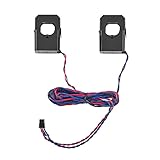
Overview: The Leviton LSMMA is a smart mains metering accessory designed to complement the Leviton Whole Home Energy Monitor (LWHEM-2R). This split-core current transformer enables direct monitoring of primary energy sources including grid, solar, battery, and generator inputs. Up to three pairs can connect to a single LWHEM-2R, providing flexible monitoring configurations for complex electrical systems.
What Makes It Stand Out: Its seamless integration within the Leviton ecosystem distinguishes it from universal monitors. The split-core design enables tool-free installation around existing mains conductors, while the My Leviton app unifies energy data with smart breakers, lighting, and EV chargers. This proprietary approach ensures reliable communication and a streamlined user experience for Leviton Load Center owners.
Value for Money: Priced at $66.73, this accessory offers reasonable value—but only for existing Leviton system owners. As a standalone purchase, it’s non-functional. For those already invested in Leviton’s smart infrastructure, it expands monitoring capabilities at a fraction of full system costs. However, universal monitors at similar total price points offer more flexibility for non-Leviton households.
Strengths and Weaknesses: Strengths: Tool-free split-core installation; seamless Leviton ecosystem integration; supports multiple energy sources; scalable architecture. Weaknesses: Requires LWHEM-2R monitor and Leviton Load Center; proprietary limitation; not a standalone solution; limited appeal outside Leviton ecosystem.
Bottom Line: Only consider the LSMMA if you own a compatible Leviton Load Center and Whole Home Energy Monitor. For others, invest in a complete universal system instead.
3. SIEMENS Inhab Smart Home Energy Monitor with 16-50Amp Circuit Level Sensors and 2-200Amp Main Sensors for Real Time Electricity Monitoring and Metering
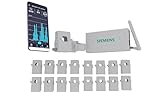
Overview: The SIEMENS Inhab Smart Home Energy Monitor delivers professional-grade circuit-level monitoring with UL certification. This system measures both main panel consumption and up to 16 individual branch circuits simultaneously, providing unprecedented visibility into appliance-specific energy use. Designed for new and existing panels, it offers advanced management features including time-of-use optimization, peak demand control, and automated load shedding for compatible devices.
What Makes It Stand Out: True circuit-level monitoring sets the Inhab apart from most whole-home monitors that only track mains. The ability to identify an “oven left on” through personalized alerts demonstrates its granular approach. Its load shedding capability can automatically reduce EV charging during peak demand, translating directly to utility bill savings. UL and CE certifications ensure rigorous safety standards.
Value for Money: At $267.75, this is a premium solution justified by professional-grade features. Circuit-level monitoring typically requires expensive commercial equipment; the Inhab brings this capability to residential users at a fraction of industrial costs. For homeowners seeking detailed appliance analytics and automated demand response, it offers compelling long-term ROI through optimized energy management.
Strengths and Weaknesses: Strengths: 16-circuit monitoring; UL/CE certified; advanced load shedding; personalized alerts; comprehensive app controls. Weaknesses: Highest price point; US/Canada app only; complex installation; may be overkill for basic monitoring needs.
Bottom Line: The SIEMENS Inhab is ideal for energy enthusiasts wanting detailed circuit-level data and automated demand management. Its premium features justify the cost for serious energy optimizers.
4. Eyedro Home Energy Monitor – Real-Time Electricity Usage Monitor with Solar Net Metering – Whole House Power Consumption Monitor – WiFi/Ethernet Smart Energy Meter with Reports & History, 2 Sensors

Overview: The Eyedro Home Energy Monitor provides real-time electricity tracking at an accessible price point. This dual-sensor system monitors whole-home consumption and solar production through either WiFi or Ethernet connectivity. With over a decade in the market, Eyedro offers reliable energy insights without subscription fees, making it an attractive option for budget-conscious homeowners and solar adopters seeking straightforward monitoring.
What Makes It Stand Out: The inclusion of both WiFi and Ethernet connectivity provides installation flexibility rarely found in this price tier. Its MyEyedro cloud platform offers unlimited historical data storage without recurring fees—a significant advantage over subscription-based competitors. The system’s simplicity appeals to DIY enthusiasts, while its solar net metering capabilities serve renewable energy users effectively.
Value for Money: At $149.00, the Eyedro delivers exceptional value. The package includes two 200A sensors, Ethernet cable, and lifetime cloud access—components that competitors often charge separately for. While lacking advanced automation, its core monitoring functionality and dual connectivity options match or exceed pricier alternatives, making it the budget segment leader.
Strengths and Weaknesses: Strengths: Affordable price; WiFi and Ethernet; no subscription fees; solar net metering; 10+ year brand reputation; simple installation. Weaknesses: No circuit-level monitoring; limited automation features; basic app interface; no UL certification mentioned.
Bottom Line: The Eyedro is perfect for cost-conscious users wanting reliable whole-home monitoring without complexity or ongoing fees. Solar owners on a budget should strongly consider it.
5. Smart Home Energy Monitor Supports Home Assistant, Real-Time Accurate Energy Consumption Tracking, Electricity Usage Monitor with 16x60A Circuit Sensor, 36-Month History, Solar Metering, ETL Certified

Overview: The Refoss Smart Home Energy Monitor targets the DIY smart home market with Home Assistant integration and comprehensive circuit-level monitoring. Supporting 16 branch circuits plus two mains, this ETL-certified system offers 98% accuracy and three years of historical data storage. Its latest firmware enables channel merging, data export, and solar surplus automation without physical sensor adjustments.
What Makes It Stand Out: Native Home Assistant support distinguishes Refoss from closed-ecosystem competitors. The zero feed-in automation intelligently activates high-consumption appliances during solar peaks, maximizing self-consumption and ROI. Recent software updates demonstrate active development, adding professional features like hourly data export and virtual channel configuration—capabilities typically reserved for commercial systems.
Value for Money: At $169.99, Refoss undercuts many competitors while offering superior smart home integration. The 16-circuit monitoring, three-year data retention, and solar automation features deliver premium functionality at a mid-range price. For Home Assistant users, it eliminates expensive hub requirements, providing exceptional ecosystem value.
Strengths and Weaknesses: Strengths: Home Assistant native; zero feed-in automation; 16-circuit monitoring; 3-year history; ETL certified; active software development; excellent price. Weaknesses: Requires technical skill; ETL less recognized than UL; newer brand; app dependency for some features.
Bottom Line: The Refoss is the top choice for Home Assistant users wanting advanced solar automation and circuit-level monitoring without premium pricing. Tech-savvy homeowners will appreciate its flexibility and value.
6. Sense Energy Monitor with Solar – Track Electricity Usage and Solar Production in Real Time Meets Rigorous ETL/Intertek Safety Standards

Overview: The Sense Energy Monitor with Solar is a premium whole-home energy monitoring system designed for households with solar panels. This device provides real-time tracking of both electricity consumption and solar production in a unified view, helping homeowners optimize their energy usage patterns and maximize solar ROI. Installation occurs directly inside your electrical panel, where it uses machine learning to identify individual devices by their unique electrical signatures.
What Makes It Stand Out: What truly distinguishes the Sense Solar is its sophisticated device detection technology that automatically recognizes appliances without requiring individual sensors on each circuit. The solar integration is seamless, offering side-by-side comparison of production versus consumption in real time. The system now supports time-of-use rate plans, making it invaluable for utility companies with variable pricing. Custom alerts for critical devices like sump pumps or well pumps provide peace of mind, potentially preventing costly disasters.
Value for Money: At $349, the Sense Solar sits at the premium end of the market, but justifies its price through advanced AI-powered device detection that eliminates the need for multiple circuit sensors. Compared to basic monitors requiring 16+ sensors, the clean installation and sophisticated software offer long-term value. For solar-equipped homes, the ability to maximize self-consumption can yield significant utility savings that offset the initial investment within 1-2 years.
Strengths and Weaknesses: Pros: Advanced machine learning automatically identifies devices; seamless solar production tracking; ETL/Intertek safety certified; custom disaster-prevention alerts; supports time-of-use rates. Cons: High upfront cost; device detection can take weeks to learn; limited to US/Canada; requires professional installation for most users; subscription not required but some features feel premium-gated.
Bottom Line: The Sense Energy Monitor with Solar is ideal for tech-savvy homeowners with solar installations who want comprehensive energy insights without cluttered circuit sensors. While expensive, its AI-driven approach and robust safety certification make it worth the investment for those serious about energy optimization.
7. Emporia Vue 3 Home Energy Monitor - Smart Home Automation Module and Real Time Electricity Usage Monitor, Power Consumption Meter, Solar and Net Metering for UL Certified Safe Energy Monitoring

Overview: The Emporia Vue 3 Home Energy Monitor offers comprehensive energy tracking at an accessible price point. This UL-certified device installs in your circuit panel using clamp-on sensors to provide real-time electricity usage data through a user-friendly mobile app. It supports various electrical systems including single-phase, split-phase, and three-phase configurations, making it versatile for most residential applications. The system enables 24/7 monitoring from anywhere with an internet connection.
What Makes It Stand Out: The Vue 3’s standout feature is its UL certification at a budget-friendly price, ensuring safety without premium cost. It offers impressive data granularity with 1-second resolution when actively viewing, plus minute and hour data stored in the cloud. The app provides actionable automation for time-of-use rates, peak demand management, and solar net metering. Its compatibility with multiple electrical systems, including three-phase setups with an additional sensor, makes it more versatile than many competitors.
Value for Money: At $99.99, the Emporia Vue 3 delivers exceptional value, costing less than one-third of premium alternatives. It includes a 1-year warranty and provides professional-grade monitoring capabilities typically found in more expensive units. The ability to export cloud data anytime prevents vendor lock-in. For homeowners wanting reliable, safe energy monitoring without breaking the bank, this represents one of the best price-to-performance ratios on the market.
Strengths and Weaknesses: Pros: UL certified for safety; affordable pricing; supports multiple electrical systems; real-time 1-second data; solar/net metering capable; cloud data export; 1-year warranty. Cons: Requires 2.4GHz WiFi; 1-second data only retained 3 hours; additional sensor needed for some three-phase systems; installation may require electrician; app interface less polished than premium brands.
Bottom Line: The Emporia Vue 3 is the smart choice for budget-conscious homeowners seeking safe, reliable energy monitoring. Its UL certification and robust feature set make it a standout value proposition that doesn’t compromise on essential capabilities.
8. Sense Energy Monitor - Track Electricity Usage in Real Time and Save Money - Meets Rigorous ETL/Intertek Safety Standards

Overview: The standard Sense Energy Monitor provides comprehensive whole-home electricity tracking without solar integration. This ETL/Intertek-certified device installs inside your electrical panel and uses advanced machine learning to identify individual appliances by their electrical signatures. It delivers real-time energy data through iOS, Android, and web apps, helping families understand usage patterns and reduce waste. The system now supports time-of-use rate plans, making it relevant for modern utility structures.
What Makes It Stand Out: Sense’s primary differentiator is its AI-driven device detection that eliminates the need for individual circuit sensors. The technology automatically learns and names appliances as it detects their unique signatures, creating a clean, uncluttered installation. The platform offers custom notifications for critical devices, providing security and disaster prevention capabilities. Its pattern recognition can even reveal lifestyle insights like when family members arrive home, adding a unique layer of home awareness beyond simple energy tracking.
Value for Money: Priced at $299, the standard Sense monitor commands a premium over sensor-based systems but delivers value through its sophisticated software and simplified installation. The device detection capability saves significant time and effort compared to manually configuring dozens of sensors. For homeowners prioritizing convenience and advanced analytics over absolute circuit-level precision, the price is justified. However, solar users should opt for the $349 Solar version instead.
Strengths and Weaknesses: Pros: Advanced machine learning eliminates multiple sensors; ETL/Intertek safety certified; real-time monitoring across platforms; custom disaster alerts; supports time-of-use rates; clean installation. Cons: Expensive for non-solar version; learning period can be slow; device identification isn’t always accurate; limited to US/Canada; solar tracking requires pricier model.
Bottom Line: The Sense Energy Monitor excels for homeowners wanting sophisticated energy insights without sensor clutter. Its AI-powered approach justifies the premium price for those valuing convenience, though sensor-based alternatives offer better value for hands-on users.
9. Emporia Energy Monitor with 16 Sensors + 4 Smart Plugs Super Bundle - Whole Home Electricity Usage Tracking & Real-Time Control - Supports Solar Net Metering - Works with iOS, Android, Alexa

Overview: The Emporia Super Bundle combines whole-home monitoring with granular circuit-level tracking and smart plug control. This comprehensive kit includes the Vue Energy Monitor with 16 sensors for individual circuit monitoring plus four Wi-Fi smart plugs for remote device management. The system provides second-by-second visibility into energy usage patterns while enabling automation through the Emporia app. It supports solar net metering and works with iOS, Android, and Alexa for voice control integration.
What Makes It Stand Out: This bundle’s comprehensive approach sets it apart, offering both panel-level and device-level monitoring in one package. The 16 sensors provide precise data for major appliances like HVAC, water heaters, and dryers, while the four smart plugs extend monitoring to plug-in devices with remote control capabilities. The ability to create schedules and automations directly through the app reduces standby power waste. Alexa integration adds convenience for smart home enthusiasts wanting voice-controlled energy management.
Value for Money: At $224.98, this bundle delivers exceptional value by combining multiple products into one discounted package. Purchasing a 16-sensor monitor and four smart plugs separately would typically cost $300+. The comprehensive monitoring capabilities rival systems costing twice as much, while the smart plugs provide immediate control over energy waste. For homeowners wanting both detailed analytics and actionable control, this bundle eliminates the need for separate purchases and offers significant savings.
Strengths and Weaknesses: Pros: 16 sensors for detailed circuit monitoring; includes 4 smart plugs; solar/net metering support; Alexa compatibility; cloud data storage; real-time tracking; app-based automation; excellent bundle value. Cons: More complex installation with 16 sensors; smart plugs require 2.4GHz WiFi; cloud dependency; may be overkill for smaller homes; sensor accuracy can vary by circuit.
Bottom Line: The Emporia Super Bundle is perfect for energy-conscious homeowners wanting maximum visibility and control. It combines detailed monitoring with smart automation at a price that makes comprehensive energy management accessible to most budgets.
10. Smart Home Energy Monitor with 16 50A Circuit Level Sensors, Measure Power Usage in Real-Time, History with App (16 50A Circuit Level Sensors) - Compatible with Home Assistant

Overview: This SEM-Meter energy monitor provides professional-grade circuit-level monitoring at a competitive price point. The system includes 16 50A sensors that track individual appliances like air conditioners, furnaces, water heaters, washers, and dryers. It supports various electrical configurations including single-phase, split-phase, and three-phase systems up to 415Y/240VAC. Installation uses clamp-on sensors in the circuit panel, providing real-time data via 2.4GHz WiFi to Android and Apple apps.
What Makes It Stand Out: The monitor’s versatility across electrical systems is impressive, supporting everything from standard residential to light commercial three-phase setups without proprietary restrictions. Its 1% accuracy rating exceeds many competitors’ specifications. The system retains detailed historical data permanently for day/month/year views, with 90 days of hourly data available for export. Compatibility with Home Assistant makes it ideal for open-source smart home enthusiasts wanting local control without cloud dependency.
Value for Money: At $129.99, this monitor offers professional features at a consumer price. The 16 included sensors provide granular appliance-level data that premium AI-based systems charge significantly more for. Permanent data retention and export capabilities prevent vendor lock-in, while the 1-year warranty adds confidence. For technical users wanting precise, circuit-level monitoring without subscription fees or cloud limitations, this represents outstanding value compared to both basic monitors and overpriced enterprise solutions.
Strengths and Weaknesses: Pros: 16 50A sensors included; 1% high accuracy; supports multiple electrical systems including three-phase; Home Assistant compatible; permanent historical data retention; affordable pricing; no cloud dependency required. Cons: Requires technical knowledge for installation and setup; 2.4GHz WiFi only; app interface less refined than major brands; no UL certification mentioned; busbar panels need special sensors.
Bottom Line: This SEM-Meter monitor is ideal for technical homeowners wanting precise circuit-level data and Home Assistant integration. Its accuracy, versatility, and data retention make it a standout choice for DIY smart home enthusiasts.
Understanding Net-Zero Energy Monitoring
What Does “Net-Zero” Really Mean?
Net-zero energy isn’t about eliminating your electric bill overnight—it’s about achieving a delicate balance where your renewable energy production meets or exceeds your annual consumption. However, this balance is dynamic, not static. Your solar panels might be cranking out 8 kW at noon while your home idles at 1.5 kW, creating a surplus. By 7 PM, your family is cooking dinner, running the dishwasher, and binge-watching shows while your panels sit dormant. Without proper monitoring, you’re essentially flying blind through these daily energy fluctuations.
True net-zero tracking requires continuous measurement of both production and consumption, calculating the net flow in real-time. This bidirectional awareness helps you shift flexible loads (like EV charging or water heating) to align with solar production peaks, maximizing self-consumption and minimizing expensive grid exports that net metering policies might undervalue.
The Role of Solar CTs in Achieving Net-Zero
Solar current transformers are the unsung heroes that make accurate net-zero tracking possible. Unlike standard CTs that simply measure power draw from your main service lines, solar CTs are specifically designed to capture the output from your inverter(s) with precision. They must handle different voltage characteristics, potential backfeed scenarios, and the unique waveform patterns produced by modern solar inverters.
The placement of these CTs is critical: they monitor your solar production before it hits your main panel, allowing the system to calculate the crucial “net” figure by comparing this production against your home’s total consumption. Without dedicated solar CTs, you’re left with incomplete data that can’t distinguish between solar power you’re using directly versus what’s being exported to the grid.
Core Components of Whole-Home Energy Monitoring Systems
Main Monitoring Hub
The central processing unit of any energy monitoring system serves as the brain that collects, processes, and transmits your energy data. These hubs vary significantly in their architecture—some are compact devices that fit directly inside your electrical panel, while others require external mounting with multiple wire runs. The hub’s processing power determines how many CTs it can support, its data sampling rate, and its ability to handle complex calculations like power factor correction and harmonic analysis.
When evaluating hubs for net-zero applications, prioritize units with dedicated channels for solar CTs rather than those that require you to sacrifice consumption monitoring channels. The best systems offer isolated, high-precision inputs specifically calibrated for the DC-to-AC conversion characteristics of solar inverters.
Current Transformers (CTs) Explained
Current transformers are the sensory organs of your monitoring system, converting the magnetic field around a conductor into a measurable low-voltage signal. For net-zero tracking, you’ll need two distinct CT types: standard consumption CTs that clamp onto your main service conductors, and solar CTs that monitor your inverter output. The accuracy class of these CTs directly impacts your net-zero calculations—look for CTs with at least 0.5% accuracy, though revenue-grade 0.2% accuracy CTs provide the confidence needed for critical financial decisions.
CT sizing is non-negotiable: undersized CTs saturate and produce dangerously inaccurate readings during peak production or consumption, while oversized units lose resolution at lower power levels. Your main service CTs should match your panel’s amperage rating (typically 100A, 200A, or 400A), while solar CTs must accommodate your inverter’s maximum continuous output plus a 20% safety margin.
Solar-Specific CTs vs. Standard CTs
Solar CTs face unique challenges that standard CTs aren’t designed to handle. Inverter output can be highly variable, with rapid fluctuations as clouds pass and MPPT algorithms hunt for optimal operating points. Solar CTs feature faster response times and specialized firmware that can accurately capture these dynamics without smoothing away important data.
Moreover, solar CTs must be directional—they need to distinguish between production (power flowing from your inverter to your panel) and any potential backfeed from the grid. This directional awareness is crucial for accurate net metering calculations and for identifying potential issues like inverter malfunction or anti-islanding problems. Some advanced systems use rogowski coils for solar monitoring, offering superior flexibility and accuracy across a wide dynamic range.
Key Features to Look for in Net-Zero Tracking Systems
Real-Time Data Resolution and Accuracy
When pursuing net-zero status, data granularity matters immensely. Systems that update every 15 seconds reveal patterns invisible to those that sample every minute. The gold standard for net-zero monitoring is 1-second resolution or better, capturing the instant your air conditioner compressor kicks on or when a cloud temporarily shades your panels.
Accuracy specifications deserve scrutiny beyond the headline percentage. Look for systems that maintain their rated accuracy across the entire measurement range, from standby loads of 50 watts to peak solar production of 10+ kW. Temperature drift, phase angle error, and harmonic distortion can all degrade accuracy in real-world conditions. Systems with automatic calibration verification and temperature compensation deliver more trustworthy net-zero calculations year-round.
Bidirectional Monitoring Capabilities
True net-zero tracking demands simultaneous measurement of consumption and production, with sophisticated algorithms that calculate net flow in real-time. This isn’t simply subtracting one number from another—it’s understanding the instantaneous relationship between what you’re making and what you’re using.
Advanced systems display this relationship through intuitive visualizations: a live “energy gauge” showing whether you’re currently net positive or negative, color-coded timelines that highlight self-consumption versus export periods, and predictive algorithms that forecast your daily net position based on weather and usage patterns. This bidirectional awareness transforms abstract data into actionable intelligence.
Cloud Connectivity and Mobile App Integration
Your monitoring system is only as good as your ability to access and interpret its data. Modern net-zero platforms offer cloud connectivity that preserves your data even if the local hub fails, with mobile apps that provide anywhere-access to your energy dashboard. However, not all cloud platforms are created equal.
Evaluate the app’s depth: does it offer customizable alerts when your solar production drops unexpectedly? Can you set net-zero goals and track progress over days, months, and years? Does it provide comparative analytics that benchmark your performance against similar homes? The best platforms also offer web portals with advanced data export capabilities, letting you perform your own analysis in Excel or Python.
Historical Data Analysis and Reporting
Achieving net-zero is a marathon, not a sprint. Your monitoring system must store and analyze months or years of data to reveal seasonal patterns, track the degradation of your solar panels, and quantify the impact of energy efficiency upgrades. Look for systems that automatically generate net-zero reports aligned with your utility billing cycles, making it easy to verify that your solar production is truly offsetting your consumption.
Advanced analytics can identify your “net-zero gap”—the percentage of solar production you’re not capturing due to timing mismatches. This insight drives decisions about battery storage, load shifting, or simple behavioral changes that can close the gap and maximize your self-consumption rate.
Installation Considerations for Solar-Enabled Systems
Electrical Panel Compatibility
Your electrical panel’s architecture dictates your monitoring options. Main breaker panels with ample spare space accommodate compact all-in-one monitors easily, while subpanels or crowded panels may require external hubs with remote CT installation. Three-phase homes need specialized three-phase monitors, and split-phase 120/240V systems common in North America require monitors that can accurately measure both legs.
For solar installations, you must also consider where your solar feed enters the panel. Supply-side connections (between the meter and main breaker) require different CT placement than load-side connections. Some utility meters include a “solar-ready” socket that can accommodate a generation meter, potentially simplifying your monitoring setup.
CT Sizing and Placement Strategy
Proper CT installation is both art and science. Main service CTs should be placed as close to the main breaker as possible, away from other conductors that could induce measurement errors. Solar CTs must be installed on the inverter output conductors before they tie into your main bus, ensuring they capture gross production rather than net production after self-consumption.
For homes with multiple solar inverters or panel orientations, you may need separate CTs for each inverter string. This granular data reveals which array segments perform best and helps identify shading issues or equipment failures. Some monitoring systems support up to 16 individual CT inputs, allowing comprehensive monitoring of complex solar-plus-storage installations.
Professional vs. DIY Installation
While many energy monitors market themselves as DIY-friendly, solar-enabled net-zero systems often benefit from professional installation. Electricians certified in solar installations understand the nuances of working with live DC conductors, proper CT polarity, and utility interconnection requirements. They can also identify potential issues like shared neutral conductors that could compromise measurement accuracy.
DIY installation is feasible for electrically savvy homeowners, particularly for systems with plug-in CTs and detailed installation guides. However, opening your electrical panel always carries risks, and improper CT placement can yield dangerously inaccurate data that undermines your entire net-zero tracking effort. Many manufacturers offer certified installer networks, and the installation cost is often offset by improved accuracy and warranty protection.
Data Interpretation for Net-Zero Success
Understanding the “Net” Calculation
The fundamental equation for net-zero tracking is deceptively simple: Net = Production - Consumption. But real-world implementation involves complexities that can trip up even sophisticated systems. Power factor differences between your inverter’s output and your home’s reactive loads, minor timing offsets between separate measurement channels, and calibration drift can all introduce errors into the net calculation.
Advanced monitoring systems perform continuous self-checks, comparing the sum of measured branch circuits against the main service measurement to identify discrepancies. They also account for parasitic loads like inverter standby consumption and monitoring system power draw itself—small factors that can shift your annual net calculation by several percentage points.
Key Metrics That Matter: Consumption, Production, and Net Flow
Beyond the basic net figure, successful net-zero tracking requires monitoring several derived metrics. Your self-consumption rate—the percentage of solar power you use directly versus exporting—reveals how effectively you’re aligning usage with production. A home with 70% self-consumption needs significantly less grid energy than one at 30%, even with identical solar arrays.
Other critical metrics include: grid import peak demand (which affects demand charges), export compensation rate (impacting financial payback), and the “duck curve” of your daily net flow. The best monitoring systems calculate these automatically and present them in intuitive dashboards that guide your energy decisions without overwhelming you with raw data.
Advanced Features That Enhance Net-Zero Tracking
Appliance-Level Monitoring Integration
While whole-home monitoring provides the big picture, integrating appliance-level monitoring through smart plugs or dedicated branch circuit CTs reveals the specific behaviors driving your consumption. This granular data shows which appliances create the largest net-zero gaps—perhaps your electric water heater runs at 6 AM before solar production ramps up, or your pool pump operates during peak solar hours but could be optimized further.
Some advanced systems use machine learning to disaggregate appliance signatures from your main consumption data, identifying your refrigerator’s compressor cycles or your HVAC system’s runtime without additional hardware. While not 100% accurate, this “virtual submetering” provides valuable insights for prioritizing efficiency upgrades.
Utility Rate Plan Optimization
Net-zero isn’t just about kilowatt-hours; it’s about dollars and cents too. Sophisticated monitoring systems can be programmed with your utility’s time-of-use rates, demand charges, and net metering terms. They calculate the financial impact of shifting loads versus exporting power, helping you optimize for economic net-zero rather than just energy net-zero.
For example, if your utility credits exported solar at retail rate during peak hours but only wholesale rate during off-peak, the system might recommend running your dishwasher at noon instead of after dinner. This rate-aware optimization can improve your solar ROI by 15-25% without changing your actual energy consumption.
Grid Export and Net Metering Visualization
Understanding your relationship with the grid is crucial for net-zero success. Advanced systems provide detailed export profiles showing exactly when and how much power you feed back to the grid. They can generate reports that align with your utility’s net metering statements, allowing you to verify billing accuracy—a surprisingly common issue with bidirectional meters.
Some monitors also track grid voltage and frequency, alerting you to power quality issues that might affect your inverter’s performance or indicate grid instability. This data becomes invaluable if your utility implements export limits or requires curtailment during grid stress events.
Connectivity and Smart Home Integration
Wi-Fi, Ethernet, or Cellular: Which Connection Works Best?
Your monitoring system’s connectivity method affects both reliability and data security. Wi-Fi offers convenience but can be vulnerable to interference from solar inverter EMI or distance from your router. Ethernet provides rock-solid connectivity and enhanced security, though it requires running CAT5/6 cable to your electrical panel. Cellular connectivity serves as excellent backup for critical monitoring but involves ongoing data plan costs.
For net-zero tracking, consider systems that support multiple connectivity methods simultaneously. If your primary connection fails during a critical solar production period, you lose data that can’t be recovered. Redundant connectivity ensures continuous monitoring and preserves the integrity of your annual net-zero calculations.
Integration with Home Automation Platforms
True net-zero optimization often requires automatic load control based on solar production. Systems that integrate with platforms like Home Assistant, SmartThings, or dedicated energy management ecosystems can automatically trigger EV charging, water heating, or battery charging when excess solar is available.
Look for monitoring systems with open APIs or native support for MQTT protocol, enabling custom automation rules. For example, you could program your system to send an alert when solar production exceeds consumption by 2 kW, signaling it’s time to start your electric dryer. This proactive automation transforms your home from a passive energy consumer into an active participant in its own net-zero mission.
Accuracy Standards and Certification
Revenue-Grade Metering: Is It Necessary?
Revenue-grade accuracy (ANSI C12.20 standard) ensures measurement error stays below 0.2% across all operating conditions. While not strictly necessary for personal net-zero tracking, revenue-grade monitors provide confidence in your data, especially if you plan to participate in utility programs that compensate you for grid services or if you might sell your home and want to validate your solar system’s performance to buyers.
For most homeowners, 0.5% accuracy is sufficient for decision-making. However, the small price premium for revenue-grade equipment pays dividends in data integrity and can be required if your monitor serves as a backup to your utility’s billing meter in disputes.
Industry Certifications to Look For
Beyond accuracy standards, look for monitors certified to UL 61010 (electrical safety), FCC Part 15 (EMI/RFI compliance), and IEC 62053 (metering performance). For solar-specific applications, certification to IEEE 1547 standards ensures the monitor won’t interfere with your inverter’s grid-interactive functions.
If you’re subject to California’s Rule 21 or Hawaii’s DER programs, your monitor may need additional certifications to be recognized by the utility. Always verify that your chosen system is approved for interconnection in your jurisdiction, as some utilities maintain whitelists of acceptable monitoring equipment.
Cost Analysis and ROI Considerations
Understanding Total Cost of Ownership
The sticker price of an energy monitor is just the beginning. Factor in installation costs (which can range from $200-$800 depending on complexity), potential electrical panel upgrades, and any subscription fees for advanced cloud features. Some “free” apps lock critical net-zero analytics behind ongoing monthly fees, while others offer lifetime access included in the purchase price.
Consider the cost of expansion too. If you add battery storage or an EV charger later, will your monitor support additional CTs, or will you need to purchase a whole new system? Modular systems with expandable CT inputs offer better long-term value, even if the initial investment is higher.
How Monitoring Accelerates Payback on Solar Investment
Quality monitoring typically pays for itself within 1-3 years by identifying optimization opportunities. Homes with comprehensive monitoring achieve 10-15% higher self-consumption rates than unmonitored homes, directly reducing grid imports. The system might reveal that your HVAC system is cycling inefficiently, that your pool pump schedule needs adjustment, or that your solar production has degraded 8%—issues that would otherwise go unnoticed.
Moreover, monitoring protects your solar investment by providing the data needed to enforce equipment warranties. If your inverter fails or panel production drops, historical baseline data from your monitor provides the evidence required for warranty claims, potentially saving thousands in replacement costs.
Data Privacy and Security in Energy Monitoring
Local vs. Cloud Data Storage
Your energy data reveals intimate details about your lifestyle—when you’re home, when you cook, when you sleep. Cloud-based systems offer convenience but create potential privacy vulnerabilities. Evaluate whether the manufacturer anonymizes data, shares it with third parties, or uses it for purposes beyond your monitoring.
Local-first systems that store data on a home server and offer optional cloud sync provide the best of both worlds. They maintain functionality during internet outages and give you full control over your data. Some advanced setups use local MQTT brokers with end-to-end encryption, ensuring your energy patterns remain private while still enabling remote access through secure VPN connections.
Security Protocols and Best Practices
Ensure your monitor supports WPA3 encryption for Wi-Fi connections and uses TLS 1.3 for cloud communications. Look for systems with two-factor authentication and regular firmware updates that patch vulnerabilities. Some monitors include physical tamper detection, alerting you if someone opens your electrical panel—a valuable feature if your system is accessible from outside.
Change default passwords immediately upon installation, and consider isolating your energy monitor on a separate VLAN from other smart home devices. This network segmentation prevents a compromised IoT device from becoming a backdoor into your energy data or, worse, your monitor’s configuration interface.
Troubleshooting Common Net-Zero Monitoring Issues
Calibration Drift and Accuracy Degradation
Even the best monitoring systems can drift out of calibration over time, especially when exposed to the temperature extremes common in electrical panels. Symptoms include persistent positive or negative net readings when you know your home should be at equilibrium, or discrepancies between your monitor’s monthly total and your utility bill that grow over time.
Most quality monitors include self-calibration routines that run automatically, but you should still perform manual verification annually. Use a clamp meter to measure actual current on your main conductors and compare it to your monitor’s reading under a stable load. If you find significant drift, contact the manufacturer—many offer recalibration services or will replace CTs under warranty.
Connectivity Dropouts and Data Gaps
Intermittent connectivity can create frustrating gaps in your net-zero data, making it impossible to verify performance or identify issues. Wi-Fi dropouts often stem from EMI generated by your solar inverter or physical obstructions. Try relocating your Wi-Fi router, adding a mesh node near your panel, or switching to Ethernet if possible.
Data gaps also occur when cloud servers undergo maintenance or when firmware updates interrupt service. Look for monitors with local data buffering that can store weeks of data onboard, automatically backfilling cloud databases when connectivity resumes. This feature ensures your annual net-zero calculations remain accurate even through temporary outages.
Future-Proofing Your Energy Monitoring Setup
Scalability for Battery Storage Integration
If you’re planning to add battery storage, your monitoring system must be able to measure battery charge/discharge cycles in addition to solar production and home consumption. This requires a third set of CTs and software capable of calculating complex interactions: solar charging the battery, battery discharging to meet loads, and grid charging during off-peak rates.
Choose monitors that explicitly support battery monitoring and offer visualization modes showing your state of charge alongside net-zero metrics. Some systems can even predict when your battery will be full based on solar forecast data, prompting you to shift loads preemptively and avoid wasting potential solar energy.
EV Charging Monitoring Capabilities
Electric vehicles represent the largest flexible load in most net-zero homes. Dedicated EV circuit monitoring lets you track charging efficiency, schedule charging during solar peaks, and quantify how much of your driving is truly powered by sunshine. Advanced systems integrate with EV chargers via APIs, automatically adjusting charging rates to match real-time solar availability.
Consider monitors that support dynamic load management, preventing your EV charger from pushing your net export negative during peak rate periods. This feature is particularly valuable in utilities with unfavorable net metering policies, where exporting solar during peak hours and importing during off-peak can create a financial arbitrage opportunity.
Regulatory and Utility Interconnection Requirements
Net Metering Policies and Monitoring Requirements
Net metering rules vary dramatically by jurisdiction and are evolving rapidly. Some utilities require generation meters separate from billing meters, while others accept homeowner monitoring data for interconnection agreements. Understanding your local requirements before purchasing a monitor prevents costly retrofits later.
In regions transitioning to net billing or time-of-use compensation, your monitor must capture interval data that aligns with utility billing periods. Systems that only provide monthly totals become inadequate when you’re compensated differently for exports at 10 AM versus 6 PM. Ensure your monitor can generate utility-compliant reports in the required formats (often CSV or Green Button data).
Utility Approval for Certain Monitor Types
Some utilities maintain strict interconnection requirements that affect monitor selection. For example, if your monitor will be used for any grid-interactive functions like automatic export limiting during grid stress, it may need to be listed on the utility’s approved equipment register. California’s Rule 21 and Hawaii’s DER programs have particularly stringent requirements.
Even if not explicitly required, using a utility-approved monitor can streamline the interconnection process for your solar system and any future battery additions. Contact your utility’s interconnection department early in your research process—they often provide lists of pre-approved monitoring equipment that will save you headaches down the road.
Making the Right Choice for Your Net-Zero Journey
Assessing Your Home’s Specific Needs
Start by documenting your current and planned energy infrastructure. Count your main service conductors, identify where your solar feed enters the panel, and note any subpanels or critical loads you want to monitor separately. Calculate your peak solar production and maximum simultaneous load to size CTs correctly.
Consider your technical comfort level too. If you love diving into data, prioritize systems with raw data export and API access. If you prefer simplicity, choose platforms with intuitive apps and automated insights. Your monitoring system should match your engagement style—complex systems that overwhelm you will provide no value if you stop checking them.
Questions to Ask Before Purchasing
Before committing to a system, demand answers to these critical questions: Does the monitor calculate net values internally or in the cloud? What happens to my data if the manufacturer goes out of business? Can I export my entire historical dataset in an open format? Are there ongoing subscription fees, and what features do they unlock? How long is the warranty, and does it cover CT accuracy degradation?
Request a demo of the mobile app and web portal. Check user forums and Reddit communities for real-world feedback about long-term reliability and customer support responsiveness. A monitor is a 10+ year investment—choose a manufacturer with a proven track record of supporting legacy products and a business model that doesn’t depend on selling your data.
Frequently Asked Questions
1. What’s the difference between a standard energy monitor and one with solar CTs for net-zero tracking?
Standard monitors only measure electricity consumption from the grid. Solar-enabled monitors include additional current transformers that measure your solar panel production separately, allowing the system to calculate your net energy flow in real-time. This bidirectional measurement is essential for tracking whether you’re truly achieving net-zero status, as it shows both how much solar you’re using directly versus exporting, and how much grid power you’re importing when solar isn’t available.
2. How accurate do my monitors need to be for reliable net-zero calculations?
For most homeowners, 0.5% accuracy is sufficient for decision-making and tracking progress. However, if you plan to use your data for utility billing disputes, warranty claims, or participation in grid services programs, revenue-grade accuracy of 0.2% (ANSI C12.20 certified) provides the necessary confidence. The key is ensuring accuracy is maintained across the full measurement range, from standby loads of a few dozen watts to peak solar production of 10+ kW.
3. Can I install solar CTs myself, or do I need an electrician?
If you’re comfortable working in an electrical panel and understand basic safety procedures, DIY installation is possible with plug-in CT systems that include detailed instructions. However, solar conductors are often live during daylight hours and require special handling. Professional installation ensures correct CT placement, polarity, and sizing, plus it typically preserves manufacturer warranties. Many utilities also require certified installation for any equipment connected to your service panel.
4. Will energy monitoring help if my utility doesn’t offer net metering?
Absolutely. In fact, monitoring becomes even more critical without net metering. When you’re only credited at wholesale rates for exports, maximizing self-consumption becomes financially essential. Your monitor reveals exactly when you’re producing excess solar, allowing you to shift flexible loads like EV charging, water heating, or laundry to capture that value directly rather than exporting it cheaply and buying it back later at retail rates.
5. How many CTs do I need for a typical solar-equipped home?
At minimum, you need two CTs: one set on your main service conductors and one set on your solar inverter output. However, most net-zero enthusiasts add more: individual CTs for major loads like HVAC, water heaters, or EV chargers; CTs on subpanels; and potentially a third set if you have battery storage. A typical comprehensive setup uses 6-8 CTs total, though expandable systems can accommodate 16 or more for complex installations.
6. What happens to my data during a power outage or internet disruption?
Quality systems include local data buffering that stores measurements in non-volatile memory during outages. Once power and connectivity are restored, the system automatically backfills any gaps in the cloud database. For extended outages, look for monitors with at least 30 days of onboard storage capacity. Systems that depend entirely on cloud connectivity will have permanent data gaps during disruptions, compromising your annual net-zero calculations.
7. Can I add battery storage monitoring to an existing energy monitor?
It depends on the system’s architecture. Many monitors designed for solar net-zero tracking include expansion ports or unused CT channels specifically for future battery integration. However, budget systems may lack the processing power or software features needed for battery monitoring. Before purchasing, verify that the manufacturer explicitly supports battery storage in their product roadmap and that the hardware can accommodate additional CTs for measuring charge/discharge cycles.
8. How do I verify my monitor’s accuracy against my utility meter?
Perform a manual check during a stable, moderate load period (avoiding rapid fluctuations). Use a calibrated clamp meter to measure current on your main conductors, compare voltage readings, and calculate power. Compare this to your monitor’s real-time display. For solar, check production readings against your inverter’s own display (though note inverter data is typically less accurate than quality CTs). For comprehensive verification, compare monthly totals over several billing cycles, accounting for any measurement time offsets between your monitor and the utility’s meter reading schedule.
9. What’s the typical payback period for a whole-home energy monitoring system?
Most homeowners see payback within 1-3 years through a combination of energy savings and solar optimization. The system typically identifies 10-15% in efficiency improvements and helps increase self-consumption rates by timing loads with solar production. Additional value comes from warranty protection—monitoring data provides the evidence needed to enforce solar equipment warranties, potentially saving thousands if inverter or panel issues arise. Revenue-grade monitors used for utility program participation can pay back even faster through grid services compensation.
10. Can monitoring systems help with Time-of-Use rate optimization?
Yes, advanced monitors excel at this. You can program your utility’s specific time-of-use rates, demand charges, and seasonal variations into the system. The monitor then calculates the financial impact of your energy decisions in real-time, showing you the dollar value of shifting a load versus exporting solar. Some systems integrate with smart thermostats and EV chargers to automatically optimize usage based on rate schedules, potentially saving 20-30% on electricity costs beyond the savings from solar alone.