Securing your home shouldn’t require a second mortgage, yet many homeowners assume reliable window and door sensors demand premium prices. The truth? The market has evolved dramatically, and sub-$30 sensors now deliver the core functionality that once cost three times as much. The secret isn’t finding the cheapest option—it’s understanding which features actually matter and which corners can be safely cut.
Whether you’re building your first DIY security system or expanding an existing smart home ecosystem, budget sensors represent one of the smartest investments you can make. But not all affordable sensors are created equal. Some deliver impressive reliability and seamless integration, while others will have you climbing ladders to replace batteries every three months or troubleshooting phantom alerts at 2 AM. This guide cuts through the marketing noise to help you identify what separates genuinely effective budget sensors from the bargain-bin disappointments.
Top 10 Window & Door Sensors Under $30
Detailed Product Reviews
1. HIIXHC Personal Security Window & Door Alarm Bell | Wireless Sensor Door Window Burglar Alarm | Pack of 10

Overview: The HIIXHC 10-pack offers a straightforward solution for basic home security needs at an accessible price point. These magnetic sensor alarms detect when doors or windows open beyond 0.59 inches, emitting a 90-decibel alert to deter intruders or warn occupants. Designed for peel-and-stick installation, each unit requires two AAA batteries (not included) and can be deployed throughout homes, apartments, offices, or garages. The package provides extensive coverage for multiple entry points without complex wiring or professional installation.
What Makes It Stand Out: This product excels in sheer quantity and simplicity. With ten individual alarms, you can secure an entire property’s vulnerable access points simultaneously. The three-step setup process requires no technical expertise—just insert batteries, adhere the magnetic sensors, and activate the switch. The 90dB output strikes a balance between being attention-grabbing without causing hearing damage. The dustproof construction suggests durability for long-term indoor use, and the multi-scenario applicability makes it versatile for renters and homeowners alike.
Value for Money: At $14.99 for ten units ($1.50 per alarm), this represents exceptional bulk value. Comparable single alarms often retail for $3-5 each, making this package ideal for comprehensive coverage on a tight budget. The absence of included batteries slightly diminishes immediate value, but this is offset by the convenience of using standard AAA cells rather than specialty batteries. For those prioritizing quantity over advanced features, few competitors match this per-unit pricing.
Strengths and Weaknesses: Strengths: Excellent quantity-to-price ratio; simple installation; loud enough for effective deterrence; versatile placement options; no monthly fees. Weaknesses: No included batteries; lacks chime mode for non-emergency alerts; no low-battery indicator; limited to 90dB maximum volume; basic functionality without smart features.
Bottom Line: The HIIXHC 10-pack delivers reliable, no-frills security coverage for budget-conscious consumers. While it lacks premium features like battery indicators or volume settings, its affordability and ease of installation make it perfect for renters, small businesses, or anyone needing immediate, widespread protection without ongoing costs. Consider this if you need quantity over sophistication.
2. GE Personal Security Window and Door Alarm, 6 Pack, DIY Protection, Burglar Alert, Wireless Chime/Alarm, Easy Installation, Home Security, Ideal for Home, Garage, Apartment and More,White, 49721

Overview: GE’s six-pack alarm system brings trusted brand reliability to DIY home security with enhanced functionality beyond basic models. Each unit features a high-quality magnetic sensor triggering either a piercing 120-decibel alarm or a gentle chime mode, selectable via an integrated three-position switch. The package includes four LR44 button batteries per alarm (24 total), battery test buttons, and low-battery LED indicators. Designed for indoor use, these white-finish alarms blend discreetly with most décor while providing professional-grade deterrence.
What Makes It Stand Out: The dual-mode operation distinguishes this system significantly. The chime function serves as a friendly notification for family members moving about, while the 120dB alarm mode delivers one of the loudest outputs in its class—substantially more intimidating than standard 90dB units. GE’s attention to user experience shines through the battery test feature and low-battery warning system, eliminating guesswork about operational status. The included batteries provide immediate out-of-box functionality, a rare convenience in this category.
Value for Money: At $23.50 ($3.92 per unit), this represents a mid-range investment that justifies its premium through superior features. While pricier than budget alternatives, you’re paying for GE’s quality assurance, included batteries valued at $8-10, and the versatile alarm/chime functionality. The 120dB output alone provides measurably better security value than 90dB competitors. For homeowners seeking reliable, feature-rich protection without subscription fees, this strikes an excellent balance between cost and capability.
Strengths and Weaknesses: Strengths: Loudest 120dB alarm; dual chime/alarm modes; included batteries; battery test and low-battery indicator; trusted brand reputation; sleek white design. Weaknesses: Higher per-unit cost; only six units versus budget 10-15 packs; uses less common LR44 batteries; indoor installation only.
Bottom Line: GE’s six-pack is the premium choice for discerning homeowners who value functionality and peace of mind. The chime mode, superior volume, and battery management features make it worth the extra investment. Choose this if you want professional-grade features without professional installation costs, and prefer quality over quantity in your security setup.
3. Door Window Alarm, 90DB Door Alarms for Kids Safety, Door Window Burglar Alarm-Window Pool Alarms for Home (15 Pack)

Overview: This 15-pack alarm set maximizes coverage for comprehensive property protection, delivering straightforward magnetic sensor technology at an aggressive price point. Each unit produces a 90-decibel alert when doors or windows separate beyond the activation threshold, serving dual purposes of burglary deterrence and child safety monitoring. The adhesive mounting system enables tool-free installation on virtually any flat surface, making it ideal for renters and temporary housing situations. With fifteen individual alarms, this package covers more entry points than any competitor in its price range.
What Makes It Stand Out: The overwhelming quantity-to-price ratio is this product’s defining characteristic. Fifteen units allow simultaneous protection of every window, door, and even pool gates in most homes—something typically requiring multiple purchases from other brands. The 90dB output provides sufficient volume for indoor alerts and moderate deterrence. The straightforward on/off switch operation eliminates complexity, while the focus on child safety makes it particularly appealing for families with young children who might wander toward pools or exits.
Value for Money: At $20.99 ($1.40 per unit), this offers the lowest per-alarm cost in the category. Even factoring in the need to purchase thirty AAA batteries separately, the total investment remains competitive with smaller packs. For large homes, multi-unit properties, or comprehensive single-home coverage, the value proposition is unmatched. The lack of brand recognition is offset by sheer volume—this is essentially a bulk discount without requiring wholesale purchasing.
Strengths and Weaknesses: Strengths: Maximum unit count; lowest per-unit price; excellent for large properties; simple operation; child safety focus; versatile placement. Weaknesses: No brand reputation; no included batteries; lacks volume/settings customization; no battery indicators; basic 90dB output only; potentially inconsistent quality control.
Bottom Line: This 15-pack is the ultimate value play for maximum coverage. While it sacrifices premium features and brand assurance, it delivers functional security at an unbeatable per-unit price. Perfect for large families, property managers, or anyone needing to secure numerous entry points on a strict budget. Accept the basic functionality and enjoy the extensive coverage.
4. Security Door Window Alarm, Wireless Sensor Door Window Burglar Alarm, Door Alarms for Kids Safety, Easy Installation Doorbell Alarms for Office House Window Pool (4 Pack)

Overview: This compact four-pack prioritizes discreet installation and portability without sacrificing core security functionality. Measuring just 3.4" x 1.1" x 0.6", these ultra-thin alarms mount unobtrusively on windows, doors, drawers, or even refrigerators. Each unit emits a 90-decibel alert when the magnetic sensors separate beyond 0.6 inches, powered by two AAA batteries (not included). The minimalist design appeals to users wanting security without visual clutter, while the lightweight construction allows repositioning as security needs change.
What Makes It Stand Out: The ultra-slim profile is this product’s primary differentiator—most competitors use bulkier housings that draw attention. This design allows installation in tight spaces where traditional alarms won’t fit, such as sliding patio doors or cabinet doors. The versatility extends beyond typical entry points to safeguarding valuables inside drawers or monitoring appliance access. The straightforward adhesive mounting maintains the simplicity found in larger packs while delivering a more refined aesthetic that doesn’t scream “security device.”
Value for Money: At $9.78 ($2.45 per unit), this sits in the mid-range pricing tier despite offering only four alarms. The premium reflects the specialized compact design rather than quantity or advanced features. For users specifically needing discreet protection, the cost is justified. However, those prioritizing coverage area will find better value elsewhere. The lack of included batteries and limited feature set means you’re paying primarily for the form factor rather than enhanced functionality.
Strengths and Weaknesses: Strengths: Ultra-compact and discreet; versatile for non-standard applications; portable and repositionable; simple installation; adequate 90dB volume. Weaknesses: Only four units; higher per-unit cost; no chime mode; no battery management features; requires flush mounting surfaces; batteries not included.
Bottom Line: Choose this four-pack if discreet, space-saving security is your priority. The slim design excels in aesthetic-conscious installations and unconventional monitoring needs. However, for whole-home protection, larger packs offer better value. This is a specialized solution for targeted security rather than comprehensive coverage—ideal for apartments, offices, or specific high-value areas where visibility matters.
5. 4 Pack Door Window Alarm, Magnetic Burglar Alert Sensor, Loud Door Alarms for Kids Safety, DIY for Home Security, Office Protection,Shopping Store AAA Battery

Overview: This four-pack emphasizes intelligent design features and battery efficiency in a compact security solution. Each alarm activates at a tighter 0.39-inch sensor separation—more sensitive than typical 0.6-inch models—producing a loud alert suitable for homes, offices, or retail environments. The units feature three adjustable settings (on/off) and claim over one year of battery life from two AAA cells. Measuring 2.52" x 1.67" x 0.66", these alarms balance size and functionality while providing child safety and intrusion deterrence capabilities.
What Makes It Stand Out: The ultra-sensitive 0.39-inch trigger distance provides earlier warning than competitors, potentially alerting you before an intruder fully opens an entry point. The claimed one-year battery life significantly exceeds typical 3-6 month expectations, reducing maintenance burden. The three-setting switch offers more control than basic on/off models, while the design accommodates sliding doors, windows, drawers, and refrigerators. The product description’s technical specificity suggests a manufacturer attentive to precise installation requirements.
Value for Money: At $8.99 ($2.25 per unit), this offers competitive pricing for a feature-enhanced four-pack. The value proposition hinges on the battery longevity claim and tighter sensor tolerance—if accurate, reduced battery replacement costs offset the initial investment within the first year. Compared to budget options, you’re paying slightly more for technical refinement rather than quantity. For users who prioritize reliability and low maintenance over extensive coverage, this represents smart spending.
Strengths and Weaknesses: Strengths: Highly sensitive 0.39-inch trigger; exceptional battery life claim; compact size; versatile application; three adjustable settings; competitive pricing for features. Weaknesses: Only four units; incomplete product description; batteries not included; no chime mode; no battery indicator; requires precise flush mounting.
Bottom Line: This four-pack suits technically-minded users who appreciate precision engineering and low-maintenance operation. The sensitive trigger and battery efficiency claims are compelling, though unverified. Ideal for securing specific high-priority entry points rather than whole-home coverage. Choose this if you value smart design and reduced upkeep over maximum unit count, and don’t mind the installation precision required for optimal performance.
6. 6 Pack Wireless Security Window/Door Alarm, Magnetic Sensor Door Window Burglar Alert Alarm Pool Alarms Super Loud for Home, Garage, Apartment, Dorm, RV and Office(Include Batteries)…
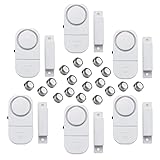
Overview: This six-pack wireless alarm system offers fundamental entry detection for homes, garages, apartments, and RVs. Each unit activates when the magnetic sensor separates by more than 0.39 inches, emitting a piercing 90+ dB siren that continues until the door or window is closed or manually disabled. The compact design requires minimal installation space, and batteries come included, making it ready to deploy straight from the package.
What Makes It Stand Out: The persistent alarm feature distinguishes this system—unlike units that sound for a fixed duration, these alarms won’t stop until the breach is resolved or you switch to OFF mode. This creates an effective deterrent that can’t be easily ignored. The inclusion of batteries for all six units adds immediate value and convenience, eliminating the extra purchase and installation step required by competitors. The straightforward two-setting design (ON/OFF) removes complexity for users wanting simple, reliable protection.
Value for Money: At $12.99 for six units, this package costs just $2.16 per alarm—exceptionally affordable for whole-property coverage. Competing brands typically charge $4-7 per unit without batteries. The included power cells alone justify the price difference, making this ideal for budget-conscious renters, dorm residents, or property managers seeking cost-effective security layering.
Strengths and Weaknesses: Strengths include unbeatable pricing, included batteries, loud continuous alarm, and foolproof installation. The primary weakness is the lack of a chime mode for non-emergency alerts, limiting versatility. Installation demands perfectly flush surfaces and precise alignment within 10mm, which may challenge older homes with uneven frames. The basic ON/OFF functionality lacks the sophistication of volume-controlled alternatives.
Bottom Line: Perfect for anyone prioritizing affordability and simplicity over advanced features. This system delivers reliable, ear-piercing deterrence across multiple entry points without breaking the bank. While it won’t win awards for refinement, it absolutely fulfills its core security promise.
7. GE Personal Security Window and Door Alarm, 5 Pack, DIY Protection, Burglar Alert, Wireless Chime/Alarm, Easy Installation, Home Security, Ideal for Home, Garage, Apartment and More,White, 45987

Overview: GE’s five-pack alarm system brings trusted brand reliability to DIY home security. Each unit features a high-quality magnetic sensor that triggers a powerful 120-decibel alarm or a gentle chime, selectable via a side-mounted switch. The white, low-profile design blends discreetly with most décor, while the included LR44 batteries and mounting tape enable tool-free installation in minutes. A battery test button and LED indicator help maintain optimal performance.
What Makes It Stand Out: The three-mode versatility sets this apart—choose silent OFF, notification CHIME, or full ALARM based on time of day or security needs. The 120-decibel output exceeds most competitors, creating an intensely loud deterrent. GE’s attention to user experience shines through the battery test function and low-battery LED, preventing unexpected failures. The brand reputation adds confidence for security-conscious homeowners who trust established manufacturers over generic alternatives.
Value for Money: At $22.02 for five units ($4.40 each), this sits in the mid-range price bracket. While pricier than budget options, you’re paying for GE’s quality control, louder alarm, and chime functionality. The included batteries and diagnostic features prevent hidden costs. For those wanting reliable, brand-name security without professional installation fees, this represents solid value—comparable systems from security companies cost 3-5 times more.
Strengths and Weaknesses: Strengths include brand trust, three operational modes, exceptionally loud 120dB alarm, battery management features, and straightforward installation. Weaknesses include higher per-unit cost than no-name brands, reliance on less common LR44 batteries versus AAA, and the chime volume may be too loud for some preferences. The five-pack might be insufficient for larger homes needing comprehensive coverage.
Bottom Line: An excellent choice for homeowners seeking dependable, flexible security from a recognizable brand. The chime mode adds everyday convenience, while the 120-decibel alarm provides serious deterrence. Ideal for primary residences where reliability and features justify the modest premium over bare-bones alternatives.
8. Sanjie Door Window Alarms - 5 Pack,125dB,Volume Control,Window Door Open Alarm Sensors for Kids Safety/Dementia/Pool,Wireless Sensors Keep Your Home Security,Easy to Install,Long Battery Life

Overview: Sanjie’s five-pack system prioritizes adaptability with impressive 125-decibel output and three distinct volume modes. Designed for diverse applications—from pool safety to dementia care—each sensor alarms continuously for 30 seconds when triggered, ensuring alerts aren’t missed. The system runs on three LR44 batteries per unit with a promised 12-month lifespan, and a flashing indicator warns of low power. Installation uses dependable 3M adhesive for indoor mounting.
What Makes It Stand Out: The volume control flexibility is exceptional—toggle between ear-piercing 125dB alarm, moderate 100dB alarm, or a 100dB chime. This customization suits varied environments: maximum deterrence at night, moderate alerts for child monitoring, or chime mode for business entries. The extended 30-second alarm duration surpasses standard brief chirps, forcing attention. The one-year battery life claim reduces maintenance burden significantly compared to quarterly battery changes common in budget models.
Value for Money: At $27.19 for five units ($5.44 each), this is a premium-priced option. However, the volume customization, extreme loudness, and long battery life justify the cost for specific needs. For families with safety concerns about children or elderly relatives, the tailored alert levels provide peace of mind worth the extra expense. Commercial users will appreciate the chime mode for customer-facing applications.
Strengths and Weaknesses: Strengths include best-in-class volume options, prolonged alarm duration, excellent battery longevity, 3M adhesive reliability, and versatile application range. Weaknesses include highest per-unit cost in this comparison, LR44 battery dependency, and the 30-second mandatory alarm might be excessive for minor, intentional openings. Limited to indoor use recommendations may restrict some applications.
Bottom Line: Best suited for users needing customizable alert levels and maximum volume. The premium price delivers premium features—particularly valuable for child safety, elder care, or small business security. If you require more than a simple on/off alarm, this flexibility justifies the investment.
9. Youyole 16 Pieces Door Window Alarm for Home Security Bulk Wireless Door Window Alarm Sensors Anti Theft Security Burglar Bell for Safety, Doorbell, Office, House Safety Protection
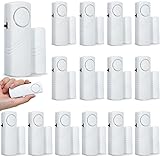
Overview: This bulk package delivers sixteen compact wireless alarms for comprehensive property coverage. Each unit emits a 90-decibel alert when magnetic sensors separate beyond 10mm, suitable for deterring intrusions or monitoring access. The small footprint adapts to various door and window types, from cabinets to sliding glass doors. Note that each alarm requires two AAA batteries, which are not included in the package. Installation relies on double-sided adhesive tape, with extra tape recommended for secure mounting.
What Makes It Stand Out: The sheer quantity sets this apart—sixteen units allow whole-home coverage including closets, gun safes, and storage areas often overlooked. The use of standard AAA batteries rather than button cells simplifies replacement and reduces long-term costs. The compact size enables installation in tight spaces where bulkier sensors won’t fit. This bulk approach is perfect for property managers, large families, or security-conscious users wanting exhaustive coverage without buying multiple packs.
Value for Money: At $17.99 for sixteen units ($1.12 each), this offers the lowest per-unit cost in the market. Even after purchasing AAA batteries separately, total investment remains highly competitive. For those needing many sensors, this eliminates the multi-pack purchase hassle. However, the lack of included batteries and absence of advanced features like chime modes or battery indicators means you’re trading sophistication for scale.
Strengths and Weaknesses: Strengths include exceptional bulk value, universal AAA battery compatibility, versatile compact sizing, and straightforward operation. Weaknesses are no included batteries, lack of volume control or chime options, no low-battery warning, and basic 90dB output that may not penetrate deep sleep. Adhesive-only mounting may require reinforcement for heavy-use doors.
Bottom Line: Ideal for users prioritizing quantity over advanced features. Property managers, large homeowners, or those wanting to secure multiple access points will find unbeatable value. Accept the battery purchase inconvenience and basic functionality in exchange for comprehensive, affordable coverage.
10. Door Window Alarm, 90DB Door Alarms for Kids Safety, Wireless Sensor Door Window Burglar Alarm-Window Pool Alarms for Home Office House, 20 Pack (20 Pack)
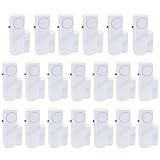
Overview: This twenty-pack system focuses on high-quantity deployment for extensive property protection. Each 90-decibel alarm activates when sensors separate by more than 0.59 inches, providing reliable entry detection for homes, offices, and pool areas. The package emphasizes child safety and theft prevention, with simple adhesive installation and compact design. Each unit requires two AAA batteries, purchased separately, making this a scalable solution for large-scale security needs.
What Makes It Stand Out: The twenty-unit count offers maximum coverage per package, outperforming most competitors in sheer quantity. The 0.59-inch trigger gap provides slightly more tolerance than standard 10mm sensors, reducing false alarms from minor vibrations. Marketed specifically for child safety and pool security, it addresses parental concerns about unauthorized exits. The high pack count suits property managers, daycare facilities, or large families needing uniform security across numerous access points.
Value for Money: At $22.09 for twenty units ($1.10 each), this matches the bulk value leader position. The per-unit cost is negligible compared to professional security systems. While AAA batteries add expense, the ability to secure an entire property—potentially twenty windows and doors—for under $30 total investment is remarkable. The trade-off is basic functionality: no chime mode, no battery indicators, no volume control.
Strengths and Weaknesses: Strengths include highest unit count, lowest per-alarm price, child-safety focus, and standard battery compatibility. Weaknesses mirror other bulk options: no advanced features, batteries not included, potentially insufficient 90dB volume for large homes, and adhesive mounting limitations. The lack of brand recognition may concern some buyers despite the functional design.
Bottom Line: Choose this for maximum coverage at minimum cost. Perfect for large families, rental property owners, or facilities needing uniform basic security across many openings. Accept the simplicity and battery purchases to achieve comprehensive protection that would cost hundreds with other systems.
Why Budget Sensors Don’t Mean Compromised Security
The price drop in entry-level sensors isn’t about reduced quality—it’s about market maturation. Manufacturing costs for magnetic reed switches and basic wireless chips have plummeted, while competition has forced brands to pack more value into lower price points. What you’re really paying for in premium models often boils down to brand recognition, industrial design, and advanced features most homeowners never use.
That said, the sub-$30 category does have its share of duds. The trick is recognizing that effective security depends on consistent performance, not flashy specifications. A $22 sensor that reliably reports open/closed status for five years provides infinitely more value than a $45 sensor with temperature monitoring and tamper alerts that drains its battery in eight months.
The Anatomy of a Reliable Window and Door Sensor
Understanding the fundamental components helps you evaluate quality without seeing the product. Every contact sensor contains three critical elements: the magnetic reed switch, the wireless transmitter, and the power source. The reed switch is your first quality indicator—look for sensors advertising “rare-earth magnets” or “extended gap range,” which typically indicate better-grade components that won’t fail in extreme temperatures.
The wireless chipset determines everything from battery life to signal reliability. Nordic Semiconductor and Silicon Labs chips dominate this space, and sensors built around these platforms generally offer superior power management. Don’t be fooled by generic “low-power” claims—specific component quality matters more than marketing buzzwords.
Wireless Protocols Decoded: What Actually Matters
Your sensor’s wireless language dictates its entire ecosystem compatibility. Zigbee sensors often provide the best balance of price, power consumption, and network reliability, but they require a compatible hub. Z-Wave offers similar benefits with slightly higher cost but excellent interoperability standards. Wi-Fi sensors eliminate the hub requirement but typically suffer from poor battery life and can congest your home network with dozens of devices.
Bluetooth sensors occupy a strange middle ground—excellent for direct phone connectivity but poor for whole-home security systems. The real question isn’t which protocol is “best” but which one aligns with your existing smart home infrastructure. A $19 Zigbee sensor is a terrible deal if you need to spend $60 on a hub to use it.
Installation Realities: What Your Walls Are Hiding
That sleek sensor design means nothing if it can’t bridge the gap between your door frame and window sash. Most budget sensors require magnet-to-sensor gaps under ¾ inch, but real-world installations often involve irregular surfaces, deep moldings, or metal frames that interfere with magnetic fields.
Before clicking “buy,” grab a ruler and measure your actual installation points. Check for metal door frames, which can require spacer blocks or alternative mounting positions. Consider the sensor depth—some budget models are surprisingly bulky and won’t fit on narrow window frames. Peel-and-stick adhesive works great until temperatures drop below freezing or exceed 100°F, so factor in your climate when evaluating mounting options.
Smart Home Integration: The Make-or-Break Factor
A sensor that doesn’t play nice with your existing system is just an expensive paperweight. Budget sensors vary wildly in their integration capabilities. Some offer native support for major platforms like SmartThings, Hubitat, or Home Assistant, while others lock you into proprietary ecosystems with limited automation options.
Look for sensors advertising “local control” or “MQTT support” if you want to avoid cloud dependency. Cloud-only sensors might save money upfront but become useless if the manufacturer discontinues service or changes their API. The most flexible budget sensors work with multiple platforms simultaneously, giving you migration options as your smart home evolves.
Battery Life: The Hidden Cost of “Cheap”
That $16 sensor seems like a steal until you’re spending $8 on replacement batteries every six months. Battery life varies from 18 months to over 5 years depending on power management, transmission frequency, and battery type. CR2032 coin cells are common but expensive per unit; AA or AAA sensors cost more initially but run on cheaper, longer-lasting power.
Check the advertised battery life against user reviews—manufacturers often quote “typical use” numbers that assume doors open less than five times daily. In a busy household with kids and pets, realistic battery life might be half the advertised duration. Some budget sensors offer low-battery alerts that actually work, while others die silently, leaving gaps in your security coverage.
Design Considerations: When Size and Color Actually Matter
White plastic rectangles dominate the budget sensor market, but one-size-fits-all design creates installation headaches. Ultra-miniature sensors solve aesthetic concerns but often sacrifice battery capacity. Oversized sensors might cover more installation scenarios but look clunky on elegant door frames.
Color matters more than you’d think. Pure white sensors stand out against cream trim; dark sensors vanish on black window frames. Some budget lines offer color-matched variants or paintable surfaces. Consider the LED indicators too—a bright blue flash every time the door opens becomes annoying in bedrooms, while sensors with configurable LEDs offer better nighttime behavior.
Range and Connectivity: Understanding Your Home’s Dead Zones
Wireless range claims are the Wild West of sensor specifications. A manufacturer might advertise “300-foot range” measured in open air with direct line-of-sight. Your home’s walls, appliances, and building materials create a completely different reality. Brick, concrete, and metal framing can cut effective range by 70% or more.
Mesh network protocols like Zigbee and Z-Wave help by relaying signals through powered devices, but your first sensor might be the weak link if it’s too far from the hub. Budget sensors often have less powerful antennas than premium models. Before buying, map your home’s layout and identify potential signal obstacles. Consider starting with a single test sensor to verify connectivity before committing to a whole-house system.
Security Features That Budget Sensors Often Overlook
Tamper detection, encryption, and firmware updates separate serious security devices from simple open/closed reporters. Many sub-$30 sensors skip tamper switches to save costs, meaning a burglar can simply rip them off the wall without triggering an alert. Look for sensors with physical tamper detection if security is your primary concern.
Encryption is another frequently omitted feature. While most wireless protocols include basic security, some budget sensors use fixed codes or weak encryption that sophisticated attackers could potentially intercept or spoof. Sensors that support OTA (over-the-air) firmware updates can receive security patches, while static firmware devices remain vulnerable to discovered exploits indefinitely.
Troubleshooting Before You Buy: Common Failure Points
Reading negative reviews reveals patterns that help you avoid problematic sensors. The most common budget sensor failures include: phantom alerts caused by weak magnets, connectivity drops during temperature extremes, rapid battery drain from poor power management, and adhesive failure within the first year.
Look for sensors with user-replaceable batteries—sealed units might look sleek but become expensive doorstops when the battery dies. Check if the sensor reports signal strength; this diagnostic feature helps identify range issues before they become reliability problems. Sensors that support “heartbeat” signals (regular check-ins with the hub) provide better health monitoring than those that only communicate when state changes occur.
Red Flags: What to Avoid in Sub-$30 Sensors
Certain specifications practically guarantee disappointment. Be wary of sensors claiming “lifetime batteries”—this usually means non-replaceable cells that die in 2-3 years, rendering the device useless. Avoid sensors requiring proprietary hubs when universal options exist at similar prices.
Extreme temperature ratings often indicate poor real-world performance. A sensor rated for -40°F to 185°F might technically function across that range, but battery life and reliability typically suffer at the extremes. Steer clear of sensors with mandatory cloud accounts and no local control option—you’re paying with data and dependency, not dollars.
DIY Monitoring vs. Professional Integration
Budget sensors excel in DIY systems where you control the hub and automation rules. Professional monitoring services often require specific, certified sensors that cost more but ensure compatibility and reliability. However, many DIY sensors now work with optional professional monitoring through platforms like Noonlight or Scout Alarm.
The key is understanding the certification requirements of your chosen monitoring service. Some services accept any Zigbee sensor; others maintain whitelists of approved devices. Budget sensors can absolutely integrate with professional monitoring, but verify compatibility before purchasing a dozen units. The cost savings evaporate quickly if you need to replace everything to meet monitoring service requirements.
Maintenance Habits That Extend Sensor Lifespan
Even the best budget sensor fails prematurely without proper care. Annual maintenance should include: cleaning contact points with isopropyl alcohol, checking magnet alignment and gap distance, testing adhesive mounts for secure attachment, and updating firmware when available.
Battery monitoring deserves monthly attention in critical applications. Set calendar reminders to test sensor responsiveness rather than waiting for low-battery alerts. In coastal areas, check for corrosion on battery contacts every six months. Keep spare batteries on hand—nothing compromises security like a dead sensor waiting for an Amazon delivery.
Future-Proofing Your Budget Purchase
The smart home landscape evolves rapidly, but certain fundamentals remain constant. Choose sensors using standard protocols over proprietary systems. Favor devices with active community support and open-source integration options. Sensors that work with Home Assistant today will likely support future platforms through community-developed bridges.
Consider the manufacturer’s track record for supporting legacy products. Companies that maintain firmware updates for 5+ year old devices demonstrate commitment to longevity. Avoid brands that constantly churn out new models while abandoning previous generations. Your $25 sensor becomes expensive if you need to replace it in two years because the ecosystem moved on.
Making Your Final Decision: A Practical Checklist
Before finalizing any sub-$30 sensor purchase, run through this checklist: Does it work with my existing hub/platform? Are user reviews consistently positive about battery life? Does it support local control or require cloud connectivity? Is the magnet gap suitable for my installation? Are replacement batteries readily available and affordable? Does it report signal strength for troubleshooting? Is there evidence of long-term manufacturer support?
If you can answer “yes” to at least five of these questions, you’ve likely found a worthwhile budget sensor. Remember that the goal isn’t perfection—it’s reliable, consistent performance that doesn’t break the bank. The best sensor is the one you’ll actually install and maintain, not the one with the most impressive spec sheet.
Frequently Asked Questions
What’s the realistic battery life difference between Wi-Fi and Zigbee sensors in the sub-$30 range?
Wi-Fi sensors typically last 6-12 months on a coin cell battery due to higher power requirements, while Zigbee sensors often achieve 18-36 months under similar usage. The difference stems from Wi-Fi’s constant connection maintenance versus Zigbee’s low-power sleep modes. For high-traffic doors, this gap widens further—Wi-Fi sensors might need replacement every 4-6 months, while Zigbee units can still exceed a year.
Can budget sensors withstand extreme weather on exterior doors?
Most sub-$30 sensors are rated for indoor use only, with operating temperatures between 32°F and 104°F. However, many users successfully deploy them in protected exterior locations like covered porches. For true outdoor exposure, look for sensors specifically rated IP65 or higher, though these rarely fall under the $30 threshold. Cold weather primarily affects battery performance, not the sensor mechanism itself.
How do I test sensor range before committing to a whole-house system?
Purchase a single sensor and hub first, then place the sensor in your most challenging location—the farthest point from the hub with maximum walls and obstacles. Monitor its connectivity for 48-72 hours, checking for missed events or weak signal reports. If it performs reliably there, it will work everywhere else. Many platforms offer signal strength diagnostics in their device settings.
Are magnetic gaps really that critical, or can I just mount them close enough?
Gap distance directly impacts reliability. Exceeding the maximum gap—even by ¼ inch—can cause intermittent failures, especially in temperature fluctuations that slightly alter door alignment. Most budget sensors specify ½ to ¾ inch maximum gaps, but aim for ⅜ inch or less to account for seasonal shifts and ensure consistent contact. Use spacer blocks if needed rather than pushing the gap limit.
What’s the difference between “instant” and “energy-saving” response modes?
Instant mode reports door status changes within milliseconds but drains batteries faster. Energy-saving modes introduce a slight delay (typically 1-3 seconds) to preserve battery life by batching transmissions. For security applications, instant mode is preferable on entry doors. Energy-saving works fine for windows or interior doors where immediate notification isn’t critical. Some sensors let you configure this per device.
Can I paint budget sensors to match my trim?
Yes, but with precautions. Lightly sand the plastic surface first, then apply a plastic-bonding primer. Use thin coats of paint to avoid filling in seams or button details. Never paint the magnet or sensor contact areas, and avoid thick paint buildup that could interfere with the magnet gap. Some users report better results using vinyl dye rather than traditional paint for a more durable finish.
Why do some sensors show as “offline” even when the battery is fresh?
This typically indicates a range or interference issue, not a dead battery. Zigbee and Z-Wave sensors can drop offline if they lose their mesh network connection, especially after hub reboots or network reconfigurations. Try repairing the device or adding a powered repeater (like a smart plug) between the sensor and hub. Wi-Fi sensors showing offline usually point to router issues or IP address conflicts.
Is tamper detection worth the extra cost in budget sensors?
For most residential applications, tamper detection provides psychological comfort more than practical security. A determined intruder will simply break a window rather than carefully remove a sensor. However, tamper alerts are valuable for detecting accidental knocks, curious children, or maintenance issues. If your budget sensor includes tamper detection at no extra cost, consider it a bonus rather than a necessity.
How many sensors can I realistically install before my smart home hub struggles?
Most consumer hubs handle 50-100 Zigbee or Z-Wave devices comfortably. However, battery-powered sensors create more network traffic than you’d expect, especially if they report temperature or send frequent heartbeat signals. If you exceed 30 sensors, monitor hub performance closely. Symptoms of overload include delayed automations, missed events, or devices falling off the network. Consider a second hub or more powerful coordinator for large deployments.
What’s the best way to handle sensors on doors with metal frames or storm doors?
Metal creates a Faraday cage effect that blocks wireless signals. Mount the sensor on the wood door and the magnet on the wood frame, keeping both away from metal surfaces. For storm doors, mount the sensor on the interior door frame and the magnet on the interior door itself—don’t try to sense storm door status separately unless you use a specialized sensor. If you must mount on metal, use plastic spacer blocks to create ½ inch separation between the sensor and metal surface.