Remember when 2019 felt like the peak of the smart home revolution? You meticulously installed those vibrant Zigbee light strips behind your TV, under kitchen cabinets, and along bedroom headboards—each one a testament to your early adopter status. They responded flawlessly to your commands, danced to your music, and transformed your living spaces into futuristic showcases. Fast forward to today, and that once-cutting-edge ecosystem suddenly feels like a walled garden in an era of Matter-enabled everything.
Here’s the reality check: those light strips aren’t obsolete—they’re just speaking a slightly dated language. While Matter promises seamless interoperability across Apple HomeKit, Google Home, and Amazon Alexa, your 2019 Zigbee investments don’t need to become e-waste. The bridge (literally) between your legacy devices and the unified smart home future isn’t a complete replacement—it’s a Zigbee-to-Matter bridge. This strategic upgrade path preserves your hardware investment while unlocking next-generation ecosystem flexibility.
Top 10 Zigbee-to-Matter Bridges for Smart Light Strips
Detailed Product Reviews
1. THIRDREALITY Smart Bridge MZ1 -Zigbee to Matter Connectivity, Compatible with Google Home, Apple Home, SmartThings, Home Assistant etc.

Overview: The THIRDREALITY Smart Bridge MZ1 serves as a crucial interoperability hub, translating Zigbee signals from THIRDREALITY devices into the Matter protocol. This $29.99 bridge unlocks seamless integration across major smart home platforms including Apple HomeKit, Google Home, SmartThings, and Home Assistant. Powered via USB-C and operating exclusively on 2.4 GHz Wi-Fi, it represents an affordable entry point into the Matter ecosystem for existing Zigbee device owners seeking broader compatibility.
What Makes It Stand Out: Its native Matter support distinguishes it from conventional Zigbee hubs that lock you into proprietary ecosystems. The compact form factor and straightforward 3R-Installer app with OTA update capability ensure hassle-free maintenance. Unlike cloud-dependent alternatives, it enables local control through compatible platforms, future-proofing your smart home while maintaining responsiveness.
Value for Money: At $29.99, this bridge significantly undercuts comprehensive hubs like SmartThings while delivering essential Matter translation. It’s cost-effective if you already own THIRDREALITY Zigbee sensors or switches. However, its device-specific limitation means it won’t bridge arbitrary Zigbee products, making it less versatile than universal coordinators like Zigbee2MQTT setups that offer broader compatibility.
Strengths and Weaknesses: Strengths include Matter protocol support, multi-platform compatibility, compact USB-C design, and OTA updates. Weaknesses are the 2.4 GHz-only Wi-Fi limitation, restriction to THIRDREALITY Zigbee devices, and no PoE option. The requirement for the 3R-Installer app adds another layer versus native platform pairing.
Bottom Line: Ideal for users invested in THIRDREALITY’s ecosystem seeking Matter integration. If you need a universal Zigbee bridge, consider alternatives. For its intended purpose, it’s an excellent, affordable bridge to the future.
2. GLEDOPTO ZigBee 3.0 LED Strip Controller RGB+CCT Mix Dimmable Compatible with SmartThings Amazon Echo Plus App/Voice Control for RGB Warm White Cold White LED Strip Light (Require ZigBee Hub)

Overview: The GLEDOPTO ZigBee 3.0 LED Strip Controller is a versatile $24.68 RGB+CCT control module that brings intelligent lighting to any compatible LED strip. This controller supports 16 million colors across a 2700-6500K temperature range, enabling both vibrant RGB effects and precise warm-to-cool white tuning. It requires a separate Zigbee hub and LED strip, positioning it as a DIY solution for custom lighting installations where length and quality preferences vary.
What Makes It Stand Out: Its RGB+CCT mixing capability delivers true white light alongside rich colors, outperforming basic RGB controllers that produce muddy whites. The broad compatibility with Amazon Echo Plus, Echo Studio, and SmartThings ensures flexible integration. Voice and smartphone app control provide convenience, while the dimmable functionality allows fine-tuned ambiance creation from 1-100% brightness.
Value for Money: As a standalone controller, it offers excellent value for enthusiasts who already own quality LED strips and a Zigbee hub. Compared to all-in-one kits, it saves money if you’re customizing length or need specific strip specifications. However, first-time buyers might find $24.68 plus strip and hub costs less attractive than complete kits starting around $30, making it better suited for experienced users.
Strengths and Weaknesses: Strengths include true RGB+CCT mixing, wide hub compatibility, reliable ZigBee 3.0 protocol, and responsive voice control. Weaknesses are the separate hub requirement, no included power supply or strip, and potential pairing complexities with certain hubs. Documentation could be more comprehensive for beginners unfamiliar with Zigbee pairing processes.
Bottom Line: Perfect for DIY smart home enthusiasts wanting custom LED strip solutions. If you need a complete kit, look elsewhere. For those with existing hubs, it’s a powerful, cost-effective controller that maximizes flexibility.
3. GIDERWEL Smart ZigBee 32.8ft RGB LED Strip Lights Dimmable Kit with ZigBee 3.0 Controller Work with ZigBee Hub Bridge Echo Plus for APP/Voice Control Ambiance Lighting Alexa LED Strips

Overview: The GIDERWEL ZigBee RGB LED Strip Kit delivers an impressive 32.8 feet of addressable lighting for $29.99, making it ideal for large-scale installations. This comprehensive package includes the LED strip, ZigBee 3.0 controller, and 12V power adapter. Compatible with Echo Plus, Echo Studio, and other Zigbee-enabled speakers, it offers app and voice control. Note that it produces RGB-mixed white light rather than dedicated white LEDs, and explicitly lacks HomeKit support, limiting Apple ecosystem integration.
What Makes It Stand Out: The exceptional length-to-price ratio sets it apart—at $0.91 per foot, it covers entire rooms economically. Direct compatibility with Echo devices featuring built-in Zigbee eliminates the need for a separate hub. The scheduling features and remote access capabilities add genuine convenience for whole-home lighting scenarios where comprehensive coverage matters more than perfect white accuracy.
Value for Money: Outstanding value for covering large areas like living rooms, bedrooms, or offices. Comparable Wi-Fi strips cost significantly more per foot. However, the RGB-only white limitation may disappoint users wanting true warm/cool white ambiance, potentially requiring supplemental lighting. The absence of HomeKit support restricts Apple ecosystem users, making it exclusively suitable for Alexa and SmartThings households.
Strengths and Weaknesses: Strengths include generous 32.8ft length, affordable pricing, direct Echo integration, and easy installation. Weaknesses are the lack of pure white light, no HomeKit compatibility, and the requirement for a Zigbee hub (unless using compatible Echo devices). The controller’s build quality feels adequate but not premium, and the RGB-mixed white appears slightly purple at lower brightness.
Bottom Line: Excellent budget choice for large-space RGB accent lighting. If you need quality white light or HomeKit integration, consider alternatives. For Alexa users wanting maximum coverage, it’s a compelling option that prioritizes scale over spectral accuracy.
4. GIDERWEL Smart ZigBee 3.0 USB LED Strip Light RGBWW Kit Work with HUB Bridge TUYA Smart hub and Echo Plus for APP/Alexa Voice Control 6.56ft 5V RGB Cold Warm White RGBCCT Ambiance TV LightStrip Plus

Overview: The GIDERWEL USB LED Strip Kit provides 6.56 feet of RGBWW lighting specifically designed for TV and PC bias lighting applications. At $21.59, this 5V USB-powered solution includes true warm and cool white LEDs (2700K-6000K) alongside 16 million RGB colors. It requires a Zigbee hub but works directly with Echo Plus, Studio, and Show (2nd Gen). The included strong adhesive simplifies installation behind 40-60 inch displays without additional wiring complexity.
What Makes It Stand Out: Its USB power delivery eliminates bulky AC adapters, drawing directly from your TV or a power bank. The RGBWW configuration produces genuine white light rather than RGB-mixed approximations, crucial for accurate bias lighting that reduces eye strain. The compact design and pre-cut length perfectly match typical TV dimensions without excess wiring, creating a clean, purpose-built solution.
Value for Money: While $3.29 per foot seems high compared to longer strips, the specialized TV-focused design justifies the premium. The USB convenience and RGBWW capability add value for home theater enthusiasts. However, buyers without compatible Echo devices must factor in a separate hub cost, potentially doubling the investment and reducing overall value for non-Alexa households.
Strengths and Weaknesses: Strengths include USB power convenience, true RGBWW white light, direct Echo integration, strong adhesive backing, and purpose-built TV sizing. Weaknesses are the short 6.56ft length limiting versatility, hub requirement for non-Echo users, and incompatibility with standard Echo Dot devices. The 5V power limits maximum brightness compared to 12V alternatives.
Bottom Line: Perfect for creating professional-grade TV bias lighting. If you need longer runs or have a basic Echo Dot, look elsewhere. For compatible Echo users, it’s a plug-and-play home theater upgrade that prioritizes convenience and color accuracy.
5. GIDEALED Smart ZigBee 3.0 USB RGBWW LED Strip Light 9.8ft Dimmable Kit,ZigBee Hub Bridge Required for APP/Voice Control Alexa Echo Plus,2700K~6500K Warm White Cool White RGB CCT LED Strip Light 5V

Overview: The GIDEALED ZigBee USB Strip Kit extends the bias lighting concept to 9.8 feet while maintaining RGBWW versatility and USB-powered convenience for $22.79. This kit includes true 2700K-6500K white LEDs plus 16 million RGB colors, controlled via Zigbee hub apps or direct Alexa voice commands through Echo Plus, Studio, and Show (2nd Gen). Designed for 40-65 inch TVs, PCs, and cabinets, it offers remote app control and scheduling features for automated ambiance.
What Makes It Stand Out: The 50% length increase over typical TV kits provides flexibility for larger displays or multi-surface installations while retaining USB power simplicity. The RGBWW configuration ensures accurate color temperature for both ambiance and functional task lighting. Direct integration with Echo devices eliminates hub costs for many users, streamlining the smart home setup process.
Value for Money: At approximately $2.33 per foot, it delivers better value than shorter alternatives while maintaining specialized features. The modest price premium over 6.5ft kits yields meaningful extra coverage. However, the hub requirement remains a hidden cost for non-Echo households, and the USB power limitation restricts brightness compared to 12V systems, making it best for accent rather than primary lighting.
Strengths and Weaknesses: Strengths include optimal 9.8ft length, true RGBWW white light, USB convenience, direct Echo compatibility, and strong adhesive mounting. Weaknesses are the necessity of a Zigbee hub for some users, limited to 5V USB power (lower brightness), and potential compatibility issues with newer Echo models not explicitly listed in the product documentation.
Bottom Line: An excellent middle-ground solution for bias lighting larger screens. If you own a compatible Echo device, it’s a cost-effective, high-quality upgrade. For maximum brightness or whole-room lighting, consider 12V alternatives that offer more power and versatility.
6. Sengled Smart Zigbee Multicolor Light Strip, 2M (6.56ft) Base Kit, Hub Required, Also Compatible with Alexa & Google Assistant, RGBW, Extendable, High Brightness, 1400Lumens (E1G-G8E)

Overview: The Sengled Smart Zigbee Multicolor Light Strip delivers impressive brightness and versatility for users already committed to the Zigbee ecosystem. This 2-meter base kit produces 1400 lumens with dedicated white LEDs plus RGB color mixing, making it suitable for both functional task lighting and vibrant accent applications. The strip cuts easily at marked intervals and extends with compatible Sengled extensions, offering flexibility for under-cabinet installations, bedroom accents, or staircase illumination.
What Makes It Stand Out: Exceptional brightness separates this from budget Wi-Fi alternatives, while the RGBW configuration ensures authentic whites rather than compromised color-mixing. The clear epoxy moisture-proof coating provides durability uncommon at this price point, and the robust 3M adhesive guarantees secure mounting. Zigbee connectivity reduces Wi-Fi network strain while enabling mesh networking for improved reliability across your smart home.
Value for Money: At $24.98 ($3.81 per foot), this strip offers compelling value within the Zigbee category, though the required hub adds initial investment. Compared to Philips Hue strips costing significantly more, Sengled delivers comparable brightness and build quality. For existing Sengled hub owners, it’s an economical way to expand smart lighting without premium pricing.
Strengths and Weaknesses: Pros: Outstanding 1400-lumen brightness, true white LEDs, durable epoxy coating, customizable length, strong adhesive, Zigbee mesh reliability. Cons: Requires separate hub, limited to Zigbee ecosystem, no native HomeKit support without 4th-gen Sengled hub, initial setup demands technical comfort.
Bottom Line: Ideal for Zigbee enthusiasts seeking high-performance accent lighting without Hue-level expense. The brightness and construction quality exceed expectations, but factor in hub costs if you’re new to the ecosystem. Perfect for kitchens, bedrooms, and entertainment areas needing reliable, vibrant illumination.
7. ZigBee Smart Power Strip Surge Protector,Smart Fast Charge, 4 Individually Controlled Outlets, Compatible with Alexa Google Home Phiilps HUE, Black
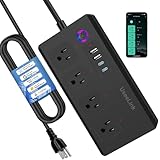
Overview: This ZigBee Smart Power Strip converts traditional surge protection into an intelligent eight-device command center. Four individually controllable AC outlets pair with three USB-A ports and one 20W USB-C fast-charging port, all managed through Zigbee connectivity. It targets users wanting to automate multiple electronics without the clutter of separate smart plugs, supporting major platforms through compatible hubs.
What Makes It Stand Out: Individual AC outlet control provides precise automation for diverse devices like computers, lamps, and coffee makers. The 20W USB-C port delivers modern fast-charging for smartphones and tablets, while the unified USB control suits charging stations. Family sharing features enable multiple household members to manage devices independently. Broad hub compatibility includes Echo devices with built-in Zigbee, SmartThings, Home Assistant, and Philips Hue bridges.
Value for Money: Priced at $37.99, this strip offers strong value versus buying four smart outlets plus a quality surge protector separately. The integrated USB charging eliminates adapter clutter, and Zigbee’s mesh networking creates a more reliable smart home backbone than Wi-Fi alternatives. For multi-device automation, it’s a cost-effective centralized solution.
Strengths and Weaknesses: Pros: Individual outlet control, 20W USB-C fast charging, broad hub compatibility, scheduling and timer functions, family sharing, reduces smart plug clutter. Cons: USB ports controlled as single unit (not individually), requires Zigbee hub, unknown brand reliability, lacks advanced energy monitoring, no explicit surge protection rating listed.
Bottom Line: A practical, well-priced solution for automating several devices simultaneously. The individual outlet control and fast charging make it particularly useful for home offices and entertainment centers. Ensure you have a compatible Zigbee hub to unlock its full potential, but the functionality-to-price ratio is compelling for expanding smart home coverage.
8. Philips Hue Indoor 10 Ft Smart LED Solo Lightstrip Base Kit Bundle with Bridge - Control with Hue App, Compatible with Alexa, Google Assistant, Apple HomeKit
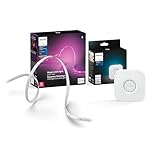
Overview: The Philips Hue Lightstrip Bundle sets the premium standard for smart lighting, pairing a 10-foot Solo Lightstrip with the essential Hue Bridge. This package unlocks the full power of Philips’ mature ecosystem, utilizing Zigbee technology for a reliable connection that won’t burden your Wi-Fi network. The Bridge ensures your lights respond instantly and continue working even during internet outages, forming the foundation for serious smart home lighting.
What Makes It Stand Out: The included Hue Bridge is the game-changer, enabling advanced automations, out-of-home control, and Matter compatibility for future-proof integration. Unlike hub-less systems, Hue’s Zigbee mesh network provides instantaneous response times and supports up to 50 lights. Native Apple HomeKit integration, alongside Alexa and Google Assistant, delivers seamless voice control across all major platforms without workarounds.
Value for Money: At $89.99, this represents a significant investment, but the Bridge alone retails for $60, making the lightstrip effectively $30. For users prioritizing reliability, ecosystem maturity, and seamless integration, the premium is justified. The continuous firmware updates and extensive third-party compatibility add long-term value that cheaper alternatives can’t match.
Strengths and Weaknesses: Pros: Exceptional reliability, Bridge included, out-of-home control, Matter support, no Wi-Fi strain, native HomeKit, instant response, extensive ecosystem. Cons: High upfront cost, locked into Hue ecosystem for full features, requires Bridge even with other Zigbee hubs, replacement strips remain expensive.
Bottom Line: This bundle is the gold standard for serious smart home enthusiasts who prioritize frustration-free performance. While costly, the included Bridge and unparalleled reliability make it worth the investment for those building a comprehensive, integrated lighting system. Choose this for primary living spaces where dependability matters most.
9. UseeLink ZigBee Smart Power Strip Plug,ETL Certified,ZigBee Hub Required,Compatible with Alexa, Google Home,Compatible Echo Devices and SmartThings,Black.5 Feet Extension Cord
Overview: The UseeLink ZigBee Smart Power Strip emphasizes safety and modern charging capabilities at a competitive price point. This ETL-certified strip features four individually controlled AC outlets, two 20W USB-C fast-charging ports, and two additional USB-A ports. A 5-foot extension cord provides flexible placement, while 1200 Joules of surge protection safeguards valuable electronics in both home and office environments.
What Makes It Stand Out: Dual USB-C ports with 20W fast charging distinguish this from competitors offering only USB-A. The ETL certification and explicit 1200 Joules surge protection rating provide verified safety assurance. Individual outlet control via voice or app, combined with custom scheduling and device grouping, enables sophisticated automation for up to eight devices through a single Zigbee connection, reducing network congestion.
Value for Money: At $34.99, this strip delivers exceptional value, undercutting many rivals while offering superior safety certification and charging capabilities. The dual USB-C ports alone justify the cost versus purchasing separate fast chargers. For Zigbee users, it consolidates multiple smart plugs and professional-grade surge protection into one affordable unit.
Strengths and Weaknesses: Pros: ETL safety certification, dual 20W USB-C ports, 1200 Joules surge protection, individual outlet control, scheduling, broad hub compatibility, excellent price. Cons: Requires Zigbee hub, USB ports not individually controlled, brand recognition lower than established competitors, 5-foot cord may be short for some installations.
Bottom Line: An outstanding value proposition for safety-conscious buyers needing modern charging capabilities. The ETL certification and dual USB-C ports make it a smart choice for home offices, while the competitive price lowers the barrier to entry for Zigbee-based smart home automation. Ideal for users prioritizing certified protection and fast charging.
10. Besisglas ZigBee Smart Light Switch - 1 Way, Zigbee Hub Required, Compatible with Home Assistant, Alexa, SmartThings Hub, Google Home

Overview: The Besisglas ZigBee Smart Light Switch delivers basic smart control for single-pole lighting circuits at an aggressively low price. This no-frills switch requires a Zigbee hub but supports the Zigbee 3.0 standard, ensuring compatibility with major platforms including Home Assistant, Alexa, SmartThings, and Google Home. It’s designed for DIY installers seeking cost-effective whole-home automation.
What Makes It Stand Out: At $9.99, it’s among the most affordable smart switches available, making multi-room upgrades financially feasible. The Zigbee 3.0 protocol ensures broad hub compatibility, including Echo devices with built-in hubs. For users comfortable with basic wiring, it provides reliable on/off control without premium features that inflate costs, enabling comprehensive smart lighting coverage for the price of a single premium switch.
Value for Money: This switch redefines budget smart home entry, costing less than half of name-brand alternatives. While it lacks dimming, power monitoring, or advanced features, the rock-bottom price allows outfitting an entire house economically. Zigbee mesh networking reduces Wi-Fi congestion and improves reliability compared to cheap Wi-Fi switches, offering professional protocol support at entry-level pricing.
Strengths and Weaknesses: Pros: Extremely affordable, Zigbee 3.0 compatibility, broad hub support, reduces Wi-Fi load, easy installation. Cons: Basic on/off only (no dimming), requires neutral wire (implied but not confirmed), no advanced features, unknown long-term reliability, requires separate hub, minimal documentation.
Bottom Line: Perfect for budget-conscious homeowners seeking simple smart switch functionality. Best suited for closets, garages, or secondary rooms where basic automation suffices. Invest in premium switches for primary living spaces, but consider this for cost-effective whole-home coverage where advanced features aren’t necessary. A practical entry point for Zigbee-based lighting control.
Understanding the Zigbee-to-Matter Evolution
The smart home landscape underwent a tectonic shift when the Connectivity Standards Alliance unveiled Matter. Your 2019 light strips were built on Zigbee’s mature mesh networking protocol, which prioritized low power consumption and reliable device-to-device communication. Matter, built on IP-based technologies, fundamentally reimagines device interoperability by eliminating cloud dependencies for local control.
This evolution doesn’t render Zigbee irrelevant—it reframes it as a transport layer. Bridges act as bilingual translators, preserving your existing mesh network topology while exposing devices to Matter’s unified application layer. The magic lies in protocol translation: your light strips continue communicating via Zigbee while the bridge presents them as native Matter devices to your modern ecosystem.
What Is a Zigbee-to-Matter Bridge?
A Zigbee-to-Matter bridge is a specialized hardware device that sits at the intersection of two protocols. Unlike universal hubs that simply manage multiple radios, these bridges perform deep packet inspection and real-time protocol translation. They maintain the Zigbee network’s integrity while creating a parallel Matter fabric that mirrors your devices.
The bridge handles the heavy lifting: translating Zigbee cluster commands into Matter data models, managing security certificates for both networks, and ensuring state synchronization across protocols. Think of it as a diplomatic interpreter who not only translates words but also understands cultural context—ensuring your light strip’s color temperature commands, brightness levels, and effect patterns map perfectly to Matter’s semantic device types.
Why Your 2019 Smart Light Strips Deserve a Second Life
Those early-generation light strips often feature higher LED density and superior color accuracy than today’s budget Matter-native alternatives. Manufacturers in 2019 competed on hardware quality before standardized protocols became the battleground. Your strips likely use premium RGBWW LEDs with dedicated warm white and cool white channels—specifications that still outperform many current entry-level Matter devices.
Economically, bridging costs 60-70% less than replacing an entire installation. Environmentally, it prevents functional electronics from becoming landfill. Performance-wise, Zigbee’s mesh resilience often surpasses Wi-Fi-based Matter devices, especially in challenging RF environments. The bridge strategy lets you retain Zigbee’s networking strengths while gaining Matter’s ecosystem advantages.
Key Bridge Features That Actually Matter
Over-the-Air Update Capability
Bridge firmware evolves rapidly as Matter specifications mature. Prioritize devices with robust OTA mechanisms that can update both the bridge’s Matter stack and its Zigbee coordinator firmware independently. This ensures compatibility with future Matter versions and security patches without requiring hardware replacement.
Multi-Admin Support
Matter’s multi-admin feature allows a single device to appear simultaneously in multiple ecosystems—your light strips could be controlled by both Apple Home and Google Home without duplication. Verify the bridge supports concurrent fabric commissioning and maintains separate security contexts for each ecosystem.
Local Network Resilience
The bridge should maintain local control even when internet connectivity fails. Look for local scene storage, offline automation execution, and Zigbee network healing capabilities that don’t depend on cloud services. This preserves the reliability that made you choose Zigbee initially.
Cross-Platform Ecosystem Compatibility
Not all bridges support every Matter controller equally. Some excel at Apple HomeKit certification but offer limited Alexa integration. Others prioritize Google Home’s local execution while compromising on HomeKit’s secure video requirements. Evaluate based on your primary ecosystem, but ensure secondary platform support meets minimum functionality thresholds.
The Technical Architecture Behind Bridging
Protocol Translation Mechanics
Bridges implement the Matter Bridge Device Type, which maps Zigbee endpoints to Matter node IDs. The translation engine converts Zigbee’s attribute-based reporting into Matter’s subscription model. For light strips, this means translating Zigbee Level Control and Color Control clusters into Matter’s On/Off, Level Control, and Color Control clusters—preserving features like color looping, scene recall, and gradient transitions.
Network Topology Preservation
Your existing Zigbee mesh remains intact—the bridge simply becomes the coordinator. Device routing tables, neighbor tables, and security keys stay within the Zigbee network. The bridge doesn’t re-pair devices; it assumes the coordinator role and begins advertising bridged devices on the Matter network. This zero-touch migration prevents the painful device exclusion and re-inclusion process.
Latency Considerations
Protocol translation introduces minimal latency—typically 20-50ms. However, bridges that support Zigbee’s Green Power feature and Matter’s sleepy end device optimizations can reduce this further. For animation-heavy light strips, verify the bridge supports Zigbee’s “fast poll” mode during active scenes to minimize perceptible delay.
Compatibility Factors to Verify Before Buying
Zigbee Profile Support (ZHA vs ZLL)
Your 2019 strips likely used either Zigbee Home Automation (ZHA) or Zigbee Light Link (ZLL) profiles. ZLL devices often include touchlink commissioning that bridges must handle gracefully. Verify the bridge explicitly supports both profiles and can manage the ZLL-to-ZHA transition that many 2019 devices underwent during firmware updates.
Firmware Version Requirements
Some bridges require minimum Zigbee device firmware versions to support full feature mapping. Check if your light strips need updates from their original manufacturer before bridging. Bridges should provide a compatibility matrix showing which firmware versions support effects, scenes, and advanced color features versus basic on/off/dimming.
Power Source Implications
Mains-powered Zigbee devices act as routers in your mesh. When bridged, their router functionality remains critical. Ensure the bridge can distinguish between router and end device types and properly advertises this to the Matter network. This affects network healing and power management strategies.
Ecosystem Integration Strategies
Apple HomeKit Certification Nuances
HomeKit demands strict adherence to HAP (HomeKit Accessory Protocol) through Matter. Bridges must support HomeKit-specific commissioning flows and may require Apple’s certification. For light strips, verify the bridge exposes individual segments as separate accessories if your strips support zone control—HomeKit’s tile-based UI benefits from granular device exposure.
Google Home Integration Depth
Google’s local home SDK prioritizes speed but may limit advanced features. Confirm the bridge supports Google’s Matter Virtual Device types for light strips, which handle color temperature, RGB, and effects. Some bridges only expose basic on/off to Google while offering full features to Apple—investigate feature parity claims carefully.
Amazon Alexa Skill Requirements
Alexa’s Matter implementation relies on both local control and cloud skill integration. Bridges must support Alexa’s Frustration-Free Setup and may need companion skills for advanced features like music visualization. Verify whether Alexa routines can trigger Zigbee-native scenes stored on the light strips themselves.
Installation and Migration Best Practices
Phased Rollout Approach
Don’t migrate your entire installation at once. Start with a single light strip segment to validate feature mapping. Test color accuracy, brightness range, and effect synchronization. Once confirmed, migrate room by room, allowing your Zigbee mesh to stabilize between phases. This isolates issues and prevents network-wide failures.
Network ID Preservation
Request that your bridge adopts your existing Zigbee network’s PAN ID and extended PAN ID. This allows devices to remain paired without rejoining. Some bridges generate new networks by default, forcing painful re-pairing. Advanced bridges support network ID cloning—verify this capability in technical documentation.
Scene and Automation Migration
Your 2019 scenes stored in the Zigbee network can be exposed to Matter as preconfigured scenes. Bridges should support scene translation, but you may need to recreate time-based automations in your new Matter controller. Document existing automation logic before migration and test trigger conditions thoroughly.
Advanced Configuration Options
Custom Device Handler Mapping
Sophisticated bridges allow custom device handler injection for unsupported Zigbee clusters. If your light strips use manufacturer-specific clusters for proprietary effects, look for bridges with open handler APIs. This lets community developers create mappings before official support arrives.
Group Messaging Optimization
Zigbee groups enable synchronized multi-strip animations. Bridges should translate Zigbee group casts into Matter group casts efficiently. Verify support for Matter’s Group Key Management and confirm the bridge doesn’t unicast to individual devices during group commands—this introduces unacceptable latency for coordinated effects.
Binding Table Management
Zigbee binding allows direct device-to-device communication (e.g., switch to light strip). Bridges must preserve these bindings while also exposing devices to Matter’s binding mechanisms. Check if the bridge supports dual-mode binding where Zigbee bindings remain active for local control while Matter bindings handle ecosystem commands.
Security Implications of Bridging Legacy Devices
Matter’s Security Model vs Zigbee
Matter mandates certificate-based device attestation and mutual authentication. Zigbee uses network keys and link keys. Bridges must maintain both security domains without weakening either. The bridge itself becomes a high-value target—ensure it supports Matter’s Distributed Compliance Ledger and receives regular security audits.
Certificate Management
Each bridged device receives a virtual Matter operational certificate. Bridges should support certificate rotation and revocation. For light strips, verify the bridge generates unique certificates per device rather than sharing certificates—this prevents a single compromised strip from affecting the entire Matter fabric.
Network Segmentation Strategies
Consider placing the bridge on a separate VLAN from your primary network. While Matter supports mDNS for local discovery, bridges often require internet access for OTA updates. Use firewall rules to restrict bridge communication to necessary endpoints only, preventing potential lateral movement if the bridge is compromised.
Performance Optimization Techniques
Mesh Network Health Monitoring
Bridges should expose Zigbee network health metrics—LQI (Link Quality Indicator), neighbor counts, and route discovery success rates. Use these to identify weak mesh points before they cause Matter-side failures. Some bridges offer predictive analytics, suggesting optimal router placement.
Channel Interference Mitigation
Zigbee operates on 2.4GHz, overlapping with Wi-Fi and Bluetooth. Bridges with spectrum analysis can identify clean channels. Configure your bridge to use Zigbee channel 15, 20, or 25 to avoid Wi-Fi channel 6 and 11. Matter’s Thread protocol also uses 2.4GHz—ensure the bridge supports coexistence management if you plan future Thread device additions.
Power Level Adjustments
Mains-powered light strips often use high transmit power, causing unnecessary interference. Bridges should allow per-device power level tuning. Reduce power on strips in close proximity while boosting distant devices. This optimizes mesh stability and reduces energy consumption without sacrificing coverage.
Troubleshooting Common Bridge Scenarios
Device Pairing Failures
If a light strip fails to appear in Matter after bridging, first verify its Zigbee endpoints are fully discovered. Use the bridge’s diagnostic tools to inspect endpoint descriptors. Some 2019 strips use non-standard endpoint numbering—manual endpoint mapping may be required. Check logs for “unsupported cluster” warnings indicating incomplete translation.
Intermittent Connectivity Issues
Matter uses IPv6 multicast for group messaging; some routers poorly handle this. Enable IGMP snooping on your network switch and verify your router supports IPv6 properly. On the Zigbee side, check for mesh fragmentation—if too many routers failed or were removed, the network may need rebalancing.
Firmware Update Stalls
Bridges often queue OTA updates for multiple devices. If a light strip update stalls, isolate it from the network temporarily. Some 2019 strips have limited flash memory and require incremental updates. The bridge should support resumable OTA transfers—verify this before purchasing to avoid bricked devices.
Future-Proofing Beyond Matter
Thread Radio Coexistence
Next-generation bridges will include Thread radios alongside Zigbee. While currently separate, future standards may allow dual-protocol devices. Choose a bridge with hardware expansion capabilities—USB ports for radio dongles or modular radio cards. This positions you for Thread device integration without replacing the bridge.
API Extensibility
Matter’s data model evolves through schema updates. Bridges with open REST APIs or MQTT interfaces allow custom integrations beyond Matter’s capabilities. This is crucial for light strips with features like music sync or ambient TV backlighting that may never be standardized in Matter.
Vendor Commitment Indicators
Evaluate bridge manufacturers by their Matter specification adoption speed. Vendors who quickly implemented Matter 1.1 and 1.2 features demonstrate commitment. Check if they participate in CSA working groups and contribute to open-source Matter implementations. This predicts long-term support for your 2019 investment.
Cost-Benefit Analysis Framework
Bridge Price vs Replacement Cost
A quality bridge costs $50-150, while replacing a 5-meter RGBWW strip runs $80-200. Factor in installation labor—peeling and re-adhering strips risks damaging paint or surfaces. For multi-room installations, bridging costs scale linearly while replacement costs scale exponentially. Calculate per-device bridging cost versus per-device replacement for your specific setup.
Energy Efficiency Gains
Matter enables smarter automation through richer sensor data. While the bridge consumes 2-5W continuously, optimized Matter-based scheduling could reduce light strip usage by 15-20%. Calculate payback period based on your local electricity rates. Bridges with power monitoring can quantify these savings automatically.
Resale Value Preservation
Functional Zigbee light strips retain 40-60% resale value. Bridged devices command higher prices than “legacy” Zigbee-only gear. If you eventually sell your home, a Matter-enabled smart lighting system is a marketable feature. Document your bridging setup for future owners—this transferability adds tangible property value.
Frequently Asked Questions
Will my light strip’s special effects transfer over to Matter, or just basic on/off and dimming?
Most bridges translate standard effects like color looping and strobing, but manufacturer-specific effects (e.g., “fireplace” or “rainbow chase”) often require custom device handlers. Check if your bridge community has developed handlers for your strip’s brand. Matter 1.2 introduced enhanced lighting capabilities, so newer bridges support more effects natively.
Can I still use my old Zigbee remote controls after installing a Matter bridge?
Yes, if the bridge preserves Zigbee binding tables. Your remotes will continue directly controlling strips via Zigbee while the bridge simultaneously exposes those strips to Matter. However, Matter-based automations won’t “see” remote button presses unless the bridge also translates those events—verify this bidirectional capability.
Will bridging increase latency compared to my native Zigbee setup?
Expect 20-50ms additional latency for Matter commands. Native Zigbee control remains fastest, but Matter’s local execution often matches or beats cloud-reliant Zigbee setups. For time-sensitive applications like music visualization, keep the animation logic on the Zigbee side and use Matter for scene selection only.
Do I need to keep my old Zigbee hub running alongside the bridge?
No—modern Zigbee-to-Matter bridges replace your hub entirely. They contain a Zigbee coordinator radio and Matter commissioner. Only keep your old hub if it performs non-lighting functions (e.g., Zigbee sensor monitoring) that your bridge doesn’t support. Running dual coordinators causes network partitioning.
How does the bridge handle firmware updates for my 2019 light strips?
The bridge acts as an OTA provider, caching manufacturer firmware files. It can push updates over Zigbee using the same mechanism as your original hub. However, it cannot bypass manufacturer update servers—if the vendor discontinued support, the bridge can’t magically create new firmware. Check for community OTA repositories for discontinued products.
Can I mix Matter-native light strips with my bridged Zigbee strips in the same room?
Absolutely. Matter’s fabric architecture treats bridged and native devices identically. You can create scenes combining both in your Matter controller. The bridge ensures Zigbee devices respond synchronously with Matter devices. Just ensure your Matter controller supports multi-admin if you want the same scene available across ecosystems.
What happens if the bridge manufacturer goes out of business?
Your Zigbee network continues functioning, but Matter integration stops receiving updates. The bridge will likely keep working until a major Matter specification change breaks compatibility. Choose bridges based on open-source firmware or CSA certification depth—community support can outlive the manufacturer. Avoid cloud-dependent bridges.
Will bridging affect my Zigbee mesh range or stability?
The bridge’s coordinator radio quality determines this. A high-quality bridge with external antennas can improve range over a 2019 hub. However, poor bridge placement still creates dead zones. Treat the bridge like a router—center it in your home, elevate it, and avoid RF interference. Some bridges support coordinator backup, letting you restore mesh configuration if hardware fails.
Can I bridge other Zigbee devices besides light strips?
Most bridges support the full Zigbee device type range—sensors, plugs, locks. However, light strips are complex due to multi-endpoint clusters. A bridge that handles strips well likely handles simpler devices perfectly. Verify the bridge’s supported device type list includes your specific sensor brands, as security devices often use proprietary clusters.
Is Thread support necessary in a Zigbee-to-Matter bridge for future-proofing?
Not immediately, but increasingly valuable. Thread is Matter’s native transport, and device makers are releasing Thread-only products. A bridge with Thread radio positions you to manage both legacy Zigbee and modern Thread devices from one interface. This simplifies network architecture and prepares you for eventual Zigbee phase-out, though that remains years away.