Imagine this: your internet cuts out during a storm, but your living room lights still dance to your voice command. Or maybe you’re concerned about sensitive data bouncing through the cloud every time you dim the bedroom. This isn’t futuristic tech—it’s the tangible benefit of Bluetooth smart bulbs designed for offline control. While the smart home landscape often revolves around internet-dependent hubs and apps, a powerful alternative exists right in your pocket. Bluetooth connectivity, often overlooked for more complex setups, provides a direct, private, and remarkably resilient pathway to control your lighting without relying on an external server or constant Wi-Fi signal. It’s simplicity with a purpose, putting immediate control firmly in your hands, exactly when and where you need it.
The appeal of offline control goes beyond just convenience during outages. It addresses growing concerns about privacy, network congestion, and the sometimes-frustrating complexity of multi-component smart home systems. Bluetooth smart bulbs operating locally eliminate the middleman, meaning your commands travel straight from your phone to the bulb, not through a distant data center. This reduces latency for snappier responses, minimizes potential security vulnerabilities associated with cloud services, and often results in a more straightforward setup process. For those building a smart home step-by-step or prioritizing reliability above all else, understanding the unique advantages of Bluetooth-based offline control is the first step toward a truly responsive and dependable lighting experience that works on your terms, not the internet’s schedule.
Top 10 Bluetooth Smart Bulbs
Detailed Product Reviews
1. Govee Smart Light Bulbs, Color Changing Light Bulb, Work with Alexa and Google Assistant, 16 Million Colors RGBWW, WiFi & Bluetooth LED Light Bulbs, Music Sync, A19, 800 Lumens, 4 Pack

Overview:
This 4-pack of Govee A19 smart bulbs delivers 800 lumens (60W equivalent) with 16 million colors and tunable whites (2700K–6500K). Compatible with Alexa and Google Assistant via 2.4GHz Wi-Fi or Bluetooth, they require the Govee Home app but no hub. Ideal for accent lighting in bedrooms or living spaces.
What Makes It Stand Out:
The music sync feature—triggered via your phone’s microphone—is a standout for immersive entertainment. Group control across multiple Govee devices and 54 preset scene modes (e.g., “Sunrise” routines) enhance usability. The RGBWW chipset ensures richer whites than standard RGB bulbs.
Value for Money:
Priced mid-range for a 4-pack, it competes well against single-bulb alternatives. The inclusion of music sync and multi-scene modes adds value over basic smart bulbs, though the lack of 5G support may frustrate users with modern routers.
Strengths and Weaknesses:
Strengths: Reliable app/voice control; vibrant color accuracy; seamless group management; energy-efficient (9.5W). Weaknesses: No 5G Wi-Fi support; music sync requires active phone microphone; incompatible with smart switches; 800 lumens falls short for large rooms.
Bottom Line:
A versatile, feature-rich starter kit for smart lighting enthusiasts seeking dynamic ambiance on a budget. Best for smaller spaces where music sync and scene modes justify the price—avoid if you need whole-home brightness or 5G compatibility.
2. Lightinginside Smart Light Bulbs 6 Pack, Smart Bulb Works with Alexa/Google Home/SmartLife, CRI>90, RGBCW Color Changing LED Light Bulbs, 2.4G WiFi Bluetooth A19 E26 Bulb, No Hub Required, ETL Listed

Overview:
This 6-pack offers RGBCW (red-green-blue-cool/warm white) bulbs with 1350 lumens (100W equivalent), CRI>90 for true color rendering, and dual Bluetooth/Wi-Fi connectivity. Controlled via SmartLife app or voice assistants, it targets users wanting vibrant, accurate lighting without a hub.
What Makes It Stand Out:
The dual-mode connectivity shines: Bluetooth maintains local control during Wi-Fi outages, while the “3× faster setup” chip simplifies pairing. Biorhythm automation (mimicking natural light cycles) and flexible grouping cater to wellness-focused routines.
Value for Money:
Excellent value for 6 bulbs at this brightness tier. CRI>90 outperforms cheaper alternatives (typically CRI 80), making it ideal for art studios or task lighting. The SmartLife app’s depth justifies the slight premium over entry-level kits.
Strengths and Weaknesses:
Strengths: Robust local control via Bluetooth; high color accuracy; reliable group scheduling; ETL safety certified. Weaknesses: Initial Wi-Fi setup requires 2.4GHz + Bluetooth; no music sync; app interface less polished than Govee’s.
Bottom Line:
A top pick for reliability and color fidelity in medium-to-large rooms. Choose this over Govee if uninterrupted local control and true-color accuracy are priorities—skip if music-responsive lighting is essential.
3. Lightinginside Smart Light Bulbs 100W Equiv., 1350LM 11W Smart Bulb Works with Alexa/Google Home/SmartLife, A19 E26 RGBCW Color Changing, No Hub Required, 2.4G WiFi Bluetooth Bulb, ETL Listed, 4PCS

Overview:
This 4-pack delivers 1350 lumens (100W equivalent) with RGBCW technology and dual Bluetooth/Wi-Fi. Designed for larger spaces, it offers bright, dimmable lighting (5–100%) via SmartLife app, Alexa, or Google Assistant—no hub needed.
What Makes It Stand Out:
The standout is high-lumen output without sacrificing color range, rare in budget packs. The intelligent Bluetooth/Wi-Fi handoff ensures lights stay responsive during internet outages, while biorhythm scheduling adapts lighting to circadian rhythms.
Value for Money:
Superior brightness-to-price ratio for covering big areas (e.g., living rooms). At ~$5/bulb, it undercuts premium brands while matching their lumens. Lacks Govee’s music sync but excels as a primary light source.
Strengths and Weaknesses:
Strengths: Exceptional brightness for 100W replacement; seamless offline control; precise dimming; CRI>90 clarity. Weaknesses: No scene modes beyond basics; app occasionally lags; not ideal for subtle mood lighting due to intensity.
Bottom Line:
The go-to for spacious rooms needing both vibrant colors and daylight-bright whites. Opt for this over dimmer kits if coverage is key—but avoid in small spaces where lower lumens suffice.
4. Govee LED Smart Light Bulbs, 1000LM Color Changing Light Bulb, Wi-Fi & Bluetooth Light Bulbs, Work with Alexa and Google Assistant, Dimmable RGBWW A19 75W Equivalent Smart Bulbs, 2 Pack

Overview:
Govee’s 2-pack provides 1000 lumens (75W equivalent) with RGBWW colors and 2700K–6500K whites. Controlled via Govee Home app or voice commands, it targets users wanting balanced brightness and ambiance in compact setups.
What Makes It Stand Out:
CRI90+ ensures richer color accuracy than most budget bulbs. The 54 scene modes (e.g., “Focus” or “Romance”) and music sync create tailored experiences. Group control integrates smoothly with other Govee devices.
Value for Money:
Fair pricing for a 2-pack, though cost-per-bulb is higher than multi-packs. Justified by superior color fidelity and Govee’s polished app—ideal for testing smart lighting before scaling up.
Strengths and Weaknesses:
Strengths: Vibrant, accurate colors; intuitive app; strong music sync; energy-efficient (11W). Weaknesses: Only 2 bulbs included; 1000 lumens may underwhelm for large rooms; no Bluetooth fallback during Wi-Fi drops.
Bottom Line:
A premium entry point for color enthusiasts prioritizing app experience and scene variety. Buy if you value Govee’s ecosystem—but consider Lightinginside for better value in larger packs.
5. Sengled Alexa Light Bulb, S1 Auto Pairing with Alexa Devices, Warm Light Bulbs, Smart Light Bulbs that Work with Alexa, Bluetooth Mesh Smart Home Lighting, E26 60W Equivalent, 800LM, 4-Pack

Overview:
This 4-pack features non-color-changing warm-white bulbs (2700K, 800 lumens) with Alexa integration. Using Bluetooth Mesh, they auto-pair with Echo devices—no Wi-Fi, app, or account needed for basic functions.
What Makes It Stand Out:
Zero-friction setup: screws in and works with Alexa instantly. Offline mode via Bluetooth Mesh ensures local control during internet outages, prioritizing privacy. Unique for Alexa-exclusive households seeking simplicity.
Value for Money:
Competitive for a 4-pack, but limited by lacking color options. The 36-month warranty and U.S. support add reliability. Best for users wanting basic, secure smart lighting—not dynamic ambiance.
Strengths and Weaknesses:
Strengths: Effortless Alexa pairing; no app/account required; offline security; consistent warm light. Weaknesses: No color changing; dimming limited to 5–100%; Alexa-only (no Google); lower lumens than competitors.
Bottom Line:
The minimalist’s choice for secure, voice-controlled white lighting. Ideal for Alexa loyalists prioritizing privacy—but skip if you desire colors or multi-assistant compatibility.
6. DAYBETTER Smart Light Bulbs, RGBCW Color Changing Smart Bulb Compatible with Alexa & Google Home,Preset Scene, Music Sync, A19 E26 2.4G WiFi Bluetooth Dimmable LED Bulbs, 60W Equivalent, 800LM, 6 Pack

Overview:
The DAYBETTER 6-pack RGBCW smart bulbs deliver versatile color and white-light control via Wi-Fi/Bluetooth. Compatible with Alexa and Google Assistant (no hub needed), they offer 16 million colors, adjustable white temperatures (2700K–6500K), music sync, scheduling, and group control for immersive home lighting.
What Makes It Stand Out:
Dual-band connectivity (2.4GHz Wi-Fi + Bluetooth) ensures stable setup and seamless voice control. The robust music-synchronization feature—using your phone’s microphone to pulse lights to beats—and extensive preset scenes elevate ambiance for parties or relaxation. The 6-pack bundle provides exceptional coverage for multi-room setups at a competitive price.
Value for Money:
Priced accessibly for a 6-pack, it outperforms single-bulb competitors in scalability. While rivals like Govee offer similar features, DAYBETTER’s inclusion of Bluetooth fallback during Wi-Fi drops adds reliability without inflating cost, making it ideal for budget-conscious households seeking comprehensive smart lighting.
Strengths and Weaknesses:
Strengths: Reliable voice/app control; vibrant music sync; flexible scheduling; no hub required; excellent value in bulk.
Weaknesses: 2.4GHz Wi-Fi only (excludes 5GHz networks); initial setup can confuse beginners; microphone permission required for music mode.
Bottom Line:
A feature-rich, affordable entry into multi-bulb smart lighting. Best for users prioritizing music sync, bulk savings, and straightforward voice control—despite minor setup quirks. Highly recommended for entertainment-focused spaces.
7. Govee Smart Light Bulbs, WiFi & Bluetooth Color Changing Light Bulbs, Music Sync, 16 Million DIY Colors RGBWW Color Lights Bulb, Work with Alexa, Google Assistant Home App, 800 Lumen, 2 Pack

Overview:
Govee’s 2-pack RGBWW bulbs merge vibrant color customization with smart home integration. Supporting Alexa, Google Assistant, and the Govee Home App, they offer 16 million colors, 54 preset scenes, music sync, scheduling, and group control—all without a hub.
What Makes It Stand Out:
The expansive 54 preset scenes (e.g., “Sunrise,” “Storm”) simplify ambiance creation beyond basic color wheels. Music sync reacts dynamically to audio via your phone’s mic, while robust group control lets families manage multiple bulbs effortlessly. The 2-pack is perfect for accent lighting in smaller spaces.
Value for Money:
Slightly pricier per bulb than DAYBETTER’s 6-pack, but justifies cost with superior scene variety and app polish. Ideal for users wanting ready-made lighting themes over manual adjustments. Competes well with single-bulb kits but lacks bulk discounts for whole-home setups.
Strengths and Weaknesses:
Strengths: Extensive preset scenes; intuitive app; reliable music sync; strong white-light range; no hub needed.
Weaknesses: Cannot pair with smart switches; microphone access mandatory for music mode; limited to 2.4GHz Wi-Fi.
Bottom Line:
An excellent choice for scene-driven lighting with polished execution. Best for users valuing convenience over expandability—skip if you need >2 bulbs or use smart switches.
8. OREiN Matter Smart Light Bulb, Smart Light Bulbs Work with Apple Home, Alexa, Google Home, SmartThings, A19 Color Changing Light Bulbs 2.4Ghz WiFi, 800 Lumens Equivalent 60W 4Pack

Overview:
OREiN’s 4-pack leverages Matter protocol for universal compatibility with Apple Home, Alexa, Google Home, and SmartThings. These color-changing bulbs prioritize security and offline functionality via local network control, eliminating cloud dependency.
What Makes It Stand Out:
Matter protocol ensures seamless cross-platform interoperability—control via any certified app simultaneously. Offline operation (during internet outages) and military-grade security (OTA updates, cryptographic encryption) distinguish it from Wi-Fi-only rivals. QR-code setup simplifies pairing across ecosystems.
Value for Money:
Premium-priced for Matter’s future-proofing, but the 4-pack offers fair value for multi-room Matter adoption. Outperforms non-Matter bulbs in reliability but costs more than basic alternatives. Essential for Apple/SmartThings users building a unified smart home.
Strengths and Weaknesses:
Strengths: True multi-platform support; offline functionality; top-tier security; easy Matter setup.
Weaknesses: No music sync or advanced scenes; 2.4GHz Wi-Fi only; incompatible with dimmer switches.
Bottom Line:
The definitive pick for Matter adopters seeking secure, ecosystem-agnostic lighting. Avoid if you prioritize music sync or use dimmer switches—otherwise, a forward-thinking investment.
9. UCB Alexa Light Bulb 130W Equivalent, Smart Light Bulbs Warm White to Daylight Tunable, A19 E26 Bluetooth LED Bulbs Work with Alexa Only for Bedroom Kitchen Living Office No WiFi Required 4 Pack

Overview:
UCB’s 4-pack Bluetooth bulbs work exclusively with Alexa (no Wi-Fi/app needed). Tunable white light (2700K–6000K), 1300-lumen brightness (130W equivalent), and flicker-free photography make them ideal for functional spaces like offices or bedrooms.
What Makes It Stand Out:
Zero Wi-Fi dependency—pair directly via Alexa voice commands (“Alexa, find devices”). The BRmesh app (optional) adds granular control like 1–100% dimming and scene presets, while “PWM to Analog” tech ensures no camera flicker. Perfect for renters or Wi-Fi-averse users.
Value for Money:
Budget-friendly for tunable white lighting, especially with the 4-pack. Lacks color options but excels as a no-frills, Alexa-native solution. Cheaper than color-changing kits but less versatile than Wi-Fi alternatives for multi-ecosystem homes.
Strengths and Weaknesses:
Strengths: Alexa-only simplicity; no Wi-Fi/router needed; exceptional dimming range; flicker-free for photos; easy setup.
Weaknesses: Alexa-exclusive (no Google/HomeKit); no color options; limited to Bluetooth range (~30 ft).
Bottom Line:
The top choice for Alexa-centric households needing reliable, tunable white light. Skip if you want color or non-Alexa control—but ideal for hassle-free, privacy-focused lighting.
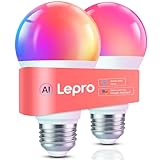
10. Lepro B1 AI Smart Light Bulbs - WiFi & Bluetooth RGBWW Color Changing LED Bulb Works with Alexa & Google Assistant, Personalized Al Lighting Designer, AI Voice Control, Music Sync, 2.4GHz Only, 2 Pack
Overview:
Lepro’s 2-pack introduces AI-driven lighting via “LightGPM 4,” an app that learns preferences and generates custom scenes from photos. Compatible with Alexa/Google, it offers RGBWW color, music sync, and standard smart features via 2.4GHz Wi-Fi/Bluetooth.
What Makes It Stand Out:
LightGPM 4’s AI is revolutionary: describe a mood (“cozy café”), upload a photo, or snap your room for instantly tailored lighting. Voice commands skip presets (“Alexa, set holiday vibes”), while photo-based scene generation simplifies design—no competitor offers this level of personalization.
Value for Money:
Priced higher than Govee/DAYBETTER, but AI features justify the cost for tech enthusiasts. The 2-pack suits accent lighting; buy multiples for whole-home use. Best for early adopters valuing innovation over budget savings.
Strengths and Weaknesses:
Strengths: Groundbreaking AI scene creation; intuitive voice commands; photo-based lighting; robust app control.
Weaknesses: AI requires app dependency; steep learning curve; 2.4GHz Wi-Fi only; limited real-world testing data.
Bottom Line:
A visionary pick for AI enthusiasts seeking bespoke lighting. The AI feels gimmicky to some, but its execution is compelling. Recommended for users wanting cutting-edge tech—skip if you prefer simplicity.
Understanding Bluetooth Smart Bulbs and Offline Control
What “Offline Control” Really Means for Smart Bulbs
Offline control signifies that your smart bulb functions and responds to commands without requiring an active connection to the internet. With Bluetooth bulbs, this typically means communication happens directly between your smartphone (or a nearby hub/router acting as a local bridge) and the bulb itself via the Bluetooth radio signal. Your voice commands processed locally on your device, manual app adjustments, or pre-set schedules stored on your phone execute immediately, even if your home Wi-Fi is down or your broadband service is interrupted. It’s local command execution at its core.
How Bluetooth Enables Local Operation (No Internet Needed)
Unlike Wi-Fi bulbs that usually require internet access for remote control or voice assistant integration via the cloud, Bluetooth smart bulbs leverage the short-range wireless technology already built into virtually every modern smartphone and tablet. Pairing is typically done directly through the bulb’s companion app over Bluetooth Low Energy (BLE). Once paired, the app communicates directly with the bulb within its operational range (usually 30-50 feet unobstructed). Scheduling, dimming, and color changes set within the app are stored locally on your device and transmitted directly to the bulb via Bluetooth when the time comes, bypassing the internet entirely for those core functions.
Key Differences: Bluetooth Offline vs. Wi-Fi Cloud Control
The fundamental distinction lies in the communication pathway. Wi-Fi bulbs connect to your home network and then out to the manufacturer’s cloud servers. Remote access, voice control via assistants like Alexa or Google, and complex automations often depend on this cloud connection. If your internet fails, these functions typically stop working, even if the bulb has local Wi-Fi. Bluetooth offline bulbs, conversely, function as a direct peer-to-peer system for core controls. While they might lack remote access from outside your home (a trade-off for offline reliability), their core functionality—lighting control within your physical space—is immune to internet outages and cloud service disruptions.
Essential Features to Prioritize for Offline Use
Local Scheduling and Automation Capabilities
For true offline utility, the bulb’s companion app must allow you to create and store schedules and basic automations (like “Sunset to Sunrise” or “Wake Up Routine”) directly on your phone. These schedules need to trigger the bulb via Bluetooth without needing to phone home to the cloud. Verify that the app clearly states schedules run locally; some Bluetooth bulbs only offer scheduling if connected to the internet, defeating the purpose of offline control.
On-Device Voice Control Integration
While full remote voice control via Alexa/Google usually requires internet, some Bluetooth bulbs support local voice commands processed directly by your smartphone’s assistant (like “Hey Google, turn on the living room lights”) when you’re physically present. This relies on the assistant understanding the command locally and the app having the necessary integration to execute it over Bluetooth without cloud routing. Check compatibility specifics for local voice execution with your preferred mobile assistant.
Robust Manual Control Within the App
The companion app should provide seamless, responsive manual control (on/off, dimming, color selection) via Bluetooth at all times, regardless of internet status. Laggy or unresponsive controls when offline indicate poor local implementation. Look for reviews or descriptions emphasizing “instant response” or “works without internet” specifically for manual adjustments within the app.
Preset Scenes and Modes Stored Locally
The ability to save favorite lighting configurations (e.g., “Movie Night,” “Relax,” “Focus”) directly within the app and trigger them instantly over Bluetooth is crucial for offline usability. Ensure these scenes don’t require an initial internet download or cloud sync to function; they should be available and activatable purely through the local Bluetooth connection.
Physical Control Fallback Options
Consider if the bulb works with standard wall switches. Some smart bulbs lose power (and thus Bluetooth connectivity) when the wall switch is turned off, rendering offline control impossible until switched back on. Bulbs designed to stay powered (requiring the wall switch to remain on) or those compatible with smart switches that maintain bulb power offer a more reliable foundation for consistent Bluetooth offline access.
Compatibility and Setup Considerations
Smartphone Operating System Requirements
Bluetooth smart bulbs require a compatible smartphone or tablet to function as the primary controller. Carefully check the minimum required OS version (iOS or Android) for the companion app. Older devices might not support the necessary Bluetooth version (BLE 4.0 or later is standard) or app features, hindering the offline experience. Ensure your primary control device meets these specs.
Bluetooth Version and Range Limitations
Understand the practical range of Bluetooth connectivity. While BLE is efficient, physical barriers like walls significantly reduce effective range (often to 30 feet or less). Bulbs placed in basements, garages, or distant rooms might fall outside reliable Bluetooth range from your main living areas. Consider if your home layout supports Bluetooth coverage for the rooms where you want offline control, or if you need multiple phones/tablets acting as local controllers in different zones.
Integration with Existing Smart Home Ecosystems
If you have voice assistants or other smart devices, investigate local integration possibilities. While full cloud-based ecosystem integration (like controlling the bulb via an Amazon Echo) usually requires internet, some newer platforms using Matter over Thread (which can run locally) might offer pathways. However, pure Bluetooth bulbs typically operate in their own silo for offline use; don’t assume seamless local control across different major ecosystems without specific protocol support.
The Hub Question: Do You Need One?
A major advantage of many Bluetooth smart bulbs is they often work without a separate hub. The smartphone is the hub for local control. However, some advanced features (like remote access when away from home or integration with non-Bluetooth systems) might require a specific hub that also provides a local network backbone. For pure offline Bluetooth control, a dedicated hub is usually unnecessary and adds complexity and cost—focus on hub-free operation for simplicity.
Privacy and Security Advantages of Local Control
Minimizing Data Exposure to the Cloud
By operating offline via Bluetooth, your lighting commands, schedules, and usage patterns never leave your local network or device. There’s no data transmitted to external servers, significantly reducing the potential attack surface for hackers and eliminating concerns about manufacturers collecting and potentially monetizing your detailed home lighting behavior. Your lighting habits remain strictly private.
Reduced Vulnerability to Remote Hacking
Cloud-dependent systems present a target for remote cyberattacks aimed at the manufacturer’s servers. Local Bluetooth control removes this vector. An attacker would need physical proximity to your home and to breach your personal Bluetooth connection—a much harder and riskier proposition than attacking a centralized cloud service. This inherent locality is a strong security feature for basic lighting control.
Understanding Bluetooth Security Protocols
Modern Bluetooth Low Energy (BLE) incorporates security features like encryption and secure pairing (just works, numeric comparison, out of band). While no wireless tech is 100% unhackable, BLE security is generally robust for short-range applications like lighting control, especially compared to the broader exposure of internet-connected devices. Ensure the bulb uses current BLE security standards.
Performance Expectations for Offline Operation
Responsiveness: Latency Compared to Wi-Fi/Cloud
One of the standout benefits of local Bluetooth control is speed. Commands travel directly from your phone to the bulb, bypassing the round-trip to the cloud and back. This typically results in noticeably faster response times for on/off, dimming, and color changes compared to cloud-dependent Wi-Fi bulbs, especially during peak internet usage times. Expect near-instantaneous feedback.
Reliability During Internet Outages
This is the core promise. When the broadband goes down, your Wi-Fi might still function locally, but cloud-dependent bulbs often become unresponsive to app or voice commands. A properly implemented Bluetooth offline bulb will continue to function exactly as it did before the outage for all locally stored schedules and manual controls via the app. Test this scenario if possible before committing.
Range and Obstacle Challenges
Be realistic about Bluetooth’s limitations. Thick walls, metal objects, and even large appliances can block or weaken the signal. You might need to be in the same room or adjacent room for reliable control. Walking to the far end of a large house might take you out of range. Position your primary control device (phone) thoughtfully, or consider if multiple controllers are needed for larger homes.
Advanced Considerations for Power Users
Mesh Networking Capabilities (Bluetooth Mesh)
Some newer Bluetooth smart bulbs support Bluetooth Mesh networking. This allows bulbs to relay signals to each other, significantly extending the effective control range beyond the direct Bluetooth range of your phone. One bulb near your phone can pass commands to bulbs in distant rooms. Crucially, Mesh networks can often operate entirely locally, maintaining offline functionality while solving range issues—look for bulbs explicitly supporting local Mesh operation.
Local Execution of Complex Automations
Beyond simple schedules, some advanced companion apps allow creating automations based on local triggers (like “If motion detected by this specific local sensor, turn on bulb”) that execute entirely on your phone or a local hub without cloud involvement. This requires compatible local sensors and robust app support, but represents the pinnacle of offline smart home functionality for lighting.
Firmware Updates and Offline Management
Firmware updates usually require internet access to download the new software. However, once downloaded, the update process itself often happens directly over Bluetooth. Check if the app can queue updates and apply them locally when your phone is next near the bulb, minimizing the duration of internet dependency solely to the download phase.
Common Pitfalls to Avoid
Confusing Bluetooth Range with Wi-Fi Range
Don’t assume Bluetooth reaches as far as your Wi-Fi signal. Wi-Fi routers typically have much stronger transmitters. Expect significantly shorter reliable control distances with Bluetooth, especially through walls. Placing bulbs based on Wi-Fi coverage alone will likely lead to frustration.
Overlooking the “Always Powered” Requirement
For Bluetooth bulbs to be controllable (even offline), they generally need to remain powered on at the socket. Turning them off via a wall switch cuts power, making them invisible to Bluetooth. If your switch controls the bulb’s power, you lose smart functionality. Ensure your wiring keeps the bulb powered, or use a smart switch designed to maintain bulb power.
Assuming Universal Voice Assistant Compatibility Offline
While local device voice control (phone/tablet) might work offline, standard voice assistants on smart speakers (Echo, Google Home) almost always require internet for any smart home control, including Bluetooth bulbs. Don’t expect to say “Alexa, turn on lights” during an internet outage with a typical Bluetooth bulb setup—this usually requires specific local execution protocols not commonly supported for Bluetooth bulbs alone.
Making the Right Choice for Your Home
Assessing Your Home Layout and Control Needs
Walk through your house. Where do you most want instant, reliable lighting control? Measure approximate distances between key rooms. If your bedroom is 60 feet from the living room with two walls in between, a single Bluetooth controller (your phone) might not reliably reach both. Prioritize rooms within Bluetooth range of where you’ll usually control them, or consider Mesh networking solutions.
Balancing Offline Reliability with Desired Features
Be honest about your priorities. If remote control from work or deep integration with a voice assistant ecosystem is non-negotiable, a pure Bluetooth offline bulb might not suffice, and you’ll need to accept some cloud dependency. If rock-solid, private, immediate control within your home is paramount, especially during outages, Bluetooth offline is a strong contender, even if it means sacrificing some remote features.
Reading Reviews Focused on Offline Performance
When researching, specifically look for user reviews and expert testing that mention “works without internet,” “offline mode,” “local control,” or “during Wi-Fi outage.” Generic reviews praising the bulb might not address the critical offline functionality you require. Phrases like “schedules still ran when my router died” are gold.
Frequently Asked Questions
Frequently Asked Questions
Can I control Bluetooth smart bulbs when my home Wi-Fi is down?
Yes, if they are designed for offline control. Core functions like manual app control, pre-set schedules, and local voice commands (via your phone) should work via direct Bluetooth connection without any internet access.
Do I need a separate hub for Bluetooth smart bulbs to work offline?
Generally, no. Most Bluetooth smart bulbs are designed to pair directly with your smartphone or tablet, which acts as the controller. A hub is typically only needed for remote access or specific ecosystem integrations, not for basic offline functionality.
Will my voice assistant (Alexa/Google) work with Bluetooth bulbs during an internet outage?
Typically, no. Standard voice assistants on smart speakers require an internet connection to process commands and control smart home devices, even Bluetooth bulbs. Local voice control usually only works via your smartphone’s assistant app when you’re present.
How far away can I be from the bulb to control it offline?
Effective Bluetooth range is usually 30-50 feet in open space, but walls, furniture, and interference significantly reduce this. You often need to be in the same room or an adjacent room for reliable offline control.
Can I set schedules that work without internet?
Yes, but only if the bulb’s companion app specifically stores and executes schedules locally on your phone. Verify this feature exists; some apps require internet to activate scheduled routines.
Do Bluetooth smart bulbs use more power than regular bulbs?
They consume a small amount of standby power (usually less than 0.5W) to maintain Bluetooth connectivity, even when the light is off. The illuminated power usage depends on the bulb’s brightness and color, similar to other LEDs.
Are Bluetooth smart bulbs secure for offline use?
They are generally more secure than cloud-dependent bulbs for local control, as data doesn’t leave your home. Bluetooth uses encryption, but ensure your phone’s OS and the bulb’s app are kept updated for the latest security patches.
Can I use multiple phones to control the same Bluetooth bulb offline?
Usually, yes. The bulb can often be paired with multiple devices through the companion app. However, only one device can typically maintain an active control connection at a time; switching controllers might require brief reconnection.
What happens to my schedules if I reset my phone?
Schedules stored solely on your phone will be lost if you uninstall the app, reset the phone, or lose the pairing. Some apps may back up settings to your phone’s cloud storage (like iCloud/Google Drive), but this requires internet to restore.
Is Bluetooth offline control compatible with Matter?
Matter primarily runs over Wi-Fi or Thread, not Bluetooth. However, some Matter-over-Thread bulbs might include Bluetooth for initial setup. Pure Bluetooth offline control operates outside the Matter standard, focusing on direct local control without relying on Matter’s ecosystem.