Smart thermostats promise lower energy bills and effortless comfort, but the sticker shock of premium models leaves many homeowners wondering: “Can I actually save money without spending a fortune?” The good news is absolutely yes. Budget-friendly options under $150 have evolved dramatically, moving far beyond basic scheduling to deliver genuine intelligence and significant energy reductions. You don’t need a luxury price tag to start optimizing your home’s heating and cooling – the key is knowing which features truly move the needle on savings versus those that are just flashy extras.
Think of your thermostat as the brain of your home’s climate system. A smart upgrade, even at a modest cost, puts that brain to work for you, learning your routines, adapting to your presence, and preventing wasted energy when you’re asleep or away. It’s not about having the fanciest screen or the most app integrations; it’s about consistent, automatic adjustments that add up to real dollars saved on your utility bills month after month. This guide cuts through the noise to show you exactly what to prioritize when shopping for an affordable smart thermostat that delivers on its energy-saving promises.
Top 10 Smart Thermostats under $150
Detailed Product Reviews
1. Amazon Smart Thermostat – Save money and energy - Works with Alexa and Ring - C-wire required

Overview: The Amazon Smart Thermostat offers a straightforward upgrade from traditional models, focusing on energy savings and seamless integration within Amazon’s ecosystem. It requires a C-wire and leverages Alexa for core functionality.
What Makes It Stand Out: Its standout feature is creating “comfort zones” using Echo devices or the Smart Air Quality Monitor, adjusting temperatures based on room occupancy or air quality. Automatic switching between home, away, and sleep modes via Alexa provides hands-free convenience, while ENERGY STAR certification promises ~$50 in annual savings.
Value for Money: Priced competitively, it justifies cost through potential utility rebates (facilitated by post-purchase emails) and measurable energy reduction. While lacking multi-platform support (Alexa/Ring only), its tight ecosystem integration offers strong value for Amazon-centric homes.
Strengths and Weaknesses: Strengths: Simple installation for compatible systems, effective presence-based automation, clear rebate pathway. Weaknesses: C-wire mandatory (limiting older homes), no Google/Siri support, limited third-party device compatibility beyond Amazon ecosystem.
Bottom Line: An excellent choice for Alexa users seeking effortless energy savings and occupancy-based comfort, provided your system has a C-wire; less ideal for multi-platform smart home setups.
2. ecobee Smart Thermostat Essential - Energy Star Certified programmable Wi-Fi Thermostat - Works with Siri, Alexa, and Google Assistant

Overview: The ecobee Smart Thermostat Essential targets broad compatibility and energy efficiency, supporting major voice assistants and emphasizing DIY installation ease despite potential C-wire needs.
What Makes It Stand Out: It claims up to 23% annual savings on heating/cooling versus manual adjustment. Unique features include a color touchscreen, free lifetime software updates, and a robust online Compatibility Checker covering 85% of HVAC systems. The Power Extender Kit (sold separately) solves C-wire issues cleanly.
Value for Money: Competitive pricing is bolstered by significant energy savings potential and universal voice assistant support. The Compatibility Checker reduces installation risk, while app-based energy tracking justifies long-term investment despite the PEK being an extra cost for some.
Strengths and Weaknesses: Strengths: Multi-assistant compatibility, intuitive app/interface, strong energy reporting, PEK simplifies C-wire installation. Weaknesses: PEK and trim kit sold separately, energy savings claim requires ideal usage, touch interface may appeal less to traditional thermostat users.
Bottom Line: Highly recommended for those prioritizing cross-platform compatibility and precise energy monitoring; ensure system compatibility first, and budget for the PEK if lacking a C-wire.
3. meross Smart Thermostat for Home, WiFi Thermostat Works with Matter, Alexa, Apple Home, Google Assistant, App & Voice Control, 7x24h Scheduling, Energy Saving, C-Wire Required

Overview: The meross Smart Thermostat emphasizes universal Matter protocol integration and broad HVAC compatibility (95% of systems), requiring a C-wire for most setups and offering detailed energy management.
What Makes It Stand Out: Its seamless Matter integration enables local, low-latency control across Apple Home, Alexa, Google Home, and more, reducing app overload. Features include customizable 7-day scheduling, real-time HVAC usage tracking in-app, and proactive alerts for filter changes or system issues.
Value for Money: Offers premium Matter support at a mid-range price. Significant value comes from eliminating the need for multiple apps via Matter, robust scheduling for energy savings, and actionable maintenance alerts that prevent costly HVAC issues.
Strengths and Weaknesses: Strengths: True Matter compatibility (local control), extensive system support, comprehensive scheduling, useful maintenance alerts. Weaknesses: C-wire required (no PEK solution), excludes baseboard heaters/millivolt systems, Matter setup may challenge less tech-savvy users.
Bottom Line: A top pick for Matter adopters seeking a unified smart home experience with strong energy management, provided your HVAC system is compatible and has a C-wire.
4. Sensi Smart Thermostat, 100 Years Of Expertise, Wi-Fi, Data Privacy, Programmable, Easy DIY Install, Works With Alexa, Energy Star Certified, Mobile App, ST55
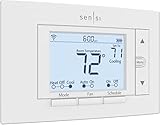
Overview: The Sensi ST55 leverages Emerson’s legacy with a focus on privacy, effortless installation, and ENERGY STAR-certified efficiency, often functioning without a C-wire.
What Makes It Stand Out: Its standout feature is a strict no-data-selling privacy policy. The design mimics traditional thermostats (same footprint, physical buttons), enabling DIY installs without wall repairs. ENERGY STAR estimates ~23% HVAC energy savings via scheduling and remote access.
Value for Money: Excellent value due to C-wire-free operation in most homes, reducing installation complexity/cost. Privacy focus and straightforward app provide peace of mind, while energy savings offset the modest price quickly.
Strengths and Weaknesses: Strengths: No C-wire needed typically, exceptional privacy stance, familiar physical interface, easy wall installation. Weaknesses: Limited voice assistant support (Alexa only), less advanced automation than competitors, basic app compared to ecobee/Nest.
Bottom Line: Ideal for privacy-conscious users wanting a simple, reliable upgrade with minimal installation hassle; best for those prioritizing ease-of-use over cutting-edge smart features.
5. Google Nest Thermostat - Smart Thermostat for Home - Programmable Wifi Thermostat - Snow

Overview: The Google Nest Thermostat combines sleek design with learning capabilities, targeting energy savings through automation while working without a C-wire in most systems.
What Makes It Stand Out: Its “Savings Finder” proactively suggests schedule tweaks for extra efficiency. It auto-lowers temps when away and offers robust remote control via the Google Home app. ENERGY STAR certified, it estimates significant energy reduction.
Value for Money: Priced accessibly for its features. Value is enhanced by potential utility rebates, self-learning schedule optimization (reducing manual input), and broad compatibility checks via Nest’s online tool. C-wire-free operation in many homes cuts install costs.
Strengths and Weaknesses: Strengths: Intuitive Savings Finder, strong auto-away functionality, no C-wire usually needed, seamless Google Home integration. Weaknesses: Limited third-party compatibility vs. Matter, learning period required, no physical lock feature.
Bottom Line: A compelling, user-friendly option for Google ecosystem users seeking automated savings; verify compatibility first, especially for heat pumps or zone systems needing a C-wire.
6. Google Nest Thermostat - Smart Thermostat for Home - Programmable Wifi Thermostat - Charcoal
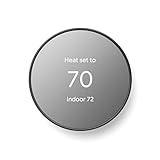
Overview: The Google Nest Thermostat is an ENERGY STAR-certified smart thermostat designed to optimize home comfort and energy efficiency through intuitive automation and remote control via the Google Home app. It seamlessly integrates into modern smart home ecosystems. What Makes It Stand Out: Its standout feature is adaptive learning that automatically adjusts temperatures when you’re away, eliminating wasted energy. The broad compatibility—working without a C-wire in most systems—and straightforward app-based scheduling for Android/iOS devices enhance accessibility. Remote temperature adjustments from any connected device add significant convenience. Value for Money: Priced competitively, it justifies cost through measurable energy savings from its occupancy-based automation and efficient scheduling. While lacking advanced geofencing, its core functionality delivers solid returns for users seeking simplicity over premium features found in higher-end models. Strengths and Weaknesses: Strengths: C-wire-free operation in many setups, user-friendly app, reliable auto-schedule, ENERGY STAR efficiency. Weaknesses: No native geofencing, limited HVAC system compatibility for heat pumps without accessories, requires consistent Wi-Fi for full functionality. Bottom Line: Ideal for beginners seeking an affordable, no-fuss smart thermostat with reliable energy savings; best suited for standard HVAC systems without complex requirements.
7. Honeywell Home RTH8800WF2022, T5 WiFi Smart Thermostat, 7 Day-Programmable Touchscreen, Alexa Ready, Geofencing Technology, Energy Star, C-Wire Required
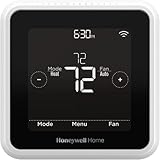
Overview: The Honeywell T5 is an ENERGY STAR-certified Wi-Fi thermostat offering precise 7-day scheduling and geofencing capabilities to optimize home heating and cooling. It targets energy-conscious users seeking granular control and utility integrations. What Makes It Stand Out: Geofencing technology automatically adjusts temperatures based on smartphone location, ensuring comfort upon arrival and savings when away. Its Demand Response Program compatibility lets utilities offer rebates for minor temperature adjustments during peak demand, directly linking to potential bill reductions. Value for Money: The T5’s value shines through proven 8–16% HVAC savings via disciplined scheduling and utility incentives. Though pricier than basic models, rebates and long-term energy reductions offset the cost, especially for users enrolled in demand-response programs. Strengths and Weaknesses: Strengths: Robust geofencing, utility rebate eligibility, intuitive touchscreen, detailed energy reports. Weaknesses: Mandatory C-wire requirement complicates installation for some, geofencing accuracy can vary, no color customization. Bottom Line: A top pick for tech-savvy homeowners prioritizing geofencing and utility partnerships; the C-wire need and focus on scheduling demand moderate technical comfort.
8. Sensi Lite Smart Thermostat, Programmable, WiFi, Easy DIY, Works With Alexa, ENERGY STAR Certified, ST25, Most Systems C-Wire Not Required, C-Wire needed with Heat/Cool Only & Heat Pump System – Black
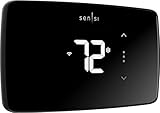
Overview: The Sensi Lite is an ENERGY STAR-certified smart thermostat emphasizing DIY installation simplicity and privacy, compatible with most standard HVAC systems without requiring a C-wire in many cases. What Makes It Stand Out: Its standout feature is effortless self-installation with a built-in level and clear instructions, appealing to non-technical users. Strong privacy assurances—no data sold to third parties—and a top-rated mobile app for remote control further differentiate it in a crowded market. Value for Money: Offering ~23% HVAC energy savings at a mid-range price, it delivers excellent value. The avoidance of C-wire complications for common systems reduces installation costs, while ENERGY STAR efficiency ensures ongoing bill reductions. Strengths and Weaknesses: Strengths: Exceptional DIY setup, robust privacy policy, broad system compatibility (sans C-wire for most), intuitive app. Weaknesses: C-wire still needed for heat pumps/heat-only systems, less premium interface than competitors, limited utility program integrations. Bottom Line: Highly recommended for DIY enthusiasts seeking privacy-focused, hassle-free installation and reliable energy savings without advanced utility features.
9. Like-New Amazon Smart Thermostat – Save money and energy - Works with Alexa and Ring - C-wire required
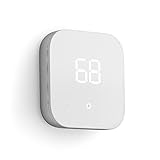
Overview: This refurbished Amazon Smart Thermostat is certified to perform and look like new, offering ENERGY STAR efficiency, Alexa integration, and potential energy rebates at a lower cost than retail models. What Makes It Stand Out: Unique as a certified refurbished option with identical warranty coverage to new units, it leverages Alexa for automatic programming and integrates with Echo devices to create temperature-based “comfort zones” using presence detection—a niche feature for Alexa-centric homes. Value for Money: The refurbished price provides significant savings upfront, amplified by potential utility rebates (averaging $50/year via EPA estimates). It’s ideal for budget-conscious buyers seeking Amazon ecosystem synergy without compromising on core functionality. Strengths and Weaknesses: Strengths: Cost-effective refurbished option, seamless Alexa/Ring integration, automatic programming, rebate support. Weaknesses: Requires C-wire (limiting compatibility), no touchscreen, dependent on Alexa for advanced features, limited to Amazon’s ecosystem. Bottom Line: A smart buy for Alexa users wanting affordable, efficient climate control; avoid if you lack a C-wire or prefer non-Amazon platforms.
10. Honeywell Home RTH9585WF1004 Wi-Fi Smart Color Thermostat, 7 Day Programmable, Touch Screen, Energy Star, Alexa Ready, Gray

Overview: Honeywell’s RTH9585WF is a premium ENERGY STAR-certified Wi-Fi thermostat featuring a customizable color screen, flexible programming, and utility demand-response capabilities for tailored home comfort and efficiency. What Makes It Stand Out: Personalizable screen colors to match home décor and intuitive touchscreen operation elevate its user experience. Strong utility integration—including demand-response programs for bill credits—and compatibility with diverse HVAC systems (forced air, heat pumps, steam) make it versatile for complex setups. Value for Money: Positioned at a higher price point, it justifies cost through robust utility partnerships, long-term energy tracking, and broad system support. Rebate opportunities and potential demand-response earnings enhance its return on investment for tech-engaged households. Strengths and Weaknesses: Strengths: Customizable display, excellent utility program support, easy touchscreen interface, wide HVAC compatibility. Weaknesses: Strict C-wire requirement, no geofencing, incompatible with baseboard heating, higher initial cost. Bottom Line: Best for users with compatible HVAC systems seeking a stylish, utility-integrated thermostat; skip if you need geofencing or lack a C-wire.
Why a Budget Smart Thermostat Makes Sense for Your Wallet
Understanding the True Cost of Heating and Cooling
Heating and cooling typically devour nearly half of your home’s energy budget. A standard programmable thermostat only saves energy if you actually set and stick to complex schedules – which most people don’t. A smart thermostat automates these savings, making consistent optimization effortless. The upfront cost under $150 is often recouped through reduced energy bills within the first year, turning it from an expense into a savvy investment.
Separating Real Savings from Marketing Hype
Not all “smart” features translate to actual energy reduction. Focus on capabilities proven to cut consumption: occupancy detection that reliably adjusts temps when you’re out, adaptive scheduling that learns without constant tweaking, and detailed energy usage reports that show where you can improve. Avoid getting distracted by niche integrations or ultra-high-resolution displays that inflate the price without boosting savings.
Essential Features to Prioritize Under $150
Core Compatibility: The Non-Negotiable Check
Before falling in love with features, verify compatibility with your existing HVAC system. Key factors include your wiring type (especially the need for a common “C-wire” for continuous power), system type (heat pump, forced air, multi-stage), and voltage. Most reputable budget models offer robust online compatibility tools – use them. An incompatible thermostat means costly professional installation or returns.
Intelligent Scheduling and Learning Capabilities
Look for thermostats that move beyond simple on/off timers. True learning capabilities observe your manual adjustments over days and build an efficient schedule for you, minimizing user input. Even without full learning, highly flexible scheduling with multiple daily periods adaptable to different days of the week is crucial for matching real-life routines and avoiding energy waste.
Reliable Occupancy and Geofencing
This is where significant savings happen. Motion sensors detect when a room is unoccupied, automatically adjusting temperatures. More advanced (yet increasingly common in budget models) is geofencing, which uses your smartphone’s location to switch to an energy-saving mode when the last person leaves the house and warms or cools the home shortly before the first person returns. Ensure the app reliably triggers these modes without false positives.
Energy Usage Reporting and Insights
A thermostat that merely controls temperature isn’t enough. The best budget options provide clear, visual reports on your heating and cooling runtime, estimated energy consumption, and comparisons to previous periods. Actionable insights, like “Your system ran 20% longer this week due to extreme cold – consider adjusting your away temperature,” turn data into tangible savings opportunities.
Installation and User Experience Considerations
DIY-Friendly Setup: What to Expect
Most sub-$150 smart thermostats are designed for straightforward DIY installation, especially if replacing an older programmable model with similar wiring. Clear step-by-step instructions within the companion app, helpful wiring diagrams, and video guides are essential. However, if your system lacks a C-wire or involves complex multi-zone setups, budget for potential professional help – factor this into your total cost.
Intuitive App and Interface Design
The thermostat’s physical screen matters less than the companion smartphone app, which you’ll use most often. Prioritize apps known for simplicity, quick response times, and logical navigation. Can you easily adjust the schedule, check energy reports, or activate away mode in two taps? A clunky app undermines the convenience and leads to disuse, negating potential savings.
Voice Control and Ecosystem Integration
While deep smart home integration (like controlling specific lights) might be limited at this price, basic voice control via Alexa or Google Assistant is now standard. Ensure seamless setup for simple commands like “Set living room to 72 degrees.” Compatibility with your existing voice assistant platform is more valuable than supporting every possible smart home protocol.
Maximizing Energy Savings with Your Budget Choice
Optimizing Away and Sleep Modes
Don’t just set it and forget it. Actively define comfortable yet efficient temperatures for when you’re asleep (typically a few degrees cooler in winter, warmer in summer) and when the house is empty. Even a modest 7-10 degree adjustment for 8 hours can yield significant savings. Your thermostat should make activating these modes effortless, ideally through geofencing or scheduling.
Leveraging Weather Adaptation Features
Some budget models incorporate local weather forecasts. This intelligence allows the system to pre-cool or pre-heat your home before extreme temperatures hit peak hours, avoiding straining the system during the most expensive utility rate periods (common with time-of-use plans). It also prevents the system from trying to cool when humidity is the real issue.
Understanding Humidity Control Benefits
Especially relevant in humid climates, basic humidity monitoring and control (often via a compatible dehumidifier or HVAC setting) can improve perceived comfort at higher temperatures in summer. Feeling comfortable at 75°F instead of 72°F means less AC runtime. Check if the model provides humidity data and offers related settings within its feature set.
Future-Proofing Your Budget Investment
Importance of Regular Software Updates
Smart thermostats rely on software for core functionality and new features. Choose a manufacturer known for providing consistent, long-term firmware updates. This ensures compatibility with evolving voice assistants, security patches, and potentially new energy-saving algorithms – extending the useful life and value of your $150 investment well beyond the initial purchase.
Evaluating Long-Term Reliability and Support
Read user reviews focusing on longevity (do units fail after 1-2 years?) and the responsiveness of customer support. A thermostat that breaks in 18 months negates any savings. Check warranty terms – a solid 2-3 year warranty is a good indicator of manufacturer confidence in their budget model’s durability.
Considering Potential for Future Upgrades
While you’re buying for today, consider if the platform has room to grow. Does the app structure suggest future compatibility with potential additions like smart vents or water leak sensors? You don’t need these now, but a thermostat on a scalable platform might offer more value down the line without requiring a full replacement.
Avoiding Common Budget Buyer Pitfalls
The False Economy of Ultra-Low Prices
Thermostats significantly below $80 often cut critical corners: unreliable sensors, poor app performance, limited compatibility, or no customer support. This leads to frustration, manual overrides (wasting energy), or early replacement. Focus on the $90-$150 sweet spot where core energy-saving tech is reliably implemented.
Overlooking Installation Complexity Costs
That $120 thermostat becomes a $200+ investment if you need an electrician to run a C-wire. Honestly assess your HVAC system’s wiring before purchasing. Factor potential installation help into your budget comparison – a slightly more expensive model that’s DIY-friendly might be cheaper overall than the absolute cheapest incompatible option.
Ignoring Utility Company Rebates
Many gas and electric providers offer substantial instant rebates or mail-in incentives for ENERGY STAR certified smart thermostats, sometimes covering $50 or more of the cost. Always check your utility’s website before buying – it could drop a $150 model well into the budget range, making a more feature-rich option suddenly affordable.
Frequently Asked Questions
How much can I realistically save with a budget smart thermostat?
Most users see 10-15% savings on heating and cooling costs annually, translating to $50-$150+ in typical homes. Savings depend heavily on your climate, current usage habits, and how effectively you utilize the thermostat’s automation features like occupancy detection and scheduling.
Can I install a smart thermostat myself if I’m not tech-savvy?
Yes, many models are designed for DIY installation with clear app-guided instructions, especially if replacing an old thermostat with similar wiring. If your system lacks a common C-wire or is complex (like heat pumps), professional help might be needed. Always check compatibility tools first.
Do budget models work with all heating and cooling systems?
No. Compatibility is critical. Most work with standard forced-air systems, but heat pumps, multi-stage systems, or older millivolt systems require specific model verification. Always use the manufacturer’s online compatibility checker before purchasing.
Is geofencing reliable on cheaper thermostats?
Reliability varies, but most reputable budget models offer functional geofencing. Performance depends more on your smartphone’s location services and settings than the thermostat price. Ensure your phone’s battery optimization settings don’t restrict the thermostat app.
Will I need a subscription for basic features?
No. Core features like scheduling, remote control via app, geofencing, and energy reports should work without any monthly fee. Some offer optional premium services for advanced analytics, but these are never required for fundamental energy savings.
How quickly do energy savings start after installation?
You can see reduced runtime immediately by setting reasonable schedules and away temps. Significant bill reductions typically appear within 1-3 full utility billing cycles as the thermostat learns and optimizes, especially once occupancy features activate consistently.
Are budget smart thermostats secure?
Reputable brands prioritize security with regular firmware updates and secure connections (Wi-Fi encryption). Avoid obscure brands with no update history. Ensure your home Wi-Fi network uses a strong password for an added layer of protection.
Can I control it without my smartphone?
Yes. All models have a physical interface on the thermostat itself for basic temperature adjustments and mode changes. While the full smart features (scheduling, reports) require the app, you won’t be left without climate control if your phone dies.
What happens during a power outage?
Most have a small internal battery (often rechargeable via HVAC wiring) to maintain settings and time for several hours. When power returns, they typically revert to a safe temperature (like 60°F in winter) until connectivity is restored and your schedule resumes.
Do utility rebates apply to budget models?
Often, yes! Many utility rebate programs specifically list eligible ENERGY STAR certified models, which include numerous options under $150. Always check your local utility’s website for current offers – rebates can make a higher-value model very affordable.