Imagine waking up to an electricity bill that feels like a gut punch—not because you left every light on, but because you simply couldn’t see where your energy was vanishing. In 2026, with energy costs climbing and environmental awareness sharper than ever, the humble smart plug has evolved from a basic remote switch into a powerful diagnostic tool. Energy-monitoring smart plugs are no longer a niche luxury; they’re becoming essential for homeowners and renters alike who want transparency in an opaque system. These devices transform invisible energy consumption into actionable insights, putting you back in control of your home’s biggest hidden expense.
Gone are the days when “smart” just meant turning lamps on with your phone. Today’s advanced energy-monitoring plugs deliver granular data—tracking watts, volts, amps, and even cost estimates in real-time—right to your palm. But with so many options flooding the market, how do you separate genuinely useful tools from flashy gimmicks? Choosing the wrong plug could mean inaccurate data, frustrating setup, or wasted money. This guide cuts through the noise to focus on what truly matters when selecting a plug that delivers precise, reliable energy intelligence tailored to your lifestyle and home ecosystem. Let’s unlock the power of informed energy use, one outlet at a time.
Top 10 Energy Monitoring Smart Plugs
Detailed Product Reviews
1. TP-Link 𝗧𝗮𝗽𝗼 Smart Plug Wi-Fi Mini, Energy Monitoring, Compatible with Alexa & Google Home & Samsung SmartThings, Timer, 15A/1800W Max, ETL Certified, 2.4G Wi-Fi Only, Tapo P115(4-Pack)

Overview:
This 4-pack of TP-Link Tapo P115 smart plugs delivers reliable Wi-Fi control for standard home appliances. Focused on energy efficiency, it integrates seamlessly with major voice assistants and offers robust scheduling features without requiring Matter protocol support.
What Makes It Stand Out:
Its standout feature is granular energy bill estimation, translating usage data into cost projections and enabling off-peak scheduling for high-consumption devices. The auto-shutoff for overloads and overcharge prevention for devices (like phones) provide tangible safety and longevity benefits beyond basic on/off control.
Value for Money:
Priced competitively for a 4-pack, it offers exceptional value for users not yet invested in Matter ecosystems. While lacking Matter’s local control, its energy-saving features and ETL certification justify the cost for budget-conscious households prioritizing bill reduction over cutting-edge protocol flexibility.
Strengths and Weaknesses:
Strengths: Intuitive energy cost tracking, strong safety features (auto-shutoff, overcharge prevention), compact size, and wide compatibility with Alexa/Google/Samsung. Weaknesses: Limited to 2.4GHz Wi-Fi only, no Matter support for local network resilience, and lacks Bluetooth fallback.
Bottom Line:
Ideal for cost-aware users seeking straightforward energy management and voice control without Matter complexity; a practical, budget-friendly entry into smart plugs, though future-proofing demands are better met elsewhere.
2. Kasa Smart Plug, Matter Compatible, Energy Monitoring, Compact Design, 15A/1800W Max, Super Easy Setup, Works with Apple Home, Alexa & Google Home, UL Certified, 2.4G Wi-Fi Only, White, KP125M(2-Pack)

Overview:
Kasa’s KP125M 2-pack is a Matter-certified smart plug emphasizing local network reliability and clean energy tracking. It’s designed for seamless integration into diverse smart homes, prioritizing stability during internet outages.
What Makes It Stand Out:
True Matter compatibility enables smooth LAN control—devices communicate directly without cloud dependency, ensuring functionality during internet downtime. Its UL-certified flame-retardant build and unobtrusive compact design (avoiding outlet blockage) enhance safety and usability.
Value for Money:
While the 2-pack format costs more per unit than larger bundles, Matter support justifies the premium for ecosystem flexibility. It’s a strategic investment for Apple HomeKit or multi-platform users needing reliable local control, though value diminishes for non-Matter setups.
Strengths and Weaknesses:
Strengths: Flawless Matter integration for offline operation, excellent local network performance, UL safety certification, and effortless setup. Weaknesses: 2-pack quantity feels sparse for whole-home use, limited to 2.4GHz Wi-Fi, and lacks advanced energy cost estimation.
Bottom Line:
A top choice for Matter adopters prioritizing local control reliability and safety; highly recommended for Apple-centric homes, though the 2-pack may necessitate additional purchases for extensive coverage.
3. Kasa Matter Smart Plug w/ Energy Monitoring, Compact Design, 15A/1800W Max, Super Easy Setup, Works with Apple Home, Alexa & Google Home, UL Certified, 2.4G Wi-Fi Only, White, KP125M (4-Pack)

Overview:
This 4-pack variant of Kasa’s KP125M delivers identical Matter-certified performance as the 2-pack but in a more practical quantity for whole-home deployment, balancing energy monitoring with robust local control.
What Makes It Stand Out:
The key differentiator is the 4-pack value proposition, enabling comprehensive home coverage while retaining Matter’s core advantage: direct device communication during internet outages. Energy tracking focuses on usage patterns (not cost estimation), complementing its role in holistic home automation.
Value for Money:
Significantly better value than the 2-pack for most users, as smart plugs are typically deployed in multiples. The per-unit cost reduction, combined with Matter’s future-proofing, makes it a smarter buy for new installations or Matter ecosystem expansions.
Strengths and Weaknesses:
Strengths: Cost-effective 4-pack, reliable Matter-based local control, compact non-blocking design, and UL safety certification. Weaknesses: Still limited to 2.4GHz Wi-Fi, no energy cost forecasting, and identical feature set to pricier single packs reduces novelty.
Bottom Line:
The optimal Kasa Matter plug configuration; highly recommended for users building or scaling a Matter-enabled smart home, offering the best balance of quantity, reliability, and protocol flexibility in its class.
4. Govee Smart Plug with Energy Monitoring, WiFi Bluetooth Plug Work with Alexa and Google Assistant, 15A Smart Outlets with Timer & Group Controller, No Hub Required, ETL&FCC Certified for Home, 4 Pack

Overview:
Govee’s 4-pack smart plugs combine dual-band connectivity (Wi-Fi + Bluetooth) with detailed energy analytics, targeting users seeking versatile control and long-term usage insights without hub dependency.
What Makes It Stand Out:
Unique Bluetooth pairing provides a critical fallback during Wi-Fi disruptions, ensuring continuous access. Its app excels in data retention—reviewing energy metrics up to a year—and group control simplifies managing multiple devices like holiday lights or entertainment systems.
Value for Money:
Competitively priced for a 4-pack with Bluetooth resilience, it offers strong value for renters or tech-nomads needing flexible connectivity. While lacking Matter, the Bluetooth advantage and extensive historical data justify the cost for non-ecosystem loyalists.
Strengths and Weaknesses:
Strengths: Bluetooth/Wi-Fi hybrid connectivity, year-long energy data storage, intuitive group scheduling, and robust ETL/FCC safety. Weaknesses: No Matter support, Apple HomeKit incompatibility, and app experience lags behind Kasa/Tapo in polish.
Bottom Line:
Perfect for users prioritizing connection stability and deep energy history over Matter integration; an excellent, safety-certified choice for multi-device setups where Bluetooth flexibility trumps ecosystem unification.
5. TP-Link Tapo Smart Plug Mini, Matter Compatible, Compatible with Alexa, Google Home & Samsung SmartThings, Energy Monitoring, 15A, UL Certified, 2.4G Wi-Fi Only, Tapo P110M(4-Pack)

Overview:
TP-Link bridges its Tapo ecosystem to Matter with the P110M 4-pack, merging Tapo’s acclaimed energy management features with Matter protocol reliability for unified cross-platform control.
What Makes It Stand Out:
It uniquely combines Matter certification with Tapo’s advanced energy tools: bill estimation, off-peak scheduling, and device-specific overcharge prevention. This fusion offers both ecosystem flexibility and granular power-saving intelligence unavailable in rival Matter plugs.
Value for Money:
The strongest value in the Matter segment for energy-focused users. It undercuts competitors on price while delivering Tapo’s signature cost-optimization features, making it ideal for those upgrading from older Tapo devices or seeking Matter without sacrificing energy insights.
Strengths and Weaknesses:
Strengths: Best-in-class energy cost forecasting, Matter compatibility, compact size, and seamless Tapo app integration. Weaknesses: 2.4GHz Wi-Fi only, lacks Bluetooth, and Matter setup is slightly less intuitive than Kasa’s.
Bottom Line:
The definitive Matter smart plug for energy-conscious households; highly recommended for users who prioritize detailed consumption analytics alongside cross-platform reliability, offering unmatched feature depth at its price point.
6. Emporia Energy Monitoring Smart Plug, WiFi Smart Outlet Plug Works with Alexa and Google Home - 15a WiFi Outlet with Timer, Mobile App, Home Energy Monitor, Scheduling - 2.4ghz WiFi Only (4 Pack)

Overview: The Emporia 4-pack smart plugs offer robust energy monitoring and remote control for standard household appliances. Designed for 120V outlets with a 10A continuous/15A peak load, they integrate with Alexa and Google Home via a 2.4GHz WiFi connection, focusing on eliminating standby power waste and optimizing energy use through detailed tracking.
What Makes It Stand Out: Emporia excels with professional-grade energy insights, providing real-time consumption data to identify energy hogs. Its scheduling feature is intuitive for automating routines like coffee brewing, while the mobile app enables remote on/off toggling—ideal for correcting forgotten appliances. The 4-pack delivers comprehensive room or home coverage at a competitive per-unit cost.
Value for Money: Priced moderately for a 4-pack, it outperforms basic smart plugs by including granular energy analytics typically found in pricier systems. Though limited to 2.4GHz WiFi, the cost per plug for monitoring capabilities justifies the investment for energy-conscious users over single-plug alternatives.
Strengths and Weaknesses: Strengths: Accurate energy tracking, reliable scheduling, strong app interface, and 4-pack value. Weaknesses: No 5GHz WiFi support, peak load restriction (15A max for 1hr/day), and lacks advanced safety features like auto-shutoff for overloads.
Bottom Line: Highly recommended for users prioritizing energy savings and scheduling across multiple devices; the 4-pack offers exceptional functionality for routine automation and consumption awareness despite minor connectivity limitations.
7. TP-Link 𝗧𝗮𝗽𝗼 Smart Plug Wi-Fi Mini, Energy Monitoring, Compatible with Alexa & Google Home & Samsung SmartThings, Timer, 15A/1800W Max, ETL Certified, 2.4G Wi-Fi Only, Tapo P115(2-Pack)

Overview: The TP-Link Tapo P115 2-pack delivers compact, energy-monitoring smart plugs with ETL certification and 15A capacity. It connects via 2.4GHz WiFi to enable remote control, scheduling, and detailed energy analytics through the Tapo app, while supporting Alexa, Google Assistant, and Samsung SmartThings for voice commands.
What Makes It Stand Out: Its standout feature is energy bill estimation, translating usage data into cost savings by scheduling high-consumption devices during off-peak hours. Smart charging prevents overloads via auto-shutoff, and the intuitive charts simplify energy optimization—making it ideal for budget-focused households.
Value for Money: Competitive for a certified 2-pack, it adds tangible value through bill integration and overload protection absent in cheaper models. The mini design saves outlet space, and cross-platform compatibility enhances utility without premium pricing.
Strengths and Weaknesses: Strengths: Bill cost visualization, auto-shutoff safety, compact size, and seamless voice/app control. Weaknesses: 2.4GHz WiFi only, no Matter support, and scheduling lacks sunrise/sunset triggers.
Bottom Line: An excellent choice for users seeking actionable energy insights and safety features at a reasonable price; the Tapo P115 balances affordability with sophisticated monitoring for everyday efficiency.
8. AiSeek Tuya Smart Plug,Mini with Energy Monitoring,Pro Series 15A Plug,2.4G Wi-Fi Outlets Support Alexa, Google Assistant, Time Schedule,ETL & FCC Certified, 4 Pack

Overview: AiSeek’s 4-pack Pro Series smart plugs combine energy monitoring, scheduling, and compact design for 15A/1800W devices. FCC-certified and compatible with Alexa/Google Assistant via the SmartLife app, they emphasize safety with overload protection and a space-saving form factor.
What Makes It Stand Out: The standout is group control—managing multiple plugs with one tap—and flexible scheduling for devices like Christmas trees or fans. Its fire-resistant materials and adjacent outlet preservation cater to safety-conscious users, while real-time app monitoring helps curb accidental energy waste.
Value for Money: The 4-pack offers exceptional coverage at a budget-friendly rate, outpacing single or 2-packs in cost-per-unit value. However, reliance on the SmartLife app may deter users preferring native platform integration.
Strengths and Weaknesses: Strengths: Group control, compact safety design, affordable 4-pack, and easy setup. Weaknesses: SmartLife app dependency, no billing estimation, and 2.4GHz WiFi limitation restricts network flexibility.
Bottom Line: Best for budget-focused buyers needing multi-outlet management and basic energy tracking; the AiSeek plugs deliver solid functionality but lack advanced analytics for power savers.
9. THIRDREALITY ZigBee Smart Plug 4 Pack with Real-time Energy Monitoring,15A Outlet, Zigbee Repeater,ETL Certified,ZigBee Hub Required,Work with Home Assistant,Compatible Echo Devices and SmartThings
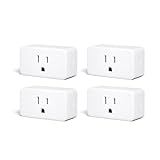
Overview: THIRDREALITY’s 4-pack ZigBee smart plugs require a compatible hub (e.g., Echo 4th Gen or SmartThings) for real-time energy monitoring and voice control. They double as ZigBee repeaters, extend network range, and feature restore-status settings for post-power-outage safety, all in a space-saving design.
What Makes It Stand Out: As a ZigBee 3.0 device, it excels in low-latency, secure mesh networking—ideal for large smart homes. Energy monitoring integrates deeply with Home Assistant and SmartThings, while the repeater function strengthens overall network reliability without extra hardware.
Value for Money: A strong value for ZigBee ecosystem users, especially given the 4-pack quantity and repeater utility. However, the mandatory hub adds cost, making it less accessible for WiFi-only households despite robust performance.
Strengths and Weaknesses: Strengths: Mesh network extension, hub ecosystem compatibility, space-efficient design, and restore-status safety. Weaknesses: Hub dependency, limited app support without third-party platforms, and no standalone WiFi control.
Bottom Line: Highly recommended for existing ZigBee hub owners prioritizing network stability and advanced integrations; avoid if you lack compatible hardware due to the essential hub requirement.
10. TP-Link Tapo Smart Plug Mini, Matter Compatible, Compatible with Alexa, Google Home & Samsung SmartThings, Energy Monitoring, 15A, UL Certified, 2.4G Wi-Fi Only, Tapo P110M(2-Pack)
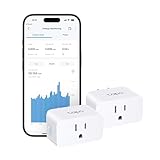
Overview: The Tapo P110M 2-pack is a Matter-certified smart plug with UL certification, supporting 15A loads and energy monitoring. It works across Alexa, Google Home, Apple HomeKit, and SmartThings via Matter, while retaining Tapo app functionality for scheduling and billing insights over 2.4GHz WiFi.
What Makes It Stand Out: Matter compatibility is its crown jewel, enabling seamless cross-platform control without vendor lock-in. Energy bill estimation and overcharge prevention—like auto-shutoff for set durations—add practical savings, while Matter ensures future-proof ecosystem flexibility.
Value for Money: Priced slightly higher than non-Matter models, it justifies cost through universal compatibility and long-term adaptability. The 2-pack suits multi-room setups, and Matter support avoids obsolescence as smart home standards evolve.
Strengths and Weaknesses: Strengths: Matter certification, multi-platform integration, bill estimation, and overcurrent protection. Weaknesses: Still 2.4GHz-only, and Matter setup may confuse beginners despite Tapo app simplicity.
Bottom Line: The top pick for future-proofing your smart home; the Tapo P110M’s Matter support and robust features make it worth the premium for users invested in diverse or expanding ecosystems.
Understanding Energy Monitoring in Smart Plugs
How Energy Monitoring Technology Works
Modern smart plugs measure electricity consumption using internal sensors like shunt resistors or current transformers (CT clamps). These components detect the flow of electrical current through the plug, converting it into precise wattage and kilowatt-hour (kWh) data. Unlike basic smart plugs, energy-monitoring models process this data onboard, allowing them to report real-time usage, historical trends, and estimated costs without relying solely on utility bill calculations. The accuracy of these readings depends heavily on the quality of the sensor and calibration standards used by the manufacturer.
Why Accuracy Matters More Than You Think
Not all energy-monitoring plugs deliver hospital-grade precision. Look for devices specifying accuracy within ±2-3%—critical if you’re tracking small appliances like phone chargers or large energy hogs like space heaters. Inaccurate plugs (±5% or worse) might show your fridge using 100W when it’s actually 150W, distorting your savings calculations. High-accuracy models often feature auto-calibration and temperature compensation to maintain reliability as your home’s electrical load fluctuates throughout the day.
Real-Time Data vs. Historical Insights
The most valuable plugs offer both live usage snapshots and long-term trend analysis. Real-time data helps you catch “energy vampires” instantly—like an old gaming console siphoning power on standby. Historical reports (daily, weekly, monthly) reveal patterns, such as seasonal HVAC spikes or the impact of new habits. Ensure the companion app visualizes this data intuitively; complex graphs or buried metrics defeat the purpose of monitoring.
Key Features to Prioritize for Energy Savings
Granular Reporting Capabilities
Avoid plugs that only show “on/off” states with vague energy estimates. Seek models providing detailed breakdowns: instantaneous power (watts), cumulative energy (kWh), voltage stability, and cost projections based on your local electricity rate. Advanced units even categorize usage by time-of-day (peak vs. off-peak) or appliance type, helping you optimize schedules for lower bills.
Compatibility with Energy Management Ecosystems
Your plug shouldn’t live in isolation. Prioritize compatibility with major home energy platforms like Sense, Emporia, or utility company programs that aggregate whole-home data. If you use solar panels or a battery system, ensure the plug integrates with those platforms to track net energy flow. Seamless connectivity with your existing smart home hub (Matter/Thread, Home Assistant, etc.) also streamlines automation based on actual consumption.
Automation Rules Based on Energy Use
The smartest plugs let you create automations triggered by energy thresholds—not just time or schedules. Examples: “Turn off the space heater if usage exceeds 1,500W for 10 minutes” or “Notify me if the freezer’s energy use drops abnormally (indicating failure).” This proactive approach prevents waste and potential hazards, transforming passive monitoring into active energy management.
Setup and Usability Considerations
Physical Design and Space Constraints
Measure your outlet spacing! Bulky plugs can block adjacent sockets, especially with dual-outlet wall units. Opt for low-profile designs or right-angle plugs if space is tight. For hard-to-reach outlets (behind furniture), choose models with physical buttons for manual override. Outdoor-rated plugs (IP65+) are essential for patios or garages but often lack energy monitoring—verify weather resistance if needed.
Intuitive Mobile App Experience
The app is your data dashboard—don’t settle for clunky interfaces. Test screenshots for clear visualizations: color-coded usage charts, one-tap cost summaries, and easy-to-set energy budgets. Critical features include customizable alerts (e.g., “Notify if daily usage exceeds $1”), seamless rate configuration, and the ability to export data to spreadsheets for deeper analysis. Apps requiring constant re-logins or lacking offline access quickly become unusable.
Voice Control and Routine Integration
While not core to energy monitoring, voice assistant compatibility (Alexa, Google Assistant, Siri) adds convenience for quick status checks like, “How much is my coffee maker using right now?” More importantly, ensure energy data feeds into broader routines—like dimming lights when high-usage appliances activate to avoid circuit overload.
Privacy, Security, and Long-Term Value
Data Ownership and Privacy Policies
Energy data reveals intimate habits: when you wake up, cook, or leave home. Scrutinize the manufacturer’s privacy policy: Who owns your usage data? Is it anonymized? Can you delete it permanently? Avoid brands that sell aggregated data to third parties without explicit opt-in consent. Local processing (data stays on your network) is the gold standard for privacy-conscious users.
Security Certifications You Can’t Ignore
Energy-monitoring plugs are network endpoints—vulnerable to hacking if poorly secured. Demand devices with end-to-end encryption, regular firmware updates, and certifications like UL 2900-1 (cybersecurity) or IEC 62302 (privacy). Check if the company has a bug bounty program; it signals serious security commitment. Never use plugs requiring SMS-based 2FA—it’s easily compromised.
Total Cost of Ownership Analysis
Factor in more than the sticker price. Consider:
- Longevity: Plugs with replaceable components (e.g., USB-C instead of proprietary ports) last longer.
- Warranty: 2+ years signals confidence in build quality.
- Energy cost: Some plugs draw 0.5W+ in standby—over a year, that’s ~4.4 kWh wasted per plug!
- Scalability: Can you add 10+ plugs without app slowdowns? Enterprise-grade cloud infrastructure prevents lag as your system grows.
Optimizing Your Energy Monitoring Strategy
Strategic Placement for Maximum Impact
Don’t scatter plugs randomly. Target high-impact zones first:
- Entertainment centers (TVs, consoles, soundbars—major standby vampires)
- Home office gear (monitors, printers, chargers)
- Kitchen appliances (coffee makers, microwaves, always-on fridges)
- HVAC auxiliaries (fans, portable heaters, dehumidifiers)
Avoid placing on devices with motors (e.g., refrigerators) unless the plug explicitly supports inductive loads—cheap sensors can misread startup surges.
Interpreting Data to Drive Behavioral Change
Raw numbers alone won’t save energy. Translate data into action:
- Compare similar appliances (e.g., “This LED bulb uses 9W vs. the old 60W—$8/year saved”)
- Set weekly usage goals with automated rewards (“If we stay under 50 kWh, order pizza!”)
- Correlate usage spikes with weather data to optimize thermostat settings
- Identify “phantom loads” (devices drawing power when “off”) and unplug or automate them.
Advanced Integrations for Power Users
Tech-savvy users can amplify value by:
- Connecting plug data to home automation platforms like Home Assistant for custom dashboards
- Using IFTTT to trigger actions based on energy thresholds (e.g., “If AC usage > $0.50/hr, adjust thermostat”)
- Exporting CSV data to tools like Google Sheets for predictive modeling of future bills
Future-Proofing Your Investment
Emerging Standards and Protocols
Prioritize plugs supporting Matter over Wi-Fi-only models. Matter’s energy management cluster (introduced in 2025) enables standardized energy data sharing across brands, future-proofing against platform lock-in. Thread radio support also ensures reliable, low-power mesh networking as your smart home expands—critical for plugs in remote corners of the house.
AI-Powered Insights on the Horizon
While still nascent in 2026, some premium plugs now use on-device AI to:
- Learn appliance signatures (e.g., distinguishing washer spin cycles from heating elements)
- Predict failures (noting abnormal energy spikes before breakdowns)
- Suggest personalized savings tips (“Your dryer uses 30% more energy at 3 PM vs. 9 PM—shift loads!”)
These features will become mainstream, so choose brands actively updating firmware with AI capabilities.
Frequently Asked Questions
How accurate are smart plug energy monitors compared to utility meters?
Most quality plugs achieve ±2-3% accuracy under stable conditions—comparable to residential utility meters (±2-5%). However, utility meters measure total home consumption, while plugs track individual circuits. For whole-home verification, pair multiple plugs with a clamp-on meter like the Emporia Vue.
Can energy-monitoring plugs work with high-wattage appliances like space heaters?
Yes, but verify the plug’s maximum load rating (typically 15A/1800W in North America). Never exceed 80% of the rated capacity (e.g., 1440W for a 15A plug) to prevent overheating. Avoid using them with motors (fridges, AC units) unless explicitly rated for inductive loads.
Do I need a hub for energy-monitoring smart plugs?
Most modern plugs use Wi-Fi or Matter/Thread directly, eliminating hubs. However, Thread-based plugs require a Thread border router (built into newer hubs like Apple TV 4K or HomePod). Wi-Fi plugs may struggle in low-signal areas where hub-dependent protocols excel.
How much data do these plugs collect, and how is it stored?
Basic models collect only usage metrics (watts, kWh), stored locally or in the cloud for 30-90 days. Advanced units may log voltage fluctuations or power factor. Always confirm retention policies—reputable brands auto-delete data after 12 months and allow manual export/deletion.
Are there safety risks with leaving energy-monitoring plugs always connected?
All certified plugs (UL, ETL) include overcurrent/overheat protection. Risks are minimal if you:
- Never daisy-chain multiple plugs
- Avoid covering plugs with rugs/carpets
- Replace units showing discoloration or warmth
- Use outdoor-rated models for exterior outlets
Can renters benefit from energy-monitoring plugs?
Absolutely—they’re renter-friendly since they require no wiring changes. Track usage to prove utility overcharges, identify landlord-maintained appliance inefficiencies, or justify energy-efficient upgrades. Opt for portable, no-permanent-installation models.
Why does my plug show “0W” when an appliance is running?
This usually indicates a compatibility issue with inductive (motor-driven) or capacitive loads. The plug’s sensor may not register low-power standby modes (<1W) or misread startup surges. Check the manufacturer’s appliance compatibility list—some exclude refrigerators or laser printers.
How do I calculate cost savings from energy data?
Multiply your plug’s reported kWh usage by your electricity rate (found on bills). Example: 50 kWh/month × $0.15/kWh = $7.50/month. Compare pre- and post-optimization usage to measure savings. Apps with rate configuration automate this.
Do energy-monitoring plugs consume significant power themselves?
Quality models draw 0.2-0.5W in standby—about $0.50-$1.25/year per plug. Avoid ultra-cheap plugs drawing >1W; over 10 plugs, that’s wasted energy rivaling a nightlight. Check specifications for “standby power consumption.”
Can I use these plugs to monitor solar energy usage?
Not directly—they only track consumption through the plug. For solar net metering, pair them with a whole-home energy monitor (like Sense) that interfaces with your solar inverter. Some advanced plugs can trigger actions based on solar production data from those systems.