Your thermostat might be the brain of your home’s climate control system, but it’s essentially making decisions with one eye closed. Relying on a single data point from your hallway or living room means your HVAC system is reacting to conditions in just one spot while ignoring the sauna-like upstairs bedroom, the drafty nursery, or that stuffy home office where you spend eight hours a day. Environmental sensors are the sensory nervous system your smart thermostat desperately needs, creating a web of intelligence that transforms your home from a one-size-fits-all environment into a precisely calibrated ecosystem that adapts to how you actually live.
The magic happens when these discrete sensors wirelessly sync with your smart thermostat, feeding real-time data about temperature, humidity, air quality, and occupancy from multiple rooms. This multi-dimensional intelligence allows your HVAC system to make nuanced decisions—like cooling the bedroom before you turn in for the night, or reducing airflow to unoccupied spaces to slash energy waste. But not all sensors are created equal, and choosing the right ecosystem requires understanding a complex interplay of protocols, metrics, and integration capabilities that manufacturers rarely explain in plain English.
Top 10 Environmental Sensors for Smart Thermostats
Detailed Product Reviews
1. ecobee Smart Sensor 2 Pack - Comfort, Security, Energy Savings - Smart Home - Compatible with ecobee Smart Thermostats for Home

Overview: The ecobee Smart Sensor 2 Pack extends your smart thermostat’s intelligence beyond the hallway, delivering room-specific comfort through occupancy detection and temperature monitoring. These wireless sensors communicate with ecobee thermostats from up to 60 feet away, through walls and floors, ensuring your bedroom, nursery, or home office maintains optimal conditions.
What Makes It Stand Out: The 60-foot range significantly outperforms many competitors, while magnetic mounting and satin-steel stands offer premium placement flexibility. The sensors don’t just measure temperature—they detect occupancy, automatically prioritizing active rooms and enabling smart away modes. This dual-functionality transforms your HVAC system from a blunt instrument into a precision comfort tool.
Value for Money: At $99.99 for two sensors ($50 each), pricing aligns with premium alternatives but includes superior range and build quality. Competing sensors typically cost $40-60 each but lack the seamless ecobee integration and occupancy features. The energy savings from intelligent zoning can recoup costs within 1-2 heating/cooling seasons.
Strengths and Weaknesses: Strengths include exceptional wireless range, reliable occupancy detection, elegant magnetic mounting, and deep app integration. The satin-steel stands add aesthetic value. Weaknesses are ecosystem lock-in (only works with ecobee thermostats), limited humidity sensing compared to some rivals, and the premium price point may deter budget-conscious buyers.
Bottom Line: For ecobee thermostat owners seeking true whole-home comfort, this 2-pack is an essential upgrade. The occupancy intelligence and superior range justify the investment, delivering measurable energy savings and eliminating hot/cold spots throughout your home.
2. Honeywell Home RCHTSENSOR-2PK, Smart Room Sensor works with T9/T10 WIFI Smart Thermostats
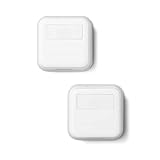
Overview: The Honeywell Home RCHTSENSOR-2PK seamlessly integrates with T9 and T10 smart thermostats, delivering multi-room temperature and humidity sensing for targeted comfort. These sensors enable your thermostat to prioritize occupied spaces, eliminating the one-size-fits-all approach to home climate control.
What Makes It Stand Out: Motion detection technology automatically focuses heating and cooling on active rooms, while humidity monitoring provides a more complete environmental picture. The ability to schedule which rooms take priority at different times—like bedrooms at night—demonstrates sophisticated automation that adapts to real living patterns.
Value for Money: At $78.08 for two sensors ($39 each), this pack offers compelling value, undercutting most competitors while delivering dual temperature and humidity sensing. Honeywell’s ecosystem provides similar energy savings to premium alternatives, with potential payback within 12-18 months through optimized HVAC operation.
Strengths and Weaknesses: Strengths include affordable pricing, motion-based room prioritization, humidity tracking, and intuitive scheduling features. The sensors are compact and discreet. Weaknesses involve compatibility restrictions (only T9/T10 Series 3 & 4), shorter wireless range compared to ecobee, and occasional connectivity hiccups reported in larger homes. The plastic build feels less premium than some rivals.
Bottom Line: Honeywell T9/T10 owners should consider this 2-pack essential for achieving true room-to-room comfort. The motion detection and humidity features deliver excellent functionality at a mid-range price, making it a smart investment for most households.
3. Honeywell Home RCHTSENSOR-1PK, Smart Room Sensor works with T9/T10 WIFI Smart Thermostats

Overview: The Honeywell Home RCHTSENSOR-1PK offers an affordable entry point into multi-room climate control for T9 and T10 thermostat owners. This single sensor provides the same temperature and humidity monitoring capabilities as its 2-pack sibling, allowing you to target comfort in one critical room.
What Makes It Stand Out: This sensor delivers premium features—motion detection and humidity sensing—at a budget-friendly price point. It’s ideal for prioritizing a single problematic room like a master bedroom or nursery. The ability to start small and expand your sensor network incrementally makes this particularly attractive for cautious adopters.
Value for Money: At $32.00, this represents exceptional value, costing less than most competitors’ single sensors while maintaining full functionality. It’s perfect for apartments or smaller homes where one sensor suffices, or for testing the multi-room concept before committing to a larger investment.
Strengths and Weaknesses: Strengths include unbeatable price, full feature parity with the 2-pack, reliable motion detection, and accurate humidity tracking. The compact design blends into any room. Weaknesses are the limited coverage area (only one room), compatibility restrictions to Honeywell T9/T10 Series 3 & 4, and the lack of bulk discount compared to the 2-pack.
Bottom Line: For Honeywell thermostat owners needing to solve comfort issues in just one room, this single sensor is a no-brainer. It delivers core smart features at a fraction of the cost, making it the most economical path to targeted climate control.
4. ecobee Smart Thermostat Premium with Smart Sensor and Air Quality Monitor - Programmable Wifi Thermostat - Works with Siri, Alexa, Google Assistant

Overview: The ecobee Smart Thermostat Premium represents the pinnacle of smart climate control, combining a sophisticated thermostat with an included SmartSensor and built-in air quality monitoring. This flagship device manages your home’s temperature while tracking VOCs, CO2, and humidity levels.
What Makes It Stand Out: The integrated air quality monitor provides real-time alerts and filter change reminders—a unique feature among smart thermostats. Radar-based occupancy sensing offers superior presence detection compared to traditional motion sensors. Seamless integration with ecobee’s doorbell camera enables two-way communication from the thermostat itself.
Value for Money: At $259.99 with a $50 SmartSensor included, the thermostat effectively costs $210. When factoring in the air quality monitor (worth $100+ as standalone), premium materials, and 26% energy savings potential, the value proposition becomes compelling despite the high upfront cost.
Strengths and Weaknesses: Strengths include comprehensive air quality monitoring, included SmartSensor, radar occupancy detection, premium metal construction, and broad system compatibility. The vibrant display and cinematic interface enhance usability. Weaknesses involve the steep price point, complexity that may overwhelm basic users, and features like doorbell integration requiring additional purchases.
Bottom Line: For homeowners wanting maximum control over comfort and air quality, this premium thermostat justifies its price through advanced features and tangible energy savings. It’s an investment in whole-home wellness that pays dividends in both health and efficiency.
5. ecobee Smart Sensor for Doors & Windows 2 Pack - Wifi Contact Sensor for Home Security, Energy Savings - Compatible with Smart Thermostats - Temperature sensor, white

Overview: The ecobee Smart Sensor for Doors & Windows 2 Pack transforms your ecobee ecosystem into a basic security system, monitoring entry points while providing temperature data. These wireless sensors send real-time notifications when doors or windows open, offering peace of mind without monthly fees.
What Makes It Stand Out: Unlike pure security sensors, these double as temperature monitors, adding environmental awareness to your smart home. The three-year battery life minimizes maintenance, and the lack of subscription requirements for basic notifications distinguishes it from traditional security systems. Integration with Smart Thermostat Premium enables audible chimes.
Value for Money: At $79.99 for two sensors ($40 each), pricing is competitive with standalone door sensors while adding temperature monitoring. Compared to full security systems with monthly fees, these offer essential monitoring capabilities at a fraction of the long-term cost, making them ideal for budget-conscious homeowners.
Strengths and Weaknesses: Strengths include long battery life, no mandatory subscription, dual temperature/security functionality, and seamless ecobee integration. The 120° motion detection arc adds extra security coverage. Weaknesses involve limited security features without a subscription, restriction to ecobee ecosystems, and lack of professional monitoring options.
Bottom Line: For ecobee users seeking basic DIY security, this 2-pack delivers excellent value. The temperature sensing and long battery life make it more versatile than typical entry sensors, though serious security needs may require a dedicated system.
6. Lennox Smart Room Sensor 22V25 Wireless Sensor for S40 Thermostat - Smart Climate Control,Algorithmic Precision, 70ft Range, Efficient Battery, LED, Manufacturer Warranty

Overview: The Lennox 22V25 Smart Room Sensor is a premium wireless accessory designed exclusively for Lennox S40 thermostat systems. This Bluetooth Low Energy (BLE) mesh network device extends climate control precision by monitoring both temperature and occupancy status throughout your home. With a 70-foot transmission range and a sleek, modern aesthetic, it seamlessly integrates into any room while providing algorithmic data to optimize HVAC efficiency. The included lithium batteries promise two years of maintenance-free operation, making it a set-and-forget solution for whole-home comfort.
What Makes It Stand Out: Unlike generic sensors, the 22V25 leverages a proprietary BLE mesh network that ensures reliable communication without taxing your WiFi bandwidth. Its sophisticated occupancy sensor detects movement up to 20 feet away with a 110-degree field of view, enabling true presence-based climate control. The sensor’s elegant design avoids the clinical look of typical smart home devices, while the LED status indicator provides at-a-glance diagnostics. Energy savings are amplified when rooms are vacant, and some utility companies offer rebates for occupancy-based systems.
Value for Money: At $198, this sensor commands a premium price that only makes sense within the Lennox ecosystem. While significantly more expensive than third-party alternatives, it delivers seamless integration and manufacturer-backed reliability that generic sensors cannot match. For S40 owners, the cost is justified by algorithmic precision and warranty protection. However, those without Lennox systems should look elsewhere, as incompatibility renders it useless.
Strengths and Weaknesses: Strengths include flawless S40 integration, genuine occupancy detection, exceptional battery life, and attractive design. The BLE mesh network provides stable connectivity without WiFi interference. Weaknesses are the prohibitive cost, single-ecosystem lock-in, limited 20-foot occupancy range, and lack of humidity monitoring. The price point makes multi-room deployments expensive.
Bottom Line: This sensor is indispensable for Lennox S40 thermostat owners seeking room-by-room climate optimization. Its occupancy-driven intelligence and seamless mesh networking deliver measurable energy savings. However, the steep price and ecosystem exclusivity make it a poor choice for anyone outside the Lennox family. Buy it only if you own an S40 system.
7. Sensi Room Sensor-Compatible with Sensi Touch 2 Smart Thermostat

Overview: The Sensi Room Sensor is an affordable wireless accessory that pairs exclusively with Sensi Touch 2 Smart Thermostats to eliminate hot and cold spots throughout your home. This battery-powered device monitors both temperature and humidity, transmitting data to help your thermostat make smarter decisions. With flexible placement options and a straightforward setup, it extends your system’s reach without requiring complex wiring. At just $39.99, it offers an accessible entry point into zoned climate awareness.
What Makes It Stand Out: The sensor’s temperature averaging capability distinguishes it from basic remote thermometers. By aggregating readings across multiple sensors and your main thermostat, it creates a balanced whole-home comfort profile rather than optimizing for a single location. The inclusion of humidity monitoring provides a more complete environmental picture, while the choice between wall mounting or using the included stand offers installation versatility. Its wireless design ensures clean aesthetics without professional installation costs.
Value for Money: At $39.99, this sensor represents exceptional value in the smart home market. Competitors often charge $50-$80 for similar functionality, making the Sensi sensor a budget-friendly choice for multi-room expansion. The ability to deploy several units without breaking the bank allows homeowners to build a comprehensive sensor network. While it lacks advanced features like occupancy detection, its core temperature and humidity monitoring deliver substantial comfort improvements for the price.
Strengths and Weaknesses: Strengths include affordability, dual temperature/humidity monitoring, flexible placement, and effective averaging algorithms. The wireless operation simplifies installation. Weaknesses are limited compatibility (Sensi Touch 2 only), absence of occupancy sensing, and reliance on user-provided batteries. The 70-foot range may be insufficient for larger homes or those with dense walls.
Bottom Line: For Sensi Touch 2 owners, this sensor is a no-brainer addition that significantly improves comfort consistency. Its low price point enables strategic placement throughout your home, while humidity tracking adds valuable data. While it won’t detect occupancy or work with other brands, it excels at its primary mission of reducing temperature imbalances. Highly recommended for existing Sensi users.
8. Provirtec Smart Thermostat for Home with Room Sensor, 7 Days Programmable, Energy Saving WiFi Thermostats for House,APP & Touchscreen Control, C Wire Required, 3.95 Inch Large Screen

Overview: The Provirtec Smart Thermostat bundle offers a complete climate control solution at an aggressive price point. This 7-day programmable thermostat supports 3H2C configurations and works with over 95% of 24VAC HVAC systems, including heat pumps and boilers. The included 3.95-inch touchscreen provides intuitive local control, while WiFi and Bluetooth Mesh connectivity enable app-based management. A bundled thermo-hygrometer sensor delivers remote temperature and humidity data for more precise comfort management throughout your home.
What Makes It Stand Out: The thermostat’s hybrid connectivity sets it apart—automatically switching to Bluetooth Mesh local control when WiFi fails ensures uninterrupted operation. Three intelligent modes (Sleep/Home/Away) adapt to your lifestyle, with Sleep mode particularly impressive for its body temperature-based nighttime adjustments. The large, clear display combines traditional button layouts with modern touch controls, making it accessible for all ages. Wide HVAC compatibility, including a self-test guide, simplifies DIY installation.
Value for Money: At $79.99 including a sensor, this package dramatically undercuts competitors like Nest and ecobee while delivering comparable core functionality. The feature set—large display, multi-mode intelligence, remote sensor, and dual connectivity—typically costs $150-$250 elsewhere. While the brand lacks the name recognition of industry leaders, the value proposition is undeniable for budget-conscious homeowners wanting smart climate control without premium pricing.
Strengths and Weaknesses: Strengths include exceptional affordability, large readable screen, included sensor, intelligent modes, and robust connectivity options. The self-installation guide is helpful. Weaknesses are the C-wire requirement (challenging for older homes), 2.4GHz WiFi limitation, unknown brand longevity, and potentially less polished app experience. The sensor’s range and accuracy are unproven long-term.
Bottom Line: This Provirtec bundle delivers remarkable value for homeowners seeking smart climate control on a budget. The feature set rivals premium brands at a fraction of the cost, and the dual connectivity ensures reliability. While C-wire dependency and 2.4GHz-only WiFi may limit some installations, it’s an excellent choice for compatible systems. Perfect for first-time smart thermostat buyers prioritizing function over brand prestige.
9. ecobee Smart Thermostat Enhanced - Programmable Wifi Thermostat - Works with Siri, Alexa, Google Assistant - Energy Star Certified - Smart Home
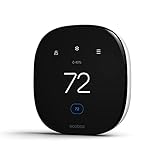
Overview: The ecobee Smart Thermostat Enhanced represents the gold standard in intelligent climate control, promising up to 26% annual savings on heating and cooling costs. Compatible with 90% of HVAC systems and including a Power Extender Kit for installations lacking a C-wire, it offers broad accessibility. Built-in radar occupancy detection preconditions your home based on arrival predictions, while machine learning algorithms adapt to your schedule and humidity preferences. Full integration with Siri, Alexa, and Google Assistant enables comprehensive smart home orchestration.
What Makes It Stand Out: Radar-based occupancy sensing is superior to traditional motion detectors, detecting presence through walls and fine-tuning preheating/precooling timing. The thermostat’s learning capabilities extend beyond scheduling to incorporate humidity management, delivering true comfort rather than just temperature control. The included PEK and trim kit demonstrates ecobee’s commitment to DIY-friendly installation. Energy Star certification validates efficiency claims, and the robust app supports control from smartphones, tablets, or Apple Watch.
Value for Money: At $199.99, the ecobee Enhanced sits at the premium tier, yet justifies its price through advanced features and proven energy savings. The 26% cost reduction claim can recoup the investment within two years for many households. Compared to basic smart thermostats, the radar sensing and multi-platform voice integration add significant value. While not cheap, it’s competitively priced against Nest Learning Thermostat and offers superior occupancy detection.
Strengths and Weaknesses: Strengths include cutting-edge radar occupancy, comprehensive voice assistant support, learning algorithms, included installation kit, and wide compatibility. The humidity-aware control and potential utility rebates enhance value. Weaknesses are the premium price, potentially overwhelming feature set for tech novices, and the learning curve required to maximize capabilities. Some users may find the constant adaptation intrusive.
Bottom Line: For smart home enthusiasts seeking maximum energy savings and convenience, the ecobee Enhanced is a top-tier choice. Its radar occupancy and learning features deliver tangible benefits that cheaper alternatives cannot match. While overkill for minimalists, the investment pays dividends through reduced utility bills and seamless automation. If your budget allows and you value cutting-edge climate intelligence, this is the thermostat to buy.
10. VIVOSUN GrowHub Outlet Controller A22 with Temperature and Humidity Sensor Probe, Smart Environmental WiFi-Controller, Smart Plug, Thermostat, 15A 1800W, Compatible with Vivosun App for Grow Tent

Overview: The VIVOSUN GrowHub A22 is a specialized environmental controller engineered for indoor gardening, not residential HVAC. This WiFi-enabled device manages up to 15A/1800W across two outlets and two USB ports, automating grow tent equipment based on temperature and humidity triggers. The external sensor probe provides accurate environmental monitoring, while the ETL-certified design ensures safety. Unlike traditional thermostats, it controls any device with a mechanical switch, making it ideal for fans, humidifiers, and lights.
What Makes It Stand Out: Purpose-built for horticulture, the A22 offers grow-specific automation that generic smart plugs cannot match. Its ability to operate locally during WiFi outages protects valuable crops from environmental swings. The app includes advanced “Grow Recipes” for different plant stages, while real-time alerts notify you of dangerous conditions. The combination of outlets and USB ports simplifies complex grow setups, and the sensor probe’s placement flexibility ensures accurate readings within the canopy.
Value for Money: At $39.99, this controller delivers exceptional value for growers. Competing horticultural controllers cost $100-$200, while using multiple smart plugs lacks integrated automation. The safety certification and offline capability provide peace of mind that justifies every penny. For typical homeowners, however, it offers no HVAC value, making its worth entirely dependent on your gardening needs.
Strengths and Weaknesses: Strengths include grow-focused features, safety certification, offline operation, expandable Vivosun ecosystem, and affordable pricing. The external sensor and app-based recipes are genuinely useful. Weaknesses are its niche application (unsuitable for home heating/cooling), limited to two outlets, ecosystem lock-in to Vivosun app, and lack of integration with broader smart home platforms.
Bottom Line: For indoor gardeners seeking automated environmental control, the GrowHub A22 is an outstanding, cost-effective solution. Its grow-specific features and safety focus make it invaluable for maintaining optimal plant conditions. However, it’s completely inappropriate as a home thermostat. Purchase only if you’re cultivating plants indoors; otherwise, invest in a proper HVAC thermostat. Perfect for its intended audience, irrelevant for everyone else.
The Evolution of Home Climate Control
Why Single-Point Thermostat Reading Isn’t Enough
Traditional thermostats operate on a simple principle: measure temperature in one location, trigger heating or cooling based on that single reading. This approach made sense when homes were smaller and HVAC systems were crude. Today’s homes feature open floor plans, multi-level designs, and varied sun exposure that create microclimates within the same structure. A sensor network distributed throughout your home captures these variations, allowing your thermostat to understand that the upstairs is 5°F warmer than the main floor, or that your kitchen spikes in humidity during cooking. This spatial awareness is the foundation of truly intelligent climate management.
The Science Behind Multi-Zone Sensing
Multi-zone sensing isn’t just about averaging temperatures across rooms. Advanced algorithms weigh sensor data based on occupancy patterns, time of day, and even which rooms are trending in which direction. A sensor in a sun-drenched room might inform the system to pre-cool that space before afternoon heat peaks, while a motion sensor in the basement signals that the space is unused and can be allowed to drift from the target temperature. This predictive approach reduces HVAC cycling, extends equipment life, and maintains comfort more consistently than reactive single-point systems ever could.
Core Environmental Metrics That Matter
Temperature: Precision Beyond the Thermostat
When evaluating temperature sensors, accuracy matters more than you might think. Look for devices with ±0.5°F precision rather than the ±2°F tolerance common in budget sensors. Calibration drift—where sensors slowly become less accurate over time—is a real concern; quality sensors include self-calibration features or easy manual calibration through their companion apps. Placement dramatically affects readings; sensors near exterior walls or windows will read differently than those on interior walls. Understanding these nuances helps you interpret data correctly and position sensors for representative measurements.
Humidity: The Hidden Comfort Factor
Relative humidity directly impacts perceived temperature and plays a crucial role in indoor air quality. The ideal range sits between 30-50%, but many homes swing wildly between bone-dry winter air and muggy summer conditions. Sensors that track humidity enable your thermostat to run dehumidification cycles independently of temperature, preventing that clammy feeling even when the temperature is technically correct. Look for sensors with hygrometer accuracy within ±3% RH, and consider models that calculate dew point—a more useful metric for preventing condensation and mold growth than relative humidity alone.
Air Quality: VOCs, CO2, and Particulate Matter
Premium environmental sensors now monitor volatile organic compounds (VOCs) from cleaning products, furniture off-gassing, and cooking fumes. CO2 sensors help gauge ventilation adequacy—critical in modern airtight homes where stale air can accumulate. Some advanced units even detect particulate matter (PM2.5), providing early warning for wildfire smoke or HVAC filter failure. When synced to your thermostat, these sensors can trigger increased ventilation, activate whole-house air purifiers, or simply alert you to open a window when outdoor air quality is better than indoor.
Occupancy Detection: Smart Presence Awareness
Motion and occupancy sensors transform your climate control from time-based to presence-based. Passive infrared (PIR) sensors detect movement, while more sophisticated mmWave radar sensors can detect breathing and subtle movements even when you’re sitting still. This data allows your system to enter eco-mode in empty rooms and rapidly condition spaces when you enter. The best implementations use geofencing from your phone combined with local occupancy sensors to distinguish between “nobody’s home” and “someone’s napping.”
Connectivity Standards Demystified
Wi-Fi: Direct and Feature-Rich
Wi-Fi sensors connect directly to your router, offering the easiest setup and strongest integration with cloud-based smart home platforms. They typically provide the fastest data updates and most detailed historical logging. However, they consume more power—expect battery changes every 6-12 months—and can congest your Wi-Fi network if you deploy many sensors. Wi-Fi sensors work best when you need fewer than six devices and have robust mesh Wi-Fi coverage throughout your home.
Z-Wave: The Mesh Network Champion
Z-Wave operates on a low-frequency band that penetrates walls better than Wi-Fi, creating a mesh network where each powered device relays signals to extend range. Sensors can run for 2-3 years on a single coin cell battery, making them ideal for large deployments. The catch? You’ll need a Z-Wave hub (like SmartThings or Hubitat) that bridges to your thermostat. This hub dependency adds complexity but provides local control that keeps working even when the internet fails.
Zigbee: Balanced Performance
Zigbee offers a middle ground—lower power than Wi-Fi but higher bandwidth than Z-Wave. It meshes similarly to Z-Wave but operates on the crowded 2.4GHz band, potentially suffering interference from Wi-Fi networks. Many smart thermostats (particularly Ecobee) include Zigbee radios, while others require a separate hub. Zigbee sensors typically update every 30-60 seconds, providing responsive control without overwhelming battery life.
Thread and Matter: The Future-Proof Option
Thread creates a self-healing mesh network with IP-based communication, while Matter promises universal compatibility between brands. Sensors using Thread with Matter support will directly sync with compatible thermostats without brand-specific hubs. This emerging standard (finalized in 2022) represents the future, but ecosystem support remains limited. Early adopters should verify their thermostat’s Matter certification level and understand that firmware updates will be critical for maintaining compatibility as the standard evolves.
Strategic Sensor Placement for Maximum Impact
Room-by-Room Optimization
Place sensors 4-5 feet high on interior walls, away from direct sunlight, vents, and electronics that generate heat. Bedrooms benefit from sensors near the bed for accurate sleep comfort data. Home offices need sensors positioned away from heat-generating equipment. Kitchens require careful placement to avoid oven and stove interference—consider mounting sensors on the ceiling or in adjacent dining areas. Each room should have one sensor per 400-600 square feet for representative coverage.
Avoiding Environmental Interference
Never place sensors near windows, doors, or exterior walls where temperature fluctuations will create false readings. Avoid bathrooms where steam showers will spike humidity readings and trigger unnecessary dehumidification. Keep sensors away from air returns, which draw in mixed air and don’t represent actual room conditions. If you must place sensors in challenging locations, look for models with adjustable sensitivity or the ability to set correction offsets in software.
Multi-Level Home Strategies
Heat rises, making multi-story homes particularly challenging. Place sensors on each floor, with extra attention to open stairwells where air mixing occurs. In split-level designs, treat each half-floor as a separate zone. For homes with basements or attics, sensors in these boundary spaces help your system understand thermal load changes and adjust before the main living areas are affected. Some advanced setups use pressure differential sensors to detect stack effect and automatically balance airflow between floors.
Power and Maintenance Considerations
Battery Life Realities
Manufacturer battery life claims often assume ideal conditions—moderate temperatures, strong signal strength, and minimal reporting frequency. Real-world usage typically yields 60-80% of claimed life. Lithium batteries outperform alkaline in extreme temperatures and maintain voltage better as they deplete. Some sensors include battery level reporting, but this data can be unreliable; set calendar reminders to check sensors every 6 months rather than trusting app notifications.
Hardwired Alternatives
For permanent installations, hardwired sensors eliminate battery anxiety entirely. Many smart thermostats support remote temperature sensors that connect via low-voltage wiring, drawing power from the HVAC control board. These sensors provide rock-solid reliability and can be daisy-chained to monitor multiple rooms. The installation requires running thermostat wire through walls—feasible during new construction or major renovations, but challenging retrofits. Consider hardwired sensors for critical spaces like nurseries or wine cellars where sensor failure isn’t an option.
Ecosystem Compatibility and Integration
Proprietary vs. Open Platforms
Some thermostat manufacturers lock sensor support to their own branded devices, creating a walled garden that simplifies setup but limits choice and often costs more. Proprietary sensors typically offer deeper integration—like displaying temperature on the thermostat screen—but prevent mixing and matching best-in-class components. Open platforms following standards like Zigbee or Z-Wave provide flexibility but require more technical configuration. Your choice depends on whether you prioritize plug-and-play simplicity or long-term ecosystem freedom.
Third-Party Hub Requirements
When your thermostat doesn’t natively support your preferred sensor protocol, a smart home hub becomes necessary. These hubs translate between protocols, allowing Z-Wave sensors to control a Wi-Fi thermostat through cloud automation rules. The hub adds latency—typically 2-5 seconds—but enables complex logic like averaging multiple sensors or creating conditional rules based on outdoor weather. Evaluate hub compatibility before buying sensors; not all hubs support all sensor features, and some require custom code to unlock advanced functionality.
Advanced Intelligence Features
Learning Algorithms and Adaptive Algorithms
The most sophisticated sensor networks don’t just report data—they learn your home’s thermal characteristics. These systems track how quickly each room responds to HVAC cycles, how outdoor temperature affects different zones, and even how your behavior changes with seasons. Over 2-4 weeks, they build a thermal model that predicts temperature drift before it happens, enabling preemptive rather than reactive control. This reduces temperature swings and eliminates the “hunting” behavior where systems overshoot setpoints.
Remote Monitoring and Alert Systems
Quality sensor networks provide more than thermostat control—they offer peace of mind. Look for systems that send push notifications when temperature or humidity exceeds safe ranges, indicating potential HVAC failures, frozen pipes, or equipment malfunctions. Some sensors detect rapid temperature drops that signal a door left open in winter, or humidity spikes suggesting a water leak. These alerts transform your climate system into a home monitoring solution, particularly valuable for vacation properties or when traveling.
Privacy and Security Considerations
Environmental sensors collect intimate data about your daily patterns—when you wake up, which rooms you use, even how many people are home. Cloud-connected sensors transmit this data to manufacturer servers, creating potential privacy risks. Review privacy policies to understand data retention and sharing practices. Local-only solutions using hubs like Home Assistant keep data on your network but sacrifice remote access convenience. Ensure sensors support encrypted communication (AES-128 minimum) and receive regular security updates. Disable unused features like microphones in multi-function sensors to minimize attack surfaces.
Budgeting for a Sensor Network
A single quality sensor costs $30-80, with premium air quality sensors running $100-150. For a typical 3-bedroom home, expect to need 4-6 sensors plus potentially a $50-100 hub. Calculate total cost of ownership including batteries ($3-5 per sensor annually) and potential bridge devices. While $200-400 feels significant, the energy savings typically provide 15-25% reduction in HVAC runtime, often paying back within 2-3 years. Factor in intangible benefits like improved sleep quality and reduced allergy symptoms when assessing value.
Troubleshooting Common Sync Issues
Sensor dropout is the most common frustration. Start by checking signal strength—most apps show RSSI values; anything below -80 dBm indicates a weak connection. Interference from microwaves, baby monitors, or neighboring Wi-Fi networks can disrupt Zigbee and Z-Wave. Try changing your Wi-Fi channel or moving the hub. Firmware mismatches between sensors and thermostat often cause sync failures; update all devices to the latest versions. If sensors show in the app but don’t affect thermostat behavior, verify automation rules are enabled and correctly configured—some systems require manually linking sensors to specific comfort settings.
Future Trends in Environmental Sensing
The next generation of sensors will integrate radar-based presence detection that identifies individuals by gait, enabling personalized temperature preferences. Energy harvesting sensors powered by room light or temperature differentials will eliminate batteries entirely. Distributed air quality sensing using low-cost optical particle counters will become standard, creating whole-home air quality maps. Integration with utility demand-response programs will allow sensors to pre-cool homes when renewable energy is abundant, automatically optimizing for both comfort and carbon footprint. These advances will transform climate control from reactive to truly predictive, making today’s smart thermostats seem as primitive as manual dials.
Frequently Asked Questions
How many sensors do I actually need for effective multi-zone control?
For most homes, start with one sensor in each bedroom and main living area, plus one per floor. A 2,000 sq ft two-story home typically needs 4-5 sensors. You can always add more later; prioritize rooms where comfort issues are most noticeable.
Will adding sensors reduce my energy bills?
Yes, typically by 15-25%. Sensors prevent overheating/overcooling unoccupied spaces and allow your system to maintain tighter temperature control, reducing inefficient HVAC cycling. The savings are most dramatic in homes with significant temperature variation between rooms.
Can I mix sensors from different brands?
It depends on your thermostat and hub. Wi-Fi sensors generally work independently through cloud automation platforms like IFTTT. Z-Wave and Zigbee sensors can mix freely if you have a compatible hub. Check your thermostat’s supported protocols before purchasing.
How accurate do these sensors need to be?
Temperature accuracy within ±1°F is sufficient for comfort control. Humidity accuracy within ±3% RH matters more than you’d expect. Air quality sensors are more variable—focus on trend detection rather than absolute values, as calibration drifts significantly for VOC and CO2 sensors.
Do sensors work when the internet is down?
Z-Wave and Zigbee sensors with a local hub continue functioning during internet outages. Wi-Fi sensors typically stop communicating with cloud-dependent thermostats, though some systems cache recent data and continue basic operations. Thread/Matter promises better local control but implementation varies by manufacturer.
What’s the typical signal range between sensors and thermostat/hub?
Wi-Fi sensors need to be within your router’s range—typically 100-150 feet indoors through walls. Z-Wave and Zigbee create mesh networks where each powered device extends range; expect 30-50 feet between devices. Concrete walls and metal studs significantly reduce all signal types.
Should I place sensors near my return air vents?
No. Return vents draw mixed air from multiple rooms and don’t represent actual living space conditions. Place sensors on interior walls in the breathing zone (4-5 feet high) where they measure the air you actually experience.
How often should sensor data update the thermostat?
Every 30-60 seconds provides responsive control without overwhelming the network or draining batteries. Faster updates don’t meaningfully improve comfort but increase power consumption. Some systems intelligently adjust update frequency based on how quickly conditions are changing.
Are there any health benefits to using these sensors?
Absolutely. Humidity monitoring prevents mold growth and reduces dust mite populations. Air quality sensors alert you to poor ventilation that can cause headaches and fatigue. Maintaining consistent temperatures improves sleep quality. The health benefits often outweigh the energy savings for many users.
What happens when sensor batteries die?
Most systems revert to using the thermostat’s internal sensor, potentially causing comfort issues and inefficient operation. Some platforms send low-battery warnings days or weeks in advance. Set a recurring calendar reminder to check sensor battery levels seasonally to avoid gaps in your climate data.