Imagine this: you’re balancing three grocery bags, a toddler on your hip, and trying to fumble for keys in the bottom of your oversized purse. Rain is starting to fall, and that tiny metal key seems to vanish into the abyss of your bag just when you need it most. We’ve all been there – that universal moment of frustration that makes you wonder, “Why are we still using keys in 2026?” Keyless entry isn’t just a luxury anymore; it’s a practical solution to a daily annoyance, offering seamless access that fits effortlessly into our busy, hands-full lives. It transforms the simple act of entering your home from a chore into a smooth, almost invisible transition.
Beyond mere convenience, modern keyless technology addresses deeper concerns about home security and accessibility that traditional locks simply can’t match. Worries about hiding spare keys under a rock (a notorious security risk), losing keys in public places, or family members being locked out during emergencies are becoming relics of the past. Today’s smart entry systems provide peace of mind through advanced security protocols, remote monitoring, and adaptable access methods, making your front door both smarter and significantly more secure. Understanding the landscape of keyless options is the crucial first step to unlocking a safer, simpler, and more connected home experience.
Top 10 Keyless Door Locks
Detailed Product Reviews
1. TEEHO TE001 Keyless Entry Door Lock with Keypad - Smart Deadbolt Lock for Front Door with 2 Keys - Auto Lock - Easy Installation - Satin Nickel
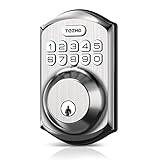
Overview:
The TEEHO TE001 Satin Nickel is a keyless deadbolt offering passcode entry and physical key backup for secure, convenient home access. Designed for standard front doors, it emphasizes ease of installation and user-friendly operation without smart home dependencies.
What Makes It Stand Out:
Its standout features include 20 customizable access codes, one-time guest codes that auto-delete after use, and flexible auto-lock settings (10–99 seconds). The anti-peep privacy function lets users enter random digits before/after their code, while the IP54 weather resistance ensures reliability in varied climates.
Value for Money:
Priced competitively under $100, it delivers robust security (aluminum alloy construction, BHMA-compliant cylinder) without subscription fees. While lacking Wi-Fi, it outperforms basic mechanical locks and matches budget smart locks in core functionality, making it ideal for users prioritizing simplicity over app control.
Strengths and Weaknesses:
Strengths: Long 365-day battery life, intuitive one-touch locking, low-battery indicator, and durable finish. Weaknesses: No remote access or integration with voice assistants; physical keys required for full admin control; satin nickel may show fingerprints.
Bottom Line:
A dependable, no-frills keyless entry solution for security-conscious homeowners seeking reliable passcode access and solid build quality at an accessible price—best for those avoiding smart home complexity.
2. TEEHO TE001 Keyless Entry Door Lock with Keypad - Smart Deadbolt Lock for Front Door with 2 Keys - Auto Lock - Easy Installation - Matte Black

Overview:
This matte black TEEHO TE001 deadbolt provides keyless convenience with a sleek, modern aesthetic. It mirrors the Satin Nickel model’s core security features but caters to contemporary door finishes, appealing to users prioritizing minimalist design.
What Makes It Stand Out:
The matte black finish resists scratches and fingerprints better than metallic options, while retaining all functional strengths: 20 user codes, auto-deleting guest PINs, and customizable auto-lock. Its anti-peeping technology and IP54 rating ensure security and weather resilience without compromising style.
Value for Money:
At a similar price point to the Satin Nickel version, it offers identical performance with enhanced visual versatility. It outshines pricier smart locks by eliminating subscription costs while delivering essential keyless functionality—ideal for renters or homeowners matching dark door hardware.
Strengths and Weaknesses:
Strengths: Stylish discreet finish, 365-day battery life, easy DIY installation, and robust aluminum build. Weaknesses: Lacks app connectivity; temporary codes require manual setup; matte surface may attract smudges in high-traffic areas.
Bottom Line:
An excellent choice for modern homes wanting a secure, maintenance-free keyless entry system that blends seamlessly with dark door hardware—prioritize this over the Satin Nickel for contemporary aesthetics.
3. TEEHO TE001 Keyless Entry Door Lock with Keypad - Smart Deadbolt Lock for Front Door with 2 Keys - Auto Lock - Easy Installation - Oil-Rubbed Bronze

Overview:
The Oil-Rubbed Bronze TEEHO TE001 combines classic elegance with keyless technology, targeting traditional or rustic home décors. It shares all technical features with other TE001 variants but excels in complementing vintage or warm-toned entryways.
What Makes It Stand Out:
Its distinctive oil-rubbed bronze finish provides a timeless look that conceals wear better than lighter finishes. Core features like one-time guest codes, anti-peep entry, and auto-lock remain consistent, making it a secure yet stylish upgrade for heritage homes.
Value for Money:
Priced comparably to other TE001 models, it adds significant aesthetic value for period homes. It avoids the premium cost of “designer” smart locks while offering superior build quality over basic keypads—perfect for users valuing both form and function.
Strengths and Weaknesses:
Strengths: Beautiful patina-resistant finish, reliable 365-day battery, simple installation, and strong weatherproofing. Weaknesses: No smart home integration; bronze may develop subtle oxidation over time (though this enhances vintage appeal).
Bottom Line:
A top pick for traditional homes seeking a secure, no-nonsense keyless lock that enhances curb appeal—opt for this if your décor leans rustic or classic.
4. eufy Security Smart Lock C220, Fingerprint Keyless Entry Door Lock, Built-in Wi-Fi, App Remote Control, Front Door Smart Lock Deadbolt, 8Months Battery, Reliable Power, IP53 Waterproof, BHMA Grade 3

Overview:
The eufy C220 is a premium Wi-Fi smart lock featuring fingerprint recognition, app control, and voice assistant compatibility. It eliminates bridges or hubs, offering direct remote access while maintaining robust physical security for front doors.
What Makes It Stand Out:
Built-in Wi-Fi enables true remote management via the eufy app, while self-learning AI improves fingerprint accuracy over time. Six unlock methods (fingerprint, app, keypad, key, Apple Watch, voice) and 8-month battery life set it apart from basic keypads. Integration with eufy doorbells automates routines like “unlock when doorbell rings.”
Value for Money:
At a higher price point (~$200), it justifies cost with advanced features absent in budget locks. The lack of subscription fees and 18-month warranty enhance long-term value, though battery life is shorter than TE001’s. Ideal for smart home enthusiasts needing seamless remote access.
Strengths and Weaknesses:
Strengths: No hub required, excellent fingerprint speed (<1.5s), comprehensive app control, and BHMA Grade 3 certification. Weaknesses: Shorter battery life than keypads; IP53 rating offers less weather resistance than IP54 competitors.
Bottom Line:
A feature-rich, future-proof investment for tech-savvy users wanting keyless convenience with full remote control—choose this over basic keypads if app integration is essential.
5. Veise Keyless Entry Door Lock with 2 Knobs, Electronic Backlit Keypad Deadbolt with Handle Set, Auto Lock, One-time Codes, Smart Deadbolt for Front Door, Easy Installation, Matte Black

Overview:
The Veise lock is a complete handle-and-deadbolt set with keyless entry, designed for doors requiring lever handles. It supports multiple access methods and specialized operational modes, catering to households needing flexible, family-friendly security.
What Makes It Stand Out:
Unique vacation, passage, and silent modes address specific scenarios (e.g., parties or quiet entries). The backlit keypad, ANSI Grade 3 certification, and tamper-proof lockout after 10 failed attempts exceed basic keypad locks. Zinc alloy construction ensures durability in extreme temperatures (-31°F to 158°F).
Value for Money:
Priced moderately (~$120–$150), it delivers exceptional versatility for multi-user households. The included handle set adds value over deadbolt-only competitors, though it lacks built-in Wi-Fi. Best for renters or families wanting adaptable physical security without smart home costs.
Strengths and Weaknesses:
Strengths: Comprehensive access modes, robust build, anti-peep technology, and easy installation. Weaknesses: No remote/app control; basic smart home support; matte black handles may scratch over time.
Bottom Line:
The most versatile physical keyless system here—perfect for families, pet sitters, or rentals needing customizable access and reliable handle/deadbolt integration without tech complexity.
6. SCHLAGE FE595 CAM 626 ACC Camelot Keypad Entry with Flex-Lock and Accent Levers, Brushed Chrome

Overview: The Schlage FE595 offers reliable keyless entry with a focus on user flexibility and essential security features. Designed for standard residential doors, it eliminates traditional keys while providing straightforward access control through pre-programmed codes and an illuminated keypad. What Makes It Stand Out: Schlage’s Flex-Lock feature is a significant advantage, letting users instantly toggle between automatic relocking and always-unlocked modes via a physical button—ideal for garages or back doors. The universal backset (2-3/8" or 2-3/4") ensures broad compatibility, and the low-battery indicator prevents unexpected lockouts. Factory-set dual codes simplify initial setup. Value for Money: Priced mid-range for keypads, it delivers Schlage’s trusted Grade 2 security (implied by construction) without smart-home complexity. It’s ideal for users prioritizing mechanical reliability over app connectivity, offering better durability than budget alternatives while avoiding the premium cost of Wi-Fi/fingerprint models. Strengths and Weaknesses: Strengths: Flex-Lock versatility, sturdy build quality, easy DIY installation, and clear low-battery alerts. Weaknesses: Limited to two user codes out of the box (adding more requires programming), lacks fingerprint/Wi-Fi options, and no anti-peep feature for code privacy. Bottom Line: A dependable, no-frills keypad lock for security-conscious users who value mechanical simplicity and Schlage’s reputation; best for secondary doors where Flex-Lock’s flexibility shines, but not for those needing advanced smart features or multiple user codes.
7. Veise Fingerprint Door Lock with 2 Lever Handles - Keyless Entry Door Lock, Electronic Keypad Deadbolt, Digital Smart Code & Front Handle Sets, Auto-Locking, Easy Installation, Oil Rubbed Bronze

Overview: The Veise fingerprint lock combines multiple access methods with robust security, targeting households needing flexible entry for families, guests, and service providers. Its AI-enhanced biometrics and anti-snooping features address common smart-lock pain points. What Makes It Stand Out: The standout 0.3-second fingerprint recognition (500 DPI, self-learning AI) ensures near-instant access, while 20 fingerprint slots and one-time temporary codes simplify guest management. Multi-layered security includes anti-peep masking, 10-attempt lockout, and IP54 weather resistance, making it versatile for outdoor use. Value for Money: Positioned competitively against mid-tier smart locks, it offers exceptional feature density—fingerprint, keypad, keys, and temporary codes—without subscription fees. The Grade 3 certification and 200,000-cycle testing justify its price for renters or homeowners prioritizing adaptability over commercial-grade security. Strengths and Weaknesses: Strengths: Blazing-fast fingerprint ID, comprehensive access options, strong anti-theft protections (anti-peep, intrusion lockout), and oil-rubbed bronze durability. Weaknesses: ANSI Grade 3 (lower than Schlage’s Grade 2), potential fingerprint sensor wear over time, and auto-lock delay minimum of 10 seconds. Bottom Line: An outstanding choice for busy households needing secure, keyless flexibility; its fingerprint speed and guest-access features outweigh the modest security grade limitation, though commercial users should seek Grade 1/2 alternatives.
8. Schlage BE365 V CAM 619 Camelot Keypad Deadbolt, Electronic Keyless Entry Lock, Satin Nickel

Overview: Schlage’s BE365 is a streamlined keypad deadbolt emphasizing ease of use and residential-grade security. It targets users seeking keyless convenience without smart-home integrations, leveraging Schlage’s reputation for mechanical reliability. What Makes It Stand Out: Its Grade 2/AAA security certification surpasses many competitors, signaling robust resistance to forced entry. The silicone-coated, backlit keypad ensures usability in darkness, while the 2-year battery life (with low-battery warnings) minimizes maintenance hassles. Pre-programmed dual codes enable immediate use. Value for Money: As a pure keypad lock, it offers exceptional value for its security tier. Though slightly pricier than basic keypads, Schlage’s durability and AAA rating provide long-term peace of mind, outperforming cheaper models in stress tests and weather resistance—ideal for primary entry points. Strengths and Weaknesses: Strengths: Top-tier residential security (Grade 2), exceptional battery longevity, intuitive installation, and weather-resistant keypad. Weaknesses: Only two initial user codes (max 19), no fingerprint/Wi-Fi/flex-lock features, and lacks anti-peep functionality for code privacy. Bottom Line: A superb investment for security-focused homeowners wanting Schlage’s proven reliability in a keyless format; skip if you need app control or multi-user convenience, but prioritize it for a secure, low-maintenance front door solution.
9. Philips Wi-Fi Door Lock, WiFi Smart Lock Keyless Entry Deadbolt for Front Door, Compatible with Alexa & Google Assistant, Remote Control, Built-in WiFi, APP Fingerprint Passcode Unlock, Auto Locking

Overview: The Philips Wi-Fi Lock delivers comprehensive smart-home integration with built-in connectivity, eliminating the need for separate hubs. It targets tech-savvy users who demand remote access and voice control as core features. What Makes It Stand Out: Built-in Wi-Fi (2.4GHz only) enables true remote locking/unlocking via app from anywhere—a rarity at this price point. Seamless Alexa/Google Assistant compatibility and fingerprint scanning add layers of convenience, while 100 customizable passcodes cater to large households or rentals. Value for Money: Justifies its premium cost by consolidating features often requiring add-ons (e.g., separate hubs). The fingerprint sensor and unlimited one-time codes enhance usability beyond basic Wi-Fi locks, though battery exclusion slightly offsets value. Ideal for those unwilling to compromise on remote access. Strengths and Weaknesses: Strengths: True remote access (no hub), versatile unlocking (app/fingerprint/voice), high user-code capacity, and voice-control readiness. Weaknesses: Batteries not included, 2.4GHz Wi-Fi limitation, potential connectivity issues beyond 65ft from the router, and fingerprint sensor may struggle in extreme cold. Bottom Line: The top pick for remote control enthusiasts; its built-in Wi-Fi and multi-method access solve real-world pain points, though ensure your router supports 2.4GHz and budget for batteries to maximize its potential.
10. Veise Keyless Entry Door Lock with 2 Lever Handles - Electronic Keypad Deadbolt, Easy Installation Digital Smart Front Door Lock Set, Satin Nickel

Overview: This Veise model offers a balanced blend of keyless convenience and physical security for residential doors, focusing on user-friendly access management and tamper resistance without biometric complexity. What Makes It Stand Out: The anti-peep function—allowing dummy digits before/after your code—is exceptionally practical for public settings. Auto-lock (10–99 sec) and one-touch external locking address common “did I lock it?” anxiety, while ANSI Grade 3 certification and IP54 rating ensure weather resilience. Value for Money: Competitively priced for its feature set, it outperforms basic keypads with robust security layers (10-attempt lockout, pry-resistant core) and 20 permanent guest codes. The included physical keys and ergonomic handles add tangible value for families or rentals. Strengths and Weaknesses: Strengths: Excellent anti-snooping protection, intuitive one-touch locking, durable zinc alloy construction, and comfortable lever handles. Weaknesses: Grade 3 security (less rigorous than Schlage’s Grade 2), no fingerprint/Wi-Fi options, and auto-lock minimum of 10 seconds may feel slow. Bottom Line: A highly practical, security-conscious choice for homes needing reliable keyless entry with strong privacy features; ideal for front doors where code-sharing is frequent, though power users should consider Wi-Fi-enabled alternatives.
Understanding Keyless Entry Technology
The term “keyless lock” encompasses a range of technologies, each with distinct mechanisms and user experiences. Moving beyond the simple keypad, modern systems leverage biometrics, wireless connectivity, and sophisticated sensors to grant access. It’s essential to grasp the fundamental types available to determine which aligns best with your household’s needs, security priorities, and technical comfort level. Choosing the right technology foundation is critical for long-term satisfaction.
Keypad Entry Systems
Keypad locks remain a popular and reliable choice, offering straightforward functionality without complex setup. Users gain entry by inputting a unique numerical code, which can be easily changed or temporarily disabled. They are generally more affordable than biometric or fully smart-enabled models and operate independently of your home Wi-Fi network, providing consistent access even during internet outages. Consider the keypad’s placement and backlighting for usability in low light.
Biometric Fingerprint Scanners
Fingerprint scanners provide a high level of convenience and security by using your unique biological identifier. This eliminates the need to remember codes or carry physical keys/fobs. Modern sensors are fast, accurate, and often store multiple fingerprints for different household members. Evaluate the scanner’s sensitivity, speed, and resistance to spoofing attempts using high-quality materials. Performance in varying conditions (wet/dry fingers) is also a key factor.
Proximity and Bluetooth Fobs
These systems utilize small, keychain-friendly fobs or your smartphone via Bluetooth to automatically unlock the door when you approach within a set range. The convenience of “walk-up-and-enter” is unmatched, especially when your hands are full. Ensure the system offers adjustable proximity settings to prevent accidental unlocking and has robust security to prevent relay attacks where signals are intercepted and amplified.
Wi-Fi and App-Enabled Smart Locks
Connectivity is the hallmark of Wi-Fi enabled smart locks. They integrate with your home network and dedicated mobile apps, allowing for remote lock/unlock, real-time access monitoring, and creation of temporary digital keys for guests or service providers. This level of control and integration with broader smart home ecosystems (like voice assistants) offers unparalleled flexibility but requires a stable internet connection and careful attention to cybersecurity practices.
Critical Features to Prioritize
Selecting the right keyless lock involves looking beyond just the unlocking method. Specific features directly impact daily usability, security strength, and how well the lock integrates into your existing home setup and lifestyle. Prioritizing these elements ensures you get a system that delivers on its promises long after installation.
Battery Life and Power Management
Since most keyless locks are battery-powered, longevity and clear low-battery warnings are non-negotiable. Look for models offering extended battery life (often 6-12 months), intuitive indicators (visual, audible, or app notifications), and emergency power options like a physical 9V battery terminal. Consider the ease of battery replacement – some require removing the entire interior assembly, which is inconvenient.
Physical Security and Build Quality
A keyless lock must be physically robust. Assess the material (solid zinc or stainless steel is preferable), the strength of the bolt mechanism, and resistance to common break-in tactics like forced entry or drilling. Look for ANSI/BHMA security ratings (Grade 1 or 2 for residential use) which certify the lock’s durability and strength under stress testing. Don’t sacrifice physical security for digital features.
Connectivity and Integration Capabilities
If you choose a smart lock, evaluate its connectivity protocols (Wi-Fi, Bluetooth, Z-Wave, Zigbee) and compatibility with your existing smart home hub or voice assistants (like Alexa, Google Assistant, or Apple HomeKit). Seamless integration allows for automations (e.g., “lock when I leave”) and unified control, enhancing the overall user experience and functionality beyond basic locking.
User Management and Access Control
The ability to easily add, remove, or modify user access is a major advantage. Look for systems allowing multiple unique codes, fingerprints, or digital keys. Features like temporary access codes for guests, scheduled access for cleaners or dog walkers, and detailed activity logs showing who unlocked the door and when are incredibly valuable for household management and security auditing.
Installation and Compatibility Considerations
Installing a keyless lock isn’t always as simple as swapping out a traditional deadbolt. Careful assessment of your door and existing hardware is vital to avoid costly mistakes or the frustration of a lock that simply won’t fit or function correctly with your setup.
Measuring Door Thickness and Backset
Door specifications vary significantly. You must accurately measure your door’s thickness (typically 1 3/4" or 1 3/8" for interior) and the backset – the distance from the edge of the door to the center of the bore hole (usually 2 3/8" or 2 3/4"). Most keyless locks specify compatible ranges; installing one outside these specs requires major, often impractical, modifications to the door itself.
Existing Hole Compatibility
Many keyless locks are designed as direct replacements for standard cylindrical deadbolts, utilizing the same bore holes and edge cutouts. However, some models, especially high-security or unique designs, may require additional drilling or larger holes. Carefully compare the lock’s template (available from manufacturers) with your current door preparation before purchasing. Retrofit kits are sometimes available but add complexity.
Smart Lock Requirements
Wi-Fi smart locks introduce additional installation factors. Ensure you have a strong, reliable Wi-Fi signal at your front door – weak signals cause connectivity issues. Consider the location of your home’s main electrical panel; some smart locks require neutral wires for hardwiring, which may not be present at the door junction box, limiting hardwired options and forcing battery reliance.
Security: Beyond the Hype
While keyless locks offer advanced features, understanding the real-world security implications is paramount. Marketing often emphasizes convenience, but discerning buyers must look critically at encryption standards, vulnerability to hacking, and physical resilience to make an informed, secure choice.
Understanding Encryption Standards
Reputable keyless locks, especially smart models, employ strong encryption (like AES-128 or AES-256) to protect communication between the lock, your app, and the cloud. This prevents eavesdropping and unauthorized access to your lock’s controls. Avoid any system that doesn’t clearly specify robust encryption standards, as weaker security leaves your home vulnerable to digital intrusions.
Vulnerability to Common Attacks
Be aware of potential attack vectors. Relay attacks can target Bluetooth or NFC systems, where hackers amplify the signal from your fob or phone to unlock the door remotely. Jamming attacks can block Wi-Fi signals, preventing you from locking the door remotely or receiving alerts. Research if the lock has specific countermeasures (e.g., motion sensors for fobs, anti-jamming protocols) to mitigate these risks.
Physical Tamper Resistance
Don’t overlook the physical lock. A sophisticated digital system is useless if the bolt can be easily forced back or the exterior assembly pried off. Look for features like anti-drill plates, hardened steel bolts, and secure mounting screws. ANSI Grade 1 locks offer the highest level of forced entry resistance and are recommended for primary exterior doors.
User Experience and Daily Practicality
The best keyless lock is one you’ll actually want to use consistently. Factors like ease of programming, responsiveness, and how the lock handles real-world scenarios (like wet weather or gloved hands) significantly impact whether the technology becomes a seamless part of your life or a frustrating hassle.
Programming and Setup Simplicity
Initial setup and adding new users should be intuitive, ideally guided by a clear app or straightforward manual process. Complex programming requiring multiple button sequences or obscure menus leads to user error and frustration. Look for systems with well-designed interfaces and comprehensive, easy-to-follow instructions – both digital and physical.
Responsiveness and Reliability
A lock that hesitates, fails to recognize fingerprints consistently, or has a laggy keypad defeats the purpose of convenience. Responsiveness is key. Test reviews (if possible) or look for user feedback on recognition speed and reliability under various conditions (e.g., after washing hands, wearing thin gloves). Consistent, near-instantaneous operation is the hallmark of a quality system.
Handling Real-World Conditions
Consider your environment. If you live in an area with extreme cold, heat, or high humidity, ensure the lock is rated for those conditions. Touchscreens can be problematic with wet or gloved hands; mechanical keypads might be more reliable in these scenarios. Dust and debris can also interfere with sensors, so look for models with weather-resistant seals and designs that minimize exposed crevices.
Future-Proofing Your Investment
Technology evolves rapidly. Choosing a keyless lock with an eye toward future developments ensures your investment remains functional, secure, and compatible with the next generation of smart home innovations for years to come.
Firmware Update Capabilities
Regular firmware updates are crucial for patching security vulnerabilities and adding new features. Ensure the lock manufacturer has a proven track record of providing timely and reliable updates. Smart locks connected via Wi-Fi or a hub typically receive updates more seamlessly than standalone Bluetooth models. Check how updates are delivered (automatically or manually) and the manufacturer’s stated support lifespan.
Interoperability with Emerging Standards
The smart home landscape is moving towards more open standards like Matter, which aims to improve compatibility between devices from different brands. While full adoption is ongoing, considering locks that support or are Matter-ready (often via a compatible hub) can provide better long-term integration and reduce the risk of your lock becoming obsolete as your smart home ecosystem grows.
Manufacturer Support and Warranty
Strong customer support and a comprehensive warranty (ideally 1-3 years) are indicators of a manufacturer’s confidence in their product and commitment to customers. Research the company’s reputation for handling issues, availability of replacement parts, and clarity of warranty terms. Long-term support is essential for security updates and resolving potential hardware failures.
Frequently Asked Questions
How long do the batteries typically last in a keyless door lock?
Most quality keyless locks powered by standard batteries (like AA or CR123A) last between 6 to 12 months under normal usage. Battery life is significantly impacted by the number of unlock events, the use of Wi-Fi connectivity (which consumes more power than Bluetooth), and extreme temperatures. All reputable models provide clear low-battery warnings well in advance, often through the app, audible beeps, or visual indicators on the lock itself. Many also offer an emergency external power option, like a 9V battery terminal.
Are keyless locks more secure than traditional keyed locks?
Keyless locks can offer enhanced security features if chosen and configured correctly. They eliminate risks associated with lost, stolen, or copied physical keys and allow for immediate revocation of access. Advanced models feature strong encryption, activity logs, and resistance to picking/bumping. However, they introduce potential vulnerabilities like hacking (if poorly secured), jamming, or reliance on batteries. Overall, a high-quality keyless lock with robust physical security (ANSI Grade 1/2) and proper setup is generally considered as secure as, or more secure than, a standard keyed deadbolt, but it’s not inherently “unhackable.”
What happens if the power goes out or my Wi-Fi stops working?
For battery-powered keyless locks (the vast majority), a home power outage won’t affect operation – the lock continues running on its internal batteries. If your Wi-Fi goes down, Wi-Fi-dependent smart features (remote unlock via app, voice control, cloud-based logs) will be unavailable until Wi-Fi is restored. However, local unlocking methods (keypad code, fingerprint, physical key override if present, Bluetooth unlock if your phone is nearby) will still function normally. Standalone keypad or fingerprint locks without Wi-Fi are completely unaffected by internet outages.
Can I still use a physical key with a keyless lock?
Many keyless locks, particularly smart deadbolts, include a traditional key override cylinder as a backup. This is crucial for emergencies (like completely drained batteries before you get the warning) or if the electronic components fail. However, not all models have this feature – some high-security or purely electronic designs omit the keyhole entirely to prevent lock picking. Always check the specifications if a physical key backup is important to you.
How do I grant temporary access to guests or service people?
Smart keyless locks excel at this. Through the companion mobile app, you can typically generate unique, temporary digital access codes or virtual keys that are only valid for a specific date and time window (e.g., for a cleaning service on Tuesday from 10 AM to 12 PM). Some systems allow you to send these codes directly via text or email. Keypad-only models might let you set temporary user codes, but managing them is usually less flexible than with app-connected smart locks.
Are fingerprint scanners on door locks reliable?
Modern capacitive fingerprint scanners used in quality door locks are generally very reliable for everyday use. They are fast (often unlocking in under a second) and accurate under normal conditions. However, factors like very dry/wet fingers, minor cuts, or wearing thick gloves can occasionally cause recognition issues. Performance varies by model; look for sensors known for high accuracy and liveness detection (to prevent spoofing with fake fingerprints). Having a backup method (like a code) is always recommended.
Will a keyless lock work with my existing smart home system?
Compatibility depends entirely on the lock’s connectivity protocol and your hub/assistant. Wi-Fi locks often connect directly to services like Alexa, Google Home, or Apple HomeKit. Locks using Z-Wave or Zigbee require a compatible hub (like Samsung SmartThings, Hubitat, or the lock manufacturer’s hub) to integrate with other smart devices and voice assistants. Always verify specific compatibility with your existing ecosystem (e.g., “Works with Apple HomeKit” or “Requires SmartThings Hub”) before purchasing.
How vulnerable are smart locks to hacking?
No connected device is 100% immune to hacking, but reputable smart locks employ strong security measures (AES encryption, secure boot, regular firmware updates) that make successful attacks highly difficult for the average person. The biggest risks often come from user error: weak Wi-Fi passwords, not updating firmware, or using default codes. Choosing locks from established brands with a strong security focus and following best practices (strong passwords, network security) significantly minimizes hacking risks compared to the physical vulnerabilities of traditional locks.
What is the average cost range for a good quality keyless door lock?
Prices vary widely based on features. Basic standalone keypad deadbolts start around $100-$150. Fingerprint locks typically range from $150-$250. Wi-Fi enabled smart locks with app control and integration capabilities usually cost $200-$350+. High-security models or those with advanced features (like built-in video) can exceed $400. Remember to factor in potential installation costs if you’re not doing it yourself, especially if door modifications are needed.
How difficult is it to install a keyless door lock myself?
Installation difficulty varies. If replacing an existing standard cylindrical deadbolt and your door has the correct prep (bore hole, backset), many keyless locks are designed for DIY installation using common tools (screwdrivers, tape measure) and take 30-60 minutes. Detailed instructions and templates are usually provided. However, if your door prep doesn’t match, if wiring is involved (for some smart locks), or if you’re not comfortable with basic carpentry, professional installation is recommended to ensure security and proper function. Always measure your door carefully before purchasing.