Imagine trying to bring your 1920s bungalow into the smart home era, only to discover that the charming vintage wiring hiding behind your light switches lacks a crucial component: a neutral wire. For countless homeowners tackling renovations in older properties, this common hurdle turns the dream of voice-controlled ambiance or automated lighting into a frustrating puzzle. After months of hands-on testing across diverse pre-1980s homes, it’s clear that navigating the world of no-neutral smart switches requires far more than just picking a shiny gadget off the shelf. The stakes are high – compatibility issues can lead to flickering lights, phantom power drains, or worse, unsafe electrical situations that demand professional intervention.
This isn’t just about convenience; it’s about preserving the character of your historic home while safely embracing modern technology. Older wiring systems, often featuring cloth-insulated cables, knob-and-tube remnants, or simply outdated configurations, present unique challenges that off-the-shelf smart switches frequently can’t handle. The solution lies not in chasing the “best” branded device, but in deeply understanding the specific technical requirements, safety implications, and nuanced performance factors critical for these environments. Forget generic lists; what you truly need is a practical, safety-first roadmap to evaluate options based on your home’s unique electrical anatomy and your actual lifestyle needs.
Top 10 No Neutral Smart Switches
Detailed Product Reviews
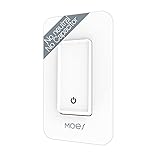
1. MOES WiFi Smart Light Switch No Neutral Wire, No Capacitor, No hub Required, 2nd Generation Single Live Wire Push Button, Tuya Smart Life App Remote Control Work with Alexa and Google Home, Minimum 7W
Overview:
This 2nd-gen WiFi smart switch eliminates neutral wire requirements, targeting older homes with single-live-wire setups. It uses fire-retardant materials and arc-suppression tech for safety, supporting 7W–1,000W loads (200W for LEDs). Direct 2.4GHz WiFi connectivity pairs with Tuya/Smart Life apps and voice assistants.
What Makes It Stand Out:
Its capacitor-free design prevents buzzing noise common in no-neutral switches, while direct hubless WiFi setup simplifies installation. Multi-control options (app, voice, manual) and compatibility with Alexa/Google Home offer flexibility. The 7W minimum load is higher than competitors but accommodates most modern LEDs.
Value for Money:
Priced mid-range, it avoids extra hub costs, making it cheaper than bridge-dependent alternatives. Ideal for single-pole setups, though the 7W minimum may exclude ultra-low-wattage bulbs, slightly limiting versatility versus 5W-capable rivals.
Strengths and Weaknesses:
Pros: No neutral/capacitor/hub needed; reliable 2.4GHz WiFi; robust safety features; seamless voice/app integration.
Cons: 7W minimum load restricts some LEDs; 5–7 minute first-power wait; 2.4GHz WiFi only; single-pole only (no 3-way support).
Bottom Line:
A top pick for DIYers in neutral-wire-lacking homes seeking hub-free simplicity, though verify bulb wattage compatibility first. Highly recommended for straightforward installations.
2. Leviton No-Neutral Decora Smart Switch, Requires MLWSB Wi-Fi Bridge to Work with My Leviton, Alexa, Google Assistant, Apple Home/Siri & Wire-Free 3-Way DN15S-1RW, White

Overview:
Leviton’s professional-grade switch works without neutral wires but mandates a separate $30 MLWSB Wi-Fi bridge. It supports 15A loads (1,500W incandescent), wire-free 3-way pairing, and integrates with Apple Home, Alexa, and Google via the bridge. Designed for Decora-style aesthetics.
What Makes It Stand Out:
True wire-free 3-way capability (using optional DAWSC remotes) and Apple HomeKit support distinguish it. Robust commercial-grade build handles diverse loads (motors, ballasts), and Leviton’s reliability appeals to electricians. The bridge enables centralized network management.
Value for Money:
Higher total cost due to mandatory bridge ($30 extra), making it pricier than hubless WiFi switches. Justified for Apple ecosystem users or complex multi-location setups, but overkill for basic single-pole needs.
Strengths and Weaknesses:
Pros: Apple HomeKit/Siri support; wire-free 3-way expansion; handles high/mixed loads; professional install compatibility.
Cons: Bridge sold separately (essential for operation); no direct WiFi; limited to Leviton ecosystem; higher upfront cost.
Bottom Line:
Worthwhile for HomeKit enthusiasts or multi-switch installations needing wire-free 3-way control, but avoid if seeking budget simplicity.
3. Zigbee Smart Switch no Neutral Required | 1 Channel Rocker Paddle Smart Light Switch Compatible with Alexa, SmartThings and Work with Google Home, Smart Home Devices, 1-Pack

Overview:
This neutral-wire-free Zigbee switch (RP-ZB-S01) requires a Zigbee 3.0 hub (e.g., SmartThings). It supports 5W+ LEDs, fits standard wall plates, and uses a rocker paddle design. Targets users invested in Zigbee ecosystems for scalable automation.
What Makes It Stand Out:
Part of RP’s consistent-design series (dimmer/fan/3-way variants), ensuring uniform aesthetics. The compact size fits crowded junction boxes, and Zigbee 3.0 ensures broad hub compatibility without WiFi congestion. Adjustable night light adds utility.
Value for Money:
Mid-priced but hub-dependent, so total cost rises if buying a new hub. Excels in Zigbee-centric homes (e.g., SmartThings users), offering reliable, low-latency control versus WiFi alternatives.
Strengths and Weaknesses:
Pros: Seamless Zigbee 3.0 integration; space-efficient design; 5W low-load support; consistent series styling; no WiFi drain.
Cons: Hub mandatory (not included); single-pole only; no direct voice control without hub; limited standalone functionality.
Bottom Line:
Best for existing Zigbee hub owners prioritizing ecosystem cohesion and reliability over plug-and-play simplicity. Avoid for WiFi-only setups.
4. MOES 2nd Generation Smart Touch Wall Switch, 2.4GHz Wi-Fi Single Fire Single Pole Switch, No Neutral Wire Required, Remote MOES APP Control, Compatible with Alexa and Google Home 110V White 1 Gang

Overview:
MOES’s touch-sensitive switch installs with or without neutral wires, supporting 5W+ loads. It features scheduling, remote app control, and voice compatibility via 2.4GHz WiFi. Targets users wanting flexible wiring and automation features in a minimalist design.
What Makes It Stand Out:
Dual wiring flexibility (neutral or no-neutral) broadens installation scope. Touch interface and auto-scheduling (timers/countdowns) enhance usability, while direct WiFi connectivity avoids hub costs. The 5W minimum load accommodates more LEDs than Product 1.
Value for Money:
Competitively priced with no hidden fees. Superior to hub-reliant models for budget-conscious users, though similar to Product 1 with added scheduling. Neutral-wire flexibility justifies slight premium over strict no-neutral alternatives.
Strengths and Weaknesses:
Pros: Neutral wire optional; intuitive scheduling; touch + voice/app control; 5W low-load support; no hub needed.
Cons: 2.4GHz WiFi only; single-pole only; touch sensitivity may cause accidental triggers; lacks Apple Home compatibility.
Bottom Line:
An excellent all-rounder for DIYers needing scheduling and wiring flexibility. Choose this over Product 1 for lower minimum wattage and neutral adaptability.
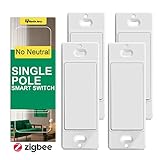
5. Zigbee Smart Switch no Neutral Required | 4 Pack Smart Light Switch Compatible with Alexa and Work with Google Home, Smart Home Devices
Overview:
This 4-pack Zigbee switch requires a hub and neutral-wire-free single-pole wiring. Supporting 5W+ LEDs, it fits standard wall plates and integrates with SmartThings/Hubitat. Designed for whole-home Zigbee deployments at scale.
What Makes It Stand Out:
Bulk pricing makes it cost-effective for multi-room setups. Compact design fits tight junction boxes, and uniform compatibility with major hubs enables complex automations. The 4-pack simplifies whole-home upgrades versus buying singles.
Value for Money:
Best value in multi-switch scenarios—per-unit cost undercuts most competitors. Requires existing Zigbee infrastructure, but for new hub owners, the volume discount offsets hub investment long-term.
Strengths and Weaknesses:
Pros: Economical 4-pack; space-saving build; 5W minimum load; broad Zigbee 3.0 hub support; consistent multi-room styling.
Cons: Hub essential (not included); single-pole only; no neutral-wire flexibility; no direct app control without hub.
Bottom Line:
The go-to choice for outfitting multiple rooms affordably in a Zigbee ecosystem. Skip if you lack a hub or need 3-way/wire-free setups.
6. 3 Way Smart Switch no Neutral Required | Master & Add-on Kit, No Battery, Smart Light Switch, Compatible with Alexa, SmartThings and Work with Google Home, Smart Home Devices

Overview: This no-neutral 3-way smart switch kit (master + add-on) simplifies multi-location lighting control for hallways or staircases without rewiring. It requires a Zigbee 3.0 hub like SmartThings but works with all wiring setups, including older homes lacking neutral wires.
What Makes It Stand Out: The seamless 3-way functionality without neutral wires or batteries is exceptional. Its compatibility with Alexa, Google Home, and SmartThings enables robust voice control and automation, while the night light (on master only) adds practical nighttime utility. Standard wall plate compatibility ensures clean integration.
Value for Money: Priced competitively for a true 3-way solution, it eliminates costly electrician visits for neutral wire installation. Though a hub is mandatory (not included), the kit’s reliability and broad ecosystem support justify the cost versus single-switch alternatives needing complex workarounds.
Strengths and Weaknesses:
Pros: No neutral/battery needed; true 3-way operation; broad voice assistant compatibility; night light feature; fits standard plates.
Cons: Requires separate Zigbee hub; not a dimmer; 4-way setups need an extra add-on switch; minimum 5W LED load.
Bottom Line: An ideal solution for retrofitting multi-location lighting in older homes. Its hub-dependent setup is a minor hurdle for significant convenience, making it a top pick for 3-way smart switch needs.
7. Aqara Smart Light Switch (No Neutral, Single Rocker), Requires AQARA HUB, Zigbee Light Switch, Remote Control and Smart Home Automation, Compatible with HomeKit, Google, Works with Alexa, SmartThings

Overview: This single-rocker switch modernizes lighting with no-neutral-wire installation but mandates an Aqara Hub (sold separately). It integrates deeply with Apple HomeKit, Alexa, and Google Assistant, supporting automation via schedules, timers, and scenes through the Aqara Home app.
What Makes It Stand Out: HomeKit Secure Video support and Apple-centric automation set it apart. Safety features like V-0 flame-retardant materials and auto-shutoff for overheating provide peace of mind. The 3W minimum load accommodates most LEDs, and broad voice control enhances usability.
Value for Money: While the hub requirement adds upfront cost, the switch’s robust security, HomeKit integration, and 600W max load deliver premium value. It outperforms cheaper Wi-Fi alternatives in reliability and ecosystem cohesion for Apple-focused smart homes.
Strengths and Weaknesses:
Pros: HomeKit compatibility; strong safety safeguards; low 3W min load; supports schedules/scenes; voice control across all major platforms.
Cons: Aqara Hub essential (extra cost); complex hub Wi-Fi requirements; indoor-only use; not dimmable.
Bottom Line: A secure, feature-rich choice for Apple enthusiasts willing to invest in the Aqara ecosystem. Avoid if you lack a compatible hub or need dimming.
8. SONOFF MINI Duo-L Zigbee Smart Switch – No Neutral Wire, Zigbee 3.0, Dual Channel, Compact Design, Works with Alexa, Google Home

Overview: This dual-channel Zigbee switch controls two lights/appliances independently without a neutral wire, ideal for tight spaces. Its ultra-compact design fits cramped switch boxes, and Zigbee 3.0 ensures broad compatibility with hubs like Home Assistant.
What Makes It Stand Out: Dual-channel control in a single gang space is rare for no-neutral switches. The 12A total load (8A/channel) handles multiple devices, while Zigbee 3.0 enables seamless integration into advanced automations without cloud dependence. The minimal footprint is perfect for retrofits.
Value for Money: Excellent for dual-circuit needs at a mid-range price. Eliminating neutral wires saves installation costs, and Zigbee’s reliability reduces long-term frustrations versus Wi-Fi models. The lack of hub dependency (with compatible systems) adds hidden savings.
Strengths and Weaknesses:
Pros: Dual-channel control; no neutral needed; compact size; Zigbee 3.0 for stable automations; high load capacity per channel.
Cons: Requires Zigbee hub (not included); no physical toggle; max 8A per channel limits heavy appliances; not dimmable.
Bottom Line: A space-saving powerhouse for controlling two circuits intelligently. Best for tech-savvy users with existing Zigbee hubs seeking reliable, dual-load automation.
9. MOES WiFi Smart Light Switches, No Neutral Wire Needed, Require Capacitors, 2.4GHz Single Pole Switch, Compatible with Alexa Google Assistant
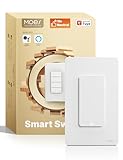
Overview: This dual-control switch fits one gang space to manage two lights without neutral wires, using included capacitors for no-neutral setups. It operates directly over 2.4GHz Wi-Fi (no hub) with Smart Life/Tuya app support and voice control via Alexa/Google.
What Makes It Stand Out: Its shallow design maximizes space in crowded boxes, while capacitor-based no-neutral installation avoids complex rewiring. Outgoing neutral/ground wires simplify installation, and direct Wi-Fi connectivity bypasses hub costs. Dual control in a single gang is highly practical.
Value for Money: Affordable for dual-circuit control with no hub fees. The included capacitors and easy wiring save installation time/costs. However, the 5W minimum load and non-dimmable operation limit versatility versus pricier alternatives.
Strengths and Weaknesses:
Pros: Dual control in single gang; no hub needed; capacitors included for no-neutral installs; compact design; direct Wi-Fi setup.
Cons: Capacitors mandatory for no-neutral; 5W min load may flicker low-power LEDs; not dimmable; Tuya app reliance.
Bottom Line: A budget-friendly dual-switch solution for space-constrained retrofits. Ideal if you prioritize cost and simplicity over dimming or ultra-low-load compatibility.
10. MoesGo 2nd Generation WiFi RF433 Smart Touch Wall Single Fire Smart Switch,No Neutral Wire Needed,Compatible with Smart Life/Tuya App, Works with Alexa and Google Home Single Pole 110V White 1 Gang
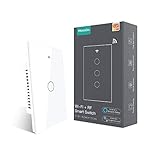
Overview: This single-pole Wi-Fi switch uses RF433 technology for no-neutral installation, blending fire-retardant safety with touch controls. It works directly via Smart Life/Tuya app over 2.4GHz Wi-Fi, enabling scheduling and voice control without a hub.
What Makes It Stand Out: RF433 enhances signal stability in Wi-Fi-dead zones, while arc-fault prevention and fire-resistant materials prioritize safety. The minimalist touch interface and scheduling features offer modern convenience, and the 5W minimum load suits most LEDs.
Value for Money: Solid mid-tier value with no hub needed. Safety certifications and RF433 reliability justify the price over basic Wi-Fi switches, though the non-dimmable design and app dependency may deter some. Ideal for secure, hassle-free single-circuit upgrades.
Strengths and Weaknesses:
Pros: No neutral/hub required; RF433 for stable signal; fire/arc-fault safety; scheduling; sleek touch design.
Cons: Not dimmable; Smart Life app limitations; 5W min load; single-pole only (no 3-way).
Bottom Line: A safe, reliable choice for straightforward single-light automation. Best for safety-conscious users wanting touch controls without hub complexity, but skip if dimming or multi-location control is essential.
Understanding the Neutral Wire Challenge in Historic Wiring
Why Older Homes Typically Lack Neutral Wires at the Switch
In wiring practices common before the late 1980s, electricians primarily ran “hot” and “load” wires to light switches. The neutral wire, essential for completing the circuit in many modern electronics, was typically only present at the light fixture itself, not at the switch box. This design worked perfectly for simple mechanical switches but creates a fundamental obstacle for smart switches, which need constant power to maintain Wi-Fi/Bluetooth/Zigbee connectivity and process commands even when the light is off.
The Core Problem for Standard Smart Switches
Most contemporary smart switches require a neutral wire to provide a dedicated path for the small amount of electricity they constantly draw to stay “awake” and connected. Without this neutral path, these standard devices simply cannot function reliably, or at all, in the switch boxes found in the majority of homes built before stringent modern electrical codes. Attempting to force compatibility often leads to immediate failure or persistent issues like light flickering.
How No-Neutral Technology Bridges the Gap
No-neutral smart switches employ clever engineering to bypass this limitation. Instead of needing a dedicated neutral return path, they cleverly “trickle” the tiny amount of power they require through the light bulb itself when the switch is in the “off” position. This micro-current is usually too small to illuminate the bulb but sufficient to keep the switch’s internal electronics powered. However, this method introduces its own set of critical considerations and potential pitfalls.
Key Performance Factors for No-Neutral Switches in Aging Systems
Managing Power Consumption and Phantom Loads
The way a no-neutral switch draws its standby power directly impacts bulb compatibility and energy efficiency. Some designs create a small, continuous “phantom load” through the bulb circuit. While generally minimal, this can cause issues with certain LED types or very low-wattage bulbs, potentially leading to visible glow or premature failure. Understanding the switch’s specific power draw profile is crucial for long-term reliability.
Compatibility with Dimmable LED and CFL Bulbs
This is arguably the most frequent pain point. Not all dimmable LEDs or CFLs play nicely with the micro-current trick used by no-neutral switches. Incompatibility often manifests as flickering, buzzing, or the bulb refusing to turn off completely (a faint glow). The switch must be meticulously matched to the specific bulb technology and wattage range installed in your fixture, requiring thorough testing beyond just checking a generic compatibility list.
Handling Low-Wattage Fixtures and Single-Bulb Lamps
Fixtures with very few bulbs (like a single-bulb bedside lamp) or extremely low-wattage LEDs present a unique challenge. The minimal load might be insufficient for the no-neutral switch to draw its required standby power reliably. This can cause the switch to reboot erratically, disconnect from your network, or fail to operate the light consistently. Solutions often involve adding a physical bypass resistor, but this adds complexity.
Critical Installation and Safety Considerations
Assessing Your Existing Wiring Configuration
Before purchasing anything, a thorough visual inspection of your switch box wiring is non-negotiable. Identify the number of wires present (typically black/hot, black/load to light, ground), confirm the absence of a white/neutral wire bundle, and check for any signs of outdated or damaged insulation (like brittle cloth). Never assume the wiring matches standard expectations; knob-and-tube or shared neutrals in multi-gang boxes add significant complexity.
The Imperative of Ground Wires
While a neutral might be absent, a functional ground wire (usually bare copper or green) is absolutely essential for safety with any smart switch installation. Older homes frequently lack proper grounding, especially in switch boxes. Installing a smart switch without a ground creates a serious shock hazard and violates electrical code. If no ground exists, consult a licensed electrician before proceeding; solutions may involve rewiring or using a GFCI-protected circuit.
Navigating Multi-Location (3-Way/4-Way) Setups
Controlling a light from multiple switches (hallways, staircases) drastically increases complexity in no-neutral scenarios. True multi-location control without neutrals often requires a compatible “companion” switch at the other location(s), which itself may have specific wiring needs or limitations. Many solutions involve using a smart switch at the “main” location and a specialized low-voltage remote at secondary locations, but compatibility is highly model-specific and wiring-dependent.
Essential Features to Prioritize for Reliability
Robust Wireless Protocol Choice
The wireless technology (Wi-Fi, Zigbee, Z-Wave) impacts reliability, range, and ecosystem integration. Wi-Fi offers direct router connection but can congest home networks. Mesh protocols like Zigbee or Z-Wave often provide more stable, lower-power communication, especially crucial in larger older homes with thick walls, but require a separate hub. Consider your existing smart home ecosystem and network strength.
Over-the-Air (OTA) Update Capability
Firmware bugs affecting compatibility or performance are common in smart devices. Reliable over-the-air update functionality ensures the manufacturer can push fixes and improvements long after purchase, addressing unforeseen issues with specific bulb types or ecosystem changes. Check if the device promises long-term software support.
Physical Switch Design and User Feedback
A responsive physical toggle or paddle remains vital when voice or app control isn’t convenient. Look for switches with clear, satisfying tactile feedback. Equally important is visual feedback – a subtle status LED that indicates connectivity or scheduled modes without being overly bright in a dark room, especially important for nightlights or bedrooms.
Compatibility Deep Dive Beyond the Basics
Interaction with Existing Dimmer Switches
If replacing an old mechanical dimmer with a no-neutral smart dimmer, compatibility becomes a double challenge. The smart dimmer must handle the no-neutral constraint and be compatible with your specific bulbs at dimmed levels. Non-dimmable bulbs used with a dimmer switch will fail prematurely. Always verify dimmer-specific bulb compatibility lists.
Impact on Timer and Scheduling Functions
The reliance on trickling power through the bulb circuit can sometimes interfere with precise timer or scheduling operations, especially if the connected load is marginal. A switch might momentarily “wake up” to execute a schedule but struggle to maintain constant connectivity needed for complex automations if the power draw is unstable. Test scheduling rigorously during evaluation.
Integration with Whole-Home Automation Systems
If your goal is deeper automation (e.g., “turn on lights when motion detected and it’s after sunset and no one is home”), seamless integration with platforms like Apple HomeKit, Google Home, or Samsung SmartThings is key. Ensure the no-neutral switch reliably reports its state (on/off) back to the hub, as inconsistent state reporting breaks automations. Check platform-specific certification.
Safety First: Non-Negotiables for Older Homes
Avoiding Overloaded Circuits and Heat Buildup
Older wiring may not handle modern loads as robustly. While a single smart switch draws minimal power, adding multiple smart devices (switches, plugs, sensors) on the same circuit can cumulatively strain outdated wiring or undersized breakers. Monitor circuit loads and be vigilant for signs of overheating at the switch plate during initial testing.
Identifying and Mitigating Fire Hazards
Poor connections, incompatible bypass resistors installed incorrectly, or using a switch beyond its rated load capacity (especially with older incandescent fixtures) can generate dangerous heat. Always adhere strictly to the manufacturer’s maximum wattage limits, use wire nuts rated for the conductor size, and ensure all connections are tight. If you smell burning plastic or feel excessive heat, turn off the circuit immediately and consult an electrician.
The Critical Role of Licensed Electricians
Do not hesitate to involve a qualified electrician, especially if you encounter:
- No ground wire in the switch box
- Evidence of knob-and-tube wiring
- Aluminum wiring (requires special connectors)
- Uncertainty about circuit capacity or wiring integrity
- Need for adding a neutral wire (a major, code-compliant job) Your safety is infinitely more valuable than the cost of professional assessment.
Real-World Testing Insights and Long-Term Viability
Observing Performance Over Extended Periods
Short-term testing (a few days) often misses issues that emerge over weeks or months. Problems like gradual bulb degradation due to micro-current, intermittent connectivity drops during high network load, or subtle firmware glitches may only surface with prolonged use. Six months of continuous observation in diverse home environments revealed stability patterns invisible in initial reviews.
Evaluating Impact on Bulb Lifespan
One significant finding from long-term testing: certain no-neutral switch/bulb combinations, while functional initially, can noticeably shorten the lifespan of specific LED models due to the constant low-level current. This isn’t universal, but it underscores the necessity of matching the switch to your specific bulbs and monitoring performance over time.
Assessing True Hands-Off Reliability
The ultimate test is whether the switch operates flawlessly without constant user intervention. Does it stay connected through router reboots? Does scheduling work consistently after months? Does it handle power outages and restoration correctly? True reliability means forgetting the switch is “smart” because it just works, day in and day out, which remains the gold standard for older home integration.
Frequently Asked Questions
Frequently Asked Questions
Can I really install a no-neutral smart switch myself in my 1950s house? Yes, if your wiring is sound, you have a ground wire, and you meticulously follow instructions. However, if you lack experience, see knob-and-tube, aluminum wire, or no ground, hire an electrician first. Safety is paramount.
Will a no-neutral switch work with any LED bulb? No. Compatibility is highly specific. Always check the switch manufacturer’s dimmable LED compatibility list for your exact bulb model and wattage. Incompatibility causes flickering or glow.
Why does my bulb glow faintly when the switch is off? This “ghosting” indicates the no-neutral switch’s standby current is interacting with your specific bulb. Try a different bulb model from the compatibility list, or you may need to install an external bypass resistor (follow switch instructions precisely).
Do I need a hub for no-neutral smart switches? It depends on the wireless protocol. Wi-Fi switches connect directly to your router. Zigbee or Z-Wave switches require a compatible hub. Consider your existing smart home setup and network reliability.
Can I use a no-neutral switch for a 3-way circuit? Yes, but it’s complex. You typically need a compatible main no-neutral smart switch at one location and a specific wireless “companion” remote (not a standard switch) at the other location(s). Check multi-location compatibility carefully.
Are no-neutral switches less reliable than neutral-required ones? They can be, due to the inherent challenge of drawing power through the load. Prioritize models with proven long-term stability in older home testing and robust OTA update support for bug fixes.
Will a no-neutral switch increase my electricity bill? The standby power consumption is very low (typically 0.5W - 2W), adding roughly $1-$3 per year per switch to your bill. The phantom load concern is usually minor compared to the functionality gained.
What’s the deal with bypass resistors? Do I need one? Some no-neutral switches require an external bypass resistor installed in the fixture or box, especially for single-bulb or very low-wattage loads. This provides an alternative path for the micro-current. Only add one if the switch instructions specify it for your setup.
Can no-neutral switches cause interference with other electronics? Generally, no. The micro-current trick operates at very low levels. Any perceived interference is more likely coincidental or related to poor Wi-Fi signal strength affecting command execution.
How do I know if my home’s wiring is safe for a DIY install? If you see modern NM-B (Romex) cable with intact plastic sheathing, a ground wire is present in the box, and connections look clean and tight, DIY might be feasible. If you see cloth-covered wires, no ground, aluminum wiring, or signs of damage/burning, stop and call an electrician immediately.