Imagine lying awake at 3 AM, wondering if that creak downstairs was just the house settling or something more concerning. Security isn’t just about hardware—it’s about reclaiming peace of mind in a world where uncertainty feels constant. For homeowners and business operators alike, the ability to monitor property 24/7 without relying on spotty internet or recurring subscription fees is increasingly non-negotiable. That’s where dedicated security camera systems with integrated Digital Video Recorders (DVRs) shine, offering a self-contained fortress of surveillance that works tirelessly, even when the power flickers or your Wi-Fi drops. Unlike cloud-dependent alternatives, these systems put you firmly in control of your footage, privacy, and long-term costs.
Why choose a DVR-based setup in an era of smart home ecosystems and app notifications? The answer lies in reliability and autonomy. While internet-connected cameras promise convenience, they often come with hidden vulnerabilities: monthly fees, data caps, potential breaches, and complete system failure during outages. A robust DVR system operates independently, recording directly to an on-site hard drive you own and manage. This isn’t just about avoiding subscription fatigue—it’s about ensuring your security infrastructure remains functional when you need it most, whether you’re on vacation, during a storm, or in areas with unreliable connectivity. It’s the difference between hoping your cloud service is working and knowing your property is documented, second by second, with zero external dependencies.
Top 10 Security Camera Systems with DVR
Detailed Product Reviews
1. ANNKE 3K Lite Wired Security Camera System Outdoor with AI Human/Vehicle Detection, 8CH H.265+ DVR and 8 x 1920TVL 2MP IP67 Home CCTV Cameras with Smart Dual Light, Color Night Vision, 1TB Hard Drive

Overview: This comprehensive ANNKE system delivers robust outdoor security with eight 2MP IP67-rated cameras, an 8-channel DVR, and pre-installed 1TB HDD. Designed for 24/7 surveillance, it leverages H.265+ compression and AI-powered detection to monitor properties of varying sizes reliably.
What Makes It Stand Out: Its standout feature is the Smart Dual-Light system enabling full-color night vision up to 66ft alongside traditional IR (100ft B&W), significantly enhancing low-light detail. AI Motion Detection 2.0 accurately filters humans/vehicles, while flexible zone customization and smart search streamline incident review. The DVR’s compatibility with multiple camera types (TVI, AHD, etc.) also allows future expansion.
Value for Money: At its price point, the inclusion of eight weatherproof cameras, 1TB storage, and advanced color night vision offers exceptional value. Competing kits often charge extra for color night vision or limit camera counts, making this a cost-effective solution for large-property coverage without subscription fees.
Strengths and Weaknesses: Strengths: Excellent color night vision; true plug-and-play wired reliability; generous 1TB storage; versatile DVR compatibility; IP67 durability. Weaknesses: Maximum 3K/5MP@20fps limits ultra-high-res recording; dual-light may attract insects; initial setup requires cable management.
Bottom Line: Ideal for homeowners needing extensive, weatherproof coverage with reliable color night vision and AI detection, this system is a top-tier investment for comprehensive property security without ongoing costs.
2. ZOSI H.265+ Full 1080p Home Security Camera System with AI Human Vehicle Detection, 8 Channel 5MP-Lite CCTV DVR (No HDD), 4 x 1080p Weatherproof Surveillance Camera Outdoor Indoor, 80ft Night Vision

Overview: ZOSI’s scalable 4-camera system features an 8-channel 5MP-Lite DVR, AI human/vehicle detection, and 80ft night vision. It emphasizes flexibility with local/remote access and customizable recording modes, though the 1TB HDD is sold separately.
What Makes It Stand Out: The self-developed H.265+ compression saves ~80% storage versus H.264, enabling longer retention on smaller drives. Four per-camera recording modes (continuous, scheduled, motion, recycle) and DIY expansion (add 4 more cameras) cater to precise user needs. BNC+DC cabling ensures stable wired performance unaffected by Wi-Fi interference.
Value for Money: While the missing HDD slightly reduces upfront value, the DVR’s storage efficiency and scalability justify the cost. Competing systems often lock users into proprietary cloud services, whereas ZOSI’s local storage focus offers long-term savings. The 4-camera starter kit is budget-friendly for smaller homes.
Strengths and Weaknesses: Strengths: Outstanding storage optimization; flexible recording customization; expandable to 8 cameras; reliable wired connectivity; effective AI zone filtering. Weaknesses: No included HDD; night vision range (80ft) lags behind competitors; 5MP-Lite resolution capped at 12.5fps.
Bottom Line: A smart choice for tech-savvy users prioritizing storage efficiency and customization, this system excels in reliability and future-proofing, though budget buyers should factor in HDD costs.
3. ANNKE 8CH H.265+ 3K Lite Wired Security Camera System with AI Human/Vehicle Detection, 4 x 1920TVL 2MP CCTV IP67 Cameras with Smart Dual Light for Outdoor Use, Color Night Vision, 1TB Hard Drive

Overview: ANNKE’s 4-camera kit balances affordability and performance with an 8-channel DVR, 1TB HDD, and weatherproof cameras featuring Smart Dual-Light color night vision. It’s tailored for homeowners seeking essential AI detection without overspending.
What Makes It Stand Out: The Smart Dual-Light technology provides versatile night vision—switching between full-color (66ft) and IR (100ft)—adapting to ambient light conditions. AI Motion Detection 2.0 minimizes false alerts by distinguishing humans/vehicles, while the DVR’s multi-protocol support (TVI, AHD, etc.) ensures compatibility with existing cameras.
Value for Money: Including four cameras, 1TB storage, and color night vision at a mid-range price beats many competitors offering only monochrome night vision. The ability to add four more cameras later enhances long-term value, making it ideal for growing security needs on a budget.
Strengths and Weaknesses: Strengths: Dual-mode night vision; no subscription fees; straightforward AI setup; IP67 weatherproofing; 1TB pre-installed HDD. Weaknesses: Only 4 cameras included (vs. 8 in pricier ANNKE models); color night vision range shorter than IR; DVR lacks advanced analytics like pet detection.
Bottom Line: A highly practical entry-to-mid-tier system for compact homes, offering reliable AI detection and color night vision at an accessible price—perfect for users prioritizing core features over extensive coverage.
4. ANNKE 3K Lite Wired Security Camera System with AI Human/Vehicle Detection, H.265+ 8CH Surveillance DVR with 1TB Hard Drive and 8 x 1080p HD Outdoor CCTV Cameras, Color Night Vision, Smart Dual Light

Overview: This ANNKE 8-camera system delivers wide-area coverage with 1080p resolution, AI detection, and dual-light color night vision. Paired with an 8-channel DVR and 1TB HDD, it’s engineered for全天候 monitoring of large residences or small businesses.
What Makes It Stand Out: Eight cameras maximize coverage without blind spots, while Smart Dual-Light ensures color detail in low light (66ft) and IR clarity (100ft). The DVR’s AI-powered human/vehicle filtering and smart search drastically reduce false alerts and simplify footage review—critical for multi-camera setups. H.265+ compression optimizes storage across all channels.
Value for Money: The inclusion of eight weatherproof cameras and 1TB storage at this price undercuts rivals offering fewer cameras or charging for color night vision. For large properties, it eliminates the need for multiple systems, providing superior scalability versus 4-camera kits.
Strengths and Weaknesses: Strengths: Comprehensive 8-camera coverage; consistent color night vision; robust H.265+ storage savings; IP67 durability; easy remote access. Weaknesses: 1080p resolution lags behind newer 4K systems; dual-light may require manual mode switching; cable management for 8 cameras is complex.
Bottom Line: A powerhouse for expansive properties, this system justifies its cost with unmatched coverage density, reliable AI, and color night vision—highly recommended for users needing thorough perimeter security.
5. 4CH 1080P Wired Security Camera System, AIWIXEN CCTV DVR with 512GB Hard Drive, 4 x Home Surveillance IP68 Waterproof Security Cameras with Human Vehicle Detection, Remote Access, 24-7 Recording

Overview: AIWIXEN’s compact 4-camera system features IP68-rated weatherproofing, human/vehicle detection, and a 512GB HDD. It prioritizes simplicity and resilience for small homes or garages, with 100ft night vision and flexible recording modes.
What Makes It Stand Out: The IP68 rating (superior to IP67) ensures exceptional resistance to dust and immersion, ideal for harsh environments like workshops. Smart motion zones minimize false alarms from rain or foliage, while 100ft night vision exceeds most competitors. The 512GB HDD supports 24/7 recording without immediate expansion.
Value for Money: Its rugged IP68 build and 100ft night vision offer niche value for industrial settings, though the smaller 512GB HDD limits retention time versus 1TB systems. Budget-friendly for basic needs, but storage-conscious users may need to upgrade the drive sooner.
Strengths and Weaknesses: Strengths: Industry-leading IP68 protection; impressive 100ft night vision; straightforward zone-based detection; rust-proof construction; affordable entry price. Weaknesses: Limited 512GB storage; no color night vision; remote access requires internet (no local-only viewing); basic AI versus ANNKE/ZOSI.
Bottom Line: Best suited for garages, sheds, or coastal homes needing extreme weather resistance, this no-frills system delivers dependable basics but lacks advanced features for tech-focused users.
6. 4CH DVR Wired CCTV Security System with 4pcs 1080P Metal Waterproof Surveillance Camera Infrared Night Vision Motion Detection for Indoor Outdoor 24/7 Recording (Include 500GB HDD) Remote Access

Overview: This entry-level wired CCTV kit delivers reliable 24/7 surveillance with four 1080P metal-housed cameras and a 500GB DVR, designed for both indoor and outdoor use. It prioritizes straightforward installation and basic security monitoring.
What Makes It Stand Out: The weatherproof metal cameras withstand harsh conditions, while auto-activated infrared night vision ensures clear footage in total darkness. H.265 compression reduces file sizes by 40-50% compared to older standards, maximizing the included 500GB HDD’s storage efficiency for longer recording cycles. Remote access via mobile app adds convenience.
Value for Money: At its price point, the pre-installed 500GB HDD and comprehensive cable kit eliminate hidden costs, making it ideal for budget-conscious users needing essential coverage. While higher-end systems offer AI features, this kit excels as a no-frills solution for small properties where advanced analytics aren’t critical.
Strengths and Weaknesses: Strengths: Durable metal construction; efficient H.265 storage; plug-and-play setup with all cables included. Weaknesses: Limited to 4 cameras with no expansion option; basic motion detection lacks AI filtering, increasing false alerts; 500GB storage fills quickly with continuous recording.
Bottom Line: A solid, affordable foundation for basic home security, best suited for users prioritizing reliability over smart features. Choose this if you need weatherproof, easy-to-install cameras without AI complexities.
7. ZOSI 3K Lite Security Camera System with AI Human Vehicle Detection,H.265+ 8CH HD TVI Video DVR Recorder with 4X HD 1920TVL 1080P Indoor Outdoor Weatherproof CCTV Cameras,Remote Access,1TB Hard Drive
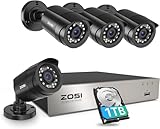
Overview: ZOSI’s 8-channel system elevates home security with AI-powered detection and H.265+ efficiency, including four 1080P weatherproof cameras and a pre-installed 1TB HDD for extended recording.
What Makes It Stand Out: AI human/vehicle detection drastically reduces false alarms from pets or foliage, while H.265+ compression doubles storage efficiency over H.264—enabling ultra-long recording on the 1TB drive. The 80ft night vision (130ft in ambient light) and IP66-rated cameras ensure clarity in any condition. Crucially, it supports adding four more cameras later.
Value for Money: The bundled 1TB HDD and AI capabilities justify a mid-range price, outperforming basic kits. Competitors often charge extra for AI or storage, making this a cost-effective upgrade for future-proofing security without sacrificing image quality.
Strengths and Weaknesses: Strengths: Reliable AI alerts; expandable to 8 cameras; excellent night vision; efficient storage. Weaknesses: “3K Lite” resolution is marketing-speak (actual output is 1080P); app interface can feel cluttered for beginners.
Bottom Line: Highly recommended for users seeking smart detection and scalability. Its balance of AI precision, storage, and expandability makes it ideal for growing security needs.
8. ZOSI 3K Lite Security Camera System Indoor Outdoor,AI Human/Vehicle Detection,Night Vision,Remote Access,4pcs 1080P 1920TVL Weatherproof Surveillance Cameras,H.265+ 8CH CCTV DVR(NO HDD)

Overview: This ZOSI kit mirrors Product 7’s core features—AI detection, H.265+ compression, and 8-channel expandability—but ships without a hard drive, targeting users who prefer custom storage solutions.
What Makes It Stand Out: Identical AI human/vehicle detection and 80ft night vision as Product 7 ensure accurate alerts and low-light clarity. The 8-channel DVR supports adding cameras later, while customizable motion zones let you ignore irrelevant areas (e.g., busy streets). Privacy protection modes add unique control.
Value for Money: Skipping the pre-installed HDD lowers the upfront cost, but you’ll need to buy a compatible 500GB–2TB drive separately (~$40–$60). This suits tech-savvy users who want flexibility, though beginners may find the extra step inconvenient versus all-inclusive kits.
Strengths and Weaknesses: Strengths: Full AI functionality; flexible storage options; same robust build as Product 7. Weaknesses: No HDD included inflates total cost; setup requires technical know-how for drive installation.
Bottom Line: Opt for this only if you already own a compatible HDD or prioritize storage customization. Otherwise, Product 7’s bundled drive offers better simplicity and value.
9. Night Owl 2-Way Audio 12 Channel DVR Video Home Security Camera System with (8) Wired 2K HD Indoor/Outdoor Deterrence Cameras and 1TB Hard Drive (Add up to 4 Wi-Fi Cameras)

Overview: Night Owl’s 12-channel system stands out with eight 2K wired cameras featuring 2-way audio and deterrence capabilities, plus hybrid Wi-Fi expansion, all backed by a 1TB HDD.
What Makes It Stand Out: The 2-way audio lets you speak through cameras to deter intruders—a rarity in wired systems. “Deterrence” features (like flashing lights) actively scare off threats, while the 12-channel DVR supports mixing wired and Wi-Fi cameras (add 4 wirelessly). 2K resolution provides sharper detail than standard 1080P.
Value for Money: Priced competitively for eight cameras, the audio/deterrence combo adds unique utility. However, the 1TB HDD fills faster with 2K footage versus 1080P systems, potentially requiring upgrades sooner than competitors.
Strengths and Weaknesses: Strengths: Interactive deterrence; flexible wired/Wi-Fi hybrid setup; crisp 2K video. Weaknesses: 2-way audio drains camera power; 1TB storage is tight for eight 2K cameras; Wi-Fi add-ons may suffer signal issues.
Bottom Line: A standout choice for active threat prevention. Ideal if you value real-time interaction, but ensure your storage plan accommodates 2K demands.
10. ZOSI H.265+ Full 1080p Home Security Camera System Outdoor Indoor, 5MP-Lite CCTV DVR 8 Channel with AI Human Vehicle Detection, 4 x 1080p Weatherproof Surveillance Camera, 80ft Night Vision, 1TB HDD

Overview: ZOSI’s flagship 8-channel system combines AI detection, H.265+ efficiency, and “5MP-Lite” clarity (outputting 1080P) with a pre-installed 1TB HDD and four robust cameras.
What Makes It Stand Out: Its self-developed H.265+ compression saves ~80% storage versus H.264, enabling weeks of 1080P footage on the 1TB drive. Four customizable recording modes per camera (continuous, scheduled, motion-only) and AI zone-specific alerts minimize false triggers. The 80ft night vision and 90° field of view cover wider areas than competitors.
Value for Money: The premium price reflects top-tier efficiency and customization. While similar to Product 7, H.265+’s superior storage savings and flexible recording modes offer tangible long-term benefits, outperforming most mid-range kits.
Strengths and Weaknesses: Strengths: Exceptional storage optimization; granular recording control; precise AI filtering; expandable to 8 cameras. Weaknesses: “5MP-Lite” is misleading (max 1080P output); app navigation has a learning curve.
Bottom Line: The best ZOSI option for efficiency-focused users. Its storage smarts and customization justify the cost for those prioritizing longevity and tailored monitoring.
Understanding DVR Security Systems: The Foundation of Local Recording
Core Components and How They Work Together
A DVR-based security system revolves around physical cameras connected via coaxial or Ethernet cables to a central recording unit. Unlike Network Video Recorder (NVR) systems that rely on IP cameras and internet protocols, DVRs process analog or high-definition analog signals (like HD-TVI, HD-CVI, or AHD) directly at the recorder. This creates a closed-loop system where video feeds are captured, compressed, stored, and managed entirely on-site. Key elements include weatherproof outdoor cameras, indoor units, the DVR unit itself with built-in storage, and the cabling infrastructure binding it all. This architecture eliminates the need for constant network communication, making it inherently more resilient against cyber threats and connectivity issues.
Analog vs. High-Definition Analog: Resolution Evolution
Gone are the days when “analog” meant grainy, low-quality footage. Modern high-definition analog systems deliver crisp 1080p, 4K, or even higher resolution without requiring expensive IP infrastructure. These systems leverage advancements like HD-TVI (Transport Video Interface) to transmit high-bandwidth video over standard coaxial cables, drastically reducing installation complexity and cost compared to full IP setups. Crucially, they maintain backward compatibility with older analog cameras, allowing phased upgrades. For most residential and small commercial applications, HD analog provides exceptional value—delivering detailed imagery for license plate recognition or facial identification at distances, all while leveraging existing wiring in many older properties.
The Critical Role of the DVR Unit
The DVR is the system’s brain, not just a storage device. It handles video encoding, motion detection processing, remote viewing management, and playback functionality. Key differentiators include the number of channels supported (4, 8, 16, or 32), processing power for handling high-resolution streams without lag, and advanced features like simultaneous recording and live view. Look for units with robust operating systems that support smooth playback scrubbing and intelligent search functions—critical when you need to quickly locate an event from days of footage. The DVR’s reliability directly impacts system uptime, so prioritize models with proven stability and efficient heat dissipation.
Essential Features to Evaluate for Your Needs
Resolution and Field of View: Seeing What Matters
Higher resolution (like 4K) provides more detail but significantly impacts storage requirements and bandwidth. Balance your needs: 1080p often suffices for general perimeter monitoring, while 4K excels for identifying fine details at greater distances, such as license plates 50+ feet away. Equally important is the camera’s field of view (FOV). Ultra-wide lenses (110+ degrees) cover large areas but can distort edges, making identification harder. Narrower FOVs (70-90 degrees) offer less distortion and better clarity for specific choke points like driveways or entrances. Consider varifocal lenses that let you adjust the focal length during installation for optimal coverage.
Night Vision Capabilities: Beyond Basic Infrared
Effective 24/7 monitoring demands exceptional low-light performance. While traditional infrared (IR) illuminators provide monochrome night vision, newer technologies like Starlight or ColorVu sensors capture usable color footage in near-total darkness using ambient light (e.g., moonlight or distant streetlights). Hybrid systems combine both: color mode in low light, switching to IR for pitch-black conditions. Evaluate the IR range specification critically—manufacturer claims often exceed real-world usability due to environmental factors. Look for cameras with smart IR that prevents overexposure of close objects (like faces right at the door) and anti-glare features to handle reflections.
Storage Capacity and Retention Calculations
This is where many buyers miscalculate. Storage needs depend on resolution, frames per second (FPS), compression efficiency, number of cameras, and motion detection settings. A single 4K camera recording continuously at 15 FPS might consume 1-2TB per month. Crucially, DVR systems typically use proprietary compression (like H.265+) to maximize retention. Calculate your required retention period: 30 days is common for insurance or legal purposes. Remember, motion-activated recording drastically extends storage life compared to 24/7 continuous recording. Ensure the DVR supports large internal drives (8TB+ is standard now) and has expansion options, as replacing the drive is simpler than overhauling the entire system.
Weatherproofing and Durability Standards
Outdoor cameras face extreme conditions—blizzards, monsoons, desert heat, or vandals. Don’t just check the IP (Ingress Protection) rating; understand what it means. IP67 signifies dust-tight and immersion-resistant up to 1 meter, suitable for most residential uses. IP68 offers superior protection for submerged installations (like underwater pond monitoring). IK ratings (e.g., IK10) indicate resistance to physical impacts—essential for deterring tampering. Also, verify operating temperature ranges; cheap cameras often fail below freezing or above 120°F. Metal housings generally outlast plastic in harsh environments, though they may require additional heating elements in frigid climates.
Installation and Practical Considerations
Wired vs. Wireless Camera Integration
True DVR systems are predominantly wired for reliability, but many modern units support limited hybrid functionality. Wired connections (coaxial or Ethernet) ensure consistent video quality and eliminate battery replacement hassles. However, some DVRs now incorporate support for a few wireless cameras (usually via proprietary protocols, not Wi-Fi) for hard-to-wire areas like detached garages. Be cautious: adding Wi-Fi cameras introduces the very network dependencies DVR systems avoid. Prioritize wired setups for core coverage, using wireless options sparingly and only if the DVR explicitly supports them without compromising the local-recording integrity.
Power Over Cable Solutions
Simplifying installation is key. Many HD analog systems leverage Power over Coax (PoC) or Power over Ethernet (PoE), sending both power and video through a single cable. This eliminates the need for separate electrical outlets near each camera and reduces tripping hazards during setup. PoC is particularly advantageous for retrofitting older properties where running new power lines is difficult. Verify compatibility between your cameras and DVR—older analog systems often required separate power adapters (“pigtails”), creating more failure points and messy installations.
Remote Access Without Cloud Dependency
One misconception is that DVR systems lack remote viewing. Modern units offer robust local-network and internet access via dedicated apps or web browsers, all while keeping footage on your premises. Setup typically involves port forwarding on your router or using a secure P2P (peer-to-peer) connection method that doesn’t route video through third-party servers. This maintains your privacy while allowing real-time monitoring from your phone. Ensure the DVR supports modern encryption standards (like HTTPS) for secure remote connections, and check if the app provides essential features like motion alerts and two-way audio without requiring a subscription.
Future-Proofing Your Investment
Expandability and Channel Flexibility
Your security needs will evolve. A system starting with 4 cameras might need 8 within two years. Choose a DVR with more channels than your immediate requirement (e.g., an 8-channel unit for 4 cameras). This allows seamless expansion without replacing the recorder. Also, verify if the system supports mixed camera resolutions—adding a higher-resolution unit later shouldn’t degrade existing feeds. Some advanced DVRs even allow integrating newer camera technologies (like AI-powered models) as they emerge, protecting your initial investment.
Audio Capabilities: When Sound Matters
While video is primary, audio can be crucial for context—distinguishing wind noise from breaking glass, or capturing verbal threats. Not all DVR systems support audio; some require separate audio cables, while newer models integrate it via the video cable (e.g., HD-TVI with audio). Check microphone and speaker compatibility if two-way communication (e.g., warning off a trespasser remotely) is desired. Be mindful of local laws regarding audio recording, which often have stricter regulations than video.
Smart Detection Features Beyond Basic Motion
Basic motion detection triggers recordings for every swaying branch, filling storage with junk footage. Advanced DVRs incorporate intelligent video analytics (IVA) like human or vehicle detection, reducing false alarms by 80% or more. More sophisticated systems offer line-crossing detection (alerting when someone enters a specific zone) or loitering detection. These features rely on on-device processing, so ensure the DVR has sufficient processing power—don’t assume all “smart” systems perform equally. Prioritize systems where these features work locally without cloud processing.
Backup and Redundancy Strategies
Local recording is reliable, but disasters happen. Fire, theft, or hardware failure could still erase your footage. Look for DVRs with multiple backup options: automatic backups to USB drives, network-attached storage (NAS), or even dual internal hard drive bays for RAID configurations (mirroring data across two drives). Scheduled backups ensure critical footage is preserved off-site within your control. While not replacing primary storage, these layers add significant resilience without introducing external dependencies.
Maximizing Long-Term Value and Reliability
Maintenance and Firmware Updates
Like any electronic system, DVRs require occasional upkeep. Dust buildup inside the unit can cause overheating and failure. Choose a DVR with accessible vents and plan for annual physical checks. Firmware updates are vital—they patch security vulnerabilities and add features. Ensure the manufacturer provides regular, easy-to-install updates via USB or local network, not just cloud pushes. Systems abandoned by manufacturers become security liabilities over time.
Compatibility with Existing Infrastructure
If upgrading an older system, verify compatibility with your current cameras and cables. Many HD analog DVRs support legacy analog cameras, allowing a gradual transition. Check if your existing coaxial cable (RG59) can handle higher resolutions—older or poor-quality cables might need replacement for 4K. This compatibility assessment prevents costly unnecessary replacements and leverages prior investments.
Total Cost of Ownership Analysis
DVR systems often have a higher upfront cost than basic wireless kits, but their long-term savings are substantial. Factor in: no monthly fees, minimal maintenance costs, extended hardware lifespan (5-7 years vs. 2-3 for cloud-reliant systems), and reduced storage expenses due to efficient compression. Calculate the 5-year cost: a $500 DVR system might cost $600 total over five years, while a $200 cloud camera with $10/month fees totals $800—plus potential data loss risks. True value lies in uninterrupted operation and ownership of your data.
Frequently Asked Questions
How much storage do I really need for 30 days of continuous recording?
Storage depends on camera count, resolution, and frames per second. As a rough estimate: one 1080p camera at 15 FPS needs ~0.5TB per month; one 4K camera needs 1.5-2TB. Multiply by your camera count and retention goal. Always add a 20% buffer for peak usage.
Can I view my cameras remotely without an internet subscription?
Yes. Modern DVRs allow remote viewing over the internet using your home network connection only—no third-party cloud service or subscription required. Setup involves configuring your router securely.
What happens during a power outage?
Cameras and the DVR will stop recording. Install an uninterruptible power supply (UPS) for the DVR to maintain recording for 15-60 minutes, allowing graceful shutdown and preventing data corruption.
Are DVR systems hackable like IP cameras?
They’re significantly more secure. Since video isn’t streamed over the internet by default, attack surfaces are smaller. Always change default passwords, disable unused remote ports, and keep firmware updated.
Can I add more cameras later to my existing DVR?
Only if you have free channels on your recorder. A 4-channel DVR maxes out at 4 cameras; you’d need a new 8-channel unit to expand. Always buy a DVR with extra channels.
Do I need professional installation?
Many systems are DIY-friendly, especially with PoC/PoE simplifying wiring. Complex setups (long cable runs, multiple buildings) or electrical work may warrant a professional to ensure reliability.
How long do DVR hard drives last?
Typical surveillance-grade drives last 3-5 years under constant write loads. Monitor drive health via the DVR’s diagnostics, and replace proactively at the 3-year mark as a best practice.
Can these systems work in freezing temperatures?
Yes, but verify the camera and DVR’s operating temperature range. Standard units often work down to -20°F (-29°C); extreme cold may require heaters or specially rated housings.
Is color night vision worth the extra cost?
For identifying suspects or vehicles in low light, yes—it provides critical detail IR monochrome can’t. For basic presence detection in total darkness, IR suffices. Assess your specific security risks.
How do I prevent footage from being deleted or tampered with?
Enable write-once-read-many (WORM) settings if available, use RAID backup, store backups off-site, and physically secure the DVR in a locked cabinet. Regularly verify recording integrity.