Imagine coming home after a long day to floors that look and feel genuinely clean—not just swept superficially, but deeply refreshed, with dust, crumbs, and pet hair completely vanished. For years, robot vacuums promised hands-off cleaning, but the reality often meant interrupting your evening to manually dump a full dustbin. That frustration is vanishing faster than tracked-in dirt, thanks to a quiet revolution in self-emptying technology. These aren’t just incremental upgrades; they represent a fundamental shift toward true autonomy, where your robotic helper handles the entire cycle—from suction to disposal—without demanding your attention for weeks at a time. It’s the difference between owning a gadget and having a genuinely reliable cleaning partner.
But with so much hype swirling around “set-and-forget” promises, how do you cut through the noise and find a system that actually fits your life? Not all self-emptying solutions are created equal, and understanding the nuances is crucial before investing. Does a larger dustbin always mean less maintenance? How do these systems handle stubborn pet hair or fine allergens? And what about the hidden realities of maintenance that marketing glosses over? This guide cuts past the buzzwords to give you the unvarnished truth about what makes a self-emptying robot vacuum truly effective, reliable, and worth integrating into your home. Let’s explore the key features, potential pitfalls, and smart considerations that separate the game-changers from the gimmicks.
Top 10 Self-Emptying Robot Vacuums
Detailed Product Reviews
1. Shark Navigator Robot Vacuum and Self-Empty Base with Bagless 60-Day Capacity Self-Empty Base, SmartPath Navigation, Powerful Pet Hair Pickup, Anti-Hair Wrap, For Carpets & Hard Floors, Grey, RV2120AE

Overview: The Shark Navigator RV2120AE is a self-emptying robot vacuum engineered for pet owners and mixed-floor homes. It combines strong suction, smart navigation, and a bagless self-empty base aiming for 60 days of hands-free operation.
What Makes It Stand Out: Its SmartPath Navigation uses spot LiDAR for efficient row-by-row cleaning (claiming 1.5x coverage vs older Shark models), while the anti-hair wrap brushroll and powerful suction target pet hair specifically. The bagless base eliminates ongoing bag costs, a key differentiator against competitors requiring disposable bags.
Value for Money: Priced mid-to-high range, it justifies cost through long-term savings from the reusable base and specialized pet hair tools. It outperforms budget bots in coverage and hair pickup but faces stiff competition from brands offering mopping at similar prices.
Strengths and Weaknesses: Strengths: Excellent pet hair handling, truly bagless base, strong carpet/hard floor performance, reliable object avoidance. Weaknesses: No mopping function, 60-day base capacity may require more frequent emptying in large/pet-heavy homes, app functionality lags behind some rivals.
Bottom Line: Ideal for pet owners prioritizing hair pickup and bagless convenience over mopping; a reliable, high-value choice for homes needing thorough vacuuming without recurring bag expenses.
2. MAMNV Robot Vacuum and Mop, 11500 Pa Suction, 3-in-1 Robotic Vacuum with Smart LiDAR Navigation, 90 Day Self-Emptying,160 Min Runtime,App/Alexa/Voice Control, Ideal for Pet Hair, Carpet & Hard Floor

Overview: The MAMNV D13S MAX is a 3-in-1 robot vacuum and mop combo featuring ultra-strong 11,500Pa suction, 90-day self-emptying, and advanced LiDAR navigation for comprehensive, hands-free floor cleaning.
What Makes It Stand Out: Its standout features include simultaneous vacuuming/mopping, industry-leading 90-day self-empty base capacity, precise multi-floor mapping with zone control, and carpet auto-boost. The sealed dustbag system ensures hygienic disposal, and the high suction power tackles embedded pet hair effectively.
Value for Money: Positioned as a premium all-in-one solution, it delivers exceptional value for larger homes needing extended hands-free operation and wet/dry cleaning. While pricier upfront, the 90-day base and included accessories (like 5 dust bags) reduce long-term costs versus frequent manual emptying or bag replacements.
Strengths and Weaknesses: Strengths: Outstanding 90-day hands-free operation, powerful mopping/vacuum combo, intuitive app with robust zone management, strong pet hair pickup, long 160-min runtime. Weaknesses: Mopping effectiveness lags behind dedicated units, large base station requires significant space, initial setup can be complex for non-tech users.
Bottom Line: Highly recommended for tech-savvy households wanting minimal maintenance and combined vacuum/mop performance; the 90-day self-emptying makes it a top contender for busy or multi-pet homes.
3. eufy L60 Robot Vacuum with Self Empty Station, Hair Detangling Technology, Up to 60 Days Hands Free Cleaning, 5,000 Pa Suction, Remove Hair, Dust

Overview: The eufy L60 is a budget-conscious self-emptying robot vacuum focused on hair management, offering 5,000Pa suction, 60-day hands-free operation, and dedicated hair detangling technology via its base station.
What Makes It Stand Out: Its unique Hair Detangling Technology actively cuts hair wrapped around the brushroll during auto-emptying—a major pain point for pet owners. The sealed 2.5L dustbag in the base supports 60 days of hands-free use without bags, and AI.Map 2.0 enables precise room selection and no-go zones via app.
Value for Money: It’s competitively priced, offering strong value for pet owners needing reliable hair handling without premium features like mopping. The included dustbags and focus on low maintenance provide savings over time, though suction is lower than some rivals.
Strengths and Weaknesses: Strengths: Excellent hair detangling, truly hands-free for 60 days, intuitive app controls, quiet operation, affordable base station. Weaknesses: 5,000Pa suction lags behind high-end models for deep carpet cleaning, no mopping functionality, base design lacks portability.
Bottom Line: A smart buy for pet households prioritizing hair management and affordability; ideal if you skip mopping but want reliable, low-effort vacuuming with innovative hair solutions.
4. Bagotte Robot Vacuum and Mop, Robot Vacuum Self Emptying, 6000Pa Powerful Suction, 90-Day Hands-Free, Advanced Smart Mapping, LiDAR Navigation Robotic Vacuum for Pet Hair, Dust, Carpet, WiFi/App/Alexa

Overview: The Bagotte self-emptying robot vacuum/mop combo delivers 6,000Pa suction, 90-day hands-free cleaning, and LiDAR navigation, targeting pet owners needing versatile dry/wet cleaning with minimal upkeep.
What Makes It Stand Out: It promises an industry-leading 90-day hands-free cycle via a sealed dustbag base and uniquely markets “4-in-1” functionality (sweeping, vacuuming, mopping, self-cleaning). Advanced 360° LiDAR enables efficient mapping, while app control allows room-specific cleaning and no-go zones.
Value for Money: Offers compelling value by packing mopping, strong suction, and ultra-long self-emptying into a mid-range price. The 90-day claim beats most competitors, though real-world capacity depends on debris volume. Savings come from avoiding daily emptying and disposable bags.
Strengths and Weaknesses: Strengths: Very long 90-day self-emptying, effective pet hair pickup, simultaneous vacuum/mop capability, precise navigation, Alexa/app integration. Weaknesses: “4-in-1” is overstated (mopping requires manual water tank refills), mopping performance is basic, 6,000Pa suction is average for price tier.
Bottom Line: Best for those seeking maximum hands-off time with basic mopping; a practical choice for large homes but verify suction needs as 6,000Pa may struggle with thick carpets.
5. Shark AI Ultra Voice Control Robot Vacuum with Matrix Clean Navigation, Home Mapping, 60-Day Capacity, XL Self-Empty Base for Homes with Pets, Carpet & Hard Floors, Cool Grey, AV2511AE
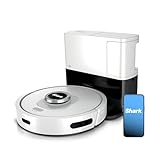
Overview: Shark’s AI Ultra AV2511AE features Matrix Clean navigation, 60-day bagless self-emptying, and voice control, designed for deep cleaning on carpets and hard floors in pet-friendly homes.
What Makes It Stand Out: Its Matrix Clean navigation uses a grid pattern for multiple passes over dirty areas, enhancing deep-cleaning performance. The bagless base (no disposable bags) and self-cleaning brushroll combat hair wrap, while 360° LiDAR enables precise dark-floor navigation and adaptive mapping.
Value for Money: Priced premium, it justifies cost through Shark’s proven pet-hair engineering and bagless base savings. It outperforms cheaper bots in coverage and debris pickup but costs more than mopping-capable rivals—value hinges on prioritizing vacuum performance over wet cleaning.
Strengths and Weaknesses: Strengths: Superior deep-cleaning with Matrix pattern, excellent pet hair handling, bagless base convenience, reliable object detection, strong all-surface suction. Weaknesses: No mopping function, 60-day base may fill faster with heavy shedding, voice control is less refined than app controls.
Bottom Line: A top pick for pet owners demanding the deepest possible vacuum clean without mopping; the bagless base and Matrix Clean deliver tangible benefits for messy, carpeted homes.
6. MONSGA Robot Vacuum and Mop Combo, 6000Pa Robotic Vacuum with 3.5L Self Emptying Station, Lidar Navigation Robot Vacuum Cleaner, 180mins Runtime, APP/Remote/Voice Control, for Hard Floors and Carpets
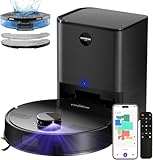
Overview: The MONSGA Robot Vacuum and Mop Combo delivers a comprehensive hands-free cleaning solution with 6000Pa suction, LiDAR navigation, and integrated mopping. Designed for hard floors and carpets, it automates sweeping, vacuuming, and mopping while featuring a self-emptying station for extended use.
What Makes It Stand Out: Its unmatched 6000Pa suction (19,500 RPM motor) tackles deep-seated dirt and pet hair effortlessly, aided by a V-shaped anti-tangle brush. The 3.5L self-emptying station enables 60 days of maintenance-free operation, while LiDAR navigation creates precise 360° maps in 10 minutes and supports 5-floor plans. Full app customization for no-go zones, suction, and water flow adds flexibility.
Value for Money: Priced competitively against premium models, it offers exceptional versatility with true 3-in-1 functionality and a large-capacity dustbin/water tank. The self-emptying station’s 60-day capacity reduces long-term hassle, making it a cost-effective investment for pet owners or large homes compared to models with smaller bins.
Strengths and Weaknesses: Strengths: Powerful suction for carpets/hard floors; extensive 60-day self-emptying; precise LiDAR mapping; customizable app controls; effective anti-tangle brush. Weaknesses: Mopping function may lack deep scrubbing for tough stains; app connectivity (Smart Life/Tuya) can be less intuitive than brand-specific platforms.
Bottom Line: Ideal for busy households seeking minimal maintenance, the MONSGA excels in suction power and automation. Despite minor mopping limitations, its robust features and 60-day hands-free operation make it a top-tier choice for comprehensive, set-and-forget cleaning.
7. Shark UR2360S Ultra Robot Vacuum, with Matrix Clean, Precision Mapping, 30-Day Capacity HEPA Bagless Self Empty Base, Self-Cleaning Brushroll Perfect for Pet Hair, WiFi, Black (Renewed)

Overview: This renewed Shark UR2360S Ultra Robot Vacuum offers reliable self-emptying convenience with Matrix Clean technology and a bagless base. Targeted at pet owners, it combines strong suction, precision mapping, and a self-cleaning brushroll for homes with carpets and hard floors.
What Makes It Stand Out: Shark’s Matrix Clean ensures thorough coverage via grid-pattern navigation and multiple passes over debris. The bagless 30-day self-emptying base and HEPA filtration capture allergens, while the anti-hair-wrap brushroll excels with pet hair. LiDAR navigation provides accurate day/night mapping without light dependency.
Value for Money: As a renewed unit, it delivers premium features (self-emptying, pet-hair focus) at a lower cost than new models. The bagless base saves ongoing expenses, though the 30-day capacity is less impressive than competitors. Best for budget-conscious pet owners needing reliable, low-maintenance cleaning.
Strengths and Weaknesses: Strengths: Excellent pet-hair handling; HEPA filtration; bagless convenience; precise LiDAR mapping; renewed affordability. Weaknesses: Reduced self-emptying capacity (30 days vs. 60+ in rivals); mopping functionality absent; renewed status may imply shorter lifespan or cosmetic flaws.
Bottom Line: A solid budget-friendly pick for pet households, the Shark UR2360S shines in hair management and mapping. While lacking mopping and extended self-emptying, its renewed value and targeted features make it a practical, if limited, hands-free solution.
8. Robot Vacuum and Mop, Robotic Vacuum with Mapping, Self-Emptying Station for 90 Days Hands-Free Cleaning, LiDAR Navigation, No-Go Zones, Wi-Fi/App/Alexa Voice Control, for Carpets and Hard Floors

Overview: This robot vacuum and mop combo promises 90 days of hands-free cleaning via a high-capacity self-emptying station. Equipped with LiDAR navigation and 6000Pa suction, it targets all floor types while offering app-controlled customization for modern smart homes.
What Makes It Stand Out: Its bold 90-day self-emptying claim (using a sealed bag) minimizes user intervention significantly. 6000Pa suction tackles embedded debris, while LiDAR enables 70% faster route planning. App features like no-go zones and multi-mode cleaning (sweep/vacuum/mop) enhance adaptability, though it’s limited to 2.4GHz Wi-Fi.
Value for Money: Positioned as a premium yet accessible option, the 90-day self-emptying station offers superior convenience over 30–60-day rivals. However, the suction power matches mid-range models, and the 2.4GHz Wi-Fi restriction may frustrate some users. Justified for large homes prioritizing minimal maintenance.
Strengths and Weaknesses: Strengths: Industry-leading 90-day self-emptying; strong 6000Pa suction; efficient LiDAR navigation; versatile cleaning modes; sealed dust containment. Weaknesses: Limited to 2.4GHz Wi-Fi; mopping effectiveness unproven for stubborn stains; brand reliability less established than iRobot/Shark.
Bottom Line: A compelling option for tech-savvy users in large spaces, its 90-day hands-free promise is revolutionary. Despite Wi-Fi constraints and unverified mopping depth, the exceptional autonomy makes it a worthwhile investment for those valuing true “set and forget” convenience.
9. iRobot Roomba 105 Vac Robot Vacuum with AutoEmpty Dock - Self-Empties for 75 Days, Easy to use, Intense Power-Lifting Suction, LiDAR Navigation, Multi-Surface Cleaning, Cleans in Neat Rows

Overview: The iRobot Roomba 105 pairs reliable LiDAR navigation with a 75-day AutoEmpty Dock, focusing on allergen capture and straightforward operation. It uses intense suction for multi-surface cleaning but lacks integrated mopping, targeting simplicity over versatility.
What Makes It Stand Out: The AutoEmpty Dock’s sealed bag traps 99% of allergens (down to 0.7 microns), ideal for allergy sufferers. Its “70X more power-lifting suction” (vs. older Roombas) and neat-row cleaning pattern ensure systematic coverage. iRobot’s app offers intuitive scheduling, filter tracking, and keep-out zones.
Value for Money: Higher-priced than some rivals, but iRobot’s brand trust, allergen focus, and 75-day hands-free operation justify the cost for health-conscious users. However, the absence of mopping and lower suction (vs. 6000Pa models) may disappoint those seeking all-in-one cleaning.
Strengths and Weaknesses: Strengths: Superior allergen containment; reliable LiDAR navigation; easy app interface; strong brand reputation; 75-day self-emptying. Weaknesses: No mopping capability; suction power lags behind competitors; higher price for fewer features; basic app lacks room-specific customization.
Bottom Line: Best for allergy-prone households prioritizing air quality and simplicity, the Roomba 105 excels in core vacuuming but misses mopping. Its premium price is warranted for health-focused users, though feature-rich buyers may prefer alternatives.
10. roborock Q7 M5+ Robot Vacuum and Mop, Upgraded from Q5 Max+, Up to 7-9 Weeks Self-Empty, 10000Pa Suction, Dual Anti-Tangle System for Pet Hair & Carpet, PreciSense LiDAR Navigation, App Control, White

Overview: The Roborock Q7 M5+ boasts industry-leading 10000Pa suction and a 7-week self-emptying dock. Designed for pet-heavy homes, it features dual anti-tangle tech, mopping, and PreciSense LiDAR navigation, all controllable via app or voice.
What Makes It Stand Out: HyperForce 10000Pa suction lifts deeply embedded pet hair, while JawScrapers and 0% hair-tangling side brushes prevent clogs. The 2.7L RockDock Plus enables 7-week hands-free operation, and combined vacuum/mop action captures fine dust. Precision LiDAR ensures efficient, obstacle-aware routing.
Value for Money: Premium-priced but delivers unmatched suction and pet-focused engineering. The 7-week self-emptying and dual anti-tangle system reduce long-term effort significantly, outperforming many rivals. Worth the investment for pet owners needing heavy-duty, low-maintenance cleaning.
Strengths and Weaknesses: Strengths: Class-leading 10000Pa suction; exceptional anti-tangle design for pets; 7-week self-emptying; effective vacuum-mop combo; precise navigation. Weaknesses: White finish shows stains easily; mopping water tank capacity not specified; app may lack advanced zoning of competitors.
Bottom Line: A powerhouse for pet owners, the Q7 M5+ dominates in suction and hair management. Despite cosmetic quirks, its robust performance and extended autonomy make it a top recommendation for demanding households seeking thorough, hassle-free cleaning.
Understanding the Core Technology Behind Self-Emptying Systems
How the Auto-Empty Base Station Actually Functions
At the heart of the system lies the base station, a seemingly simple dock that performs a surprisingly complex task. When the robot returns after a cleaning session, it docks precisely. Internal mechanisms then create a powerful vacuum seal between the robot’s internal bin and the base station’s larger disposable bag or container. A high-powered suction fan within the base activates, forcefully pulling debris out of the robot’s small bin and into the larger, sealed receptacle. This process relies on precise engineering to ensure a complete transfer without leaks or clogs.
The Critical Role of Airflow Engineering
Effective debris transfer isn’t just about brute suction; it’s about intelligent airflow design. High-quality systems incorporate optimized ducting and chamber shapes within both the robot and the base to minimize turbulence and ensure even, consistent suction across the entire bin. Poor airflow design can lead to debris getting stuck, incomplete emptying, or excessive noise during the transfer process. Look for systems that emphasize laminar airflow principles to maximize efficiency and reliability.
Sealing Mechanisms and Dust Containment
A major concern with any self-emptying system is preventing dust clouds during the transfer. Advanced models utilize multi-stage sealing. This typically involves a physical gasket or seal that compresses when the robot docks, combined with the suction seal created during the emptying cycle itself. The best systems also incorporate HEPA-level filtration within the base station’s receptacle to trap fine particles, ensuring that allergens and dust aren’t blown back into your home environment during operation.
Essential Features to Evaluate for Your Home
Dustbin Capacity: Beyond Just Size Numbers
While manufacturers tout large base station capacities (often 30-60 days worth), real-world performance varies significantly. Consider your specific debris load: homes with multiple pets or high foot traffic will fill bins much faster than smaller, less-used spaces. Crucially, evaluate the robot’s internal bin size too. A tiny internal bin means the robot stops frequently to return and empty, even if the base has huge capacity, disrupting cleaning flow. Balance both capacities based on your home’s needs.
Suction Power Dynamics and Debris Handling
Don’t assume strong suction in the robot translates directly to effective emptying. The base station’s suction power is paramount for transferring debris, especially heavier items like cereal or larger crumbs. Look for specifications on the base’s airflow (measured in CFM or ACH) and suction power (kPa). Systems with robust base suction handle dense debris like pet hair clumps far more reliably than those relying solely on the robot’s motor, which can struggle during the transfer phase.
Noise Levels During Emptying Cycles
That powerful suction in the base station comes with a trade-off: noise. Emptying cycles can be significantly louder than the robot’s cleaning operation, sometimes reaching 65-75 dB (comparable to a loud conversation or blender). If your base station is in a living area or near a bedroom, consider models with noise-reduction features like insulated chambers or slower, quieter transfer modes scheduled for daytime hours. Check independent reviews for real-world noise assessments.
Smart Capabilities and Integration Considerations
App Control and Scheduling Precision
Modern self-emptying robots are deeply integrated with companion apps, offering far more than just start/stop commands. Look for granular scheduling for both cleaning and automatic emptying cycles. Can you schedule emptying for after work hours when you’re out? Does the app provide accurate notifications when the base bin is nearing capacity or if a transfer failed? Advanced systems even learn your emptying patterns and suggest optimal schedules based on usage.
Mapping Sophistication for Targeted Cleaning
Accurate, persistent mapping is non-negotiable for maximizing the value of self-emptying. The robot needs to understand your home layout to clean efficiently in sections, knowing when it’s finished a zone and can return to empty before its internal bin overflows. Multi-floor mapping, room labeling, and no-go zones ensure the robot focuses effort where needed, reducing unnecessary trips to the base and extending the time between base bin changes. Poor mapping leads to inefficient cleaning and more frequent, disruptive emptying cycles.
Voice Assistant and Ecosystem Compatibility
Seamless integration with your existing smart home ecosystem (like Alexa, Google Assistant, or Apple HomeKit) adds significant convenience. Being able to say, “Hey Google, start emptying the robot,” or triggering a clean before you get home enhances the hands-off experience. Consider whether the system fits into your current setup or if adopting it requires switching platforms, which might negate some convenience benefits.
Maintenance Realities You Must Understand
Base Station Receptacle Types and Costs
Most systems use proprietary disposable bags or reusable hard containers. Disposable bags offer ultimate convenience (seal and toss) but create ongoing cost and waste. Reusable containers are eco-friendlier and cheaper long-term but require careful emptying into your main trash, potentially exposing you to dust. Factor in the long-term cost of bags (if used) and your personal tolerance for handling debris when choosing. Some systems offer hybrid approaches.
Robot Filter Maintenance Frequency
The robot’s main filter, crucial for trapping fine dust and allergens, still requires regular cleaning (often weekly) even with self-emptying. A clogged filter drastically reduces suction and cleaning performance. Some high-end models feature washable, long-life filters, but all require attention. Neglecting filter maintenance is a common reason why self-emptying systems seem to lose effectiveness over time, regardless of the base station’s capabilities.
Brush and Sensor Cleaning Requirements
Self-emptying doesn’t eliminate the need to clean the robot itself. Side brushes, main rollers (especially tangle-resistant ones for pet hair), and cliff/sensor lenses still accumulate hair, strings, and dust. This maintenance is typically needed every few cleaning cycles. Systems with easy-access rollers and tool-free brush removal significantly reduce the friction of this necessary upkeep. Ignoring it leads to poor cleaning and potential system errors.
Practical Home and Usage Factors
Floor Plan Layout and Obstacle Density
The effectiveness of self-emptying is heavily influenced by your home’s layout. Large, open spaces allow the robot to clean longer before needing to empty. Conversely, sprawling homes with many small rooms or dense furniture can cause the robot to fill its internal bin quickly on a single pass, triggering frequent, inefficient returns to the base. Homes with complex layouts benefit more from robots with exceptional navigation to optimize pathing and minimize unnecessary trips.
Pet Ownership and Debris Type Challenges
Pet owners face unique demands. Heavy shedding requires systems with exceptional brush designs (rubber extractors often outperform bristle rolls for hair) and strong suction in both the robot and the base station to handle dense fur clumps. Self-emptying is a huge boon for pet owners, but only if the base station can reliably transfer large volumes of hair without clogging. Look for models specifically engineered with pet hair in mind, focusing on transfer reliability.
Base Station Placement Constraints
The base station isn’t just a dock; it’s a critical component requiring specific placement. It needs ample clearance (typically 3-5 feet) on all sides for the robot to dock properly and for airflow during emptying. It must be placed against a wall on a hard floor surface (not carpet), away from stairs or drop-offs, and ideally in a low-traffic area due to noise during emptying. Your ideal placement spot might not align with your home’s layout, so measure carefully before purchasing.
Long-Term Reliability and Value Assessment
Motor and Component Durability Concerns
The base station adds significant mechanical complexity—a powerful secondary motor, seals, and moving parts. Research brand reputations for long-term reliability. Are base stations prone to motor burnout or seal degradation after a year or two? Systems with simpler, robust mechanisms (like certain cyclonic designs) often outlast overly complex ones. Consider warranty length and coverage specifics for the base station separately from the robot.
Software Update Commitment by Manufacturer
The intelligence of these systems lives in the software. A manufacturer committed to regular, long-term firmware updates can dramatically improve navigation, emptying efficiency, app features, and compatibility over the robot’s lifespan. Investigate the brand’s historical update frequency and support duration. A system abandoned after 18 months might lose smart features or develop bugs that hamper the self-emptying functionality.
Calculating True Cost of Ownership
Look beyond the initial purchase price. Factor in the cost of replacement bags (if used), expected filter replacements, potential roller brush replacements, and the estimated lifespan of the base station motor. A slightly more expensive model with reusable containers and a proven durable base might offer significantly better value over 3-5 years than a cheaper model reliant on costly consumables or prone to early base failure. Consider it an investment in time saved.
Frequently Asked Questions
How often do I actually need to empty the base station bin?
Most base stations hold enough debris for 30-60 days of regular cleaning in an average home, but this varies greatly. Homes with pets, high traffic, or large spaces may need weekly or bi-weekly changes. Always monitor the app’s capacity indicator.
Can self-emptying robots handle large debris like cereal or paper scraps?
Yes, but effectiveness depends on the base station’s suction power. High-capacity bases with strong airflow handle larger items better, though extremely large or sharp objects should still be picked up manually to avoid potential jams.
Do I still need to clean the robot itself regularly?
Absolutely. While the base handles dustbin emptying, you must still clean the main brush roll (often weekly, especially with pets), side brushes, sensors, and filters regularly for optimal performance and to prevent damage.
Are the disposable bags expensive in the long run?
Cost varies significantly by brand. Some bags cost $20-$40 for a multi-pack lasting 2-4 months. Over 3-5 years, this can add $200-$500+ to the total cost. Reusable containers eliminate this expense but require manual emptying.
What happens if the base station bin is full and the robot tries to empty?
The robot will typically detect the full bin via sensors, abort the emptying cycle, and send a notification to your app. It will then either pause cleaning or continue until its internal bin is full, requiring manual intervention.
How loud is the emptying process compared to regular cleaning?
Emptying cycles are usually much louder, often 15-25 dB louder than standard cleaning, reaching levels comparable to a vacuum cleaner (65-75 dB). It’s generally recommended to schedule emptying when you’re not in the immediate vicinity.
Can these systems work effectively on thick carpets?
Most modern models navigate carpets well, but suction power can dip slightly on very thick piles. Ensure the robot has strong carpet-boost modes. The emptying process itself isn’t affected by floor type, as it occurs at the base station on hard flooring.
Is Wi-Fi absolutely necessary for self-emptying to function?
Yes. Reliable Wi-Fi is essential for scheduling automatic emptying cycles, receiving full bin notifications, and often for the initial base station setup and mapping processes. Without Wi-Fi, you lose the core convenience features.
Do self-emptying bases require special cleaning or maintenance?
Yes. Periodically wipe down the docking contacts and the interior chamber of the base station to prevent dust buildup that could interfere with seals or sensors. Follow the manufacturer’s specific cleaning instructions for the receptacle area.
Can I use third-party bags or containers instead of the brand’s?
Generally, no. Base stations are engineered for precise fit and seal with proprietary bags or containers. Using non-approved alternatives usually causes poor sealing, leaks, transfer failures, and may void the warranty. Stick with manufacturer-specified consumables.